Why Sigmund Freud is making a comeback in the age of authoritarianism and AI

Source: The Conversation – UK – By Carolyn Laubender, Senior Lecturer, Department of Psychosocial and Psychoanalytic Studies, University of Essex

Psychoanalysis is having a moment. Instagram accounts dedicated to Freudian theory have amassed nearly 1.5 million followers. Television shows like Orna Guralnik’s Couples Therapy have become compulsive viewing. Think pieces in The New York Times, The London Review of Books, Harper’s, New Statesman, the Guardian and Vulture are declaring psychoanalysis’s resurrection. As Joseph Bernstein of the New York Times put it: “Sigmund Freud is enjoying something of a comeback.”

For many, this revival comes as a surprise. Over the past half century, psychoanalysis – the intellectual movement and therapeutic practice founded by Sigmund Freud in 1900 Vienna – has been shunned and belittled in many scientific circles. Particularly in the English-speaking world, the rise of behavioural psychology and a ballooning pharmaceutical industry pushed long-form talking therapies like psychoanalysis to the margins.

But there’s a more complex global story to tell. In Freud’s own lifetime (1856-1939), 15 psychoanalytic institutes were established worldwide, including in Norway, Palestine, South Africa and Japan. And around the world – from Paris to Buenos Aires, from São Paulo to Tel Aviv – psychoanalysis often flourished throughout the 20th century.

Across South America, psychoanalysis continues to wield huge clinical and cultural influence. It remains so popular in Argentina that people joke you can’t board a flight to Buenos Aires without having at least one analyst on board.

There are several reasons why psychoanalysis became popular in some countries but not others. One relates to the 20th-century history of Jewish diaspora. As the Third Reich expanded, many Jewish psychoanalysts and intellectuals fled central Europe before the Holocaust. Cities like London, which received Freud and his entire family, were culturally reshaped by this refugee crisis.

But another, perhaps less obvious reason concerns the rise of authoritarianism. Psychoanalysis may have been created and spread in the crucibles of wartime Europe, but its popularity has often surged alongside political crisis.

Take Argentina. As left-wing authoritarian Peronism gave way to a US-sponsored “dirty war”, paramilitary death squads abducted, killed or otherwise “disappeared” roughly 30,000 activists, journalists, union organisers and political dissidents. Loss, silence and fear enveloped the emotional worlds of many.

Yet at the same time, psychoanalysis – with its interest in trauma, repression, mourning and unconscious truth – became a meaningful way of grappling with this oppression. Therapeutic environments for talking about trauma and loss became a technique for responding to, and perhaps even resisting, this political disaster. In a culture of state lies and enforced silence, simply speaking truth was a radical exercise.

Many of Freud’s original followers used psychoanalysis in a similar way. Surrounded by the inexplicable horrors of European fascism, figures like Wilhelm Reich, Otto Fenichel, Theodor Adorno and Erich Fromm saw psychoanalysis, typically combined with classical Marxism, as an essential tool for understanding how we develop and desire authoritarian personalities.

Half a world away in Algeria, the psychiatrist and anti-colonial activist Frantz Fanon relied heavily on psychoanalysis to protest the oppressive racial regimes of French colonialism. For all these doctors and philosophers, psychoanalysis was essential to political resistance.

Something similar appears to be happening today. As new forms of multinational autocracy rise, as immigrants are demonised and detained, and genocide is live-streamed, psychoanalysis is thriving once more.

A tool for making sense of the senseless

For some, neuropsychoanalysts like Mark Solms have provided the necessary links to take psychoanalysis up again. In his new book, The Only Cure: Freud and the Neuroscience of Mental Healing, Solms uses neuroscientific expertise – specifically his work on dreaming – to argue that Freud’s theory of the unconscious was right all along.

According to Solms, while drugs may be temporarily effective, they offer only short-term solutions. Only psychoanalytic treatments, he argues, provide any long-term curative effect.

But Solms is just one among many such resurgent figures – a growing cadre of clinician-intellectuals whose work has returned psychoanalysis to cultural esteem. Where Solms veers towards neurology, others including Jamieson Webster, Patricia Gherovici, Avgi Saketopoulou and Lara Sheehi return us to psychoanalysis’s political urgency.

Their work shows how psychoanalysis’s core concepts – the unconscious, the “death drive”, universal bisexuality, narcissism, the ego and repression – help make sense of our contemporary moment where other theories fall short.

Freud explained.

In a world of increasing commodification, psychoanalysis resists commercialised definitions of value. It emphasises deep time in a climate of shortening attention spans and insists on the value of human creativity and connection in a landscape of artificial intelligence overwhelm. It challenges conventional conceptions of gender and sexual identity, and prioritises individual experiences of suffering and desire.

The reasons for psychoanalysis’s contemporary resurgence mirror those that drove its earlier waves of popularity. In times of political upheaval, state-sponsored violence and collective trauma, psychoanalysis offers tools for making sense of the seemingly senseless. It provides a framework for understanding how authoritarian impulses take root in individual psyches and spread through societies.

More still, in an era where quick fixes and pharmaceutical interventions dominate mental health care, psychoanalysis insists on the value of sustained attention to human complexity. It refuses to reduce psychological distress to chemical imbalances in the brain or symptoms to be managed. Instead, it treats each person’s inner world as worthy of deep exploration.

The collective resurgence of interest in psychoanalysis is also challenging the field itself to transform. Old assumptions – like the idea that therapists should be neutral or that heterosexuality is the norm – are being challenged. And psychoanalytic practice is being reimagined alongside many social justice and solidarity movements. This is a moment in which many are coming together to reimagine what psychoanalysis can be.

Whether this renaissance will endure remains to be seen. But for now, as political crises mount and traditional therapeutic approaches seem insufficient, Freud’s insights into the human psyche are finding new audiences eager to understand the darkness of our times.

The Conversation

Carolyn Laubender does not work for, consult, own shares in or receive funding from any company or organisation that would benefit from this article, and has disclosed no relevant affiliations beyond their academic appointment.

ref. Why Sigmund Freud is making a comeback in the age of authoritarianism and AI – https://theconversation.com/why-sigmund-freud-is-making-a-comeback-in-the-age-of-authoritarianism-and-ai-273499


Britain’s relentless rain shows climate predictions playing out as expected

Source: The Conversation – UK – By Jess Neumann, Associate Professor of Hydrology, University of Reading

Large parts of the UK are experiencing relentless rainfall, with some places seeing rain for 41 consecutive days and counting. In Reading, in the south east of England, our university’s official rain gauge has recorded precipitation on 31 consecutive days – unprecedented in records stretching all the way back to 1908.

The pattern has not just made 2026 a bit dreary. It also reveals one way in which climate change is making the already naturally variable (some would say gloriously variable) British weather increasingly extreme.

In those 31 days, Reading has received 141mm of rain, compared to the 30-year average over that period of just 58mm – well over twice what we would expect at the time of year.

Higher than average rainfall totals are expected, well, half of the time. This is just how mean averages work. But it’s the nature of this current weather pattern that is so unusual, and is in keeping with the type of wetter winter situation for UK weather that climate scientists have been warning us to expect – even if we are still only just learning why exactly this is happening on a regional level.

Over the full breadth of a British year, the bigger picture is even more revealing. Last year, the UK was grappling with one of the hottest and driest summers on record. A succession of hot spells, combined with long periods that saw less than average rainfall, meant water supplies dwindled and widespread hosepipe bans were put in place.

As a whole, 2025 from spring onwards was exceptionally dry. Fast forward to the new year, and we’re facing the opposite – weeks of rainfall and flooding. These extremes are what we expect to see in this part of the world, as heat builds up in the global atmosphere and oceans. For British people, this is what climate change right now feels like.

More rain, more intense rain

What is causing this link between a warmer planet and wetter British winters? One fundamental link is in basic physics of the atmosphere as temperatures rise. Warmer air can hold more moisture – about 7% more for every one degree celsius of warming. This means that when it rains, on average it rains harder. Bigger, heavier downpours become more common.

Climate change is also disrupting the patterns of currents and cycles within the atmosphere and oceans that bring the UK much of its weather. As an island archipelago on the edge of three competing climate masses – the wet, mild Atlantic, the cold, dry Arctic, and the wildly variable temperatures of the Eurasian landmass – it is used to variability.

But one constant feature plays an oversized role in the type of weather we get: the jet stream – a ribbon of fast-flowing air high in the atmosphere. The position of the jet stream makes a big difference. Sometimes it flows to the north of Scotland, sometimes it is hundreds of miles further south towards Spain. This location matters, because the jet stream helps to blow whole weather systems – think of a big “bubble” of air carrying its own weather with it – from the Atlantic towards the UK.

Currently, the jet stream is positioned further south than typical for the time of year, steering consecutive wet and often windy weather systems directly towards the UK. At the same time, a high pressure system is sitting over parts of northern Europe, blocking the wet weather from moving further east.

The impact of climate change on the jet stream is complex, because this river of air circling the north pole from west to east is influenced by a lot of different factors. One thing we do know: the Arctic, at surface level, is warming faster than other parts of the planet. This means that the temperature difference between the poles and the equator, for air at lower levels at least, is not as big as it used to be. This may be influencing the jet stream to weaken and meander.

With less energy to push them along, these weather patterns can get stuck in one location, meaning that the systems of low air pressure associated with rainfall and storms can slow down or get stuck. When a system bringing rain parks itself over the UK for days on end, only to be followed by another system, and another, the result is relentless rainfall.

To complicate things further, high up in the atmosphere where the jet stream blows, climate change is actually making the temperature difference between equator and poles increase. This may be strengthening the speed and turbulence within the jet stream itself, and just adds to a complex picture of varying influence on UK rainfall.

The challenge of managing extremes

These rapid swings between drought and deluge pose serious practical challenges for everyone in the UK. Water companies must plan for both droughts and floods, even within the same year. Farmers face uncertain growing conditions, with crops rotting in the wet soil one month, and drying out in droughts a few months later. Infrastructure designed for the climate of the past may not cope with the extremes of the future.

Understanding these changes isn’t just an academic exercise. It’s essential for helping communities, businesses and governments prepare for what’s coming. As Britain experiences these climate extremes at first-hand, it is crucial to build resilience into plans for hotter and drier summers, and warmer wetter winters.

The Conversation

Jess Neumann is a trustee of River Mole River Watch, a water quality charity who work with, advise, and receive funding from environmental and conservation organisations and agencies, water companies, commercial services, local authorities and community groups.

Hannah Cloke advises the Environment Agency, the European Centre for Medium-range Weather Forecasts, the Copernicus Emergency Management Service, local and national governments and humanitarian agencies on the forecasting and warning of natural hazards. She is a member of the UKRI Natural Environment Research Council and a fellow of the European Centre for Medium-range Weather Forecasts. Her research is funded by the UKRI Engineering & Physical Sciences Research Council, the UKRI Natural Environment Research Council, the Foreign, Commonwealth & Development Office and the European Commission.

ref. Britain’s relentless rain shows climate predictions playing out as expected – https://theconversation.com/britains-relentless-rain-shows-climate-predictions-playing-out-as-expected-275840

Four foods that can help improve your cholesterol and boost heart health

Source: The Conversation – UK – By Ioannis Zabetakis, Associate Professor, Food Chemistry, University of Limerick

Diet can play a key role in preventing heart disease. Marian Weyo/ Shutterstock

Cholesterol has long been seen as a key culprit in cardiovascular disease. While it’s true that cholesterol does play a role, not all cholesterol is bad for us.

There are two main types of cholesterol.

The first type is low-density lipoprotein or LDL cholesterol. This is often referred to as the “bad” cholesterol because it causes fat to collect in the arteries as plaques. This makes it harder for blood to pump throughout the body, leading to greater risk of a heart attack or stroke.

The second type is high-density lipoprotein (HDL) cholesterol — often referred to as “good” cholesterol.

HDL cholesterol has two key roles in the body. It removes excess bad cholesterol from the tissues and arteries and returns it to the liver so it can be removed from the body. HDL cholesterol also protects the artery walls so there’s less risk of a blockage forming.

Boosting HDL

The ratio of LDL to HDL in a person’s body is related to their cardiovascular disease risk. If you have a higher ratio of HDL to LDL, your cardiovascular disease risk will be lower. But if you have a lower ratio of HDL to LDL, you’ll have a higher risk of cardiovascular disease.

Fortunately, it’s possible to shift this ratio and increase HDL cholesterol levels. This can be achieved by exercising, quitting smoking and managing your weight, for example.

Certain foods can also improve HDL ratios.

The main way that diet helps boost HDL ratios is by reducing inflammation. Inflammation is a key problem in cardiovascular disease.

Inflammation makes it possible for blood platelets to stick together in our arteries at a much higher rate. This makes it difficult for the HDL cholesterol to do its job, which increases risk of blood clots forming and raises likelihood of heart disease.

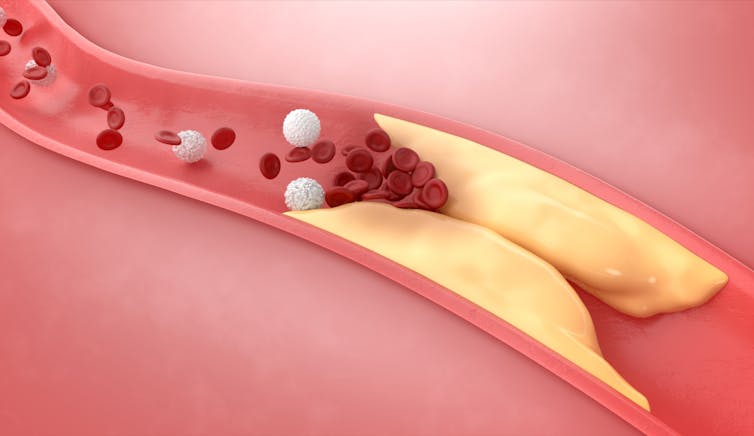
A digital drawing depicting cholesterol plaques on the artery wall, blocking blood flow.
HDL helps prevent bad cholesterol from building up.
NPW-STUDIO/ Shutterstock

By eating anti-inflammatory foods, it makes it easier for HDL cholesterol to do its job of sweeping away excess LDL cholesterol. Here are four examples you can include in your diet:

1. Fruits and vegetables

Research shows that people who have diets high in fruits and vegetables have higher HDL cholesterol levels and a better total cholesterol ratio. They also have lower blood pressure and healthier blood sugar levels, all of which can be supportive to heart health.

Fruits and vegetables exert their positive effects by trapping free radicals.

Free radicals are highly reactive, unstable molecules that can cause damage to cells and trigger inflammation in the body. By preventing inflammation, this makes it possible for HDL cholesterol to continue doing its job of removing bad cholesterol and protecting the arteries.

2. Oily fish and olive oil

Oily fish (such as salmon, sardines and tuna) and olive oil are rich in a type of fat called “polar lipids”.

These lipids are able to reach the bloodstream more quickly compared to other types of fat, allowing them to reduce inflammation and prevent the aggregation of platelets more effectively.

Cell and animal studies have shown that a diet rich in the polar lipids from oily fish is effective in preventing blood clots from forming. This effect can help cholesterol ratios stay balanced, meaning cardiovascular disease risk is lower.

3. Fermented dairy

Fermented dairy products, such as yoghurt, kefir and cheese, can all have a positive effect on HDL levels.

During fermentation, the lipids are broken down into smaller compounds that have a greater anti-inflammatory effect than milk. They can also be metabolised faster by the body.

Fermented dairy products are also rich in polar lipids, which means that they can considerably reduce cardiovascular risk.

Research found that for every 20g of fermented dairy products people consumed each day, there was a modest reduction in cardiovascular disease risk.

4. Red wine

Finally, red wine is completely misunderstood. According to the latest research, moderate consumption of red wine (the equivalent of one to two small glasses per day) is linked with better HDL ratios.

Wine reduces inflammation when consumed in small quantities because it contains polar lipids. However, if wine intake is high, the negative, pro-inflammatory effect of alcohol outstrips the positive effect of the lipids.

This is why it’s important only to drink small amounts and in moderation – otherwise, alcohol can have many negative effects on the body. Indeed, the World Health Organization has said there is no safe level of alcohol consumption as the negatives, such as increased cancer risk even from light drinking, outweigh any positives.

Non-alcoholic wines also contain polar lipids. Research suggests that polar lipid extracts from non-alcoholic beverages have comparable benefits on preventing the formation of blood clots as their alcoholic counterparts.

Inflammation is a key factor in heart disease. By eating foods that reduce inflammation in the body, it’s possible to look after your heart health and lower cardiovascular disease by improving the ratio of HDL to LDL in the body.

The Conversation

Ioannis Zabetakis does not work for, consult, own shares in or receive funding from any company or organisation that would benefit from this article, and has disclosed no relevant affiliations beyond their academic appointment.

ref. Four foods that can help improve your cholesterol and boost heart health – https://theconversation.com/four-foods-that-can-help-improve-your-cholesterol-and-boost-heart-health-274583

Don’t fall in love this Valentine’s Day – read Wuthering Heights

Source: The Conversation – UK – By Andrew McInnes, Reader in Romanticisms, Edge Hill University

Wuthering Heights is back in the news and racing up the bestseller lists, thanks to a new film version by the provocative director Emerald Fennell, starring Margot Robbie and Jacob Elordi. The film is marketing Wuthering Heights as “the world’s greatest love story”.

However, if this encourages you to read the novel for the first time and you’re expecting a boy-meets-girl romance, you might be in for a shock. Wuthering Heights is less happy ever after and more girl is already dead at the start of the novel, boy is haunted by girl, and then another boy is told the whole story by the girl’s old housekeeper.

But as an expert in Romantic period literature, I would argue Wuthering Heights is actually a perfect read on Valentine’s Day because it celebrates the head-spinning, hair-raising, all-consuming experience of falling in love.

“Love isn’t all chocolate boxes and roses / It’s dirtier than that”, Emily Brontë never wrote but might have, had she been alive in the 1990s and a fan of Jarvis Cocker, the lanky lead singer of Pulp. Brontë shares with Cocker an appreciation of the darker side of romance. Both Cocker and Brontë answer the question, “What is this feeling called love?” by characterising the emotion as violent, destabilising and disorienting.

Some Brontë scholars and readers of the book have expressed some scepticism about the film’s marketing as a perfect date movie, with one commentator arguing that Halloween would be a better release date for a tale of brooding revenge, toxic relationships and even potential necrophilia.

On the one hand, yes, Wuthering Heights follows Heathcliff from a foundling in Liverpool of uncertain origins to a gentleman of just-as-uncertain means. He’s intent on the destruction of his childhood home and neighbouring Thrushcross Grange, which stole away his childhood sweetheart, Catherine Earnshaw.

At one point, he threatens his own son and Catherine’s daughter (both confusingly called Linton): “Had I been born where laws are less strict and tastes less dainty, I should treat myself to a slow vivisection of those two, as an evening’s amusement.” This is not a man who is joking.

On the other hand, Brontë’s novel explores what it means to feel inseparably connected to another person. It involves almost all the messiness of last year’s horror film, Together, in which a couple find themselves literally melting into one another, which was indeed released for Halloween.

Trying to explain how she feels to Nelly Dean, her old housekeeper, Catherine tells her: “My great miseries in the world have been Heathcliff’s miseries, and I have watched and felt each from the beginning; my great thought in living is himself. If all else perished, and he remained, I should still continue to be; and, if all else remained, and he were annihilated, the universe would turn a mighty stranger. I should not seem part of it.”

Emily Brontë is a great poet as well as a powerful novelist, and passages like this are poetry too. Wuthering Heights is essentially a love poem – a poem which takes love as something to be experienced rather than explained. Love is experienced in a way that threatens the boundaries between self and other, male and female, nature and culture, life and death, reason and madness, heaven and hell.

Catherine’s attempt to explain her relationship with Heathcliff to Nelly ends in inarticulacy, with Nelly declaring herself unable to “make any sense of your nonsense”.

Before she trails off, Catherine provides a key to the puzzle box of the novel when she says: “Nelly, I am Heathcliff – he’s always, always in my mind, not as a pleasure, any more than I am always a pleasure to myself but, as my own being.” For Catherine, her relationship with Heathcliff is one of necessary union, mental, physical and spiritual.

After her death in childbirth, Catherine continues to haunt Heathcliff, who seeks his own union with her corpse in ordering his own coffin to be laid next to hers and opened up so they can rot together – a scene Fennell riffed on in her last film Saltburn as a naked Oliver graphically “grieves” over Felix’s grave.

Heathcliff hopes their bodies will literally become one in death. Their love may not have ended in a legal and religious union, but neither could death part them. As Jarvis Cocker once sang: “This is hardcore!”

Looking for something good? Cut through the noise with a carefully curated selection of the latest releases, live events and exhibitions, straight to your inbox every fortnight, on Fridays. Sign up here.


The Conversation

Andrew McInnes received funding from AHRC for his Early Career Researcher Leadership Fellow project, “The Romantic Ridiculous”, which ran from 2020-2022.

ref. Don’t fall in love this Valentine’s Day – read Wuthering Heights – https://theconversation.com/dont-fall-in-love-this-valentines-day-read-wuthering-heights-275600

San Valentín y chocolate: lo que sabemos sobre el cacao y su relación con la salud

Source: The Conversation – (in Spanish) – By Marian Zulet Alzórriz, Catedrática de Universidad. Área Nutrición y Bromatología. Subdirectora del Instituto de Nutrición y Salud. Facultad de Farmacia y Nutrición. Universidad de Navarra., Universidad de Navarra

Cada mes de febrero se repite el mismo ritual. Escaparates llenos de bombones, regalos dulces y una pregunta inevitable: ¿el chocolate es solo un placer ocasional o puede tener algún efecto beneficioso para la salud?

Durante mucho tiempo, la respuesta parecía sencilla. El chocolate era visto como un alimento asociado al exceso, más cercano al capricho que a la nutrición. Sin embargo, en las últimas dos décadas, la investigación científica ha cambiado parcialmente esa mirada. Hoy sabemos que el cacao –materia prima esencial del chocolate– contiene compuestos bioactivos que interactúan con nuestro organismo de una forma más compleja de lo que imaginábamos.

El cambio de enfoque es importante. La ciencia ya no se pregunta si el chocolate es “bueno o malo”, sino qué ocurre en el organismo cuando consumimos cacao y en qué contexto puede formar parte de una alimentación saludable.

El cacao: cuando el interés científico empieza en los detalles

El interés de los investigadores no se centra tanto en el chocolate como producto final, sino en el cacao, su ingrediente principal. El cacao contiene flavanoles, un tipo de polifenoles —compuestos naturales presentes también en frutas, verduras o algunos tés— que han despertado un creciente interés científico por sus posibles efectos beneficiosos sobre el sistema cardiovascular y el metabolismo.

En el caso del cacao, sus flavanoles pueden aumentar la biodisponibilidad de óxido nítrico en el endotelio vascular, favoreciendo la vasodilatación. Este mecanismo ayuda a explicar por qué diversos ensayos clínicos han observado mejoras modestas en la función de los vasos sanguineos y reducciones discretas en la presión arterial tras el consumo controlado de extractos ricos en flavanoles.

Las revisiones científicas coinciden, sin embargo, en un punto importante: los posibles efectos beneficiosos se relacionan con estos compuestos del cacao y no con el chocolate en su conjunto, cuyo contenido en azúcar y grasa, así como su contenido en flavanoles, puede variar considerablemente según el tipo y el grado de procesamiento.

El chocolate reduce la mortalidad cardiovascular

Uno de los ensayos más amplios realizados en este campo ha sido el estudio COSMOS (COcoa Supplement and Multivitamin Outcomes Study), que siguió durante varios años a más de 21 400 adultos con el objetivo de evaluar si el consumo de cacao era capaz de reducir el riesgo de desarrollar eventos cardiovasculares importantes, cáncer y otras alteraciones de la salud, así como estudiar su efecto sobre la salud cognitiva.

Aunque los efectos no fueron llamativos, los resultados arrojaron datos interesantes. Para empezar, quienes mantuvieron una buena adherencia a la suplementación con 500 miligramos diarios de flavanoles mostraron una reducción relevante de la mortalidad cardiovascular. A escala poblacional, descensos moderados en este tipo de indicadores pueden tener una gran trascendencia en salud pública.

Además, otros estudios cognitivos asociados al mismo proyecto mostraron que los flavanoles del cacao podrían beneficiar ciertos aspectos de la memoria, especialmente en personas con una alimentación de menor calidad o con bajo consumo previo de estos compuestos. Este hallazgo sugiere que el cacao podría desempeñar un papel modulador en el envejecimiento cerebral cuando existe un margen de mejora a nivel nutricional.

En conjunto, la investigación apunta a que los flavanoles del cacao no son un “superalimento milagroso”, pero sí un componente dietético con efectos biológicos medibles y potencialmente relevantes dentro de un patrón de alimentación equilibrada.

El error más frecuente: pensar en alimentos aislados

En este punto se produce una de las confusiones más frecuentes. Gran parte de la investigación científica se ha realizado con extractos de cacao estandarizados y ricos en flavanoles, en lugar de con tabletas comerciales de chocolate, cuya composición varía considerablemente. Por ello, los efectos observados en ensayos clínicos no pueden extrapolarse de forma directa al consumo habitual de cualquier producto derivado del cacao.

En lo que respecta, por ejemplo, al peso corporal, la evidencia científica actual es prudente. Aunque el cacao contiene compuestos bioactivos con efectos demostrados a nivel vascular, los ensayos clínicos y metaanálisis disponibles no muestran un impacto consistente ni clínicamente relevante sobre el peso, el índice de masa corporal o la circunferencia de cintura en la población general. Algunos estudios individuales han observado cambios modestos en determinados subgrupos, pero estos resultados no se replican de forma uniforme.

En conjunto, los datos disponibles no permiten considerar al cacao como una herramienta para la pérdida de peso, sino como un componente más dentro de un patrón dietético equilibrado. Esto refleja una idea clave en nutrición: ningún alimento compensa una dieta desequilibrada ni determina por sí solo la salud.

Placer y biología: por qué el chocolate genera tanto interés

Quizá el verdadero interés científico del chocolate está en otro lugar. Es uno de los pocos alimentos que conecta claramente biología y comportamiento. Además de flavanoles, el cacao contiene metilxantinas como la teobromina y pequeñas cantidades de cafeína, que interactúan tanto con el sistema vascular como con mecanismos relacionados con el estado de ánimo y la recompensa.

En unaintervención nutricionalllevada a cabo por la Universidad de Navarra en personas con sobrepeso u obesidad, el consumo durante cuatro semanas de un extracto de cacao rico en polifenoles (415 mg fueron flavanoles) se asoció con una disminución significativa de las LDL oxidadas (oxLDL).Se trata de un biomarcador relacionado con el estrés oxidativo y con los procesos implicados en la enfermedad cardiovascular.

Asimismo, se observó una menor elevación de la presión arterial sistólica tras la ingesta. De forma complementaria, aumentaron los niveles de ácido homovanílico, un metabolito vinculado a la actividad dopaminérgica cerebral, cambio que se asoció con una reducción de los síntomas depresivos. Lejos de ser un simple placer, el cacao demuestra que, cuando forma parte de una alimentación equilibrada, puede modular de manera favorable procesos a nivel cardiovascular, metabólico y cerebral.

Investigaciones adicionales sugieren que los flavanoles del cacao pueden influir en procesos relacionados con la perfusión cerebral y la función neuronal, lo que ayuda a explicar el interés sobre sus efectos cognitivos.

Adiós a las listas de alimentos “buenos o malos”

San Valentín ofrece un buen ejemplo de cómo ha cambiado la forma de entender la alimentación. El debate ya no gira en torno a prohibir o permitir alimentos concretos, sino a comprender cómo encajan dentro de un patrón dietético global.

La evidencia científica actual sugiere que pequeñas cantidades de chocolate negro rico en cacao pueden formar parte de una dieta equilibrada.

Pero el mensaje más relevante es otro: la salud no depende de alimentos individuales, sino de hábitos sostenidos en el tiempo. La nutrición moderna ha dejado de ser una lista de alimentos “buenos o malos” para convertirse en una ciencia que intenta entender cómo interactúan los alimentos, el metabolismo y el comportamiento humano. Entre ellos, el chocolate.

The Conversation

Las personas firmantes no son asalariadas, ni consultoras, ni poseen acciones, ni reciben financiación de ninguna compañía u organización que pueda obtener beneficio de este artículo, y han declarado carecer de vínculos relevantes más allá del cargo académico citado anteriormente.

ref. San Valentín y chocolate: lo que sabemos sobre el cacao y su relación con la
salud – https://theconversation.com/san-valentin-y-chocolate-lo-que-sabemos-sobre-el-cacao-y-su-relacion-con-la-salud-275950

Catastrophe économique et sociale à Cuba : Trump n’est pas seul en cause

Source: The Conversation – in French – By Robert Huish, Associate Professor in International Development Studies, Dalhousie University

Si l’embargo pétrolier décrété par Donald Trump a anéanti bien des projets de vacances à Cuba en raison des pénuries de kérosène et des annulations de vols, ce n’est rien par rapport au cauchemar que s’apprêtent à vivre les Cubains.

Car Cuba est au bord de l’une des pires catastrophes sociales et économiques depuis la révolution de 1959. Les sources d’énergie se tarissent. Le réseau électrique est en lambeaux. L’inflation dépasse les 15 %. Le peso s’effondre.

Depuis l’effondrement du système municipal de gestion des déchets, les cas de dengue, de chikungunya et de fièvre Oropouche sont en forte hausse. Depuis 2021, près de deux millions de Cubains ont quitté le pays et la mortalité infantile a triplé pour atteindre 14 pour 1 000 naissances.

Et maintenant, ce sont les revenus du tourisme, de la coopération médicale et de la production pharmaceutique qui disparaissent. Depuis 2022, quelque 5 000 Cubains se sont fait mercenaires en Russie et combattent l’Ukraine. Cuba souffre.

États-Unis contre Cuba

Malgré le souhait de bien des exilés cubains, ces difficultés ne suffiront peut-être pas à renverser son gouvernement communiste. Donald Trump n’a fait qu’ajouter à une crise d’abord causée par l’effondrement de l’ancien ordre international fondé sur des règles.

Depuis le début des années 1960, les États-Unis déploient diverses armes économiques contre l’île antillaise. L’une des plus terribles, surnommée « loi Helms-Burton », interdit aux entreprises américaines de faire des affaires avec Cuba, et punit également celles des autres pays qui traitent à la fois avec Cuba et les États-Unis.

Le président américain Barack Obama avait assoupli les restrictions de voyage pour les Américains se rendant à Cuba ainsi que certaines politiques commerciales. C’était durant son second mandat, mais son successeur, Donald Trump, a rétabli ces mesures dès son premier mandat.

Médecins cubains

Pendant des décennies, Cuba a mené une politique de coopération internationale très étoffée, entre autres à travers quelque 100 000 médecins cubains qui ont exercé à l’étranger, souvent dans des zones reculées.

Si ces médecins cubains profitaient de meilleurs salaires, le gouvernement y gagnait soit d’importantes liquidités ou des accords commerciaux avantageux. Le Venezuela a accueilli des dizaines de milliers de médecins cubains et du personnel de sécurité, en échange de pétrole lourd.

En tout, 103 pays ont profité de ce programme, et 69 rien qu’en 2021. Des accords similaires ont également impliqué les entraîneurs sportifs, les enseignants et les ingénieurs.

En 2006, les États-Unis ont ciblé cet effort de solidarité internationale en créant un programme appelé « Cuban Medical Professional Parole », qui offrait une procédure d’immigration simplifiée pour les médecins cubains.

Jusqu’en 2017, le département d’État consacrait 10 millions de dollars par an. Des diplomates localisaient et recrutaient les médecins cubains travaillant en Amérique latine et en Afrique en leur faisant miroiter une immigration rapide aux États-Unis. Mais à leur arrivée, un bon nombre se sont retrouvés sans emploi ou sous-employés parce que leur diplôme n’était pas reconnu.

Soutien mondial

Malgré le blocus économique, l’un des plus longs de l’histoire, Cuba est demeurée très active sur la scène internationale. Elle déploie un réseau de 139 ambassades et consulats, ce qui en fait un gros joueur à ce chapitre, et plus de 100 ambassades sont installées à La Havane.

L’Assemblée générale des Nations unies dénonce régulièrement cet embargo américain. Encore en 2025, malgré les aléas de la politique, celle-ci a voté à 165 voix contre sept pour la levée de l’embargo.

Cuba a surmonté toutes ces difficultés grâce à de nombreux soutiens. Le Canada, l’Italie et le Mexique, en particulier, ont maintenu leurs relations commerciales malgré l’embargo américain. Dans les années 1990, l’économie cubaine a beaucoup profité du développement du tourisme, notamment avec ces pays.

La société minière canadienne Sherritt a investi massivement dans l’extraction du nickel cubain. Au début de la pandémie de Covid, Cuba a même été le premier pays à offrir une assistance médicale à 19 autres, dont deux nettement plus prospères, l’Italie et le Qatar. Elle a même accueilli un navire de croisière britannique en quarantaine pour prodiguer des soins à ses passagers.

Mais actuellement, ces pays évacuent par avion leurs ressortissants en vacances, et les affaires des entreprises étrangères comme Sherritt sont au point mort – non pas à cause de l’embargo américain, mais parce que l’émigration massive rend difficile l’embauche de personnel qualifié.

Et comme la solidarité internationale a beaucoup faibli, aucun autre pays ne vient bravement offrir son aide, contrairement à ce qui se passait avant les années 2000.

Pour les mois à venir, Cuba fait face à trois scénarios.

1. Accords en coulisses

À l’instar des accords conclus du temps de la présidence de Barack Obama, la Maison-Blanche de Donald Trump pourrait, secrètement, trouver un terrain d’entente avec le gouvernement de Miguel Díaz-Canal à Cuba par l’intermédiaire du Vatican et du Canada. Par exemple, l’administration Trump pourrait autoriser la vente de carburant américain et Cuba pourrait ouvrir davantage de biens immobiliers touristiques à la propriété étrangère.

Le point d’achoppement de telles négociations, si tant est qu’elles aient lieu, serait les élections. Contrairement au Venezuela, il n’existe pas d’opposition légitime à Cuba, où les opposants politiques à la révolution sont depuis longtemps emprisonnés ou exilés. Le système électoral cubain lui-même n’est pas structuré pour une course multipartite et toute tentative de remplacer le gouvernement actuel ne ferait que créer un énorme vide au sommet.

2. Loi martiale

Si l’embargo sur le carburant est maintenu, Cuba pourrait déclarer la loi martiale afin de mieux rationner les ressources et défendre le pays.

Miguel Díaz-Canal y a récemment fait allusion en parlant de « guerre de tout le peuple [guerra de todo el pueblo] », ce qui expliquerait pourquoi les compagnies aériennes canadiennes et russes s’empressent d’évacuer leurs ressortissants.

Outre l’instabilité politique, la loi martiale entraînerait un rationnement très strict et la généralisation du marché noir. Cuba n’étant qu’à 140 km des côtes américaines, la plupart des présidents américains depuis les années 1950 ont compris qu’il était préférable d’avoir un voisin stable et sûr, même s’il est idéologiquement opposé, plutôt qu’un voisin politiquement instable et vulnérable.

La situation risque de s’aggraver, car la classe des professionnels jeunes et bien formés a largement quitté le pays, dont de nombreux médecins et infirmières – ce qui marque une rupture par rapport aux crises précédentes, où cette tranche essentielle de la population était demeurée sur l’île.

3. Intervention de la communauté internationale

Une troisième voie serait de voir des pays tiers, dans l’esprit du sentiment exprimé lors de l’Assemblée générale des Nations unies, lui envoyer des ressources et relancer les échanges commerciaux.


Déjà des milliers d’abonnés à l’infolettre de La Conversation. Et vous ? Abonnez-vous gratuitement à notre infolettre pour mieux comprendre les grands enjeux contemporains.


Cette bouée de sauvetage pourrait devenir l’acte 1 d’une nouvelle ère de l’ordre international où tous les pays d’Amérique et d’Europe défieraient les tentatives d’intimidation américaines et sa politique belliqueuse.

Davantage de solidarité internationale pourrait réparer les dommages au pays, ou à tout le moins soulager les Cubains de la pression qui pèse sur eux, y compris ces désespérés qui se sont faits mercenaires en Russie.

L’histoire récente nous montre que lorsque les nations s’opposent à Donald Trump, celui-ci finit généralement par reculer. Cette assistance consisterait davantage à maintenir ouverts les canaux commerciaux plutôt qu’à envoyer de l’aide directe.

Mais si la communauté internationale continue de tourner le dos à Cuba, c’est bel et bien un désastre humanitaire qui se prépare.

La Conversation Canada

Robert Huish a reçu un financement du Conseil de recherches en sciences humaines du Canada.

ref. Catastrophe économique et sociale à Cuba : Trump n’est pas seul en cause – https://theconversation.com/catastrophe-economique-et-sociale-a-cuba-trump-nest-pas-seul-en-cause-275880

Votes at 16: the UK government has a fight on its hands – but are politicians all missing the point?

Source: The Conversation – UK – By Andrew Mycock, Chief Policy Fellow, University of Leeds

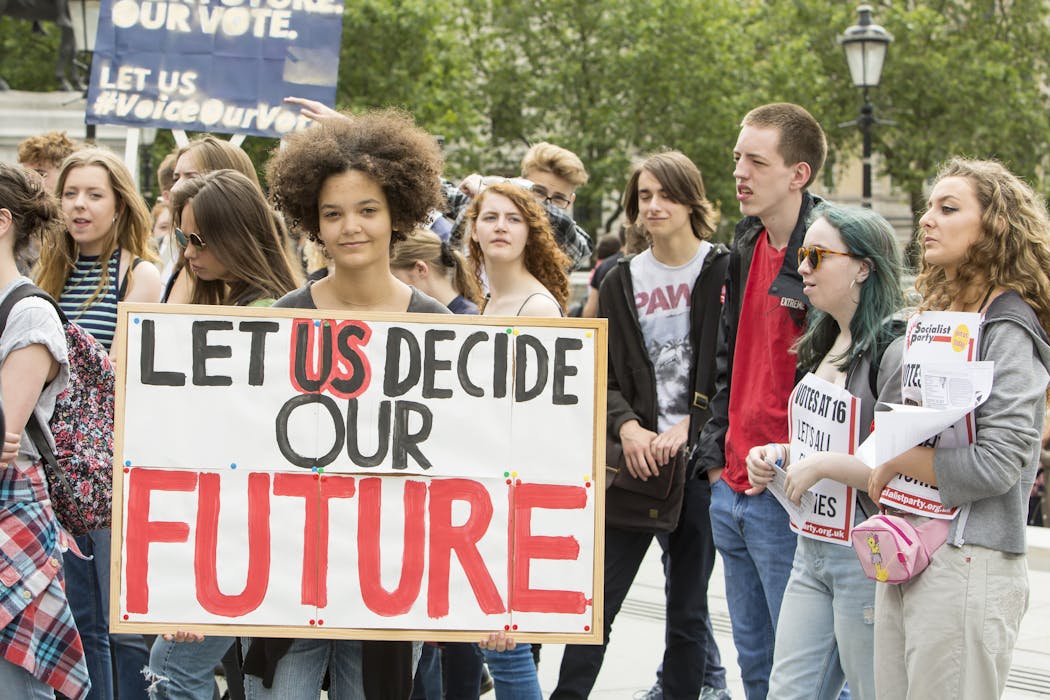
A 2016 protest in London calling for votes at 16. Ms Jane Campbell/Shutterstock

The UK government has unveiled plans to lower the voting age to 16 for general elections, heralding the delivery of a Labour pledge first made in 2010.

The intent of the UK government’s electoral reform is understandable. Faith in politicians and democracy is at an all time low. Keir Starmer’s election promise to restore trust in politics has been compromised by recent events. The introduction of the bill offers an opportunity to refresh Labour’s election promise and respond to public support for reforming the electoral system.

The three-decade campaign for the universal lowering of the voting age to 16 might not have a smooth passage through parliament, though. Labour’s support for the policy has proven lukewarm and sporadic, reflecting concerns over public opinion and also division on the policy itself.

The public has long been resolute in its opposition to such a change. And while young people have, historically, proven largely supportive of votes at 16, recent survey evidence suggests they are evenly divided. Many say they feel “unprepared” for the responsibility of voting.

Some within an already divided parliamentary Labour party will question why the government is focusing on electoral reform.

The strength of opposition to the bill in parliament will be key both in determining the nature of its passage and public acceptance of votes at 16. The Conservatives and Reform both formally oppose voting age reform. The Conservatives claim Labour is “hopelessly confused on whether 16 year olds are adults or not”. For them and many other opponents, the age of maturity, adulthood, and therefore enfranchisement still coalesce at 18.

But depicting 16 and 17-year-olds as too immature and lacking sufficient cognitive development runs the risk of politically alienating young people and fracturing the cohesion of the electorate. As votes at 16 advocates note, voting rights are not denied or taken away from those who have disabilities or deteriorating cognitive abilities (particularly in old age) which might limit their cognition, competency and comprehension.

The Conservatives also appear just as confused as they accuse Labour of being on this point. They empowered both the Scottish and Welsh governments to lower the voting age. And they allowed under-18s to choose three prime ministers in the past decade via party membership ballots.

There’s contradiction in Reform’s position too – and its actions from here will be interesting to watch. Recent polling indicates a growing number of young men support Reform above all other parties, and in more numbers than their older male counterparts. The party may have been opposed up until now, but a pragmatic U-turn may well be on the horizon. That in turn will likely defuse some of the political and public opposition to the bill.

Quantity over quality?

Ultimately, votes at 16 is likely to be passed into law due to Labour’s huge parliamentary majority. But how the government and supporters of the change decide to frame its success will be important. A focus on the numbers of young people signing on the electoral register and voting will tell us much about the quantity of participation but not its quality.

Evidence from Scotland indicates that the modest increases in voting of 16-to-17-year-olds when compared with 18-to-24-year-olds does not translate into more extensive political engagement. Lowering the age of enfranchisement has had no significant impact on the low numbers of young people who join political parties, trade unions, or who participate in their communities.

In Scotland, votes at 16 has had little impact on how party politics is conducted or how politicians engage and represent young people. Most young people do not believe politicians prioritise their needs. A growing number express disillusionment with democracy.

Lowering the voting age to 16 is, on its own, no panacea to the complex causes of youth political disengagement and is unlikely to strengthen the resilience of democracy in the UK. The government’s bill also sets out plans to improve youth democratic education and make electoral registration easier. Such measures will not create the drivers for young people to vote or participate in party politics.

Indeed, there is a collective failure of political parties of all hues to accept that they are in part responsible for the current youth democratic crisis. They need to look past a potentially divisive passage of votes at 16 in parliament and accept that now is the time to collectively improve the responsiveness of the current political system to younger voters and the public more widely.

The Conversation

Andrew Mycock has received funding from the Leverhulme Trust (2019-2021) in the past to support research into lowering the voting age.

ref. Votes at 16: the UK government has a fight on its hands – but are politicians all missing the point? – https://theconversation.com/votes-at-16-the-uk-government-has-a-fight-on-its-hands-but-are-politicians-all-missing-the-point-275476

Voting in supermarkets, bank cards as ID and £500,000 fines for breaking the rules – how British elections could be about to change

Source: The Conversation – UK – By Toby James, Professor of Politics and Public Policy, University of East Anglia


Shutterstock/ Zeynep Demir Aslim

Elections need periodic reform to ensure that they have integrity and fulfil their role in line with the times, and the British government has unveiled its proposals for doing just that.

Britain was widely regarded as one of the pioneers of such democratic electoral reforms. In the late 19th and early 20th century, reform acts extended the franchise to enable more people to vote. Anti-corruption and bribery rules prevented election candidates offering food and liquor for votes.

However, new threats have emerged to elections which means that further changes are needed to ensure that elections fully empower people. Threats can come from from overseas more easily these days – disinformation can spread online and algorithms can be manipulated to support candidates and parties. Money is more easily siphoned around the world into campaigns war chests.

What’s more, millions of people stayed at home at the 2024 general election – which recorded the lowest turnout in years. An estimated 7 million to 8 million people are not on the electoral register.

The weight of these challenges means that UK elections are therefore in urgent need of reform. The government’s representation of the people bill is the legislation that the government is proposing to improve the situation.

What will change?

The biggest proposed change is to allow around 1.7 million 16- and 17-year-olds to vote. This is historic. Governments come and go but changing who can vote in elections will be a lasting part of the political landscape – and something a future government will find difficult to repeal.

When it comes to new threats to electoral integrity, the government is making a change that will probably be welcomed by the public – the move towards automatic voter registration. Surveys show people support the idea idea and it will see many citizens added to the electoral roll without them having to do anything.

It’s a time saver but it also means people won’t end up being turned away on election day because they’ve not managed to register properly. Automatic and assisted forms of voter registration have been shown to increase the accuracy and completeness of the register. Like votes at 16, this will benefit young people most, as only 16% of 16-17s are registered.

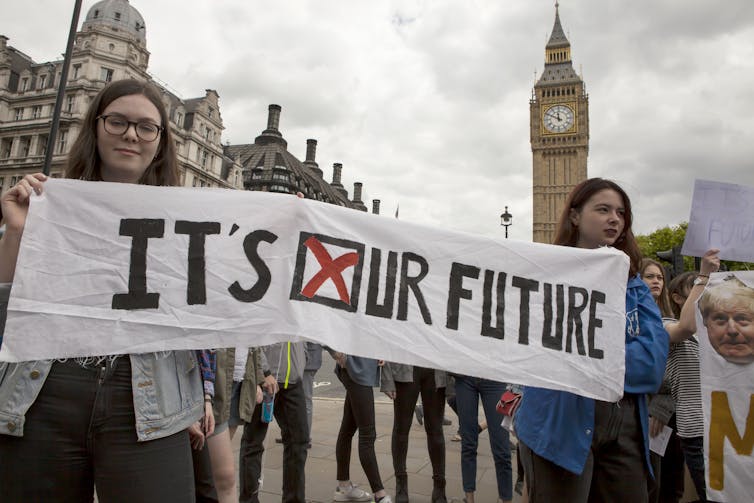
Young people holding a sign reading 'it's our future' in front of the Houses of Parliament.
Young campaigners have won the right to vote.
Shutterstock/Ms Jane Campbell

The relatively new – and widely criticised – rules on voter ID are also being changed, arguably for the better. People will now be able to use their bank cards as ID rather than being expected to produce photo ID. A change of this kind should make voting much easier. The rules on photo ID have been shown to be discriminatory and a barrier to voting.

There will also be a pilot to try out voting at supermarkets and train stations rather than only at traditional polling stations.

There are also plans to strengthen the rules around political donations. The Electoral Commission will have greater powers to enforce rules and issue sanctions to those who break them. Powers are proposed to allow the commission to issue fines of up to £500,000 when people break the rules – a significant increase on the current £20,000 limit. There will also be tougher sentences for people convicted of intimidation during the electoral period.

What’s missing?

Despite the changes being proposed, the government has failed to address some key problems.

The rules on political finance, in particular, may not go far enough. Companies can currently make donations to political parties, provided that they operate in some way in the UK. The Electoral Commission has warned that foreign money could still be channelled through UK companies into political parties – unless loopholes are closed.

The government has also not taken steps to restore the independence of the Electoral Commission itself, a body which plays a key role in overseeing elections and referendums. It was stripped of its independence by Boris Johnson, in contrast to international best practice. But the bill promises no action on this.

And maybe foremost, Britain’s age-old first-past-the-post electoral system remains untouched. This may not be a surprise – few parties tinker with the rules that bring them to power. But the era of two-party politics that justified first-past-the-post has now gone and support for change is high.

The bill will shortly receive scrutiny within parliament, and detail will need to be fleshed out on how electoral officials implement the changes. These will provide opportunities to further strengthen the bill. But as it currently stands, its passing looks set to take its place as a historic moment for strengthening UK elections.

The Conversation

Toby James has previously received funding from the AHRC, ESRC, Joseph Rowntree Reform Trust, British Academy, Leverhulme Trust, Electoral Commission, Nuffield Foundation, the McDougall Trust, Unlock Democracy, International IDEA and the Canadian SSHRC.

ref. Voting in supermarkets, bank cards as ID and £500,000 fines for breaking the rules – how British elections could be about to change – https://theconversation.com/voting-in-supermarkets-bank-cards-as-id-and-500-000-fines-for-breaking-the-rules-how-british-elections-could-be-about-to-change-275885

La Saint-Valentin échappe aux marques : comment les individus réinventent ce rituel

Source: The Conversation – in French – By Cindy Lombart, Professeure de marketing, Audencia

Derrière le rituel annuel en apparence immuable, les comportements changent. La Saint-Valentin, si elle garde sa signification symbolique forte, est de moins en moins associée à une dépense consumériste. Place à l’expérience, loin des obligations marchandes.


Pendant des décennies, la Saint-Valentin a été l’une des fêtes les plus façonnées par le marketing. Les marques en ont codifié les symboles, le bijou, le parfum, le dîner romantique, et ont imposé une manière standardisée d’indiquer à l’autre son amour via un geste matériel, visible, parfois ostentatoire. Près d’un Français sur quatre voit la Saint-Valentin comme un moment idéal pour faire un présent. Le romantisme était solvable. L’affection portée quantifiable. Mais ce modèle semble vaciller. La Saint-Valentin semble glisser hors du cadre commercial qui l’avait façonnée. Les individus se la (ré)approprient et la transforment en un rituel moins prescrit et plus personnel.

Quand l’expérience remplace l’objet

Le signe le plus clair de cette réappropriation est la montée en puissance de l’expérience. Ce qui, autrefois, accompagnait le cadeau, un dîner, une sortie, une activité, devient désormais son cœur. L’objet n’est plus le point focal. Il n’est plus que l’éventuelle conséquence d’un moment partagé. Dans un contexte de tensions économiques, ce basculement n’est pas seulement culturel, il est aussi pragmatique.


À lire aussi :
Saint-Valentin : ce que nos histoires d’amour révèlent de nos habitudes


L’expérience permet de marquer l’occasion sans entrer dans une logique d’accumulation, voire de surconsommation, de respecter un budget, tout en créant une valeur immatérielle, celle du souvenir et du temps passé ensemble. Les individus privilégient ainsi des moments qui ont du sens : une soirée construite à deux, un repas préparé ensemble, un décor improvisé, un rituel bien-être conçu à la maison, une micro-escapade accessible, un projet créatif. Un Français sur trois fêtera la Saint-Valentin autour d’un dîner à la maison. L’expérience devient un terrain de jeu, d’invention.

De l’injonction à l’accompagnement

Ce qui change profondément, c’est que l’expérience ne se consomme plus. Elle se fabrique. Les couples n’attendent plus qu’une marque leur propose une solution clé en main. Ils inventent leurs propres scénarios, élaborent des rituels. L’amour devient une matière à créer, pas un objet à acquérir et à offrir ensuite. Cette transformation fragilise le rôle prescripteur des marques. Elles ne dictent plus les gestes, elles ne fixent plus les codes. Elles proposent des idées, parfois des supports, mais elles ne tiennent plus les rênes du récit. La logique d’injonction, « achetez ceci pour prouver votre amour », laisse place à une logique d’accompagnement, « n’hésitez pas à vous approprier cette source d’inspiration ».

À chaque génération, sa manière d’échapper au marketing

Si le mouvement est transversal, il s’exprime différemment selon les générations.

La Génération Z, la plus distante vis-à-vis du consumérisme classique, adopte naturellement une Saint-Valentin désynchronisée des marques. Elle privilégie les expériences créatives, le DIY, les activités participatives, les souvenirs qu’on fabrique plutôt que ceux qu’on achète. Pour elle, la valeur se situe dans la cocréation : faire ensemble, vivre ensemble.

Les millénaux, quant à eux, privilégient une fête plus intime et reposante. Dans une vie marquée par le travail, les charges mentales et les arbitrages économiques, ils recherchent davantage la profondeur que l’apparat. Une soirée hors du temps, un dîner maison élaboré, une ambiance réconfortante suffisent à donner du poids à la relation.

Les générations plus âgées restent attachées à des pratiques plus classiques (restaurant, sortie culturelle), mais elles aussi s’éloignent progressivement des logiques marchandes ostentatoires. Elles veulent avant tout un moment authentique, une occasion de se retrouver loin de l’agitation du quotidien.

RTBF 2022.

Un sentiment de lassitude

Le recul de l’objet ne s’explique pas uniquement par l’inflation. Il reflète un changement plus profond : la lassitude vis-à-vis des injonctions commerciales. De plus en plus, les consommateurs se méfient des rituels standardisés. Ils souhaitent des moments qui leur ressemblent, des gestes qui ne sont pas interchangeables, des attentions qui ne puissent être confondues avec celles de n’importe quel autre couple.

La montée en puissance des réseaux sociaux accentue ce phénomène. Ce n’est plus le cadeau que l’on montre, mais l’atmosphère du moment, la spontanéité, le récit personnel. L’amour ne se prouve plus par la valeur d’un bien, mais par la singularité d’une intention. Dans cet univers, les marques sont reléguées en arrière-plan. Elles ne peuvent pas produire du sur-mesure à l’échelle industrielle.

Des moments symboliques à soi

La transformation de la Saint-Valentin révèle un phénomène plus large : la volonté croissante des individus de reprendre la main sur les moments symboliques de leur vie. Dans un monde saturé de normes, de sollicitations et d’incitations à consommer, ils cherchent à regagner de la liberté, de la créativité, du sens. La Saint-Valentin 2026 devient alors le laboratoire d’une nouvelle manière d’habiter les rituels : moins marchande, moins standardisée, plus personnelle. Ce qui était autrefois l’une des fêtes les plus codifiées par le marketing devient un espace d’expression.

The Conversation

Les auteurs ne travaillent pas, ne conseillent pas, ne possèdent pas de parts, ne reçoivent pas de fonds d’une organisation qui pourrait tirer profit de cet article, et n’ont déclaré aucune autre affiliation que leur organisme de recherche.

ref. La Saint-Valentin échappe aux marques : comment les individus réinventent ce rituel – https://theconversation.com/la-saint-valentin-echappe-aux-marques-comment-les-individus-reinventent-ce-rituel-275710

La Coupe du monde de cricket : un événement autant géopolitique que sportif

Source: The Conversation – France in French (3) – By Raphaël Le Magoariec, Géopolitologue, spécialiste des sociétés de la péninsule Arabique et du sport, CITERES-EMAM, Université de Tours

Alors que l’Inde et le Pakistan se sont affrontés à coups de missiles en mai 2025, leurs sélections nationales de cricket vont se rencontrer ce dimanche dans le cadre de la Coupe du monde organisée par l’Inde et le Sri Lanka. Ce match très attendu a bien failli ne pas avoir lieu du fait des menaces de boycott exprimées par la partie pakistanaise. La compétition revêt également une importance majeure pour les pays du Golfe, qui accueillent d’importantes diasporas sud-asiatiques et qui cherchent à développer leur influence dans cette région.


Les Jeux olympiques d’hiver viennent de démarrer ; mais vu d’Asie du Sud, l’événement majeur de l’année se joue à des milliers de kilomètres des neiges italiennes, sur les pelouses indiennes et sri lankaises. Samedi 7 février, Jay Shah, président de l’International Cricket Council (ICC) et du Board of Control for Cricket in India (BCCI), et aussi fils du ministre indien de l’intérieur, a déclaré aux côtés de l’ancien capitaine indien Rohit Sharma, la Coupe du monde de cricket Twenty20 ouverte.

De New Delhi aux Caraïbes, loin de la vision olympique européenne, le cricket impose sa propre lecture du monde issue du Commonwealth, mêlant culture et sport dans une expression unique et éclatante.

Cette Coupe du monde, qui apparaît une nouvelle fois comme l’expression de l’hyperpuissance indienne dans le cricket, est marquée par le contexte géopolitique.

De l’annonce de la co-organisation du tournoi par l’Inde et le Sri Lanka, en 2021, à son lancement, en 2026, cet événement de premier plan révèle les ambitions de puissance des uns et des autres, qui viennent s’articuler autour de ce théâtre symbolique que constitue le stade de cricket. Pour bien comprendre cette dimension, il faut commencer par décortiquer ce qu’est ce sport, qui pour des populations n’étant pas originaires du Commonwealth apparaît étranger, et décrypter la signification de son qualificatif Twenty20.

Le b.a.-ba d’un sport mal connu hors du Commonwealth

Sport hérité de l’Empire britannique, le cricket oppose deux équipes de onze joueurs. Celle qui marque plus de points que l’adversaire remporte la rencontre. Basé sur l’affrontement entre batteurs et lanceurs, il suit des règles codifiées dès le XVIIIe siècle et valorise stratégie, patience et fair-play. Longtemps sport des élites, il trouve son expression la plus complète dans le test cricket, disputé sur quatre à cinq jours, qui récompense endurance, tactique et maîtrise du temps long. Ce format noble demeure néanmoins peu adapté aux exigences médiatiques et financières contemporaines.

Sous l’influence de la dérégulation économique et des impératifs d’audience, des formats plus courts émergent, culminant en 2003 avec l’apparition du Twenty20 (T20), où chaque équipe dispose de vingt séries de lancers, ce qui réduit la durée des matchs à environ trois heures. Plus spectaculaire et plus accessible, le T20 transforme le jeu et devient la vitrine du cricket mondialisé.

Ce support est privilégié par l’Inde afin d’accroître la massification de ce sport en vue de projeter son influence sportive et financière. La Coupe du monde T20 a ainsi été lancée par l’ICC en 2007, dans l’objectif de multiplier les compétitions et d’accroître les retombées financières. L’attribution de l’édition 2026 de cet événement bisannuel à l’Inde et au Sri Lanka, décidée en 2021, est venue appuyer cette logique. L’annonce de cette attribution a été faite à Dubaï, au siège de l’ICC, au cœur de ce hub, emblème de la dérégulation de l’économie mondiale et nouveau centre névralgique du cricket mondial depuis 2005, ce qui traduit la quête d’un profit économique sans limites.

De Londres à l’océan Indien

Cet ancrage de l’ICC dans le Golfe illustre la bascule de l’histoire du cricket au tournant des années 2000 de la métropole britannique vers ses anciennes colonies. Désormais, le centre de gravité économique de ce sport se trouve sur le pourtour de l’océan Indien, entre le sous-continent indien, la péninsule Arabique et l’Afrique australe.

Cette recomposition est portée par l’Inde qui, en raison de son poids démographique et de la puissance de son marché médiatique, génère aujourd’hui entre 70 et 80 % des revenus de l’ICC. Cette domination se traduit institutionnellement par une captation d’environ 38,5 % des revenus redistribués par l’ICC au profit du BCCI sur le cycle 2024-2027, soit plus d’un milliard de dollars. New Delhi s’impose ainsi comme l’hegemon du cricket mondial, et les diasporas issues du sous-continent indien deviennent dans les pays où elles résident (à commencer par ceux du Golfe) d’importants marchés pour les droits de diffusion et le sponsoring.

Le déménagement du siège de l’ICC de Londres à Dubaï en 2005 ne s’explique pas seulement par des considérations d’ordre fiscal ; il s’agit aussi, et surtout, de trouver un point d’ancrage dans un hub où réside la deuxième plus grande diaspora indienne. La présence de celle-ci est si manifeste qu’il n’est pas rare que Dubaï soit surnommée « Dumbaï », en référence à Mumbai (nom de Bombay depuis 1995), la plus grande ville indienne. En outre, située au cœur des réseaux mondiaux, Dubaï constitue une interface de choix avec la région de l’océan Indien.

Un trait d’union entre l’Inde et le Sri Lanka

Dans ce contexte, la co-organisation de la Coupe du monde par l’Inde et le Sri Lanka prend une signification particulière. Attribuée, en 2021, alors que le clan Rajapaksa est encore au pouvoir à Colombo, elle s’appuie sur la légitimité sportive du Sri Lanka, héritée notamment de sa victoire lors de la Coupe du monde 1996. Pensé comme un partenariat structuré autour de l’hyperpuissance du cricket, l’Inde, l’accueil conjoint de cet événement par les deux pays reflète la stratégie diplomatique du gouvernement sri lankais de l’époque, à savoir équilibrer ses relations entre l’Inde et la Chine pour maximiser sa marge de manœuvre régionale.

Après le renversement du clan Rajapaksa en 2022, et les bouleversements politiques internes qui s’en sont suivis, la coorganisation a été maintenue, l’enjeu allant bien au-delà du cas de gouvernants corrompus et destitués.

Pour Colombo, cette Coupe du monde représente une garantie de visibilité internationale, de légitimité symbolique et de reconnaissance de sa diplomatie régionale. Dans un océan Indien marqué par des rivalités croissantes, le cricket fonctionne ainsi comme un instrument d’influence non coercitif, permettant à l’Inde de projeter son leadership sous les apparences d’une coopération sportive, tandis que le Sri Lanka conserve un statut d’acteur crédible sur la scène internationale, le cricket apparaissant comme un support des relations entre élites.

Le Golfe : quasi inexistant sur le terrain, omniprésent sur les panneaux publicitaires

Dès la cérémonie d’ouverture, sur le bord du terrain, les sponsors golfiens dominent. Emirates et DP World, les deux fleurons du transport de Dubaï, ainsi qu’Aramco, le géant pétrolier saoudien, sont en haut de l’affiche. Sobha, la société du promoteur immobilier originaire du Kerala, Palath Narayanan Menon, basée à Dubaï, complète cet ensemble.

Entre gain d’influence et ambitions de puissance étatique, ces sociétés du Golfe influent sur le cricket mondial. Sobha s’affirme comme l’incarnation de l’influence des réseaux indiens aux Émirats arabes unis. À travers ces investisseurs, pour Dubaï, puis à l’arrière-plan Abu Dhabi et maintenant l’Arabie saoudite, le cricket rime avec diversification. Avec ce sport, leur tropisme penche vers l’est, il est conçu pour parler à l’Asie du Sud en vue de poursuivre l’édification de leur vision multipolaire.

Le cricket apparaît pour les monarchies du Golfe comme un vecteur d’influence au service de leur diversification économique et de la sécurisation de leur environnement régional. Il s’affirme comme un espace de convergence avec les milieux économiques et politiques du sous-continent indien dont le marché et leurs capacités militaires sont devenus indispensables. Mais sur le terrain, c’est une autre géopolitique qui se joue.

Une tension palpable, le boycott comme arme

Inde-Pakistan : le match tant attendu, prévu pour le 15 février, a bien failli ne pas se jouer. Shehbaz Sharif, le premier ministre pakistanais, avait annoncé, le 5 février, que la sélection pakistanaise ne prendrait pas part à cette rencontre historique, déclarant qu’elle ne jouerait pas contre l’Inde en signe de solidarité avec le Bangladesh après le retrait de ce dernier du tournoi.

Le boycott de la compétition par le Bangladesh avait été annoncé fin janvier 2026. Les autorités de Dacca avaient justifié cette décision par des craintes sécuritaires liées au déplacement de la sélection nationale en Inde, évoquant non seulement des risques logistiques pour les joueurs et le staff, mais aussi un climat de tensions politiques croissant, alimenté par le nationalisme hindou promu par le premier ministre Narendra Modi et des incidents récents perçus comme menaçants pour les sportifs bangladais. Islamabad a alors saisi l’occasion pour accentuer la pression sur l’ICC, cherchant à obtenir l’absence de sanctions à l’encontre du Bangladesh et une reconnaissance institutionnelle de sa position, tout en annonçant son intention de boycotter cette affiche parmi les plus emblématiques et lucratives du cricket mondial.

Pour le Pakistan, ce boycott motivé par la contestation de la puissance indienne, Islamabad ne manquant aucune occasion pour protester contre sa mainmise sur le cricket mondial, n’était que temporaire. Cette action eut néanmoins l’avantage de tendre une épée de Damoclès au-dessus de ce duel rare et de ce fait si lucratif, très recherché tant par les institutions du cricket que par les diffuseurs, pour lesquels ce match constitue un temps fort en termes d’audience et de revenus.

Face à la crise, l’ICC a engagé de longues discussions avec le Pakistan Cricket Board (PCB) et d’autres parties prenantes pour préserver l’intégrité du calendrier et maintenir ce rendez‑vous tant attendu. Au terme de ces négociations, le Pakistan a finalement renoncé à son boycott et accepté de jouer, permettant ainsi au match de se tenir comme prévu lors de cette édition 2026.

Cette opposition s’inscrit toujours dans un climat de tensions latentes, ce qui contribue à son attrait médiatique et populaire. Le terrain devient alors, pour Islamabad comme pour New Delhi, un espace central d’instrumentalisation politique et symbolique, où gouvernants, hommes d’affaires, artistes et sportifs contribuent à mettre en scène leurs aspirations nationalistes dans un contexte géopolitique chargé. Ainsi, en février 2025, alors que le Pakistan accueillait l’ICC Champions Trophy, la cérémonie de remise du trophée a été organisée pour des questions de sécurité en terrain délocalisé, à Dubaï, et aucun représentant du PCB n’était présent au pied du podium, comme il est de coutume.

Les crispations se sont accentuées à la suite de l’opération « Sindoor », à savoir une série de frappes de missiles indiens ayant eu lieu, du 7 au 10 mai 2025, contre plusieurs cibles situées au Pakistan et au Cachemire sous administration pakistanaise. Les affrontements ont encore dégradé les relations bilatérales à l’approche de la Coupe du monde. C’est dans ce climat de tensions exacerbées que la compétition s’est ouverte, la perspective de la tenue (ou non) de la rencontre au sommet Inde-Pakistan occupant une place centrale dans les esprits des observateurs et des supporters.

Après de nombreuses discussions entre l’ICC et le PCB, et au terme d’une séquence diplomatique largement médiatisée, le Pakistan, on l’a dit, a finalement infléchi sa position. Cette volte-face est intervenue après que l’ICC s’est engagée à ne pas pénaliser le Bangladesh pour son retrait et à lui accorder, à l’avenir, l’organisation d’un événement majeur.

La rencontre aura donc bien lieu. Le cricket demeure néanmoins soumis à une pression géopolitique constante, structurée par les rivalités internes à l’espace de l’océan Indien, dans lequel l’Inde exerce une hégémonie qui pourrait, durant cette Coupe du monde, être remise en cause… sur le plan sportif uniquement.

The Conversation

Raphaël Le Magoariec a reçu des financements d’IHEDN.

ref. La Coupe du monde de cricket : un événement autant géopolitique que sportif – https://theconversation.com/la-coupe-du-monde-de-cricket-un-evenement-autant-geopolitique-que-sportif-275694