Source: The Conversation – UK – By Lillian Hingley, Postdoctoral Researcher in English Literature, University of Oxford
When the album dropped at the stroke of midnight on February 13, I found myself lying in the dark listening to Charli XCX’s album, Wuthering Heights. As her second soundtrack album (after Bottoms in 2023), this record was made for Emerald Fennell’s 2026 film adaptation of Wuthering Heights. But this collection of songs also stands as a musical adaptation of Emily Brontë’s novel in its own right.
The opening track, House, struck me with its ability to succinctly get to the heart of what Wuthering Heights is. It is not just the title of Brontë’s book and Fennell’s film, but also the name of a house, the story’s main setting.
Rather than offering a typical three-act structure of beginning, middle and end, Brontë’s novel is an experimental, strange form. I conceive the novel as structured largely by the movement of the characters between the titular Wuthering Heights and neighbouring property Thrushcross Grange. There is a constant movement, a haunting, between poles rather than a clear linear progression from point A to point B.
I was pleased, therefore, to see that Charli’s part-film soundtrack, part-book adaptation has adopted this impetus towards formal experimentation – albeit in her own distinct way.
Brontë’s story utilises the technique of frame narrative – the layering of several stories within a wider narrative – in a complex web of flashbacks, unreliable narrators and perspective shifts. Charli’s fourth track, Always Everywhere reflects this narrative multiplicity on a sonic level, particularly by evoking the elemental setting of Heathcliff and Cathy’s story.
Always Everywhere by Charli XCX.
The grand scale and layers of the sound allow me to visualise and hear the Yorkshire moors. Just as Charli’s lyric “your laughter tearing through the rain” suggests, Always Everywhere has a wide, spatial quality. This song is a vast space through which the wind blows, or where a ghostly voice travels through the sound until it reaches the listener’s ears.
Boundaries of the self
This dispersed, abstracted narrative offered by Brontë and Charli reflect their shared interest in the boundaries of the self. Brontë fans are well-acquainted with Cathy’s famous line: “Nelly, I am Heathcliff.” The album is similarly concerned with interrogating the conception of the self as a sealed entity, instead seeing the individual as spilling out into something other than itself.
In the song Out of Myself, we are attacked by aggressive strings, in a way that feels romantic in the poetic sense. Here, we have the pain and the pleasure of the sublime (an overwhelming aesthetic experience of awe and even terror that writers such as Samuel Taylor Coleridge wished to capture in their poetry) – a quasi-religious experience. This is why the sado-masochistic imagery in the song’s lyrics – the imperatives to “put the rope between my teeth”, “push my cheek into the stone” and “please rub the salt into my wounds” – offer more than just shock value. The navigation and testing of boundaries contained in these images reflect the novel’s status as a gothic romance.
Chains of Love by Charli XCX.
The central metaphor of the track Chains of Love reflects the ambivalent character of love in the original text. Following Cathy’s declaration that she is Heathcliff, she adds: “He’s always, always in my mind: not as a pleasure […] but as my own being”. The “chains” in Charli’s song act like the star-crossed destiny of Shakespeare’s Romeo and Juliet, a symbol of an enduring yet tragic partnership – a partnership that the character of Isabella directly mentions in Fennell’s film.
This ambivalence is matched by the use of the strings on the album. In Always Everywhere, the strings represent a cinematic romanticism. In House, Charli uses creepy strings and screams of demonic possession, borrowed directly from the soundscape of horror films. The marriage of strings and electronic sounds represents a similarly complex relationship. At one point in Funny Mouth (specifically, at 1 minute 17), the strings sound like they could be an instrument setting on a keyboard. In My Reminder, choppy vocal effects and intermissions of discordant strings fight for their position on the track.
Sonic melancholia
Charli’s album does not shy from outlining the complexities and, indeed, the problems of Cathy and Heathcliff’s love. The psychoanalytic theorists Maria Torok and Nicolas Abraham have explained how the act of mourning can turn into its excessive and neurotic counterpart: melancholia, in which a person “incorporates” or preserves a beloved dead object instead of accepting the reality that the object has gone.
House by Charli XCX featuring John Cale.
Think of, for example, Heathcliff’s desire to dig up Cathy’s remains on two occasions in the book. Charli’s song Altars reflects the double meaning of Heathcliff’s obsession with Cathy. “Your altar” could be interpreted as a symbol of betrayal; for example, when Cathy stood at the wedding altar with the man she married, Edgar Linton, instead of with her true love, Heathcliff. This phrase could also be interpreted as Heathcliff worshipping at Cathy’s altar even, or perhaps especially, in death. In response to this excessive mourning, Eyes of the World, a feature with Sky Ferreira, offers a plea in its final line: “Set me free”.
Perhaps, then, this is a useful way to navigate what some see as the aberration of adapting English Literary classics into other forms, whether songs or films. Charli XCX’s Wuthering Heights is a reminder that adaptation need not be understood as a detraction of the original novel. To take Charli’s language of nature v nurture in her penultimate track My Reminder, while the album may have emerged from the “same four walls” of Wuthering Heights, it is “different”. This album is not a negation of Brontë’s novel, but a productive, imaginative, beautiful haunting.
Looking for something good? Cut through the noise with a carefully curated selection of the latest releases, live events and exhibitions, straight to your inbox every fortnight, on Fridays. Sign up here.
Lillian Hingley does not work for, consult, own shares in or receive funding from any company or organisation that would benefit from this article, and has disclosed no relevant affiliations beyond their academic appointment.
Hundreds of thousands of marine animals are killed every year after becoming accidentally caught in commercial fishing nets. Sharks, skates and rays are at particular risk, alongside turtles, seals, whales and dolphins, many of which are endangered.
Much of this problem comes down to the design of fishing nets and how they are used. Particularly damaging are tangle nets, which typically use large mesh sizes and large amounts of slack that can indiscriminately catch anything that crosses their path. They are also typically left in the water for long periods and only checked every one to ten days.
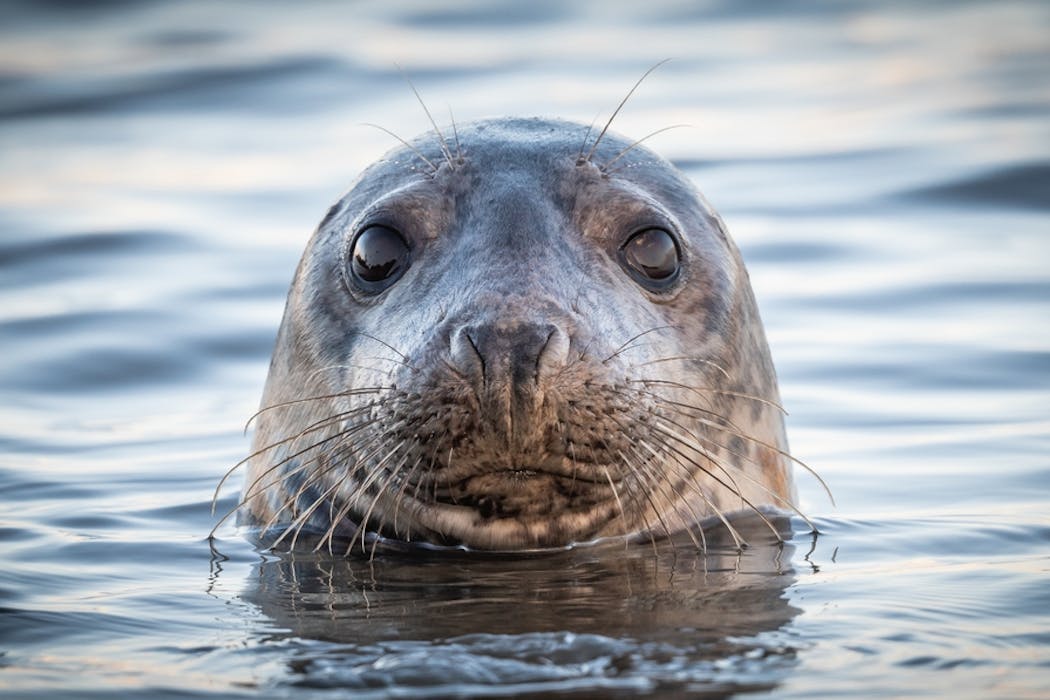
A new four-year study from Ireland’s national Marine Institute highlights the particular problem the nets are causing in Ireland. Legally protected seals, for instance, are regularly caught in this type of net, widely used by the Irish fishing industry including in the country’s only marine national park.
Tangle nets were first introduced to Ireland in the early 1970s. This was to help boost the competitiveness of the Irish crayfish fishing sector and provide an alternative method to the traditional pot-based method that was used up to that point.
But tangle nets are known to potentially harm a variety of species. The estimated impact from the latest report (covering 2021-2024) about what the nets had caught was stark:
• 1,161 nationally protected grey seals
• 81 critically endangered angel sharks
• 1,712 critically endangered flapper skate
• 532 critically endangered tope sharks
Other species caught included the endangered white skate and undulate ray, as well as rarer records of common and Risso dolphins. Catches varied throughout the study region, and included Ireland’s marine national park in County Kerry. It is unclear whether similar numbers are seen in other fishing areas throughout Ireland.
The report argues for the reduction of these accidental catches to “safe biological limits”, but acknowledges that there probably is no safe limit for several of the shark and skate species given their conservation status and their approach to reproduction.
The documented numbers of catches is particularly concerning for the species’ designated as critically endangered by the International Union for Conservation of Nature. This classification stipulates an extremely high risk of extinction in the immediate future. Unlike many bony fish such as cod, tuna and salmon, sharks, skates and rays tend to mature slowly (often at more than ten years of age), have long gestation periods, and only produce a few young every year or two.
Rays and sharks are getting entangled in fishing nets.
This makes it very difficult for them to recover if anything causes their populations to decline. The angel shark is a good example – once widespread throughout the north-east Atlantic, it has suffered drastic declines across its range, and the species is now locally extinct throughout much of Europe.
There are few remaining strongholds for the species, but County Kerry is one of the last northerly refuges for angel sharks. With so few left in the wild, numbers caught in Ireland’s tangle net fishery are a significant concern at a global level.
Fisheries at a turning point?
Irish commercial fishers are facing a challenging future, with a number of recent restrictions to activities and quotas creating severe pressure on numerous businesses and communities around Ireland , and closing the crayfish fishery would be another blow.
But there is a suitable and straightforward low-impact alternative to the tangle net, which is to fully return to the traditional pot fishery to target crayfish.
Currently in Ireland some fishers still use these pots, and others a combination of pots and nets. Pots are typically netted, baited cages with a narrow-funneled opening designed to only catch the target species with a minimal footprint when landing on the seabed and low risk of harm to the endangered and protected species documented in the Kerry report.
The report clearly states the urgent need of phasing out tangle nets, and highlights an upcoming Marine Institute report focusing on economic considerations supporting a complete switch from nets to pots. The current report suggests this is the “optimum solution”. And it adds that trials using the pots showed equivalent catches.
Fishing is an integral part of Irish culture, and the need for a fair transition with appropriate support is repeatedly highlighted as essential for effective marine conservation.
What happens next in Kerry is probably going to be influenced by proposed legislation relating to how Ireland’s marine landscape is managed. The potential introduction of the Marine Protected Area and Nature Restoration laws, currently being debated, are aimed at protecting and restoring marine biodiversity, and may soon change how fishing is carried out in Irish waters.
Examples from around the world show that it is possible to change the type of fishing nets used to protect marine life. Gillnets (which capture fish by entangling then around the gills) have been almost completely phased out in Australia’s Great Barrier Reef marine park due to risks to animals including dolphins and turtles. Large scale drifting gillnets were banned in the European Union more than 20 years ago due to similar concerns.
The deaths of the world’s most sensitive marine animals documented in the tangle net report highlight the urgency of how fishing needs to change globally, while also protecting the livelihoods of an industry important to coastal communities.
Nicholas Payne receives funding from Ireland’s Marine Institute to study the ecology of sharks and rays. He is also a council member for the British Society of the British Isles
Louise Overy has received funding from National Parks and Wildlife Service for ecological research purposes and is a coordinator at the Irish Elasmobranch Group and Project lead of Angel Shark Project: Ireland.
Kleber Mendonça Filho’s The Secret Agent (O Agente Secreto, 2025) marks a moment of consolidation in one of contemporary Brazilian cinema’s most consistent careers.
Since his early short films such as Cold Tropics (Recife Frio, 2009), the filmmaker has developed a unique style packed with movie references that tantalisingly falls somewhere between arthouse and genre film. These traits reach new heights of self-awareness and formal freedom in The Secret Agent, which has been nominated for four Academy Awards, including best picture, and best actor for Wagner Moura.
The film belongs to a recent wave of Brazilian productions revisiting the military dictatorship (1964-1985), including Walter Salles’s Oscar-winning I’m Still Here (Ainda Estou Aqui, 2024), and actor/director Wagner Moura’s Marighella (2019). Yet these films do more than reconstruct historical episodes: they process, through cinema, an unresolved trauma whose reverberations continue to shape Brazil’s political present.
One of the features that makes The Secret Agent, set predominantly in 1977, particularly compelling in this regard is its treatment of universities, as battlegrounds where memory, power and democracy collide.
The film’s main character Armando, played by Oscar-nominated Moura, is not, in fact, a secret agent and has no obvious links to opposition movements. He is an academic forced into hiding after clashing with big business interests aligned with the authoritarian regime who want to get their hands on his research.
Brazilian philosopher Marilena Chauí has spoken of her personal experience of these dark days in Brazil portrayed in Mendonça Filho’s film. Chauí returned from France in 1969 with her PhD in hand, just after the Brazilian military suspended most civil rights in the country, leading to a state hunt for “communists” and the intensification of torture and censorship.
Chauí describes the presence on campus of mysterious military figures with the power to hire and fire and “disappear” staff and students who were hostile to the regime. The presence of secret agents disguised as students to monitor professors and students in classrooms in public universities was commonplace.
In The Secret Agent, Armando has recently returned from the University of Leeds in Britain. He and the international research team he has set up at the Federal University of Pernambuco in Brazil’s north-east fall under the scrutiny of Henrique Ghirotti, an industrialist from Sao Paulo.
Armando openly questions Ghirotti’s ethics and points to a conflict of interest: how can a wealthy industrialist justify taking government funding destined for universities for his own private interests? Armando’s bitter reaction to such an open show of corruption is enough for him to become a marked man. Much of the film portrays Armando’s attempt to hide from Ghirotti and the corrupt law enforcement and paid assassins he has at his disposal.
This dramatic situation illuminates not only the surveillance and repression universities endured under the dictatorship, but also broader patterns of corruption. The spider’s web connecting military interests with big business that drained Brazil’s economic momentum throughout the 1970s, is a history that is only now fully coming to light.
The film’s focus on academic freedom carries contemporary resonance. Mendonça Filho wrote The Secret Agent during the presidency of far-right Jair Bolsonaro (2019-2022), whose long list of hostile measures included attacks on public education. Between 2019 and 2022, federal universities lost 14.4% of their budget, and by 2022 funding had fallen below 2013 levels.
Universities reported severe difficulties maintaining basic operations and scholarship programmes, with accumulated cuts exceeding R$100 billion (£14 billion) over four years. Bolsonaro and his followers encouraged the reporting (and “outing” on social media) of teaching staff deemed to be “ideological”. Following Lula’s victory in the 2022 elections, modest relief arrived and, with the renewal of funding lines, the reconstruction of this ravaged terrain is slowly getting underway.
Walter Salles’ I’m Still Here explores similar territory about Brazil’s military dictatorship.
Archives of repression
The Secret Agent also speaks to renewed global debates around the privatisation of research, intellectual property, and the political vulnerability of universities, increasingly viewed as hotbeds of leftist sedition. Mendonça Filho’s film suggests that authoritarianism attacks society not only through violence but through the destruction, privatisation, or silencing of knowledge production itself.
The industrialist Ghirotti takes delight in informing Armando that he’ll be recommending that his research team is shut down and the work transferred to the University of São Paulo, with whom Ghirotti has dubious links. Ghirotti questions the usefulness of any research being carried out in the north-east that speaks to national interests, particularly when Canadians are working on the same tech and Brazil can pay for foreign science and technology.
Mendonça Filho, who is from Recife, the capital of Pernambuco, has been very vocal about the ingrained prejudice of many from the wealthier and whiter southern states in relation to the north, which is dismissed as backward. It is telling that in The Secret Agent Armando’s international research team first took shape in Leeds, given similar prejudices are often held about the north of England.
In a subplot set in the present day, a group of students work on an oral history project involving tape recordings made by dissidents during the dictatorship, including Armando. One of them, Flávia, travels to Pernambuco to visit Armando’s now middle-aged son.
A young black mother with family in the north-east, living in the periphery of São Paulo, Flávia, typifies the new, more diverse university student body, made possible by hard-won affirmative action initiatives and the expansion of the public university network.
In The Secret Agent, it is Flávia and students like her who have inherited not only the archives of repression, but also the possibility of transforming knowledge into a form of democratic repair.
Anchored by Wagner Moura’s compelling performance, Mendonça Filho’s film connects the struggles of the past to the curiosity and courage of a new generation. In so doing, The Secret Agent powerfully underscores cinema’s ability not only to entertain, but also to illuminate, question and inspire.
Alfredo Luiz Paes de Oliveira Suppia receives funding from CNPq (Conselho Nacional de Desenvolvimento Científico e Tecnológico) as a researcher level 1C.
Stephanie Dennison does not work for, consult, own shares in or receive funding from any company or organisation that would benefit from this article, and has disclosed no relevant affiliations beyond their academic appointment.
A little-known American lawsuit could end up reshaping popular music. A US federal court is preparing to rule on a landmark copyright dispute. At its centre is an interesting question: can a short rhythmic pattern – one that appears in thousands of reggaeton tracks – be owned?
The case, known as the Fish Market dispute, asks whether a looping beat widely associated with reggaeton can be protected by copyright. More than 150 artists and producers have been named as defendants, and around 3,600 songs are implicated.
But the consequences stretch far beyond potential damages. If the claim succeeds, a rhythm that underpins an entire genre could become private property. The lawsuit exposes a long-standing weakness in copyright law, which is its inability to clearly define what makes a piece of music “original”.
Copyright is meant to be straightforward. Original musical works receive legal protection but copies do not. In practice though, music rarely fits this neat, binary logic.
Songs are built from shared elements like rhythms, chord progressions and harmonic patterns. Musicians can reuse, adapt and transform them. These building blocks are how music communicates. But copyright law offers little guidance on which musical elements can be protected, and which belong to everyone.
Unlike literature or visual art, music lacks clear legal definitions for its basic components. There is no settled guidance on whether courts should compare melody, rhythm, harmony, tempo, timbre or pitch, or indeed how much similarity is too much. As a result, judges and juries are left to decide these questions case by case, often without musical expertise.
That uncertainty has made music copyright litigation expensive and unpredictable. Jury trials are particularly risky, and damages can be eye-watering. Two recent American cases show just how inconsistent the system has become.
When courts can’t agree what counts as copying
In 2018, a US jury found that musicians Robin Thicke and Pharrell Williams had infringed Marvin Gaye’s work with their song Blurred Lines, not because of a shared melody or lyrics, but because of a similar “feel” or “vibe”. The decision marked a dramatic expansion of copyright protection, suggesting that a musical mood could be owned. Critics warned this risked allowing artists to monopolise styles rather than specific creative expressions.
By contrast, a 2024 US court ruling in a case involving singer-songwriter Ed Sheeran took the opposite view. The court held that copyright does not protect the basic building blocks of music. Shared rhythms, chord sequences or stylistic elements, it ruled, are part of musical language itself. Protection applies only to concrete expressions such as specific melodies or lyrics.
The Fish Market case magnifies this contradiction and raises the stakes considerably.
The plaintiffs – Steely & Clevie Productions, which represent the musical catalogue of the influential Jamaican dancehall duo Wycliffe “Steely” Johnson and Cleveland Browne – claim that their 1989 instrumental track, Fish Market, introduced the so-called “dem bow” rhythm. This is a distinctive beat, they argue, which forms the backbone of reggaeton. They are seeking copyright protection for that rhythmic pattern.
Steely & Clevie – Fish Market.
If successful, the ruling would grant two rightsholders control over a core musical feature used across a global genre. Unsurprisingly, many musicians and scholars see this as an attempt to claim ownership of reggaeton itself.
They argue that the rhythm predates Fish Market, drawing on long-established Afro-Caribbean and Afro-Cuban traditions such as the habanera beat. Reggaeton, they say, emerged through cultural exchange: from Jamaican dancehall, through Puerto Rico and out into the world. According to this perspective, the plaintiffs are not protecting originality but attempting to privatise a shared cultural inheritance.
Why rhythm is so hard to copyright
Rhythm sits at the heart of the legal problem. It is abstract yet fundamental, short in duration but repeated across a song and deeply tied to cultural identity. Copyright law, designed to compare fixed and discrete works, struggles to evaluate such elements. When courts attempt to isolate rhythm from its musical and cultural context, they risk mistaking convention for originality.
Copyright once played a limited role in musical life. Over time, as recorded music became a major commercial industry, songs increasingly came to be treated as economic assets. Ownership and control moved to the foreground, often at the expense of recognising music as an intellectual and cultural practice rooted in borrowing, influence and exchange.
The dispute around the “dem bow” rhythm lays bare the clash between subjective creativity, economic regulation and the law’s demand for objective rules. That clash is becoming harder to ignore as AI-generated music floods the market, trained on existing works and capable of producing endless stylistic variations. If copyright cannot clearly define originality now, its limits will soon be tested even further.
The reggaeton rhythm on trial is not just a fight over a beat. It reveals a fundamental mismatch between copyright law’s rigid standards and the reality of how music is made.
The Fish Market case offers judges an opportunity to clarify where protection should end, and to recognise the dangers of stretching originality so far that creativity itself becomes collateral damage.
Anna Monnereau does not work for, consult, own shares in or receive funding from any company or organisation that would benefit from this article, and has disclosed no relevant affiliations beyond their academic appointment.
In the rare cases when a transgender person does commit an act of violence, the perpetrator’s gender identity is treated as the cause of the violence, and trans people are framed as a threat. This dynamic surfaced recently after 18-year-old Jesse Van Rootselaar shot and killed eight people in Tumbler Ridge, B.C., before turning the gun on herself.
Why does one rare act of violence by a trans person quickly become a referendum on all trans people? Yet the well-documented, ongoing violence of cisgender boys and men — who commit the vast majority of violence against women, children, gender-diverse people and each other — prompts little scrutiny of men and masculinity.
Lone wolves and structural invisibility
If we consistently generalized from behaviour to gender, masculinity’s role in violence would be obvious. But it is not. We don’t ask what role cis men’s gender identity plays in their violence. Men’s violence is often explained by individual concepts like the “lone wolf,” personal grievance or mental illness. This holds true across recent history.
Canadian data offers repeated consistently missed opportunities to highlight masculinity as a driver of violence.
The 2019 National Inquiry into Missing and Murdered Indigenous Women and Girls, for example, documented ongoing violence against Indigenous women, girls and Two-Spirit people. The report identified cis men as the majority of perpetrators along with colonialism, racism and institutional failures as the cause of that violence. Yet this did not trigger a moral panic about white settler men.
A 2022 CBC News Fifth Estate investigation found that since 1989, police have investigated at least 15 alleged group sexual assaults involving men’s junior hockey players. These revelations have sparked debate about consent and hockey culture but no blanket condemnation of men as a category.
Another CBC News analysis recently revealed that more than 600 RCMP officers have been disciplined for gender-based violence since 2014. Settlements have been paid and reforms promised, but the issue has been framed as workplace culture and accountability. Masculinity remains largely unexamined.
The pattern appears consistent: when a member of a marginalized community (such as transgender people) is violent, the entire group becomes suspect. But when members of dominant groups are violent, the violence is normalized or explained away as an exception.
If prevention matters, the questions must change
If violence prevention is the goal, we need different questions. And the pattern, not the exceptions, must guide our analysis.
Just as living under a political system does not make every citizen equally responsible for its injustices, being socialized into masculinity does not make every man violent. But it does mean masculinity operates as a widespread framework that shapes boys’ and men’s responses to shame and rejection, their definitions of worth and the social meaning of power.
Since violence repeatedly comes from white cisgender men, we must ask what that pattern reveals.
How do boys learn anger, shame and power? What emotional skills are discouraged? How are dominance, aggression and sexual conquest rewarded in teams, fraternities, online spaces and workplaces? What counts as “weakness,” and what are boys taught to do with their vulnerability?
Institutional questions matter too. Who knew about past behaviour? How are complaints handled? What reputational or financial incentives protect insiders? What systems allow men to retain power after repeated misconduct?
These are structural questions, not ones of blame.
Some may contend that cis men’s violence is hardwired, a result of testosterone, evolution or sex-based brain differences. These arguments are not supported by research. And if they were accurate, there should be more consideration of men as a public health hazard.
The call to follow patterns, not exceptions
Cisgender men commit the overwhelming majority of violence, legitimating the examination of masculinity as a cause of that violence.
A call to examine masculinity as a structural factor in cis men’s violence is not an argument that we are facing a “crisis” of masculinity. The issue is that dominant, settler-colonial models of masculinity encourage violence by being organized around control, entitlement and hierarchy.
Kimberly A. Williams is a registered social worker and a member of the Social Workers Association of Alberta, the Ontario Association of Social Workers, and the Canadian Association of Social Workers. She has previously received SSHRC funding for her current project documenting the people, places, and politics of Calgary’s historic sex industry. Williams is a member of the NDP and the Board of Directors for Amethyst Centre in Ottawa.
Many Canadians say they care about ethical products. They want coffee that supports farmers, chocolate made without child labour and everyday goods that are better for the environment.
This gap between what consumers say they value and what they actually buy is often described as hypocrisy. That explanation is tempting, but it misses something important. In most shopping situations, people are not choosing between right and wrong — they are choosing between prices.
Consumer research has long documented a gap between stated preferences and actual behaviour. In surveys, people tend to express stronger ethical intentions than they act on in real shopping situations. That does not mean those values are insincere, but that values are pushed aside when everyday constraints take over.
This gap shows up most clearly in routine purchases like groceries, coffee and chocolate. These are items people buy often, and even small price differences add up quickly. In those moments, price becomes the easiest decision shortcut, especially as food costs continue to rise in Canada.
Ethical products usually cost more because they support higher wages, safer working conditions and lower environmental harm. While those benefits matter socially, they don’t directly benefit the person paying at the checkout.
As household budgets tighten, choosing the ethical option can start to feel less like a moral decision and more like a financial burden.
Rethinking the ethical premium
Much of the debate around ethical consumption assumes that supporting better practices necessarily requires paying more. Ethical products are often framed as “premium” goods, with higher prices justified by their social or environmental benefits.
In our recent research study, we asked whether the ethical premium always had to be paid in money. Instead of focusing on higher prices, we examined whether consumers would respond differently if ethical products were offered at the same price as conventional ones, but in smaller quantities.
To explore this, we ran a series of experiments with more than 2,300 participants in Canada, the United States and Europe. Participants were asked to choose between ethical options (such as Fair Trade or sustainably produced goods) and conventional alternatives for everyday products like coffee and soap.
Participants were then randomly assigned to conditions that framed the ethical premium either through price or quantity. In the price-premium condition, participants chose between a higher-priced ethical option and a conventional alternative of the same quantity. In the quantity-premium condition, the ethical option was offered at the same price as the conventional alternative, but in a smaller quantity.
Across our experiments, consumers were consistently more likely to choose ethical products when the premium was framed as giving up quantity rather than paying a higher price.
Choosing less instead of paying more
Across our experiments, people reacted more strongly to price increases than to size changes. Consumers are more sensitive to price information than quantity information.
When ethical products cost the same as conventional ones, consumers no longer feel financially penalized for acting on their values. Rather, paying the premium with quantity makes the ethical product feels more affordable.
Importantly, this approach is not the same as shrinkflation, where companies quietly reduce package sizes over time without informing consumers. In our studies, the smaller size was explicitly visible, and consumers knew exactly what they were choosing.
Making ethical choices affordable
With grocery prices remaining high in Canada, expecting consumers to close the ethical gap by paying more money may be unrealistic. Ethical consumption does not fail because consumers are indifferent or hypocrites.
It fails because ethical choices are often presented in ways that make them feel financially out of reach.
Rethinking how the ethical premium is paid will not solve the problem overnight. Structural issues, such as supply chains, corporate practices and regulation, still matter deeply. But our findings suggest that design choices and pricing strategies can make a meaningful difference in whether consumers are able to act on their values.
If ethical consumption is to become more than an aspiration, it may need to be integrated into everyday affordability rather than positioned as an added cost. How we ask consumers to support ethical practices matters more than we often assume.
Jing Wan received funding from The Social Sciences and Humanities Research Council (SSHRC) of Canada.
Mehak Bharti does not work for, consult, own shares in or receive funding from any company or organisation that would benefit from this article, and has disclosed no relevant affiliations beyond their academic appointment.
Source: The Conversation – USA (2) – By Joel Lisonbee, Senior Associate Scientist, Cooperative Institute for Research in the Environmental Sciences, University of Colorado Boulder
Cattle auctions aren’t often all-night affairs. But in Texas Lake Country in June 2022, ranchers facing dwindling water supplies and dried out pastures amid a worsening drought sold off more than 4,000 animals in an auction that lasted nearly 24 hours – about 200 cows an hour.
It was the height of a drought that has gripped the Southern Plains for the past six years – a drought that is still holding on in much of the region in 2026.
The drought cost the agriculture industry across Kansas, Oklahoma and Texas an estimated US$23.6 billion in lost crops, higher feed costs and selling off cattle from 2020 through 2024 alone. As rangeland dried out, it has also fueled wildfires, including several in Texas in early 2026.
Historically, droughts of this magnitude happen in the Southern Plains about once a decade, but the severe droughts of this century have been lasting longer, leaving water supplies, native rangelands and farms with little time to recover before the next one hits.
Many cattle producers and rangelands were still recovering from a severe 2010-2015 drought when a flash drought hit western Texas in spring 2020, marking the beginning of the current multibillion-dollar, multiyear and multistate drought. Ample spring rainfall in 2025 and severe flooding in central Texas that year weren’t enough to end the drought, and a powerful winter storm in late January 2026 missed the driest parts of the region.
Precipitation from a severe winter storm in late January 2026, shown in blue and measured in inches, largely missed the areas with the worst drought conditions, indicated by red contour lines. UC Merced, NDMC
We found three key reasons for the enduring drought and its damage: rising temperatures and a La Niña climate pattern; water supply shortages; and lingering economic impacts from the previous drought.
The U.S. Drought Monitor’s monthly updates from January 2020 through January 2026 show how drought moved around in the Southern Plains over those years but never let go. Darker colors reflect the intensity of drought in each location. Joel Lisonbee; compiled from U.S. Drought Monitor
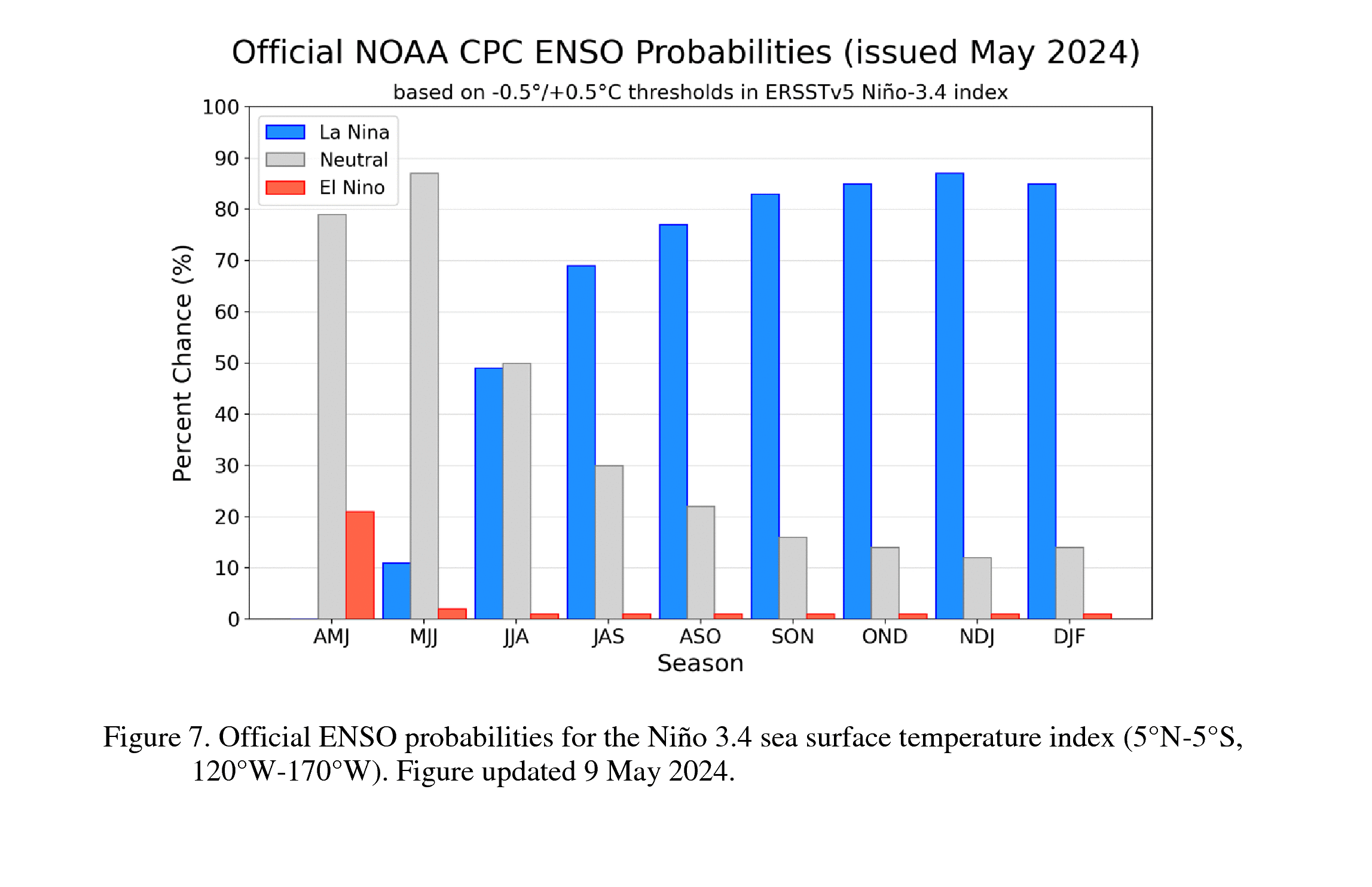
For the southern part of the Southern Plains, winter precipitation is closely linked to the El Niño–Southern Oscillation, a climate pattern that affects weather around the world. Five of the past six years exhibited a La Niña pattern, which typically means the region sees winters that are warmer and drier than normal.
La Niña was likely the primary driver – although not the only driver – of the drought for Texas and southwest Oklahoma, and one of the reasons drought conditions have continued into 2026.
The Southern Plains have a long history with severe droughts. The Dust Bowl of the early 1930s may be the best-known example. But a history with drought doesn’t make it any easier to manage when crops and water supplies dry up.
Deeply rooted water shortages
The heat and dryness since 2020 have left many of the region’s rivers, reservoirs and even groundwater reserves well below average.
San Antonio’s reservoirs all reached record-low levels in 2024 and 2025, as did the Edwards Aquifer, which provides water for roughly 2.5 million people. They were still low as 2026 began. Surface water and groundwater resources across central and western Texas have been depleted to the point that even a few big storms can’t replenish them.
A few major rivers flow into the Southern Plains from other drought-affected regions. Consider the Rio Grande, which begins in Colorado and winds through New Mexico and along Texas’ southern border: Not only has the Lower Rio Grande valley in southern Texas missed out on needed precipitation this winter, so did the Rio Grande headwaters in southern Colorado.
Colorado is facing a snow drought in winter 2026, as is much of the western U.S. If it continues, there will be less snowmelt come summer to feed rivers, such as the Rio Grande, or fill reservoirs. In early February, the Elephant Butte, Amistad and Falcon reservoirs, along the Rio Grande, were only 11%, 34%, and 20% full, respectively.
Lingering economic impacts
Like water supplies, the economy doesn’t just recover when the rains return.
One of the reasons the current drought has been so costly is that parts of the region had not fully recovered from the 2010-2015 drought when the latest one began in 2020. With only a five-year break between droughts, the landscape behaved like someone with an already weakened immune system who caught a cold.
The percentage of land in different levels of drought or wetness for each month based on the nine-month Standardized Precipitation Index leading up to the selected date. Reds indicate drier conditions; blues indicate wetter conditions. National Integrated Drought Information System, NOAA Drought.gov
During the 2010-2015 drought, cattle producers in Texas sold off about 20% of the statewide herd as water became scarce and rangeland dried up. Rebuilding a herd after a drought is a slow process. Pasture recovery can take a year or more, and a newborn heifer will take two years to mature and produce her own first calf.
Cattle herds had still not returned to pre-2010 levels when the 2022 drought peak forced another mass sell-off. From 2020 through 2024, Texas’s herd size declined from 13.1 million to 12 million; Oklahoma’s declined from 5.3 million to 4.7 million; and Kansas’ declined from 6.5 million to 6.15 million.
Looking beyond livestock, a large percentage of the Southern Plains’ crops failed in 2022, the peak year of the drought. In Texas, 25% of the corn crop was planted but never harvested, and 45% of the soybean crop was similarly abandoned. A normal season would have yielded a $2.4 billion cotton crop in Texas, but 74% of that crop was abandoned, slashing its value to roughly $640 million.
Ending the Southern Plains drought
Is the end in sight? With La Niña fading in early 2026 and its opposite, El Niño, potentially on the horizon, there’s a chance for wetter conditions that could reduce the drought in the fall and winter months of 2026.
This article, originally published Feb. 9, 2026, has been updated with new wildfires in Texas.
The authors do not work for, consult, own shares in or receive funding from any company or organization that would benefit from this article, and have disclosed no relevant affiliations beyond their academic appointment.
As the 21st century dawned, a newly elected Vladmir Putin was making friends on the world stage. He smiled for photo ops at G8 meetings, and was the first foreign leader to call George W. Bush after the attacks of 9/11, offering his support against terrorism.
So what changed? To understand Russia’s view of the world now – and its continued aggression towards Ukraine – it helps to know more about the psyche of the country and its leader.
In today’s episode of The Conversation Weekly podcast, we talk to James Rodgers, a reader in international journalism at City St George’s, University of London, about how a festering sense of national humiliation after the collapse of the Soviet Union hardened Putin’s tough man regime and led Russia to turn its back on the west.
In 1991, when the Soviet Union collapsed, many in the west believed liberal democracy and free markets had won in Russia. The cold war was over and Russia would join the community of democratic nations. But that’s not what happened. Instead, Russians experienced economic freefall, large-scale poverty and a sense of national humiliation.
“People felt this great loss of status,” says Rodgers, who has just written a new book called The Return of Russia about why it came into confrontation with the west.
“With the coming of new western ideas of the free market, a lot of people lost their jobs and the status that went with them,” says Rodgers. “Russia also lost the standing on the world stage that the Soviet Union had enjoyed.”
Putin became president on the eve of the new millennium. Rodgers says, Putin had not forgotten the economic pain and humiliation of the 1990s, and understood its importance to his constituency in Russia. “He understood the political potential of that humiliation in a way that I think some western policymakers did not understand the possible political consequences of it.”
Soon after, the 9/11 attacks in 2001 pushed the US to war in the Middle East. Whatever support Putin had pledged western governments began to crumble, particularly over the invasion of Iraq. Through interviews with former top western officials, Rodgers pinpoints that Russian foreign intelligence knew Iraq’s leader Saddam Hussein did not have weapons of mass destruction, and they were certain that the CIA and other western intelligence agencies knew that.
“Russia determined that the west was acting in bad faith about the reason that they’d given for going to war in Iraq, and this was actually about regime change and not at all about weapons of mass destruction,” says Rodgers. He says the invasion made Putin deeply suspicious of western motives in foreign relations, who began to think: “If they can do this to Saddam Hussein, then maybe one day the west will try to decide to do it for me.”
Listen to the interview with James Rodgers on The Conversation Weekly podcast. This episode was written and produced by Mend Mariwany and Gemma Ware with editing help from Ashlynne McGhee. Mixing by Eleanor Brezzi and theme music by Neeta Sarl. Gemma Ware is the executive producer.
Listen to The Conversation Weekly via any of the apps listed above, download it directly via our RSS feed or find out how else to listen here. A transcript of this episode is available via the Apple Podcasts or Spotify apps.
James Rodgers does not work for, consult, own shares in or receive funding from any company or organisation that would benefit from this article, and has disclosed no relevant affiliations beyond their academic appointment.
Une belle vache, c’est quoi ? Les critères pour évaluer cette qualité ne manquent pas : l’expérience et le vécu de chaque éleveur, les avancées de la génétique qui s’immiscent de plus en plus dans le quotidien des fermes et, bien sûr, les « beautés des vaches », ces qualités morphologiques qui structurent le canon de chaque race. Au croisement de tous ces enjeux, la question de la beauté des bovins continue en tout cas d’être la source de discussions sans fin.
Qu’est-ce qui fait la beauté d’une vache ? Pour le promeneur qui s’attarde au bord d’un pré, ce peut être la qualité de celle qui sera la plus fringante, qui viendra à sa rencontre et lui rappellera les images qu’il a vues dans des livres d’enfant. Pour l’artiste, une vache se doit d’avoir de belles formes, une robe et des taches aux couleurs bien marquées. Mais pour les techniciens, les vétérinaires et surtout pour les éleveurs, c’est bien plus que cela. Ils vont d’ailleurs parler au pluriel des « beautés des vaches. »
Le pointage
Les « beautés » forment une liste de critères d’évaluation des animaux utilisés lors du pointage. Cette appréciation visuelle de la morphologie de l’animal se base sur plusieurs dizaines de mesures ou observations qui renseignent le potentiel de l’animal non seulement en termes de production de lait mais aussi de santé. Ainsi, par exemple, l’angle que forme le jarret avec le sol est un critère important car un mauvais angle fait courir le risque que la vache boite ce qui diminuera sa mobilité, importante pour des animaux qui pâturent très régulièrement.
Le pointage est l’affaire de techniciens du conseil agricole qui vont de fermes en fermes et aident les éleveurs à sélectionner leurs animaux. C’est donc une pratique technique et économique spécialisée de sélection des meilleures vaches. Mais c’est aussi une pratique des éleveurs eux-mêmes qui tiennent à maîtriser la composition de leurs troupeaux. Le pointage se pratique également avec ferveur dans les lycées agricoles où on l’apprend de manière méthodique. Les élèves, futurs éleveurs, s’y adonnent avec plaisir et enthousiasme, notamment tant cela fait partie de l’excellence professionnelle.
Finale départementale du concours de pointage des lycéens agricoles de Pyrénées-Atlantiques.
Il y aussi des concours de jeunes pointeurs qui désigneront les plus compétents. Enfin, cette pratique de pointage est aussi mise en scène de manière spectaculaire lors des comices, fêtes agricoles locales qui rassemblent toute la profession : des juges – éleveurs réputés – y décerneront des prix. Les vaches présentées sont préparées soigneusement pour y apparaître les plus belles. Les animaux primés peuvent ensuite poursuivre leur carrière à travers d’autres événements dont le plus prestigieux est évidemment le salon international de l’Agriculture à Paris.
Concours des montbéliardes au Salon international de l’agriculture, à Paris, en 2022.
Ces trois collectifs – jeunes pointeurs, techniciens, juges de concours – et leurs pratiques témoignent de la nature diverse du pointage : une activité à la fois technique, sociale et symbolique. Sa mise en œuvre les réunit dans la singularité des fermes ou lors de manifestations publiques, autant d’occasions d’échanger de « parler métier » entre collègues et de manière festive : « Faut qu’on soit devant la race, c’est notre métier, notre identité » affirme à cet égard un éleveur franc-comtois.
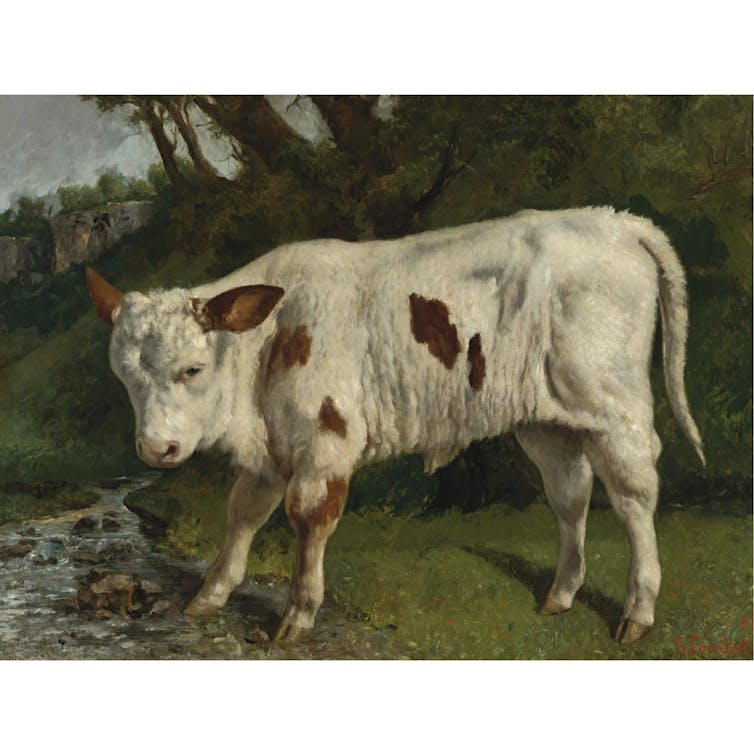
Dans cette région, une race de vache est particulièrement scrutée : la montbéliarde. Son lait entre dans la production de plusieurs fromages d’origine contrôlée comme le comté. Son histoire est ancrée dans le massif jurassien, où sa silhouette est iconique : une robe « pie rouge » blanche tachetée de rouge brun. Tête blanche, oreilles rouges, ses formes sont rassurantes et harmonieuses, c’est une « séductrice », assurent certains éleveurs. Le pointage reste alors le témoin d’une dynamique collective dans laquelle la confusion entre les compétences professionnelles, le métier et le plaisir ne peut être levée. C’est une culture, qui s’enrichit, se transforme en fonction de l’expérience, des connaissances accumulées pour améliorer le progrès génétique d’une race, l’arrimer à la modernité, tout en restant fidèle à son histoire.
Un veau de race montbéliarde peint par Gustave Courbet, en 1873 à Chassagne-Saint-Denis, dans le Doubs, département d’origine de l’artiste. Maltaper/Wikimedia, CC BY
La sélection
Dans l’élevage laitier, étant donné que le niveau de lactation est lié à la reproduction, les vaches sont régulièrement inséminées, idéalement tous les ans et majoritairement de manière artificielle. De ce fait, le troupeau compte un grand nombre de jeunes animaux et tous ne pourront pas rester sur la ferme. Si les mâles sont rapidement vendus, la sélection des femelles est plus délicate. Les éleveurs trient donc leurs bêtes en continu suivant des choix composites ancrés tout à la fois dans l’histoire des familles humaines et dans celles des lignées animales.
Dans l’après-guerre, avec le développement de la génétique quantitative, la sélection s’est basée sur l’accumulation de données issues du pointage et de données de suivi des animaux quant à leur production et leur santé. Cela a permis d’identifier de bons reproducteurs, des taureaux pouvant donner lieu à des lignées performantes. Cela a également impliqué d’évaluer des descendances et donc d’accumuler des données, ce dont étaient chargées des coopératives départementales de sélection qui disposaient d’un monopole local de gestion de la race.
Ce paysage a complètement changé au début de notre siècle. C’est une chose que l’on sait peu mais depuis le début des années 2010, la sélection des animaux domestiques a radicalement été modifiée. Grâce au décryptage de l’ADN, la génomique a succédé aux acquis de la statistique quantitative. Elle rend désormais envisageable le choix des jeunes femelles dès leur naissance en cherchant à répondre aux défis de plus en plus nombreux rencontrés par les élevages modernes. Alors que jusqu’ici, les index ciblaient la production de lait, les caractères fonctionnels et les caractères morphologiques, il est désormais possible – ou ce sera bientôt le cas – de caractériser l’absence de cornes, la fromageabilité du lait, les pathologies liées aux aplombs, une moindre émission de gaz à effet de serre, la résistance à la chaleur…
Tous les domaines de l’élevage semblent concernés par ces avancées : la santé des animaux et leur bien-être, leur adaptation à des environnements moins contrôlés et plus diversifiés, la réduction des impacts environnementaux, l’amélioration de la qualité sanitaire des produits alimentaires… Il serait désormais possible d’identifier, dès la naissance, le potentiel de l’animal et donc d’indiquer à l’éleveur quels animaux faire entrer dans le troupeau.
Concomitant à ce changement technique, l’interprétation française d’une législation européenne sur la libre concurrence a conduit à dissoudre les coopératives de sélection au profit d’entreprises privées qui vendent désormais les doses de sperme mais aussi les données issues du génotypage. Car pour caractériser les animaux il leur faut disposer d’une masse la plus importante possible de données issues des élevages. Les éleveurs deviennent ainsi à la fois consommateurs d’évaluations et de doses de sperme mais aussi fournisseurs de données. L’évaluation visuelle de l’animal – le pointage – reste pertinent non plus comme jugement de l’animal à sélectionner mais comme production de données dans un processus obscur de classement par des entreprises privées.
Pour suivre cette innovation, une enquête universitaire au long cours a débuté en 2014 sur la conduite de la race montbéliarde dans le massif jurassien. Mais alors que l’investigation devait porter sur les premières réalisations technico-scientifiques de la sélection assistée par marqueurs (la SAM), il a été observé qu’éleveurs et techniciens mélangent constamment, dans un désordre apparent, des calculs, des réflexions, des souvenirs, des affects…
Choisir une vache
Toutes ces dimensions sont visibles alors que les éleveurs entrent dans l’étable, sortent au pré pour apprécier les animaux en leur présence, ou se connectent au big data agricole et aux informations multiples auxquelles il donne accès via un écran. Les éleveurs s’alignent-ils sur les préconisations de ces outils numériques ? Une interpellation d’un conseiller technique suggère que la réponse à cette question n’est pas encore écrite :
« Ce qui fait ton plaisir, tes actes de décision… Ça doit pas être l’algorithme qui fasse tes décisions, qui te fasse garder ou pas une vache… Mais on n’en est pas loin, hein ? Et moi, je m’inscris en faux là-dessus… Il peut t’aider l’algorithme… Mais si c’est cette vache-là que t’aime bien… Parce que c’est elle qui emmène le troupeau au pâturage… Elle te fait un veau par an sans problème et elle ne tape pas quand tu la trais et que tu l’aimes vraiment… Ah, ben tu la gardes… »
Car la sélection reste avant tout une affaire individuelle menée par chaque éleveur pour garder la vache « qui va ». À la recherche de la « toute bonne » ou de la « toute belle », ils poursuivent avec obstination des images de vaches qu’ils ont dans la tête.
Car l’élevage est un métier au cœur duquel il y a plusieurs manières de faire et d’exceller et dans chaque troupeau, il y a divers profils d’animaux qu’on peut valoriser ou non. Il y a bien sûr la meneuse, les indépendantes ou les amicales. Il y a celles dont les lignées sont connues et « qui font partie de la famille » humaine et animale. Celles qui ne font pas parler d’elles, qui marchent bien pour aller au pré et sont capables de s’adapter aux ressources disponibles, aux aléas de la pousse de l’herbe. Pour les prairies rocailleuses du Haut-Jura, il faut des pattes solides et un large museau pour brouter. Bien sûr, il y a aussi celles dont la robe et les formes sont conformes à l’idéal de la race.
À travers la sélection que mènent les éleveurs, le fonctionnel (la bonne vache) et l’esthétique (la belle vache) ne peuvent être dissociés, ils sont au cœur de l’émotion que procure un animal avec lequel travailler : « Bon, il y en a qui se rapprochent toujours du standard “montbéliarde”, bonne mamelle, bon corps, etc. Mais après, les vaches, c’est comme les gens… C’est pas parce qu’elles ont un défaut qu’elles ne sont pas bonnes… », juge ainsi un éleveur.
Elles sont alors d’autant plus belles qu’elles ont des qualités multiples qui débordent largement les critères du pointage, qu’elles se savent choisies et peuvent ainsi exprimer leur agency. Ce terme, qui désigne la capacité à agir, ne s’applique pas exclusivement aux humains. L’agency n’est en outre pas une qualité individuelle, distribuée a priori, elle est encastrée dans les situations et les relations. Dans le massif jurassien, il y a des éleveurs qui se « sentent éleveur s » et des vaches qui « savent qu’elles sont des vaches ». Ils travaillent ensemble dans l’impromptu autant que dans la durée. « Rester en contact avec l’animal, ce lien avec chacune de nos vaches, car elles sont toutes différentes, ce qui fait que chaque jour est différent et raconte notre histoire », souligne une éleveuse sur Facebook dans le groupe « Passionné de la race montbéliarde ».
La génomique permet de sélectionner dès la mise bas : plus qu’une meilleure qualité, c’est une accélération supplémentaire. Cela repose sur un outil numérique qui s’appuie lui-même sur une indispensable collecte de données auprès des éleveurs. Tout ceci confirme que la race est un bien commun : elle n’existe et ne s’améliore que par la participation de tous. Mais sa gestion est désormais privatisée. Les éleveurs sont aujourd’hui utilisateurs et non plus acteurs d’une gestion collective.
Quant à la sélection elle-même, aux choix concrets des éleveurs pour constituer et renouveler leurs troupeaux, ne tend elle pas à se substituer à leurs propres appréciations dont on voit qu’elles ne relèvent pas seulement d’un raisonnement d’efficacité mais aussi de logiques symboliques, affectives, relationnelles qui se traduisent dans une esthétique de la vache, la bonne et la belle ?
Marc Mormont ne travaille pas, ne conseille pas, ne possède pas de parts, ne reçoit pas de fonds d’une organisation qui pourrait tirer profit de cet article, et n’a déclaré aucune autre affiliation que son organisme de recherche.
La proposition de loi visant à « protéger les mineurs des risques auxquels les expose l’utilisation des réseaux sociaux » sera bientôt examinée par le Sénat. Elle élude le cœur du problème : le modèle économique fondé sur la captation de l’attention. Sans s’attaquer à cette architecture, la régulation risque de manquer sa cible.
Loin de cibler les plateformes toxiques bien connues, la proposition de loi visant à « protéger les mineurs des risques auxquels les expose l’utilisation des réseaux sociaux » pourrait entraver l’émergence d’alternatives vertueuses pour nos écosystèmes d’information et de communication. Les sciences humaines et sociales ne sont pourtant pas avares de propositions systémiques plus constructives.
Des mois de débats stériles sans définition valable
Adopté par l’Assemblée nationale le 26 janvier 2026, le projet de loi visant à interdire les réseaux aux moins de quinze ans bénéficie d’une procédure accélérée à la demande du gouvernement. En accord avec la rapporteure Laure Miller, le gouvernement a fait voter un amendement qui gomme toute distinction entre des réseaux sociaux identifiés comme dangereux après avis de l’Arcom et les réseaux sociaux en général : tous sont désormais explicitement désignés comme « dangereux pour les moins de 15 ans ». De fait, le législateur n’apporte aucun élément pour définir ce qu’il propose d’interdire. Il faut se tourner vers le droit européen pour savoir de quoi il est question.
Selon le Digital Market Act (DMA) européen, un réseau social est un « service de plateforme essentiel […] permettant aux utilisateurs finaux de se connecter ainsi que de communiquer entre eux, de partager des contenus et de découvrir d’autres utilisateurs et d’autres contenus, sur plusieurs appareils et, en particulier, au moyen de conversations en ligne (chats), de publications (posts), de vidéos et de recommandations ». Sur la base d’une telle définition, le projet de loi français rate sa cible et confond réseaux socionumériques et médias sociaux en ligne, pénalisant les réseaux sociaux qui méritent encore d’être désignés comme tels.
Or de tels réseaux ne manquent pas. Nous ne parlons pas seulement des substituts aux services de microblogging que sont Mastodon ou Bluesky. Les projets réellement alternatifs sont peu connus et balbutiants faute de moyens dans un espace dominé par les grandes plateformes toxiques des BigTech. Vous connaissez TikTok, YouTube, Instagram, Facebook ou LinkedIn, mais sans doute pas Tournesol, Reconnexion, Qwice, Panodyssey ou encore needle.social. Ce dernier projet émane de la recherche publique en sciences humaines et sociales, développé au Centre de recherche sur les médiations (Crem) dans l’espoir de le mettre au service du secteur de la presse.
De longue date, l’impensé numérique traverse les discours médiatiques. Il consiste à présenter la technique comme une évidence au point de vider le débat public de tout questionnement politique ou velléité de résistance. Ainsi, en mettant l’accent sur des préoccupations tournées vers la santé des adolescents, le débat autour de l’interdiction des réseaux sociaux a contribué à détourner l’attention des enjeux démocratiques que soulève le modèle économique des plateformes dominantes.
Derrière l’urgence sanitaire, une urgence démocratique
Souvent résumé dans les médias à une opposition entre interdiction et éducation, le débat a fini par occulter le rôle prépondérant du modèle économique des plateformes pourtant identifié par l’Agence nationale de sécurité sanitaire. Là où réside un consensus scientifique, c’est bien pour condamner la responsabilité écrasante du modèle économique des Big Tech dans la dégradation de nos démocraties. C’est notamment le constat accablant du GIEC des écosystèmes d’information après avoir épluché près de 1 700 publications scientifiques :
« Les modèles économiques des grandes entreprises technologiques (Big Tech) incitent les enfants et les adultes connectés à autoriser l’extraction de données, qu’elles monétisent ensuite à des fins lucratives. Cette pratique facilite la diffusion virale de désinformation, de mésinformation et de discours de haine. »
Le modèle économique des grandes plateformes numériques constitue un facteur majeur de l’accélération de la désinformation et de la mésinformation. La propagation des contenus malicieux est amplifiée à partir de métriques (likes, commentaires, partages, temps passé, etc.) qui provoquent l’emballement, selon un processus favorable aux contenus qui provoquent le plus de réactions.
Une action systémique contre l’économie de l’attention est possible
Il ne viendrait pas à l’idée de nos parlementaires d’interdire de « boire dans un verre au café » sous prétexte que les « verres » peuvent contenir une boisson alcoolisée. C’est bien la vente d’alcool aux mineurs qui est interdite. Si l’interdiction peut être débattue, elle doit porter sur des produits dont la nocivité est avérée. Or, le produit toxique des BigTech ce sont les enchères publicitaires qui conditionnent toute l’architecture algorithmique de leurs réseaux sociaux. Dans une note du MIT de 2024, quelques mois avant de recevoir le Nobel d’économie, Daron Acemoglu et Simon Johnson ont ainsi appelé à l’urgence de taxer la publicité numérique. L’enjeu : casser cette économie toxique, contraindre les Big Tech à imaginer d’autres modèles d’affaires et réouvrir la possibilité d’innover au travers de plateformes différentes.
La régulation a également un rôle à jouer. On serait en droit d’attendre l’application des lois européennes existantes, telles que le Règlement sur les services numériques (DSA) qui impose notamment aux plateformes des obligations quant à la modération des contenus partagés sur les réseaux sociaux (facilitation des signalement et coopération avec des signaleurs de confiance, possibilités de contestation pour les utilisateurs, transparence des algorithmes, accès des autorités et des chercheurs aux données, obligations d’audits indépendants…). Ainsi, le 6 février 2026, la Commission européenne a conclu à titre préliminaire que TikTok enfreignait la législation sur les services numériques en raison de sa conception addictive au travers de fonctionnalités telles que le défilement infini, la lecture automatique, les notifications push et son système de recommandation hautement personnalisé.
On serait tenté d’exiger que l’industrie du numérique démontre l’innocuité de ses produits avant leur commercialisation, comme c’est le cas pour les médicaments, les jouets ou les véhicules. Pourtant, dans les industries médiatiques, c’est l’éditeur qui est responsable a posteriori devant la loi. Le problème des plateformes tient davantage au fait qu’elles sont considérées comme des hébergeurs, alors qu’elles effectuent bien une sélection éditoriale de ce qui doit être propagé ou invisibilisé via leurs algorithmes. Comme n’importe quel média, elles pourraient être tenues de demander une autorisation de publication dès lors que la diffusion des contenus sort du cercle privé. Si le droit des médias s’impose (comme le prévoit un amendement adopté en première lecture), un contenu répréhensible peut faire l’objet d’une action en justice engageant la responsabilité pénale du directeur de publication. Pour l’éviter, l’intérêt des plateformes consistera à mettre enfin en œuvre une modération a priori qui empêche la propagation des contenus litigieux.
Comment faire émerger des réseaux sociaux alternatifs et vertueux ?
Une architecture stratégique issue des ateliers de lutte contre les manipulations de l’information considère nos écosystèmes informationnels comme des biens communs dont dépend la résilience informationnelle de nos sociétés : au même titre que le climat ou la biodiversité, il convient d’en prendre soin. Les instruments existent, déjà identifiés pour agir face à d’autres enjeux écologiques : investissement dans la recherche publique, incitations fiscales et économiques sur le modèle des labels environnementaux, développement de l’économie sociale et solidaire.
La recherche en sciences sociales alerte depuis plusieurs années sur les dérives des plateformes des BigTech, mais inventer et expérimenter des dispositifs sociotechniques alternatifs nécessite un engagement au long cours et l’appui d’ingénieurs informatiques pérennes : toutes choses que ne permettent pas les financements sur projets. L’absence de moyens pour innover en matière d’infrastructures d’information et de communication soucieuses de l’intérêt général contraste cruellement avec les investissements dans une « course à l’IA” » qui fait peu de cas de l’intelligence collective.
Julien Falgas a reçu des financements du Ministère de la Culture (fond pour l’innovation dans le secteur de la presse), de l’Université de Lorraine et de la Région Grand-Est afin de cofonder la société Profluens à laquelle il apporte son concours scientifique. Profluens édite needle.social : une plateforme de partage et de découverte fondée sur l’intelligence collective.
Dominique Boullier ne travaille pas, ne conseille pas, ne possède pas de parts, ne reçoit pas de fonds d’une organisation qui pourrait tirer profit de cet article, et n’a déclaré aucune autre affiliation que son organisme de recherche.