Every month, between 3% and 8% of women and people assigned female at birth will experience debilitating emotional, cognitive and sometimes physical symptoms in the week or two before menstruation.
This condition, known as premenstrual dysphoric disorder (PMDD), is a severe mood disorder that has a significant impact on life. It is also associated with increased risk of suicide.
The majority of those with PMDD experience suicidal thoughts before their period, around one in three attempt suicide and more than half engage in self-harm.
Research also suggests that people with PMDD may be seven times more likely to attempt suicide, and twice as likely to die by suicide than women and people assigned female at birth who don’t have PMDD.
Despite the serious impacts PMDD has, it typically remains under-diagnosed, misdiagnosed and often inappropriately managed. Sadly, in my work researching PMDD, I often hear from people seeking help – either for themselves, their daughters, sisters, partners or friends. Their common fear is risk of suicide, and the “desperate” lack of tailored support available.
My colleagues and I have developed a new tool to help health professionals understand suicidal behaviour in those with PMDD. We hope this leads to people receiving timely and tailored support.
Suicide risk in PMDD
There are a few key factors that researchers suggest could explain why people with PMDD are at a heightened risk of suicide.
The overarching factor is the menstrual cycle.
In people with PMDD, the brain appears unusually sensitive to normal hormone fluctuations. This can disrupt brain systems involved in regulating mood, emotion and impulse control during the luteal phase of the cycle (between ovulation and the first day of menstruation), making this a high-risk phase for suicidal thoughts and behaviour.
Emotional dysregulation, another core element of PMDD, may also have an influence. This is characterised by frightening mood changes, including low mood, anger, anxiety and hopelessness.
Emotional dysregulation means that people with PMDD have increased sensitivity to perceived rejection and heightened responses to relationship conflict, all of which may influence suicide risk in the weeks before menstruation.
Hormonal triggers may also play a role. Starting, stopping or changing the dose of hormonal treatments (such as hormonal contraception), the postpartum phase after pregnancy and perimenopause are commonly associated with mental health crises in people with PMDD. These triggers are important to understand so that people can be supported in the right way by health professionals.
Life circumstances may play a role as well, with research suggesting that past trauma significantly increases the likelihood of being diagnosed with PMDD. This is a potential mechanism for heightened suicide risk – a relationship that is well-established in other mental health conditions.
Research suggests a link between neurodiversity and PMDD, too. This is an interesting finding, given that people with autism or attention deficit hyperactivity disorder (ADHD) already have a higher risk of attempted and completed suicide than the general population. More studies are starting to explore this link to help us better understand suicide-related experiences of people with both neurodivergence and PMDD.
Experiences with health services can also be a source of distress for people with PMDD. Many experience repeated dismissal of their symptoms or misdiagnosis.
People report feeling “helpless” and like they’re trapped in a “vicious cycle.” For many people, these feelings can last from adolescence until menopause (around 40 years), leading to a build up of exhaustion.
When my colleagues and I speak with people with PMDD, they say they become so exhausted they “just want to disappear” – a sign of heightened suicide risk known as passive suicidality. Many of them describe how they don’t want to end their life, they “just need the cycle to stop for a while.” This is an important insight, given they will experience around 450 menstrual cycles in their lifetime.
Overall, people with PMDD describe feeling “out of control”. Many people tell us that their suicide attempts were “impulsive,” rather than planned – leaving them confused and frightened afterwards.
Preventing suicide
Despite suicide prevention being an important priority for different stakeholders, there are still limited PMDD-specific suicide prevention interventions.
And although treatments are available for PMDD, they may not work for everybody and may not address suicidality.
Alongside colleagues from the University of St Andrews, the University of Glasgow and University of the West of Scotland, we have tried to address this by developing a new model that we hope will support health professionals in understanding of PMDD and suicide risk.
We did this by applying PMDD to an existing model for identifying suicidal behaviour in the general population. Our new model demonstrates how predisposing factors (such as hormonal triggers) can lead to the formation of suicidal thoughts and behaviour.
The model will help health workers to understand how the timing of the menstrual cycle may influence risk assessment. It will also inform discussions with patients – such as asking “how often do you feel this way?” rather than “how long have you felt this way?” – and embed menstrual cycle tracking as routine practice.
Although our research has yet to be put into formal practice, we hope the model will help patients and professionals identify monthly patterns in suicide risk and ultimately improve care for those living with this frightening and exhausting disorder.
If you’re struggling with suicidal thoughts, the following services can provide you with support:
In the UK and Ireland – call Samaritans UK at 116 123.
In the US – call the National Suicide Prevention Lifeline at 1-800-273-TALK (8255) or IMAlive at 1-800-784-2433.
In Australia – call Lifeline Australia at 13 11 14.
In other countries – visit IASP or Suicide.org to find a helpline in your country.
Lynsay Matthews receives (or has received) funding from Medical Research Scotland, Royal Society of Edinburgh, Research England, University of the West of Scotland, ESRC Impact Accelerator Award and National Institute for Health Research. She is affiliated with the International Association for Premenstrual Disorders UK (IAPMD UK).
Alors que le risque lié à la circulation de la rougeole demeure une préoccupation aux États-Unis, l’immunité collective dans le comté d’Allegheny, en Pennsylvanie, fléchit. Selon des données obtenues par le Washington Post en janvier 2026, dans ce comté, durant l’année scolaire 2023-2024, un élève de maternelle sur trois était scolarisé dans une classe où la couverture vaccinale était trop faible pour empêcher une flambée de rougeole. Quelles pourraient être les implications futures en matière de santé publique d’une baisse des taux de vaccination ?
Kar-Hai Chu, professeur à l’École de santé publique de l’Université de Pittsburgh, et Maggie Slavin, responsable de programme de recherche au sein du département Sciences du comportement et de la santé communautaire, font le point pour The Conversation.
Contrairement aux écoles publiques, les écoles privées et confessionnelles du comté d’Allegheny se situent sous le seuil d’immunité collective. Comment expliquer cet écart ? Faut-il s’en inquiéter ?
Les travaux de recherche montrent que l’écart de couverture vaccinale entre les écoles privées ou confessionnelles et les écoles publiques tient au fait que les premières enregistrent des taux plus élevés de dispenses de vaccination pour motifs moraux ou religieux.
À l’échelle locale, les taux de vaccination dans les écoles du comté d’Allegheny sont en recul et se situent en dessous du niveau requis pour enrayer la propagation de la rougeole, estimé à 95 %. Entre les années scolaires 2023-2024 et 2024-2025, les écoles publiques ont affiché une baisse globale de leur couverture. Les écoles privées et confessionnelles ont, quant à elles, vu la leur progresser globalement, avec cependant une plus grande variabilité d’un établissement à l’autre.
Quel que soit le type d’établissement, les enfants doivent disposer d’un schéma vaccinal complet et à jour afin non seulement de se protéger eux-mêmes, mais aussi de protéger la collectivité. En effet, même de faibles baisses des taux de vaccination peuvent favoriser la propagation de la maladie.
Qu’appelle-t-on « vaccins combinés » ? Depuis quand sont-ils utilisés ?
Parmi les vaccins combinés les plus courants figurent, par exemple, le vaccin contre la diphtérie, le tétanos et la coqueluche ou le vaccin contre la rougeole, les oreillons et la rubéole (ROR). Aux États-Unis, le vaccin ROR est homologué depuis 1971. Il a contribué à l’élimination de la rougeole dans le pays en 2000. Au cours de la décennie qui a suivi son introduction, le nombre de cas de cette maladie a diminué de 80 % .
Pourquoi certains responsables gouvernementaux réclament-ils la dissociation de ces vaccins combinés ?
Ces allégations contredisent des décennies de données scientifiques attestant l’innocuité et l’efficacité des vaccins combinés.
Qui détermine les recommandations vaccinales aux États-Unis ?
Depuis 1964, l’Advisory Committee on Immunization Practices (ACIP, comité consultatif sur les pratiques vaccinales) formule des recommandations vaccinales fondées sur les données probantes. Ce comité est composé d’experts en médecine et en santé publique bénévoles, nommés par le secrétaire à la santé et aux services sociaux (Secretary of Health and Human Services). Leurs mandats, échelonnés, durent quatre ans.
Ces experts examinent les données scientifiques tout au long de l’année et actualisent les recommandations en conséquence. La mise en œuvre de ces recommandations relève cependant de la compétence de chaque État. Sous l’administration actuelle, les recommandations vaccinales ont été politisées, ce qui les nimbe d’une sorte de flou.
Les représentants du ministère de la santé de Pennsylvanie et le gouverneur actuel de l’État, Josh Shapiro, ont déclaré qu’ils continuaient d’adhérer aux recommandations vaccinales fondées sur les données probantes émanant des principales associations médicales nationales, telles que l’American Academy of Pediatrics (Académie américaine de pédiatrie), l’American Academy of Family Physicians (Académie américaine des médecins de famille) et l’American College of Obstetricians and Gynecologists (Collège américain des obstétriciens et gynécologues).
Quelles sont les conséquences concrètes de la mésinformation et de la désinformation vaccinales ?
Si, pour l’année 2026, aucun cas de rougeole n’a encore été confirmé dans le comté d’Allegheny, le ministère de la santé de Pennsylvanie a annoncé que des cas ont en revanche été signalés dans le comté de Lancaster le 3 février. Il a été établi que les personnes concernées n’étaient pas vaccinées.
Le renforcement des politiques étatiques joue un rôle déterminant pour garantir l’accès à la vaccination. En Louisiane, par exemple, le fait de présenter la vaccination comme un geste de protection envers ses voisins s’est avéré un levier efficace en matière de sensibilisation des communautés locales. Dans le Dakota du Sud, les défenseurs de la vaccination interpellent les chefs d’entreprise en mettant en avant les bénéfices économiques qu’elle génère. L’Oregon a élaboré un modèle de financement permettant aux prestataires de soins et aux cliniques d’accéder aux vaccins sans avance de frais : ils ne remboursent l’État qu’une fois que les assureurs les ont dédommagés.
Les citoyens peuvent aussi agir en soutenant les organisations qui privilégient les décisions fondées sur des données scientifiques plutôt que sur des témoignages anecdotiques. Ils peuvent exiger que les politiques publiques soient élaborées de façon transparente, et se former pour être capables de faire la distinction entre un débat scientifique légitime et des pratiques de désinformation coordonnées. Ces étapes sont essentielles pour protéger les politiques vaccinales. Pour finir, rappelons que les recommandations 2026 de l’American Academy of Pediatrics ont été jugées fiables par douze organisations de professionnels de santé différentes, qui représentent plus d’un million de spécialistes en pédiatrie.
Kar-Hai Chu reçoit des financements des NIH.
Maggie Slavin ne travaille pas, ne conseille pas, ne possède pas de parts, ne reçoit pas de fonds d’une organisation qui pourrait tirer profit de cet article, et n’a déclaré aucune autre affiliation que son organisme de recherche.
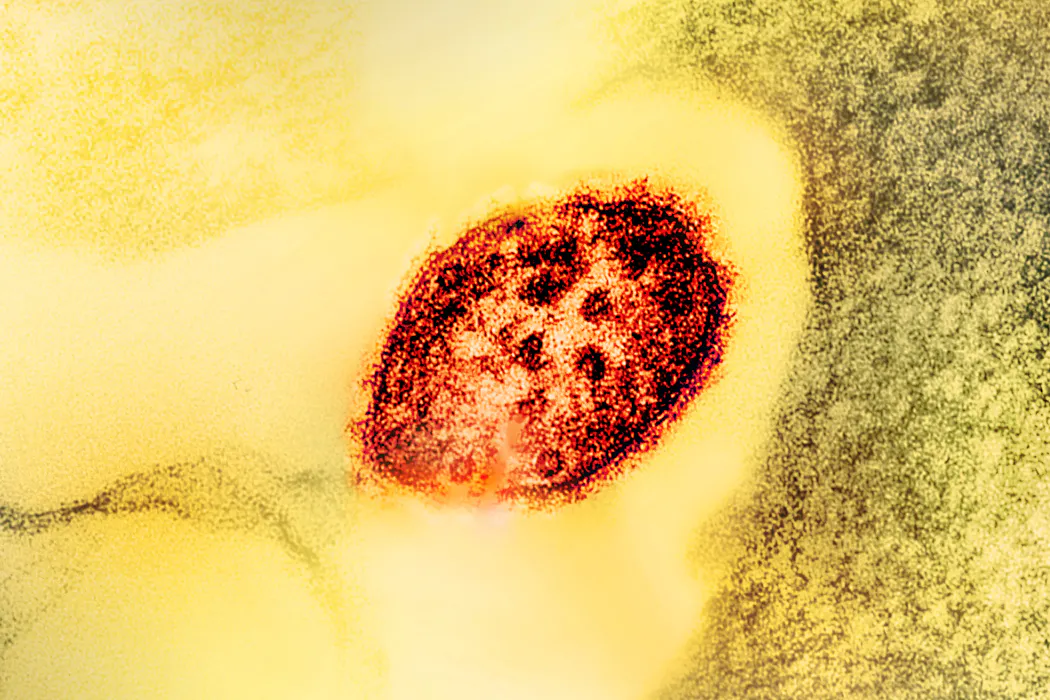
Selon l’Organisation mondiale de la santé, 120 pays présentent un risque élevé de résurgence de la rougeole (sur ce cliché, micrographie électronique à transmission colorée d’une particule, en rouge, du virus de la rougeole).CDC/NIAID/Wikimedia Commons
Après des années de faible circulation, la rougeole fait un retour notable en France. On imagine souvent que cette infection virale n’est qu’une simple « maladie de l’enfance », pourtant, elle doit être prise très au sérieux, car ses complications peuvent être graves. Or, ces dernières années, la couverture vaccinale s’est réduite. Si cette dernière reste élevée, elle ne l’est pas assez pour stopper la circulation du virus.
Chaque année, le virus de la rougeole tue encore plus de 140 000 personnes dans le monde, majoritairement des enfants de moins de 5 ans. En effet, si les symptômes de cette maladie virale – fièvre, toux, conjonctivite, puis éruption cutanée – semblent banals, ses complications sont fréquentes. Elles peuvent se traduire par des pneumonies, des inflammations du cerveau (encéphalites), une diminution de l’immunité ; et, parfois, mener au décès.
En outre, la rougeole est l’une des infections les plus contagieuses que nous connaissions : une personne malade peut en contaminer jusqu’à 20 autres si ces dernières ne sont pas vaccinées. Le virus, dont l’unique réservoir est l’être humain, se transmet par voie aérienne, et reste actif plusieurs heures dans l’air d’une pièce fermée.
Ces dernières années, la France voit un retour marqué de la rougeole alors même que le taux de couverture vaccinale reste globalement élevé. Pourquoi ?
En France, une augmentation du nombre des cas
Quinze cas en 2022, 117 en 2023, 483 en 2024 (dont près du tiers hospitalisés) : depuis quelques années, le nombre de cas de rougeoles dans notre pays augmente régulièrement. Cette tendance s’est poursuivie en 2025, puisque 873 cas de rougeole ont été recensés en France l’an passé.
Si l’on examine les chiffres dans le détail, 71 départements (70 %) ont rapporté au moins un cas de rougeole, parmi lesquels 4 cas rapportés en Outre-Mer, à La Réunion. Les cinq principaux départements où les nombres de cas déclarés ont été les plus élevés sont le Nord (15 % des cas déclarés), les Bouches-du-Rhône (6 %), l’Aude (6 %), la Haute-Savoie (5 %) et l’Isère (5 %). En outre, 14 % des cas étaient des cas d’importation, liés à un séjour à l’étranger.
Le tribut prélevé par le virus cette même année s’est avéré particulièrement élevé dans notre pays, puisque 314 (soit 36 % des cas déclarés) personnes ont été hospitalisées (dont 12 en réanimation), 121 cas (14 %) ont présenté une complication, dont 70 pneumopathies et 2 encéphalites. Quatre décès attribuables à la rougeole ont aussi été rapportés, tous chez des patients immunodéprimés.
Les analyses révèlent que la grande majorité des cas concernaient des personnes non – ou mal – vaccinées. Parmi les cas signalés en 2025 pour lesquels le statut vaccinal était renseigné (soit 620 cas sur 873), 416 (67 % du total des cas déclarés) concernaient des personnes non vaccinées ou insuffisamment vaccinées, 194 (31 %) des personnes ayant reçu deux doses, et 9 cas (1 %) des personnes vaccinées sans précision sur le nombre de doses administrées.
Les catégories de la population les plus touchées sont les jeunes enfants – l’incidence la plus élevée étant observée chez les nourrissons, la première dose de vaccin étant administrée à 12 mois, et la seconde entre 16 et 18 mois –, les adolescents et les adultes à partir de 30 ans. Ceci s’explique par le fait que la vaccination contre la rougeole a été introduite en France en 1983, puis a ensuite évolué avec le passage à un schéma à deux doses en 1996.
Soulignons que la résurgence de la rougeole n’est pas uniquement française. En Europe, plusieurs pays connaissent des flambées, notamment la Roumanie. L’Organisation mondiale de la santé (OMS) estime que plus de 120 pays présentent un risque élevé de résurgence. Au Canada et aux États-Unis, la rougeole fait aussi son retour.
Pourquoi un tel rebond maintenant ?
Le rebond actuel de la rougeole en France survient dans un contexte où la couverture vaccinale est globalement élevée, notamment grâce à l’obligation instaurée en 2018. Cette situation peut sembler paradoxale, mais elle s’explique par plusieurs facteurs.
Le premier concerne les perturbations liées à la pandémie de Covid-19. Pendant la crise, les consultations médicales et donc les rappels de vaccination ont parfois été retardés, créant des décalages dans certains calendriers vaccinaux.
Il faut savoir que le vaccin contre la rougeole nécessite deux doses pour être complet. Or, les rappels non effectués diminuent la couverture vaccinale nécessaire pour éliminer la circulation du virus. Un décalage du calendrier vaccinal peut, de la même façon, créer des poches de personnes susceptibles.
Le vaccin contre la rougeole est sûr, disponible et, après deux doses, confère une protection élevée, estimée à plus de 95 %, contre la maladie. Grâce à l’obligation vaccinale, en France, la majorité des enfants atteignent cette couverture avant l’âge de 2 ans.
Un autre point expliquant la recrudescence actuelle est la baisse de vigilance observée après la pandémie. La circulation de la rougeole avait fortement diminué grâce aux mesures barrières. Combiné aux retards de vaccination évoqués plus haut, cela a conduit à une accumulation d’enfants et d’adolescents non ou insuffisamment vaccinés, qui n’ont donc jamais été protégés contre le virus et forment aujourd’hui un réservoir de personnes susceptibles de contracter la maladie.
Enfin, la persistance de la défiance vaccinale est un troisième facteur expliquant le retour de la rougeole. Elle reste présente dans certaines communautés ou tranches d’âge, surtout parmi les générations nées avant 2018, non concernées par l’obligation.
En 2024 et en 2025, les deux tiers des cas signalés concernaient des personnes insuffisamment vaccinées, ce qui confirme que le déficit de vaccination reste le moteur principal de la résurgence.
Le vaccin, une arme efficace mais sous-utilisée
En France, la politique d’obligation vaccinale a permis d’atteindre un niveau de protection élevé et, sans doute, d’éviter une flambée épidémique bien plus massive. Malgré tout, la couverture reste insuffisante.
Si 95 % des enfants reçoivent la première dose, moins de 85 % complètent la deuxième dose, indispensable pour une protection durable. Or, la couverture vaccinale nécessaire pour permettre l’élimination de la rougeole est de 95 % pour deux doses, au niveau de l’ensemble de la population. Elle n’est donc toujours pas atteinte. Et ce, d’autant moins que persistent dans notre pays des poches de populations non ou mal vaccinées, en particulier chez les adolescents, jeunes adultes et certaines populations vulnérables, éloignées du système de santé.
En France hexagonale, la couverture vaccinale déclarée par les 18-35 ans est estimée à environ 90 %, avec d’importantes disparités régionales. Au niveau mondial, la couverture vaccinale stagne également : 83 % pour la première dose, 74 % pour la seconde. Elle reste bien trop faible pour pouvoir enrayer la circulation du virus.
La rougeole est ainsi devenue un indicateur de la fragilité des systèmes de santé et de l’adhésion aux politiques vaccinales.
Rappelons que certaines personnes ne peuvent pas bénéficier de ce vaccin vivant atténué : nourrissons de moins de 12 mois (sauf exception), femmes enceintes ou personnes dont le système immunitaire est affaibli (patients sous chimiothérapie, greffés d’organes ou porteurs de déficits immunitaires). Or, ces populations sont particulièrement vulnérables à la rougeole et ces complications.
Pour les protéger, il faut compter sur l’immunité collective : lorsque suffisamment de personnes sont vaccinées dans la population, le virus ne trouve plus assez de personnes susceptibles pour circuler, ce qui protège indirectement ces personnes vulnérables. Une couverture vaccinale de 95 % est donc aussi, et surtout, une façon de protéger ceux qui ne peuvent pas être protégés par la vaccination.
Des complications lourdes, pour les malades comme pour le système de santé
Les complications de la rougeole restent graves, et sont parfois mortelles. Chaque cas de rougeole mobilise fortement les services de santé, car il faut non seulement isoler les malades, mais aussi tracer leurs contacts et mettre en place des campagnes de vaccination d’urgence.
Parmi les complications possibles, la pneumonie est la première cause de décès lié à la rougeole. Elle survient dans 6 % des cas environ et est responsable de 60 % des décès. Les complications respiratoires sont plus fréquentes dans certaines situations : chez les nourrissons de moins d’un an, en particulier lorsque la mère n’était pas immunisée, chez les personnes immunodéprimées ainsi que chez celles souffrant de dénutrition ou atteintes d’une maladie respiratoire chronique.
Par ailleurs, un patient sur 1 000 environ développera une encéphalite aiguë (inflammation cérébrale). Celle-ci peut survenir chez n’importe quel malade, pendant ou juste après la phase aiguë de la maladie. Dans ce cas, le système immunitaire réagit de façon excessive et attaque le tissu cérébral. Si la mortalité ne dépasse pas 15 %, les séquelles neurologiques sont fréquentes (40 % des cas).
Au nombre de celles-ci figurent des troubles cognitifs, des problèmes de mouvement, des épilepsies (après une encéphalite postinfectieuse, les patients ont une susceptibilité sept fois supérieure à la population générale de présenter des crises épileptiques), des troubles émotionnels et des difficultés de langage.
Les malades immunodéprimés peuvent quant à eux être victimes d’encéphalites à inclusions (MIBE), une affection rare mais gravissime. Dans ce cas, le cerveau est directement infecté par le virus lui-même, qui se réplique dans les neurones sans que le système immunitaire, affaibli, puisse le contrôler. Cette affection, dont les symptômes surviennent trois à six mois après la maladie, est mortelle.
Des complications tardives peuvent aussi survenir, comme la panencéphalite subaiguë sclérosante (PESS), pour laquelle il n’existe aucun traitement. Cette complication, qui survient entre quatre et dix ans après la rougeole, est inéluctablement fatale. La PESS est due à la persistance du virus de la rougeole dans le système nerveux central (l’ensemble formé du cerveau et de la moelle épinière). Elle se caractérise par une dégradation intellectuelle progressive, associée à des mouvements cloniques (mouvements involontaires soudains) caractéristiques. La PESS survient dans 1 cas sur 100 000 lorsque la rougeole a été contractée après l’âge de 5 ans, mais ce risque peut monter jusqu’à 18 cas pour 100 000 lorsque la rougeole a été contractée dans la première année de vie.
Étant donné qu’il n’existe pas de traitement curatif spécifique pour les complications de la rougeole, la prévention par la vaccination reste le seul moyen de les éviter.
Par ailleurs, lorsqu’elle touche des femmes enceintes, la rougeole peut être à l’origine de risques pour la mère (fausse couche, prématurité) et pour le fœtus (dysfonctionnement du placenta entraînant la mort in utero). Si l’infection survient en fin de grossesse, une rougeole congénitale peut survenir et s’avérer mortelle. En outre, les rougeoles congénitales et néonatales sont associées à un risque accru de PESS.
Une maladie qui provoque une « amnésie immunitaire »
Hormis ces risques de complications, la rougeole entraîne une immunodépression transitoire, qui accroît la vulnérabilité aux autres infections pendant plusieurs semaines. Le virus de la rougeole agit sur le système immunitaire de deux façons : il épuise le stock de lymphocytes B mémoire et perturbe le renouvellement des lymphocytes B naïfs.
Des études ont montré que la rougeole élimine entre 11 et 73 % du répertoire d’anticorps présents avant l’infection. Non seulement certains anticorps ne sont plus représentés, mais la quantité d’anticorps contre de nombreux pathogènes est aussi considérablement réduite. Les individus qui ont la rougeole redeviennent ainsi vulnérables à de nombreux pathogènes.
Ce phénomène est connu sous le terme d’« amnésie immunitaire ». Les défenses immunitaires sont affaiblies beaucoup plus rapidement que lors d’une infection par le VIH (le virus responsable du sida), mais elles se reconstruisent aussi plus vite, à mesure que le patient est de nouveau exposé à des agents pathogènes.
Cette amnésie ne se produit pas avec la vaccination. Chez des enfants vaccinés contre la rougeole, aucune diminution d’anticorps n’a été détectée, ni en diversité ni en quantité.
Comment se protéger ?
La recette pour maîtriser le virus de la rougeole est connue, mais elle demande une mobilisation collective.
Il s’agit en premier lieu de renforcer la vaccination, afin d’atteindre le seuil de 95 % de couverture avec deux doses à l’échelle de la population, qui permettra de stopper la circulation du virus. Pour cela, il est notamment essentiel de cibler les rattrapages, en particulier les adolescents et les jeunes adultes ainsi que les zones à faible couverture.
Il faut également améliorer la surveillance, en procédant à des diagnostics rapides, confirmés par des analyses biologiques. Le suivi génomique du virus doit également être effectué, car il permet d’identifier les chaînes de transmission, de distinguer les souches endémiques des souches d’importation, et de documenter l’interruption de la transmission dans les régions où l’élimination du virus est visée. Les séquences obtenues sont comparées à des bases de données internationales, comme la Measles Nucleotide Surveillance (MeaNS), permettant de suivre la circulation des souches à l’échelle mondiale.
En France, la surveillance de la rougeole repose sur un système de déclaration obligatoire (MDO) géré par Santé publique France, appuyé par le Centre national de référence (CNR) des virus de la rougeole, des oreillons et de la rubéole, qui assure notamment le génotypage des souches. Le CNR assure le génotypage des virus et contribue à l’investigation des cas groupés et des chaînes de transmission.
Ce système a cependant montré ses limites, et la fragilité du système de signalement par les professionnels de santé constitue un point de vigilance. En effet, depuis le début de la pandémie de Covid-19, Santé publique France a constaté une augmentation importante des délais de signalement des cas suspects de rougeole aux agences régionales de santé.
Ces retards sont problématiques au regard de la contagiosité extrême du virus de la rougeole, qui impose une réaction quasi immédiate autour de chaque cas. L’enjeu est moins budgétaire que comportemental : la surveillance ne fonctionne bien que si chaque professionnel de santé signale les cas suspects dès l’étape clinique, avant que la confirmation biologique ne soit obtenue par analyse.
Enfin, pour lutter contre le virus, il est important de combattre la désinformation, en valorisant les professionnels de santé et les relais de confiance (médecins généralistes, pédiatres, pharmaciens, sages-femmes, infirmiers).
La rougeole n’est pas une maladie du passé. Il ne s’agit pas uniquement d’un problème infectieux : c’est aussi le reflet de notre rapport collectif à la vaccination, à la confiance et à la solidarité en santé. Elle revient aujourd’hui nous rappeler une leçon de base en matière de santé publique : tant que la vaccination ne sera pas universelle, les épidémies persisteront.
Deux doses de vaccin suffisent à protéger un enfant à vie. Ne pas saisir cette chance, c’est prendre le risque de voir resurgir une maladie que nous avons pourtant les moyens de faire disparaître.
Julia Dina est responsable du Centre national de référence des virus de la rougeole, rubéole et oreillons.
Pendant l’épidémie d’Ebola de 2014 à 2016, Musu, une habitante de Monrovia, au Libéria, a contracté le virus Ebola, tout comme son mari, ses cinq fils et sa fille.
Quelques semaines plus tard, six membres de sa famille sont décédés. Musu et son plus jeune fils ont survécu. Depuis lors, leur vie n’est plus la même. Son mari était le seul soutien de famille. Désormais veuve et mère célibataire, Musu a du mal à joindre les deux bouts. Comme elle le dit elle-même :
Il n’y a personne ici pour m’aider, à part Dieu. Pas de petit ami. Pas de père. Je suis le père, la mère, l’oncle et le frère. Dans le logement que nous louons, nous ne trouvons même pas de quoi manger.
Musu fait partie des nombreux survivants qui se sont remis de la plus grande épidémie d’Ebola au monde. L’épidémie a commencé par une flambée locale dans le village de Meliandou, en Guinée, mais s’est propagée aux pays voisins, le Libéria et la Sierra Leone.
En l’espace de trois ans, la maladie a infecté 28 600 personnes. Environ 11 000 d’entre elles sont décédées tandis que 17 000 ont survécu.
Le 9 juin 2016, l’Organisation mondiale de la santé a annoncé la fin officielle de l’épidémie d’Ebola au Libéria.
Contrairement à la couverture médiatique massive dont l’épidémie a fait l’objet à ses débuts, les reportages sur ses conséquences ont été limités. Par conséquent, très peu de gens savent que les survivants d’Ebola ont eu du mal à reprendre le cours de leur vie depuis la fin de l’épidémie.
Parmi ces survivants figurent des veuves comme Musu, des orphelins désormais sans abri et des milliers de personnes désormais aveugles ou souffrant de troubles visuels permanents.
Je suis démographe social et j’étudie les tendances en matière de santé et de population. Mon dernier ouvrage, Life After Epidemics: Ebola Survivors and the Social Dimensions of Recovery (La vie après les épidémies : les survivants d’Ebola et les dimensions sociales du rétablissement), rend compte de bon nombre de ces expériences. À partir d’entretiens menés auprès de 250 survivants d’Ebola au Libéria et en Sierra Leone, j’ai cherché à comprendre pourquoi de nombreux survivants vivent dans des conditions pires qu’avant l’épidémie, et ce qui les empêche de retrouver une vie normale.
Comprendre ces enjeux constitue une première étape vers l’élaboration de solutions aux problèmes auxquels sont actuellement confrontés les survivants d’Ebola. Apprendre de leurs expériences peut permettre d’éviter que ces problèmes ne se reproduisent chez les survivants de futures épidémies.
Réponses médicales et réponses sociales aux épidémies
Pour déterminer ce qui n’a pas fonctionné, il faut d’abord comprendre la différence entre deux types de réponses aux épidémies.
La première est la réponse médicale, qui met l’accent sur l’utilisation de la médecine clinique pour sauver des vies et soigner les patients infectés.
La seconde est la réponse sociale, qui aborde des questions telles que l’accès aux moyens de subsistance durables, le soutien aux orphelins et l’intégration des survivants dans leurs communautés.
Les décideurs politiques ont accordé une plus grande priorité aux réponses médicales à court terme face aux conséquences de l’épidémie d’Ebola qu’aux réponses sociales à long terme.
L’objectif principal de ma recherche est d’examiner comment les survivants d’Ebola ont été affectés par cette priorité. J’ai utilisé des informations issues d’entretiens et d’autres sources pour évaluer comment leur santé, leurs moyens de subsistance et leur vie familiale ont changé depuis la fin de l’épidémie.
Cette recherche apporte des preuves de la manière dont le manque d’investissement dans les réponses sociales continue d’affecter négativement la vie des survivants.
Par exemple, il n’existe aucun programme leur offrant un accès complet aux soins de santé, alors que beaucoup d’entre eux sont aveugles, souffrent de troubles musculo-squelettiques, présentent des troubles neurologiques ou vivent avec d’autres effets secondaires à long terme du virus.
Elle décrit également les expériences d’agriculteurs en mauvaise santé, qui ne peuvent plus cultiver leurs terres, et de chasseurs qui ne voient plus. Ils font partie des nombreux survivants qui exerçaient auparavant une activité indépendante mais ont perdu leurs moyens de subsistance.
Compte tenu des investissements limités dans les mesures sociales, la stigmatisation liée à Ebola persiste au sein des communautés locales. En conséquence, les interactions sociales des survivants d’Ebola sont souvent marquées par la méfiance envers ceux qui les perçoivent comme toujours infectés. Ces craintes ont conduit des commerçants à perdre des clients et ont contribué à la rupture de mariages.
De nombreux survivants ne reçoivent plus d’invitations à des événements sociaux tels que les mariages et les cérémonies de baptême. Dans certains cas, leurs enfants ont également perdu leurs camarades de jeu après que les voisins leur ont interdit de jouer avec les enfants des survivants d’Ebola.
Les organisations humanitaires ont joué un rôle majeur dans la lutte contre la propagation de la maladie pendant l’épidémie. Certaines de leurs politiques ont toutefois eu des conséquences imprévues qui ont aggravé les problèmes des patients ayant survécu.
Le processus d’incinération a entraîné des pertes financières pour les survivants qui gardaient leurs économies sous leur matelas, qui ont perdu leurs outils agricoles et ont dû payer pour le matériel emprunté à leurs voisins qui a également été détruit.
Certains des messages diffusés dans les campagnes de santé publique visant à contenir la propagation du virus pendant l’épidémie ont également eu des conséquences imprévues. Ces campagnes invitaient le public à éviter de toucher les personnes infectées afin d’empêcher la transmission de la maladie, car il n’existait aucun remède contre Ebola. Depuis la fin de l’épidémie, de nombreux membres des communautés locales continuent d’éviter tout contact avec les survivants. Ils se demandent comment les survivants peuvent affirmer qu’ils ne sont plus atteints d’Ebola, alors qu’on leur a dit que la maladie était incurable.
Pourquoi les survivants d’Ebola se sentent abandonnés
Pendant ce temps, les survivants d’Ebola continuent de subir les conséquences des pertes irréversibles qu’ils ont subies il y a dix ans. Ces épreuves et l’indifférence persistante à l’égard de leur situation sociale continuent de définir leur vie.
Les décideurs politiques devront accorder une attention égale aux questions médicales et sociales lorsqu’ils feront face à de futures épidémies. Cela nécessitera des investissements soutenus pour améliorer les conditions de vie des survivants, bien au-delà des célébrations qui marquent la fin des épidémies.
Kevin J.A. Thomas a bénéficié d’un financement du programme Andrew Carnegie Fellows dans le cadre de la réalisation de l’étude décrite dans cet article.
This seems to be a global problem. Data suggest that the world has produced more food in the last two decades and more wealth. Yet, roughly 150 million children under five remain stunted (too short for their age).
Stunted growth and poor cognitive development often stem from the same early-life problems, like poor nutrition, illness and unhealthy environments. These impediments to a child’s learning ability and physical growth have been shown to have serious long-term consequences for health and future economic prospects.
More concerning is that it appears that putting calories into mouths is not enough to prevent stunting. The science points to the role played by our intestinal microbiome – the trillions of microscopic organisms, including bacteria, viruses and fungi, that live in and on us – and the inability to digest nutrients.
We – a microbiologist and a health economist – recently published a paper in which we outline emerging evidence demonstrating that poverty affects children’s physiology – the way their bodies work – not merely their access to resources. Addressing childhood stunting therefore requires moving beyond single interventions such as providing food. What’s needed are integrated approaches that simultaneously tackle sanitation, infection control, nutrition quality and early childhood stimulation.
Our findings support the growing scientific evidence that both physiological and environmental factors must be addressed together to break the intergenerational cycle of poverty and developmental impairment. Nutrition is not the full story. The gut microbiome plays a complementary role by breaking down complex carbohydrates that our bodies cannot digest on their own, converting them into forms that may be absorbed and used for growth and development.
Diet provides the essential raw materials, while the microbiome helps unlock their nutritional value, thereby contributing to growth and development. There is also strong evidence that the environment shapes the microbiome’s ability to carry out these functions.
Gut microbes, poverty and stunting
Children’s growth is affected not only by what they eat, but also by how well their bodies can process and absorb nutrients.
Children living in informal settlements, where sanitation is generally poor, are exposed to microorganisms through dirt, toxic dust and sewage. This exposure may lead to a condition called environmental enteric dysfunction. This is when an inflamed intestine impairs the absorption of nutrients, including fats, proteins and vitamins.
The result is stunting. This may remain undiagnosed but can affect health negatively across a lifetime.
The prevalence of environmental enteric dysfunction in South Africa remains unclear. One reason is that there are no easily administered diagnostic tests. The other is the lack of large scale coordinated national studies.
Evidence from studies in Asia supports the potential role of the microbiome as a central contributor to stunting. These studies suggest that gut microbial communities of healthy children tend to follow predictable developmental milestones during the first two years of life. Failure to achieve these milestones may compromise the microbiome’s capacity to process food efficiently, with important implications for child growth and development.
In contrast, children with severe acute malnutrition often carry an immature gut community that does not mature in response to food or interventions focused on water, sanitation and hygiene services alone.
In a study done in Malawi, scientists transplanted gut bacteria from malnourished children into young animals and showed that the animals developed growth deficits. Conversely, microbes from healthy children could restore growth.
These studies show that an unhealthy gut community may be a cause – not just a consequence – of poor growth. Although the concept of a “healthy” microbiome has been the subject of extensive debate, there is increasing consensus that healthy microbiomes are typically characterised by high microbial diversity, the absence of dominance by a single organism, the capacity to remain stable, resilience and the ability to maintain essential functions even when community composition changes or is subject to environmental disturbance.
Studies that look directly at the small intestine have found that many stunted children have bacteria from the mouth growing in the wrong part of the gut. These bacteria may interfere with how the body absorbs fat, creating a direct link between the makeup of gut microbes and poor growth.
Other studies show that what really matters is what the microbes do – their ability to make vitamins and other building blocks – not just which species are present.
Put simply, the microbiome can help determine whether the food a child eats is used to grow body tissue or is wasted.
Knowledge gaps
Progress in tackling stunting has been slow for a number of reasons.
Firstly, traditional interventions focused on food provision and sanitation without understanding the underlying biological damage that impairs how nutrients are absorbed.
Secondly, the evidence base relies on studies from high-income contexts where nutrition alone may be the primary constraint. In lower and middle income countries the biological mechanisms driving stunting involve multiple interacting pathways.
Part of the answer is geography of research. Many of the early groundbreaking studies come from Asia and south Asia and from a few sites in east Africa and Malawi. Large multicountry cohorts such as the MAL-ED project and several studies in Bangladesh have provided strong evidence about enteric pathogens and their links to growth.
Children in different places have different diets, different exposures and different baseline microbes. Interventions that work in one region may fail in another.
The answers
What’s needed is African led research that samples African children across geography to understand what will work on the continent.
This requires a change in approaches to policy and research.
First, policy makers must stop treating food availability as synonymous with nutritional success. Food security matters but it is not sufficient.
Secondly, routine growth must be monitored better at primary healthcare level so stunting is not missed in communities where short stature looks normal to the eye.
Third, studies must measure gut function – not only weight and height. This will show who is failing to extract the benefit of food.
Fourth, water, sanitation and hygiene must be integrated.
Finally, build African capacity for this work, and fund African research.
Where the science could lead
Research into the microbiome can shift strategies from treating hunger to restoring lifelong health.
For example, it may be possible to identify new microbes that block fat absorption or those that degrade essential vitamins. We may begin to map how early disruptions in gut function influence metabolism and increase the risk of non-communicable diseases later in life.
We may also learn to use simple stool or blood markers to identify children who, despite having enough food, will not grow without gut-directed therapy.
Thulani P. Makhalanyane receives funding from the South African National Research Foundation, The European Union Horizon 2020 Program, and the Human Frontier Science Program.
Ronelle Burger receives funding from the South African Research Foundation, the DG Murray Trust, the South African Medical Research Council, and the Department of Science, Technology and Innovation for research on child stunting and housing.
Source: The Conversation – in French – By Kenneth Nsah Mala, Expert in Environmental Humanities, Sustainability Science, Foresight and Futures Studies, University of Cologne
Dans les prairies et les hautes terres de l’ouest du Cameroun, certains animaux sont considérés comme sacrés. Au sein des royaumes autochtones (fondoms, chefferies) de la région, bon nombre de ces animaux sont également considérés comme royaux. Il s’agit notamment des félins sauvages (comme les guépards, les léopards et les lions), des buffles, des éléphants, des porcs-épics, des cauris (coquillages marins utilisés comme objets symboliques et monétaires) et d’un oiseau aux couleurs vives appelé « touraco de Bannerman ».
Ces espèces occupent une place centrale dans les systèmes symboliques, culturels et spirituels. Elles servent, par exemple, à parer les membres de la famille royale (rois, reines et reines mères) ou pour décerner des distinctions royales à des personnes méritantes. Certaines parties de leur corps peuvent servir à fabriquer des couronnes, de la literie, des repose-pieds cérémoniels, des bracelets ou des colliers pour la royauté. Les plumes rouges du touraco de Bannerman sont utilisées pour distinguer les guerriers et les chasseurs.
Turaco de Bannerman. Henrik Grönvold
Ici, les pratiques culturelles autochtones peuvent à la fois préserver et menacer la biodiversité. Les noms de certains de ces animaux, en particulier les félins sauvages, sont utilisés comme noms honorifiques pour les rois. Mais la coutume exige que, lorsque ces animaux sont repérés, ils doivent être tués et emmenés au palais en guise de tribut.
La plupart sont soit éteints localement, soit en danger critique d’extinction. À l’exception des cauris et des porcs-épics, tous ces animaux figurent sur la Liste rouge des espèces menacées de l’Union internationale pour la conservation de la nature.
La perte de biodiversité causée par l’activité humaine s’accélère à l’échelle mondiale. Cela touche notamment les zones de grande biodiversité telles que le bassin du Congo en Afrique centrale, dont le Cameroun fait partie. Des milliers d’espèces ont été identifiées dans ce bassin, dont 30 % sont endémiques (indigènes).
Je suis un chercheur interdisciplinaire et mes travaux couvrent les disciplines suivantes : les arts, la littérature et les études culturelles, les humanités environnementales, les sciences de la durabilité, la gouvernance anticipative et les générations futures, la prospective stratégique et les études du futur.
Dans une étude récente, j’ai exploré comment la créativité littéraire, combinée à des ateliers de prospective, pourrait contribuer à transformer le regard porté sur ces animaux. Pourraient-ils offrir un avenir plus prometteur à ces espèces uniques ?
Le rôle de la littérature
Les textes littéraires tels que les pièces de théâtre, les poèmes et les romans offrent des perspectives sur la manière de relever les défis climatiques et écologiques dans le bassin du Congo. (Même dans le cas d’espèces moins populaires mais très importantes, comme les insectes.)
Leurs récits ont le pouvoir de mettre en garde contre la destruction des animaux royaux et sacrés. Ils peuvent également contribuer à façonner de nouvelles visions pour l’avenir de la conservation de la biodiversité.
Dans mon étude, je m’appuie sur l’écocritique postcoloniale (la relation entre la littérature, la culture, l’environnement et l’histoire) et de la prospective narrative (ce que les récits peuvent révéler sur l’avenir). J’analyse la manière dont ces textes abordent les animaux royaux et sacrés en remettant en question des pratiques culturelles nuisibles à l’environnement, et comment ils proposent de nouvelles formes de relations entre les humains et les autres animaux.
La nouvelle de Jumbam, Lukong et le léopard, par exemple, raconte l’histoire d’un jeune homme appelé Lukong. Fils d’un paria du royaume de Nso, il aide à capturer un léopard. À la surprise générale, le roi exige qu’on le lui amène vivant à son palais. Alors que Lukong s’apprête à être décoré par le roi, son père s’introduit discrètement dans la cour. Craignant pour la vie de son fils, il libère le léopard.
D’une certaine manière, cette histoire remet en question l’ancienne pratique culturelle consistant à tuer les animaux royaux. Elle invite les lecteurs à changer leur façon de voir ces animaux et d’interagir avec eux afin de mieux les protéger.
Les ateliers
Des histoires comme celle-ci peuvent ensuite être intégrées à des sessions d’ateliers de prospective. La prospective narrative, associée à la participation collective, donne naissance à ce que l’on appelle la prospective participative. Des participants et des parties prenantes d’horizons divers sont réunis pour explorer des scénarios futurs, les défis qui les façonnent et les dynamiques de changement.
Plus de 30 participants de tous âges, sexes et d’horizons divers se sont réunis. Parmi eux figuraient des enseignants, des chercheurs, des écologistes, des agriculteurs, des infirmiers, des écrivains, des cinéastes, des musiciens, des journalistes, des étudiants, des acteurs de la société civile, des décideurs politiques et des rois autochtones (fons).
À l’aide d’outils de prospective, les participants ont été invités à discuter de leurs motivations ainsi que des obstacles historiques tout en imaginant un avenir plus prometteur pour les animaux royaux et sacrés. Ces ateliers intègrent des récits littéraires sur la situation de ces animaux.
Ils se sont appuyés sur les tendances actuelles et les signaux de changement, tels que le changement climatique, la perte de biodiversité et les pratiques culturelles autochtones. Ils ont imaginé de nouveaux avenirs, puis ont proposé collectivement plusieurs interventions politiques susceptibles d’apporter des solutions concrètes.
Élaborer de meilleures politiques
Le Cameroun dispose certes de lois environnementales visant à protéger la biodiversité, mais leur mise en œuvre reste insuffisante. Mon étude – ainsi que notre atelier – vise à compléter ces lois et à contribuer à leur application effective sur le terrain. Parmi les idées issues de l’atelier, on peut citer :
Les arts créatifs et l’éducation devraient être utilisés pour sensibiliser à la protection des animaux royaux et de la biodiversité. Cela pourrait inclure des programmes tels que notre atelier, des concours créatifs et la mise à jour des programmes scolaires.
Au lieu de récompenser ceux qui tuent, les chasseurs locaux devraient être récompensés lorsqu’ils repèrent et signalent la présence d’animaux royaux à des fins de surveillance et de préservation. L’utilisation de substituts artificiels aux parties d’animaux pour les cérémonies traditionnelles devrait être encouragée.
Les politiques devraient encourager la recherche sur l’élevage contrôlé d’animaux royaux et sacrés menacés d’extinction, ainsi que la promotion de l’écotourisme autour de ces animaux. Des parcs et réserves spéciaux pourraient associer les arts et les animaux royaux pour attirer les touristes. Les recettes pourraient améliorer les moyens de subsistance, préserver les cultures et promouvoir la protection de l’environnement.
La réglementation environnementale devrait être renforcée grâce à la collaboration avec toutes les parties prenantes, y compris les autorités autochtones et les communautés locales. La chasse de certains animaux pourrait être réglementée. Des saisons de chasse et des quotas pour certaines espèces pourraient être mis en place. Les dirigeants et les communautés autochtones pourraient être impliqués pour adapter et moderniser les pratiques culturelles à l’ère de l’effondrement environnemental.
Mais nous devons passer des recommandations à l’action. Sinon, les idées issues d’études comme celle-ci resteront lettre morte, comme la plupart des lois environnementales au Cameroun. Et les animaux royaux, comme d’autres espèces, continueront d’être menacés d’extinction.
Kenneth Nsah Mala receives funding from the University of Cologne (Germany), the British Council, and the School of International Futures (SOIF).
Per and polyfluoroalkyl substances (Pfas), often called “forever chemicals”, are now found almost everywhere scientists look. They have been detected in rivers, oceans, wildlife, food and even human blood.
These synthetic chemicals have been used since the 1950s in products ranging from waterproof clothing and non-stick cookware to firefighting foams and food packaging. Their strength comes from their resistance to heat, grease and water. But that same durability means they barely break down once released into the environment.
Our new study of the Solent, the stretch of sea between Hampshire and the Isle of Wight in southern England, builds on our previous research. It shows how deeply these chemicals have entered a protected coastal ecosystem. We found Pfas in surface waters, sediments, treated wastewater effluent and marine wildlife. This included seaweeds, invertebrates, fish and harbour porpoises.
But the most important finding was not that Pfas were present. It was that current regulation may be missing the bigger picture.
Most environmental rules still assess Pfas one chemical at a time. In the UK and Europe, monitoring and legal thresholds focus more on compounds such as perfluorooctane sulfonic acid (PFOS) and perfluorooctanoic acid (PFOA). Yet, in the real world, wildlife and people are exposed to mixtures of many Pfas simultaneously. When we assessed our Solent samples using individual chemical thresholds, most species appeared to fall within existing legal limits. Harbour porpoise liver was the major exception. It contained PFOS concentrations far above the ecological standard.
But when we applied a mixture-based approach, the picture changed substantially. We combined the toxicity of multiple Pfas into a single “PFOA equivalent” measure. Many more samples exceeded a European Food Safety Authority health benchmark.
In other words, an organism can appear compliant under single chemical regulation while still carrying a potentially concerning mixture burden.
That matters because Pfas do not enter coastal ecosystems from a single source. The Solent is surrounded by wastewater treatment infrastructure, combined sewer overflows, urban runoff and hundreds of historic landfill sites. We identified around 194 combined sewer overflow outlets and more than 500 historic landfills close to the coastline.
We also found that treated wastewater from two major local treatment plants still contained a broad range of Pfas after processing. Conventional wastewater treatment systems are not designed to remove these chemicals effectively. This means they can continue entering rivers and coastal waters even after treatment. Some Pfas behave differently once released. Long-chain Pfas compounds (made up of six or more carbon atoms) such as PFOS tend to accumulate in sediments and animal tissues. Short-chain replacements (compounds which have fewer carbon atoms in their structure) are often more mobile in water. They can spread more widely and more easily through rivers, estuaries and coastal waters.
That difference was visible in our results. Sediments and marine mammals were dominated by PFOS and other long chain compounds. Wastewater, surface waters and some seaweeds contained a broader mixture that included newer short-chain Pfas.
The highest concentrations we recorded were in harbour porpoise liver tissue. Fish and invertebrates generally contained lower levels, but Pfas were still widespread across the food web. We also found evidence that some seaweeds and small invertebrates contained short-chain Pfas and precursor compounds. This likely facilitates the movement of contamination through coastal ecosystems.
The Solent is internationally important for wildlife. It contains protected habitats, saltmarshes, seagrass beds and feeding grounds for birds and marine mammals. Yet it also sits alongside one of the most densely populated and industrialised stretches of coastline in southern England.
Growing concerns
Our findings arrive as concern about Pfas is growing internationally. The Environment Agency has recently reviewed the challenges of destroying Pfas safely. It noted that conventional disposal routes such as landfilling and wastewater treatment do not eliminate them. Natural England has warned that many Pfas remain poorly monitored in protected marine areas. Meanwhile, the EU is moving towards broader restrictions on Pfas use across thousands of products.
The UK has started paying closer attention too. Evidence submitted to ongoing parliamentary inquiries has warned about the risks Pfas pose to marine ecosystems and human health. Drinking water guidance has recently been updated to expand monitoring requirements. But regulation still largely focuses on a relatively small number of compounds, despite there being thousands of Pfas in commercial use.
There are important limits to our study. Some datasets came from different monitoring programmes with different detection limits. Our surface water sampling was also limited in terms of the number of tests so it’s hard to make direct conclusions about the direct risks to people eating seafood.
But the broader message is difficult to ignore. Pfas contamination is not confined to one species, one pollution source or one part of the food web. It is now embedded across coastal ecosystems.
If regulation continues to assess forever chemicals one compound at a time, we may continue underestimating the true scale of exposure.
Alex Ford has received funding from UKRI research councils, EU, charities and industrial partners including the water industry.
Henry Obanya does not work for, consult, own shares in or receive funding from any company or organisation that would benefit from this article, and has disclosed no relevant affiliations beyond their academic appointment.
Source: The Conversation – Global Perspectives – By Gorana Grgić, Head of Global Security, Center for Security Studies, Swiss Federal Institute of Technology Zurich; University of Sydney
As NATO counts down to its annual summit in Turkey in July, the alliance is facing perhaps the biggest challenge in its history – what a potential future without the United States, or US security guarantees, would look like.
In recent weeks, the Trump administration has taken a series of steps widely interpreted in European capitals as retaliation for allies’ reluctance to more strongly support the US position in the Iran war. It has announced the withdrawal of 5,000 troops out of Germany, halted the deployment of 4,000 troops to Poland and even reportedly considered moves to suspend Spain from the alliance.
Europe was already uneasy about Washington’s broader strategic intentions. Increasingly, NATO allies are realising they can no longer depend on the United States for their security and will have to shoulder far greater responsibility themselves.
NATO 3.0
US President Donald Trump’s narrow understanding of the value of alliances has long been known. Now, his vision for a new NATO is coming into view.
At a NATO defence minister meeting in February, the US under secretary of defence for policy, Elbridge Colby, introduced the idea of “NATO 3.0”. This would entail Europeans assuming a much larger role in conventional deterrence. The US, meanwhile, would prioritise strategic competition with China and supporting European security more selectively and from greater distance.
NATO Secretary General Mark Rutte and Elbridge Colby speaking at NATO in February.
At the same time, the White House has reportedly been pushing to roll back decades of NATO’s mission expansion and keep Ukraine and NATO’s four Indo-Pacific partners (Japan, South Korea, Australia and New Zealand) out of the annual summit in July.
This reflects a broader transformation in US strategic thinking. NATO is no longer viewed as a political community and a pillar of the liberal international order. Increasingly, it is seen as a narrower military arrangement whose value depends on whether Europeans can shoulder more of the burden themselves and remain compliant with Trump’s agenda.
In this new paradigm, the United States is not simply asking European allies to spend more. It is telling Europe to do more with less American hardware, a looser political alignment, and fewer guarantees.
Plus, there’s a deeper problem: the erosion of trust within the alliance and the assumptions that have underpinned NATO’s deterrence posture for decades.
The result is a “Europeanised NATO” emerging by necessity rather than design. What such an alliance would actually look like remains unclear.
A focus on collective defence
One thing is certain: one single country won’t simply replace the United States as alliance leader. No European power possesses the capabilities, resources or political legitimacy to fill that role alone. Instead, leadership will likely come from the most capable states acting together.
That trend is already visible in “Europe’s minilateral moment”. The E3 group (Britain, France and Germany) and newer E5 coalition (with Italy and Poland), for example, have begun accelerating coordination among Europe’s leading military powers.
These arrangements are not alternatives to NATO. Rather, they may become the mechanisms through which a stronger European focus inside NATO is organised.
But this is where the uncertainties begin. A more Europeanised NATO is far from guaranteed to become a more cohesive NATO. The alliance has long struggled with the strategic cacophony of its 32 members, driven by divergent threat perceptions, regional priorities and strategic cultures. As American leadership recedes, those differences may become even sharper and harder to manage.
A more Europeanised alliance is, at least initially, likely to narrow its focus on collective defence and deterrence to counter Russia’s militarism and its ongoing war against Ukraine.
The broader agenda that expanded after the Cold War to include crisis management and cooperative security may increasingly become secondary. This included efforts to address global security challenges (such as supporting capacity building in countries affected by violent conflict), counter-terrorism operations, and enhancing energy and maritime security.
Yet, many NATO allies, particularly those on NATO’s southern flank, continue to argue that crisis management and cooperative security must remain core alliance functions. For countries facing instability across North Africa and the Middle East, migration pressures, terrorism and maritime insecurity, NATO cannot be concerned only with Russia.
NATO’s cooperative security partnerships in the Indo-Pacific are also increasingly important, even though they are no longer openly supported by the US administration.
Cooperation with Japan, South Korea, Australia and New Zealand (known as the IP4) has emerged as perhaps NATO’s most promising cooperative-security framework, precisely because it strengthens the alliance’s core deterrence mission.
Unlike many earlier partnership initiatives, this is tied directly to defence-industrial cooperation, technological resilience, security of supply chains for defence-critical materials, and strategic signalling.
The new reality
The “new NATO” is by no means a settled compact. It is an alliance caught between competing visions, profoundly uncertain political commitments from erstwhile supporters, and unresolved strategic questions.
Europe is moving towards greater responsibility for its security, but without a clear consensus on what greater strategic autonomy ultimately means.
The central question facing NATO today is not whether the alliance survives. It almost certainly will in some form, as one should never underestimate the binding power of bureaucracies.
The real question is what kind of alliance emerges and how credible it remains. Will it be a narrower military pact laser-focused on continental defence? Or a broader political-security community capable of managing the full spectrum of crises affecting Europe?
Gorana Grgić was previously a recipient of research and teaching funding from NATO.
Source: The Conversation – USA (3) – By Klinger Soares Faico Filho, Professor da Disciplina de Clínica Médica e Medicina Laboratorial, Universidade Federal de São Paulo (UNIFESP)
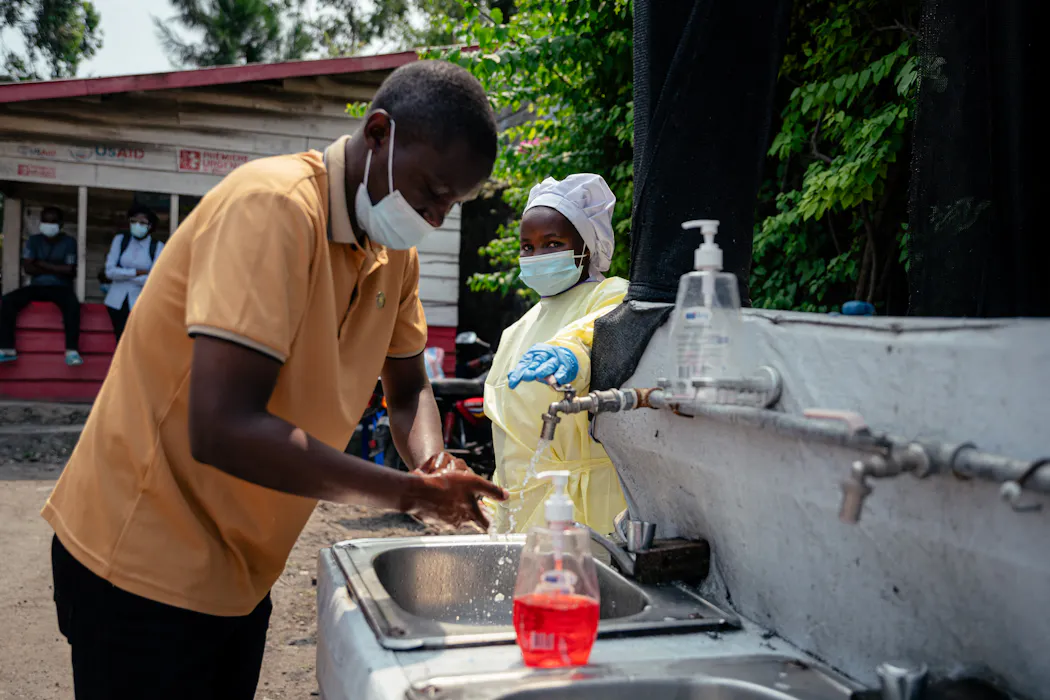
A man washes his hands before being screened to enter Kyeshero Hospital in Goma, Congo, on May 18, 2026. Jospin Mwisha/AFP via Getty Images
As a deadly outbreak of Ebola virus spreads in the Democratic Republic of Congo and Uganda, the U.S. Centers for Disease Control and Prevention said on May 17, 2026, that it is transferring “a small number of Americans” who were in Congo and who were exposed to the virus.
As an infectious disease scientist who has studied multiple epidemics around the world, I agree that this reassurance is justified. But one key aspect of this outbreak is highly concerning: There is more than one Ebola virus, and this outbreak is caused by one for which the world has no vaccine.
On May 17, 2026, the World Health Organization declared the Ebola outbreak a “public health emergency of international concern.”
The group of viruses that cause the disease, called orthoebolaviruses, consists of six known species, but three cause most large outbreaks: Zaire, Sudan and Bundibugyo. The tools the world developed over the past decade – the licensed vaccine Ervebo and monoclonal antibody treatments – were designed against the Zaire species, which is by far the most common.
There are no approved vaccines or therapeutics for the Bundibugyo virus. That’s because its genetic makeup differs significantly from other orthoebolaviruses. When the Bundibugyo virus was first described, scientists warned that this divergence would complicate efforts to design diagnostics and vaccines against it. An immune response to the Zaire species, elicited by a vaccine, is unlikely to protect against Bundibugyo.
An outbreak that grew in the dark
The most worrying feature about the current outbreak is not the virus itself but how large it already was when it was recognized.
It took the WHO until May 15 to identify the Bundibugyo strain as the cause of the outbreak. By May 16, the health organization had identified 246 suspected cases and 80 deaths in the DRC’s Ituri province. Recent Zaire outbreaks were often declared with only a handful of community deaths.
One reason for the delay is technical: The rapid field tests used for screening are calibrated for the Zaire species and often miss Bundibugyo. Early samples in this outbreak tested negative for Ebola; only genomic sequencing at a reference laboratory in Kinshasa identified the species. An outbreak that spreads invisibly is far harder to contain because contact tracing is always one step behind.
Geography compounds the danger – and explains why the WHO moved so fast after identifying the cause of the outbreak to declare it an emergency. Ituri has porous borders with Uganda and South Sudan as well as a highly mobile population. It is also in the grip of a humanitarian and security crisis due to prolonged armed conflict in eastern Congo.
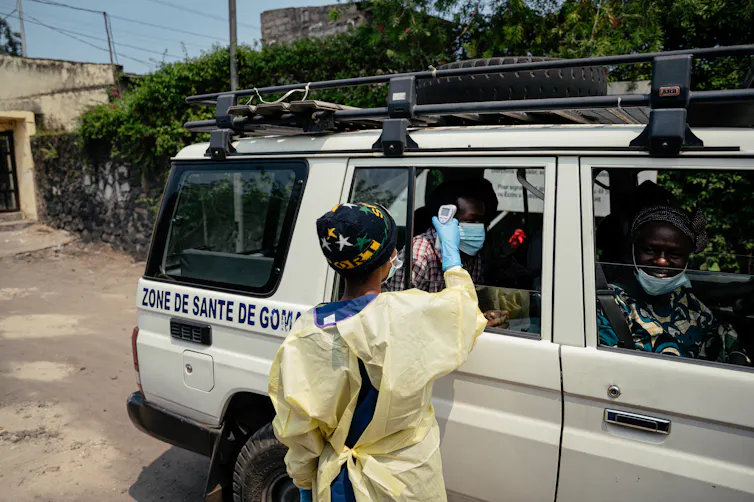
A visitor has their temperature checked at a checkpoint before entering Kyeshero Hospital in Goma, Congo, on May 18, 2026. Jospin Mwisha/AFP via Getty Images
The outbreak’s hot spots include mining towns with constant worker turnover, and cases have already reached Kampala, Uganda’s capital city, where more than 1.5 million people are connected to the world by an international airport. That is the international community’s central fear: not the remote village, but the virus reaching dense, highly connected urban hubs from which it can travel along trade and air routes across borders.
An outbreak that stays rural can be contained; one that reaches the transit network – as seems to be the case now – becomes everyone’s problem.
How Ebola spreads – and why health workers’ risk is high
There is also a less intuitive route. After recovery, the virus can persist for months in sites such as the testes, eyes and central nervous system, which infectious disease experts call “immune-privileged” sites. This means they don’t tend to experience strong responses from the immune system when they are invaded by foreign substances.
How far this applies to Bundibugyo is not yet established, but it is one more reason that a “contained” outbreak is rarely the end of the story.
A revealing detail of the current outbreak: Among the first identified cases were four health workers, who died within days. This points to transmission inside health facilities, a classic pattern when protective equipment and infection control fall short.
What this outbreak is really testing
With no specific vaccine or antiviral, the response depends entirely on classic public health measures: early detection, case isolation, contact tracing, safe burials, infection control and community engagement. These work, but they are labor-intensive and fragile in a conflict zone.
The encouraging news is that early supportive care – fluids and blood-pressure and oxygen management – saves lives even without a targeted drug. Experimental Bundibugyo vaccines have also shown promise in primates, though they are not yet proved in humans.
There is a final point that should resonate in the United States: Some epidemiologists have raised the question of whether cuts to global health programs contributed to the delay in this outbreak’s detection. Whatever the answer, the lesson is the same: With the existing Ebola vaccine, the world built a narrow defense against one species of a virus that comes in several.
The Americans now being flown out of Congo are a reminder that in an interconnected world, no outbreak is ever entirely someone else’s problem.
Klinger Soares Faico Filho is the founder and editor in chief of InfectoCast, a medical education platform on infectious diseases based in Brazil offering a podcast, courses, a subscription-based app, events, and content aimed at healthcare professionalsInfectoCast had no role in the preparation, review, or publication of this article
At a time when hard-fought primary elections in Georgia, Kentucky and Indiana and Ohio are making national news, perennial battleground Pennsylvania seems to be nodding through one of the sleepiest primary seasons in a long time.
I’m an associate professor of political science at the University of Pittsburgh. My research focuses on how political institutions like political parties and state and local governments affect political representation.
In statewide races, only the Republican lieutenant governor slot is contested, a race between GOP-endorsed attorney Jason Richey and newcomer John Ventre. In the state Senate, less than a third of incumbents drew a challenger. Only 21 of the 203 state Assembly seats see an incumbent facing an in-party challenge. So why does Pennsylvania, usually a hotbed of political strife, appear to be sitting this midterm primary season out?
Uncontested primaries are normal
According to political scientists Shigeo Hirano and James M. Snyder Jr., uncontested primaries, and uncontested elections in general, are normal – and can even be a good thing. They argue it’s because high quality candidates do not tend to draw a challenge. This means that an uncontested primary signifies the district has no potential candidates who both want the job and think they can win against the incumbent.
The biggest reason challengers stay home is because of a well-dug-in incumbent, and Pennsylvania had plenty of those this cycle. Unlike in Indiana, no wave of anti-establishment energy is giving long-shot challengers a fighting chance.
Interestingly, the moderate Trump foe and incumbent Brian Fitzpatrick, a Republican state representative from Bucks County, managed to avoid a primary challenge this year. Fitzpatrick was one of only two Republicans to vote against the H.R. 1 Act – also known as President Donald J. Trump’s “One Big Beautiful Bill.”
The only other dissenting vote came from Kentucky’s Thomas Massie — and the President responded by personally recruiting a primary challenger to run against him.
Why Pennsylvania’s Fitzpatrick got a pass
So how did Fitzpatrick manage to avoid Trump’s notice? It helps to compare his political fortunes with Massie’s.
Massie’s district is solidly red. He typically wins at least 60% of his general election vote. In 2024, no Democrat even ran against him.
Fitzpatrick, on the other hand, hails from a decidedly “purple” district where the vote could go in either party’s direction. He rarely wins more than 55% of the vote, and is perennially on the list of the most at-risk Republican incumbents.
In other words, in a midterm election in which Republicans face strong competition and fear losing the House of Representatives, Republicans need Fitzpatrick more than they need Massie. Without Fitzpatrick, his district is much more likely to fall in the Democratic column. Without Massie, Republicans can still expect to keep the seat red.
Pennsylvania parties hold the key
Pennsylvania incumbents have mostly been able to avoid finding themselves part of a larger conflict.
Pennsylvania remains one of only 13 American states that holds closed primary elections. That means voters must already be registered as party members to vote in that party’s primary. In an open, or even semi-open, primary state like Michigan and Iowa, potential challengers can try to win a primary election by relying on new voters choosing to align with the party only for that election day, or even for that specific election.
A closed party system gives party regulars, and the party organization itself, enormous sway over who gets nominated. Potential candidates in closed-party states are much better off working within the party organization and waiting for an incumbent to step down before throwing their hats in the ring.
Pennsylvania is a closed-party state and a swing state. In an election cycle in which political parties from West Virginia’s Republicans to California’s Democrats seem to be turning on their own members, Democrats and Republicans in the Commonwealth of Pennsylvania have managed to keep their parties more unified.
The desire for party fealty is strong, but not as strong as the need to win in the general election. Pennsylvania parties are powerful, and they are staying cautious until November. An uncontested primary, in other words, isn’t a sign of apathy. In Pennsylvania, it’s strategy.
Kristin Kanthak does not work for, consult, own shares in or receive funding from any company or organization that would benefit from this article, and has disclosed no relevant affiliations beyond their academic appointment.