So now we know exactly what you get when you cross two distinct brands of Swiss watch-making, one affordable (Swatch) and one luxury (Audemars Piguet). You get a new model of watch that attracts massive hype, huge queues and brawling customers.
For £335, you might also get your hands on a colourful pocket watch. But first you’d have to brave the crowds.
The watches, manufactured as a collaboration (or “collab”) between the two companies, are available in selected Swatch stores, with purchases limited to one item per person, per day, per store.
And before the “Royal Pop” watch collection went on sale on May 16 2026, excitement was already high. On release day, police and security teams were deployed in some places, with a tear gas incident in Paris and fighting in Milan. In the UK and the US, Swatch responded to the intense demand by closing its stores.
A popular product then, and a very effective marketing campaign to go with it. For Swatch, it is the third collaboration with a luxury watch brand in recent years.
One reason for their success if that these partnerships allow consumers to own a little bit of elite watchmaking for a fraction of the cost (a “normal” Audemars Piguet could cost tens of thousands of pounds). Like a Louis Vuitton passport cover or a baseball cap made by Ferrari, it’s a token experience of an elite brand for those who can’t regularly afford them.
From a business communications perspective, it’s a way of introducing large groups of people to luxury brands. It’s similar to how luxury car brands like Aston Martin and Lamborghini license their cars for use in video games such as Forza Horizon or Gran Turismo.
Meanwhile, Swatch gets free press and a positive spin for its entire product portfolio.
Watch what you wish for
From a consumer perspective though, the picture is more complex. The recent frenzy over Swatch’s watches should not be dismissed as merely herd mentality, and nor can it be explained by a sudden surge in demand for mechanical timepieces.
Instead, our research suggests that the response is a clear manifestation of something we call the “enrichment economy” – the fact that if something is in short supply and in high demand, it can be resold at a decent profit.
The enrichment economy has long been a feature of the world of art and antiques, but has also become a familiar part of mass market goods. Swatch has simply followed the example of certain trainers, Pokémon cards, dolls, and Lego sets. For instance, the Lego Cloud City set (originally released in 2003 in limited quantities for about £100) now resells at close to £10,000.
Driven by the chance to make a quick but substantial buck, consumers go out of their way to buy certain products and then resell them for much more than they originally cost.
In the case of Swatch and Audemars Piguet, the evidence for that motivation is clear. The watches sell from the stores at £335, and are being almost immediately offered online for ten times that amount – or even more.
As with other economies, the enrichment economy is prone to periods of boom and bust. For instance, the market for second hand luxury watches, which experienced unprecedented demand a few years ago, has now hit a plateau, forcing resellers to discover new markets with greater investment potential.
So while Swatch is at the centre of the enrichment economy in mid-May 2026, it could easily and quickly be overtaken by another brand or object very soon. And as the cost of living crisis continues, it seems highly likely that the enrichment economy will only expand as people look for ways to supplement their incomes with various side-hustles.
In the meantime, our research also suggests that big brands can do their bit to prevent customers getting so excited that they end up fighting with each other over popular products at shop fronts.
They could, for example, allocate sales using an online lottery system. Or they could prioritise trusted and loyal customers and increase the availability of their merchandise.
From a business and PR perspective, though, Swatch may already have won. By turning the collaboration into a talking point – and making scarcity, controversy and curiosity all work in its favour – the brand is having the time of its life.
The authors do not work for, consult, own shares in or receive funding from any company or organisation that would benefit from this article, and have disclosed no relevant affiliations beyond their academic appointment.
When John, a stonemason working at Glasgow Cathedral, finishes repairing a section, the highest praise he can receive is that no one notices. “When we get things that come together you just see a couple of wee bits of stone”, he explains. “You don’t actually see the work that went into it. But it’s satisfying getting it to all come back as if it’s never been touched.”
This is the paradox at the heart of skilled conservation work: the better you are at your job, the more invisible your efforts become. John spent years mastering complex stonecutting techniques precisely so his interventions will disappear. When all goes well, the building appears untouched.
We live in a culture that celebrates creativity, innovation and leaving your mark. Disruption is praised as the highest achievement. AI companies sell us on their power to generate novel content. Tech executives move fast and break things. Politicians advocate for glorious revolutions and talk of progress. Even on the right, conservativism has recently been given an increasingly radical inflection. In the UK, visions of reform tap into mainstream disaffection with the status quo. In the US the Trumpian hope that America can be “great again”, involves a similar vision of wholesale change. The result is that some of the most valuable forms of work often go unrecognised.
“There is a kind of love, called maintenance”, U.A. Fanthorpe wrote, in her 1995 poem, Atlas, a tribute to the many unseen acts that keep our domestic lives going. From paying bills, to home maintenance and the small acts of kindness that sustain filial relations, she highlights this “sensible side of love”. In a similar spirit, we want to highlight the undervalued work of maintaining and retaining what matters – as Fanthorpe puts it: “the permanently rickety elaborate structures of living”. From the relationships we maintain to the institutions we rely on, this kind of invisible labour shapes our lives in ways we don’t acknowledge and value as much as we ought.
Through ethnographic research with people engaged in the work of preservation, we’ve come to see that maintenance isn’t always passive. The more things change, the more it takes work to keep things the way they are. Often this is deliberate, thoughtful – and sometimes it’s profoundly difficult.
Discipline, not creativity
Stonemasons value discipline over creativity in their work. The real difficulty, they explain, is doing the same thing over and again: staving off boredom, keeping your mind on the task, carrying on when your fingers are numb with cold, repeating the same action, even when threatened with distraction.
Conservation architects describe their work in similar terms. One, who works for the national conservation agency in Scotland, contrasted his current role with previous work as a commercial architect. “Humility matters,” he said. “It’s important that you try and just ease back, because if you are quite an egotistical person, then that can cloud your decisions … you’ll cloud that by actually saying, ‘me, here’s my mark on the building!’”
Like stonemasonry, conservation work is often overlooked when done correctly. Jacob Lund/Shutterstock
The same orientation appears in other unexpected contexts. Think of the work involved in maintaining a functioning institution, like a school: the administrative and volunteer labour of a range of different types of people, the relationship-building between teachers and parents through parent teacher associations, the training of new staff in established practices and even something as basic as the repair of old equipment. None of that work shows up in political discourse as “reform”, “innovation”, or “progress”. It doesn’t change things or build anything new, and is often directed precisely at keeping something running more or less as it always has.
Many of us who’ve worked in institutions know that keeping something going can involve a great deal of time, effort, judgment and expertise.
Continuity and social life
The work of continuity also matters for our personal politics and social life. What would political discourse look like if we valued continuity as highly as innovation?
On both left and right, our political language is dominated by reform, progress, disruption and revolution. We lack an equivalent vocabulary to describe the deliberate work to keep things as they are. We tend to undervalue this work, in part because we fail to see when it happens. This is particularly so in the current moment, when narratives of broken Britain and general disaffection with the way things are, directs hope towards widespread, radical change. Even on the right, conservative political philosophies are increasingly presented as routes to profound transformation, whether as reform or restoration.
Preservation isn’t morally superior to reform, and this is not an argument against political change. Nor is it an argument for maintenance as inertia or inaction. Clearly feelings about broken Britain reflect real frustrations with dysfunctional institutions. Yet there is much about our political and social life that almost all of us would wish to preserve and sustain. Our point is precisely that such preservation can be active. Indeed, the more that things break or wear out, the harder and more necessary this work becomes.
Political and social life involves making choices about what to change and what to sustain. But when we only celebrate (or attack) transformation, creativity, and innovation we overlook the skilled, thoughtful work done with the aim of leaving (some) things as they are. Often, movement is needed in order to remain still. And if all we are offered is either disruptive change or wholesale reactionary resistance, we miss this.
A lack of change is not inherently a failure or an absence. Stonemasons have consciously and skilfully cultivated the ability to not innovate. Their work is difficult and important. But they are clear that its value is not captured in the language of “creativity”. They’ve learned something our innovation-obsessed culture has forgotten: that some of the most valuable human work lies not in making things new, but in the patient, humble, disciplined practice of helping what matters to endure.
Tom Yarrow received research funding from the Arts and Humanities Research Council and from a British Academy/Leverhulme small grant.
Paolo Heywood received research funding for part of this project from the European Research Council.
Source: The Conversation – Africa – By Misheck Mutize, Post Doctoral Researcher, Graduate School of Business (GSB), University of Cape Town
Africa is providing cheap liquidity to wealthy nations. In return it is paying huge interest rates to external institutional investors at the cost of its own development.
For instance, African central banks export their reserve funds for safekeeping. Sovereign wealth funds and pension fund managers invest only in investment-grade European and United States institutions. The most popular one is risk-free US treasuries, where they earn 3.5% annually on average. These are perceived as the safest instruments, easily convertible to cash without losing value.
The same European and US institutions then reinvest the same capital back to Africa at a high return for themselves. They purchase high-yielding bonds issued by African governments. Cumulatively, Africa has raised more than US$200 billion through sovereign Eurobonds since 2003. African countries are paying between 9% and 15% through Eurobond issuances.
Based on my expertise researching African financial markets, I argue that African countries can close their financing gap if they change regulations and investment policies.
Channelling a portion of Africa’s domestic funds to the continent’s development finance institutions would create a huge pool of domestic resources. This will make a significant impact on development. It would not jeopardise the central banks and asset managers’ need for safety of their funds. This would be a practical step towards a self-sustaining African financial ecosystem.
The latest report by Africa Finance Corporation estimates Africa’s domestic capital base at US$4 trillion. These are funds owned by African institutions and individual citizens in the form of reserves, collected deposits, premiums and savings.
Other countries such as China, South Korea and Japan used domestic resources and state-directed finance to aggressively drive their own industrial transformation.
This hasn’t been the case for African countries. The continent’s financing gap is estimated at US$280 billion annually for infrastructure and trade. That’s the amount African countries need every year to build roads, electricity capacity, ports, railways, manufacturing industries and trade connections necessary for African economies to grow and compete globally.
In addition, despite a huge domestic capital stock, African countries pay high interest rates when they borrow abroad.
A system designed for capital flight
The reason for Africa’s capital flight is systemic. Africa’s financial institutions, including central banks, are required by national regulations and investment policies to invest in investment-grade rated instruments. The only investment-grade ratings recognised by the IMF and World Bank are those issued by Moody’s, S&P and Fitch. This means the majority of African assets are excluded from the safe asset category.
The result is that African capital exits the continent. This has left African financial markets with fewer participants and investment instruments. Shallow financial markets make it difficult to finance industrialisation, infrastructure and job creation.
The absence of deep and liquid domestic financial markets becomes the justification for continuing to invest abroad. This is why African countries have remained heavily dependent on foreign capital and external debt despite growing domestic savings.
African central banks reserves
Three African leaders – the presidents of Ghana, Kenya and Zambia – have called for the continent’s foreign reserves invested overseas to be reinvested in African institutions.
At the 2025 Africa Financial Summit, central bankers agreed that it was time for African governments to place a portion of their foreign exchange reserves with domestic institutions.
Channelling a portion of these funds to African development institutions would be a practical step towards a self-sustaining African financial ecosystem. It would not compromise the effectiveness of central banks and other financial institutions. Instead, it would:
deepen domestic financial markets
bolster sovereignty
reduce dependence on foreign financial centres
strengthen local capital markets.
The Central Bank Deposit Programme by Afreximbank is a good example. Launched in September 2014, it invests in trade and development finance. The programme has mobilised over US$44 billion – about 9% of central bank reserves. Participating central banks have earned 6% to 6.5% – much higher than what investments in Europe and the US offer.
The programme’s performance demonstrates that African reserves can be safely and productively invested within the continent.
AU investment policy shift
It is for this reason that in February 2024 the African Union called on member states to redirect all their reserves back into the continent.
This was a landmark but long-overdue correction in the stewardship of Africa’s financial resources. It was more than an investment policy shift. It was a bold declaration of confidence in Africa’s own institutions and financial markets.
Since then, the AU’s own portfolio of resources has been fully reinvested in African-owned financial institutions. This declaration did not require ratification by AU member states.
What more needs to change
Building an African financing architecture demands a fundamental shift in how African assets are valued, regulated and invested. It means redefining risk for African markets. It also means developing regional investment-grade benchmarks and modernising prudential rules so that African capital can work and grow on the continent.
African capital markets remain shallow not because capital is scarce, but because risk perceptions are distorted. The rising discontent from African policymakers on the cost of capital makes the case even more compelling.
This is why a transformative project such as the Africa Credit Rating Agency has gained support in its pre-establishment phase.
African regulators and reserve managers must act decisively in the following ways:
change reserve management frameworks to allow more investment in African assets and regional financial institutions
formally recognise domestic credit ratings that offer contextually sensitive and empirically grounded assessments
reform IMF-driven constraints that exclude reserves placed in African institutions from being accounted as official reserves
allow rapid liquidity across borders when needed. This can be done while maintaining global standards to prevent illicit flows and regulatory breaches.
Africa cannot build credible domestic markets if its own capital is absent from the story. Investment is ultimately an act of confidence in the institutions behind the assets. The continent needs to invest in itself.
Misheck Mutize is affiliated with affiliated with the African Union as a Lead Expert on Credit Ratings
When imagining our early human ancestors in prehistoric Africa hundreds of thousands of years ago, one might envision trekkers plodding across a savanna, baking under an equatorial sun.
Research, however, suggests that our species’ unique strengths – creativity, cooperation and adaptability – may have been honed in a very different environment. Our team of archaeologists has uncovered a story in which mountainous landscapes played a central role in making us human.
Today, those of us who like to explore mountains have technical gear and conveniences like GPS safety beacons, water filters and raincoats that pack down small. Without this, we’d be lucky to last one night in some places. How did early humans not only survive, but thrive in these landscapes?
This question inspires my archaeological research in Lesotho’s Maloti-Drakensberg Mountains. Since 2023, I have led an international team of excavators at Likonong, a collapsed rock shelter in a remote area of eastern Lesotho.
Our findings reveal that Likonong is the oldest known archaeological site in these mountains and an incredible case study in human adaptation.
Likonong was first discovered in 1995. I visited the site as a graduate student in 2015 and returned in 2023 with my PhD to begin excavations. I hoped that Likonong would be older than Melikane, which, at 83,000 years old, was Lesotho’s earliest known site at the time. When my team started finding stone tools that looked 100,000 years older, I realised this site was more important than I’d imagined.
Our excavations have found evidence of people visiting Likonong beginning at 242,000 years ago, and making regular, longer visits by 144,000 years ago. Previously, archaeologists suspected that sustained occupation in highland Lesotho was unlikely before the climate warmed during the Last Interglacial, 130,000 years ago. Instead, our research shows that early humans thrived here during an ice age, possibly by relying on one another.
The setting
We’re no longer in an ice age, but living in Lesotho still requires teamwork. At Likonong, we’re hours away from the nearest paved road or medical clinic, excavating on a precarious, erosive slope above a ravine. We sleep in tents, filter water, and cook for ourselves. The sun sets at 5pm, giving way to unbearably cold and windy nights. Tinder is scarce on the barren, treeless landscape. At an elevation of 1,800 metres, an oncoming storm inevitably means snow.
Making the excavation work requires cooperation from each member of the team. While some of us dig, others sieve excavated sediment in search of artefacts. Someone heats up the tea kettle when the late afternoon chill sets in, and someone else knocks down the metre-long icicles that collect on the shelter roof.
It simply isn’t possible to survive in this environment without help, which might be why earlier hominins – members of the human lineage – didn’t stand a chance. While a few isolated hand axes suggest that a few brave individuals attempted to survive here, we haven’t discovered their bones or their campsites.
In contrast, 50km north-west of Johannesburg (about 600km from our site), an underground labyrinth of limestone caves known as the “Cradle of Humankind” traces human evolution back nearly 4 million years, to a time before the first stone tools or manmade fire. Hominins thrived in these lowlands and the equatorial highlands of east Africa, but the earliest occupations at Likonong didn’t occur until after the emergence of our species.
When were people there, and what were they doing?
In our excavations at Likonong we used several methods to get a clearer idea of how humans learned to adapt and survive at the site. One, called magnetic susceptibility, measures how easily sediment can be magnetised. We use it as an indirect measure of fire use, which we expect to have been frequent for anyone using Likonong as a home base. Fire is critical not only for warmth, but also for cooking, making tools, and advanced technologies like adhesives. The earliest occupations dating to around 242,000 and 214,000 years ago have relatively low magnetic susceptibility values, implying limited burning and that humans were not staying at the site for very long.
Evidence for human occupation between 214,000 and 144,000 years ago is minimal. But then something changed. Signs of human activity increased so much that we named this layer “Lower Crazy Town” because of the stone tools and charred bone gushing from its layers. We believe that this is the point at which humans started using Likonong as a more permanent home base. Families built hearths on top of hearths, cooked food, made tools, and slept in the shelter. Not long after, burning was so frequent that the earth itself turned red. Instead of building the occasional fire, humans structured their lives around this technology.
Crucially, surviving in the highlands at this time (144,000 years ago) would have been even more challenging than at 242,000 years ago. Between 190,000 and 130,000 years ago, a period of time known as the Penultimate Glacial Period, the world was plunged into an ice age. Temperatures dropped more than 6ºC, lush forests disintegrated into windswept grasslands, and glaciers capped the mountains’ highest peaks.
So why couldn’t Likonong’s first visitors figure out how to survive at the site for longer periods of time? We don’t believe they were any less intelligent than the later occupants.
We think they left because they didn’t share information, collaborate, or cooperate with one another. Innovations don’t happen in a vacuum. Cultural knowledge relies on mechanisms for both preserving and spreading information, such as far-ranging social networks and oral tradition. One small change – for example, more frequent fire use – could have led to profound technological advances by creating an environment for information sharing and group cohesion.
The humans who ventured into the highlands 144,000 years ago would have been under extreme environmental pressures. If they chose to rely on one another, sharing their skills and experiences around a fire, they may have jump-started a cascade of changes that shaped us into the adaptable species we are today.
During my first season as a principal investigator at Likonong, I was constantly texting my colleagues for help and advice. Which sieve should we use? What kind of stone was that? How do I resolve personal conflicts with team members? I’m lucky they picked up the phone. Without their help, I probably would have quickly left the site, too – just like the first humans to venture into the highlands, 242,000 years ago.
Kyra Pazan received funding from California State University, Stanislaus (Research, Scholarship, and Creative Activities awards) and a National Science Foundation Senior Investigator Grant (#1724435) and gear donations from Gossamer Gear.
Andrew Carr does not work for, consult, own shares in or receive funding from any company or organisation that would benefit from this article, and has disclosed no relevant affiliations beyond their academic appointment.
Source: The Conversation – in French – By Kenneth Andrew Andres Leonardo, Postdoctoral Fellow and Visiting Assistant Professor of Government, Hamilton College
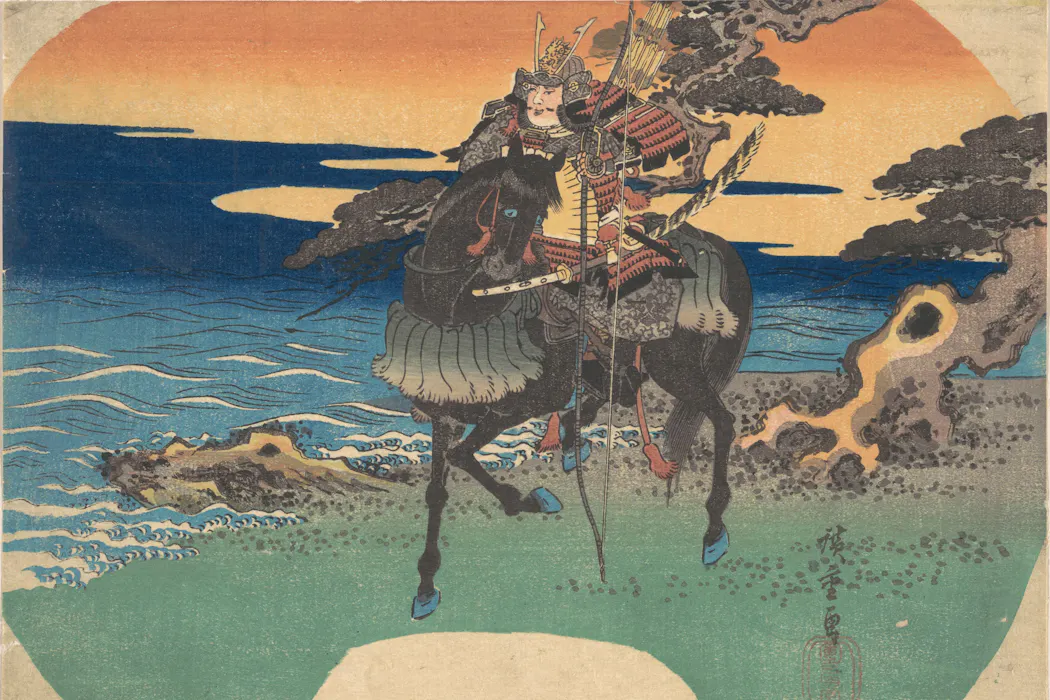
*Guerrier chevauchant un cheval noir au bord de la mer*, Utagawa Hiroshige (1797–1858), Metropolitan Museum of Art (New York, États-Unis).Wikimédia, CC BY
À des siècles d’écart, le philosophe grec Aristote (384-322 avant notre ère) et le moine japonais Tsunetomo (1659-1719), l’un des inspirateurs du « bushidō » (la voie du guerrier), ont cherché à définir ce qu’est une vie vertueuse en analysant les dangers liés à la quête des honneurs.
Pete Hegseth, secrétaire à la défense du gouvernement Trump, a mis l’accent sur ce qu’il appelle l’« éthique du guerrier », et on observe, aux États-Unis, un regain d’intérêt pour la « culture de la guerre ».
Le débat autour de ces concepts remonte à des milliers d’années. Les penseurs se sont longtemps interrogés sur ce que signifie être un véritable « guerrier », ainsi que sur la juste place de l’honneur et de la vertu sur le chemin pour le devenir. J’étudie l’histoire de la pensée politique, où ces questions sont parfois débattues, mais je m’y suis aussi confronté dans ma propre pratique des arts martiaux. Au-delà de la brutalité sans but ou de la simple victoire, les pratiquants sérieux finissent par se tourner vers des principes plus élevés – même lorsque le désir de gloire est fort.
Souvent, « honneur » et « vertu » sont presque synonymes. Si vous agissez avec droiture, vous vous comportez « honorablement ». Si vous êtes moral, vous êtes « honorable ». Pourtant, la quête de l’honneur peut susciter non seulement les meilleurs comportements, mais aussi les pires.
Je suis fasciné par la manière dont deux penseurs célèbres se confrontent à ce paradoxe. Ce sont des maîtres ayant vécu à des siècles d’écart, aux antipodes l’un de l’autre : Aristote, le philosophe grec, et Yamamoto Tsunetomo, un samouraï japonais et prêtre bouddhiste.
Le « prix de la vertu »
À l’époque d’Homère, le poète grec auquel on attribue la composition de l’Iliade et de l’Odyssée vers le VIIIe siècle avant notre ère, « être bon » signifiait atteindre l’excellence dans le combat et les affaires militaires, ainsi que posséder richesse et statut social.
Selon le spécialiste des études classiques Arthur W. H. Adkins, les « vertus tranquilles » comme la justice, la prudence et la sagesse étaient considérées comme honorables, mais n’étaient pas nécessaires pour qu’une personne soit jugée bonne à cette époque.
Plusieurs siècles plus tard, cependant, ces vertus sont devenues centrales pour Socrate, Platon et Aristote – des penseurs grecs dont les idées sur le caractère continuent d’influencer la manière dont de nombreuses personnes, dans le monde académique comme en dehors, envisagent aujourd’hui l’éthique.
La compréhension de la vertu chez Aristote se reflète non seulement dans ses œuvres, mais aussi dans les actions de son élève présumé, Alexandre le Grand. Le roi de Macédoine est généralement considéré comme le plus grand commandant militaire de l’Antiquité, avec un empire qui s’étendait de la Grèce jusqu’à l’Inde. L’auteur grec Plutarque estimait que la philosophie avait fourni à Alexandre l’« équipement » nécessaire à sa campagne : des vertus telles que le courage, la modération, la grandeur d’âme et la compréhension.
Dans la perspective d’Aristote, l’honneur et la vertu semblent être des « biens » que les individus poursuivent dans leur quête du bonheur. Il distingue les biens extérieurs, comme l’honneur et la richesse ; les biens du corps, comme la santé ; et les biens de l’âme, comme la vertu.
Chaque vertu morale, comme le courage et la modération, façonne le caractère en maintenant de bonnes habitudes, selon Aristote. Dans l’ensemble, l’être humain vertueux est celui qui fait constamment les bons choix dans la vie – en évitant généralement les excès comme les insuffisances.
Un guerrier courageux, par exemple, agit parfois avec une certaine peur. Le véritable courage, écrit Aristote, consiste à faire ce qui est noble, comme défendre sa cité, même si cela conduit à une mort douloureuse. Les lâches fuient habituellement ce qui est pénible, tandis que celui qui agit « bravement » par excès de confiance est simplement téméraire. Selon Aristote, quelqu’un qui agit sous l’effet de la colère ou de la vengeance combat par passion, et non par courage.
Le problème est que les individus ont tendance à négliger la vertu au profit d’autres « biens » observe Aristote : des choses comme la richesse, la propriété, la réputation et le pouvoir. Pourtant, c’est la vertu elle-même qui permet de les acquérir. L’honneur, lorsqu’il est correctement attribué, est le « prix de la vertu ».
Cependant, le désir d’honneur peut être écrasant. Aristote le qualifie même de « plus grand des biens extérieurs ». Mais, prévient-il, nous ne devrions nous en soucier que lorsqu’il provient de personnes elles-mêmes vertueuses. Il identifie même deux vertus – la grandeur d’âme et l’ambition – qui représentent de bons moteurs dans la recherche de l’honneur.
Loyauté, même face à la mort
Deux mille ans plus tard, et à l’autre bout du monde, les samouraïs du Japon se sont eux aussi illustrés par leur attachement à l’honneur.
L’un d’eux était Yamamoto Tsunetomo – un serviteur de Nabeshima Mitsushige, un seigneur féodal du sud du Japon. Après la mort de son maître en 1700, Tsunetomo est devenu moine bouddhiste.
Les enseignements de Tsunetomo se trouvent dans le Hagakure-kikigaki, un recueil de conseils sur la manière dont un samouraï doit vivre. Aujourd’hui, ce texte est considéré comme l’un des discours les plus importants sur le bushidō, c’est-à-dire la voie du guerrier.
Le serment de samouraï de Tsunetomo comprenait les engagements suivants :
Je ne serai jamais en retard sur les autres dans la poursuite de la voie du guerrier. Je serai toujours prêt à servir mon seigneur. J’honorerai mes parents. Je servirai avec compassion pour le bien des autres.
Le chemin pour devenir samouraï exigeait de développer des habitudes permettant au guerrier de respecter ces serments. Avec le temps, ces habitudes constantes se transformaient en vertus, telles que la compassion et le courage.
Pour mériter l’honneur, les samouraïs étaient censés manifester ces vertus jusqu’à leur dernier souffle. Tsunetomo a déclaré de manière célèbre que « la voie du guerrier se trouve dans la mort ». La liberté et la capacité d’accomplir ses devoirs exigent de vivre comme un « cadavre », enseignait-il. Un guerrier incapable de se détacher de la vie et de la mort est inutile, tandis qu’« avec cet état d’esprit, tout exploit méritoire devient possible ».
Une mort courageuse faisait partie intégrante de l’accès à l’honneur. Si le seigneur mourait, le suicide rituel était considéré comme une expression honorable de loyauté – une extension de la règle générale selon laquelle le samouraï doit suivre son maître. De fait, il était honteux de devenir un « rōnin », c’est-à-dire un samouraï sans maître. Néanmoins, il était possible de se racheter et de revenir. Le seigneur Katsushige, ancien chef du domaine de Nabeshima, encourageait même cette expérience afin de véritablement comprendre comment se mettre au service des autres.
Le chemin vers la vertu peut ainsi passer par une période de déshonneur. Le « Hagakure » suggère que la crainte du déshonneur ne doit pas conduire un samouraï à suivre aveuglément les ordres de son seigneur. Dans certains cas, un serviteur pouvait corriger son maître comme signe de « loyauté magnifique ». Tsunetomo évoque l’exemple de Nakano Shōgen, qui apporta la paix après avoir persuadé son seigneur, Mitsushige, de s’excuser pour ne pas avoir témoigné le respect dû à certaines familles du clan.
Le Hagakure présente l’honneur comme un élément essentiel de la voie du guerrier. Mais la renommée et le pouvoir ne doivent être recherchés que sur un chemin conforme à la vertu – une vie en accord avec le serment fondamental du samouraï.
« Un samouraï qui ne recherche que la renommée et le pouvoir n’est pas un véritable vassal »,
selon le Hagakure.
« Mais, inversement, celui qui ne les recherche pas n’est pas davantage un véritable vassal. »
Aristote comme Tsunetomo concluent que l’honneur joue un rôle important dans la quête de la vertu, notamment comme première source de motivation.
Mais tous deux s’accordent également sur un point : l’honneur n’est pas une fin ultime. Pas plus que la vertu morale. En définitive, ils reconnaissent quelque chose de supérieur encore : la vérité divine.
Pour Aristote et Tsunetomo, il semble que la voie du guerrier s’oriente vers la philosophie plutôt que vers une puissance sans retenue et une guerre sans fin.
Kenneth Andrew Andres Leonardo worked on some of the research presented here under the direction of Dr. Alexander Bennett at Kansai University (Osaka, Japan) through their “Scholars from Overseas” program. Professor Leonardo is an Instructor in Kali Method under Guro Jason Cruz. He also currently trains in Gracie Jiu Jitsu under Sensei Erik Soderbergh and in Judo at Brown’s School of Judo, Jujutsu, and Grappling. Previously, he studied Pangamot under Grandmaster Felix Pascua.
On a souvent tendance à penser, en matière de sexualité, que la voix des femmes n’a été prise au sérieux que depuis relativement peu de temps. Pourtant, le pouvoir sexuel et la libération des femmes sont déjà présents dans le Kama-sutra, l’un des écrits majeurs de l’hindouisme, qui remonte au IIIᵉ siècle.
Peut-être pensez-vous que le Kama-sutra n’est pas un texte émancipateur ou avant-gardiste. Mais cette idée repose sur un malentendu de l’époque coloniale qui s’est perpétué et s’est projeté à travers les représentations, dans la la culture populaire, de ce « guide sexuel ». L’homme à l’origine de ce malentendu est Richard Francis Burton, qui a traduit le texte en anglais en 1883. Cette « traduction » n’était toutefois pas fidèle, mais plutôt une interprétation élaborée à travers un prisme résolument étroit et centré sur le plaisir masculin.
Dans mes recherches, j’ai toutefois découvert un texte très différent – un texte qui pourrait même être considéré comme féministe selon les normes modernes. Le texte original du IIIᵉ siècle attribué au philosophe Vatsyayana ainsi que des traductions et interprétations plus récentes, présentent les femmes comme des participantes actives de leur sexualité et tout à fait capables d’exprimer leurs désirs.
Dans le texte de Vatsyayana, selon les traductions les plus fidèles, les relations sont présentées comme des échanges négociés, fondés sur le désir, la communication et l’attention émotionnelle. Les femmes ne sont pas passives. Elles expriment leurs préférences, fixent des limites, initient les rapprochements intimes et recherchent leur plaisir.
Les versets dépeignent un échange ludique et chaleureux entre des personnes proches, qui partagent un moment réconfortant à travers l’humour, les taquineries et l’utilisation d’allusions plutôt que de mots directs, créant une atmosphère qui les entraîne vers l’intimité et le plaisir. Prenons cet extrait :
Ils parlent ensemble de choses
Qu’ils ont faites ensemble auparavant,
En plaisantant et en se titillant, abordant
Toutes sortes de choses cachées et obscènes.
(Livre II, chapitre 10)
Comme le montre l’extrait qui suit, le consentement s’exprime non seulement par des mots, mais aussi par des gestes, des expressions et des signaux qui exigent de l’attention plutôt que des suppositions. Vatsyayana affirme qu’un homme doit interpréter les gestes et les signaux de désir sexuel d’une femme pour gagner sa confiance avant d’entrer en contact avec elle :
Lorsque ces diverses humeurs érotiques sont évoquées
Selon la nature particulière de la femme
Et de sa région, elles inspirent
L’affection, la passion et le respect des femmes.
(Livre II, chapitre 6)
L’indianiste Wendy Doniger soutient que le Kama-sutra enseigne un « langage sexuel » qui dépasse le cadre de la chambre à coucher. Il s’agit de savoir décrypter les signaux, de respecter l’autonomie de l’autre et de reconnaître le désir comme quelque chose de cocréé, et non d’imposé – des compétences qui devraient s’étendre à toutes les interactions sociales.
Une page d’un manuscrit du Kama-sutra en sanskrit, conservée dans les coffres du temple du Raghunath au Jammu-et-Cachemire (Inde). Wikimédia
Selon ces versets, faire preuve de sensibilité et de compréhension dans la vie amoureuse peut réellement contribuer à renforcer les sentiments et le respect d’une femme envers son partenaire. Le texte est sans équivoque : sans le consentement d’une femme, un homme ne doit pas la toucher.
Cela contraste fortement avec de nombreuses expériences contemporaines. Des recherches – y compris les miennes, qui s’appuient sur plus de 1 000 témoignages de femmes victimes de coercition sexuelle – montrent à quel point le consentement est souvent flou, tacite ou simulé. Comme l’a documenté Fiona Vera-Gray, universitaire et militante féministe, les femmes se sentent souvent obligées de se plier aux attentes de leur partenaire masculin, allant parfois jusqu’à feindre le désir ou l’orgasme pour répondre à ces attentes.
Une relecture du Kama-sutra à travers un prisme féministe révèle que ce texte place au centre l’autonomie, le plaisir et le choix des femmes. Il imagine les femmes comme des sujets de désir confiants – capables de dire « oui », « non » ou de partir tout simplement. En ce sens, le consentement n’est pas simplement un seuil juridique, mais une pratique façonnée par le moment, la réciprocité et la reconnaissance mutuelle.
Ce qui en ressort est moins un « manuel sexuel » qu’une philosophie qui insiste sur le fait qu’une vie sexuelle épanouie dépend de l’attention, de la patience et d’un accord sincère.
Même à la fin, l’amour
Enrichi par des gestes attentionnés
Et des paroles et des actes échangés en toute confiance
Donne lieu à la plus haute extase.
Répondre à ce qu’ils ressentent d’eux-mêmes,
Inspirant un amour réciproque.
(Livre II, chapitre 10)
Ces versets nous rappellent que ce sont véritablement la prévenance, la confiance et l’honnêteté émotionnelle qui rendent l’amour vraiment significatif et épanouissant. Vatsyayana conseille aux hommes d’écouter la voix des femmes et de devenir des amants tendres.
Le Kama-sutra, dans sa forme authentique, remet en question l’idée selon laquelle les femmes devraient se plier au désir masculin, et positionne au contraire leurs voix comme essentielles à toute rencontre significative. Il est important de retrouver cette perspective.
Lorsque les femmes sont encouragées à reconnaître et à exprimer leur autonomie sexuelle, le rapport de force s’inverse. Le consentement devient plus clair et plus réciproque, et l’intimité, à son tour, devient quelque chose que l’on savoure – et non plus que l’on subit.
Sharha ne travaille pas, ne conseille pas, ne possède pas de parts, ne reçoit pas de fonds d’une organisation qui pourrait tirer profit de cet article, et n’a déclaré aucune autre affiliation que son organisme de recherche.
Comment décrire le trouble de la jeunesse face aux dérèglements environnementaux et climatiques ? Les termes d’« écoanxiété » et d’« anxiété climatique » sont les plus fréquemment utilisés, mais ils ne reflètent pas toute la complexité de la détresse émotionnelle, mentale ou physique ressentie par certaines personnes. Une nouvelle étude les remet en question.
« Écoanxiété » et « anxiété climatique » sont deux des termes les plus couramment utilisés pour décrire ce que ressentent les gens lorsqu’ils prennent conscience de la crise climatique.
Nous avons mené une analyse des articles universitaires publiés, notamment des articles de recherche originaux et des articles de synthèse, et avons obtenu des résultats surprenants sur la manière dont les jeunes âgés de 10 à 29 ans perçoivent réellement le réchauffement climatique, le changement climatique et leurs effets.
Même si vous avez peut-être déjà ressenti de l’anxiété climatique ou que vous en avez entendu parler, vous ne savez peut-être pas précisément ce dont il s’agit.
Or, les chercheurs ne s’accordent pas sur une définition commune. Dans les articles que nous avons examinés dans le cadre de notre étude, le terme écoanxiété a été décrit 41 fois et anxiété climatique 24 fois.
La principale divergence entre les différentes définitions de l’écoanxiété tient à la façon dont on la relie à l’anxiété. Certaines définitions présentent l’écoanxiété comme une extension de l’anxiété généralisée, ou comme présentant des caractéristiques comparables à celles des troubles anxieux. D’autres, en revanche, ne mentionnent pas du tout l’anxiété dans leur définition et utilisent plutôt des concepts tels que « préoccupation » ou « inquiétude », ce qui brouille les pistes conceptuelles.
Catastrophes « naturelles » contre catastrophes causées par l’humain : une myriade de définitions
Une autre divergence porte sur la question de savoir si ces définitions doivent uniquement concerner les changements liés au climat, ou également des changements environnementaux plus larges. Se pose également la question de savoir si les sentiments exprimés doivent uniquement se rapporter aux changements d’origine humaine.
Certaines définitions considèrent que ces termes décrivent des expériences liées à la prise de conscience des changements climatiques et écologiques, tandis que d’autres estiment que l’« éco-anxiété » et l’anxiété climatique sont uniquement vécues en réaction à des événements climatiques plus directs.
En réalité, tous ces phénomènes sont probablement réels. Nos recherches précédentes ont montré que les niveaux d’écoanxiété sont nettement plus élevés chez les jeunes Américains âgés de 16 à 24 ans qui déclarent être directement exposés à des risques liés au changement climatique.
Bien que les termes « écoanxiété » et « anxiété climatique » soient les plus couramment utilisés, notre étude a recensé au total 173 témoignages décrivant la manière dont les jeunes pensent, ressentent et réagissent à la prise de conscience de la crise climatique. On y retrouve, par exemple, la solastalgie, des symptômes de dépression, les troubles du sommeil, les difficultés financières ainsi que d’autres expériences non documentées dans la littérature scientifique.
La prise de conscience climatique, fruit de l’interaction entre plusieurs concepts clés
Étant donné le nombre important d’expériences décrites, nous les avons classées en six catégories et sous-catégories interdépendantes, recensées dans le tableau ci-dessous.
Carte des concepts clés et des six catégories et sous-catégories concernant les expériences des jeunes en matière de prise de conscience climatique. Daniella Watson, CC BY
Il est important de prendre en compte et d’intégrer l’ensemble des expériences vécues par les jeunes, au-delà de l’anxiété climatique. C’est notamment le cas pour ses répercussions sur la santé physique (comme le sommeil, l’activité physique et les habitudes alimentaires), les pratiques sociales et culturelles, ainsi que le bien-être en général.
De l’importance de comprendre les facteurs culturels et postcoloniaux
Dans nos recherches, nous collaborons avec des « experts par expérience » du monde entier afin de concevoir des recherches et des outils d’accompagnement qui reflètent véritablement la diversité des façons dont les gens appréhendent le changement climatique et en subissent les conséquences. La perception de la crise climatique étant façonnée par l’histoire, l’identité, le lieu et le pouvoir, il est essentiel que la recherche soit menée en collaboration avec des personnes dont la vie est directement touchée par ces dynamiques.
Un exemple illustrant comment l’expertise issue de l’expérience vécue a pu élargir le champ d’études nous est fourni par un contributeur qui a remis en question et approfondi les définitions existantes de l’écoanxiété. Il a ainsi expliqué :
« Je pense que nous percevons davantage [l’anxiété climatique] comme une blessure profonde, incarnée et intergénérationnelle, issue de la colonisation et de son héritage, et comme quelque chose de bien plus personnel. »
Or, nos recherches n’ont révélé aucune définition existante du changement climatique ou de l’écoanxiété qui tienne compte de l’impact de l’histoire coloniale sur la manière dont les individus vivent la détresse environnementale. En collaborant avec des experts issus de ces réalités vécues, nous avons approfondi et affiné notre compréhension dans ce domaine.
Un autre exemple de notre collaboration avec des experts issus de l’expérience vécue, où nous avons mené une évaluation conjointe de l’intervention menée par des jeunes dans le cadre du Projet Resilience, nous a incités à adopter une définition plus large de la résilience. Il ne s’agit pas simplement de « rebondir », mais de trouver un équilibre entre force, bienveillance et self care, afin que les jeunes puissent mener des actions en faveur du climat d’une manière véritablement protectrice et durable.
Au-delà des définitions
Dans l’ensemble, nos résultats montrent que les expériences des jeunes en matière de prise de conscience climatique sont bien plus complexes, variées et dépendantes du contexte culturel que ne le laissent entendre les termes « éco-anxiété » ou « anxiété climatique ».
Si ces termes se sont imposés dans les débats publics et universitaires, nos données révèlent un panorama bien plus vaste pour ce qui est des impacts émotionnels, sociaux, culturels et structurels. Ils vont du deuil intergénérationnel aux troubles du sommeil en passant par les difficultés financières, la solastalgie sans oublier de profondes réflexions sur la justice et les inégalités.
Or, l’absence de définitions claires et cohérentes nuit non seulement à la clarté scientifique, mais risque également de restreindre notre compréhension et l’accompagnement des jeunes qui évoluent dans un monde en mutation rapide.
Si les chercheurs, les praticiens et les décideurs politiques souhaitent mettre en place des interventions efficaces et créer des environnements favorables, ils doivent dépasser ce cadrage psychologique trop étroit et prendre en compte toute la diversité des réalités vécues par les individus.
Cela implique d’abord concevoir les études avec ces publics, ainsi que les mesures et les politiques à mettre en œuvre. Ensuite, il s’agit de reconnaître les forces structurelles et historiques qui façonnent l’anxiété climatique. Et enfin, de veiller à ce que le langage que nous utilisons reflète le monde tel que les gens le vivent réellement. Nous reconnaissons que les médias d’information et les réseaux sociaux jouent un rôle important dans la formation de l’opinion publique, c’est pourquoi nous avons choisi d’écrire cet article et d’autres du même genre.
Le mécénat scientifique d’AXA fait désormais partie du Fonds Axa pour le Progrès humain, qui regroupe les engagements philanthropiques du Groupe et des mutuelles d’Assurances Axa dans les domaines de la science, de la nature, de la solidarité et de la culture. Avant 2025, ce mécénat scientifique global était assuré par le Fonds Axa pour la Recherche, qui a soutenu plus de 750 projets à travers le monde depuis sa création en 2007. Pour en savoir plus, rendez-vous sur Fonds Axa pour le progrès humain.
Emma Lawrance a reçu des financements du Fonds de recherche AXA. Au moment où ces travaux ont été menés, Emma était directrice du Climate Cares Centre à l’Imperial College de Londres ; elle est aujourd’hui chercheuse spécialisée dans le changement climatique et la santé mentale à l’Université d’Oxford.
Daniella Watson ne travaille pas, ne conseille pas, ne possède pas de parts, ne reçoit pas de fonds d’une organisation qui pourrait tirer profit de cet article, et n’a déclaré aucune autre affiliation que son organisme de recherche.
La France compte 106 000 kilomètres de lignes électriques aériennes à haute tension et près de 260 000 grands pylônes pour les soutenir.Fré Sonneveld/Unsplash, CC BY
Derrière l’apparente simplicité d’une prise électrique ou d’une borne de recharge se cache pourtant une machinerie complexe, dont l’équilibre doit être maintenu en permanence. L’enjeu est de taille : garantir un approvisionnement fiable tout en poursuivant les objectifs de décarbonation – la France vise une neutralité carbone à l’horizon 2050.
Cet épisode n’est pas un incident isolé : il illustre les défis croissants auxquels sont confrontés les systèmes électriques modernes. Ceux-ci doivent aujourd’hui répondre à plusieurs transformations simultanées : l’essor des énergies renouvelables, l’électrification croissante des usages (transports, chauffage, industrie), l’augmentation des échanges transfrontaliers d’électricité, mais aussi le vieillissement de certaines infrastructures électriques. Cela nécessite un changement profond des infrastructures existantes, tout en développant de nouveaux modes de gestion du réseau électrique, afin d’assurer en permanence l’équilibre entre production et consommation.
La bonne nouvelle est que plusieurs solutions pour assurer la stabilité du réseau progressent rapidement. Batteries, hydrogène, pilotage numérique de la consommation ou encore onduleurs intelligents permettent de rendre les réseaux électriques plus robustes et plus flexibles.
Le défi consiste désormais à déployer ces technologies à grande échelle et de manière coordonnée afin d’intégrer davantage d’énergies renouvelables tout en assurant une alimentation électrique fiable.
Les fondements de la stabilité du réseau
Pour comprendre pourquoi un réseau électrique peut devenir instable, il faut se familiariser avec quelques concepts clés. Un réseau électrique fonctionne comme un vaste système synchronisé. Pour garantir un fonctionnement fiable, plusieurs grandeurs doivent rester dans des plages très précises.
La fréquence, par exemple, doit être maintenue autour de 50 Hz (c’est-à-dire 50 oscillations par seconde) en Europe. Elle reflète en temps réel l’équilibre entre production et consommation : si la demande dépasse l’offre, la fréquence baisse ; à l’inverse, elle augmente en cas de surplus. Des écarts trop importants peuvent endommager les équipements électriques ou provoquer la déconnexion des moyens de production de l’énergie électrique.
La tension, elle aussi, doit rester stable pour assurer le bon fonctionnement des appareils électriques (installations de production d’électricité, appareils de consommation électrique ou infrastructures de réseau). Par vulgarisation, elle peut être vue comme une force qui met en mouvement les électrons dans un réseau. À l’image de la pression dans une canalisation, elle permet au courant de circuler : sans différence de tension, aucun flux n’est possible. Des variations locales peuvent apparaître en raison de déséquilibres entre production et consommation, notamment dans des zones fortement équipées en production décentralisée – c’est-à-dire des installations produisant de l’électricité au plus près des consommateurs, comme les panneaux photovoltaïques installés sur des toits de particuliers ou de bâtiments.
Un autre élément clé est l’inertie du système. Historiquement, les grandes centrales thermiques ou nucléaires, équipées de turbines lourdes, stabilisaient naturellement la fréquence grâce à leur inertie mécanique. En revanche, les énergies renouvelables (éolien, photovoltaïque) connectées via des « onduleurs » apportent beaucoup moins d’inertie, ce qui rend le réseau plus sensible aux perturbations et aux variations rapides de production ou de consommation.
Enfin, la congestion du réseau survient lorsque certaines lignes électriques atteignent leur capacité maximale. Avec le développement rapide des énergies renouvelables et l’électrification croissante des usages, les flux d’électricité sur les réseaux évoluent fortement et deviennent plus variables. Ces nouvelles configurations, associées à une production souvent décentralisée et à des évolutions plus lentes des infrastructures de transport et de distribution, rendent ces contraintes de congestion plus fréquentes.
Principe de l’équilibre entre l’offre et la demande pour garantir la stabilité du réseau électrique. Damien Guilbert, Fourni par l’auteur
Une transition qui complexifie l’équilibre
La transition énergétique repose sur une électrification accrue des usages et sur une production plus décentralisée et variable, qui rendent toutes les deux le pilotage du réseau plus complexe.
Contrairement aux centrales traditionnelles de production d’électricité, les énergies renouvelables ne sont pas pilotables à volonté : elles dépendent des conditions météorologiques. Cette variabilité introduit des fluctuations rapides et parfois imprévisibles dans le système.
Par ailleurs, l’essor de millions de petites unités de production (comme les panneaux solaires installés sur les toits) transforme profondément le réseau électrique, qui avait été historiquement conçu pour faire circuler l’électricité dans un seul sens, des grandes centrales vers les consommateurs.
Mais ce changement ne concerne pas seulement la production. La manière de consommer l’électricité évolue aussi fortement comme les véhicules électriques en pleine expansion. L’électricité est utilisée de plus en plus massivement et de façon parfois plus variable au cours de la journée.
En d’autres termes, le défi n’est donc pas uniquement lié à la production, mais à l’équilibre permanent entre une offre plus fluctuante et une demande qui augmente et se transforme. C’est cet équilibre global qui rend aujourd’hui la gestion du réseau électrique plus complexe.
Les solutions émergentes
Face à ces défis, de nombreuses solutions technologiques et organisationnelles sont en cours de développement.
Le stockage de l’énergie joue un rôle central. Par exemple, les batteries permettent de répondre rapidement aux fluctuations de court terme, en injectant ou en absorbant de l’électricité en quelques secondes. Elles sont particulièrement utiles pour stabiliser la fréquence, donc l’équilibre entre la demande et l’offre.
Rôle du stockage de l’énergie et des solutions émergentes pour une meilleure gestion de la flexibilité et de la stabilité du réseau électrique. Damien Guilbert, Fourni par l’auteur
À plus long terme, l’hydrogène offre des perspectives intéressantes. Il peut être produit à partir d’électricité excédentaire grâce à l’électrolyse de l’eau, puis stocké pour être reconverti en électricité via une pile à combustible lorsque le réseau en a besoin. Bien que cette chaîne de conversion soit moins efficace que celle des batteries et consomme davantage d’énergie, l’hydrogène permet de gérer des déséquilibres sur des périodes plus longues, par exemple lorsque le soleil ou le vent ne produisent pas suffisamment d’électricité pendant plusieurs heures ou plusieurs jours.
La flexibilité de la demande constitue un autre levier prometteur. Grâce aux technologies numériques (internet des objets (IoT), compteurs intelligents, plates-formes de gestion de l’énergie), certains usages électriques peuvent être décalés dans le temps pour s’adapter à la disponibilité de l’électricité. Par exemple, la recharge des véhicules électriques ou le fonctionnement de certains procédés industriels peuvent être optimisés en fonction des conditions du réseau.
Enfin, le développement des onduleurs intelligents permet d’intégrer davantage d’énergies renouvelables tout en maintenant la stabilité. Dans le mode « grid-following », ces onduleurs synchronisent leur production avec la fréquence et la tension existantes du réseau, ce qui évite de perturber l’équilibre et rend le système plus résilient. Des modes plus avancés, comme le « grid-forming », permettent même à certains onduleurs de créer et stabiliser eux-mêmes la fréquence du réseau, ce qui est particulièrement utile pour les microréseaux ou les zones très décentralisées.
Damien Guilbert a reçu des financements de l’agence nationale de la recherche (ANR) et de la région Normandie.
Structurally complex with a challenging anatomy, the brain is believed to comprise more than 3,000 different types of cells, whereas most tissues have no more than a dozen. It is dynamic, reacting to the environment and changing over time. It is also difficult to access, and rarely biopsied.
To flourish, our societies and economies depend in large part on our brains’ ability to function optimally. Given our aging populations and declining birth rates, we are facing a perfect storm — fewer children and more elderly citizens — underscoring the vital need to optimize brain health for every citizen.
There are many factors influencing brain health over a human lifetime. For instance, some children are born with neurodevelopmental abnormalities such as intellectual disability, autism spectrum disorder and learning disabilities.
Some children experience sub-optimal environmental conditions, such as poor pre-natal care, inadequate nutrition and abuse, which can reduce the young brain’s ability to achieve peak levels of performance and predispose them to mental health challenges.
These children may end up with fewer opportunities to live happy and fulfilling lives, and may be less able to contribute to our society’s success.
Our aging society requires a renewed focus on brain health. (Unsplash)
At the other end of the spectrum, our aging population is subject to a variety of age-related neurodegenerative diseases, which cause suffering. Alzheimer’s, Parkinson’s, amyotrophic lateral sclerosis (ALS) and other dementing illnesses are increasing in frequency in G7 countries, leading also to rising health-care costs.
While there are many validated interventions to improve brain health, they are generally poorly taken up. Even if they were adopted by everyone, they would still fall significantly short of what’s needed to reduce neurodevelopmental and neurodegenerative diseases. The second strategy is to develop new interventions to improve brain health.
To make this possible, we need targeted and sustained funding for brain research across the world — especially in the G7 countries, who have aging populations and the infrastructure and financial ability to invest in brain health research.
Genomics, proteomics, single cell biology, advanced brain imaging, artificial intelligence, induced pluripotent stem cells (iPSCs) and new animal models must all be used to further our understanding of how the brain develops, functions and degenerates.
Open science research model
The great complexity of the brain and the challenges associated with its study will require large collaborative teams of scientists to work together. That’s why it’s essential that we adopt an open science research model so that data, algorithms and materials can be rapidly and freely shared, while preserving confidentiality and sovereignty.
For example, to best harness the power of AI, large high-quality data sets need to be made freely available.
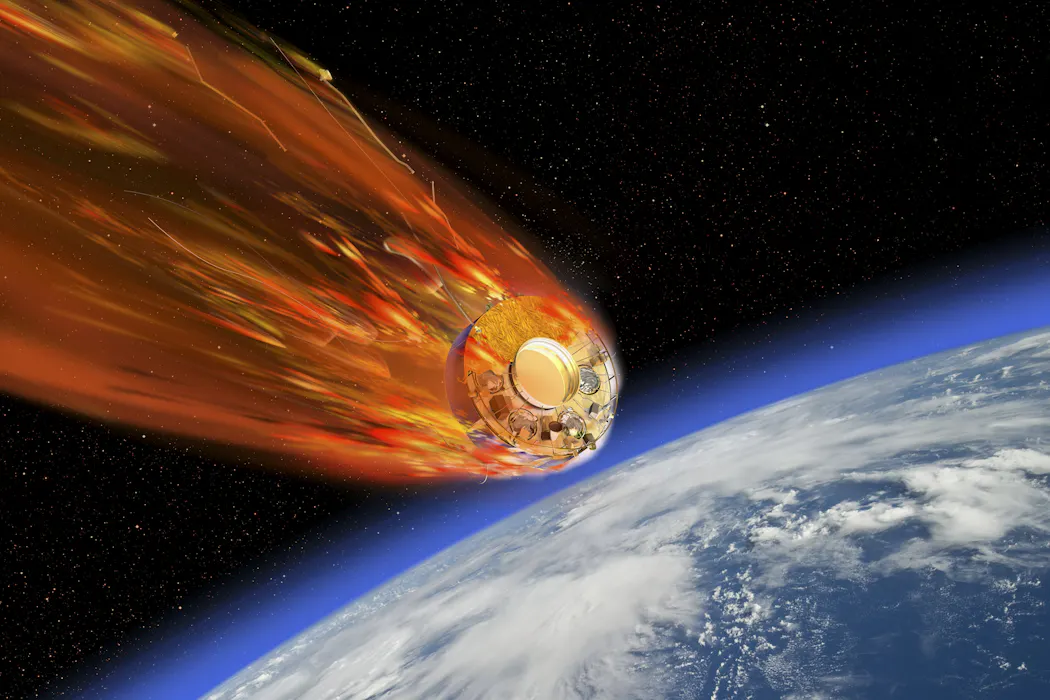
A satellite burns up as it travels through Earth’s atmosphere. Several of these large satellite re-entries now occur every day.(European Space Agency/David Ducross), CC BY-SA
The explosive growth of large satellite constellations over the last decade offers great promise for near-universal access to broadband internet. But this growth comes with risks that are not yet fully understood.
Our understanding of the human impact on the near-Earth space environment is at a similar stage to our understanding of climate change back in the 1990s. We know that increased human activity is causing large disruptions to the space environment, but whether a tipping point is soon to be reached is not yet clear.
Research and understanding of human impacts in space is still at a very early stage. For example, we don’t really know when some orbital altitudes will become so overpopulated with space debris that they reach operational capacity.
Similarly, we are aware that satellites burning up as they fall back to the Earth’s atmosphere will have significant effects on the chemistry in the upper atmosphere. We know there are now several of these large satellite re-entries occurring every day, but the full effects of this are not clear.
Messy space governance
Several scientific bodies now advise on policy in different areas of space sustainability. One is the Inter-Agency Space Debris Coordination Committee, which focuses on space debris degradation of the environment.
An image of NGC 6302, known as the ‘Butterfly Nebula,’ taken using the Hubble Space Telescope. The telescope is increasingly impacted by satellite constellations in low-Earth orbit. (NASA)
Like the IPCC, an IPSS should include several working groups to provide transparent and accessible summaries of scientific results for policy makers.
One should focus on the physical science of the orbital environment. This means the state of low-Earth orbit as a finite resource — including estimates of space debris and collision growth, effects of space weather and models of sustainable future launch traffic.
A satellite breaks up in orbit. (ESA/ID&Sense/ONiRiXEL), CC BY-SA
Another working group should centre on the environmental and societal impacts of large satellite constellations. This would assess stratospheric ozone depletion caused by rocket launch emissions, the effects of higher satellite re-entry rates, changes to atmospheric chemistry and increased casualty risks. It would also quantify their impact on ground-based astronomy.
Finally a working group on mitigation and policy could set the stage for clear international standards for post-mission satellite disposal, active debris removal and new licensing requirements that account for a constellation’s “system-wide” rather than “per-satellite” risk.
Space traffic footprints
A useful addition to the IPSS would be a Task Force on Space Traffic Footprints. Modelled after the IPCC’s Task Force on National Greenhouse Gas Inventories, this body would develop standardized methodologies for states to report their “space traffic footprint” — the burden their space objects pose to the safety and sustainability of the low-Earth orbit environment.
Similar to the IPCC’s role in vetting climate models, the IPSS needs to provide independent assessment of claims regarding satellite demisability — the way satellites are safely decommissioned and de-orbited. This should evaluate how successful de-orbiting technologies are and how well we can track satellites and estimate their location uncertainties.
By creating a co-ordinated international approach now, the IPSS will help balance the enormous promise of commercial activity in space with the environmental risks — just as the IPCC has done with Earth’s changing climate from human activities.
Peter Brown receives funding from the Natural Sciences and Engineering Research Council of Canada, the United Sstates National Aeronautics and Space Administration, the European Space Agency, Natural Resources Canada and Defence Research and Development Canada