Qui sont les fans de Taylor Swift ?

Source: The Conversation – France (in French) – By Arnaud Alessandrin, Sociologue, Université de Bordeaux

Taylor Swift est aujourd’hui bien plus qu’une star de la pop. Artiste parmi les plus écoutées au monde, elle cristallise des passions, des controverses et des formes d’identification particulièrement intenses. Mais que dit réellement Taylor Swift du monde social ? Et surtout, que disent ses fans de nos sociétés contemporaines ?


À partir d’une enquête sociologique menée auprès de plus de 1 000 fans en France, je propose de déplacer le regard : il ne s’agit pas d’analyser uniquement l’artiste, mais de comprendre ce que son œuvre et sa figure produisent socialement. Qui sont les Swifties (les fans de la chanteuse) ? Comment se rencontrent-ils ? En quoi Taylor Swift accompagne-t-elle les trajectoires de vie ? Et que révèle son succès des attentes politiques, féministes ou morales de ses publics ? C’est ce qu’explore mon essai, Sociologie de Taylor Swift, qui vient de paraître.

Loin des clichés sur un fandom adolescent et irrationnel, l’analyse met en évidence des pratiques culturelles structurées, genrées, durables et socialement situées. À travers Taylor Swift, c’est toute une sociologie des émotions, des identités et des engagements contemporains qui se donne à voir.

Une sociologie des Swifties

Contrairement aux représentations médiatiques qui réduisent souvent les fans de Taylor Swift à des adolescentes exaltées, l’enquête montre une réalité bien plus nuancée. Du point de vue de l’âge, les Swifties qui ont répondu à mon enquête se situent majoritairement dans le jeune âge adulte : près de la moitié ont entre 18 et 34 ans, mais plus d’un tiers ont plus de 35 ans, attestant d’un attachement durable à l’artiste bien au-delà de l’adolescence.

Le genre constitue un marqueur central de ce fandom (de ce groupe de fans). Les femmes représentent près de 80 % des personnes interrogées tandis que les hommes restent minoritaires. L’enquête met aussi en évidence une présence significative de personnes non binaires ou transgenres, proportionnellement bien plus élevée que dans la population générale (5 %). L’identité sexuelle apparaît également comme un facteur structurant de la fanité : plus d’un quart des fans ayant participé à l’enquête se déclarent lesbiennes, gays, bisexuel·les ou queer. Ces chiffres confirment que l’univers de Taylor Swift constitue un espace d’identification particulièrement fort pour les minorités sexuelles et de genre (on nomme le fandom gay de Taylor le « Gaylord ».

Aimer Taylor Swift ne relève donc pas d’un simple goût musical, mais d’une pratique culturelle située, marquée par des expériences sociales, genrées et biographiques spécifiques.

Créer du lien grâce à Taylor Swift : sociabilités et communautés

Être fan de Taylor Swift, ce n’est pas seulement écouter de la musique : c’est aussi créer du lien. L’enquête montre que la communauté Swiftie fonctionne comme un véritable espace de sociabilité. Plus de 60 % des répondantes et répondants déclarent avoir noué des amitiés grâce à leur intérêt commun pour Taylor Swift, que ce soit en ligne, lors de concerts ou dans des contextes du quotidien.

Ces rencontres prennent des formes multiples : échanges sur les réseaux sociaux, discussions autour des paroles, participation à des événements collectifs ou rituels devenus emblématiques, comme l’échange de bracelets d’amitié. Les liens décrits sont souvent durables et émotionnellement investis, dépassant le simple cadre du fandom.

Cette sociabilité repose sur une grammaire affective partagée. Les chansons servent de supports à la discussion, à la confidence et parfois à l’entraide. Loin d’un fandom nécessairement conflictuel ou « toxique », les Swifties qui ont participé à l’enquête évoquent majoritairement des normes de bienveillance et de soutien mutuel, souvent attribuées à l’image publique et aux discours portés par l’artiste elle-même.

Une artiste qui accompagne les trajectoires de vie

La relation des fans à Taylor Swift s’inscrit dans le temps long. Plus de la moitié des personnes interrogées se déclarent fans depuis plus de dix ans, et une part importante explique avoir découvert l’artiste à l’adolescence. Cette ancienneté témoigne d’une fidélité rare dans les industries culturelles contemporaines.

Taylor Swift n’est pas seulement écoutée : elle accompagne les parcours de vie. Près de 70 % des fans déclarent que l’artiste occupe une place « importante » ou « très importante » dans leur vie. Pour beaucoup, ses chansons sont associées à des moments clés : ruptures amoureuses, amitiés, périodes de doute, maladies, transitions identitaires ou professionnelles.

Cette centralité s’explique par l’écriture intime et narrative de Taylor Swift, qui permet aux fans de projeter leurs propres expériences dans ses chansons. Le fandom fonctionne ainsi comme une ressource biographique : aimer Taylor Swift, c’est disposer d’un répertoire émotionnel et symbolique pour se raconter et traverser les épreuves du quotidien.

Valeurs, féminisme et engagements : une figure politique ambivalente

Mais pour comprendre les fans de Taylor, on pourra aussi interroger les liens entre ce fandom et valeurs politiques. Les données montrent que les fans de Taylor Swift se situent majoritairement du côté de valeurs progressistes, qu’elles soient environnementales ou féministes. Une large majorité se déclare favorable à l’égalité femmes-hommes, aux droits des personnes LGBTQIA+ et à la lutte contre les discriminations (entre 70 et 80 %).

Ces valeurs influencent directement les attentes vis-à-vis de l’artiste. Près de deux tiers des personnes interrogées estiment que Taylor Swift devrait prendre position publiquement sur certaines causes, notamment féministes ou sociales, même si une minorité défend son droit à la neutralité.

Taylor Swift apparaît ainsi comme une figure politique paradoxale : ni militante au sens classique, ni totalement neutre. Son engagement est perçu comme mesuré, parfois stratégique, mais néanmoins porteur d’effets symboliques forts. L’enquête montre que les fans ne sont pas passifs : ils discutent, critiquent et évaluent les prises de position de l’artiste à l’aune de leurs propres valeurs, révélant la politisation croissante de la culture populaire.

Au terme de cette enquête, une chose apparaît clairement : Taylor Swift elle est un fait social. Son œuvre, ses prises de parole et la communauté qu’elle fédère révèlent des transformations profondes de nos rapports à la culture, à l’intimité et au politique. Étudier Taylor Swift, ce n’est donc pas céder à l’air du temps : c’est prendre au sérieux ce que la pop dit du social, des émotions et des attentes collectives – souvent bien au-delà d’une seule génération.

The Conversation

Arnaud Alessandrin ne travaille pas, ne conseille pas, ne possède pas de parts, ne reçoit pas de fonds d’une organisation qui pourrait tirer profit de cet article, et n’a déclaré aucune autre affiliation que son organisme de recherche.

ref. Qui sont les fans de Taylor Swift ? – https://theconversation.com/qui-sont-les-fans-de-taylor-swift-273968

US exit from the World Health Organization marks a new era in global health policy – here’s what the US, and world, will lose

Source: The Conversation – USA (3) – By Jordan Miller, Teaching Professor of Public Health, Arizona State University

The U.S.-WHO collaboration has been critical in the country’s response to mpox, shown here, as well as Ebola, Marburg, flu and COVID-19. Uma Shankar sharma/Moment via Getty Images

The U.S. departure from the World Health Organization became official in late January 2026, according to the Trump administration – a year after President Donald Trump signed an executive order on inauguration day of his second term declaring that he was doing so. He first stated his intention to do so during his first term in 2020, early in the COVID-19 pandemic.

The U.S. severing its ties with the WHO will cause ripple effects that linger for years to come, with widespread implications for public health. The Conversation asked Jordan Miller, a public health professor at Arizona State University, to explain what the U.S. departure means in the short and long term.

Why is the US leaving the WHO?

The Trump administration says it’s unfair that the U.S. contributes more than other nations and cites this as the main reason for leaving. The White House’s official announcement gives the example of China, which – despite having a population three times the size of the U.S. – contributes 90% less than the U.S. does to the WHO.

The Trump administration has also claimed that the WHO’s response to the COVID-19 pandemic was botched and that it lacked accountability and transparency.

The WHO has pushed back on these claims, defending its pandemic response, which recommended masking and physical distancing.

The U.S. does provide a disproportionate amount of funding to the WHO. In 2023, for example, U.S. contributions almost tripled that of the European Commission’s and were roughly 50% more than the second highest donor, Germany. But health experts point out that preventing and responding quickly to public health challenges is far less expensive than dealing with those problems once they’ve taken root and spread.

However, the withdrawal process is complicated, despite the U.S. assertion that it is final. Most countries do not have the ability to withdraw, as that is the way the original agreement to join the WHO was designed. But the U.S. inserted a clause into its agreement with the WHO when it agreed to join, stipulating that the U.S. would have the ability to withdraw, as long as it provided a one-year notice and paid all remaining dues. Though the U.S. gave its notice when Trump took office a year ago, it still owes the WHO about US$260 million in fees for 2024-25. There are complicated questions of international law that remain.

The U.S. has been a dominant force in the WHO, and its absence will have direct and lasting impacts on health systems in the U.S. and other countries.

What does US withdrawal from the WHO mean in the short term?

In short, the U.S. withdrawal weakens public health abroad and at home. The WHO’s priorities include stopping the spread of infectious diseases, stemming antimicrobial resistance, mitigating natural disasters, providing medication and health services to those who need it, and even preventing chronic diseases. So public health challenges, such as infectious diseases, have to be approached at scale because experience shows that coordination across borders is important for success.

The U.S. has been the largest single funder of the WHO, with contributions in the hundreds of millions of dollars annually over the past decade, so its withdrawal will have immediate operational impacts, limiting the WHO’s ability to continue established programs.

As a result of losing such a significant share of its funding, the WHO announced in a recent memo to staff that it plans to cut roughly 2,300 jobs – a quarter of its workforce – by summer 2026. It also plans to downsize 10 of its divisions to four.

In addition to a long history of funding, U.S. experts have worked closely with the WHO to address public health challenges. Successes stemming from this partnership include effectively responding to several Ebola outbreaks, addressing mpox around the world and the Marburg virus outbreak in Rwanda and Ethiopia. Both the Marburg and Ebola viruses have a 50% fatality rate, on average, so containing these diseases before they reached pandemic-level spread was critically important.

The Infectious Diseases Society of America issued a statement in January 2026 describing the move as “a shortsighted and misguided abandonment of our global health commitments,” noting that “global cooperation and communication are critical to keep our own citizens protected because germs do not respect borders.”

Pink and purple-stained light micrograph image of liver cells infected with Ebola virus.
The US has been instrumental in the response to major Ebola outbreaks through its involvement with the WHO. Shown here, Ebola-infected liver cells.
Callista Images/Connect Images via Getty Images

What are the longer-term impacts of US withdrawal?

By withdrawing from the WHO, the U.S. will no longer participate in the organization’s Global Influenza Surveillance and Response System, which has been in operation since 1952. This will seriously compromise the U.S.’s ability to plan and manufacture vaccines to match the predicted flu strains for each coming year.

Annual flu vaccines for the U.S. and globally are developed a year in advance using data that is collected around the world and then analyzed by an international team of experts to predict which strains are likely to be most widespread in the next year. The WHO convenes expert panels twice per year and then makes recommendations on which flu strains to include in each year’s vaccine manufacturing formulation.

While manufacturers will likely still be able to obtain information regarding the WHO’s conclusions, the U.S. will not contribute data in the same way, and American experts will no longer have a role in the process of data analysis. This could lead to problematic differences between WHO recommendations and those coming from U.S. authorities.

The Centers for Disease Control and Prevention estimates that each year in the U.S. millions of people get the flu, hundreds of thousands of Americans are hospitalized and tens of thousands die as a result of influenza. Diminishing the country’s ability to prepare in advance through flu shots will likely mean more hospitalizations and more deaths as a result of the flu.

This is just one example of many of how the U.S.’s departure will affect the country’s readiness to respond to disease threats.

Additionally, the reputational damage done by the U.S. departure cannot be overstated. The U.S. has developed its position as an international leader in public health over many decades as the largest developer and implementer of global health programs.

I believe surrendering this position will diminish the United States’ ability to influence public health strategies internationally, and that is important because global health affects health in the U.S. It will also make it harder to shape a multinational response in the event of another public health crisis like the COVID-19 pandemic.

Public health and policy experts predict that China will use this opportunity to strengthen its position and its global influence, stepping into the power vacuum the U.S. creates by withdrawing. China has pledged an additional US$500 million in support of the WHO over the next five years.

As a member of the WHO, the United States has had ready access to a vast amount of data collected by the WHO and its members. While most data the WHO obtains is ultimately made available to the public, member nations have greater access to detailed information about collection methods and gain access sooner, as new threats are emerging.

Delays in access to data could hamstring the country’s ability to respond in the event of the next infectious disease outbreak.

Could the US return under a new president?

In short, yes. The WHO has clearly signaled its desire to continue to engage with the U.S., saying it “regrets the U.S. decision to withdraw” and hopes the U.S. will reconsider its decision to leave.

In the meantime, individual states have the opportunity to participate. In late January, California announced it will join the WHO’s Global Outbreak Alert & Response Network, which is open to a broader array of participants than just WHO member nations. California was also a founding member of the West Coast Health Alliance, which now includes 14 U.S. states that have agreed to work together to address public health challenges.

California Gov. Gavin Newsom has also launched an initiative designed to improve public health infrastructure and build trust. He enlisted national public health leaders for this effort, including former Centers for Disease Control and Prevention leaders Susan Monarez and Deb Houry, as well as Katelyn Jetelina, who became well known as Your Local Epidemiologist during the COVID-19 pandemic.

I think we will continue to see innovative efforts like these emerging, as political and public health leaders work to fill the vacuum being created by the Trump administration’s disinvestment in public health.

The Conversation

Jordan Miller does not work for, consult, own shares in or receive funding from any company or organization that would benefit from this article, and has disclosed no relevant affiliations beyond their academic appointment.

ref. US exit from the World Health Organization marks a new era in global health policy – here’s what the US, and world, will lose – https://theconversation.com/us-exit-from-the-world-health-organization-marks-a-new-era-in-global-health-policy-heres-what-the-us-and-world-will-lose-274277

Funny, tender, goofy – Catherine O’Hara lit up the screen every time she showed up

Source: The Conversation – Global Perspectives – By Ben McCann, Associate Professor of French Studies, Adelaide University

Catherine O’Hara, the beloved actor and comedian who has died aged 71, occupied that rare position in contemporary screen culture: a comic actor, a cult figure and a mainstream star.

Her work spanned more than 50 years, from improv sketch comedy to Hollywood features and off-beat TV classics.

She was celebrated for her unmatched comic timing and chameleon-like character work. Her roles were often absurdist and quirky, but they hid a razor-sharp humour.

Born and raised in Toronto in a close-knit Irish Catholic family, O’Hara was one of seven siblings. She once remarked humour was part of her everyday life; storytelling, impressions and lively conversation helped hone her comedic instincts.

After high school, she worked at Toronto’s Second City Theatre, a famed breeding ground for comedy talent, and sharpened her deadpan improvisational skills.

Big break

O’Hara’s break came with Second City Television (SCTV), a sketch comedy series that rivalled Saturday Night Live in creativity and influence. Alongside contemporaries Eugene Levy, John Candy, Rick Moranis and Martin Short, she defined her distinctly smart, absurdist comedic voice.

O’Hara was not merely a performer on SCTV; she was also a writer, winning an Emmy Award for her contributions. This dual role shaped her career-long sensitivity to rhythm, language and character construction.

Unlike sketch performers who rely on repetition or catchphrases, O’Hara’s humour emerged with a different comedic logic. Audiences laughed not because the character was “funny”, but because the character took herself so seriously.

Though briefly cast on Saturday Night Live in the early 1980s, O’Hara chose to stay with SCTV when it was renewed, a decision she later described as key in letting her creative career flourish where it belonged.

The transition to film

By the mid-1980s, O’Hara was establishing herself as a screen presence. She appeared in Martin Scorsese’s offbeat black comedy After Hours (1985), and showcased her comic range in Heartburn (1986).

In 1988, she landed what would become one of her most beloved film roles: Delia Deetz in Tim Burton’s left-field Beetlejuice (1988).

Delia – a pretentious, New York art-scene social climber – allowed O’Hara to combine physical comedy and imbecilic dialogue (“A little gasoline … blowtorch … no problem”).

Burton once noted

Catherine’s so good, maybe too good. She works on levels that people don’t even know. I think she scares people because she operates at such high levels.

She went on to play Kate McCallister, the beleaguered mother in the holiday blockbusters Home Alone (1990) and Home Alone 2: Lost in New York (1992). Audiences loved the fact that this rather thinly written role became the films’ beating heart.

Working with Christopher Guest

Another distinctive phase of O’Hara’s career was her work with writer-director Christopher Guest on a series of largely improvised mockumentaries that have become cult classics.

Three standouts were Waiting for Guffman (1996), where she plays a desperate local performer in a small-town theatre troupe, and A Mighty Wind (2003), where she teamed up with old pal Levy as an ageing folk duo.

Her best turn came in Best in Show (2000), in which she and Levy played a couple competing in a national dog show. Her character Cookie Fleck remains one of the finest examples of improvised comedy on film.

Her relentless monologues about former lovers are objectively inappropriate, yet O’Hara delivers them with such earnest enthusiasm that they become strangely compelling.

Her gift for improvisation glittered in these films: these eccentric characters were often laugh-out-loud funny – but O’Hara never mocked them.

Late success

She returned to TV in Six Feet Under (2001–05) and guest appearances on The Larry Sanders Show (1992–98) and Curb Your Enthusiasm (1999–2024). More recently, she appeared in prestige shows such as The Last of Us (2023–) and The Studio (2025–).

But it was the role of Moira Rose, the eccentric, ex-soap opera star in the Canadian sitcom Schitt’s Creek (2015–20), created by Eugene Levy and his son Dan, that would become O’Hara’s most significant late career move. And what a role it was!

Written for O’Hara’s unique talents, Moira was a larger-than-life character with a bizarre, unforgettable vocabulary, dramatic mood swings and a wardrobe that became nearly as famous as the character herself.

Feminist media scholars have noted the rarity of such complex roles for older women, particularly in comedy, making O’Hara’s performance culturally significant.

The show became a global streaming blockbuster during COVID lockdowns and O’Hara’s multi-award-winning performance became a social media phenomenon, spawning memes and viral clips.

There are so many standout moments – her drunken meltdown after losing her wigs, her audition for The Crows Have Eyes 3 and the show’s moving finale where she performs Danny Boy at Alexis’s graduation.

An enduring legacy

O’Hara had a remarkable ability to play flamboyant, self-absorbed characters who were often uproariously funny.

Many comedians and actors have cited O’Hara as an influence for her fearlessness, her ability to blend absurdity with emotional truth, and her steadfast commitment to character integrity. She influenced performers like Tina Fey, Maya Rudolph, Kate McKinnon and Phoebe Waller-Bridge.

O’Hara also refused to chase conventional stardom. Rather than choosing projects designed to flatten her eccentricities, O’Hara favoured collaborative environments that valued creativity over control.

For her, comedy was always an art of intelligence, empathy and generosity.

The Conversation

Ben McCann does not work for, consult, own shares in or receive funding from any company or organisation that would benefit from this article, and has disclosed no relevant affiliations beyond their academic appointment.

ref. Funny, tender, goofy – Catherine O’Hara lit up the screen every time she showed up – https://theconversation.com/funny-tender-goofy-catherine-ohara-lit-up-the-screen-every-time-she-showed-up-274816

Quelle est la véritable situation financière des universités françaises ?

Source: The Conversation – France (in French) – By Laurent Mériade, Professeur des universités en sciences de gestion – Agrégé des facultés – IAE – CleRMa, Université Clermont Auvergne (UCA)

De nombreuses universités lancent l’alerte sur leurs difficultés financières. Pourtant, si l’on se réfère aux critères officiels fixés par un décret de soutenabilité mis en place en 2024, la situation semble beaucoup moins préoccupante. Qu’est-ce qui se cache réellement derrière ces nouveaux critères ? Dans quelle mesure nous informent-ils vraiment sur la situation financière des universités ?


En 2024, on dénombrait 60 universités françaises présentant de potentielles difficultés financières (principalement déficitaires). En 2025, alors que 80 % des universités présentent encore des budgets déficitaires et que les universités appellent au secours, officiellement, on ne compterait plus que 12 universités en difficulté. Par quel miracle, en moins d’un an, la situation financière des universités françaises a-t-elle pu se redresser de la sorte ?

La réponse à cette interrogation se trouve dans un décret de soutenabilité financière (n° 2024-1108) du 2 décembre 2024 qui modifie les critères d’évaluation des difficultés financières des universités. Ce décret introduit des indicateurs de soutenabilité financière qui considèrent qu’une université déficitaire (même depuis plusieurs années) n’est plus en difficulté financière. Elle ne l’est que si elle dépasse un seuil minimum de trésorerie (argent détenu sur le compte bancaire au Trésor public), de fonds de roulement (réserve d’argent détenue pour faire face à des dépenses programmées ou imprévues) et un seuil maximum de charges de personnel (rémunérations et cotisations sociales).

En réalité, l’introduction de ces trois nouveaux indicateurs (ou ratios) relâche certaines contraintes budgétaires des universités pour les forcer à utiliser massivement leurs réserves (trésorerie et fonds de roulement), comme cela est également demandé à de nombreux opérateurs de l’État dans le budget 2026 en cours de vote au Parlement.

Cependant, pour les universités, ces réserves ne sont souvent que très partiellement disponibles, car déjà pré-engagées pour financer des investissements à long terme, des contrats de recherche, de maintenance, de fourniture ou certains éléments de rémunérations (primes, promotions ou évolution programmée des salaires).

Décryptons ces nouveaux indicateurs. Ne créent-ils pas surtout une illusion, rendant plus présentable la situation financière des universités et plus acceptable le désengagement progressif de l’État ?

De nouvelles méthodes de calcul

Comme dans d’autres domaines, le diable se cache dans le détail des méthodes de calcul de ces indicateurs.

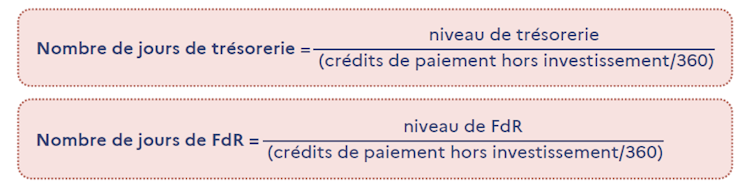
Selon ce nouveau décret, en fin d’année civile, la trésorerie et le fonds de roulement (FdR) d’une université doivent être respectivement supérieurs à 30 jours et à 15 jours de fonctionnement en crédits de paiement hors investissement. Ces deux premiers ratios sont calculés de la manière suivante :


Fourni par l’auteur

Le numérateur de ces ratios intègre la trésorerie ou le fonds de roulement générés par les ressources d’investissement. En revanche, le dénominateur ne prend pas en compte les dépenses d’investissement autorisées au cours de l’année (crédits de paiement).

Ce mode de calcul ne respecte pas une règle élémentaire de calcul des ratios de gestion financière qui impose d’utiliser un périmètre de calcul identique pour le numérateur et le dénominateur. Ici le numérateur comprend les investissements et le dénominateur est calculé hors investissement, ce qui augmente artificiellement la valeur du ratio et permet, artificiellement aussi, de dépasser les seuils minimums requis.

Un changement de périmètre budgétaire

Pour permettre le calcul de ces nouveaux indicateurs, le nouveau décret financier a redéfini le périmètre du budget de l’établissement, dénommé désormais « budget » et qui agrège le budget principal (en personnel, fonctionnement et investissement) et les budgets annexes (dont le budget annexe immobilier pour les universités qui en disposent) (article R. 719-52).

Ce changement ne permet plus de différencier, pour le calcul de ces indicateurs, les trésoreries et fonds de roulement réellement disponibles (pour payer le personnel et le fonctionnement) de ceux pré-engagés dans des opérations particulières (investissements, contrats de recherche notamment). En recalculant ces ratios pour la seule partie de trésorerie et fonds de roulement réellement disponibles à partir des informations financières du ministère de l’enseignement supérieur, le nombre de jours de trésorerie est en moyenne divisé par deux et par trois pour celui du fonds de roulement.

Ainsi, une université qui présente officiellement un ratio de trésorerie de 50 jours (donc significativement supérieur au seuil de 30 jours) ne détient probablement que 25 jours de trésorerie réellement disponibles. De même, la même université (ou une autre) qui présenterait un fonds de roulement de 30 jours (donc significativement supérieur au seuil de 15 jours) a toutes les chances de ne détenir seulement qu’environ 10 jours de fonds de roulement de fonctionnement disponible.

Autant dire que juger la santé financière d’une université sur la base du calcul actuel de ces deux ratios relève plus de la « roulette russe » que d’une observation objective et sincère.

Des charges courantes de fonctionnement comme variables d’ajustement

Pour ce qui concerne le troisième ratio financier, c’est moins son calcul qui est contestable (total charges de personnel/produits encaissables), même si les produits encaissables intègrent très majoritairement des ressources rigides et contraintes (subvention pour charges de service public), que celui de son seuil maximum (83 % des produits encaissables, 85 % pour les établissements à dominante sciences humaines et sociales).

Pourquoi 83 % (ou 85 %) ? Et pourquoi pas 70 % ? 75 % ? 80 % ? À titre de comparaison, en 2022, les charges de personnel des universités publiques des 38 pays de l’Organisation de coopération et de développement économiques (OCDE) représentaient en moyenne 66 % de leurs dépenses totales (les universités françaises présentant le taux moyen le plus élevé à environ 77 %).

En fixant ce seuil d’alerte à 83 %, on autorise les universités à consacrer seulement 17 % (voire 15 %) de leurs produits encaissables à des charges de fonctionnement pourtant indispensables à la stabilité et la pérennité des universités (électricité, chauffage, entretien de locaux et du matériel, fournitures et services d’enseignement et de recherche, etc.).

Un calcul de ce ratio par catégories de personnel (enseignant, administratif, technique) à partir des dépenses totales, comme le réalise d’ailleurs l’OCDE, serait probablement plus pertinent et autoriserait des comparaisons internationales.

Un flou sur les difficultés financières réelles des universités

Finalement, l’ensemble de ces approximations ou insuffisances calculatoires peut soit donner une impression d’amateurisme dans le contrôle financier des universités françaises, soit, plus assurément, le sentiment d’une volonté de dissimulation de la réalité des difficultés financières tout en rendant les universités toujours plus comptables de celles-ci.

Un récent rapport d’information du Sénat de 2025 reconnaissait que la seule lecture des budgets et des indicateurs de soutenabilité financière des universités ne permet pas de faire le lien entre les données budgétaires des établissements et leurs activités.

À court terme, les fonds de roulement et trésoreries des universités n’étant pas des puits sans fond, il est probable qu’un grand nombre d’universités ne soit plus en mesure, très rapidement, d’assumer des engagements financiers récurrents (entretien des locaux et matériels, paiement des rémunérations, accueil physique de tous les étudiants).

À moyen terme, c’est la réalisation des principales missions de service public des universités (développement de l’accès à l’enseignement supérieur, réussite des étudiants, augmentation de leur employabilité, renforcement de la cohésion sociale et territoriale, développement de la recherche) qui sera profondément remise en cause.

The Conversation

Laurent Mériade ne travaille pas, ne conseille pas, ne possède pas de parts, ne reçoit pas de fonds d’une organisation qui pourrait tirer profit de cet article, et n’a déclaré aucune autre affiliation que son organisme de recherche.

ref. Quelle est la véritable situation financière des universités françaises ? – https://theconversation.com/quelle-est-la-veritable-situation-financiere-des-universites-francaises-273042

Silver and gold hit record highs – then crashed. Before joining the rush, you need to know this

Source: The Conversation – Global Perspectives – By Angel Zhong, Professor of Finance, RMIT University

Zlaťáky.cz/Pexels, CC BY

The start of 2026 has seen gold and silver surge to record highs – only to crash on Friday.

Gold prices peaked above US$5,500 (A$7,900) per ounce for the first time on Thursday, well above previous highs. But by the end of Friday, it had dropped to around US$5068 (A$7,282).

Silver had been making gains even faster than gold. It hit more than US$120 (A$172) per ounce last week, marking one of its strongest runs in decades, before crashing on Friday to US$98.50 (A$141.50).

So what’s behind those surges and falls? And what should everyday investors know about the risks of investing in precious metals right now?

Why gold has been hitting new highs

Gold is the classic safe haven: an asset people buy to protect their savings when worried about financial risks.

With international political tensions rising, trade war threats, shifting signals about where interest rates are heading and a potential changing world order, investors are seeking assets that feel stable when everything else looks shaky.

Friday’s crash in gold and silver was sparked by financial markets reacting to early news of Donald Trump’s nomination of Kevin Warsh as chair of the US Federal Reserve. The US central bank plays a key role in global financial stability.

Central banks around the world have been buying gold at a rapid pace, reinforcing its reputation as a place to park value during periods of uncertainty.

But it’s not just big institutions moving the market. In Australia and overseas, retail investors – individuals buying and selling smaller amounts for themselves – have played a part too.

Those individuals have been increasingly treating gold, silver and other precious metals as a hedge against so much uncertainty, as well as a momentum play – trying to buy in to keep up with others.

As prices have trended upward, more everyday investors have bought in, especially through gold exchange-traded funds (ETFs), which make it simple to gain exposure without storing physical gold bullion.


Read more:
The price of gold is skyrocketing. Why is this, and will it continue?


What’s been driving silver’s surge

While gold was grabbing headlines for much of 2025, silver has been the real showstopper. Before Friday’s fall, the metal had surged more than 60% in just the past month, far outpacing gold’s still impressive run of around 30%.

Unlike gold, silver has a split personality. Industrial uses are driving up demand for silver. It’s critical for clean energy technologies including solar panels, electric vehicles (EVs), and semiconductors.

This dual appeal – as a safe haven, but also as an in-demand industrial commodity – is drawing investors who see multiple reasons for prices to keep climbing.

Every solar panel contains about 20 grams of silver. The solar industry consumes nearly 30% of total global demand for silver.

EVs also use 25–50 grams each, and AI data centres need silver for semiconductors.

The kicker? The silver market has run a supply deficit for five consecutive years. We’re consuming more than we’re mining, and most silver comes as a byproduct of other metals. You can’t simply open more silver mines.

Individual buyers have piled into silver

One of Australia’s most popular online investment platforms for retail investors is CommSec, with around 3 million customers.

Bloomberg tracking of CommSec trades shows how much retail purchases of silver ETFs in particular have spiked higher in the past year.

Over the past year, gold ETF trades on CommSec grew 47%, with cumulative net buying reaching A$158 million. That reflects gold’s established role in portfolios.

Yet despite attracting slightly lower total investment overall at A$104 million, silver trading activity exploded by far more: it’s been 1,000% higher than the year before.

This means retail investors made far more frequent, smaller trades in silver. This is classic momentum-chasing behaviour, as everyday investors piled into an asset showing dramatic price gains.

The pattern is unmistakable: while gold remains the anchor, silver has become the speculative play.

Its lower per-ounce price, industrial demand narrative, and social media buzz make it particularly accessible to retail investors seeking exposure to the precious metals rally, at a much lower price than gold.

The risks every investor needs to know

The data shows Australian retail investors have been buying as prices rise. But this “fear of missing out” approach comes with serious risks.

Volatility cuts both ways. From February 2025 to just before Friday’s sharp drop, the price of silver had surged 269%. But even before that fall, silver’s spectacular gain had come with 36% “annualised volatility” (which measures how much a stock price varies over one year). That was nearly double gold’s 20% volatility over the same period.

What does that mean in practice? As we’ve just seen, what goes up fast can come down quickly too.

Buying high is dangerous. When retail investors pile in after major price increases, they often end up buying near the top. Professional investors and central banks have been accumulating gold and silver for years, at much lower prices.

No income, higher risk. Unlike shares or bonds, metals don’t pay dividends or interest. Your entire return depends on prices rising further from already elevated levels. And as the past few days have shown, the potential for sharp drawdowns is substantial.

Keep it modest. Financial advisers typically recommend precious metals comprise 5–15% of a diversified portfolio. After such extraordinary price volatility, that guideline matters more than ever.


Disclaimer: This article provides general information only and is not intended as financial advice. All investments carry risk.

The Conversation

The authors do not work for, consult, own shares in or receive funding from any company or organisation that would benefit from this article, and have disclosed no relevant affiliations beyond their academic appointment.

ref. Silver and gold hit record highs – then crashed. Before joining the rush, you need to know this – https://theconversation.com/silver-and-gold-hit-record-highs-then-crashed-before-joining-the-rush-you-need-to-know-this-274622

3 things to know about Kevin Warsh, Trump’s nod for Fed chair

Source: The Conversation – USA (2) – By D. Brian Blank, Associate Professor of Finance, Mississippi State University

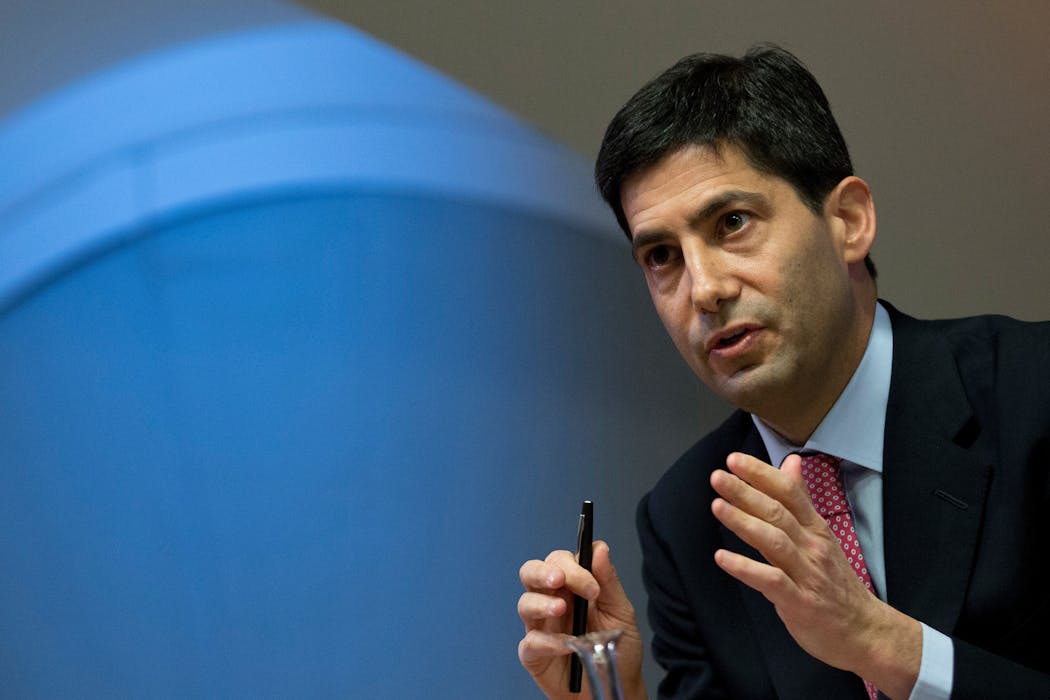
Kevin Warsh has been tapped by Donald Trump to lead the Federal Reserve. AP Photo/Alastair Grant

After months of speculation, President Donald Trump nominated Kevin Warsh on Jan. 30, 2026, to be the next chair of the Federal Reserve.

If confirmed by Congress, Warsh will inherit leadership of the U.S. central bank at a delicate time. For months, current Fed Chair Jerome Powell has come under attack from the Trump administration for failing to heed the president’s call for lower interest rates. The fight has put into question the central bank’s independence and its role in stewarding the economy.

Powell’s term as chair will end in mid-May, leaving his successor to navigate an economy that has improved on some fronts but remains uneven and uncertain.

But what should America expect from the next Fed chair? Here are three things to note about Trump’s nominee.

1. He is a familiar face …

Warsh brings deep experience with monetary policymaking to the role.

A graduate of Stanford University and Harvard Law School, he served as special assistant to the president for economic policy and executive secretary of the White House National Economic Council under President George W. Bush before becoming one of the youngest members of the Federal Reserve Board of Governors.

Warsh is no newcomer to discussions about Federal Reserve leadership. He was a finalist for the job in 2017, when Trump instead appointed Powell. Trump has since stated that he made a mistake by not selecting Warsh then – though clashes between Trump and Powell may have influenced that view.

Two men in suits walk outside.
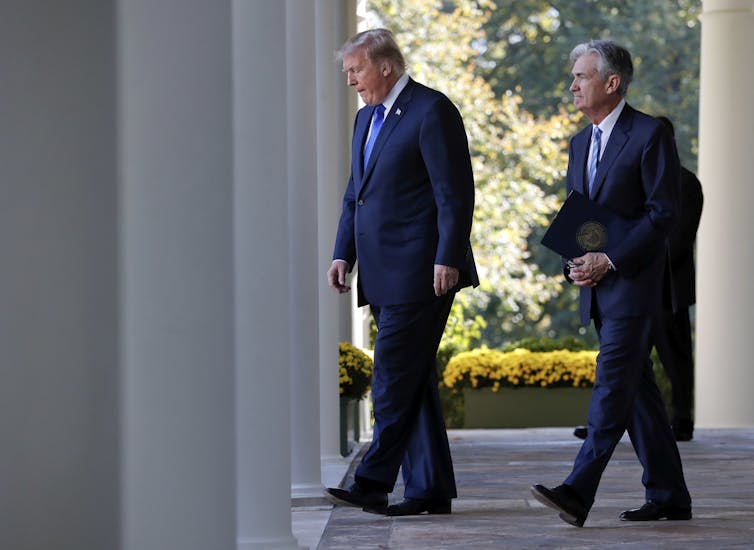
Fed Chair Jerome Powell increasingly found himself out of step with Donald Trump’s wishes.
AP Photo/Pablo Martinez Monsivais

Warsh’s credentials are unquestionable. As a governor of the Federal Reserve Board from 2006 to 2011, he worked closely with other policymakers and with Wall Street during the global financial crisis of 2008. Since departing the Fed, he has returned to Stanford as a visiting fellow at the Hoover Institution and a lecturer at the Graduate School of Business, as well as a member of the Panel of Economic Advisers of the Congressional Budget Office.

He also has ties to the finance industry. He began his career in mergers and acquisitions at Morgan Stanley and, since leaving the Fed, has worked as a partner at Duquesne Family Office, an investment firm that manages the personal wealth of hedge fund manager Stanley Druckenmiller and other investors.

In 2016, Trump included Warsh in an economic advisory group assembled during his transition. Critics of Warsh’s nomination point toward his father-in-law, Ronald Lauder, a college friend and donor of the president, as evidence of politicization.

2. … with evolving monetary views

The big question people have is what a Warsh Fed would mean for monetary policy – that is, is it likely to play tight or loose with rates.

When the economy is growing quickly, like in 2021, the Federal Reserve tightens policy by raising interest rates to avoid the kind of economic growth that may not be sustainable long term and can lead to bubbles. However, during downturns, like in 2008 or 2020, the economic policy that can provide a backstop for the economy is looser. The Fed tends to lower rates in these situations, which supports growth.

Warsh’s views on monetary policy have long been considered hawkish, meaning he is inclined toward tighter policy and generally higher interest rates to keep inflation in check, even at the expense of slower economic growth. During his previous tenure at the Fed, he signaled concern about expansive monetary tools such as quantitative easing, in which the central bank buys Treasurys and other securities to stimulate the economy. This resulted in what Warsh called a “bloated” Fed balance sheet that held almost US$9 trillion of debt at its peak in 2022.

In recent public remarks leading up to his nomination, however, he has increasingly aligned in part with Trump’s push for lower interest rates and discussed establishing a new Treasury-Fed Accord, like in 1951, when Fed independence from fiscal authorities such as the Treasury Department was established.

3. His nod highlights fight over Fed independence

A central question surrounding this nomination is whether it promotes the politicization of the Federal Reserve.

The Fed’s independence from day-to-day political pressure has long been viewed as a cornerstone of U.S. economic policymaking. Decisions about interest rates, inflation control and financial stability are insulated from electoral politics for that reason. A truly independent Fed can resist making decisions that provide a short-term economic bump – something incumbent governments tend to like – but may lead to longer-term economic pain down the road.

The Fed tends to use its monetary policy tools carefully. Yet politicians tend to want looser monetary policy so the economy grows fast and they get credit for it.

And Warsh’s nomination can be seen in the context of a broader push from the executive branch to exert greater influence over monetary policy. Given Trump’s public criticism of Powell and vocal calls for his early departure, the president almost certainly intended to nominate someone who would lower interest rates according to preferences stated by the administration.

Critics of the nomination have argued that Warsh has a tendency to be more opportunistic with his policy views than Powell and other economists, who try to ignore political preferences.

As such, Warsh’s nomination encapsulates more than just a leadership transition. It highlights the ongoing tensions between political priorities and the traditional economic playbook, between short-term growth pressures and long-term stability, and between institutional independence and democratic accountability.

Time will tell whether he turns out to be hawkish or politically motivated as chair, if he is confirmed.

The Conversation

The authors do not work for, consult, own shares in or receive funding from any company or organization that would benefit from this article, and have disclosed no relevant affiliations beyond their academic appointment.

ref. 3 things to know about Kevin Warsh, Trump’s nod for Fed chair – https://theconversation.com/3-things-to-know-about-kevin-warsh-trumps-nod-for-fed-chair-274781

Introducing our new Science & Technology editor

Source: The Conversation – Canada – By Kim Honey, CEO|Editor-in-Chief, The Conversation

The Conversation Canada is thrilled to announce Heather Walmsley, one of the
founding editors who helped us launch in 2017, is returning to the fold. She was instrumental in establishing The Conversation Canada as an independent source of news and views from the academic and research community. Over the next three years, she edited science, education and health articles and helped grow our news coverage, audience and university membership.

Heather will be our Science & Technology editor, and these two beats are a key part of our mission to share trusted academic knowledge with the public. She comes to The Conversation Canada from the University of Victoria, where she worked for the Office of the Vice President Research and Innovation, raising the profile of health research across campus. She has worked in journalism, research and knowledge mobilization for a variety of media outlets, non-profits and research institutions in the United Kingdom and Canada.

Heather has MA degrees in anthropology and postcolonial literature from the universities of Edinburgh and Sussex, a PhD in science and technology studies from Lancaster University and held a SSHRC Banting Postdoctoral Fellowship in medical sociology at the University of British Columbia.

Her editing expertise, ideas and deep understanding of our mandate will be a boon to the newsroom. As The Conversation Canada matures from a scrappy startup to a trusted non-profit news organization, Heather will be a great asset on the eve of our 10th birthday. We can’t wait until she starts on Feb. 23.

Welcome Heather!

The Conversation

ref. Introducing our new Science & Technology editor – https://theconversation.com/introducing-our-new-science-and-technology-editor-274769

Industry’s Faustian pact, a Welsh detective drama, and the return of Bridgerton – what to watch, read and listen to this week

Source: The Conversation – UK – By Anna Walker, Senior Arts + Culture Editor, The Conversation

I don’t think my new year’s resolution – to take a lunch break every day – would much impress the cast of Industry. In the BBC show’s fourth series, the idea that work might pause politely at midday feels almost quaint, like a relic of a slower moral universe.

As our reviewer Peter Watt, who researches the philosophy of work culture, explains, when Industry first aired in 2020 it seemed ostensibly to be a drama about a recent cohort of ambitious young graduates entering the cut-throat world of investment banking. But as the opening season unfolded and its central characters were established, it became clear that although the trading floor of the fictional-but-all-so-familiar Pierpoint and Co. was its setting, this was not just a show about finance.

Now returning for season four, the show is exposing the Faustian pact of modern work culture. For the Industry cast (and so many of us in the real world) life no longer interrupts work – work is life.

Industry season four is streaming on BBC iplayer


Read more:
Industry season four exposes the Faustian bargain of modern work culture


Off-beat mysteries

A grizzled former detective reunites with their former partner to solve a case uncomfortably close to the one that got them kicked off the force. On paper, it’s familiar detective territory. But the new Sky Arts drama Under Salt Marsh quickly subverts expectations.

Jackie Ellis (Kelly Reilly) isn’t a chain-smoking, jaded old hand, but a middle-aged woman driven by the search for her missing niece. Her former partner Eric Bull (Rafe Spall) is no rigid rule-follower either: he’s a queer man with an encyclopaedic grasp of local flora and fauna. And he’s happy to investigate using all his senses, tasting ditchwater and chewing samphire.

Set against the rugged north-Welsh coast, our reviewer calls it “an excellent, environmentally engaged detective drama”.

Under Salt Marsh is streaming on Sky Arts


Read more:
Under Salt Marsh: detective drama uses the Welsh coast to explore climate anxiety


The trailer for Under Salts Marsh.

Mysteries of a more esoteric nature abound in Glyph, the new novel from Ali Smith with the same – yet different – title as her last novel, Gliff. While not obviously connected through either characters or subject matter, the characters of Glyph have read the novel Gliff, and discuss it.

While I don’t profess to always understand her novels, I love reading Smith. She’s one of the most experimental mainstream writers working in the UK, and I always find myself thinking about her work months – and in some cases even years – after turning the last page.


Read more:
Ali Smith’s Glyph is an exhilarating and excoriating follow-up to Gliff


Bonnet season

Mark your calendars and don your best bonnet – Bridgerton is back. This season the focus is on bohemian second son Benedict who loves his freedom and is loath to settle down. For every person lapping up the drama, however, there’s another (usually very vocal) cynic.

Period drama expert Shelley Galpin explains why it’s a mistake to dismiss Bridgerton as fluffy period drama. To her mind, the show represents a complex interplay of the real – whether historical moments or relatable issues – with the fantastical, in its deliberately heightened aesthetics and swoonworthy romantic resolutions.

Bridgerton is streaming on Netflix


Read more:
It’s a mistake to dismiss Bridgerton as fluffy period drama


Bridgerton season four trailer.

For episode seven of Jane Austen’s Paper Trail, we’re doing something a little different. Rather than putting Austen under the microscope ourselves, we’re handing the questions over to you. We’ve received a virtual sack full of letters from you, ranging from questions about Austen’s religious beliefs to her grasp of contemporary science, and even what she might have made of social media.

Unlike Jane’s sister Cassandra Austen, however, we have no intention of throwing your letters into the flames. Instead, three experts join me to debate them – and, where possible, to settle them.


Read more:
How much can we really know about Jane Austen? Experts answer your questions


Looking for something good? Cut through the noise with a carefully curated selection of the latest releases, live events and exhibitions, straight to your inbox every fortnight, on Fridays. Sign up here.


This article features references to books that have been included for editorial reasons, and may contain links to bookshop.org. If you click on one of the links and go on to buy something, The Conversation UK may earn a commission.

The Conversation

ref. Industry’s Faustian pact, a Welsh detective drama, and the return of Bridgerton – what to watch, read and listen to this week – https://theconversation.com/industrys-faustian-pact-a-welsh-detective-drama-and-the-return-of-bridgerton-what-to-watch-read-and-listen-to-this-week-274668

The type of job you do could be affecting your ability to save money – and not just because of the salary

Source: The Conversation – UK – By Karina Pavlisa, Lecturer in International Business Management, University of Bristol

Finances don’t figure much in the workday of an artist. DimaBerlin/Shutterstock

It’s often said that millions of people in the UK don’t save enough – with one in ten adults saving no money at all. That figure from a 2025 report from the Financial Conduct Authority regulator came with a warning that it’s leaving people walking a financial tightrope.

The UK household saving ratio (the proportion of income available but not spent) stood at 11.1% in 2024, below the EU average of around 14.5%. This gap shows the importance of encouraging a savings habit among the UK population.

Research shows that even modest savings buffers significantly improve financial resilience. A reserve of £2,000, for example, halves the risk of someone falling behind with bills in later years.

Gaps in income are often named as a key reason for not saving enough, alongside limited numeracy skills. But there are other dimensions that explain why some groups tend to save more than others.

Women, for example, are less likely to save than men. But this is just one part of the picture. My latest research suggests that people’s ability to navigate their finances stems partly from their professional background.

Workers in some professions are much more likely to save than others – and not necessarily because they earn more. Different professions encourage different competencies, habits and ways of thinking, as well as social influences. Financial confidence is a lifelong pursuit, yet my study found it comes more easily to people in some professions.

Who is more likely to save?

To understand these dynamics and test the differences between professions, I explored data from the Understanding Society survey, which explores social and economic change using data collected from around 40,000 UK households every year.

My study focused on more than 37,000 adults in the UK between 2009 and 2019. It adjusted the data to account for the effects of income and characteristics such as age and number of children, to examine how much (and how likely) people in various professions are to save.

Even with similar income increases, people working in business, finance and sales were 31 percentage points more likely to save every month than creative professionals and ten percentage points more likely than those in education.

Professions in business, finance and sales tend to encourage commercial acumen and confidence in handling financial decisions. And their workplaces are often guided by commercial logic, the need to save money, risk assessment, and more pronounced on-the-job learning about financial decision-making. This normalises discussions about money.

woman delivering a presentation to colleagues with charts and graphs on a screen behind her.
Financial acumen is built into some professions.
fizkes/Shutterstock

By contrast, creative professionals such as artists and writers, whose fields emphasise intrinsic motivation and creative fulfilment, are significantly less likely to save, even when their income increases.

Similar patterns appeared across managerial occupations. Corporate directors working in more finance-aligned environments were 40 percentage points more likely to save every month than managers in sectors such as retail, logistics and hospitality.

Of course, professional environments orientated towards finance draw on employees with relevant backgrounds. But finance-related conversations are also more common in these workplaces, and this can strengthen personal money-management capabilities.

We tend to think that saving is mainly down to an individual – their planning, numerical skills, confidence, and family background. Yet some careers build financial resilience more actively, while others do not. Professional environments in some ways represent the hidden structures that shape how people think about managing money. This creates a structural advantage (or disadvantage).

Differences in saving behaviour and ways of thinking about money translate into larger gaps in financial resilience. This is a subtle driver of financial inequality. Jobs quietly and subtly “teach” financial habits and norms, and workers should be aware that their professional circle may bias their financial habits.

One practical approach is to look beyond your own occupational circle, observing how friends in professions with stronger financial cultures talk about money – and adopting some of their planning strategies. If your role gives you little exposure to financial decision-making, you could seek out this knowledge by surrounding yourself with people who discuss finances. Using financial-literacy tools such as apps, podcasts or articles can also help to fill that gap.

Importantly, people tend to blame themselves for a lack of discipline and planning. My study shifts some of this blame on to other, broader conditions. It does not suggest that personal discipline is unimportant. But replacing self-blame with an awareness that your social and professional environments can be more or less supportive of financial resilience can build confidence and encourage positive steps forward.

This also has implications for employers, especially in workplaces or departments that are less orientated towards finance. For example, efforts to support employees’ financial resilience could include practical sessions with advisers who can teach money-management skills, talk through steps to strengthen financial resilience and discuss ways of short-term and long-term saving.

While this study illustrates the significance and size of disparities in saving habits, its findings could help to identify solutions. Universities, for example, are well placed to offer financial education. Similar to my findings about professions, students in some subjects (such as the arts, humanities, social sciences or health fields) may particularly benefit from workshops or modules to feel more confident about money matters.

Good savings habits are not only a matter of individual choice – social and structural factors also play a part in financial resilience and have implications for inequality. Initiatives aimed at improving financial wellbeing should recognise that when it comes to saving, it’s a very uneven playing field.

The Conversation

Karina Pavlisa does not work for, consult, own shares in or receive funding from any company or organisation that would benefit from this article, and has disclosed no relevant affiliations beyond their academic appointment.

ref. The type of job you do could be affecting your ability to save money – and not just because of the salary – https://theconversation.com/the-type-of-job-you-do-could-be-affecting-your-ability-to-save-money-and-not-just-because-of-the-salary-274694

ICE at the Winter Olympics and the reshaping of intelligence and security in Europe

Source: The Conversation – UK – By Robert Dover, Professor of Intelligence and National Security & Dean of Faculty, University of Hull

A diplomatic row is brewing over US plans to involve agents from Immigration and Customs Enforcement (ICE) in its security arrangements for the 2026 Winter Olympics in Milan.

The city’s mayor, Giuseppe Sala, described ICE as “a militia that kills,” adding that: “They’re not welcome in Milan.” While this specific deployment has created a strong political debate in Italy, it can be seen as an element in a wider recalibration of European security.

This is due to the perception that there is a widening gap in values and security practice between the US and Europe, with only the Hungarian prime minister Viktor Orban remaining uncritical of the US administration.

The changes in cooperation can also be put down to the dwindling trust European powers have in the US as an ally. This is not without precedent. But it is notable that disruptions to intelligence are happening more often and more deeply under the two Trump presidencies, suggesting this is becoming the norm.

Many people in Italy are aware of the Trump administration’s use of ICE in an enforcement capacity in Minneapolis and other US cities. The recent shootings of two US citizens whose were protesting against ICE’s mission to identify, round up and deport people considered to be illegal immigrants in Minneapolis have exacerbated Italian unease.

Alessandro Zan, a politician representing Italy’s Democratic party, took to social media to register a strong objection. He posted on X: “In Italy, we do not want those who trample on human rights and act outside of any democratic control. It is unacceptable to think that an agency of this kind could have any role whatsoever in our country.”

Italy’s foreign minister, Antonio Tajani, has attempted to play matters down, saying, “It’s not like the SS are coming.” But the perception of ICE agents as poorly trained and tending towards violence has been compounded by an incident between agents and a news crew from the Italian state broadcaster RAI in Minneapolis on January 25. RAI footage showed agents armed and wearing bulletproof vests threatening to smash the journalists’ car window and pull them out of the vehicle.

Until the recent controversies in its domestic immigration enforcement role, the use of ICE abroad has been uncontroversial. Jason Houser, a former ICE chief of staff, told journalists that ICE is regularly deployed at events the US is involved with in other countries as part of coordinated security provision.

ICE, he said, will be “supporting the US Department of State’s Diplomatic Security Service and host nation to vet and mitigate risks from transnational criminal organizations”. ICE will also be under the control of the Diplomatic Security Service (DSS). But Elly Schlein, the leader of Italy’s Democratic party, expressed concern about hosting “an armed militia that is not respecting the law on American soil”, raising the prospect that ICE agents would not respect Italian law either.

Principled approach

Perceptions that US intelligence or law enforcement agencies sometimes push the boundaries of international law – or breach it altogether – have led to friction in the past. There was a definite chill between the US and its allies over the US rendition programme in the global “war on terror” in the early 2000s.

Suspects could be rendered (which is another way of describing, in effect, sanctioned kidnapping) and taken to prisons in third countries. In the case of British resident Binyam Mohamed (2004), his rendition and torture by US authorities, and the disclosure of evidence revealing this in a British court, resulted in the then US president, Barack Obama, restricting the flow of intelligence to the UK.

Rendition and torture were widely considered to be American failures to comply with international law. It resulted in the UK changing its intelligence sharing through what are known as the Fulford principles.

Named after Sir Adrian Fulford, the former investigatory powers commissioner who in 2010 published the UK’s official guidance for intelligence agencies detaining and interviewing detainees abroad, this stopped British officials providing intelligence that might lead to torture.

In 2020, the UK Supreme Court ruled that the UK government had acted unlawfully in sharing information with US authorities regarding El Shafee Elsheikh and Alexanda Kotey (two of the so-called “Isis Beatles” terror cell). The two men faced prosecution in a US court which could have resulted in them facing the death penalty. The decision meant that British intelligence and security agencies cannot share information that might lead to the death penalty. This strengthened the Fulford principles.

But even back-office intelligence roles have been disrupted in the recent past. After the bombing of Ariana Grande’s concert in Manchester in 2017, there were US administration leaks to the New York Times of forensic evidence and the identities of the perpetrators. The prime minister at the time, Theresa May, then cut the flow of UK intelligence to the US for 24 hours in response.

The UK has also restricted the flow of intelligence around Latin American drug movements to avoid potential breaches of international law as the US has sought to eliminate seaborne drug traffickers in the Caribbean.

Where now for intelligence sharing?

The deployment of a branch of ICE at the Winter Olympics has become controversial because of how Europeans perceive ICE’s domestic operations. It is also because Europeans are seeking ways to say no to Donald Trump and the manner in which his administration is projecting US power abroad.

Consequently ICE, as an agency seen as having close ties to the US president, has become an attractive option for this opposition and they will remain under close scrutiny.

This small but politically divisive issue is important because it tells us a lot about the current state of transatlantic security. The shared values that have shaped the world since the second world war are under considerable strain. The practice and conduct of the respective sides has increasingly been called into question.

Europe seems close to trying to work out how to do security without America. If so, that would be an era-defining change.

The Conversation

Robert Dover does not work for, consult, own shares in or receive funding from any company or organisation that would benefit from this article, and has disclosed no relevant affiliations beyond their academic appointment.

ref. ICE at the Winter Olympics and the reshaping of intelligence and security in Europe – https://theconversation.com/ice-at-the-winter-olympics-and-the-reshaping-of-intelligence-and-security-in-europe-274551