Source: The Conversation – UK – By Stephan Blum, Research associate, Institute for Prehistory and Early History and Medieval Archaeology, University of Tübingen
Sometimes the seeds of collapse are sown in the very soil of prosperity. Beneath the ancient city of Troy’s shining walls, the earth quietly cracked under the weight of its ambition.
When we think of environmental destruction today, images of oil rigs, coal plants or plastic islands come to mind. But long before industry, ancient societies were already pushing their ecosystems to the brink.
One striking example comes from early bronze age Troy – a story of economic brilliance shadowed by lasting ecological cost. It is not merely a tale of innovation and success, but a cautionary one about overreach, exhaustion and the hidden costs of unchecked growth.
Between 2500 and 2300BC, Troy emerged as a centre of power and experimentation in north-western Anatolia (the Asian part of what is now Turkey), centuries before Homer’s Iliad made it legendary. At its peak, the city is estimated to have had a population of 10,000.
Through years of excavation with the University of Tübingen’s Troy Project, I have come to understand how deliberate choices in production, planning and organisation gradually transformed a modest bronze age village into a vibrant community with early urban traits. Troy’s monumental stone buildings, orderly streets and distinct residential quarters reflected a society in transition.
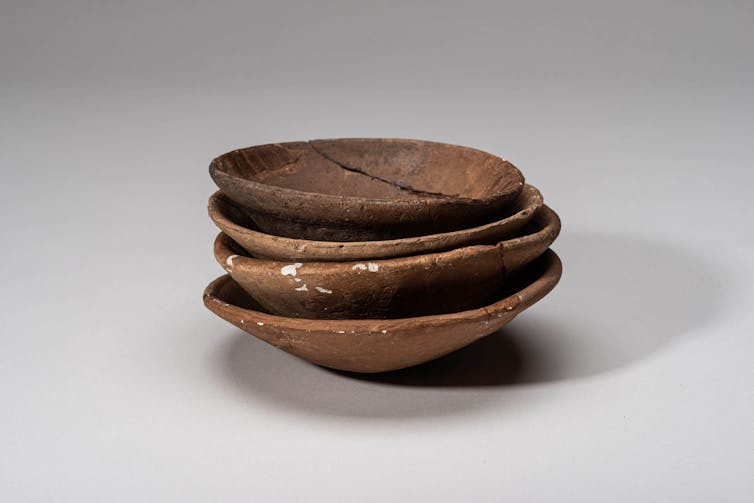
At the heart of this transformation was the rise of mass production. Drawing on Mesopotamian models, the potter’s wheel revolutionised Troy’s ceramics, enabling faster, more uniform and large-scale output. Wheel-thrown pottery soon dominated, marked by deep grooves and simplified finishes that prioritised efficiency over artistry.
Examples of wheel-thrown plates, mass-produced in Troy between 2500 and 2000BC. Institute of Classical Archaeology at the University of Tübingen/Valentin Marquardt, CC BY-SA
As production ramped up, so too did the need for a more structured and specialised workforce. Craftsmanship shifted from homes into workshops and labour became increasingly specialised and segmented. Trade flourished, reaching far beyond the Troad (the broader landscape around Troy) and surpassing the settlement’s local reach.
To manage this growing complexity, people introduced standardised weights and administrative seals – tools of coordination and control in an increasingly commercialised world.
But progress, then as now, came at a cost. The very innovations that fuelled Troy’s ascent unleashed forces that proved increasingly difficult to contain.
Prosperity through extraction
Troy’s wealth was built on relentless extraction. Monumental buildings demanded tons of limestone from nearby quarries. Clay was dredged from once-fertile riverbanks to feed kilns and brick-making. Forests were stripped bare for timber and firewood – the lifeblood of a booming ceramic industry that burned day and night.
Agriculture, too, underwent radical intensification. Earlier generations had rotated crops and rested their fields. Troy’s farmers, by contrast, pursued maximum yields through continuous cultivation. Emmer and einkorn (ancient wheat varieties well-suited to poor soils but low in yield and protein) dominated. They were hardy and easy to store, but nutritionally depleting.
As farmland expanded onto steep, fragile slopes, erosion took hold. Hills once covered in forest became barren, as archaeobotanical evidence confirms.
Livestock added further pressure. Herds of sheep and goats grazed intensively on upland pastures, tearing up vegetation and compacting the soil. The result was reduced water retention, collapsing topsoil and declining biodiversity. Gradually, the ecological equilibrium that had underpinned Troy’s prosperity began to unravel.
By around 2300BC, the system began to fracture. A massive fire ravaged the settlement – perhaps triggered by revolt or conflict. Monumental structures were abandoned, replaced by smaller dwellings and modest farmsteads. The centre of power faltered.
This collapse is likely to have been driven by a combination of factors: political tensions, external threats and social unrest. But the environmental strain is impossible to ignore. Soil exhaustion, deforestation and erosion would have led to water scarcity, resource scarcity and possibly even famine. Each factor eroded the foundations of Troy’s stability.
In the aftermath, adaptation took precedence over ambition. Farmers diversified their crops, moving away from high-yield monoculture towards more varied and resilient strategies. Risk was spread, soil partially recovered and communities began to stabilise.
Troy did not vanish – it adjusted and found a new balance for another millennia. But it did so in the shadow of a crisis it had helped create.
Lessons from a worn landscape
Troy’s story is more than archaeological curiosity – it is a mirror. Like many societies past and present, its economic ambitions outpaced ecological limits. The warning signs were there: falling yields, thinning forests, eroding hillsides. But the illusion of endless growth proved too tempting to resist.
The parallels with today are stark. Resource depletion, short-term gain and environmental neglect remain central features of our global economy. Technologies may have evolved – the mindset, however, has not. We consume, discard, expand and repeat.
But Troy also offers a glimmer of hope: the possibility of adaptation after excess, resilience after rupture. It reminds us that sustainability is not a modern ideal – it is a timeless necessity.
Troy is proof that no society, however ingenious, is immune to the consequences of ecological overreach. The warning signs of imbalance are never absent – they are merely easy to ignore. Whether we choose to heed them is up to us.
This article features references to books that have been included for editorial reasons, and may contain links to bookshop.org. If you click on one of the links and go on to buy something from bookshop.org The Conversation UK may earn a commission.
Looking for something good? Cut through the noise with a carefully curated selection of the latest releases, live events and exhibitions, straight to your inbox every fortnight, on Fridays. Sign up here.
Stephan Blum does not work for, consult, own shares in or receive funding from any company or organisation that would benefit from this article, and has disclosed no relevant affiliations beyond their academic appointment.
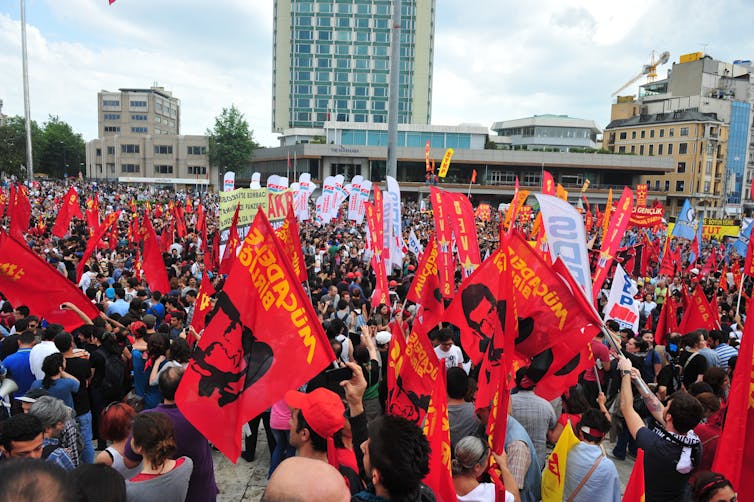
In 2013, a wave of protests began in Turkey in opposition to the planned demolition of Gezi Park in Istanbul. The protests soon evolved into mass anti-government demonstrations, and a landmark moment in the country’s history of resistance.
At the time, the country’s prime minister publicly insulted demonstrators, calling them çapulcu – a derogatory Turkish word meaning “looters” or “vandals”. Instead of retreating in shame, protesters quickly embraced the label. They wore it proudly on t-shirts, painted it on banners and sang it in chants. “Every day I’m çapuling” became a rallying cry, a meme and a slogan for a movement.
People took a slur meant to discredit them and turned it into a source of unity, defiance and pride. In social psychology, this practice is known as reappropriation, and it can transform how people see themselves and one another. Our research shows that when members of marginalised groups reclaim stigmatising labels, it not only fosters self-worth but can also spark political activism.
In other words, saying “yes, I’m a çapulcu” – or “yes, I’m fat” or “yes, I’m queer” – isn’t just resistance, it can be the start of a political identity.
In our study, published in Political Psychology, we explored how reappropriation works as a psychological and political process. We wanted to know: how does taking ownership of a stigmatised identity shift the way people see themselves and their groups? And how does that influence their willingness to take political action?
In both cases, the labels have long been used to stigmatise, devalue or silence. But reappropriating these words allowed people to reframe their identities, from being seen as a “problem” to becoming part of a proud and politicised group.
The psychology behind reappropriation
We combined in-depth interviews and survey research to understand what drives people to reclaim a stigmatising label, and how this shapes their identity. We interviewed 20 activists in Turkey who participated in the Gezi Park protests, and surveyed 479 fat liberation activists in North America.
Our findings suggest that reappropriation helps reduce the personal sting of the insult. When someone proudly adopts a term meant to shame them, they feel it disarms the insult. It flips the power dynamic: what was meant to hurt now becomes a badge of pride. If you wear the word like armour, it can’t be used to hurt you.
The 2013 Gezi Park protests evolved into nationwide protests in Turkey. Thomas Koch/Shutterstock
It also builds a sense of collective identity. When people publicly embrace a reclaimed label, they signal solidarity with others who share that identity and opposition to the forces that marginalise them. This shift helps move people from private acceptance to public action.
Crucially, we found that this process isn’t about denying the pain of marginalisation – it’s about transforming that pain into purpose. Participants in both movements reported that reclaiming stigmatised labels made them more likely to engage in activism – whether that meant attending protests, speaking out on social media, or supporting campaigns for political change.
Why this matters
Today, reappropriation is happening all around us. We’ve seen it in the embrace of terms like “queer”, “crip”, “fat” and “autistic” – all once used pejoratively, now often reclaimed as proud markers of identity. But despite its visibility, the process remains misunderstood.
Critics sometimes dismiss reappropriation as mere provocation or political correctness. But our research shows it is a deeply meaningful psychological strategy – one that enables people to reclaim power, resist stigma and build collective strength.
In the case of fat liberation, reclaiming “fat” has challenged not only individual shame but the broader societal norms that stigmatise larger bodies. Although it is difficult to claim that fatphobia is declining overall, fat people continue to find spaces and ways to feel empowered, challenging prejudices and, in some social circles, dismantling societal norms about larger bodies.
Of course, not everyone in a marginalised group will agree on whether a label should be reclaimed. For some, the term may carry too much pain. Others may worry that embracing the label reinforces stereotypes. But that tension is part of what makes reappropriation so powerful and so political. It forces a public reckoning with language, power and identity.
In the end, our research offers a simple but profound insight: reclaiming a slur can change more than just language. It can change how people see themselves, how they relate to others, and how they take part in changing the world.
The authors do not work for, consult, own shares in or receive funding from any company or organisation that would benefit from this article, and have disclosed no relevant affiliations beyond their academic appointment.
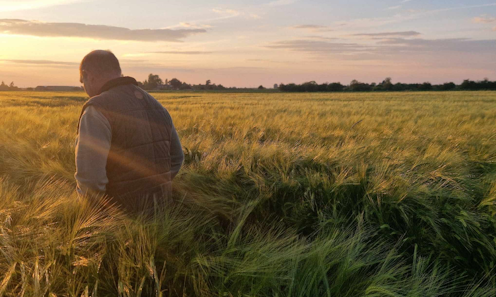
‘Ridiculous costs’: Andy Pearce on his farm in the Fens of eastern England.Photograph by Rebecca Pearce, CC BY-NC-ND
The Pearces have been farming the Fens of eastern England for generations – a region where more than a third of the country’s vegetables are grown, packed and processed. Andy and Rebecca Pearce lease a small family farm in south Lincolnshire with Andy’s parents and brother, on which they grow potatoes, wheat, pulses and sugar beet. They grew peas too until this year, when the unpredictable weather no longer made them viable.
Visiting their farm on a fine summer day, the landscape feels idyllic – a largely flat landscape of big skies and black soil, epic fields and waterways. As he drives around in his tractor, Andy keeps a diary of all the wildlife he sees: starlings, sparrows, badgers and buzzards, kestrels, wagtails, hares and deer. It’s a job he and Rebecca talk about with passion and love – yet he says that sense of vocation is clouded with ever-increasing money worries:
Look at the price of grain now: £180 a tonne – it was probably that in the mid-1990s … I can’t think of any other industry that is working on the same price as they were 30 years ago for produce. Yet the inputs have gone up astronomically.
In 2021-22 (the latest government statistics), the average farm household income in England was just £22,200. A 2025 report by the Food, Farming and Countryside Commission found that UK farmers’ incomes have remained stagnant over the past half-century, while costs have recently escalated, as Pearce explains:
In our case, rent is obviously one of the biggest outlays. Chemicals, fertilisers, tractors – you name it, everything has gone up astronomically … The ridiculous costs of machinery, the things you’ve got to do, the amount of red tape you’ve got to fill in, are all going one way.
He warns that farming is becoming an “impossible dream” for people like them – and that this is reflected in the reluctance of young people to get involved. He says it’s “almost impossible for somebody to come in now and start farming without some sort of backing”, explaining:
The sustainability of farming is getting less and less all the time … Unless you’ve got a big enough area to offset all that [expense], then it’s getting very, very difficult now. And that’s not going to change … You’re going to lose your family farms. You’re basically going to be left with agribusinesses at the end of the day.
Over the past three years, we have spent a lot of time in the Fens getting to know farmers like the Pearces. Our intention was to go beyond the polarised headlines to understand how farmers really feel, and what they want from government policy. For one of us (Dan), this forms part of Fen Power, a research project exploring how local infrastructure, identity and connection shapes economic sustainability and political trust in this part of rural England.
A trailer for the Fen Power project.
Despite farmers being highly skilled and hardworking experts who help maintain the UK’s food security and protect its countryside, many told us they feel abandoned by the government and anxious about their future. But delving deeper into the roots of this unhappiness, we found a more nuanced and complex story than is sometimes presented in media reports about the farmers’ protests.
A privilege or a curse?
Peter Lundgren farms the black soils of the Fens further north in Lincolnshire. Now in his sixties, he says farming is a “huge privilege – being able to walk across that field and ask nobody’s permission to do it”.
Lundgren – a non-organic farmer who campaigns against harmful pesticide and GM use – influenced a past Conservative government’s policy shift to link farming more closely with the provision of public goods. This included new subsidies to encourage farmers to protect biodiversity by planting more hedgerows and woodland, rather than focusing entirely on industrial food production.
Lundgren admits he leads a “very, very privileged lifestyle” – and as we walk around his beautiful small estate among dykes and woodland he has painstakingly restored, it’s hard to disagree. Yet now, he is selling up.
The Insights section is committed to high-quality longform journalism. Our editors work with academics from many different backgrounds who are tackling a wide range of societal and scientific challenges.
Unlike the Pearces, he has something to sell: Lundgren bought his 93-acre farm 30 years ago when it was rundown and collapsing. Having grown up on a struggling farm which eventually succumbed to debt, he has always sought a mode of farming that’s economically and environmentally sustainable. But now, while fit enough to continue, Lundgren says his passion is no longer there:
This spring, it shook me. I took rusty scrap into the scrap dealers in Lincoln, and I got more money a tonne for scrap metal than I got for my feed wheat … So the bread of life is worth less than rusty metal.
Many small- and medium-sized farmers find themselves under these growing economic pressures. Beyond the immediate crises of increasingly unpredictable weather or government policy, Lundgren says it comes down to the lack of power farmers have in the wider food system, where supermarkets and big suppliers drive down prices. The UK chicken industry, for example, is dominated by a handful of huge companies, so farmers can be forced into a loop of having to invest in big, expensive sheds in order to supply these few companies, as no one else buys chicken at this scale. As Lundgren puts it:
They’ll get a farmer to invest half a million quid in a chicken shed – and then they’ve got that farm exactly where they want them … They know they’ve got you under the thumb, and you now are a slave to [these companies].
Most farmers have a powerful sense of vocation in stewarding their land for future generations. But Lundgren says economic insecurity is putting off many farmers’ children from taking over the business. “One friend farms over in Norfolk … Both his sons have turned around and said: ‘You are bloody joking, dad.’”
Lundgren talks poignantly about the “feeling that you’ve let down past generations … that feeling of failure”. The economic decline he describes (in pints of beer) spans decades, not just recent years:
The first crop of wheat I grew, I got £120 a tonne for it – when I was 18 and beer was 50p a pint. So I got 240 pints for every tonne going off the farm. Last year, I got £65 a tonne and beer has come up to £3. So now, I’m getting 20 pints a tonne.
The problem, as Lundgren sees it, goes much deeper than the government’s recent policies that have sparked such ire in many farmers – most notably, the announcement that farmers would no longer be exempt from paying inheritance tax. From 2026, upon their death, any farm or business assets worth over £1 million could face a 20% inheritance tax over that threshold (with some exceptions). But for Lundgren, these tax changes are just another layer of risk in an already precarious profession. They exacerbate the fundamental problem of being “asset rich, cash poor” that affects so many in agriculture:
One of the worst problems is sometimes you put your hand in your back pocket and haven’t got the price of a pint – even though on paper, you’re worth a shitload of money.
This goes to the heart of occasional social media backlashes to the farmers’ protests. Rebecca Pearce describes the popular stereotype of farmers as rich aristocrats in tweeds, shooting foxes and “raping the countryside” with pesticides and shoddy practices.
There is a grain of truth in this image: around 30% of English land is owned by the aristocracy and landed gentry, and a significant further share is held by wealthy individuals including offshore firms and investment bankers (another 17% of land remains unregistered with the Land Registry, making ownership unclear). In recent decades, wealthy individuals have bought farmland to offset their tax liabilities – a key reason given by Labour for introducing the new inheritance tax rules.
But in practice, many ordinary family farms are being swept up in this new tax regime. According to estimates from the National Farmers Union and the Agriculture and Horticulture Development Board, around 75% of commercial farms – some 42,000 across England and Scotland – will be affected.
Andy Pearce: ‘Chemicals, fertilisers, tractors – you name it, everything has gone up astronomically.’ Photograph by Rebecca Pearce, CC BY-NC-ND
Given that farms are often in some of the most beautiful and sought-after locations for second homes and property developments in the UK, the capital assets (such as land and buildings) of these farms are often highly valuable, even if the farms themselves produce incomes for their owners which are little over the minimum wage.
And while around 60% of British farmers are tenants like the Pearces, who do not own the land they work, many still operate within family-run farm businesses that include owned assets such as machinery, livestock, stored produce or residential buildings. In some cases, these assets alone may push their estates above the £1 million threshold for full relief, or above the £3 million mark where inheritance tax liabilities begin to rise significantly.
TV programmes such as (Jeremy) Clarkson’s Farm have put the everyday struggles of farmers more squarely on the map, and around 55% of the public say they would support farmers if they were to go on strike, in line with support for nurses and paramedics. In April 2025, the UK’s first farmers’ strike broke out, with some farmers refusing to load milling wheat needed for Britain’s bakeries.
While a one-off event, it may not be the last. A recent Ashbridge survey of 2,000 British farmers suggested that 39% of their farms would be “unsustainable” within five years. There are now two options for most farmers to stay afloat: intensify food production, or sell up.
Lundgren has put his farm up for sale.
Small-scale farmers play a key role in protecting the UK countryside and its biodiversity. Photograph by Amy Gibbons, CC BY-NC-ND
Why farming is such a gamble
Farming isn’t just a business, it’s a gamble. Take a tonne of wheat: the seed bought one month ago and put in the ground today will be harvested in up to a year’s time – meaning the farmer only gets paid for it in 18 months.
Now factor in the volatility of prices set by the global market amid the unpredictability of Brexit, COVID and Ukraine – not to mention the weather. In the Fens and many other parts of the UK, 2024’s unusually wet weather flooded and submerged many farmers’ crops.
Then there’s the volatility of government policies, from the long-term EU subsidies of the Common Agricultural Policy that made farming viable in an era of cheap food, to the hotchpotch of environmental policies post-Brexit, which today many farmers find incoherent and poorly implemented. According to Andy Pearce: “It’s a case of giving with one hand, and taking away at least as much with the other.”
There are many risks farmers have little protection from – including the hardball practices of supermarkets engaging in price wars. Farmers in the UK mostly supply supermarkets via suppliers, who have the power to reject and even fine farmers for not supplying to the right standard or quantity. Prices have been squeezed artificially low for decades by suppliers and supermarkets, even while new technologies and government directives have rapidly increased yields.
The only reason most farmers have remained in business is through vast subsidies like the EU’s Common Agricultural Policy, which encouraged high-input (high-fertiliser) farming and rewarded big landowners. But subsidies are double-edged: some farmers think the system allowed supermarkets to get away with paying low prices, because subsidies meant farmers would never face the threat of going out of business.
When introduced in 2021, these policies were generally widely embraced by farmers – all of whom, in our research, fully subscribed to an ethos of sustainability and public service.
But from the outset, conditions for accessing these funds were difficult. They required significant investment of time and money upfront, with payments later. They set conditions which are difficult, arbitrary and onerous. Subsequent rollout and payment delivery was slow. They only provided a financial reward to those who deliver environmental benefits in line with the goals of a 25-year environment plan that works towards achieving net zero by 2050. According to Andy Pearce:
There is absolutely nothing in it for us at all, basically … It is just not economically viable.
In December 2023, the Basic Payment Scheme – a longstanding government subsidy that provided a basic income safety net for active farms – came to an end. It was replaced from January 2024 by delinked payments: time-limited support based on past claims, with lower overall funding and fewer farms eligible.
This was followed in November 2024 by the suspension of several capital grants schemes to new applicants due to high demand. Then, at short notice, in March 2025, the SFI scheme was suddenly suspended to new entrants after reaching its annual budget cap.
Over the past decade, across both Conservative and Labour governments, British farmers have been gradually stripped of most sources of financial support. A turbulent and rapidly changing policy landscape has left few farmers able to adequately financially plan. Meanwhile, the cost of inputs rise, prices remain low, inheritance tax looms, and the work remains grindingly hard. Trust between government and farmers has never been lower. Andy Pearce says:
In the best-case scenario, I’m going to come out evens. If I have a really good harvest, I’m going to be losing money doing this scheme … Basically, we’ve got the worst of both worlds. Now we’re competing against subsidised produce from Europe without the subsidies.
Farmers are questioning the incentives provided for sustainability and environmentalism. Photograph by Amy Gibbons, CC BY-NC-ND
‘There’s got to be a total rethink’
Not everyone involved in farming is a freeholder or tenant. Some, like Martin Reams, work as farm managers for large agribusinesses that produce intensively at scale. They often work long hours on the land with the same passion and vocation as family farmers like the Pearces and Lundgren.
Reams oversees operations on a 2,000-acre farm in Lincolnshire with just two employees. They grow wheat, barley, peas, potatoes, broccoli and cauliflower. Come harvest time, they’ll draw on labour from eastern Europe – many migrant workers have also settled (mostly in the mid-to-late 2000s) and integrated into the local area.
Reams has farmed all his life; from his family’s smallholding to managing farms across the world. No two days are the same and he’s outdoors every day, come rain or shine. Also in his sixties, Reams has lived through a major technological revolution in farming.
Whereas once farms were labour-intensive and managed by hand, tractor and a crude understanding of fertilisers, today farms like his are managed using GPS field scans, smartphones, robotics, fine-tuned computer systems and self-driving tractors. And out in the fields, year after year, Reams says he has witnessed the impacts of climate change at first-hand:
Without a shadow of a doubt, the weather has changed dramatically over the 45 years I’ve actively been working on farms … The big thing I have noticed is the amount of rain we get. It’s either all or nothing. Either very dry or very wet. And that is one of the major driving forces that is really [forcing us to upscale] what we’re doing.
Reams doesn’t own a farm, but like everyone else we spoke with, he’s dismayed by the change in inheritance tax rules, suggesting it will “probably kibosh a lot of the smaller farms”.
Many farmers we spoke to fear that, as more small- and medium-size farmers are driven to sell up to larger agribusinesses and solar farms, the standards of food production will fall, as the UK becomes reliant on cheap overseas producers not bound by the same environmental regulations.
Reams says simply: “We’re not on a level playing field.” When asked about farming’s future, his assessment is blunt:
At the present moment, I would say forget it – it’s doomed. It’s going to be like the coal mines, it’s going to be like the fisheries. There’s got to be a total rethink on food production, how people value food.
These days, the average age of British farmers is 59. It’s similar internationally, and a third of British farmers are over 65 and ought to be enjoying retirement. Most of the farmers we spoke to talked about the barriers for new entrants into farming: high amounts of capital to get started, difficult and long work, with median farm household incomes often below the minimum wage.
In response, some agricultural colleges are doing their best to attract young people to farming, and in recent years there has been a slight increase in the number of students enrolling to study land-based and agricultural degrees around the UK. We met one example of this potential new generation of farmers amid an array of beautiful flowers in the north-east of England.
Roisin Taylor: passionate about the future of horticulture. Photo by Jocelyn Pritchard, CC BY-NC-ND
Regeneration is possible
“Why have I not been doing this my entire life?” Roisin Taylor asks us, having recently established a two-acre flower farming business on a new site near Newcastle (her mother having originally founded the company). She’s not being sarcastic.
Taylor grew up in County Durham, working on farms and dry-stone walling. Like many her age, she took the university route, completing two degrees before coming back into farming and agricultural community engagement. A co-director of UK Youth 4 Nature and Nuffield farming scholar, she researches how the British cut-flower industry should adapt to a world of two-degree warming.
Having not come from a farming family directly, and despite facing the new entrant barriers – notably the difficulties of securing land – Taylor’s story suggests farming can still be a career and lifestyle that attracts young people.
She is passionate about the future of horticulture – in particular, its need to adapt to climate change. She calls for a long-term perspective where “public money for public good” is used to make farming a high-skill, high-conservation catalyst for change. At the same time, she highlights the failures of the current renting model, particularly for small-scale farming:
It’s frightening that somebody might have control over a large portion of my business. It makes it more difficult to invest in the long-term purchases you need to make your businesses sustainable.
While Taylor does not work in food production, flower farming has also been affected by the policy “chaos” that other interviewees have highlighted to us. In 2023 at the time of speaking to Taylor, the previous government’s plan for a new horticulture strategy was abruptly scrapped. Speaking more widely about how farmers were feeling, Taylor told us:
If you don’t feel like you’ve got a voice, of course you’re going to go out and complain because you don’t feel you’ve got agency … The cycle of distrust continues to grow. Motivation is driven by momentum, and we need some wins to prove to farmers, growers and policymakers that change is possible.
Roisin Taylor: ‘The cycle of distrust continues to grow.’ Photo by Jocelyn Pritchard, CC BY-NC-ND
Earlier this year, the National Farmers’ Union published a UK horticulture strategy for growth in which it welcomes the government’s promised “roadmap” for farming in England up to 2050 as “an ambitious vision to make farming and growing more sustainable and profitable”. In her roles both as farmer and advocate, Taylor aims to act as a bridge between farmers, policymakers and environmentalists, and is confident they can find common ground:
Both farmers and environmentalists are trying to move the dial forwards. They’re just trying to both make a living and also see a future where something is better … [But] public perception of farming is steeped in inaccuracies, which does the sector no favours when we are trying to advocate for change.
Nonetheless, Taylor is in it for the long haul. Part of the gamble and privilege of farming, she says, is working to a much longer timeframe – with the need to also consider “building things like climate adaptation into that long-term framework and planning”. But is time running out?
The future of farming
We’re back with Andy and Rebecca Pearce in their cottage. Andy’s mum brings in mugs of tea, followed by his brother popping in to check they’ve got enough oil for the tractor. “It used to be a man with a spanner who’d come out and fix it, now it’s a man with a laptop,” Rebecca quips.
Though the Pearces are tenant farmers, they are mired in the same challenges and uncertainty as many other small and medium-sized farmers we spoke with. Andy tells us that from a smaller farmer’s point of view, “the sustainability of farming is getting less and less all the time”.
As costs for farmers grow and revenues shrink, he says that “unless you’ve got a big enough area to offset that, then it’s getting very, very difficult now. That’s not going to change.” His prognosis is clear:
You’re going to lose your family farms. You’re basically going to be left with agribusinesses at the end of the day.
Andy Pearce: ‘You’re going to lose your family farms.’ Photo by Rebecca Pearce, CC BY-NC-ND
We heard this message time and again from the farmers, farm managers, agronomists (who study the science of soil management and crop production) and rural communities we spoke with.
And yet the demise of family farms is not some natural inevitability, like the melting of glaciers or the mizzley rain in these parts.
Farmers are sometimes criticised for over-extracting from the natural environment to put food on our tables. But they are just one piece of the jigsaw. It isn’t just the soil that’s depleted through overextraction; the people who produce our food and protect our countryside are also being depleted. At its root, Taylor says, is the fact that “we don’t pay what food’s worth”.
Farmers aren’t the only group in society battling the effects of inflation. But they are perhaps uniquely exposed. Unlike many businesses that can simply shift their costs on to customers while maintaining profit, farmers are at the frontline of a complex modern food system in which the price we pay for our food, most often in supermarkets, has been kept low for decades by extensive price squeezing.
But it’s not just farmers who suffer as a result. Lundgren talks about a fundamental “divorce” between farmers and consumers in modern society:
I think my argument about farmers being divorced from consumers, it’s very much around the creation of the food chain. The further we get forced apart is another link in that damn chain so that someone else can get in and make a lot of money.
Reams offers a memorable example of this breakdown in the connection between consumers and their food:
I went to a school not very far from here in rural Lincolnshire, took a sugar beet, and nobody knew what it was. In rural Lincolnshire! They didn’t know what it was.
This disconnect breeds misconceptions and bewilderment on both sides – as Rebecca Pearce expresses over tea in their farmhouse cottage:
I don’t really understand why people hate farmers so much, when everybody eats.
In our plastic-packed, supermarket-fed world, a lot of the public doesn’t understand where food comes from – nor have the time to find out. On the other side, many of the farmers we spoke to think that all the public wants is cheap identical food, with little regard for who makes it and with what means.
Neither is true, as Lundgren explains in characteristically colourful style:
Farmers will come in the pub on a Friday night and say: ‘The public don’t care as long as it’s cheap.’ Which is absolute crap. And the public will say: ‘You never see a farmer on his bike – [instead] driving around in Range Rovers shouting “get off my land!”‘ Which is also crap.
What’s undeniable is that the British food system is under immense strain. Consumers are failing to get access to affordable, nutritious food, and many farmers are struggling to maintain a basic livelihood or pass on their farms to their children. As Rebecca Pearce says:
We’ve got to work together with environmental groups and everybody to try and get farming [better understood]. There has to be a dialogue.
Dan Taylor does not work for, consult, own shares in or receive funding from any company or organisation that would benefit from this article, and has disclosed no relevant affiliations beyond their academic appointment. His broader research project, Fen Power, is funded by the Open University’s Open Societal Challenges scheme (www.tinyurl.com/fen-power).
Source: The Conversation – UK – By Mehri Khosravi, Energy and Carbon Senior Research Fellow, University of East London
With heatwaves becoming hotter and more frequent, demand for air conditioning is expected to rise significantly. However, if the UK and similar countries respond to hotter summers simply by installing more AC, they risk creating a costly, energy-hungry and more unequal future. But there’s a cooler, smarter way forward.
Colleagues and I have surveyed more than 1,600 households across the UK and found that two-thirds used fans in the summer of 2022, and one in five used air conditioning. The vast majority of those AC units were bought during or after that year’s 40°C heatwave – showing how quickly habits can shift.
In our our survey, 80% of UK homes reported overheating in summer 2022, four times more than a decade ago. By the end of this century, the temperature in the UK is predicted to exceed 40°C every few years. It’s no wonder that same survey found a sevenfold increase in air conditioning in the decade prior to 2022.
Relying heavily on AC might seem like a natural adaptation, but it comes with hidden costs. Cooling requires huge amounts of energy at the exact moments when demand is already high. In 2022 and 2023, the UK had to briefly restart a coal power plant to keep the lights – and the air conditioners – on.
AC also deepens inequalities. For wealthier households, it’s a quick fix. But for others, especially lower socioeconomic groups, it’s a dangerous gap in protection.
Passive cooling first
We already have a template for tackling winter energy demand – “insulation first”. That’s because it’s a lot harder to warm a house than it is to stop heat escaping in the first place.
A similar principle applies in summer – “reduce cooling demand first”.
Hot climate countries like those in southern Europe have had lots of practice and we can learn from them. That means starting with passive cooling measures that reduce the need for mechanical cooling in the first place. These measures include:
shading and shutters to block sunlight before it enters a building
natural ventilation to let heat escape in cooler hours
reflective and light-coloured surfaces to deflect solar radiation
buildings orientated to minimise heat gain
trees and green infrastructure to cool neighbourhoods.
White buildings reflect the sun’s heat to keep cool. Noradoa / shutterstock
Many of these are low-cost, quick to install and long-lasting. In Rome, for example, window shutters are so common you barely notice them, yet they dramatically reduce the need for mechanical cooling.
Once demand is lowered, remaining needs can be met by ACs or reversible heat pumps.
Public behaviour matters too
Adapting our building design is not enough. We must adapt our behaviour too.
In Spain, the hottest hours are for siestas. Outdoor activities are paused, and people are more active in the mornings and evenings. Culturally, they understand that keeping curtains closed during the day and opening windows at night can prevent homes from overheating.
In the UK, heat is still culturally framed as “good weather”. Sunny weekends trigger beach trips, barbecues and more outdoor activity, even when it’s dangerously hot. This mismatch between perception and risk is a major public health challenge.
Good weather, or dangerous weather? Southend-on-Sea in the 2022 heatwave. Paan Lily / shutterstock
Even as the climate warms, UK energy policy is still designed for winter, not summer. Energy efficiency programmes often overlook the risk of trapping summer heat inside well-insulated homes. The UK needs to embed overheating risk into housing policy, and needs a clear plan to decarbonise cooling alongside heating.
Public risk communication must also catch up. Early warning systems such as red, amber and yellow warnings are great start, but they’re not enough in a country where many people still see 30°C as perfect picnic weather. We need targeted campaigns to shift mindsets and encourage proactive action before the heat arrives.
The 40°C day in 2022 was a wake-up call. We can answer it with more AC – and more bills, emissions and inequality – or we can redesign our buildings, streets and routines to work with the climate not against it.
AC will still have a role during extreme heat, but it should be the last resort, not the first instinct. Reduce cooling demand first, meet the rest efficiently – and Britain can stay cool without overheating the planet.
Mehri Khosravi Mehri Khosravi works at the University of East London. She received funding from the British Academy. She is affiliated with the University of East London’s Sustainability Research Institute.
Source: The Conversation – UK – By Sara Mehryar, Research Fellow in climate change adaptation and resilience, London School of Economics and Political Science
Extreme heat in the UK is no longer a distant or seasonal issue. It’s a growing national risk.
When the UK hit over 40°C in 2022, nearly 3,000 excess deaths (deaths surplus to what’s normally expected for that time of year) were recorded in England alone. Train lines buckled, hospitals overheated and fire services were overwhelmed.
Globally, extreme heat is one of the deadliest climate hazards, causing an estimated 489,000 deaths annually. But these death are preventable.
Our recent study in the journal Earth’s Futureand otherreports on the subject say the same thing: that the UK is not ready for a future of extreme heat. The UK’s efforts still focus largely on immediate health consequences, rather than the risks that unfold more widely on education, supply chain, infrastructure and the economy.
Our analysis of the 2022 heatwave reveals a web of cascading effects: wildfires, power failures, water shortages, overwhelmed emergency services and serious disruption to transport. For example, Network Rail, the state-owned company responsible for Britain’s railway tracks and stations, spent £51 million on compensation due to heat-related disruptions between 2016 and 2021.
Consequences extend globally. The humanitarian aid charity Unicef reported that in 2024, 242 million students were affected by heat-related school closures, and US$863 billion (£643 billion) in workforce income losses were recorded in 2022 due to reduced productivity.
Here are five key actions the UK should prioritise:
1. Retrofit buildings to handle heat
UK homes are built to retain heat, a dangerous liability during hotter summers. Right now, more than half of homes in the UK can get uncomfortably hot during heatwaves. If the planet warms by about 2°C on average (a level many scientists warn could be reached this century), that number could jump to nine out of every ten homes.
Existing buildings, many of which are among the oldest in Europe, are not covered by current overheating regulations. A national retrofit strategy urgently needs to include passive cooling, such as ventilation, shading and reflective materials that improve buildings in energy-efficient ways as standard.
Other countries are already taking proactive steps. In Barcelona, for example, public schools are being converted into “climate shelters” with fans, shade, and water access so they can protect people during extreme heat. The UK could adopt similar measures – turning schools, libraries and community centres into safe, cool spaces to help residents cope with increasingly severe heatwaves.
Heat warnings alone won’t change behaviour. Many people remain unaware that heat can be fatal, especially for the most vulnerable, such as children, older people and people with chronic illnesses. Public messaging must be practical and timely, with advice tailored to specific contexts (such as care homes, schools or outdoor workplaces). Advice also needs to encourage people to make healthier choices, while ensuring that better options are affordable and accessible to everyone.
One example comes from Ahmedabad, India, where heat-related deaths have dropped sharply since its Heat Action Plan began. The programme works because it targets vulnerable groups, trains health workers, provides shade and water for outdoor labourers and schoolchildren, and warns residents before dangerous heat hits. A simple “heat rating” in forecasts, backed by text alerts and local media, helps people take timely action.
Our work with Shade the UK, an NGO dedicated to adapting the UK’s built environment and public spaces to climate change, and Love Design Studio, a sustainability consultancy, shows that implementing a simple heat metric (similar to existing energy performance certificates) could empower residents and property owners to act. The metric would show the level of heat risk in a property and outline practical measures to make it cooler.
3. Focus on the most vulnerable
Heat effects are uneven. In 2022, central London boroughs such as Hackney, Tower Hamlets and Islington faced notably higher heat exposure (consistent with urban heat island effects that can elevate temperatures by 5–6°C compared to less dense areas) driven by their high building density and limited green space. Vulnerable populations, including older adults and low-income residents, face a higher risk but have fewer resources to cope.
By mapping vulnerability hotspots (creating maps that show where heat risk and social vulnerability overlap), authorities and volunteer groups can more easily deliver targeted local responses, such as providing access to cool spaces and carrying out welfare checks for vulnerable people during heatwaves.
London has already begun producing such heat risk and vulnerability maps. Some boroughs (such as Tower Hamlets) have acted on them, for example, by identifying schools and homes at greatest risk, but these maps need to become consistent, regularly updated and directly tied to local response plans.
One of the clearest findings from our latest research is that no single agency had a full view of the risks during the 2022 heatwave. Emergency responders focused on immediate incidents, while local authorities and national agencies operated in parallel, not in partnership.
Insights from our policy roundtable, held in London on February 11 with senior representatives from government, public health, climate and environment bodies, academia and non-governmental organisations, highlight the urgent need for a cross-sectoral national heat risk commission. This can ensure planning takes all aspects of heat risk into account and goes beyond typical priorities for health, transport and buildings.
London’s Operation Helios, a multi-agency heatwave simulation exercise held in June 2024, brought together 80 participants across multiple sectors, including emergency services, local authorities and health agencies, to test their preparedness for a severe heat episode. This one-off coordinated event must be repeated regularly.
Addressing heat risk must include reducing greenhouse gas emissions. Relying on energy-intensive solutions like mechanical air conditioning can worsen the problem by increasing emissions and contributing to local warming.
Taking early, proactive action opens up a wider range of low-emission measures, from raising awareness of simple behaviours to designing cooler, greener cities with low-carbon infrastructure. This includes more trees, shaded areas, cooling centres and water features such as fountains.
Resilience is possible. But it demands planning ahead, protecting the most vulnerable, and turning policy into action – before the next heatwave hits.
Don’t have time to read about climate change as much as you’d like?
Sara Mehryar receives funding from Z Zurich Foundation, Switzerland.
Anna Beswick receives funding from the Z Zurich Foundation, Switzerland.
Candice Howarth receives funding from the Economics and Social Research Council, British Academy, Natural Environment Research Council, EU Horizon 2020.
Le numérique était censé tout « disrupter ». Mais il pourrait remettre en selle une pratique qu’on croyait disparue : le démantèlement de groupes pour rétablir une concurrence réelle et non faussée. Il faut suivre de près ce que décidera la Federal Trade Commission états-unienne dans l’affaire qui concerne le groupe Meta.
Le 15 avril 2025 s’est ouvert aux États-Unis, le procès Meta (FTC v. Meta Platforms, Inc.). Cette affaire fait suite à l’action en justice intentée par la Federal Trade Commission (FTC) à l’encontre de Meta. L’autorité reproche à l’entreprise d’avoir procédé aux acquisitions d’Instagram (2012) et de WhatsApp (2014), pour renforcer sa position dominante sur les réseaux sociaux, notamment en imposant des conditions inégales à l’égard des développeurs de logiciel. Ces comportements auraient, selon la FTC, pour conséquence, une expérience fortement dégradée pour les utilisateurs avec plus de publicités subies et une confidentialité réduite.
Depuis quelques années, la pratique des acquisitions prédatrices ou killers acquisitions– visant à éliminer une menace concurrentielle avant qu’elle n’émerge – est devenue une pratique courante, notamment pour les entreprises spécialisées dans le numérique comme en témoignerait ici le rachat par Meta d’Instagram et de WhatsApp au cœur de ce procès.
La pile de technologie publicitaire
Selon la FTC, l’objectif de ces rachats semble être dès le départ de chercher à éliminer toute concurrence sur le marché des réseaux sociaux. Cette pratique s’apparente à la stratégie dite de « pile de technologie publicitaire ». Cette dernière vise à renforcer la position dominante d’une entreprise sur plusieurs produits technologiques de publicité numérique par une série d’acquisitions prédatrices. Pour ces raisons, l’autorité a demandé une injonction visant à prévenir la réitération de ces types de pratiques ainsi que la cession d’Instagram et de WhatsApp.
En matière de contrôle des concentrations, les entreprises parties aux dites opérations acceptent souvent de procéder à une telle cession – totale ou partielle – d’actifs. Cette dernière opération consiste le plus souvent à vendre à des tiers des points de vente, des établissements, une division, une gamme de produits voire l’intégralité d’une filiale.
Dans le cadre des procédures de contrôle des concentrations par les autorités de la concurrence (FTC ou encore Commission européenne), la cession d’actifs permet à l’entreprise menant l’opération de concentration via une acquisition ou une fusion de proposer et ou de négocier des ventes d’actifs avec les autorités afin que son opération soit validée. La cession est donc dans ce cadre un instrument de nature structurel utilisé ici dans le cadre d’un contrôle a priori des opérations de concentrations garant de l’ordre public économique.
De la cession d’actifs à la scission de l’entreprise
Ce type de cession d’actifs doit néanmoins être distingué du démantèlement qui est susceptible aussi d’être utilisé par lesdites autorités. Le démantèlement correspond en la scission d’une entreprise en de multiples sociétés indépendantes mais il s’agit ici d’une sanction a posteriori.
Peut-on considérer le démantèlement comme une solution efficace ? La réponse semble a priori négative dans la mesure où le démantèlement dans ces affaires emblématiques s’est finalement avéré avec le temps peu opérant face aux stratégies de restructuration des entreprises. Ainsi, par exemple, le démantèlement de la Standard Oil s’est traduit au fil du temps par une recombinaison partielle des 34 sociétés se traduisant in fine par une des plus grandes fusions de l’histoire entre supermajors sur le marché pétrolier en 1999 entre EXXON (ex Standard Oil of California) et Mobil (ex Standard Oil of NY).
Une sanction à l’efficacité provisoire
Le démantèlement a certes permis de relancer temporairement la concurrence dans ce secteur, mais l’efficacité de la sanction disparaît plus ou moins rapidement au regard des stratégies de fusions-acquisitions que mettent en place les entreprises. Le démantèlement ne fut d’ailleurs guère utilisé en dehors de ces deux cas d’école. Il n’a jamais été utilisé en droit européen ni en droit français de la concurrence pour sanctionner des positions dominantes absolues ou quasi absolues comme celle de la Standard Oil en son temps. Les débats sur son éventuelle utilisation avaient quasiment disparu jusqu’à l’avènement de l’économie numérique.
L’économie numérique marquée par la vitesse des évolutions techniques et technologiques a pu laisser croire dans un premier temps que les monopoles ou les quasi-monopoles n’étaient qu’une histoire relevant de la vieille économie. Néanmoins, l’apparition et le développement des géants du numérique (GAFAM) combiné à une puissance financière et technologique sans égale et des stratégies d’acquisitions prédatrices des concurrents a permis à ces grands groupes de capter et de contrôler le développement des innovations disruptives. Les concurrents innovants au stade de start-up sont acquis avant même de pouvoir remettre en cause les positions dominantes des GAFAM.
Un renouveau pour le démantèlement
L’intérêt théorique et pratique pour le démantèlement connaît un renouveau en droit et en économie de la concurrence, la cession pouvant être considérée comme une menace crédible : en quelque sorte l’arme nucléaire du droit antitrust destinée à n’être utilisée qu’en dernier recours. Cette nouvelle forme de stratégie de la terreur suppose que la menace devrait suffire en principe à obtenir des entreprises concernées des engagements comportementaux et structurels devant remédier aux préoccupations de concurrence identifiées par les autorités de concurrence.
Arte 2025.
Le procès Meta incarne probablement cette volonté de gagner en crédibilité au même titre que l’article 18 du Digital Market Act (DMA) européen de 2022 prévoyant cette possibilité. Aux États-Unis, en l’absence de texte équivalent au DMA, le procès devant le tribunal de Washington constitue pour la FTC en invoquant le droit antitrust classique, le monopolisation ou l’abus de position dominante, de demander la vente partielle d’Instagram et de WhatsApp.
L’objectif est de rendre à ces filiales leur autonomie afin qu’elles puissent à nouveau concurrencer Meta sur le marché des réseaux sociaux. Ainsi, si finalement le tribunal suit le raisonnement de la FTC et que la cession se traduit par un démantèlement de Meta, cette mesure structurelle devient alors une menace crédible pour l’ensemble des GAFAM. Leur situation de position dominante serait alors menacée et les autorités et les tribunaux de la concurrence rétabliront la concurrence là où elle était absente ou quasi absente. Reste à savoir si l’histoire se répétera comme pour le pétrole ou les télécoms et si, à terme, les groupes finiront par se reconstituer…
Les auteurs ne travaillent pas, ne conseillent pas, ne possèdent pas de parts, ne reçoivent pas de fonds d’une organisation qui pourrait tirer profit de cet article, et n’ont déclaré aucune autre affiliation que leur organisme de recherche.
Source: The Conversation – (in Spanish) – By Daniel Ayllón Fernández, Profesor e investigador del Departamento de Biodiversidad, Ecología y Evolución, Universidad Complutense de Madrid
La lamprehuela y la colmilleja son dos pequeños peces endémicos de la península ibérica actualmente muy amenazados que antes convivían en algunos ríos de montaña cercanos a Madrid. “Antes” es la palabra clave, pues en nuestras últimas investigaciones no encontramos en ellos ni rastro de la lamprehuela. No es un caso aislado: los peces de agua dulce están entre los grupos animales más amenazados del planeta.
Las especies de aguas frías, en riesgo
Las causas del declive de los peces de agua dulce son muy variadas y principalmente tienen un origen humano. Se estima que alrededor del 20 % de las especies amenazadas están afectadas por el cambio climático. Por ejemplo, los salmónidos, entre los que se encuentran la trucha común y el salmón atlántico, dependen de aguas frías, limpias y oxigenadas, por lo que el cambio climático los pone en una situación crítica.
De hecho, hemos detectado un declive en las poblaciones de trucha y salmón de la península ibérica en las últimas décadas, a medida que los ríos han aumentado su temperatura y disminuido su caudal.
Pero ¿qué quiere decir exactamente que los salmónidos son peces de aguas frías? Básicamente, que su fisiología está adaptada para funcionar eficientemente en un rango estrecho de temperaturas bajas.
La energía que cuesta mantener procesos vitales como la respiración celular, la digestión o la actividad muscular aumenta de forma exponencial con la temperatura del agua. Cuando esta supera los valores óptimos –mucho más bajos que el de las especies de aguas cálidas–, su metabolismo se acelera de forma desproporcionada. Necesitan consumir cada vez más oxígeno, pero la disponibilidad de este en el agua se reduce al subir la temperatura. Esto hace que su alimentación sea menos eficiente, lo que disminuye su crecimiento y, finalmente, su capacidad para reproducirse.
Pese a todo, las extinciones locales de trucha y salmón aún son raras, porque los salmónidos son animales particularmente adaptables y resistentes. Como respuesta a las nuevas condiciones ambientales, están experimentando cambios fisiológicos que afectan a muchas de las características que determinan su capacidad para dejar descendencia y transmitir sus genes: tolerancia térmica, tasas metabólicas, tamaño y edad de madurez sexual, o al momento de la migración o la reproducción.
Otro mecanismo de respuesta al cambio ambiental es la plasticidad en el comportamiento. A diferencia de los cambios fisiológicos, es rápida y reversible.
Una respuesta bastante interesante en este sentido consiste en desplazarse a lo largo de la red fluvial buscando tramos con temperaturas menos estresantes y más adecuadas para el crecimiento. Así, los salmónidos pueden maximizar su producción anual aprovechando de forma estacional la heterogeneidad térmica que hay en los ríos. ¿Cómo? Residiendo en los tramos de aguas frías de cabecera (refugios térmicos) en verano y en los tramos bajos de mayor temperatura y productividad el resto del año. Aunque esto solo funciona si los ríos no están llenos de presas que impidan estos movimientos.
Por otro lado, los salmónidos pueden variar flexiblemente sus patrones diarios de actividad y selección de hábitat –decidiendo cuándo y dónde alimentarse– para ajustarse a cambios rápidos en las condiciones ambientales.
Lo que no se había estudiado antes es si esta flexibilidad en el comportamiento podría aumentar la capacidad de supervivencia a largo plazo de las poblaciones más afectadas por el cambio climático. Y esto es precisamente lo que tratamos de resolver en un estudio reciente mediante experimentos virtuales con un modelo de simulación.
Cambios en la alimentación para resistir el cambio climático
¿Qué aprendimos con nuestras simulaciones? En primer lugar, confirmaron lo que los ecólogos del comportamiento saben por sus experimentos: durante los veranos con altas temperaturas, las truchas solo pueden satisfacer sus necesidades metabólicas alimentándose en varios momentos del día. Y deben hacerlo de forma que peces de distinto tamaño puedan alimentarse en el mismo lugar a diferentes horas.
Los peces deben asumir un equilibrio entre la necesidad de alimentarse y el riesgo de depredación que ello implica. Alimentarse durante el día es más eficiente para ganar energía, pero también más arriesgado. Hacerlo de noche es más seguro, pero menos rentable. Y alimentarse al amanecer o al atardecer ofrece un crecimiento casi tan bueno como el del día y con un riesgo algo menor, pero son periodos de corta duración.
La temperatura condiciona considerablemente este equilibrio, ya que afecta a la cantidad de alimento que necesita el pez. Por ello, analizamos cómo las truchas simuladas modificaban su comportamiento de alimentación en un río con temperaturas cada vez más elevadas y caudales cada vez más bajos.
Tal como esperábamos, las truchas mostraron una gran plasticidad: respondieron aumentando su actividad general de búsqueda de alimento, especialmente la diurna. Sin embargo, los patrones de actividad diaria variaron en función de la edad, pues los requerimientos energéticos aumentan exponencialmente con el tamaño.
En nuestro segundo experimento de simulación comprobamos que las poblaciones virtuales de truchas capaces de ajustar flexiblemente su patrón circadiano de alimentación fueron más resistentes al cambio climático que las poblaciones que se alimentaban de forma fija solo durante el día.
La plasticidad del comportamiento puede ser clave para hacer frente a los cambios ambientales en estos peces, aunque también en otros grupos de animales. No deberíamos subestimar su importancia a la hora de predecir la supervivencia de las poblaciones de especies tan emblemáticas como la trucha o el salmón en nuestros ríos, sometidos a temperaturas crecientes y caudales menguantes.
La versión original de este artículo fue publicada en la web de la Oficina de Transferencia de Resultados de Investigación de la Universidad Complutense de Madrid.
Este artículo ha sido realizado en el marco del proyecto DEMGENTROUT, financiado por el Ministerio de Ciencia, Innovación y Universidades (proyecto PID2023-148644OB-I00), dentro de la Convocatoria 2023 de ayudas a Proyectos de Generación de Conocimiento.
El dengue se expande… y no solo en zonas tropicales. Se trata de una enfermedad viral transmitida por mosquitos del género Aedes, que afecta cada año a millones de personas. En los últimos años ha llegado a regiones donde antes era prácticamente desconocida, incluidas zonas de Europa y América. El aumento de temperaturas, la globalización y los movimientos de población están facilitando su expansión.
Esta realidad preocupa a las autoridades sanitarias: el dengue no solo genera una elevada carga asistencial, sino que también tiene un potencial epidémico importante. En 2024, varios países latinoamericanos y europeos experimentaron brotes sin precedentes. En este contexto, detectar el virus rápido, predecir brotes con antelación y actuar con eficacia se vuelve indispensable. Aquí es donde la inteligencia artificial (IA) puede marcar la diferencia.
Lejos de ser una tecnología lejana, la IA ya está transformando silenciosamente la biomedicina y la salud pública. Frente a virus emergentes como el dengue, su papel resulta especialmente prometedor.
Diagnóstico más rápido, brotes más previsibles
Uno de los grandes retos del dengue es su diagnóstico temprano. En sus primeras fases, los síntomas pueden confundirse con otras enfermedades comunes. Además, las pruebas convencionales para diagnosticar virus –como la PCR– requieren equipamiento especializado y personal entrenado, lo que limita su uso en zonas con menos recursos.
Aquí es donde entra la IA: algoritmos entrenados con grandes volúmenes de datos clínicos pueden detectar patrones sutiles en los síntomas o análisis rutinarios que podrían pasar desapercibidos. Así, algunos modelos permiten predecir con alta precisión si una persona desarrollará dengue grave, mediante datos clínicos básicos recogidos el primer día de atención médica, lo que ayuda a priorizar casos y evitar complicaciones.
A la hora del diagnóstico, la IA combinada con la nanotecnología (la tecnología de nanomateriales que trabaja a escala diminuta) permite desarrollar sensores portátiles capaces de detectar el virus en muestras de pacientes de forma rápida, accesible y sencilla. Esto resulta ideal en comunidades remotas con acceso limitado a pruebas de laboratorio o durante brotes, cuando el tiempo de respuesta es esencial.
Brotes predecibles
Pero no solo se trata de diagnosticar. La IA también permite anticipar dónde y cuándo ocurrirá el próximo brote. ¿Cómo? Los algoritmos que usan la IA combinan datos climáticos, demográficos, de movilidad humana y la presencia del mosquito transmisor para crear mapas de riesgo dinámicos. En lugares como Brasil o Colombia, estos modelos ya se usan para anticiparse y activar alertas o respuestas sanitarias sobre el terreno con días o semanas de antelación.
En resumen, la IA convierte datos dispersos en información clara y útil que permite hacer predicciones. Esa capacidad puede marcar la diferencia entre contener un brote o enfrentarse a una epidemia.
¿Y si combinamos la IA con salud pública?
El verdadero potencial de la IA está en cómo se integra dentro de un sistema de salud más amplio. No basta con tener algoritmos potentes: sus predicciones deben traducirse en decisiones reales, y eso requiere colaboración entre científicos de datos, sanitarios, epidemiólogos y responsables políticos.
Imaginemos este escenario: un modelo de IA detecta un aumento de casos febriles en una región concreta. Al mismo tiempo, otro sistema predice que las condiciones climáticas favorecerán la proliferación del mosquito que transmite el dengue. La plataforma lanza una alerta local y se activan campañas de información a la población, vigilancia del mosquito transmisor y refuerzo sanitario. Todo esto, en tiempo real y actualizado día a día.
Figura.
La IA también puede contribuir a la educación sanitaria mediante aplicaciones móviles que permiten reportar síntomas, recibir recomendaciones o conocer el nivel de riesgo en una zona determinada. Esta “vigilancia participativa” es una forma efectiva de ampliar el alcance de los sistemas tradicionales.
Por supuesto, todavía existen desafíos: los modelos deben ser validados, transparentes y respetuosos con la privacidad. Aun así, los beneficios superan con creces las barreras, especialmente, si se desarrollan con un enfoque ético y centrado en el bien común.
La medicina del futuro (y del presente)
Muchas de estas soluciones ya se están implementando. Grupos de investigación en todo el mundo desarrollan tecnologías que combinan IA y nanotecnología para mejorar el diagnóstico de enfermedades víricas como el dengue. A medida que dichas herramientas evolucionen, también se adaptarán a otros virus emergentes como zika, chikungunya o futuras amenazas pandémicas.
El mensaje es claro: en un mundo cada vez más vulnerable a las enfermedades infecciosas, necesitamos aprovechar todas las herramientas disponibles. Y la IA, bien aplicada, puede ser una de las más poderosas.
El dengue ya no es una enfermedad lejana. Está más cerca de lo que creemos, y su control exige nuevas formas de pensar y actuar. La IA no sustituye a los profesionales de la salud, pero los potencia. Nos ayuda a ver antes, actuar antes… y salvar más vidas.
Las personas firmantes no son asalariadas, ni consultoras, ni poseen acciones, ni reciben financiación de ninguna compañía u organización que pueda obtener beneficio de este artículo, y han declarado carecer de vínculos relevantes más allá del cargo académico citado anteriormente.
Ir a la playa a tomar el sol y descansar forma parte de las vacaciones de muchas personas. Múltiples investigaciones han demostrado que pasar tiempo al lado del mar puede ayudar a relajarse. Contemplar el océano nos sumerge en un estado meditativo, el aroma de la brisa nos calma, la calidez de la arena nos envuelve y, sobre todo, el sonido continuo y regular de las olas nos produce serenidad.
Sin embargo, las vacaciones en la playa no se popularizaron hasta el siglo XIX y principios del XX, como parte del estilo de vida de los más ricos en los países occidentales. Pero los primeros europeos, especialmente los antiguos griegos, consideraban la playa un lugar de penurias y muerte. Como pueblo marinero, vivían principalmente en la costa. No obstante, temían al mar y pensaban que la vida agrícola era más segura y respetable.
Como cuento en mi libro de 2016 sobre el mar en el imaginario griego, la literatura griega descarta todas las sensaciones positivas y se centra en las negativas para enfatizar la incomodidad que ese pueblo sentía por la playa y el mar en general.
Por ejemplo, la literatura griega destaca el intenso olor de las algas y la salmuera. En la Odisea, el poema del siglo VIII a. e. c. que transcurre en gran parte en el mar, el héroe Menelao y sus compañeros se pierden cerca de la costa de Egipto. Deben esconderse bajo pieles de focas para atrapar al dios del mar Proteo y que él les indique el camino a casa. El olor de las focas y la salmuera es tan extremadamente repulsivo que su emboscada está a punto de fracasar, y solo la ambrosía mágica colocada bajo la nariz puede neutralizar el olor.
Del mismo modo, mientras que el sonido de las olas en un día tranquilo es relajante para muchas personas, la violencia del temporal puede angustiar. La literatura de la antigua Grecia se centra únicamente en el poder aterrador de los mares tormentosos, comparándolo con los sonidos de la batalla. De hecho, en la Ilíada, poema contemporáneo a la Odisea, el ataque del ejército troyano contra las líneas de batalla griegas se compara con una tormenta en el mar:
“A la manera que un torbellino de vientos impetuosos desciende a la llanura, acompañado del trueno del padre Zeus, y al caer en el mar con ruido inmenso levanta grandes y espumosas olas que se van sucediendo, así los troyanos seguían en filas cerradas a los caudillos, y el bronce de sus armas relucía”.
Finalmente, incluso el apuesto Odiseo se vuelve feo y aterrador por la exposición al sol y la sal del mar. En la Odisea, este héroe vaga por el mar durante diez años en su camino de regreso a casa tras la guerra de Troya. Al final de sus tribulaciones, se aferra con dificultad a una balsa durante una tormenta enviada por el furioso dios del mar Poseidón. Finalmente, se suelta y nada hasta la orilla. Cuando llega a la isla de los feacios, asusta a los sirvientes de la princesa Nausicaa con su piel quemada por el sol, “toda manchada de salmuera”.
Un jarrón que representa a Odiseo saliendo del mar y asustando a las sirenas de la princesa Nausicaa. 440 a.e.c., Staatliche Antikensammlungen, Múnich. Carole Raddato/flickr, CC BY-SA
La arena de la playa y el mar mismo se consideraban estériles, en contraste con la fertilidad de los campos. Por esta razón, la Ilíada y la Odisea suelen llamar al mar ‘atrygetos, que significa “sin cosechar”.
Este era un destino especialmente cruel en la antigüedad, ya que aquellos que no podían ser enterrados estaban condenados a vagar por la Tierra eternamente como fantasmas, mientras que los que recibían un funeral digno iban al inframundo. El inframundo griego no era especialmente apetecible, húmedo y oscuro, pero se consideraba la forma respetable de terminar la vida.
Sin embargo, no todo era malo. Dado que la playa actuaba como puente entre el mar y la tierra, los griegos pensaban que también servía de puente entre el mundo de los vivos, el de los muertos y el de los dioses. Por lo tanto, tenía el potencial de ofrecer presagios, revelaciones y visiones de los dioses.
Por esta razón, muchos oráculos de los muertos, donde los vivos podían obtener información de quienes habían fallecido, se encontraban en playas y acantilados junto al mar.
Los dioses también frecuentaban la playa. Escuchaban las plegarias y, a veces, incluso se aparecían a sus adoradores. En la Ilíada, el dios Apolo escucha a su sacerdote Criso quejarse en ella de que los griegos maltratan a su hija. El dios enfadado toma represalias desatando inmediatamente una plaga sobre el ejército griego, un desastre que solo puede detenerse devolviendo a la niña a su padre.
Además de estas creencias religiosas, las playas también eran un punto físico de conexión entre Grecia y las tierras lejanas.
Las flotas enemigas, los mercaderes y los piratas solían desembarcar en ellas o frecuentar las costas, ya que los barcos antiguos no podían permanecer en el mar durante largos periodos de tiempo. De este modo, la playa podía ser un lugar bastante peligroso, como ha argumentado el historiador militar Jorit Wintjes.
Por el lado positivo, los restos de naufragios podían traer agradables sorpresas, como tesoros inesperados, lo que en muchas historias suponía un punto de inflexión. Por ejemplo, en la antigua novela Dafnis y Cloe, el pastor Dafnis encuentra una bolsa en el mar, lo que le permite casarse con Cloe y hacer que su historia de amor tenga un final feliz.
Quizás hoy en día quede algo de esta concepción. La búsqueda de objetos en la playa sigue siendo un pasatiempo popular, y algunas personas incluso utilizan detectores de metales. Además de los efectos psicológicos positivos demostrados, el beachcombing refleja la eterna fascinación del ser humano por el mar y todos los tesoros ocultos que puede ofrecer, desde conchas y cristales hasta monedas de oro españolas.
Al igual que les sucedía a los griegos, la playa nos hace sentir que estamos en el umbral de un mundo diferente.
Marie-Claire Beaulieu no recibe salario, ni ejerce labores de consultoría, ni posee acciones, ni recibe financiación de ninguna compañía u organización que pueda obtener beneficio de este artículo, y ha declarado carecer de vínculos relevantes más allá del cargo académico citado.
¿Está siendo la inteligencia artificial esa revolución que se anunciaba en el ámbito de la educación? ¿Cuánto y cómo se usa, por estudiantes y profesores? En un reciente artículo, hemos analizado su integración en la universidad desde una doble perspectiva: la científica (es decir, lo que se investiga sobre su uso universitario) y la social (la percepción que se tiene sobre su uso en la universidad).
Mientras que los investigadores destacan las oportunidades y desafíos que plantea para personalizar el aprendizaje, la percepción social refleja una adopción más lenta y desigual, particularmente en Europa.
Personalización, tutores virtuales y labores administrativas
Plataformas como Smart Sparrow, Knewton, Century Tech o Khan Academy usan la IA para adaptar el ritmo y el contenido del aprendizaje a las necesidades individuales de los alumnos mediante sistemas de aprendizaje adaptativo, que usan inteligencia artificial para analizar el rendimiento del estudiante (respuestas correctas o incorrectas, tiempo de respuesta, patrones de error); ajustar automáticamente el nivel de dificultad, el tipo de contenido o el ritmo; y recomendar ejercicios, vídeos o lecturas adicionales.
Otra aplicación son los sistemas de tutoría: se trata de agentes conversacionales (chatbots o asistentes virtuales) que interactúan con los estudiantes como lo haría un tutor humano y cuyas funciones típicas son responder dudas sobre contenido, proponer ejercicios, dar explicaciones, resolver problemas paso a paso, motivar y acompañar al estudiante en su progreso.
Algunos ejemplos son: Khanmigo (Khan Academy + GPT-4), que ayuda con matemáticas, escritura, ciencias; Duolingo Max, una inteligencia artificial para tutoría personalizada en idiomas; Socratic (de Google), que responde dudas con explicaciones visuales, o Mika (Carnegie Learning), un tutor IA para matemáticas.
Todas las plataformas citadas usan modelos de aprendizaje automático que reconocen fortalezas y debilidades del alumno. Esta tecnología ya se está utilizando con éxito en disciplinas como la medicina, la electrónica y la lingüística, áreas donde el análisis de grandes volúmenes de datos y la automatización son esenciales para la enseñanza y la investigación.
Finalmente, esta tecnología permite gestionar de manera eficiente procesos administrativos como la corrección de exámenes y la gestión de notas.
Limitaciones y desafíos
Sin embargo, a pesar de las expectativas generadas, el impacto real de la inteligencia artificial en la educación universitaria sigue siendo modesto. A nivel mundial, su uso en las universidades está todavía en una fase incipiente y su adopción varía mucho entre regiones y disciplinas. Mientras que en algunas áreas, como las ciencias de la salud, se han realizado avances significativos, otras áreas más humanísticas apenas han comenzado a explorar las posibilidades de esta tecnología.
Uno de los principales desafíos es la falta de formación adecuada para docentes y administradores en el uso de herramientas de inteligencia artificial. Muchos profesores no cuentan con las competencias tecnológicas necesarias para integrar estas soluciones en sus aulas, lo que limita su adopción. Además, la falta de políticas claras sobre la privacidad de los datos de los estudiantes y el uso ético de esta tecnología plantea son barreras significativas.
Escasa producción científica en Europa
En nuestro reciente estudio, hemos querido comparar la investigación que se dedica al uso de inteligencia artificial en educación con la percepción social de su uso a través de menciones en redes sociales.
A pesar de ser líder en regulaciones sobre el uso ético de la tecnología, Europa está quedándose atrás en términos de producción científica sobre cómo integrarla en los métodos educativos, con las excepciones de Reino Unido –con una investigación muy sólida ética de la inteligencia artificial educativa y en modelos de enseñanza adaptativa y evaluación automática– y Alemania y Países Bajos, desde donde se lideran proyectos de la Unión Europea con enfoques interdisciplinarios combinando educación, ciencias cognitivas e informática.
Estados Unidos lidera en publicaciones científicas, patentes y desarrollo de tecnologías educativas basadas en esta tecnología, mientras que en China han aumentado mucho las publicaciones y aplicaciones de IA educativa, especialmente en aprendizaje adaptativo y reconocimiento facial en aulas inteligentes. La inversión estatal masiva en “Smart Education” es parte de su estrategia de liderazgo en IA.
América Latina (sobre todo Brasil, Chile y México) tiene una emergente producción científica, con avances en plataformas educativas adaptativas y análisis de datos de aprendizaje y con un interés creciente en usar esta tecnología para reducir brechas educativas y mejorar el acceso en zonas vulnerables.
La percepción social
El uso de la inteligencia artificial en la educación también ha generado un debate social. Hemos podido comprobar que las redes sociales reflejan una percepción neutral o incluso un desconocimiento sobre su impacto en las universidades. A pesar de su creciente presencia en conversaciones sobre tecnología educativa, la mayoría de las menciones no expresan ni un entusiasmo desmedido ni una preocupación significativa.
Mientras los científicos se enfocan más en el desarrollo y el impacto académico de la IA, los usuarios de redes sociales se centran principalmente en las herramientas de IA, como ChatGPT, que ayudan a los estudiantes en tareas más prácticas y cotidianas.
¿Hacia dónde se dirige la IA en la educación?
La personalización del aprendizaje y la automatización de tareas son solo la punta del iceberg de lo que esta tecnología puede ofrecer. Para aprovechar su verdadero potencial, es crucial que se invierta en formación para los docentes, se desarrollen políticas claras y se promueva una mayor colaboración entre investigadores, instituciones educativas y la sociedad.
La IA está abriendo nuevas puertas en el ámbito educativo, pero su adopción aún se enfrenta a importantes barreras, especialmente en Europa. A pesar de los avances en medicina, electrónica y lingüística, su implementación generalizada en otras áreas requiere que tanto los científicos como la sociedad cierren las brechas existentes y aprovechen al máximo sus oportunidades.
Las personas firmantes no son asalariadas, ni consultoras, ni poseen acciones, ni reciben financiación de ninguna compañía u organización que pueda obtener beneficio de este artículo, y han declarado carecer de vínculos relevantes más allá del cargo académico citado anteriormente.