UK-linked children whose parents have been deprived of their citizenship are trapped in camps in Syria

Source: The Conversation – UK – By Madeline-Sophie Abbas, Senior Lecturer in Sociology, Lancaster University
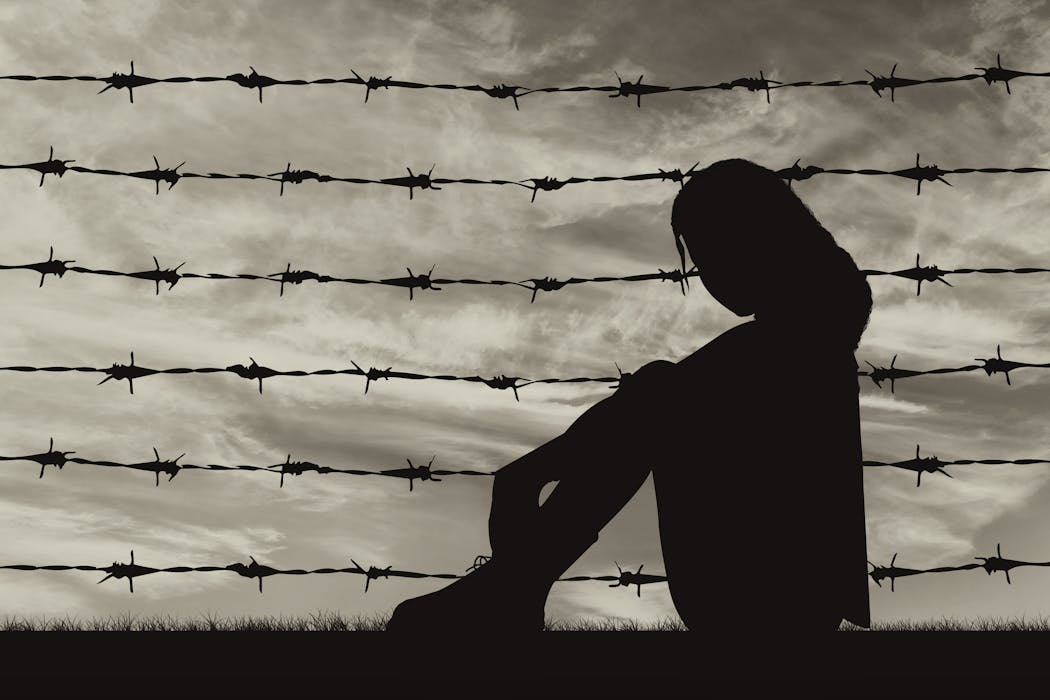
Prazis Images/Shutterstock

Thousands of women and children with perceived links to Isis have been detained in camps by the Kurdish-controlled Autonomous Administration of North and East Syria since the demise of the militant organisation in 2019. These include women and children who have a connection to the UK.

Since 2019, the UK has brought three women and 18 children from north-east Syria to the UK. Most of the repatriated children had been orphaned or arrived at camps without caregivers and were under ten years old.

There are also children in the camps who have never lived in the UK, but have a parent who is either a British citizen or former British citizen who has been deprived of their British citizenship. In total, an estimated 60 “UK-linked children” remain in these camps.

These children may not be formally recognised as British citizens due to a lack of documentation, or because they were born after their parents were deprived of their British citizenship. This can mean that the children sometimes don’t have citizenship of any country.

Under Section 40 of the British Nationality Act 1981, the home secretary has the power to remove a person’s British citizenship if they consider it “conducive to the public good”. These decisions generally apply to cases involving national security or counter-terrorism.

The aim is to prevent people perceived to pose a security threat from returning to the UK. From 2010 to 2023, there were 222 citizenship deprivation orders, including 104 in 2017 alone.

The UK government’s use of citizenship deprivation has meant UK-linked children cannot be repatriated with their mothers. These children largely remain trapped in detention camps in Syria with limited possibility for a healthy future.

Children as victims or threats?

To get UK-linked children out of the camps, the UK government needs to act. Key non-governmental organisations (NGOs) working on statelessness, repatriation and children’s rights argue allowing them to come to the UK is the only solution for protecting these children from their precarious and dangerous existence.

But the UK government is often reluctant to do that. “Isis-associated” children are often viewed as security threats rather than victims of violent conflict.

Age and agency are used to judge threat levels. The longer children stay in camps, the greater the security threat to the UK they are considered to pose, and the less likely they are to be allowed to come to the UK.

In situations where the child’s mother has been deprived of their UK citizenship, the child risks being separated from them in the event that the child is brought to the UK. Reprieve,
a legal action NGO, reports that the Foreign, Commonwealth and Development Office told at least five British families in Syria that their children could only be brought to the UK if the mothers remain in Syria.

This meant being separated from their children (affecting 12 children between two and 12 years old). Their mothers, who despite being in the camps have often not been formally accused of terrorism offences, should be allowed to return with them.

Mothers’ citizenship should be reinstated to allow children the opportunity to make this possible and uphold the right to family life in accordance with UK law through Article 8 of the Human Rights Act 1998 and international rights enshrined in the Universal Declaration of Human Rights.

Counter-terrorism measures

A number of counter-terrorism measures are available if the government should choose to bring an Isis-linked child with their mother to the UK. For example, a temporary exclusion order (TEO) is a legal measure used by the UK government to disrupt terrorist risk by controlling the return of individuals associated with terrorism-related activities.

Using these orders would allow authorities to permit mothers to return to the UK with their children while assessing and mitigating possible security risks by imposing certain conditions. These might include deradicalisation programmes, police reporting requirements and monitoring.

However, TEOs are not available for people who have been deprived of their citizenship. This therefore obstructs one way in which a child could potentially come with their parent to the UK.

Questions also remain concerning whether adults who travelled to Isis-controlled territory when they were children should be treated in law as children. They may have been groomed or trafficked or regret their decision.

Recruitment and use of children in armed conflict violates international law. Children in these cases should be treated as victims deserving protection. Article 39 of the UN convention on the rights of the child (UNCRC) presses states to take measures to support the recovery and reintegration of child victims of conflict.

Not only that, the UK’s official independent reviewer of terrorism legislation, Jonathan Hall KC, argues citizenship deprivation potentially undermines UK national security. Former citizens are no longer monitored by the UK government. The previous government rejected Hall’s recommendation that TEOs be made available to those deprived of UK citizenship despite their lack of citizenship.

Citing the UK government’s returning families programme, Hall told me (in a research interview for as yet unpublished research) that repatriation for British families can be achieved through a combination of care and security measures.

Tavistock Returning Families Unit, funded by the Home Office, supports local authorities with British families and children returning from Syria. It coordinates the mental or emotional needs of the child and family following assessments. It offers an infrastructure for local authorities to help “Isis-associated” families to reintegrate into UK society.

Children might be separated from family members on their return to the UK if the child or caregiver is then prosecuted in the UK: residing in Isis-linked territory can now be considered a terrorist offence. Nonetheless, this provides a potential route for children to be integrated into UK society with their mothers that citizenship deprivation denies.

Without repatriation to the UK, mothers are at risk of indefinite detention within deadly camps and children risk becoming orphans.

The Conversation

Madeline-Sophie Abbas receives funding from UKRI – Policy Support grant

– ref. UK-linked children whose parents have been deprived of their citizenship are trapped in camps in Syria – https://theconversation.com/uk-linked-children-whose-parents-have-been-deprived-of-their-citizenship-are-trapped-in-camps-in-syria-253771
Le « FOMO » ou peur de rater quelque chose : entre cerveau social et anxiété collective

Source: The Conversation – France (in French) – By Emmanuel Carré, Professeur, directeur de Excelia Communication School, chercheur associé au laboratoire CIMEOS (U. de Bourgogne) et CERIIM (Excelia), Excelia

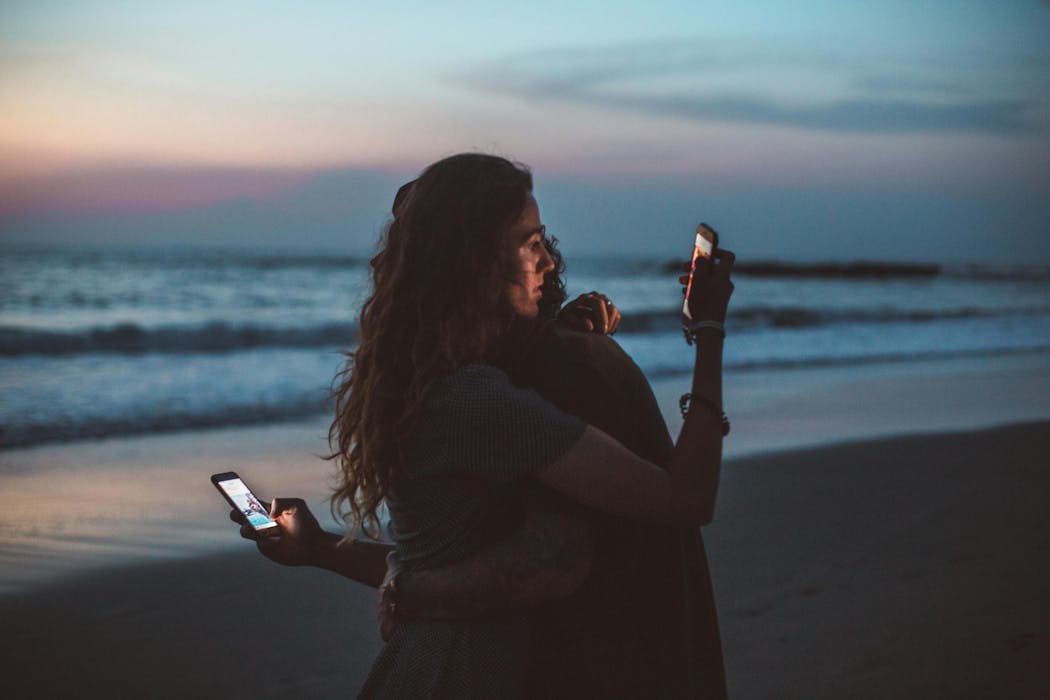
Un rêve d’ubiquité entretenu par les outils numériques. Roman Odintsov/Pexels, CC BY

La « peur de rater quelque chose » (« Fear Of Missing Out », ou FOMO) n’est pas née avec Instagram. Cette peur d’être exclu, de ne pas être là où il faut, ou comme il faut, a déjà été pensée bien avant les réseaux sociaux, et révèle l’angoisse de ne pas appartenir au groupe.


Vous l’avez sans doute déjà ressentie : cette sensation distincte que votre téléphone vient de vibrer dans votre poche. Vous le sortez précipitamment. Aucune notification.

Autre scénario : vous partez en week-end, décidé à vous « déconnecter ». Les premières heures sont agréables. Puis l’anxiété monte. Que se passe-t-il sur vos messageries ? Quelles conversations manquez-vous ? Vous ressentez la « peur de rater quelque chose », connue sous l’acronyme FOMO (« Fear Of Missing Out »).

D’où vient cette inquiétude ? De notre cerveau programmé pour rechercher des récompenses ? De la pression sociale ? De nos habitudes numériques ? La réponse est probablement un mélange des trois, mais pas exactement de la manière dont on nous le raconte.

Ce que les penseurs nous ont appris sur l’anxiété sociale

En 1899, l’économiste Thorstein Veblen (1857-1929), l’un des théoriciens invoqués dans l’industrie du luxe décrit la « consommation ostentatoire » : l’aristocratie ne consomme pas pour satisfaire des besoins, mais pour signaler son statut social. Cette logique génère une anxiété : celle de ne pas être au niveau, de se retrouver exclu du cercle des privilégiés.

À la même époque, le philosophe allemand Georg Simmel (1858-1918) prolonge cette analyse en étudiant la mode. Il décrit une tension : nous voulons simultanément nous distinguer et appartenir. La mode résout temporairement cette contradiction, mais au prix d’une course perpétuelle. Dès qu’un style se diffuse, il perd sa valeur. Cette dynamique crée un système où personne n’est épargné : les élites doivent innover sans cesse tandis que les autres courent après des codes qui se dérobent.

En 1959, le sociologue Erving Goffman (1922-1982) théorise nos interactions comme des performances théâtrales. Nous gérons constamment l’impression donnée aux autres, alternant entre scène (où nous jouons notre rôle) et coulisses (où nous relâchons la performance). Sa question résonne aujourd’hui : que se passe-t-il quand les coulisses disparaissent ? Quand chaque instant devient potentiellement documentable, partageable ?

Enfin, plus récemment, le philosophe Zygmunt Bauman (1925-2017) a développé le concept de « modernité liquide » : dans un monde d’options infinies, l’anxiété n’est plus liée à la privation, mais à la saturation. Comment choisir quand tout semble possible ? Comment être certain d’avoir fait le bon choix ?

Ces quatre penseurs n’ont évidemment pas anticipé les réseaux sociaux, mais ils ont identifié les ressorts profonds de l’anxiété sociale : l’appartenance au bon cercle (Veblen), la maîtrise des codes (Simmel), la performance permanente (Goffman) et l’angoisse du choix (Bauman) – des mécanismes que les plateformes numériques amplifient de manière systématique.

FOMO à l’ère numérique

Avec la généralisation des smartphones, le terme se popularise au début des années 2010. Une étude le définit comme « une appréhension omniprésente que d’autres pourraient vivre des expériences enrichissantes desquelles on est absent ». Cette anxiété naît d’une insatisfaction des besoins fondamentaux (autonomie, compétence, relation) et pousse à un usage compulsif des réseaux sociaux.

Que change le numérique ? L’échelle, d’abord : nous comparons nos vies à des centaines de vies éditées. La permanence, ensuite : l’anxiété est désormais continue, accessible 24 heures sur 24. La performativité, enfin : nous ne subissons plus seulement le FOMO, nous le produisons. C’est ainsi que chaque story Instagram peut provoquer chez les autres l’anxiété que nous ressentons.

Le syndrome de vibration fantôme illustre cette inscription corporelle de l’anxiété. Une étude menée sur des internes en médecine révèle que 78 % d’entre eux rapportent ces vibrations fantômes, taux qui grimpe à 96 % lors des périodes de stress intense. Ces hallucinations tactiles ne sont pas de simples erreurs perceptives, mais des manifestations d’une anxiété sociale accrue.

Au-delà de la dopamine : une anxiété d’appartenance

De nombreux livres et contenus de vulgarisation scientifique ont popularisé l’idée que le FOMO s’expliquerait par l’activation de notre « circuit de récompense » cérébral.

Ce système fonctionne grâce à la dopamine, un messager chimique du cerveau (neurotransmetteur) qui déclenche à la fois du plaisir anticipé et une forte envie d’agir pour ne rien manquer. Dans le Bug humain (2019), Sébastien Bohler développe notamment la thèse selon laquelle notre cerveau serait programmé pour rechercher constamment davantage de ressources (nourriture, statut social, information).

Selon cette perspective, les plateformes de réseaux sociaux exploiteraient ces circuits neuronaux en déclenchant de manière systématique des réponses du système de récompense, notamment par le biais des signaux de validation sociale (likes, notifications), ce qui conduirait à des formes de dépendance comportementale.

D’autres travaux en neurosciences pointent vers une dimension complémentaire, peut-être plus déterminante : l’activation de zones cérébrales liées au traitement des informations sociales et à la peur de l’exclusion. Les recherches menées par Naomi Eisenberger et ses collègues depuis les années 2000 ont révélé que les expériences d’exclusion sociale activent des régions cérébrales qui chevauchent partiellement celles impliquées dans le traitement de la douleur physique.

Elles suggèrent que le rejet social constitue une forme de souffrance inscrite biologiquement. Ces deux mécanismes – recherche de récompense et évitement de l’exclusion – ne s’excluent pas mutuellement, mais pourraient opérer de manière synergique. Au fond, ce n’est pas tant le manque d’un like qui nous inquiète que le sentiment d’être en marge, de ne pas appartenir au groupe social.

Cette inscription neurobiologique de la peur de l’exclusion confirme, d’une autre manière, ce qu’avaient analysé Veblen, Simmel, Goffman et Bauman : l’anxiété d’appartenance constitue un ressort fondamental de nos comportements sociaux, que les plateformes numériques amplifient désormais de manière systématique.

Reprendre le contrôle de l’attention ?

L’anxiété sociale comparative n’a donc pas attendu Instagram pour exister. Mais il faut reconnaître une différence d’échelle : nos cerveaux, façonnés pour des groupes de quelques dizaines d’individus, ne sont pas équipés pour traiter le flux incessant de vies alternatives qui défile sur nos écrans.

Face à cette saturation, la déconnexion n’est pas une fuite mais une reconquête. Choisir de ne pas regarder, de ne pas savoir, de ne pas être connecté en permanence, ce n’est pas rater quelque chose – c’est gagner la capacité d’être pleinement présent à sa propre vie. Cette prise de conscience a donné naissance à un concept miroir du FOMO : le JOMO, ou « Joy of Missing Out », le plaisir retrouvé dans le choix conscient de la déconnexion et dans la réappropriation du temps et de l’attention.

The Conversation

Emmanuel Carré ne travaille pas, ne conseille pas, ne possède pas de parts, ne reçoit pas de fonds d’une organisation qui pourrait tirer profit de cet article, et n’a déclaré aucune autre affiliation que son organisme de recherche.

– ref. Le « FOMO » ou peur de rater quelque chose : entre cerveau social et anxiété collective – https://theconversation.com/le-fomo-ou-peur-de-rater-quelque-chose-entre-cerveau-social-et-anxiete-collective-267362

Souleymane’s Story: the quietly devastating tale of an immigrant worker’s struggles in Paris

Source: The Conversation – UK – By Laura O’Flanagan, PhD Candidate, School of English, Dublin City University

Set in Paris, director Boris Lojkine’s latest film follows Souleymane (an astonishing turn from Abou Sangaré), seeking asylum in France as an immigrant from Guinea. Through Souleymane’s eyes, Paris becomes a gritty, unforgiving landscape of danger, fragility and relentless bureaucracy.

First-time actor Sangaré won best actor in Un Certain Regard at the 2024 Cannes Film Festival, and the 2025 most promising actor César (the French equivalent of the Oscars) for the role. In the opening moments of the film, it becomes clear why.

The first scene follows Souleymane into a waiting room. Nervous and tense, he captures the audience’s attention with only a few gestures and fleeting expressions. Sangaré’s performance is raw yet remarkably restrained, suffused with the kind of vulnerability that makes it impossible to look away.

The story then jumps back to the days leading up to this moment, later revealed to be Souleymane’s interview with the French government department that deals with immigration.

Souleymane works as a bicycle delivery driver in the city. As he has yet to receive his work permit, he is forced to rent his driver’s app account from an acquaintance, Emmanuel (Emmanuel Yovanie), who demands a large portion of his earnings.

This arrangement becomes a constant source of tension. Each time the app requires a selfie to verify the driver’s identity, Souleymane must race to Emmanuel for this photo. What should be a simple act of work turns into a daily negotiation with technology, bureaucracy and fear. Through these moments, the film exposes just how precarious and punishing it is to earn a living without legal recognition.

Souleymane’s Story rejects the “good immigrant” trope, which can characterise immigrants as saintly and non-threatening. Instead, Souleymane is a complex, fully realised character.

In his bid for asylum, he fabricates elements of his story, an act that weighs heavily on him. Unaccustomed to deceit, he struggles to keep his story straight, his faltering memory exposing both his honesty and exhaustion. These moments are quietly devastating, revealing the emotional toll of having to shape your life into something acceptable to the system.

As Souleymane rushes through Parisian traffic, the camera is intimate and unrelenting. Every swerve and every near miss with traffic is filled with tension and exposes Souleymane’s vulnerability. Naturalistic performances, ambient sounds and muted light combine to create something wholly lived-in, almost documentary in texture.

While respected among his fellow asylum seekers and delivery drivers, again and again Souleymane is met with hostility from restaurant owners and customers. Through these encounters, the film lays bare the harsh unregulated world of gig-economy labour, where human value is reduced to speed, ratings and availability.

Despite its bleakness, this film has a striking vibrancy. Souleymane moves constantly through the city, across bridges, through underpasses, down crowded boulevards. Paris is a living, breathing, shifting presence, alternately beautiful and brutal. The rhythm of his movement gives the story its pulse, a visual and emotional energy which captures both the isolation and the momentum of survival.

With an unflinching portrayal of modern bureaucracy, Souleymane’s Story exposes how fragile life becomes when every decision that governs it is made by an algorithm or an overworked official.

When the delivery app locks him out, Souleymane calls the helpline to be told he will receive an email “in two days”. The voice on the phone tells him that she cannot tell him why. Later, in his asylum interview, the sound of the interviewer’s keyboard becomes its own symbol of bureaucracy, each keystroke a reminder that her typing will determine whether he is allowed to stay or forced to leave. The film raises the haunting question: how much suffering must one endure to be deemed worthy of safety?

This is a question which feels especially urgent in 2025, a year defined by deepening divides over migration, precarious work and belonging. Without ever turning didactic, the film captures the quiet devastation of those caught in the machinery of modern systems, making it both a personal tragedy and a mirror held up to the times. This is cinema that confronts: humane, politically astute and hauntingly real.


Looking for something good? Cut through the noise with a carefully curated selection of the latest releases, live events and exhibitions, straight to your inbox every fortnight, on Fridays. Sign up here.


The Conversation

Laura O’Flanagan does not work for, consult, own shares in or receive funding from any company or organisation that would benefit from this article, and has disclosed no relevant affiliations beyond their academic appointment.

– ref. Souleymane’s Story: the quietly devastating tale of an immigrant worker’s struggles in Paris – https://theconversation.com/souleymanes-story-the-quietly-devastating-tale-of-an-immigrant-workers-struggles-in-paris-267566

How walking football is helping older adults stay fit, connected and competitive

Source: The Conversation – UK – By Ian Varley, Associate professor, Nottingham Trent University

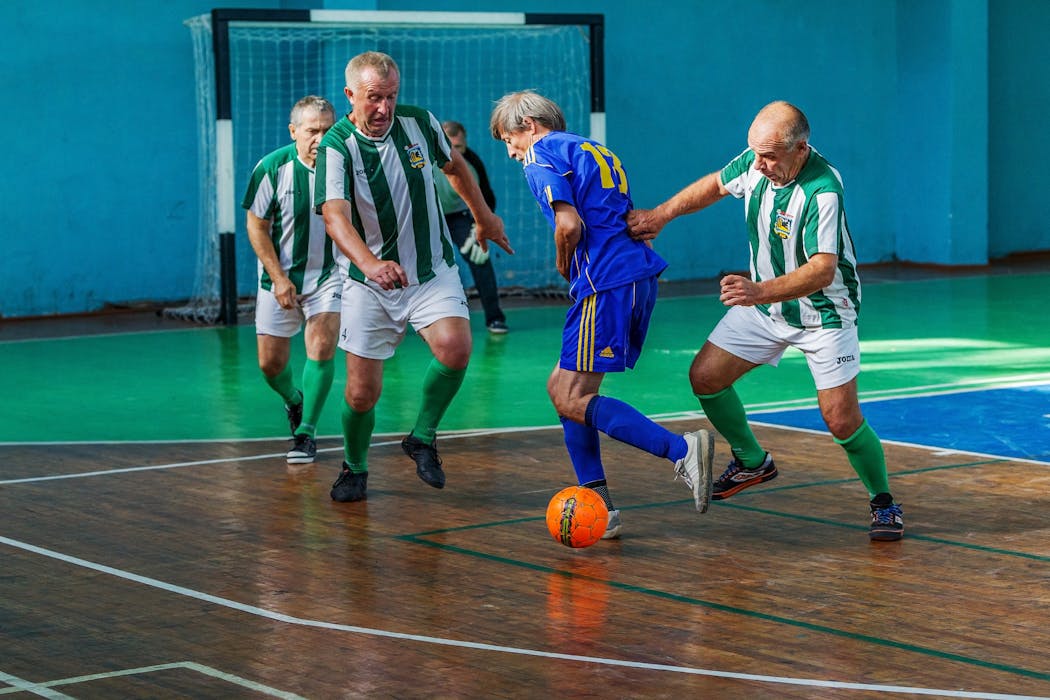
Walking football is an adaptation of regular football, played primarily by middle-aged and older adults with rule changes to enhance accessibility A_Lesik/Shutterstock

For many older adults, staying active often means doing it alone. Walking, jogging or heading to the gym solo have long been the go-to activities for keeping fit. While these are great for physical health, they can lack that spark of competition and teamwork that makes sport so enjoyable. Unlike youth sports, where camaraderie, friendly rivalry and shared goals create excitement, older adults often miss out on that team spirit.

That may be changing. The rise of walking football is offering older adults a new way to stay active through competition, connection and fun.

In October 2025, the Walking Football World Nations Cup will take centre stage in Spain, showcasing the very best of this fast-growing sport. More than 70 teams from over 30 countries will compete across men’s (50s, 60s, 70s) and women’s (40s, 50s, 60s) categories, proving that age is no barrier to international competition.

The inaugural FA Walking Football Cup in 2024 and the expanding network of local clubs across the UK and Europe are helping to cement Walking Football’s place as a recognised and respected sporting format.

Walking football is a slower and low-impact version of traditional football, designed to make the game safer and more accessible for people of all ages and abilities. The rules are simple: no running, minimal physical contact and the ball must stay below head height. This encourages players to focus on skill, control, and enjoyment rather than speed or stamina. It is particularly appealing to older adults and those with health conditions who want to stay active in a structured, social and enjoyable way.

The benefits go well beyond physical fitness. Players often talk about how the game helps them stay active, build friendships and feel part of a community. Research has also shown that it supports healthy ageing by improving wellbeing, balance and social connection. However, some people have been hesitant to join, worried about the risk of injury, especially if they already have health conditions.

In response, new resources such as Uefa’s walking football toolkit and Age UK’s programme have encouraged further research into safety and participation. This growing body of evidence is helping to reassure players and highlight walking football as an accessible, enjoyable and health-promoting way to stay active in later life.

Injury risk

A 2025 study examined injuries during the 2024 FA Walking Football Cup, which featured 84 teams competing across women’s and mixed-gender categories. Across more than 850 hours of play, only 42 injuries were recorded, and most (81%) were minor, allowing players to continue without missing future games.

Injuries were evenly split between contact and non-contact causes, with most linked to tackles (45%). And 12% of all injuries came from running, which is technically against the rules.

A community-based study by the same researchers covered more than 6,300 hours of play and found similar results. Only around one-third of injuries led to missed training or matches. Importantly, both studies also looked at players with existing health conditions and found that only 7%-10% of injuries were related to underlying issues such as joint pain, cardiovascular conditions, or old musculoskeletal problems. This suggests that walking football is unlikely to worsen existing health concerns and can be considered a safe and low-impact way for older adults to enjoy team-based exercise.

Walking football may be redefining what it means to stay active in later life. It gives older adults the chance to experience teamwork, friendly competition, and community through a slower, safer version of the world’s favourite game. With its low injury risk and inclusivity for people with pre-existing health conditions, it offers a welcoming route to staying active and connected.

The upcoming Walking Football World Nations Cup in Spain will celebrate exactly that, showing how people of all ages can continue to enjoy the game, stay healthy and find friendship through sport.

The Conversation

Ian Varley receives funding from UEFA and the FA for projects related to injury and illness surveillance.

Philip Hennis does not work for, consult, own shares in or receive funding from any company or organisation that would benefit from this article, and has disclosed no relevant affiliations beyond their academic appointment.

– ref. How walking football is helping older adults stay fit, connected and competitive – https://theconversation.com/how-walking-football-is-helping-older-adults-stay-fit-connected-and-competitive-268137

Mistaken release of migrant sex offender was hardly surprising – prison officers are dangerously overstretched

Source: The Conversation – UK – By Kaigan Carrie, PhD Candidate in Criminology, University of Westminster

The mistaken release of a sex offender who was set to be deported exposes the staffing pressures at the heart of Britain’s prisons crisis. A senior prison employee told the BBC that Hadush Kebatu’s accidental release was “down to a series of mistakes probably because staff are overworked and in short supply”.

Prison overcrowding has become a serious political and societal issue. But while prison places are increasing with the construction of new prisons, staffing is not keeping pace. In 2019 there were roughly 3.7 prisoners per officer, in 2022 there were 3.8 prisoners per officer and in 2025 there were 3.9 prisoners per officer.

Between August 2022 and August 2025 the prison population increased by more than 6,000 prisoners – yet the number of prison officers grew by only around 1,000.

The recruitment and retention challenge is not just about numbers, but about experience. In the year to June 2025, 2,823 prison officers left the service in England and Wales. Of those who left, 56% had less than three years’ service, while 24% had less than a year. Understanding why is crucial if expanded prison capacity is to be matched by sufficient staffing.

Fewer are joining than before too. Just 2,453 prison officers were appointed or promoted into the prison officer role in the same year – almost half the figure recorded the previous year. The prison and probation service notes “persistent recruitment and retention challenges” in parts of the country.

And even for those who stay, the demanding nature of the job is evident in the fact that mental ill health was the leading cause of prison officer absence in the year to June 2025. The pressures prison officers face are often intensified by the danger that can come with prison work.

A violent role

In September 2025, armed robber Elias Morgan was sentenced to a life term for murdering former prison officer Lenny Scott. The judge said this was a revenge killing, four years after Scott seized a mobile phone from Morgan’s cell. It is a stark reminder that prison officers can be killed simply for doing their job.

The Prison Officers’ Association, the union that represents prison officers, has described the environment in which they work as “one of the most hostile and violent in the world”.

Earlier this year, four prison officers at HMP Frankland, County Durham, were attacked by a prisoner with a knife and hot oil, with three being hospitalised. The prisoner has been charged with three counts of attempted murder.

These incidents sit within a wider pattern of violence against prison officers. In the 12 months to March 2025, 10,568 assaults on staff were recorded – a 7% increase from the previous year. This equates to 28 assaults on staff per day across the service.

Protecting prison officers is not only a matter of justice for them as individuals, but crucial for a safe and well-functioning prison system. High levels of violence can make recruitment and retention more difficult, leaving prisons struggling to find enough staff to safely manage a growing prison estate. Better support for officers in these challenging conditions is vital.

In response to the serious assault faced by staff in HMP Frankland, the government has rolled out 500 tasers and 10,000 stab vests for prison staff. While these measures may improve safety in some situations, they are not a remedy for prison violence.

One officer I interviewed described being stabbed in an attack that led to their medical retirement. Neither a vest nor a taser would have prevented this incident due to where they were stabbed. This highlights that, while protective equipment may help in certain situations of violence, the main causes of violence – including understaffing and overcrowding – remain unaddressed.

Charlie Taylor, the chief inspector of prisons, recently reported that over 60% of prisoners in London’s HMP Pentonville are in overcrowded cells, with the prison’s physical infrastructure “crumbling”. Building new prisons to meet rising demand will not address the fact that some of our Victorian prisons are simply not fit for purpose.

A lack of staff also has detrimental effects on prisoners. Taylor’s Pentonville inspection found that most prisoners were spending 22 hours a day in their cells with nothing to do. This reflects the lack of staff to run the regime effectively – a problem that new prisons alone won’t solve.

It’s known that working in a prison exposes people to high levels of PTSD, depression, stress and anxiety. Without enough officers to safely staff existing prisons, building more prisons will only increase the pressure on staff. Protecting prison staff and supporting their wellbeing is vital if the government is to expand the prison estate while ensuring that prisons are safely and effectively staffed. Without addressing these pressures, simply building more prisons risks creating a system that is larger, but no safer nor more effective.

The Conversation

Kaigan Carrie does not work for, consult, own shares in or receive funding from any company or organisation that would benefit from this article, and has disclosed no relevant affiliations beyond their academic appointment.

– ref. Mistaken release of migrant sex offender was hardly surprising – prison officers are dangerously overstretched – https://theconversation.com/mistaken-release-of-migrant-sex-offender-was-hardly-surprising-prison-officers-are-dangerously-overstretched-266407

Japan’s new leader revives Abe’s economic vision – with a twist

Source: The Conversation – UK – By Fumihito Gotoh, Lecturer in East Asian Studies, University of Sheffield

Sanae Takaichi, a hardline conservative with nationalist views, was elected as Japan’s first ever female prime minister on October 21. Known as a protege of the assassinated former Japanese prime minister, Shinzo Abe, she is assertive on defence, hawkish on China and is keen to bolster Japan’s regional role.

Experts say it’s possible that Takaichi will leverage her ties to Abe as she attempts to curry favour with the US president, Donald Trump. Ahead of Trump’s recent visit to Japan, where he met Takaichi for the first time, he described Abe as “one of my favourites”.

As part of a trade deal signed in July, Tokyo promised to invest US$550 billion (£413 billion) in the US in exchange for lower tariffs on Japanese goods. Takaichi reportedly wants Japan to have greater influence over these investments and to ensure they also benefit Japanese companies and contractors.

A key part of Takaichi’s leadership campaign was her pledge to revive Abe’s economic vision of high public spending and cheap borrowing, which became known as “Abenomics”. This economic programme was introduced in late 2012 as part of a strategy to counter China’s growing economic and political power.

The aim was to revitalise Japan’s stagnant economy through the “three arrows” of monetary easing, fiscal stimulus and structural reforms. The first arrow saw Japan’s central bank implement extreme measures, such as low or negative short-term interest rates, to make it cheaper for consumers and companies to borrow money and spend.

Japan’s central bank also purchased financial assets, including equities and long-term government bonds, aggressively. The hope was that this would make the private sector expect a subsequent rise in the price of goods and services, encouraging more investment. And selling bonds to the central bank should give banks more money to lend.

Abe’s second arrow involved the government increasing its spending by funding infrastructure projects or offering financial incentives like tax breaks for companies. And the third arrow introduced labour market deregulation, corporate governance improvements and policies encouraging women’s participation in the workforce.

In some respects, Abenomics was a success. The programme quickly led to sharp rises in stock prices, while unemployment dropped from 4% in the first quarter of 2012 to 3.7% in 2013. However, it was also accompanied by various negative side effects.

These included ballooning public debt and a significant devaluation of the yen against other major currencies, which increased the cost of imported goods. The central bank’s low interest rate policy also allowed numerous poorly performing “zombie” firms to survive by reducing the cost of servicing their debt.

At the same time, Abenomics largely failed to improve domestic investment by private firms. Corporate managers remained pessimistic about Japan’s long-term economic outlook despite cheap borrowing opportunities, largely because of the country’s ageing society and depopulation.

Meanwhile, the rising profitability of large firms prompted them to make massive overseas investments. This contributed to a further hollowing-out of the Japanese economy by relocating domestic production and manufacturing jobs overseas.

‘Sanaenomics’

Takaichi’s economic vision is similar to Abenomics. It shares nationalist and anti-China undertones with Abe’s programme, and also involves structural reforms and the bold use of fiscal and monetary tools. But her brand, which has been called “Sanaenomics”, should be seen as building on Abe’s programme.

Abenomics placed particular emphasis on aggressive monetary easing. On the other hand, Takaichi’s approach tilts more towards the use of expansionary fiscal policy and large-scale investment.

Japan’s inflation rate is currently hovering around 2.7%, which is much higher than the rates seen under Abe. These are not conditions where a central bank would typically implement loose monetary policy.

A core part of Takaichi’s economic programme, which has earned praise from US treasury secretary Scott Bessent recently, is government investment in what she calls “crisis management”.

Here, she is referring to investment in sectors that are important for national security such as food, energy and defence, as well as strategic industries like semiconductors, AI and electric vehicle batteries. She has framed this investment as necessary to reduce Japan’s foreign dependence.

However, public investments alone cannot sustain continuous growth. The key question is whether such spending can stimulate larger private sector investments, which would subsequently boost the economy. This will require overcoming the longstanding risk adversity of Japan’s corporate and financial sectors.

One way to achieve this will be restoring cooperation between the public and private sectors. Japan’s rapid economic growth from the 1950s to 1970s was driven by public-private partnerships, which involved the government collaborating closely with private companies to finance and develop national strategic industries.

Such partnerships can shift certain risks, particularly regulatory and financial risks, to the public sector. This can make projects more financially viable for firms, encouraging them to invest more. The Japanese private sector has massive cash at hand, and whether these firms are willing to use it for domestic investments will decide the outcome of Sanaenomics.

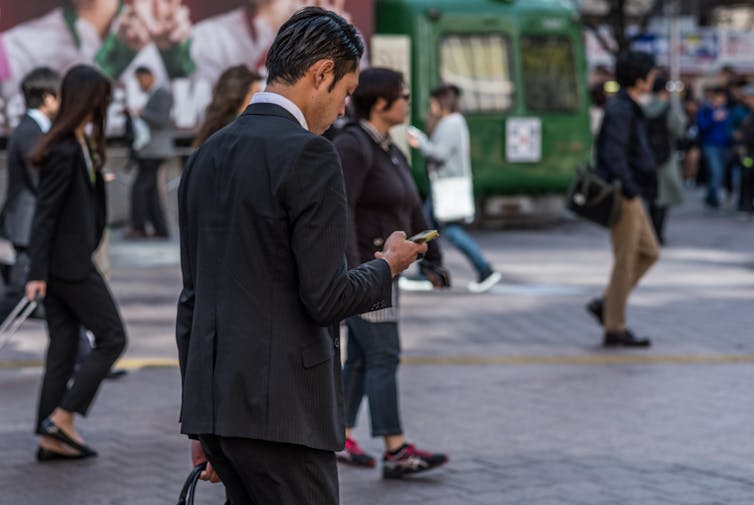
Japanese office workers walking through Tokyo.
The adversity to risk of Japan’s private sector is a key part of Japan’s economic stagnation.
Mahathir Mohd Yasin / Shutterstock

There are several other risks associated with Sanaenomics. Among these are the fact that expansionary spending will add to Japan’s immense existing public debt.

Credit rating agencies currently view Japan’s sovereign creditworthiness as relatively stable, but this could change as domestic and international investors grow concerned about a deterioration in the country’s fiscal situation.

At the same time, the Takaichi administration’s nationalist stance could deteriorate Japan’s relationship with China, its largest trading partner. Takaichi has consistently framed China as a strategic threat, advocating for supply chains that bypass China during her tenure as Japan’s first minister of economic security.

To Trump’s delight, she has also now pledged to dramatically increase Japan’s defence spending. More friction with China will only act as a drag on the Japanese economy.

The Conversation

Fumihito Gotoh has received grants from the Japan Foundation Endowment Committee and the Great Britain Sasakawa Foundation.

– ref. Japan’s new leader revives Abe’s economic vision – with a twist – https://theconversation.com/japans-new-leader-revives-abes-economic-vision-with-a-twist-268055

Canada isn’t deeply polarized — yet. What new research reveals about partisan animosity

Source: The Conversation – Canada – By Emily Huddart, Professor of Sociology, University of British Columbia

If you spend time on social media or follow political commentary, you may have heard warnings that Canada is on track to becoming as politically polarized as the United States.

But how divided are we, really?

Our research suggests a more nuanced and positive picture. While Canadians are not immune to partisan animosity, our divisions are much less intense than in the U.S. Canadians express moderate levels of both affective polarization and the deeper hostility known as political sectarianism.

Measuring partisan animosity

Affective polarization refers to the gap in feelings people have toward those they agree with and those on the opposite side. It’s not about policy differences, but about feelings of warmth or hostility.

In the U.S., affective polarization, particularly dislike toward those with opposing views, has risen sharply over the past decade. This kind of division undermines trust, co-operation and democratic norms.

Researchers have expanded the concept to include political sectarianism — “the tendency to adopt a moralized identification with one political group and against another.” When political identities create moral opponents, compromise across parties feels like betrayal and democracy is threatened.

Trump 2020 signs hang in front of the Capitol Building.
Violent protesters, loyal to then-President Donald Trump, storm the U.S. Capitol on Jan. 6, 2021.
(AP Photo/John Minchillo)

Partisan animosity in Canada

To explore affective polarization and political sectarianism in Canada, we worked with the Canadian Hub for Applied and Social Research (CHASR) at the University of Saskatchewan to survey a nationally representative sample of 2,503 Canadians in the summer of 2024. Representative surveys are uncommon in Canada, and this survey is the first to measure political sectarianism

We asked respondents to self-identify their political ideology on a scale from zero (extremely left-wing) to 10 (extremely right-wing); moderates selected five. We also asked how warmly people felt toward left-wing and right-wing Canadians. Then we asked how much they agreed with statements capturing the three dimensions of political sectarianism:

1. Aversion — Feeling negatively toward the other side

2. Othering — Seeing the other side as incomprehensible

3. Moralization — Believing the other side is immoral

The results paint a mixed picture.

Feelings about the ‘out-group’

Canadians display moderate affective polarization: both left-wing and right-wing Canadians feel greater warmth for their “in-group” than for the “out-group.” These evaluations are measured using feeling thermometer ratings, which ask respondents how warm or cold they feel toward each group on a 0–100 scale. While the difference in warmth between in-group and out-group is meaningful, the magnitude of the divide is far lower than in the U.S.

Left-wing Canadians express stronger dislike toward the right than right-wing Canadians do toward the left. This same asymmetry exists in other countries and may be explained by different perceptions of social and moral threat.

There are low to moderate levels of political sectarianism in Canada. Left-wing Canadians express moderate “aversion,” but few Canadians view the other side as immoral. Both the right and the left have moderate levels of othering. In short, political differences in Canada are real, but they have not solidified into hatred and dehumanization.

Who is most likely to be polarized?

We found that people on the left are more polarized than people on the right, but otherwise, we didn’t find major differences between most groups.

Supporters of the NDP, the Conservative Party of Canada and the People’s Party are the most polarized. About one-fifth of Canadians are unaffiliated, which could explain why the two right-wing parties are more polarized than the Liberal Party, yet the left is overall more polarized than the right.

Older Canadians are more polarized than younger Canadians, and residents of Atlantic Canada are less polarized than residents of Alberta. Otherwise, we found no evidence that polarization differs by gender, race/ethnicity, level of education, sexual identity or whether someone lives in a rural or urban area.

Why it matters

Democracy depends on citizens’ ability to tolerate and respect one anther across political and other social divides. Partisan animosity can erode that tolerance, reducing trust in institutions and fellow citizens.

The fact that Canada remains only moderately polarized and demonstrates low to moderate political sectarianism is hopeful. But we also see areas of concern: the left’s greater dislike of the right; the left’s higher level of “aversion;” and moderate polarization among NDP, Conservative Party and People’s Party supporters.

Those divides could deepen over time, particularly if social media algorithms, partisan media or political leaders reward outrage over understanding.

Looking ahead

So far, Canada’s political culture seems to offer some protection from the extreme polarization that has taken hold of Americans. Canadians of all political loyalties continue to rely on mainstream media and credible news sources.

Still, the pressures that have intensified polarization elsewhere exist in Canada too: a hostile climate in Parliament and growing gaps in attitudes on social issues across the political left and right. How these forces unfold will depend on how elected representatives, the media and citizens choose to engage those who think differently than them.

For now, the Canadian polarization story is one of caution, not crisis. Our political differences are real, but haven’t yet deeply divided us. That advantage is fragile, but worth protecting.


Sophia Dimitakopolous, an undergraduate student in the Faculty of Science at the University of British Columbia, contributed to this article

The Conversation

Emily Huddart and Tony Silva produced this data with funding support from the Social Sciences and Humanities Research Council of Canada.

– ref. Canada isn’t deeply polarized — yet. What new research reveals about partisan animosity – https://theconversation.com/canada-isnt-deeply-polarized-yet-what-new-research-reveals-about-partisan-animosity-267719

The ‘demonstration effect’ can inspire girls to play — but only if communities are ready

Source: The Conversation – Canada – By Georgia Teare, Assistant Professor, Management and Leadership in Kinesiology, Western University

By age 14, girls drop out of sport at twice the rate of boys in Canada.

Sport can boost young people’s physical health, mental well-being and social skills, and fewer girls participating means more of them are missing out on these benefits.

But with women’s sports surging worldwide, closing Canada’s gender gap in participation is closer than ever before.

The solution, however, isn’t just more equipment or facilities — it’s showing them who they can become. Canadian Women and Sport’s recent Rally Report reveals that girls and women participate at disproportionately lower rates than boys and men, and that a lack of role models is a key driver of this gap.

Going beyond visibility to participation

With recent investments in elite women’s sport, girls now have unprecedented access to female role models.

Improved Women’s National Basketball Association (WNBA) airtime, Professional Women’s Hockey League (PWHL) expansion after only two seasons and record viewership of the 2025 Women’s Rugby World Cup, including the gold-medal match between Canada and England, reveal the momentum is undeniable.

Christine Sinclair’s success on the pitch inspired girls and women to play soccer, particularity after Team Canada’s Olympic gold medal win in 2021. Recently, Canadian swimmer Summer McIntosh’s success has sparked a surge in popularity of swimming in Canada.

The recently released Future of Sport Commission report confirmed the growth of women’s professional sport as an important driver of sport participation for girls — inspiring them to get involved and stay committed to sport. From the fan perspective, 88 per cent of sports fans think that professional women athletes are impactful role models for young women.

Researchers call this the “demonstration effect” — watching elite athletes perform inspires people to participate themselves. Being inspired by elite sports involves three things: a sense that something special is happening, an automatic emotional response (not a conscious choice) and motivation to take action. Typically the demonstration effect occurs through watching elite sport performances, elite athlete success, living near where a sport competition is hosted or a combination of these factors.

While the demonstration effect sounds promising, there’s a catch. Research also shows that newly inspired athletes often turn to local community sport clubs. But these clubs frequently don’t have the capacity or resources to handle the surge. This means that increasing women’s and girls’ participation in sport is more complicated than showing them that “girls play sport too.”

Sport needs stronger grassroots support

Quality, intentionally designed sport experiences are necessary to keep girls participating.

Improving community club infrastructure and capacity, for example, is a critical step toward providing impactful opportunities. More participants means that community sport clubs need more programming resources such as facility space, qualified coaches and equipment.

And with more participants, community sport clubs need to offer more sessions and maintain adequate instructor-to-participant ratios to ensure top instruction and feedback. But accessing this additional space is a key constraint to community sport club growth.

Clean, safe and accessible facilities must also be maintained — in some cases, even created. For example, there are not enough swimming pools in Canada to accommodate the increased demand.

As girls need athlete role models, they also need to see themselves reflected in coaching and officiating staff. With participant numbers increasing, demands on coaches can lead to burnout. In addition, women and girls participating in coaching and officiating are also disproportionately low compared to boys and men in these roles.

To help girls stay in sport, more efforts from Canadian national, provincial and territorial sport organizations are needed to train and retain women coaches and officials. But these investments are not just needed from government — the corporate world has an opportunity to support girls in sport as well.

Building equitable lasting change

The cost of youth sport is rising. For example, the average cost of playing hockey in Canada is $4,478 per child, with costs increasing with more competitive programming. In addition, youth participants are required to buy their own equipment to participate.

To keep sport accessible, community sport organizations should consider offering basic equipment. With the cost of registration fees, appropriate clothing and transportation, participation becomes financially inaccessible for many families. Community sport clubs can intentionally design low-cost programs and tap into government financial supports to keep girls playing.

When corporate Canada joins the team

Corporate Canada is starting to capitalize on the popularity of women’s elite sport, offering sponsorship or Corporate Social Responsibility (CSR) programs to financially support women’s and girls’ sport. There is an opportunity for community clubs to take advantage of this trend to help financially support participants.

Every girl brings different needs and expectations to sport. For example, girls with disabilities face unique structural and program barriers, newcomers to Canada may benefit from culturally specific programming, and club policies could be revisited to create safer spaces for LGBTQ+ youth and racialized girls, along with being more inclusive of all body types.

Community sport clubs that have the infrastructure and capacity to accommodate new participants must also ensure their programs are designed and implemented to provide quality experiences. These programs should reflect the diverse realities their participants face based on their background, identity and circumstances.

This will ensure that everyone can participate in ways that are inclusive and meaningful for them.

The Conversation

Georgia Teare receives funding from Sciences and Humanities Research Council of Canada.

Laura Misener receives funding from Social Sciences and Humanities Research Council of Canada

– ref. The ‘demonstration effect’ can inspire girls to play — but only if communities are ready – https://theconversation.com/the-demonstration-effect-can-inspire-girls-to-play-but-only-if-communities-are-ready-267270

Réhabiter Valence un an après les inondations : le peuple va-t-il aider à sauver le peuple ?

Source: The Conversation – in French – By Guillaume Nord, Hydrologue, Université Grenoble Alpes (UGA)

La mosaïque de Michael Barros avec, en fond, une photographie satellite de l’Espagne (octobre 2024).
Michael Barros/Modis Land Rapid Response Team/NASA GSFC , Fourni par l’auteur

C’est une phrase qui s’est rapidement imposée au moment des inondations meurtrières qui ont touché Valence (Espagne) en octobre 2024 : « Seul le peuple sauve le peuple. » Elle est aujourd’hui inscrite sur des centaines de mosaïques, qui, partout dans la ville, indiquent le niveau de la crue. Cette phrase peut aussi se révéler pertinente, voire même cruciale, pour prévenir les prochaines catastrophes, note un groupe de chercheurs.


Il y a un an, le 29 octobre 2024, un orage méditerranéen violent touchait le Sud-Est espagnol, provoquant une inondation catastrophique de la communauté autonome de Valence. Celle-ci a fait 229 victimes et des dégâts matériels et environnementaux considérables. L’hiver dernier, alors que les causes climatiques et urbanistiques de la catastrophe étaient établies, et que les polémiques sur les responsabilités politiques de la gestion de la crise se poursuivaient, un artiste a apporté un message qui semble résumer les leçons qu’il faudrait tirer de la catastrophe pour transformer la ville et la réhabiter.

L’illustrateur Michael Barros, habitant de Sedaví dans la banlieue inondée de Valence, a ainsi lancé en février 2025 une initiative artistique inspirée des repères de crue posés à la suite de l’inondation de 1957. Il a, au départ, créé une centaine de carreaux de faïence (azulejos) qu’il pensait proposer dans son voisinage. Ces derniers ont eu un succès inattendu : il en existe plus de 2 000 aujourd’hui.

Un des azulejos (en haut à gauche) à Valence (Espagne), en octobre 2025.
Guillaume Nord, Fourni par l’auteur

Ces azulejos rappellent, dans leur partie haute, jusqu’où l’inondation est montée : « Fins ací va arribar la riuà » (en français : « La crue est montée jusqu’ici »). Ils évoquent aussi, dans leur partie inférieure, le grand élan de solidarité visible au moment de la catastrophe où des milliers de personnes sont venues aider. Barros dessine la marche des sauveteurs bénévoles arrivant dans la zone inondée par une passerelle enjambant la rivière.

Il reprend aussi la phrase « Sols el poble salva al poble », soit en français : « Seul le peuple sauve le peuple. » Ce slogan avait envahi les réseaux sociaux au moment de la catastrophe et il a été l’objet de commentaires dans la presse sur son origine et sur son utilisation politique.

En plus du message classique des repères de crue indiquant la hauteur atteinte par les eaux, les azulejos de Michael Barros rappellent aussi que se protéger de l’inondation reste l’affaire de tous. Un double message particulièrement pertinent : les causes de l’inondation de 2024 et ses ravages ont pu être bien décrites par le travail de divers scientifiques, mais pour autant, l’anticipation des prochains événements à risque ne doit pas être réservée aux seuls experts, dont les recommandations ponctuelles peuvent être vite oubliées. En cela, le peuple est bien le protecteur du peuple.

Un scénario catastrophe aux raisons connues

Les inondations ont des causes climatiques bien établies. Les conditions météorologiques responsables de la violence des cyclones méditerranéens sont connues. Dans le cas de la région de Valence, il s’agit souvent de dépressions isolées en altitude (en espagnol, depresión aislada en niveles altos ou DANA) qui extraient, par évaporation, d’énormes quantités d’eau de la Méditerranée et qui les transforment en précipitations diluviennes et destructrices.

Les méthodes d’attribution montrent que le réchauffement climatique est responsable, dans la région de Valence, d’une augmentation de moitié des surfaces exposées à des pluies extrêmes et de près d’un quart de leurs cumuls.

Photographie satellite sur l’Espagne, le 30 octobre 2024.
Modis Land Rapid Response Team/NASA GSFC, CC BY

La catastrophe qui en a résulté est liée à une conjonction de plusieurs raisons. Pour protéger Valence après la crue dévastatrice du fleuve Turia en 1957, le cours du fleuve avait été détourné du centre-ville. Depuis lors, au sud de la ville, des digues le dirigent vers la mer. Pensant le risque d’inondation écarté, de nouveaux quartiers résidentiels et industriels et leurs infrastructures de transport se sont développés au sud de ces digues à partir des années 1970, formant la banlieue de l’Horta Sud (en castillan, Huerta Sur).

En 2024, la crue du Turia a été bien contenue par les digues, mais l’Horta Sud a alors été traversée par l’arrivée rapide et massive des eaux de la Rambla de Poyo. Ancien affluent du Turia, ce fleuve côtier mineur (400 km2 d’aire drainée), dont le haut bassin a reçu un cumul de pluie extrême (près de 400 mm en six heures), a produit un débit de pointe largement supérieur à la crue de la Seine à Paris, en 1910 : celui-ci a été estimé à 3 000 mètres cubes par seconde !

Deux mois après la catastrophe à Valence (Espagne).
Fourni par l’auteur

En région méditerranéenne, ces petites rivières intermittentes, les ríos secos, accentuent la surprise et la désorientation face à l’inondation en masquant l’origine du danger. Elles sont invisibles par temps sec, dissimulées par les aménagements, sans continuité amont aval claire, y compris dans leurs noms.

En plus de ces contextes météorologiques et urbanistiques particulièrement critiques, l’absence d’alerte en temps utile a produit un bilan humain tragique, associé à une cascade de dommages matériels et environnementaux. La catastrophe a mis au jour une grande impréparation politique et sociale.

Associer le public à la culture du risque

Devant la répétition de catastrophes qui se ressemblent se pose la question de la résilience des métropoles face aux manifestations climatiques – et, en particulier, aux inondations rapides dans la région méditerranéenne. La réponse doit associer connaissance de la trajectoire historique locale, engagement du public et restauration écologique.

La trajectoire historique du développement économique et social de l’Horta Sud s’est pensée à l’abri des infrastructures de protection. Maintenant que ce secteur s’avère fortement exposé au risque d’inondation par la Rambla, la difficulté pratique et économique, pour réduire cette exposition, est considérable.

Adapter la forme urbaine et les activités qui l’accompagnent va demander des efforts sur le temps long pour lutter contre l’inertie du système institutionnel et des pratiques individuelles.

Des politiques publiques européennes, nationales et locales relatives au risque inondation promeuvent l’engagement du public. Leurs objectifs d’intégration et d’optimisation de la gestion du risque conduisent à la construction d’une culture du risque « par le haut », c’est-à-dire, par les savoirs experts, faisant des inondations une affaire de « management ».

Ces politiques oublient souvent que l’expertise doit s’accompagner d’actions capables de régénérer l’engagement, l’action collective, dans une construction « par le bas ». Apprendre à faire face au risque ensemble, par des pratiques qui s’inscrivent dans la durée et qui impliquent directement les communautés concernées, permettrait d’éviter l’écueil du court-termisme et du seul technicisme, qui a posé et posera de nouveaux problèmes si rien ne change.

La restauration écologique promet des solutions fondées sur la nature dont la mise en place commence, à Valence, par des mesures comme la réduction de l’artificialisation des sols ou le rééquilibrage du lit des rivières. Elle se heurte souvent à la rigidité de la trajectoire de développement et au manque d’engagement, voire à l’hostilité du public.


À lire aussi :
Nos villes doivent être plus perméables : comment le biochar peut être une solution durable face aux inondations


Renouer avec l’action collective grâce à une vision commune : comment vivre avec la rivière dans le futur ?

Dans l’après-crise immédiate, de multiples initiatives ont surgi. Celles-ci sont propres à impliquer le public, comme des expériences d’enseignement à l’école primaire ou les précieuses mesures météorologiques amateurs. Elles méritent d’être inscrites dans un cadre de réflexion général.

Nous pensons qu’analyser les valeurs relationnelles, comprises comme liens inséparables des personnes à l’environnement, peut aider à dégager les principaux facteurs de motivation du public pour participer à la gestion des inondations. Au-delà des recommandations des experts, il ressort de cette analyse que l’imaginaire est un puissant levier de transformation.

Avoir une vision partagée de comment vivre avec la rivière dans le futur apparaît comme le plus fort gage de motivation. C’est particulièrement important face à la perte de mémoire chronique qui s’installe au fil du temps qui sépare les catastrophes, ce que l’historien Christian Pfister appelle disaster gap.

Michael Barros, l’illustrateur des azulejos, à Valence (Espagne, en octobre 2025.
Guillaume Nord, Fourni par l’auteur

L’initiative spontanée d’un artiste comme l’illustrateur Michael Barros prend, dès lors, tout son sens. Traces matérielles de l’ampleur de l’inondation passée, ses repères de crue en céramique délivrent un message de raison et d’espoir, dans la mesure où les personnes qui les collent chez elles ou sur leur façade en prennent l’initiative. Dans une interview, l’artiste revenait sur leur rôle pour la mémoire collective :

« J’espère qu’au fil des ans, cela deviendra un prétexte pour parler et réfléchir, pour raconter à la fois les bonnes et les mauvaises choses. Cela génère une mémoire historique, pour que le passé continue d’être latent et que cela ne se reproduise plus. Parce que personne ici n’aimerait déménager ou vivre avec l’inquiétude que cela se reproduise. Nous espérons donc que les mesures nécessaires seront prises, qu[e les autorités] mettront de côté les conflits et qu’elles travailleront avec les gens, ce qui est important, après tout, si l’on s’implique en politique, c’est pour travailler pour les gens, pas pour les intérêts de quelques-uns ».

Les azulejos de Michael Barros peuvent donc être vus comme la piste sociomatérielle d’un imaginaire qu’il souhaite partager pour réhabiter sereinement dans sa région. Cette piste peut – et doit – toucher une communauté élargie, nourrir au quotidien de nouvelles valeurs, une nouvelle culture de l’eau et du risque d’inondation.

The Conversation

Guillaume Nord Brice Boudevillain reçoit des financements de l’INSU-CNRS pour le fonctionnement de l’Observatoire Hydrométéorologique Méditerranéen Cévennes-Vivarais, service national d’observation labélisé par cet institut et dont il a la responsabilité avec Brice Boudevillain.

Brice Boudevillain reçoit des financements de l’INSU-CNRS pour le fonctionnement de l’Observatoire Hydrométéorologique Méditerranéen Cévennes-Vivarais, service national d’observation labélisé par cet institut et dont il a la responsabilité avec Guillaume Nord.

Isabelle Ruin reçoit des financements de recherche dans le cadre du Programme et équipements prioritaires de recherche pour le climat : Transformer la modélisation du climat pour les services climatiques (PEPR TRACCS) et du projet ANR kNOW-HOW+4°C.

Jason Guillermo Granados Morales a reçu des financements du ministère de l’Enseignement supérieur, de la Recherche et de l’Innovation, dans le cadre d’un contrat doctoral de droit public.

Yvan Renou reçoit des financements de recherche dans le cadre du Programme et équipements prioritaires de recherche pour le climat : Transformer la modélisation du climat pour les services climatiques (PEPR TRACCS) et du projet ANR kNOW-HOW+4°C.

Guy Delrieu et Jean-Dominique Creutin ne travaillent pas, ne conseillent pas, ne possèdent pas de parts, ne reçoivent pas de fonds d’une organisation qui pourrait tirer profit de cet article, et n’ont déclaré aucune autre affiliation que leur poste universitaire.

– ref. Réhabiter Valence un an après les inondations : le peuple va-t-il aider à sauver le peuple ? – https://theconversation.com/rehabiter-valence-un-an-apres-les-inondations-le-peuple-va-t-il-aider-a-sauver-le-peuple-268322

Infertilité masculine et pesticides : un danger invisible ?

Source: The Conversation – in French – By Marwa Lahimer, Chercheuse associée – UMR-I 01 Périnatalité & Risques Toxiques (Peritox), centre universitaire de recherche en santé, Université de Picardie Jules Verne (UPJV)

Si on a longtemps considéré que l’infertilité était un problème purement féminin, on sait aujourd’hui qu’il n’en est rien. Selon certaines estimations, 20 % à 30 % des cas sont directement imputables à des problèmes touchant les hommes. En marge des facteurs liés aux modes de vie, un faisceau d’indices semble incriminer notamment certains polluants environnementaux, tels que les pesticides.


À ce jour, l’Organisation mondiale de la santé (OMS) estime qu’environ 17,5 % de la population adulte, soit une personne sur six dans le monde est touchée par l’infertilité. Diverses études scientifiques indiquent que cette proportion devrait continuer à progresser jusqu’en 2040.

Ce problème majeur a plusieurs causes, dont certaines sont liées à l’évolution des modes de vie. Sous la pression des contraintes professionnelles ou économiques, l’âge de la parentalité a notamment tendance à reculer dans de nombreux pays.

Toutefois, depuis plusieurs années, les travaux de recherches pointent également le rôle de divers polluants environnementaux, tels que certains pesticides dans l’infertilité. De par leur capacité à perturber le fonctionnement hormonal, ces molécules interfèrent avec le système reproducteur. Nos travaux ont notamment mis en évidence que l’exposition à certaines de ces molécules se traduit, chez les hommes, par une diminution de la qualité du sperme.

Qu’est-ce que l’infertilité ?

L’infertilité est définie comme l’incapacité à obtenir une grossesse après douze mois de rapports sexuels réguliers et non protégés. Lorsqu’elle affecte des couples qui n’ont jamais réussi à concevoir, on parle d’infertilité « primaire ». L’infertilité « secondaire » touche quant à elle les couples qui ont déjà vécu une grossesse, mais qui éprouvent des difficultés à concevoir de nouveau.

Longtemps, l’infertilité a été considérée comme résultant uniquement de problèmes affectant les femmes. En effet, confrontés à une telle situation, les hommes ont tendance à considérer que l’échec de conception remet en question leur virilité, ce qui peut les pousser à refuser les tests médicaux (ou à rejeter la faute sur leur partenaire). Cela a longtemps contribué à passer sous silence une potentielle responsabilité masculine, renforçant l’idée fausse que seules les femmes peuvent être responsables de l’infertilité.


À lire aussi :
Pollution : quand l’environnement menace la fertilité féminine


Si, dans certains pays, les hommes ont encore du mal à reconnaître leur implication dans ce problème majeur, les progrès médicaux ont fait peu à peu prendre conscience que l’infertilité pouvait aussi avoir des origines masculines.

On sait aujourd’hui qu’au moins 20 % des cas sont directement imputables aux hommes, et que ces derniers contribuent à 50 % des cas d’infertilité en général.

À l’origine de l’infertilité, une multitude de facteurs

Les causes de l’infertilité peuvent être multiples. Chez la femme comme chez l’homme, la capacité à engendrer est influencée par l’âge.

Les femmes naissent avec un stock limité d’ovules, qui diminue progressivement avec l’âge, ce qui s’accompagne d’une baisse progressive de la fertilité, jusqu’à la ménopause. Les hommes, quant à eux, sont affectés à partir de la quarantaine par une diminution de la qualité du sperme (notamment le fonctionnement des spermatozoïdes, les gamètes mâles), ce qui a également des conséquences en matière de fertilité.


À lire aussi :
Pollution : quand l’environnement menace la fertilité féminine


Parmi les causes « non naturelles », les scientifiques s’intéressent de plus en plus aux effets de la pollution et des pesticides. Aux États-Unis, les travaux de l’USGS (United States Geological Survey), la principale agence civile de cartographie aux États-Unis, ont révélé qu’environ 50 millions de personnes consomment des eaux souterraines exposées aux pesticides et d’autres produits chimiques utilisés dans l’agriculture.

Preuve des préoccupations des autorités, pour réduire les intoxications causées par les pesticides, en particulier chez les travailleurs agricoles et les manipulateurs de pesticides, des protections professionnelles sont offertes à plus de 2 millions de travailleurs répartis sur plus de 600 000 établissements agricoles via la norme de protection des travailleurs agricoles (WPS) et l’agence de protection de l’environnement (EPA).

Ces précautions ne sont pas étonnantes : ces dernières années, les scientifiques ont rassemblé de nombreux indices indiquant que l’exposition aux pesticides représente un danger pour la santé publique, et peut notamment se traduire par des problèmes d’infertilité.

L’analyse du taux de prévalence de l’infertilité chez les personnes âgées de 15 à 49 ans, dans 204 pays et territoires, entre 1990 et 2021 a récemment révélé que les régions les plus touchées par l’infertilité sont principalement situées en Asie de l’Est, en Asie du Sud et en Europe de l’Est.

Cette problématique concerne aussi la France, pays considéré comme l’un des plus grands consommateurs de pesticides dans le monde. Il est important de mettre en lumière cette situation, car la plupart des personnes qui souffrent d’infertilité ne la connaissent pas.

Des molécules qui perturbent les mécanismes hormonaux

L’Agence nationale de sécurité sanitaire de l’alimentation, de l’environnement et du travail (Anses) a classé diverses substances dans la catégorie des perturbateurs endocriniens : le bisphénol A (BPA), les phtalates et leurs métabolites, ou certains pesticides, tels que les biphényles polychlorés (PCB), le glyphosate, le dichlorodiphényltrichloroéthane (DDT) et le méthoxychlore.

Pour mémoire, les perturbateurs endocriniens sont des substances imitant ou interférant avec l’activité des hormones, donc capables de perturber le fonctionnement hormonal, et ce, même à très faible dose.

En ce qui concerne les pesticides, les systèmes de surveillance environnementale et sanitaire se sont longtemps focalisés sur les substances actives, négligeant en grande partie les composés issus de leur dégradation, appelés « métabolites ».

Pourtant, on sait aujourd’hui que, dans certains cas, les métabolites peuvent exercer un effet biologique plus important que la substance mère elle-même. Dans le cas des pesticides, ces composés secondaires sont souvent persistants et peuvent jouer un rôle significatif dans les effets toxiques à long terme. C’est en particulier le cas en ce qui concerne la fertilité humaine.

Cette omission dans les stratégies de suivi a retardé la reconnaissance de la contribution potentielle des métabolites de pesticides à la baisse de la fertilité observée dans certaines populations exposées.

Perturbateurs endocriniens et fertilité masculine

Les preuves scientifiques suggèrent en effet qu’une exposition prolongée à des perturbateurs endocriniens peut nuire à la fertilité masculine, en affectant divers aspects de la fonction hormonale, avec notamment des conséquences sur la spermatogenèse (autrement dit la production et de la qualité du sperme).

En 2023, nous avons mené une étude rétrospective portant sur une population de 671 hommes vivant en Picardie. Les résultats ont montré que, chez le groupe exposé, que les spermatozoïdes étaient moins actifs et se déplaçaient moins bien. De plus, nous avons observé que l’ADN des spermatozoïdes était plus souvent fragmenté, et que leur structure était moins stable.

Au-delà des conséquences liées à l’exposition à un perturbateur endocrinien donné, la question de l’exposition à des mélanges de substances capables de perturber le système hormonal se pose avec une acuité grandissante.

Outre les pesticides et leurs métabolites, nous sommes en effet quotidiennement en contact avec de nombreuses molécules présentant des propriétés de perturbation endocrinienne. On peut par exemple citer les bisphénols utilisés pour remplacer le bisphénol A, composés perfluorés (PFAS, les alkylphénols (utilisés dans les détergents), ou encore les phtalates, dont on sait qu’ils peuvent altérer la production hormonale, perturber la maturation des cellules reproductrices et affecter la qualité du sperme (en plus d’affecter négativement la fertilité féminine).

Or, parfois, le fait d’être présentes dans un mélange modifie l’activité de certaines molécules, ce qui peut accroître leur toxicité. Certains facteurs environnementaux, tels que la pollution de l’air, peuvent également exacerber ces effets.

Pourquoi les perturbateurs endocriniens perturbent-ils la fertilité masculine ?

Dans notre corps, la production des hormones, et notamment de celles qui contrôlent la fertilité, est sous l’influence de l’axe hypothalamo-hypophysaire. Ce dernier est en quelque sorte la « tour de contrôle » qui régule le trafic hormonal. Comme son nom l’indique, il est constitué par l’hypothalamus, une région du cerveau impliquée dans de nombreux processus essentiels (métabolisme, croissance, faim et soif, rythme circadien, thermorégulation, stress et reproduction) et par l’hypophyse, une glande de la taille d’un petit pois qui se trouve à la base du cerveau.

L’hypothalamus libère une hormone appelée GnRH (GnRH, pour gonadotropin-releasing hormone), qui stimule l’hypophyse. En réponse, l’hypophyse libère à son tour deux hormones clés : la FSH (hormone folliculo-stimulante) et la LH (hormone lutéinisante). Ces hormones stimulent la production de testostérone par les testicules.

Les perturbateurs endocriniens ont la capacité de se fixer sur les récepteurs hormonaux. Ce faisant, ils perturbent la production des hormones sexuelles masculines, telles que la testostérone et l’œstradiol, qui sont cruciales pour le développement et le maintien des fonctions reproductives.

Les perturbateurs endocriniens agissent à plusieurs niveaux

On l’a vu, les perturbateurs endocriniens interfèrent avec le système hormonal en imitant ou en bloquant les hormones naturelles. Certains d’entre eux donnent également de faux signaux à l’hypothalamus ou à l’hypophyse, ce qui dérègle la production de FSH et de LH, empêchant ainsi le bon fonctionnement des testicules.

Grâce à des études expérimentales menées dans notre laboratoire sur des rats de Wistar, nous avons démontré que l’exposition à certains produits chimiques et la consommation d’une alimentation riche en graisses pouvaient avoir un impact négatif sur la reproduction. Nos principaux résultats indiquent une diminution significative du poids des petits rats exposés à l’insecticide chlorpyrifos à partir du 30e jour. Ce phénomène est encore plus marqué au 60e jour après la naissance.

L’analyse des tissus a révélé chez les femelles une augmentation du nombre de follicules détériorés. Chez les mâles, nous avons constaté que la structure des testicules était anormale, ce qui engendre une perte de cellules germinales (les cellules intervenant dans la production des spermatozoïdes).

De plus, chez des rats exposés au chlorpyrifos et à un régime riche en graisses, nos travaux ont mis en évidence une baisse significative de certaines protéines essentielles à la régulation hormonale. C’est par exemple le cas de deux hormones sécrétées par les neurones de l’hypothalamus : la GnRHR (hormone de libération des gonadotrophines hypophysaires, responsable notamment de la synthèse et de la sécrétion de LH) et la kisspeptine (qui joue un rôle majeur dans la mise en place de la puberté et dans la régulation de la reproduction).

Que peut-on faire ?

Pour limiter les risques, il est important d’adapter ses comportements afin de réduire au maximum son exposition aux perturbateurs endocriniens. L’adoption de certains gestes simples peut y participer :

  • privilégier une alimentation bio, afin de limiter l’exposition aux pesticides (en ce qui concerne l’eau, diverses questions se posent, en particulier celle de la qualité de l’eau du robinet dans les régions fortement agricoles ; ces zones peuvent en effet être contaminées par des résidus de pesticides, des nitrates ou d’autres produits chimiques provenant des pratiques agricoles) ;

  • laver soigneusement les fruits et légumes avant de les consommer et de les éplucher si possible ;

  • porter des équipements de protection en cas d’utilisation de pesticides, en particulier en milieu professionnel. Rappelons que les agriculteurs sont les premières victimes directes de ces substances ;

  • sensibiliser les populations et promouvoir des pratiques agricoles responsables.

The Conversation

Sophian Tricotteaux-Zarqaoui a reçu des financements pour son doctorat de la Région Haut-de-France (50%), de la Mutualité Sociale Agricole of Picardie (25%) et de ATL Laboratories (25%).

Hafida Khorsi, Marwa Lahimer et Moncef Benkhalifa ne travaillent pas, ne conseillent pas, ne possèdent pas de parts, ne reçoivent pas de fonds d’une organisation qui pourrait tirer profit de cet article, et n’ont déclaré aucune autre affiliation que leur poste universitaire.

– ref. Infertilité masculine et pesticides : un danger invisible ? – https://theconversation.com/infertilite-masculine-et-pesticides-un-danger-invisible-247711