Netflix’s Shark Whisperer wants us to think ‘sexy conservation’ is the way to save sharks – does it have a point?

Source: The Conversation – Global Perspectives – By Susan Hopkins, Senior Lecturer in Education (Curriculum and Pedagogy), University of the Sunshine Coast

Netflix

In the new Netflix documentary Shark Whisperer, the great white shark gets an image makeover – from Jaws villain to misunderstood friend and admirer.

But the star of the documentary is not so much the shark, but the model and marine conservationist Ocean Ramsey (yes, that’s her real name).

The film centres on Ramsey’s self-growth journey, with the shark co-starring as a quasi-spiritual medium for finding meaning and purpose (not to mention celebrity status).

The film, and some in it, are happy to attribute Ramsey’s success as a shark conservation activist to how driven and photogenic she is. Ramsey says “People look first and listen second. I’ll use my appearance, I’ll put myself out there for a cause.”

Her husband, the photographer Juan Oliphant, enthuses she is good for sharks partly because she is so beautiful and uses all the attention she attracts in the selfless service of sharks.

The image of the long-haired, long-limbed young woman in a bikini swimming above an outsized great white shark is not a new one.

Primal fears and fantasies

Since Jaws (1975), generations have been fascinated and titillated by filmic images and promotional materials of bikini-clad young women juxtaposed with dangerous sharks.

The heroine of Deep Blue Sea (1999) is a neuroscientist – however the film and its promotional materials still require her to appear in a wet t-shirt and underwear while pursued by a massive shark monster.

A shark mouth looms above a busty woman.
The poster for 1999’s Deep Blue Sea.
IMDB

The Shallows (2016) presents countless images of its bikini-clad heroine, with partially exposed bottom and long legs marked by bite marks as a kind of meat to be consumed – not least by the voyeuristic lens of the camera.

The poster for 47 Meters Down: Uncaged (2019) features a bikini-clad young woman with legs dangling precariously in front of the gaping jaws of an unnaturally large great white.

I have previously explored the psychosexual symbolism of these films and images. These films were never really about actual sharks. They are about very human fears and fantasies about being exposed and vulnerable.

Whisperer and the Ocean Ramsey website tap into the collective fascination with dangerous sharks fuelled by popular culture. Many online images show Ramsey in a bikini or touching sharks – she’s small, and vulnerable in the face of great whites. As with forms of celebrity humanitarianism, what I have dubbed “sexy conservationism” leaves itself open to criticism about its methods – even if its intentions are good.

The paradox of Shark Whisperer – and indeed the whole Ocean Ramsey empire – is it both resists and relies on Jaws mythology and iconography to surf the image economy of new media.

Saving, not stalking

Ramsey and Oliphant are on a mission not just to save individual sharks, but to change the public perception of great whites to a more positive one.

This mission is reiterated in Shark Whisperer and in the Saving Jaws documentary linked to the website, which also promotes a book, accessories and shark-diving tours.

Ramsay pats a shark.
Shark Whisperer both resists and relies on the mythical status of the shark brought to us by Jaws.
Netflix

It is reassuring to know proceeds from the bikini you buy from the official website are donated to shark conservation. But the (often sexualised) media attention which fuels the whole enterprise still depends on tapping into the legacy of popular culture representations of great whites as fearsome monsters.

In footage, Ramsey seems to spend most of her time with smaller tiger sharks, yet her website and the Shark Whisperer film foreground her rare close encounters with an “enormous” or “massive” great white as the climax and cover shot.

Shark Whisperer also includes the kind of “money shots” we have come to expect: images of a large great white tearing at flesh (here, a whale carcass) with blood in the water. Images like these arouse our collective cultural memory of the filmic great white as the ultimate bestial predator.

In its climactic scene, Whisperer strategically deploys eerie music to build the suspense and foretell the appearance of the enormous great white which rises from the depths. Again echoes of Jaws are used to stimulate viewing pleasures and sell the mixed messages of sexy shark conservation.

A story of (personal) growth

The self-growth narrative which underpins Whisperer will feel familiar to shark film fans. Jaws was always about overcoming fears and past traumas, as in the scene where Quint and Brody compare their real and metaphorical scars.

A shark closes in on a woman in a bikini.
The poster for the 2022 film Shark Bait.
IMDB

Over the past decade, a new generation of post-feminist shark films have used sharks as metaphorical stalkers to tell stories about women overcoming past trauma, grief, “inner darkness” or depression.

In The Reef: Stalked (2022) the heroine must overcome the murder of her sister. In Shark Bait (2022) the heroine must rise above a cheating partner. In The Shallows, the heroine is processing grief.

Whisperer also leans into the idea of Ramsey fighting inner demons on a journey to self-actualisation.

And while Ramsey has undoubtedly raised the profile of shark conservation, as a model-designer-conservationist-entrepreneur she has also disseminated another more dubious message: that the way to enact influence and activism is through instagrammable images of beautiful models in high risk situations.

Happy endings

The end credits of Whisperer are a montage of happy endings: Ramsey frolics with sharks and shows off her diamond ring. There is even an ocean-themed wedding scene.

Yet beneath all the glossy surface lies a sombre reality: globally at least 80 million sharks are killed every year.

The Ramsey website and the film rightly remind us of this. They also remind us that, thanks in part to the hashtag activism of Ocean Ramsey and her millions of fans and followers, Hawaii was the first state in the United States to outlaw shark fishing.

So, Ramsey may be right to argue her ends justify the means.

The Conversation

Susan Hopkins does not work for, consult, own shares in or receive funding from any company or organisation that would benefit from this article, and has disclosed no relevant affiliations beyond their academic appointment.

ref. Netflix’s Shark Whisperer wants us to think ‘sexy conservation’ is the way to save sharks – does it have a point? – https://theconversation.com/netflixs-shark-whisperer-wants-us-to-think-sexy-conservation-is-the-way-to-save-sharks-does-it-have-a-point-260290
XFG could become the next dominant COVID variant. Here’s what to know about ‘Stratus’

Source: The Conversation – Global Perspectives – By Paul Griffin, Professor, Infectious Diseases and Microbiology, The University of Queensland

visualspace/Getty Images

Given the number of times this has happened already, it should come as little surprise that we’re now faced with yet another new subvariant of SARS-CoV-2, the virus responsible for COVID.

This new subvariant is known as XFG (nicknamed “Stratus”) and the World Health Organization (WHO) designated it a “variant under monitoring” in late June. XFG is a subvariant of Omicron, of which there are now more than 1,000.

A “variant under monitoring” signifies a variant or subvariant which needs prioritised attention and monitoring due to characteristics that may pose an additional threat compared to other circulating variants.

XFG was one of seven variants under monitoring as of June 25. The most recent addition before XFG was NB.1.8.1 (nicknamed “Nimbus”), which the WHO declared a variant under monitoring on May 23.

Both nimbus and stratus are types of clouds.

Nimbus is currently the dominant subvariant worldwide – but Stratus is edging closer. So what do you need to know about Stratus, or XFG?

A recombinant variant

XFG is a recombinant of LF.7 and LP.8.1.2 which means these two subvariants have shared genetic material to come up with the new subvariant. Recombinants are designated with an X at the start of their name.

While recombination and other spontaneous changes happen often with SARS-CoV-2, it becomes a problem when it creates a subvariant that is changed in such a way that its properties cause more problems for us.

Most commonly this means the virus looks different enough that protection from past infection (and vaccination) doesn’t work so well, called immune evasion. This basically means the population becomes more susceptible and can lead to an increase in cases, and even a whole new wave of COVID infections across the world.

XFG has four key mutations in the spike protein, a protein on the surface of SARS-CoV-2 which allows it to attach to our cells. Some are believed to enhance evasion by certain antibodies.

Early laboratory studies have suggested a nearly two-fold reduction in how well antibodies block the virus compared to LP.8.1.1.

Where is XFG spreading?

The earliest XFG sample was collected on January 27.

As of June 22, there were 1,648 XFG sequences submitted to GISAID from 38 countries (GISAID is the global database used to track the prevalence of different variants around the world). This represents 22.7% of the globally available sequences at the time.

This was a significant rise from 7.4% four weeks prior and only just below the proportion of NB.1.8.1 at 24.9%. Given the now declining proportion of viral sequences of NB.1.8.1 overall, and the rapid rise of XFG, it would seem reasonable to expect XFG to become dominant very soon.

According to Australian data expert Mike Honey, the countries showing the highest rates of detection of XFG as of mid-June include India at more than 50%, followed by Spain at 42%, and the United Kingdom and United States, where the subvariant makes up more than 30% of cases.

In Australia as of June 29, NB.1.8.1 was the dominant subvariant, accounting for 48.6% of sequences. In the most recent report from Australia’s national genomic surveillance platform, there were 24 XFG sequences with 12 collected in the last 28 days meaning it currently comprises approximately 5% of sequences.

The big questions

When we talk about a new subvariant, people often ask questions including if it’s more severe or causes new or different symptoms compared to previous variants. But we’re still learning about XFG and we can’t answer these questions with certainty yet.

Some sources have reported XFG may be more likely to course “hoarseness” or a scratchy or raspy voice. But we need more information to know if this association is truly significant.

Notably, there’s no evidence to suggest XFG causes more severe illness compared to other variants in circulation or that it is necessarily any more transmissible.

Will vaccines still work against XFG?

Relatively frequent changes to the virus means we have continued to update the COVID vaccines. The most recent update, which targets the JN.1 subvariant, became available in Australia from late 2024. XFG is a descendant of the JN.1 subvariant.

Fortunately, based on the evidence available so far, currently approved COVID vaccines are expected to remain effective against XFG, particularly against symptomatic and severe disease.

Because of SARS-CoV-2’s continued evolution, the effect of this on our immune response, as well as the fact protection from COVID vaccines declines over time, COVID vaccines are offered regularly, and recommended for those at the highest risk.

One of the major challenges we face at present in Australia is low COVID vaccine uptake. While rates have increased somewhat recently, they remain relatively low, with only 32.3% of people aged 75 years and over having received a vaccine in the past six months. Vaccination rates in younger age groups are significantly lower.

Although the situation with XFG must continue to be monitored, at present the WHO has assessed the global risk posed by this subvariant as low. The advice for combating COVID remains unchanged, including vaccination as recommended and the early administration of antivirals for those who are eligible.

Measures to reduce the risk of transmission, particularly wearing masks in crowded indoor settings and focusing on air quality and ventilation, are worth remembering to protect against COVID and other viral infections.

The Conversation

Paul Griffin has been the principal investigator for clinical trials of 8 COVID-19 vaccines. He has previously participated in medical advisory boards for COVID-19 vaccines. Paul Griffin is a director and medical advisory board member of the immunisation coalition.

ref. XFG could become the next dominant COVID variant. Here’s what to know about ‘Stratus’ – https://theconversation.com/xfg-could-become-the-next-dominant-covid-variant-heres-what-to-know-about-stratus-260499

Greek and Roman nymphs weren’t just sexy nature spirits. They had other important jobs too

Source: The Conversation – Global Perspectives – By Kitty Smith, PhD Candidate in Classical Greek and Roman History, University of Sydney

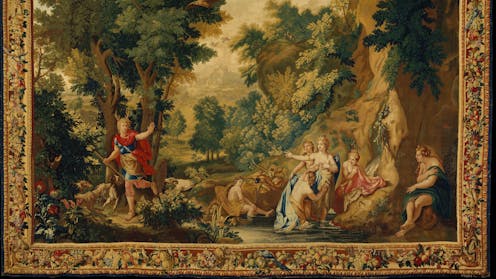
Acteon, having accidentally seen the goddess Diana and her nymphs bathing, begins to change into a stag. Metropolitan Museum of Art, Gift of Mrs. George S. Amory, Object Number: 64.208.

Could you ever be truly alone in the woods of ancient Greece or Rome? According to myth, the ancient world was filled with wild animals, terrifying monsters, and mischievous deities. Among them were nymphs: semi-divine female figures that personified elements of the natural world.

But nymphs offer us more than just stories of sexy nature spirits.

They can reveal how ancient people thought about their world and connected with their landscape through mythology.

Personifying elements of nature

Nymph was a broad category in myth. It encompassed almost every semi-divine woman and girl in myth, including a number of goddesses. The sea goddess Thetis and the underworld river Styx were both sea nymphs as well as goddesses.

Nymphs were typically portrayed as young, exceptionally beautiful women in art and literature. The word “nymph” in ancient Greek could even be used to mean “young girl” or “unmarried woman” when applied to mortal women.

Despite this etymological connection, many nymphs were married or mothers or gods. Amphitrite was the wife of Poseidon, and her sister Metis, the personification of wisdom, was Zeus’ first wife, according to Hesiod’s Theogony. Maia was the mother of Hermes, the messenger god.

What links all nymphs was their connection with the natural world. Nymphs typically personified elements of nature, like bodies of water, mountains, forests, the weather, or specific plants.

This carving derives from a passage in The Iliad that describes the nereid Thetis, mother of the hero Achilles, and other nereids carrying newly forged armour to her son.
The Metropolitan Museum of Art, The Bothmer Purchase Fund, 1993, Object Number: 1993.11.2

The nymph Daphne

One of the most quintessential nymphs was Daphne (or Laurel, in Latin). According to the Roman poet Ovid in his poem the Metamorphoses, Daphne was a stunningly beautiful nymph who lived in the forest.

Daphne had chosen to follow in the footsteps of Artemis (Diana), the goddess of the hunt, by being a huntress and abstaining from sex and marriage. But her beauty would be her downfall.

One day the god Apollo saw Daphne and immediately tried to pursue her. Daphne did not feel similarly and fled through the forest. Apollo chased and nearly caught her.

But Daphne’s father Peneus, a river god, saved his daughter by transforming her into the laurel tree.

Like many nymphs, Daphne’s myth was an origin story for her namesake tree and its significance to the god Apollo.

But her story also followed one of the most common tropes in nymph myths – the trope a nymph transformed into her namesake after running away from a male deity.

Different nymphs for trees, water, mountains, stars

There were even special names for different types of nymph.

Daphne was a dryad, or tree nymph. Oreads (mountain nymphs) are referenced in Homer’s Iliad. There were three different types of water nymph: the saltwater oceanids and nereids, and the freshwater naiads.

Nymphs lived in the wilderness. These untamed places could be dangerous but they also held precious natural resources that nymphs personified, such as special trees and springs.

Spring nymphs personified one of the most precious resources of all: freshwater.

It was hard to find freshwater in the ancient world, especially in places without human infrastructure. Cities were often built around springs.

The nymph Arethusa was the personification of the spring Arethusa in Sicily. Today, you can visit the Fountain of Arethusa in modern day Syracuse.

No matter where you looked in the ancient landscape, there were nymphs – even in the sky.

The Pleiades and Hyades were two sets of daughters of the god Atlas who eventually were transformed into stars.

Their myths gave an origin for two sets of constellations that were used for navigation and divination.

The Pleiades and Hyades constellations were visible to the naked eye, and can still be seen today.

This painting depicts the god Bacchus (the Roman equivalent of the wine god Dionysus) lounging with some nymphs in a landscape.
Abraham van Cuylenborch/The Metropolitan Museum of Art/Object Number: 25.110.37

The divine presence in nature

Although myths may feel like a fictional story told to kids, nymph myths show that ancient myth is inseparable from the ancient landscape and ancient people.

The natural world was imbued with a divine presence from the gods who physically made it – Gaia (Earth) was literally the soil underfoot. Nymphs were a part of this divine presence.

This divine presence brought with it a very special boon: the gift of inspiration.

Some writers (such as Plato) referred to this sort of natural inspiration as being “seized by the nymphs” (νυμφόληπτος or nympholeptus).

Being present in nature and present in places with nymphs could bring about divine inspiration for philosophers, poets and artists alike.

So, if you ever do find yourself alone in a Grecian wood, you may find yourself inspired and in good company – as long as you remain respectful.

The Conversation

Kitty Smith is a member of the Australian Society for Classical Studies and of Australasian Women in Ancient World Studies.

ref. Greek and Roman nymphs weren’t just sexy nature spirits. They had other important jobs too – https://theconversation.com/greek-and-roman-nymphs-werent-just-sexy-nature-spirits-they-had-other-important-jobs-too-258287

AI is driving down the price of knowledge – universities have to rethink what they offer

Source: The Conversation – Global Perspectives – By Patrick Dodd, Professional Teaching Fellow, Business School, University of Auckland, Waipapa Taumata Rau

For a long time, universities worked off a simple idea: knowledge was scarce. You paid for tuition, showed up to lectures, completed assignments and eventually earned a credential.

That process did two things: it gave you access to knowledge that was hard to find elsewhere, and it signalled to employers you had invested time and effort to master that knowledge.

The model worked because the supply curve for high-quality information sat far to the left, meaning knowledge was scarce and the price – tuition and wage premiums – stayed high.

Now the curve has shifted right, as the graph below illustrates. When supply moves right – that is, something becomes more accessible – the new intersection with demand sits lower on the price axis. This is why tuition premiums and graduate wage advantages are now under pressure.


According to global consultancy McKinsey, generative AI could add between US$2.6 trillion and $4.4 trillion in annual global productivity. Why? Because AI drives the marginal cost of producing and organising information toward zero.

Large language models no longer just retrieve facts; they explain, translate, summarise and draft almost instantly. When supply explodes like that, basic economics says price falls. The “knowledge premium” universities have long sold is deflating as a result.

Employers have already made their move

Markets react faster than curriculums. Since ChatGPT launched, entry-level job listings in the United Kingdom have fallen by about a third. In the United States, several states are removing degree requirements from public-sector roles.

In Maryland, for instance, the share of state-government job ads requiring a degree slid from roughly 68% to 53% between 2022 and 2024.

In economic terms, employers are repricing labour because AI is now a substitute for many routine, codifiable tasks that graduates once performed. If a chatbot can complete the work at near-zero marginal cost, the wage premium paid to a junior analyst shrinks.

But the value of knowledge is not falling at the same speed everywhere. Economists such as David Autor and Daron Acemoglu point out that technology substitutes for some tasks while complementing others:

  • codifiable knowledge – structured, rule-based material such as tax codes or contract templates – faces rapid substitution by AI

  • tacit knowledge – contextual skills such as leading a team through conflict – acts as a complement, so its value can even rise.

Data backs this up. Labour market analytics company Lightcast notes that one-third of the skills employers want have changed between 2021 and 2024. The American Enterprise Institute warns that mid-level knowledge workers, whose jobs depend on repeatable expertise, are most at risk of wage pressure.

So yes, baseline knowledge still matters. You need it to prompt AI, judge its output and make good decisions. But the equilibrium wage premium – meaning the extra pay employers offer once supply and demand for that knowledge settle – is sliding down the demand curve fast.

What’s scarce now?

Herbert Simon, the Nobel Prize–winning economist and cognitive scientist, put it neatly decades ago: “A wealth of information creates a poverty of attention.” When facts become cheap and plentiful, our limited capacity to filter, judge and apply them turns into the real bottleneck.

That is why scarce resources shift from information itself to what machines still struggle to copy: focused attention, sound judgement, strong ethics, creativity and collaboration.

I group these human complements under what I call the C.R.E.A.T.E.R. framework:

  • critical thinking – asking smart questions and spotting weak arguments

  • resilience and adaptability – staying steady when everything changes

  • emotional intelligence – understanding people and leading with empathy

  • accountability and ethics – taking responsibility for difficult calls

  • teamwork and collaboration – working well with people who think differently

  • entrepreneurial creativity – seeing gaps and building new solutions

  • reflection and lifelong learning – staying curious and ready to grow.

These capabilities are the genuine scarcity in today’s market. They are complements to AI, not substitutes, which is why their wage returns hold or climb.

What universities can do right now

1. Audit courses: if ChatGPT can already score highly on an exam, the marginal value of teaching that content is near zero. Pivot the assessment toward judgement and synthesis.

2. Reinvest in the learning experience: push resources into coached projects, messy real-world simulations, and ethical decision labs where AI is a tool, not the performer.

3. Credential what matters: create micro-credentials for skills such as collaboration, initiative and ethical reasoning. These signal AI complements, not substitutes, and employers notice.

4. Work with industry but keep it collaborative: invite employers to co-design assessments, not dictate them. A good partnership works like a design studio rather than a boardroom order sheet. Academics bring teaching expertise and rigour, employers supply real-world use cases, and students help test and refine the ideas.

Universities can no longer rely on scarcity setting the price for the curated and credentialed form of information that used to be hard to obtain.

The comparative advantage now lies in cultivating human skills that act as complements to AI. If universities do not adapt, the market – students and employers alike – will move on without them.

The opportunity is clear. Shift the product from content delivery to judgement formation. Teach students how to think with, not against, intelligent machines. Because the old model, the one that priced knowledge as a scarce good, is already slipping below its economic break-even point.

The Conversation

Patrick Dodd does not work for, consult, own shares in or receive funding from any company or organisation that would benefit from this article, and has disclosed no relevant affiliations beyond their academic appointment.

ref. AI is driving down the price of knowledge – universities have to rethink what they offer – https://theconversation.com/ai-is-driving-down-the-price-of-knowledge-universities-have-to-rethink-what-they-offer-260493

A Shakespearean, small-town murder: why Australia became so obsessed with the Erin Patterson mushroom case

Source: The Conversation – Global Perspectives – By Xanthe Mallett, Criminologist, CQUniversity Australia

The “mushroom murder trial”, as it has popularly become known, has gripped Australia over the past 11 weeks. More than that, it’s prompted worldwide headlines, multiple daily podcasts, and even YouTube videos of self-proclaimed “body language experts” assessing defendant Erin Patterson’s every move.

There’s an ABC drama series in the works. Acclaimed Australian author Helen Garner has been in the courtroom.

But why did this tragedy, in which three people died and a fourth was lucky to survive, grip the public consciousness in way no other contemporary Australian case has?


Read more:
Erin Patterson has been found guilty in the mushroom murder trial. Legal experts explain why


A not-so-wholesome family lunch

On July 29 2023, in a sleepy town called Leongatha in the foothills of the Strzelecki Ranges in Victoria, a very normal woman called Erin Patterson made an ostensibly very normal lunch of beef Wellington.

She was cooking for her in-laws, Gail and Don Patterson, Gail’s sister Heather Wilkinson, and Heather’s husband Ian. Erin’s estranged husband, Simon Patterson, was also invited, but chose not to attend.

Simon and Erin had two children, a boy and a girl, who did not attend the lunch either.

Shortly after the lunch, all four guests were admitted to hospital with suspected gastroenteritis. Erin Patterson also presented to hospital, but refused to be admitted.

Within a few days, Gail, Don, and Heather all died as a result of what was later confirmed as poisoning with Amanita phalloides, better known as death cap mushrooms.

Ian survived, but he was lucky. He spent seven weeks in hospital and needed a liver transplant.

The questions became, how did the mushrooms get into the beef Wellington? Was this an awful accident or something more sinister?

Public obsession

These questions became the focus of very significant public and media attention.

Erin Patterson spoke to the media in the days after the incident. She presented as your typical, average woman of 50.

That is, in my opinion, where the obsession with this case began.

This case had the feel of a Shakespearean drama: multiple deaths within one family, death by poison, and a female protagonist.

The juxtaposition between the normality of a family lunch (and the sheer vanilla-ness of the accused) and the seriousness of the situation sent the media into overdrive.

Then there were the lies. Patterson lied about foraging for mushrooms, and about having cancer to encourage the guests to attend.

The location also played a huge part. Leongatha is known for its staggering natural beauty and thriving food and wine scene. It’s hardly a place where the world expected a mass murderer to live.

However, the perception that rural areas are utopias of safety and social cohesion, and cities are dark and dangerous places, is a myth.

One study by the Australian Institute of Health and Welfare paints a different picture.

For serious assault cases that resulted in hospitalisation, for major cities the rates were 65 per 100,000 people. In rural areas, this rose to 1,244 people per 100,000. And for murder, in very remote areas the rate was five per 100,000 population, but fewer than one per 100,000 in urban areas.

Then there was Erin Patterson’s unusual behaviour. She disposed of the desiccator in which the mushrooms she had foraged were dehydrated. She used multiple phones, one of which underwent multiple factory resets on in the days following the lunch. One of these resets was done remotely after police seized her phone.

There are also the much-discussed plates. The court heard she prepared her meal on a different-coloured plate to those of her other guests so they were easily identifiable.

The public latched onto these details, each providing a new talking point around water coolers or spurring new Reddit threads dedicated to unpacking their significance.

The courtroom as a stage

Ultimately, after three months, Erin Patterson was charged with three counts of murder and one count of attempted murder. She pleaded not guilty.

The trial lasted 40 days. The prosecution alleged Patterson intentionally poisoned her guests, whereas the defence suggested it was all an awful, tragic accident.

The jury took six and a half days to deliberate. During that time, various media outlets did everything they could to keep the story on the front page.

Bizarre pieces began appearing online from credible sources such as the ABC, profiling people who had attended court. They included stories of people turning down work to attend the court daily, cases of friendships blossoming during the trial between regular attendees, and the outfit choices of locals turning up every day to watch the drama unfold.

There were also articles profiling local cafe owners and how they felt about being at the centre of the legal theatrics. The daily podcasts continued even when news from the courtroom didn’t.

The vibe felt more appropriate for a royal visit than a triple murder trial.

It seemed everyone in Australia was gripped by one event, united in a way few other things could manage. We all waited with bated breath to see what the 12 men and women of the jury would decide.


Read more:
Justice on demand? The true crime podcasts serving up Erin Patterson’s mushroom murder trial


Humanity behind the spectacle

The end to this strange and unique criminal case came on Monday July 7.

The result? Guilty on all four counts. Erin Patterson is formally a mass murderer, though many in the court of public opinion had reached the same conviction months earlier.

Leongatha will always be known for being the setting of (arguably) the most infamous multiple murder case in Australian history. It will join Snowtown in South Australia (home of the “bodies in the barrell” murder case), Kendall in New South Wales (where William Tyrrell disappeared), and Claremont in Western Australia (the murder or disappearance of three women) as places forever linked to tragic crimes.

While the trial is over, there’s much more content still to come, the public’s appetite yet to be satiated.

But the final word should be saved for the Patterson and Wilkinson families. This is an awful tragedy, and there are no winners. Ian and Simon have lost loved ones. The Patterson children have lost grandparents and now have to come to terms with the fact their mother caused those deaths intentionally.

Amid the spectacle, it’s easy to lose sight of the humanity at the centre. As the media spotlight dims, may the families get the privacy and respect they deserve.

The Conversation

Xanthe Mallett does not work for, consult, own shares in or receive funding from any company or organisation that would benefit from this article, and has disclosed no relevant affiliations beyond their academic appointment.

ref. A Shakespearean, small-town murder: why Australia became so obsessed with the Erin Patterson mushroom case – https://theconversation.com/a-shakespearean-small-town-murder-why-australia-became-so-obsessed-with-the-erin-patterson-mushroom-case-259982

How Philadelphia’s current sanitation strike differs from past labor disputes in the city

Source: The Conversation – USA – By Francis Ryan, Associate Professor of Labor Studies and Employment Relations, Rutgers University

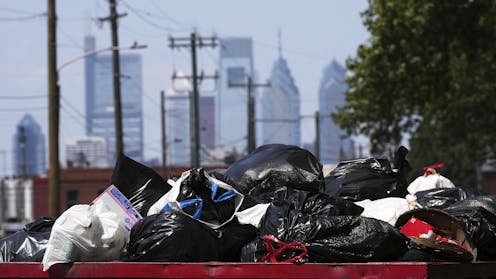
Curbside trash collection has been on pause in Philadelphia since July 1, 2025. AP Photo/Matt Slocum

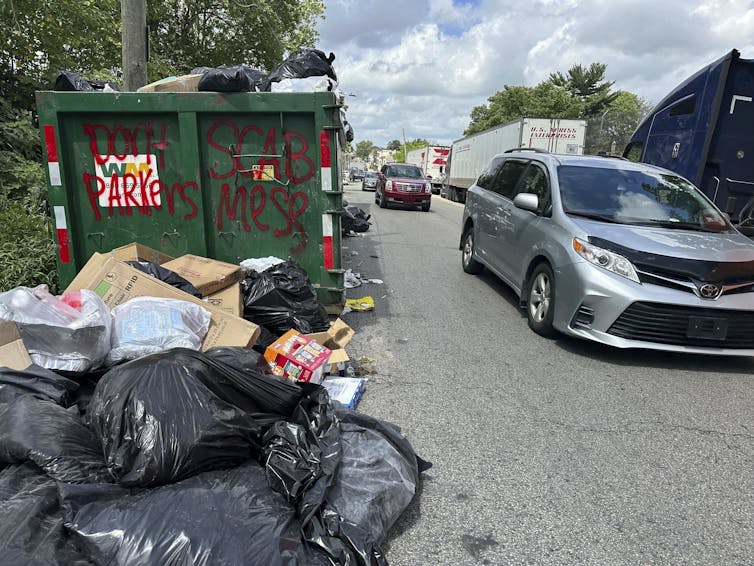
As the Philadelphia municipal worker strike enters its second week, so-called “Parker piles” – large collections of garbage that some residents blame on Mayor Cherelle Parker – continue to build up in neighborhoods across the city.

The AFSCME District Council 33 union on strike represents about 9,000 blue-collar workers in the city, including sanitation workers, 911 dispatchers, city mechanics and water department staff.

The Conversation U.S. asked Francis Ryan, a professor of labor studies at Rutgers University and author of “AFSCME’s Philadelphia Story: Municipal Workers and Urban Power in Philadelphia in the Twentieth Century,” about the history of sanitation strikes in Philly and what makes this one unique.

Has anything surprised you about this strike?

This strike marks the first time in the history of labor relations between the City of Philadelphia and the AFSCME District Council 33 union where social media is playing a significant role in how the struggle is unfolding.

The union is getting their side of the story out on Instagram and other social media platforms, and citizens are taking up or expressing sympathy with their cause.

Piles of garbage on the street beside a green Dumpster spraypainted with 'Don't Scab Parker's Mess'
Some city residents are referring to the garbage build-up sites as ‘Parker piles.’
AP Photo/Tassanee Vejpongsa

How successful are trash strikes in Philly or other U.S. cities?

As I describe in my book, Philadelphia has a long history of sanitation strikes that goes back to March 1937. At that time, a brief work stoppage brought about discussions between the city administration and an early version of the current union.

When over 200 city workers were laid off in September 1938, city workers called a weeklong sanitation strike. Street battles raged in West Philadelphia when strikers blocked police-escorted trash wagons that were aiming to collect trash with workers hired to replace the strikers.

Philadelphia residents, many of whom were union members who worked in textile, steel, food and other industries rallied behind the strikers. The strikers’ demands were met, and a new union, the American Federation of State, County and Municipal Employees, or AFSCME, was formally recognized by the city.

This strike was a major event because it showed how damaging a garbage strike could be. The fact that strikers were willing to fight in the streets to stop trash services showed that such events had the potential for violence, not to mention the health concerns from having tons of trash on the streets.

There was another two-week trash strike in Philadelphia in 1944, but there wouldn’t be another for more than 20 years.

However, a growing number of sanitation strikes popped up around the country in the 1960s, the most infamous being the 1968 Memphis Sanitation Strike.

Black-and-white photo of a line of Black men walking past a row of white soldiers in uniform with bayonets fixed
Black sanitation workers peacefully march wearing placards reading ‘I Am A Man’ during the Memphis sanitation strike in 1968.
Bettmann via Getty Images

In Memphis, a majority African American sanitation workforce demanded higher wages, basic safety procedures and recognition of their union. Dr. Martin Luther King, Jr. rallied to support the Memphis workers and their families as part of his Poor Peoples’ Campaign, which sought to organize working people from across the nation into a new coalition to demand full economic and political rights.

On April 4, 1968, Dr. King was assassinated. His death put pressure on Memphis officials to settle the strike, and on April 16 the the strikers secured their demands.

Following the Memphis strike, AFSCME began organizing public workers around the country and through the coming years into the 1970s, there were sanitation strikes and slowdowns across the nation including in New York City, Atlanta, Cleveland and Washington, D.C. Often, these workers, who were predominantly African American, gained the support of significant sections of the communities they served and secured modest wage boosts.

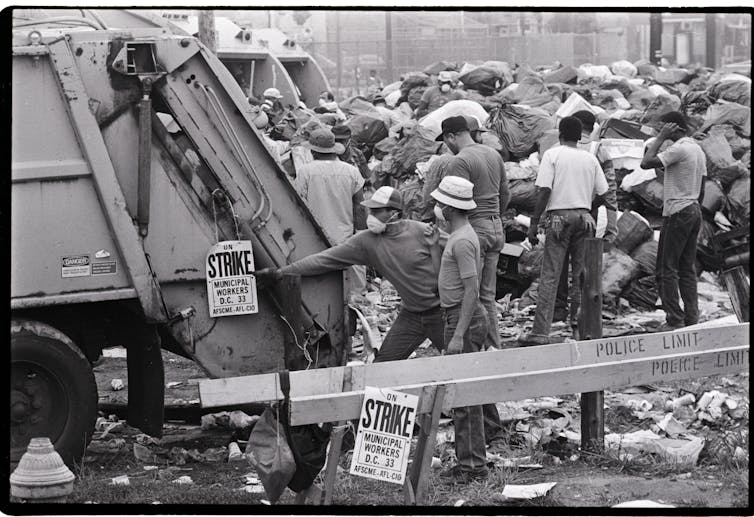
By the 1980s, such labor actions were becoming fewer. In 1986, Philadelphia witnessed a three-week sanitation strike that ended with the union gaining some of its wage demands, but losing on key areas related to health care benefits.

Black-and-white photo of men standing alongside huge pile of trash and two trash trucks
Workers begin removing mounds of trash after returning to work after the 18-day strike in Philadelphia in July 1986.
Bettmann via Getty Images

How do wages and benefits for DC33 workers compare to other U.S. cities?

DC 33 president Greg Boulware has said that the union’s members make an average salary of $46,000 per year. According to MIT’s Living Wage Calculator, that is $2,000 less than what a single adult with no kids needs to reasonably support themselves living in Philadelphia.

Sanitation workers who collect curbside trash earn a salary of $42,500 to $46,200, or $18-$20 an hour. NBC Philadelphia reports that those wages are the lowest of any of the major cities they looked at. Hourly wages in the other cities they looked at ranged from $21 an hour in Dallas to $25-$30 an hour in Chicago.

Unlike other eras, the fact that social media makes public these personal narratives and perspectives – like from former sanitation worker Terrill Haigler, aka “Ya Fav Trashman” – is shaping the way many citizens respond to these disruptions. I see a level of support for the strikers that I believe is unprecedented going back as far as 1938.

What do you think is behind this support?

The pandemic made people more aware of the role of essential workers in society. If the men and women who do these jobs can’t afford their basic needs, something isn’t right. This may explain why so many people are seeing things from the perspective of striking workers.

At the same time, money is being cut from important services at the federal, state and local levels. The proposed gutting of the city’s mass transit system by state lawmakers is a case in point. Social media allows people to make these broader connections and start conversations.

If the strike continues much longer, I think it will gain more national and international attention, and bring discussions about how workers should be treated to the forefront.

The Conversation

Francis Ryan does not work for, consult, own shares in or receive funding from any company or organization that would benefit from this article, and has disclosed no relevant affiliations beyond their academic appointment.

ref. How Philadelphia’s current sanitation strike differs from past labor disputes in the city – https://theconversation.com/how-philadelphias-current-sanitation-strike-differs-from-past-labor-disputes-in-the-city-260676

¿Qué pasaría en España si mañana desapareciera la inmigración?

Source: The Conversation – (in Spanish) – By Paula Costa Correa, Investigadora del área de Filosofía del Derecho. Abogada especializada en Migraciones y Derecho Penal, Universidad de Navarra

Unai Huizi Photography/Shutterstock

Mientras algunos medios y discursos políticos describen la migración como una amenaza o una “avalancha”, los datos muestran lo contrario: España no vive una invasión, sino una relación de interdependencia funcional con los países del Sur Global. En otras palabras, lo que se presenta como un problema es, en realidad, una necesidad estructural. El país necesita población migrante para sostener su pirámide demográfica, su economía y su sistema de bienestar.

Esta simbiosis migratoria no es una metáfora. Es una realidad demográfica. Desde 1950, la población mundial se ha triplicado. En regiones como África Subsahariana o Asia Meridional, el crecimiento es constante y sostenido, ejerciendo presión sobre recursos, empleo y sistemas sociales. En cambio, Europa y América del Norte enfrentan el fenómeno contrario: envejecimiento poblacional, bajas tasas de fecundidad y reducción progresiva de la población activa.

En el caso español, el contraste es claro. La tasa de fecundidad se sitúa desde hace años por debajo de 1,3 hijos por mujer, muy lejos del umbral de reemplazo generacional (2,1). Sin flujos migratorios constantes, España perdería millones de habitantes en las próximas décadas, con efectos directos sobre el sistema fiscal, las pensiones y el empleo. Según proyecciones del INE y de Naciones Unidas, de mantenerse la fecundidad actual sin migración, la población podría descender hasta 30 millones en 2100, frente a los 47 millones actuales.

En todos estos escenarios debemos tener en cuenta que los bebés que nacen hoy no empezarían a cotizar hasta 2045. Es decir, apostar por una fecundidad de tres hijos por mujer supondría un esfuerzo económico adicional para el estado de bienestar durante al menos dos décadas, antes de que esas nuevas generaciones pudieran sostener el sistema.

Ni la natalidad basta, ni la migración sobra

Ante este panorama, ¿puede la natalidad compensar por sí sola el déficit demográfico? La respuesta es negativa. Hemos modelado tres escenarios de política natalista, y todos presentan limitaciones estructurales.

En el mejor de los casos –con políticas públicas sostenidas durante 20 años– no habría ningún impacto real antes de 2045. En escenarios más intensivos (como aumentar a tres o cuatro hijos por mujer en una legislatura), los resultados son ineficaces, fiscalmente insostenibles y socialmente inviables. No se puede compensar un problema estructural con medidas de corto plazo ni con presión sobre los cuerpos de las mujeres.

En cambio, la migración sí tiene efectos inmediatos. La llegada de personas jóvenes en edad de trabajar ha contribuido en las últimas décadas a equilibrar la relación entre cotizantes y jubilados. Un estudio estima que sin migración el indicador de sostenibilidad demográfica –que mide cuántas personas en edad de trabajar hay por cada persona mayor de 65 años– habría sido un 30 % inferior, agravando aún más la presión sobre el sistema de pensiones. Esto significa que la presión sobre dicho sistema de pensiones habría sido mucho mayor con menos trabajadores sosteniéndolo.

Lejos de ser una amenaza, la migración ha contribuido a mantener el equilibrio entre cotizantes y jubilados, retrasando un colapso que, de otro modo, ya estaría en marcha.

Pero la función de la migración no es solo económica. La movilidad humana cumple un rol redistributivo a nivel global: traslada población activa desde regiones con exceso de presión demográfica hacia otras con escasez de mano de obra y envejecimiento. Esta relación de interdependencia –aunque desigual– permite mantener en funcionamiento sectores esenciales como los cuidados, la agricultura o la hostelería. Negar esta realidad por motivos ideológicos no cambia los hechos: solo impide gestionarla de forma realista, con planificación y justicia.

Ni milagro ni amenaza

En paralelo, el envejecimiento plantea retos adicionales. Menos trabajadores significa menos cotizaciones, pero también más gasto sanitario, más dependencia y más personas mayores viviendo solas. En España, la esperanza de vida ha aumentado y la feminización de la vejez introduce nuevas desigualdades: muchas mujeres mayores carecen de pensión propia o dependen de redes familiares cada vez más frágiles.

Las proyecciones muestran que sin una política migratoria sostenida, el sistema de bienestar español se enfrentará a una presión insostenible. Los discursos que rechazan la migración apelan al mito de la autosuficiencia nacional, pero ese modelo nunca ha existido. Desde los años 2000, el crecimiento español ha estado directamente vinculado al trabajo y las contribuciones de millones de personas migrantes.

Esto no significa que la migración sea una solución mágica. También necesita planificación, integración y derechos. Pero sí constituye un componente esencial de cualquier estrategia demográfica realista. De hecho, países como Canadá o Alemania ya aplican políticas activas para atraer y retener población extranjera cualificada y no cualificada. España, sin embargo, sigue atrapada en una narrativa de emergencia, inseguridad y control.

Por eso, debemos dejar de ver a España solo como puerta de entrada de migración hacia Europa, y empezar a entender su posición como una oportunidad estratégica: atraer talento, corregir desequilibrios y rejuvenecer el tejido social. Seguir anclados en el miedo y la mentira emotiva no solo perjudica a las personas migrantes, sino que priva al país de una herramienta imprescindible para su sostenibilidad.

La simbiosis migratoria entre Norte y Sur es una realidad del siglo XXI. Negarla no elimina el problema, solo impide encontrar soluciones eficaces.

The Conversation

Paula Costa Correa es presidenta de la Asociación de Migración y Derechos Humanos de Navarra (MIGENE), un observatorio independiente sobre la situación migratoria en España y sus implicaciones sociales y jurídicas.

ref. ¿Qué pasaría en España si mañana desapareciera la inmigración? – https://theconversation.com/que-pasaria-en-espana-si-manana-desapareciera-la-inmigracion-259355

Sostenibilidad en las universidades: ¿cómo formar a los profesionales que el planeta necesita?

Source: The Conversation – (in Spanish) – By Alejandra del Carmen Meza Servín, Associate professor, Universidad de Guadalajara

Gorodenkoff/Shutterstock

Sequías prolongadas, aumento global de las temperaturas, degradación de los suelos y eventos meteorológicos extremos son solo algunos de los escenarios a los que los futuros profesionales se enfrentarán, independientemente de su área de formación. Un ingeniero, un médico, un arquitecto o un economista ya no pueden ejercer su profesión sin considerar cómo sus decisiones impactan, o son impactadas, por la crisis ambiental. Ante esta urgencia, surge una pregunta crítica: ¿están las universidades preparando a los estudiantes para navegar y mitigar estos desafíos?

La educación superior tiene una responsabilidad ineludible en la transición hacia sociedades más sostenibles. La sostenibilidad no debe ser un añadido opcional en los planes de estudio, sino un principio rector que permee todas las disciplinas.

Sin embargo, integrar este enfoque no es tarea sencilla. Requiere una transformación curricular profunda, la capacitación docente y, sobre todo, un cambio de paradigma en cómo entendemos la formación profesional. Algunas instituciones ya han comenzado este camino.

Ejemplos actuales

La Universidad de Guadalajara, por ejemplo, incorporó desde 2019 materias transversales en todas sus carreras. Dos ejemplos son las materias “Cultura de la paz” y “Vida y Entorno Sustentable” que se imparten en todos los programas de pregrado del Centro Universitario de los Altos y que estan vinculadas a los 17 Objetivos de Desarrollo Sostenible (ODS) de la ONU. Estas asignaturas buscan que los estudiantes, ya sea de Derecho o Agroindustria, comprendan la interdependencia entre sus campos y problemáticas como la desigualdad social o el agotamiento de recursos naturales.


Leer más:
Proyectos para plantar la semilla de la sostenibilidad en el alumnado universitario


Pero la transversalidad es solo el inicio. Otras universidades, como la Autónoma de Barcelona, han ido más allá, creando programas de posgrado especializados en Sostenibilidad
y promoviendo investigaciones aplicadas en colaboración con sectores públicos y privados.

En América Latina, la Red de Campus Sustentables, que agrupa a instituciones como la Universidad Nacional Autónoma de México y la Universidad de San Paulo, ha impulsado desde 2015 iniciativas para reducir huellas de carbono en campus y fomentar la participación estudiantil en proyectos ambientales. Estos esfuerzos reflejan un reconocimiento creciente: la sostenibilidad no puede limitarse a un curso aislado, sino que debe ser un eje estructural en la educación.

¿Es suficiente con materias transversales?

Sin embargo, cabe preguntarnos si estas acciones son suficientes. La velocidad del deterioro ambiental sugiere que las medidas incrementales podrían no ser adecuadas. Como advierte el Panel Intergubernamental sobre Cambio Climático (IPCC), los próximos diez años son cruciales para evitar los peores escenarios del calentamiento global.

En este contexto, las materias transversales, aunque valiosas, podrían quedarse cortas si no van acompañadas de metodologías pedagógicas innovadoras. La enseñanza basada en proyectos, el aprendizaje al servicio, los proyectos de intervención en comunidades o la simulación de escenarios reales son herramientas que permiten a los estudiantes aplicar conocimientos teóricos a problemas concretos.

Por ejemplo, en la Universidad de Chile, alumnos de Ingeniería y Ciencias Sociales colaboran en el diseño de soluciones para comunidades afectadas por la escasez hídrica, integrando saberes técnicos y comunitarios.

¿Cómo evaluar?

Además, la formación en sostenibilidad exige repensar las competencias que se evalúan. No basta con que los estudiantes memoricen conceptos; deben desarrollar pensamiento crítico, resiliencia y capacidad de trabajo interdisciplinario. La educación para la sostenibilidad debe ser “transformadora”, es decir, desafiar las lógicas tradicionales y fomentar una visión sistémica.

Esto implica que los profesores también necesitan formación continua. Como ejemplo podemos mencionar el programa de la Universidad de Costa Rica que certifica a docentes en pedagogías ambientales.

Una práctica cotidiana en las aulas

El análisis no puede eludir una reflexión incómoda: aunque las universidades avanzan, el ritmo es desigual y, en muchos casos, insuficiente. Mientras algunas instituciones lideran cambios estructurales, otras aún consideran la sostenibilidad como un tema marginal. ¿Estamos a tiempo de rectificar el rumbo?


Leer más:
Los jóvenes, el motor del cambio hacia una economía circular


La respuesta es sí, pero con una condición: la sostenibilidad debe dejar de ser un discurso bienintencionado para convertirse en una práctica cotidiana en las aulas. Esto demanda no solo más contenidos “verdes”, sino también pedagogías que inspiren acción y ética.

Las universidades tienen la oportunidad –y la obligación– de formar profesionales que no solo se adapten al mundo, sino que lo transformen. Este planeta no necesita más graduados que repitan modelos; necesita agentes de cambio capaces de imaginar y construir futuros viables.

Como escribió el filósofo Edgar Morin, la educación debe “enseñar la condición humana” en su relación indisoluble con la naturaleza. El tiempo de actuar es ahora: cada clase, cada syllabus revisado, cada proyecto interdisciplinario, es un paso para ese cambio.

The Conversation

Alejandra del Carmen Meza Servín no recibe salario, ni ejerce labores de consultoría, ni posee acciones, ni recibe financiación de ninguna compañía u organización que pueda obtener beneficio de este artículo, y ha declarado carecer de vínculos relevantes más allá del cargo académico citado.

ref. Sostenibilidad en las universidades: ¿cómo formar a los profesionales que el planeta necesita? – https://theconversation.com/sostenibilidad-en-las-universidades-como-formar-a-los-profesionales-que-el-planeta-necesita-257665

Actividades veraniegas para niños y adolescentes al alcance de todos

Source: The Conversation – (in Spanish) – By Silvia López Larrosa, Profesora del departamento de Psicología, Universidade da Coruña

El verano se extiende ante nosotros. Dos meses de vacaciones escolares y la pregunta: ¿qué haremos en este tiempo? Si hay niños y adolescentes en casa, a menudo la pregunta incluye cierta angustia adulta, pues convivir con los más pequeños cuando nosotros estamos ocupados y ellos ociosos puede convertirse en un reto.

Pero las largas vacaciones infantiles del verano ofrecen grandes oportunidades para hacer todas las cosas que no dan tiempo durante el curso, muchas de ellas sin necesidad de moverse del lugar donde vivimos, pagar campamentos caros o hacer largos viajes.

Encontrar y cultivar nuevos intereses

Una posibilidad es aprender algo nuevo, siempre dependiendo de los intereses de cada persona, de las circunstancias familiares y de las opciones que se ofrezcan en el lugar en que nos encontremos.

Puede ser desde tareas tan asequibles como mantener un diario o ejercitar la imaginación escribiendo historias cotidianas o inventadas, hasta recuperar el arte analógico de hacer fotos, pasando por sencillamente visitar museos.


Leer más:
Cómo mejorar la convivencia en casa durante las vacaciones


El verano es el tiempo perfecto para despertar y cultivar la pasión por la lectura. Aprender rimas, en el caso de los más pequeños, escuchar audiolibros en los viajes en coche, leer en voz alta un rato cada día, intercambiar libros y comentarlos entre los miembros de la familia… todas estas son maneras de ayudar a cimentar un hábito lector, algo con un innegable impacto positivo en el cerebro, el vocabulario, la imaginación o la reducción del estrés, además de que contribuirá a un mejor rendimiento académico cuando comience el nuevo curso.

Redescubrir la naturaleza

Los estudios señalan que el contacto con la naturaleza reporta beneficios para la salud física y mental y mejora el bienestar a cualquier edad. El verano parece una época propicia para reencontrarse con la naturaleza y disfrutar de ella y de la familia.

En la naturaleza podemos realizar actividades físicas como deportes acuáticos, tanto en el mar como en ríos o embalses: nos obligan a aprender técnicas y movimientos para evitar lesiones o accidentes, y son un ejercicio perfecto para el calor. Y en el medio terrestre se puede caminar, correr, montar a caballo o andar en bicicleta.


Leer más:
Niños sin miedo al agua: prevenir los ahogamientos desde la confianza


Atención y ejercicio con plantas y animales

En nuestros paseos por parques, zonas verdes o bosques podemos ver pájaros, flores, árboles, huellas de animales. Si estos paseos se hacen con personas que nos ayuden a leer en la naturaleza y a escucharla, una simple salida al campo puede convertirse en una gran aprendizaje, que nos reporta serenidad y mejora la atención.

Si esta salida se realiza con animales como los caballos, mejoramos nuestro equilibrio, ejercitamos músculos y nos vinculamos con otro ser, al que podemos ensillar, desensillar, bañar o cepillar.

Desarrollar la psicomotricidad fina

En verano, no solo podemos reconectar con la naturaleza, sino que es posible equilibrar la actividad física con otras alternativas de motricidad fina como aprender a coser, dibujar o colorear, hacer manualidades con barro, plastilina, arcilla, hacer cestos, tejer, o usar abalorios para hacer adornos.

Algunas de estas actividades suponen emplear nuevos materiales, pero para otras se usan elementos que nos han acompañado desde hace mucho como el barro, los hilos o el mimbre. Por ello, son una oportunidad para descubrir técnicas antiguas de bordado, cestería o alfarería, y para hablar con nuestros mayores y con los artesanos que mantienen estas tradiciones, que a veces se encuentran precisamente en los lugares donde veraneamos, en pueblos con una tradición, historias y unas costumbres que podemos aprender.

Idiomas veraniegos

En algunos de estos lugares, también es posible adentrarse en su lengua. De hecho, uno de los propósitos del verano suele ser mejorar en un segundo idioma. Viajar permite usar dicha lengua y descubrir formas de vida y costumbres más o menos diferentes.

Para los que prefieran quedarse pero quieran familiarizar el oído a otro idioma, se pueden sintonizar canales de televisión, ver películas, o aprender letras de canciones en otra lengua. Podemos incluso perfeccionar la propia a través, por ejemplo, de clases de oratoria.

Aprender o practicar un instrumento

Un idioma universal es el de la música, que activa nuestro cerebro, produce beneficios atencionales e influye en nuestro estado de ánimo. Los niños más pequeños pueden experimentar creando instrumentos caseros, con elementos como cucharas y vasos, un recipiente con legumbres o una tapa.

Podemos conocer un instrumento para ver si es el que nos gustaría tocar (escuchando, viendo vídeos o localizando a personas que lo toquen) o perfeccionar nuestra técnica en caso de que ya sepamos, adentrarnos en la música de épocas diferentes o en el folclore local, aprender o crear canciones, movernos al ritmo de acordes nuevos e incluso, por qué no, inventar una coreografía.

Tiempo para cocinar y comer mejor

En verano, aunque los adultos estén trabajando, los niños y adolescentes de la casa disponen de más tiempo para disfrutar comprando lo que se va a cocinar, incluso de cultivar a pequeña escala. Aprender a cocinar, a reconocer los alimentos y de dónde proceden son sin duda conocimientos valiosos para adultos y niños que impactan en su salud, autonomía, planificación y organización.

Desaprender también es importante

Como hemos visto, el verano puede ser una época muy propicia para aprender, pero también existe la oportunidad de desaprender. Por ejemplo, desaprender una dependencia excesiva de la tecnología y desaprender la tendencia a hacer las actividades cotidianas a toda prisa y sin pararnos a pensar. Prestar atención a lo que hacemos y disfrutar con ello nos ayuda a estar presentes en el momento y desconectar de los estímulos digitales.

Todo el tiempo que dediquemos a estar en la naturaleza en familia, o permitiendo que los niños exploren y aprendan por sí solos, jugando, haciendo deporte, expandiendo su imaginación, cocinando, escuchando a las personas mayores, haciendo manualidades, cantando o tocando un instrumento, siendo conscientes de dónde estamos y lo que hacemos, es tiempo de calidad que le habremos robado a las pantallas. No se trata de prohibirlas o desecharlas, pero sí de aprovechar para reequilibrar su presencia en nuestra vida.

The Conversation

Silvia López Larrosa no recibe salario, ni ejerce labores de consultoría, ni posee acciones, ni recibe financiación de ninguna compañía u organización que pueda obtener beneficio de este artículo, y ha declarado carecer de vínculos relevantes más allá del cargo académico citado.

ref. Actividades veraniegas para niños y adolescentes al alcance de todos – https://theconversation.com/actividades-veraniegas-para-ninos-y-adolescentes-al-alcance-de-todos-259150

Cuando ellas tiraban de los barcos: la historia olvidada de las sirgueras de Bilbao

Source: The Conversation – (in Spanish) – By Paula Lamo Anuarbe, Investigadora en Internet de las Cosas, UNIR – Universidad Internacional de La Rioja

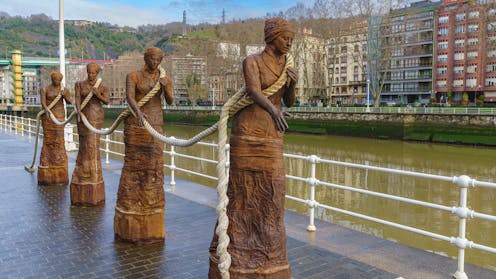
Grupo escultórico ‘Las sirgueras’, de Dora Salazar, en Bilbao. Fue inaugurado en 2021 como homenaje a estas sufridas trabajadoras. RICARDO ALGAR/Shutterstock

En la cultura popular y, por supuesto, en los memes, el pueblo vasco es sinónimo de fuerza bruta. Hombres que levantan piedras de media tonelada, que parten nueces con la frente o que hacen competiciones de cortar troncos con hachas más grandes que una maleta de cabina. Pero, curiosamente, cuando se habla de la fuerza legendaria vasca, casi nunca se menciona a las mujeres. Y eso que hace poco más de un siglo hubo mujeres en Bilbao que, literalmente, tiraban de barcos cargados río arriba. A pulso. Sin memes, pero con mucho músculo.

Sí, literalmente: mujeres arrastrando buques por la ría del Nervión a fuerza de brazos, piernas y mucha determinación. Eran las sirgueras.

¿Quién necesita bueyes cuando se tienen mujeres?

Las sirgueras se dedicaban a arrastrar barcos mercantes por la ría del Nervión desde la orilla, sujetas con arneses al pecho o a la cintura, como si fueran animales de tiro humano. Caminaban por los caminos de sirga, sendas paralelas al cauce del río y diseñadas precisamente para facilitar este tipo de tracción. Solían trabajar en grupos de tres a seis mujeres, sincronizando el paso y la tensión de las cuerdas para mantener el rumbo del barco y evitar que encallara o se desviara con la corriente.

Su trabajo no era solo cuestión de fuerza bruta: requería resistencia física, coordinación y conocimiento del terreno. Tenían que adaptarse a las mareas, al caudal del río y a la forma de cada embarcación. En muchos casos, los barcos estaban sobrecargados de mineral de hierro, carbón o productos industriales, lo que hacía la tarea aún más extenuante. Además, el firme de los caminos era irregular, embarrado y, en ocasiones, peligroso.

En aquella época (segunda mitad del siglo XIX) los remolcadores de vapor todavía eran escasos y caros, y no todas las embarcaciones podían permitirse uno. El motor diésel aún estaba por inventar y los avances tecnológicos no llegaban al mismo ritmo a todas las rutas comerciales. En ese contexto, cuando un barco debía remontar el Nervión hacia los muelles de Bilbao necesitaba un sistema auxiliar de tracción. ¿La solución más lógica? ¿Bueyes? ¿Caballos? No: mujeres.

No era así por romanticismo ni por un alarde de fuerza femenina, sino por una lógica económica descarnada. Mantener animales de tiro implicaba inversión en forraje, espacio para establos, veterinarios y descanso para las bestias. En cambio, las mujeres (víctimas de una pobreza estructural) eran contratadas por jornadas, sin necesidad de alojamiento ni manutención, por un salario muy bajo. Su fuerza de trabajo era más rentable, más disponible y, sobre todo, más desechable.

Así que ahí estaban: tirando de buques con decenas de toneladas de carga, a la intemperie, bajo el sol o la lluvia, sin derechos laborales ni reconocimiento. No aparecían en los registros oficiales. No tenían contrato. Su aportación fue crucial para el desarrollo portuario de Bilbao, pero quedó fuera de los relatos históricos durante décadas. Solo recientemente su figura ha empezado a ser recuperada como parte del legado obrero y femenino de la ría.

Mujeres fuertes sí, pero invisibles

El caso de las sirgueras pone en evidencia una tendencia histórica: la invisibilidad sistemática de las mujeres en sectores físicos, técnicos o tradicionalmente masculinizados, como el marítimo. Durante siglos se vendió la idea de que las mujeres eran criaturas frágiles y delicadas que bordaban pañuelos y se desmayaban en salones decimonónicos. Pero no todas estaban bordando. Algunas estaban sudando, tirando barcos en la ría.

Históricamente, el sector marítimo ha sido un entorno cerrado, excluyente y profundamente masculinizado. La presencia femenina en este ámbito ha sido escasa, marginal y casi siempre narrada en clave de excepcionalidad. Cuando aparecen mujeres en los relatos marítimos, suelen ser figuras secundarias, atadas a roles domésticos o administrativos. Se las menciona como viudas que heredan el negocio tras una guerra, esposas que aguantan la economía familiar o hijas que mantienen el papeleo mientras los hombres van al mar.

El discurso dominante ha insistido en que su presencia era temporal, accidental o asistencial, como si nunca hubieran estado ahí por decisión propia o por méritos propios. Como si no fueran trabajadoras, sino sustitutas provisionales en tiempos difíciles.

Sin embargo, las sirgueras rompen por completo esa narrativa. Ellas no estaban allí por ausencia de los hombres, ni por tradición heredada, ni por caridad. Estaban porque eran necesarias, y porque cumplían una función esencial en la logística fluvial de la época. Realizaban un trabajo físicamente durísimo, sin reconocimiento, en condiciones precarias y por salarios irrisorios. Pero lo hacían con eficacia, con organización y con una capacidad que hoy llamaría la atención en cualquier plataforma viral.

Eran mujeres fuertes, sí, pero no por una esencia mágica o mítica, sino porque la vida y el sistema las empujaban a serlo. Muchas eran madres, otras huérfanas, otras simplemente pobres. Y el único camino disponible era el esfuerzo físico: caminar durante horas por la ribera del río, con los pies hundidos en el barro, tensando una cuerda que arrastraba una mole de hierro flotante.

No eran un fenómeno anecdótico ni pintoresco: eran parte estructural del funcionamiento de la ría de Bilbao en el siglo XIX, al mismo nivel que los estibadores, los marineros o los maquinistas. Solo que a ellas no se les dedicaban canciones ni libros. Hasta hace poco, ni siquiera una mención en los archivos oficiales.

La culpa, como siempre, de las supersticiones

¿Y por qué casi no se las recuerda? Por esa costumbre tan humana de barrer lo incómodo debajo de la alfombra. O, mejor dicho, de la cultura marítima tradicional, plagada de mitos y supersticiones que vetaban la presencia femenina en los barcos.

Durante siglos se creyó que una mujer a bordo traía mala suerte. Y esta creencia se convirtió en una excusa perfecta para limitar su acceso al trabajo marítimo, relegándolas a tareas invisibles o, directamente, excluyéndolas. Tanto es así que las excluyó del sector, de los relatos y de los libros de historia.

Lo irónico es que mientras decían que no podían estar en cubierta, ellas tiraban de la embarcación desde tierra.

¿Y hoy?

Hoy, las cosas han cambiado, pero no tanto. Las mujeres siguen siendo una clara minoría en el sector marítimo. Según datos de la Organización Marítima Internacional (OMI), menos del 1 % de la fuerza laboral en este ámbito son mujeres, y la mayoría se concentran en funciones administrativas, no técnicas ni operativas.

Sin embargo, el olvido no es completo. En Bilbao, frente a la ría, hay una escultura que rinde homenaje a las sirgueras. Es una obra de la escultora navarra Dora Salazar, que muestra la silueta de cuatro mujeres tirando de una cuerda. Es un reconocimiento tardío, pero importante. Recuperar su memoria es una forma de devolverles el lugar que nunca debieron perder.

Las sirgueras no son una anécdota curiosa. Son una prueba palpable de que las mujeres han estado en todos los sectores, incluso en los más duros, aunque no se les haya reconocido. Tiraron de barcos por necesidad, pero también con una fuerza que desmonta cualquier estereotipo sobre fragilidad femenina.

The Conversation

Paula Lamo Anuarbe no recibe salario, ni ejerce labores de consultoría, ni posee acciones, ni recibe financiación de ninguna compañía u organización que pueda obtener beneficio de este artículo, y ha declarado carecer de vínculos relevantes más allá del cargo académico citado.

ref. Cuando ellas tiraban de los barcos: la historia olvidada de las sirgueras de Bilbao – https://theconversation.com/cuando-ellas-tiraban-de-los-barcos-la-historia-olvidada-de-las-sirgueras-de-bilbao-260644