How do you stop an AI model turning Nazi? What the Grok drama reveals about AI training

Source: The Conversation – Global Perspectives – By Aaron J. Snoswell, Senior Research Fellow in AI Accountability, Queensland University of Technology
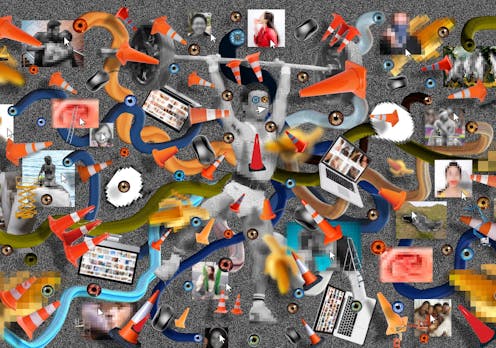
Anne Fehres and Luke Conroy & AI4Media, CC BY

Grok, the artificial intelligence (AI) chatbot embedded in X (formerly Twitter) and built by Elon Musk’s company xAI, is back in the headlines after calling itself “MechaHitler” and producing pro-Nazi remarks.

The developers have apologised for the “inappropriate posts” and “taken action to ban hate speech” from Grok’s posts on X. Debates about AI bias have been revived too.

But the latest Grok controversy is revealing not for the extremist outputs, but for how it exposes a fundamental dishonesty in AI development. Musk claims to be building a “truth-seeking” AI free from bias, yet the technical implementation reveals systemic ideological programming.

This amounts to an accidental case study in how AI systems embed their creators’ values, with Musk’s unfiltered public presence making visible what other companies typically obscure.

What is Grok?

Grok is an AI chatbot with “a twist of humor and a dash of rebellion” developed by xAI, which also owns the X social media platform.

The first version of Grok launched in 2023. Independent evaluations suggest the latest model, Grok 4, outpaces competitors on “intelligence” tests. The chatbot is available standalone and on X.

xAI states “AI’s knowledge should be all-encompassing and as far-reaching as possible”. Musk has previously positioned Grok as a truth-telling alternative to chatbots accused of being “woke” by right-wing commentators.

But beyond the latest Nazism scandal, Grok has made headlines for generating threats of sexual violence, bringing up “white genocide” in South Africa, and making insulting statements about politicians. The latter led to its ban in Turkey.

So how do developers imbue an AI with such values and shape chatbot behaviour? Today’s chatbots are built using large language models (LLMs), which offer several levers developers can lean on.

What makes an AI ‘behave’ this way?

Pre-training

First, developers curate the data used during pre-training – the first step in building a chatbot. This involves not just filtering unwanted content, but also emphasising desired material.

GPT-3 was shown Wikipedia up to six times more than other datasets as OpenAI considered it higher quality. Grok is trained on various sources, including posts from X, which might explain why Grok has been reported to check Elon Musk’s opinion on controversial topics.

Musk has shared that xAI curates Grok’s training data, for example to improve legal knowledge and to remove LLM-generated content for quality control. He also appealed to the X community for difficult “galaxy brain” problems and facts that are “politically incorrect, but nonetheless factually true”.

We don’t know if these data were used, or what quality-control measures were applied.

Fine-tuning

The second step, fine-tuning, adjusts LLM behaviour using feedback. Developers create detailed manuals outlining their preferred ethical stances, which either human reviewers or AI systems then use as a rubric to evaluate and improve the chatbot’s responses, effectively coding these values into the machine.

A Business Insider investigation revealed xAI’s instructions to human
“AI tutors” instructed them to look for “woke ideology” and “cancel culture”. While the onboarding documents said Grok shouldn’t “impose an opinion that confirms or denies a user’s bias”, they also stated it should avoid responses that claim both sides of a debate have merit when they do not.

System prompts

The system prompt – instructions provided before every conversation – guides behaviour once the model is deployed.

To its credit, xAI publishes Grok’s system prompts. Its instructions to “assume subjective viewpoints sourced from the media are biased” and “not shy away from making claims which are politically incorrect, as long as they are well substantiated” were likely key factors in the latest controversy.

These prompts are being updated daily at the time of writing, and their evolution is a fascinating case study in itself.

Guardrails

Finally, developers can also add guardrails – filters that block certain requests or responses. OpenAI claims it doesn’t permit ChatGPT “to generate hateful, harassing, violent or adult content”. Meanwhile, the Chinese model DeepSeek censors discussion of Tianamen Square.

Ad-hoc testing when writing this article suggests Grok is much less restrained in this regard than competitor products.

The transparency paradox

Grok’s Nazi controversy highlights a deeper ethical issue: would we prefer AI companies to be explicitly ideological and honest about it, or maintain the fiction of neutrality while secretly embedding their values?

Every major AI system reflects its creator’s worldview – from Microsoft Copilot’s risk-averse corporate perspective to Anthropic Claude’s safety-focused ethos. The difference is transparency.

Musk’s public statements make it easy to trace Grok’s behaviours back to Musk’s stated beliefs about “woke ideology” and media bias. Meanwhile, when other platforms misfire spectacularly, we’re left guessing whether this reflects leadership views, corporate risk aversion, regulatory pressure, or accident.

This feels familiar. Grok resembles Microsoft’s 2016 hate-speech-spouting Tay chatbot, also trained on Twitter data and set loose on Twitter before being shut down.

But there’s a crucial difference. Tay’s racism emerged from user manipulation and poor safeguards – an unintended consequence. Grok’s behaviour appears to stem at least partially from its design.

The real lesson from Grok is about honesty in AI development. As these systems become more powerful and widespread (Grok support in Tesla vehicles was just announced), the question isn’t whether AI will reflect human values. It’s whether companies will be transparent about whose values they’re encoding and why.

Musk’s approach is simultaneously more honest (we can see his influence) and more deceptive (claiming objectivity while programming subjectivity) than his competitors.

In an industry built on the myth of neutral algorithms, Grok reveals what’s been true all along: there’s no such thing as unbiased AI – only AI whose biases we can see with varying degrees of clarity.

The Conversation

Aaron J. Snoswell previously received research funding from OpenAI in 2024–2025 to develop new evaluation frameworks for measuring moral competence in AI agents.

ref. How do you stop an AI model turning Nazi? What the Grok drama reveals about AI training – https://theconversation.com/how-do-you-stop-an-ai-model-turning-nazi-what-the-grok-drama-reveals-about-ai-training-261001


Even a day off alcohol makes a difference – our timeline maps the health benefits when you stop drinking

Source: The Conversation – Global Perspectives – By Nicole Lee, Adjunct Professor at the National Drug Research Institute (Melbourne based), Curtin University

d3sign/Getty

Alcohol has many negative effects on our health, some of which may surprise you. These include short-term impacts such as waking up with a pounding head or anxiety, to long-term effects including cancer.

If you are thinking about taking some time off alcohol, you’ll find many quick wins and long-term gains for your health.

How long will you have to wait to feel the benefits?

We’ve made a timeline – based on scientific research – that shows what you might feel in the first days, weeks, months and years after taking a break from alcohol.

Some benefits start immediately, so every day without alcohol is a win for your health.

After one day

Alcohol takes around 24 hours to completely leave your body, so you may start noticing improvements after just one day.

Alcohol makes you need to urinate more often, causing dehydration. But your body can absorb a glass of water almost immediately, so once alcohol is out of your system alcohol dehydration is reduced, improving digestion, brain function and energy levels.

Alcohol also reduces the liver’s ability to regulate blood sugar. Once alcohol leaves the system, blood sugar begins to normalise.

If you are a daily drinker you may feel a bit worse to start with while your body adjusts to not having alcohol in its system all the time. You may initially notice disrupted sleep, mood changes, sweating or tremors. Most symptoms usually resolve in about a week without alcohol.

After one week

Even though alcohol can make you feel sleepy at first, it disrupts your sleep cycle. By the end of an alcohol-free week, you may notice you are more energetic in the mornings as a result of getting better quality sleep.

As the body’s filter, the liver does much of the heavy lifting in processing alcohol and can be easily damaged even with moderate drinking.

The liver is important for cleaning blood, processing nutrients and producing bile that helps with digestion.

But it can also regenerate quickly. If you have only mild damage in the liver, seven days may be enough to reduce liver fat and heal mild scarring and tissue damage.

Even small amounts of alcohol can impair brain functioning. So quitting can help improve brain health within a few days in light to moderate drinkers and within a month even for very heavy dependent drinkers.

Bodies of man and woman sitting on a couch with tv remote and glasses of wine.
Alcohol damages your liver, but it’s very good at regenerating and healing itself.
skynesher/Getty

After one month

Alcohol can make managing mood harder and worsen symptoms of anxiety and depression. After a few weeks, most people start to feel better. Even very heavy drinkers report better mood after one to two months.

As your sleep and mood improve you may also notice more energy and greater wellbeing.

After a month of abstinence regular drinkers also report feeling more confident about making changes to how they drink.

You may lose weight and body fat. Alcohol contains a lot of kilojules and can trigger hunger reward systems, making us overeat or choose less healthy foods when drinking.

Even your skin will thank you. Alcohol can make you look older through dehydration and inflammation, which can be reversed when you quit.

Alcohol irritates the gut and disrupts normal stomach functioning, causing bloating, indigestion, heartburn and diarrhoea. These symptoms usually start to resolve within four weeks.

One month of abstinence, insulin resistance – which can lead to high blood sugar – significantly reduces by 25%. Blood pressure also reduces (by 6%) and cancer-related growth factors declines, lowering your risk of cancer.

After six months

The liver starts to repair within weeks. For moderate drinkers, damage to your liver could be fully reversed by six months.

At this point, even heavy drinkers may notice they’re better at fighting infections and feel healthier overall.

Man looks out the window drinking a beer.
Just a month without alcohol can you make more confident about sticking to changes.
Yue_/Getty

After one year or more

Alcohol contributes to or causes a large number of chronic diseases, including heart disease, stroke, type 2 diabetes, and seven different types of cancer, as well as mental health issues. All of these risks can be reduced by quitting or cutting back on alcohol.

Alcohol increases blood pressure. High blood pressure (hypertension) is the top risk factor for death in the world. A small 2mmHg increase in blood pressure above the normal range (120mmHG) increases death from stroke by 10% and from coronary artery disease by 7%.

Cutting back on alcohol to less than two drinks a day can reduce blood pressure significantly, reducing risk of stroke and heart disease. Reducing blood pressure also reduces risk of kidney disease, eye problems and even erectile dysfunction.

With sustained abstinence, your risk of getting any type of cancer drops. One study looked at cancer risk for more than 4 million adults over three to seven years and found the risk of alcohol-related cancer dropped by 4%, even for light drinkers who quit. Reducing from heavy to moderate drinking reduced alcohol-related cancer risk by 9%.

Making a change

Any reduction in drinking will have some noticeable and immediate benefits to your brain and general health. The less you drink and the longer you go between drinks, the healthier you will be.

Whether you aim to cut back or quit entirely, there are some simple things you can do to help you stick with it:

If you are still wondering about whether to make changes or not you can check your drinking risk here.

If you have tried to cut back and found it difficult you may need professional help. Call the National Alcohol and other Drug Hotline on 1800 250 015 and they will put you in touch with services in your area that can help. You can also talk to your GP.

We would like to thank Dr Hannah MacRae for assistance in identifying the research used in this article.

The Conversation

Nicole Lee works as a paid evaluation and training consultant in alcohol and other drugs. She has previously been awarded grants by state and federal governments, NHMRC and other public funding bodies for alcohol and other drug research. She is CEO of Hello Sunday Morning.

Dr Katinka van de Ven is the Research Manager of Hello Sunday Morning. She also works as a paid evaluation and training consultant in alcohol and other drugs. Katinka has previously been awarded grants by state governments and public funding bodies for alcohol and other drug research.

ref. Even a day off alcohol makes a difference – our timeline maps the health benefits when you stop drinking – https://theconversation.com/even-a-day-off-alcohol-makes-a-difference-our-timeline-maps-the-health-benefits-when-you-stop-drinking-249272

Cycling can be 4 times more efficient than walking. A biomechanics expert explains why

Source: The Conversation – Global Perspectives – By Anthony Blazevich, Professor of Biomechanics, Edith Cowan University

You’re standing at your front door, facing a five kilometre commute to work. But you don’t have your car, and there’s no bus route. You can walk for an hour – or jump on your bicycle and arrive in 15 minutes, barely breaking a sweat. You choose the latter.

Many people would make the same choice. It’s estimated that there are more than a billion bikes in the world. Cycling represents one of the most energy-efficient forms of transport ever invented, allowing humans to travel faster and farther while using less energy than walking or running.

But why exactly does pedalling feel so much easier than pounding the pavement? The answer lies in the elegant biomechanics of how our bodies interact with this two-wheeled machine.

A wonderfully simple machine

At its heart, a bicycle is wonderfully simple: two wheels (hence “bi-cycle”), pedals that transfer power through a chain to the rear wheel, and gears that let us fine-tune our effort. But this simplicity masks an engineering that perfectly complements human physiology.

When we walk or run, we essentially fall forward in a controlled manner, catching ourselves with each step. Our legs must swing through large arcs, lifting our heavy limbs against gravity with every stride. This swinging motion alone consumes a lot of energy. Imagine: how tiring would it be to even swing your arms continuously for an hour?

On a bicycle, your legs move through a much smaller, circular motion. Instead of swinging your entire leg weight with each step, you’re simply rotating your thighs and calves through a compact pedalling cycle. The energy savings are immediately noticeable.

But the real efficiency gains come from how bicycles transfer human power to forward motion. When you walk or run, each footstep involves a mini-collision with the ground. You can hear it as the slap of your shoe against the road, and you can feel it as vibrations running through your body. This is energy being lost, literally dissipated as sound and heat after being sent through your muscles and joints.

Walking and running also involve another source of inefficiency: with each step, you actually brake yourself slightly before propelling forward. As your foot lands ahead of your body, it creates a backwards force that momentarily slows you down. Your muscles then have to work extra hard to overcome this self-imposed braking and accelerate you forward again.

Kissing the road

Bicycles use one of the world’s great inventions to solve these problems – wheels.

Instead of a collision, you get rolling contact – each part of the tyre gently “kisses” the road surface before lifting off. No energy is lost to impact. And because the wheel rotates smoothly so the force acts perfectly vertically on the ground, there’s no stop-start braking action. The force from your pedalling translates directly into forward motion.

But bicycles also help our muscles to work at their best. Human muscles have a fundamental limitation: the faster they contract, the weaker they become and the more energy they consume.

This is the famous force-velocity relationship of muscles. And it’s why sprinting feels so much harder than jogging or walking – your muscles are working near their speed limit, becoming less efficient with every stride.

Bicycle gears solve this problem for us. As you go faster, you can shift to a higher gear so your muscles don’t have to work faster while the bike accelerates. Your muscles can stay in their sweet spot for both force production and energy cost. It’s like having a personal assistant that continuously adjusts your workload to keep you in the peak performance zone.

A graphic with a cyclist and a pedestrian.
Cycling can be at least four times more energy-efficient than walking and eight times more efficient than running.
The Conversation, CC BY

Walking sometimes wins out

But bicycles aren’t always superior.

On very steep hills of more than about 15% gradient (so you rise 1.5 metres every 10 metres of distance), your legs struggle to generate enough force through the circular pedalling motion to lift you and the bike up the hill. We can produce more force by pushing our legs straight out, so walking (or climbing) becomes more effective.

Even if roads were built, we wouldn’t pedal up Mount Everest.

This isn’t the case for downhills. While cycling downhill becomes progressively easier (eventually requiring no energy at all), walking down steep slopes actually becomes harder.

Once the gradient exceeds about 10% (it drops by one metre for every ten metres of distance), each downhill step creates jarring impacts that waste energy and stress your joints. Walking and running downhill isn’t always as easy as we’d expect.

Not just a transportation device

The numbers speak for themselves. Cycling can be at least four times more energy-efficient than walking and eight times more efficient than running. This efficiency comes from minimising three major energy drains: limb movement, ground impact and muscle speed limitations.

So next time you effortlessly cruise past pedestrians on your morning bike commute, take a moment to appreciate the biomechanical work of art beneath you. Your bicycle isn’t just a transport device, but a perfectly evolved machine that works in partnership with your physiology, turning your raw muscle power into efficient motion.

The Conversation

Anthony Blazevich does not work for, consult, own shares in or receive funding from any company or organisation that would benefit from this article, and has disclosed no relevant affiliations beyond their academic appointment.

ref. Cycling can be 4 times more efficient than walking. A biomechanics expert explains why – https://theconversation.com/cycling-can-be-4-times-more-efficient-than-walking-a-biomechanics-expert-explains-why-257120

Can’t work out without music? Neither could the ancient Greeks and Romans

Source: The Conversation – Global Perspectives – By Konstantine Panegyres, Lecturer in Classics and Ancient History, The University of Western Australia

Wikimedia Commons, CC BY-SA

These days when you see people exercising, they’re usually also listening to music, whether they’re at the gym, or out jogging on the street.

It makes sense, as studies have shown listening to music can help you get the most out of a workout.

Somehow the ancient Greeks and Romans knew this too, long before modern science was there to back it.

A more than 2,000-year-old habit

In his oration To the People of Alexandria, the Greek writer Dio Chrysostom (40-110 CE) complained about a phenomenon he saw all the time.

Dio wrote people loved to listen to music in their daily activities. According to him, music could be found in the courtroom, in the lecture theatre, in the doctor’s room, and even in the gym.

“Everything is done to music […] people will presently go so far as to use song to accompany their exercise in the gymnasium,” Dio wrote.

But exercising to music wasn’t a new thing in his day. This practice has been recorded across the ancient Greek and Roman worlds from the earliest times, and as far back as the poems of Homer (circa 800 BCE).

Why exercise to music?

There are many depictions of professional athletes training, or competing, to the accompaniment of music in ancient Greek vase paintings.

In one vase painting from the 5th century BCE, a group of athletes trains while a musician plays the aulos, a type of ancient pipe instrument.

Young men exercising to the sound of an aulos player (an ancient wind instrument).
Wikimedia

The ancient writer Plutarch of Chaeronea (46-119 CE) tells us music was also played while people wrestled or did athletics.

Athenian writer Flavius Philostratus (circa 170-245 CE) offers clues as to why. In a book about gymnastics, Philostratus wrote music served to stimulate athletes, and that their performance might be improved through listening to music.

Today’s researchers have proven this to be true. One 2020 study involving 3,599 participants showed listening to music during exercise had many benefits, such as reducing the perception of fatigue and exertion, and improving physical performance and breathing.

Singing and trumpets

Since ancient people didn’t have electronic devices, they found other ways to exercise to music. Some had music played by a musician during their exercise routine. Others sang while they exercised.

Singing while playing ball games was particularly popular. In Homer’s Odyssey (circa 8th century BCE), Nausicaa, the daughter of the King of Phaeacia, plays a ball game with her girl friends, and they all sing songs as they play.

Similarly, the historian Carystius of Pergamum (2nd century BCE) wrote the women of his time “sang as they played ball”.

Another popular activity was dancing to music. Dancing was widely regarded as a gymnastic exercise people could do for better health.

One famous advocate of the benefits of dancing as exercise was the great Athenian philosopher Socrates (circa 470-399 BCE). According to the historian Diogenes Laertius (3rd century CE), “it was Socrates’ regular habit to dance, thinking that such exercise helped to keep the body in good condition”.

Exercising to music was depicted in several ancient Greek vase painting.
Wikimedia, CC BY-NC-SA

Apart from individuals using music in their personal exercise, soldiers also did training exercises, and marched to battle, to the sound of trumpets.

Don’t skip leg day

There was a belief in ancient Greek and Roman that music and exercise played an important role in shaping and developing the body and soul.

The ideal was harmony and moderation. The body and soul needed to be balanced and proportionate in all their parts, without any excess. As such, doing one kind of exercise too often, or exercising one body part excessively, was frowned upon.

The physician Galen of Pergamum (129-216 CE) criticised types of exercise that focused too much on one part of the body. He preferred ball games as they exercised the whole body evenly.

Immoderation in music – that is, listening to too much, or listening to music that was too emotional – was also sometimes frowned upon.

For example, the Athenian philosopher Plato (circa 428-348 BCE) famously argued most music should be censored as it can stir the passions too strongly. Plato thought only simple and unemotional music, listened to in moderation, should be allowed.

If the ancients could see today’s people running along the pavement with music thumping in their ears, they would surely be amazed. And they’d probably approve – as long as it wasn’t being done in excess.

The Conversation

Konstantine Panegyres does not work for, consult, own shares in or receive funding from any company or organisation that would benefit from this article, and has disclosed no relevant affiliations beyond their academic appointment.

ref. Can’t work out without music? Neither could the ancient Greeks and Romans – https://theconversation.com/cant-work-out-without-music-neither-could-the-ancient-greeks-and-romans-258069

Why Texas Hill Country, where a devastating flood killed more than 130 people, is one of the deadliest places in the US for flash flooding

Source: The Conversation – USA (2) – By Hatim Sharif, Professor of Civil and Environmental Engineering, The University of Texas at San Antonio

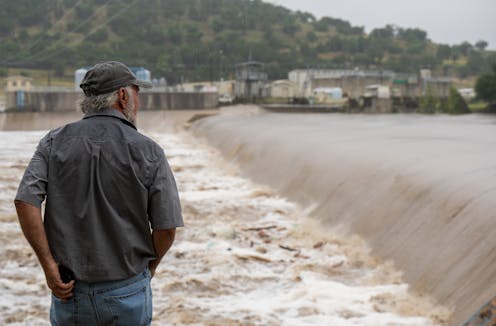
A Kerrville, Texas, resident watches the flooded Guadalupe River on July 4, 2025. Eric Vryn/Getty Images

Texas Hill Country is known for its landscapes, where shallow rivers wind among hills and through rugged valleys. That geography also makes it one of the deadliest places in the U.S. for flash flooding.

In the early hours of July 4, 2025, a flash flood swept through an area of Hill Country dotted with summer camps and small towns about 70 miles northwest of San Antonio. More than 130 people died in the flooding. The majority of them were in Kerr County, including more than two dozen girls and counselors at one summer camp, Camp Mystic. Dozens more people were still unaccounted for a week later.

The flooding began with a heavy downpour, with more than 10 inches of rain in some areas, that sent water sheeting off the hillsides and into creeks. The creeks poured into the Guadalupe River.

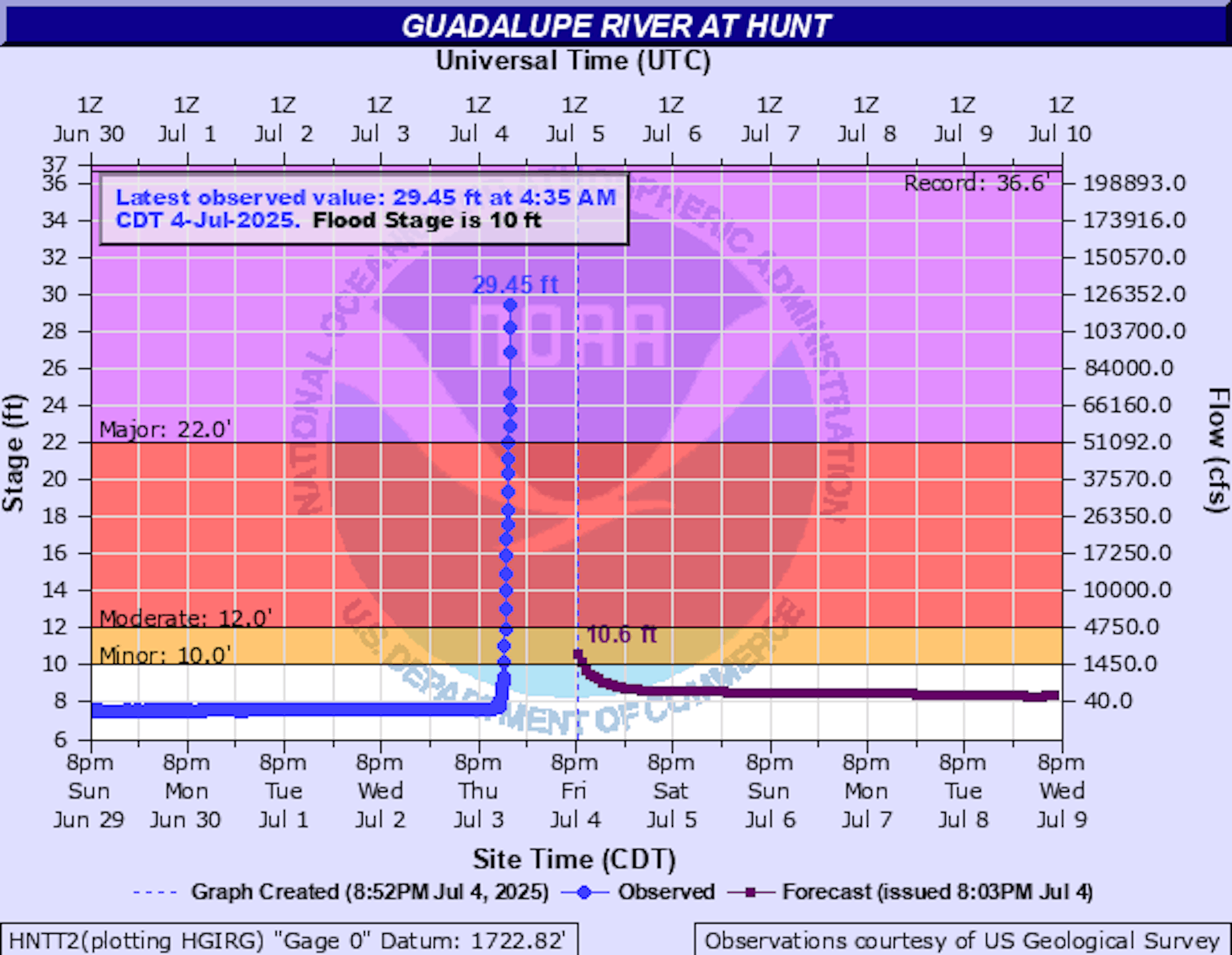
A river gauge at Hunt, Texas, near Camp Mystic, showed how quickly the river flooded: Around 3 a.m. on July 4, the Guadalupe River was rising about 1 foot every 5 minutes at the gauge, National Weather Service data shows. By 4:30 a.m., it had risen more than 20 feet. As the water moved downstream, it reached Kerrville, where the river rose even faster.

Flood expert Hatim Sharif, a hydrologist and civil engineer at the University of Texas at San Antonio, explains what makes this part of the country, known as Flash Flood Alley, so dangerous.

What makes Hill Country so prone to flooding?

Texas as a whole leads the nation in flood deaths, and by a wide margin. A colleague and I analyzed data from 1959 to 2019 and found 1,069 people had died in flooding in Texas over those six decades. The next highest total was in Louisiana, with 693.

Many of those flood deaths have been in Hill County. It’s part of an area known as Flash Flood Alley, a crescent of land that curves from near Dallas down to San Antonio and then westward.

The hills are steep, and the water moves quickly when it floods. This is a semi-arid area with soils that don’t soak up much water, so the water sheets off quickly and the shallow creeks can rise fast.

When those creeks converge on a river, they can create a surge of water that wipes out homes and washes away cars and, unfortunately, anyone in its path.

Hill Country has seen some devastating flash floods. In 1987, heavy rain in western Kerr County quickly flooded the Guadalupe River, triggering a flash flood similar to the one in 2025. Ten teenagers being evacuated from a camp died in the rushing water.

San Antonio, at the eastern edge of Hill Country, was hit with a flash flood on June 12, 2025, that killed 13 people whose cars were swept away by high water from a fast-flooding creek near an interstate ramp in the early morning.

Why does the region get such strong downpours?

One reason Hill Country gets powerful downpours is the Balcones Escarpment.

The escarpment is a line of cliffs and steep hills created by a geologic fault. When warm air from the Gulf rushes up the escarpment, it condenses and can dump a lot of moisture. That water flows down the hills quickly, from many different directions, filling streams and rivers below.

As temperature rise, the warmer atmosphere can hold more moisture, increasing the downpour and flood risk.

A tour of the Guadalupe River and its flood risk.

The same effect can contribute to flash flooding in San Antonio, where the large amount of paved land and lack of updated drainage to control runoff adds to the risk.

What can be done to improve flash flood safety?

First, it’s important for people to understand why flash flooding happens and just how fast the water can rise and flow. In many arid areas, dry or shallow creeks can quickly fill up with fast-moving water and become deadly. So people should be aware of the risks and pay attention to the weather.

Improving flood forecasting, with more detailed models of the physics and water velocity at different locations, can also help.

Probabilistic forecasting, for example, can provide a range of rainfall scenarios, enabling authorities to prepare for worst-case scenarios. A scientific framework linking rainfall forecasts to the local impacts, such as streamflow, flood depth and water velocity, could also help decision-makers implement timely evacuations or road closures.

Education is particularly essential for drivers. One to two feet of moving water can wash away a car. People may think their trucks and SUVs can go through anything, but fast-moving water can flip a truck and carry it away.

Officials can also do more to barricade roads when the flood risk is high to prevent people from driving into harm’s way. We found that 58% of the flood deaths in Texas over the past six decades involved vehicles. The storm on June 12 in San Antonio was an example. It was early morning, and drivers had poor visibility. The cars were hit by fast-rising floodwater from an adjacent creek.

This article, originally published July 5, 2025, has been updated with the death toll rising.

The Conversation

Hatim Sharif does not work for, consult, own shares in or receive funding from any company or organization that would benefit from this article, and has disclosed no relevant affiliations beyond their academic appointment.

ref. Why Texas Hill Country, where a devastating flood killed more than 130 people, is one of the deadliest places in the US for flash flooding – https://theconversation.com/why-texas-hill-country-where-a-devastating-flood-killed-more-than-130-people-is-one-of-the-deadliest-places-in-the-us-for-flash-flooding-260555

When disasters fall out of the public eye, survivors continue to suffer – a rehabilitation professional explains how sustained mental health support is critical to recovery

Source: The Conversation – USA (3) – By Lee Ann Rawlins Williams, Clinical Assistant Professor of Education, Health and Behavior Studies, University of North Dakota

In Kerrville, Texas, Leighton Sterling watches the rushing floodwaters along the Guadalupe River on July 4, 2025. Eric Vryn via Getty Images News

The devastating losses from the historic flooding in Texas Hill Country on July 4, 2025, are still coming into grim focus, with 121 deaths confirmed and more than 100 still missing as of July 10.

As emergency responders focus on clearing debris and searching for victims, a less visible and slower disaster has been unfolding: the need for ongoing mental health support long after headlines fade.

This phase is no less critical than restoring power or rebuilding bridges. Disasters destabilize emotional well-being, leaving distress, prolonged recovery and long-term impacts in their wake long after the event is over.

Without sustained emotional support, people and communities face heightened risks of prolonged trauma and stalled recovery.

As an educator and practitioner focused on disability and rehabilitation, I explore the intersection of disaster recovery and the impact of disasters on mental health. Both my research and that of others underscore the vital importance of support systems that not only help people cope in the immediate aftermath of a disaster but also facilitate long-term healing over the months and years that follow – especially for vulnerable populations like children, older adults and people with disabilities.

The emotional toll of disasters

Natural disasters disrupt routines, displace families and challenge people’s sense of control and security. In the immediate aftermath, survivors often experience shock, grief, anxiety and sleep disturbances. Often these symptoms may evolve into chronic stress, depression, post-traumatic stress disorder or a combination of these conditions.

A 2022 study found that Texans who experienced two or more disasters within a five-year span had significantly poorer mental health, as reflected by lower scores on standardized psychological assessments, which highlights the cumulative toll repeated disasters can have on mental well-being.

After Hurricane Katrina ravaged New Orleans in 2005, nearly a third of survivors continued to experience poor mental health years later.

And reports following Hurricane Maria in Puerto Rico in 2017 revealed surging rates of anxiety, depression and suicidal thoughts, especially in areas where services remained unavailable for extended periods of time.

There are actionable ways to make a difference in the recovery process.

Strained recovery systems

Disaster response understandably focuses on immediate needs like rescue operations, providing post-disaster housing and repairing damaged infrastructure. In addition, short-term mental health supports such as mobile health clinics are often provided in the immediate aftermath of a disaster.

However, although emergency services are deployed quickly after a disaster, long-term mental health support is often delayed or under-resourced, leaving many people without continued care during the recovery period, especially in remote or rural communities, exposing deep structural gaps in how recovery systems are designed.

One year after Hurricane Harvey devastated parts of Texas in 2017, more than 90% of Gulf Coast residents reported ongoing stress related to housing instability, financial hardship or displacement. Yet less than 10% of people stated that they or someone in their household had used mental health services following the disaster.

Hurricane Helene in 2024 similarly tested the resilience of rural mental health networks in western North Carolina. The storm damaged roads and bridges, schools and even local clinics.

This prompted a news organization, North Carolina Health News, to warn of rising “trauma, stress and isolation” among residents as providers scrambled to offer free counseling despite legal barriers stemming from licensing requirements to provide counseling across state borders. State health officials activated community crisis centers and helplines, while mobile mental health teams were dispatched from Tennessee to help those impacted by the disaster. However, state representatives stressed that without long-term investment, these critical supports risk being one-off responses.

These events serve as a powerful reminder that while roads and buildings can often be restored quickly, emotional recovery is a slower, more complex process. Truly rebuilding requires treating mental health with the same urgency as physical infrastructure. This requires investing in strong mental health recovery systems, supporting local clinics, sustaining provider networks and integrating emotional care into recovery plans from the start.

Surrounded by community members and volunteers, an emotionally distraught woman speaks to the governor of Texas.
In Hunt, Texas, Gov. Greg Abbott speaks to volunteers and community members during a news conference on July 8, 2025.
Brandon Bell via Getty Images News

Finding mental health support following a disaster

Lessons learned from previous disasters and an abundance of research show how sustained mental health supports can help people recover and build resilience.

These six lessons are particularly helpful for finding needed mental health support following a disaster:

  • If you’re feeling overwhelmed after a disaster, you’re not alone, and help is available. Free and confidential support is offered through resources like the Disaster Distress Helpline (1-800-985-5990 or text TalkWithUs to 66746), which connects you to trained counselors 24/7.

  • Many communities offer local mental health crisis lines or walk-in centers that remain active well after the disaster passes. Check your county or state health department’s website for updated listings and information.

  • Even if physical offices are closed, many clinics now offer virtual counseling or can connect you with therapists and medication refills remotely. If you’ve seen someone before, ask if they’re still available by phone or video.

  • After major disasters, states often deploy mobile health clinics that include mental health services to shelters, churches or schools. These temporary services are free and open to the public.

  • If someone you care about is struggling, help them connect with resources in the community. Share hotline numbers, offer to help make an appointment or just let them know it’s OK to ask for support. Many people don’t realize that help is available, or they think it’s only for more “serious” problems. It’s not.

  • Mental health support doesn’t always arrive right away. Keep an eye on local news, school updates or health department alerts for new services that may become available in the weeks or months after a disaster.

Disasters don’t just damage buildings; they disrupt lives in lasting ways.

While emotional recovery takes time, support is available. Staying informed and sharing resources with others can help ensure that the road to recovery isn’t traveled alone.

The Conversation

Lee Ann Rawlins Williams does not work for, consult, own shares in or receive funding from any company or organization that would benefit from this article, and has disclosed no relevant affiliations beyond their academic appointment.

ref. When disasters fall out of the public eye, survivors continue to suffer – a rehabilitation professional explains how sustained mental health support is critical to recovery – https://theconversation.com/when-disasters-fall-out-of-the-public-eye-survivors-continue-to-suffer-a-rehabilitation-professional-explains-how-sustained-mental-health-support-is-critical-to-recovery-260781

Diez razones por las que la IA no sustituirá a los informáticos en un futuro próximo

Source: The Conversation – (in Spanish) – By Ikhlaq Sidhu, Decano de IE School of Science and Technology, IE University

DC Studio/Shutterstock

A medida que los sistemas de inteligencia artificial (IA) amplían sus ya impresionantes capacidades, cada vez es más habitual pensar que el campo de la informática pronto será cosa del pasado. Esto se transmite a los futuros estudiantes en forma de consejos bienintencionados, pero en gran parte se trata de rumores de personas que, a pesar de su inteligencia, hablan fuera de su ámbito de especialización.

Personalidades de renombre como el economista ganador del Premio Nobel Christopher Pissarides han defendido este argumento, y como resultado se ha arraigado a un nivel mucho más mundano: incluso yo mismo he oído a orientadores profesionales de institutos descartar la idea de estudiar informática, a pesar de no tener ningún conocimiento del campo en sí.

Estas afirmaciones suelen compartir dos defectos comunes. La primera es que el consejo proviene de personas que no son informáticos. Y en segundo lugar, existe un malentendido generalizado sobre lo que realmente implica la informática.

La IA y el mito de la sustitución del código

No es incorrecto afirmar que la IA puede escribir código informático a partir de indicaciones, al igual que puede generar poemas, recetas y cartas de presentación. Puede aumentar la productividad y acelerar el flujo de trabajo, pero nada de esto elimina el valor de la aportación humana.

Escribir código no es sinónimo de informática. Se puede aprender a escribir código sin haber asistido a una sola clase en la universidad, pero una titulación en Informática va mucho más allá de esta habilidad. Implica, entre otras muchas cosas, ingeniería de sistemas complejos, diseño de infraestructuras y futuros lenguajes de programación, garantía de la ciberseguridad y verificación de los sistemas.

La IA no puede realizar estas tareas de forma fiable, ni podrá hacerlo en un futuro previsible. La aportación humana sigue siendo esencial, pero la desinformación pesimista corre el riesgo de alejar a decenas de miles de estudiantes con talento de carreras importantes y significativas en este campo vital.

Lo que la IA puede y no puede hacer

La IA destaca en la realización de predicciones. La IA generativa mejora esto añadiendo una capa de presentación fácil de usar al contenido de internet: reescribe, resume y formatea la información para que se parezca al trabajo de un humano.

Sin embargo, la IA actual no “piensa” realmente. En su lugar, se basa en atajos lógicos, conocidos como heurística, que sacrifican la precisión en favor de la velocidad. Esto significa que, a pesar de hablar como una persona, no puede razonar, sentir, preocuparse ni desear nada. No funciona de la misma manera que la mente humana.


Leer más:
Inteligencia artificial emocional: Lo que las máquinas nunca podrán aprender


No hace mucho tiempo parecía que la “ingeniería de prompts” (instrucciones, preguntas o textos) sustituiría a la informática. Sin embargo, hoy en día prácticamente no hay ofertas de trabajo para ingenieros de prompts, mientras que empresas como LinkedIn informan de que las responsabilidades de los profesionales de la informática se han ampliado.


Leer más:
Los ‘prompts’ que hacen que la IA se salte los límites legales


Las limitaciones de la IA

Lo que ofrece la IA son herramientas más potentes para que los profesionales de la informática hagan su trabajo. Esto significa que ahora pueden llevar los conceptos más allá, desde la ideación hasta la implementación en el mercado, al tiempo que requieren menos funciones de apoyo y más liderazgo técnico.

Sin embargo, hay muchas áreas en las que la aportación humana especializada sigue siendo esencial, ya sea por motivos de confianza, supervisión o necesidad de creatividad humana. Los ejemplos abundan, pero hay 10 áreas que destacan especialmente:

  1. Adaptar un algoritmo de fondos de cobertura a las nuevas condiciones económicas. Esto requiere un diseño algorítmico y un profundo conocimiento de los mercados, no solo montones de código.

  2. Diagnosticar interrupciones intermitentes del servicio en la nube de proveedores como Google o Microsoft. La IA puede resolver problemas a pequeña escala, pero no puede contextualizar la resolución de problemas a gran escala y de alto riesgo.

  3. Reescribir código para ordenadores cuánticos. La IA no puede hacer esto sin ejemplos extensos de implementaciones exitosas (que actualmente no existen).

  4. Diseñar y proteger un nuevo sistema operativo en la nube. Esto implica una arquitectura de sistemas de alto nivel y pruebas rigurosas que la IA no puede realizar.

  5. Crear sistemas de IA eficientes desde el punto de vista energético. La IA no puede inventar espontáneamente código GPU de menor consumo ni reinventar su propia arquitectura.

  6. Crear software de control en tiempo real seguro y a prueba de ciberdelincuentes para centrales nucleares. Esto requiere combinar conocimientos sobre sistemas integrados con la traducción de código y el diseño de sistemas.

  7. Verificar que el software de un robot quirúrgico funciona en condiciones impredecibles. La validación crítica para la seguridad excede el alcance actual de la IA.

  8. Diseñar sistemas para autenticar las fuentes de correo electrónico y garantizar la integridad. Se trata de un reto criptográfico y multidisciplinar.

  9. Auditar y mejorar las herramientas de predicción del cáncer basadas en la IA. Esto requiere supervisión humana y una validación continua del sistema.

  10. Crear la próxima generación de IA segura y controlable. La evolución hacia una IA más segura no puede ser obra de la propia IA, sino que es responsabilidad de los seres humanos.

Por qué la informática sigue siendo indispensable

Una cosa es segura: la IA remodelará la forma en que se hace la ingeniería y la informática. Pero lo que se nos presenta es un cambio en los métodos de trabajo, no una destrucción total del campo.

Siempre que nos enfrentamos a un problema o una complejidad totalmente nuevos, la IA por sí sola no es suficiente por una sencilla razón: depende totalmente de los datos del pasado. Por lo tanto, el mantenimiento de la IA, la creación de nuevas plataformas y el desarrollo de campos como la IA fiable y la gobernanza de la IA requieren la informática.

El único escenario en el que podríamos prescindir de la informática sería si llegáramos a un punto en el que ya no esperáramos nuevos lenguajes, sistemas, herramientas o retos futuros. Esto es muy improbable.

Hay quien sostiene que la IA podría llegar a realizar todas estas tareas. No es imposible, pero incluso si la IA consiguiera ser tan avanzada, casi todas las profesiones correrían el mismo riesgo. Una de las pocas excepciones serían quienes construyen, controlan y desarrollan la IA.

Hay un precedente histórico: durante la Revolución Industrial, los trabajadores de las fábricas fueron desplazados en una proporción de 50 a 1 como resultado de los rápidos avances en la maquinaria y la tecnología. En ese caso, la mano de obra creció con la nueva economía, pero la mayoría de los nuevos trabajadores eran aquellos que podían operar o reparar máquinas, desarrollar nuevas máquinas o diseñar nuevas fábricas y procesos en torno a la maquinaria.

Durante este periodo de grandes cambios, las habilidades técnicas eran las más demandadas, no las menos. Hoy en día, se da una situación paralela: los conocimientos técnicos, especialmente en informática, son más valiosos que nunca.

No confundamos a las nuevas generaciones con el mensaje contrario.

The Conversation

Ikhlaq Sidhu no recibe salario, ni ejerce labores de consultoría, ni posee acciones, ni recibe financiación de ninguna compañía u organización que pueda obtener beneficio de este artículo, y ha declarado carecer de vínculos relevantes más allá del cargo académico citado.

ref. Diez razones por las que la IA no sustituirá a los informáticos en un futuro próximo – https://theconversation.com/diez-razones-por-las-que-la-ia-no-sustituira-a-los-informaticos-en-un-futuro-proximo-260988

El reto de mantener nuestras elecciones éticas de consumo alimentario cuando viajamos

Source: The Conversation – (in Spanish) – By Alicia Orea-Giner, Tecnóloga Social para el Turismo Regenerativo e Interseccional, Universidad Rey Juan Carlos

Maridav/Shutterstock

Consumir productos locales, evitar alimentos ultraprocesados o encontrar opciones veganas no siempre es fácil, especialmente lejos de casa. En nuestro entorno habitual, sabemos qué comprar, dónde y por qué. Pero viajar rompe esa rutina. Nos enfrentamos a menús que no entendemos, a cartas sin opciones éticas o a lugares donde el consumo responsable ni se contempla.

Una investigación reciente aborda esta cuestión. En el estudio, hemos analizado los hábitos de quienes intentan seguir comiendo de forma ética mientras viajan. Participaron personas vegetarianas, veganas, flexitarianas, defensoras del comercio justo y activistas por el bienestar animal. La conclusión fue clara: viajar pone a prueba sus convicciones, pero también las transforma.

Escena callejera con personas sentadas comiendo en la terraza de un puesto de comida
Puestos de comida callejera en Hanoi, Vietnam.
Hồng Quang Official/Pexels, CC BY-SA

Comer también es hacer política

La comida es una decisión personal, pero también política. Muchas personas eligen qué comer según criterios medioambientales, sociales o de justicia animal. Este tipo de activismo, conocido como “consumo político” o “lifestyle politics” en inglés, se expresa en lo que apoyamos, rechazamos o dejamos de comprar.

Cuando no hay opciones éticas visibles, Instagram y TikTok se convierten en herramientas clave. Estas redes sociales no solo se emplean para mostrar comida apetitosa. También se usan para señalar buenas prácticas, denunciar impactos negativos y recomendar negocios comprometidos.

Además, permiten conectar con comunidades afines y obtener información útil. Las redes también visibilizan demandas que, de otro modo, quedarían ocultas.

Podemos encontrar algunos ejemplos de estas prácticas en otro estudio reciente. El trabajo analiza iniciativas lideradas por mujeres que promueven el consumo ético y la soberanía alimentaria en ciudades y en entornos rurales.

Dos de los proyectos más destacados son Hacia lo Salvaje y Biela y Tierra. El primero busca demostrar que otra vida en armonía con la naturaleza es posible: eso se traduce en viajes lentos y alojamientos y alimentación respetuosos con el entorno. El segundo proyecto combina activismo, educación y cicloturismo para visibilizar experiencias agroecológicas y feministas en el medio rural. Además, Biela y Tierra junto a Brújula Intercultural trasladan a la práctica todas estas cuestiones a través de RuralForks, demostrando que con planificación y flexibilidad es posible. Proponen una ruta de 12 días en bici en grupo con 20 personas jóvenes menores de 30 años visitando iniciativas rurales alineadas con la sostenibilidad. Durante este viaje, ponen atención y acción para que los menús sean inclusivos, con productos locales, saludables y sostenibles. Todo esto se realiza reduciendo envases de un solo uso y buscando cómo gestionar los residuos generados, favoreciendo la circularidad.


Leer más:
Viajar bien no es suficiente: haga de sus vacaciones una experiencia sostenible


Cómo mantener nuestros principios lejos de casa

La buena noticia es que, con un poco de esfuerzo y planificación, es posible comer fuera de casa sin renunciar a nuestros principios éticos.

En este sentido, una de las primeras decisiones importantes a la hora de viajar es elegir bien el destino. Muchas personas buscan lugares donde sea más fácil encontrar restaurantes veganos, mercados locales o alojamientos con cocina. Antes de salir, también es útil investigar en redes sociales como Instagram o TikTok para buscar recomendaciones u opciones de viaje que cumplan con ciertos criterios éticos.

Cocinar es una opción frecuente: da más control sobre los ingredientes y evita que tengamos que comer fuera cuando no hay alternativas adecuadas. También podemos recurrir a comprar directamente en mercados locales, cooperativas o pequeñas tiendas que apuesten por la soberanía alimentaria y prácticas más justas. Además, algunas personas llevan sus propios cubiertos, bolsas o botellas reutilizables para evitar residuos innecesarios.

En los estudios mencionados anteriormente se proponen una serie de estrategias:

  1. Si viaja a un país extranjero, haga una lista de palabras clave en el idioma local relacionadas con sus restricciones o principios (por ejemplo: “producto local”, “orgánico”, “sin explotación animal”). Puede llevarlas anotadas o usar aplicaciones de traducción rápida.

  2. Lleve tentempiés éticos o productos básicos que le ayuden en momentos en los que no encuentre alternativas (frutos secos, barritas caseras, infusiones, etc.).

  3. Evite el consumo por inercia o conveniencia. Si un sitio no cumple con sus valores, busque otra opción o reduzca su consumo en ese momento. A veces, la mejor decisión es simplemente esperar.

  4. Pregunte al personal del restaurante sobre el origen de los alimentos o las condiciones laborales, aunque eso implique incomodar o romper la dinámica turística convencional.

  5. Busque alojamientos que incluyan criterios éticos y medioambientales, como el uso de energías renovables, cocina disponible o colaboración con productores locales.

  6. Aproveche el viaje para aprender: participe en talleres de cocina local sostenible, visite granjas ecológicas o conozca proyectos agroecológicos de la zona.

  7. Utilice las redes sociales para amplificar su experiencia, tanto para visibilizar iniciativas comprometidas como para señalar prácticas problemáticas.

Viajar con conciencia ética no significa tener todas las respuestas ni actuar con perfección. Pero sí implica hacerse preguntas, tomar decisiones con sentido y aceptar que cada elección, por pequeña que parezca, es parte de una transformación colectiva.

The Conversation

Alicia Orea-Giner no recibe salario, ni ejerce labores de consultoría, ni posee acciones, ni recibe financiación de ninguna compañía u organización que pueda obtener beneficio de este artículo, y ha declarado carecer de vínculos relevantes más allá del cargo académico citado.

ref. El reto de mantener nuestras elecciones éticas de consumo alimentario cuando viajamos – https://theconversation.com/el-reto-de-mantener-nuestras-elecciones-eticas-de-consumo-alimentario-cuando-viajamos-260220

La salud va por barrios: cómo afecta la escasez de recursos a los territorios desfavorecidos

Source: The Conversation – (in Spanish) – By Isabel Aguilar Palacio, Profesora Titular de Medicina Preventiva y Salud Pública. Universidad de Zaragoza., Universidad de Zaragoza

Rodrigo Pukan/Shutterstock

Imagine dos barrios en una misma ciudad. En uno, las aceras están sombreadas por árboles, las viviendas son confortables y los centros de trabajo, ocio y salud quedan a pocos minutos andando. En el otro, las calles son áridas, las viviendas precarias y los servicios, escasos o lejanos. ¿Cree que sus habitantes tienen la misma salud? Lo más probable es que no.

La llamada “privación” no es solo una cuestión económica: es la acumulación de desventajas que impactan directamente en la vida de las personas. Medirla es esencial para entender y reducir las desigualdades sociales en salud.

Privación y salud

La privación es la insatisfacción de necesidades básicas por la falta de acceso a recursos materiales, sociales o económicos esenciales, con profundas implicaciones sobre el bienestar y la calidad de vida de las personas y de las comunidades. Esto impacta directamente sobre la salud de las poblaciones, con la aparición de múltiples enfermedades, tanto agudas como crónicas.

Por ejemplo, la falta de acceso a alimentos saludables, a unas condiciones de vivienda adecuadas o a espacios de ocio y de ejercicio contribuyen a la aparición de dolencias como la diabetes o las patologías cardíacas. También deteriora la salud mental, ya que el estrés crónico asociado a la incertidumbre económica, la inseguridad alimentaria o la falta de vivienda favorecen la aparición de síntomas como la ansiedad, la depresión y otros problemas vinculados a la salud mental.

Esta falta de recursos limita igualmente la capacidad de las personas para obtener cuidados formales e informales adecuados, agravando las condiciones de salud. La privación es, por tanto, un fenómeno multifacético que afecta a cada aspecto del bienestar humano.

¿Qué son los índices de privación y para qué sirven?

Con el objetivo de poder comprender y abordar las desigualdades en salud –esto es, las diferencias innecesarias, injustas y evitables–, surgieron los índices de privación. Estas herramientas cuantitativas permiten caracterizar a las personas residentes de diferentes áreas combinando datos sobre empleo, educación e ingresos, y también conocer los recursos existentes en cuestiones como la vivienda o el acceso a otros servicios básicos. La meta es generar una puntuación que refleje el grado de privación relativa o absoluta.

Los índices de privación tienen una gran variedad de aplicaciones. Se utilizan para la planificación en salud, identificando grupos en situación de mayor vulnerabilidad con el fin de diseñar políticas que sean efectivas, o para distribuir los recursos de manera más equitativa.

Además, son herramientas esenciales para evaluar las desigualdades existentes y medir el impacto de las políticas en la reducción de dichas desigualdades. Por último, desempeñan un rol crucial en la investigación, ayudando a comprender la relación entre privación y fenómenos de salud o enfermedad.

Por ejemplo, en España los índices de privación han servido para relacionarla con enfermedades tan diversas como el cáncer de estómago o el riesgo de aparición de covid-19 (https://pmc.ncbi.nlm.nih.gov/articles/PMC10075210/), pero también para priorizar intervenciones en salud en zonas urbanas.

Una nueva propuesta de la Sociedad Española de Epidemiología

Uno de los primeros índices de privación desarrollado fue el índice de Townsend en la década de los 70. Peter Townsend definió la privación como “aquella situación en la que las personas carecen de los recursos necesarios para participar en las actividades, costumbres y estilos de vida considerados habituales en la sociedad a la que pertenecen”. Este enfoque fue fundamental para los estudios sobre pobreza y desigualdad.

El índice de privación de Townsend no solo consideraba la falta de recursos básicos, sino también la incapacidad de participar de forma plena en la sociedad, siguiendo el marco conceptual de desigualdad definido por el economista indio Amartya Sen, entendido como “un entorno de oportunidades”. Este punto de vista llevó al desarrollo de indicadores que medían la privación a través de distintas dimensiones, como la vivienda, el empleo, la educación y el acceso a otros servicios esenciales.

Durante décadas, el desarrollo de otros registros incorporaron distintas dimensiones, como son el índice de Carstairs o el Índice Europeo de Privación.

En España, la Sociedad Española de Epidemiología (SEE) desarrolló el índice de privación 2011, adaptado a las características del territorio español. Esta herramienta utiliza datos censales para medir desigualdades en dimensiones clave, como el empleo y la educación.

Desde entonces, la situación del país ha cambiado. Por ese motivo, la SEE está llevando a cabo una revisión y actualización de su índice, que utilizará la información del Censo de 2021 y que incorporará nuevas dimensiones vinculadas a la desigualdad que han cobrado importancia en los últimos años, como los hogares monomarentales o características de la vivienda.

Herramienta para la acción

Medir la privación no es un ejercicio meramente teórico: es el primer paso para construir políticas públicas más eficaces y sociedades más justas. Resulta fundamental que avancemos en la comprensión y en el abordaje de las desigualdades en salud, con el fin de diseñar estas políticas que contribuyan a la existencia de sociedades más equitativas y saludables.

Los índices de privación son una herramienta clave en la evaluación de estas desigualdades y ofrecen una guía para la acción de salud pública.


Artículo escrito con el asesoramiento de la Sociedad Española de Epidemiología. Ignacio Duque, experto en geoestadística de indicadores sociales, ha contribuido a la elaboración de este texto.


The Conversation

Isabel Aguilar Palacio recibe fondos del Instituto de Salud Carlos III y del Gobierno de Aragón para proyectos de investigación y de la Comisión Europea y de la Innovative Health Initiative como experta. Miembro de la Junta Directiva de la Sociedad Española de Epidemiología (SEE).

Daniel La Parra Casado, Elena Mª Gras García, Mercedes Esteban Peña, Tania Fernández Villa y Unai Martin no reciben salarios, ni ejercen labores de consultoría, ni poseen acciones, ni reciben financiación de ninguna compañía u organización que pueda obtener beneficio de este artículo, y han declarado carecer de vínculos relevantes más allá del puesto académico citado.

ref. La salud va por barrios: cómo afecta la escasez de recursos a los territorios desfavorecidos – https://theconversation.com/la-salud-va-por-barrios-como-afecta-la-escasez-de-recursos-a-los-territorios-desfavorecidos-258839

Por qué movernos nos ayuda a borrar los malos recuerdos

Source: The Conversation – (in Spanish) – By Óscar Elía Zudaire, Profesor de Psicología, Universidad Europea

Kostikova Natalia/Shutterstock

“Dale duro al gym y no le des más vueltas, tío”.

Esa frase, a medio camino entre el meme y el consejo bienintencionado, tiene más trasfondo científico del que parece. Detrás de los batidos de proteínas y los selfies en el espejo hay una base científica sorprendentemente sólida: entrenar puede ayudarnos a olvidar malos recuerdos. Y no, no se trata de broscience (algo así como la ciencia de los devotos de los gimnasios), esto es neurociencia de verdad.

Nuevas neuronas al rescate

En lo más profundo de nuestro cerebro, en el hipocampo –una estructura cerebral clave para la memoria–, está la zona subgranular del giro dentado, donde se generan continuamente nuevas neuronas. Este proceso, llamado neurogénesis adulta, es uno de los pocos ejemplos de nacimiento de células nerviosas que perdura durante nuestra vida.

Las neuronas “recién nacidas” se integrarán en los circuitos cerebrales ya existentes formando nuevas conexiones sinápticas. Y es ahí donde viene lo interesante: estas nuevas neuronas y el nuevo “cableado” añadido a nuestro cerebro, además de ayudarnos a aprender, desestabiliza los recuerdos que ya no necesitamos.

En otras palabras, el cerebro está continuamente renovando sus conexiones, y esta reconexión hace que podamos olvidar ciertas cosas.

Un grupo de científicos ha demostrado en ratones que aumentando la neurogénesis en esa zona del hipocampo después de una experiencia traumática, el recuerdo de dicha vivencia y los síntomas de estrés postraumático asociados a ella se reducen. Los animales de laboratorio dejan de responder exageradamente a situaciones ante las que no deberían reaccionar, muestran menos síntomas de ansiedad y extinguen mejor los recuerdos asociados al miedo. Cuantas más neuronas nuevas, menos recuerdos traumáticos y menos conductas de estrés.

Ejercicio regenerador

¿Y cómo podemos aumentar la neurogénesis? Con ejercicio. Con cardio, con pesas o simplemente moviéndonos y manteniéndonos activos. Ya son varios los estudios que indican que la actividad física favorece la formación de nuevas neuronas en adultos. El ejercicio aeróbico moderado (como caminar a buen ritmo, correr o montar en bici) parece ser especialmente eficaz, aunque el entrenamiento de fuerza también puede aportar beneficios.

Este efecto se produce gracias a varias moléculas liberadas durante la actividad física, como el BDNF (factor neurotrófico derivado del cerebro), que actúa como “fertilizante” para las neuronas, favoreciendo su crecimiento y conexión. Otras sustancias, como la irisina, el IGF-1 o las betaendorfinas, también están implicadas en ese proceso regenerador. Además de crear nuevas neuronas, el ejercicio mejora la plasticidad cerebral, es decir, la capacidad del cerebro para adaptarse y cambiar.

Para saber más sobre cómo funciona este proceso, un equipo de investigación simuló eventos de neurogénesis en una red neuronal entrenada para reconocer objetos. Al introducir nuevas neuronas (es decir, renovando algunas conexiones), la red funcionó mejor, y pudo generalizar el conocimiento a nuevas imágenes. Es posible que nuestro cerebro utilice la neurogénesis del mismo modo: previniendo la sobrecarga cognitiva, rompiendo con viejos patrones y haciendo hueco para los nuevos.

Antes de que la mala experiencia se grabe para siempre

¡Pero no hay que esperar demasiado! Otro estudio encontró que esta forma sana de olvidar, promovida por la neurogénesis, solo funciona mientras los recuerdos todavía dependan del hipocampo. Si esperamos demasiado y ese recuerdo traumático se “distribuye” por todo el cerebro, será menos susceptible a los cambios en la plasticidad del hipocampo y dará igual el ejercicio que hagamos: nos seguirá doliendo.

En resumen: hacer ejercicio no solo hace que nos sintamos mejor, puede ayudarnos a que nuestro cerebro se resetee. No solo enterrando viejas memorias, sino ayudando a olvidarlas desde un punto de vista biológico. Todo parece indicar que el cerebro necesita esa neurogénesis para ayudarnos a olvidar, adaptarnos y seguir hacia adelante.

Así que, al menos esta vez, tu amigo del gimnasio, ese gymbro, tenía razón.

The Conversation

Óscar Elía Zudaire no recibe salario, ni ejerce labores de consultoría, ni posee acciones, ni recibe financiación de ninguna compañía u organización que pueda obtener beneficio de este artículo, y ha declarado carecer de vínculos relevantes más allá del cargo académico citado.

ref. Por qué movernos nos ayuda a borrar los malos recuerdos – https://theconversation.com/por-que-movernos-nos-ayuda-a-borrar-los-malos-recuerdos-258309