Bamako is under pressure, not under siege: the difference and why it matters

Source: The Conversation – Africa (2) – By Lamine Doumbia, Research Associate – Dep. African History /Institute for Asian and African Studies, Humboldt University of Berlin

Mali has been struggling for over a decade to defeat “jihadists” around Gao, Kidal and Ségou. Jama’at Nusrat al-Islam wal-Muslimin (JNIM), linked to al-Qaida, is believed to be the most vicious of the terrorist groups operating there, based on the scale of its attacks.

The group’s aims include an imposition of its strict interpretation of Islam and sharia. Recently it raised the ante with attacks in certain zones in Mali. This has put strain on trade routes and the supply of essential commodities, including fuel.

Consequently, there have been media reports raising concerns about the deepening security crisis in the country. Yet, as Malian researchers, we think some of these claims are exaggerated. We work in African studies, social anthropology, history, economics and development studies, and have been conducting fieldwork in Bamako over the past six months. Our view also draws on our broader research on urban market dynamics and social resilience in west Africa.

We argue that what is being reported is more like guesses based on certain conditions than solid conclusions backed by evidence.

For instance, the fuel crisis in Bamako has been interpreted as the direct consequence of terrorist activity. A contributing factor may be the limited institutional and governmental capacity to effectively coordinate fuel and energy procurement and storage of the country.

Indeed, since September 2025, Mali has a fuel shortage and a sharp rise in prices. Government efforts have not yet brought the crisis under lasting control. But this does not necessarily mean the capital city is under siege.

Our field observations suggest a different picture. Bamako is indeed under immense pressure and activities have been disrupted. But markets continue to function, and people display remarkable solidarity and adaptability in their daily lives.

The distinction matters, not to minimise the crisis, but to capture it with the nuance, complexity and empirical sensitivity that local realities demand.

Beyond the narrative of collapse

Framing Bamako as “blockaded” risks obscuring these complex social realities. While insecurity on key transport corridors is real, the city remains functional.

Markets continue to operate, albeit under difficult conditions. Schools, though intermittently closed, have reopened after a shutdown of two weeks, and many urban communities are mobilising local forms of resilience. External analyses too often overlook these.

To call this situation a “blockade” is to conflate logistical disruption with military encirclement. A blockade would imply that no movement of people or goods is possible, which is not the case. What we are witnessing is a progressive suffocation of the city’s economic arteries, not a total siege.

Everyday realities: markets and hardship

To understand the present crisis around Bamako, one must trace its history. As the emeritus social anthropologist Georg Klute explains, conflict in the Sahara-Sahel region has long taken the form of asymmetric, nomadic “small wars”.

These were not total wars but mobile and negotiated confrontations, rooted in strategies of autonomy and survival in marginal environments. What we see today is a continuation of this tradition of localised contestation.

The asymmetric “small war” has evolved into hybrid insurgencies blending historical modes of resistance, political grievances from the 1990s onwards, and transnational terrorists’ ideology.

This trajectory was already visible more than a decade ago, when the 2012 coup was followed by the occupation of northern Mali by Tuareg separatists and terrorists Islamist groups.

Once celebrated as a model democracy, Mali entered a prolonged cycle of fragility, marked by military coups, fragmented authority and the erosion of public trust.

While Bamako faces shortages and rising prices, the epicentre of economic suffering lies further north and east, in the Mopti, Kayes and Ségou regions. Recent studies show how armed groups have inserted themselves into everyday economic life, controlling markets, taxing trade routes and regulating mobility.

In Mopti, “jihadist” factions have established parallel systems of governance, collecting “zakat” taxes, enforcing their own codes of justice, and offering minimal security in exchange for compliance.

In Ségou, transport networks are heavily monitored; farmers and traders are often forced to pay informal levies to move goods between villages. These measures have distorted local economies, redirected value chains and imposed new hierarchies of control.

What began as localised insurgency in nomadic peripheries has now reached the urban heart of Mali’s political and economic life.

Yet, as we observed during our recent fieldwork in Bamako’s Grand Marché, this is not a war fought solely with weapons, it is also a struggle for survival, dignity and sovereignty.

Resilience and solidarity

During our recent field research on urban market dynamics and contestations in west Africa, we witnessed how the current crisis has reshaped everyday life in Bamako.

In the Grand Marché, the city’s commercial heart, traders and consumers alike are facing hardship. The shortage of fuel has disrupted the circulation of goods and people, making transport scarce and expensive.

This shortage has set off a chain reaction. Prices of basic commodities have soared and electricity cuts have multiplied, undermining cold storage, small-scale industries, and household livelihoods. Although we don’t have official data, we have observed “unregistered” workers – the majority of Bamako’s labour force – seeing their income sources collapse.

Yet resilience and solidarity remain striking. Many traders continue to walk long distances to reach the market, often uncertain whether customers will come at all. On Saturdays, when fuel becomes slightly more available, market areas come alive with crowds of vendors and buyers.

Across the city, long queues form at petrol stations, and people wait patiently, sharing water, information and small acts of support.

What emerges from these scenes is a remarkable atmosphere of mutuality, a collective will to endure and to adapt. In the face of scarcity, Bamako’s residents are reinventing everyday life through cooperation, perseverance, and a sense of community.

In this context, the lesson is that military escalation cannot resolve what began as an asymmetric, socially embedded crisis. As both our field observations and long-term research suggest, negotiation (rooted in local realities and historical understanding) offers the only sustainable path forward.

Negotiation, not militarisation

From the vantage point of the Grand Marché, Bamako’s current crisis is not one of imminent collapse, but of cumulative exhaustion. The people’s resilience cannot indefinitely compensate for the paralysis of governance.

The Malian crisis has demonstrated, time and again, the limits of a purely military response. The social and economic despair we are witnessing today reinforces the urgency of a social political dialogue, not as a sign of weakness, but as a pragmatic acknowledgment of reality.

Negotiation must go beyond the binary of “state versus armed groups”. It must include religious leaders, market actors, civil society groups, university scholars and local communities.

Such a process will be difficult, especially given the commitment to laïcité (secularism) in Mali’s constitutional framework. Yet, refusing dialogue only deepens isolation (political, social, and humanitarian).

Rather than framing Mali’s capital as a city under siege, we should recognise it as a city struggling under immense strain; one that still breathes, resists and adapts. Negotiation, not militarisation, remains the only credible route to sustainable peace in Bamako.

The Conversation

The authors do not work for, consult, own shares in or receive funding from any company or organisation that would benefit from this article, and have disclosed no relevant affiliations beyond their academic appointment.

ref. Bamako is under pressure, not under siege: the difference and why it matters – https://theconversation.com/bamako-is-under-pressure-not-under-siege-the-difference-and-why-it-matters-269447

Comprendre le cerveau des entrepreneurs grâce à une étude scientifique unique

Source: The Conversation – France in French (3) – By Frédéric Ooms, Chargé de cours, Université de Liège

Si le cerveau est capable de renforcer certains réseaux neuronaux grâce à l’entraînement, comme on muscle son corps par le sport, alors l’expérience entrepreneuriale répétée pourrait elle-même être un facteur de développement de ces connexions particulières. BillionPhotos/Shutterstock

L’entrepreneuriat façonne-t-il le cerveau ? Certaines personnes naissent-elles avec des caractéristiques cérébrales qui les prédisposent à entreprendre ? Pour tenter de répondre à ces questions, une étude récente explore le fonctionnement du cerveau d’entrepreneurs grâce à l’imagerie par résonance magnétique fonctionnelle, une technique qui permet de visualiser l’activité cérébrale.


Si l’on reconnaît l’importance des processus cognitifs chez les entrepreneurs
– comment pensent-ils et agissent-il face à l’incertitude ? –, on s’est peu intéressé à l’étude de leur cerveau lorsqu’ils prennent leurs décisions.

Pourquoi certains individus semblent exceller dans la création d’entreprises et naviguent habilement à travers l’incertitude, tandis que d’autres peinent à s’adapter ?

Pour tenter de faire la lumière sur la réponse à cette question, nous avons mené des travaux faisant converger neurosciences et recherche en entrepreneuriat. Nous avons en effet exploré l’activité cérébrale chez des entrepreneurs grâce à une technique d’imagerie médicale, l’imagerie par résonance magnétique fonctionnelle (IRMf).

Fruit d’une collaboration entre le centre de recherche interdisciplinaire en sciences biomédicales GIGA Consciousness Research Unit de l’Université de Liège (Belgique) et le Centre hospitalier universitaire (CHU) de Liège, notre étude ouvre de nouvelles perspectives sur la manière dont les entrepreneurs abordent la prise de décision, gèrent l’incertitude et exploitent de nouvelles opportunités.

Imagerie par résonance magnétique fonctionnelle (IRMf)

L’IRMf permet de visualiser l’activité cérébrale en mesurant les variations du flux sanguin dans le cerveau. Cette méthode repose sur un principe simple : lorsqu’une région du cerveau est activée, elle consomme plus d’oxygène, ce qui entraîne une augmentation du flux sanguin vers cette zone. Ce surplus d’oxygène modifie légèrement les propriétés magnétiques du sang. C’est cette différence que l’IRMf mesure pour créer des cartes d’activité cérébrale en temps réel, offrant ainsi une vue détaillée de la fonction cérébrale.

Plus précisément, notre étude s’est concentrée sur 23 entrepreneurs habituels
– c’est-à-dire ceux qui ont lancé plusieurs entreprises, en les comparant à 17 managers travaillant dans de grandes organisations.

L’analyse de connectivité en état de repos basée sur une région cérébrale d’intérêt (seed-based resting state fMRI) a révélé que ces entrepreneurs expérimentés présentent une connectivité neuronale accrue entre certaines régions de l’hémisphère droit du cerveau : l’insula et le cortex préfrontal. Ces zones jouent un rôle dans la flexibilité cognitive et la prise de décisions exploratoires, c’est-à-dire la capacité à ajuster sa stratégie et à penser autrement face à des situations nouvelles ou incertaines.

Mieux gérer l’incertitude

Ce réseau cérébral plus connecté pourrait contribuer à expliquer pourquoi ces entrepreneurs semblent mieux armés pour gérer l’incertitude et faire preuve de flexibilité cognitive, des capacités souvent associées à l’identification d’opportunités entrepreneuriales.

Que ce soit de manière séquentielle – les serial entrepreneurs, qui créent une entreprise après l’autre – ou de façon concurrente – les portfolio entrepreneurs qui gèrent plusieurs entreprises en même temps –, ces profils paraissent exceller dans l’art de s’adapter rapidement. Une compétence précieuse dans le monde des start-ups, où les repères sont rarement stables.

Une autre étude, portant sur le même groupe d’entrepreneurs et de managers met en lumière un autre phénomène intrigant : ces entrepreneurs habituels présentent un volume de matière grise plus important dans l’insula gauche. Bien que l’étude n’ait pas directement mesuré la pensée divergente, d’autres travaux ont montré que l’augmentation du volume de matière grise dans l’insula gauche est associée à cette capacité – c’est-à-dire la faculté de générer de nombreuses idées différentes pour résoudre un même problème.

Ce qui suggère que les différences observées chez ces entrepreneurs pourraient refléter une plus grande propension à la pensée divergente.

Une question essentielle reste ouverte : l’entrepreneuriat façonne-t-il le cerveau… ou bien certaines personnes naissent-elles avec ces caractéristiques cérébrales qui les prédisposent à entreprendre ?

Autrement dit, sommes-nous entrepreneurs par nature ou par culture ?

Nature ou culture ?

Cette interrogation est aujourd’hui au cœur des nouveaux projets de recherche menés par l’équipe d’HEC Liège et du Centre de recherche du cyclotron (CRC) de l’Université de Liège. Cette orientation de recherche s’appuie sur le concept de « plasticité cérébrale », c’est-à-dire la capacité du cerveau à se modifier sous l’effet des expériences et des apprentissages.

Si le cerveau est capable de renforcer certains réseaux neuronaux grâce à l’entraînement, comme on muscle son corps par le sport, alors l’expérience entrepreneuriale répétée pourrait elle-même être un facteur de développement de ces connexions particulières. À l’inverse, si ces différences cérébrales sont présentes dès le départ, cela poserait la question de traits cognitifs ou neurobiologiques favorisant l’esprit d’entreprise.

Pour répondre à ces questions, de nouveaux travaux sont en cours au sein du laboratoire et du GIGA-CRC, avec notamment des études longitudinales visant à suivre l’évolution des cerveaux d’entrepreneurs au fil de leur parcours, mais aussi des comparaisons avec de jeunes porteurs de projets ou des aspirants entrepreneurs.

L’enjeu est de mieux comprendre si, et comment, l’expérience de l’entrepreneuriat peut façonner notre cerveau. Cette nouvelle phase de la recherche est en cours et entre dans une phase clé : le recrutement des participants pour une étude en imagerie par résonance magnétique (IRM). Nous recherchons des volontaires, entrepreneurs ou non, prêts à contribuer à cette exploration scientifique inédite sur les effets de la pratique entrepreneuriale sur le cerveau.

Former les futurs entrepreneurs

L’intégration des neurosciences dans l’étude de l’entrepreneuriat offre une perspective novatrice sur les facteurs qui pourraient contribuer à l’esprit entrepreneurial. En comprenant si – et comment – l’expérience entrepreneuriale influence la structure et la fonction cérébrales, il deviendrait possible de concevoir des approches de formation spécifiques pour favoriser l’esprit d’entreprendre. On pourrait, par exemple, imaginer de mettre au point des exercices pratiques et des approches d’apprentissage immersif afin de développer chez les étudiants les compétences observées chez des entrepreneurs habituels.


Cet article a été rédigé avec l’aide du Dr Arnaud Stiepen, expert en communication et vulgarisation scientifiques.

The Conversation

Frédéric Ooms a été financé par une subvention ARC (Actions de Recherche Concertée) de la Fédération Wallonie‑Bruxelles.

ref. Comprendre le cerveau des entrepreneurs grâce à une étude scientifique unique – https://theconversation.com/comprendre-le-cerveau-des-entrepreneurs-grace-a-une-etude-scientifique-unique-259324

Why it’s so hard to know what Jane Austen thought about slavery

Source: The Conversation – UK – By Anna Walker, Senior Arts + Culture Editor, The Conversation

Jane Austen’s Paper Trail is a podcast from The Conversation celebrating 250 years since the author’s birth. In each episode, we’ll be investigating a different aspect of Austen’s personality by interrogating one of her novels with leading researchers. Along the way, we’ll visit locations important to Austen to uncover a particular aspect of her life and the times she lived in. In episode 3, we look at her politics, and what we can learn about her views on slavery through the pages of Mansfield Park.

There are no strident political takes in Jane Austen’s novels, but there are many subtle and carefully crafted signals. As we are learning over the course of our podcast series, she kept her cards very close to her chest.

One of the biggest and most urgent public debates of Austen’s time was slavery. It’s an issue most modern readers would like to see her coming down on the right side of. But she only ever wrote one black character: Miss Lambe in the unfinished work Sanditon (1817). And the novel which deals most with the issue, Mansfield Park (1814), still only mentions slavery directly once.

What we do know is that three of Austen’s brothers were engaged in anti-slavery activism. Her letters also show that she admired the abolitionists Thomas Clarkson and William Cowper. But while it’s tempting to assume Austen shared their convictions, it isn’t that simple – as Mansfield Park demonstrates.

A portrait of a black woman in regency dress
The artist Lela Harris created a portrait of Austen’s only known black character, Miss Lambe, from her unfinished novel Sanditon.
Anna Walker, CC BY-SA

The novel follows Fanny Price, who is taken in by her wealthy relatives, the Bertrams, and raised on their country estate. Mansfield Park explores shifting social dynamics and Fanny’s emotional struggles. Although slavery is not central to the plot, the Bertrams’ wealth comes from a West Indian plantation sustained by enslaved labour.

Like the Bertrams, many people in Austen’s day made their money through the empire. The British economy was highly dependent on enslaved labourers, from the goods they produced to the institutions and industries the economy of slavery funded.

The profits of slavery flooded into the British countryside, supporting the lifestyles of those within the grand estates of the landed gentry. As such, the businesses of slavery and empire are the economic foundations on which Austen’s domestic worlds stand. Yet Mansfield Park is arguably the only novel that glances, however obliquely, toward that reality.

In the third episode of Jane Austen’s Paper Trail, Naomi Joseph visits the Liverpool docks which were at the centre of Britain’s transatlantic slave trade with Corinne Fowler, professor of postcolonial literature at the University of Leicester. Fowler has worked on projects reinterpreting the colonial connections of country houses for both the National Trust and English Heritage.

As the Sun shines upon the Irish Sea where ships once brought enslaved people and the goods they produced to England, Fowler helps us understand the sometimes contradictory feelings Austen seemed to have about slavery.

“Many people tried, and often failed, to make money in empire – and in slavery in particular,” explains Fowler. “The issue of Austen’s position in relation to slavery itself is interesting, because it’s typically really ambivalent.”

Later in the episode, Anna Walker takes a deeper dive into Austen’s view of the slave trade in Mansfield Park with two more experts: Olivia Robotham Carpenter, a lecturer in literature at the University of York, and Markman Ellis, a professor of 18th-century studies at Queen Mary University London.

“I think [Mansfield Park] tells us something quite important about how these incredibly violent institutions were functioning at the level of the domestic household, and what they might mean in actual British women’s lives during the period,” Robotham Carpenter explains.

“This is a book which addresses the topic of wealthy British people’s responsibility for a series of immoral acts in the colonies,” Ellis agrees. However, Austen “didn’t set it in Antigua, she doesn’t have a black character. All the things she could have done, she doesn’t do.”

Listen to episode 3 of Jane Austen’s Paper Trail wherever you get your podcasts. And if you’re craving more Austen, check out our Jane Austen 250 page for more expert articles celebrating the anniversary.


Disclosure statement

Corinne Fowler has received funding from the Arts Council England, English Heritage, the National Trust and the National Lottery Heritage Fund.

Markman Ellis and Olivia Robotham Carpenter do not work for, consult, own shares in or receive funding from any company or organisation that would benefit from this article, and have disclosed no relevant affiliations beyond their academic appointment.


Jane Austen’s Paper Trail is hosted by Anna Walker with reporting from Jane Wright and Naomi Joseph. Senior producer and sound designer is Eloise Stevens and the executive producer is Gemma Ware. Artwork by Alice Mason and Naomi Joseph.

Listen to The Conversation Weekly via any of the apps listed above, download it directly via our RSS feed or find out how else to listen here.

The Conversation

ref. Why it’s so hard to know what Jane Austen thought about slavery – https://theconversation.com/why-its-so-hard-to-know-what-jane-austen-thought-about-slavery-269053

Finally, Indigenous peoples have an influential voice at COP30. They’re speaking loud and clear

Source: The Conversation – Global Perspectives – By Danilo Urzedo, Research fellow, The University of Western Australia

Indigenous peoples are on the vanguard of climate action. Longstanding relationships with land means they endure the direct consequences of climate change. And their unique knowledge offers effective solutions to climate problems.

But despite this, international climate policies have fallen short of encouraging Indigenous leadership. With the UN climate summit hosted in the Amazon for the first time, COP30 marks an unprecedented effort to elevate Indigenous voices.

Returning to Brazil again after the 1992 and 2012 Rio conferences, COP30 has the largest Indigenous delegation in the summit’s history. More than 3,000 Indigenous representatives from around the world are in the Amazonian city of Belém.

Inside and outside the negotiation rooms, Indigenous organisations and coalitions have brought an unprecedented agenda to the summit: pressure for climate justice centred on the recognition of land rights and fair financing mechanisms.

Indigenous voices in diplomacy

A new form of climate diplomacy is emerging. This shift marks the creation of space for Indigenous delegates to participate in formal discussions that were previously exclusive to government officials.

Since 2019, the UN’s Local Communities and Indigenous Peoples Platform has expanded the Indigenous role in official negotiations. At this year’s summit, more than 900 Indigenous delegates – a record number – are participating in official debates.

Led by Brazil’s Minister for Indigenous Peoples, Sônia Guajajara, the COP30 presidency has encouraged Indigenous leadership in decision-making. This includes giving Indigenous delegates seats in negotiation rooms and embedding their demands in climate pledges and finance mechanisms.

“Indigenous Peoples want to take part, not just show up”, said Guajajara. “We want to lead and be part of the solution. So far, the investments driven by COP decisions have failed to deliver results – the 1.5°C goal is slipping out of reach”.

But turning community participation into political influence requires more than participation. Initiatives such as Kuntari Katu in Brazil assist Indigenous leaders in connecting their priorities with broader climate policies. Such training provides modules on topics such as carbon market mechanisms and equips Indigenous representatives with tools to communicate their priorities in climate debates.

Indigenous influence at COP30 is not confined to formal diplomacy. Protests inside and outside the COP venue have amplified long-sidelined demands. Under the rallying cry “Our land is not for sale”, one of the demonstrations occupied areas of the COP30 venue with direct confrontation with the security staff.

Thousands of activists also joined a four-kilometre march in the host city of Belém to call for action from leaders to stop environmental destruction. These protests have brought global attention to injustices that climate politics have long tried to contain. They highlight unresolved land-tenure conflicts and the rising violence faced by Indigenous communities on the frontline of climate impacts.

Land rights as climate solutions

Indigenous territories deliver some of the world’s most effective responses to the climate crisis, from curbing deforestation to storing vast amounts of carbon. Yet much Indigenous land remains without formal recognition, leaving it exposed to invasions by illegal mining, agribusiness expansion, and land grabs, including for renewable energy projects.

COP30 has brought commitments to recognising Indigenous territories as climate solutions. During the opening ceremony, Brazil’s President Luiz Inácio Lula da Silva emphasised the centrality of Indigenous territories to promote effective climate action. World leaders pledged to secure 160 million hectares of Indigenous and community lands by 2030.

Indigenous organisations say pledges remain far from sufficient given the threats to their lands. The Munduruku Indigenous community, an indigenous people living in the Amazon River basin, made this clear with a major blockade at COP30. Their action created long queues at the summit entrance, delaying thousands of delegates. The disruption compelled the COP presidency to meet with Munduruku leaders, who pressed for the demarcation of their territories and the right to be consulted on development projects in their territory.

Fair climate finance

One of COP30’s major negotiation challenges is finalising the Baku-Belém Roadmap, which aims to unlock A$1.5 trillion in climate funding. Yet climate finance mechanisms have a long history of undervaluing Indigenous knowledge and governance. Indigenous organisations say that fairness must be central to these pledges.

At the Leaders’ Summit, a multilateral coalition launched the Tropical Forests Forever Fund. This commits A$7.6 billion to protect over one billion hectares of forests. With backing from 53 nations and 19 sovereign investors, the fund earmarks 20% of its finance for Indigenous projects. The Forest Tenure Funders Group also renewed its pledge, with a commitment of A$2.7 billion to secure Indigenous land rights.

Still, Indigenous advocates warn climate finance must go beyond dollar amounts. They want a shift in who controls the funding and how projects are governed. Placing Indigenous leadership at the centre of financing means making sure Indigenous communities can receive funding directly and have fair agreements that protect them from financial risks.

Transformative leadership

UN climate conferences have long been criticised for delivering incremental progress but little systemic change. Yet signs of political transformation are emerging.

Beyond climate debates, significant Indigenous leadership is gaining momentum across other international environmental policies. In 2024, the UN’s meeting to combat desertification formalised a new caucus for Indigenous Peoples, while the Convention on Biological Diversity established a permanent Indigenous subsidiary body.

These growing political shifts reveal that effective environmental actions depend on dismantling power inequalities in decisions. Inclusive leadership in policymaking may not completely address the environmental crisis, but it marks a turning point as historically silenced voices begin to lead from the centre.

The Conversation

Danilo Urzedo receives funding from the Australian Research Council under the Industrial Transformation Training Centre for Healing Country (IC210100034).

Oliver Tester receives funding from the ARC Industrial Transformation Training Centre for Healing Country.

Stephen van Leeuwen receives funding from the ARC Industrial Transformation Training Centre for Healing Country.

ref. Finally, Indigenous peoples have an influential voice at COP30. They’re speaking loud and clear – https://theconversation.com/finally-indigenous-peoples-have-an-influential-voice-at-cop30-theyre-speaking-loud-and-clear-269403

By delaying a decision on using Russia’s frozen assets for Ukraine, Europe is quietly hedging its bets

Source: The Conversation – Global Perspectives – By Alexander Korolev, Senior Lecturer in Politics and International Relations, UNSW Sydney

As Russia continues its grinding offensive and Ukraine braces for another winter of war, the European Union remains paralysed over a seemingly straightforward decision: whether to use 140 billion euros (A$250 billion) in frozen Russian assets to support Kyiv.

Officially, the delay is about legal caution and financial liability.

But beneath the surface, a more uncomfortable truth is emerging: some EU leaders may no longer believe Ukraine can win.

This isn’t about public rhetoric. Most European heads of state still affirm their support for Ukraine’s sovereignty and territorial integrity.

But when we examine strategic behaviour – especially the hesitation to deploy high-risk financial tools, such as using Russia’s frozen assets in Europe – we see signs of realist recalibration.

The EU’s frozen assets debate has become a litmus test for Brussels’ confidence in Ukraine’s long-term viability.

What are the concerns over using the assets?

Belgium holds the bulk of Russia’s frozen assets, amounting to about 210 billion euros (A$374 billion) in a financial institution called Euroclear. European finance ministers have discussed using the assets as a loan to Ukraine, which would only be repaid if Russia provided reparations following the war.

Brussels is insisting on legal guarantees before releasing the funds. It is also demanding collective liability shielding from other EU states, citing concerns about lawsuits filed by Russia and financial exposure.

There’s a reputational risk, as well, if other countries such as China or India start to view European banks as an unreliable place to park their funds.

In parallel, Slovakian Prime Minister Robert Fico has suspended military aid to Ukraine and said his country’s goal is not Russia’s defeat, but to “end war as soon as possible”.

Hungarian Prime Minister Viktor Orbán has gone further, saying Ukraine “cannot win on the battlefield”.

Although Fico and Orbán are more pro-Russia than other EU leaders, they reflect a growing undercurrent of realist strategic thinking within the bloc.

Even among more supportive states, there is growing ambiguity about the war effort. France and Germany continue to support Kyiv, but with increasing emphasis on diplomacy and “realistic expectations.”

And while Poland and the Baltic states are the most vocal supporters of using Russia’s frozen assets, Germany, France and Italy have adopted a more cautious posture or demanded Ukraine commit to spending the assets on European weapons – a demand Kyiv resists.

Strategic posturing is happening, too

Unavoidably, these frozen assets are not merely financial – they are a geopolitical wager. To deploy them now is to bet on Ukraine’s victory. To delay is to preserve flexibility in case Russia prevails or the war ends in a frozen stalemate.

In 2022, supporting Ukraine was framed as a moral imperative. By late 2025, some now see it as a strategic liability.

As is invariably the case in international politics, moral aspirations give way to strategic imperatives when the geopolitical push comes to shove. As war fatigue is rising across Europe, many Ukrainians are wondering if Europe still cares.

These concerns are amplified by the shifting battlefield: the key transit city of Pokrovsk in eastern Ukraine is under siege and Russian forces are advancing in Huliaipole in the south. Ukraine’s energy infrastructure is being systematically dismantled by Russian drone strikes.

This also explains the hesitance of EU leaders about releasing Russian frozen assets. Aside from the legal concerns, questions are increasingly being asked about the trajectory of the war. Could the EU risk billions of euros on a failed cause, while forfeiting leverage in postwar negotiations?

From an international politics perspective, this classic realist logic and the widening gap between ethics and interstate relations are neither new nor surprising: states act in their interests, not in service of ideals.

The frozen assets are being treated not as aid, but as a bargaining chip – to be deployed only if Ukraine stabilises the situation on the battlefield or if Russia can be pressured into concession.

By delaying a decision on the frozen assets, the EU preserves optionality. If Ukraine regains ground, the assets can be deployed with stronger justification. If Russia ultimately prevails, the EU avoids being seen as the architect of a failed financial intervention.

This ambiguity is not indecision – it’s strategic posture. The EU is hedging its bets, quietly preparing for multiple outcomes. The longer the war drags on, the more likely unity fractures and realism overtake idealism.

No perfect outcomes

A final decision on the assets is expected in December. But even if approved, the funds may be disbursed in cautious tranches, tied to battlefield developments and political optics, locking Ukraine into the unforgiving calculus of great power rivalry between Russia and the West.

The EU is not abandoning Ukraine, but it is recalibrating its risk exposure. That recalibration is grounded in strategic doubt as EU leaders are no longer sure Ukraine can win – even if they won’t say so aloud.

In the end, whether or not the assets are deployed, Ukraine’s outlook remains bleak unless both Russia and the West find a way to de-escalate their zero-sum rivalry in the region.

Any future settlement is unlikely to be optimal and will likely disappoint Ukrainians. But the current challenge is not to pursue perfect outcomes, which no longer exist, but to choose the least damaging path to ending the war, among all the imperfect options.

The Conversation

Alexander Korolev does not work for, consult, own shares in or receive funding from any company or organisation that would benefit from this article, and has disclosed no relevant affiliations beyond their academic appointment.

ref. By delaying a decision on using Russia’s frozen assets for Ukraine, Europe is quietly hedging its bets – https://theconversation.com/by-delaying-a-decision-on-using-russias-frozen-assets-for-ukraine-europe-is-quietly-hedging-its-bets-269507

2025 word of the year captures an ‘unhealthy’ modern phenomenon

Source: Radio New Zealand

Cambridge Dictionary has named its word of the year for 2025, alighting on “parasocial”, used to describe a connection that people feel with someone they don’t know – or even with an artificial intelligence.

The term was coined in 1956 by sociologists Donald Horton and Richard Wohl, who wanted to describe how television viewers formed “para-social” relationships with TV personalities, the dictionary said in a statement published Wednesday.

This phenomenon continues today, as social media users form parasocial relationships with celebrities, influencers and online personalities with whom they have no personal connection.

Lily Allen attends the 2025 Planned Parenthood New York Gala at Cipriani South Street on 24 April, 2025 in New York City.

Lily Allen’s latest album sparked a “parasocial interest in her love life”, according to Cambridge Dictionary.

Dia Dipasupil / Getty Images / AFP

The art of being a cultural translator

A key example cited by Cambridge Dictionary is singer Taylor Swift, who announced her engagement to NFL star Travis Kelce this year, with many fans talking of their heartfelt feelings toward a couple that the vast majority had never met.

Another is British singer Lily Allen, whose latest album West End Girl tells the story of a breakup and sparked a “parasocial interest in her love life”, according to the statement.

And use of the term has surged this year, particularly as concerns over the connections that some people have started to develop with AI chatbots such as ChatGPT have come to the fore.

Colin McIntosh, a lexicographer at the Cambridge Dictionary, said the word “captures the 2025 zeitgeist” and demonstrates how language changes.

“What was once a specialist academic term has become mainstream,” he said in the statement.

“Millions of people are engaged in parasocial relationships; many more are simply intrigued by their rise,” McIntosh added.

“The language around parasocial phenomena is evolving fast, as technology, society and culture shift and mutate: from celebrities to chatbots, parasocial trends are fascinating for those who are interested in the development of language,” he said.

Simone Schnall, professor of experimental social psychology at the University of Cambridge, said in the statement that the word “is an inspired choice.”

“The rise of parasocial relationships has redefined fandom, celebrity and, with AI, how ordinary people interact online,” she said.

“We’ve entered an age where many people form unhealthy and intense parasocial relationships with influencers,” Schnall added.

“This leads to a sense that people ‘know’ those they form parasocial bonds with, can trust them and even to extreme forms of loyalty. Yet it’s completely one sided.”

Cambridge Dictionary also highlighted a number of other words that it said have had a “significant impact” this year.

Among their number is “slop”, defined as “content on the internet that is of very low quality, especially when it is created by artificial intelligence,” as well as “memeify,” or “to turn an event, image, person, etc. into a meme.”

And the dictionary added 6000 new words this year, with notable newbies including “delulu”, “skibidi” and “tradwife.”

– Published by EveningReport.nz and AsiaPacificReport.nz, see: MIL OSI in partnership with Radio New Zealand

What is workslop?

Source: Radio New Zealand

Workslop masquerades as meaningful, it may appear superficially polished, and yet requires others to interpret, fix, or even redo it.

It’s a growing source of frustration in the workplace, Dr Kate Niederhoffer a social psychologist told RNZ’s Afternoons.

She is vice president of Texas-based BetterUp Labs and co-authored a study on workslop when she started to hear anecdotal evidence of it. 

Photo of Kate Niederhoffer

Kate Niederhoffer.

Photo courtesy BetterUp

– Published by EveningReport.nz and AsiaPacificReport.nz, see: MIL OSI in partnership with Radio New Zealand

UN Security Council passes US resolution on Trump’s Gaza plan

Source: Radio New Zealand

Young Palestinian girls play in a new displacement camp set up by the Egyptian Committee in Nuseirat, Gaza Strip on 11 November 2025.

A new displacement camp set up by the Egyptian Committee in Nuseirat, Gaza Strip on 11 November 2025. Photo: AFP / Eyad Baba

The UN Security Council has passed a US-drafted resolution endorsing US President Donald Trump’s peace plan for Gaza and authorising an international stabilisation force for the Palestinian enclave.

The 15-member council voted on the resolution at 5pm ET (11am NZT).

*This story is being updated. Earlier reporting below:

The UN Security Council is set to vote on a US-drafted resolution endorsing President Donald Trump’s peace plan for Gaza and authorising an international stabilisation force for the Palestinian enclave.

Israel and the Palestinian militant group Hamas agreed last month to the first phase of Trump’s 20-point plan for Gaza – a ceasefire in their two-year war and a hostage-release deal – but a UN resolution is seen as vital to legitimise a transitional governance body and to reassure countries considering sending troops to Gaza.

The 15-member council is scheduled to vote on the resolution at 5pm ET (11am NZT).

The latest draft of the resolution, seen by Reuters, says member states can take part in the so-called Board of Peace envisioned as a transitional authority that would oversee reconstruction and economic recovery of Gaza. It also authorises the international stabilisation force, which would ensure a process of demilitarising Gaza, including by decommissioning weapons and destroying military infrastructure.

Trump’s 20-point plan is included as an annex to the resolution.

Israeli settlers walks at an illegal outpost built near the Jewish settlement of Metzad east of the Palestinian city of Sa’ir in the occupied West Bank after being demolished by Israeli security forces, on 17 November 2025.

Israeli settlers walks at an illegal outpost built near the Jewish settlement of Metzad east of the Palestinian city of Sa’ir in the occupied West Bank after being demolished by Israeli security forces, on 17 November 2025. Photo: AFP / Menahem Kahana

Russia, which holds a veto on the Security Council, signaled potential opposition to the resolution last week when it presented a rival resolution that requests the UN explore options for an international force in Gaza.

But a statement on Friday from the Palestinian Authority backing the US-drafted resolution bolstered its chances of passing.

“We expect broad support for the resolution,” said one diplomat at the UN, requesting anonymity to discuss negotiations on the resolution. “Although Russia has at times hinted at a possible veto, it would be difficult to oppose a text backed by Palestine and the region.” That would likely also be the case for China, which also holds a veto, the diplomat said.

The resolution has proved controversial in Israel because it references a future possibility of statehood for the Palestinians.

The latest draft says the “conditions may finally be in place for a credible pathway to Palestinian self-determination and statehood” once the Palestinian Authority has carried out a reform program and Gaza’s redevelopment has advanced.

Prime Minister Benjamin Netanyahu, under pressure from right-wing members of his government, said on Sunday that Israel remained opposed to a Palestinian state and pledged to demilitarise Gaza “the easy way or the hard way.”

Hamas has so far refused to disarm. An umbrella group of Hamas-led Palestinian factions issued a statement late on Sunday against the resolution, calling it a dangerous step toward imposing foreign guardianship over the territory, and said the proposed resolution serves Israeli interests.

– Published by EveningReport.nz and AsiaPacificReport.nz, see: MIL OSI in partnership with Radio New Zealand

Kurt Cobain’s most unnerving performance – and why he hated it

Source: Radio New Zealand

Listening to Nirvana’s MTV Unplugged in New York, recorded 32 years ago today, remains a haunting experience.

Taped live in November 1993, and released as a Grammy-winning, chart-topping album a year later, the intimate, informal concert was captured just five months before frontman Kurt Cobain’s death by suicide, aged 27.

The performance has been inextricably linked to that tragic context. But it also risks overshadowing what makes MTV Unplugged so potent.

Released November 1, 1994, MTV Unplugged In New York debuted atop the US charts with the highest first-week sales of Nirvana’s career.

Released November 1, 1994, MTV Unplugged In New York debuted atop the US charts with the highest first-week sales of Nirvana’s career.

Universal Music Group

How do we inspire girls to rock out?

It’s a raw, remarkable showcase for Cobain’s gripping presence and singular songwriting talents, giving Nirvana’s noisy grunge rock a nuanced acoustic makeover to stellar results.

Widely hailed as one of the greatest live albums and performances ever, the gig nearly didn’t happen at all.

MTV had long courted Nirvana for its Unplugged series, which launched in 1989 and gained notoriety through artists Cobain would hate to be associated with, such as Eric Clapton, Mariah Carey, Sting, and Poison.

Once Nirvana relinquished, however, Cobain was meticulous about the band’s set list and presentation, including dressing the stage with black candles and stargazer lilies.

“Like a funeral?” MTV producer Alex Coletti remembers asking. “Yes, exactly,” was Cobain’s reply.

The network also allowed the frontman to bend the rules, permitting the use of his amplifier (disguised on stage as a fake monitor wedge) and plugging in his Martin D-18E semi-acoustic, which later became the most expensive guitar ever auctioned.

Nirvana had spent a month preparing by working acoustic numbers into their tour, with help from cellist Lori Goldstein and guitarist Pat Smear, but the band was still nervous about exposing its softer side on such a high-profile TV broadcast.

There were concerns it would “be a mistake to proceed with the show”, guitar tech Ernie Bailey told The Ringer in 2018. “The rehearsals were so loose, I don’t remember them making it through a full set.”

Then there was Cobain’s ailing health. “He was truly falling apart. Physically, mentally. He hadn’t been sleeping,” noted Cobain biographer Charles R Cross.

“And yet, on stage, once the tape starts running, it’s absolutely mesmerising.”

Miraculously, Nirvana nailed 14 songs in a single take, while Cobain rose to the occasion, lightening the mood with self-deprecating banter and bringing magnetic authenticity to each song.

MTV was anxious about the band’s insistence — with the exception of Nevermind single ‘Come As You Are’ — on avoiding recognisable hits.

“We knew we didn’t want to do an acoustic version of [Smells Like] Teen Spirit,” drummer Dave Grohl would later remark. “That would’ve been horrendously stupid.”

The band’s caustic volume often obscured Cobain’s natural gift for melody and songcraft. However, when the group did wind down — as on brooding Nevermind cuts ‘Polly’ or ‘Something In The Way’ — it was clear that stripped-down Nirvana could work wonders. And work wonders they did.

Witness Cobain’s sensitive solo rendition of ‘Pennyroyal Tea’, or the rare sight of a young, pony-tailed Grohl — one of rock’s most muscular drummers — brandishing hot rod sticks (gifted to him by Coletti) on the stirring ‘All Apologies’.

Bassist Krist Novoselic breaks out an accordion — his first instrument — on a folksy rendition of ‘Jesus Doesn’t Want Me For A Sunbeam’ by Scottish band The Vaselines, one of several inspired cover choices since made famous by Nirvana’s unplugged outing.

They introduced David Bowie’s ‘The Man Who Sold The World’ to a new generation and played three Meat Puppets tunes alongside the country-punk group’s own siblings Curt and Cris Kirkwood, long cited among Cobain’s biggest inspirations.

Best of all is the howling hair-raising conclusion: ‘Where Did You Sleep Last Night’, a harrowing take on bluesman Lead Belly’s ‘In The Pines’.

Neil Young, whose lyrics Cobain quoted in his suicide note (“it’s better to burn out than fade away”), once described the tortured vocals as “unearthly, like a werewolf, unbelievable”.

It’s an intense, unnerving performance that inked Cobain’s legacy into the history books. But the musician walked away thinking he’d screwed up, unnerved as rapturous applause fell to eerie quiet as he approached fans in the front rows.

“The silence in the room in-between songs [was] a show of respect,” MTV executive Amy Finnerty remembers.

“That’s what Kurt misinterpreted: that the silence was disapproval. It was just respect.

“Kurt, [I said] they think you are Jesus Christ.

“You knew for sure that history was being made. No doubt about it. You’re lucky if you get to be at something like that once in your lifetime.”

Bringing a countercultural edge to a glossy, mainstream prospect, Nirvana changed the model — you need only look to MTV Australia’s rebooted Unplugged series with Courtney Barnett and Gang of Youths for its lingering influence.

As much as it’s been canonised as a poignant epitaph — gesturing at where Cobain, disillusioned by fame and frustrated by Nirvana’s limitations, could have gone artistically — MTV Unplugged In New York should be treasured for what it captured: the sound of a generational band transcending their roots and reputation in remarkable fashion.

– Published by EveningReport.nz and AsiaPacificReport.nz, see: MIL OSI in partnership with Radio New Zealand

Florida’s new open carry ruling combines with ‘stand your ground’ to create new freedoms – and new dangers

Source: The Conversation – USA – By Caroline Light, Senior Lecturer on Studies of Women, Gender, and Sexuality, Harvard University

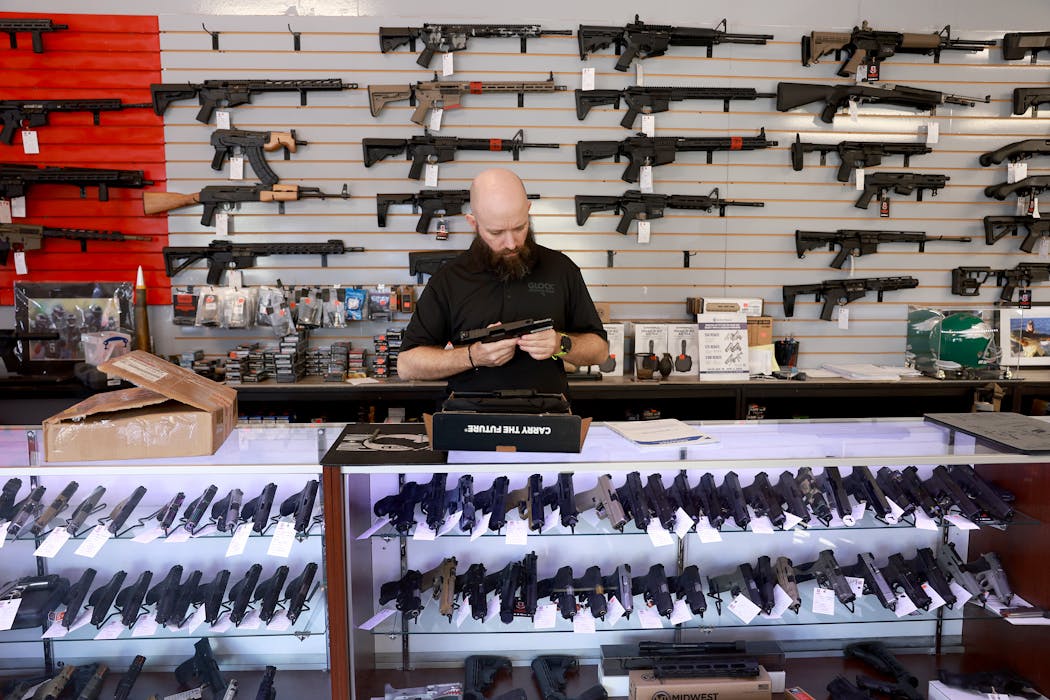
As of September 2025, Florida allows open carry and permitless carry, in addition to its stand your ground law. Joe Raedle/Getty Images News

Twenty years ago, Florida Gov. Jeb Bush signed the first “stand your ground” law, calling it a “good, common-sense, anti-crime issue.”

The law’s creators promised it would protect law-abiding citizens from prosecution if they used force in self-defense. Then-Florida state Rep. Dennis Baxley, who cosponsored the bill, claimed – in the wake of George Zimmerman’s controversial acquittal for the killing of Trayvon Martin – that “we’re really safer if we empower people to stop violent acts.”

I’m a historian who has studied the roots of stand your ground laws. I published a book on the subject in 2017. My ongoing investigation of the laws suggests that, 20 years on, they have not made communities any safer, nor have they helped prevent crime. In fact, there is reliable evidence they have done just the opposite.

In the past 20 years, stand your ground has spread to 38 states.

Then, in September 2025, an appellate court struck down Florida’s long-standing ban on the open carry of firearms.

Florida’s attorney general, James Uthmeier, quickly announced that open carry is now “the law of the state,” directing law enforcement not to arrest people who display handguns in public.

Under the state’s permitless carry law, enacted in 2023, adults without a criminal record also don’t need a permit or any training to carry firearms publicly.

In my view, this combination of stand your ground, open carry and permitless carry is likely to make the Sunshine State far less safe.

Let’s look at the evidence.

What ‘stand your ground’ means

Under traditional self-defense law, a person had a duty to retreat – to try to avoid a violent confrontation if they could safely do so – before resorting to deadly force.

The main exception to the duty to retreat was known as the castle doctrine, whereby people could defend themselves, with force if necessary, if they were attacked in their own homes.

Stand your ground laws effectively expand the boundaries of the castle doctrine to the wider world, removing the duty to retreat and allowing people to use lethal force anywhere they have a legal right to be, as long as they believe it’s necessary to prevent death or serious harm.

On paper, the expansion of the right to self-defense may sound reasonable. But in practice, stand your ground laws have blurred the line between self-defense and aggression by expanding legal immunity for some who claim self-defense and shifting the burden of proof to prosecutors.

While supporters of these laws claim they mitigate crime and make people safer, evidence shows the opposite. The nonpartisan RAND Corp. discovered that states adopting stand your ground laws experienced significant increases in homicide, typically between 8% and 11% higher than before the laws took effect.

A study of violent crime in Florida revealed a 31.6% increase in firearm homicides following the 2005 passage of the stand your ground law. There is no credible evidence that these laws deter crime.

On the contrary, evidence shows that stand your ground laws lower the legal, moral and psychological costs of pulling the trigger.

Stand your ground and race

While the language of stand your ground laws is race-neutral, their enforcement is not. Data from the Urban Institute and the U.S. Commission on Civil Rights show that in states with stand your ground laws, homicides are far more likely to be deemed “justified” when the shooter is white and the victim is Black.

I’ve found that these laws have redefined not only when force is justified but who is justified in using force.

In my assessment, these laws don’t create racial bias. Rather, they magnify the biases already present in our criminal legal system. They give broader discretion to a legal system in which law enforcement officers, judges, prosecutors and juries often hold unacknowledged biases that associate Black men with criminality, while perceiving white people who say they were defending themselves as credible.

A sign for a rally after the Trayvon Martin shooting in Sanford, Florida.
Seventeen-year-old Trayvon Martin was unarmed when George Zimmerman shot and killed him on March 20, 2012, in Sanford, Fla. Zimmerman claimed he killed Martin in self-defense and was acquitted by a jury.
Gerardo Mora/Getty Images News

That dynamic is visible in a growing multitude of cases, such as the shootings of unarmed teenagers Trayvon Martin, Jordan Davis, Renisha McBride and Ralph Yarl.

Each instance illustrates how stand your ground transforms ordinary mistakes or misunderstandings into lethal outcomes, and how armed citizens’ claims of “reasonable fear” often reflect racial stereotypes more than objective threats.

A dangerous mix

Florida’s legalization of open carry intersects with the state’s permitless carry and stand your ground laws in alarming ways. Open carry increases the visibility – and perceived legitimacy – of guns in everyday life.

Combined with the removal of licensing procedures and training requirements, laws that broaden the right to use deadly force create a permissive environment for opportunistic violence.

When everyone is visibly armed, every encounter can look like a potential threat. And when the law tells you that you don’t have to back down, that perception can turn lethal in seconds.

Florida has become a model for what gun rights advocates call “freedom” but what public health experts see as a recipe for more shootings and more death.

National implications: ‘Reciprocity’ and expansion

Two decades later, stand your ground laws have spread, in various forms, to 38 states. While 30 states have legislatively enacted stand your ground statutes like Florida’s, eight others implement stand your ground through case law and jury instructions that effectively remove the duty to retreat.

On top of this, 29 states have enacted laws allowing permitless carry, and 47 technically allow open carry, though restrictions vary across the states.

President Donald Trump has made clear he wants to take this deregulatory approach nationwide. While on the campaign trail, he promised to sign a “concealed-carry reciprocity” law, which would require all states to allow people from states with permissive laws to exercise those rights in all 50. “Your Second Amendment does not end at the state line,” he announced in a 2023 video.

If that vision becomes reality, it would mean the most permissive state laws will set the standard for the entire country. National reciprocity would allow Floridians, and other gun owners from permitless carry states, to carry their firearms – and potentially claim stand your ground immunity – in any other state, including those with stricter rules and lower rates of firearm death and injury.

This prospect raises deep questions about states’ rights, safety and justice. Research shows that stand your ground laws increase homicide and exacerbate racial disparities. National reciprocity would export those effects nationwide.

In my view, the convergence of stand your ground, open carry and national reciprocity marks the culmination of a 20-year experiment in armed citizenship. The results are clear: more people armed, more shootings and more deaths “justified.”

The question now is whether the rest of the nation will follow Florida’s lead.

Read more stories from The Conversation about Florida.

The Conversation

Caroline Light is affiliated with GVPedia and collaborates with Giffords.

ref. Florida’s new open carry ruling combines with ‘stand your ground’ to create new freedoms – and new dangers – https://theconversation.com/floridas-new-open-carry-ruling-combines-with-stand-your-ground-to-create-new-freedoms-and-new-dangers-267496