NCAA will pay its current and former athletes in an agreement that will transform college sports

Source: – By Joshua Lens, Associate Professor of Instruction of Sport & Recreation Management, University of Iowa

Former Arizona State University swimmer Grant House is one of the plaintiffs in the class action lawsuit filed against the NCAA. Mike Comer/NCAA Photos via Getty Images

The business of college sports was upended after a federal judge approved a settlement between the NCAA and former college athletes on June 6, 2025.

After a lengthy litigation process, the NCAA has agreed to provide US$2.8 billion in back pay to former and current college athletes, while allowing schools to directly pay athletes for the first time.

Joshua Lens, whose scholarship centers on the intersection of sports, business and the law, tells the story of this settlement and explains its significance within the rapidly changing world of college sports.

What will change for players and schools with this settlement?

The terms of the settlement included the following changes:

  • The NCAA and conferences will distribute approximately $2.8 billion in media rights revenue back pay to thousands of athletes who competed since 2016.

  • Universities will have the ability to enter name, image and likeness, or NIL, agreements with student-athletes. So schools can now, for example, pay them to appear in ads for the school or for public appearances.

  • Each university that opts in to the settlement can disburse up to $20.5 million to student-athletes in the 2025-26 academic year, a number that will likely rise in future academic years.

  • Athletes’ NIL agreements with certain individuals and entities will be subject to an evaluation that will determine whether the NIL compensation exceeds an acceptable range based on a perceived fair market value, which could result in the athlete having to restructure or forego the deal.

  • The NCAA’s maximum sport program scholarship limits will be replaced with maximum team roster size limits for universities that choose to be part of the settlement.

Why did the NCAA agree to settle with, rather than fight, the plaintiffs?

In 2020, roughly 14,000 current and former college athletes filed a class action lawsuit, House v. NCAA, seeking damages for past restrictions on their ability to earn money.

For decades, college athletics’ primary governing body, the NCAA, permitted universities whose athletics programs compete in Division I to provide their athletes with scholarships that would help cover their educational expenses, such as tuition, room and board, fees and books. By focusing only on educational expenses, the NCAA was able to reinforce the notion that collegiate athletes are amateurs who may not receive pay for participating in athletics, despite making money for their schools.

A year later, in 2021, the U.S. Supreme Court unanimously ruled in a separate case, Alston v. NCAA, that the NCAA violated antitrust laws by limiting the amount of education-related benefits, such as laptops, books and musical instruments, that universities could provide to their athletes. The ruling challenged the NCAA’s amateurism model while opening the door for future lawsuits tied to athlete compensation.

It also burnished the plaintiffs’ case in House v. NCAA, compelling college athletics’ governing body to take part in settlement talks.

What were some of the key changes that took place in college sports after the Supreme Court’s decision in Alston v. NCAA?

Following Alston, the NCAA permitted universities to dole out several thousand dollars in what’s called “education benefits pay” to student-athletes. This could include cash bonuses for maintaining a certain GPA or simply satisfying NCAA academic eligibility requirements.

But contrary to popular belief, the Supreme Court’s Alston decision didn’t let college athletes be paid via NIL deals. The NCAA continued to maintain that this would violate its principles of amateurism.

However, many states, beginning with California, introduced or passed laws that required universities within their borders to allow their athletes to accept NIL compensation.

With over a dozen states looking to pass similar laws, the NCAA folded on June 30, 2021, changing its policy so athletes could accept NIL compensation for the first time.

Will colleges and universities be able to weather all of these financial commitments?

The settlement will result in a windfall for certain current and former collegiate athletes, with some expected to receive several hundred thousands of dollars.

Universities and their athletics departments, on the other hand, will have to reallocate resources or cut spending. Some will cut back on travel expenses for some sports, others have paused facility renovations, while other athletic departments may resort to cutting sports whose revenue does not exceed their expenses.

As Texas A&M University athletic director Trev Alberts has explained, however, that college sports does not have a revenue problem – it has a spending problem. Even in the well-resourced Southeastern Conference, for example, many universities’ athletics expenses exceed its revenue.

Do you see any future conflicts on the horizon?

Many observers hope the settlement brings stability to the industry. But there’s always a chance that the settlement will be appealed.

More potential challenges could involve Title IX, the federal gender equity statute that prohibits discrimination based on sex in schools.

What if, for example, a university subject to the statute distributes the vast majority of revenue to male athletes? Such a scenario could violate Title IX.

Middle-aged man wearing lanyard being interviewed.
NCAA President Charlie Baker, who has served in his role since 2023, has overseen major changes in conference governance and athlete compensation.
David J. Griffin/Icon Sportswire via Getty Images

On the other hand, a university that more equitably distributes revenue among male and female athletes could face legal backlash from football athletes who argue that they should be entitled to more revenue, since their games earn the big bucks.

And as I pointed out in a recent law review article, an athlete or university may challenge
the new enforcement process that will attempt to limit athletes’ NIL compensation within an acceptable range that is based on a fair market valuation.

The NCAA and the conferences named in the lawsuit have hired the accountancy firm Deloitte to determine whether athletes’ compensation from NIL deals fall within an acceptable range based on a fair market valuation, looking to other collegiate and professional athletes to set a benchmark range. If athletes and universities have struck deals that are too generous, both could be penalized, according to the terms of the settlement.

Finally, the settlement does not address – let alone solve – issues facing international student-athletes who want to earn money via NIL. Most international student-athletes’ visas, and the laws regulating them, heavily limit their ability to accept compensation for work, including NIL pay. Some lawmakers have tried to address this issue in the past, but it hasn’t been a priority for the NCAA, as it has lobbied Congress for a federal NIL law.

The Conversation

Joshua Lens owns The Compliance Group, which provides NCAA compliance consulting services for universities and conferences.

ref. NCAA will pay its current and former athletes in an agreement that will transform college sports – https://theconversation.com/ncaa-will-pay-its-current-and-former-athletes-in-an-agreement-that-will-transform-college-sports-256178

4 creative ways to engage children in STEM over the summer: Tips to foster curiosity and problem-solving at home

Source: – By Amber M. Simpson, Associate Professor of Mathematics Education, Binghamton University, State University of New York

Families and caregivers can boost children’s confidence and interest in science, technology, engineering and mathematics while school is out for summer. heshphoto/Getty Images

The Trump administration is reshaping the pursuit of science through federal cuts to research grants and the Department of Education. This will have real consequences for students interested in science, technology, engineering and mathematics, or STEM learning.

One of those consequences is the elimination of learning opportunities such as robotics camps and access to advanced math courses for K-12 students.

As a result, families and caregivers are more essential than ever in supporting children’s learning.

Based on my research, I offer four ways to support children’s summer learning in ways that feel playful and engaging but still foster their interest, confidence and skills in STEM.

1. Find a problem

Two children wearing blue shirts lay on the grass with magnifying glasses, exploring the environment.
To support STEM learning outside of school, encourage children to find and solve problems.
kali9/Getty Images

Look for “problems” in or around your home to engineer a solution for. Engineering a solution could include brainstorming ideas, drawing a sketch, creating a prototype or a first draft, testing and improving the prototype and communicating about the invention.

For example, one family in our research created an upside-down soap dispenser for the following problem: “the way it’s designed” − specifically, the straw − “it doesn’t even reach the bottom of the container. So there’s a lot of soap sitting at the bottom.”

To identify a problem and engage in the engineering design process, families are encouraged to use common materials. The materials may include cardboard boxes, cotton balls, construction paper, pine cones and rocks.

Our research found that when children engage in engineering in the home environment with caregivers, parents and siblings, they communicate about and apply science and math concepts that are often “hidden” in their actions.

For instance, when building a paper roller coaster for a marble, children think about how the height will affect the speed of the marble. In math, this relates to the relationship between two variables, or the idea that one thing, such as height, impacts another, the speed. In science, they are applying concepts of kinetic energy and potential energy. The higher the starting point, the more potential energy is converted into kinetic energy, which makes the marble move faster.

In addition, children are learning what it means to be an engineer through their actions and experience. Families and caregivers play a role in supporting their creative thinking and willingness to work through challenging problems.

2. Spark curiosity

Two girls wearing shorts use tweezers and a magnifying class to examine insects and tree bark.
Spontaneous learning moments can lead to deep engagement and learning of STEM concepts.
cglade/Getty Images

Open up a space for exploration around STEM concepts driven by their interests.

Currently, my research with STEM professionals who were homeschooled talk about the power of learning sparked by curiosity.

One participant stated, “At one time, I got really into ladybugs, well Asian Beatles I guess. It was when we had like hundreds in our house. I was like, what is happening? So, I wanted to figure out like why they were there, and then the difference between ladybugs and Asian beetles because people kept saying, these aren’t actually ladybugs.”

Researchers label this serendipitous science engagement, or even spontaneous math moments. The moments lead to deep engagement and learning of STEM concepts. This may also be a chance to learn things with your child.

3. Facilitate thinking

In my research, being uncertain about STEM concepts may lead to children exploring and considering different ideas. One concept in particular − playful uncertainties − is when parents and caregivers know the answer to a child’s uncertainties but act as if they do not know.

For example, suppose your child asks, “How can we measure the distance between St. Louis, Missouri, and Nashville, Tennessee, on this map?” You might respond, “I don’t know. What do you think?” This gives children the chance to share their ideas before a parent or caregiver guides them toward a response.

4. Bring STEM to life

With a piggy bank in the foreground, a man holding money talks to a young girl about finances.
Overhearing or participating in budget talks can help children develop math skills and financial literacy.
SeizaVisuals/Getty Images

Turn ordinary moments into curious conversations.

“This recipe is for four people, but we have 11 people coming to dinner. What should we do?”

In a recent interview, one participant described how much they learned from listening in on financial conversations, seeing how decisions got made about money, and watching how bills were handled. They were developing financial literacy and math skills.

As they noted, “By the time I got to high school, I had a very good basis on what I’m doing and how to do it and function as a person in society.”

Globally, individuals lack financial literacy, which can lead to negative outcomes in the future when it comes to topics such as retirement planning and debt.

Why is this important?

Research shows that talking with friends and family about STEM concepts supports how children see themselves as learners and their later success in STEM fields, even if they do not pursue a career in STEM.

My research also shows how family STEM participation gives children opportunities to explore STEM ideas in ways that go beyond what they typically experience in school.

In my view, these kinds of STEM experiences don’t compete with what children learn in school − they strengthen and support it.

The Conversation

Amber M. Simpson receives funding from the U.S. National Science Foundation.

ref. 4 creative ways to engage children in STEM over the summer: Tips to foster curiosity and problem-solving at home – https://theconversation.com/4-creative-ways-to-engage-children-in-stem-over-the-summer-tips-to-foster-curiosity-and-problem-solving-at-home-257407

Reproducibility may be the key idea students need to balance trust in evidence with healthy skepticism

Source: – By Sarah R. Supp, Associate Professor of Data Analytics, Denison University

Reproducing results can increase trust in scientific studies. Huntstock via Getty Images

Many people have been there.

The dinner party is going well until someone decides to introduce a controversial topic. In today’s world, that could be anything from vaccines to government budget cuts to immigration policy. Conversation starts to get heated. Finally, someone announces with great authority that a scientific study supports their position. This causes the discussion to come to an abrupt halt because the dinner guests disagree on their belief in scientific evidence. Some may believe science always speaks the truth, some may think science can never be trusted, and others may disagree on which studies with contradicting claims are “right.”

How can the dinner party – or society – move beyond this kind of impasse? In today’s world of misinformation and disinformation, healthy skepticism is essential. At the same time, much scientific work is rigorous and trustworthy. How do you reach a healthy balance between trust and skepticism? How can researchers increase the transparency of their work to make it possible to evaluate how much confidence the public should have in any particular study?

As teachers and scholars, we see these problems in our own classrooms and in our students – and they are mirrored in society.

The concept of reproducibility may offer important answers to these questions.

Reproducibility is what it sounds like: reproducing results. In some ways, reproducibility is like a well-written recipe, such as a recipe for an award-winning cake at the county fair. To help others reproduce their cake, the proud prizewinner must clearly document the ingredients used and then describe each step of the process by which the ingredients were transformed into a cake. If others can follow the directions and come up with a cake of the same quality, then the recipe is reproducible.

Think of the English scholar who claims that Shakespeare did not author a play that has historically been attributed to him. A critical reader will want to know exactly how they arrived at that conclusion. What is the evidence? How was it chosen and interpreted? By parsing the analysis step by step, reproducibility allows a critical reader to gauge the strength of any kind of argument.

We are a group of researchers and professors from a wide range of disciplines who came together to discuss how we use reproducibility in our teaching and research.

Based on our expertise and the students we encounter, we collectively see a need for higher-education students to learn about reproducibility in their classes, across all majors. It has the potential to benefit students and, ultimately, to enhance the quality of public discourse.

The foundation of credibility

Reproducibility has always been a foundation of good science because it allows researchers to scrutinize each other’s studies for rigor and credibility and expand upon prior work to make new discoveries. Researchers are increasingly paying attention to reproducibility in the natural sciences, such as physics and medicine, and in the social sciences, such as economics and environmental studies. Even researchers in the humanities, such as history and philosophy, are concerned with reproducibility in studies involving analysis of texts and evidence, especially with digital and computational methods. Increased interest in transparency and accessibility has followed the rising importance of computer algorithms and numerical analysis in research. This work should be reproducible, but it often remains opaque.

Broadly, research is reproducible if it answers the question: “How do you know?” − such that another researcher could theoretically repeat the study and produce consistent results.

Reproducible research is explicit about the materials and methods that were used in a study to make discoveries and come to conclusions. Materials include everything from scientific instruments such as a tensiometer measuring soil moisture to surveys asking people about their daily diet. They also include digital data such as spreadsheets, digitized historic texts, satellite images and more. Methods include how researchers make observations and analyze data.

To reproduce a social science study, for example, we would ask: What is the central question or hypothesis? Who was in the study? How many individuals were included? What were they asked? After data was collected, how was it cleaned and prepared for analysis? How exactly was the analysis run?

Proper documentation of all these steps, plus making available the original data from the study, allows other scientists to redo the research, evaluate the decisions made during the process of gathering and analyzing information, and assess the credibility of the findings.

This short video, made by the National Academies, explains the key concepts in reproducing scientific findings and notes ways the process can be improved.

Over the past 20 years, the need for reproducibility has become increasingly important. Scientists have discovered that some published studies are too poorly documented for others to repeat, lack verified data sources, are questionably designed, or even fraudulent.

Putting reproducibility to work: An example

A highly contentious, retracted study from 1998 linked the measles, mumps and rubella (MMR) vaccine and autism. Scientists and journalists used their understanding of reproducibility to discover the flaws in the study.

The central question of the study was not about vaccines but aimed to explore a possible relationship between colitis − an inflammation of the large intestine − and developmental disorders. The authors explicitly wrote, “We did not prove an association between measles, mumps, and rubella vaccine and the syndrome described.”

The study observed just 12 patients who were referred to the authors’ gastroenterology clinic and had histories of recent behavioral disorders, including autism. This sample of children is simply too small and selective to be able to make definitive conclusions.

In this study, the researchers translated children’s medical charts into summary tables for comparison. When a journalist attempted to reproduce the published data tables from the children’s medical histories, they found pervasive inconsistencies.

Reproducibility allows for corrections in research. The article was published in a respected journal, but it lacked transparency with regard to patient recruitment, data analysis and conflicts of interest. Whereas traditional peer review involves critical evaluation of a manuscript, reproducibility also opens the door to evaluating the underlying data and methods. When independent researchers attempted to reproduce this study, they found deep flaws. The article was retracted by the journal and by most of its authors. Independent research teams conducted more robust studies, finding no relationship between vaccines and autism.

Each research discipline has its own set of best practices for achieving reproducibility. Disciplines in which researchers use computational or statistical analysis require sharing the data and software code for reproducing studies. In other disciplines, researchers interpret nonnumerical qualities of data sources such as interviews, historical texts, social media content and more. These disciplines are working to develop standards for sharing their data and research designs for reproducibility. Across disciplines, the core principles are the same: transparency of the evidence and arguments by which researchers arrived at their conclusions.

It is true that the underlying data for some studies cannot be fully released to the public – for example, confidential patient health information or the exact locations for species threatened by illegal poaching. But this does not mean that the research didn’t employ many other reproducibility techniques or that the findings should be discredited. Even without publicly available data, the description of the data and methods should be transparent enough to understand and to replicate.

Reproducibility in the classroom

Colleges and universities are uniquely situated to promote reproducibility in research and public conversations. Critical thinking, effective communication and intellectual integrity, staples of higher-education mission statements, are all served by reproducibility.

Teaching faculty at colleges and universities have started taking some important steps toward incorporating reproducibility into a wide range of undergraduate and graduate courses. These include assignments to replicate existing studies, training in reproducible methods to conduct and document original research, preregistration of hypotheses and analysis plans, and tools to facilitate open collaboration among peers. A number of initiatives to develop and disseminate resources for teaching reproducibility have been launched.

Despite some progress, reproducibility still needs a central place in higher education. It can be integrated into any course in which students weigh evidence, read published literature to make claims, or learn to conduct their own research. This change is urgently needed to train the next generation of researchers, but that is not the only reason.

Reproducibility is fundamental to constructing and communicating claims based on evidence. Through a reproducibility lens, students evaluate claims in published studies as contingent on the transparency and soundness of the evidence and analysis on which the claims are based. When faculty teach reproducibility as a core expectation from the beginning of a curriculum, they encourage students to internalize its principles in how they conduct their own research and engage with the research published by others.

Institutions of higher education already prioritize cultivating engaged, literate and critical citizens capable of solving the world’s most challenging contemporary problems. Teaching reproducibility equips students, and members of the public, with the skills they need to critically analyze claims in published research, in the media and even at dinner parties.

Also contributing to this article are participants in the 2024 Reproducibility and Replicability in the Liberal Arts workshop, funded by the Alliance to Advance Liberal Arts Colleges (AALAC) [in alphabetical order]: Ben Gebre-Medhin (Department of Sociology and Anthropology, Mount Holyoke College), Xavier Haro-Carrión (Department of Geography, Macalester College), Emmanuel Kaparakis (Quantitative Analysis Center, Wesleyan University), Scott LaCombe (Statistical and Data Sciences, Smith College), Matthew Lavin (Data Analytics Program, Denison University), Joseph J. Merry (Sociology Department, Furman University), Laurie Tupper (Department of Mathematics and Statistics, Mount Holyoke College).

Editors Note: This article has been updated to clarify standards for good reproducibility.

The Conversation

Sarah Supp receives funding from the National Science Foundation, awards #1915913, #2120609, and #2227298.

Joseph Holler receives funding from the National Science Foundation, award #2049837.

Peter Kedron receives funding from the National Science Foundation, award #2049837 and from Esri.

Richard Ball has received funding from the Alfred P. Sloan Foundation and the United Kingdom Reproducibility Network.

Anne M. Nurse and Nicholas J. Horton do not work for, consult, own shares in or receive funding from any company or organization that would benefit from this article, and have disclosed no relevant affiliations beyond their academic appointment.

ref. Reproducibility may be the key idea students need to balance trust in evidence with healthy skepticism – https://theconversation.com/reproducibility-may-be-the-key-idea-students-need-to-balance-trust-in-evidence-with-healthy-skepticism-251771

Charitable giving grew to $593B in 2024, propelled by a strengthening US economy and a booming stock market

Source: – By Jon Bergdoll, Associate Director of Data Partnerships at the Lilly Family School of Philanthropy, Indiana University

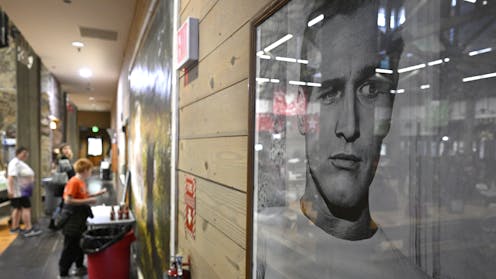
Paul Newman, the late actor and philanthropist, co-founded Camp Boggy Creek, which children with serious illnesses and their families attend for free. AP Photo/Phelan M. Ebenhack

U.S. charitable giving increased 3.3% to US$593 billion in 2024, lifted by the strength of the economy.

The annual report from the Giving USA Foundation, produced in partnership with the Indiana University Lilly Family School of Philanthropy,
found that this was the second-highest level on record after adjusting for inflation.

Giving grew at the fastest pace since 2021, when the COVID-19 pandemic led many Americans to make larger-than-usual donations. It was also the first time since then that growth in giving outpaced inflation.

As two of the report’s lead researchers, we see many signs of healthy growth in charitable giving in 2024. Our data shows that the strong economy, which grew 2.8% in 2024, bolstered individual and corporate giving and allowed foundations to maintain the historically high level of giving seen from them in recent years.

It also helped that stock markets performed well in 2024, consumer sentiment was generally positive, personal income rose and inflation continued to ease.

Donations to nearly every charitable category we track grew.

Individuals and corporations led overall growth

Individual donors continued to provide the bulk of the nation’s charitable gifts. The $392 billion they gave to charity accounted for two-thirds of the year’s total. Giving by individuals grew 5.1% from 2023 − a swifter pace than for all donations.

Corporate giving rose even faster. It was up 6% to a record $44 billion.

This growth reflects the high pretax profits earned by corporations in 2024 and the trend toward corporations donating a higher share of pretax profits in recent years.

For example, corporations generally donated less than 1% of pretax profits from 2004-2018. But our research team started to see corporate giving rise to 1% or more in the 2019 data. This was also the case in 2024, when corporate giving stood at 1.1% of pretax profits.

Corporate philanthropy has grown by more than 50% since 2019, a trend that has coincided with rising in-kind donations of insulin products and other pharmaceuticals. Drugmakers made an estimated $24 billion in these donations in 2024 − up 41% since 2019.

To be sure, corporations’ donations amounted to just 7% of overall giving in 2024.

Meanwhile, grants made by foundations exceeded $100 billion for the third straight year. Almost $1 out of every $5 contributed to charity was from a foundation in each of those years.

Giving by foundations in the five years ending in 2024 was higher than any other period since Giving USA has tracked this data. Foundation giving, however, remained fairly flat from 2023 to 2024, at about $110 billion.

Around 8% of all gifts made in 2024 were from bequests included in people’s wills, the same as in 2023. Bequests totaled $44 billion, down 4.4% when adjusted for inflation. But the total given through bequests varies quite a bit from year to year.

Most kinds of donations increased

Donations to most of the nine charitable categories Giving USA tracks increased. The one exception: Gifts to churches and other religious institutions fell 1%. But religious giving remained by far the top category, followed by human services and education.

Religious causes received 23% of all donations, a total of $147 billion. Giving to human services nonprofits, such as food banks and homeless shelters, increased considerably during the pandemic. It now accounts for about 14% of all donations. In 2024, these gifts totaled $91 billion.

Giving to education, which primarily consists of donations to colleges and universities has tended to grow more slowly than overall giving in recent years.

Giving for education rebounded to a record high in 2024, however, rising nearly 10% from a year earlier. And these gifts have grown at a quick pace over the past decade, increasing by more than 22% from 2015 to 2024. The $88 billion in gifts received for education in 2024 was the third-largest of the nine categories we follow.

Several other categories also reached all-time highs of giving in 2024: health, at $61 billion; arts, culture and humanities, at $25 billion; and environment and animals, at $22 billion.

The increases in giving for most kinds of nonprofits, supported by strong growth in giving by individuals and corporations, indicate that the charitable sector ended 2024 in a relatively solid position.

The Conversation

Jon Bergdoll receives grant funding from the Giving USA Foundation, which publishes Giving USA.

Christina Daniken receives grant funding from the Giving USA Foundation, which publishes Giving USA.

ref. Charitable giving grew to $593B in 2024, propelled by a strengthening US economy and a booming stock market – https://theconversation.com/charitable-giving-grew-to-593b-in-2024-propelled-by-a-strengthening-us-economy-and-a-booming-stock-market-259221

How the end of carbon capture could spark a new industrial revolution

Source: – By Andres Clarens, Professor of Civil and Environmental Engineering, University of Virginia

Steelmaking uses a lot of energy, making it one of the highest greenhouse gas-emitting industries.
David McNew/Getty Images

The U.S. Department of Energy’s decision to claw back US$3.7 billion in grants from industrial demonstration projects may create an unexpected opening for American manufacturing.

Many of the grant recipients were deploying carbon capture and storage – technologies that are designed to prevent industrial carbon pollution from entering the atmosphere by capturing it and injecting it deep underground. The approach has long been considered critical for reducing the contributions chemicals, cement production and other heavy industries make to climate change.

However, the U.S. policy reversal could paradoxically accelerate emissions cuts from the industrial sector.

An emissions reality check

Heavy industry is widely viewed as the toughest part of the economy to clean up.

The U.S. power sector has made progress, cutting emissions 35% since 2005 as coal-fired power plants were replaced with cheaper natural gas, solar and wind energy. More than 93% of new grid capacity installed in the U.S. in 2025 was forecast to be solar, wind and batteries. In transportation, electric vehicles are the fastest-growing segment of the U.S. automotive market and will lead to meaningful reductions in pollution.

But U.S. industrial emissions have been mostly unchanged, in part because of the massive amount of coal, gas and oil required to make steel, concrete, aluminum, glass and chemicals. Together these materials account for about 22% of U.S. greenhouse gas emissions.

The global industrial landscape is changing, though, and U.S. industries cannot, in isolation, expect that yesterday’s means of production will be able to compete in a global marketplace.

Even without domestic mandates to reduce their emissions, U.S. industries face powerful economic pressures. The EU’s new Carbon Border Adjustment Mechanism imposes a tax on the emissions associated with imported steel, chemicals, cement and aluminum entering European markets. Similar policies are being considered by Canada, Japan, Singapore, South Korea and the United Kingdom, and were even floated in the United States.

The false promise of carbon capture

The appeal of carbon capture and storage, in theory, was that it could be bolted on to an existing factory with minimal changes to the core process and the carbon pollution would go away.

Government incentives for carbon capture allow producers to keep using polluting technologies and prop up gas-powered chemical production or coal-powered concrete production.

The Trump administration’s pullback of carbon capture and storage grants now removes some of these artificial supports.

Without the expectation that carbon capture will help them meet regulations, this may create space to focus on materials breakthroughs that could revolutionize manufacturing while solving industries’ emissions problems.

The materials innovation opportunity

So, what might emissions-lowering innovation look like for industries such as cement, steel and chemicals? As a civil and environmental engineer who has worked on federal industrial policy, I study the ways these industries intersect with U.S. economic competitiveness and our built environment.

There are many examples of U.S. innovation to be excited about. Consider just a few industries:

Cement: Cement is one of the most widely used materials on Earth, but the technology has changed little over the past 150 years. Today, its production generates roughly 8% of total global carbon pollution. If cement production were a country, it would rank third globally after China and the United States.

Researchers are looking at ways to make concrete that can shed heat or be lighter in weight to significantly reduce the cost of building and cooling a home. Sublime Systems developed a way to produce cement with electricity instead of coal or gas. The company lost its IDP grant in May 2025, but it has a new agreement with Microsoft.

Making concrete do more could accelerate the transition. Researchers at Stanford and separately at MIT are developing concrete that can act as a capacitor and store over 10 kilowatt-hours of energy per cubic meter. Such materials could potentially store electricity from your solar roof or allow for roadways that can charge cars in motion.

How concrete could be used as a capacitor. MIT.

Technologies like these could give U.S. companies a competitive advantage while lowering emissions. Heat-shedding concrete cuts air conditioning demand, lighter formulations require less material per structure, and energy-storing concrete could potentially replace carbon-intensive battery manufacturing.

Steel and iron: Steel and iron production generate about 7% of global emissions with centuries-old blast furnace processes that use intense heat to melt iron ore and burn off impurities. A hydrogen-based steelmaking alternative exists today that emits only water vapor, but it requires new supply chains, infrastructure and production techniques.

U.S. Steel has been developing techniques to create stronger microstructures within steel for constructing structures with 50% less material and more strength than conventional designs. When a skyscraper needs that much less steel to achieve the same structural integrity, that eliminates millions of tons of iron ore mining, coal-fired blast furnace operations and transportation emissions.

Chemicals: Chemical manufacturing has created simultaneous crises over the past 50 years: PFAS “forever chemicals” and microplastics have been showing up in human blood and across ecosystems, and the industry generates a large share of U.S. industrial emissions.

Companies are developing ways to produce chemicals using engineered enzymes instead of traditional petrochemical processes, achieving 90% lower emissions in a way that could reduce production costs. These bio-based chemicals can naturally biodegrade, and the chemical processes operate at room temperature instead of requiring high heat that uses a lot of energy.

Is there a silver bullet without carbon capture?

While carbon capture and storage might not be the silver bullet for reducing emissions that many people thought it would be, new technologies for managing industrial heat might turn out to be the closest thing to one.

Most industrial processes require temperatures between 300 and 1830 degrees Fahrenheit (150 and 1000 degrees Celsisus for everything from food processing to steel production. Currently, industries burn fossil fuels directly to generate this heat, creating emissions that electric alternatives cannot easily replace. Heat batteries may offer a breakthrough solution by storing renewable electricity as thermal energy, then releasing that heat on demand for industrial processes.

How thermal batteries work. CNBC.

Companies such as Rondo Energy are developing systems that store wind and solar power in bricklike materials heated to extreme temperatures. Essentially, they convert electricity into heat during times when electricity is abundant, usually at night. A manufacturing facility can later use that heat, which allows it to reduce energy costs and improve grid reliability by not drawing power at the busiest times. The Trump administration cut funding for projects working with Rondo’s technology, but the company’s products are being tested in other countries.

Industrial heat pumps provide another pathway by amplifying waste heat to reach the high temperatures manufacturing requires, without using as much fossil fuel.

The path forward

The Department of Energy’s decision forces industrial America into a defining moment. One path leads backward toward pollution-intensive business as usual propping up obsolete processes. The other path drives forward through innovation.

Carbon capture offered an expensive Band-Aid on old technology. Investing in materials innovation and new techniques for making them promises fundamental transformation for the future.

The Conversation

Andres Clarens receives funding from the National Science Foundation and the Alfred P Sloan Foundation.

ref. How the end of carbon capture could spark a new industrial revolution – https://theconversation.com/how-the-end-of-carbon-capture-could-spark-a-new-industrial-revolution-257894

No country for old business owners: Economic shifts create a growing challenge for America’s aging entrepreneurs

Source: – By Nancy Forster-Holt, Clinical Associate Professor of Innovation and Entrepreneurship, University of Rhode Island

Americans love small businesses. We dedicate a week each year to applauding them, and spend Small Business Saturday shopping locally. Yet hiding in plain sight is an enormous challenge facing small business owners as they age: retiring with dignity and foresight. The current economic climate is making this even more difficult.

As a professor who studies aging and business, I’ve long viewed small business owners’ retirement challenges as a looming crisis. The issue is now front and center for millions of entrepreneurs approaching retirement. Small enterprises make up more than half of all privately held U.S. companies, and for many of their owners, the business is their retirement plan.

But while owners often hope to finance their golden years by selling their companies, only 20% of small businesses are ready for sale even in good times, according to the Exit Planning Institute. And right now, conditions are far from ideal. An economic stew of inflation, supply chain instability and high borrowing costs means that interest from potential buyers is cooling.

For many business owners, retirement isn’t a distant concern. In the U.S., baby boomers – who are currently 61 to 79 years old – own about 2.3 million businesses. Altogether, they generate about US$5 billion in revenue and employ almost 25 million people. These entrepreneurs have spent decades building businesses that often are deeply rooted in their communities. They don’t have time to ride out economic chaos, and their optimism is at a 50-year low.

New policies, new challenges

You can’t blame them for being gloomy. Recent policy shifts have only made life harder for business owners nearing retirement. Trade instability, whipsawing tariff announcements and disrupted supply chains have eroded already thin margins. Some businesses – generally larger ones with more negotiating power – are absorbing extra costs rather than passing them on to shoppers. Others have no choice but to raise prices, to customers’ dismay. Inflation has further squeezed profits.

At the same time, with a few notable exceptions, buyers and capital have grown scarce. Acquirers and liquidity have dried up across many sectors. The secondary market – a barometer of broader investor appetite – now sees more sellers than buyers. These are textbook symptoms of a “flight to safety,” a market shift that drags out sale timelines and depresses valuations – all while Main Street business owners age out. These entrepreneurs typically have one shot at retirement – if any.

Adding to these woes, many small businesses are part of what economists call regional “clusters,” providing services to nearby universities, hospitals and local governments. When those anchor institutions face budget cuts – as is happening now – small business vendors are often the first to feel the impact.

Research shows that many aging owners actually double down in weak economic times, sinking increasing amounts of time and money in a psychological pattern known as “escalating commitment.” The result is a troubling phenomenon scholars refer to as “benign entrapment.” Aging entrepreneurs can remain attached to their businesses not because they want to, but because they see no viable exit.

This growing crisis isn’t about bad personal planning — it’s a systemic failure.

Rewriting the playbook on small business policy

A key mistake that policymakers make is to lump all small business owners together into one group. That causes them to overlook important differences. After all, a 68-year-old carpenter trying to retire doesn’t have much in common with a 28-year-old tech founder pitching a startup. Policymakers may cheer for high-growth “unicorns,” but they often overlook the “cows and horses” that keep local economies running.

Even among older business owners, circumstances vary based on local conditions. Two retiring carpenters in different towns may face vastly different prospects based on the strength of their local economies. No business, and no business owner, exists in a vacuum.

A small business owner in Rochester, Vt., discusses the challenges of retirement in a news segment from WCAX-TV.

Relatedly, when small businesses fail to transition, it can have consequences for the local economy. Without a buyer, many enterprises will simply shut down. And while closures can be long-planned and thoughtful, when a business closes suddenly, it’s not just the owner who loses. Employees are left scrambling for work. Suppliers lose contracts. Communities lose essential services.

Four ways to help aging entrepreneurs

That’s why I think policymakers should reimagine how they support small businesses, especially owners nearing the end of their careers.

First, small business policy should be tailored to age. A retirement-ready business shouldn’t be judged solely by its growth potential. Rather, policies should recognize stability and community value as markers of success. The U.S. Small Business Administration and regional agencies can provide resources specifically for retirement planning that starts early in a business’s life, to include how to increase the value of the business and a plan to attract acquirers in later stages.

Second, exit infrastructure should be built into local entrepreneurial ecosystems. Entrepreneurial ecosystems are built to support business entry – think incubators and accelerators – but not for exit. In other words, just like there are accelerators for launching businesses, there should be programs to support winding them down. These could include confidential peer forums, retirement-readiness clinics, succession matchmaking platforms and flexible financing options for acquisition.

Third, chaos isn’t good for anybody. Fluctuations in capital gains taxes, estate tax thresholds and tariffs make planning difficult and reduce business value in the eyes of potential buyers. Stability encourages confidence on both sides of a transaction.

And finally, policymakers should include ripple-effect analysis in budget decisions. When universities, hospitals or governments cut spending, small business vendors often absorb much of the shock. Policymakers should account for these downstream impacts when shaping local and federal budgets.

If we want to truly support small businesses and their owners, it’s important to honor the lifetime arc of entrepreneurship – not just the launch and growth, but the retirement, too.

The Conversation

Nancy Forster-Holt does not work for, consult, own shares in or receive funding from any company or organization that would benefit from this article, and has disclosed no relevant affiliations beyond their academic appointment.

ref. No country for old business owners: Economic shifts create a growing challenge for America’s aging entrepreneurs – https://theconversation.com/no-country-for-old-business-owners-economic-shifts-create-a-growing-challenge-for-americas-aging-entrepreneurs-254537

Outsourcing cost of ‘impact’ data could mean 13% more bang for every charitable buck

Source: – By George E. Mitchell, Professor of Public and International Affairs, Baruch College, CUNY

Trying to measure a charity’s impact requires the right tools. MirageC/Moment via Getty Images

Charitable donors often make gifts despite having little information about the organizations they support. Without relevant data, that money may not flow to the charities that evidence suggests are delivering the biggest bang for donors’ bucks.

But getting good information about what donors call “impact” takes money, time and effort. If donors are responsible for those costs, then they may not obtain the data, and charities would be less likely to produce the data in the first place.

I’m a public and international affairs professor who researches nonprofits and philanthropy.. I conducted a study in 2023 with Chengxin Xu and Huafang Li, two other scholars of nonprofit management, to better understand whether these costs influence how donors pick charities. Through this study, which involved nearly 2,000 U.S. adults, we were able to estimate how much impact may be lost when donors incur information costs themselves.

Impact refers to the effects a charity achieves. Donors can try to get the most impact per dollar by supporting charities that achieve high impact at low cost.

We asked the participants in our experiment to choose one of 10 hypothetical charities to receive support. All the charities had the same mission: “to save lives.” Everyone was paired with a fictitious partner who would also be supporting the selected charity. Before choosing, the participant had the option to obtain information about each organization’s impact per dollar.

About half the time, the participant could pay for the information themselves out of their own hypothetical budget. In the other half, they could tell their partner to pay out of their partner’s budget. The charity would receive the combined gifts, minus any money paid for information. The total amount spent stayed the same no matter who paid or whether anyone paid.

When someone else paid, participants were more likely to direct their gifts to more efficient charities, raising the average impact of donations by about 13%. In other words, donors gave smarter when someone else picked up the tab for the information.

Why it matters

Americans gave more than US$550 billion to charity in 2023.

If shifting information costs can boost the impact of charitable giving by 13%, then applying that gain to just one-tenth of that giving could potentially unlock about $7 billion worth of additional impact. Funders who are very interested in the potential of data to increase impact, such as effective altruists, philanthropists who emphasize outcomes, and some large foundations, may be willing to bear the costs so others don’t have to. The challenge is that not all donors are equally willing to pay for information that could increase the impact of charitable giving.

Other research findings have suggested that most Americans want to see data about the impact that charities have, but it is not obvious where the funding for this should come from. If charities cover the cost themselves, then they are essentially asking their donors to pay for it. But many donors may want all their gifts to pay for program delivery, not data production.

What still isn’t known

It’s unclear how well these findings would translate into real-world giving behavior. Donors’ appetite for information that comes at the expense of direct services may be limited, even if it improves the overall impact of their gifts. And using data about impact per dollar to guide giving could have downsides. For example, it might reward work that is easy to measure and discourage efforts that are just as important but are harder to assess, or just take longer for the results to be seen.

What’s next

Philanthropists can access more data about charities than ever before. Platforms like Candid and Charity Navigator offer the potential to harness that data to better inform donors. Organizations like GiveWell go even further, recommending specific charities based on rigorous data analysis. I’ll be studying these kinds of opportunities for boosting the impact of charitable giving, because when donors are better informed, they can accomplish more with their money.

The Research Brief is a short take about interesting academic work.

The Conversation

George E. Mitchell receives funding from the Baruch College Fund.

ref. Outsourcing cost of ‘impact’ data could mean 13% more bang for every charitable buck – https://theconversation.com/outsourcing-cost-of-impact-data-could-mean-13-more-bang-for-every-charitable-buck-255825

Low-income homeowners hit by disasters may get less help from the government, as Trump administration nixes rules on fairness, community input and resilience

Source: – By Ivis García, Associate Professor of Landscape Architecture and Urban Planning, Texas A&M University

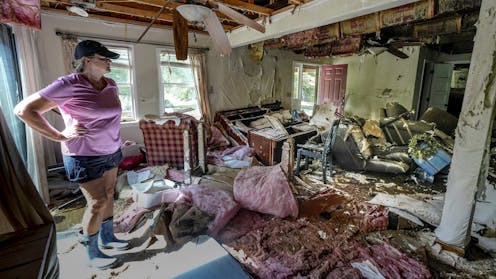
Hurricane Helene caused extensive damage to homes in North Carolina in 2024. AP Photo/Kathy Kmonicek

Imagine that a hurricane has destroyed your home.

The roof is gone. The floors are flooded. Your family’s belongings are ruined.

When this happens, you can apply for federal disaster aid, hoping for a lifeline. For many low-income families and other people of modest means, funding for that aid is often channeled to the states through the Department of Housing and Urban Development’s Community Development Block Grant Disaster Recovery program.

Known as CDBG-DR, this program mainly provides funding to repair and rebuild homes belonging to people of low-to-moderate income who either have no insurance at all or whose coverage falls short of what is needed to making housing safe again.

When homes are damaged beyond repair or located in areas where it’s too dangerous to rebuild because of the likelihood of future bouts of flooding in the same place, the CDBG-DR program can help pay for residents to move somewhere else that is less prone to disasters. In both cases, it covers costs that the Federal Emergency Management Agency does not pay for.

But in 2025, with hurricane season underway, the rules for who gets help and how it’s distributed have changed significantly.

As an urban planner who has researched disaster recovery efforts, I’m alarmed by Memorandum 2025-02, which HUD published on its website in March 2025.

The memo changes the rules for nearly US$12 billion in disaster recovery funding approved by Congress for disasters occurring in 2023 and 2024. And HUD is implementing these changes early in the process, before any of this money has been distributed.

A house that's been destroyed is covered by tarps.
This home in Puerto Rico was destroyed when Hurricane Fiona struck the island in September 2022.
Ivis Garcia

What has changed

The memo does away with the civil rights certifications, fair housing assessments, environmental standards and citizen advisory groups
that have long been mandatory for the recipients of disaster recovery funds.

Civil rights certification means that CDBG-DR grantees must verify that disaster aid will be distributed without discrimination based on race, ethnicity, age, disability status, or other characteristics known as “protected classes.” Without this certification, there’s no formal process to ensure disaster aid is distributed fairly.

Fair housing obligations are assessments of whether middle- and lower-income families, people of color or people with disabilities can find safe, affordable housing without facing any discrimination.

In addition, HUD no longer requires detailed demographic reporting on who is applying for or receiving aid. This includes information such as gender, race, age, disability status and the language someone speaks.

Another change is that HUD’s updated disaster recovery guidelines no longer require economic development funds to emphasize people of modest incomes or their communities. Under the new rules, any business hit by a disaster can get recovery funds. It doesn’t matter how much money the owners make, as long as they can show that the disaster affected them.

And several important environmental protections have been rolled back. HUD previously mandated that disaster recovery projects comply with federal building standards.

Those codes are tougher than the local housing codes. These included rules for building homes higher off the ground to avoid future flooding and using stronger construction methods to withstand extreme weather events. Without them, new construction may be less durable and less safe – especially in areas hit hard by hurricanes or other natural disasters.

Strong energy efficiency standards help keep long-term utility costs low and reduce pressure on power grids during extreme weather events. They also make rebuilt homes more sustainable by reducing greenhouse gas emissions.

A woman and a child sift through the detritus where a business once stood.
Tina Brotherton, 88, right, gets help from 9-year-old neighbor Lainey Hamelink as she surveys the wreckage of her business, Tina’s Dockside Inn. It was completely destroyed in Hurricane Idalia, as was Brotherton’s nearby home, in Horseshoe Beach, Fla., in 2023.
AP Photo/Rebecca Blackwell

Less coordination and communication

HUD has also removed a requirement for the nonprofits, local governments and other recipients of CDBG-DR grants to create and convene citizen advisory groups. That change took effect on March 24, 2025.

These groups, which have long made it easier for local communities to have a say regarding federally funded disaster recovery efforts, have played an important role in making sure those efforts reflect the needs and priorities of local residents – especially those most affected.

While eliminating this step may make it easier and faster for local governments to spend the recovery funds allocated for their communities, it also means there’s less opportunity for their own communities to influence how those funds are spent. Without that input, recovery efforts fail to resolve the real challenges people are facing.

Staffing and funding cuts

The White House’s 2026 budget proposal retains the HUD program that distributes disaster recovery grants while eliminating the related Community Development Block Grant program, which helps people experiencing homelessness and also funds everything from child care to services for older people.

I’m concerned about how CDBG-DR grants will be distributed, apart from the program’s changes. HUD’s Office of Community Planning and Development, which administers the CDBG-DR program, is slated to lose 84% of its staff, according to widespread media reports published earlier this year.

The Trump administration is also calling for cutting HUD’s staff, and President Donald Trump’s proposed 2026 budget would cut the agency’s entire budget in half.

In its March 25 HUD memo, the Trump administration framed these policy changes as a way to streamline recovery efforts and provide greater flexibility in the use of federal disaster funds. The memo also asserted that the changes were needed for compliance with executive orders that banned the use of diversity, equity and inclusion criteria and hiring practices that the administration considers to be discrimintory.

But critics of the policy rollbacks, including the National Low Income Housing Coalition, which advocates affordable housing, worry that removing long-standing safeguards could weaken the CDBG-DR program’s core mission of equitably distributing aid and building resilient communities. The standards and community input systems HUD has abandoned, the coalition says, have historically helped ensure that disaster recovery funds reach the people who need them most.

The Conversation

Ivis García does not work for, consult, own shares in or receive funding from any company or organization that would benefit from this article, and has disclosed no relevant affiliations beyond their academic appointment.

ref. Low-income homeowners hit by disasters may get less help from the government, as Trump administration nixes rules on fairness, community input and resilience – https://theconversation.com/low-income-homeowners-hit-by-disasters-may-get-less-help-from-the-government-as-trump-administration-nixes-rules-on-fairness-community-input-and-resilience-257439

‘Jaws’ and the two musical notes that changed Hollywood forever

Source: – By Jared Bahir Browsh, Assistant Teaching Professor of Critical Sports Studies, University of Colorado Boulder

Many film historians see ‘Jaws’ as the first true summer blockbuster. Steve Kagan/Getty Images

“Da, duh.”

Two simple notes – E and F – have become synonymous with tension, fear and sharks, representing the primal dread of being stalked by a predator.

And they largely have “Jaws” to thank.

Fifty years ago, Steven Spielberg’s blockbuster film – along with its spooky score composed by John Williams – convinced generations of swimmers to think twice before going in the water.

As a scholar of media history and popular culture, I decided to take a deeper dive into the staying power of these two notes and learned about how they’re influenced by 19th-century classical music, Mickey Mouse and Alfred Hitchcock.

When John Williams proposed the two-note theme for ‘Jaws,’ Steven Spielberg initially thought it was a joke.

The first summer blockbuster

In 1964, fisherman Frank Mundus killed a 4,500-pound great white shark off Long Island.

After hearing the story, freelance journalist Peter Benchley began pitching a novel based on three men’s attempt to capture a man-eating shark, basing the character of Quint off of Mundus. Doubleday commissioned Benchley to write the novel, and in 1973, Universal Studios producers Richard D. Zanuck and David Brown purchased the film rights to the novel before it was published. The 26-year-old Spielberg was signed on to be the director.

Tapping into both mythical and real fears regarding great white sharks – including an infamous set of shark attacks along the Jersey Shore in 1916 – Benchley’s 1974 novel became a bestseller. The book was a key part of Universal’s marketing campaign, which began several months before the film’s release.

Starting in the fall of 1974, Zanuck, Brown and Benchley appeared on a number of radio and television programs to simultaneously promote the release of the paperback edition of the novel and the upcoming film. The marketing also included a national television advertising campaign that featured emerging composer Williams’ two-note theme. The plan was for a summer release, which, at the time, was reserved for films with less than stellar reviews.

TV ads promoting the film featured John Williams’ two-note theme.

Films at the time typically were released market by market, preceded by local reviews. However, Universal’s decision to release the film in hundreds of theaters across the country on June 20, 1975, led to huge up-front profits, sparking a 14-week run as the No. 1 film in the U.S.

Many consider “Jaws” the first true summer blockbuster. It catapulted Spielberg to fame and kicked off the director’s long collaboration with Williams, who would go on to earn the second-highest number of Academy Award nominations in history – 54 – behind only Walt Disney’s 59.

The film’s beating heart

Though it’s now considered one of the greatest scores in film history, when Williams proposed the two-note theme, Spielberg initially thought it was a joke.

But Williams had been inspired by 19th and 20th century composers, including Claude Debussy, Igor Stravinsky and especially Antonin Dvorak’s Symphony No. 9, “From the New World.” In the “Jaws” theme, you can hear echoes of the end of Dvorak’s symphony, as well as the sounds of another character-driven musical piece, Sergei Prokofiev’s “Peter and the Wolf.”

“Peter and the Wolf” and the score from “Jaws” are both prime examples of leitmotifs, or a musical piece that represents a place or character.

The varying pace of the ostinato – a musical motif that repeats itself – elicits intensifying degrees of emotion and fear. This became more integral as Spielberg and the technical team struggled with the malfunctioning pneumatic sharks that they’d nicknamed “Bruce,” after Spielberg’s lawyer.

As a result, the shark does not appear until the 81-minute mark of the 124-minute film. But its presence is felt through Williams’ theme, which some music scholars have theorized evoke the shark’s heartbeat.

A fake shark emerging and attacking an actor on the deck of a fishing boat.
During filming, issues with ‘Bruce’ the mechanical shark forced Steven Spielberg to rely more on mood and atmosphere.
Screen Archives/Moviepix via Getty Images

Sounds to manipulate emotions

Williams also has Disney to thank for revolutionizing character-driven music in film.

The two don’t just share a brimming trophy case. They also understood how music can heighten emotion and magnify action for audiences.

Although his career started in the silent film era, Disney became a titan of film, and later media, by leveraging sound to establish one of the greatest stars in media history, Mickey Mouse.

When Disney saw “The Jazz Singer” in 1927, he knew that sound would be the future of film.

On Nov. 18, 1928, “Steamboat Willie” premiered at Universal’s Colony Theater in New York City as Disney’s first animated film to incorporate synchronized sound.

Unlike previous attempts to bring sound to film by having record players concurrently play or deploying live musicians to perform in the theater, Disney used technology that recorded sound directly on the film reel.

It wasn’t the first animated film with synchronized sound, but it was a technical improvement to previous attempts at it, and “Steamboat Willie” became an international hit, launching Mickey’s – and Disney’s – career.

The use of music or sound to match the rhythm of the characters on screen became known as “Mickey Mousing.”

“King Kong” in 1933 would deftly deploy Mickey Mousing in a live action film, with music mimicking the giant gorilla’s movements. For example, in one scene, Kong carries away Ann Darrow, who’s played by actress Fay Wray. Composer Max Steiner uses lighter tones to convey Kong’s curiosity as he holds Ann, followed by ominous, faster, tones as Ann escapes and Kong chases after her. In doing so, Steiner encourages viewers to both fear and connect with the beast throughout the film, helping them suspend disbelief and enter a world of fantasy.

Mickey Mousing declined in popularity after World War II. Many filmmakers saw it as juvenile and too simplistic for the evolving and advancing film industry.

When less is more

In spite of this criticism, the technique was still used to score some iconic scenes, like the playing of violins in the shower as Marion Crane is stabbed in Alfred Hitchcock’s “Psycho.”

Spielberg idolized Hitchcock. A young Spielberg was even kicked off the Universal lot after sneaking on to watch the production of Hitchcock’s 1966 film “Torn Curtain.”

Although Hitchcock and Spielberg never met, “Jaws” clearly exhibits the influence of Hitchcock, the “Master of Suspense.” And maybe that’s why Spielberg initially overcame his doubts about using something so simple to represent tension in the thriller.

Young man with shoulder-length hair speaks on the phone in front of an image of a shark with its mouth open.
Steven Spielberg was just 26 years old when he signed on to direct ‘Jaws.’
Universal/Getty Images

The use of the two-note motif helped overcome the production issues Spielberg faced directing the first feature length movie to be filmed on the ocean. The malfunctioning animatronic shark forced Spielberg to leverage Williams’ minimalist theme to represent the shark’s ominous presence in spite of the limited appearances by the eponymous predatory star.

As Williams continued his legendary career, he would deploy a similar sonic motif for certain “Star Wars” characters. Each time Darth Vader appeared, the “Imperial March” was played to set the tone for the leader of the dark side.

As movie budgets creep closer to a half-billion dollars, the “Jaws” theme – and the way those two notes manipulate tension – is a reminder that in film, sometimes less can be more.

The Conversation

Jared Bahir Browsh does not work for, consult, own shares in or receive funding from any company or organization that would benefit from this article, and has disclosed no relevant affiliations beyond their academic appointment.

ref. ‘Jaws’ and the two musical notes that changed Hollywood forever – https://theconversation.com/jaws-and-the-two-musical-notes-that-changed-hollywood-forever-255379

A new book of Edward Gorey’s drawings shows what’s lost when the artist’s sexuality is glossed over

Source: – By Elizabeth Wolfson, Assistant Director of Campus Partnerships for the Office of Public Scholarship, Washington University in St. Louis

Edward Gorey on the set he designed for the Broadway revival of Bram Stoker’s ‘Dracula’ in 1977. Jack Mitchell/Getty Images

Artist, illustrator and writer Edward Gorey would have turned 100 this year, and the recently published “From Ted to Tom: The Illustrated Envelopes of Edward Gorey” is a fitting celebration of his wit and talent.

The book reproduces, in stunning detail, a series of 50 elaborately illustrated envelopes Gorey created in the mid-1970s. But when I started reading “From Ted to Tom,” I felt confused – and a little let down.

The book makes no mention of Gorey’s queerness. To me, this is a missed opportunity to shed light on how being gay may have fueled some of his most personal work.

The master of macabre

Today, Edward Gorey is widely known for his sprawling, macabre-yet-humorous body of work, which spans nearly every medium.

There are dozens of his own books, notably “The Doubtful Guest” and “The Gashlycrumb Tinies,” as well as cover designs for many others; sets and costumes for the 1977 Tony Award-winning revival of Bram Stoker’s “Dracula”; the opening credit sequence for the PBS television series “Mystery!”; “The Fantod Pack,” a deck of Tarot-like cards; and hand-sewn, surrealist dolls.

His stories often feature adults and children alike who meet untimely ends through mostly hilarious, unlikely accidents – and, yes, the occasional straight-up murder. But they’re never gratuitous, nor do they glorify violence for violence’s sake.

As for his personal life, Gorey may have been what today we’d call asexual; Gorey himself used the term “undersexed,” but he also acknowledged, when asked directly about his sexuality, that he “supposed” he was gay.

Mark Dery’s 2018 Gorey biography, “Born to be Posthumous: The Eccentric Life and Mysterious Genius of Edward Gorey,” documents the artist’s participation in postwar gay life. The book details a handful of crushes Gorey had on various men, at least one of which – a brief affair with a man named Victor – involved some physical intimacy.

To whatever extent Gorey entertained sex or romance, it was with men. As Dery points out, however, this fact largely goes unaddressed in discussions of the artist’s work.

A chance encounter

“From Ted to Tom” reinforces this silence.

The “Tom” is Tom Fitzharris, the author of the book’s introduction and some commentary at the book’s end.

In the introduction, Fitzharris explains that before he met Gorey, he was already collecting the artist’s “small, exquisite books.”

After attending a gallery exhibit of Gorey’s work in 1974, Fitzharris mailed him one of the books from his collection to request Gorey’s signature, along with a cryptic inquiry about two of the book’s characters. Gorey obliged and returned the book with a similarly cryptic reply.

Soon after this exchange, Fitzharris spotted Gorey on the street and introduced himself. The two soon began meeting regularly “for dinner, the theater, coffee, and especially the ballet, his great passion,” one that Fitzharris shared. When Gorey left to summer on Cape Cod, he began sending Fitzharris the envelopes collected in “From Ted to Tom.”

Fitzharris shares almost no information about himself in the book, and he has never commented publicly about his own sexuality. However, even his dry, minimalist narration cannot conceal the intensity of their connection.

Describing his first visit to Gorey’s apartment, he writes: “I thought I’d be at Gorey’s for ten minutes, but I left two hours later.” Whether Fitzharris lost track of time as the two explored their “dozens of shared interests” or simply couldn’t tear himself away, when he finally made it back to work, he was surprised that he still had a job.

The envelope as canvas

Given this voracious drive to create, it is no surprise that Gorey saw an object as humble as a letter envelope as a creative opportunity. As Dery points out, Gorey was also making his illustrated envelopes as the mail art movement was becoming popular. Sparked by artist Ray Johnson in the 1960s – who, like Gorey, lived in New York City – it involved artists using the postal service to exchange works of art, using it as an alternative to the commercial galleries and museums that artists had largely depended on.

The 50 envelopes reproduced in “From Ted to Tom” was not Gorey’s first dalliance with the envelope as canvas; he’d experimented with it six years earlier, while in the midst of a collaboration with author and editor Peter Neumeyer, with whom he produced three children’s books.

In his drawings to Neumeyer, Gorey mostly seems to be having fun playing around with a new formal challenge: how to integrate drawings with the prerequisite address text in a satisfying way.

Because I study how people use images to make sense of the world, I couldn’t help but notice key differences between the Neumeyer envelopes and those that Gorey sent to Fitzharris.

The Fitzharris series is poised and polished from the jump. Gorey’s distinctive hand-lettering is crisp, precise and perfectly straight, each envelope a complete scene. Some scenes are more complex than others, but each is a complete thought.

There’s another notable difference between the Neumeyer and Fitzharris envelopes. While the former features a revolving cast of real and imaginary creatures, the latter has two co-stars: two black-and-white dogs, sides emblazoned with matching, serifed T’s.

In his introduction to the book, Fitzharris confirms that the animals represent Gorey and him. Fitzharris is also clearly more than the lucky witness to a burst of creative genius. He is its muse.

‘Pen pal’ or something more?

Whatever Gorey’s artistic ambitions for the project, it is also a visual diary of sorts: an album of their shared experiences, their common interests and hobbies, and a document of Gorey’s goings-on while they were apart.

Take, for example, an envelope that depicts the canine duo standing amid a vast assemblage of blue bottles, with Fitzharris’ address displayed as labels.

“All the blue bottles are a recollection of a window full of them in one of the antique shops I stopped in after you left that Sunday,” Gorey wrote in the accompanying letter. “The sun coming through them is not reproducible, at least by me.”

In the same letter, Gorey struggles to convey the depth of his feeling upon receiving a recent letter from Fitzharris.

“I used to maintain that if it couldn’t be put into words it didn’t exist; if anything I believe rather the opposite now. All of which is rather a strangled attempt to say that I appreciated your letter of the 23rd very much, but that I don’t know how to say so directly. Yes.”

What did Fitzharris’ letter say that moved Gorey so much? What is the meaning of his singular, elliptical “yes”? Is it simply stylistic? Or is it a response?

We’ll likely never know. But evidently whatever Fitzharris said moved him deeply.

There are other poignant scenes. In his notes to “From Ted to Tom,” Fitzharris takes credit for introducing Gorey to the French phrase “heure bleue,” which translates to “the blue hour” and refers to the time of day just after the sun sets. Gorey’s delight is reflected in a lovely scene of quiet companionship.

Tom and Ted stand at a low fence or porch railing, sharing drinks and gazing up at a darkening sky as dusk settles over thick foliage. For once leaving nothing to the imagination, he inscribes “HEURE BLEUE” next to the image in thick, bold letters – a rare act of captioning.

This unusual relative directness continues into the accompanying letter. Though he can hardly bear admitting it, Gorey describes their recent visit as “a happy day,” immediately qualifying the comment as a “revolting phrase.”

One “cannot help but think how seldom in life one knows one is having one at the time,” he continues. The phrasing is somewhat innocuous. But I wonder how much pleasure Gorey must have felt – and how strong his need to convey it must have been – to overcome the force of his “revulsion.”

This push and pull between attraction to one another and repulsion at one’s own spontaneous emotion supplies the dynamism that make the drawings in “From Ted to Tom” so compelling.

Despite this powerful current, Fitzharris, who is credited as the book’s editor, leaves the topic of Gorey’s sexuality untouched in both his introduction to the book and its end notes, where he provides a guide to some of the personal and cultural references in Gorey’s drawings and letters. The book’s back cover refers to Fitzharris as the artist’s “pen pal.”

Denied access to the underlying details driving this dynamism, the reader loses the chance to reflect on the source of this electrical current, its impact on his art, and how Gorey’s struggles with intimacy and desire, which are all too universal, were also undoubtedly shaped by the challenge of being gay in a deeply homophobic society.

Rather than limiting the understanding of his work, accounting for Gorey’s queerness invites viewers of his art and readers of his work into deeper communion with the artist – and themselves.

The Conversation

Elizabeth Wolfson does not work for, consult, own shares in or receive funding from any company or organization that would benefit from this article, and has disclosed no relevant affiliations beyond their academic appointment.

ref. A new book of Edward Gorey’s drawings shows what’s lost when the artist’s sexuality is glossed over – https://theconversation.com/a-new-book-of-edward-goreys-drawings-shows-whats-lost-when-the-artists-sexuality-is-glossed-over-257938