Todos los beneficios ambientales de pasarnos a una dieta basada en plantas

Source: The Conversation – (in Spanish) – By Noelia María Rodríguez Martín, Postdoctoral fellow, Instituto de la Grasa (IG – CSIC)

Pixel-Shot/Shutterstock

Nuestra dieta y cómo se producen los alimentos que incluye afecta a nuestra salud, pero también al medio ambiente. Aproximadamente un tercio de las emisiones de gases de efecto invernadero provocadas por el ser humano están relacionadas con el cultivo, el procesamiento, el transporte, la distribución y la preparación de los alimentos.

Aunque no todos ellos tienen el mismo impacto en el planeta. En un nuevo estudio hemos comprobado que adoptar una dieta basada en plantas tiene efectos ambientales positivos, como la reducción de hasta un 46 % en nuestra huella de carbono, es decir, las emisiones de dióxido de carbono asociadas a nuestra actividad diaria.

En el trabajo, simulamos cuatro menús reales e isocalóricos (2 000 kcal/día) de una semana con cuatro patrones: mediterráneo (omnívoro), pescovegetariano, ovolactovegetariano y patrón 100 % vegetal (que en nutrición tratamos como dieta vegana, aunque este término conlleva otras implicaciones filosóficas).

Evaluamos dos ejes esenciales: la adecuación nutricional (es decir, que el menú cubra los nutrientes que necesitamos) y huella ambiental (los recursos que se consumen desde el campo al plato y los residuos diarios que se generan). Esta última incluye el equivalente de dióxido de carbono emitido (CO₂e), el uso de suelo, el consumo de agua y efectos sobre ecosistemas y los efectos en la salud humana (emisión de ozono y partículas, eutrofización, ecotoxicidad).

Nutrición: lo justo y necesario

Los cuatro patrones de dieta cumplen en cuanto a macronutrientes y proteína. En cierto modo, esto último es lo que más preocupa cuando se habla de dieta 100 % vegetal. Esto se debe a que las proteínas vegetales no tienen una composición de aminoácidos esenciales completa, pero la combinación típica de legumbres y cereales (lentejas con arroz), completa la composición de la proteína.

Respecto a otros nutrientes importantes, los datos confirman lo esperado. Las dietas vegetales aumentan la fibra y reducen el aporte en las grasas saturadas, lo que supone un perfil lipídico más saludable. No obstante, es necesario tener en consideración algunos nutrientes en el modelo 100 % de dieta vegetal, como el yodo y la vitamina D –aunque ambos realmente se cubren a través del consumo de sal yodada y la exposición solar– y la vitamina B12, que debe suplementarse.

En los omega-3, representados por los ácidos eicosapentaenoico (EPA) y docosahexaenoico (DHA), ningún modelo de dieta alcanzó los 250 mg/día establecidos en las recomendaciones. No obstante, existen formas para enriquecer el menú, como por ejemplo, añadiendo pescado azul, consumiendo aceites de pescado o de microalgas (para la opción 100 % vegetal) y


Leer más:
Omega-3: cúanto hay que tomar y qué alimentos son los mejores para obtenerlo


El calcio que se aporta en las dietas sin lácteos puede equipararse al de una dieta con lácteos gracias al calcio contenido en las bebidas vegetales y tofu fortificados. En resumen, podemos decir que “más alimentos vegetales, sí, pero bien planificados”.

Impacto ambiental: la huella que no se ve

En cuanto a las emisiones, el impacto cae teóricamente a medida que el menú (la dieta) se hace más vegetal: hasta un 46 % menos de CO₂e en el patrón 100 % vegetal frente al omnívoro. Este descenso no solo implica una reducción del efecto en el calentamiento global, ya que una menor emisión de CO₂e suele también implicar menos precursores de ozono y menos partículas secundarias, y una mejora en la calidad del aire.

Además, el efecto alcanza a la tierra y la biodiversidad: los menús más vegetales reducen el uso de suelo entre un 20 % y un 33 %. Esto también es sumamente importante: liberar tierra alivia la presión sobre los hábitats y preserva servicios ecosistémicos clave, como la polinización y la regulación hídrica, un frente decisivo para frenar la pérdida de biodiversidad.

Otro indicador que evaluamos es el impacto del consumo de agua en una cuenca (AWARE). Este mide no solo los litros retirados (agua azul), sino también el impacto relativo de esa extracción según la escasez de la cuenca: cuánto reduce la disponibilidad para otras personas y para los ecosistemas. Aquí los cambios son moderados (baja un 5 % con la dieta 100 % vegetal) y dependen mucho del lugar y del método de cultivo. No todo el “agua” pesa igual: regar 100 litros en una zona seca supone un daño mayor que hacerlo en una cuenca húmeda. Por eso, elegir origen y prácticas agrícolas marca la diferencia.

Observamos también descensos en acidificación y eutrofización –liberación excesiva de nutrientes–, o lo que es lo mismo, menos presión sobre suelos y aguas, y también en ecotoxicidad. Esto implica menos contaminación difusa, menos estrés para ríos y mares y menor exposición humana a sustancias nocivas que viajan por la cadena alimentaria.

Ahora, un matiz con el pescado: los menús pescovegetarianos mejoran la mayoría de indicadores, pero pueden empeorar los relacionados con el ozono por la cadena de frío y los transportes largos. Aunque no todo el pescado tiene la misma huella; especie y origen, arte de pesca (mejor selectivas que de arrastre) y logística (proximidad, evitar transporte aéreo, cadenas cortas) marcan la diferencia en este contexto.


Leer más:
¿Pescado y marisco para Navidad? Cómo elegir el más saludable y sostenible según su etiqueta


Comparación de los efectos en el medio ambiente de las dietas pescetariana, ovolactovegetariana y 100% vegetal frente a una omnívora
Comparación de tres menús (pescetariano, ovolactovegetariano y 100% vegetal) frente a uno omnívoro, mostrando la reducción porcentual en once indicadores relacionados con la huella de carbono, efecto en el suelo y el agua y efecto en la salud humana y seres vivos. A mayor proporción de alimentos vegetales, mayores recortes en la huella.
Los autores, CC BY-SA

Cambios con efectos positivos reales

Lo que elegimos comer tres veces al día suma o resta frente al cambio climático y la pérdida de biodiversidad. Los menús más vegetales son una palanca inmediata y asequible tanto en casa como en comedores colectivos y compras públicas. Hablamos de impactos medibles: kilos de CO₂e evitados, metros cuadrados de suelo liberado y metros cúbicos de agua ahorrados.


Leer más:
Tres cambios cruciales en el sistema alimentario para no devorar el planeta


Además, esta transición permite avanzar hacia el cumplimiento de los Objetivos de Desarrollo Sostenible (ODS) de la ONU en la vida real: ODS 3 (salud), ODS 12 (consumo responsable) y ODS 13 (acción climática). Para acelerar el cambio hacen falta reglas claras y un mercado alineado: etiquetado de huella de carbono e información sobre nutrientes críticos, compra pública baja en carbono y apoyo a alimentos vegetales mínimamente procesados con fortificación inteligente.

Avanzar hacia las dietas pescetariana, ovolactovegetariana y vegana reduce la huella de forma acumulativa. Pero podemos empezar por un menú mediterráneo bien hecho con un alto consumo de vegetales.

Si empezamos de cero, nos vendrá bien el apoyo de un dietista-nutricionista con experiencia en alimentación basada en vegetales para evitar carencias. A partir de ahí, vayamos a lo práctico: menos carne (sobre todo de rumiantes) y más legumbres, cereales integrales, fruta, verdura y frutos secos; priorizando origen y temporada y eligiendo alimentos fortificados cuando aporten valor. Con pequeños cambios constantes y medibles, nuestro plato puede recortar emisiones, dar respiro a suelos y ríos y mejorar el aire sin renunciar a una dieta completa.

The Conversation

Las personas firmantes no son asalariadas, ni consultoras, ni poseen acciones, ni reciben financiación de ninguna compañía u organización que pueda obtener beneficio de este artículo, y han declarado carecer de vínculos relevantes más allá del cargo académico citado anteriormente.

ref. Todos los beneficios ambientales de pasarnos a una dieta basada en plantas – https://theconversation.com/todos-los-beneficios-ambientales-de-pasarnos-a-una-dieta-basada-en-plantas-271861

¿Por qué no es recomendable descargar la cisterna con la tapa del inodoro levantada?

Source: The Conversation – (in Spanish) – By Raúl Rivas González, Catedrático de Microbiología. Miembro de la Sociedad Española de Microbiología., Universidad de Salamanca

Parkin Srihawong/Shutterstock

Todos hacemos caca es el incuestionable título de un clásico libro infantil escrito por el japonés Taro Gomi. Por desgracia, no todos los inodoros ofrecen una buena descarga para eliminar los restos fecales. Además, el vaciado del inodoro es una fuente potencial de transmisión de microorganismos infecciosos, porque puede generar grandes cantidades de aerosoles que contienen microbios. Ante esa realidad, ¿hay diferencia entre bajar la tapa del inodoro o dejarla levantada?

El dilema es relativamente nuevo. Hacia el año 315 (siglo IV), Roma tenía alrededor de 150 letrinas públicas, a menudo ubicadas cerca de baños públicos, y muchas de ellas contaban con largos bancos de mármol para uso comunitario. En aquel escenario, la socialización prevalecía ante la privacidad. Y continuo siendo de esa manera durante bastantes décadas.

Pasados unos cuantos siglos, la situación ha cambiado mucho, pero aún así, todavía hay más de 3 000 millones de personas en todo el mundo que no tienen acceso a baños seguros y limpios. ¡Más de un tercio de la población mundial! Los cientos de millones de personas que a estas alturas siguen sin disponer de inodoros se ven obligados a defecar en público o al aire libre, por ejemplo, en las cunetas de las calles, entre los arbustos o en aguas abiertas. Esto causa graves problemas de salud pública, al propagar patógenos fecales que contaminan el agua, el suelo y los alimentos, a la vez que genera sentimientos significativos de vulnerabilidad, vergüenza e impotencia, y provoca importantes problemas sociales, especialmente para mujeres y niñas, que se enfrentan a un mayor riesgo de violencia sexual y humillación.

En este contexto tiene sentido que “El retrete es un lugar para la paz y el progreso” fuese el lema del Día Mundial del Retrete en 2024, promovido por la ONU, para destacar el saneamiento seguro como un derecho humano fundamental.

La invención del inodoro con cisterna

Al parecer, el mérito de inventar el precursor del inodoro con cisterna recae en Sir John Harington, ahijado de Isabel I, quien en 1592 diseñó un aparato con una cisterna elevada y un pequeño tubo por el que el agua arrastraba los desechos. Sin embargo, el ingenio fue ignorado durante casi dos siglos. Resurgió con fuerza en 1775, cuando el relojero y mecánico escocés Alexander Cumming resolvió un problema clave, al desarrollar y patentar el tubo de desagüe con forma de “S” (o sifón) situado bajo el retrete, cuya función era crucial para sellar y eliminar de manera efectiva los malos olores.

Además de los malos olores, de los inodoros escapan también aerosoles cargados de microorganismos. Entre otros, diversas especies bacterianas de los géneros Aeromonas, Bacillus, Campylobacter, Clostridium, Escherichia, Klebsiella, Pseudomonas, Salmonella, Serratia, Shigella o Staphylococcus. De hecho, numerosos estudios han demostrado que la descarga del inodoro puede formar estos aerosoles debido al movimiento del agua: burbujeo, remolinos y salpicaduras, provocando la emisión de aerosoles que contienen microorganismos intestinales o urinarios.

El peligro de los baños públicos no ventilados

En 2015, un estudio confirmó la contaminación por Escherichia coli patógena y resistente a los antimicrobianos en 56 baños públicos del área metropolitana de Minneapolis-St. Paul en Minnesota (Estados Unidos).

Los baños públicos no ventilados, o con ventilación insuficiente, plantean un mayor riesgo de infección cruzada. De hecho, las áreas cercanas a todo tipo de inodoros y urinarios suelen presentar una contaminación alta, lo que indica que necesitan regímenes de limpieza estrictos.

La transmisión en estos casos no se previene evitando tocar el retrete o sentarse en él, como solemos pensar. Los microorganismos se pueden transmitir también por acumulación de patógenos en el cuerpo y en la ropa del usuario a través de la aerosolización durante la descarga del inodoro o el urinario, es decir, al tirar de la cisterna. También se puede transmitir por la inhalación directa de aerosoles o la transmisión indirecta tras la deposición de patógenos aerosolizados en diversas superficies del baño como toallas, pastillas de jabón contaminadas, la manija de la cisterna, los grifos o los propios pomos de las puertas.

Muchos patógenos entéricos se encuentran en alta concentración en las heces y, por lo tanto, en los inodoros después de la defecación, particularmente durante episodios de diarrea aguda. Por ejemplo, una persona infectada llega a eliminar hasta 100.000 millones de unidades formadoras de colonias (UFC) de Salmonella y Shigella por heces. Las personas infectadas con virus entéricos pueden eliminar 1 billón de virus por gramo de heces. Tras la descarga, las bacterias y los virus pueden dispersarse en las partes externas del inodoro y otras superficies del baño.

Bajar la tapa del inodoro reduce los aerosoles, pero no los elimina

Varios estudios informan de que bajar la tapa del inodoro reduce la cantidad de gotas visibles y pequeñas durante y después de la descarga entre un 30 % y un 60 %. Por esta razón, los especialistas médicos y de salud pública tradicionalmente han aconsejado cerrar la tapa del inodoro antes de tirar de la cadena. Sin embargo, un problema que a menudo se pasa por alto es que un porcentaje importante de los aerosoles se escapa a través del espacio de aire entre la taza y el asiento, incluso con la tapa cerrada.

Parece ser que son necesarios datos adicionales sobre el papel de la tapa del inodoro como una medida de control. De lo que no cabe ninguna duda es que la desinfección habitual de todas las superficies del baño es aconsejable para reducir la potencial contaminación viral y bacteriana.

The Conversation

Raúl Rivas González no recibe salario, ni ejerce labores de consultoría, ni posee acciones, ni recibe financiación de ninguna compañía u organización que pueda obtener beneficio de este artículo, y ha declarado carecer de vínculos relevantes más allá del cargo académico citado.

ref. ¿Por qué no es recomendable descargar la cisterna con la tapa del inodoro levantada? – https://theconversation.com/por-que-no-es-recomendable-descargar-la-cisterna-con-la-tapa-del-inodoro-levantada-271999

How a healthy gut could help your baby sleep better

Source: The Conversation – UK – By Manal Mohammed, Senior Lecturer, Medical Microbiology, University of Westminster

morrowlight/Shutterstock

When babies struggle with poor sleep, parents often suffer right alongside them. Growing evidence shows that a baby’s gut health plays a key role in comfort, digestion and overall sleep quality. Supporting a healthy gut microbiome may help babies sleep better, which can bring much-needed relief to exhausted parents.

Newborns are not born with a fully developed sleep-wake cycle and many rely on cues from feeding, contact and environmental rhythms. Strengthening the gut microbiome can support more settled sleep. The following approaches are backed by emerging research.

Breastfed babies, if doing so is possible, tend to have better sleep patterns and a more stable sleep-wake cycle than infants fed adapted formula. Breast milk naturally contains beneficial bacteria that help seed the infant gut, as well as human milk oligosaccharides, which are specialised carbohydrates found only in human milk.

Babies cannot digest them, but beneficial gut bacteria can. These oligosaccharides act as prebiotics, feeding helpful gut bacteria such as Bifidobacteria and Lactobacillus. They also help protect the gut lining and block harmful microbes from attaching to it.

Breast milk also delivers hormonal signals that influence sleep, including melatonin and tryptophan. These can help infants settle more easily and form more regular rhythms over time. Even partial breastfeeding can offer these benefits.

Allow skin-to-skin and close contact

Physical closeness, also known as kangaroo care, helps transfer healthy maternal microbes and supports sleep regulation. Skin-to-skin contact stabilises an infant’s temperature, breathing and heart rate. These steady physiological rhythms reduce energy expenditure and help babies reach calmer, more predictable states that support sleep development.

Baby sleeping against woman's chest

Anatta_Tan/Shutterstock

Studies show that an infant’s temperature can shift by one to two degrees Celsius during skin-to-skin contact, and the caregiver’s body adjusts through close thermal coupling to help keep the baby within a comfortable range. This reduces the effort required from the infant to maintain their own temperature.

Skin-to-skin contact also reduces signs of stress and helps babies settle more easily into sleep. It activates the parasympathetic nervous system, sometimes called rest-and-digest mode, which supports digestion and relaxation. Close contact also boosts oxytocin, reducing crying and encouraging feeding, which indirectly supports sleep.

Avoid over-sanitising

Normal home-level exposure to skin bacteria, family members and pets helps diversify the infant microbiome. This does not mean all forms of close contact are risk free. Very young babies are more vulnerable to infections such as HSV, which can be transmitted through saliva, so caregivers who are unwell or have active cold sores should avoid kissing newborns and keep hands clean during feeding.


Read more:
Why you should never kiss a baby


Routine use of antibacterial soaps and antibacterial wipes is not recommended unless necessary, for example when cleaning up bodily fluids, dealing with known infections in the household or following medical advice after surgery or immune-related conditions.

Support the microbiome through solids

Once a baby is developmentally ready, usually after six months, fibre-rich foods such as mashed beans, peas, lentils, sweet potato, oats and bananas can help nourish the gut.

Foods containing natural probiotics can be introduced once a baby has begun solids, provided they are offered in small amounts and prepared appropriately.

Plain yogurt is usually suitable from six months, as are fermented dairy products such as kefir when they are unsweetened and have a safe texture – smooth, runny or spoonable with no lumps – so that it can be swallowed easily and does not pose a choking risk. Other fermented foods, such as small tastes of fermented vegetable brine, should be low in salt and sugar and blended or thinned to an appropriate consistency.

Introducing allergens such as peanut and egg early, in line with current paediatric guidelines, also helps support immune balance.


Read more:
Are peanut allergies actually declining?


Use antibiotics only when needed

Antibiotics can disrupt the gut microbiome by reducing microbial diversity, lowering levels of beneficial bacteria and allowing less helpful strains to dominate. They should never be avoided when medically necessary, but unnecessary courses should be minimised. Because antibiotics can deplete helpful gut bacteria, some parents consider using probiotics to support recovery.

Certain probiotic supplements may reduce colic and support sleep by improving gut comfort. Commonly studied infant strains include Lactobacillus reuteri and Bifidobacterium infantis.

These strains feed on human milk oligosaccharides, support digestion and help maintain gut barrier function. They may also reduce inflammation and produce metabolites such as short-chain fatty acids, which nourish the cells lining the gut and support immune regulation. Medical guidance is essential before introducing any supplements.

Watch for gut-disrupting issues

Healthy digestion supports better sleep and can be aided by effective burping, avoiding overfeeding and monitoring for possible food intolerances such as cow’s milk protein sensitivity. Addressing discomfort early can prevent sleep disruption. Tracking patterns around feeds, nappies and crying spells can help identify symptoms that cluster at particular times of day.

Persistent arching, pulling legs to the chest, vomiting after most feeds or stools containing mucus can signal a problem beyond routine wind. Reflux, constipation and transient lactose overload – when milk moves through the gut too quickly for the lactose to be fully digested, leading to gas, frothy stools and discomfort – are common culprits.

Allow pet exposure

Household dog exposure is linked to more robust infant microbiomes and may support healthier immune outcomes. Dogs introduce a wider range of environmental microbes into the home during a sensitive developmental window. There is no need to get a pet solely for this purpose, but research suggests that normal interaction with existing pets could be beneficial.

A smiling infant and ginger corgi pembroke lying together on a white sheet.

Regina Burganova/Shutterstock

Routine contact such as supervised play, shared floor space and the general messiness that comes with pets can all contribute. Sensible hygiene still applies. Wash hands after handling food bowls or dog waste and keep pets out of sleeping spaces.

Regulate the sleep environment

Predictable routines reduce stress and support more settled sleep. Creating a stable sleep environment helps lower arousal levels, which can otherwise unsettle digestion.

Aim for a consistent room temperature, dim lighting and a calm wind-down routine that signals the shift from stimulation to rest. White noise can mask household sounds that might otherwise wake a baby. Try to keep overnight interactions low key with minimal talking and gentle movements. These cues form a stable pattern that supports deeper, more restorative sleep.

While no single strategy guarantees perfect nights, these evidence-informed practices work together to support a healthier gut and a more settled baby. When babies sleep better, parents finally get the rest they need too.

The Conversation

Manal Mohammed does not work for, consult, own shares in or receive funding from any company or organisation that would benefit from this article, and has disclosed no relevant affiliations beyond their academic appointment.

ref. How a healthy gut could help your baby sleep better – https://theconversation.com/how-a-healthy-gut-could-help-your-baby-sleep-better-271445

Healthy habits and the holiday season: Tips for families to navigate eating, physical activity and sleep

Source: The Conversation – Canada – By Holly Noelle Schaafsma, Postdoctoral Research Fellow, University of Guelph

The holiday season is a time of exciting activities, family get-togethers and a time away from the normal work and school routine. As a result, your family, like many others, may feel like your usual routines are lost in the holiday hustle. Possible disruptions that can affect well-being and cause household stress include irregular meals, more snacking and screen time and later bedtimes.

The good news is, integrating simple, healthy household habits over the holidays can help your family maintain healthy eating, sleep and activity behaviours to feel your best during this busy holiday season.

As registered dietitians and family health researchers, we have conducted studies on family health and learned a number of effective strategies that can help your family create healthy habits. Here are our three top tips to help your family maintain healthy eating, physical activity and sleep habits while still enjoying everything this special season has to offer.

1. Make meals a family affair

Hectic schedules during the holidays can make it feel almost impossible to find time to cook and sit down for a family meal. However, during the holiday season, when there are many chances to snack on cookies and candies, making time to sit down for at least one family meal a day is key. This simple habit helps your family maintain healthier eating patterns and gives everyone a valuable chance to connect.

Remember, the family meal doesn’t have to happen at dinner time. Work around your holiday schedule; if breakfast together works best, that’s great.

Involve the whole family, including young children, in food preparation. This can include holiday baking, cooking a family meal or making a dish for a holiday get-together. Involving children in meal preparation, such as stirring food, measuring ingredients or even helping with grocery shopping, can improve their likelihood of trying the food they create and may reduce picky eating.

For ideas on simple, family-friendly recipes with tips for involving kids, check out the series of free cookbooks developed by researchers at the Guelph Family Health Study.

2. Find moments to move, play and unplug

Get outside! Children who spend more time outside are more physically active. Spending time in nature also supports brain development and helps kids relax.

Plan a family hike, go skating and sledding; walk to nearby events and through your neighbourhood to enjoy holiday lights. These brief opportunities for movement add up!

When it’s time to come inside to warm up, have a plan for screen time. Children spend less time in front of screens when their parents set screen time limits. While this may sound like a tough feat during the school break, setting specific screen-time limits for the holiday season can help kids know what to expect, which may reduce day-to-day arguments about screens.

Keep meals screen-free. Turn off the TV and put phones and tablets in a designated place away from where you eat.

Setting screen limits doesn’t mean you can’t enjoy your favourite holiday movies. Purposeful, time-limited screen use has its benefits. In fact, co-viewing movies or TV together has been associated with many cognitive benefits for kids. Asking content-related “what if” and “why” questions can help develop vocabulary and critical thinking.

3. Balance festivities with family sleep routines

A good night’s sleep can help everyone, parents included, make the most of the holiday season. Children with sufficient sleep report less stress and hyperactivity, and better physical and mental health. Depending on their age, children and adolescents need between eight and 17 hours of sleep per day, while adults need seven to nine hours of sleep. Research shows that one in four children are not getting enough sleep.

Between festivities, keeping a consistent bedtime routine can help your children get enough sleep. Make time to unwind from a busy day with calm, screen-free activities such as reading a book before going to bed.

Maintaining a consistent bedtime routine can also help children fall asleep when sleeping away from home. Giving children a “few-minutes warning” can help them navigate their emotions when it’s time to stop a fun activity to get ready for bed. Children who are more sensitive to change may need extra closeness with their parents to feel safe and fall asleep in a new environment.

We hope these simple routines can help your family connect, slow down and find joy even during the busiest days of the holidays.

The Conversation

Jess Haines receives funding from Canadian Institutes of Health Research, National Institutes of Health, Danone Institute International, Protein Industries Canada, Health Canada, and Canadian Foundation for Dietetic Research.

Kathryn Walton receives funding from the Canadian Foundation for Innovation, the New Frontiers in Research Fund and the Canadian Institutes of Health Research.

Raphaëlle Jacob received funding from the Canadian Institutes of Health Research.

Holly Noelle Schaafsma does not work for, consult, own shares in or receive funding from any company or organisation that would benefit from this article, and has disclosed no relevant affiliations beyond their academic appointment.

ref. Healthy habits and the holiday season: Tips for families to navigate eating, physical activity and sleep – https://theconversation.com/healthy-habits-and-the-holiday-season-tips-for-families-to-navigate-eating-physical-activity-and-sleep-271723

Karoline Leavitt’s White House briefing doublethink is straight out of Orwell’s ‘1984’

Source: The Conversation – USA – By Laura Beers, Professor of History, American University

White House press secretary Karoline Leavitt speaks during the daily press briefing on Nov. 4, 2025. Andrew Harnik/Getty Images

During a press conference on Dec. 11, 2025, White House press secretary Karoline Leavitt announced there was good news on the state of the economy.

“Inflation as measured by the overall CPI has slowed to an average 2.5% pace,” she said, referring to the consumer price index. “Real wages are increasing roughly $1,200 dollars for the average worker.”

When CNN political correspondent Kaitlan Collins attempted to ask a follow-up question, Leavitt pivoted to an attack. Not on Collins, a frequent target of White House ire, but on Leavitt’s predecessor in the Biden White House, Democrat Jen Psaki.

Psaki, claimed Leavitt, stood at the same lectern a year before and told “utter lies.” In contrast, Leavitt insisted, “Everything I’m telling you is the truth backed by real, factual data, and you just don’t want to report on it ’cause you want to push untrue narratives about the president.”

The “real, factual data” that underpinned Leavitt’s statement was specious at best. The actual inflation rate for September was 3%, not the 2.5% figure cherry-picked from economic data. The rise in real wages? CNN business editor David Goldman writes that in the past year, U.S. workers have experienced “the lowest annual paycheck growth that Americans have had since May 2021.”

White House press secretary Karoline Leavitt speaks to the media on Dec. 11, 2025.

I’m a historian who has written about the enduring legacy of George Orwell’s ideas about truth and freedom. Listening to Leavitt assert a “truth” so obviously discordant with people’s lives, I was reminded of the repeated pronouncements from the Ministry of Plenty in Orwell’s “1984.”

“The fabulous statistics continued to pour out of the telescreen,” Orwell wrote. “As compared with last year there was more food, more clothes, more houses, more furniture, more cooking-pots, more fuel, more ships, more helicopters, more books, more babies — more of everything except disease, crime, and insanity. Year by year and minute by minute, everybody and everything was whizzing rapidly upwards.”

The novel’s doomed hero, Winston Smith, works in the Records Department that produces these fraudulent statistics – figures that are so far divorced from reality that they “had no connection with anything in the real world, not even the kind of connection that is contained in a direct lie.”

In the world of “1984,” not only are statistics invented, they are continually reinvented to serve the needs of Big Brother’s regime at any given moment: “All history was a palimpsest, scraped clean and reinscribed exactly as often as was necessary.”

Transparency as doublespeak

The lack of transparency depicted in “1984” has an uncanny echo in our current political moment, despite Leavitt’s repeated assertions that President Donald Trump is the “most transparent president in history.”

Leavitt has made that claim countless times, including in her public defense of Trump’s “Quiet, Piggy!” dismissal of Bloomberg News journalist Catherine Lucey last month.

In Leavitt’s usage, “transparency” has become a form of Orwellian “doublespeak,” a word or phrase which through the process of “doublethink” had come to encompass its exact opposite meaning.

Doublethink,” in Orwell’s writing, was the mechanism of thought manipulation that allowed someone “to know and not to know, to be conscious of complete truthfulness while telling carefully constructed lies, to hold simultaneously two opinions which cancelled out, knowing them to be contradictory and believing in both of them.”

Doublethink was the mechanism that enabled the citizens of Oceania, the Anglo-American superstate governed by Big Brother’s authoritarian regime, to accept that “WAR IS PEACE; FREEDOM IS SLAVERY; IGNORANCE IS STRENGTH.”

And it is the mechanism that allowed Leavitt to proclaim, in defending Trump’s unwillingness to release the Epstein files, “This administration has done more with respect to transparency when it comes to Jeffrey Epstein than any administration ever.” That claim was pronounced “fabulously audacious” by The Guardian’s Washington bureau chief, David Smith, in a story headlined “Nothing to see here: Trump press chief in full denial mode over Epstein.”

President Ronald Reagan records a radio address on foreign policy on Sept. 24, 1988, in which he discussed “our philosophy of peace through strength.”

Making ‘lies sound truthful and murder respectable’

In his famous essay “Politics and the English Language,” Orwell wrote that “political language is designed to make lies sound truthful and murder respectable, and to give an appearance of solidity to pure wind.”

Over the past 10 months, Leavitt has, among other things, claimed that the now dismantled U.S. Agency for International Development – USAID – provided a grant of $32,000 for a “transgender comic book” in Peru. Not true. She has misrepresented the “One Big Beautiful Bill” as fully eliminating taxes on tips, overtime and Social Security. In reality, deductions for these are capped. She claimed that Trump coined the motto “peace through strength.” He didn’t. The phrase has been in circulation for decades, used most prominently by Ronald Reagan during his presidency.

And she recently sought to delegitimize U.S. Sen. Mark Kelly and colleagues’ plea to servicemen and women not to obey illegal orders by suggesting tautologically that “all lawful orders are presumed to be legal by our servicemembers,” and hence Kelly’s plea could only serve to provoke “disorder and chaos.”

All governments lie. But Leavitt has become a master of the art of political language, wielded to aggrandize her boss, belittle his opponents and deflect attention from administration scandals.

The Conversation

Laura Beers does not work for, consult, own shares in or receive funding from any company or organization that would benefit from this article, and has disclosed no relevant affiliations beyond their academic appointment.

ref. Karoline Leavitt’s White House briefing doublethink is straight out of Orwell’s ‘1984’ – https://theconversation.com/karoline-leavitts-white-house-briefing-doublethink-is-straight-out-of-orwells-1984-270675

Which countries people are fleeing from – and why

Source: The Conversation – UK – By Sanwal Hussain, PhD Candidate in the Department of Politics and Society, Aston University

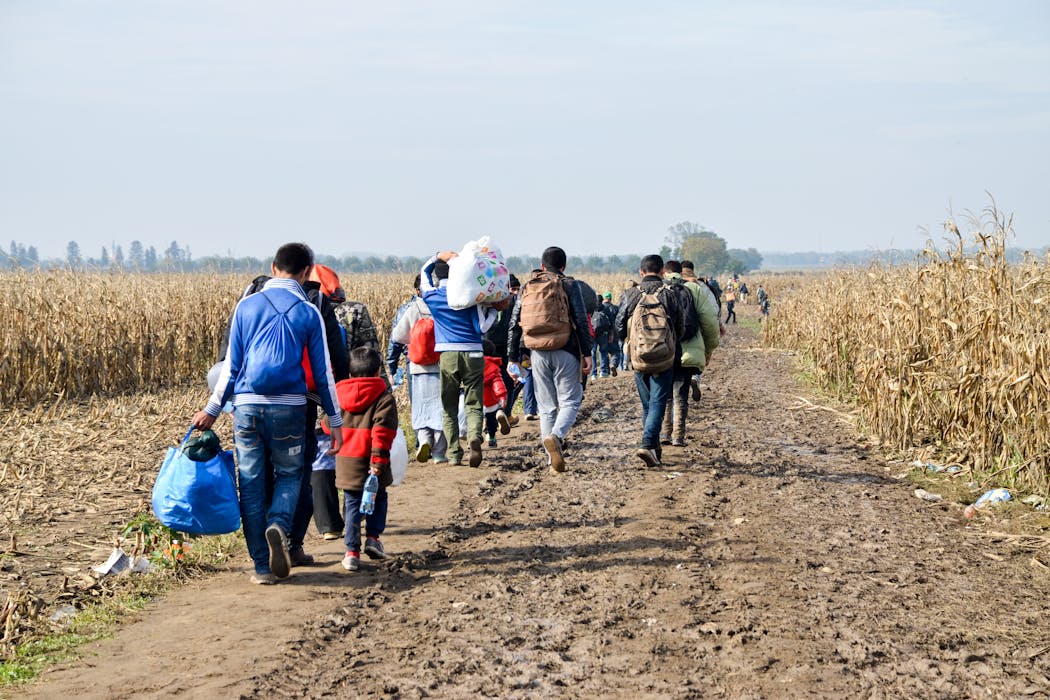
A group of refugees near the border between Serbia and Croatia in 2015. Ajdin Kamber / Shutterstock

The US government halted all applications for green cards, citizenship and asylum from 19 mostly African and Middle Eastern countries on December 2. This move came a week after President Donald Trump announced he would “permanently pause migration” from all “third-world countries” after two national guard members in Washington were shot by an Afghan national.

A cornerstone of Trump’s 2024 presidential election campaign was his promise to deport record numbers of migrants. And in September, his administration claimed to be on track to deport nearly 600,000 people by the end of Trump’s first year in office. But these latest announcements are a sharp escalation.

Regardless of what this will all mean for migrants in the US moving forward, it has drawn renewed global attention to migration. So what are some of the countries people have been fleeing from in recent years, and why are they taking the decision to do so?

Afghanistan

Afghanistan has one of the largest displaced populations in the world. Four decades of conflict and instability have contributed to a situation where, according to the International Organization for Migration (IOM), up to 1 million Afghan men migrate annually.

These people are mostly aged between 18 and 26 and migrate via informal means to neighbouring Iran and Pakistan, as well as westward predominantly to Turkey, the Gulf region, Europe and the US. Women and girls generally constitute only a small proportion of the migration flows.

The number of people fleeing Afghanistan surged in 2021, when the Taliban took back control of the country after a 20-year insurgency against US and Nato forces. The IOM estimated that approximately 20,000 to 30,000 Afghan nationals were migrating abroad each week around the time the Taliban captured the capital of Kabul.

Around 180,000 Afghans were resettled in the US under Biden-era programmes to help people who had worked with allied forces during the war escape. The US has now effectively ended these programmes.

Since 2021, tens of thousands more Afghan migrants have been resettled in the UK, Germany, France, Italy, Spain, the Netherlands and Brazil. They have arrived under schemes similar to those introduced by the US, as well as by seeking asylum through more conventional routes.

Migration from Afghanistan is being driven primarily by the pursuit of safety and economic security. When the Taliban first ruled Afghanistan from 1996 to 2001, it completely excluded women from public life – banning their education and employment.

The Taliban authorities also prohibited music, visual arts, paintings and even poetry. And it enforced harsh criminal punishments for people accused of adultery, including public floggings and stonings.

Since 2021, the Taliban has reintroduced many of these policies. Women are banned from education beyond primary school, as well as employment and public spaces. They cannot move freely in public without a male guardian.

Amnesty International says the Taliban has carried out arbitrary arrests, forcible disappearances and torture. It claims former government employees, human rights defenders and journalists have been executed without trial.

At the same time, the economic situation is dire. The Afghan economy has long depended on foreign assistance, which has been disrupted as a result of sanctions against the Taliban. In 2024, the UN reported that approximately 85% of Afghans live on less than US$1 a day (£0.75).

Iran

In Afghanistan’s westerly neighbour Iran, many people are also choosing to flee. Around 2.2 million Iranians left the country in 2022, with research out of Tehran’s Sharif University finding that 62% of those currently living abroad have no intention of returning.

Many of the people leaving Iran are young professionals or students. In 2024, Iranian state media reported that approximately 110,000 students had left the country to study abroad that year, with Europe and the US popular destinations.

Others resort to illegal migration. Between January 2023 and March 2024, around 20,000 Iranian nationals applied for asylum in the EU, while approximately 62,000 have sought asylum in the UK over the past decade – more than any other nationality.

The decision of Iranians to flee appears to stem from a loss of hope in change. Iran’s authorities have consistently responded to protests violently, most recently killing more than 500 people in a crackdown on the Women, Life, Freedom movement. This nationwide movement was sparked by the death of a 22-year-old Iranian girl called Mahsa Amini in police custody in 2022.

Beyond state repression, many Iranians are struggling to find jobs in an economy that has been severely weakened by years of western sanctions. And even those who do have jobs are gradually seeing their quality of life eroded by high inflation rates. Cultural restrictions, such as a ban on modern dress and western music, are also a source of frustration for people.

Pakistan

Nearly 3 million Pakistani nationals have moved away from their country in the past three years. Many of these people are skilled workers seeking opportunities in Australia, Canada, Europe, the UK or US. Others, usually unskilled workers, are migrating to the Gulf region.

The number of students in Pakistan going abroad for their studies is also on the rise. Visas issued to Pakistani students in the UK, for example, have grown from less than 5,500 in 2019 to over 35,500 in 2024.

The desire of many Pakistanis to live abroad is largely the result of their country’s weak economy, which has become characterised by high inflation, substantial public debt and limited job opportunities.

At the same time, the Pakistani government has introduced various authoritarian laws in recent years. This has included a bill passed in January 2025 that criminalised online disinformation – a law its critics say is designed to quash dissent.

Pakistan’s government has also installed a national internet firewall, enabling the authorities to monitor online traffic and regulate the use of popular apps. The initiative has sparked concerns about its potential to stifle protest.

With reduced space to demand change from their government, many people in Pakistan are seeing no option but to move abroad.

The Conversation

Sanwal Hussain does not work for, consult, own shares in or receive funding from any company or organisation that would benefit from this article, and has disclosed no relevant affiliations beyond their academic appointment.

ref. Which countries people are fleeing from – and why – https://theconversation.com/which-countries-people-are-fleeing-from-and-why-268930

Russia’s war economy is not collapsing, but neither is it stable

Source: The Conversation – UK – By Yerzhan Tokbolat, Lecturer in Finance, Queen’s University Belfast

Russia’s wartime economy is getting weaker as the war in Ukraine approaches its fourth anniversary, according to a recent report by PeaceRep, a research group led by the University of Edinburgh. The report, Against the Clock? Why Russia’s War Economy is Running Out of Time, finds that Russia is being forced to spend aggressively on the war, while its earning abilities have dropped significantly.

The funding source used to finance much of this spending, Russia’s sovereign wealth fund, also looks to be dwindling. According to the report, around 76% of the fund’s US$148 billion (£110 billion) pre-war liquid reserves was spent within the first three years of the war.

In an article in May, I argued that Russian leader Vladimir Putin could afford a drawn-out war because he had spent more than 20 years preparing for it. Under Putin’s leadership Russia has consistently posted budget surpluses, amassed foreign currency reserves and reduced its reliance on western debt.

The question now is how far can that preparation carry the Russian economy? For the moment, it appears Russia can still sustain the war. But it can do so only by drawing heavily on earlier buffers, such as foreign reserves and the sovereign wealth fund, while diverting an ever-growing share of national resources towards the military.

A group of four Russian servicemen walk along a trench in Ukraine.
Russian servicemen on the frontlines in eastern Ukraine.
Sergey Nikonov / Shutterstock

The strain on Russia’s economy is being compounded by mounting external pressures. The EU, which is currently the largest buyer of Russian liquefied natural gas (LNG) and pipeline gas, announced in early December that it would end its imports of Russian LNG in 2026. Imports of pipeline gas will end the following year.

But Russia’s revenue streams have remained relatively resilient throughout the war. Russia has diversified its exports of crude oil, with China now accounting for around 47%, India about 38% and Turkey roughly 6%. These revenue flows, together with earlier economic preparation, have helped sustain the three core areas that shape any wartime economy: industrial output, fiscal capacity and social resilience.

According to 2024 analysis by the Centre for Economic Policy Research, war-related output in Russia surged by about 60% in the early years of the conflict. That expansion still underpins Russia’s industrial base today. War-related industries have accounted for almost all of manufacturing growth since the invasion.

Energy revenues also continue to bolster the federal budget, though the government is relying increasingly on domestic borrowing and reserve drawdowns to fund deficits. And on the household side, higher wages in military-linked sectors and targeted government payments to the families of mobilised soldiers have helped soften the impact of inflation. Income from mobilisation has even lifted household savings, particularly in poorer regions of Russia.

Yet this appearance of stability reflects an economy being stretched rather than strengthened. Defence-related activity now dominates manufacturing, drawing labour and capital away from civilian sectors. Civilian industries are losing workers, machinery and investment, which is deepening structural stagnation and will make future economic recovery more difficult. What looks like resilience is, in practice, a system operating under growing strain.

Russia’s unsustainable economy

The central question now is how long can Russia’s remaining buffers support its militarised economy? Labour shortages have become structural rather than temporary, and inflationary pressures have persisted even amid weakening growth. Demographic pressures add to this squeeze, with mobilisation, emigration and long-term population decline shrinking the workforce available to both industry and the military.

Technological limits are tightening too. Export controls have cut Russia off from many advanced components, increasing reliance on parallel imports and domestic substitutes that are often more expensive or less reliable. This is slowing production and constraining the sophistication of new military systems.

A notable shift is also emerging in how the war is financed. With industry and labour close to capacity, and the EU phasing out Russian gas, the government can no longer rely on economic expansion or strong energy revenues to support the budget.

The new three-year budget, submitted to parliament in late September, raises VAT and expands the tax burden on small businesses. This will pass more of the cost of the war on to households and firms, a model that will only remain viable while the public tolerates higher taxes and gradually declining living standards. That makes its long-term sustainability uncertain.

How long Russia can continue fighting will also depend on forces beyond its borders. China and India are essential buyers of Russian oil, slowing the point at which fiscal pressures fully tighten. Meanwhile, tighter US and EU sanctions are constraining Russia’s access to advanced technology and complicating the logistics of foreign trade.

Geopolitics adds another layer of uncertainty. The latest US-drafted peace proposal for Ukraine echoes several longstanding Russian demands, while a major corruption scandal in Kyiv has weakened Ukraine’s political position at a sensitive moment.

These developments do not remove Russia’s economic vulnerabilities. But they do shape the environment in which Moscow navigates them, lowering the political cost of continuing the war even as economic pressures rise.

Russia’s war economy is not collapsing, but neither is it stable. It survives by pushing strain into the future – into labour markets, public finances and the everyday lives of Russian households.

The key question is how long the system can keep absorbing these pressures before they begin to reinforce one another. In that sense, Russia’s wartime economy still has time – but it is increasingly time borrowed from the future.

The Conversation

Yerzhan Tokbolat does not work for, consult, own shares in or receive funding from any company or organisation that would benefit from this article, and has disclosed no relevant affiliations beyond their academic appointment.

ref. Russia’s war economy is not collapsing, but neither is it stable – https://theconversation.com/russias-war-economy-is-not-collapsing-but-neither-is-it-stable-271700

Bright, flickering and flashing lights really can be bad for you – here’s how to have a visually comfortable Christmas

Source: The Conversation – UK – By Catherine Manning, Associate Professor in Psychology, University of Birmingham

Maksim Pasko/Shutterstock

It is the time of year when decorations appear everywhere and everyone has a preferred style, from bright flashing lights to something more understated. Christmas decorations are meant to be cheerful, yet for some people, certain types of visual input can be surprisingly difficult to tolerate.

No one wants to dampen the festive mood, but it is worth knowing that decorations can cause discomfort in ways that are easy to overlook.

Flashing lights are a familiar Christmas choice, probably because they grab attention. We have known for a long time that flashing lights can trigger seizures in people with epilepsy because rapid flashes can synchronise activity in parts of the brain that are already more susceptible to overstimulation.

Autistic people can also be sensitive to flashing lights because many autistic people have heightened sensory responsiveness. People with migraines may be affected because bright, flickering contrast can stimulate the visual cortex and lead to headaches.

Even without these conditions, flashing lights can feel unpleasant. Faster flashes are usually worse. Anything above three flashes per second tends to more easily overload the visual cortex.

Since many modern lights have adjustable settings, slowing the flash rate or turning the flash off entirely can make the display more comfortable for people who are sensitive to this type of stimulation.

Invisible flicker

Lights can also be uncomfortable even when they appear steady. Some produce a rapid flicker that is too fast for you to see. A quick way to check is to record the lights on your phone using the video “slo mo” setting. Invisible flicker can affect reading ability,
cause headaches and increase visual fatigue.

People with sensory sensitivities, which can include heightened sensitivity to noise, touch, light, colour contrast or movement, are especially likely to be affected by flicker. Researchers are still exploring how flicker affects different groups, and the precise mechanism is not fully understood. But we know that certain lights bother some people far more than others.

Keep cool or stay warm?

When buying white Christmas lights, you will usually see two options. Cool white resembles bright daylight and warm white looks more like sunrise or sunset.

In general, cooler light can help with concentration because it mimics the colour temperature of daylight, which signals alertness to the brain. Warmer light tends to feel more relaxing as it resembles evening light when you are winding down. The choice depends on the atmosphere you want to create.

Warmer light can be particularly welcome when it is cold outside because it can make people feel physically warmer. People with sensory sensitivities, including many autistic people, may prefer warm white because cool white can feel harsher on the eyes, which makes it more uncomfortable to look at for long periods.

Festive colour schemes often rely on red and green. Red, however, is widely reported to be the most uncomfortable colour. One reason is because the photoreceptors responding to red light lead to more brain activity in the gamma range, which is a fast brain rhythm.

Discomfort is greater when red is a deep red or when it flickers. It can also feel more intrusive when displayed next to strong contrasting colours such as green or blue . Choosing reds and greens that are closer in tone to each other and avoiding alternating red and green lights can help reduce the strain.

Brightness also matters. Brighter lights are generally more uncomfortable for most people, and this is particularly true for people with sensory processing differences. Strong light feels more intense and can trigger quicker fatigue or discomfort.

For many people, visual discomfort caused by lights is mild and passes quickly. For others, it can lead to tiredness, nausea, headaches and feeling overwhelmed. People vary widely in how sensitive they are. Knowing that not everyone experiences decorations in the same way is a simple step to support friends and family. Something as small as changing a light setting or switching off certain decorations when someone visits can genuinely help.

Christmas decorations bring joy and brighten the darkest months of the year. With a little thought about how different lights and colours affect people, we can keep the festive sparkle while making the season more comfortable for everyone.

The Conversation

Catherine Manning currently receives funding from the Medical Research Council and The Leverhulme Trust, and has previously received funding from the Wellcome Trust.

Arnold J Wilkins has previously received funding from the Medical Research Council and the Wellcome Trust.

ref. Bright, flickering and flashing lights really can be bad for you – here’s how to have a visually comfortable Christmas – https://theconversation.com/bright-flickering-and-flashing-lights-really-can-be-bad-for-you-heres-how-to-have-a-visually-comfortable-christmas-271502

UK to re-join Erasmus+ – here are six benefits of the European exchange scheme

Source: The Conversation – UK – By Sascha Stollhans, Professor of Language Education and Linguistics, University of Leeds

Drazen Zigic/Shutterstock

The government has announced that the UK will be re-joining the Erasmus+ programme. Young people will be able to participate in the scheme again from January 2027.

Erasmus+ is a European Union programme that offers opportunities for students, teachers, and young people to study, train, volunteer or gain work experience abroad. The scheme aims to improve skills, promote cultural exchange, foster inclusion and strengthen cooperation between educational institutions and organisations.

When the UK left the European Union in 2020, it also decided to withdraw from Erasmus+. The Turing scheme, the government’s replacement, has faced a lot of criticism due to its limited scope and difficult processes.

The news about the UK re-joining Erasmus+ will feel like an early Christmas present to many who have been campaigning for this over the past few years. Indeed, international mobility programmes offer a range of benefits to young people (and not so young people). They can play a major part in an educational journey.

Here are six benefits that the UK will be regaining when it becomes a member of Erasmus+ again.

1. Being part of a long established network

The Erasmus programme was founded in 1987. Thanks to its 38-year-old history, the scheme benefits from tried-and-tested processes and a wide-ranging infrastructure. Having funded and supported over 16 million people over the years, Erasmus+ is built on a wealth of experience and firmly established international partnerships. It’s an accessible and well-supported programme.

2. Generous support for people from all walks of life

Participants in the Erasmus+ scheme are exempt from oversees tuition and examination fees. They also receive scholarships to subsidise their travel and living costs, which makes the experience more affordable.

We often associate Erasmus+ with students spending a term or more at an overseas university. But its focus is actually much broader. It includes opportunities to study, work, train, volunteer and even develop careers in sports coaching abroad.

3. Cultural and personal growth

For students, trainees and educators alike, international mobility programmes provide opportunities to experience other cultural contexts and gain different perspectives. They enable young people to develop their adaptability and cultural awareness, and, not least, their language skills.

Girl looking at the Reichstag in Berlin
Erasmus+ can help broaden cultural awareness.
franz12/Shutterstock

They are also an a opportunity to make lifelong international friends, and potentially even more. A survey of over 55,000 students found that a quarter of those that had taken part in Erasmus+ met their life partner during their time abroad.

4. Reciprocal benefits

A major advantage of the Erasmus+ scheme is that it is a reciprocal programme. Member countries both send and receive participants. UK educational institutions and the wider community gain a lot by welcoming exchange students from other countries.

For higher education, for example, having students from different parts of the world on campus gives local students the chance to learn about other cultures right on their doorstep. Everyday interactions in classrooms, group work and social activities help build understanding, curiosity and respect for different ways of thinking and living.

International exchange students also contribute fresh ideas, skills and life experiences shaped by their home countries and education systems. Beyond campuses, local communities and economies benefit from increased cultural diversity and global connections.

5. Improved academic outcomes and employability

Taking part in international mobility programmes is not just beneficial for personal growth, but might also improve academic outcomes and chances on the job market.

Some research studies suggest that undergraduate students who have participated in Erasmus+ achieve better results on average. In any case, employers value international experiences and the agility and open-mindedness that participants in international mobility programmes have often developed.

6. Closer relationships with international partners

There are a lot of educational benefits of rejoining Erasmus+, but there may also be wider political and economic ones.

While having more graduates with intercultural experiences will be beneficial in itself, today’s news may also be a significant step towards a renewed relationship with the EU. And building bridges is never a bad thing.

The Conversation

Sascha Stollhans does not work for, consult, own shares in or receive funding from any company or organisation that would benefit from this article, and has disclosed no relevant affiliations beyond their academic appointment.

ref. UK to re-join Erasmus+ – here are six benefits of the European exchange scheme – https://theconversation.com/uk-to-re-join-erasmus-here-are-six-benefits-of-the-european-exchange-scheme-272278

Why do so many love a good ghost story at Christmas? A psychologist explains

Source: The Conversation – UK – By Juliet Wakefield, Senior Lecturer in Social Psychology, Nottingham Trent University

Christmas is usually seen as a time of light, warmth, and happiness. However, in Europe there is a long tradition of people embracing the darker side by telling ghost stories during the festive season.

One of the most famous Christmas stories of all, A Christmas Carol, is essentially a ghost story. Indeed, Mark Gatiss’s well-received staging of the play is currently running under the name A Christmas Carol: A Ghost Story at London’s Alexandra Palace Theatre. But what is the psychology behind people who enjoy hearing, reading and watching ghost stories at Christmas?

One important reason comes from Christmas’s winter setting (in the northern hemisphere at least). The short days and long nights of winter provide us with the opportunity for reflection on dark topics such as the supernatural.

The stark contrast between our warm homes and the coldness outside can create the sense of a liminal space (from the Latin word limen, meaning threshold) between light and dark, and between the end of the old year and the beginning of a new one. This can encourage reflection on liminal beings that cannot easily be defined or understood, such as ghosts and spirits.

The religious themes of Christmas also encourage many people to lean into the supernatural. Although for Christians the Christmas story is about the joy surrounding Jesus’s birth, the spectre of his death and resurrection are never far away.

Many Christmas carols mention Jesus’s eventual death, such as We Three Kings, which describes the Wise Men giving the baby Jesus the gift of myrrh, a herb used to prepare bodies for burial:

Myrrh is mine, its bitter perfume

breathes a life of gathering gloom,

sorrowing, sighing, bleeding, dying,

sealed in the stone-cold tomb.

Ghost stories, which often encompass themes such as judgement and retribution, have also often been intertwined with religious perspectives of morality. It has been argued that the rise in the popularity of ghost stories during the Victorian era was in part due to their attempt to inject Christian values into modern secular society, with Charles Dickens’s A Christmas Carol a prime example.

Psychology of spookiness

The psychological value of the ghost story’s communal experience should not be underestimated. The seminal ghost story writer M.R. James began telling his stories to students and friends at Christmas Eve parties at the University of Cambridge. Gatherings like this create an ideal setting for sharing stories. The thrill and suspense of collectively engaging with a spooky tale can not only entertain, it can create a sense of bondedness and shared identity, which, as I have shown in my research can benefit people’s wellbeing.

Research has also shown that collective continuity – the ability to maintain values and ideas over time by passing them on to the next generation – enhances wellbeing. Telling ghost stories, like all Christmas traditions, is a clear example of collective continuity.

One way this can enhance wellbeing is by helping people to cope with the prospect of their own death. Terror management theory argues that people manage the fear of their own death by investing in social groups. This essentially allows them to transcend death by being part of a collective that is more enduring than themselves: even after they have gone, the group will remain.

Ensuring that social groups have strong values and traditions (such as storytelling) allows this sense of transcendence to be maintained. The telling of ghost stories offers an additional layer to this continuity. Like horror in general, these stories allow us to explore our fears and reflections on mortality in a safe and supportive environment with like-minded people.

Many ghost stories also encapsulate themes of continuity, such as spirits from the past engaging with people living in the present. The ancient winter festival of Yule (which long predates Christmas) is strongly linked to ideas of continuity and involves ceremonies designed to honour one’s ancestors.

So where should you begin if you want to get into Christmas ghost stories this year? You may wish to start with some modern examples. Master of the ghost story Mark Gatiss has been writing Christmas ghost stories for the BBC for the past few years. His next instalment A Room in the Tower, based on E.F. Benson’s short story, will be on BBC2 at 10pm on Christmas Eve. Interestingly, Benson’s love of ghost stories developed from his attendance of M.R. James’s storytelling events at Cambridge.

Gatiss’s League of Gentlemen co-writers Reece Shearsmith and Steve Pemberton have also created an excellent Christmas ghost story in The Bones of St. Nicholas. Part of their anthology series Inside No. 9, it is available on BBC iPlayer. You can also buy DVDs of the classic BBC Christmas ghost stories, including Dickens’s The Signalman and M.R. James’s Whistle and I’ll Come To You.

There are also excellent anthologies of written Christmas ghost stories, such as Chill Tidings. Wishing you all the best for the spooky Christmas season!

This article features references to books that have been included for editorial reasons, and may contain links to bookshop.org; if you click on one of the links and go on to buy something, The Conversation UK may earn a commission.


Looking for something good? Cut through the noise with a carefully curated selection of the latest releases, live events and exhibitions, straight to your inbox every fortnight, on Fridays. Sign up here.


The Conversation

Juliet Wakefield does not work for, consult, own shares in or receive funding from any company or organisation that would benefit from this article, and has disclosed no relevant affiliations beyond their academic appointment.

ref. Why do so many love a good ghost story at Christmas? A psychologist explains – https://theconversation.com/why-do-so-many-love-a-good-ghost-story-at-christmas-a-psychologist-explains-271782