The A to K of vitamins: what you need and where to get it

Source: The Conversation – UK – By Dan Baumgardt, Senior Lecturer, School of Physiology, Pharmacology and Neuroscience, University of Bristol

SpeedKingz/Shutterstock

The late, great comedian Barry Humphries (of Dame Edna fame) once spoke whimsically about the health benefits of kale. Just one fistful, he joked, contained enough essential vitamins, minerals and trace elements to keep you in a sedentary position in the bathroom for two whole days. Apparently, it wasn’t tasty enough to justify a second helping.

In a world where “superfoods” are relentlessly marketed for their supposed ability to deliver all the nutrients we need, it’s worth asking: which vitamins really are essential? And aside from kale (which I actually rather like), what foods help us meet our daily needs?

Vitamin A

Let’s start at the top. Vitamin A – also known as retinol – is found in foods like eggs, oily fish and dairy products. It plays a crucial role in keeping your skin and immune system healthy.

But it’s probably most famous for supporting vision. Vitamin A binds with light-sensitive pigments in the rod and cone cells of your retina, helping you to see, particularly in low light.

A deficiency in vitamin A, though uncommon in wealthy countries, can lead to serious vision problems and even blindness. Another source of vitamin A is beta-carotene, found in colourful fruits and vegetables like carrots, peppers, spinach and pumpkin. Your body converts beta-carotene into vitamin A, which is why we associate carrots with seeing in the dark.

Vitamin B

The B vitamins are a family of eight different nutrients, each with its own number and role.

B1 (thiamin) helps the nervous system and aids digestion. People with chronic alcoholism are especially at risk of deficiency, which can lead to Wernicke-Korsakoff syndrome, a serious neurological disorder that affects memory and movement.

B2 (riboflavin) and B3 (niacin) support similar functions, while B9 (folate) and B12 (cobalamin) are essential for red blood cell production. A lack of either can lead to anaemia.

Folate is especially important in early pregnancy, helping to prevent neural tube defects like spina bifida. That’s why it’s recommended for people who are pregnant or trying to conceive.

You’ll find B vitamins in everything from beans and legumes to meat, fish and dairy; a wide-ranging family of nutrients in a wide-ranging variety of foods.

Vitamin C

The go-to vitamin when we’re under the weather, whether from a virus or a hangover, vitamin C (ascorbic acid) is known as the “healing” vitamin for good reason. It promotes wound healing, supports tissue repair and helps maintain blood vessels and bones.

A deficiency in vitamin C causes scurvy – a condition once common among sailors – with symptoms like fatigue, bruising, depression and gum disease.

Fortunately, vitamin C is found in many different fruits and vegetables, especially citrus fruits. That’s why 19th-century British sailors were given limes to prevent scurvy, earning them the nickname “limeys”.

Vitamin D

Vitamin D is essential for bones, teeth and muscles. It can be absorbed through diet, especially from oily fish, eggs and meat, but your body also makes it in the skin, thanks to sunlight.

In the summer, most people get enough vitamin D from being outside. But in the winter months, diet and, if needed, supplementation become more important.

Deficiency is more common, especially in areas with limited sun exposure. It can lead to soft, weakened bones and symptoms like bone pain, fractures and deformities – including the classic bow-legged appearance. In children, this condition is known as rickets; in adults, it’s called osteomalacia.

Vitamin E

Often overlooked, vitamin E helps protect cells, supports vision and bolsters the immune system. You’ll find it in nuts, seeds and plant oils and it’s usually easy to get enough through a varied diet.

Vitamin F (Sort of)

Not actually a vitamin, “vitamin F” is just a nickname for two omega fatty acids: alpha-linolenic acid (ALA) and linoleic acid (LA). These essential fats support brain function, reduce inflammation, and help maintain healthy skin and cell membranes. Since they’re technically not vitamins, we’ll let them quietly bow out.

Vitamin K

No, you didn’t miss vitamins G through J: they were renamed over the years. But vitamin K is real, and crucial for blood clotting.

Deficiencies are more common in children, and can lead to bruising and bleeding that’s hard to stop. Supplements are effective and given after birth.

Most adults get enough through foods like leafy greens and grains.

And the winner is…

All these vitamins are important – and all are found in a wide range of everyday foods. But which single food provides the widest variety?

Kale, oily fish and eggs come in strong at second, third and fourth. But number one is: liver.

Yes, liver. The stuff of childhood dread and overcooked school dinners. But it’s also rich in vitamins A, B, D and K. So rich in Vitamin A, in fact, that it’s advised to eat it only once a week to avoid vitamin A toxicity, and not at all if you’re pregnant. Sometimes, you just can’t win.

The Conversation

Dan Baumgardt does not work for, consult, own shares in or receive funding from any company or organisation that would benefit from this article, and has disclosed no relevant affiliations beyond their academic appointment.

ref. The A to K of vitamins: what you need and where to get it – https://theconversation.com/the-a-to-k-of-vitamins-what-you-need-and-where-to-get-it-261209


Sylvia Plath’s ‘fig tree analogy’ from The Bell Jar is being misappropriated

Source: The Conversation – UK – By Elisha Wise, English, University of Sheffield

In chapter seven of Sylvia Plath’s The Bell Jar (1963), protagonist Esther Greenwood imagines her life branching out before her like a green fig-tree. Each individual fig on the branches represents a different “wonderful future” – a family, a successful career, romance, travel, fame, etc.

High-achieving Esther has innumerable figs she can choose from, yet she envisages herself “starving to death” in the crook of the tree because she can’t make up her mind on which of the figs she should choose.

Her indecision stems from the knowledge that choosing one wonderful future means losing out on the other, equally appealing opportunities. She wants to experience all of them, but knows she cannot, and, in the end, spends so long deciding that every single fig rots and falls to the ground, dead.

By wanting to do everything, Esther misses her chance to do anything at all. This is a metaphor about wasted potential, fears of choosing the wrong pathway, and feeling rushed into making decisions before you truly know what you want. There is little wonder that it appeals to teenagers.

The “fig tree analogy”, as it is known online, is beloved by gen Z and has become a TikTok staple over the last three years. It was first discussed on the platform as part of the 2023 “Roman Empire” meme, with female users citing it as an example of something they constantly think about.

It then reached a new peak in early 2024 thanks to the “my fig tree” trend, in which users (again, predominantly young women) wrote future hopes and dreams onto a stock image of a fig branch in videos featuring accompanying audio of the passage being read aloud.


Looking for something good? Cut through the noise with a carefully curated selection of the latest releases, live events and exhibitions, straight to your inbox every fortnight, on Fridays. Sign up here.


This trend was, in essence, a way for people to share their dream jobs – with career pathways as varied as “surgeon” and “influencer” sometimes appearing on a single branch. But it also allowed young users to express their anxieties about planning for the future.

In one video, “I can’t help but wonder if I’m going to be truly happy in [my chosen career] forever” is written beside a beautifully illustrated fig tree. I remember feeling this way myself when I read The Bell Jar for the first time in the middle of university applications and big life choices.

When you are young, it can feel like you have only one choice and can never remake it, which is why Plath’s words spoke to me then and seem to be speaking to hundreds now.

But why exactly is this metaphor resonating so strongly with gen Z?

The girls who are participating in the “my fig tree” trend are not subject to the same binary choice of marriage or career that Esther faced. It is now possible to have loads of lovers and then a husband and family, and neither disqualifies you from also being a “brilliant professor” or “amazing editor” or anything else you wish to be.

In The Bell Jar, Plath treats these things as distinct because they would truly have felt that way in Esther’s time of enforced purity and nuclear families. She was, after all, writing pre-second-wave feminism.

So why, in our fourth-wave feminist world, do women still feel their options are so narrow? It could be because women workers are disproportionately at risk of being displaced by AI, or because other TikTok sensations like the “trad wife” are promoting to young women the very purity culture that Plath rallied against.

Perhaps, for this generation, it really seems urgent to grasp hold of one fig before all are lost.

However, as the “fig tree analogy” goes more and more viral, it is at risk of being removed from its original context. The signs of this are already visible on TikTok, as the passage has in the last month been used to soundtrack #romanticisinglife content and promote fig-themed homeware at a garden centre.

It was also referenced in a recent episode of reality dating show Love Island, where it was incorrectly named the “fig theory” and not attributed to Plath.

All of this suggests that the passage has now reached an audience of people who have not read The Bell Jar and see the analogy more as some generic life wisdom than a literary device. Indeed, TikTok videos by self-styled philosophers encouraging watchers to pick any or every fig off the tree instead of being paralysed by indecision like Esther are gaining traction.

While these may prove helpful to Zoomers unsure about their future pathway, I feel that the conversation around this metaphor is increasingly overlooking the fact that Esther is unable to choose a fig because she is depressed.

The real meaning of the fig tree analogy

The Bell Jar may be a novel about coming of age as a woman, but it’s also, at its core, the story of a woman having a breakdown. In the pages preceding the “fig tree analogy”, Esther calls herself “dreadfully inadequate” and claims that “I was only purely happy until I was nine years old”.

So, in the context of the novel, the metaphor can be read as a product of depressive thinking. It is not meant to be a universal truth.

Instead, it represents the subjective thoughts of a narrator who feels herself a failure, despite her plentiful opportunities, because she is mentally ill. Turning Plath’s prose into a theory or philosophy or meme minimises its darker aspects, particularly as the popular TikTok audio that accompanies “fig tree analogy” videos often cuts off before the figs fall, due to the app’s preference for short content.

Some users may well have participated in the “my fig tree” trend without even realising that the quotation ends with Esther losing everything.

Perhaps it should be concerning so many young people relate to a narrator who becomes so overwhelmed by her conflicting ambitions that she attempts to kill herself. I certainly wonder how Plath would feel about her words now being treated as emblematic of a collective female experience. If nothing else, I am sure she would be disappointed at how little has changed in 60 years.


This article features references to books that have been included for editorial reasons, and may contain links to bookshop.org. If you click on one of the links and go on to buy something from bookshop.org The Conversation UK may earn a commission.

The Conversation

Elisha Wise will receive funding from the White Rose College of Arts and Humanities (ARCH) from October 2025.

ref. Sylvia Plath’s ‘fig tree analogy’ from The Bell Jar is being misappropriated – https://theconversation.com/sylvia-plaths-fig-tree-analogy-from-the-bell-jar-is-being-misappropriated-261597

People with MS and other fluctuating health conditions are often forced to quit their jobs when they want to work

Source: The Conversation – UK – By Alice Martin, Head of Research, Work Foundation, Lancaster University

Andrey_Popov/Shutterstock

Plans to cut health-related benefits in the UK continue to give the government political grief – as well as being a huge worry for claimants. Underpinning the controversy are government plans to move more people into work with a long-term ambition of 80% employment.

But cutting welfare costs is a blunt and unhelpful way to face the challenge of increasing employment among people with long-term health conditions.

For people with fluctuating and often invisible conditions such as multiple sclerosis (MS), welfare and work are not opposed. They are usually part of the same life journey – one that is rarely linear and requires systems and supports that are flexible, not punitive.

This was the focus of a recent study led by my research colleague Aman Navani and the MS Society. It is a major UK survey of people with MS with more than 1,100 respondents, and highlights systemic failures in workplace support and welfare systems.


Get your news from actual experts, straight to your inbox. Sign up to our daily newsletter to receive all The Conversation UK’s latest coverage of news and research, from politics and business to the arts and sciences.


Because of its fluctuating nature, MS can act as an important case study to understand how work should accommodate people’s evolving health needs. It also offers lessons that are relevant to a wide array of other conditions.

Cases of MS are rising globally. Around 150,000 people in the UK live with the condition, which affects the central nervous system and causes pain, mobility problems, cognitive issues and fatigue.

Women are more likely to have MS, which is usually diagnosed in people in their 30s or 40s. These, of course, are peak working years.

The vast majority of people with MS (96%) who participated in our study reported that their condition has affected their ability to work. This is because MS can make commuting and navigating workplace environments challenging, and physical and mental health impacts often overlap.

Managing symptoms such as cognitive changes, pain and restricted mobility can contribute to anxiety and depression. All of these things put additional strain on the working lives of those affected.

For a quarter of respondents (24%), MS had such a severe effect that they felt unable to work at all. Worryingly, one in two people said they have compromised their health by staying in a job.

For many, leaving work is the only solution they can see. More than one-quarter (26%) cited unmanageable workloads, 19% could not afford to stay in work due to low pay, 20% lacked flexible hours, and for 22% the flexibility they were offered did not meet their needs.

Just 8% said their employer helped them adapt their job to suit their health, and only 2% had progression opportunities tailored to their condition. But nearly half (45%) of those who left work said they could have stayed if their employer had understood their condition better.

Almost half (46%) of respondents who were in work had used the personal independence payment (Pip) as a lifeline. This is an allowance that helps people with the extra living costs associated with having a disability. Under the government’s plans, conditions will be tightened for new claimants.

Designing better jobs

Living with a fluctuating condition requires constant adaptation, from coping with exhaustion to managing the extra time and cost of daily activities. As such, the way jobs are designed matters.

A government report has said that one-quarter of those who are out of work and claiming health and disability benefits might be able to work if they could do so from home.

The rise of remote and hybrid work has indeed been a lifeline for some disabled workers. A recent major study of people who are classified as disabled highlights just how vital this change has been for them: 85% said remote or hybrid work was essential or very important when job hunting, and 79% wouldn’t apply for roles without it.

Among those working fully remotely, 64% said their physical health improved. Homeworking was valued by those with fluctuating conditions such as MS, and for disabled women and carers in particular, full-time homeworking was their preference.

But these gains are precarious. Growth in hybrid roles has stalled and some employers are grabbing headlines with “return-to-office” mandates even at the risk of losing key members of their workforce.

woman using a wheelchair commuting on public transport
Return-to-office mandates can force some workers to navigate a challenging commute.
AlvaroRT/Shutterstock

Nearly one in four working-age people in the UK are disabled. Work and welfare must be designed from the perspective of this growing and diverse cohort – ensuring financial security for people with health conditions, both in work and out of work.

Expanding and protecting access to secure and flexible jobs is key, including remote and hybrid roles, baking these models into more sectors of the economy. The government could lead by example with public sector workers, and protect jobs from knee-jerk employer mandates.

In January this year, only 3.8% of vacancies on the Department for Work and Pensions jobs portal included an option for hybrid or remote work.

Finally, it’s vital to improve job design and in-work support, with effective occupational health systems, consultation with workforces, normalising shorter working weeks and time off.

This would enable people with fluctuating conditions to attend appointments, recuperate and even take career breaks without harming their careers. For this, the UK needs a benefits system that supports movement in and out of work, avoiding financial cliff edges.

Too many people with MS and similar conditions who can and want to work are forced to leave jobs early due to inadequate support. They face a trade-off between progressing their working life and managing their health. The challenge for government and employers now is to remove this tension.

The Conversation

Alice Martin works for the Work Foundation think tank at Lancaster University, which received funding from MS Society to conduct the research.

ref. People with MS and other fluctuating health conditions are often forced to quit their jobs when they want to work – https://theconversation.com/people-with-ms-and-other-fluctuating-health-conditions-are-often-forced-to-quit-their-jobs-when-they-want-to-work-259083

Dog thefts: what really happened during the COVID pandemic

Source: The Conversation – UK – By Daniel Allen, Animal Geographer, Keele University

smrm1977/Shutterstock

Dog theft can be a devastating crime. During the COVID pandemic, newspapers suggested there was an epidemic of “dognapping” in the UK. If you have a dog, the reports may have alarmed you at a time when there were already many reasons to feel afraid.

There are mixed views on whether or not lockdown triggered an increase in dog ownership. Animal welfare charity Battersea attributed a 53% increase in dog adoption to lockdown, and online pet adoption service Pets4Homes said in their 2022 report that demand for puppies rose 104% at the peak of lockdown in May 2020.

But animal charity PDSA said its survey data pointed to a gradual increase in dog ownership since 2011 rather than a dramatic surge during lockdown. However, we do know lockdown saw inflated prices for dogs, with some fashionable breeds going for £9,000.

In terms of criminal activity, social distancing restrictions seemed to lead to a decline in some forms of crime, including shoplifting and burglary. But many media outlets reported the number of dog thefts had increased up to 250% during the pandemic.


Get your news from actual experts, straight to your inbox. Sign up to our daily newsletter to receive all The Conversation UK’s latest coverage of news and research, from politics and business to the arts and sciences.


We wanted to explore if the data supported claims of a dognapping epidemic and whether patterns in dog theft could suggest ways to help reduce it. Our recent study found new insights into dog theft patterns and showed the situation was more complicated than it seemed at first glance.

Under the Theft Act 1968, dog theft is not a specific offence. It comes under other theft offences, such as burglary or theft from a person.

This means police records on dog theft were not included in crime statistics. The only way to access such information is through Freedom of Information (FOI) requests to individual police forces. There are 45 territorial and three special police forces in the UK, and each has its own reporting and recording practices.

Although police FOI data for dog theft must be approached with caution, it is useful. Previous studies exploring police FOI data found an upward trend in recorded dog thefts in England and Wales: rising nearly 20% from 2015 (1,545) to 2018 (1,849) for 41 police forces combined; and up 3.5% year on year from 2019 (1,452) to 2020 (1,504) for 33 police forces.

DogLost, a UK online community for reuniting lost and stolen dogs with their owners, reported a 170% increase in stolen dogs (with Crime Reference Numbers) registered on their website in 2020 (465), compared to 2019 (172). This figure was widely quoted as a national increase “since lockdown started” by the media.

The 250% increase figure first quoted in December 2020 was actually a comparison of two seven-month periods (January-July 2019 and 2020) for only one police force.

Patterns and trends

Our study found the data for the period covering the COVID pandemic is also incomplete. Data was provided by 32 forces (71%) for 2020, by 27 forces (60%) for 2021, and 23 forces (51%) for 2022.

Patterns and trends do, however, emerge. Between 2020 and 2022, the available data shows a 3.7% rise in dog thefts in the UK, from 1,573 to 1,631. When making adjustments for the number of police forces providing data (which decreased over the period), the estimated national figures suggest there may have been more significant rise of up to 44.2%.

While we cannot assume that the forces who supplied data are representative of all 45 regional forces, if this were the case, it would equate to 2,212 recorded dog thefts in 2020, 2,645 in 2021, and 3,191 in 2022.

There was a lot of variation between different areas. For example, Cambridgeshire, Gwent and Northumbria police forces experienced increases of 36%, 49% and 80% respectively in the number of recorded dog thefts between 2020 and 2021.

Monthly analysis of data from regional police forces and DogLost, show that the number of reports of stolen dogs started to go up when the UK entered its first national lockdown and again during part of the third lockdown. But the average number of police-recorded dog thefts was actually slightly higher outside of lockdown periods than during them between 2020 and 2022.

However, in contrast with police trends, DogLost data shows a 65.2% drop in dogs reported stolen on DogLost’s website in 2022 compared to 2020. Lower DogLost numbers may reflect limited visibility or presence of their networks, the use of alternative lost and stolen dog services, or reluctance to share personal details online due to scams targeting dog theft victims.

Close up of dog looking out of a window
Dogs are often stolen from inside their own homes.
GoodFocused/Shutterstock

Our study found that, overall, there probably was an increase in dog theft from
2020 to 2022, following already identified increases in the preceding years. This rise was probably driven by a combination of opportunity (more dogs, higher value) and situational factors (accessibility, dogs unattended in gardens while owners were inside).

Our evidence does not support the notion of a widespread epidemic as portrayed by the media. However, increased media interest probably amplified awareness of the issue, and influenced the creation of the Pet Theft Taskforce, a UK government initiative set up in May 2021 to investigate and tackle dog thefts.

New research appears to confirm the idea that dog abduction has significant welfare effects on both dogs and their owners. We also know that few dog thefts are successfully resolved, with under a quarter of stolen dogs likely to be returned and around 1%-5% of reported dog thefts result in someone being charged.

However, there is potential good news. Our ongoing research suggests the number of police-recorded dog thefts decreased slightly in 2023, and again in 2024. This is supported by research from pet insurer Direct Line, which has estimated a 21% decrease in the number of stolen dogs from 2,290 in 2023 to 1,808 in 2024 in the UK.

The Conversation

Daniel Allen is founder of Pet Theft Reform and patron of the Stolen and Missing Pets Alliance (Sampa).

Melanie Flynn is a member of the Research Advisory Committee of the Vegan Society (UK).

John Walliss does not work for, consult, own shares in or receive funding from any company or organisation that would benefit from this article, and has disclosed no relevant affiliations beyond their academic appointment.

ref. Dog thefts: what really happened during the COVID pandemic – https://theconversation.com/dog-thefts-what-really-happened-during-the-covid-pandemic-252061

Voir la planète respirer depuis l’espace, ou comment mesurer les gaz à effet de serre par satellite

Source: The Conversation – France in French (2) – By Carole Deniel, Responsable des programmes de composition atmosphérique et Climat, Centre national d’études spatiales (CNES)

Les activités humaines dégagent du CO<sub>2</sub>. Mais les arbres, les tourbières et les autres écosystèmes sont aussi capables d’en rejeter ou d’en stocker. ©CNES/ill. Oliver Sattler, 2021, Fourni par l’auteur

La quantité de CO2 dans l’atmosphère varie à cause des activités humaines, mais aussi en réponse au fonctionnement des écosystèmes, comme les arbres, qui absorbent et émettent du CO2 en respirant.

Grâce aux satellites, on peut ainsi voir la planète « respirer ». La nouvelle mission MicroCarb du Cnes doit décoller le 25 juillet de Guyane et vient rejoindre d’autres programmes pour suivre de près ce facteur important du changement climatique.


Les satellites sont devenus des outils indispensables pour suivre l’évolution du climat. En effet, les mesures denses et continues de la teneur en CO2 permettent d’identifier les sites d’émission ou au contraire d’absorption par les écosystèmes et les activités humaines.

Avec le lancement de la mission MicroCarb, qui est consacrée à la mesure précise de la concentration du CO2 atmosphérique, la France va apporter une contribution inédite à l’amélioration de notre connaissance du cycle du carbone.

Le rôle du CO₂ dans l’effet de serre

Le dioxyde de carbone (CO2) est le principal moteur du changement climatique actuel. Sa concentration dans l’atmosphère a fortement augmenté depuis le début de l’ère industrielle, à cause de la combustion des énergies fossiles et des changements d’usage des terres (en particulier la déforestation).

Ce gaz joue un rôle fondamental dans l’effet de serre, le phénomène naturel par lequel certains gaz atmosphériques absorbent une partie du rayonnement infrarouge émis par la Terre. Le CO2 contribue ainsi à réchauffer la surface. Si cet effet est indispensable à la vie sur notre planète, son amplification par les activités humaines entraîne les modifications du climat dont nous ressentons déjà les conséquences et qui vont encore s’accentuer.


À lire aussi :
« Dis-moi, pourquoi il y a le réchauffement climatique ? »


Tous les quinze jours, de grands noms, de nouvelles voix, des sujets inédits pour décrypter l’actualité scientifique et mieux comprendre le monde. Abonnez-vous gratuitement dès aujourd’hui !


Le changement climatique entraîne déjà des impacts majeurs : élévation du niveau des mers, intensification des événements extrêmes, réduction des glaciers, modification des régimes de précipitations, et bouleversements pour les écosystèmes et les sociétés humaines.

Le cycle du carbone : des mécanismes d’échange entre les écosystèmes déstabilisés par les émissions issues des activités humaines

Mais au-delà de son rôle moteur du changement climatique, le CO2 intervient aussi dans des rétroactions complexes au sein du cycle du carbone.

Malheureusement, les perturbations sur le cycle du carbone interrogent. Aujourd’hui, environ 55 % des émissions de CO2 sont absorbés naturellement par les océans (où il se dissout) et par la végétation terrestre (via la photosynthèse), qui jouent le rôle de « puits de carbone ». Cette absorption atténue partiellement l’accumulation du CO2 dans l’atmosphère. Or, ces puits de carbone (océan et végétation) sont sensibles au changement climatique lui-même, ce qui conduit donc à des « rétroactions » entre climat et cycle du carbone.

foret et zone humide
Les forêts et les tourbières absorbent et stockent le dioxyde de carbone, mais le changement climatique affecte leur capacité à mitiger ainsi l’effet de ce gaz à effet de serre.
Juan Davila, Unsplash, CC BY


À lire aussi :
La mission Biomass, un satellite pour mieux comprendre comment les forêts stockent (et émettent) du carbone


Par exemple, quelles seront les conséquences s’ils deviennent moins efficaces du fait, par exemple, de la sécheresse récurrente qui atténue la capacité d’une forêt à absorber le carbone, ou d’autres impacts négatifs du changement climatique sur les écosystèmes ? De même, le réchauffement climatique entraîne des conditions favorables aux incendies, qui peuvent ainsi devenir des sources additionnelles et significatives de CO2 vers l’atmosphère.

Les États signataires de l’accord de Paris (2015) se sont engagés à réduire leurs émissions dans le but de limiter le réchauffement climatique à moins de 2 °C, et même de rester aussi proche que possible de 1,5 °C. En 2024, les objectifs apparaissent difficiles à atteindre car, même si les émissions de certains pays ont commencé à décroître, les émissions continuent de croître globalement.

Dans ce cadre, il apparaît nécessaire, d’une part, de disposer d’un système indépendant pour suivre les émissions de CO2 aux échelles nationales et, d’autre part, de suivre l’évolution des flux naturels en réponse au changement climatique. Cela passe par une observation dense et continue des concentrations atmosphériques de CO2.

Mesurer les absorptions et émissions de carbone à l’échelle planétaire est un défi technique

Aujourd’hui, on mesure la concentration atmosphérique de CO2 proche de la surface, sur une centaine de stations très inégalement réparties sur la Terre. La série de données la plus iconique est celle de Mauna Loa, au sommet d’une des îles de l’archipel d’Hawaï, qui décrit la composition atmosphérique en continu depuis 1958. Depuis, plusieurs réseaux d’observation ont été mis en place et regroupés pour l’Europe dans le programme ICOS en 2015.

Quelques campagnes de mesures spécifiques apportent, par ailleurs, une description résolue sur la verticale depuis la surface jusqu’à près de 30 kilomètres d’altitude.

Malgré ces observations, la densité d’observations reste très insuffisante pour les objectifs scientifiques et sociétaux décrits ci-dessus. C’est pourquoi les satellites apportent un complément nécessaire, avec une mesure certes moins précise que celles des observations in situ, mais avec une densité très largement supérieure.

décollage de Véga-C
Le lanceur léger européen décollera dans la nuit du 25 au 26 juillet 2025 du Centre spatial guyanais pour placer en orbite les satellites d’observation français MicroCarb et CO3D (ici pris en photo lors du décollage avec la mission Biomass à bord).
©CNES/ESA/Optique Vidéo CSG/S. Martin, 2025, Fourni par l’auteur

Une dynamique internationale depuis quinze ans

Dans les rapports internationaux intergouvernementaux GEO (intergovernmental Group on Earth Observations) ou des agences spatiales du CEOS (Committee on Earth Observation Satellites), les groupes d’experts sont unanimes pour reconnaître le besoin de mesure de CO2 depuis l’espace.

Ainsi, la Jaxa (Japon) puis la Nasa (États-Unis) se sont lancé, dès 2009, dans la mesure du CO2 depuis l’espace.

Depuis quelques années, la Chine dispose également d’un programme spécifique ambitieux, avec de nombreux capteurs utilisant diverses technologies déjà en orbite, mais dont malheureusement les données restent très peu distribuées à la communauté internationale (communication entre agences).

En Europe, la Commission européenne a étendu son programme spatial de surveillance environnementale opérationnelle (appelé Copernicus, dont l’implémentation a été confiée à l’Agence spatiale européenne, l’ESA) – dont les missions de surveillance du CO₂ atmosphérique sont une priorité. Ainsi, les données de la mission européenne CO2M sont attendues d’ici fin 2027 pour permettre de mieux surveiller depuis l’espace les émissions anthropiques de CO2 grâce à une résolution spatiale de quatre kilomètres carrés et une fauchée de plus de 200 kilomètres permettant d’obtenir une image des panaches issus des émissions intenses localisées.

Avec le lancement prévu cet été de sa mission MicroCarb, développée en collaboration avec l’Agence spatiale du Royaume-Uni et la Commission européenne, le Centre national d’études spatiales (Cnes) va ouvrir la voie en Europe à des données précises de concentration de CO2.

La mission MicroCarb

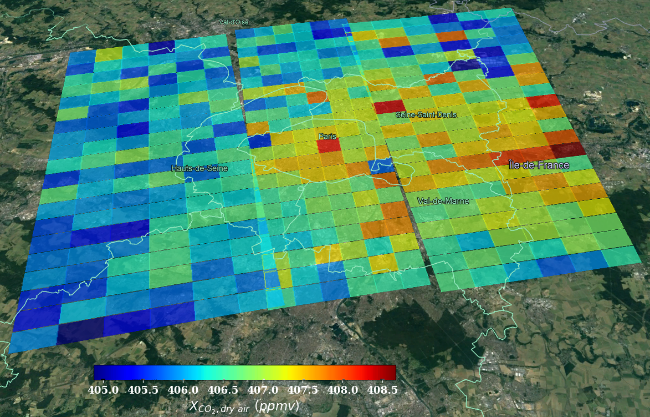
MicroCarb est un microsatellite d’environ 200 kilogrammes équipé d’un spectromètre. Celui-ci mesure le rayonnement solaire réfléchi par la surface terrestre, après une double traversée dans l’atmosphère. La mesure à très haute résolution spectrale permet d’identifier les raies d’absorption du CO2, dont les intensités peuvent être reliées à la quantité de CO2 dans l’atmosphère.

Avec des outils sophistiqués qui prennent en compte l’ensemble de la physique de l’interaction entre le rayonnement solaire et les molécules de l’atmosphère, on peut en déduire une estimation de la concentration atmosphérique de CO2 avec une précision d’environ 0,25 % sur une surface d’environ 40 kilomètres carrés.

simulation du mode exploratoire pour observer les villes
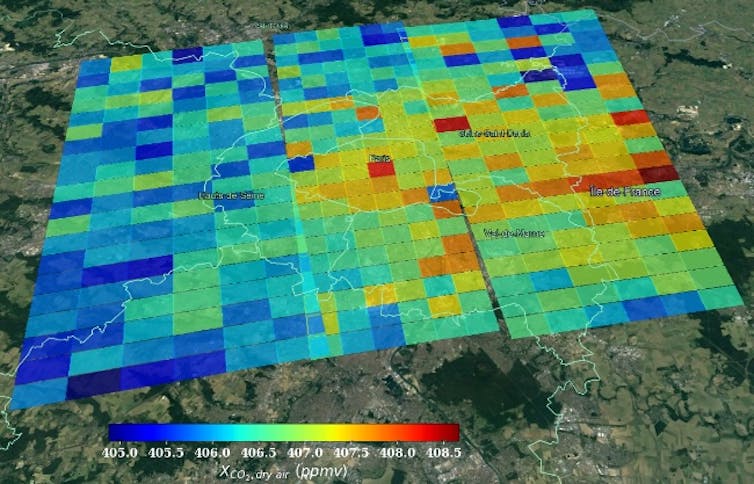
Le satellite Microcarb va tester un nouveau mode de fonctionnement, qui permet de zoomer fortement pour avoir une résolution de l’ordre de 2 x 2 kilomètres carrés. Cette fonctionnalité est dite exploratoire.
©CNES, Fourni par l’auteur

Le satellite est sur une orbite héliosynchrone pour faire des mesures autour de midi, ce qui permet d’avoir un éclairement solaire d’une intensité nécessaire à la mesure. Cette mission va donc assurer une continuité avec les missions précédentes, en particulier celle de la Nasa dont la poursuite semble fortement compromise suite au budget prévisionnel du gouvernement Trump pour 2026, notamment pour les sciences de la Terre.

Par ailleurs, le spectromètre de MicroCarb est fondé sur un concept optique innovant par sa compacité permise par l’utilisation d’un seul détecteur pour l’ensemble des canaux de mesures et d’une bande spectrale inédite pour l’amélioration de la précision de mesure. En fonction des performances de MicroCarb, ces innovations pourraient être reprises pour les prochaines missions déjà en préparation.

The Conversation

Carole Deniel travaille à l’Agence Spatiale Francaise, le CNES.

François-Marie Bréon est Responsable Scientifique de la mission MicroCarb. Il est professeur invité au Collège de France sur l’année universitaire 2024-2025. Par ailleurs, il a une implication citoyenne en tant que vice-président et porte-parole de l’Association Française pour l’Information Scientifique (Afis).

ref. Voir la planète respirer depuis l’espace, ou comment mesurer les gaz à effet de serre par satellite – https://theconversation.com/voir-la-planete-respirer-depuis-lespace-ou-comment-mesurer-les-gaz-a-effet-de-serre-par-satellite-260931

There is no known cure for ALS, but medical tourism exploits desperation for profit

Source: The Conversation – Canada – By Judy Illes, Professor, Neurology, University of British Columbia

Amyotrophic lateral sclerosis (ALS) is a devastating neurological disorder of unknown cause, in which motor nerve cells of the brain and spinal cord that transmit signals to muscles progressively degenerate. This weakens limbs and affects speech, swallowing and ultimately the ability to breathe, resulting in death, typically within just a few years.

Each year in Canada, approximately two people per 100,000 are diagnosed with ALS, amounting to about 1,000 cases based on the current population. In British Columbia, where we are located, the rate is estimated at just over three per 100,000 or roughly 190 new cases per year.

This equates to approximately 4,000 Canadiansand 400 British Columbians — living with ALS at any given time.

Rigorous ALS research is underway locally, nationally and internationally to slow — and ideally reverse — the relentless progression of this disease. Significant advances in understanding the genetic and environmental drivers of ALS are providing genuine hope that motor neuron diseases will one day be defeated.

As experts in neurology and ethics, we are committed to delivering the best available health care and information throughout B.C. and across Canada. Trust in science and informed hope are essential to achieving the best possible outcomes and the longest possible trajectories in enjoying life when facing the overwhelming odds of ALS.

A disturbing case

In June, CBC’s The National reported on the case of Geoff Sando, a person living with ALS who pursued an unproven intervention for his condition. Sando travelled to Moose Jaw, Sask., to seek treatment at a clinic that claims to provide a cure for ALS.

CBC’s The National reports on a Saskatchewan clinic claiming to offer ALS treatments.

The ALS Society of Saskatchewan and the provincial New Democrat Party allege the clinic attended by Sando and several other patients is a form of medical tourism — travelling elsewhere to seek treatment — that can prey on the most vulnerable in society: those whose quality of life is deteriorating, and whose futures are tragically cut short.

Medical tourism for a wide variety of other health-related conditions is not new. For example, treatments for cancer, strokes and orthopedic conditions have been available abroad for decades.

In the United States and Mexico, unfounded stem cell interventions for ALS have been advertised for years. But until recently, it had been unusual to find such offerings in Canada. Their emergence speaks to the need for Health Canada to revisit its guidance on both regulated health and unregulated wellness products, including all forms of treatments, medications and device-based approaches.


Read more:
Giving patients the ‘right to try’ experimental drugs is a political maneuver, not a lifesaver


We understand the urgency and desire to pursue any thread of hope in the face of desperation, but claims of dramatic improvement or cures from ALS by unregulated clinics that seem too good to be true are likely just that.

Before investing in alternative treatments, we recommend that patients conduct their due diligence by consulting with their health-care team and their provincial ALS society for guidance. Ineffective interventions can jeopardize not only recipients, but also caregivers, especially when financial resources are drained.

Trusted sources

Developing approved therapies for ALS has been painfully slow, as evidenced by the failure of more than 95 per cent of ALS clinical trials in the past 28 years. Only three drugs — riluzole, edaravone and tofersen — have been approved by Health Canada and the U.S. Food and Drug Administration.

Although riluzole and edaravone are only modestly effective, they remain the only widely approved pharmacological options for all forms of ALS. Tofersen is the first gene therapy recently approved to treat hereditary ALS caused by SOD1 gene abnormalities. Other treatments are being evaluated worldwide.

This marks only the beginning of such treatment approaches to not only hereditary ALS but also non-hereditary ALS, which makes up about 90 per cent of all cases.


Read more:
A promising new study could lead to a reduction in symptoms of amyotrophic lateral sclerosis (ALS)


For those affected by ALS and their families, ample resources are provided by various organizations, including ALS Canada and related provincial organizations, including the ALS Society of BC.

Future hope

Canadians generally trust science and scientists more than citizens of other countries and, on the whole, value science and believe in our government’s support for the work that scientists do.

But in this time of geopolitical upheaval, vast incursions of disinformation and reversals of prior evidence-based human and health rights abroad means keeping up this level of trust — trust that leads to hope — will only become more challenging.

The disproportionate suffering and impact on people who are marginalized by serious health conditions will only grow if dubious treatment offerings become normalized in Canada.

The Conversation

Erik P Pioro consults for MT Pharma, which manufactures edaravone (Radicava) and for Biogen, which manufactures tofersen (Qalsody). He has received funding support for ALS research from the ALS Association and the National Institutes of Health.

Judy Illes does not work for, consult, own shares in or receive funding from any company or organisation that would benefit from this article, and has disclosed no relevant affiliations beyond their academic appointment.

ref. There is no known cure for ALS, but medical tourism exploits desperation for profit – https://theconversation.com/there-is-no-known-cure-for-als-but-medical-tourism-exploits-desperation-for-profit-261057

Voyage en réalité virtuelle : un substitut au tourisme réel ou un impératif écologique ?

Source: The Conversation – France (in French) – By Adel Ben Youssef, A. Professor, Université Côte d’Azur

L’Unesco a mis en place, en 2021, des visites virtuelles immersives de musées ou de sites touristiques patrimoniaux afin notamment de soulager les infrastructures locales et de les préserver. GroundPicture/Shutterstock

Parcourir le monde sans quitter son salon : c’est désormais possible grâce au tourisme virtuel. Mais ces expériences numériques sont-elles une incitation au voyage réel ou pourraient-elles s’y substituer durablement, notamment face aux contraintes écologiques   ?


Il y a trente ans tout pile, Nintendo sortait l’ancêtre du casque de réalité virtuelle (VR), le Virtual Boy. Si à l’époque, l’équipement a fait un flop, trois décennies plus tard ces casques redessinent les contours de pans entiers de l’économie… comme le tourisme.

Le tourisme virtuel désigne l’ensemble des expériences touristiques réalisées à distance, via des médias numériques. La littérature économique et en gestion propose de définir le tourisme virtuel comme « l’ensemble des activités des personnes qui, pour apprendre ou se divertir, s’immergent dans une réalité virtuelle (VR) afin d’avoir l’illusion de changer de lieu ». Ce tourisme dématérialisé s’oppose au tourisme in situ, c’est-à-dire le voyage physique sur place, avec son lot de déplacements, de rencontres et de sensations réelles.

En 2020-2021, confinements et restrictions ont empêché des millions de personnes de voyager. Faute de pouvoir se déplacer, beaucoup ont découvert les visites virtuelles pour satisfaire leur envie d’évasion. La demande pour ces expériences a explosé. Le musée du Louvre a enregistré plus de 10 millions de visites virtuelles en deux mois seulement. Aujourd’hui, ces offres numériques continuent d’attirer les utilisateurs, devenant une part intégrante du paysage touristique. Une question demeure : le tourisme virtuel est-il devenu une option sérieuse pour la durabilité du tourisme ?

Amuse-bouche numérique

L’arrivée d’une nouvelle vague de technologies numériques appelées Industrie 4.0 au début des années 2010 a permis l’éclosion d’applications sérieuses en matière de tourisme virtuel. Ces applications permettent, sans quitter son salon, de voyager de manière immersive dans divers endroits du monde réservés jusque là aux touristes « in-situ ». La question s’est alors imposée d’elle-même : dans quelle mesure le tourisme virtuel remplacerait les vacances réelles ?

Pour beaucoup de voyageurs, la réalité virtuelle reste surtout un moyen séduisant de découvrir une destination avant d’y aller physiquement, une sorte d’amuse-bouche numérique. Et cela fonctionne particulièrement auprès des jeunes générations. En 2023, 34 % des personnes âgées de 16 à 24 ans et 35 % des 25‑34 ans utilisaient la réalité virtuelle. À l’inverse, certaines circonstances précises – contraintes écologiques, frein financier ou raisons sécuritaires – poussent une partie des utilisateurs à envisager la réalité virtuelle en substitution au vrai voyage.

Coût des équipements

Nous sommes encore loin de confondre tourisme virtuel et réel. La réalité virtuelle, même immersive, reste privée des sensations physiques et des rencontres spontanées qui font la richesse d’un vrai voyage. Aucune simulation ne restitue complètement les sensations réelles, telles que les parfums, les goûts ou les rencontres spontanées, éléments essentiels qui font tout le charme d’un vrai séjour touristique.


À lire aussi :
Impossibles voyages : le confinement, révélateur de notre rapport au monde


Un autre handicap à l’heure actuelle concerne les coûts des équipements. En France, l’Apple Vision Pro est vendu à partir de 3 999 euros. Ces coûts, jugés prohibitifs, ne permettent pas la démocratisation des usages. Cependant, de nouveaux casques associés aux smartphones, générant des expériences immersives de moindre qualité, arrivent massivement sur le marché. Des modèles autonomes comme le Meta Quest 3, à environ 549 euros, ou sa version plus abordable, le Meta Quest 3S, à environ 329 euros, rendent déjà la réalité virtuelle plus accessible au grand public. Leurs prix devraient encore baisser, comme pour toutes les technologies émergentes.

Gain écologique

Le vrai gain du tourisme virtuel se situe sur le plan écologique et environnemental. Le tourisme virtuel s’impose de nos jours comme une option durable pour limiter les impacts écologiques du tourisme. Une étude récente montre que le tourisme virtuel contribue à la réalisation de 12 des 17 des Objectifs de développement durable (ODD) et de 42 de leurs 169 cibles (25 %).

Remplacer un vol long-courrier par un voyage en réalité virtuelle représente un gain évident : aucun déplacement physique, c’est une empreinte carbone quasiment nulle par rapport au tourisme traditionnel. Par exemple, selon l’Agence de la transition écologique (Ademe), un seul vol aller-retour Paris-New York génère environ 1,7 tonne de CO₂ par passager, soit l’équivalent des émissions moyennes annuelles d’un Français pour le chauffage de son logement.

Eau de Venise limpide

Cette dimension a été mise en lumière lors des confinements, entre janvier et avril 2020, la réduction mondiale des émissions de CO2 a atteint environ 1 749 millions de tonnes, soit une baisse de 14,3 % par rapport à 2019. Elle est principalement due au secteur des transports (58 %).

À Venise, l’arrêt soudain du trafic touristique a rendu l’eau exceptionnellement limpide, permettant d’observer à nouveau les poissons dans les canaux.

Le tourisme virtuel apparaît comme une piste pour un tourisme plus durable et une réponse concrète au surtourisme dans des lieux très fréquentés ou fragiles comme le Machu Picchu 5pérou), Pompéi (Italie) ou la tour Eiffel à Paris. L’Unesco a lancé, dès 2021, des visites virtuelles immersives sur le Machu Picchu afin de détourner une partie du public, de soulager les infrastructures locales et de préserver ce site emblématique.

Ces voyages virtuels démocratisent l’accès à des lieux lointains ou difficiles d’accès. Les personnes à mobilité réduite (16 % de la population mondiale, selon l’Organisation mondiale de la santé), les familles à budget modeste ou les seniors qui ne peuvent plus prendre l’avion, peuvent découvrir le monde depuis chez eux. Cette accessibilité accrue, combinée à l’absence de frais de transport et d’hébergement, fait du tourisme virtuel une option bien plus économique pour le voyageur moyen. Cette dimension sociale est encore faiblement explorée.

Visite virtuelle avant le voyage

Des agences de voyage intégraient des visites immersives de leurs séjours, et des compagnies aériennes expérimentaient la réalité virtuelle en vol pour divertir leurs passagers. La compagnie aérienne allemande Lufthansa propose depuis plusieurs années des casques de réalité virtuelle dans ses salons d’aéroport, permettant aux voyageurs d’explorer virtuellement leurs futures destinations avant de monter à bord.

Pour la plupart, le virtuel ne remplace pas le voyage physique, il le complète. Le Club Med, déjà en 2016, proposait des visites immersives de ses villages aux Maldives (océan Indien). Des initiatives économiques sont apparues. Katie Wignall, une guide londonienne, a proposé des visites interactives permettant à des centaines de participants de découvrir depuis chez eux des lieux emblématiques de la capitale britannique, comme Buckingham Palace, ou des quartiers méconnus.

Vers une cohabitation du réel et du virtuel

À l’arrivée, faut-il opposer tourisme virtuel et tourisme in situ ? Plutôt que des rivaux, on peut y voir des formes complémentaires, appelées à coexister.

Les expériences numériques offrent un aperçu précieux, une manière d’apprendre, de préparer ou de prolonger un voyage. Elles permettent aussi de voyager autrement, de façon plus respectueuse de l’environnement ou plus accessible à ceux qui ne peuvent pas partir. D’un autre côté, le voyage physique demeure une aspiration profonde pour beaucoup : découvrir de ses propres yeux un paysage lointain, sentir l’atmosphère d’une ville, entrer en contact direct avec une autre culture – ce que le virtuel n’émule pas entièrement.

Les progrès rapides de l’intelligence artificielle (IA) pourraient changer la donne. Des agents intelligents capables de créer des expériences virtuelles sur mesure, immersives et dynamiques, rapprochent peu à peu le virtuel du réel, offrant des sensations inédites. Mais ces avancées posent aussi une question plus profonde : Jusqu’où accepterons-nous de confier notre désir d’évasion à des univers numériques générés par l’IA ?

The Conversation

Les auteurs ne travaillent pas, ne conseillent pas, ne possèdent pas de parts, ne reçoivent pas de fonds d’une organisation qui pourrait tirer profit de cet article, et n’ont déclaré aucune autre affiliation que leur organisme de recherche.

ref. Voyage en réalité virtuelle : un substitut au tourisme réel ou un impératif écologique ? – https://theconversation.com/voyage-en-realite-virtuelle-un-substitut-au-tourisme-reel-ou-un-imperatif-ecologique-257416

Imaginary athletes: Creating make-believe teammates, competitors and coaches during play

Source: The Conversation – USA – By Tracy Gleason, Professor of Psychology, Wellesley College

What would an imaginary companion add to a child’s solo practice? Elkhophoto/iStock via Getty Images Plus

The coach, the specialized equipment, the carefully tailored exercise regimen – they’re all key to athletic performance. But imagination might be an unexpected asset when it comes to playing sports.

The idea that athletic achievement depends on the mind isn’t new. Sport psychologists have known for years that working with an athlete on their mental game – visualizing the skill, kinesthetically feeling the swing – has a positive impact on actual performance. But these mental simulations draw only upon mental imagery – seeing and feeling the physical goals in the mind’s eye. Imagination offers a much wider range of possibilities.

What if your game could be helped by an imaginary friend?

In a recent retrospective study of college students, we discovered that imagination comes in handy in athletics in ways that are surprisingly social. The creation of what we termed imaginary athletes – a person or being that a child imagined in the context of athletics – enabled and motivated athletic play, especially for children between the ages of about 6 and 12. Imaginary athletes also provided companionship during athletic play.

boy on empty playground holds basketball looks like he's about to shoot
An imaginary teammate or competitor might help improve a child’s game.
NoSystem images/E+ via Getty Images

Remembering childhood imaginary athletes

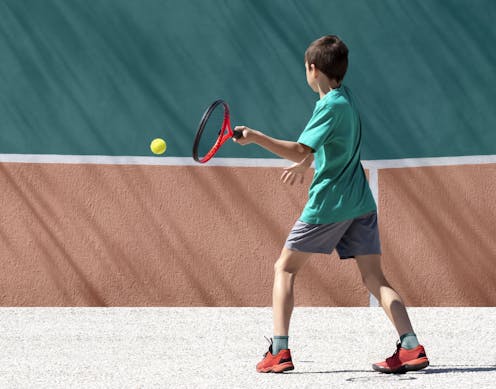
The most basic form of an imaginary athlete might be a wall, fence or even tree that makes a good opponent in a pinch. For a child or adolescent practicing a sport alone, a surface that provides a ball return or a steady target for a throw gives opportunities for practice usually requiring other players.

Is it any wonder, then, if the branches of the tree start to resemble a wide receiver’s arms, or an invisible goalie emerges in front of the fence? Solitary play might be a lot more fun if a make-believe teammate could provide an assist, or an invisible coach could appear and shout instructions during practice.

The college students in our study reported that such support, even if imaginary, made them play a little longer or try a little harder as kids.

About 41% of our sample of 225 college students reported creating at least one imaginary athlete at some point in middle childhood or early adolescence. Most, but not all, of these beings fell into three categories based on their characteristics.

The first we called placeholders, such as ghost runners. They are typically generic, amorphous, imaginary teammates created by groups of children when not enough real players are available.

The second type functioned as what we named athletic tools. They helped kids focus on their performance and improve their skills, usually by providing a worthy competitor, sometimes based on an admired professional athlete. The skills of athletic tools were often just above those of the child, drawing out the desire to be better, stronger, faster.

Social relationships, our name for the third kind of imaginary athlete, primarily served emotional functions, relieving loneliness and providing the child or adolescent with a sense of belonging, safety or companionship as they engaged in their sport.

Students who remembered imaginary athletes differed from their peers in two ways. First, more men than women reported creating these imaginary beings, possibly owing to the greater investment in and importance of athletics among boys versus girls. Second, people with imaginary athletes scored higher than those without on a current-day measure of predilection for imagination, but they were not more likely to report having created a make-believe friend or animal as a child.

Imagination is a valuable power

Creating an imaginary other might seem like a quirky, perhaps even childish, addition to sports practice. But actually, this behavior is entirely logical. After all, imagination is the core of human thought. Without it, we couldn’t conceptualize anything outside of the present moment that wasn’t already stored in memory. No thinking about the future, no consideration of multiple outcomes to a decision, no counterfactuals, daydreams, fantasies or plans.

Why wouldn’t people apply such a fundamental tool of day-to-day thought in athletic contexts? Participation in sports is common, especially among school-age kids, and many college students in our study described drawing upon their imaginations frequently when playing sports, especially when doing so in their free time.

girl about to kick a soccer ball
Imagination is a core part of being human – it’s not a surprise it comes out on the sports field.
Erik Isakson/Tetra images via Getty Images

The creation of imaginary athletes is also unsurprising because it’s one of myriad ways that imagination enhances people’s social worlds throughout their lives. Above all else, social relationships are what matter most to people, and using imagination in thinking about them is common. For instance, people imagine conversations with others, particularly those close to them, sometimes practicing the delivery of bad news or envisioning the response to a proposal of marriage.

In early childhood, kids create imaginary companions who help them learn about friendship and other’s perspectives. And in adolescence, when people focus on developing their autonomy and their own identities, they create parasocial relationships that let them identify with favorite celebrities, characters and media figures. Even in older age, some widows and widowers imagine continued relationships with their deceased spouses. These “continuing bonds” are efforts to cope with loss through imaginary narratives that are fed by and extrapolate upon years of interactions.

At each point in their developmental trajectory, people might recruit imagination to help them understand, manage, regulate and enjoy the social aspects of life. Imaginary athletes are merely one manifestation of this habit.

Because so many children and adolescents spend a lot of time engaged in sports, athletics can be a major environment for working on the developmental tasks of growing up. As children learn about functioning as part of a group, forming, maintaining and losing friendships, and mastering a range of skills and abilities, imaginary athletes provide teammates, coaches and competitors tailored to the needs of the moment.

Of course, an imaginary athlete is but one tool that children and adolescents might use to address developmental tasks such as mastering skills or negotiating peer relationships. Children who aren’t fantasy-prone might create complex training regimens to practice their skills, and they might manage their friendships by talking through problems with others.

But some report that turning inward generated real athletic and social benefits. “I got confidence out of my [imaginary athletes],” reported one participant. “If I could imagine beating someone, and [winning], then I felt like I could do anything.”

The Conversation

The authors do not work for, consult, own shares in or receive funding from any company or organization that would benefit from this article, and have disclosed no relevant affiliations beyond their academic appointment.

ref. Imaginary athletes: Creating make-believe teammates, competitors and coaches during play – https://theconversation.com/imaginary-athletes-creating-make-believe-teammates-competitors-and-coaches-during-play-254879

One of the biggest microplastic pollution sources isn’t straws or grocery bags – it’s your tires

Source: The Conversation – USA (2) – By Boluwatife S. Olubusoye, Ph.D. Candidate in Chemistry, University of Mississippi

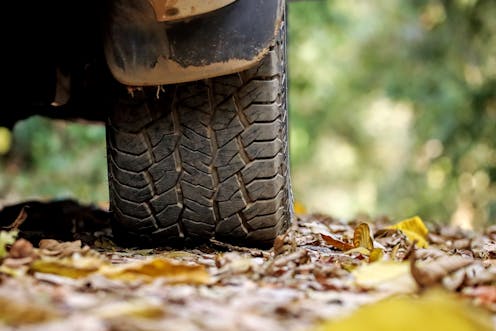
Most tires are made of synthetic rubber that sheds particles of microplastics over time. Rapeepong Puttakumwong/Moment via Getty Images

Every few years, the tires on your car wear thin and need to be replaced. But where does that lost tire material go?

The answer, unfortunately, is often waterways, where the tiny microplastic particles from the tires’ synthetic rubber carry several chemicals that can transfer into fish, crabs and perhaps even the people who eat them.

We are analytical and environmental chemists who are studying ways to remove those microplastics – and the toxic chemicals they carry – before they reach waterways and the aquatic organisms that live there.

Microplastics, macro-problem

Millions of metric tons of plastic waste enter the world’s oceans every year. In recent times, tire wear particles have been found to account for about 45% of all microplastics in both terrestrial and aquatic systems.

Tires shed tiny microplastics as they move over roadways. Rain washes those tire wear particles into ditches, where they flow into streams, lakes, rivers and oceans.

Along the way, fish, crabs, oysters and other aquatic life often find these tire wear particles in their food. With each bite, the fish also consume extremely toxic chemicals that can affect both the fish themselves and whatever creatures eat them.

Some fish species, like rainbow trout, brook trout and coho salmon, are dying from toxic chemicals linked to tire wear particles.

Researchers in 2020 found that more than half of the coho salmon returning to streams in Washington state died before spawning, largely because of 6PPD-Q, a chemical stemming from 6PPD, which is added to tires to help keep them from degrading.

A small jar with liquid containing tiny black flecks.
Most tire particles are tiny.
Saskia Madlener/Stacey Harper/Oregon State University, CC BY-SA

But the effects of tire wear particles aren’t just on aquatic organisms. Humans and animals alike may be exposed to airborne tire wear particles, especially people and animals who live near major roadways.

In a study in China, the same chemical, 6PPD-Q, was also found in the urine of children and adults. While the effects of this chemical on the human body are still being studied, recent research shows that exposure to this chemical could harm multiple human organs, including the liver, lungs and kidneys.

In Oxford, Mississippi, we identified more than 30,000 tire wear particles in 24 liters of stormwater runoff from roads and parking lots after two rainstorms. In heavy traffic areas, we believe the concentrations could be much higher.

The Interstate Technology and Regulatory Council, a states-led coalition, in 2023 recommended identifying and deploying alternatives to 6PPD in tires to reduce 6PPD-Q in the environment. But tire manufacturers say there’s no suitable replacement yet.

What can communities do to reduce harm?

At the University of Mississippi, we are experimenting with sustainable ways of removing tire wear particles from waterways with accessible and low-cost natural materials from agricultural wastes.

The idea is simple: Capture the tire wear particles before they reach the streams, rivers and oceans.

In a recent study, we tested pine wood chips and biochar – a form or charcoal made from heating rice husks in a limited oxygen chamber, a process known as pyrolysis – and found they could remove approximately 90% of tire wear particles from water runoff at our test sites in Oxford.

Biochar is an established material for removing contaminants from water due to its large surface area and pores, abundant chemical binding groups, high stability, strong adsorption capacity and low cost. Wood chips, because of their rich composition of natural organic compounds, have also been shown to remove contaminants. Other scientists have also used sand to filter out microplastics, but its removal rate was low compared with biochar.

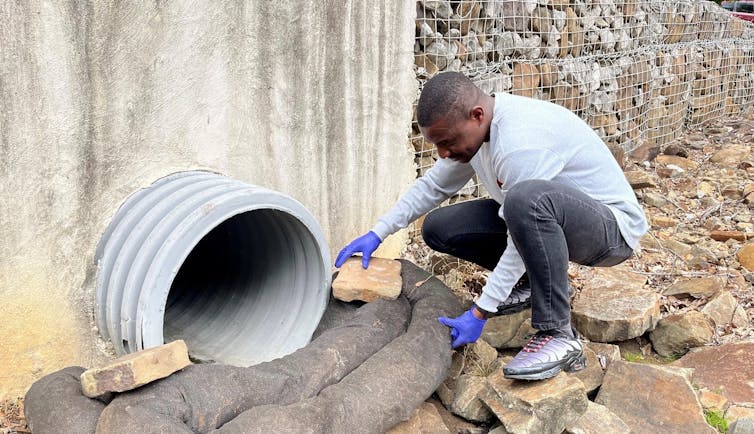
A man places flexible tubes filled with biochar under a storm drain.
Boluwatife S. Olubusoye, one of the authors of this article, positions a filter sock filled with biochar under a storm drain.
James Cizdziel/University of Mississippi

We designed a biofiltration system using biochar and wood chips in a filter sock and placed it at the mouth of a drainage outlet. Then we collected stormwater runoff samples and measured the tire wear particles before and after the biofilters were in place during two storms over the span of two months. The concentration of tire wear particles was found to be significantly lower after the biofilter was in place.

The unique elongated and jagged features of tire wear particles make it easy for them to get trapped or entangled in the pores of these materials during a storm event. Even the smallest tire wear particles were trapped in the intricate network of these materials.

Using biomass filters in the future

We believe this approach holds strong potential for scalability to mitigate tire wear particle pollution and other contaminants during rainstorms.

Since biochar and wood chips can be generated from agricultural waste, they are relatively inexpensive and readily available to local communities.

Long-term monitoring studies will be needed, especially in heavy traffic environments, to fully determine the effectiveness and scalability of the approach. The source of the filtering material is also important. There have been some concerns about whether raw farm waste that has not undergone pyrolysis could release organic pollutants.

Like most filters, the biofilters would need to be replaced over time – with used filters disposed of properly – since the contaminants build up and the filters degrade.

Plastic waste is harming the environment, the food people eat and potentially human health. We believe biofilters made from plant waste could be an effective and relatively inexpensive, environmentally friendly solution.

The Conversation

Boluwatife S. Olubusoye received partial funding from the Center for Biodiversity and Conservation Research (CBCR) at the University of Mississippi

James V Cizdziel received funding from the National Science Foundation (MRI Grant #2116597) for the instrument used to analyze samples for microplastics.

ref. One of the biggest microplastic pollution sources isn’t straws or grocery bags – it’s your tires – https://theconversation.com/one-of-the-biggest-microplastic-pollution-sources-isnt-straws-or-grocery-bags-its-your-tires-259440

Methane leaks from gas pipelines are a hidden source of widespread air pollution

Source: The Conversation – USA (2) – By Younes Ben Zaied, Full Professor in Finance, EDC Paris Business School

Gas pipelines can be dangerous to human health even if people don’t damage them by digging. Jim West/UCG/Universal Images Group via Getty Images

The Trump administration is decreasing the attention federal regulators pay to pipeline leaks. But leaks from natural gas pipelines don’t just waste energy and warm the planet – they can also make the air more dangerous to breathe. That air pollution threat grows not just in the communities where the leaks happen but also as far as neighboring states, as our analysis of gas leaks and air pollution levels across the U.S. has found.

For instance, in September 2018 the Merrimack Valley pipeline explosion in Massachusetts, which released roughly 2,800 metric tons of methane, damaged or destroyed about 40 homes and killed one person. We found that event caused fine-particle air pollution concentrations in downwind areas of New Hampshire and Vermont to spike within four weeks, pushing those areas’ 2018 annual average up by 0.3 micrograms per cubic meter. That’s an increase of about 3% of the U.S. EPA’s annual health standard for PM2.5. Elevated air pollution then showed up in New York and Connecticut through the rest of 2018 and into 2019.

In our study, we examined pipeline leak data from the U.S. Pipeline and Hazardous Materials Safety Administration from 2009 to 2019 and data about the state’s level of small particulate matter in the air from Columbia University’s Center for International Earth Science Information Network. We also incorporated, for each state, data on environmental regulations, per-capita energy consumption, urbanization rate and economic productivity per capita.

In simple terms, we found that in years when a state – or its neighboring states – experienced more methane leak incidents, that state’s annual average fine-particle air pollution was measurably higher than in years with fewer leaks.

A pile of wood and rubble sits next to a basketball hoop.
A 2018 natural gas leak and explosion in Massachusetts destroyed and damaged homes, killed one person and increased air pollution over a wide area.
John Tlumacki/The Boston Globe via Getty Images

Methane’s role in fine‑particle formation

Natural gas is primarily made of methane, a powerful greenhouse gas. But methane also helps set off chemical reactions in the air that lead to the formation of tiny particles known as PM2.5 because they are smaller than 2.5 micrometers (one ten-thousandth of an inch). They can travel deep into the lungs and cause health problems, such as increasing a person’s risk of heart disease and asthma.

The role of methane in exacerbating air pollution is well researched. In short, when methane is released into the atmosphere, it reacts with other chemicals that are already there, such as nitrogen oxides and volatile organic compounds. Often, sunlight triggers these reactions, which then form a type of fine particulate matter called “secondary organic aerosols,” which make up between 20% and 50% of total ambient PM2.5 mass.

So, when natural gas leaks, energy is wasted, the planet warms and air quality drops. These leaks can be massive, like the 2015 Aliso Canyon disaster in California, which sent around 100,000 metric tons of methane into the atmosphere.

But smaller leaks are also common, and they add up, too: Because the federal database systematically undercounts minor releases, we estimate that undocumented small leaks in the U.S. may total on the order of 15,000 metric tons of methane per year – enough to raise background PM2.5 by roughly 0.1 micrograms per cubic meter in downwind areas. Even this modest increase can contribute to health risks: There is no safe threshold for PM2.5 exposure, with each rise of 1 microgram per cubic meter linked to heightened mortality from cardiovascular and respiratory diseases.

On a flat piece of ground with some pipes emerging from it, a cloud of vapor escapes from a pipe.
Even relatively small methane leaks, like this one in 2022 in Pennsylvania, affect both the climate and air pollution levels that damage people’s health.
Pennsylvania Department of Environmental Protection via AP

Preventing leaks to protect climate and health

The most direct way to reduce this problem is to reduce the number and quantity of methane leaks from pipelines. This could include constructing them in ways or with materials or processes that are less likely to leak. Regulations could create incentives to do so or require companies to invest in technology to detect methane leaks quickly, as well as encourage rapid responses when a leak is identified, even if it appears relatively small at first.

Reducing pipeline leaks would not just conserve the energy that is contained in the methane and reduce the global warming that results from increasing amounts of methane in the atmosphere. Doing so would also improve air quality in communities that are home to pipelines and in surrounding areas and states.

The Conversation

The authors do not work for, consult, own shares in or receive funding from any company or organization that would benefit from this article, and have disclosed no relevant affiliations beyond their academic appointment.

ref. Methane leaks from gas pipelines are a hidden source of widespread air pollution – https://theconversation.com/methane-leaks-from-gas-pipelines-are-a-hidden-source-of-widespread-air-pollution-257786