À la découverte du pika « chou », un animal étonnant menacé par le changement climatique

Source: The Conversation – in French – By Violaine Nicolas Colin, Maitre de conférence en systématique et phylogéographie, Muséum national d’histoire naturelle (MNHN)

Les pikas, avec leurs petites oreilles rondes et leur cri perçant, sont devenus des stars des réseaux sociaux. Malgré leur nom, ils n’ont pas inspiré l’emblématique Pokémon Pikachu. Mais ces lagomorphes, plus proches des lapins que des rats, dont le mode de vie est plein de surprises, sont aujourd’hui menacés par le changement climatique et par les activités humaines.


Avec leur petite bouille craquante, leurs oreilles rondes façon peluche et leur cri aigu à faire sursauter un caillou, les pikas ont conquis les réseaux sociaux

Les vidéos virales sont légion : on les admire perchés sur un rocher, joues pleines d’herbes voire de fleurs ou encore poussant leur fameux cri évoquant un « piiiik ! ».

Extrait d’un documentaire de la chaîne britannique BBC sur le pika.

Mais derrière cette adorable façade se cache un animal étonnant, au mode de vie bien plus complexe qu’il n’y paraît. Surtout, son habitat est aujourd’hui menacé par les activités humaines.

Non, les pikas n’ont pas inspiré Pikachu

Commençons par tordre le cou à un mythe tenace : malgré leur nom qui pourrait prêter à confusion, les pikas n’ont rien à voir avec Pikachu, la mascotte électrique de Pokémon.

Contrairement à ce qu’on pourrait penser, le Pokémon Pikachu n’a pas été inspiré par les pikas.
Sadie Hernandez, CC BY-SA

Le créateur de la saga, Satoshi Tajiri, a expliqué dans une interview que le nom vient d’onomatopées japonaises : pikapika (« étincelle ») et chu (le cri de la souris). Pikachu est donc censé être une souris… et non un pika. D’ailleurs, avec leurs oreilles arrondies et leur queue invisible, les vrais pikas ne lui ressemblent pas du tout !

Contrairement à ce que leur apparence pourrait laisser penser, les pikas ne sont d’ailleurs pas des rongeurs : ce sont des lagomorphes, comme les lapins et les lièvres. Leur dentition le prouve : deux paires d’incisives à la mâchoire supérieure (contre une seule chez les rongeurs), et une paire en bas. Ce détail anatomique les classe dans un autre groupe bien distinct.

Les pikas font partie de la famille des Ochotonidae. Petits (moins de 30 cm), dotés de courtes oreilles rondes (moins de 4 cm), d’une queue cachée et d’un crâne sans « processus supraorbital » (c’est ainsi que l’on nomme un relief osseux), ils diffèrent des léporidés (lapins et lièvres), leurs cousins aux grandes oreilles et aux queues visibles.

Leur famille ne compte plus qu’un seul genre vivant : Ochotona, composé de 34 espèces. Il n’existe donc pas une seule, mais plusieurs espèces de pikas !

Il existe plus de 30 espèces de pikas différentes (ici, pika américain).
US Geological Survey

Ce nombre continue d’évoluer grâce aux recherches récentes qui continuent d’identifier de nouvelles espèces, et en particulier grâce aux études basées sur l’ADN.

L’ancêtre commun des pikas actuel daterait du Miocène (il y a environ 23 millions d’années). Les pikas sont originaires du plateau tibétain-Qinghai et se sont ensuite dispersés et diversifiés dans d’autres régions de l’Eurasie et de l’Amérique du Nord.

Des « lièvres criards » à l’habitat diversifié

Les pikas vivent en Asie (32 espèces), et en Amérique du Nord (2 espèces, dont le pika à collier et le pika américain). Selon leur espèce, ils occupent deux types d’habitats : les milieux rocheux et montagneux, ou bien les prairies et les steppes.

Spécimen de pika à collier (Ochotona collaris).
Animalia, CC BY-SA

Les premiers utilisent les éboulis comme refuge, tandis que les seconds creusent des terriers où ils stockent des plantes pour l’hiver. Car, non, les pikas n’hibernent pas : ils passent la mauvaise saison à l’abri, sur leurs réserves.

Ce qui explique que l’on voit autant de vidéos de pika transportant des plantes dans la gueule vers leur abri ! Les pikas des prairies et des steppes ont tendance à se reproduire plus souvent et à avoir des portées plus nombreuses, mais vivent généralement moins longtemps que ceux habitant les milieux rocheux ou montagneux.

Un trait bien connu chez les pikas est leur propension à vocaliser. Leur sifflement strident, qui leur vaut les surnoms de « lièvres siffleurs » ou « lièvres criards », sert à avertir leurs congénères d’un danger ou à défendre leur territoire. Dans les paysages de montagnes, leur cri retentit comme un signal d’alerte minuscule, mais efficace.

Un régime alimentaire… un peu spécial

Les pikas sont principalement herbivores… avec une particularité. Comme leurs cousins les lapins, ils pratiquent la cæcotrophie : ils mangent une partie de leurs excréments (les cæcotrophes) pour mieux digérer les fibres et récupérer certains nutriments produits par les bactéries de leur intestin.

Autrement dit : un repas en deux services ! Mais ils vont parfois plus loin : certaines espèces, comme le pika à lèvres noires, peuvent même manger les crottes… d’autres animaux !

Sur le plateau tibétain, où les températures descendent jusqu’à -30 °C, cette espèce ralentit son métabolisme l’hiver et complète son alimentation en consommant… des crottes de yak.


À lire aussi :
Rose : « Pourquoi le lapin mange-t-il ses crottes ? »


Des boules de poil en danger d’extinction

Malheureusement, tout n’est pas rose pour ces petites boules de poils. Quatre espèces sont déjà officiellement considérées comme en danger d’extinction par l’Union internationale pour la conservation de la nature (UICN)  : Ochotona argentata, O. koslowi, O. hoffmanni et O. iliensis.

Le pika de Koslov (O. koslowi), en danger d’extinction, est une espèce endémique en Chine.
Planche zoologique de 1890

En cause, la destruction des habitats par la déforestation, par le surpâturage, ou par les effets du changement climatique. En raison de leurs capacités de dispersion limitée et de leur habitat fragmenté, il leur est difficile de se déplacer pour trouver un habitat plus favorable.

L’avenir de beaucoup d’autres espèces de pikas n’a encore fait l’objet d’aucune évaluation, car les données disponibles sur leurs populations et leur écologie sont insuffisantes.

Poussés vers les sommets, mais pas toujours capables d’y survivre

Reste que beaucoup d’espèces de pikas sont biologiquement adaptées à des environnements hivernaux froids. Avec le réchauffement climatique, ils pourront soit remonter vers le nord (ce qui leur est souvent difficile dans des environnements de plus en plus fragmentés), soit s’établir à des altitudes plus élevées… ce qui risque de leur poser problème en raison du manque d’oxygène.

Des chercheurs ont ainsi comparé dix espèces de pikas dont l’habitat se situe entre le niveau de la mer et plus de 5 000 mètres d’altitude.

Ils se sont intéressés à trois gènes présents dans les mitochondries – les minuscules « centrales énergétiques » que l’on trouve à l’intérieur de chaque cellule. Ces gènes permettent à l’organisme d’utiliser l’oxygène pour produire l’énergie dont il a besoin. Chez les pikas de haute altitude, les protéines produites par ces gènes sont particulièrement efficaces : elles permettent de tirer un maximum d’énergie de l’air raréfié en oxygène. Mais chez les pikas vivant plus bas, ces protéines fonctionnent différemment : elles produisent plus de chaleur, ce qui est utile pour rester au chaud, mais elles sont moins bonnes pour générer de l’énergie cellulaire.

Résultat : si ces pikas des basses terres sont contraints de grimper pour échapper au réchauffement climatique, ils risquent de ne pas survivre là-haut. Leur corps n’est tout simplement pas fait pour fonctionner avec si peu d’oxygène.

La disparition des pikas ne serait pas anodine. Dans des écosystèmes comme le plateau tibétain, où ces animaux sont trop souvent tués à cause de la croyance erronée selon laquelle ils dégraderaient les cultures, ces animaux jouent un rôle important dans la chaîne alimentaire et le fonctionnement global des milieux naturels. Leur déclin pourrait entraîner des déséquilibres majeurs.

The Conversation

Violaine Nicolas Colin ne travaille pas, ne conseille pas, ne possède pas de parts, ne reçoit pas de fonds d’une organisation qui pourrait tirer profit de cet article, et n’a déclaré aucune autre affiliation que son organisme de recherche.

ref. À la découverte du pika « chou », un animal étonnant menacé par le changement climatique – https://theconversation.com/a-la-decouverte-du-pika-chou-un-animal-etonnant-menace-par-le-changement-climatique-262378


Les militants africains qui ont contesté l’esclavage à Lagos et en Côte-de-l’Or pendant l’époque coloniale

Source: The Conversation – in French – By Michael E. Odijie, Associate Professor, University of Oxford

Lorsque des historiens et le public pensent à la fin de l’esclavage domestique en Afrique de l’Ouest, ils imaginent souvent des gouverneurs coloniaux promulguant des décrets et des missionnaires œuvrant pour mettre fin au trafic local d’esclaves.

Deux de mes publications récentes racontent une autre histoire. Je suis historien spécialiste de l’Afrique de l’Ouest et, au cours des cinq dernières années, j’ai mené des recherches sur les idées et les réseaux anti-esclavagistes dans la région dans le cadre d’un projet de recherche plus large.

Mes recherches révèlent que les administrations coloniales ont continué à autoriser l’esclavage domestique dans la pratique et que des militants africains se sont battus contre cela.

Dans une étude, je me suis intéressé à Francis P. Fearon, un négociant basé à Accra, la capitale ghanéenne. Il a dénoncé le soutien à l’esclavage au sein du gouvernement colonial à travers de nombreuses lettres écrites dans les années 1890 (à l’époque où la colonie était connue sous le nom de Gold Coast – Côte de l’Or).

Dans une autre étude, j’ai examiné le Lagos Auxiliary, une groupe d’avocats, de journalistes et de membres du clergé au Nigeria. Leur campagne a permis l’abrogation en 1914 de la tristement célèbre Native House Rule Ordinance du Nigeria. Cette ordonnance avait été promulguée par le gouvernement colonial afin de maintenir l’esclavage local dans la région du delta du Niger.

Analysées ensemble, ces deux études montrent comment des militants locaux ont utilisé des lettres, la presse, les failles des empires coloniaux et leurs réseaux personnels pour s’opposer à des pratiques qui maintenaient des milliers d’Africains en esclavage.

Les méthodes mises au point par Fearon et le Lagos Auxiliary gardent toute leur actualité, car elles montrent comment des communautés marginalisées peuvent contraindre les détenteurs du pouvoir à se conformer à la loi. Elles nous rappellent que des témoignages locaux bien documentés, relayés sur le plan international, peuvent encore remettre en cause les discours officiels, imposer des changements politiques et obliger les institutions à rendre des comptes.

Une « abolition » coloniale qui n’en était pas une

L’Afrique de l’Ouest était une source importante d’esclaves pendant la traite transatlantique. La traite transatlantique a été abolie au début du XIXe siècle, mais cela n’a pas mis fin à l’esclavage domestique.

L’une des principales justifications de la colonisation en Afrique de l’Ouest était l’éradication de l’esclavage domestique.

En conséquence, lorsque la Côte-de-l’Or a été officiellement annexée en tant que colonie britannique en 1874, le gouvernement impérial a déclaré illégal le commerce des esclaves. Et la traite des esclaves a été criminalisée dans tout le sud du Nigeria en 1901. Sur le papier, ces mesures promettaient la liberté, mais dans la pratique, des failles ont permis aux propriétaires d’esclaves, aux chefs et aux fonctionnaires coloniaux de continuer à imposer le travail forcé.

Sur la Côte-de-l’Or, la loi d’abolition de 1874 n’a jamais été appliquée. Le gouverneur britannique a informé les propriétaires d’esclaves qu’ils pouvaient conserver leurs esclaves à condition que ceux-ci ne se plaignent pas. En 1890, l’esclavage des enfants était devenu très répandu dans des villes comme Accra. Selon les militants locaux, il était même toléré par le gouverneur colonial. Cela a conduit certains Africains à s’unir pour créer un réseau afin de s’y opposer.

La région du delta du Niger, au Nigeria, a connu une expérience similaire. L’administration coloniale a promulgué la Native House Rule Ordinance (ordonnance sur les règles domestiques) pour contrer les effets de la proclamation sur la traite des esclaves de 1901 qui criminalisait la traite des esclaves et punissait les contrevenants d’une peine de sept ans d’emprisonnement. Cette ordonnance obligeait chaque Africain à appartenir à une “maison” dirigée par un chef. Elle criminalisait également toute personne qui tentait de quitter sa « maison ».

Dans les royaumes du delta du Niger, comme Bonny, Kalabari ou Okrika, le mot “maison” ne désignait pas un simple foyer. Il s’agissait d’un grand groupe familial, comprenant des parents, des dépendants et des esclaves, dirigé par un chef et propriétaire de biens. À partir des années 1900, ces “maisons” devinrent les principales structures d’organisation de l’esclavage.

L’ordonnance obligeait donc les esclaves à rester avec leurs maîtres. Ces derniers pouvaient faire appel à l’autorité coloniale pour les punir. Les commissaires de district exécutaient les mandats d’arrêt contre les fugitifs. En échange, les chefs de maison et les chefs locaux fournissaient à l’administration coloniale une main-d’œuvre non rémunérée pour les travaux publics.

Des militants africains à Accra et à Lagos se sont organisés pour contester ce qu’ils percevaient comme le soutien de l’État colonial britannique à l’esclavage.

Fearon : un abolitionniste clandestin à Accra

Francis Fearon était un Africain instruit, actif à Accra pendant la seconde moitié du XIXe siècle. Il était très cultivé et faisait partie des cercles élitistes. Il était étroitement lié au journaliste Edmund Bannerman. Il écrivait régulièrement dans les journaux locaux, exprimant souvent ses préoccupations concernant le racisme à l’égard des Noirs et la dégradation des mœurs.

Le 24 juin 1890, Fearon envoya une lettre de 63 pages, accompagnée de dix annexes, à la Aborigines’ Protection Society à Londres. Ce dossier servira de base à plusieurs autres communications. Il y affirmait que le trafic d’enfants se poursuivait.

En guise de preuve, il a transcrit le registre confidentiel du tribunal d’Accra et a affirmé que le gouverneur W. B. Griffith avait ordonné aux propriétaires d’esclaves condamnés de récupérer leur « propriété ».

La tactique de Fearon était audacieuse. Il resta anonyme, s’appuya sur des greffiers pour obtenir des documents et fournit des preuves à la Société pour la protection des aborigènes. Il supplia cette dernière d’enquêter sur l’administration coloniale en Côte-de-l’Or.

Bien que la Société ait rendu public le scandale, les récits ultérieurs effacèrent discrètement la source africaine.

Les élites de Lagos s’organisent et nomment le problème

À l’instar de Fearon, des militants nigérians ont également écrit à la Société pour la protection des esclaves et des aborigènes. Ils dénoncèrent le gouvernement colonial nigérian pour sa complicité avec l’esclavage. Mais eux, choisirent de parler à visage découvert.

À cette époque, la Native House Rule Ordinance avait incité certains esclaves à fuir les districts où cette loi était appliquée. Ils se sont réfugiés à Lagos, où leur arrivée a permis aux élites locales de prendre connaissance de l’ordonnance. Elles ont alors lancé une campagne acharnée contre l’État colonial.

Parmi les principales figures de ce mouvement figuraient Christopher Sapara Williams, avocat, et James Bright Davies, rédacteur en chef du Nigerian Times. Parmi les autres personnalités, il y avait le politicien Herbert Macaulay, Herbert Pearse, un éminent commerçant, l’évêque James Johnson et le révérend Mojola Agbebi. Contrairement à la stratégie solitaire de Fearon, ils ont mené une offensive coordonnée contre l’administration coloniale. Ils ont rédigé des pétitions, informé les organisations européennes sympathisantes et inondé les journaux locaux de commentaires.

Leurs arguments mêlaient indignation humanitaire et solides connaissances du droit constitutionnel. Ils affirmaient que l’ordonnance était contraire aux idéaux libéraux britanniques et aux coutumes africaines.

Après des années de pression, la loi a été modifiée, puis discrètement abrogée en 1914.

Pourquoi ces histoires sont-elles importantes aujourd’hui ?

Les études contemporaines sur l’abolition de l’esclavage s’éloignent progressivement de la question « qu’a fait la Grande-Bretagne pour l’Afrique ? » pour s’intéresser au rôle joué par les Africains dans l’abolition de l’esclavage.

De nombreux abolitionnistes africains qui ont combattu et perdu la vie dans la lutte contre l’esclavage ont longtemps été ignorés. Cela commence à changer.

Les deux articles présentés ici mettent en lumière l’ingéniosité des Africains qui, des décennies avant l’apparition de la radio ou des ONG de défense des droits civiques, ont su utiliser les circuits d’information transatlantiques. Ils ont dénoncé les gouvernements coloniaux qui continuaient à s’appuyer sur des économies fondées sur le travail forcé longtemps après la fin officielle de l’esclavage.

Ils nous rappellent que la documentation locale peut remettre en cause les récits officiels. Le plaidoyer fondé sur des faits, la création de coalitions et l’utilisation stratégique des médias internationaux restent des instruments puissants.

The Conversation

Les recherches menées pour ces articles ont été financées par le Conseil européen de la recherche dans le cadre du programme de recherche et d’innovation Horizon 2020 de l’Union européenne (convention de subvention n° 885418).

ref. Les militants africains qui ont contesté l’esclavage à Lagos et en Côte-de-l’Or pendant l’époque coloniale – https://theconversation.com/les-militants-africains-qui-ont-conteste-lesclavage-a-lagos-et-en-cote-de-lor-pendant-lepoque-coloniale-262636

L’étonnante histoire du linguiste Nicolas Marr en URSS, ou quand la science est instrumentalisée à des fins idéologiques

Source: The Conversation – in French – By Thierry Poibeau, DR CNRS, École normale supérieure (ENS) – PSL

Un timbre à l’effigie de Nicolas Marr édité par la Poste de la république d’Arménie, où il a mené des fouilles archéologiques avant la révolution d’Octobre. Armenia Post/Wikimedia Commons, CC BY

Comment un philologue géorgien est-il devenu le théoricien officiel de la linguistique soviétique avant d’être renié par Staline? L’histoire de Nicolas Marr illustre les dangers de la science mise au service du pouvoir.


Nicolas Marr, né en 1865 (selon le calendrier grégorien) à Koutaïssi (Géorgie, Empire russe) et décédé en 1934 à Leningrad (URSS), occupe une place singulière dans l’histoire de la linguistique… moins pour ses apports scientifiques que pour l’influence politique qu’il exerça en Union soviétique, où sa théorie linguistique – aujourd’hui considérée comme largement fantaisiste, fut pendant plusieurs années érigée en doctrine officielle.

Son parcours intellectuel, culminant dans une consécration institutionnelle spectaculaire avant que Marr soit brutalement désavoué par Staline lui-même, offre un cas exemplaire de l’instrumentalisation des sciences humaines à des fins idéologiques. À l’heure où des gouvernements cherchent à encadrer les discours scientifiques sur des sujets sensibles (qu’il s’agisse du climat, du genre ou de l’histoire), le cas de Nicolas Marr rappelle que la liberté académique reste vulnérable face à des logiques politiques qui cherchent à imposer leurs propres normes de vérité.

Quand la linguistique devient idéologie

Formé comme philologue (spécialiste des textes anciens) à l’Université de Saint-Pétersbourg, Nicolas Marr se spécialise dans les langues caucasiennes. Son travail précoce est sérieux, et plutôt bien accueilli dans les cercles orientalistes de l’Empire russe.

Mais au fil des années, sa pensée s’éloigne des cadres méthodologiques établis, ce qui lui permet, fait rare pour un savant déjà reconnu avant 1917, de rester en vue sous le régime bolchévique : en requalifiant ses thèses de « matérialistes » et en les alignant sur les objectifs politiques (anti-occidentalisme, « modernisation linguistique » des peuples non russes, construction du socialisme), il transforme sa doctrine en orthodoxie institutionnelle, durablement adossée aux organes académiques et au pouvoir.

Marr est convaincu que l’approche traditionnelle concernant l’étude des langues indo-européennes (qui postule l’existence d’une langue mère commune, le proto-indo-européen, à l’origine de nombreuses langues d’Europe et d’Asie) est idéologiquement biaisée, car influencée par des présupposés élitistes et eurocentrés.

Il se lance alors dans la construction d’un nouveau paradigme linguistique, censé refléter une vision « matérialiste » de l’histoire des langues, c’est-à-dire une conception où le développement des langues est directement produit par les conditions sociales, économiques et historiques, conformément aux principes du marxisme.

Au cœur de sa théorie se trouve l’idée que toutes les langues humaines dérivent d’un protolangage unique fondé sur quatre éléments phonétiques fondamentaux : sal, ber, yon, rosh. Selon Nicolas Marr, ces « éléments de base » seraient les briques originelles de tout lexique, indépendamment des familles linguistiques reconnues. Il va jusqu’à proposer que l’évolution des langues obéit à des lois de type marxiste : la langue, comme tout autre superstructure (construction sociale dépendante des conditions économiques et des rapports de classe), serait le produit du développement des forces productives et l’histoire de la lutte des classes sociales.

Dans ses travaux ultérieurs, Nicolas Marr introduit la notion de langues « japhetiques », une famille hypothétique qu’il oppose aux langues indo-européennes (voir ici pour un compte rendu relativement favorable de l’époque, en 1936). Inspiré d’une relecture très libre de la Genèse, il affirme que les langues du Caucase – et bien d’autres – forment un rameau linguistique issu du personnage biblique Japhet. Cette classification fantaisiste, dépourvue de fondement comparatif rigoureux (par opposition à l’approche traditionnelle, fondée notamment sur des lois d’évolution phonétique strictement établies), lui permet d’insister sur l’existence d’un substrat linguistique commun à des peuples opprimés par le colonialisme occidental, théorie en phase avec l’idéologie soviétique des années 1920.

Une science d’État

Dans l’URSS des années 1920 et des années 1930, les sciences sont de plus en plus soumises à des critères politiques. Nicolas Marr, dont le discours allie un rejet de la tradition bourgeoise et une promesse d’unification linguistique du prolétariat mondial, s’impose rapidement comme un intellectuel « compatible ». Il avance que les langues évoluent selon les lois de la lutte des classes et que le langage reflète la structure sociale.

Cette approche plaît : Nicolas Marr, à la tête de nombreux instituts et entré à l’Académie des sciences en 1912, en devient vice-président et ses écrits deviennent obligatoires dans les cursus universitaires. Ses détracteurs sont marginalisés, voire écartés (comme Evgueni Polivanov).

La linguistique de Nicolas Marr (connue sous le nom de « nouvelle doctrine linguistique ») devient doctrine d’État : il ne s’agit plus seulement d’une théorie linguistique, mais d’une orthodoxie politique. La science du langage est désormais censée participer à la construction du socialisme.

L’influence de Nicolas Marr dépasse alors le simple champ académique. Ses idées sont mobilisées dans les débats sur les politiques de planification linguistique (c’est-à-dire l’intervention délibérée de l’État dans la codification, la standardisation, l’alphabétisation et l’enseignement des langues), en particulier concernant la création de systèmes d’écriture pour des langues jusqu’alors non écrites des républiques soviétiques. La linguistique devient un outil de gouvernement, au service de la « politique des nationalités » : il s’agit à la fois de favoriser le développement culturel des peuples non russes et de préparer leur intégration dans le cadre idéologique du marxisme-léninisme.

Nicolas Marr sert ici de caution savante : ses théories, même contestées sur le plan scientifique, sont valorisées parce qu’elles justifient une conception révolutionnaire et volontariste de la langue comme construction sociale. Dans ce contexte, contester Nicolas Marr, c’était risquer de contester la ligne du Parti.

Le retournement

La mort de Nicolas Marr en 1934 ne met pas immédiatement fin à son influence. Au contraire, ses disciples poursuivent l’expansion de son système et veillent à sa canonisation.

Mais en 1950, contre toute attente, Staline lui-même publie un article intitulé « Marxisme et questions de linguistique », dans lequel il critique ouvertement la théorie de Nicolas Marr. Il rejette l’idée que la langue serait déterminée par les classes sociales, réhabilite la linguistique comparée, et appelle à un retour à une approche plus empirique, voire classique.

Ce geste n’est pas anodin : Staline ne se contente pas de désavouer une théorie. Il démontre que, dans une dictature, l’autorité scientifique est subordonnée à la volonté politique suprême, et qu’elle peut être révoquée à tout moment. Les institutions obtempèrent : les disciples de Nicolas Marr sont discrédités, les manuels sont réécrits, et la théorie des quatre éléments disparaît du paysage scientifique.

Ce retournement brutal s’inscrit dans un contexte plus large de redéfinition des priorités idéologiques du régime. À la fin des années 1940, l’URSS amorce un resserrement doctrinal, marqué par la campagne contre le « cosmopolitisme » et le renforcement du nationalisme soviétique.

Dans ce climat, les constructions linguistiques trop spéculatives ou trop liées à l’internationalisme révolutionnaire deviennent suspectes. En dénonçant Nicolas Marr, Staline entend réaffirmer l’autonomie relative de certaines disciplines scientifiques, mais aussi reprendre la main sur un champ où l’orthodoxie avait été laissée aux mains d’un petit cercle de partisans zélés.

Ce n’est donc pas un retour à la science pour elle-même, mais une réaffirmation de l’autorité centrale dans l’arbitrage du vrai.

Héritage et leçons

Aujourd’hui, Nicolas Marr est largement oublié dans les manuels de linguistique. Son nom est parfois évoqué en histoire des sciences comme exemple extrême de science instrumentalisée, au même titre que Trofim Lyssenko en biologie. Ce dernier avait rejeté la génétique classique au nom du marxisme et imposé une théorie pseudoscientifique soutenue par le pouvoir soviétique.

Si ses premiers travaux sur les langues du Caucase semblent avoir été plus sérieux sur le plan philologique, ses grandes constructions théoriques sont aujourd’hui considérées comme infondées.

Mais l’histoire de Nicolas Marr mérite d’être relue. Elle rappelle que les sciences, surtout lorsqu’elles touchent au langage, à la culture et à l’identité, sont vulnérables aux pressions politiques.

Nicolas Marr n’est pas seulement un excentrique promu par accident ; il est le produit d’un moment historique où la vérité scientifique pouvait être décidée au sommet du Parti. Loin de n’être qu’un épisode marginal, l’histoire de Nicolas Marr éclaire un dilemme toujours actuel : celui de la vérité scientifique confrontée à des intérêts politiques, économiques ou idéologiques. Ce n’est pas tant le passé qui importe ici, mais ce qu’il permet encore de voir du présent.

The Conversation

Thierry Poibeau est membre de l’Institut Prairie-PSAI (Paris AI Research Institute – Paris School of Artificial Intelligence) et a reçu des financements à ce titre.

ref. L’étonnante histoire du linguiste Nicolas Marr en URSS, ou quand la science est instrumentalisée à des fins idéologiques – https://theconversation.com/letonnante-histoire-du-linguiste-nicolas-marr-en-urss-ou-quand-la-science-est-instrumentalisee-a-des-fins-ideologiques-262088

Hulk Hogan and the unraveling of worker solidarity

Source: The Conversation – USA (2) – By Brian Jansen, Assistant Professor of English and Media Studies, University of Maine

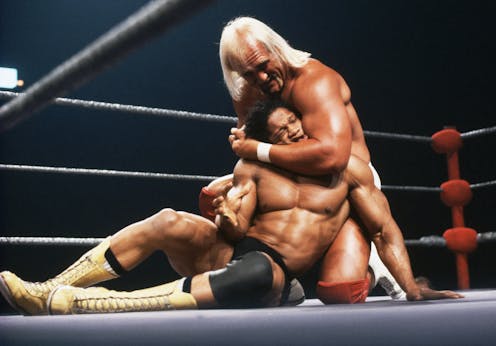
Hulk Hogan was arguably WWE’s biggest star in the 1980s. Wally McNamee/Corbis via Getty Images

Hulk Hogan’s death by heart attack at age 71 came as a shock to many fans of the larger-than-life wrestler who’d earned the nickname “The Immortal.”

But in many respects, the real surprise was that Hogan, born Terry Gene Bollea, lived as long a life as he did.

Despite the staged nature of its combat, professional wrestling is a notoriously dangerous career. Studies rank it among the riskiest professions. Wikipedia even maintains a comprehensive list of premature wrestler deaths.

The reasons for professional wrestling’s dangers are largely tied up in the industry’s working conditions. And part of Hogan’s legacy may be his complicity in those conditions. In 1986, he allegedly played a key role in undercutting a unionization effort – arguably the closest pro wrestling has come to unionizing.

‘The Body’ sticks his neck out

WWE’s first WrestleMania was held in 1985. The pay-per-view event was enormously successful and established the company – then known as WWF – as the nation’s preeminent wrestling promotion.

During the buildup to WrestleMania 2 the following year, wrestler Jesse “The Body” Ventura understood that performers had more leverage than they’d ever had. He began advocating behind the scenes for a wrestling union.

The story, as recounted by Ventura, goes like this: An acquaintance of Ventura’s in the NFL encouraged him to start organizing behind the scenes. WWE was behind the ball: In 1956, the NFL became the first American pro sports league to have its union recognized. It was followed by the NBA in 1957, MLB in 1966 and the NHL in 1967.

It helped that Ventura had little to lose. He’d be appearing in the forthcoming “Predator” film; should he get blackballed from wrestling for trying to form a union, he could probably earn a living as an actor. (Few could have predicted that he would go on to be elected governor of Minnesota in 1998.)

As Ventura brought together his peers to hash out the details of what a pro wrestling union might look like, he also included the promotion’s reigning champion, Hogan, with the thinking that the support of the WWF’s biggest star would boost the cause and insulate others from retaliation.

Instead, WWF owner Vince McMahon got wind of the effort and called his performers individually, threatening their jobs. The unionization effort sputtered, and McMahon eventually pushed Ventura out of wrestling.

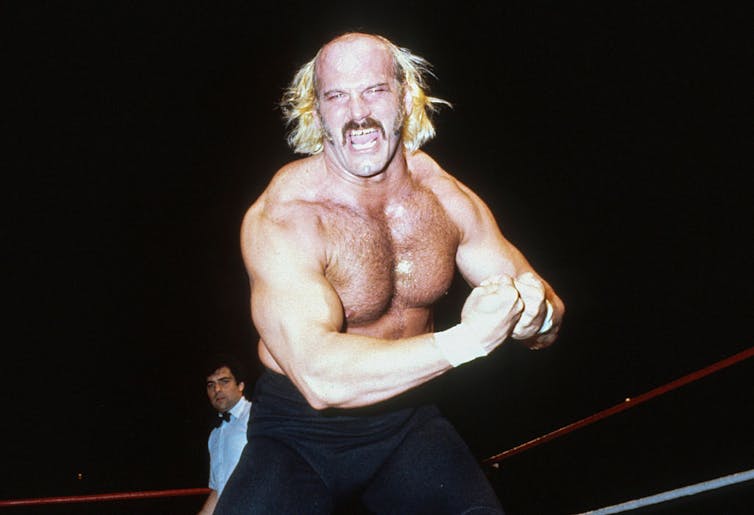
Balding man with huge muscles flexes and screams.
After Jesse ‘The Body’ Ventura tried to unionize his fellow wrestlers, WWE owner Vince McMahon caught wind of the effort – and nipped it in the bud.
WWE/Getty Images

Ventura went on to sue the WWF over unpaid royalties. During the discovery process, Ventura testified that he had learned it was Hulk Hogan who snitched to McMahon and effectively sabotaged the union drive.

Hogan never publicly admitted to telling McMahon about the rumblings of a union. The WWE has never confirmed nor denied the series of events.

Either way, there have been no unionization campaigns in professional wrestling since then.

‘Do the job’

Today’s WWE performers are legally classified as “independent contractors.” They’re responsible for their own travel, training, costuming and insurance, even as their employer owns their likeness and is indemnified from liability due to injury or death.

One of pro wrestling’s paradoxes is that the top promotion’s wrestlers aren’t unionized, even as its audience has historically skewed low income and blue collar. Wrestling has long been a family business, and most wrestlers are part-timers working additional jobs – often in blue-collar, union positions. Many of them are truck drivers and warehouse employees, construction workers and bouncers.

Wrestler-turned-scholar Laurence de Garis has written about how the language of wrestling is rich with references to labor. A “work” in wrestling is a staged storyline; to “do the job” is to lose a match. The goal of many performers is to be considered a “good worker” by peers, and WWE performers wrestle as many as 300 nights per year. The company has no offseason.

The steroid, painkiller and alcohol abuse that has been endemic to the industry may well stem from pressures on wrestlers to perform night after night, even if they’re in pain, for fear of losing their position. In the 1990s, Hogan himself confessed to extensive steroid use, which is known to contribute to heart disease.

You’d think that these harsh working conditions would make wrestlers ripe for a union. Why that hasn’t happened is up for debate. WWE bought out its competition in the early 2000s; perhaps its status as the last remaining major wrestling promotion in the nation has weakened the leverage of wrestlers. Or maybe the testosterone-driven, masculine nature of the sport makes solidarity seem like weakness.

Workers left holding the bag

The story of Ventura’s failed unionization bid is a story of what could have been. But in some sense, I see the story of the WWE as part of a broader story of the U.S. economy.

After a period of relative stability after World War II, American work since the 1980s has become dominated by mergers, buyouts, deregulation and financialization. Profits are increasingly generated by financial means such as interest and capital gains instead of through offering genuine goods or services. Layoffs and precarious work have become the norm.

WWE’s profits exploded in the 1990s and 2000s. The company went public in 1999 – though the McMahon family retained majority control – and dipped its toes into film production, reality television and online streaming.

In 2023, WWE merged with UFC’s parent company Endeavor to form TKO Group Holdings. TKO’s revenue was more than US$2.8 billion in 2024.

Meanwhile, Endeavor has been spun off as a Hollywood talent agency and was acquired by a private equity firm. The fruits of these new revenue streams and mergers haven’t trickled down to its in-ring performers. So far in 2025, WWE has laid off or released more than 30 wrestlers and at least 10 employees from the company’s corporate wing.

Middle-aged man with gray hair wearing a suit stands in a wrestling ring and raises both fists in celebration.
According to Forbes, Vince McMahon’s net worth is $3.1 billion.
Leon Halip/WireImage via Getty Images

Much as professional wrestlers have remained independent contractors, this arrangement has become normalized in the broader American economy, with more than 36% of Americans participating in the gig economy. In 2022, Stanford researchers identified gig work as a “social determinant of health,” since most gig workers lack employer-sponsored health care, paid time off or sick days.

All for one and none for all

In today’s economy, luck or happenstance, rather than merit, seem more likely to influence who achieves financial security and who scrapes by, living paycheck to paycheck.

Hulk Hogan, as professional wrestling’s biggest star for 20 years, certainly believed he earned his place at the top of the industry. But without diminishing his talents, it’s worth noting he arrived at precisely the correct moment in history to become that star. For many years, a wrestler was expected to have “shoot” skills – that is, actual wrestling expertise – should an opponent ever go rogue and turn a staged performance into a real fight.

But as McMahon’s power and influence expanded, the look, the sound and the character of the wrestler became most important. How well could a wrestler perform for the camera? How well could he sell T-shirts to young fans?

Despite Hogan’s limitations as a technical in-ring performer, his mullet, mustache and “24-inch pythons” – the nickname given to his enormous biceps – made him the right person at the right time.

Hogan also succeeded because his opponents in the ring were willing to make him look like a star. They were able to “do the job” and do it safely.

Another paradox of professional wrestling is that it requires performers to appear as if they are hurting one another. But their primary goal, in fact, is keeping one another safe.

To me, that sounds a lot like solidarity.

The Conversation

Brian Jansen does not work for, consult, own shares in or receive funding from any company or organization that would benefit from this article, and has disclosed no relevant affiliations beyond their academic appointment.

ref. Hulk Hogan and the unraveling of worker solidarity – https://theconversation.com/hulk-hogan-and-the-unraveling-of-worker-solidarity-262178

Trump has finally realised he needs economic and military muscle to force Putin to agree a peace deal

Source: The Conversation – UK – By Stefan Wolff, Professor of International Security, University of Birmingham

With only two days to go before the expiry of his latest ultimatum to end the Russian aggression against Ukraine, the US president, Donald Trump, dispatched his envoy Steve Witkoff to Moscow for the fifth time on August 6. After three hours of talks in the Kremlin between Witkoff and the Russian president, Vladimir Putin, Trump announced on social media that “Great progress was made!”

According to the US secretary of state, Marco Rubio, this includes a Russian ceasefire proposal that Witkoff is bringing back from his meeting with Putin. At a subsequent press conference, Trump indicated that he could soon meet in person with Putin and his Ukraine counterpart, Volodymyr Zelensky.

However, there was no indication of an imminent breakthrough in the US president’s quest for a ceasefire. While, during a phone call with Zelensky and European leaders, Trump appeared optimistic that a diplomatic solution was possible, he said it would take time.

Rubio also expressed caution, noting that “a lot has to happen” before a Trump-Putin-Zelensky summit, as there are “still many impediments to overcome”.

For once, Trump appears to realise he will only make progress on ending the war if he maintains the pressure on Putin. Shortly after the meeting between Putin and Witkoff, Trump issued an executive order stating: “The actions and policies of the Government of the Russian Federation continue to pose an unusual and extraordinary threat to the national security and foreign policy of the United States.”

This is hardly surprising, given that Trump’s frustration with Putin has steadily built up since the end of April. Increasingly viewing Putin as the main obstacle to peace in Ukraine, Trump has given the Russian president until August 8 to agree to a ceasefire.

Economic sanctions

Failure to comply would, Trump said, lead to severe economic disruption for Russia’s war economy. If activated, US sanctions are likely to target Russia’s so-called shadow fleet of oil tankers that the Kremlin uses to sell oil at prices above the G7-imposed price cap of (currently) US$60 (£45) per barrel.

The US president is also considering the imposition of 100% tariffs on imports from countries still buying Russian oil. This would particularly affect China and India, Russia’s largest costumers. If Beijing and New Delhi were to decrease their oil imports, it would deprive the Russian war economy of much-needed revenue.

But this is a big “if”. There are serious doubts that China can easily be pushed to wean itself off Russian oil supplies.

India has indicated that it will not bow to US pressure. While trade negotiations between Washington and Beijing are ongoing, talks with India have broken down for the time being.

But, as a likely indication of Trump’s determination to get serious on increasing pressure on the Kremlin and its perceived allies, the US president has imposed an additional 25% tariff rate on Indian imports to the US. This will be on top of the existing 25% rate, and will come into effect within three weeks.

China and India might continue to publicly resist US pressure. But, given the billions of dollars of trade at stake, they might try to use their influence with Putin to sway him towards at least some concessions that may lead to a ceasefire. This could give both Trump and Putin a face-saving way out – albeit not one that would move the dial substantially closer to a peace agreement.

There is also the question how Russia would respond – and concessions do not appear to be foremost on Putin’s mind. Expect more nuclear sabre rattling of the kind that has become the trademark of Dmitry Medvedev, the former Russian president and now one of the Kremlin’s main social media attack dogs.

Such threats were mostly ignored in public in the past. But in another sign of his patience wearing thin, Trump responded to Medvedev’s latest threat by ordering “two Nuclear Submarines to be positioned in the appropriate regions, just in case these foolish and inflammatory statements are more than just that”.

Military muscle

Neither the Kremlin nor the White House are likely to go down the path of military, let alone nuclear, escalation. But like Washington, Moscow has economic levers to pull too.

The most potent of these would be for Russia to disrupt the Caspian oil pipeline consortium, which facilitates the majority of Kazakh oil exports to western markets through Russia. If completely shut down, this would affect around 1% of worldwide oil trade and could lead to a spike in prices that negatively affects global economic growth.

ISW map showing the state of the war in Ukraine, August 6 2025.
The state of the war in Ukraine, August 6 2025.
Institute for the Study of War

Trump’s economic statecraft will probably produce mixed results at best – and only slowly. But the US president has also recommitted to supporting Ukraine militarily – at least by letting Kyiv’s European allies buy US weapons. Germany was the first to agree the purchase of two much-needed Patriot air defence systems from the US for Ukraine.

Since then, this new way of funding arms for Ukraine has been formalised as the so-called Prioritised Ukraine Requirements List.

It will require substantial financial commitments from Nato countries to turn this new support mechanism into a sustainable military lifeline for Ukraine. But the scheme got off to a relatively smooth start with the Netherlands and three Scandinavian members of the alliance – Denmark, Norway and Sweden – quickly following in Germany’s footsteps.

These recent developments indicate Trump has finally accepted that, rather than trying to accommodate Putin, he needs to put pressure on him and his backers – both economically and militarily.

If the US president wants a good deal, he needs more leverage over Putin. Weakening Russia’s war economy with further sanctions and blunting the effectiveness of its military campaign by arming Ukraine are steps that might get him there.

When and how the war in Ukraine ends will ultimately be determined at the negotiation table. But how soon the belligerents get there – and what the balance of power will be between them – will be decided on the battlefields of eastern and southern Ukraine.


Sign up to receive our weekly World Affairs Briefing newsletter from The Conversation UK. Every Thursday we’ll bring you expert analysis of the big stories in international relations.


The Conversation

Stefan Wolff is a past recipient of grant funding from the Natural Environment Research Council of the UK, the United States Institute of Peace, the Economic and Social Research Council of the UK, the British Academy, the NATO Science for Peace Programme, the EU Framework Programmes 6 and 7 and Horizon 2020, as well as the EU’s Jean Monnet Programme. He is a Trustee and Honorary Treasurer of the Political Studies Association of the UK and a Senior Research Fellow at the Foreign Policy Centre in London.

ref. Trump has finally realised he needs economic and military muscle to force Putin to agree a peace deal – https://theconversation.com/trump-has-finally-realised-he-needs-economic-and-military-muscle-to-force-putin-to-agree-a-peace-deal-262242

Ukraine’s drone air war has given Zelensky additional bargaining power with Putin – new research

Source: The Conversation – UK – By Marcel Plichta, PhD Candidate in the School of International Relations, University of St Andrews

Donald Trump appears to be making another attempt to organise a three-way summit with Vladimir Putin and Ukraine’s president, Volodymyr Zelensky, to end the Russian invasion.

Putin’s reluctance to meet his Ukrainian counterpart so far has often made it appear that he doesn’t think Ukraine has enough bargaining power to enter direct negotiations. But one thing that may be helping to shift the balance in Zelensky’s favour at this stage in the war is Ukraine’s enhanced drone capability.

Ukrainian drones have made it impossible for the Russian population to isolate itself from the effects of a conflict fought mostly on Ukrainian soil. Attacks on Moscow, in particular, have caused disruptions to air travel within Russia and forced the Russian government to divert dozens of air defence systems to ensure that the capital is protected.

Kyiv’s use of long-range one-way attack (OWA) drones against Russia has done far more damage to Russia’s military and economy than had previously been predicted. Previous drone analysis suggested that the current generation were too easy for defenders to shoot down to have a strategic impact and that prior cases of drone use overstated their strategic benefits.

Unlike traditional military drones, OWA drones are designed to detonate on or above a designated target. In my new research, I analysed Ukraine’s use of these OWA drones from mid-2022 to early 2025 to research whether they can indeed have a notable strategic impact on conflict. I found that Ukraine’s OWA drone campaign was not only able to overcome Russian air defences, but that the impact of the campaign has so far had far-reaching effects, ranging from where Russia has placed its air defences to stoking fuel price rises.

Independent estimates suggest that the damage to Russian oil facilities caused by OWA drones, from late 2024 to early 2025, could have cost Russia more
than US$700 million (£516 million). Ukraine’s drone campaign has done so much damage to Russian infrastructure and economy, that it has given Ukraine’s president, Volodymyr Zelensky, a significant bargaining chip with Vladimir Putin.

Ukraine launches drone attack on Moscow.

In early 2024, Ukraine launched a large series of strikes on Russian oil
infrastructure. By April, Nato officials claimed that the strikes had temporarily halted approximately 15% of Russia’s refining capacity, caused a halt in exports and caused fuel price spikes in Russia.

Once Ukrainian drones started regularly attacking targets deep within Russia, Moscow had to respond. Putin began by moving air defence systems. For instance, in early 2023, the Russian military placed Pantsir air defence systems on Moscow rooftops to intercept OWA drones. Russia was also forced to move air defence systems to public places to reassure the public, once Ukrainian drone attacks began to hit targets near major cities.

My assessment is based on data collected from Ukrainian and international journalists as well as independent researchers who documented Ukrainian strikes and the level of damage. On the economic side, Ukrainian drones have struck dozens of oil refineries, depots, and storage facilities. Russia’s economy is heavily reliant on the fossil fuel industry, so damaging these kinds of facilities quickly increases costs and lowers state revenue.

The Russian military is also under pressure from these drone attacks. Ukraine has successfully struck airbases, long-range radars and command centres that Russia needs to continue the war. Notably, Ukraine has struck the drone factory at Yelabuga (where Russia manufactures its own OWA drones) on multiple occasions in an effort to slow its drone campaigns.

Zelensky’s bargaining power

The success of the drone campaign gives Ukrainian diplomats a strong bargaining chip. Zelensky’s calls for a ceasefire in the sky and at sea in early 2025 were partially underpinned by the threat Ukraine was able to pose.

Belarussian president Alexander Lukashenko has said that Putin wanted to pressure Ukraine to end drone attacks by appealing to the US, which indicates that the Kremlin is feeling public pressure on this front. And recently Zelensky offered Donald Trump a “mega deal” to share its drone technology and bring the US up to speed, in exchange for US weapons.

So what accounts for the unexpected impact of Ukraine’s drone use? The data indicates that while individual drones are often easy to shoot down, large numbers of long-range OWA drones attacking multiple targets are tricky to stop. This is because Russia needs to guess where Ukraine will attack and place defences accordingly.

Russia has lots of air defence systems, but it is also the largest country on earth and cannot defend everything at once. The need to pick and choose what areas of the country to defend and which to leave vulnerable creates an air defence dilemma for Russia that Ukraine has exploited.

My findings that an OWA drone campaign can impose serious costs on defenders like Russia are consequential for how other countries should organise their air defences. As the case of Ukraine shows, the fact that these drones combine long-range and relative precision means that attackers can target lots of different sites across the country and take circuitous paths around air defence to get there. These factors make it difficult for all nations to anticipate where the next attack will come from and take action in time.

This is a global problem. The relative ease of manufacturing, procuring, and proliferating OWA drones, compared to a missile means that many states and terror groups could acquire the ability to launch long-range attacks much more easily than a few years ago. Drones costs tend to be in the tens of thousands of dollars while missiles are often in the hundreds of thousands at the very least.

Countries that might not benefit from procuring OWA drones may still have to find ways to intercept hostile ones. The UK, for instance, found itself shooting down Houthi OWA drones that threatened shipping in the Red Sea. The UK development of “Dragonfire”, a ship-mounted air defence laser for the Royal Navy, was at least partially motivated by this kind of threat.

Even as Kyiv puts more effort into developing conventional missiles, OWA drones have proven too effective to ignore. For the Russian leadership, these attacks create a serious dilemma and force them to pick what parts of the country are “worth” defending. This kind of technology is altering the nature of conflict and other nations will need to take note.

The Conversation

Marcel Plichta works as an intelligence instructor for Grey Dynamics Ltd.

ref. Ukraine’s drone air war has given Zelensky additional bargaining power with Putin – new research – https://theconversation.com/ukraines-drone-air-war-has-given-zelensky-additional-bargaining-power-with-putin-new-research-260336

As protesters and politicians call for the closure of asylum hotels, what are the alternatives?

Source: The Conversation – UK – By Giorgia Doná, Professor of Forced Migration and Co-director of the Centre for Migration, Refugees and Belonging, University of East London

Anti-migration protesters and counterprotesters have clashed in recent weeks outside of hotels housing asylum seekers. While the protests have not reached the violent scale of the riots in summer 2024, a number of people have been arrested on charges related to violent disorder. Councillors in Epping have called for the closure of asylum hotels in the area.

The UK government has a statutory duty under the Immigration and Asylum Act 1999 to provide accommodation to asylum seekers while their claims are being assessed if they would otherwise be destitute.

Asylum hotels have only been used at scale relatively recently. Home Office figures show that as of March 2025, 32,345 asylum seekers were housed in 218 hotels, down from a peak of more than 56,000 in more than 400 hotels in September 2023.


Read more:
How the UK became dependent on asylum hotels


As well as the financial costs, long term use of hotels poses numerous challenges to those living there. This includes loss of privacy and independence, lack of access to cooking facilities, exclusion from meaningful activities and social isolation.

The government has pledged to end the use of hotels by 2029, by moving asylum seekers to more cost-effective accommodation. This is expected to mean expanding the use of former military barracks, and working with local authorities to house people.

Here are three alternatives to asylum hotels and what they would mean for those living there and the surrounding communities.

1. Large-scale sites like military bases

Large former military sites such as Wethersfield air base in Essex are currently used to house asylum seekers, and are set to be expanded.

These sites are known for their poor conditions inside. An all-party parliamentary group report described these kinds of facilities as quasi-detention. They are overcrowded and isolated, with inadequate access to healthcare and legal services. Acts of self harm have been reported at such sites.

One site, Napier barracks, has been slated for closure after years of concerns about overcrowding and poor conditions. Keir Starmer also said during the 2024 election campaign that Wethersfield should close – though it is now one of the sites targeted for expansion.


Read more:
Asylum housing tycoon is among the UK’s wealthiest – here’s what conditions are like inside the properties his company runs


Scaling up these facilities also risks replicating the community tensions associated with hotels. There have been demonstrations and unrest at large accommodation sites already.

2. Community-based housing

Arguably the best opportunity for addressing the hotel issue is reviving partnerships between the Home Office and regional and local governments.

A model for this already exists. The “dispersal system”, introduced by the Immigration & Asylum Act, offers eligible asylum seekers accommodation in communities around the UK to ease pressure on particular areas. Before this, asylum seekers tended to seek accommodation primarily in London and the south-east.

At present, 62% of asylum seekers awaiting a decision are accommodated by this system, primarily in shared housing.

Since 2012, the Home Office has contracted private companies to source this accommodation. Local authorities have been largely cut out, and research has found that accommodation standards have been lowered considerably.

For the system to be an effective alternative to hotels, partnerships with local authorities should arguably be brought back in. Regional and local governments have crucial knowledge of the housing stock, and connections with landlords and housing providers. Local authorities have also expressed concern with housing standards, availability and competition under the current privatised system.

Lessons can be learned from local government management of asylum housing in the 2000s. This system allowed for more robust oversight of accommodation standards, and better integrated local support and welfare services with accommodation.

Local authorities are better placed than private contractors to ensure that the management of asylum accommodation is mindful of how it relates to the wider community.

Inspiration might be drawn from the UK’s recent Syrian and Afghan resettlement schemes. These have been organised through effective partnerships with local authorities, reflecting developments across Europe.

A clause allowing for an early break in asylum accommodation contracts in 2026 offers the opportunity for reform. But given the massive pressures on local government budgets, much will depend on what financial support the Home Office is prepared to put towards this process.

A recent report from asylum charities proposes a subsidy scheme to support local and regional authorities in purchasing and renovating homes for asylum seekers and others in need of temporary housing.

3. Homestays

A novel alternative to housing asylum seekers is to welcome them into people’s homes. This is probably the most radical option. But it has previously been used, in the UK, at scale: the Homes for Ukraine scheme connected over 150,000 people seeking refuge with people willing to host them.

In May 2023, one of the architects of the plan, Dr Krish Kandiah, urged the government to adopt a similar scheme for refugees from Sudan. Foster care placements for unaccompanied children seeking asylum have also had positive outcomes.


Read more:
‘Friends for life’: how living with locals helped refugees feel at home in a new country


While evidence suggests that it is easier to find hosts for women and children, in European countries homestay accommodation is becoming a complementary option to mainstream models.

In Germany, homestay offers a flexible alternative to traditional reception systems that host asylum seekers separately from residents. In Italy, coabitazioni solidali (individuals sharing spaces under the principle of solidarity) operate across the country. As the UK government phases out hotels, the use of homestays deserves closer attention.

Even before the recent flare-ups, it was clear that hotel use has become unsuitable and unsustainable housing for asylum seekers. Asylum accommodation needs to be rethought, ideally as part of a broader response to the UK’s housing emergency.

The Conversation

The authors would like to acknowledge the contributions of Anna Lindley to this piece.

Giorgia Dona, Charlotte Sanders and Paolo Novak do not work for, consult, own shares in or receive funding from any company or organisation that would benefit from this article, and have disclosed no relevant affiliations beyond their academic appointment.

ref. As protesters and politicians call for the closure of asylum hotels, what are the alternatives? – https://theconversation.com/as-protesters-and-politicians-call-for-the-closure-of-asylum-hotels-what-are-the-alternatives-262270

Longer lashes, lasting damage? What to know about lash serums

Source: The Conversation – UK – By Alison Ng, Lecturer in Optometry and Vision Sciences, Cardiff University

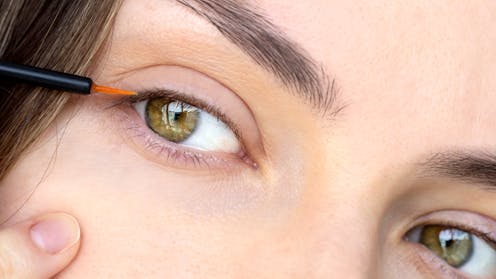
Zaruna/Shutterstock

Longer, darker lashes are having a moment. For those avoiding the risk or expense of lash extensions, serums can seem like a safer, more affordable option. But not all lash serums are created equal – and some come with hidden side-effects.

The key difference lies in the ingredients. Some lash serums use conditioning agents like peptides or plant oils, while others contain powerful pharmaceutical ingredients originally developed for treating eye disease.

In 2001, a new medication called bimatoprost was approved to treat glaucoma and ocular hypertension – two conditions involving pressure buildup inside the eye that can damage the optic nerve and cause vision loss.

Unlike earlier treatments, bimatoprost worked well for patients who hadn’t responded to other drugs, had fewer systemic side effects (effects on the whole body rather than just the eye) and required less frequent dosing than some other glaucoma drops.

But doctors soon noticed something unexpected: their patients’ eyelashes were growing longer, thicker and darker.

Researchers still don’t fully understand how bimatoprost stimulates lash growth, but it appears to extend the anagen phase – the active growth phase – of the lash life cycle.

In 2008, the same drug (now marketed as Latisse) was approved by the US Food and Drug Administration (FDA), the federal agency responsible for evaluating the safety and effectiveness of drugs and medical devices, to treat eyelash hypotrichosis, a condition where eyelashes are sparse or missing.

It was initially prescribed for people who had lost their lashes due to chemotherapy, alopecia areata (an autoimmune disorder causing hair loss), or trichotillomania (a compulsive hair-pulling condition).

Extensive research shows that bimatoprost is effective at making lashes longer, thicker and darker, with noticeable results after 16 weeks of daily use. But the results are temporary: once you stop using it, your lashes return to their natural growth cycle.

Side-effects

Bimatoprost belongs to a class of medications called prostaglandin analogues (PGAs), which have been widely used in eye care since the 1990s. Because of this, its side-effects are well documented. When used for lash growth, bimatoprost can cause burning, redness, dryness and eye irritation. These usually go away when the product is stopped.

But there are also more serious cosmetic changes to be aware of, including darkening of the skin on the eyelid, fat loss around the eyes, creating a hollow, sunken look, permanent iris darkening (the coloured part of the eye), unwanted hair growth where the serum spreads and, in rare cases, drooping of the upper eyelid, which may require surgery to correct.

In the UK, bimatoprost remains a prescription-only medication. However, the boom in over-the-counter lash serums sold online and in shops has made similar products more accessible – and potentially more confusing.

A recent investigation by the UK government found that almost one in four lash serums sold in the UK contain PGAs such as isopropyl cloprostenate. This chemical is not as well studied as bimatoprost, but case reports suggest it can cause skin darkening, dryness and hollowing of the eye area, sometimes after just a few weeks of use.

In the US, the FDA issued warnings over a decade ago stating that any cosmetic product containing these ingredients and making growth claims should be treated as a drug, not a cosmetic.

A sample of quotes from 1-star reviews of an isopropyl cloprostenate lash serum that can be purchased online from the US. These reviews highlight the range of side effects and their speed of onset.
Alison Ng, CC BY-ND

Consumers may be unaware they’re using a pharmaceutical-mimicking ingredient. Sweden banned PGAs in lash serums in 2013. Canada prohibits them in all cosmetic products. Even if a product claims to be “PGA-free,” check the ingredients list: anything ending in “-prost” is a red flag.

‘Natural’ or peptide-based alternatives

Some lash serums use peptides, which may help strengthen lashes by boosting keratin or supporting follicle health. These are often combined with conditioning agents to reduce breakage. While seen as a gentler alternative to PGAs, most studies on peptides focus on scalp hair, not eyelashes, so evidence for lash growth is limited.

Other serums rely on castor oil or plant-based extracts, but their effectiveness is largely anecdotal and not supported by robust science.

There is no guaranteed, side-effect-free way to make lashes grow dramatically longer. Prescription lash serums like bimatoprost are proven to work – but they come with potential risks, especially with long-term use. Over-the-counter products may seem safer, but many contain hidden prostaglandin analogues buried deep in the ingredients list with similar side effects. Peptide and oil-based serums are less risky, but there’s little strong evidence that they work.

Our eyes are delicate and, unlike beauty trends, they’re not replaceable. If you’re thinking about enhancing your lashes, read the label, do your research and speak to an eye care professional. The price of longer lashes shouldn’t be your eye health.

The Conversation

Alison Ng is affiliated with the British Contact Lens Association (BCLA), a charitable membership organisation, which disseminates evidence-based practice guidance for eye care practitioners. Alison Ng is a member of the Association of Optometrists (AOP), whose role is to protect, support and represent eye care practitioners in the UK in protecting the nation’s eye health.

Byki Huntjens is President of the British Contact Lens Association (BCLA), a charitable membership organisation, which disseminates evidence-based practice guidance for eye care practitioners.
Byki Huntjens is an employee the Association of Optometrists (AOP), whose role is to protect, support and represent eye care practitioners in the UK in protecting the nation’s eye health.

ref. Longer lashes, lasting damage? What to know about lash serums – https://theconversation.com/longer-lashes-lasting-damage-what-to-know-about-lash-serums-261924

The five best films about women footballers – from Gregory’s Girl to Bend it Like Beckham

Source: The Conversation – UK – By Sara Gibbings, Lecturer, Department of Film and Television, University of Bristol

As the roar of the Lionesses’ victory at the Euros quietens to a mere purr, there can be little doubt that women’s football is entering a new era for representation on both big and small screens.

As a producer, I love both watching and making sports programmes. There is something about the drive and determination of the athletes, mixed with the undying passion of the fans, that is both wildly optimistic and tear-your-hair-out frustrating in equal parts.

I was the UK series producer for season one of Welcome to Wrexham, and have recently worked on an upcoming series about the players of one of the best clubs in the world. However I, and many of my colleagues, are often met with resistance when it comes to putting female athletes, pundits and presenters front and centre.

Though the pace of progress feels glacial for many, fans are voting with their remote controls and demanding more. To mark the announcement of a sequel to Bend It Like Beckham (2002), here’s a look at five of my favourite moments when women’s football was celebrated on screen.

1. Gregory’s Girl (1981)

This Scottish coming-of-age romantic comedy came out just ten years after the reversal of the FA’s ban on women’s football in 1971.

In the film, Gregory (John Gordon Sinclair), a lanky, horny teenage boy with a mop of auburn hair, falls for Dorothy (Dee Hepburn). She’s an ambitious and attractive female football player who fights for a place on the boys’ team, battling endemic sexism and searching for an outlet for her skill and passion. Hepburn trained with Partick Thistle FC to hone her football skills for the part.

The trailer for Gregory’s Girl.

Watching the film again now, it feels uncomfortably dated at times. The women are objectified and patronised at every turn.

In the opening scene, Gregory and his hormone-driven mates spy on an undressing nurse, making lewd comments. Dorothy is condescendingly addressed as “Dear” by the coach and initially told not to bother trying out. And in a Home Economics class, one of Gregory’s friends slaps a girl on the bum, leaving a hand-print in flour.

But all this considered, seeing a girl playing football better than boys was still undoubtedly innovative at the time.

2. Bend It Like Beckham (2002)

Who would have thought a comedy about a teenage Sikh girl wanting to play football in west London would win the hearts of millions of people around the world?

Director and writer Gurinder Chadha’s comedy is about Jess Bhamra’s (Parminder Nagra) desire to buck family tradition and join the Hounslow Harriers with her friend Jules (Kiera Knightley) – a team coached by a former Irish player, Joe (Jonathan Rhys Meyers). It’s a funny and beautifully bittersweet account of the complexities of fitting into British society by first- and second-generation immigrants – particularly girls – directed with the lightest of touches.

The trailer for Bend it Like Beckham.

With a cast rounded out by Archie Panjabi, Juliet Stevenson, Shaznay Lewis and Anupam Kher – and with cameos from Gary Linker, Alan Hansen and John Barnes – the film received a raft of nominations from awards academies around the world.

Not only did the film do wonders for the careers of the lead actors, it also put British women’s football on the map. With the hilarious wedding and offside scenes (some of us use salt and pepper mills to figure out the offside rule to this day), it stands the test of time. So when, at the Euros in Basel this summer, Chadra announced that a sequel is in the works, there was great excitement.

As women’s football has come on in leaps and bounds, will Bend It Like Beckham now become Kick It Like Kelly?

3. Under Pressure: The US Women’s World Cup Team (2023)

There are myriad documentary series about men’s football – Sunderland ’Til I Die (2018), All or Nothing (2022) and Welcome to Wrexham (2022), to name just three. The absence of similar series for women’s football is, frankly, an inexcusable failure of television commissioning. Women, it seems, must make do with a limited series, at best.

The trailer for Under Pressure: The US Women’s World Cup Team.

Bucking the trend, this four-part series Under Pressure goes behind the scenes with the US team as they aim for the “three-peat” in 2023 – their third World Cup victory. It’s an aim they fail to reach, as they don’t even make the quarter-final. With high production values and great access to the players and coaching team, the series offers a rare glimpse of life as a female professional football player. More like this please.

4. Forever (2023)

This Swedish gem is one of the best teen football films currently on streaming. Filmed in the town of Uddevalla, the story focuses on Mila (Flutra Cela), a hopeful young player who comes from a working-class, single-parent immigrant family, and her middle-class friend Kia (Judith Sigfridsson), whose life is just that bit easier.

They play in a small-town football team and long to escape to Stockholm and professional success. When their new coach Lollo (Agnes Lindström Bolmgren) ups the ante and trains them hard to make it to the Gothia tournament, they begin to drift apart.

The trailer for Forever.

This realistic and sometimes gritty portrayal of female adolescence and friendship – complicated by class, boys, periods and growing up – is played by professional footballers Cela and Sigfridsson. Though the script is baggy in places – there are too many football montages, and it could do with a 15-minute trim – the lack of gloss and Hollywood-ification is very welcome.

5. It’s All Over: The Kiss That Changed Spanish Football (2024)

The 2023 Women’s World Cup was historic in many ways. Despite being hosted all the way across the world in Australia and New Zealand, there were almost 2 million fans in attendance. There was Ireland’s Katie McCabe’s phenomenal goal (scored directly from a corner kick), the mighty USA being knocked out early, and an electric Spain versus England final. The Lionesses were never able to come back after Olga Carmona’s goal in the 29th minute, and La Roja deserved the trophy after a brilliant tournament.

It was a win all-round for women’s football. And that should have been that.

However, the ugly turn of events in the awards line-up, with former coach Luis Rubiales grabbing and kissing player Jenni Hermoso without her consent, exposed to the world behaviour that many of Spain’s women players had been complaining about for years.

In this documentary, the players bravely discuss the issues that led up to that moment, and the ultimately positive effect it had on Spanish women’s football.

The trailer for It’s All Over: The Kiss That Changed Spanish Football.

While female representation on screen has come a fair distance since the FA ban on women’s football in the UK (1921-1971) was overturned, there is still a long way to go to reach parity with their male counterparts.

Football is the most popular sport in the world with over 3.5 billion fans, and its market value is predicted to grow steadily over the next five years. Women are clearly playing an increasing role in that growth, so there can no more excuses. Game on!


Looking for something good? Cut through the noise with a carefully curated selection of the latest releases, live events and exhibitions, straight to your inbox every fortnight, on Fridays. Sign up here.


The Conversation

Sara Gibbings is affiliated with industry organisations- PACT (as a producer I am a member), BAFTA (voting member), WFTV (member), RTS (member).

ref. The five best films about women footballers – from Gregory’s Girl to Bend it Like Beckham – https://theconversation.com/the-five-best-films-about-women-footballers-from-gregorys-girl-to-bend-it-like-beckham-262647

RFK Jr is wrong about mRNA vaccines – a scientist explains how they make COVID less deadly

Source: The Conversation – UK – By Deborah Dunn-Walters, Professor of Immunology, University of Surrey

Joshua Sukoff/Shutterstock

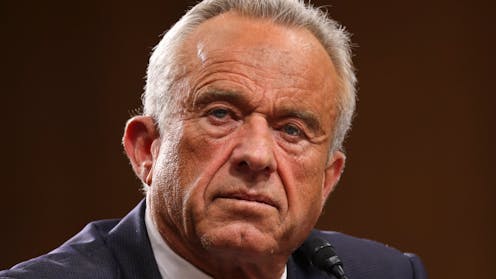
US health secretary Robert F. Kennedy Jr has announced he is cancelling US$500 million (£374 million) of research into mRNA vaccines, citing unproven concerns about their safety and long-term effects.

Kennedy has claimed that mRNA vaccines “encourage new mutations and can actually prolong pandemics” – a misleading statement that contradicts the scientific consensus on viral evolution and effects of vaccination.

But scientific research shows that mRNA vaccines have saved millions of lives.

As an immunologist, I’ve spent years studying how the body responds to SARS-CoV-2 and other respiratory viruses. Let’s be clear: there is no credible evidence that mRNA vaccines cause viral mutations – genetic changes that occur as a virus copies itself – or that they’re ineffective against respiratory infections like COVID-19 or flu. These claims misrepresent both how viruses evolve and how vaccines actually work.

Unlike traditional vaccines, which introduce weakened or inactive parts of a virus to trigger immunity, mRNA vaccines work by delivering genetic instructions that teach our cells to produce a harmless piece of the virus (usually a protein found on its surface). This gives the immune system a preview of what to fight, so it’s ready if the real virus shows up.

Our bodies are constantly fighting off infectious organisms – viruses, bacteria and other pathogens – that rely on us as hosts to survive and reproduce. As part of this ongoing battle, viruses naturally mutate over time. This process happens with or without vaccines.

Each time a virus replicates, small copying errors can occur in its genetic material. Some of these mutations have no impact; others give the virus a competitive advantage, helping it spread more efficiently. That’s how new variants arise.

In the case of COVID-19, scientists observed that the virus was mutating from the start. Variants appeared both within individuals (“intra-host variation”) and between them (“inter-host variation”). Every so often, one version would gain a competitive advantage – spreading faster, evading immunity, or becoming more infectious – and take over. These are the variants you might remember: alpha, delta, omicron.

This is how evolution works: organisms reproduce and change, and some changes help them thrive.

The immune system’s defence

Now, let’s look at the other side of the battle: our immune system.

Some parts of our immune defence are always on: physical barriers like skin, and innate immune responses that are ready to fight anything unfamiliar. But our most powerful defence is adaptive immunity: a specialised response that targets a specific invader once it’s been identified.

This is where vaccines come in. When a virus invades the body for the first time, it can cause serious illness before our adaptive immune system knows how to respond. But vaccines, including mRNA vaccines, act like a rehearsal. They introduce a harmless piece of the virus (often a single protein) so the immune system can learn to recognise it and respond faster in the future.

mRNA vaccines work by delivering a snippet of genetic instructions to our cells, which then produce the viral protein temporarily. Our immune system then builds a response to it. This means we get all the immune training with none of the illness – unlike actual infection, which can be dangerous.

Vaccines don’t cause viruses to mutate. The mutations already exist – they emerge randomly and constantly during viral replication. What vaccines (and our immune systems) do is filter which variants survive.

When the original COVID-19 virus encountered a population with strong immune defences – built through vaccination or past infection – it was effectively stopped. That virus lost its competitive edge. But other, naturally occurring variants with slightly different surface proteins (the “outer coat”) could sometimes sneak past these defences. That’s how new variants emerged.

Importantly, neither vaccines nor natural immunity created those mutations – they simply selected which ones became dominant.

The good news

There’s a silver lining. Even when a variant partially evades immune defences, our bodies often still recognise parts of it. This is called cross-reactivity – and it can mean we get less sick, even with a new strain.

Over time, as we’re exposed to more variants through infection or updated vaccines, our immune system refines its response. It becomes better prepared to fight future versions of the virus – just like it’s done with flu and other infectious diseases.

COVID-19 hasn’t disappeared, but thanks to mRNA vaccines and our growing immune memory, it’s far less deadly than it was in 2020.

Despite the claims of high-profile figures like RFK Jr, mRNA vaccines do not cause viruses to mutate. Mutations are part of viral evolution: a natural process that happens regardless of our intervention.

What vaccines do is give us a fighting chance. They’ve saved millions of lives by reducing severe illness, hospitalisations and death. They remain one of the most powerful tools we have in the ongoing battle against infectious disease.

The Conversation

Deborah Dunn-Walters receives funding from UKRI (BBSRC). She is affiliated with The University of Surrey, The British Society for Immunology and The Vivensa Foundation

ref. RFK Jr is wrong about mRNA vaccines – a scientist explains how they make COVID less deadly – https://theconversation.com/rfk-jr-is-wrong-about-mrna-vaccines-a-scientist-explains-how-they-make-covid-less-deadly-262776