Revisiting the story of Clementine Barnabet, a Black woman blamed for serial murders in the Jim Crow South

Source: The Conversation – USA (3) – By Lauren Nicole Henley, Assistant Professor of Leadership Studies, University of Richmond

A grainy photograph of Clementine Barnabet. A 1912 edition of The Atlanta Constitution newspaper via Wikimedia Commons

In April 1912, a young Black woman named Clementine Barnabet confessed to murdering four families in and around Lafayette, Louisiana. The widespread news coverage at the time effectively branded her a serial killer.

Her confession, however, did not align with the timeline of crimes that had gripped America’s rice belt region with fear. Even today, her guilt is debated.

From November 1909 until August 1912, an unknown assailant – or assailants – zigzagged across southwestern Louisiana and southeastern Texas. Many Black families were slaughtered in their homes under the cover of darkness. An ax – the telltale weapon – was almost always found in the bloody aftermath.

All but one of the scenes were located within a mile of the Southern Pacific Railroad’s Sunset Route. In each case, a mother and child were always among the victims. Evidence of additional weapons was often found nearby, suggesting a deliberate cruelty to the carnage.

Dubbed the “axman”, the unknown assailant eluded the authorities and terrified local Black communities.

Today, when scholars and laypeople alike discuss Clementine Barnabet, they oscillate between two extremes: portraying her as a fear-inducing, cult-leading Black female serial killer, or as an innocent young Black woman caught in circumstances beyond her control.

In more than a decade of researching Clementine Barnabet, I’ve been struck by how print media created overtly sensationalized accounts of the mythology of the axman and, by extension, the axwoman. Whether Barnabet committed the crimes she said she did – or any of the axman murders, for that matter – is irrelevant to the primary motive the media constructed for her fatal violence: religion.

Diverse faith traditions

In Jim Crow Louisiana, various expressions of faith were possible. The state’s history as a French colony – one that also practiced slavery – meant it was home to the largest percentage of Black Catholics in the United States.

A black-and-white sketch depicts people walking and sitting around a square cloth on the ground, with small items arranged on it.
A sketch supposedly depicting a Voodoo ceremony in Louisiana.
Photos.com/Getty images plus

At the same time, religions like Voodoo, that originated in West Africa, reached the region on slave ships. Voodoo was not necessarily at odds with Catholicism; enslaved practitioners creatively adapted their ancestral faith to that of their enslavers.

Some displays of faith were not organized religions at all, but folkways. Hoodoo, for example, has West African origins, though it also draws upon European and Native American elements. Hoodoo practitioners – sometimes called doctors – and their clients often practice a religion, yet they also seek comfort in the supernatural possibilities of their craft.

This craft involves the physical manipulation of earthly elements such as graveyard dirt or plants like John the Conqueror root to achieve magical ends, often resulting in conjures – or ritual objects – needed to bring about desired goals. Conjures are believed to help people protect themselves, harm one’s adversaries, alter one’s circumstances, intervene in one’s relationships and more.

In their most powerful form, believers contend that conjures can bring about a person’s death.

For some believers, elements of Catholicism, Voodoo, Protestantism and hoodoo combine into syncretic faith practices. Incorporating multiple systems of beliefs has been an aspect of many Louisianans’ identities for generations. Most of the time, this blending of practices, ideologies and communities is depicted as a quirky – even “backward” – way to make sense of the world.

Yet during the axman’s reign in the early 1900s, a Black woman’s confession to murder was interpreted through the lens of religious deviance rather than diversity.

A timeline of events

When Barnabet confessed in April 1912, it was technically the second time she had done so. The first time was in November 1911 in the aftermath of the Randall family murder. Five members of the Randall family and their overnight guest had been brutally slaughtered in Lafayette, Louisiana at the end of the month.

According to regional newspapers, Barnabet was in the crowd that had gathered near the Randall family’s home after the murders were discovered. Reportedly, she caught the attention of the local sheriff. Not only did she live near the slain, but, according to a New Orleans daily, the authorities found “her room saturated with blood and covered with human brains.”

Barnabet was given a “third degree” examination – meaning she was tortured – by the New Orleans Police Department, and then supposedly confessed that she had killed the Randalls because, according to a Midwestern newspaper, they “disobeyed the orders of the church.” That church would become a topic of scrutiny and sensationalism by regional lawmen and news outlets alike throughout much of 1912.

At that time, Barnabet is also said to have confessed to killing another family in Lafayette.

Thus, Barnabet had already been in jail for over four months before her springtime confession. Between January and March 1912, four more families had been axed to death between Crowley, Louisiana and Glidden, Texas. In April, when Barnabet re-confessed, she added two more families to her victim roster.

In aggregate, the four families Barnabet confessed to killing had been slain between November 1909 and November 1911. Four more families had been murdered between her arrest and second confession, meaning she was in jail when they occurred. After her second confession and while she was still in custody, another three families were attacked with an ax, though for the first time, people survived the axman.

This convoluted timeline, in which more than half of the axman murders occurred after Barnabet had been apprehended, presented a challenge for investigators. They generally believed the crimes were related. Yet Barnabet could not have physically carried out the attacks in 1912.

To explain the continuation of the killings despite Barnabet’s incarceration, local lawmen leveraged the young woman’s own statements that had landed her in jail in the first place: that religion compelled her to murder.

It was this November 1911 confession that gave investigators the motive of religious fanaticism to attach to the axman crimes. Then, in January 1912, when the Broussards – another Black family – were murdered with an ax in Lake Charles, Louisiana, the local police found a Bible verse scrawled on their front door. This overtly religious symbol appeared roughly two months after Barnabet’s first confession and seemed to confirm her claims.

By April 1912, the idea of religiously motivated serial murder had been circulating in the rice belt region for months.

Hoodoo, conjures, and sensationalism

Barnabet’s confession was transcribed by R. H. Broussard (no relation to the victims), a newspaper reporter for the “New Orleans Item,” in April 1912.

According to the report, Barnabet claimed that she and four friends purchased conjures from a local hoodoo doctor one evening while socializing. They paid the practitioner for his services. Supposedly, the group then used the charms to move about undetected while committing murder.

In both her November 1911 and April 1912 confessions, Barnabet offered faith-based motives, albeit different ones. In the first case, it was the victims who reportedly erred in their religious duties. In the second, it was Barnabet’s own belief in hoodoo that facilitated such carnage. White media outlets did not interpret either of these statements as evidence of the region’s deep history of diverse faith expressions.

Instead, they labeled Barnabet “a black borgia,” “the directing head of a fanatical cult,” and the “Priestess of [a] Colored Human Sacrifice Cult.”

Moreover, sensationalized news coverage labeled the church Barnabet mentioned as the “Sacrifice Church.” Not surprisingly, the press depicted it as a cult-like organization, portraying Barnabet as either a low-level member or the “high priestess.” Sometimes, news reports also conflated the Sacrifice Church with Voodoo, thereby criminalizing a legitimate West African-derived religion as a cult.

According to unsubstantiated media accounts, the so-called Sacrifice Church promoted human sacrifice to gain immortality. Simultaneously, newspapers treated the conjure Barnabet possessed as proof of her fanaticism, reporting her claim that the only reason she confessed was because she had lost her charm.

Combined these selective – and sensational – interpretations of Barnabet’s supposed religious beliefs ignored the possibility of diverse spiritual practices that enriched life in the rice belt region.

Jim Crow and Black faith

I have yet to find evidence the Sacrifice Church existed. My research suggests the white press conflated the word “sacrifice” with the word “sanctified.” This might have been due, in part, to both sensationalism and ignorance.

Pentecostalism, a branch of evangelical Christianity that emphasizes baptism by the Holy Spirit and direct communication from God, started growing in popularity in the U.S. in the early 1900s. Many Pentecostal denominations call their adherents saints and their churches sanctified. Since sanctified churches were relatively new to Louisiana and some Pentecostal teachings – like speaking in tongues – challenged more mainstream Protestant doctrine, Pentecostalism might have contributed to the media’s reporting.

Although the Sacrifice Church may have simply been a linguistic error in reference to any number of sanctified churches in the rice belt, it is possible that Barnabet did indeed possess a conjure. The hoodoo doctor she accused of selling her and her comrades their charms was arrested and questioned by the Lafayette authorities. The statements he gave to the police aligned with hoodoo practices even as he denied knowing Barnabet or being involved in such folkways.

Given the variety of faith practices in Jim Crow Louisiana, it is possible both that Barnabet believed in her conjure and that sanctified churches were growing in popularity in the region. Whether she ever attended one is hard to know, just as the legitimacy of either confession is difficult to determine.

What is clear is that faith anchored the statements Barnabet made to the authorities. The other anchor, however, was murder. The consequences of how these events aligned reverberate in how Barnabet has been depicted.

Barnbet was front-page news in 1912. People knew her name, even as they debated her guilt. When she was convicted of murder, she was sentenced to life at the Louisiana State Penitentiary. A little over a decade later, she was released and disappeared from public view.

Today, however, no Black female serial killer occupies a similar place in America’s collective memory.

In recent years, there have been calls for a more serious acceptance of Black women’s experiences, knowledge and beliefs within the dominant culture. This shift also invites, I believe, a fresh look at Barnabet’s confessions and the crimes that were attributed to her.

The Conversation

Lauren Nicole Henley does not work for, consult, own shares in or receive funding from any company or organization that would benefit from this article, and has disclosed no relevant affiliations beyond their academic appointment.

– ref. Revisiting the story of Clementine Barnabet, a Black woman blamed for serial murders in the Jim Crow South – https://theconversation.com/revisiting-the-story-of-clementine-barnabet-a-black-woman-blamed-for-serial-murders-in-the-jim-crow-south-271298

Coffee crops are dying from a fungus with species-jumping genes – researchers are ‘resurrecting’ their genomes to understand how and why

Source: The Conversation – USA (2) – By Lily Peck, Postdoctoral Scholar in Evolutionary Biology, University of California, Los Angeles

For anyone who relies on coffee to start their day, coffee wilt disease may be the most important disease you’ve never heard of. This fungal disease has repeatedly reshaped the global coffee supply over the past century, with consequences that reach from African farms to cafe counters worldwide.

Infection with the fungus Fusarium xylarioides results in a characteristic “wilt” in coffee plants by blocking and reducing the plant’s ability to transport water. This blockage eventually kills the plant.

Some of the most destructive plant pathogens in the world infect their hosts in this way. Since the 1990s, outbreaks of coffee wilt have cost over US$1 billion, forced countless farms to close and caused dramatic drops in national coffee production. In Uganda, one of Africa’s largest producers, coffee production did not recover to pre-outbreak levels until 2020, decades after coffee wilt was first detected there. And in 2023, researchers found evidence that coffee wilt disease had resurfaced across all coffee-producing regions of Ivory Coast.

Studying the genetics of plant pathogens is crucial to understanding why this disease continues to return and how to prevent another major outbreak.

Rise and fall of coffee wilt disease in Africa

While early outbreaks of coffee wilt disease affected a wide range of coffee types, later epidemics primarily affected the two coffee species dominating global markets today: arabica and robusta.

First identified in 1927, coffee wilt disease decimated several varieties of coffee grown in western and central Africa. Although farmers combated the fungus with a shift to supposedly resistant robusta crops in the 1950s, the reprieve was short-lived.

The disease reemerged in the 1970s on robusta coffee, spreading through eastern and central Africa. By the mid-1990s, yields had collapsed and coffee production could not recover in countries like the Democratic Republic of Congo.

Separately, researchers identified the disease on arabica coffee in Ethiopia in the 1950s and watched it become widespread by the 1970s

Two side-by-side maps of Africa with several regions highlighted to indicate coffee wilt disease outbreaks
Coffee wilt disease has spread widely in Africa. The first outbreak before the 1950s affected mainly central and western Africa (left map) while the second outbreak originated in central Africa and spread east (right map). Affected countries are colored by the decade the disease was first detected.
Peck et al 2023/Plant Pathology, CC BY-SA

Although coffee wilt disease is currently endemic at low and manageable levels across eastern and central Africa, any future resurgence of the disease could be catastrophic for African coffee production. Coffee wilt also poses a threat to producers in Asia and the Americas.

New types of disease emerge

Coffee wilt disease evolved alongside coffee itself. Over the past century, it has repeatedly reemerged, attacking different types of coffee each time. But did these shifts reflect the rapid evolution of new types of disease, or something else entirely?

Fungal disease has devastated plants for millennia, with the earliest records of outbreaks dating from the biblical plagues. Like humans, plants have an immune system that protects them against attacks from pathogens like fungi.

While most fungal attempts at infection fail, a small number do succeed thanks to the constant evolutionary pressure on pathogens to overcome host plant defenses. In this evolutionary arms race, pathogens and hosts continuously adapt to each other by genetically changing their DNA. Boom and bust cycles of disease occur as one gains advantage over the other.

The rise of modern agriculture has led to widespread monocultures of genetically uniform crops. While monocultures have significantly boosted food production, they have also contributed to environmental degradation and increased plant vulnerability to disease.

Crop breeders have attempted to protect monocultures by introducing disease resistance genes, with farms widely applying fungicides and other environmentally damaging products. But these relatively weak protections for hundreds of acres of identical plants have resulted in outbreaks decimating crops that people depend on.

It’s likely that modern agriculture’s reliance on monocultures has enabled and accelerated the evolution of new types of pathogen capable of overcoming resistance in plants. As a result, crops become more susceptible to disease outbreaks.

Resurrecting fungal strains

Understanding the lessons of the past is essential to avoiding future plant pandemics. But this can be challenging, because the specific pathogen strains that caused previous disease outbreaks may no longer exist in nature or may have changed substantially.

In my research on the evolutionary arms race between host and pathogen in coffee wilt disease, I sought to address these problems by “resurrecting” historical strains of the fungus that causes the disease, Fusarium xylarioides. Researchers know little about why the earlier and later outbreaks targeted different types of coffee, so I explored the genetic changes in F. xylarioides that underlie this narrowing of its hosts.

I reconstructed historical genetic changes in the major coffee wilt disease outbreaks over the past seven decades by using strains from a fungus library – culture collections that preserve living fungi. These libraries store long-term living data and reflect the fungal genetic diversity present at the time of collection.

Microscopy image of blue fuzzy sphere with long extensions
Gibberella (Fusarium) xylarioides, with arrow pointing to its spore-containing sac.
Julie Flood

Whether a pathogen takes the upper hand in the evolutionary arms race depends on its ability to generate new types of genes. It can do so either by changing and rearranging its DNA sequence or by moving DNA sequences between organisms in a process called horizontal gene transfer. These mechanisms can create new effector genes that enable pathogens to infect and colonize a host plant.

Initially, I sequenced six whole genomes of strains involved in outbreaks before the 1970s as well as later outbreaks that specifically targeted arabica or robusta coffee plants. I found that strains of F. xylarioides specific to arabica or robusta genetically differed from each other, with most of these differences inherited from parent to offspring. This process is called vertical inheritance.

Genes that jump between species

However, I also found that several regions of the F. xylarioides genome were potentially acquired horizontally from F. oxysporum, a global plant pathogen that infects over 120 crops, including bananas and tomatoes. These included different regions of the genome across strains specific to arabica and robusta coffee.

But did these changes introduce new effector genes in the F. xylarioides strains that infect arabica and robusta coffee plants specifically? To answer this question, I first sequenced and assembled the first F. xylarioides reference genome, stitching together long stretches of DNA. I then sequenced and compared this reference genome to the whole genomes of three more pre-1970s F. xylarioides strains and 10 additional historical Fusarium strains found on or around diseased coffee bushes, as well as F. xylarioides strains from infected arabica coffee seedlings.

I found substantial evidence for horizontal transfer of disease-causing genes between species of Fusarium. This includes the presence of giant genetic components called Starships in Fusarium. These so-called jumping genes carry their own molecular machinery, allowing them to move around or between genomes. Genes involved in adaptation, such as those linked to virulence, metabolism or host interaction, also move with them. Scientists think Starships may potentially enable fungi to adapt to changing environmental conditions.

I found that large and highly similar genetic regions, including Starships and active effector genes involved in disease, had moved from F. oxysporum to F. xylarioides. Importantly, different genetic regions were present across strains of F. xylarioides specific to arabica and robusta, but they were absent from other related Fusarium species. This suggests that these genes were gained from F. oxysporum.

Arming farmers with knowledge

Today, a third of all global crop yields are lost to pest and disease. Reconciling the tension between agricultural productivity and environmental protection is important to balance humanity’s needs for the future. Central to this challenge is reducing the spread of disease and new outbreaks.

On the flip side to monocultures, many plant species surrounding and within small and family-run coffee farms in sub-Saharan Africa may act as disease reservoirs, where fungi pathogens can lurk. These include banana trees and Solanum weeds in the tomato family that are susceptible to fungal infection.

Human farming practices may have inadvertently created an artificial niche for these fungi, with coffee bushes brought into widespread contact with banana plants and Solanum weeds. If fungi in the same genus can frequently exchange genetic material, it could accelerate the ability of plant pathogens to adapt to new hosts.

Close-up of someone's hand full of unshelled coffee beans, colored red, yellow and dark brown
Balancing agricultural productivity with sustainability will ultimately benefit both crops and people.
Wayne Hutchinson/Farm Images/Universal Images Group via Getty Images

Testing noncoffee plants for F. xylarioides infection could reveal alternative plant species where different Fusarium fungi come into contact and exchange genetic material. This matters because across sub-Saharan Africa, coffee plants often share fields with banana trees and weeds. If these neighboring plants can harbor fungi that act as new sources of genetic variation, they may help fuel new disease strains.

Identifying the plants that can act as hosts to fungi could give farmers practical options to reduce coffee plants’ risk of disease, from targeted weed management to avoiding the planting of vulnerable crops side by side.

The Conversation

This research was supported by the Natural Environment Research Council. The funders had no role in study design, data collection and analysis, decision to publish, or preparation of this essay or any manuscripts.

– ref. Coffee crops are dying from a fungus with species-jumping genes – researchers are ‘resurrecting’ their genomes to understand how and why – https://theconversation.com/coffee-crops-are-dying-from-a-fungus-with-species-jumping-genes-researchers-are-resurrecting-their-genomes-to-understand-how-and-why-273997

In World War II’s dog-eat-dog struggle for resources, a Greenland mine launched a new world order

Source: The Conversation – USA (2) – By Thomas Robertson, Visiting Associate Professor of Environmental Studies, Macalester College

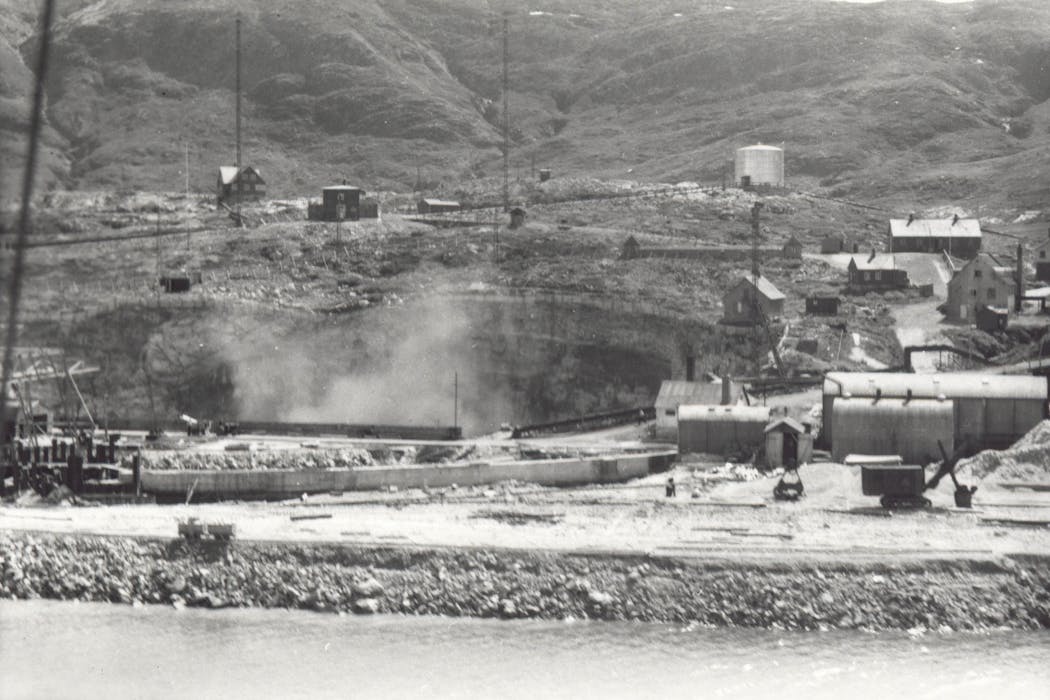
Greenland’s cryolite mine, essential for U.S. airplane production, was below sea level and vulnerable to Nazi sabotage. Reginald Wilcox, ca. 1941. Peary–MacMillan Arctic Museum, Bowdoin College

On April 9, 1940, Nazi tanks stormed into Denmark. A month later, they blitzed into Belgium, Holland and France. As Americans grew increasingly rattled by the spreading threat, a surprising place became crucial to U.S. national security: the vast, ice-capped island of Greenland.

The island, a colony of Denmark’s at the time, was rich in mineral resources. The Nazi invasions left it and several other European colonies as international orphans.

Greenland was essential for air bases as U.S. planes flew to Europe, and also for strategic minerals. Greenland’s Ivittuut (formerly Ivigtut) mine contained the world’s only reliable supply of the most important material you’ve probably never heard of: cryolite, a frosty white mineral that the U.S. and Canadian industries relied upon to refine bauxite into aluminum, and thus essential to assembling a modern air force.

A month after the Nazis seized Denmark, five American Coast Guard cutters set sail for Greenland, in part to protect the Ivittuut mine from the Nazis.

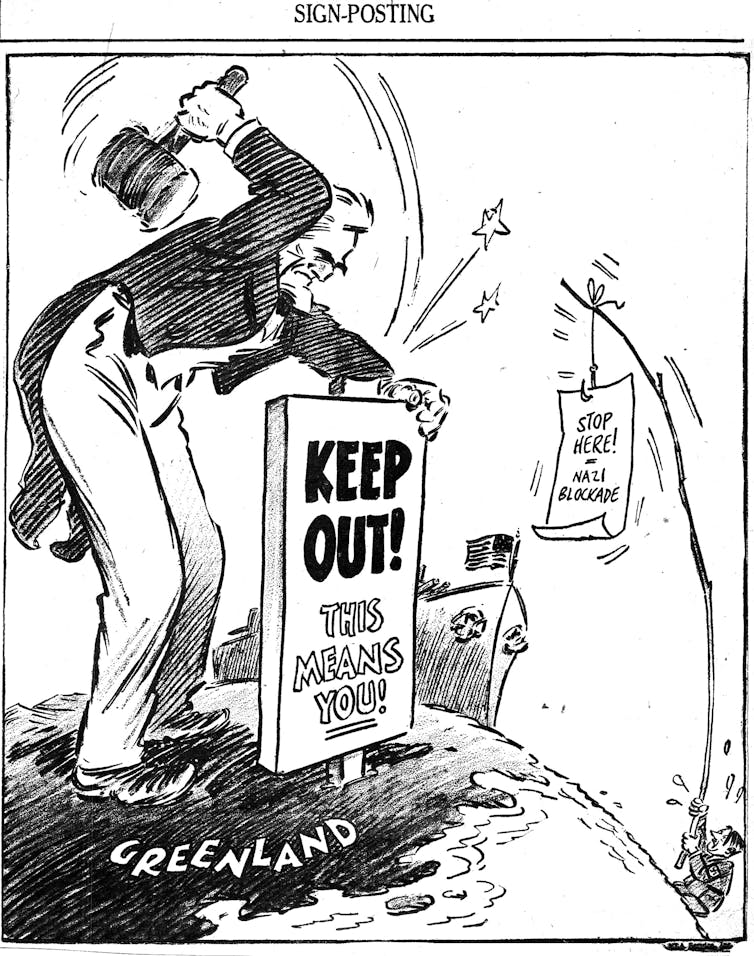
An illustration of Uncle Sam pounding a sign into Greenland labeled 'Keep Out!' with a tiny drawing of Adolf Hitler on the horizon.
This April 1941 drawing by famous political cartoonist Herbert L. Block, known as Herblock, was published shortly after Greenland became a de facto protectorate of the U.S.
A Herblock Cartoon, © The Herb Block Foundation

People sometimes forget that World War II was a dog-eat-dog struggle for resources – oil and uranium but also dozens of other materials, everything from rubber to copper. Without these strategic materials, no modern military could produce crucial new weapons such as tanks and airplanes. The resource struggle often started before actual fighting.

Foreign materials fueled American global power, but also raised tricky questions about access to resources and about sovereignty, just as the old European imperial order was being rethought. As in 2026, U.S. presidents had to skillfully balance force and diplomacy.

Two people look over a production line with dozens of military aircraft in a large building.
Walter H. Beech and Olive Ann Beech view wartime production lines at Beech Aircraft Corp. in Wichita, Kan., in 1942.
Courtesy of Wichita State University Libraries, Special Collections and University Archives. Walter H. and Olive Ann Beech Collection, wsu_ms97-02.3.9.1

As a historian at Macalester College, I research how Americans shape environments around the world through their purchasing and national security needs, and how foreign landscapes enable and constrain American actions. Today, control of Greenland’s natural resources is again on an American president’s radar as demand for critical minerals rises and supply tightens.

During the spring of 1940, America and its European allies mapped out patterns of resource use and ideas of global interconnection that would shape the international order for decades. Greenland helped give birth to this new order.

Rethinking American vulnerability

On May 16, 1940, President Franklin Roosevelt addressed a joint session of Congress, including many “American first” isolationists wary of European entanglements. Roosevelt implored Americans to wake up to new threats in the world – to, in his words, “recast their thinking about national protection.”

New weapons, he warned, had shrunk the world, and oceans could no longer shield the United States. The nation’s fate was inextricably tied to Europe’s. Nothing showed this better than Greenland: “From the fiords of Greenland,” FDR warned, “it is four hours by air to Newfoundland; five hours to Nova Scotia, New Brunswick and to the province of Quebec; and only six hours to New England.”

A 1942 map of the world at war and which countries were on which side.
Richard Edes Harrison’s famous WWII maps in Fortune magazine, including this one from 1942, changed American understandings of vulnerability by highlighting short aerial routes. Dark areas are considered Axis, dotted areas pro-Axis neutral or Axis-occupied, red areas Allies and yellow areas neutral. Pink areas, including Greenland, were considered Allies-occupied.
Cornell University – PJ Mode Collection of Persuasive Cartography

But Greenland set off alarm bells for another reason. To protect itself in a dangerous world, Roosevelt famously called for the U.S. to hammer out 50,000 planes a year. But in 1938, America had produced only 1,800 planes.

To meet this ambitious goal, Roosevelt and his advisers knew that little could be done without Greenland. No Greenland, no cryolite. No cryolite, no massive American air force. Without cryolite, making 50,000 planes would be infinitely more difficult.

The age of alloys

Americans, National Geographic explained in 1942, lived in an “age of alloys.” Without aluminum alloys and other metallic mixtures, assembly lines churning out modern tanks, trucks and airplanes would grind to a halt. “More than any other struggle in history, this is a war of many metals, and the lack of a single one may be a blow far worse than the loss of a battle.”

Two military mechanics work on the propeller engine of an aircraft.
Aluminum was crucial for modern militaries. Mechanics check an airplane engine at Naval Air Station Corpus Christi, Texas, in November 1942.
Fenno Jacobs/Department of Defense

Few materials mattered more than aluminum. Light yet strong, aluminum formed 60% of a heavy bomber’s engines, 90% of its wings and fuselage, and all of its propellers.

But there was a problem: Refining aluminum from bauxite ore required working with dangerously hot metallic mixtures, over 2,000 degrees Fahrenheit (1,100 degrees Celsius). Cryolite solved the problem by reducing the temperature to a more manageable 900 F (480 C).

The Nazis’ chemical industry had found a substitute for cryolite using fluorspar, but the U.S. preferred the more resource-efficient cryolite and wanted to prevent the Germans from having it.

After the Nazis seized Denmark

Just days after German tanks rolled into Denmark in April 1940, Allied officials huddled to devise ways to protect Ivittuut’s magical mineral. On May 3, Danish Ambassador to the U.S. Henrik de Kauffmann, risking trial for treason, requested American assistance. On May 10, the U.S. Coast Guard Cutter Comanche departed New England for Ivittuut. Four others soon followed, one with guns for the mine’s defenders.

A Coast Guard cutter and Army freighter off Greenland.
The U.S. Coast Guard Cutter Comanche played a role in protecting Greenland mining operations starting long before the U.S. officially entered World War II.
Thomas B. MacMillan, Courtesy of Peary-MacMillan Arctic Museum, Bowdoin College

That very week in Washington, at a meeting of the Pan American Union, Roosevelt and his advisers spoke with hundreds of geologists and other representatives from Latin America — a resource-rich region that the U.S. saw as an answer to its strategic materials shortages.

Nervous about the history of U.S. imperial high-handedness in the region, some Latin Americans thought that their countries should seal off their resources to outside control, as Mexico had in nationalizing U.S. and European oil holdings in 1938.

A post reading: America needs your scrap rubber and noting uses, such as a heavy bomber needs 1,825 pounds of rubber.
Japan’s advances in Southeast Asia after Pearl Harbor cut off rubber from the Dutch East Indies and Malaysia, prompting a rush for rubber in the Amazon and the development of synthetics. World War II posters urged Americans to conserve rubber for the war effort.
U.S. Government Printing Office, Courtesy of Northwestern University Libraries

With European empires crumbling, Roosevelt faced a delicate diplomatic dance with Greenland. He wanted to maintain the appearance of neutrality, keep skeptical isolationists in Congress from revolting and give no provocations to Latin American anti-imperialists to cut off resources. Crucially, he also needed to avoid giving the resource-starved Japanese a legal justification to seize the oil-rich Dutch East Indies, now Indonesia – another European colony orphaned by the Nazi invasion.

Roosevelt’s solution: enlist Coast Guard “volunteers” to guard Ivittuut. By the end of the summer, long before the U.S. officially entered the war, 15 sailors resigned from their ships and took up residence near the mine.

Seeing Greenland as crucial to US security

Roosevelt also got creative with geography.

In an April 12, 1940, press conference, just days after the Nazi invasion, he began to emphasize Greenland as part of the Western Hemisphere, more American than European, and thus falling under Monroe Doctrine protections. To calm fears in Latin America, U.S. officials recast the doctrine as development-oriented hemispheric solidarity.

Maj. William S. Culbertson, a former U.S. trade official speaking before the Army Industrial College in fall 1940, noted how the scramble for resources pulled the U.S. into a form of nonmilitary warfare: “We are engaged at the present time in economic warfare with the totalitarian powers. Publicly, our politicians don’t state it quite as bluntly as that, but it is a fact.” For the rest of the century, the front line was just as likely a far-off mine as an actual battlefield.

On April 9, 1941, exactly a year after the Nazis seized Denmark, Kauffmann met with U.S. Secretary of State Cordell Hull to sign an agreement “on behalf of the King of Denmark” placing Greenland and its mines under the U.S. security blanket. At Narsarsuaq, on the island’s southern tip, the U.S. began constructing an airbase named “Bluie West One.”

A photo from a plane of an airbase surrounded by mountains with glaciers above – in June.
An aerial view shows Bluie West One, a U.S. air base at Narsarsuaq, Greenland, in June 1942. Later, during the Cold War, the U.S. used Thule Air Base, now called Pituffik Space Base, in northwest Greenland as a key missile defense site because of its proximity to the USSR.
USAF Historical Research Agency

During the rest of World War II and throughout the Cold War, Greenland would house several important U.S. military installations, including some that forced Inuit families to relocate.

Critical minerals today

What transpired in Greenland in the 18 months before Pearl Harbor fit into a larger emerging pattern.

As the U.S. ascended to global leadership and realized that it couldn’t maintain military dominance without wide access to foreign materials, it began to redesign the global system of resource flows and the rules for this new international order.

A chart showing costs significantly higher for steel, aluminum and copper in the 1950s compared with the early 1940s.
A 1952 chart from the President’s Materials Policy Commission, established by President Harry Truman to study the security of U.S. raw materials during the Cold War. The group was commonly known as the Paley Commission.
Resources for Freedom: A Report to the President

It rejected the Axis’ “might makes right” territorial conquest for resources, but found other ways to guarantee American access to critical resources, including loosening trade restrictions in European colonies.

The U.S. provided a lifeline to the British with the destroyers-for-bases deal in September 1940 and the Lend-Lease Act in March 1941, but it also gained strategic military bases around the world. It used aid as leverage to also pry open the British Empire’s markets.

The result was a postwar world interconnected by trade and low tariffs, but also a global network of U.S. bases and alliances of sometimes questionable legitimacy designed in part to protect U.S. access to strategic resources.

Two men, one in military uniform, stand in front of a White House door talking.
President John F Kennedy meets with Mobutu Sese Seko of the former Belgian Congo, now the Democratic Republic of Congo, at the White House in 1963. Starting in the 1940s, the African country provided the U.S. with cobalt and uranium, including for the Hiroshima bomb. CIA-supported coups in 1960 and 1965 helped put Mobutu, known for corruption, in power.
Keystone/Getty Images

During the Cold War, these global resources helped defeat the Soviet Union. However, these security imperatives also gave the U.S. license for support of authoritarian regimes in places like Iran, Congo and Indonesia.

America’s voracious appetite for resources also often displaced local populations and Indigenous communities, justified by the old claim that they misused the resources around them. It left environmental damage from the Arctic to the Amazon.

Five white men standing on snow smile for the cameras with a Greenland village behind them.
Donald Trump’s son visited Greenland in 2025, shortly after the U.S. president began talking about wanting to control the island and its resources. The people with Donald Trump Jr., second from right, are wearing jackets reading ‘Trump Force One.’
Emil Stach/Ritzau Scanpix/AFP via Getty Images

Strategic resources have been at the center of the American-led global system for decades. But U.S. actions today are different. The cryolite mine was a working mine, rarer than today’s proposed critical mineral mines in Greenland, and the Nazi threat was imminent. Most important, Roosevelt knew how to gain what the U.S. needed without a “damn-what-the world-thinks” military takeover.

The Conversation

Thomas Robertson does not work for, consult, own shares in or receive funding from any company or organization that would benefit from this article, and has disclosed no relevant affiliations beyond their academic appointment.

– ref. In World War II’s dog-eat-dog struggle for resources, a Greenland mine launched a new world order – https://theconversation.com/in-world-war-iis-dog-eat-dog-struggle-for-resources-a-greenland-mine-launched-a-new-world-order-275630

New dietary guidelines prioritize ‘real food’ – but low-income pregnant women can’t easily obtain it

Source: The Conversation – USA (3) – By Bethany Barone Gibbs, Professor, Epidemiology and Biostatistics, West Virginia University

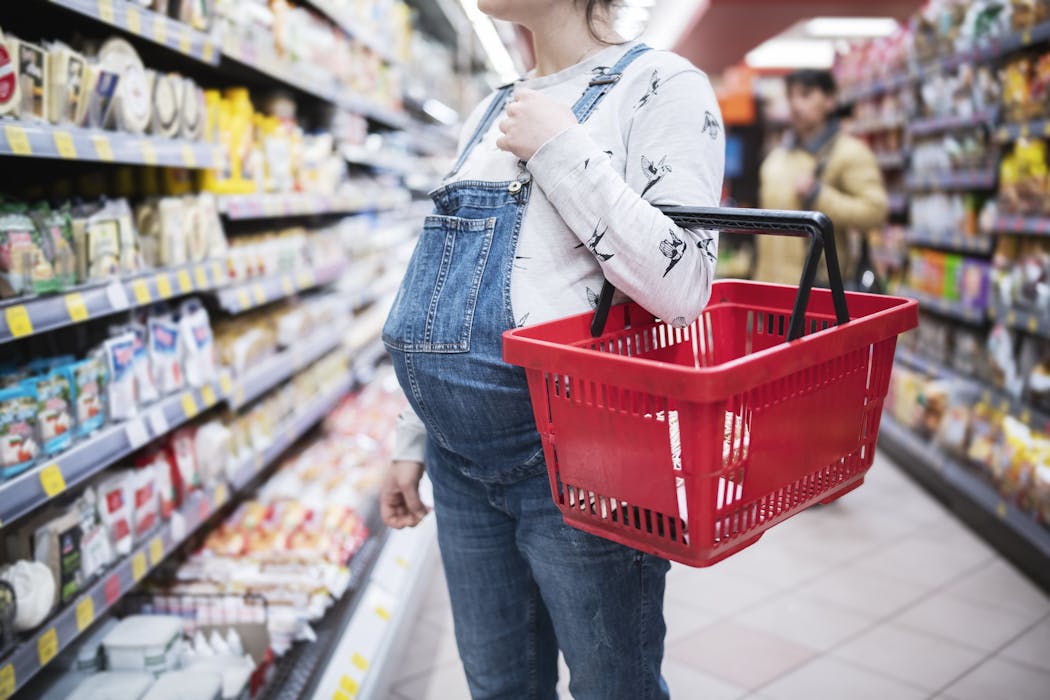
Most pregnant women in the U.S. aren’t meeting dietary recommendations, especially in rural communities. ArtistGNDphotography/Getty Images

The federal government’s message in its new Dietary Guidelines for Americans, released in January 2026, couldn’t be simpler: “Eat real food.”

But for pregnant women in rural America, that straightforward advice runs headlong into a harsh reality: Rural women have less access to healthy whole foods.

We are a public health professor and postdoctoral researcher who are working on the Pregnancy 24/7 Cohort Study at West Virginia University and the University of Iowa. The five-year observational study investigated how 24-hour behavioral patterns throughout pregnancy affected maternal and fetal health, including pregnancy complications.

Most pregnant women in the United States aren’t meeting dietary recommendations. This is especially true for women living in rural communities. In our recent study, 500 pregnant were recruited from university-affiliated clinics in Pennsylvania, West Virginia and Iowa reported their dietary habits during each trimester using a questionnaire.

About 1 in 5 participants lived in rural areas, as determined by a federal classification system that used the women’s home address. We found that pregnant women living in rural areas consumed more added sugars from sugar-sweetened beverages — about half a teaspoon more per day — than women living in urban areas. Rural women also consumed less fiber and ate fewer vegetables.

Research suggests less healthy dietary habits could be why rural pregnant women tend to have more pregnancy complications, such as preterm birth, gestational diabetes and hypertensive disorders.

Diets lacking adequate nutrition during pregnancy can also lead to can not only lead to pregnancy complications, but also result in obesity and diabetes. Left unaddressed, these nutrition gaps could perpetuate cycles of poor health across generations.

Poverty, not location, drives differences in pregnancy diets

Our study also assessed whether socioeconomic status influenced pregnant women’s diets in both rural and urban areas. West Virginia and Iowa site participants provided the majority of rural data.

There were 124 participants from Pittsburgh, and all but three were considered “urban” based on where they live. Compared to rural participants across the three-state sample, urban women consumed significantly fewer added sugars from sugar-sweetened beverages in the first and second trimesters and had consistently higher fiber intake across pregnancy.

However, socioeconomic status in the Pittsburgh site emerged as the stronger predictor of diet quality: Participants with a low socioeconomic status – including those in Pittsburgh – consumed 1.29 to 1.49 more teaspoons per day of added sugars from sugar-sweetened beverages and 1.5 to 1.6 grams less fiber per day than their high socioeconomic status counterparts. The lower-income women also consumed 31 to 58 milligrams less calcium per day.

While Pittsburgh’s participants and urban participants at the other study sites fared better than their rural peers on some measures, income and education level were more strongly tied to diet quality than geography alone.

A pregnant woman sits in a clinic exam room while a health care provider talks to her.
For those with lower income or living in rural areas, adequate nutrition is harder to achieve.
Jason Connolly/AFP via Getty Images

About 20% of the U.S. population is rural. Pregnant women in these areas often travel long distances to access fresh produce and whole grains. The food outlets closer to home are often convenience stores, gas stations or dollar stores, which primarily sell processed, calorie-dense foods with lower nutritional value. Even when healthier options are available, they tend to cost more.

These less healthy dietary patterns are particularly concerning since pregnant women have additional dietary needs than women who are not pregnant. Low-income and rural women are often missing out on nutrients such as calcium, iron, folate and choline. Calcium supports bone development and is found in dairy, fortified plant milks and leafy greens. Iron and folate, found in beans, lentils and dark green vegetables, support the growing baby. Choline assists with brain and spinal cord development and can be found in eggs, beans and nuts.

Making ‘eat real food’ accessible

The new dietary guidelines have a few key messages for all adults, including instructions to eat whole and minimally processed foods, and to avoid sugar-sweetened beverages and highly processed foods.

Telling Americans to “eat real food” may seem like straightforward advice based on decades of research. But our study highlights that following this advice might be harder for some women during pregnancy. Pregnant women in rural and low-income communities could benefit from subsidies for fresh produce, or supplemental nutrition assistance.

A pregnant woman and a man place a bunch of bananas into a bag while shopping in a grocery store.
Meal planning and buying a mix of fresh, frozen and canned foods can reduce grocery bills.
Frazao Studio Latino/E+ via Getty Images

The USDA’s Shop Simple with MyPlate tool offers practical strategies for eating well on a budget. Planning meals for the week, avoiding impulse purchases and buying a mix of fresh, frozen and canned foods are cost-effective ways to accomplish this.

Frozen and canned fruits and vegetables – without added salt or sugar – are just as nutritious, last longer, often cost less than fresh produce and help reduce waste. Choosing water over sodas, buying whole grains like oatmeal and brown rice, and using low-cost protein sources such as beans, lentils and eggs can help stretch a grocery budget. This can also improve diet quality, and make a meaningful difference for both mom and baby.

The Conversation

Bethany Barone Gibbs receives funding from the National Institutes of Health and the American Heart Association.

Alex Crisp does not work for, consult, own shares in or receive funding from any company or organization that would benefit from this article, and has disclosed no relevant affiliations beyond their academic appointment.

– ref. New dietary guidelines prioritize ‘real food’ – but low-income pregnant women can’t easily obtain it – https://theconversation.com/new-dietary-guidelines-prioritize-real-food-but-low-income-pregnant-women-cant-easily-obtain-it-274576

Self-driving cars are poorly prepared for high-risk road situations – here’s how AI can improve them

Source: The Conversation – UK – By Mingming Liu, Assistant Professor, School of Electronic Engineering, Dublin City University

Andrey_Popov / Shutterstock

Self-driving cars have made impressive progress. They can follow lanes, keep their distance, and navigate familiar routes with ease. However, despite years of development, they still struggle with one critical problem: the rare and dangerous situations that cause the most serious accidents.

These “edge cases” include sharp bends on wet roads, sudden changes in slope, or situations where a vehicle approaches its physical limits of grip and stability. In real-world deployments, which often involve some level of shared control between driver and automation, such moments can arise from human misjudgment or from automated systems failing to anticipate rapidly changing conditions.

They happen infrequently, but when they occur, the consequences can be severe. A car might handle a thousand gentle curves perfectly, but fail on the one sharp bend taken a little too fast.

Current autonomous systems are not trained well enough to handle these moments reliably. From a data perspective, these events form what scientists call a “long tail”: they are statistically rare, but disproportionately important.

Collecting more real world data does not fully solve the problem, because deliberately seeking out dangerous conditions is costly, slow, and risky. Many of these scenarios are simply too dangerous to practise in real life. We cannot deliberately put vehicles into near-crashes on public roads just to see whether the software can cope. If an AI system rarely sees extreme situations during training, it has little chance to respond well when they occur in real life.

In the current fleet of self-driving cars, a human in a control centre is often at hand to intervene if something goes wrong. But to achieve fully driverless cars, researchers need to find ways of effectively training AI systems to handle high-risk situations.

Our research team at Dublin City University, working with colleagues at the University of Birmingham, has been tackling this gap.

We have developed a virtual “proving ground” that uses generative AI to safely create rare, high-risk driving scenarios, allowing vehicles to learn from them without putting anyone in danger. Instead of waiting for rare events to happen naturally, we can teach an AI model to create realistic but challenging driving scenarios on demand, including ones that push vehicles close to their physical limits.

Practising safely

The generative AI that is used in our system is designed to learn from real driving data and then produces new, realistic scenarios. Crucially, it does not just reproduce typical roads and speeds.

It focuses deliberately on the most demanding situations including sharp curves, steep slopes and high speeds, combined in ways that challenge both human drivers and automated systems. This allows us to expand the range of situations a vehicle can experience during training, without ever leaving the simulator.

In effect, the car can “practise” dangerous situations safely, repeatedly and systematically. However, the goal of our work is not to replace the human driver entirely. Instead, we focus on human–machine shared driving: a partnership in which the car and the driver support each other.

Humans are very good at intuition, anticipation and adapting to unfamiliar situations. Machines excel at fast reactions and precise control. Shared driving aims to combine these strengths. In our system, control is continuously adjusted depending on risk.

When the road is straight and safe, the driver remains firmly in charge, but when the system detects a high-risk situation, such as a sharp bend that the driver may be approaching too quickly, it smoothly increases the level of automated assistance to help stabilise the vehicle. Importantly, this is not a sudden takeover. The transition is gradual and adaptive, designed to feel natural rather than intrusive.

To evaluate the system, we went beyond pure simulation. We used a driver-in-the-loop platform, where real people sit in a high-fidelity driving simulator and interact with the AI in real time. The results were encouraging. Less experienced drivers benefited most: when they struggled on complex or winding roads, the system provided timely support, reducing the risk of losing control.

At the same time, the system avoided unnecessary intervention during safe driving, helping drivers feel more engaged rather than overridden. Overall, this adaptive approach led to safer, smoother driving compared with fixed or overly conservative control strategies. It also allows both the human driver and the AI to improve at their handling of extreme road situations.

Autonomous vehicles are often judged by how well they handle routine driving, but public trust will ultimately depend on how they behave when things go wrong. By using generative AI to train vehicles on rare but critical scenarios, we can expose weaknesses early, improve decision making, and build systems that are better prepared for the real world.

Just as importantly, by keeping humans in the loop, we can design automation that supports drivers rather than replacing them outright. Fully driverless cars may still be some way off, but smarter training systems like this can help bridge the gap by making both human-driven and automated vehicles safer on today’s roads.

The Conversation

Mingming Liu does not work for, consult, own shares in or receive funding from any company or organisation that would benefit from this article, and has disclosed no relevant affiliations beyond their academic appointment.

– ref. Self-driving cars are poorly prepared for high-risk road situations – here’s how AI can improve them – https://theconversation.com/self-driving-cars-are-poorly-prepared-for-high-risk-road-situations-heres-how-ai-can-improve-them-275841

How sailing voyages can inspire the next generation of ocean scientists and advocates

Source: The Conversation – UK – By Pamela Buchan, Research Fellow, Geography, University of Exeter

Setting sail from the busy port of Plymouth in Devon, the tall ship Pelican of London takes young people to sea, often for the first time.

During each nine-day voyage, the UK-based sailing trainees, who often come from socio-economically challenging backgrounds, become crew members. They not only learn the ropes (literally) but also engage in ocean science and stewardship activities.

As marine and outdoor education researchers, we wanted to find out whether mixing sail training and Steams (science, technology, engineering, art, mathematics and sustainability) activities can inspire young people to pursue a more ocean-focused career, and a long-term commitment to ocean care.

Research shows that a strong connection with the ocean can drive people to be active marine citizens. This means they take responsibility for ocean health not only in their own lives but as advocates for more sustainable interactions with the ocean.

Over the past year, we have worked with Charly Braungardt, head scientist with the charity Pelican of London, to create a new theory of how sail training with Steams activities can change the paths that trainees pursue.

Based on scientific evidence, our theory of change models how Steams activities can cause positive changes in personal development and knowledge and understanding of the ocean (known as ocean literacy). It shows how the voyages can develop trainees’ strong connections with the ocean and encourage them to act responsibly towards it.

Tracking change

Surveys with the participants before and after the voyage, and six months later, measure any changes that occur – and how these persist. Through our evaluation, we’re exploring how combining voyages with Steams activities can go beyond personal development to produce deep, long-lasting effects.

Our pilot study has already shown how the sail training and Steams combination helps to develop confidence, ocean literacy and ocean connections.

For example, the boost to self-esteem and feelings of capability that occur on board help young people develop their marine identity – the ocean becomes an important part of a person’s sense of who they are. As one trainee put it: “I think the ocean is me and the ocean will and forever be part of me.”


Swimming, sailing, even just building a sandcastle – the ocean benefits our physical and mental wellbeing. Curious about how a strong coastal connection helps drive marine conservation, scientists are diving in to investigate the power of blue health.

This article is part of a series, Vitamin Sea, exploring how the ocean can be enhanced by our interaction with it.


As crew members, trainees access a world and traditional culture largely unknown to them before the voyage. They learn to live with others in a confined space, working together in small teams to keep watch on 24-hour rotas.

Trainees are encouraged to step out of their comfort zone through activities such as climbing the rigging and swimming off the vessel. Our pilot evaluation found the voyages built the trainees’ confidence and social skills, boosting self-esteem and feelings of capability.

One trainee said: “I’ve felt pretty disappointed in myself not committing to my education or only doing something with minimal effort. But after this voyage, I want to give it my all.”


Read more:
Five ways to inspire ocean connection: reflections from my 40-year marine ecology career


The Steams voyages encourage the development of scientific skills and ocean literacy through the lens of creative tasks at sea. These activities are led by a scientist-in-residence who provides mentoring and introduces research techniques.

The voyage gives trainees the opportunity to use scientific equipment, ranging from plankton nets and microscopes to cutting-edge technology such as remotely operated vehicles. The Steams activities introduce marine research as a potential career to these young people. One said they wanted to train as a marine engineer at nautical college following the voyage.

Ocean experiences provide a foundation for ocean connection. Trainees experience the ocean in sunshine and in gales, day and night, rolling with the waves and observing marine life in its natural environment.

Citizen science projects such as wildlife surveys and recorded beach cleans also develop their ocean stewardship knowledge and skills. One trainee explained how they have “become more interested [in] our marine life and creative ways to help protect it”.

Over the next 12 months, the information we collect from the voyages will help us to better understand the benefits and contribute to an important marine social science data gap in young people. It is important to understand how to develop young people’s relationships with the ocean, and the knowledge and skills that will empower the next generation of marine citizens.

As one trainee put it: “Being out on the Pelican showed me how vast and powerful the sea is – and how important it is to respect and care for it.”


Don’t have time to read about climate change as much as you’d like?

Get a weekly roundup in your inbox instead. Every Wednesday, The Conversation’s environment editor writes Imagine, a short email that goes a little deeper into just one climate issue. Join the 47,000+ readers who’ve subscribed so far.


The Conversation

Pamela Buchan received funding from Economic and Social Research Council for the research cited in this article. The sail training evaluation project received funding from Sail Training International. We would like to thank Charlotte Braungardt for her contribution to this project.

Alun Morgan is affiliated with the Pelican of London as an Ambassador for the organisation

– ref. How sailing voyages can inspire the next generation of ocean scientists and advocates – https://theconversation.com/how-sailing-voyages-can-inspire-the-next-generation-of-ocean-scientists-and-advocates-273715

What Kate Nash’s grassroots music protest reveals about touring and streaming

Source: The Conversation – UK – By Paul G. Oliver, Lecturer in Digital Innovation and Entrepreneurship, Edinburgh Napier University

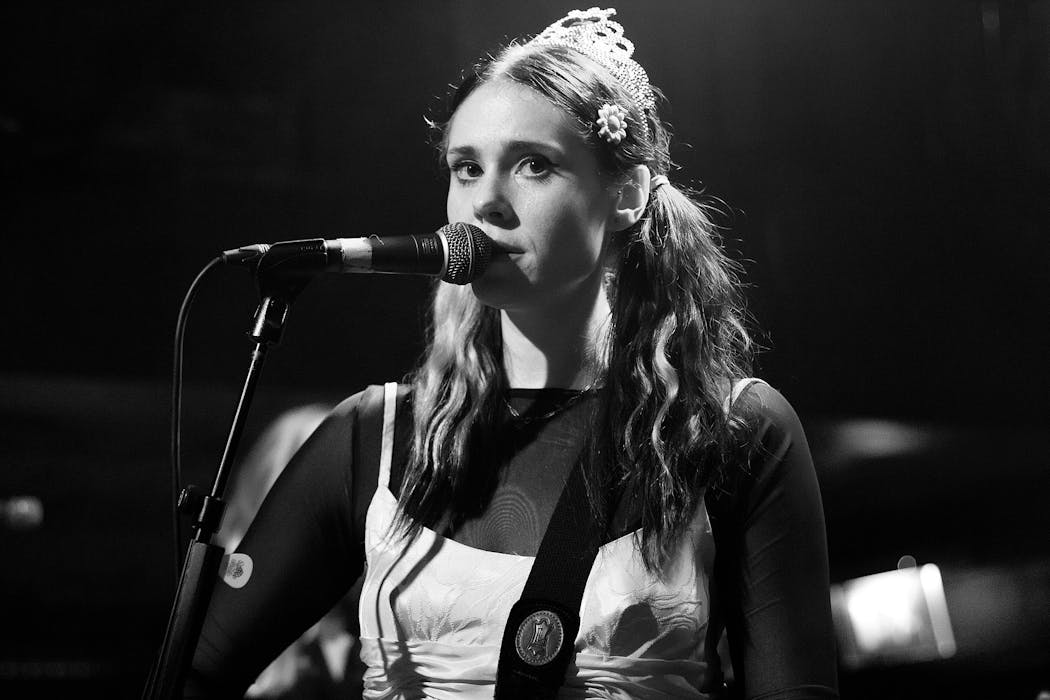
Kate Nash performing in Amsterdam in 2012. Wiki Commons, CC BY-SA

In November 2025, singer Kate Nash stood outside the London offices of Spotify and Live Nation with placards, arguing that the music economy no longer works for many working musicians.

The protest drew attention to the financial strain of touring at scale. In February 2026, she elaborated on these concerns in testimony before a UK parliamentary select committee, stating that she lost £26,000 on the European leg of her tour and covered those losses only by selling content on OnlyFans.

In her testimony, Nash criticised major industry players for what she called a “destructive influence” on artists’ finances. She warned that rising costs, including the complexities of post-Brexit touring, could limit both cultural reach and economic viability for UK performers.
Nash has been a well-known figure in British music for years, but her public frustration highlights a disconnect between visibility and a sense of security that many mid-career artists understand.

Streaming sits at the centre of this tension, as digital platforms pool subscription revenue and redistribute it based on a share of total listening. Critics argue that this structure concentrates income on global hits while leaving most artists with fractions of a penny per play. Artists increasingly describe having to juggle budgets that resemble household accounts, such as vans against fuel, hotels against sofa-surfing and merchandise against storage fees. One cancelled show can tip a tour from workable to loss-making.


Read more:
Why musicians are leaving Spotify – and what it means for the music you love


At the same time, data shows that grassroots music venues in the UK are struggling. Music Venue Trust’s 2025 report found that over the preceding year, more than half of these venues made no profit and dozens closed.

These small venues, often holding just a few hundred people, help sustain touring circuits and renew local music scenes. When they close, much of the cultural support for new talent disappears.

Who pays for live music?

Supporters of the live sector have proposed measures such as ticket levies on large shows to support smaller venues and planning protections for long-running clubs facing redevelopment. These ideas have been debated in Parliament and city-level cultural forums, including a UK government call for a voluntary arena and stadium ticket levy to protect grassroots venues.

Platforms and promoters resist the bleakest readings. Streaming services emphasise the sums they distribute and the global audiences they reach, while large promoters point to rising touring costs and the risks of softer ticket sales. At the same time, analyses of how streaming revenues are shared suggest that most artists receive only small fractions of subscription income. This is not a simple story of villains and victims, yet the distribution of rewards continues to trouble many performers.

Politicians have taken notice, reopening questions about streaming payments and transparency and examining how live music might be supported more broadly. A fan-led review of the live sector launched by MPs has invited evidence from artists, promoters and audiences about the pressures facing touring and small venues.

Similar debates are playing out at city level. The London Assembly has already backed a voluntary ticket levy on arena and stadium shows to help grassroots spaces. Campaign groups and commentators have also pushed for clearer contracts, including initiatives such as the Musicians’ Union’s “Fix Streaming” campaign, which calls on Parliament to support fairer streaming royalty distribution for all creators.

Some critics go further, arguing that the streaming model continues to channel a disproportionate share of revenue to the biggest acts and pressing for reforms to support a broader tier of working musicians, drawing on evidence from the UK Parliament’s inquiry into the economics of music streaming.

These problems have effects beyond money. As touring becomes more difficult and there are fewer venues, fewer acts are willing to take risks with new audiences. Local music scenes are shrinking, and young performers lack opportunities to try out new material, make mistakes, and improve. Audiences feel this too, when there are fewer shows, less variety and favourite bands stop touring.

Nash doesn’t claim to speak for everyone, and one protest can’t represent the whole industry. However, her choice to share frustrations usually kept private says something about today’s situation. Popular music has always mixed glamour with uncertain pay and long hours, but what’s new is how openly artists are now asking if the current system can support lasting careers.

If this middle ground continues to shrink, listeners might notice the change not in statistics but in daily life: fewer tours, closed local venues and bands quietly deciding that touring is no longer worth it.


Looking for something good? Cut through the noise with a carefully curated selection of the latest releases, live events and exhibitions, straight to your inbox every fortnight, on Fridays. Sign up here.


The Conversation

Paul G. Oliver does not work for, consult, own shares in or receive funding from any company or organisation that would benefit from this article, and has disclosed no relevant affiliations beyond their academic appointment.

– ref. What Kate Nash’s grassroots music protest reveals about touring and streaming – https://theconversation.com/what-kate-nashs-grassroots-music-protest-reveals-about-touring-and-streaming-275717

How can Europe meet the challenge posed by the retreat of the US?

Source: The Conversation – UK – By Niall Oddy, Staff Tutor in History, The Open University

At the Munich security conference, US secretary of state Marco Rubio spoke more warmly about the transatlantic relationship than US vice-president J.D. Vance at the same venue last year. However, faced with the presidency of the erratic Donald Trump, the need for Europe to do more to protect its security remains urgent.

In a later speech in Munich Kaja Kallas, vice-president of the European Commission and the EU’s high representative for foreign affairs and security policy, spoke of the “need to reclaim European agency”.

Meanwhile, UK prime minister Keir Starmer announced he wants closer relations with Europe, a decade after Brexit, stating: “there is no British security without Europe, and no European security without Britain. That is the lesson of history, and is today’s reality as well.”

People often use the word “Europe” when they are referring to the European Union. Doing so overlooks non-EU countries, like the UK, that are also part of Europe and share an equal stake in the continent’s security.

Whereas the EU is a political body, Europe is an idea. It might be the name of a continent, but the word Europe rarely refers only to geography. When Giorgia Meloni, the Italian prime minister, stated that Europe has “lost itself”, and when Ursula von der Leyen, the president of the European Commission, spoke of the “European way of life”, they were referring to the people of Europe and the sense that they have customs and values in common that distinguish them from the rest of the world. French president Emmanuel Macron was doing the same when he used the phrase “European civilisation”.

What are these values that supposedly unite Europeans? In some quarters, the emphasis is on secularism. The 2007 Lisbon Treaty declared that the EU “is founded on the values of respect for human dignity, freedom, democracy, equality, the rule of law and respect for human rights”. However, the lack of mention of the continent’s Christian heritage was contested. Viktor Orbán, the prime minister of Hungary, is one of the most vocal advocates of the idea that European culture is Christian.

These different ideas about what Europe is and what constitutes European culture have long histories. When the Reformation of the 16th century divided Catholics and Protestants, shared hostility towards the Muslim Ottoman Empire, which controlled much of the Balkans and was continuing to expand, provided a sense of overarching unity.

The more secular understanding of Europe developed in the 17th and 18th centuries. The thirty years’ war (1618-48) ended with peace negotiations that did not involve the Pope, as had previously been the norm. Increasingly, Europe’s political culture, not just its religion, was regarded as its most distinctive feature. In the words of French philosopher Voltaire, Europe was “a kind of great republic” sharing “the same principle of public law and politics, unknown in other parts of the world”.

Even today’s tensions between national identities and Europeanism are nothing new. The 19th century was a period of national awakening, with the formation of a unified Italian state in 1861 and the unification of the state of Germany in 1871. At the same time, philosopher Friedrich Nietzsche argued that “Europeans are becoming more similar to each other” and French author Victor Hugo predicted a “united states of Europe”.

With the swift Nazi advances in western and eastern Europe in the early years of the second world war, the German press claimed in November 1941 that “the United States of Europe has at last become a reality”. After Nazi Germany’s defeat in 1945, this notion of the continent united under the domination of one nation was superseded by a commitment to cooperation. This led in 1951 to the formation of the European Coal and Steel Community and in 1957 to the European Economic Community, which eventually morphed into the European Union with its motto of “united in diversity”.

National interests and international alliances

Today it is people from non-EU countries who are often the most vigorous defenders of so-called “European values”. Since October 2024 Georgians have been protesting the authoritarianism of their government, carrying the EU flag alongside the national one and placards that read “we are Europe”. And while European leaders discuss how to respond to the threat posed by the Russian Federation, Ukrainians are fighting for their lives and strengthening European security by doing so.

Russia’s first attack on Ukraine – in Crimea in 2014 – came in the aftermath of former president Viktor Yanukovych’s downfall following protests triggered by his rejection of closer ties with the EU.

Through their actions, Ukrainians and Georgians emphasise national autonomy as part of a wider values-oriented European identity, rather than pitting nationhood against Europeanism.

If Europe is to face up to challenges and defend itself without the guarantee of US support, EU and non-EU countries must find ways to work together. For this we need a shared vision about what unites disparate nationalities and underpins European cooperation. Historically, ideas about what Europe is and what Europe stands for have been shaped in western and central Europe. It is time to look to lessons from the eastern borderlands where, as the examples of Ukrainian and Georgian resistance show, values of freedom and democracy are being lived in practice.

The Conversation

Niall Oddy does not work for, consult, own shares in or receive funding from any company or organisation that would benefit from this article, and has disclosed no relevant affiliations beyond their academic appointment.

– ref. How can Europe meet the challenge posed by the retreat of the US? – https://theconversation.com/how-can-europe-meet-the-challenge-posed-by-the-retreat-of-the-us-274687

Are you a Dink, Alice or Henry? How social mobility is different for today’s young people

Source: The Conversation – UK – By Renaud Foucart, Senior Lecturer in Economics, Lancaster University Management School, Lancaster University

The carefree lifestyle of two Dinks. Opolja/Shutterstock

When your parents were in their 20s and 30s, they probably had a job, a house and financial security. A generation later, you get a variety of food they could not have imagined, low-cost air travel and a smartphone more powerful than the fastest supercomputers of the 1990s.

This new reality is leading to the resurgence of a different kind of class identification for young people. Middle class doesn’t look like it used to. Instead, you may consider yourself a “Dink” or a “Henry”.

Standing for “dual income and no kids”, Dink was coined in the 1980s to reflect the lifestyle of couples who chose the joys of technology, travel and restaurants over raising a family. As fertility rates fall worldwide, the term is making a comeback, with TikTok users showing off a life of boutique workouts, fancy brunches and wanderlust.

A woman born in England or Wales in 2007 is projected to have her first child at age 35 and to have an average of 1.52 children, compared with 2.04 for her mother’s generation.

The Dink lifestyle is attractive to some: more money and time for yourselves. But on the salary of an average UK household, you still won’t be able to buy an average house.

Why does it seem so much harder now? It’s not that this generation is poorer: on average, full-time employees between 18 and 21 years old make £499 a week. It rises fast: for those aged 22-29 the figure is £648, and £805 for 30-39.

For all age groups, salaries have barely increased since 2008, once you control for the fact that prices have risen by a lot. Still, compared with someone who entered the workforce 25 years ago, you will earn, on average, about 15% more even when adjusting for prices.

The key is that, while you earn more than your parents and grandparents, what’s cheap and what’s expensive has completely flipped.


No one’s 20s and 30s look the same. You might be saving for a mortgage or just struggling to pay rent. You could be swiping dating apps, or trying to understand childcare. No matter your current challenges, our Quarter Life series has articles to share in the group chat, or just to remind you that you’re not alone.

Read more from Quarter Life:


There are two kinds of things money can buy. There are things available only in fixed quantities – housing in a desirable location, a person’s time or social status. Then, there are things that technology can now produce in near-infinite quantities – a huge TV set, high-speed internet on a phone, or fresh fruits and vegetables from the other side of the world.

Compared with previous generations, you’re only richer in the latter. Since 2000, UK house prices have increased twice as fast as everything else. The share of young Brits who own their homes is 25% lower than in 1990. This might partly explain Dink logic – if you don’t have hope of affording a home, why not spend more on your lifestyle?

The tax brackets that define you

In this world where buying a house without family help has become the new luxury, the British tax system provides a handy guide of where you belong. Here’s how the figures break down.

You might not be a Dink, but an “Alice” – “asset-limited, income-constrained, employed” – part of the working poor who can’t even dream of saving for a deposit. Nearly 3 million people in the UK are working and receiving Universal Credit.

But once you start earning more than £684 a month, you hit the first trap of the tax system. For every additional £1 you earn from working, you lose 55p from the benefits you receive – so in effect, you only keep 45p up to the point where the amount of benefit you receive is zero.

If you escape this first trap and earn more, you may be able to afford a small house, or one in a cheaper region. Just not the same kind of place someone doing your job could buy 30 years ago.

If you climb up the income ladder, you’ll likely hit the second trap and become a Henry – “high earner, not rich yet”.

The moment you become part of the roughly 2 million taxpayers who earn £100,000 a year, your marginal tax rate becomes 60% – which means for each additional £1 you get, you only keep 40p. If you are young and went to university, you also pay an extra 9% on student loan repayment, meaning you only keep 31p for each additional £1.

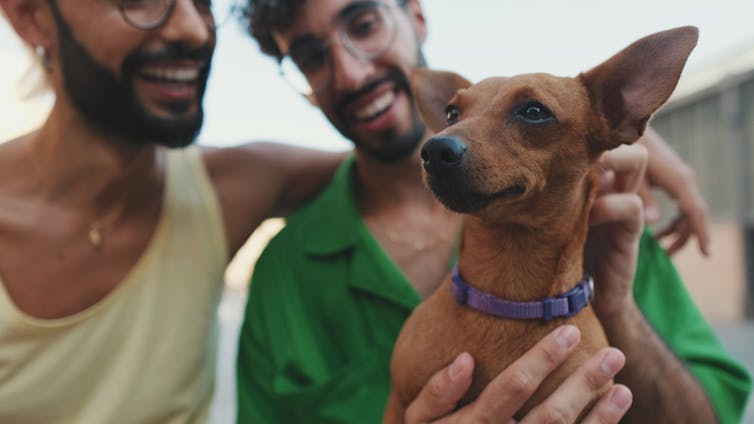
And that’s only if you stay a Dink (or the single-equivalent Sink). If you have kids, you may actually lose money when you earn more, because you will lose the right to free childcare (you lost your child benefits back at £60,000). You may prefer to be a Dinkwad – a “Dink with a dog”.

Focus on a small dog, held by a young gay couple
The Dinkwad life.
Andrii Nekrasov/Shutterstock

The traditional middle class was defined by homeownership and financial security, both things you could achieve through professional work. What unites today’s Henrys, Alices and Dinks is they can enjoy consumption levels their parents in the same social class would never have imagined, but can’t buy the same house as them.

The solution to this is simple economics, but complex politics: if you want cheaper houses, you must build more of them. That means building in less desirable locations, turning individual houses into flats, or overcoming opposition from older homeowners who often resist new housing developments in their neighbourhoods.

So, when your judgmental uncle remarks that “if you ate fewer avocados and lattes, you’d be able to buy a house just like I did”, you may want to explain how the relative prices of an avocado and a house have changed over time. If you’re not saving for a deposit, buying avocados may simply be the most rational thing to do.

The Conversation

Renaud Foucart does not work for, consult, own shares in or receive funding from any company or organisation that would benefit from this article, and has disclosed no relevant affiliations beyond their academic appointment.

– ref. Are you a Dink, Alice or Henry? How social mobility is different for today’s young people – https://theconversation.com/are-you-a-dink-alice-or-henry-how-social-mobility-is-different-for-todays-young-people-275129

AlphaGenome, une nouvelle avancée en intelligence artificielle pour explorer les effets des mutations génétiques

Source: The Conversation – France in French (2) – By Élodie Laine, Professeure en biologie computationnelle, Sorbonne Université

Même une mutation génétique très simple – une lettre qui change dans l’immense chaîne composée d’A, T, C et G – peut avoir des conséquences sur la santé. Sangharsh Lohakare/Unsplash, CC BY

Notre ADN est composé d’un enchaînement de quatre petites molécules appelées « acides nucléiques » et dénotées par les lettres A, C, G, et T. Parfois, une mutation génétique a lieu et affecte notre santé. Une simple modification dans la grande séquence de lettres qui constitue notre génome peut suffire à affecter l’expression des gènes ou les versions des protéines produites à partir de ces gènes.

Mais on ne sait pas, à l’heure actuelle, expliquer systématiquement comment telle ou telle mutation génétique peut avoir tel ou tel effet. C’est la question à laquelle AlphaGenome, le nouveau logiciel d’intelligence artificielle présenté dans la revue Nature par Google, tente de répondre.

AlphaGenome analyse un million d’acides nucléiques à la fois, et prédit, pour chacun d’eux, des milliers de quantités, qui sont autant de facettes de la régulation de nos gènes pour façonner nos tissus et nos organes.

Coupler un tel niveau de résolution avec un contexte aussi long (un million de lettres !) et prédire autant d’aspects de la régulation du génome relève du tour de force. Cependant, ce nouvel opus de la série Alpha de DeepMind ne représente pas une avancée aussi spectaculaire qu’AlphaGo ou AlphaFold, par exemple.

AlphaGenome affine une approche existante, déjà implémentée dans Enformer et Borzoi, deux modèles d’apprentissage profond développés chez Google qui ont fait leurs preuves. Il améliore, d’une part, leur efficacité par des optimisations techniques et, d’autre part, leur pertinence, en modélisant plus finement la complexité des processus génétiques.


À lire aussi :
Décrypter notre génome grâce à l’intelligence artificielle


Pourquoi cette avancée est importante

L’enjeu de ce travail est de taille pour la santé humaine. Les bases de données génomiques de populations humaines recensent près de 800 millions de variations ponctuelles – c’est-à-dire des changements portant sur une seule lettre du code génétique – dont l’impact sur notre santé reste largement inexploré. Identifier quelles sont celles qui sont à l’origine de maladies ou de dysfonctionnements, et comprendre leurs mécanismes d’action, est crucial.

Par exemple, dans certaines leucémies, une mutation d’un seul acide nucléique active de manière inappropriée un gène bien spécifique. AlphaGenome confirme le mécanisme déjà connu de cette activation aberrante : la mutation permet à un régulateur génétique de s’accrocher au gène, et modifie les marques épigénétiques alentour.

Ainsi, en unifiant plusieurs dimensions de la régulation génétique, AlphaGenome s’impose comme un modèle de fondation, c’est-à-dire un modèle générique qui peut être transféré ou appliqué facilement à plusieurs problèmes.

Quelles sont les suites de ces travaux ?

Plusieurs limitations tempèrent néanmoins l’enthousiasme.

Par exemple, les prédictions sur différentes facettes d’un même processus biologique ne sont pas toujours cohérentes entre elles, révélant que le modèle traite encore ces modalités de façon relativement cloisonnée.

Le modèle peine aussi à capturer la « spécificité tissulaire », c’est-à-dire le fait qu’un même variant génétique peut être délétère dans un tissu et neutre dans un autre.

De plus, il reste difficile de quantifier l’ampleur de l’effet d’une mutation.

Enfin, AlphaGenome prédit des conséquences moléculaires, pas des symptômes ni des diagnostics – or, entre une variation d’ADN et une maladie, il reste énormément de travail pour comprendre les relations entre ces différents niveaux ; et il n’a pas encore été validé sur des génomes individuels – un passage obligé pour toute application en médecine personnalisée, où l’enjeu serait d’interpréter le profil génétique unique d’un patient pour prédire sa susceptibilité à certaines maladies ou adapter son traitement.

Au-delà de ces enjeux pour la santé humaine, comment transférer cette connaissance à la biodiversité dans son ensemble ? AlphaGenome dépend en effet de mesures expérimentales, accessibles en abondance uniquement pour une poignée d’espèces (l’humain et quelques organismes modèles). Une autre famille de modèles pourrait ici jouer un rôle complémentaire : les « modèles de langage génomique », qui fonctionnent un peu comme ChatGPT mais pour prédire la suite d’une séquence d’ADN plutôt que la suite d’une phrase. Ces modèles, entraînés sur des millions de séquences génomiques, peuvent ainsi capturer les règles et les motifs conservés au cours de l’évolution, ce qui permet de déchiffrer des génomes inconnus.

Rien de tout cela n’existerait sans les grandes bases de données publiques et le travail cumulé de la recherche académique et des consortia ouverts, qui ont produit, standardisé et partagé les données nécessaires à l’entraînement de ces modèles. La suite logique est claire : la science doit rester ouverte, au service de la société. L’équipe d’AlphaGenome a rendu le code et les poids publiquement accessibles, et propose une interface facilitant l’adoption par la communauté scientifique. Reste à voir comment celle-ci s’emparera de cet outil : sera-t-il utilisé comme une « boîte noire » pratique, ou inspirera-t-il un véritable changement de paradigme en génomique computationnelle ?


Cet article a bénéficié de discussions avec Arnaud Liehrmann, post-doctorant au laboratoire de Biologie computationnelle, quantitative et synthétique.


Tout savoir en trois minutes sur des résultats récents de recherches commentés et contextualisés par les chercheuses et les chercheurs qui les ont menées, c’est le principe de nos « Research Briefs ». Un format à retrouver ici.


The Conversation

Elodie Laine est membre junior de l’Institut Universitaire de France. Elle a reçu des financements de l’Agence Nationale de la Recherche (ANR, France 2030, PostGenAI@Paris, ANR-23-IACL-0007) et de l’Union Européenne (ERC, PROMISE, 101087830). Les points de vue et opinions exprimés sont toutefois ceux des auteurs uniquement et ne reflètent pas nécessairement ceux de l’Union européenne ou du Conseil européen de la recherche. Ni l’Union européenne ni l’autorité octroyant la subvention ne peuvent en être tenus responsables.

Julien Mozziconacci est professeur au Muséum National d’Histoire Naturelle et membre junior de l’Institut Universitaire de France. Il a reçu des financements de l’Agence Nationale de la Recherche (ANR, France 2030, PostGenAI@Paris). Les points de vue et opinions exprimés sont toutefois ceux des auteurs uniquement et ne reflètent pas nécessairement ceux des instituts qui les ont financés.

– ref. AlphaGenome, une nouvelle avancée en intelligence artificielle pour explorer les effets des mutations génétiques – https://theconversation.com/alphagenome-une-nouvelle-avancee-en-intelligence-artificielle-pour-explorer-les-effets-des-mutations-genetiques-275833