The classic view of British countryside is of hilly green fields, stone walls and sheep dotted about in the distance.
But that scene could be disappearing as farmers move away from keeping sheep, or reduce their flocks, in many areas of the country.
The total number of sheep and lambs decreased by 3.8%, to 13.3 million in June 2025. Breeding flock numbers have also dropped from 6.8 million in 2021 to 6.4 million in 2025.
Meanwhile, the nation’s eating habits also appear to be shifting as mutton and lamb production has dropped from 400,000 tonnes per year in the early 1990s to 276,000 tonnes today.
The geographical distribution of sheep across the UK is changing too, with Scotland – long celebrated for its hill flocks – reporting marked declines of sheep numbers particularly in the northwest and the Highlands.
So has the UK reached “peak sheep”?
The largest fall in sheep numbers occurred after the 2001 foot and mouth outbreak, and in England this decline deepened when government subsidies related to numbers of sheep were replaced with subsidies for looking after the land in 2024/25. This reduced the incentive to keep large flocks and led farmers to retain fewer animals. Simultaneously, UK and global dietary habits have been changing. UK red meat consumption fell by 13.7g per day per head between 2008 and 2019.
Cost, health concerns and the difficulty of positioning lamb as a fast food option have reduced demand. In 2021 60% of lamb was purchased by shoppers aged 55 plus, with younger consumers increasingly preferring alternative protein sources such as chicken and processed meat.
Planning for the future on low-income hill farms is also problematic. In the UK, 84% of farmers are over 45 (and 38% over 65), with many young people reluctant to enter an uncertain industry. On upland and hill farms, the average farm profit was just £32,000 in 2023/24, 69% of which came from government payments due to be phased out by 2027.
However, sheep are adaptable to changing circumstances and their ability to select plants to sustain themselves might offer a route to securing their future as the national flock continues to shrink.
A Scottish sheep farmer talks about some of his challenges.
That fastidious eating, once essential for survival, is proving invaluable for conservation. Many native breeds excel at balancing shrub browsing with grazing in areas inaccessible to machinery. Conservation success stories include the restoration of violets vital for fritillary butterflies and the maintenance of biodiverse mosaic grasslands.
Sheep eat different plants to cattle, so they can be deployed as appropriate to eat selectively, tackling problem plants that cattle might not. They also have less impact on the soil, which in some instances is beneficial.
Some rewilding supporters worry that sheep can harm nature in certain situations, but when they’re carefully managed, sheep can actually help store carbon and are important for looking after landscapes such as fens, saltmarshes, moorland and meadows.
Poorly managed, they can hinder conservation efforts, grazing too close to the soil. But the rise of “flying flocks” – mobile groups shepherded across different sites – demonstrates how sheep can support flexible land use on both lowland and upland farms. Meanwhile, the UK’s commitment to net zero, and the expansion of solar energy have created another niche.
Sheep, conveniently sized and behaviourally suited, are ideal for grazing underneath solar panels, keeping vegetation under control.
So, where does this leave the UK’s sheep industry?
We may be witnessing a move to lower levels with new breeds, and other changes emerging. In lowland areas, you may already be seeing more sheep, as arable farmers turn to them to graze cover crops which are used to avoid soils laying bare over long periods of time. Cover crops enhance soil structure and biodiversity, providing nutrients to the soil.
Lowland sheep are heavier, better suited to meat production and can be stocked more densely than on upland terrain, boosting efficiency. A growing proportion of the UK’s lamb supply is likely to come from lowland flocks, with reducing reliance on the traditional flow of breeding ewes from the hills. So sheep are more likely to be seen on the lower levels, and there could be fewer of them.
Beyond their ecological contributions, sheep produce a remarkable annual bonus. From carpets and jumpers to natural insulation and high-end suits, wool is natural, renewable, sustainable and biodegradable. As the clothing industry increases the use of natural fibres, demand and prices are rising, this could offer a more lucrative alternative product for sheep farmers to sell.
Sheep still have a vital place in the UK. The country may have reached “peak sheep”, but given their versatility, their capacity to thrive in tough environments, our growing commitment to sustainable land management and our deepening understanding of their grazing behaviour, sheep are well placed to help us be better custodians of our landscapes.
The authors do not work for, consult, own shares in or receive funding from any company or organisation that would benefit from this article, and have disclosed no relevant affiliations beyond their academic appointment.
À un an de l’élection présidentielle, les municipales de 2026 sont un scrutin charnière, révélateur de l’état réel du paysage politique français. Cependant, derrière l’affrontement partisan se joue un enjeu plus profond : savoir si la commune reste un lieu essentiel de notre démocratie, ou si elle s’est muée en simple rouage administratif.
Les élections municipales de 2026 vont revêtir une importance particulière. Tout d’abord, parce qu’elles vont constituer un test pour mesurer les rapports de force politiques avant l’élection présidentielle de 2027 qu’elles précèdent immédiatement, une situation qui ne s’était pas reproduite depuis 2001. Ensuite, parce qu’elles interviennent dans un contexte de trouble, voire d’usure démocratique. La séquence ouverte par les élections législatives de 2024, faite d’instabilité et d’impuissance gouvernementale, est venue parachever un processus de décomposition et de recomposition politique amorcé depuis 2017 et la première victoire d’Emmanuel Macron.
Mais derrière les enjeux partisans se profile un enjeu caché, celui de la conception même du rapport au politique. Les élections municipales de 2026 vont raviver un très ancien débat sur ce que sont les communes et le pouvoir local. S’agit-il d’une forme d’organisation urbaine destinée à rationaliser l’action publique ou bien de l’expression plus ou moins spontanée de libertés venant se concrétiser dans une communauté ?
La nationalisation des élections municipales
Bien qu’elles soient locales par définition, les élections municipales vont revêtir une valeur nationale. Dans l’état actuel de confusion politique, chaque parti entend montrer qu’il dispose d’un ancrage territorial et se trouve ipso facto en mesure de répondre aux attentes des Français sur le terrain. Le Rassemblement national (RN) est devenu le parti dominant, mais n’a pas pu réunir un vivier d’élus locaux suffisant pour démontrer son omniprésence et a préparé environ 700 listes. Son espoir est de conquérir quelques grandes villes, comme Calais ou Toulon. La question se posera de savoir si la suprématie des Républicains (LR) dans les villes de plus de 9 000 habitants, actée en 2020, pourra se prolonger sans entériner « l’union des droites » avec le RN.
À gauche, la fin du Nouveau Front populaire met en concurrence La France insoumise (LFI) et le Parti socialiste (PS) pour le leadership dans la perspective de la présidentielle de 2027, avec l’engagement de députés LFI à l’assaut de Paris ou de Marseille. Le PS va mesurer la portée de sa stratégie de recentrage et d’alliance avec Les Écologistes pour espérer récupérer des villes passées à droite en 2014, comme Reims ou Toulouse. Pour le bloc central, l’enjeu est celui de savoir ce que pèse encore le macronisme, alors que Renaissance a préféré soutenir des candidats Horizons (à Paris), divers droite (à Lyon) ou d’anciens LR (à Marseille).
Projeter sur les élections municipales les enjeux de l’élection présidentielle permet aux partis politiques de renforcer leur légitimité alors qu’ils sont désormais faibles et incapables de canaliser la violence sociale. Cette instrumentalisation occulte cependant la nature du débat démocratique que soulèvent ces élections.
Une histoire du long terme
Pour comprendre ce dont se revêt le pouvoir municipal dans la France de 2026, il faut bien cerner l’importance d’un débat historique qui entoure l’apparition du fait communal au détour des IXe et Xe siècles. Les communes, souvent issues des paroisses catholiques, se sont alors multipliées dans un cadre juridique nouveau, celui de chartes passées avec des autorités de tutelle – rois, seigneurs, autorités ecclésiastiques – qui leur concédaient des libertés de gestion mais, surtout, reconnaissaient l’existence de pouvoirs sociaux autonomes : les communes deviennent des personnes morales.
On doit surtout retenir le fait qu’elles deviennent l’expression d’une solidarité entre les habitants, qui se doivent « foi, assistance et conseil ». Ceux-ci participent à des assemblées générales convoquées « à corz cornant et à cloiche sonant », selon un modèle institutionnel qui se diffuse en Europe.
Deux facteurs sociopolitiques vont jouer un rôle décisif dans l’invention de la commune, que l’on retrouve très clairement dans la France du XXIe siècle : d’une part, un mouvement de différenciation et d’individuation, qui conduit à l’affirmation d’une identité locale collective ou communautaire et, d’autre part, un effondrement du pouvoir central, marqué par l’instabilité et l’inefficacité. Petit parallèle historique : Louis II dit le Bègue reste roi des Francs deux ans (877-879), Charles III le Gros trois (884-887), tout comme Louis III (879-882), et le dernier roi carolingien, Louis V, un an (986-987). Comme le souligne Émile Durkheim dans un texte de 1903 : « L’activité de la société est en raison inverse de l’activité de l’État. » L’émancipation de la société conduit à inventer de nouvelles structures politiques qui permettent de se protéger et d’affirmer ses libertés.
De l’institution communautaire à l’institution oligarchique
Cette conception de la commune va disparaître sous l’effet d’un mouvement de concentration oligarchique qui s’opère à partir du XIVe siècle, puis d’une nouvelle doctrine juridique venant à l’appui de la centralisation monarchique à partir du XVIᵉ siècle, qui fera progressivement de la commune un simple rouage de la puissance royale, dont les représentants, les maires, ne sont plus élus mais titulaires d’offices, dont l’achat devient une aubaine financière pour l’État. En 1555, un édit royal crée les généralités (ancêtres de nos préfectures) sous la conduite d’un intendant nommé par le roi qui va contrôler les finances communales et vérifier si les élus ne s’octroient pas trop d’indemnités.
Cette évolution oligarchique et de concentration du pouvoir municipal est le produit de deux facteurs opposés. Le premier, apparu très tôt, est le besoin de disposer de maires ayant fait des études juridiques et disposant d’un bagage universitaire. Très vite, dès le XIIIe siècle, les bourgeois sont à la recherche de bons maires pour leur commune, ce qui implique déjà un certain savoir-faire professionnalisé. Cette nouvelle élite va s’associer à la bourgeoisie marchande et aux Parlements pour contrer le pouvoir royal mais, de ce fait, s’insérer dans de plus vastes réseaux sociaux et familiaux. Le second, inverse, mais jouant paradoxalement dans le sens d’une dévitalisation de l’idée communale et communautaire originelle, tient à la construction de l’État moderne, qui impose de disposer de rouages locaux et appuie les élites locales dans leur lutte contre la noblesse et les seigneurs.
Les conseils et les « jurés » ou les « échevins » vont rapidement s’imposer, tandis que les assemblées de citoyens disparaissent peu à peu. Bien que la Révolution et les régimes républicains qui lui succèdent fassent de l’élection démocratique le ressort du pouvoir municipal, ce dernier se réduit désormais à un contre-pouvoir plus ou moins fragile par l’insertion des maires dans la notabilité, qui conduit aux fonctions politiques nationales.
Le pouvoir municipal à la croisée des chemins
En 2026, le pouvoir municipal se retrouve en tension entre ces deux acceptions de la commune. La première est celle du pouvoir direct des citoyens, tel qu’il s’exprime positivement dans l’investissement dans les assemblées participatives locales et, négativement, dans les agressions dont les maires font l’objet en nombre croissant. L’idée d’un pouvoir de proximité, efficace et rapide, est partagée par une majorité de citoyens. Le Baromètre de la confiance politique du Cevipof montre ainsi qu’a émergé une autre idée du pouvoir politique, moins partisan et plus soucieux du détail des vies ordinaires.
Alors que le pouvoir central est fortement critiqué, le pouvoir local est apprécié : si 22 % des enquêtés ont encore confiance dans l’institution présidentielle, 60 % font confiance à leur maire, 58 % à leur conseil municipal. Bien plus, la demande de décentralisation est forte. Les enquêtés estiment à 79 % qu’il faudrait donner plus de pouvoir aux collectivités locales face l’État. Cette moyenne ne varie ni en fonction du niveau de diplôme, ni de la catégorie socioprofessionnelle, ni même du vote au premier tour de l’élection présidentielle de 2022 puisque cette proportion est de 82 % chez les électeurs de Jean-Luc Mélenchon, de 81 % chez ceux d’Emmanuel Macron et de 83 % chez ceux de Marine Le Pen. On est donc en présence d’une demande générale.
La commune reste le lieu de l’efficacité immédiate et de son évaluation rapide par les administrés. La gestion municipale reste d’ailleurs assez étrangère aux engagements partisans. Ce n’est pas par hasard si le facteur qui joue le plus sur le niveau de confiance dans les maires, bien avant la position politique ou les variables sociologiques lourdes, est constitué par le niveau de confiance dans les entreprises privées. Cette observation introduit cependant la seconde dimension du pouvoir municipal.
Celui-ci s’est concentré entre les mains des maires dans un cadre institutionnel où la « prime majoritaire » du scrutin laisse peu de place aux oppositions puisqu’une victoire modeste dans les urnes peut conduire à disposer d’une majorité écrasante de conseillers municipaux. Jusqu’à 50 000 habitants, en moyenne, les listes gagnantes ont obtenu en 2020 autour de 80 % des conseillers, 73 % entre 50 000 et 100 000 habitants et 69 % dans les grandes villes au-delà de 100 000 habitants avec une diversification de la compétition électorale.
Mais on observe aussi un renforcement récent du caractère oligarchique du pouvoir municipal, notamment par le développement des politiques de communication qui personnalisent fortement l’action municipale et valorisent la seule image du maire. Le profil socioprofessionnel des maires est devenu par ailleurs de plus en plus étroit, privilégiant les catégories supérieures ou moyennes diplômées. Entre 2014 et 2020, la proportion de maires issus des catégories supérieures est passée en moyenne dans l’Hexagone de 25 % à 43 %, et dans les outre-mer de 42 % à 49 %. Le mouvement est général, même si la taille des communes vient le moduler, puisque cette proportion passe de 34 % dans les communes de moins de 500 habitants à 72 % dans celles de 30 000 habitants et plus.
Origine sociale des maires de France en 2019 et 2025
Même si les maires bénéficient d’un crédit perdu par le personnel politique national, ils constituent néanmoins une oligarchie souvent impuissante. Les communes dépendent étroitement des dotations financières de l’État et doivent s’insérer dans un carcan de normes nationales tant en matière de santé, d’environnement que de développement urbain ou économique. L’autonomie locale est encore réduite par la nécessité de s’insérer dans des intercommunalités qui décident de plus en plus de la vie quotidienne des habitants, en matière de transports ou de voirie. La décentralisation a été interprétée comme une déconcentration de l’État, laissant les tâches routinières et ingrates au local.
La question municipale résume donc, en 2026, les deux orientations contradictoires qui mettent la démocratie à l’épreuve de l’arbitrage entre deux efficacités politiques. La première reste fidèle à une anthropologie politique faisant du local un lieu de solidarité, de participation et d’identité, ce qui explique pourquoi la France a toujours 35 000 communes. La seconde fait de la gestion municipale un facteur d’adaptation territoriale d’une action publique unitaire et verticale supposée intégrer la société française.
Luc Rouban ne travaille pas, ne conseille pas, ne possède pas de parts, ne reçoit pas de fonds d’une organisation qui pourrait tirer profit de cet article, et n’a déclaré aucune autre affiliation que son organisme de recherche.
En vue de l’élection présidentielle de 2027, nous allons être matraqués de sondages. Quelle confiance accorder à ces chiffres ? Pour le comprendre, il faut se pencher sur les statistiques, déterminer comment elles sont construites et déterminer les biais et les incertitudes.
Le dimanche 7 juillet 2024, le verdict des urnes a balayé des semaines de « certitudes statistiques ». Alors que les instituts plaçaient le Rassemblement national (RN) et ses alliés en tête avec une fourchette de 170 à 230 sièges, les résultats définitifs ont figé le compteur à 143 sièges, reléguant le parti à la troisième place.
Comment un appareil statistique aussi sophistiqué a-t-il pu manquer la physionomie de l’Assemblée à ce point ? La réponse ne réside pas seulement dans de « mauvais chiffres », mais dans un décalage structurel entre ce que la loi encadre, ce que la statistique permet, et ce que le public entend.
Le « sondage » contrôlé contre la « projection » libre
Depuis la loi no 2016-508 du 25 avril 2016, la Commission des sondages est chargée de veiller au respect de la réglementation. Elle s’est dotée d’un site donnant accès aux notices explicatives de l’ensemble des sondages électoraux publiés, et publie régulièrement des communiqués. Le 18 juin 2024, à l’occasion des élections législatives, la commission alerte sur une distinction juridique fondamentale qui échappe souvent au grand public :
Le sondage (contrôlé) : une enquête statistique sur un échantillon représentatif de l’ensemble du territoire hexagonal. La commission exerce ici un contrôle systématique sur la méthode de sélection, les quotas et les redressements.
La projection en sièges (non contrôlée) : c’est un exercice de « traduction » du vote national en sièges parlementaires. La commission est formelle : elle n’exerce aucun contrôle sur ces chiffres et recommande la prudence.
Pourquoi ? Parce que la projection est tributaire de 577 réalités locales : offre politique spécifique, notoriété des candidats et, surtout, les configurations de seconds tours (triangulaires, désistements) qui dépendent du taux de participation. En somme, la loi encadre la « matière première » (l’intention de vote), mais laisse le « produit fini » (la projection en sièges) dans une zone grise méthodologique.
Le mirage des marges d’erreur
L’un des plus grands malentendus réside dans l’affichage des marges d’erreur, perçues à tort comme une mesure globale de la fiabilité. Depuis la loi de 2016, chaque première publication d’un sondage doit obligatoirement indiquer sa marge d’incertitude. Pourtant, la quasi-totalité des instituts français utilise la méthode des quotas, une technique sur laquelle la notion mathématique de marge d’erreur n’a techniquement « pas de sens », comme les instituts l’admettaient eux-mêmes devant le Sénat.
En « théorie des sondages », on distingue explicitement :
les sondages « aléatoires », où chaque individu de la population cible du sondage a une probabilité connue et non nulle de faire partie de l’échantillon de répondants, et on se sert de ces probabilités pour établir des marges d’erreur. Ici la « représentativité » est, par construction, indiscutable.
les sondages par « quotas » où il s’agit de contrôler que la structure de l’échantillon de répondants au sondage est similaire à celle de la population cible (essentiellement : sexe, âge, catégorie socioprofessionnelle, région de résidence et catégorie d’agglomération). Ici, la « représentativité » est seulement partiellement contrôlée, et la probabilité de chaque individu, d’appartenir à l’échantillon, est inconnue.
Pour comprendre l’origine de cette ambiguïté sur les marges d’erreur, il faut remonter au rapport no 54 du Sénat de 2010 qui a entériné un glissement sémantique majeur en estimant qu’il était « tout à fait possible » de considérer que les quotas génèrent des incertitudes « similaires » à la méthode aléatoire.
Or, Pascal Ardilly (inspecteur général de l’Insee et auteur de l’incontournable livre les Techniques de sondage), auditionné par le Sénat, précisait explicitement que faire l’hypothèse de marges d’erreur similaires pour les résultats d’un sondage, qu’il soit issu de la méthode des quotas ou de la méthode aléatoire, relevait d’une hypothèse très forte et non vérifiée d’absence de biais pour la méthode des quotas.
Un glissement analogue apparaît avec l’usage tronqué de la notion d’« échantillonnage contrôlé » attribuée à Jerzy Neyman (considéré comme l’un des fondateurs de la statistique moderne).
En omettant le mot « aléatoire » dans l’expression originelle « échantillonnage aléatoire contrôlé », on fait comme si le contrôle des quotas pouvait se substituer au hasard. Pourtant, scientifiquement, le mot « aléatoire » change tout : le « contrôlé » n’est pas une ambiance mais un hasard encadré par un plan de sélection rigoureux qui permet de construire mathématiquement des marges d’erreur.
C’est ce qui rend la notion de « représentativité » si exigeante : elle ne peut être revendiquée que si les marges d’erreur découlent scientifiquement du plan de sélection, ce que la méthode des quotas ne peut pas invoquer, en toute généralité. En reprenant une formulation de compromis – « les marges d’erreur… le cas échéant par référence à la méthode aléatoire » – la loi a figé des mots statistiques sans en figer les conditions de validité, laissant croire au public que la marge d’erreur affichée (en général, seulement lors de la première publication) est l’assurance tous risques d’un chiffre qui se veut destin.
Quand la convergence fabrique l’erreur collective
En science, il est souvent rassurant de constater que diverses études donnent des résultats « compatibles ». Malheureusement, il peut s’agir d’une hallucination collective !
En 2024, les principaux instituts de sondage dont les travaux étaient relayés dans les médias, donnaient, quelques jours avant le second tour, des projections très éloignées des résultats définitifs.
Ce phénomène est ce que j’appelle une « communauté de biais ». Lorsque plusieurs instituts utilisent des méthodes similaires et des redressements basés sur les mêmes hypothèses (comme le report de voix entre blocs), une erreur commune peut se produire. La stabilité des chiffres n’est alors pas un gage de fiabilité, mais le symptôme d’une confiance collective dans une erreur collective.
La présidentielle : un cadre « pur » qui n’élimine pas les biais
Dans le cadre de l’élection présidentielle, le dispositif semble pourtant idéal : on sort des incertitudes liées aux 577 scrutins locaux pour revenir au « sondage pur », tel que défini et strictement contrôlé par la commission. Cependant, il est impératif de comprendre que le contrôle réglementaire assure une transparence démocratique, mais ne garantit en rien une « vérité » statistique. Le malentendu principal réside dans la confusion entre la marge d’erreur théorique et la fiabilité globale.
Lors de l’élection présidentielle de 2012, par exemple, pour une intention de vote de 25 %, les marges d’erreur « théoriques » affichées étaient de l’ordre de 1,8 à 2,7 points (selon le nombre de répondants). Après analyse statistique des écarts des résultats de tous les candidats entre le scrutin et les dernières estimations, elles se situaient en réalité entre 4 et 6 points. Pour exemple, un candidat crédité de 25 % d’intention de vote était essentiellement prévu entre 23 % et 27 % alors que la précision sincère du sondage se situait entre 21 % et 29 %.
Ce décalage s’explique par la nature même de l’erreur totale, qui n’est pas qu’une simple variance (un flou lié à la taille de l’échantillon et sa variabilité), mais peut aussi être un biais (un décalage structurel). Ce biais est alimenté par la vie réelle des sondages : non-réponses, indécisions, modes de collecte ou ajustements méthodologiques plus ou moins assumés.
Lorsque tous les acteurs utilisent des méthodes de redressement et des panels « similaires » (électeurs recrutés essentiellement sur Internet et qui répondent régulièrement aux sondages qui leur sont soumis), ils peuvent produire une histoire cohérente… mais erronée dans la même direction.
Ce constat impose, il me semble, une véritable « hygiène du commentaire » : il faut cesser de considérer les « fourchettes » affichées (lorsqu’elles le sont) comme le curseur permettant de décider si une campagne « stagne », « bouge » ou « bascule ».
2027 : Vers une maturité de l’information électorale ?
À l’approche du double scrutin de 2027 – l’élection présidentielle suivie d’élections législatives – l’enjeu n’est pas seulement de savoir qui « gagnera », mais de définir comment nous acceptons d’être informés (voire influencés). La séquence de 2024 a servi de rappel brutal : un appareil « statistique », aussi sophistiqué soit-il, peut totalement manquer la physionomie d’une assemblée si l’on confond l’intention de vote nationale avec la projection locale en sièges.
Pour l’élection présidentielle de 2027, le défi sera de ne pas se laisser enfermer dans le confort d’un chiffre unique. Le cadre sera « pur » et contrôlé par la Commission des sondages, mais l’expérience de 2012 (et en réalité celle de bien d’autres) nous rappelle qu’une marge d’erreur « théorique » de deux points peut masquer une imprécision réelle de plus de cinq points une fois les biais potentiels intégrés. Il est temps que les médias et le public adoptent un « pacte de sobriété » : privilégier les fourchettes larges et admettre qu’à trois points (voire cinq points) d’écart, rien n’est clair.
Concernant les législatives qui suivront, la vigilance devra être redoublée sur les projections en sièges. Comme l’a souligné la Commission des sondages, ces exercices ne bénéficient d’aucun encadrement méthodologique strict et dépendent de paramètres locaux (offres politiques, désistements) qu’un sondage national ne peut saisir. Continuer à présenter ces projections comme des résultats scientifiques et fiables, c’est entretenir une « confiance collective dans une erreur collective ».
En définitive, mon propos appelle une alliance entre culture statistique et culture civique. La loi de 2016 a ouvert la « boîte noire » en imposant la transparence des notices. Il appartient désormais aux acteurs du débat public de transformer cette transparence en une véritable « hygiène du commentaire ».
Un chiffre n’est pas un destin, c’est une mesure ; et en démocratie, le destin n’appartient qu’au vote, une fois les hypothèses, les méthodes, les estimations et les projections remises à leur juste place.
Et pour les élections municipales ? Dans les grandes villes (Paris, Lyon, Marseille…), les instituts s’appuient le plus souvent sur leurs panels, puis filtrent les répondants pour ne retenir que les personnes inscrites sur les listes électorales de la commune (et, le cas échéant, de l’arrondissement/secteur). La méthode des quotas et les redressements restent les principaux outils statistiques mobilisés pour estimer les intentions de vote. Restons vigilants !
Léo Gerville-Réache ne travaille pas, ne conseille pas, ne possède pas de parts, ne reçoit pas de fonds d’une organisation qui pourrait tirer profit de cet article, et n’a déclaré aucune autre affiliation que son organisme de recherche.
Alors que la pêche à la truite va rouvrir le 14 mars 2026, celle du saumon atlantique sauvage restera, cette année encore, interdite. Pas de miracle à attendre toutefois de cette mesure : le déclin alarmant que connaît cette espèce emblématique semble d’abord lié à la dégradation de ses conditions de vie. Peut-on encore préserver ce poisson grand migrateur dans les rivières françaises ? Dans un souci d’efficacité à court terme, la priorité est de rétablir la continuité écologique des milieux, c’est-à-dire de réduire le nombre d’obstacles (barrages en particulier) qui se dressent sur sa route.
La pêche du saumon atlantique sauvage (Salmo salar) a été interdite partout en France en 2025. Cette mesure sans précédent a été reconduite en 2026. Cette décision est la conséquence de très faibles retours de saumons adultes dans les rivières françaises.
Comment en est-on arrivé là ? Poisson grand migrateur vivant alternativement en rivière et en mer, le saumon atlantique est une espèce emblématique qui a fortement régressé au fil des siècles, particulièrement en France. En cause, le développement des activités humaines sur les cours d’eau et, en premier lieu, la construction de barrages, qui font obstacle à ses migrations, depuis et vers ses zones de reproduction.
Aujourd’hui, il est aussi menacé par le changement climatique. La France est en effet située sur la marge sud de l’aire de répartition de cette espèce d’eau froide. Le saumon pourrait-il bientôt déserter les cours d’eau français ? Peut-on encore l’en empêcher ? État des lieux.
Une détérioration brutale ces dernières années
À l’état sauvage, le saumon ne subsiste plus naturellement en France que dans certains cours d’eau du fond du golfe de Gascogne – principalement le bassin de l’Adour – ainsi que dans des fleuves côtiers de l’extrémité ouest de la péninsule bretonne et de la côte normande.
Il a disparu de tous les grands fleuves français, à l’exception de l’Allier, affluent amont de la Loire, qui héberge encore une population, désormais en danger d’extinction. La conservation des populations est la priorité reconnue au plan international et national.
Au-delà de l’interdiction de pêche, quelles solutions pour enrayer le déclin ?
S’agit-il d’une turbulence passagère, ou bien d’une transition vers des conditions adverses plus pérennes du fait du changement climatique ? Cette question reste ouverte.
Dans l’urgence, la fermeture de la pêche décidée en 2025 en France permet d’alléger le fardeau que l’humain impose au saumon, mais il ne faut pas trop en attendre. En effet, son exploitation légale est actuellement à des niveaux historiquement bas. Les captures accidentelles, lorsqu’elles ne sont pas illégales, devraient bien sûr être minimisées, mais il est très improbable qu’elles puissent expliquer, à elles seules, les baisses drastiques récemment observées sur l’ensemble des cours d’eau français.
Tacon (jeune saumon). Katie Marony/USFWS
Il pourrait être tentant de supplémenter artificiellement les populations par des déversements de juvéniles produits en élevage. Mais il est aujourd’hui établi que ces pratiques, largement mises en œuvre depuis plus d’un siècle, sont le plus souvent inefficaces, voire nocives, et en aucun cas durables.
Pour ce qui est du milieu marin, on ne dispose pas vraiment de levier d’action, faute de connaissances scientifiques suffisamment précises sur la vie en mer du saumon et en raison de l’ampleur du domaine océanique dans lequel l’espèce évolue.
Depuis quelques décennies, une politique proactive d’aménagement des obstacles pour faciliter leur franchissement par les poissons a été mise en place, en France et en Europe, sur à peu près tous les bassins encore colonisés par le saumon. Elle a montré son efficacité en contribuant à stabiliser la situation de l’espèce jusqu’à très récemment.
Cette politique est aussi une voie d’adaptation à privilégier et à amplifier sans attendre face aux nouvelles menaces à venir, en particulier le changement climatique. Lorsqu’elle est ciblée sur des bassins où le saumon est encore présent à l’état sauvage, les effets positifs peuvent être rapides, significatifs et durables.
Parce qu’elle permet le maintien des usages, la construction de dispositifs de franchissement (type « passes à poissons ») est la « solution » la plus fréquemment mise en œuvre, bien que leur efficacité ne soit pas toujours garantie. Elle peut aussi être drastiquement réduite dans les cas où l’on rencontre plusieurs aménagements successifs le long d’un même cours d’eau, même lorsque chacun est individuellement performant. Le recours aux dispositifs de franchissement est également plus risqué, car leur efficacité pourrait être altérée par des changements à venir dans les régimes hydrauliques des rivières.
Le barrage hydroélectrique de la Roche-qui-boit (Ducey, Manche), sur la Sélune, a été détruit en 2022. Epncantonducey/Wikimanche, CC BY-SA
Pour restaurer la libre circulation des poissons dans les cours d’eau, la destruction des ouvrages, en particulier quand ils n’ont plus d’usage, est la solution de choix. Après d’autres plus anciens, les arasements récents de barrages sur la Sélune en Normandie et la Nivelle au Pays basque constituent des exemples de réussite à suivre et à multiplier.
À la clé, des déplacements plus rapides depuis et vers des zones de reproduction et d’élevage des jeunes plus vastes, plus diversifiées et situées plus en amont des cours d’eau. Les bénéfices sont multiples pour faire face à aux conditions environnementales nouvelles, réchauffement des eaux et régimes hydrauliques plus contrastés (étiages et crues extrêmes), qui pourraient découler du changement climatique.
Tout d’abord, cela permet d’étendre les milieux colonisables, et donc d’augmenter les effectifs des populations. De quoi favoriser aussi la diversité génétique et accroître les opportunités d’adaptation.
Ensuite, cela réduit la mortalité due aux obstacles et aux infrastructures associées – canaux de dérivation, turbines hydroélectriques, installations piscicoles… On peut ainsi compenser d’éventuelles baisses de la survie en mer.
Enfin, les zones à l’amont des cours d’eau, souvent plus fraîches, peuvent jouer un rôle de refuge thermique pour cette espèce d’eau froide.
Suppression du barrage Urrutienea sur la Nivelle (Pyrénées-Atlantique).
Le saumon sauvage, victime collatérale de la décarbonation ?
Alors que l’expertise scientifique est aujourd’hui trop souvent traitée comme une opinion parmi d’autres, nous avons conscience que l’amplification de la politique de restauration de la libre circulation, défendue ici, n’est pas et ne sera pas une évidence pour tous.
L’issue du combat pour tenter de préserver le saumon en France étant incertaine, la tentation première de ne rien faire est grande. D’autant plus que les travaux scientifiques spéculant sur le devenir des populations, toujours par essence discutables, peuvent être mal interprétés ou instrumentalisés par des acteurs qui ont intérêt à réduire les entraves aux usages de l’eau. Certains argueront ainsi que, pour le saumon, le combat face au changement climatique est perdu d’avance.
Paradoxalement, l’espèce pourrait aussi être la victime collatérale de la lutte contre le changement climatique. En effet, la production d’électricité décarbonée (d’origine hydraulique, mais aussi nucléaire) est aujourd’hui promue, alors qu’elle nuit directement (de par les obstacles, mais également les changements de températures) à la libre circulation des poissons en rivière.
Restaurer la libre circulation du saumon sur les quelques bassins où il est encore présent naturellement aurait un coût marginal faible à l’échelle nationale, mais sa mise en œuvre est complexe dans la mesure où elle implique d’intervenir sur chaque obstacle aux migrations. À cette échelle, le coût économique et sociétal peut devenir un élément bloquant pour certains acteurs et parties prenantes.
Enfin, les pêcheurs, bien que leur activité dépende très directement de la conservation des populations de saumon, se montrent souvent plus préoccupés par des questions à court terme de partage de la ressource. Les conflits entre pêche professionnelle et pêche de loisir mobilisent beaucoup d’efforts, y compris des services de l’État, qui pourraient être mieux utilisés pour faire face collectivement au défi de la restauration de la libre circulation.
Le saumon est une espèce emblématique, avec qui nous entretenons des rapports particuliers depuis plusieurs siècles. Il est aujourd’hui au cœur de conflits qui le dépassent : enjeux à court vs long terme, locaux vs globaux, transition énergétique vs préservation de la biodiversité… Son statut en France, d’ici la fin du siècle, sera révélateur des priorités et des compromis que nous aurons collectivement mis en œuvre.
Etienne Prevost a reçu des financements publics.
Amaia Lamarins et Mathieu Buoro ne travaillent pas, ne conseillent pas, ne possèdent pas de parts, ne reçoivent pas de fonds d’une organisation qui pourrait tirer profit de cet article, et n’ont déclaré aucune autre affiliation que leur poste universitaire.
Source: The Conversation – in French – By Anne Cordier, Professeure des Universités en Sciences de l’Information et de la Communication, Université de Lorraine
Plus enclines à douter de leurs pratiques d’information, les filles sont aussi plus souvent questionnées sur leurs émotions face à l’actualité. Prendre conscience des biais de genre qui pèsent sur les usages numériques est un préalable pour faire de l’éducation à l’information un levier d’émancipation et aider adolescentes et adolescents à construire leur autonomie critique. Explications.
Travail, santé, espace public… Chaque année, en mars, dans le sillage de la Journée internationale des droits des femmes, on s’arrête sur les inégalités de genre dans différents domaines de la vie sociale. Et si nous faisions ce pas de côté dans un champ moins visible, celui des pratiques d’information des adolescents et de leur accompagnement ?
Lire l’actualité, chercher des sources pour un exposé, suivre des créateurs et créatrices de contenus, débattre en ligne : ces activités font partie intégrante de leur quotidien. En tant que pratiques culturelles, elles sont traversées par les mêmes rapports sociaux de genre que le reste de la vie sociale.
En outre, le numérique n’est pas un espace « hors-sol », neutre ou désincarné, mais un espace socialement situé où se rejouent des normes et des tensions sociétales. Les inégalités de genre y prennent des formes parfois spécifiques, mais toujours en lien avec les contextes sociaux, médiatiques et politiques. Et leur traitement éducatif n’échappe pas à ces cadrages.
Dès l’enfance, un numérique sous conditions
Les rapports genrés au numérique, à l’information et aux médias se construisent tôt, dans la socialisation familiale.
Des enquêtes de terrain menées auprès de collégiennes avaient en 2015 montré combien l’utilisation d’Internet au sein de la famille se faisait en fonction de la réalisation des tâches ménagères à destination de la collectivité. Autrement dit les filles déclaraient devoir s’acquitter d’impératifs liés à la vie, notamment matérielle, de la famille en général. Les garçons, eux, n’évoquaient quasiment jamais cette conditionnalité.
Dix ans plus tard, lors d’une enquête ethnographique menée au sein d’un collège d’éducation prioritaire, les adolescentes glissent les mêmes impératifs de tâches de gestion familiale lors de l’évocation de leurs pratiques numériques à domicile.
Ces observations font écho aux travaux sur la division sexuée du travail domestique dès l’enfance, prolongeant également les recherches sur l’informatique et les cultures numériques historiquement construites comme des territoires masculins. Cette assignation symbolique continue d’agir, y compris dans les usages informationnels, ceux-ci étant fortement dépendants de l’accès aux objets techniques.
Autorités masculines, expertes invisibles
Les contenus consultés et les légitimités associées sont aussi marqués par une distinction fortement genrée. Quand on demande aux adolescentes et adolescents de citer des figures d’autorité à leurs yeux dans le champ de l’information, les noms masculins dominent largement. De Hugo Décrypte à Mister Géopolitix en passant par Gaspard G, les modèles invoqués sont très majoritairement masculins. Ce sont également eux qui sont les plus reconnus par les adultes, à l’école comme dans les médias,
Les créatrices de contenu diffusant des savoirs scientifiques, dans le domaine de la santé ou de l’histoire, médiatiques et politiques, existent pourtant (citons pour exemples Camille Aumont-Carnel ou encore Charlie Danger. Mais elles sont moins citées, moins reconnues comme autorités. Lorsque des figures féminines sont évoquées, elles sont souvent renvoyées à l’influence, au marketing, à l’esthétique ou au lifestyle.
Cette dissymétrie rappelle le phénomène des « oubliées du numérique » décrit par Isabelle Collet : les femmes ont contribué à l’histoire de l’informatique, mais leur rôle a été invisibilisé. Aujourd’hui, ces femmes participent aux médiations des savoirs en ligne et à l’enrichissement des cultures juvéniles, mais leur reconnaissance est inégale.
Or ces modèles comptent dans la construction des adolescentes : renvoyant à des hiérarchies symboliques, ils peuvent orienter la façon dont elles se projettent, ainsi que leurs sentiments de légitimité, en structurant la représentation de qui « sait », qui « explique », qui « fait autorité ».
Chez les filles, plus d’autocensure, moins de confiance en soi
Dans les nombreuses enquêtes menées auprès d’adolescents âgés de 13 à 17 ans, tous milieux sociaux confondus, il ressort que le sentiment de compétence informationnelle est fortement genré.
Lorsqu’on demande aux adolescentes et aux adolescents si elles ou ils ont « peur de prendre une information fausse pour une vraie », le constat est sans appel : les filles répondent à l’affirmative, là où les garçons apparaissent plus nuancés. Plus encore, lorsqu’on leur demande si cela leur est déjà arrivé de prendre une information fausse pour une vraie, les filles sont très majoritairement convaincues que oui, alors que les garçons envisagent de façon très minoritaire la possibilité d’avoir cru une fausse information.
Rien n’indique pourtant une supériorité cognitive masculine dans l’évaluation de l’information. Les études sur les compétences informationnelles montrent que la difficulté à distinguer l’information fiable de l’information trompeuse est largement partagée.
Le doute des filles n’est pas le signe d’une incompétence ; il est le reflet de mécanismes bien connus d’autocensure et de moindre confiance en soi des filles dans des domaines perçus comme techniques ou stratégiques. Il peut aussi être interprété comme une prudence épistémique. À l’inverse, la sur-confiance peut exposer à des biais. Mais cette dissymétrie alimente des prises de parole inégales et des dynamiques de légitimité différenciées.
Travailler le sentiment de compétence pour dépasser les assignations
Ces représentations sociales se prolongent dans les dispositifs éducatifs. Les émotions face à l’information – choc, peur, dégoût – sont plus aisément verbalisées par les filles. Les garçons sont moins sollicités sur leur ressenti face à des contenus violents, comme si la robustesse émotionnelle était attendue d’eux.
Dans les discours politiques et médiatiques, les filles apparaissent fréquemment comme un public à protéger des dangers du numérique, notamment des violences sexistes et sexuelles. Cette vulnérabilité est bien réelle, dans l’espace public hors ligne comme en ligne, comme le rappelle le rapport 2026 de l’Anses sur l’usage des réseaux sociaux numériques et la santé des adolescents.
Mais, protéger sans outiller, c’est maintenir dans une position de fragilité. Symétriquement, les garçons sont souvent perçus comme porteurs de comportements problématiques qu’il faudrait « canaliser », selon une logique d’essentialisation qui rappelle d’autres espaces sociaux.
Cette essentialisation pose question. Elle ne doit pas conduire à nier les vulnérabilités bien réelles des filles confrontées à des problématiques singulières, mais elle ne peut constituer l’horizon exclusif de l’action éducative.
« Tour de France de l’éducation aux médias et à l’information : les scolaires sensibilisés à Poitiers » (France 3 Nouvelle-Aquitaine).
L’éducation aux médias et à l’information (EMI) gagnerait à dépasser cette double assignation, d’abord en intégrant systématiquement des créatrices de contenus scientifiques et journalistiques dans les corpus scolaires comme dans les discussions en famille.
Pour travailler explicitement le sentiment de compétence, il s’agit d’inciter les jeunes à verbaliser les stratégies d’évaluation, en montrant qu’elles s’apprennent, qu’elles ne relèvent ni d’un « don » ni d’un tempérament. Et l’on peut interroger les émotions de toutes et tous face à l’information perçue comme violente ou anxiogène, en proposant des espaces de discussion sur le ressenti face à l’information.
L’enjeu est d’accompagner filles et garçons vers une autonomie critique joyeuse, faisant la part belle à l’expérimentation, au débat, à la production de l’information, et la compréhension des logiques économiques et politiques. Il s’agit que toutes et tous se perçoivent comme acteurs informationnels légitimes dans l’espace public.
Les pratiques informationnelles juvéniles ne sont ni futiles ni homogènes. Elles sont des lieux d’expérimentation, de sociabilité et de construction de soi. Les penser au prisme du genre ne vise pas à opposer mais à comprendre pour mieux accompagner.
Anne Cordier a reçu des financements de la Direction du Numérique pour l’Education, dans le cadre du projet GTnum EMILIE.
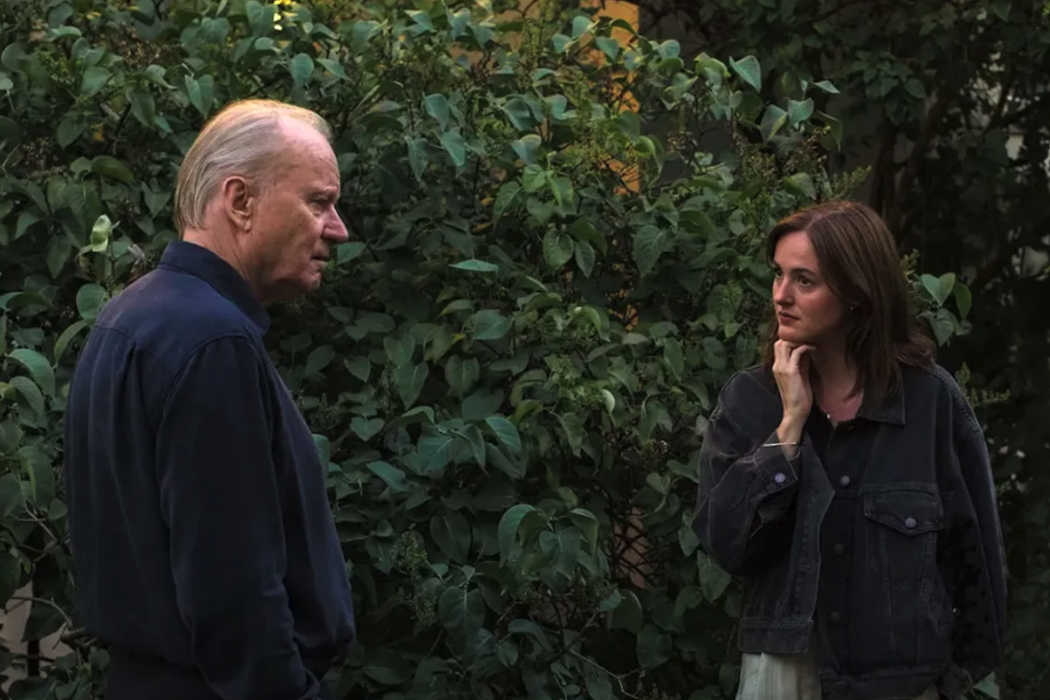
Gustav (Stellan Skarsgård) et sa fille Nora (Renate Reinsve) dans _Valeur sentimentale_ (2025), de Joachim Trier.
Grâce au Grand Prix obtenu à Cannes l’année dernière et fort de neuf nominations, dont celles du meilleur film et de la meilleure réalisation, aux Oscars qui seront remis ce dimanche 15 mars, Valeur sentimentale du réalisateur norvégien Joachim Trier fait l’objet d’une attention rarement accordée à une œuvre issue de l’univers cinématographique nordique. Et nous permet d’accéder à une réflexion philosophique sur la nature des relations entre les êtres.
Une « valeur sentimentale » est toujours une projection, c’est-à-dire la valeur qu’on attribue de manière personnelle à un objet, un événement, une période dans le passé. En ce sens, une valeur sentimentale est un investissement dans ce qui n’a pas de prix. Et cet investissement peut faire grandir, ou bien condamner à rester figé dans le passé. Souvent, la valeur sentimentale est associée à un bon souvenir personnel, même s’il est teinté de nostalgie ou de regrets. En revanche, la « valeur sentimentale » d’un traumatisme ou d’une lacune douloureuse dans sa propre histoire est bien plus difficile à gérer.
Comment lâcher prise par rapport à une blessure ancienne qui continue à nous hanter, et ce, non pour l’oublier, mais pour pouvoir respirer plus librement, et ainsi laisser être les choses et vivre les autres ? Voilà une question fondamentale du film de Joachim Trier.
Le film raconte l’histoire d’une famille à travers plusieurs générations, histoire marquée par un traumatisme survenu lors de la Seconde Guerre mondiale : son point de départ est la blessure infligée à la grand-mère, Karin, résistante emprisonnée et torturée longuement au cours de l’occupation de la Norvège par l’armée nazie.
Après la guerre, elle a un fils, Gustav, et semble vivre une vie sans heurts, jusqu’à l’instant où elle se suicide. À ce moment, son fils a neuf ans. L’acte est inexpliqué, et sûrement inexplicable, en fin de compte : aucun mot ne l’accompagne, et Karin n’a jamais su comment sublimer son vécu. Son fils, lui, en fera des histoires, en devenant un réalisateur internationalement reconnu. Mais face à ses propres filles – Nora, actrice, et Agnes, historienne –, il se tait également, se consacrant à son art et multipliant les absences jusqu’à son départ final du foyer.
Une réplique simple mais lourde de sens
Au début du film, Gustav revient, à l’occasion de l’enterrement de la mère de Nora et Agnes. Dans ses bagages, il rapporte un scénario – selon lui, le meilleur de sa carrière. C’est l’histoire d’une femme qui se suicide sans explications. Mais, insiste Gustav, ce n’est pas l’irracontable histoire de sa mère. Il propose le rôle principal à sa propre fille, Nora. Elle refuse, parce qu’elle ne peut ni ne veut travailler avec ce père qui ne l’a jamais vraiment laissé entrer dans sa vie. Alors, le rôle revient à une jeune actrice américaine, la star montante Rachel Kemp, ce qui déclenche chez chacun et chacune – de Gustav à Rachel, en passant par Nora et Agnes – des réflexions douloureuses sur les liens entre l’art et la vie, et sur ce qu’on voit des autres en étant soi-même vu par eux.
« Je te vois ». Voilà la réplique d’un autre personnage encore, personnage qui représente à lui seul la dernière génération de la famille : « Je te vois » est ce que dit Erik, fils d’Agnes, à son père Even. Visiblement, la phrase sort de nulle part, et on ne l’entend jamais de la bouche d’Erik lui-même. C’est Even qui raconte, étonné, ce que lui a dit son fils. Et cette phrase, surprenante et simple, va toucher tous les personnages, de près ou de loin. Fondamentalement, c’est cette réplique, « Je te vois », qui porte la « valeur sentimentale » du film.
« Who’s the ‘you’? », « Qui est le “tu” ? », demande de son côté Rachel dans une scène décisive : dans celle-ci, elle doit répéter une scène du film à venir de Gustav. Il s’agit d’une scène de prière. Mais une prière à qui ? Pas à un quelconque dieu. Rachel doit jouer le rôle d’une femme désespérée, d’une femme qui n’arrive plus à se frayer un chemin, surtout seule. Par conséquent, elle prie. Et l’actrice qui doit jouer son rôle pose la question : « Qui est le “tu” ? » Qui est-elle censée prier ? La portée symbolique de la question dépasse cette scène particulière : à qui raconte-t-on son histoire, et par qui cherche-t-on à se faire reconnaître ?
À sa manière, en s’interrogeant ainsi sur le « tu », Rachel prend à contrepied une longue et vaste tradition de la culture et de la pensée occidentales, tout comme le fait plus généralement « Valeur sentimentale » en tant qu’œuvre. La question première du film n’est pas « Qui suis-je ? », mais bien « Qui est le “tu” ? »
Le « je » et le « tu »
« Connais-toi toi-même » est l’exhortation à l’introspection qui se trouve tout près de l’origine de la philosophie, et qui représente par conséquent un regard dominant sur le lien entre le soi, les autres et le monde : de cette inscription sur le temple de Delphes de l’Antiquité – magistralement interprétée par Socrate dans les dialogues de Platon – aux notions de self-awareness actuelles, en passant par le cogito souverain du « je pense, donc je suis » cartésien et le « c’est moi que je peins » de Michel de Montaigne, entre autres. Dans Valeur sentimentale, cependant, c’est le « tu » qui est en vue, le « tu » qui est littéralement la question.
« Toute véritable vie est rencontre », écrit pour sa part le philosophe Martin Buber dans son Ich und Du, Je et Tu, de 1923 : le « je » en soi n’a pas de sens, parce que le « je » se crée dans la réciprocité. « Je te vois ». Quand Nora entend ces trois mots de son neveu, relatés par le père de celui-ci, elle est frappée par une grande tristesse : qui la voit vraiment, elle, l’actrice, semble-t-elle se demander ? Au fur et à mesure que l’histoire avance, la peur du vide grandit en elle, comme l’espace symbolique qui la sépare de son père. Elle se retire, s’enferme dans son appartement.
Dans le même temps, sa sœur Agnes, l’historienne, se tourne vers le passé et le trou noir du récit familial : aux Archives nationales, elle regarde les documents et les images qui certifient ce qu’a subi la grand-mère. Elle y lit et elle y voit la souffrance, et elle découvre qu’elle ne saura jamais réellement ce qu’a subi sa grand-mère, ni ce que le suicide de cette dernière a créé et détruit pour son père. Elle comprend qu’il y a des choses qu’elle ne pourra pas saisir. Elle l’accepte. Puis, elle revient vers Gustav, toujours en colère à cause de ses manquements, mais à l’écoute. Et elle lit son scénario, qu’elle fait ensuite lire à sa sœur : en allant chez Nora – prostrée dans son appartement –, Agnes ouvre littéralement et symboliquement son monde. Elle lui fait surtout lire à voix haute, mais sans jouer, la scène de la prière du scénario, cette scène qui avait provoqué la question « Qui est le “tu” ? » chez Rachel. Et là, Nora semble lâcher prise par rapport aux colères et aux déceptions. Après, elle demande à sa sœur comment elle a fait pour rester debout, elle : comment a-t-elle pu se créer une vie, sa vie, avec mari et enfant, après tout ce qui leur est arrivé ? Et Agnes de répondre : « Parce que tu étais là pour moi ».
« Je te vois ». Comment montrer cela dans un film ? À la toute fin de Valeur sentimentale, Nora et Gustav se regardent, en sortant de leurs rôles. Le spectateur ne les voit pas se regarder. Mais à travers leurs visages, fragiles et ouverts, séparés dans des courtes séquences individuelles, on découvre qu’ils se regardent. Surtout, on découvre qu’ils se voient, mutuellement, sans nécessairement tout saisir l’un de l’autre. Car vouloir tout comprendre chez l’autre pourrait aussi être une façon de nier la singularité de chacun. À la fin, Nora et Gustav se reconnaissent, dans tous les sens du terme : ils se voient, en accueillant et en acceptant ce que chacun porte en lui de bien, de faillible, et de mystérieux.
Christian Bank Pedersen ne travaille pas, ne conseille pas, ne possède pas de parts, ne reçoit pas de fonds d’une organisation qui pourrait tirer profit de cet article, et n’a déclaré aucune autre affiliation que son organisme de recherche.
En Espagne, des coalitions « municipalistes » issues des mouvements sociaux ont gouverné de nombreuses villes entre 2015 et 2023. Alors que les « listes participatives et citoyennes » se multiplient en France à la veille des élections municipales de mars 2026, que retenir de ces expériences ? Les cas de Madrid et Barcelone peuvent-ils constituer une source d’apprentissage pour ce mouvement en expansion ?
Les listes citoyennes revendiquent de s’affranchir des partis, en élisant des non-professionnels de la politique, afin de favoriser la participation et renouveler la démocratie à l’échelle locale. La coopérative Fréquence Commune, qui les accompagne, dénombre près de 700 « listes citoyennes et participatives » aux élections municipales de 2026, un chiffre en nette augmentation par rapport à 2020.
Si ce mouvement citoyen s’étend en France, des précédents existent ailleurs. C’est le cas de l’Espagne, où des coalitions dites « municipalistes » ont remporté de nombreuses grandes villes en 2015, et une poignée ont continué à gouverner entre 2019 et 2023. Quels sont les apprentissages de ces expériences qui continuent d’être une source d’inspiration, en France et ailleurs ? Plusieurs publications récentes dressent un bilan du municipalisme espagnol, en analysant à la fois le contenu des politiques adoptées et le renouvellement des manières de faire de la politique.
Les cas de Madrid et Barcelone sont particulièrement riches d’enseignements. Les deux plus grandes villes d’Espagne ont vu des coalitions municipalistes arriver au pouvoir en 2015 et y rester jusqu’en 2019 pour Madrid et 2023 pour Barcelone. Leur ambition affichée était de déborder les partis traditionnels, d’approfondir la démocratie locale, de renouveler les politiques publiques et de transformer les mairies de l’intérieur. Des différences ont également traversé ces deux expériences, autour de la conception de la participation, des liens avec les mouvements sociaux et de la dimension sociale des politiques menées.
Une démocratie participative et/ou mouvementiste ?
Des dispositifs participatifs ont été mis en place dans les deux villes, pour associer les habitants à l’élaboration des politiques municipales. Si la participation présentielle et associative a davantage été promue à Barcelone, la participation numérique et individuelle a été privilégiée à Madrid. Les différents modèles participatifs adoptés par ces deux villes s’expliquent tant par des facteurs contextuels (de nombreux dispositifs participatifs étant déjà en place à Barcelone contrairement à Madrid) que par l’implantation des mouvements sociaux (avec une influence plus forte des Indignés à Madrid et des associations de quartier à Barcelone) et les trajectoires individuelles des élus à la participation.
Dans la capitale, plusieurs processus de démocratie directe ont été lancés sur la plateforme numérique Decide Madrid, comme les référendums d’initiative citoyenne inspirés des votations citoyennes suisses. Tous les résidents ayant plus de 16 ans pouvaient faire une proposition et voter, le soutien de 1 % des électeurs étant requis pour organiser un référendum décisionnel. Malgré les 26 000 propositions formulées au cours de la mandature, seulement deux ont obtenu le nombre de soutiens requis et fait l’objet d’un référendum, ce qui montre les limites de ces innovations démocratiques en partie déconnectées de la question sociale.
À Barcelone, si la démocratie participative n’a pas été absente, elle n’a pas constitué le cœur du projet de Barcelone en commun. Le municipalisme barcelonais, en complément de ces formes procédurales de participation, a mis en place une « démocratie mouvementiste ». Il s’agissait de créer de nouvelles alliances avec les mouvements sociaux, afin de permettre à ces derniers d’intervenir directement dans la politique locale. Loin d’être perçue comme une entrave à la politique institutionnelle, la pression constante de ces mobilisations populaires a été le principal moteur du changement à Barcelone. Des mesures emblématiques des mouvements sociaux ont ainsi été adoptées par le conseil municipal, comme l’obligation de consacrer 30 % des nouvelles constructions immobilières aux logements sociaux ; l’attribution d’une chapelle à un centre de santé de quartier au détriment d’une collection privée d’art ; ou la création d’une charte permettant de céder la gestion d’espaces et de terrains municipaux aux citoyens pour en faire des communs urbains.
Interview de Marcelo Expósito, militant de Barcelone en commun, député au Parlement espagnol entre 2016 et 2019. (Sous-titres français accessibles en cliquant sur « sous-titres ».)
La relation avec les mouvements sociaux a été moins centrale à Madrid, en raison notamment des origines des équipes municipalistes, qui provenaient directement de mouvements protestataires à Barcelone. Ada Colau, l’ex-activiste contre les expulsions immobilières, est devenue maire de Barcelone en étant elle-même issue des classes populaires, à la différence de la juge Manuela Carmena, devenue première édile de Madrid. De plus, Barcelone, qui a connu une longue tradition de mouvements sociaux et d’expériences d’autogestion, avait déjà eu de nombreux gouvernements de gauche modérée, là où la droite régnait à Madrid depuis plusieurs décennies.
Des politiques au service de quelles catégories ?
Ce lien accru avec les mouvements sociaux a eu un impact important sur les politiques mises en place. Barcelone en commun a pris des mesures plus ambitieuses face à la crise du logement et a davantage investi dans les quartiers populaires en cherchant à lutter contre la ségrégation urbaine et la gentrification, alors que l’équipe d’Ahora Madrid a concentré son action sur les quartiers centraux de la capitale. En 2019, les quartiers populaires se sont moins mobilisés pour soutenir la candidature de Manuela Carmena, ce qui peut être lié aux priorités de son action municipale et expliquer sa non-réélection.
Cette différence est également perceptible dans l’attitude des deux équipes municipales vis-à-vis de grands projets urbanistiques. La gestion d’Ahora Madrid a été marquée par une certaine continuité avec les précédents gouvernements municipaux, symbolisée par l’approbation de l’opération « Chamartín ». Ce pharaonique projet d’aménagement immobilier a constitué une véritable pomme de discorde avec des mouvements sociaux qui y étaient fortement opposés.
Si Barcelone n’a pas mis fin aux grands Congrès attirant des flux d’investisseurs étrangers comme le World Mobile Congress, pourtant décrié avant les élections, Ada Colau s’est opposée à plusieurs grands projets urbains. La mairie a ainsi été une des voix les plus critiques contre l’extension de l’aéroport de Barcelone ou l’installation d’une filiale du musée de l’Ermitage (Saint-Pétersbourg, Russie) dans le quartier de Barceloneta, déjà exposé au surtourisme. Le bilan du municipalisme est également un bilan en négatif, qui doit prendre en compte les politiques spéculatives ou les projets urbains empêchés par les élus municipalistes.
Que reste-il des expériences municipalistes ?
Le retour de la droite à la tête de la capitale en 2019 a entraîné l’arrêt de la plupart des politiques mises en place par Ahora Madrid, comme les processus de démocratie directe, les politiques féministes ou les mesures anti-pollution. À Barcelone, le legs de Barcelona en commun, qui a eu deux mandats pour imprégner l’action publique municipale, est encore présent même si des remises en cause ont été amorcées par la nouvelle équipe socialiste. Pour l’instant, les mesures ayant le mieux résisté sont précisément celles qui avaient été promues directement par les mouvements sociaux, qui continuent d’exercer une pression pour les maintenir.
Alors que les projets municipalistes ou de listes participatives se développent, notamment en France, cette comparaison montre la diversité des expériences de municipalisme au-delà d’une unité affichée. Elle souligne l’importance d’un municipalisme non seulement politique mais aussi social, c’est-à-dire son ancrage dans le tissu associatif local, les mobilisations sociales et les quartiers populaires. En dépendent la radicalité des expériences, mais aussi la permanence des changements impulsés dans le temps.
Les auteurs ne travaillent pas, ne conseillent pas, ne possèdent pas de parts, ne reçoivent pas de fonds d’une organisation qui pourrait tirer profit de cet article, et n’ont déclaré aucune autre affiliation que leur organisme de recherche.
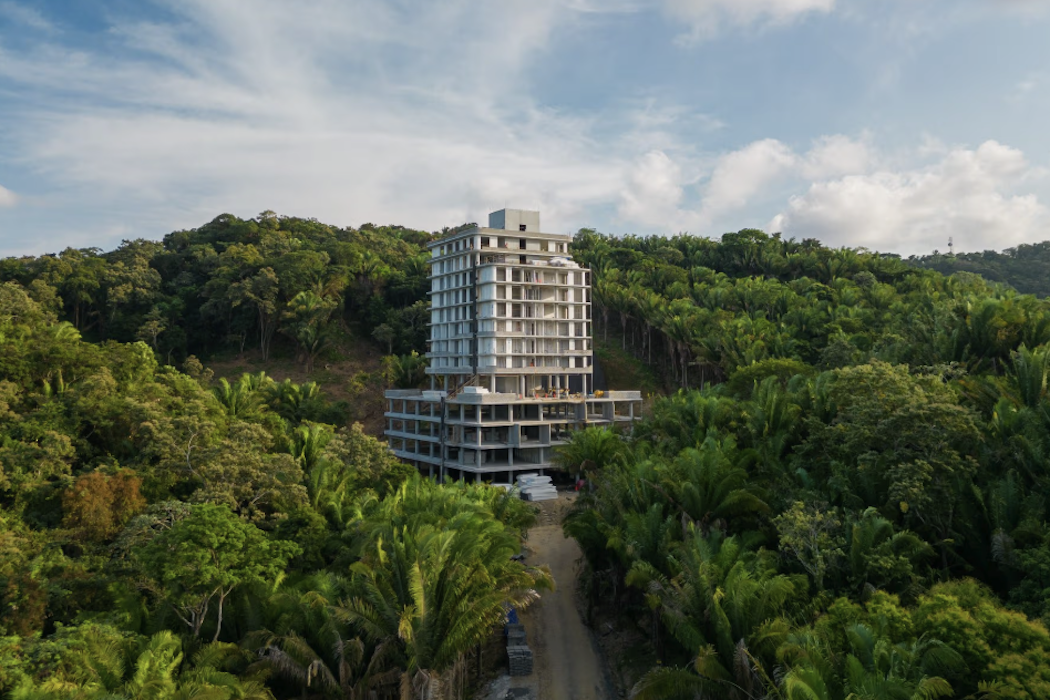
La tour Duna, dans l’enclave libertarienne de Próspera. https://www.prospera.co/en
Sur l’île de Roatán, au large du Honduras, Próspera est une « ville-entreprise » créée en 2017 pour attirer des investisseurs étrangers et stimuler l’économie dans certaines zones du pays. Elle promet un territoire ultralibéral où les impôts sont faibles et les règles assouplies. Mais le projet, contesté par la gauche hondurienne, soulève des questions sur la souveraineté nationale.
À première vue, l’actualité latino-américaine semble dominée par des épisodes spectaculaires quoique contradictoires : alors que, début janvier, les États-Unis ont justifié l’enlèvement du président vénézuélien Nicolas Maduro par des accusations de narcotrafic à son égard, Donald Trump venait, un mois plus tôt, de gracier l’ancien président conservateur du Honduras Juan Orlando Hernández (Parti national), qui avait été condamné pour trafic de drogue en 2024 à une peine de quarante-cinq ans de prison qu’il purgeait en Virginie-Occidentale.
Ces événements, presque concomitants, révèlent toutefois une trame plus discrète mais politiquement significative, où se croisent intérêts géopolitiques, stratégies impériales et expérimentations institutionnelles radicales.
2022-2025 : un court intermède de gauche
Le Honduras occupe, dans cette configuration, une position stratégique en Amérique centrale. Dans les années 1980, il fut la base arrière de l’offensive de l’administration Reagan contre le Nicaragua sandiniste ; plus récemment, il est devenu un point d’appui pour les politiques migratoires coercitives de l’administration Trump, notamment les déportations menées par l’ICE. Il constitue également un arrière-plan logistique et politique des ambitions états-uniennes à Caracas et, potentiellement, à Cuba.
Dans ce contexte, certains observateurs ont suggéré que de puissants soutiens financiers de Donald Trump ont exercé des pressions afin qu’il gracie Hernández et soutienne à la présidentielle du 30 novembre 2025 Nasry Asfura, ancien maire de Tegucigalpa et figure du Parti national. Celui-ci a bel et bien été élu président, devançant les candidats du Parti libéral et du Parti de gauche Libre.
Lors de la présidentielle précédente, tenue en 2022 à la suite de la destitution d’Hernández, Asfura avait été vaincu par la candidate de Libre, Xiomara Castro. Castro avait fait de l’abolition des zones économiques spéciales privées l’un des axes majeurs de son programme. Elle estimait que ces territoires, dotés de règles propres, ne respectaient pas la Constitution et affaiblissaient l’autorité de l’État hondurien sur son propre sol.
Après son élection, le Congrès hondurien abroge d’abord la loi autorisant ces zones, puis la Cour suprême les déclare contraires à la Constitution.
La réaction des investisseurs est immédiate : une procédure d’arbitrage international est engagée contre l’État hondurien pour un montant de dix milliards de dollars (8,6 milliards d’euros) – soit environ 40 % du produit intérieur brut (PIB) national – au motif d’une violation d’engagements envers les investisseurs.
Entre 2023 et 2025, le projet demeure suspendu dans une profonde incertitude juridique, tandis que le contentieux se poursuit et que la presse internationale, ainsi que plusieurs chercheurs, commencent à analyser le cas.
La victoire de Nasry Asfura à la fin de l’année 2025, avec le soutien de Trump, est perçue comme un signal susceptible de rassurer les milieux financiers.
Prospéra, une charter city soutenue par des investisseurs de la Silicon Valley
Au cœur des débats politiques au Honduras on retrouve le projet Próspera, fondé en 2017 par une société enregistrée au Delaware.
Doté d’un capital initial d’environ 120 millions de dollars (103,9 millions d’euros), provenant notamment d’investisseurs de la Silicon Valley tels que Peter Thiel, Marc Andreessen et Sam Altman, il constitue l’une des expérimentations contemporaines les plus avancées de la charter city. La proposition des charter cities a été formulée en 2009 par l’économiste Paul Romer, futur Prix Nobel (2018), qui envisageait la possibilité pour des pays en développement de déléguer l’administration de territoires peu peuplés à des régimes institutionnels alternatifs afin de stimuler la croissance. Implanté sur l’île de Roatán au Honduras, dans le cadre juridique d’une ZEDE (Zone pour l’Emploi et le Développement économique), Próspera ambitionne de transformer un territoire d’environ le double de la superficie de Monaco en une « start-up city » fortement déréglementée.
L’origine institutionnelle de ce dispositif remonte au coup d’État hondurien de 2009, quand l’armée et les milieux d’affaires contraignent le président de gauche Manuel Zelaya à quitter le pouvoir et le remplacent par Roberto Micheletti (Parti libéral). Les gouvernements issus de cette rupture politique engagent une réflexion sur de nouveaux modèles de développement dans un pays marqué par la faiblesse des institutions et de fortes inégalités.
En 2013, une loi institue les ZEDE, territoires dotés d’une large autonomie normative, fiscale, administrative et judiciaire. À partir de 2016, le modèle attire l’intérêt de cercles technologiques et financiers américains d’orientation libertarienne. Honduras Próspera Inc. est créée dans ce contexte, avec Erick A. Brimen, financier vénézuélien, comme principal promoteur. En 2017, un accord est signé avec le gouvernement hondurien pour développer une ZEDE à proximité de la communauté afro-caribéenne de Crawfish Rock, héritage de la présence coloniale britannique.
Des précédents de charter cities comme Shenzhen, en Chine, illustrent le potentiel transformateur des zones spéciales, leur réussite dépendant de conditions étatiques et géopolitiques difficilement reproductibles. Romer s’est ultérieurement retiré de plusieurs collaborations, y compris au Honduras, invoquant un manque de transparence et des garanties démocratiques insuffisantes.
Formalisée en 2020, Próspera fonctionne comme une ville-entreprise. Le taux d’imposition peut descendre à 1 % sur le revenu brut des sociétés contre environ 25 % au niveau national. En cas de désaccords, les différends sont tranchés par un arbitrage privé en lieu et place des tribunaux étatiques. Elle peut également adopter des cadres réglementaires inspirés de trente-six ordres juridiques différents ou en élaborer de nouveaux. Elle dispose ainsi d’un système judiciaire séparé, sans juges honduriens.
L’obtention d’un statut de résident permanent coûte environ 1 000 dollars (plus de 826 euros). Les taxes perçues dans la zone sont réinvesties exclusivement dans son périmètre. La majorité des plus de deux cents entreprises enregistrées opèrent virtuellement, souvent dans le secteur des cryptomonnaies. Malgré cette autonomie, des incidents surviennent. En 2024, un décès survient sur un chantier, l’extraction de la pierre de corail aurait endommagé la côte.
Sur le plan urbain, la matérialisation demeure embryonnaire. Un seul immeuble résidentiel a été achevé. Pourtant, le plan initial prévoyait 38 000 habitants d’ici à 2030 et plus de 500 millions de dollars (433 millions d’euros) d’investissements à court terme. Sont annoncés une usine de maisons modulaires conçues par Zaha Hadid Architects, un café Bitcoin doté d’un centre éducatif, une clinique génétique, un centre de plongée sous-marine, ainsi qu’un service de livraison par drones.
Les tensions se cristallisent autour des projets d’expansion territoriale : des représentations promotionnelles montrant la côte transformée en un district de gratte-ciels et de marinas ont alimenté les craintes d’expropriation et de marginalisation des communautés locales, malgré l’insistance des promoteurs sur le caractère volontaire de l’adhésion.
Politiquement, ces projets s’inscrivent dans une transformation plus large des rapports entre capital et souveraineté. Soutenus par des réseaux financiers et idéologiques liés à la Silicon Valley, ils ne constituent pas seulement des expériences urbanistiques, mais des dispositifs remettant en cause le lien moderne entre le territoire, la citoyenneté et l’État.
La ville y est redéfinie comme plate-forme entrepreneuriale, la souveraineté comme variable négociable. Balaji Srinivasan, entrepreneur américain et figure du libertarianisme technologique, propose ainsi que des communautés numériques se structurent jusqu’à rivaliser avec les États nationaux, en substituant progressivement à la souveraineté territoriale des entités transnationales gouvernées selon des logiques d’optimisation réglementaire.
Une utopie libertarienne emblématique
Toutefois, cette prétendue négation de l’État demeure paradoxale. Próspera et ses projets analogues dépendent du soutien d’États fragiles, d’élites politiques disposées à concéder des fragments de souveraineté et de contextes de crise institutionnelle, ainsi que de l’appui implicite ou explicite d’une puissance hégémonique. Les « techno-barons » aspirent à se libérer de l’État tout en s’appuyant sur la protection géopolitique qu’il garantit. Cette alliance, inédite et instable, constitue une contradiction structurelle.
D’autres limites concernent la rhétorique des finalités vertueuses : le développement, la lutte contre la pauvreté, la protection de l’environnement. L’argumentaire philanthropique masque souvent une dissociation croissante entre le capital global et les droits sociaux, entre la gouvernance algorithmique et la souveraineté démocratique. Si le droit formel reconnaît le salaire minimum et la liberté syndicale, des habitants dénoncent depuis 2020 des risques d’expropriation et d’exclusion des processus décisionnels. Les inégalités d’accès aux services à l’eau, aux infrastructures et à l’espace littoral nourrissent les tensions, tandis que les bénéfices demeurent concentrés.
Enfin, Próspera se présente comme « crypto, bio et robo » : un laboratoire déréglementé pour la finance numérique, la biotechnologie, la génétique et les technologies d’extension de la vie, avec un contrôle public minimal. L’expérimentation urbaine apparaît ainsi comme le vecteur spatial d’une accélération technologique au service d’une élite transnationale.
Plus qu’un simple litige juridique, Próspera constitue un cas exemplaire d’une géographie contemporaine faite de zones spéciales, d’enclaves et de corridors d’exception qui structurent le capitalisme global. Loin d’être marginal, ce modèle participe d’une reconfiguration normative de la ville et de la souveraineté au XXIe siècle – un processus dont les implications démocratiques et anthropologiques demeurent ouvertes et profondément controversées.
Marco Cremaschi ne travaille pas, ne conseille pas, ne possède pas de parts, ne reçoit pas de fonds d’une organisation qui pourrait tirer profit de cet article, et n’a déclaré aucune autre affiliation que son organisme de recherche.
Six years ago, as countries around the world went into COVID lockdowns, the air got cleaner. Factories slowed down, roads emptied and aeroplanes were grounded. As people stayed home, the world burned fewer fossil fuels and so carbon dioxide emissions dropped – by around 7% in 2020.
But something else was also happening in the atmosphere. Levels of methane – an extremely potent greenhouse gas that warms the planet even faster than CO₂ – rose faster in 2020 than at any point since records began in the 1980s. And methane levels kept on rising during 2021 and 2022.
Ever since, scientists have been trying to piece together what caused this sudden mysterious increase in methane. Now, they think they have the answer, and it was partly due to COVID lockdowns.
In this episode of The Conversation Weekly podcast, we speak to Philippe Ciais, a researcher at the Laboratory for Climate and Environmental Sciences at Université Paris-Saclay in France, and one of the authors of a new study in the journal Science about the spike in methane levels, who explains how they solved the mystery.
The atmosphere contains a special type of cleaning agent called hydroxyl radical (OH) which is capable of breaking down methane. Ciais calls it the “pacman of the atmosphere”. The production of these OH particles is facilitated by pollution, including nitric oxide and nitrogen dioxide (known collectively as NOx) from combustion processes.
“ In the chain of complex chemical reactions in the atmosphere that leads to the formation of NOx, OH is generated,” says Ciais. “When you have a reduced emission of NOx, as it was the case during the COVID, you have a weakening of OH … less concentration of this cleaning agent, and as a result, methane increasing faster in the atmosphere”.
The study found that around 80% of the spike in methane was caused by a reduction in OH, but increases in methane from wetlands and from agriculture also played a role.
Ciais says understanding where the growth in methane came from doesn’t mean the world should go on polluting. Rather, it’s a wake-up call. “ It’s not by continuing to drive more that we will reduce methane. It’s by reducing [methane] emissions,” he said. “That’s the ultimate way we have to prevent methane from increasing and amplify the warming of the climate.”
Listen to the interview with Philippe Ciais on The Conversation Weekly podcast. This episode was written and produced by Mend Mariwany, Katie Flood and Gemma Ware. Mixing by Eleanor Brezzi and theme music by Neeta Sarl.
Listen to The Conversation Weekly via any of the apps listed above, download it directly via our RSS feed or find out how else to listen here. A transcript of this episode is available via the Apple Podcasts or Spotify apps.
Philippe Ciais a reçu des financements de la Fondation BNP Paribas (don philanthropique pour le Global Carbon Altas), du projet financé par 4C EU Horizon2020 et du projet Climate Change Initiative de l’Agence spatiale européenne.
Source: The Conversation – UK – By Pablo Martinez Mirave, Postdoctoral Researcher in Theoretical High-Energy, Astroparticle and Gravitational Physics, University of Copenhagen
Imagine looking up at the night sky and seeing a star suddenly burst into a blaze of light brighter than anything nearby. A flash so bright that it briefly outshines an entire galaxy before fading forever.
This violent fate is rare: fewer than about 1% of stars are big enough to end their lives this way. Indeed, these dramatic explosions only occur in so-called “massive stars”. These are stars with a mass roughly eight times or more that of the Sun.
But these cosmic explosions, known as supernovae, have naturally fascinated astronomers for centuries. In 1572, for instance, Danish astronomer Tycho Brahe observed a supernova explosion so bright that it could be seen with the naked eye for two years.
Yet what we can see with our eyes, or even with powerful telescopes, when these stars die, is only a tiny fraction of the story. Because most of the energy from a supernova is carried away by neutrinos, these are nearly invisible particles often called “ghost particles” because they pass through almost everything in their path.
Scientists are now finally on the verge of seeing these ghostly messengers. With the help of an extremely powerful telescope buried deep underground in Japan, astronomers may be able to catch a glimpse of these stellar “ghosts” – and with it the remnants of explosions from stars that died as long as 10 billion years ago.
Particles from before time
And there’s a really good chance that scientists might be able to finally see these ghost particles this year. This is largely due to Japan’s Super-Kamiokande telescope receiving an upgrade, which significantly enhances its ability to detect supernova neutrinos.
For me, as a particle astrophysicist, this would probably be one of the most exciting scientific achievements in my lifetime. Indeed, it would mean we could see particles that were produced even before the Earth itself existed, as the telescope is now sensitive enough to catch the faint “glow” of all the exploding stars in the universe.
This is all possible because neutrinos almost never interact with anything. They have no electric charge. So they can travel through space – and even through entire planets – without being absorbed or scattered, so almost nothing can stop them.
In fact, billions of these ghostly particles are passing through your body every second – and you don’t even notice – and some of them have been travelling for more than 10 billion years to get here.
When a star dies
Big ideas lead to big questions, and one such question astrophysicists are trying to figure out is what remains after the explosion of such a star.
Does the collapsing core become a black hole? Or does it form a different type of star known as a neutron star, which then slowly cools over time? A neutron star is an incredibly dense object, only about 20 kilometres (12 miles) across, roughly the size of a large city or about the length of Manhattan.
If scientists are able to detect the combined signal from all the supernovae that have ever occurred, it would bring us closer to being able to answer these questions. It would also allow us to study the deaths of stars across the entire history of the universe, using particles that have been travelling toward us for billions of years without ever stopping.
Supernovae are rare in our galaxy, happening only once every few decades. But across the universe, a massive star explodes in a supernova roughly once every second. When they explode, they release enormous energy: only about 1% is visible light, while 99% escapes as neutrinos.
Even though these neutrinos are almost invisible, they carry the story of every star that has ever exploded – and now, for the first time, we may be able to catch them.
So if 2026 does bring the first clear detection, it will mark a new era in astronomy. For the first time, we won’t just observe the brilliant explosions of nearby stars, but the collective story of all the massive stars that have ever lived and died.
And it all starts with a telescope buried deep underground in Japan, patiently watching for the faint, ghostly glow of the universe’s oldest explosions.
This article was commissioned as part of a partnership betweenVidenskab.dk and The Conversation. You can read the article in Danish.
Pablo Martinez Mirave does not work for, consult, own shares in or receive funding from any company or organisation that would benefit from this article, and has disclosed no relevant affiliations beyond their academic appointment.