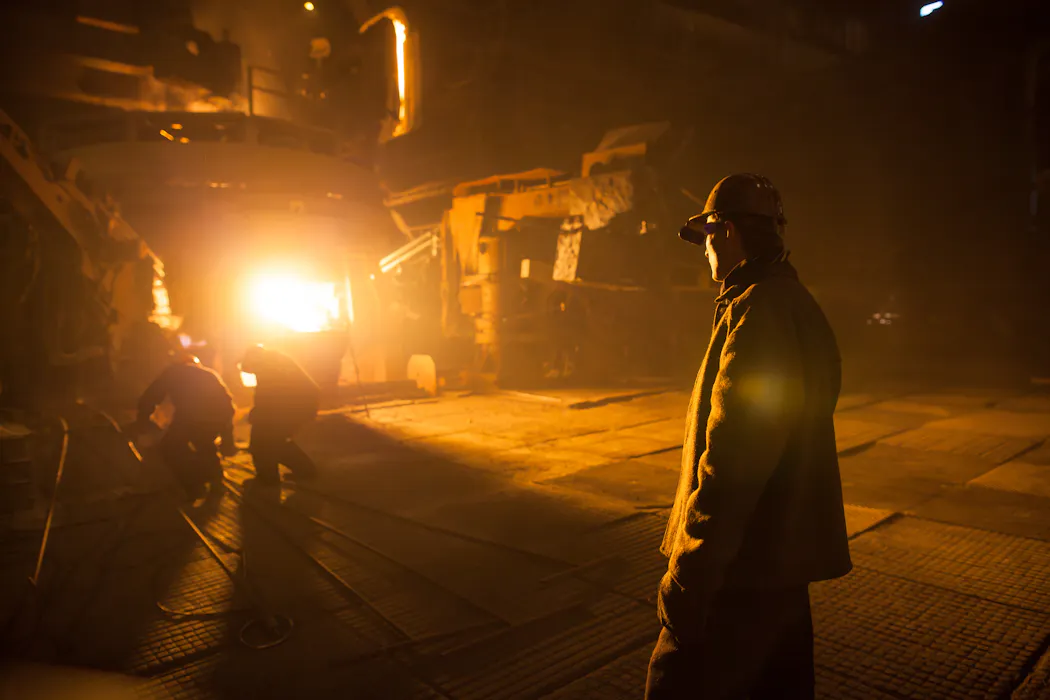
Scotland’s smoking ban turns 20 – it cut secondhand smoke exposure by 96%, but the job isn’t finished yet

Source: The Conversation – UK – By Sean Semple, Professor Institute for Social Marketing, University of Stirling

At 6am on a quiet Sunday morning 20 years ago today, Scotland became the first UK nation to ban smoking in enclosed public spaces. It was a landmark moment in public health policy, and new research shows just how much has changed since.

Exposure to secondhand tobacco smoke has fallen by 96% in Scotland since the legislation came into force on March 26 2006. But our new study, published in the journal Tobacco Induced Diseases, reveals that nearly one in four people are still being exposed to tobacco smoke in settings the law does not fully cover. This raises the question of what it will take to finish what the ban started.

The Smoking, Health and Social Care (Scotland) Act 2005 made it illegal to smoke inside bars, restaurants, public transport and almost all workplaces. While there had been much lobbying for exemptions for bars on the basis of size, existing ventilation, or whether or not they also sold food, the law, when it was finally introduced, was comprehensive and simple.

Despite the scale of the change, adoption was rapid and without much dispute. It is now inconceivable that we could ever return to a time when people had to breathe high concentrations of a known carcinogen as they chatted in bars, ate dinner or sat at their workplace desk.

We should take time today to celebrate the impact of the smoking ban. Scotland led the way in the UK and showed it could be done. It also generated extensive evidence through a seven-study evaluation programme that covered everything from hospital admissions for heart attack (reduced by 17% after legislation), to air quality in bars (improved by 86%), to qualitative work examining changes in behaviour, attitudes and social norms.

That detailed and extensive evidence would go on to influence tobacco control policy decisions around the globe for years to come.

Our new analysis examines how Scotland’s exposure to secondhand tobacco smoke has changed in the 20 years since the smoking ban. We used the annual Scottish Health Survey, which gathers data from about 6,000 people across the country, and includes a group of participants who provide a sample of saliva. From this saliva, it is possible to determine the amount of nicotine that someone has inhaled in the past couple of days.

Our analysis shows that adult non-smokers now inhale 96% less nicotine than they did before the ban. Scotland has switched from a nation where seven out of eight non-smokers inhaled other people’s smoke, to a country where three out of four breathe no measurable secondhand tobacco smoke today.

And the progress hasn’t been limited to the settings where the law applies. Our study also provides an analysis of a survey question included since 2012, when people were asked about whether they permit smoking inside their own home. The percentage of homes where smoking is allowed has more than halved in a little over a decade – from 25% to under 10% in 2024.

We’ve made fantastic progress in tackling secondhand smoke exposure in such a short space of time, and it is tempting to see this as a problem solved. But dig deeper and there is a sting in the tail.

The data we present shows that nearly one in four adult non-smokers still breathe secondhand tobacco smoke, and that this figure has been relatively static in the past decade. Workers in many sectors still report they are exposed to other people’s smoke – from those serving in outdoor hospitality settings, to the healthcare workers who provide assistance to people in their own homes.

And as our study reports, we still have about one in ten homes where smoking takes place indoors. While we’ve seen major progress and reductions in that figure, the change also masks a growing inequality. When we look at smoking in the home by deprivation, we see that more than a fifth of households in the most deprived postcodes allow smoking indoors compared with just 2% in the most affluent areas – that inequality gap has doubled since 2012.

One of the most important public health achievements.

Unfinished business

So where next? The tobacco and vapes bill is progressing through the parliament and will provide new powers to extend smoke-free spaces to other settings in the UK.

Consultation on how to use these powers has already started, with options to provide protection in a whole range of outdoor and indoor spaces including playgrounds, at school entrances and in outdoor hospitality settings.

Tackling secondhand smoke in the remaining workplaces and homes where exposure continues to take place is a priority.

As we celebrate 20 years of smoke-free enclosed public spaces in Scotland, it is worth reflecting that the benefits have been extensive. For you it may be that you avoided a hospital admission for a heart attack or stroke, or your child didn’t need that GP appointment for their asthma or glue ear (a common ear infection in children).

Or perhaps it was just the simple joy of not having to wash your hair to get rid of the stink of smoke when you come home from a night out. Whatever your reason, it is little wonder that smoke-free spaces are viewed as one of the most important public health achievements of the first part of the 21st century.

The Conversation

Sean Semple has received research funding from various UK government and EU funding sources (e.g. UKRI, The Chief Scientist Office Scotland, Horizon Europe) and from the Colt Foundation to carry out work on understanding exposure to second-hand smoke. None of this work has been funded by the tobacco industry.

Rachel O’Donnell has received funding from various UK government and EU funding sources (e.g. UKRI, The Chief Scientist Office Scotland) and from Cancer Research UK and the National Institute for Health and Care Research to carry out work on tobacco control and other public health topics. None of this work has been funded by the tobacco industry.

ref. Scotland’s smoking ban turns 20 – it cut secondhand smoke exposure by 96%, but the job isn’t finished yet – https://theconversation.com/scotlands-smoking-ban-turns-20-it-cut-secondhand-smoke-exposure-by-96-but-the-job-isnt-finished-yet-278939

Ejaculating more frequently may improve sperm quality – new study

Source: The Conversation – UK – By Rebecca Dean, Research Fellow, Department of Biology, University of Oxford

When it comes to reproduction, female biology is often described in terms of a ticking clock. Women are born with most of their lifetime supply of eggs, meaning that a woman’s age is usually the same as the age of her eggs. Older women therefore produce older eggs.

But male reproduction works differently. Sperm are produced continuously from puberty onwards and can be stored in the reproductive tract before ejaculation. That means a man’s age is not necessarily the same as the age of his sperm. So what happens to sperm while they wait?

Men trying to conceive are often advised to remain sexually abstinent for several days to allow their sperm count to build up. It is true that abstinence increases sperm count. But the size of the ejaculate is not the only factor that determines fertility. Our new study shows that in men (and other male animals), sperm stored during sexual abstinence actually “ages” and deteriorates in quality.

We already know that male fertility declines with age. What has remained unclear is whether the time sperm spend in storage contributes to this decline.

Answering this question is particularly timely. Sexual activity appears to be declining, especially among young people. Combined with the global trend towards delayed parenthood, this may further exacerbate global fertility declines.

For our investigation, we collected semen data from 115 published studies involving nearly 55,000 men. We found that when men abstained from ejaculation, the health of their sperm dropped significantly. Sperm motility (their ability to swim) and viability decreased – and sperm DNA became more damaged.

We identified two likely causes. The first is oxidative stress – a form of biological “rust” that accumulates in sperm and can physically damage them. The second is energy depletion. Unlike most cells, sperm are highly active and have only a limited capacity to replenish their energy reserves. When stored for extended periods, they simply run out of fuel.

The World Health Organization advises against ejaculating two to seven days before providing a sperm sample for analysis, fertility treatments or procedures such as IVF. However, our findings suggest that even shorter periods may be better if sperm quality in the sample is to be improved.

This supports a recent discovery that ejaculating within 48 hours of providing a sample improves IVF treatment outcomes compared to longer durations of abstinence. It also aligns with a hypothesis in evolutionary biology.

We know that in primates, frequent ejaculation from masturbation improves the quality of ejaculates. Combined with our results, this suggests that male masturbation may have an adaptive benefit: it flushes out damaged, stored sperm.

Sperm does not just deteriorate inside males. It can also deteriorate after mating, when stored inside females. Human sperm only remains alive inside a woman for several days. However, in other animals such as queen ants, bees and female bats, sperm can be stored for several months or even years before eggs are fertilised.

A Colorado field ant queen.
Sperm can remain viable inside queen ants for months or even years.
Amelia Martin/Shutterstock.com

The birds and the bees

To test whether sperm deterioration during storage is a widespread biological pattern, we examined data from 56 studies across 30 different animal species, including birds and bees, reptiles and other mammals. Here too, we found that sperm quality declined during storage.

Fathers who stored sperm before ejaculation, or mothers who stored it before fertilisation, produced embryos with lower chances of survival. We suspect this is not just due to damaged DNA. It may also be that stored sperm have a different gene expression profile – that is, a different pattern of which genes are actively switched on and being used – compared to freshly produced sperm.

Interestingly, sperm deteriorated at a slower rate inside females than inside males. This may be because females in several species have evolved specialised organs that secrete antioxidants, substances that nourish and protect the sperm they are storing, effectively extending their functional lifespan.

Whether in mice or men, sperm, much like eggs, have a “use-by date” after being produced. When sperm are stored for too long before fertilisation, they deteriorate in quality.

Crucially, however, our findings also point to a simple and potentially powerful intervention. Many fertility problems are driven by factors outside our control, such as environmental toxins, stress and genetics. But the duration of sperm storage is something that can be modified. Using freshly ejaculated sperm for fertilisation could therefore provide a meaningful boost to fertility outcomes by improving sperm quality.

The Conversation

Rebecca Dean receives funding from a Daphne Jackson Fellowship funded by NERC.

Irem Sepil receives funding from BBSRC and the Royal Society.

Irem Sepil receives funding from the Royal Society.
Rebecca Dean receives funding from NERC (UKRI).

ref. Ejaculating more frequently may improve sperm quality – new study – https://theconversation.com/ejaculating-more-frequently-may-improve-sperm-quality-new-study-275373

Eco-anxiety: how do young people relate to the climate crisis?

Source: The Conversation – France – By Daniella Watson, Research fellow, Imperial College London

“Eco-anxiety” and “climate-anxiety” are the most widely known terms describing what people feel in response to being aware of the climate crisis.

We conducted a review of published academic papers including original research articles and review papers, and found surprising results on how young people aged 10-29 years actually experience being aware of global warming and climate change and its effects.

While you might have experienced climate anxiety or know about it, you might not know what it is.

Researchers do not have agreed definitions. In the papers we examined as part of our study, eco-anxiety was defined 41 times and climate-anxiety defined 24 times.

The main inconsistency between definitions of eco-anxiety stems from the extent to which it is related to anxiety. Some definitions position eco-anxiety as an extension of generalised anxiety or as having characteristics of anxiety disorders. Whereas some do not actually mention anxiety at all in the definition and may instead use concepts like “concern or worry,” which muddies the conceptual waters.

Natural disasters versus human-made disasters

Another discrepancy is whether the definitions relate to just climate-related changes, or wider environmental changes, and whether or not the feelings relate to human-caused changes only.

Some definitions consider these terms to describe experiences coming from awareness of climate and ecological change, whereas others consider “eco” and climate-anxiety to be experienced in response to more direct climate events.

In reality, all of this is likely to be going on, and our previous research has shown that eco-anxiety levels are significantly higher in US youth aged 16-24 years who self-report exposure to climate change hazards.

Although eco-anxiety and climate-anxiety are the most commonly used terms, our review found a total of 173 experiences describing how young people think, feel and behave in response to being aware of the climate crisis. They include: Solastalgia, symptoms of depression, sleep disruptions, financial strain and hope, along with other experiences not documented in the academic literature.

A breakdown of key climate change awareness concepts

As there were so many experiences described, we organised them into six interrelated categories and sub-categories (see the chart below).

Map of the key concepts and developed 6 categories and subcategories of young people’s experiences of climate change awareness.
Courtesy of Daniella Watson, CC BY

It is important to address and be inclusive of the full spectrum of young people’s experiences beyond climate-anxiety, including the impacts on physical health such as sleep, physical activity and eating behaviours, social and cultural practices, and spiritual and community wellbeing.

Climate awareness: exploring the cultural and colonial factors

Researchers like us are working with lived experience experts around the world to co‑design research and support tools that genuinely reflect the diverse ways people understand and are affected by climate change. Because awareness of the climate crisis is shaped by history, identity, place, and power, it is essential that research is developed with people whose lives are directly touched by these dynamics.

One example of how lived experience expertise has expanded the field comes from a contributor who challenged and deepened existing definitions of eco‑anxiety. They explained:

“I think we perceived [climate-anxiety] as more of an embodied and intergenerational, deep wound that comes out of colonisation, colonial legacies and something that was a lot more personal.”

Our research uncovered no existing definitions of climate change or eco-anxiety that acknowledge the impact of colonial history on individuals’ experiences of environmental distress. By collaborating with experts in lived experience, we have deepened and sharpened our understanding in this area.

Another example of our work with lived experience experts to codesign a research evaluation of The Resilience Project’s youth‑led intervention prompted us to adopt a broader definition of resilience: not simply “bouncing back”, but balancing strength, softness and self‑care so young people can sustain climate‑care activities in ways that are genuinely protective and long‑term.

The way forward

Taken together, our findings show that young people’s experiences of being aware of the climate crisis are far more complex, varied, and culturally situated than the terms eco‑anxiety or climate‑anxiety can capture.

While these labels have become dominant in public and academic conversations, the evidence reveals a much broader landscape of emotional, social, cultural, and structural impacts: from intergenerational grief and disrupted sleep to financial strain, solastalgia, and profound reflections on justice and inequality.

The lack of consistent definitions not only limits scientific clarity but also risks narrowing how we understand and support young people living through a rapidly changing world.

If researchers, practitioners, and policymakers want to design meaningful interventions and supportive environments, they must move beyond narrow psychological framings and engage with the full spectrum of people’s lived realities.

This means codesigning research, measures, and policies with those most affected; recognising the structural and historical forces that shape climate anxiety; and ensuring that the language we use reflects the world as people actually experience it. We recognise that news outlets and social media play an important role in shaping public understanding, which is why we chose to write this article and others like it, and to share our messages with the BBC Climate Question and other media platforms.


Created in 2007 to help accelerate and share scientific knowledge on key societal issues, the Axa Research Fund – now part of the Axa Foundation for Human Progress – has supported over 700 projects around the world with researchers from 38 countries on key environmental, health & socioeconomic risks. To learn more, visit the website of the AXA Research Fund or follow @ AXAResearchFund on LinkedIn.

The Conversation

Emma Lawrance received funding from AXA Research Fund. Emma was Director of the Climate Cares Centre at Imperial College London when this research was undertaken, and is now the Senior Research Fellow in climate change and mental health at the University of Oxford.

Daniella Watson ne travaille pas, ne conseille pas, ne possède pas de parts, ne reçoit pas de fonds d’une organisation qui pourrait tirer profit de cet article, et n’a déclaré aucune autre affiliation que son organisme de recherche.

ref. Eco-anxiety: how do young people relate to the climate crisis? – https://theconversation.com/eco-anxiety-how-do-young-people-relate-to-the-climate-crisis-277520

A host nation at war with a participant: uncertainty and tension swirl around soccer’s World Cup

Source: The Conversation – Global Perspectives – By Daryl Adair, Associate Professor of Sport Management, University of Technology Sydney

On March 11, Iranian Sports Minister Ahmad Donyamali announced he saw “no possibility” of the country’s men’s national soccer team taking part in the World Cup scheduled for North America in June and July this year.

That prognosis came in the wake of US and Israeli military attacks on Iran, which have triggered a crisis across the Middle East.

Never before has a World Cup host nation been at war with one of the countries participating in the tournament.

The failure to find a diplomatic solution to longstanding multilateral tensions has not only impacted the supply of oil and trade routes, it has complicated one of the world’s largest sporting events.


Read more:
Trump’s war language is aggressive and extreme. It also offers some insight into his thinking


Prizing peace, enacting war

In 2025, Gianni Infantino, president of soccer’s governing body – Fédération Internationale de Football Association (FIFA) – announced the inaugural “FIFA Peace Prize”.

FIFA, he said, intended to recognise:

the enormous efforts of those individuals who unite people, bringing hope for future generations.

In January 2026, US President Donald Trump was deemed the most worthy recipient of this accolade.

That is despite a litany of conduct at odds with the award, such as the US partnering Israel in the Gaza conflict, as well as the Trump administration’s “rapid authoritarian shift”, which has brought a substantial decline of civic freedoms at home.

Two months after Trump received his “peace prize”, the US partnered with Israel to provoke war against Iran.

Little wonder some critics have argued Trump’s award ought to be revoked.

Will Iran be welcome at the World Cup?

After meeting Infantino on March 10, Trump provided assurance the Iranian team would be “welcome to compete”.

Soon after, though, Trump wrote on his Truth Social media platform there would not be a welcome mat:

I really don’t believe it’s appropriate that they be there, for their own life and safety.

This veiled warning prompted a rebuke from the Iranian team, which insisted: “no individual could exclude a country from the World Cup”, and that it was the responsibility of a host nation to provide security guarantees for participants.

The players want to take part, even if their national sports minister feels it is a forlorn hope.

At this stage, scheduled friendly games against Nigeria and Costa Rica in Turkey, intended as preparation for the World Cup, are going ahead.

Pitch perambulations

Iran is scheduled to play three group-stage games in California and Seattle at the World Cup.

Competing in the United States is a sticking point for the Iranian Football Federation (FFIRI), which is responsible for the team.

FFIRI head Mehdi Taj stated:

We will prepare for the World Cup. We will boycott the United States but not the World Cup.

The Iranian hope, therefore, is the team be permitted to play in either Canada or Mexico, which are co-hosting with the US.

Mexico appears willing to play ball: on March 17, President Claudia Sheinbaum stated: “the nation stands prepared to host Iran’s group-stage matches should circumstances require”.

FIFA though said it was unwilling to move Iran’s matches from the US.

For the Iranians, the ability to take part seems more important than chasing a trophy: teams that make the final will play at New Jersey’s MetLife Stadium and Iran does not wish to play in the US.

Meanwhile, FIFA is privately pondering contingency arrangements should Iran not take part.

This includes making Iran’s place in the tournament vacant – which would mean a walkover for opponents – or replacing it with a team from either Iraq or the United Arab Emirates, both of which narrowly missed qualifying via the Asian Football Confederation pathway.

That said, Iraq is already scheduled to play the winner of a match between Bolivia and Suriname for a spot in the World Cup.

The UAE lost to Iraq in the relevant Asian Confederation match, yet should Iraq win its intercontinental playoff match, the team from the Emirates might be given a FIFA free kick into the World Cup.

Political football

FIFA states it is a “politically neutral” body.

But this has not stopped it excluding Russia from qualifying matches for the 2026 World Cup.

FIFA insists it did so for operational reasons: many countries refused to play against Russia, and if games were scheduled there would be concerns about security.

Privately, Infantino might be relieved Israel did not qualify for the World Cup, as both of these considerations may have come to light in the wake of the Gaza war and more recent attacks against Lebanon and Iran.

The withdrawal (or banning) of a team from the World Cup or qualifying matches has happened on a few occasions:

In each of these cases there were no follow-up penalties by FIFA.

If Iran withdraws from the World Cup, will FIFA sanction the FFIRI and, by extension, the national men’s team? A yellow card is feasible – a financial penalty. A red card is also possible – such as exclusion from the 2030 World Cup.

However, FIFA has the discretion not to impose any penalty, especially as the circumstances go beyond sport and have no parallel in World Cup history.

The Conversation

Daryl Adair does not work for, consult, own shares in or receive funding from any company or organisation that would benefit from this article, and has disclosed no relevant affiliations beyond their academic appointment.

ref. A host nation at war with a participant: uncertainty and tension swirl around soccer’s World Cup – https://theconversation.com/a-host-nation-at-war-with-a-participant-uncertainty-and-tension-swirl-around-soccers-world-cup-278191

Israel wants to destroy Iran’s nuclear program. But should it have nuclear weapons itself?

Source: The Conversation – Global Perspectives – By Marianne Hanson, Associate Professor of International Relations, The University of Queensland

Israel’s avowed goal in the Middle East war is to prevent Iran from acquiring nuclear weapons. Yet, the double standard associated with this is hardly sustainable in the long run.

The worst-kept secret in the world of nuclear politics is that Israel possesses a formidable arsenal of nuclear weapons. It began developing these in the 1950s and reached a fully operational capability by the late 1960s.

Although Israel refuses to confirm or deny this fact, arms control organisations have assessed that the country has some 80–90 nuclear weapons.

In recent days, Iran targeted Israel’s nuclear facility in the southern town of Dimona, injuring more than 100 people. The head of the International Atomic Energy Agency (IAEA) called for restraint to avoid a “nuclear accident”.

A program shrouded in secrecy

There is much evidence to support the existence of Israel’s arsenal.

In 1963, then-Deputy Defence Minister Shimon Peres famously stated Israel would not be the first to “introduce” nuclear weapons to the Middle East. What this actually meant was spelled out a few years later by the Israeli ambassador to the US. For a weapon to be “introduced”, he said, it needed to be tested and publicly declared. Merely possessing them did not constitute introducing them.

Several whistleblower accounts, intelligence reports and satellite imagery confirm the extent of the Israeli program and its capabilities.

More recently, Amichai Eliyahu, a far-right minister in Prime Minister Benjamin Netanyahu’s government, alluded to using nuclear weapons in Gaza – a tacit acknowledgement of Israel’s capabilities. He was later reprimanded by Netanyahu.

And in 2024, Avigdor Lieberman, a former defence and foreign minister, threatened to “use all the means at our disposal” to prevent an Iranian nuclear weapon. He added: “It should be clear at this stage it is not possible to prevent nuclear weapons from Iran by conventional means.”

It is important to remember that Israel not only developed its nuclear weapons in secret – employing subterfuge, misleading claims, and even the suspected theft of bomb-grade nuclear material from the United States – it has also rejected international inspections of its facilities and refused to join the nuclear Non-Proliferation Treaty (NPT). This treaty has been signed by almost every state in the world.

Concerns over Iran’s program

Iran, meanwhile, has never had a nuclear weapon, though its program has been the source of international concern for more than a decade.

In 2015, Iran signed the Joint Comprehensive Plan of Action (also known as the Iran nuclear deal) with the US, Russia, China, France, the United Kingdom and Germany, which imposed restrictions on its nuclear program in return for sanctions relief. This included inspections by IAEA monitors.

However, Trump scuppered the plan in 2018. Since then, Iran has enriched uranium to levels well above those needed for its energy program. And last year, the IAEA said Iran was non-compliant with its nuclear nonproliferation obligations for failing to provide full answers about its program.

But since the current war began, US and international officials have confirmed that Iran was not close to developing a nuclear weapon and did not pose an imminent nuclear threat to the US or Israel.

In short, there is no truth to the claim, made for almost 40 years by Israel, that Iran is “weeks away” from acquiring the bomb. The IAEA made clear two years ago that a nuclear weapon requires “many other things independently from the production of the fissile material”.

Getting close to nuclear threshold status, but stopping short of developing an actual bomb, likely provides a fall-back position for Iran. If Iran were to feel pushed or threatened, it could, in time, accelerate its energy program towards a weapons program. Or it could use this enriched uranium as leverage in negotiations with the US.

Nuclear powers need to show restraint

This brings us back to a major question: can double standards about who can and cannot develop a nuclear weapon be sustained indefinitely?

Israel’s nuclear arsenal has been tacitly accepted by the West, implying there are “right hands” and “wrong hands” for nuclear weapons. But this is a risky and ultimately unsustainable position.

As Australia’s Canberra Commission noted in 1996, as long as any one state has nuclear weapons, other states will want them, too.

This is precisely why many states voted in 2017 to adopt the UN Treaty on the Prohibition of Nuclear Weapons. The treaty’s purpose is to make the possession, threat and use of nuclear weapons illegitimate for all states, not just for some, on the basis of international humanitarian law.

Signed by 99 states so far, the treaty recognises that nuclear weapons promise massive destruction to civilians and combatants alike, and that even a “small” nuclear war will cause catastrophic damage.

At the end of the day, a consistent approach to nuclear weapons is more likely to prevent nuclear proliferation (by Iran or other states) than the current mess, where some states are tacitly permitted to have these weapons (and wage war on others), while other countries are not.

It is possible we are at a tipping point when it comes to nuclear proliferation, with some countries suspected of wanting to develop nuclear weapon capabilities. This includes US allies South Korea and Japan.

Are the nuclear weapons states ultimately willing to accept the UN Treaty on the Prohibition of Nuclear Weapons and disarm in the interest of global peace and security? If they don’t, then the current trajectory of keeping one’s own nuclear weapons and waging war against states that don’t have them will only weaken an already crumbling rules-based international order.

The Conversation

Marianne Hanson has previously received funding from the Norwegian Ministry of Foreign Affairs, the UK Foreign Office and Australia’s Department of Foreign Affairs. She is currently co-chair of the International Campaign to Abolish Nuclear Weapons (ICAN) Australia.

ref. Israel wants to destroy Iran’s nuclear program. But should it have nuclear weapons itself? – https://theconversation.com/israel-wants-to-destroy-irans-nuclear-program-but-should-it-have-nuclear-weapons-itself-278801

How far can Iran’s ballistic missiles reach? A defense expert explains how the missiles work, and what Iran can and can’t hit

Source: The Conversation – USA – By Iain Boyd, Director of the Center for National Security Initiatives and Professor of Aerospace Engineering Sciences, University of Colorado Boulder

Iran launched two missiles, possibly modified versions of this Khorramshahr ballistic missile, at the island of Diego Garcia. Iranian Defense Ministry via AP

Iran fired two ballistic missiles on March 20, 2026, at the Indian Ocean island of Diego Garcia, which hosts a strategically important joint U.S.-U.K. military base, according to U.S., U.K. and Israeli officials. One missile broke apart during flight, and the other appears to have been destroyed by U.S. missile defenses.

Iran has denied responsibility for the launches.

Diego Garcia is about 2,500 miles (4,000 kilometers) from Iran, which is about twice as far as the top range Iran has declared that its ballistic missiles have. Parts of Western Europe, Asia and Africa lie within a 2,500-mile (4,000-km) radius of Iran, raising concerns about the vulnerability of these areas.

However, there’s no evidence that Iran has developed a new type of missile or that it can otherwise hit targets at the longer range. Iran most likely modified an existing type of missile, but increasing a missile’s range poses significant challenges.

Ballistic missile basics

A ballistic missile is launched on a rocket and, after separating from it, subsequently flies mostly under the influence of gravity to its destination. The name refers to the characteristic arc of projectiles whose trajectories are largely shaped by gravity. The range of these missiles is determined by the size of the rocket.

Short-range ballistic missiles can fly about 300 to 600 miles (500 to 1,000 km) and can be launched from mobile trucks. They are used for destroying key defensive infrastructure such as radars.

Medium-range ballistic missiles have ranges of about 600 to 1,800 miles (1,000 to 3,000 km). They are used to attack more strategic targets such as command and control centers where military leaders coordinate operations. Intermediate-range ballistic missiles operate over about 1,800 to 3,400 miles (3,000 to 5,500 km), putting much larger geographical regions at risk.

Intercontinental ballistic missiles, or ICBMs, have a range of about 3,100 to 6,200 miles (5,000 to 10,000 km), making it possible to strike targets over an enormous area. These very long-range weapons require multiple rocket stages. They fly very high, exiting the atmosphere and entering into space, before arcing back toward Earth.

At the height of the Cold War, both the Soviet Union and the United States had thousands of ICBMs armed with nuclear warheads aimed at each other. Each weapon could obliterate an entire city, and nuclear-armed ICBMs have been the basis of mutually assured destruction in which both sides were deterred from ever using the missiles.

Iran’s inventory

Iran has an extensive ballistic missile program. The country has been developing a number of short-range ballistic missiles for many years. The suite of weapons includes the Fateh, Shahab-2 and Zolfaghar systems.

The ranges of these missiles – up to 500 miles (800 km) – are insufficient for Iran to use them against Israel directly because the closest distance between the two countries is about 550 miles (900 km). However, Iranian-backed militias have deployed these weapons in neighboring countries, such as Lebanon and Syria, and have launched them from there in attacks against Israel.

Iran has also developed intermediate-range ballistic missiles such as the Shahab-3, Sejjil and Khorramshahr weapons. These missiles have ranges of up to 1,250 miles (2,000 km), which means they can reach Israel directly from Iran.

Harder to go farther

Scaling up from short range to medium range to intermediate requires larger and larger rockets, which presents a number of increasingly difficult technical challenges. Larger rockets create more dynamic vibrations that the missile structure and all its components must survive. This requires an advanced manufacturing and testing infrastructure.

The size of the rocket also determines how much payload the missile can deliver. This challenge is very well-illustrated by the enormous Saturn V rocket that took astronauts to the Moon. Of the total launch mass, less than 2% was delivered to the lunar surface, with propellant taking up almost all the remaining mass.

ICBMs also have a small payload mass, and this in part explains why militaries more often load them with nuclear warheads than conventional chemical explosives. Pound for pound, nuclear warheads produce much larger effects. It is usually not worth the very high cost of sending an ICBM many thousands of miles just to blow up a single building.

Finally, maintaining control of the missile and hitting a target with sufficient accuracy becomes increasingly more difficult as range is extended. Missile navigation systems based on gyroscopes have slight errors that increase with time, and GPS-guided missiles can be jammed.

Limits on Iran’s reach

Having successfully launched satellites into space using two-stage rockets, however, perhaps it is not too surprising that Iran has been able to build on those successes to achieve longer ranges for its missiles. The simplest modification to extend a missile’s range is to reduce its payload.

Iran has reportedly demonstrated this with the Khorramshahr, using a smaller warhead that gives it a range of 1,800 miles (3,000 km). Some observers suggest that the missiles Iran fired at Diego Garcia most likely were further-modified Khorramshahrs.

a missile rises from a navy warship at sea
One of the Iranian missiles fired at Diego Garcia was possibly shot down by a missile fired from a U.S. Navy ship like this Arleigh Burke-class guided missile destroyer.
U.S. Navy Photo by Fire Controlman 2nd Class Kristopher G. Horton

In the Iranian attack on Diego Garcia, however, one of the missiles failed in flight and the other appeared to have been destroyed by U.S. defenses. The missile failure may indicate that Iran is attempting to operate these systems at distances they are not reliably capable of.

The apparent ability of the U.S. to defend against the second missile suggests that the Iranian intermediate range ballistic missiles do not pose a significant military threat. This conclusion is further supported by the earlier high-volume attack by Iran in December 2025 when it launched hundreds of missiles and drones in a concerted raid against Israel. Almost all were shot down by a combination of Israeli and U.S. defenses.

Surprising but not so threatening

Ultimately, while Iran’s long-range attack on Diego Garcia caught the world off guard, it was likely intended more for its psychological and political effects than for posing a real military threat.

It is worth noting that an additional challenge with fielding intermediate-range ballistic missiles is the cost, which scales with the size of the rocket required. A two-stage rocket that can fly 2,500 miles (4,000 km) is probably one of the most expensive weapons that Iran possesses: It is therefore unlikely to have many of them. When launched in small salvos, these missiles are highly susceptible to the sophisticated air defense systems of the U.S. and its allies.

Still, the attack has certainly gotten the attention of the world and may increase pressure for diplomatic approaches to end the conflict with Iran quickly.

The Conversation

Iain Boyd receives funding from the U.S. Department of Defense and Lockheed Martin Corporation.

ref. How far can Iran’s ballistic missiles reach? A defense expert explains how the missiles work, and what Iran can and can’t hit – https://theconversation.com/how-far-can-irans-ballistic-missiles-reach-a-defense-expert-explains-how-the-missiles-work-and-what-iran-can-and-cant-hit-279072

When everyday tasks become harder: Early clues to Alzheimer’s disease

Source: The Conversation – Canada – By Maryam Ghahremani, Research Data Scientist at Hotchkiss Brain Institute, University of Calgary

While almost everyone misplaces keys or forgets a name from time to time, chronic struggles that linger or worsen over months and years may reveal early disruptions in the brain’s ability to co-ordinate complex tasks. (Freepik)

For many older adults, life is full of routines. Making breakfast, paying bills, shopping, driving, managing appointments and keeping track of medications are tasks done almost automatically. For most, these routines run smoothly, but for some, small disruptions begin to creep in.

These small struggles matter. Perhaps it starts with uncharacteristically forgetting to add an item to the grocery list or misplacing a pair of glasses. Maybe a chequebook gets mismanaged, or a favourite recipe becomes harder to follow.

These moments can be brushed off as part of aging or blamed on a busy mind. Yet, when these new difficulties persist over time, they may be more than just minor frustrations; they might be early signs of something far deeper.

Understanding functional changes

Daily functioning is a key measure of independence, reflecting not only memory, but the co-ordination, planning and attention required to navigate everyday life. Changes here are often subtle, and they can go unnoticed by family members or health-care providers.

A man and a woman with grey hair preparing food
Functional changes can emerge years before dementia is diagnosed, providing an early signal that the brain may be at risk.
(Freepik)

Clinicians have long recognized that loss of functional independence, like difficulty performing everyday activities, is a hallmark of dementia. It is, in fact, part of the formal diagnostic criteria for dementia.

What is less widely appreciated is that these functional changes can emerge years before dementia is diagnosed, providing an early signal that the brain may be at risk. Even when memory seems intact, persistent new struggles in daily tasks may indicate that cognitive decline is starting quietly.

Persistent versus temporary struggles

Recent studies tracking older adults without dementia have found that those who experience persistent difficulties in activities of daily living (like preparing meals, shopping or driving) face a higher risk of developing Alzheimer’s disease in the years ahead. In addition, these persistent impairments are linked to biological markers of the disease, detectable in spinal fluid long before memory loss becomes obvious. By contrast, temporary or occasional difficulties do not carry the same risk.

One of the key insights in this new research is the difference between temporary lapses and persistent functional changes. While almost everyone misplaces keys or forgets a name from time to time, chronic struggles that linger or worsen over months and years may reveal early disruptions in the brain’s ability to co-ordinate complex tasks.


This article is part of our series The Grey Revolution. The Conversation Canada/La Conversation invites readers to examine the far-reaching impacts of the aging baby boomer generation on Canadian society — from housing and employment to culture, food, travel and health care. The series explores the transformations already underway, as well as those still to come.


These disruptions can be one of the earliest indicators that cognitive decline is on the horizon, even before conventional cognitive tests can detect it.

Families, especially those who live with or spend time daily with an older adult, are often the first to notice subtle but steady changes in function, like moments when their loved one struggles to follow a familiar schedule, double-checks every step in a process that used to be second nature or avoids tasks that were once routine. Recognizing these patterns early can help families seek timely evaluation, support and planning.

Looking beyond cognitive screening tests

These findings also underscore the value of integrating functional assessments into routine health care. Traditionally, cognitive screening has focused on memory, attention or language tests. More recently, including assessments of changes in behaviour or neuropsychiatric symptoms have been included in dementia guidelines, even at screening of cognitively unimpaired older persons.

Measuring the ability to manage daily life may provide a window into brain health that is both a practical and potentially more culturally adaptable approach to early detection than cognitive screening. Standard cognitive screening tests can be affected by language, education or cultural background. For example, someone may score lower simply because the test uses unfamiliar words, assumes certain schooling or reflects cultural norms that differ from their own.

In contrast, observing changes in everyday function over time focuses on real-life abilities and can reveal early signs of brain changes, offering a practical and widely applicable way to detect risk.

A woman with grey hair doing a puzzle while a younger woman observes.
By shifting the focus from episodic forgetfulness to ongoing functional changes, families and health-care providers can act sooner.
(Freepik)

Shifting the focus in aging and brain health

The story of everyday struggles as early warning signs challenges common perceptions of aging. What looks like normal forgetfulness may, in some cases, be a signal to pay closer attention. These subtle changes are not personal failures — they are clues, pointing to the need for care, support and awareness.

It’s also important to keep this in balance: not every struggle points to dementia, and many older adults maintain their independence without experiencing any decline in daily functioning. But for those whose difficulties persist and accumulate, the pattern is meaningful.

Based on the latest research, it is this persistence, rather than occasional slips, that is most strongly linked to future cognitive decline and brain changes associated with Alzheimer’s disease.

By shifting the focus from episodic forgetfulness to ongoing functional changes, families and health-care providers can act sooner. Support strategies, such as simplifying routines, using reminders or providing assistance with complex tasks, can help maintain independence while also serving as a form of early intervention. Early recognition also allows for better planning, access to resources and timely medical evaluation.

A woman with her grey hair pulled back smiling
By joining studies on everyday function, you can help advance research that could make a real difference.
(Pexels)

A window into brain health

Ultimately, the story of functional change in aging is one of vigilance and insight. Paying attention to what may seem like small, everyday difficulties can offer a glimpse into the brain’s health years before memory loss becomes obvious. It’s a reminder that the subtle ways life becomes harder can carry vital information, and that early attention to persistent changes may make a meaningful difference in the course of aging and cognitive health.

If you’re interested in contributing to research on everyday function and brain health, Canadian studies like CAN-PROTECT and BAMBI are exploring how subtle changes in daily life may signal early risk for Alzheimer’s.

Both studies are led by Dr. Zahinoor Ismail, a clinician scientist at the University of Calgary and one of the authors of this story. BAMBI is based in Calgary, while CAN-PROTECT is an online study open to participants across Canada. By joining such studies, you can help advance research that could make a real difference.

The Conversation

Zahinoor Ismail receives funding from Canadian Institutes of Health Research, Gordie Howe CARES, and the NIHR UK Exeter Biomedical Research Centre. He has also served as a consultant to Eisai, Eli Lilly, Novo Nordisk, Otsuka/Lundbeck, and Roche.

Maryam Ghahremani does not work for, consult, own shares in or receive funding from any company or organisation that would benefit from this article, and has disclosed no relevant affiliations beyond their academic appointment.

ref. When everyday tasks become harder: Early clues to Alzheimer’s disease – https://theconversation.com/when-everyday-tasks-become-harder-early-clues-to-alzheimers-disease-277443

Artemis II: el reto espacial más arriesgado y fascinante de nuestra generación

Source: The Conversation – (in Spanish) – By Valen Gómez Jáuregui, PTU y Coordinador del Grupo I+D InGraStrUC (Ingeniería Gráfica y Estructuras Espaciales), Universidad de Cantabria

Vista del sistema de lanzamiento espacial (SLS por sus siglas en inglés), vehículo que lanzará a la nave Orión y a los cuatro astronautas de la misión Artemis II fuera de la Tierra. NASA/Frank Michaux

Por fin, después de sucesivos aplazamientos, ya hay fecha marcada en el calendario: el 1 de abril, a las 18:24 de la hora local en Florida (00:24 AM del 2 de abril en horario peninsular español) está programada la primera oportunidad para que despegue de la Tierra la misión espacial que abrirá una nueva era de exploraciones y descubrimientos. Si las circunstancias climáticas no son favorables, la ventana de lanzamientos prevé otros intentos el 2, 3, 4, 5, 6 y 30 de abril.

Tras más de cinco décadas de ausencia humana en el espacio exterior desde el fin de la era Apolo, la misión Artemis II se alza como el salto más arriesgado y fascinante de nuestra generación. La diosa de la mitología griega, Artemisa, sucede a su hermano gemelo, Apolo.

Esquema de la misión Artemis II.
NASA

El reto es monumental: la tripulación deberá validar el funcionamiento crítico de los sistemas de soporte vital de la nave Orión, en la que viajan los astronautas, mientras se enfrentan a la intensa radiación de los cinturones de Van Allen y a un viaje de 10 días sin la posibilidad de realizar un aborto rápido.

Nunca el ser humano llegó tan lejos

Los astronautas de la NASA (de izquierda a derecha) Christina Koch, Victor Glover y Reid Wiseman, y el astronauta de la CSA (Agencia Espacial Canadiense) Jeremy Hansen.
NASA

Lo más asombroso es que, al realizar un sobrevuelo por la cara oculta de la Luna, estos cuatro astronautas (incluyendo a la primera mujer y al primer afroamericano en una misión lunar) se alejarán más de 400 000 kilómetros de la Tierra, alcanzando el punto más distante en el cosmos al que jamás haya llegado nuestra especie. Para hacernos una idea, en ese espacio de 400 000 km cabrían, uno al lado del otro, todos los planetas del sistema solar (Mercurio, Venus, Tierra, Marte, Júpiter, Saturno, Urano y Neptuno) y aún sobraría espacio.

Para el gran reto de proteger a los astronautas de la radiación solar extrema y cósmica durante Artemis II, la NASA emplea una estrategia de “defensa por capas”. Bajo el nombre de “Experimento Matroshka”, combina tecnología de detección avanzada para monitorear los niveles de radiación y unas soluciones físicas ingeniosas que mitigan la exposición basándose en múltiples capas de protección.

Diferencias entre la misión Apolo 17 y Artemis II

Cuando en 1972 los últimos tres astronautas en misión a la Luna se montaron en el Apolo 17, los medios tecnológicos eran muy diferentes:

  • Apenas había espacio en el módulo de tripulación. Esta vez viajarán cuatro astronautas con más espacio habitable.

  • La generación de energía era mediante pilas de combustible, frente a los paneles solares actuales.

  • El único ordenador de a bordo contaba solo con unos pocos kilobytes de memoria total, muchísimo menos de lo que hoy en día tienen incluso relojes inteligentes o dispositivos electrónicos comunes. Mientras, el Orión dispone de múltiples computadoras redundantes, con millones de veces más memoria y procesamiento.

  • Las telecomunicaciones, muy básicas, se concentraban en una sola señal de radio en la banda S de aproximadamente 2 GHz. Hoy son superadas por una infraestructura con mayor ancho de banda y fiabilidad, con comunicaciones digitales más robustas que soportan voz, telemetría y transmisión de datos científicos más complejos.

Con todo y con ello, la expedición de la misión Apolo 17 consiguió llegar a la Luna, donde estuvo 75 horas trabajando intensamente. Los astronautas recolectaron muestras de rocas y polvo lunar que se trajeron a la Tierra (cerca de 100 kg), condujeron un vehículo lunar para explorar más terreno, colocaron sensores y sondas para para medir gravedad, calor, actividad sísmica y partículas y hacer experimentos científicos, etc.

Finalmente, una diferencia clave entre ambas misiones es que, si bien Apolo 17 fue la culminación de una carrera espacial esencialmente estadounidense, nacida de la rivalidad geopolítica de la Guerra Fría, Artemis II representa una nueva forma de explorar el espacio. Se trata de un esfuerzo internacional y colaborativo en el que varias agencias y países trabajan juntos para regresar a la Luna: Europa (ESA), Japón (JAXA), Canadá (CSA), Emiratos Árabes (UAESA), Australia (ASA), etc.

El gran ensayo general

Por su parte, la nueva misión ni siquiera tiene previsto alunizar, como se consiguió hace ya más de 50 años, pero será esencial para que, en 2028, Artemis IV lo logre con más garantías de éxito. Artemis II y Artemis III (misión también tripulada que se desarrollará en la órbita baja terrestre el año que viene para probar los trajes espaciales y diversas tecnologías críticas) serán el gran ensayo general antes del estreno más esperado de la exploración lunar.

Como en un teatro, cada sistema de la nave, desde la propulsión y la navegación hasta las comunicaciones, el soporte vital y la reentrada a gran velocidad, será testado bajo los focos de la realidad, con astronautas como protagonistas y la Tierra como público expectante.

Todo se pondrá en escena con precisión, como quien ajusta la música, el vestuario y la coreografía, para que Artemis IV pueda, finalmente, brillar en su histórico estreno sobre la Luna.

Cuando esto ocurra en 2028, dos de los cuatro astronautas del Orión descenderán al suelo lunar para recopilar muestras, hacer experimentos científicos, estudiar el terreno y tomar datos del entorno de nuestro satélite antes de volver a la órbita lunar y regresar a la Tierra. En total, 30 días, una misión tres veces más larga que la que nos espera en los próximos días.

En vivo y en directo

Es innegable que vivimos un momento extraordinario: nunca antes había sido tan fácil sentirnos parte de una misión lunar. Gracias a las nuevas tecnologías, podemos seguir Artemis II casi como si estuviéramos allí, en directo y desde casa, comiendo palomitas, a través de plataformas como NASA+, el canal de YouTube de la NASA y Artemis, y las redes sociales oficiales de las agencias participantes, donde se comparten imágenes, vídeos, explicaciones y momentos clave en tiempo real.

La exploración del espacio ya no es solo cosa de astronautas y centros de control: hoy es una experiencia para todos nosotros, compartida, abierta y global. ¿Se lo va a perder?

The Conversation

Valen Gómez Jáuregui recibe fondos de la Universidad de Cantabria, el Gobierno de Cantabria y Kyberon Neo S.L.

José Andrés Díaz Severiano recibe fondos de Universidad de Cantabria, el Gobierno de Cantabria y Kyberon Neo S.L.

Noemí Barral Ramón recibe fondos de la Universidad de Cantabria, el Gobierno de Cantabria y Kyberon Neo S.L

Miguel Iglesias no recibe salario, ni ejerce labores de consultoría, ni posee acciones, ni recibe financiación de ninguna compañía u organización que pueda obtener beneficio de este artículo, y ha declarado carecer de vínculos relevantes más allá del cargo académico citado.

ref. Artemis II: el reto espacial más arriesgado y fascinante de nuestra generación – https://theconversation.com/artemis-ii-el-reto-espacial-mas-arriesgado-y-fascinante-de-nuestra-generacion-274546

Si vous donnez une tâche ingrate à vos salariés, vous allez le regretter

Source: The Conversation – in French – By Rahman Khan, Associate professor, PSB Paris School of Business

Entre 30 et 50 % des salariés doivent effectuer des tâches sans lien avec leur poste ou leur expertise professionnelle. Résultat, ils deviennent silencieux, gardant pour eux leurs questions ou leurs suggestions, bien qu’elles pourraient s’avérer utiles pour l’entreprise. Alors, comment sortir de cette dynamique perverse ? Car, le silence des salariés n’est qu’un symptôme d’une entreprise malade.


L’image d’Épinal du stagiaire « responsable machine à café » ou « photocopieuse » traduit une réalité. Dans certaines entreprises, des employés en contrat limité ou non limité, souvent surdiplômés, doivent se cantonner à réaliser des missions ingrates. « Tu veux bien passer les slides PowerPoint pour ma présentation ? »

Dans une recherche récente, nous avons étudié la façon dont les tâches assignées déterminent le comportement des employés, en particulier lorsque ces tâches sont perçues comme illégitimes – considérées comme déraisonnables, inutiles ou ne correspondant pas au rôle des employés. Une étude complémentaire rappelle que de telles tâches ne sont pas une simple source de désagrément. Elles influencent la manière dont les employés perçoivent l’équité et leur place au sein de l’organisation, au-delà d’être des facteurs de stress.

Le silence est une réponse courante à l’illégitimité perçue. L’effet secondaire : les employés peuvent cacher des informations qui pourraient aider leurs équipes, comme leurs préoccupations, leurs idées ou leurs suggestions. Alors, comment fonctionne ce mécanisme pervers pour l’entreprise et pour les salariés ?

Tâches injustes sans mauvaises intentions

Les employés qualifient certaines tâches d’injustes lorsqu’ils constatent un décalage avec leur rôle, leur statut professionnel ou l’objectif de leur poste. Cette évaluation reflète la perception des employés et non les intentions de leur responsable.

Une tâche peut être donnée sans mauvaise intention, mais tout de même être perçue comme injuste quand elle entre en conflit avec les attentes liées à un poste ou qu’elle témoigne d’un mépris pour l’expertise professionnelle. Des études sur les tâches illégitimes établissent une distinction entre les tâches qui ne relèvent simplement pas d’un rôle précis et celles qui sont considérées comme inutiles.

Les deux cas remettent en question la manière dont les employés définissent leur contribution au travail. Lorsque les tâches vont à l’encontre des normes du métier, les employés se sentent méprisés dans leur identité professionnelle.

De 30 % à 50 % des salariés concernés

Les enquêtes indiquent que les tâches illégitimes sont monnaie courante dans le milieu professionnel. Entre 30 % et 50 % des employés sont confrontés, au moins occasionnellement, à des tâches déraisonnables ou inutiles, avec des variations importantes selon les professions et les secteurs.

Le phénomène est particulièrement fréquent dans les environnements à forte surcharge de travail et où les rôles sont flous. Des rôles mal définis augmentent le risque que les employés se voient confier des tâches ne relevant pas de leurs responsabilités officielles. Les environnements à forte charge de travail intensifient ce phénomène, car les managers s’appuient sur une délégation ad hoc pour répondre au besoin immédiat de l’entreprise.

L’injustice organisationnelle va de pair avec un silence accru, les employés choisissant de ne pas partager leurs idées même lorsque celles-ci pourraient être très importantes pour l’organisation. Le silence est notamment utilisé délibérément pour exprimer son désaccord avec l’attribution injuste des tâches.

Moins de sincérité dans l’entreprise

Le silence des employés traduit une tendance à ne pas communiquer à ses supérieurs ou à ses collègues, intentionnellement, des informations ou des suggestions liées au travail, même lorsque les exprimer pourrait être utile. C’est une décision délibérée. Le cas d’un silence délibéré peut traduire un motif de représailles ou de vengeance à la suite d’une injustice perçue.


À lire aussi :
Le silence, un outil de performance managériale sous-estimé


Il existe une différence entre silence et désengagement. Des employés désengagés fournissent globalement moins d’efforts, tandis que les employés silencieux restent impliqués dans leur travail, mais communiquent moins. Concrètement, ils ne souhaitent pas exprimer sincèrement leur opinion sur les conditions de travail à ceux qui sont en mesure d’y répondre.

Un traitement inéquitable et une injustice organisationnelle sont susceptibles d’entraîner un silence défensif, où les employés évitent de partager des informations afin de se protéger d’éventuelles conséquences négatives.

En revanche, le silence délibéré est dirigé vers l’organisation en réponse à une répartition des tâches jugée injuste. Les employés sont plus enclins à garder le silence lorsqu’ils s’attendent à :

La morale influence les réactions des salariés

La moralité des employés – leur sens du bien et du mal – détermine leur comportement éthique au travail. Par exemple, les employés ayant une forte identité morale sont moins susceptibles de tricher au sein de leur entreprise.

Cette conduite morale, traduction d’une conception de soi en entreprise, guide le comportement des salariés. Les employés qui valorisent des traits moraux importants pour leur image d’eux-mêmes, comme le fait d’être juste et bienveillant, sont plus à même d’éviter les comportements négatifs au travail, tels qu’un silence motivé par la vengeance, contraire à leurs valeurs morales.

Cette éthique individuelle a ses limites. En réalité, elle ne permet pas de déceler pleinement les systèmes injustes ni les environnements de travail toxiques. Lorsque la répartition des tâches et les processus de prise de décision restent constamment inéquitables, le silence persiste, même lorsque les employés ont une image morale élevée d’eux-mêmes.

Ce que les entreprises peuvent apprendre

La délégation des tâches reflète la manière dont les employés sont considérés au sein d’une organisation. La répartition des tâches est un signe de respect et de statut, mais aussi d’inclusion.

La perception d’une répartition des tâches équitable favorise la confiance et la coopération, tandis qu’une répartition inéquitable est source de tension et de ressentiment. Il n’est pas surprenant que les employés confrontés à cette dernière se plaignent davantage d’épuisement émotionnel et d’une baisse de leur bien-être.

La légitimité de la répartition prime sur les objectifs d’efficacité au sens strict. Des processus équitables renforcent les normes d’échange social et l’engagement en soulignant que chaque contribution est reconnue à sa juste valeur. Parallèlement, l’attribution des tâches sur la base de la justice est corrélée à un engagement plus fort et à une diminution des réactions de retrait.

Le silence des employés n’est qu’un symptôme. Les organisations devraient donc être attentives au silence de leurs employés et à leurs pratiques d’attribution afin de détecter les problèmes de légitimité avant que des conflits ouverts ou des départs ne surviennent.

The Conversation

Les auteurs ne travaillent pas, ne conseillent pas, ne possèdent pas de parts, ne reçoivent pas de fonds d’une organisation qui pourrait tirer profit de cet article, et n’ont déclaré aucune autre affiliation que leur organisme de recherche.

ref. Si vous donnez une tâche ingrate à vos salariés, vous allez le regretter – https://theconversation.com/si-vous-donnez-une-tache-ingrate-a-vos-salaries-vous-allez-le-regretter-274756

Las dos almas de Irán: entre el islam y la memoria sasaní

Source: The Conversation – (in Spanish) – By Carlos Martínez Carrasco, Profesor de Biblioteconomía y Documentación. Investigador en el Centro de Estudios Bizantinos, Neogriegos y Chipriotas, Universidad de Córdoba

‘Bizhan recibe una invitación a través de la nodriza de Manizha’, en el folio 300v del _Shahnama_ (Libro de los Reyes) de Shah Tahmasp. Metropolitan Museum of Art

El estallido de la guerra entre Irán y EE. UU. e Israel ha dado pie a todo tipo de comentarios en redes sociales y tertulias. Fruto de las prisas por la coyuntura y el desconocimiento sobre esta parte del mundo, se ha incluido a Irán en la nómina de los países árabes, mientras voces airadas reclaman que se le llame Persia, porque ese era el nombre del país antes de su islamización.

Decía Pierre Vilar que la Historia “debe enseñarnos, en primer lugar, a leer un periódico”. En este caso, merece la pena aprovechar el trágico contexto internacional para cuestionar las mitificaciones sobre este país islámico cuya existencia se remonta muchos siglos atrás.

Portada de _Samarcanda_ de Amin Maalouf.
Portada de Samarcanda de Amin Maalouf.
Alianza Editorial

En Samarcanda (1988), el escritor libanés Amin Maalouf se vale del manuscrito perdido de las Rubāˁiyyāt (‘Cuartetas’) de ˁUmar Jayyām (m. 1123) para hilar dos períodos de la historia de Irán. La primera parte narra la vida de este intelectual persomusulmán al servicio del visir Niẓām al-Muluk y los sultanes Alp Arslan y Malik Shāh. La segunda se centra en los intentos democratizadores del país asiático entre 1909 y 1911 a la sombra del Reino Unido y Rusia, las potencias que se habían dividido el país y no querían perder su influencia en él.

Mito y memoria de la Persia preislámica

Como otros antes que él, a finales del siglo XI Niẓām al-Muluk miró hacia el período sasaní (224-651) buscando crear una identidad propia en la que se mezclasen elementos islámicos y preislámicos. A ese movimiento de “iranización” del islam le debemos casi todo lo que sabemos sobre el imperio de los iranios. Llamado el Ērānshahr, hace referencia al territorio que ocupaban los actuales Irak e Irán antes de que los árabes musulmanes lo conquistaran entre los años 634 y 651.

No conservamos ningún texto literario original de época sasaní. Pero cuando los habitantes de Persia rechazaron lo árabe porque, comparado con la propia tradición, era visto como atrasado y sin valor alguno, los califas ˁabbasíes, la segunda dinastía del islam (750-1258), no dudaron en iranizarse. Así, decidieron imitar las formas cortesanas de los shāhānshāh, los “reyes de reyes”, quienes ocupaban el centro de la organización política gracias a una especie de gracia divina que se transmitía de padres a hijos y que solo poseían los gobernantes del imperio.

Comenzó entonces un proceso de traducción de textos de la antigua tradición al árabe que llevaron a cabo los persas islamizados, y que vertieron escritos creados en una lengua indoeuropea, el farsi, a una semítica: el árabe.

El valor que sigue teniendo para los iraníes el pasado preislámico lo indica que su poema nacional sea el Shānāmè (“Libro de los reyes”), compuesto en torno a 1010 en persa por Ferdosi. En sus versos repasa la historia del Ērānshahr, en los que se mezclan mito y realidad.

Los mitos originarios

Tras la llamada Guerra de los Doce Días (del 12 al 24 de junio de 2025), los ayatolás recurrieron a los bajorrelieves de Naqsh-e Rustam o al mítico Arash el Arquero como parte de su propaganda contra israelíes y estadounidenses.

Ambos elementos tienen una fuerte carga simbólica. En Naqsh-e Rustam está representado el momento en el que el emperador romano Valeriano reconoce la victoria del soberano sasaní Sapor I en el año 260.

Estatua a Arash el Arquero en Irán.
Estatua a Arash el Arquero, Saryazd, provincia de Yazd, Irán.
ninara/Wikimedia Commons, CC BY-SA

Por su parte, el personaje de Arash el Arquero pertenece a la mitología persa. Cuenta la leyenda que Arash, el mejor arquero del ejército iraní, fue elegido para responder al reto planteado por el victorioso rey de Turan (eternos enemigos de Irán): lanzar una flecha para marcar la frontera allí donde se clavara. Desde la montaña sagrada Irivokht, Arash tensó el arco como jamás lo hiciera y el proyectil voló durante semanas, impulsado por el viento, incrustándose en el tronco del nogal más grande del mundo, a orillas del río Amu Darya. Cuando fueron a buscar a Arash, este había desaparecido; no quedaba ni rastro. El arquero se había sacrificado por su pueblo y su cuerpo era el territorio que les ofrecía a sus compatriotas.

Estos símbolos, como toda arma, tienen un doble filo, en este caso en forma de propaganda interna. Son iconos que, por un lado, rechaza el régimen teocrático, ya que representan unos valores propios de un tiempo que la tradición islámica considera “de la ignorancia”. Por otra parte, se trata de historias y personajes que forman parte de la cultura popular. Los ayatolás, cuestionados internamente, se valen de ellos para acercarse a una población que cada vez está más lejos del régimen.

Los manifestantes que se echaron a las calles entre diciembre de 2025 y enero de 2026 coreando vivas al sah son la prueba de su calado popular. En el imaginario colectivo se establece una línea de continuidad entre los tiempos míticos de Arash el Arquero y la monarquía, pasando por la época sasaní y el apogeo persomusulmán de la shuˁūbiyya (movimiento cultural de reivindicación de lo iranio frente a lo árabe). Reclamando la vuelta del rey y el fin de la república islámica se pretende regresar a una Arcadia feliz.

La nostalgia sigue en el mismo bando

Ahora, igual que en los siglos IX-XI, la nostalgia de una pretendida edad de oro pertenece a una clase que ocupa una posición subalterna. El período preislámico se convierte en un tiempo al que se quiere volver porque se asocia con el esplendor cultural, económico y político, cuando la influencia de lo iranio iba del Índico al Atlántico.

Entonces, el zoroastrismo era la religión oficial sasaní. A sus seguidores, junto a cristianos y judíos, se les permitió conservar sus creencias a cambio del pago de la yizia, la capitación. De hecho, el judaísmo, el cristianismo y el islam heredaron su carácter dualista (los principios del Bien y el Mal).

Relieve en Naqsh-e Rostam ubicado en Persépolis, Irán. Esta talla muestra una famosa escena en la cual el emperador romano, Valeriano se arrodilla ante Sapor I y solicita piedad.
Relieve en Naqsh-e Rostam ubicado en Persépolis, Irán. Esta talla muestra una famosa escena en la cual el emperador romano Valeriano se arrodilla ante Sapor I y solicita piedad.
Diego Delso, delso.photo, CC BY-SA

Los descendientes de la aristocracia sasaní vieron ese pago especial como una humillación. Por ello, las élites optaron por convertirse al islam para preservar su estatus. En su mayoría se inclinaron por el chiismo, la rama que defiende el legado de ˁAlī y sus hijos, al-Ḥasan y al-Ḥusayn, el yerno y los nietos del profeta Mahoma.

Sin embargo, de alguna forma los conquistadores árabes acabaron siendo conquistados por los derrotados iranios: el modo de vida persa resultaba mucho más atractivo por el boato de la corte sasaní. No fueron pocos los rigoristas que criticaron lo que consideraron un excesivo gusto por esta dolce vita.

Los sabios de la ley islámica también pasaron por alto que la construcción del califa como autoridad política y religiosa había sido un calco de la posición del shāhānshāh, el “rey de reyes”. Esto hizo que el islam se convirtiera en una copia del zoroastrismo con carácter de religión estatal de un imperio. Se establecería un sistema confesional, persiguiendo las ideas consideradas contrarias a la línea oficial. La noción de pureza e impureza en el islam surge de la influencia de los conversos zoroastras, aquellos sacerdotes que conservaron su peso en la sociedad aun cuando hubieran abandonado su antigua fe dos siglos después de la conquista.

El pasado preislámico se integra en la identidad de los iraníes actuales como una de sus dos almas. Dos almas que, a veces, se hallan en contraposición, pero que no se entienden aisladas. El islam no es un bloque homogéneo y en cada territorio adopta unas formas propias. Fiestas como el Noruz perviven porque fueron asumidas por el islam, en este caso iranio, que les da carta de naturaleza.

En resumen, la llama del Ērānshahr no se ha apagado.


¿Quiere recibir más artículos como este? Suscríbase a Suplemento Cultural y reciba la actualidad cultural y una selección de los mejores artículos de historia, literatura, cine, arte o música, seleccionados por nuestra editora de Cultura Claudia Lorenzo.


The Conversation

Carlos Martínez Carrasco no recibe salario, ni ejerce labores de consultoría, ni posee acciones, ni recibe financiación de ninguna compañía u organización que pueda obtener beneficio de este artículo, y ha declarado carecer de vínculos relevantes más allá del cargo académico citado.

ref. Las dos almas de Irán: entre el islam y la memoria sasaní – https://theconversation.com/las-dos-almas-de-iran-entre-el-islam-y-la-memoria-sasani-278273