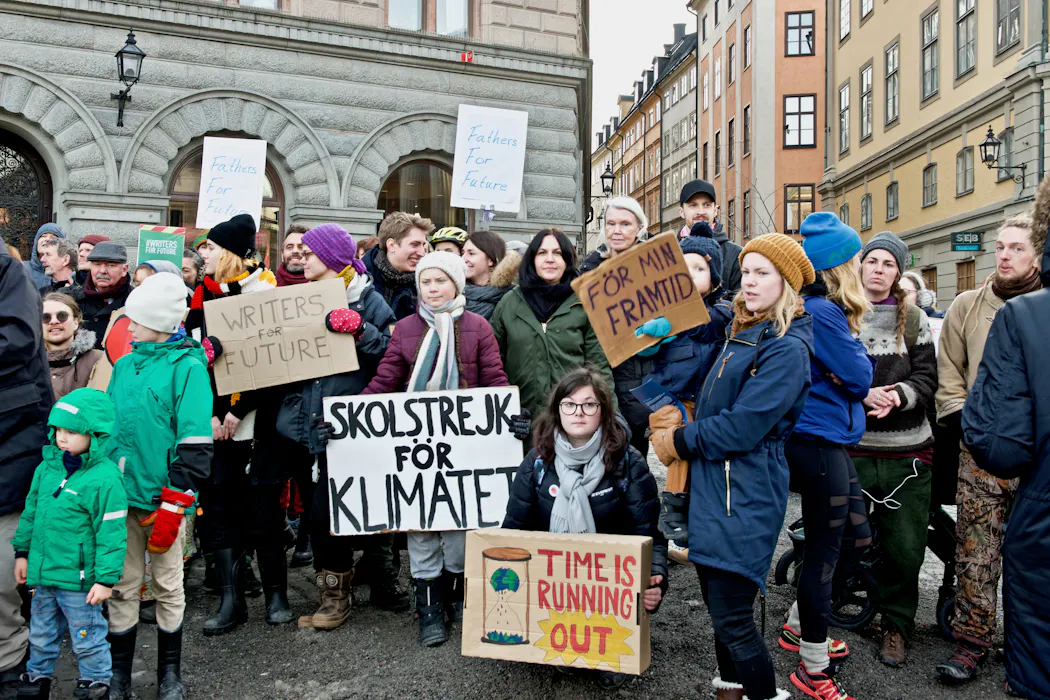
Effective storytelling can encourage climate action from policymakers and the public

Source: The Conversation – Canada – By Snigdhodeb Dutta, PhD Student, Department of Biology, Concordia University

Scientists know more about climate change than ever before. So why isn’t the world moving faster to address it?

That was the question at the heart of a round table I recently moderated at Concordia University, and the answers were more practical and more urgent than many in the room expected.

The session, entitled “Communicating Climate Research to Policy and the Public,” took place on March 10 and featured Concordia professor Damon Matthews, Montréal city councillor Peter McQueen and Dominique Paquin, a climate simulation and analysis supervisor at the climate research organization Ouranos.

Their shared diagnosis: the problem is not a lack of data. It’s a failure of translating that data into a message that resonates.

As Paquin noted:

“We have enormous amounts of information on climate resilience strategies. The challenge is that this information rarely makes it into the rooms where decisions are actually made.”

During the session, participants were split into mixed groups and given a single climate finding. Their task: communicate it to three completely different audiences — policymakers, the general public and those working in operational or applied settings. The results were revealing.

Making the abstract clear

people sit in a row behind a table in discussion. behind them is a large screen displaying the words Communicating Climate Research to Policy and the Public
The Communicating Climate Research to Policy and the Public rountable session at Concordia University on March 10.
(Snigdhodeb Dutta)

McQueen said:

“Effective climate communication is not about dumbing down the science. It’s about understanding who you’re talking to and what actually matters to them.”

Nowhere was this clearer than in the skating rink example that drew an audible reaction from the room. Telling someone the global average temperature has risen by 1.2 C lands differently than telling them climate change is already shortening outdoor skating seasons across Canadian cities.

Research shows that rising winter temperatures are reducing the viability of outdoor rinks, with future projections for cities like Montréal, Toronto and Calgary pointing to fewer cold days even under optimistic low-carbon scenarios.

By presenting climate change through such examples, the abstract becomes concrete, the distant becomes local and the data becomes a loss that people can picture.

Panellists argued that framing the issue for different audiences needs to become standard practice, not an afterthought. For policymakers, the groups focused on discussing feasibility and regulatory alignment. For the public, emotional resonance and relatable stakes took over.

For operational audiences — those working in applied or technical roles, such as urban planners, engineers and municipal staff — the focus shifted to implementation and cost.

One proposal that generated discussion was embedding climate context into everyday digital information. Many of us today have smartphones that display the daily weather forecast. Rather than just displaying the current temperature and conditions, devices could also show how those readings compare to pre-industrial baselines.

Small changes in the information environment could shift how millions of people perceive climate change over time.

Engaging communities is critical

The session, ‘Communicating Climate Research to Policy and the Public,’ at Concordia University.

Another key issue that came up is the structural barriers that hinder effective communication. Even when climate messaging lands, it runs into algorithmic filters, media fragmentation and political resistance.

Participants pointed to carbon pricing and stronger enforcement mechanisms as examples of policies that work when the public understands and supports them. Communication and policy, in other words, are not separate challenges. Each depends on the other.

The session also pushed back against the dominance of top-down, global-level climate narratives. Real engagement and climate action, participants agreed, happens at the community level through local voices, grassroots initiatives and youth movements that give people a sense of agency rather than helplessness. Media platforms that amplify these efforts, rather than drowning them out, were seen as part of the solution.

Involving students and young people, sharing successes through local and national media and making initiatives relatable and interactive can help build broader awareness and motivate participation across communities.

Communication is part of research work

Climate researchers should not treat communication as the final step in research and start seeing it as central to the work itself. They shouldn’t just focus on sharing data, but also take part in real engagement and conversations with the general public.

The science is there. The challenge is to make it resonate. From policymakers and community leaders to students and citizens, climate action depends on telling stories that make an impact, clarify stakes and inspire action.

Only when abstract data becomes tangible — whether through a disappearing skating rink, a parched wetland or a vanishing stream — does the urgency of climate change truly hit home. And it is this kind of storytelling, grounded in both evidence and lived experiences, that may ultimately drive the action this moment demands.

The Conversation

Snigdhodeb Dutta does not work for, consult, own shares in or receive funding from any company or organisation that would benefit from this article, and has disclosed no relevant affiliations beyond their academic appointment.

ref. Effective storytelling can encourage climate action from policymakers and the public – https://theconversation.com/effective-storytelling-can-encourage-climate-action-from-policymakers-and-the-public-278522

How ‘eco-dystopian’ novels from Asia and Africa are pushing boundaries

Source: The Conversation – UK – By Alastair Bonnett, Professor of Geography, Newcastle University

Sergey Nivens/Shutterstock

Speculative and futuristic visions of environmental calamity are being imagined globally through environmental fiction. Eco-dystopian novels can help people process their fears or mourn the loss of a more stable climate.

My forthcoming book, Nature’s Return, shows that while anti-environmentalism is gaining traction in the west, the diversity and urgency of environmental visions from across Africa and Asia are coming into view.

Here are my favourite examples from China and Taiwan, Nigeria and India.

China and Taiwan

“You are bugs” is the sobering message of the aliens in Liu Cixin’s bestselling trilogy, Remembrance of Earth’s Past. Series two of Netflix’s adaptation, titled after the first volume, The Three Body Problem, is scheduled for release in late 2026. Liu’s vision of environmental retribution is anchored in a visceral portrait of Mao’s so-called “war against nature”, which reshaped the environment through things like mass irrigation and deforestation to boost economic production.

The trilogy is a leading example of a wide-ranging ecological turn in Chinese culture and Chinese science fiction. As the cultural critics Yue Zhou and Xi Liu explain, the story routinely takes aim at “rampant pollution, water shortage, natural resources depletion, overpopulation and electronic waste”.

Cara Healy, a professor of Chinese Studies at Wabash College in Indiana, US, argues that “for centuries, Chinese intellectuals wrote about the past as a way to critique the present”, but today it is the future that is employed and deployed “to comment on our contemporary world”.

In Waste Tide by Chen Qiufan, readers are told that science fiction is “the greatest realism at the present time”. Set in a gang ridden island covered in tech trash, and populated by desperate migrants and mutant humans, Waste Tide is a bleak parable of China’s abundance of garbage: “This island has no hope. The air, the water, the soil and the people have been immersed in trash for too long.”

The themes of tech waste and contamination have a particular resonance in modern China, but are understandable to readers everywhere. This explains the lively translation market for comparable Taiwanese titles, such as Chi Ta-wei’s The Membranes and Wu Ming-yi’s The Man with the Compound Eyes.

Nigeria

Climate catastrophe frames the drama and ethical vision of Lost Ark Dreaming, by Nigerian author Suyi Davies Okungbowa. Lagos has been drowned, and people are crowded inside the Pinnacle, a vast, partially submerged, high rise in which the wealthy and powerful live on the upper levels, trying to keep the poor and the rising waters at bay. In Nigeria as in China, the eco-dystopian imagination is animated by images of injustice and cruelty, often in ways that refract colonial history. Other Nigerian-American examples include Nnedi Okorafor’s Noor and Tochi Onyebuchi’s War Girls.

India

Indian contributors to the genre include Lavanya Lakshminarayan’s
Analog/Virtual and Varun Thomas Mathew’s The Black Dwarves of the Good Little Bay. The latter is set in the year 2041 in a post-Mumbai in which the population has also crowded into a towering redoubt, though this one is called the Bombadrome and is surrounded by a barren wasteland.

The mistrust of technologically driven change is a distinctive feature of Indian science fiction, but the new wave of eco-dystopias is part of a global conversation. They are diverse but united in their effort to make use of the future to register loss, yearning and possibility.

Malformed landscapes, biodiversity loss and tides of industrial debris are encountered throughout the genre, though climate change looms large in many examples from south Asia and Africa.

The Egyptian science fiction author Emad El-Din Aysha once speculated that dystopia was a distinctly western genre because those with “real-life anxieties around every corner” have no need to invent them. But it appears that real-life anxieties are not a brake but an engine for the imagination. Today’s dystopian imagination is ecological and urgent and asks us to travel far into the future and into every part of the world.

This article features references to books that have been included for editorial reasons. If you click on one of the bookshop.org links and go on to buy something, The Conversation UK may earn a commission.

The Conversation

Alastair Bonnett does not work for, consult, own shares in or receive funding from any company or organisation that would benefit from this article, and has disclosed no relevant affiliations beyond their academic appointment.

ref. How ‘eco-dystopian’ novels from Asia and Africa are pushing boundaries – https://theconversation.com/how-eco-dystopian-novels-from-asia-and-africa-are-pushing-boundaries-275264

The Untold Stories of Women Football Fans: celebrating memories, calling out prejudice

Source: The Conversation – UK – By Stacey Pope, Professor in the Department of Sport and Exercise Sciences, Durham University

It’s one of the clearest things about me. I’m black and white … I think I cried for a month when we lost the FA Cup Final in 1974. I was only ten and it was near my birthday as well. I was absolutely gutted. [Jo, Newcastle fan since the 1970s]

Sexism in football, according to a recent BBC report is “a problem that isn’t going away”. When working on my book The Feminization of Sports Fandom, I discovered that the increasing opportunities for women to become football fans over the last three decades has not automatically led to equality.

Now a University of Durham exhibition based on my work will play a role in challenging negative attitudes and help reimagine a more positive future for women football fans.

My research draws on more than 200 interviews with women sports fans in the UK. These accounts demonstrate that sexism and misogyny have been, and continue to be, rife in football. This work has contributed to several UK parliament select committees, with findings providing evidence for the urgent need for safer, more welcoming and inclusive environments for women fans.

It shows how various strategies are used by men to undermine the status of women as “real” or “authentic” fans, and that women are routinely required to “prove” themselves as such. This is supported by statistics from football’s anti-discrimination organisation Kick It Out, which received reports of more than double the number of sexist incidents at football matches this season (2025/26) compared with the same point last season.

Colleagues and I also undertook the first research on UK male football fans’ attitudes towards women, surveying 1,950 men. It revealed that openly misogynistic attitudes still dominate football fandom in the UK. Three-quarters of men held either overt or covert misogynistic attitudes towards women in football.

To address this, we wanted to stage an exhibition that would call out common misperceptions of female fans. Away From Home: The Untold Stories of Women Football Fans is in equal measure about celebration and challenges. Co-designed with David Wright from Durham University’s Museum’s Galleries and Exhibitions Team, it recognises women’s memories and experiences as football fans – past and present – preserving these stories for the future.

Raising the profile of female fans

The lack of visibility of female football fans in popular and academic accounts, combined with assumptions that women did not attend football matches in the past, has contributed to the widely held views that women fans are less “authentic”. Or they are perceived as newcomers to football with less knowledge and thus treated with less respect.

Our exhibition, currently on show at the Beacon of Light in Sunderland, shares personal accounts of women fans of Newcastle United and Sunderland AFC from the 1950s to the present day, and reveals such assumptions and prejudices to be completely false.

This pop-up show is also about opening up challenging conversations regarding the work that is still needed to create safer spaces for all girls and women. Giving a platform to the experiences of female fans – both positive and negative – can help lead to changes in attitudes and a new appreciation for these women.

Despite football playing such an important part of culture, exhibitions on football are rare. Exhibitions with a fan focus even more so, and those focusing on female fans almost non-existent until now. Designed in the style of matchday stalls, the exhibition is popping up at sports centres and supporter fanzones such as Sunderland’s Beacon of Light.

Each fan featured is represented by a homemade football scarf, produced by supporters in a reference to an age before mass-produced official merchandise. Visitors can wear these scarves as they browse the stories, creating connection and emphasising the universal elements of football fan experiences. This familiar space and accessibility is critical if we are to unlock some of the challenging issues of sexism and misogyny that lie at the heart of this research.

Many of the stories emphasise the lifelong connections between fans and clubs that will be relatable to all fans, irrespective of club or gender. Margaret, a regular at Sunderland since the 1950s, sums this up:

Your football team gets into your heart and that’s where it stays. You cannot change that. My heart is with Sunderland Football Club, has been since my dad took me, and that’s the only place I would ever go.

Many featured fans describe gender inequalities in their experiences. This includes the expectation of giving up attending matches after marriage or starting a family, despite male partners continuing to attend.

There are also examples of sexism and extreme hostility towards women’s presence in the football stadium across all generations – as Beryl, a fan since the 1950s, describes: “The men just assume that you’re an idiot. Because they’re a man and football’s their game.” Lynsey, a fan since the 1990s, agrees: “We hear comments like: ‘What would you know about football? You’re a woman.’”

Creating better spaces for women

Highlighting these experiences can help us to reconsider negative attitudes to women fans today and imagine what the future could look like for them.

For a long time, women fans have felt they needed to accept what Newcastle fan Tracey describes as “football’s terrible sexist culture”, but there is a sense that this is changing.

As the exhibition tours, our work in collaboration with police and other major groups and organisations is developing solutions based on evidence that will help create safer, more welcoming and inclusive spaces for women fans. This includes improvements in national mechanisms for reporting and responding to violence and abuse.

Football can be an important force for positive social change. This exhibition and the research that underpins it forms part of these wider collective efforts to increase public awareness and understanding of the challenges women fans face. But crucially, it also celebrates these women’s lifelong memories, and the powerful sense of identity being a football fan can provide.

The Conversation

This exhibition work and article was co-designed and produced with David Wright from the Museums, Galleries and Exhibitions Team at Durham University.

Stacey Pope receives funding from Arts and Humanities Research Council, Economic and Social Research Council and Foundation of Light National Lottery Heritage Fund.

ref. The Untold Stories of Women Football Fans: celebrating memories, calling out prejudice – https://theconversation.com/the-untold-stories-of-women-football-fans-celebrating-memories-calling-out-prejudice-279703

Why Benjamin Netanyahu needs the Iran conflict to continue

Source: The Conversation – UK – By Leonie Fleischmann, Senior Lecturer in International Politics, City St George’s, University of London

Before Donald Trump delivered his prime-time address to the American people on April 1, many commentators predicted he would claim victory and signal that the US air campaign against Iran would be wound down – even without a deal with Tehran to open the Strait of Hormuz. As it turned out, Trump said he would double down on the violence, promising to hit Iran “extremely hard” in coming weeks.

The White House simultaneously released a document headlined: President Trump’s Clear and Unchanging Objectives Drive Decisive Success Against Iranian Regime. “From day one,” it stated, “the objectives have been clear: obliterate Iran’s missiles and production, annihilate its navy, sever its support for terrorist proxies, and ensure it never acquires a nuclear weapon.” These objectives, Trump said, were nearly complete and he expected to finish the job “very fast”.

For the US president, the key marker of the success or otherwise of this foreign policy gambit will come in November’s midterm elections. So his strategic decisions are likely to be heavily influenced by the need to be able to claim victory, while also limiting any negative outcomes from the energy price shock engulfing the world. To do this, he must declare victory fairly soon.

But Trump’s partner in the war, Israel’s prime minister Benjamin Netanyahu, has a markedly different set of strategic priorities (although electoral politics will also play a big part in his thinking).

Launching Israel’s air campaign on February 28, Netanyahu said the goal was to “put an end to the threat from the Ayatollah regime in Iran”. He framed this as having been an existential threat to Israel for all of the 47 years that the Islamic Republic had been in existence, insisting that regime change was “not the objective, but … could certainly be the result”.

In the five weeks of the conflict, Israel’s strategic goals have both widened and lengthened. In Iran, while clearly working in partnership with the US, it wants to reserve the right, unilaterally, to “go back and hit Iran every time the nuclear and missile programmes are being rebuilt”.

Meanwhile, Israel has responded to attacks from Hezbollah forces in Lebanon by occupying the southern part of the country up to the Litani river. This area was designated by UN security council resolution 1701 in 2006 as a buffer zone in which only the Lebanese national army and UN peacekeepers were authorised to operate.

The Israeli defence minister, Israel Katz, has warned that Lebanese citizens who had fled would not be allowed to return “until the safety and security of northern Israeli residents is ensured”.

It appears that Israel plans a long-term occupation of the region. It already maintains a buffer zone in southern Syria, which it occupied after the fall of Bashar al-Assad’s regime in December 2024. This, it says, is also to deter Hezbollah attacks on northern Israel.

Netanyahu’s war aims

The focus of Netanyahu’s security policy has consistently been directed at Iran and its proxies. My research with Amnon Aran has demonstrated that in perpetuating an “Iran-as-evil” framing, the Israeli prime minister effectively precluded any possibility of engaging with the regime diplomatically.

Netanyahu’s political worldview has been enormously influenced by the founder of Revisionist Zionism, Ze’ev Jabotinsky. Under Jabotinsky’s “Iron Wall doctrine”, reinforcing the might of Israel is the only responsible response to the threat posed by Iran and its proxies. It is a strategy of strength first, diplomacy second.

In the past, Netanyahu has talked of defeating Israel’s enemies as his “supreme objective”. But more recently, analysts are describing what they refer to as the “Netanyahu doctrine”. According to this security stance, Israel must be prepared to launch “pre-emptive” attacks against any perceived threats, maintaining a permanent readiness for war.

So regime change of the Islamic Republic is not a direct goal – even if, as noted, the Israeli prime minister believes it might result from the pressure he is putting on Tehran. He is aiming to “create conditions that will enable the brave Iranian people to cast off the yoke of this murderous regime”.

But there is another important dimension to this “permanent conflict”. Netanyahu must call a national election before October. Polls suggest Israeli public support for the war in Iran could give him a boost in time for the election. Unlike the war on Gaza, which polls showed a majority of Israeli citizens wanted to end, there has been overwhelming support in Israel for the war on Iran.

Even ministers in Netanyahu’s government recognise that domestic politics has formed a big part of his motivation for launching this conflict now, saying that – as far as Netanyahu is concerned – “the road to the polling stations runs through Washington and Tehran”.

So far, however, there is little evidence that support for the war is translating into electoral support for Netanyahu. A lot depends on how the conflict plays out. A long war with heavy casualties and significant damage to civilian areas in Israel has the potential to damage Netanyahu’s election chances.

A poll taken on March 19 found that while the prime minister’s Likud party would receive the most votes, he would find it difficult to form a ruling coalition. And if he loses power, there is the prospect of his corruption trials proceeding.

So, a lot hangs on the outcome of this conflict. An early and decisive victory might have given Netanyahu the confidence to call a snap election. But this now looks unlikely. And if Trump decides to bring an end to hostilities without achieving the far-reaching change Netanyahu has promised, things could go badly for Israel’s longest-serving leader.

The Conversation

Leonie Fleischmann does not work for, consult, own shares in or receive funding from any company or organisation that would benefit from this article, and has disclosed no relevant affiliations beyond their academic appointment.

ref. Why Benjamin Netanyahu needs the Iran conflict to continue – https://theconversation.com/why-benjamin-netanyahu-needs-the-iran-conflict-to-continue-279777

There may not be a Christian revival, but Britain’s traditional churches aren’t doomed

Source: The Conversation – UK – By Linda Woodhead, F.D. Maurice Professor of Religion, King’s College London

Flystock/Shutterstock

In the same week that a new archbishop of Canterbury was installed, YouGov admitted that a poll suggesting there was a “quiet revival” of Christianity was a dud. It had been inflated by fraudulent results and should be ignored.

To those of us who study the bigger picture of religion in Britain, this comes as no surprise. There are good reasons to doubt that Britain is experiencing a Christian revival today – but that does not mean it is dying out.


Read more:
Is there really a religious revival in England? Why I’m sceptical of a new report


To understand what is happening in Britain, it is helpful to compare it with the US, which has has long been viewed as exceptionally religious in comparison. Recent evidence suggests something less clear-cut.

In a major recent study, sociologist Christian Smith assembles the data. In the 1970s and ’80s, only around one in ten Americans identified as “nonreligious”. But from 1991, the proportion of people who identify as such has risen steeply, reaching 29% in 2021.

Today, 43% of young American adults aged 18-29 say they are nonreligious, and only a quarter of generation Z are regular church attenders.

In Britain, being nonreligious was much more common, much earlier. Today, around half the population say they have “no religion” – a proportion that has remained rather stable since the 2010s, according to the reliable British Social Attitudes survey.

By contrast, the proportion saying they are Christian has fallen steadily to around 40% today. Levels of regular weekly churchgoing are around 5%.

In other words, the decline of Christianity started later in the US than in Britain, and has not yet gone as far. But in America, it has been swifter, more dramatic and shows no sign of slowing down.

American-style Christianity can no longer be assumed to be the future for the churches in Britain. Such religion has always been more enthusiastic, congregational and separate from the state.

When Christianity last experienced a revival in the US, with the rise of the New Christian Right and televangelism in the 1980s, conservative and fundamentalist churches were prominent, and megachurches did well. Some blamed the decline of churches in Britain on the fact that they were not more like American ones. They were said to be insufficiently enthusiastic and self-promoting.

Megachurches never really took off in Britain, except for a few examples in big cities that tend to serve diaspora communities. And though the last archbishop, Justin Welby, hoped that an evangelical revival would reverse church decline, this failed to materialise.

The resilience of old churches

But Britain’s churches are not doomed. In light of the recent Christian decline in America, the stately power and traditional ways of the UK’s older churches may turn out to be an asset.

Though few people attend regularly, the Church of England, the Roman Catholic Church and the Church of Scotland are still the largest and most powerful of the UK churches. Institutional embeddedness matters.

The Church of England is constitutionally established, and all these churches play a central role in the school system by way of state-supported faith schools. Although the Church of England is not funded through taxation like some of its sister churches in Scandinavia, its considerable wealth – around £11 billion – protects it.

If generation Z show an interest in religion, it is traditional forms that appeal to them as much as the trendier forms that seek the attention of youth. We see this not just in Christianity, where both the Roman Catholic Church and Orthodox Churches are reporting new interest, but also in Orthodox Judaism and, to some extent, in Islam.

Still, the traditional churches are unlikely to return to a position like they held in society as recently as the 1980s. Today, revival is virtually impossible. When American evangelist Billy Graham won converts in Britain, he was not winning over people who had grown up nonreligous, he was speaking to people with a Christian background.

It is sometimes suggested that war or social collapse could lead to a revival of Christianity. That is possible, but history suggests that a plethora of different intense, sectarian kinds of religion and spirituality emerge in such situations.

Others argue that the Holy Spirit stirs individual hearts and minds, irrespective of the state of the churches. That is how Protestant Christians have often thought about revival, perhaps recalling Methodist enthusiasm or the chapel movement in Wales.

The striking thing about such revivalism, however, is how quickly it can fade. The chapels are mostly closed now. The Methodists are dying out. “Nonconformity” as a whole, still a major force in England in the 1950s, is almost forgotten.

Though the Christian nationalists on the American right are currently very loud, they have had no impact on the continued decline of Christianity in the US or the alienation of young people. Attempts by some on Britain’s political right to talk up Christianity are even less likely to succeed. They are reviving words, not religion.

What we have in Britain today is a landscape in which the historic churches appear a little stronger than once thought, and revivalist forms of Christianity weaker. Overall, however, Christianity occupies a much diminished space. Other world religions, especially Islam, are stable or growing.

“Nonreligion” is the biggest affiliation after Christianity, but that label hides diversity. Some of the nonreligious are atheist, some agnostic, and some are actively interested in new forms of spirituality, magic and supernaturalism. Although old landmarks remain, like church steeples on the horizon, the religious landscape of Britain is greatly changed.

The Conversation

Linda Woodhead receives funding from the Economic and Social Research Council and the Arts and Humanities Research Council (UK research councils)

ref. There may not be a Christian revival, but Britain’s traditional churches aren’t doomed – https://theconversation.com/there-may-not-be-a-christian-revival-but-britains-traditional-churches-arent-doomed-279291

Our modern vision evolved from an ancient one-eyed worm creature

Source: The Conversation – UK – By George Kafetzis, Research Fellow in Neuroscience, University of Sussex

LuckyStep/Shutterstock

It’s easy to take our eyes for granted. But our recent research shows they took an incredible evolutionary journey to reach their current familiar form.

It has long been known that our (vertebrate) eyes differ fundamentally from the ones of our distant relatives (invertebrates), because of their cell composition and how they develop before birth. However, answers to why or how these differences first emerged long remained elusive.

Our study suggests that our eyes descend from a worm-like ancestor that was roaming the oceans 600 million years ago. The same also applies to all bilateral animals, meaning animals whose bodies can be divided into roughly mirror-image left and right halves.

As part of our study, we surveyed 36 major groups of living animals (covering nearly all bilateral animals) to see where their eyes and light-sensing cells are located and what they do.

A pattern emerged. We discovered that eyes and light-sensing cells are consistently found at two separate locations: paired on both sides of the face, and at the midline of the head, on top of the brain. Across the animals we looked at, cells in the paired position are used to steer movements, while their midline counterparts tell day from night and up from down.

We concluded that an ancient worm-like ancestor of all vertebrate animals lost the “steering” pair of eyes when it adopted a mostly stationary lifestyle 600 million years ago, burrowing into the seabed. In becoming a filter feeder with no need to move around, the energetically expensive type of paired eyes was rendered useless and costly.

However, this lifestyle change left the light-sensing cells in the middle of its head unscathed, because the animal still needed to sense the time of day and distinguish between up and down. Although the paired eyes were gone, the light-sensing cells in the midline developed into a small midline eye.

Close up of woman's face
Our eyes have a surprising history.
PeopleImages/Shutterstock

Possibly within a few million years, this animal changed lifestyle again. A return to swimming reintroduced the need to control steering and measure its own body motion for efficient filter-feeding (sifting food out of water) and avoiding predators.

This pushed evolution to develop the midline eye by forming small eye cups on each side. These eye cups later separated from the midline eye, moved out to the sides of the head and formed new paired eyes: our eyes.

The loss and regain of vision happened between 600 and 540 million years ago. Components of the midline eye remained and became the pineal organ in the brain, which produces and releases the sleep hormone melatonin.

In many vertebrates, the pineal organ receives light through a transparent (unpigmented) region in the middle of the head. However, in the mammalian lineage the pineal organ lost its light-sensing capacity – possibly because early mammals were active at night and hid during daytime. So the eyes, which were more sensitive, took over the light detection which drives melatonin release and sleep.

Eyes of all shapes and sizes

Those animals that did not lose the worm-like ancestor’s original paired light-sensing cells comprise most invertebrates around today, since they descended from a branch of the evolutionary tree that never adopted a static lifestyle. Such animals include crustaceans, insects, spiders, octopus, snails and many groups of worms. These animals still have modern versions of the original sets of light-sensing cells.

The paired eyes of insects and crustaceans are compound eyes, with an array of tiny and densely packed lenses per eye. Instead of compound eyes, octopus and snails have camera-type eyes with a single lens.

In fact, octopus and snails independently evolved the same eye design and visual performance as us vertebrates. However, our retina – the light sensitive layer at the back of our eyes – has over 100 types of neurons (mice have even more – 140), compared to a mere handful in octopus and snails. This makes it almost as complex as our cerebral cortex – the outer and largest part of our brain.

Scientists have thought that in the evolution of our eyes, this complexity emerged fairly late. Similarities between light-sensing cells in the brain and paired eyes informed earlier hypotheses about a simple, pineal organ-like eye early in its evolution. In our work, however, we argue that a lot of this complexity predates the retina.

As such, it is likely to have been present already in the “cyclops” ancestor eye. This has broad implications for the origin and wiring of neural circuits in our retina and brain alike.

For us vertebrates, the evolution of our eyes and brain is intimately linked. The emergence of new paired eyes is a fundamental part of this picture, since the eyes allowed for the complex behavior that call for cognition and large brains. Without the eyes, we would not just be humans without eyes; we would not exist at all, nor would any of the other vertebrates.

The Conversation

George Kafetzis receives funding from the European Research Council and the Leverhulme Trust.

Dan Nilsson receives funding from The Swedish Research Council, and The EU Horizons program.

ref. Our modern vision evolved from an ancient one-eyed worm creature – https://theconversation.com/our-modern-vision-evolved-from-an-ancient-one-eyed-worm-creature-278120

Nato has survived some serious rifts but the Iran war shows how the US has soured on the transatlantic alliance

Source: The Conversation – UK – By David J. Galbreath, Professor of War and Technology, University of Bath

The US president took the opportunity of a prime-time speech to the US public on April 1 to repeat his by now-familiar criticism of America’s Nato allies for not joining the war in Iran. He told them to “build up some delayed courage. Should have done it before. Should have done it with us as we asked.”

Trump’s anger at Nato in the past fortnight has been focused on the reluctance of the likes of the UK, Germany and France to land a hand in forcing Iran to open the Strait of Hormuz. This vital waterway, through which ordinarily one-fifth of the world’s oil and gas transits, has been effectively closed by the threat from Iranian missile strikes to all but a few tankers approved by Tehran. The result has been dramatic, as energy prices have rocketed and supplies to countries dependent on Gulf oil have rapidly diminished.

The US-Israeli assault on Iran has failed to topple the regime or curtail its ability to pose a security threat in the region, leaving Tehran to wreak economic havoc. This flies in the face of the Trump administration’s claims of the overwhelming success of Operation Epic Fury. So the US president and his national security team are, at least in part, blaming Nato’s reluctance to get involved.

It’s important to stress that Article 5 of the Nato treaty mandates that Nato members must come to the aid of any fellow member which comes under attack. In the case of the US-Israeli military operation against Iran, Article 5 has not been invoked – nor does it apply. Further, many Nato members are mindful of the legacy of the disastrous war in Iraq. This sowed deep divisions within Nato after some members (notably the UK and Poland) lined up beside the US and others (France and Germany most vociferously) opposed the invasion. It also became a byword for an ill thought-out military campaign with dubious legitimacy and no exit plan.

As a result, most Nato member states are reluctant to get involved in the US-Israeli campaign against Iran. In any case, many of Nato’s European members are far more concerned about the war going on at their borders between Russia and Ukraine.

Nato reluctance has clearly stung Trump and his senior advisers. On March 31, the US secretary of state, Marco Rubio, told Fox News’s Sean Hannity that: “We’re going to have to reexamine the value of NATO and that alliance for our country. If Nato is just about us defending Europe if they’re attacked, but them denying us basing rights when we need them, that’s not a very good arrangement. That’s a hard one to stay engaged in.”

Asked by The Telegraph the following day whether the US was reconsidering its membership of the alliance, Trump said “Oh yes… I would say [it’s] beyond reconsideration”. He went on to question the Nato’s effectiveness, saying: I always knew they were a paper tiger, and Putin knows that too, by the way.“

Scepticism about Nato has been growing within senior US national security ranks for some time. At various times, Rubio, vice-president, J.D. Vance, and defense secretary Pete Hegseth have all questioned how an alliance based around the principle of US-led defence of Europe against Soviet aggression now fits America’s interests.

This is not a view shared by the alliance’s European members, who remain deeply integrated into Nato’s command and control systems and, until now at least, have placed a great deal of trust in its role as a key security and defence partnership with Washington. And not just Nato – the fact that Ukraine was being considered for membership was cited by Vladimir Putin as a reason for the Russian invasion in 2022.

Nato has changed – but it has endured

The alliance’s focus has shifted over the years, at times moving from being an organisation focused on collective defence to one aiming at collective security. This distinction can be summed up thus: collective defence is just what it says, pledging to come to the assistance of a fellow member whose territory is threatened by a third party. Collective security is more about mobilising to address sources of regional insecurity such as ethnic conflict in the former Yugoslavia.

But the 2014 annexation of Crimea (which raised the possibility of Russia’s “little green men” crossing the border into Narva in Estonia, a member state) and the full invasion of Ukraine in 2022 further underlined the need for Nato to have a strong focus on defence against a newly aggressive Russia.

The question is whether, as Rubio, Vance and Hegseth have all suggested – and as the national security strategy released by the Trump administration last November spells out – the US no longer sees European security as either its responsibility or its focus. Or, as Trump appears to believe, whether an alliance that won’t do his bidding is worth America’s while.


Read more:
What the US national security strategy tells us about how Trump views the world


But even in the cold war, Nato was not involved in its members’ military adventures. The US actively worked against the UK, France and Israel during the Suez Canal episode in the mid-1950s. Britain refused to join the US in Vietnam. Precedents such as these would suggest that the Iran war would ordinarily not be a place for Nato involvement, even if individual member-states could contribute.

Nato has been through crises before, but the fact that its European members have heeded the US president’s demands for them to increase their defence budgets shows that for them, at least, the alliance has enduring importance. For it to fall apart after nearly 80 years over Iran would be an unbecoming end to one of the most important collective defence arrangements the world has ever seen.

The Conversation

David J. Galbreath has received funding from the UKRI.

ref. Nato has survived some serious rifts but the Iran war shows how the US has soured on the transatlantic alliance – https://theconversation.com/nato-has-survived-some-serious-rifts-but-the-iran-war-shows-how-the-us-has-soured-on-the-transatlantic-alliance-279799

Could the Middle East conflict open the door to price controls? Here’s how it works in Greece

Source: The Conversation – UK – By Benjamin Selwyn, Professor of International Relations and International Development, Department of International Relations, University of Sussex

The Athenian/Shutterstock

The US-Israel war with Iran has sent shockwaves through the global economy and predictions of COVID‑era inflation are becoming hard to ignore. In many countries, these pressures are already being felt, as households struggle to afford essentials.

During and after the height of the pandemic, governments across the political spectrum experimented with price controls in a bid to protect people from soaring living costs. Spain and Mexico, for example, implemented such measures from the political left; Greece did so from the right.

They were a response to the pressures of inflation, weakened household finances and growing insecurity for large swathes of the population.

Among these examples, Greece’s “household basket” programme stands out as a detailed attempt to keep essential goods affordable. As consumers may once again be facing a cost-of-living price spiral, it is a case study worth examining.

Greece entered the inflationary period (2021-22) with some of the lowest wages in Europe. Its average pay is still just a third of that in Germany. When inflation hit 10%-12% in 2022, everyday necessities such as food, dairy products and basic household supplies quickly became more expensive.

In November 2022, the centre-right New Democracy government introduced the household basket, requiring major supermarket chains to keep prices low on more than 50 categories of essentials. These included bread, pasta, rice, dairy products, cleaning materials and baby food. Relevant items were highlighted clearly in stores, and the list was updated weekly.

Originally presented as a temporary tool, the programme has been extended repeatedly because of ongoing inflation – most recently due to concerns about conflict-related price spikes. It has become a central part of the country’s strategy to stabilise living costs, along with related measures including profit caps in the fuel sector.

A system based on transparency

What distinguishes the Greek model is how it combines regulation with consumer access to information via a digital platform. Large supermarket chains are obliged to publish the prices of their basket items online.

Once placed on the list, an item’s price cannot rise for seven days, though it may fall at any time. Retailers face fines of up to €5 million (£4.3 million) for violations. The scheme also requires supermarkets to submit supplier price lists, giving regulators insights into where mark‑ups occur.

The platform allows shoppers to compare prices across retailers and locate branches stocking specific items. All purchases must take place in person, maintaining the scheme’s focus on physical retail while improving transparency.

Beyond the basket itself, in 2025 the Greek ministry of development and retailers agreed price cuts of 8% on average for 2,000 goods – and profit margins on essential items were capped at their 2021 level. Inspectors conducted regular audits to enforce compliance.

boxes of greek sweets on a supermarket shelf
The contents of the Greek household basket can be tweaked temporarily to reflect holidays or special occasions.
vivooo/Shutterstock

Across many product categories, there were notable price declines. Among 56 breakfast foods and cereals, there was a price fall of up to 23%; among 34 cheese products, the fall was 5%-35%; and for fresh meat, the drop was 5%-7% across three products. On top of these, oils and fats dropped in price by 5%-16%, pasta by 3%-5%, and sweets and chocolate by 3%-17%.

The basket has gradually expanded to include pulses, fresh poultry, meat cuts, milk and cheese. The Greek government has also introduced short‑term “themed baskets” during periods of high seasonal demand. So far, Christmas and Easter baskets have included lamb, goat meat, turkey and chocolate Easter eggs to keep a cap on holiday costs.

Price controls remain controversial for some. Retailers in Greece have argued the system is unfair, and that they are unable to absorb the costs.

However, in the Greek case, supermarkets did accept reduced profit margins for the price-capped product lines. They responded with price wars to attract custom and boost market share, and with competitively priced own-brands. One consequence of these measures is that Greece now has a relatively cheap food basket compared with other EU countries.

In the UK at the height of the COVID pandemic, some large retailers raised prices above inflation – doubling their profits between 2019 and 2021-22. Under such circumstances, many may feel it is only fair to ask them to contribute to combating a cost-of-living crisis.

So, while price controls may not always please retail and other sectors, they are becoming more common. Many countries have been experimenting with ways to contain the cost of living, as practical tools to stabilise inflation and support citizens during unpredictable economic shocks.

Greece’s experience shows that such measures can be structured, transparent and enforceable. It also demonstrates that price controls need not be limited to one political tradition. They have been deployed by governments across the ideological spectrum when faced with inflationary pressures.

As the UK braces for further economic turbulence, triggered by conflict and volatile energy markets, Greece’s family basket offers a model worth studying. It is not a full solution to high inflation – nothing so simple exists – but it shows how governments can intervene to reduce pressure on households while maintaining oversight of essential markets.

A political party ready to champion measures that deliver immediate relief to struggling households could resonate widely at a moment when many people have yet to recover from the last cost‑of‑living crisis.

The Conversation

Benjamin Selwyn does not work for, consult, own shares in or receive funding from any company or organisation that would benefit from this article, and has disclosed no relevant affiliations beyond their academic appointment.

ref. Could the Middle East conflict open the door to price controls? Here’s how it works in Greece – https://theconversation.com/could-the-middle-east-conflict-open-the-door-to-price-controls-heres-how-it-works-in-greece-279696

Les végétariens ont-ils vraiment moins de chance de vivre centenaires que les mangeurs de viande ?

Source: The Conversation – in French – By Chloe Casey, Lecturer in Nutrition and Behaviour, Bournemouth University

Les bienfaits des régimes à base de végétaux ne sont toujours pas remis en question, mais les besoins alimentaires évoluent au fil de l’existence, et il faut en avoir conscience. Bondar Illia/Shutterstock.com

Selon une étude publiée en début d’année, les personnes s’abstenant de manger de la viande pourraient être moins susceptibles d’atteindre l’âge de 100 ans que celles qui en consomment. Toutefois, avant de remettre en question votre régime végétalien ou végétarien, sachez que ces travaux appellent une analyse plus nuancée.


Des travaux de recherche publiés en début d’année ont révélé que des individus suivant un régime excluant la viande avaient une moindre probabilité de vivre centenaires les ceux qui en consommaient. Cette conclusion a été tirée à partir de l’analyse de données collectées durant le suivi, jusqu’en 2018, de plus de 5 000 adultes chinois âgés de 80 ans et plus. Tous avaient participé à l’Enquête longitudinale chinoise sur la longévité en bonne santé (« Chinese Longitudinal Healthy Longevity Survey »), une étude représentative, menée à l’échelle nationale et débutée en 1998.

De prime abord, ce résultat semble contredire ceux produits par les recherches menées durant des des décennies, qui démontrent que les régimes à base de plantes sont bénéfiques pour la santé. Les régimes végétariens, par exemple, ont été systématiquement associés à des risques moindres de maladies cardiaques et d’accidents vasculaires cérébraux, de diabète de type 2 et d’obésité. Ces vertus découlent en partie d’un apport plus élevé en fibres et d’une consommation réduite de graisses saturées.

Dès lors, comment expliquer ce paradoxe ? Avant de tirer des conclusions définitives, plusieurs facteurs déterminants doivent être pris en considération.

Les besoins de l’organisme évoluent avec l’âge

Cette nouvelle étude s’est concentrée sur des adultes de 80 ans et plus, dont les besoins nutritionnels diffèrent sensiblement de ceux des individus plus jeunes. En effet, à mesure que nous vieillissons, des modifications physiologiques altèrent à la fois nos apports alimentaires et nos besoins en nutriments.

Notre dépense énergétique diminue, et dans le même temps, notre masse musculaire, notre densité osseuse et notre appétit déclinent elles aussi souvent. Ces changements accroissent le risque de malnutrition et de fragilité.

À l’inverse, la majeure partie des preuves relatives aux bienfaits des régimes excluant la viande provient d’études menées sur des adultes jeunes, plutôt que sur des populations âgées et fragiles.

Certaines recherches suggèraient déjà que les non-consommateurs de viande les plus âgés font face à un risque plus élevé de fractures, en raison d’apports moindres en calcium et en protéines.

En fin de vie, les priorités nutritionnelles changent. Il ne s’agit plus de se focaliser sur la prévention des pathologies chroniques à long terme, mais plutôt sur le maintien de la masse musculaire et la prévention de la perte de poids. Il s’agit de s’assurer que chaque bouchée avalée soit riche en nutriments.

Les conclusions de l’étude pourraient donc avant tout refléter les conséquences de ces défis nutritionnels propres au grand âge, plutôt qu’un problème intrinsèquement lié aux régimes à base de végétaux.

Il est en outre crucial de souligner que ces résultats ne contredisent en rien le fait que de tels régimes ont des bénéfices sanitaires pour les adultes plus jeunes et en meilleure santé.

Le paradoxe de l’obésité

Un point fondamental de ces travaux mérite également d’être souligné : la probabilité moindre d’atteindre 100 ans chez les non-consommateurs de viande n’a été observée que chez les participants présentant une insuffisance pondérale. Aucune association de ce type n’a été relevée chez les adultes âgés de poids normal.

Or, on sait déjà qu’au grand âge, l’insuffisance pondérale est fortement corrélée à une augmentation du risque de fragilité et de mortalité. Le poids corporel semble donc être un facteur clé pour expliquer ces résultats.

Il convient également de rappeler qu’il s’agit d’une étude observationnelle, ce qui signifie qu’elle met en évidence des associations plutôt que des rapports de cause à effet. Dans ce type d’études, la concomitance de deux phénomènes n’implique pas nécessairement que l’un engendre l’autre.

Ces observations s’alignent par ailleurs avec ce que l’on nomme le « paradoxe de l’obésité » : au cours du vieillissement, présenter un poids corporel légèrement plus élevé est souvent lié à une meilleure survie tardive.

À ce sujet, il faut noter que la diminution de la probabilité de devenir centenaire n’était pas manifeste chez les non-consommateurs de viande dont l’alimentation incluait du poisson, des produits laitiers ou des œufs. Or, ces produits fournissent des nutriments essentiels au maintien de la santé musculaire et osseuse, notamment des protéines de haute qualité, de la vitamine B12, du calcium et de la vitamine D.

Les adultes âgés qui avaient suivi ces régimes étaient tout aussi susceptibles de vivre jusqu’à 100 ans que les consommateurs de viande. Les chercheurs suggèrent que l’inclusion de quantités modestes d’aliments d’origine animale pourrait aider à prévenir la dénutrition et la perte de masse musculaire maigre chez les personnes très âgées, par comparaison avec les régimes strictement végétaux.

Ce que ces travaux impliquent pour un vieillissement en bonne santé

Plutôt que de chercher à déterminer si un régime est universellement supérieur à un autre, le message clé à retenir est que la nutrition doit être adaptée à chaque stade de la vie. Nos besoins énergétiques déclinent avec l’âge (en raison de la baisse de la dépense énergétique au repos), mais certains de nos besoins en nutriments augmentent.

Les adultes âgés doivent continuer à veiller à se procurer des apports adéquats en protéines, vitamine B12, calcium et vitamine D – tout particulièrement pour préserver la masse musculaire et prévenir la fragilité. Durant le grand âge, la prévention de la malnutrition et de la perte de poids devient souvent prioritaire sur la prévention des maladies chroniques qui risqueraient de survenir sur le long terme.

Dans un tel contexte, les régimes à base de plantes demeurent également des choix sains, mais qui peuvent exiger de mettre en place une planification rigoureuse et, dans certains cas, une complémentation alimentaire pour garantir l’adéquation nutritionnelle, particulièrement chez les plus âgés.

En définitive, nos besoins nutritionnels à 90 ans peuvent être radicalement différents de ceux que nous avions à 50 ans. Les conseils diététiques se doivent de refléter ces évolutions tout au long de l’existence. Ce qui est optimal pour vous aujourd’hui pourrait nécessiter des ajustements avec le temps. Et c’est parfaitement normal.

The Conversation

Chloe Casey ne travaille pas, ne conseille pas, ne possède pas de parts, ne reçoit pas de fonds d’une organisation qui pourrait tirer profit de cet article, et n’a déclaré aucune autre affiliation que son organisme de recherche.

ref. Les végétariens ont-ils vraiment moins de chance de vivre centenaires que les mangeurs de viande ? – https://theconversation.com/les-vegetariens-ont-ils-vraiment-moins-de-chance-de-vivre-centenaires-que-les-mangeurs-de-viande-274399

« Fichiers Epstein » : quand la transparence alimente les récits complotistes

Source: The Conversation – in French – By Florian Dauphin, Sociologue, Maître de conférences en sciences de l’information et de la communication, Université de Picardie Jules Verne (UPJV)

Sur TikTok, YouTube ou Instagram, les « fichiers Epstein » alimentent des récits complotistes, allant du cannibalisme au satanisme. Paradoxalement, la publication massive d’archives n’a pas dissipé les soupçons, elle semble même les avoir renforcés. Pourquoi ?


Le 30 janvier 2026, dans le cadre de l’Epstein Files Transparency Act, le département de la justice des États-Unis a mis en ligne 3,5 millions de pages, plus de 2 000 vidéos et 180 000 images liées à l’affaire Epstein – du nom de l’homme d’affaires accusé d’avoir organisé un réseau de trafic sexuel de mineures, impliquant moult personnalités influentes.

Une fois versées dans l’espace numérique, ces archives deviennent une matière fragmentable, circulante et susceptible de multiples réappropriations. Et cette dynamique est loin d’être marginale. Le 16 mars 2026, le TikTok Creative Center classait #epstein en 4ᵉ position des hashtags « News & Entertainment » en France sur les 120 derniers jours, avec 18 000 posts. Sur Instagram, #epsteinfiles affichait 456 000 publications. Ces indicateurs ne prouvent pas que l’ensemble des contenus relèvent du complotisme. Ils montrent en revanche l’existence d’un environnement propice à la réappropriation virale des fichiers. Dès lors, plus les archives sont nombreuses, plus elles peuvent être invoquées sans être réellement vérifiées.

Des dossiers comme source d’autorité

Les « fichiers Epstein » ne circulent pas seulement comme une source d’information. Ils fonctionnent aussi comme une ressource d’autorité. Leur simple invocation suffit à donner du poids à une affirmation.

Sur les plateformes, cette logique nourrit des rapprochements abusifs, des surinterprétations visuelles et des attributions mensongères. Ainsi, les lèvres de certaines personnalités, comme Epstein lui-même ou Jack Lang, présentées en ligne comme gonflées, sont interprétées comme de prétendus indices de cannibalisme.

Jack Lang : capture réalisée le 11 mars 2026, issue d’une publication TikTok du compte Fas’Tessy. Le visuel reprend le titre d’un article satirique du Gorafi : « Caroline Lang assure qu’elle n’a jamais entendu parler de Jack Lang »
Capture réalisée le 11 mars 2026. Le TikToker a utilisé et annoté avec la mention « cannibale » le visuel d’un article satirique du Gorafi : « Caroline Lang assure qu’elle n’a jamais entendu parler de Jack Lang. »
Publication TikTok du compte Fas’Tessy, Fourni par l’auteur

Certains contenus attribuent aussi directement aux dossiers des révélations qui n’y figurent pas. Une publication relayée sur Telegram par le canal Les masques tombent, qui compte plus de 57 000 abonnés, affirme ainsi que de « nouveaux documents relatifs à Epstein révèlent » que Leonardo DiCaprio aurait consommé de la « viande d’enfant », avant d’inviter à consulter « la suite sans censure ».

Certaines images sont aussi faussement rattachées aux « fichiers Epstein » pour accréditer des accusations de cannibalisme : les unes mettent en cause la chanteuse Lady Gaga alors qu’elles proviennent en réalité d’une performance artistique documentée lors du Watermill Center Summer Benefit de 2013 ; les autres sont tirées d’une bande-annonce fictive de film d’horreur, ensuite présentée comme la trace d’une scène réelle liée à l’affaire.

Capture réalisée le 21 février 2026 sur Telegram. Elle provient du canal Les masques tombent, qui compte plus de 57 000 abonnés
Capture réalisée le 21 février 2026 sur Telegram. Elle provient du canal Les masques tombent, qui compte plus de 57 000 abonnés.
Canal Telegram « Les masques tombent », Fourni par l’auteur

C’est là qu’intervient un mécanisme décisif. Parce que la masse documentaire est immense, hétérogène et difficile à parcourir pour le public ordinaire, il devient coûteux de vérifier. Cette difficulté pratique ouvre un espace favorable aux approximations, aux glissements et aux attributions mensongères. L’autorité des dossiers ne tient donc pas seulement à ce qu’ils contiennent, mais aussi au fait que très peu de personnes peuvent réellement en contrôler l’ensemble.

Des dossiers mobilisés pour renforcer des imaginaires préexistants

TikTok, YouTube ou Instagram jouent ici un rôle important, non seulement par l’ampleur de leur diffusion, mais par la forme même des contenus qui y circulent. Le format court, le montage rapide, le ton affirmatif et la logique de révélation favorisent des énoncés spectaculaires, peu contextualisés, mais fortement mémorables.

Beaucoup de vidéos reposent sur une rhétorique de la révélation. Elles promettent d’exposer ce qui serait caché, de faire parler les dossiers et de contourner les médiations journalistiques. Ce cadrage donne à l’internaute l’impression d’accéder à une vérité dissimulée, sans passer par les médiations ordinaires de l’enquête ou de la vérification.

Ces récits ne surgissent pas de nulle part. Ils réactivent des imaginaires complotistes déjà bien installés, notamment ceux associés à QAnon, au Pizzagate ou aux récits autour de l’adrénochrome, qui mettent en scène des élites pédocriminelles, sataniques ou prédatrices. Les « fichiers Epstein » ne créent pas ex nihilo ces récits. Ils leur donnent une nouvelle apparence de crédibilité, en permettant de prétendre qu’ils s’ancrent dans des documents réels.

Une vidéo TikTok, publiée début février 2026, illustre bien ce basculement. Son autrice y affirme, sur fond de musique dramatique, que « les dossiers Epstein révèlent que nous ne sommes pas gouvernés par des êtres humains, mais par autre chose », avant d’évoquer des « rituels sataniques », des sacrifices d’enfants, du cannibalisme, puis des « entités » censées se nourrir de « l’agonie des victimes ».

Dans un registre différent, une vidéo publiée sur YouTube affirme s’appuyer « uniquement sur les documents officiels mis en ligne par le département de la justice des États-Unis », des rapports du FBI, des e-mails et des pièces d’enquête. Cette mise en scène de l’enquête documentaire donne au propos une apparence de sérieux. Mais elle s’accompagne d’une escalade entre éléments établis, indices ambigus et hypothèses extrêmes : satanisme, eugénisme, infanticides rituels, cannibalisme.

Le cas du « beef jerky » est révélateur. Dans plusieurs échanges de mails rendus publics par le département de la justice des États-Unis, Epstein apparaît comme amateur de viande séchée. La vidéo, mentionnée plus haut, prétendant s’appuyer uniquement sur des documents officiels, reprend une interprétation déjà présente dans d’autres contenus en ligne : elle suggère que l’expression ne désignerait pas réellement de la viande séchée, mais un code caché pour parler de viande humaine, voire d’enfants, alors même qu’aucune preuve ne vient étayer cette lecture.

Les dossiers ne sont alors plus seulement lus pour ce qu’ils disent, mais mobilisés pour donner du crédit à des récits déjà disponibles.

Les « fichiers Epstein » servent ici de point de départ à un récit totalisant qui déborde très largement leur contenu. Ils ne sont plus mobilisés pour documenter une affaire, mais pour donner une apparence de crédibilité à une vision du monde où les élites seraient habitées par des forces démoniaques.

La transparence massive peut aussi nourrir le soupçon

L’un des paradoxes de l’affaire Epstein est donc le suivant : rendre des documents publics ne suffit pas à produire une vérité partagée. Dans un contexte marqué par la défiance envers les institutions et les médias, la transparence peut même renforcer le soupçon, surtout lorsqu’elle paraît incomplète. C’est le cas des fichiers Epstein, dont certains documents ont été caviardés (des noms ont été dissimulés), et d’autres tout simplement non diffusés.

Une vidéo de France 24 démontant quelques fake news liées à l’affaire Epstein.

Une vidéo publiée par France 24 démonte plusieurs intox liant l’affaire Epstein à des scènes de cannibalisme, en recontextualisant des images virales faussement reliées aux fichiers. Mais une partie des commentaires d’internautes sous la vidéo lit ce travail non comme un rétablissement des faits, mais comme une preuve supplémentaire de dissimulation. Certains accusent ainsi la chaîne de vouloir « blanchir cette élite » ou de « noyer le poisson », tandis que d’autres estiment que « plus vous démentez, plus on réalise l’horreur ». Le démenti devient alors lui-même un élément du soupçon.

Les « fichiers Epstein » illustrent ainsi, de manière emblématique, comment des archives judiciaires, une fois mises en circulation en ligne, peuvent cesser d’être seulement des documents à consulter pour devenir des instruments de légitimation de récits trompeurs, voire extrêmement spéculatifs. L’enjeu n’est donc pas seulement de vérifier les faits, ni même de comprendre pourquoi certains récits rencontrent une telle adhésion, il est aussi de mieux accompagner la circulation de ces archives, de les contextualiser, d’expliciter ce qu’elles montrent et ce qu’elles ne montrent pas et de proposer des repères de lecture accessibles, par exemple sous la forme de synthèses pédagogiques ou d’outils interactifs permettant de vérifier l’authenticité d’un document cité en ligne.

À l’ère des archives numériques de masse, la transparence ne suffit pas. Sans médiation, elle peut elle-même devenir une nouvelle infrastructure pour les récits complotistes.

The Conversation

Florian Dauphin ne travaille pas, ne conseille pas, ne possède pas de parts, ne reçoit pas de fonds d’une organisation qui pourrait tirer profit de cet article, et n’a déclaré aucune autre affiliation que son organisme de recherche.

ref. « Fichiers Epstein » : quand la transparence alimente les récits complotistes – https://theconversation.com/fichiers-epstein-quand-la-transparence-alimente-les-recits-complotistes-278814