La primera persona que firmó una obra literaria fue una mujer: Enheduanna

Source: The Conversation – (in Spanish) – By Zaradat Domínguez Galván, Profesora de Literatura, Universidad de Las Palmas de Gran Canaria

Disco de Enheduanna, encontrado en una cámara del templo Larsa de Nin-Gal (el Gig-par-ku). Penn Museum

Cuando preguntamos quién fue el primer autor literario de la historia, muchos piensan en Homero. La imagen del poeta ciego de la Antigua Grecia suele ocupar el podio de la tradición literaria occidental.

Pero lo cierto es que debemos mirar mucho más atrás, más allá de Grecia, más allá incluso del alfabeto, y dirigir nuestros ojos hacia el origen mismo de la escritura: la antigua Mesopotamia. Allí, hace más de 4 000 años, una mujer firmó su obra con su propio nombre: Enheduanna.

¿Quién fue Enheduanna?

Enheduanna vivió alrededor del año 2 300 a. e. c., en la ciudad de Ur, lo que hoy es el sur de Irak. Su figura destaca por varios motivos: fue suma sacerdotisa del dios lunar Nanna, lo cual le confirió un gran poder político y religioso. Además, fue hija del rey Sargón de Akkad, fundador del primer imperio mesopotámico, y, sobre todo, autora de una obra literaria de profundo contenido teológico, político y poético.

“Enheduanna” no era su identificación personal, sino un título religioso que podría traducirse como “alta sacerdotisa, ornamento del cielo”. Su verdadero nombre sigue siendo un misterio. Lo que no se discute es su impacto: Enheduanna escribió, firmó y dejó constancia de su autoría, lo que la convierte en la primera persona, hombre o mujer, que conocemos por haber hecho esto.

Escritura, poder y espiritualidad

La escritura cuneiforme ya existía desde mediados del cuarto milenio antes de nuestra era. Había surgido como una herramienta administrativa, útil para llevar registros económicos, controlar impuestos o contabilizar ganado. Sin embargo, hacia la época de Enheduanna, había empezado a emplearse también para expresar ideas religiosas, filosóficas y estéticas. Era un arte sagrado, vinculado a la diosa Nisaba, patrona de los escribas, el grano y el conocimiento.

En este contexto, la figura de esta autora es especialmente reveladora. Su obra combina una profunda devoción religiosa con un mensaje político claro. Su poesía se enmarca en una estrategia imperial: legitimar la dominación de Akkad sobre las ciudades sumerias mediante un lenguaje común, una fe compartida y un discurso teológico unificado.

Una obra de alto vuelo

De Enheduanna se conservan varias composiciones, entre las que destacan:

  • Exaltación de Inanna: un largo himno en el que ensalza a la diosa del amor y la guerra, Inanna, pidiéndole ayuda en tiempos de exilio. Se considera su obra más personal y poderosa.

  • Los himnos del templo: un conjunto de 42 himnos dedicados a distintos templos y divinidades de Sumer. Aquí, Enheduanna construye un mapa espiritual del territorio, exaltando la conexión entre religión y poder político.

  • Otros himnos fragmentarios, entre ellos uno dedicado a su dios Nanna.

Estos ejemplos no son simples textos religiosos: están estructurados con gran sofisticación, cargados de simbolismo, emoción y visión política. En ellos, Enheduanna aparece como mediadora entre dioses y humanos; entre su padre, el emperador, y las ciudades conquistadas.

¿Por qué no la conocemos?

Resulta chocante que Enheduanna no figure en los manuales escolares ni en la mayoría de cursos universitarios de literatura. Pocas personas fuera de los estudios de historia antigua o de género han oído hablar de ella.

Tableta, copia del himno Inanna B/Ninmesharra/Exaltación de Inanna, escrito por Enheduana.
Masha Stoyanova/Penn Museum

Es lícito preguntarse si el olvido de Enheduanna responde a una invisibilización sistémica de las mujeres en la historia cultural. Como apunta la historiadora del arte Ana Valtierra Lacalle, durante siglos se ha negado la presencia de mujeres escribas o artistas en la Antigüedad, a pesar de las evidencias arqueológicas que prueban que sabían leer, escribir y administrar recursos.

Enheduanna no fue una anomalía aislada: su existencia demuestra que las mujeres participaron activamente en el desarrollo de la civilización mesopotámica, tanto en la esfera religiosa como intelectual. El hecho de que ella fuera la primera persona en firmar un texto con su nombre debería tener el lugar que merece en la historia de la humanidad.

Enheduanna representa no solo un hito literario, sino también un símbolo poderoso de la capacidad de las mujeres para crear, pensar y liderar desde el origen mismo de la cultura escrita. Su voz resuena desde las tablillas de arcilla con una fuerza que atraviesa los milenios, puesto que con ella la historia comienza no solo con palabras, sino con una voz, con una experiencia subjetiva y con una conciencia autorreflexiva del acto de escribir que no debería pasar desapercibida.

The Conversation

Zaradat Domínguez Galván no recibe salario, ni ejerce labores de consultoría, ni posee acciones, ni recibe financiación de ninguna compañía u organización que pueda obtener beneficio de este artículo, y ha declarado carecer de vínculos relevantes más allá del cargo académico citado.

ref. La primera persona que firmó una obra literaria fue una mujer: Enheduanna – https://theconversation.com/la-primera-persona-que-firmo-una-obra-literaria-fue-una-mujer-enheduanna-267800
El talón de Aquiles de Europa: las tierras raras dejan a la UE expuesta a las condiciones de negocio impuestas por China

Source: The Conversation – (in Spanish) – By Gracia Abad Quintanal, Profesora Agregada de Relaciones Internacionales, Universidad Nebrija

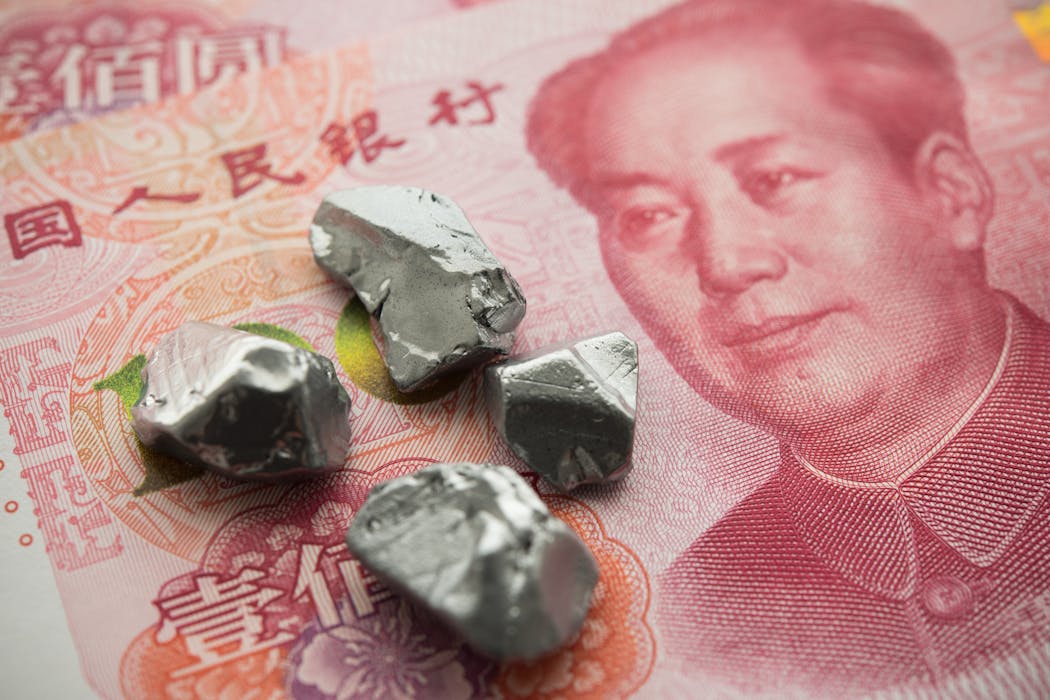
Pla2na/Shutterstock

Para fabricar coches, componentes informáticos de inteligencia artificial, productos médicos y armas necesitamos elementos de tierras raras. Y esta demanda los ha convertido en el centro de una renovada competencia entre las principales potencias mundiales.

En este nuevo panorama, Estados Unidos y Europa se encuentran en desventaja, ya que China controla hasta el 90 % del comercio mundial de tierras raras. En gran medida esto se debe a que, durante décadas, ha promovido de forma discreta pero continua la extracción y el refinado de estas materias primas.

Ya en la década de 1950 China comenzó a explotar el yacimiento de Bayan Obo, en Mongolia Interior, que actualmente es la mina de tierras raras más grande del mundo. Paulatinamente fue aumentando significativamente sus inversiones para convertirse, en la década de 1990, en el líder mundial en producción y refinado. Hoy en día, la República Popular China extrae estas materias primas tanto dentro de sus propias fronteras como en otros países, especialmente en África, aunque gran parte del refinado sigue realizándose en la propia China.

Esto significa que, cuando el impulso continuo hacia las energías renovables y los sistemas de IA de alta potencia provocó un aumento de la demanda de tierras raras, China ya contaba con una amplia red para la extracción y el refinado de estos productos.

En el otro extremo del espectro, Europa va a la zaga tanto de Estados Unidos como de la República Popular China en la producción de tierras raras. Sin embargo, necesita estos materiales críticos para fabricar productos de alta tecnología, como compuestos farmacéuticos y coches eléctricos, e importa una proporción muy elevada de ellos de China, entre el 40 % y el 100 %, dependiendo de la fuente y de las materias primas incluidas.


Leer más:
The global race is on to secure critical minerals. Why do they matter so much?


Aranceles e interferencia estatal

Durante el último año, la guerra arancelaria a tres bandas desatada por la Administración Trump, en la que están implicados Estados Unidos, la UE y China, ha puesto de relieve la vulnerabilidad europea, que necesita urgentemente mantener el suministro de estos materiales a precios razonables. Por su parte, China es muy consciente de su ventaja económica, geopolítica y estratégica, y está decidida a no perderla.

Es evidente que Pekín está dispuesto a hacer todo lo posible para proteger su monopolio. En abril de 2025, China introdujo restricciones drásticas a sus exportaciones de estos materiales. Esto acaparó parte del debate en la cumbre UE-China celebrada en julio, donde se alcanzó un acuerdo provisional para levantar las restricciones.

No obstante, a finales de septiembre, el Gobierno neerlandés decidió tomar el control de Nexperia, una empresa de propiedad china con sede en los Países Bajos que se dedica principalmente a la producción de chips informáticos para la industria automovilística. La medida se tomó ante el intento de la empresa de eludir la legislación neerlandesa sobre propiedad intelectual.

El 9 de octubre, Pekín tomó represalias anunciando que volvería a limitar la exportación de tierras raras y tecnología a la UE. En concreto, iba a exigir licencias de exportación para todos los productos fabricados con más del 0,1 % de tierras raras procedentes de China, además de prohibir todas las exportaciones de tierras raras para la producción de armas. Las medidas amenazaban con ejercer una enorme presión sobre la industria manufacturera europea.

Sin embargo, la situación podría haberse calmado, al menos temporalmente, después de que el 19 de noviembre el Gobierno neerlandés anunciara, como gesto de “buena voluntad”, que se suspendía la incautación de Nexperia.


Leer más:
Chinese controls on rare earths could create challenges for the west’s plans for green tech


Chantaje económico

La situación planteada por las restricciones a la exportación chinas era tan grave que la Unión Europea incluso consideró, durante la reunión del Consejo Europeo celebrada en octubre, activar su mecanismo “antielusión”, una medida destinada a ser utilizada en situaciones de chantaje económico por parte de terceros países. Aunque, finalmente, no ha sido necesario

En estos momentos la UE sigue dos líneas de acción complementarias para mejorar su situación en relación con las tierras raras y los minerales críticos: las negociaciones con China y la diversificación de las fuentes de las que obtiene estos productos.

En lo que respecta a las negociaciones, la UE, a petición de su comisario de Comercio, Maroš Šefčovič, ha creado un “canal especial” de comunicación con China para tratar de garantizar el suministro. En este marco, los funcionarios europeos y chinos pueden trabajar juntos para dar prioridad a las solicitudes presentadas por las empresas de la UE. Hasta ahora, la iniciativa ha tenido éxito, ya que en pocos días desde el anuncio de la medida se han aprobado más de la mitad de las 2 000 solicitudes.

Además, a principios de noviembre, la UE se sumó finalmente al acuerdo alcanzado previamente por Estados Unidos y China para que esta última pudiera relajar temporalmente (durante un año) sus restricciones a la exportación mencionadas anteriormente.

En ese momento, la UE también estaba considerando otras medidas, incluida la aplicación de aranceles, para obligar a China a suministrarle tierras raras. Es posible que estas intenciones hayan facilitado el acuerdo.

Diversificación del suministro

Dado que China está claramente dispuesta a aprovechar su dominio de las tierras raras, la UE también tendrá que asegurarse su suministro en otros lugares. Con este fin, se aprobó una normativa destinada a garantizar el suministro de materias primas críticas. También se ha creado el plan RESourceEU para garantizar las materias primas, reducir la dependencia e impulsar la competitividad. Este plan se inspira en el de diversificación energética REPowerEU, puesto en marcha tras la invasión de Ucrania por Rusia en febrero de 2022.

La diversificación se basará tanto en la producción de estos materiales dentro de la UE como en las importaciones de terceros países distintos de la República Popular China. Dado que Europa no cuenta actualmente con minas de tierras raras en activo, gran parte de las materias primas procederán de una serie de iniciativas de reciclaje.

Aunque esta estrategia plantea retos en términos de costes económicos y medioambientales, es una batalla que la UE no puede permitirse perder si quiere tener alguna posibilidad de alcanzar una posición favorable en el orden mundial.

The Conversation

Gracia Abad Quintanal no recibe salario, ni ejerce labores de consultoría, ni posee acciones, ni recibe financiación de ninguna compañía u organización que pueda obtener beneficio de este artículo, y ha declarado carecer de vínculos relevantes más allá del cargo académico citado.

ref. El talón de Aquiles de Europa: las tierras raras dejan a la UE expuesta a las condiciones de negocio impuestas por China – https://theconversation.com/el-talon-de-aquiles-de-europa-las-tierras-raras-dejan-a-la-ue-expuesta-a-las-condiciones-de-negocio-impuestas-por-china-270806

La ‘receta’ social, una medida urgente en la era de la nueva longevidad

Source: The Conversation – (in Spanish) – By Jordi Miralbell Guerin, Doctor en Filosofía y Periodista. Director del Campus de la Experiencia, Universitat Internacional de Catalunya

Lucigerma/Shutterstock

Asistimos hoy a la llegada de los baby boomers a la jubilación. Según la tendencia marcada en los últimos años, estas personas nacidas entre 1957 y 1973 vivirán dos o tres décadas más que sus antecesores.

Son los protagonistas de “la nueva longevidad”. Como señala el psicólogo y gerontólogo Javier Yanguas en su libro Pasos hacia la nueva vejez (Destino, 2021), este nuevo período de su vida va a constar de tres etapas cronológicas con necesidades diferentes: una primera fase –históricamente nueva– en la que se sentirán mayores pero no viejos; una segunda de “fragilización”, en la que que aparecerá el dialogo con la patología; y, solo en la tercera fase, la dependencia.

Así son los nuevos mayores

El panorama ha cambiado, y las necesidades de los nuevos mayores también: ya no son las mismas de hace 20 o 30 años. No necesitan alfabetización digital. Han vivido la emancipación de la mujer y su avance en la vida pública.

Intelectualmente más preparadas, estas personas tienen un planteamiento ante el propio cuidado que difiere del de las otras generaciones. No quieren depender de sus hijos y valoran alcanzar un proyecto de vida en el que esté presente de un modo equilibrado su bienestar, su salud y sus relaciones sociales. Sin embargo, el autocuidado, la autonomía personal y el envejecimiento activo es un horizonte que les resulta insuficiente. Reclaman más.

Este es, en síntesis, el retrato dibujado en las conclusiones del I Seminario sobre la nueva longevidad, celebrado entre el 23 y 25 de octubre en Calonge i Sant Antoni (Girona) y organizado por el Campus de la Experiencia de la Universitat Internacional de Catalunya. Expertos de 16 universidades de todo el mundo constataron que las demandas de la generación que está llegando hoy a la jubilación no son únicamente sanitarias y asistenciales, sino también educativas, relacionales y de sentido.

¿Qué hacer con ese tiempo extra?

Como señala Yanguas, estos nuevos jubilados se encuentran mayoritariamente en buenas condiciones pero se ven abocados a una nueva vida post-laboral sin un propósito claro. Van a vivir más años que sus predecesores, pero ¿qué van a hacer con el tiempo extra? No se sabe, ni está prevista una respuesta clara.

Es una situación frustrante para ellos y para los demás, porque no se trata de alargar los años de vida, sino de llenar de vida los años, dotando esa etapa de sentido y propósito.

Además, los nuevos mayores son en muchas ocasiones víctimas de la soledad no deseada, que es la “epidemia silenciosa” de nuestro tiempo. Hoy día se estima que la sufren un 13,4 % de los españoles y que el 22,9 % experimenta este sentimiento durante todo el día. En Europa, alrededor de 30 millones de personas se sienten solas con frecuencia.

Esta soledad puede ser física, psicológica o espiritual, y, junto con la falta de sentido, tiene consecuencias en la salud: mayor sedentarismo, aislamiento, patologías y adicciones. Varios estudios coinciden en que el sentimiento de soledad provoca ansiedad, depresión y deterioro cognitivo en las personas mayores.


Leer más:
Así afecta la soledad al cerebro de las personas mayores


Por tanto, abordar la falta de sentido y la soledad no constituye un reto de orden sanitario sino social, y está mayoritariamente sin resolver.

Por este motivo, los expertos y académicos convocados en el citado encuentro animaron a trabajar desde el ámbito universitario con las instituciones públicas. El objetivo es medir los aspectos críticos de la “nueva longevidad” y diseñar políticas e iniciativas que van más allá del mero fomento del envejecimiento activo, el ejercicio físico y la autonomía personal.

Ocio “significativo”

La dotación de sentido en esta etapa de la vida procedería fundamentalmente del número y de la calidad de las relaciones sociales, particularmente entre iguales. Diversos estudios constatan que cuando las personas se vinculan a actividades “significativas” –clases interactivas, voluntariado, senderismo, talleres, viajes, etc.– recuperan el sentido vital y la pertenencia a un grupo. Esta participación y colaboración favorece además el bienestar y la calidad de vida.

El ocio, qué duda cabe, ocupa un lugar preeminente. Un ocio escogido libremente que fomente un verdadero empoderamiento de los mayores y su adaptación al contexto en el que viven: un mundo que cambia.

La educación universitaria para adultos mayores se revela como un medio óptimo para lograr este objetivo, al propiciar el crecimiento personal y la construcción de relaciones satisfactorias y sólidas entre iguales.
Así lo consagra el Principio 1 del Pilar Europeo de Derechos Sociales (2017), donde se garantiza el derecho a una educación, formación y aprendizaje permanente inclusivos y de calidad para que todos puedan participar plenamente en la sociedad y gestionar las transiciones laborales.

Una urgencia: la prescripción social

Para los expertos reunidos en Calonge urge extender iniciativas enmarcadas en la denominada “prescripción social” de los adultos mayores, como complemento de la prescripción médica. Se trata de una filosofía y una política pública ampliamente extendida en países del ámbito anglosajón que parte de una idea tan simple como radical: que la salud tiene una dimensión social muy importante.

Una intervención pequeña –una conversación, un momento de acompañamiento– puede cambiar el rumbo de una vida, mejorar la autonomía personal y la salud. Es un enfoque holístico que conecta a las personas con actividades significativas gracias al apoyo comunitario, que potencia su bienestar y su sentido vital.

Es decir, la prescripción social debe pasar de ser algo excepcional a algo esperado. Para ello, las administraciones, los ayuntamientos, los servicios de salud y las universidades deben colaborar impulsando medidas.

El vínculo entre el sistema sanitario y los recursos comunitarios ha de hacerse más tangible mediante la creación de redes de confianza, coordinación y conexión en las que estén presentes actividades, universitarias, culturales, artísticas, musicales, etc. Cada aula, parque o cafetería puede convertirse en un espacio de prescripción social. Y aunque cada proyecto sea distinto, todos forman parte, en realidad, de una misma red informal de fomento de bienestar.

Hay que construir puentes no solo entre salud y comunidad, sino también entre generaciones, culturas y disciplinas. De este modo no solo mejorará el bienestar individual, sino que también se transformará la manera en que las sociedades cuidan, conectan y prosperan en los tiempos de “la nueva longevidad”.

The Conversation

Las personas firmantes no son asalariadas, ni consultoras, ni poseen acciones, ni reciben financiación de ninguna compañía u organización que pueda obtener beneficio de este artículo, y han declarado carecer de vínculos relevantes más allá del cargo académico citado anteriormente.

ref. La ‘receta’ social, una medida urgente en la era de la nueva longevidad – https://theconversation.com/la-receta-social-una-medida-urgente-en-la-era-de-la-nueva-longevidad-270234

¡Ya vienen los drones magos!

Source: The Conversation – (in Spanish) – By Israel Quintanilla, Profesor de Ingeniería Aeroespacial, Universitat Politècnica de València

Espectáculo de drones en la ciudad china de Chongqing. dyl0807/Shutterstock

La tradición de los Reyes Magos ilusiona a niños y mayores por todo lo que conlleva: escribir la carta con los regalos deseados, ir a la cabalgata para ver desfilar a sus Majestades los Reyes Magos de Oriente y sus pajes reales, al cartero real, los acróbatas y malabaristas, las carrozas multicolor y los miles de caramelos que vuelan por los aires. Pero, sobre todo, lo que mas se espera es el despertar del día 6 de enero para abrir los regalos y compartir esa alegría con nuestros seres queridos.

A nuestras edades ya sabemos quiénes compran, empaquetan y transportan los regalos hasta el hogar. Ahora bien, sería posible, en un futuro próximo, que estos fueran depositados en los balcones y jardines por alguna tecnología con capacidad de ello. Sería posible que flotas de drones surcaran las aerovías de las ciudades para trasportar los regalos hasta las viviendas iluminadas. Porque, como parece que dijo Julio Verne, “todo lo que un hombre es capaz de imaginar, otro hombre es capaz de llevarlo a cabo”.

Cabalgata de los Reyes Magos en Madrid.
Wikimedia Commons., CC BY-SA

Tecnología cotidiana

Para que una tecnología se integre en la sociedad, se requiere de tres condicionantes obligados: que se encuentre en estado avanzado de desarrollo, que responda a una demanda de la sociedad y que haya una normativa que la regule.

El 1 de enero de 2021 entró en vigor una normativa europea sobre operaciones de drones que permite realizar vuelos en cualquier tipo de entorno, urbano o rural, siempre que se garantice la seguridad operacional. El 26 de enero de 2023 se aprobó otra sobre la gestión del espacio aéreo de estos vehículos (U-Space).

La conjunción de ambas regulaciones permite el vuelo de múltiples drones con capacidad de transporte, gestionados por un proveedor de servicios aéreos para vuelos en entornos urbanos y rurales.

Origen militar

Los drones surgieron en los inicios de la Primera Guerra Mundial, cuando se introdujo la aviación y fueron utilizados para entrenar a los pilotos de las fuerzas aéreas británicas (RAF) en el combate aéreo. Han pasado más de 100 años y, desde entonces, no han dejado de usarse en el terreno militar.

Tras un siglo de evolución tecnológica, actualmente, integran la tecnología más avanzada del ámbito aeronáutico. Además, son aeronaves capaces de volar de forma automática e integran sensores de todo tipo (RGB, multiespectral, térmicos, LiDAR, medición de gases…) para aplicaciones antes inimaginables. Asimismo, pueden garantizar la seguridad operacional e incorporar paracaídas.

Dron Ehang 184, creado en China para transporte de pasajeros.
Wikimedia Commons., CC BY

Taxis autónomos aéreos

Ya se emplean para transportar mercancías y pasajeros (en China, hay dos empresas certificadas para transporte de personas), con plataformas específicas de despegue y aterrizaje (vertipuertos). Integran en sus funcionalidades el resto de tecnologías en desarrollo (inteligencia artificial, 5G, Big Data, internet de las cosas, ciberseguridad…).

Existen, por otro lado, sistemas aún en desarrollo que permitirán la gestión del espacio aéreo especifico para drones, de forma que se pueda compatibilizar el vuelo de múltiples aeronaves autónomas con operaciones recurrentes de forma organizada y con la seguridad operacional necesaria. Los sistemas Detect and Avoid –sistemas de alerta de tráfico y evasión de colisión–, por ejemplo, facilitarán, en un futuro cercano, el vuelo de drones de forma autónoma.

Demanda real de la sociedad

En el caso concreto de España, la primera normativa de drones entró en vigor en el año 2014. Actualmente, hay más de 190 000 pilotos certificados para volar drones y más de 100 000 operadoras (empresas) dedicadas a la explotación comercial de esas aplicaciones.

Abarcan los campos de geomática y gestión del territorio, agricultura (desde generación de mapas prescriptivos hasta aplicaciones fitosanitarias), inspecciones industriales y energéticas (eléctrica, fotovoltaica y eólica), operaciones logísticas, ámbitos portuarios, biodiversidad, o seguridad y emergencias.

La Policía Nacional, la Guardia Civil, las policías autonómicas y las policías Locales tienen drones integrados en su operativa, además de los bomberos, protección civil y el Ejército, con la Unidad Militar de Emergencias (UME) como abanderada.

Una ayuda en momentos críticos

Así, se utilizaron drones en el volcán de la Palma para el seguimiento de los ríos de lava y medición de temperaturas.

En el caso de la dana, ocurrida en Valencia en 2024, se emplearon en las fases de emergencia y postemergencia con las siguientes misiones: búsqueda de desaparecidos; apoyo en rescates; vigilancia y revisión de infraestructuras críticas; realización de cartografía en 3D para análisis de daños y medición de volúmenes afectados; peritaciones de daños agrícolas y aplicación de fitosanitarios para evitar plagas; medición de gases atmosféricos; determinación de elementos del subsuelo (georradar); realización de batimetrías para revisión de las desembocadura del Turia y la Albufera; o lectura de matrículas de los coches apilados con IA para identificación. En 50 días, hubo un total de 1 360 operaciones aéreas, de las que el 78 % fueron realizadas con drones.

Navidad de 2050, Valencia

La cabalgata, en su paso por la plaza del Ayuntamiento, muestra sus mejores galas: infinidad de drones, de todos los tamaños y tipología, se acicalan con luces navideñas y muestran orgullosos los regalos en su panza. Sobrevuelan por encima de Sus Majestades los Reyes Magos de Oriente y su cohorte: los acróbatas, las carrozas… Miles de caramelos vuelan hacia las manos de los niños, golpeando algunas cabezas que, despistadas, miran embelesados los drones.

El centro de control de U-Space lleva preparándose todo el año. El panel principal de la sala muestra la ciudad digital con la posición de los drones y las rutas a seguir. El director de operaciones, sentado detrás de los controladores, suspira y da la orden: ¡que despeguen los Drones Magos!


The Conversation

Israel Quintanilla, como investigador de la Universidad Politécnica de Valencia (UPV) recibe fondos de proyectos de investigación europeos, nacionales y autonómicos.

ref. ¡Ya vienen los drones magos! – https://theconversation.com/ya-vienen-los-drones-magos-269966

How Maduro’s capture went down – a military strategist explains what goes into a successful special op

Source: The Conversation – Global Perspectives – By R. Evan Ellis, Senior Associate, Americas Program, The Center for Strategic and International Studies

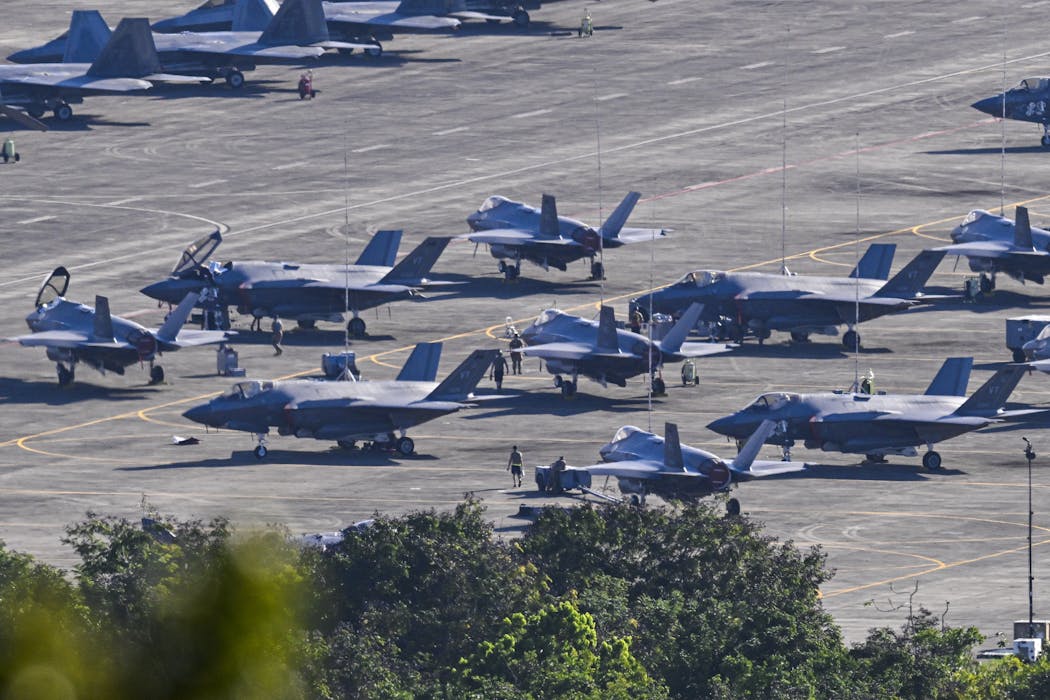
U.S. military fighter jets sit on the tarmac at José Aponte de la Torre Airport in Puerto Rico, on Jan. 3, 2026. Miguel J. Rodriguez Carrillo / AFP via Getty Images

The predawn seizure of Venezuelan President Nicolás Maduro on Jan. 3, 2026 was a complicated affair. It was also, operationally, a resounding success for the U.S. military.

Operation Absolute Resolve achieved its objective of seizing Maduro through a mix of extensive planning, intelligence and timing. R. Evan Ellis, a military strategist and former Latin America policy adviser to the U.S. State Department, walked The Conversation through what is publicly known about the planning and execution of the raid.

How long would this op have been in the works?

Operation Absolute Resolve was some months in the planning, as the Pentagon acknowledged in its briefing on Jan. 3. My presumption is that from the beginning of the U.S. military buildup in the Caribbean and the establishment of Joint Task Force Southern Spear in the fall, military planners were developing options for the president to capture or eliminate Maduro and other key Chavista leadership, should coercive efforts at persuading a change in the Venezuelan situation fail.

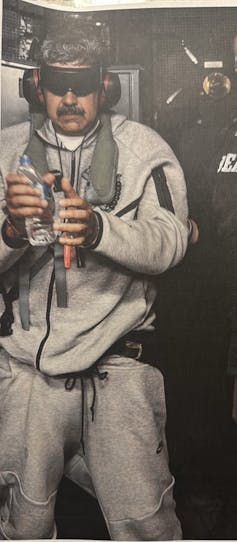
A man in a blindfold holds a bottle of water.
An image of a captured Nicolás Maduro released by President Donald Trump on social media.
Truth Social

Prior to Southern Spear, U.S. military activities in the region were directly overseen by Southern Command – the part of the Department of Defense responsible for Central America, South America and most of the Caribbean. But establishing a dedicated joint task force in October 2025 helped facilitate the coordination of a large operation, like the one conducted to seize Maduro.

Planning for the Jan. 3 operation likely became more detailed and realistic as the administration settled on a concrete set of options. U.S. forces practiced the raid on a replica of the presidential compound. “They actually built a house which was identical to the one they went into with all the same, all that steel all over the place,” President Donald Trump told “Fox & Friends Weekend.”

Why did the US choose to act now?

The buildup had been going on for months, and the arrival of the USS Gerald R. Ford in November was a key milestone. That gave the U.S. the capability to launch a high volume of attacks against land targets and added to the already huge array of American military hardware stationed in the Caribbean.

It joined an Iwo Jima Amphibious Ready Group, which included a helicopter dock ship and two landing platform vessels. An additional six destroyers and two cruisers were stationed in the region with the capability of launching hundreds of missiles for both land attack and air defense, as well as a special operations mother ship.

Trump’s authorization of CIA operations in Venezuela was probably also a key factor. It is likely that individuals inside Venezuela played invaluable roles not only in obtaining intelligence, but also in cooperating with key people in Maduro’s military and government to make sure they did – or did not do – certain things at key moments during the Jan. 3 operation.

With the complex array of plans and preparations in place by December, the U.S. military was likely ready to execute, but it had to wait for opportune conditions to maximize the probability of success.

What constitutes the opportune moment?

There are arguably three things needed for the opportune moment: good intelligence, the establishment of reliable cooperation arrangements on the ground, and favorable tactical conditions.

Intel would have been crucial. Trump acknowledged his authorization of covert CIA operations in Venezuela in October, and evidently, by the end of the year, analysts had gathered the information needed to make this operation go smoothly. The intelligence would have had to include knowing exactly where Maduro would be at the time of the operation, and the situation around him.

Over the past few months, according to media reporting, the intelligence community had agents on the ground in Venezuela, likely having conversations with people in the military, the Chavista leadership and beyond, who had crucial information or whose behavior was relevant to different parts of the operation – such as perhaps shutting down a system, standing down a military unit or being absent from a post at a key moment. A report from The New York Times indicates that the U.S. had a human source close to Maduro who was able to provide details of his day-to-day life, down to what he ate.

The more tactical conditions that were needed for the opportune moment involved things like the weather – you didn’t want storms or high winds or cloud cover that would put U.S. aircraft in danger as they flew in some very treacherous low-level routes through the mountains that separate Fort Tiun – the military compound in Caracas where Maduro was captured – from the coast.

How did the operation unfold?

Gen. Dan Caine, chairman of the Joint Chiefs of Staff, has given some details about how the plan was executed.

We know the U.S. launched aircraft from multiple sites – the operation involved at least 20 different launch sites for 150 planes and helicopters. These would have involved aircraft for jamming operations, some surveillance, fighter jets to strike targets, and some to provide an escort for the helicopters bringing in a special forces unit and members of the FBI.

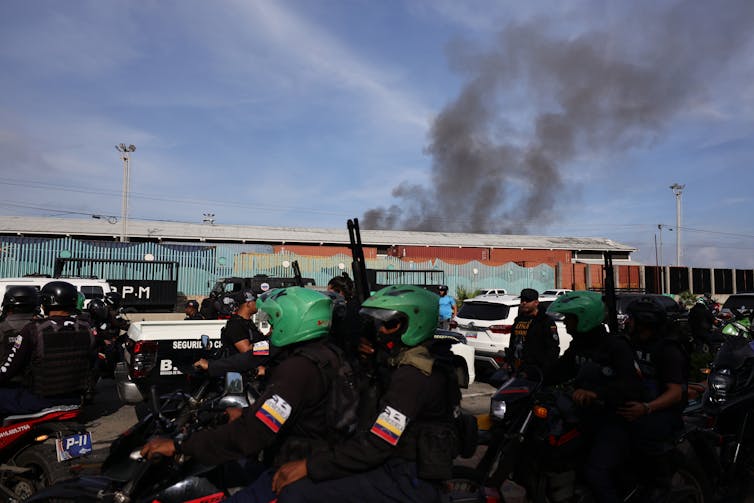
A cloud of black smoke is seen above a building.
Smoke is seen billowing above the Port of La Guaira on Jan. 3, 2026, in Venezuela.
Jesus Vargas/Getty Images

As an integral part of the operation, the U.S. carried out a series of cyber activities that may have played a role in undermining not only Venezuela’s defense systems, but also its understanding of what was going on. Although the nature of U.S. cyber activities is only speculation here, a coherent, alerted Venezuelan command and control system could have cost the lives of U.S. force members and given Maduro time to seal himself in his safe room, creating a problem – albeit not an insurmountable one – for U.S. forces.

There was also, according to Trump, a U.S.-generated interruption to some part of the power grid. In addition, it appears that there may have been diversionary strikes in other parts of the country to give a false impression to the Venezuelan military that U.S. military activity was directed toward some other, lesser land target, as had recently been the case.

U.S. aircraft then basically disabled Venezuelan air defenses.

As U.S. rotary wing and other assets converged on the target in Caracas – with cover from some of the most capable fighters in the U.S. inventory, including F-35s and F-22s, as well as F-18s – other U.S. assets decimated the air defense and other threats in the area.

It would be logical if elite members of the U.S. 160th Special Operations Aviation Regiment were used in the approach to the compound in Caracas. Their skills would have been required if, as I presume, they came in via the canyon route that separates Caracas from the coast. I have driven the road through those mountains, and it is treacherous – especially for an aircraft at low altitude.

Once the team landed, it would have have taken a matter of minutes to infiltrate the compound where Maduro was.

Any luck involved?

According to Trump, the U.S. team grabbed Maduro just as he was trying to get into his steel vault safe room.

“He didn’t get that space closed. He was trying to get into it, but he got bum-rushed right so fast that he didn’t get into that,” the U.S. president told Fox & Friends Weekend.

Although the U.S. was reportedly fully prepared for that eventuality, with high-power torches to cut him out, that delay could have cost time and possibly lives.

It was thus critical to the U.S. mission that forces were able to enter the facility, reach and secure Maduro and his wife in a minimal amount of time.

The Conversation

The views expressed in this article are those of the author and do not represent the Department of Defense or the US government.

ref. How Maduro’s capture went down – a military strategist explains what goes into a successful special op – https://theconversation.com/how-maduros-capture-went-down-a-military-strategist-explains-what-goes-into-a-successful-special-op-272671

The US has invaded countries and deposed leaders before. Its military action against Venezuela feels different

Source: The Conversation – Global Perspectives – By Juan Zahir Naranjo Cáceres, PhD Candidate, Political Science, International Relations and Constitutional Law, University of the Sunshine Coast

In the early hours of Saturday morning, US special forces captured Venezuelan President Nicolás Maduro from his home in Caracas and flew him out of the country. US President Donald Trump announced that Maduro and his wife, Cilia Flores, would face federal narco-terrorism charges in New York.

For anyone familiar with the history of US interventions in Latin America and the Caribbean, the basic pattern is grimly familiar: a small state in Washington’s “backyard”, a leader deemed unacceptable, military force applied with overwhelming effect, and a government removed overnight.

Yet what makes Venezuela’s case different – and profoundly alarming – is the brazen nature of the months-long US military operations against the country based on shifting and shaky justifications, with little evidence.

This moment is also significant, with many scholars already warning that international law is in deep crisis.

A long tradition of removing ‘unacceptable’ leaders

Venezuela is not the first country in the region to see its leader overthrown or seized with direct US involvement or acquiescence.

In 1953, the British government suspended the constitution of its colony British Guiana (now Guyana) and removed the democratically elected government of Cheddi Jagan after just 133 days. The British believed Jagan’s social and economic reforms would threaten its business interests.

A decade later, the CIA conducted a sustained covert operation to destabilise Jagan’s later administration, culminating in rigged 1964 elections that ensured his rival, Forbes Burnham, would win.

In 1965, US President Lyndon Johnson sent more than 22,000 US troops to the Dominican Republic to prevent the return of former President Juan Bosch, overthrown in a 1963 coup, and another communist regime forming in the region.

Following the violent overthrow and execution of Prime Minister Maurice Bishop of Grenada in 1983, President Ronald Reagan ordered an invasion. His administration justified the action by citing the need to protect US medical students and prevent the island from becoming a “Soviet-Cuban colony”.

In December 1989, President George H.W. Bush launched a full-scale invasion of Panama involving about 24,000 US troops to remove General Manuel Noriega, who had been indicted on drug-trafficking charges (like Maduro). He was subsequently flown to the United States, tried and imprisoned.

And in 2004, Haitian President Jean-Bertrand Aristide was removed from power and flown to Africa in what he described as a US-orchestrated coup and “kidnapping”. In 2022, French and Haitian officials told The New York Times that France and the US had collaborated to remove him.

Why Maduro’s case is different

In all of these cases, Washington asserted control over what it has long considered its sphere of influence, intervening when governments threatened its interests through ideology, alliances or defiance.

But Venezuela in 2026 is not Grenada in 1983 or Panama in 1989. It is a much larger country with some 30 million people and significant armed forces, which has spent years preparing for a possible US invasion. More importantly, the operation unfolded in an entirely different global context.

During the Cold War, US interventions were often condemned but rarely threatened the legitimacy of the international order itself.

Today, by contrast, the Maduro operation has been met with swift and sharp condemnation from across the political spectrum.

Colombian President Gustavo Petro called the strikes an “assault on the sovereignty” of Latin America, while Brazilian President Luiz Inácio Lula da Silva said the attack “crossed an unacceptable line” and set an “extremely dangerous precedent”. Mexican President Claudia Sheinbaum said the strikes were in “clear violation” of the UN Charter.

Even traditional US allies expressed discomfort. France’s foreign minister said the operation contravened the “principle of non-use of force that underpins international law” and that lasting political solutions cannot be “imposed by the outside”.

And a statement from UN Secretary-General Antonio Guterres said he was “deeply alarmed” about the “dangerous precedent” the United States was setting and the rules of international law not being respected.

The UN Charter prohibits the use of force against the territorial integrity or political independence of any state under Article 2(4).

For years, scholars have warned that repeated violations of the UN Charter by the United States were steadily eroding the basic rules governing the use of force.

Venezuela may represent the moment that erosion becomes collapse. When a permanent Security Council member not only bombs another state but abducts its head of state, the precedent is indeed profound.


Read more:
A predawn op in Latin America? The US has been here before, but the seizure of Venezuela’s Maduro is still unprecedented


Regional consequences

The immediate consequences for Latin America are already being felt. Colombia has moved troops to its border with Venezuela, while neighbouring Guyana has activated its own security plans.

It’s unclear at this point if further US military operations are planned. Trump has said the US will “run” Venezuela until a “safe transition” is complete, but analysts question whether Washington has the appetite for such an open-ended commitment. Venezuela’s defence minister has also pledged to continue to fight against what he called “criminal aggression”.

The operation has also deepened divisions that already existed in Latin America over Venezuela. After Maduro’s 2024 election, the results were immediately contested: Maduro’s government claimed victory, while the opposition said it won based on voting tallies it published online.

Regional governments split over which narrative to accept, with some recognising Maduro’s government and others backing the opposition. These fault lines have made a coordinated regional response to the Trump administration’s actions impossible.

The broader risk is that Venezuela becomes a precedent not only for great powers, but for regional actors. If Washington can seize a head of state without legal sanction, what stops others from doing the same?

A dangerous new normal

Maduro’s removal may or may not bring the political change Trump desires. But the manner of his removal – brazen, unilateral, defended in the language of US exceptionalism – has already done serious damage to the fragile architecture of international law.

If sovereignty can be set aside when inconvenient, heads of state can be abducted without UN approval, and the most powerful decide which governments may exist, then we have returned to a world governed by force – not the law. And in that world, no state can consider itself truly secure.

The Conversation

Juan Zahir Naranjo Cáceres does not work for, consult, own shares in or receive funding from any company or organisation that would benefit from this article, and has disclosed no relevant affiliations beyond their academic appointment.

ref. The US has invaded countries and deposed leaders before. Its military action against Venezuela feels different – https://theconversation.com/the-us-has-invaded-countries-and-deposed-leaders-before-its-military-action-against-venezuela-feels-different-272682

Pourquoi les politiques n’écoutent-ils pas les citoyens ordinaires ?

Source: The Conversation – France in French (3) – By Awenig Marié, Postdoctoral research fellow, Université Libre de Bruxelles (ULB)

L’année 2025 a notamment été marquée par le débat sur la taxe Zucman, rejetée par les députés mais plébiscitée par une très large majorité de Français. Cette décision révèle, de façon spectaculaire, la déconnexion entre les décisions politiques et l’opinion des citoyens. Ce phénomène, étudié par la science politique, est au cœur de la crise démocratique. Comment y remédier ?


Les sondages sont sans appel : une large majorité de Français, 86 % selon une enquête Ifop, se déclare en faveur d’une taxation des plus riches. Pourtant, l’Assemblée nationale a rejeté en octobre la taxe Zucman : 228 députés ont voté contre l’amendement visant à taxer les patrimoines supérieurs à 100 millions d’euros, tandis que 172 députés ont voté pour. La déconnexion entre opinion publique et décision politique n’est pas nouvelle. D’autres exemples illustrent ce phénomène, comme la réforme des retraites, rejetée par une majorité de Français, ou l’interdiction de la corrida, soutenue par la population mais rejetée par les députés. Comment expliquer que des mesures massivement soutenue par la population puissent être rejetées par leurs représentants ?

Quand les politiques écoutent (ou pas) l’opinion publique

La connexion entre opinion publique et décision politique a fait l’objet de nombreux travaux en science politique. Ces recherches, qui étudient la capacité du système représentatif à répondre aux intérêts et préférences des citoyens, montrent que si l’opinion publique peut influencer les décisions politiques, ce n’est pas toujours le cas. Pour de nombreux enjeux, il existe une déconnexion entre la volonté populaire et les décisions prises par les gouvernants, qu’ils soient de gauche ou de droite.

Plusieurs facteurs peuvent expliquer ces écarts. D’abord, la capacité des gouvernants à suivre l’opinion peut dépendre du contexte économique : en période de contraintes budgétaires, les marges de manœuvre se réduisent et certaines décisions peuvent ne pas refléter totalement les préférences des citoyens. Ensuite, les représentants sont plus à l’écoute sur les sujets très médiatisés et peu techniques du fait de leur importance dans le débat public. Plusieurs recherches soulignent aussi un déficit récent de représentation sur les enjeux économiques. Du fait de la montée des sujets culturels (immigration, sécurité, identité) dans le débat et des contraintes externes sur l’économie (crises, intégration européenne), les gouvernants parviennent à mieux écouter l’opinion sur les sujets culturels, devenus des marqueurs de la vie politique. Enfin, le contexte politique : dans un environnement parlementaire fragmenté, les difficultés à négocier entre partis peuvent entraver la traduction de l’opinion publique en décisions.

Représentation politique et inégalités économiques

Un autre facteur expliquant la déconnexion entre opinion publique et décision politique est celui des inégalités de représentation. En effet, lorsque les citoyens les plus riches et les plus pauvres s’opposent sur une politique publique, ce sont les préférences des plus aisés qui l’emportent. Les travaux du politiste américain Martin Gilens ont révélé cette tendance : une politique publique a plus de chances d’être adoptée si elle est soutenue par les citoyens fortunés que par les citoyens modestes. Ces résultats ont été confirmées dans plusieurs pays européens : les décisions politiques reflètent davantage les positions des citoyens à revenu élevé.

L’exemple de la taxe Zucman illustre parfaitement cette dynamique. Si une majorité de Français la soutient, il est probable que la fraction de la population la plus fortunée, directement impactés financièrement par une telle taxe, s’y oppose.


À lire aussi :
L’affrontement sur la taxe Zucman : une lutte de classe ?


Si de nombreuses études ont mesuré ces inégalités dans les décisions politiques, d’autres se sont particulièrement intéressé aux élus, analysant leurs positions et la façon dont ils perçoivent l’opinion publique. Des inégalités sont aussi présentes à ce niveau. En effet, les élus ont des préférences politiques plus proches de celles des électeurs les plus riches, et leur lecture de l’opinion publique est biaisée en faveur des plus fortunés.

Les déterminants des inégalités de représentation politique

Trois facteurs principaux expliquent ces inégalités de représentation. Le premier est le profil socio-économique des élus : ils sont massivement issus des classes sociales supérieures. À l’Assemblée nationale, 67 % des députés sont issues des catégories cadres et professions intellectuelles supérieures, contre 11 % dans la population française. Ces élus partagent avec les citoyens les plus riches des valeurs et intérêts communs, ce qui les rend plus sensibles à leurs besoins. C’est ce que j’ai montré dans une étude menée sur les parlementaires suisses : les perceptions de l’opinion publique des députés issus de milieux favorisés s’alignent plus fortement avec les préférences des citoyens les plus riches.

Le deuxième facteur concerne les inégalités d’expression politique : tous les citoyens n’ont pas la même voix dans l’espace politique. Les plus aisés disposent d’un poids politique supérieur : ils votent davantage, contactent plus souvent les parlementaires, et peuvent apporter un soutien direct en faisant des dons aux partis politiques. À l’inverse, les citoyens modestes participent moins à la vie politique et ont moins de poids sur le succès électoral des partis politiques. Les élus ont donc moins d’intérêt à écouter et traduire leurs préférences en décisions.

Ces inégalités se reflètent aussi au niveau des groupes d’intérêts exerçant des activités de lobbying : les groupes représentant des intérêts privés et sectoriels (entreprises, associations professionnelles) disposent de plus de ressources que les associations citoyennes ou les ONG pour influencer les décisions politiques. Concernant la taxe Zucman, il est évident que les lobbies patronaux (Medef et Afep) ont mobilisé leurs réseaux pour orienter le débat public et la décision parlementaire. Les liens personnels entre responsables politiques (dont le premier ministre Sébastien Lecornu) et grands patrons, facilitent aussi cette influence, offrant à ces derniers un accès direct pour défendre leurs intérêts.

Enfin, l’idéologie compte : les élus de droite représentent davantage les préférences des citoyens les plus riches et surestiment leur poids dans la population, comme je l’ai montré dans une étude portant sur les parlementaires de quatre pays européens. Cependant, si les élus de gauche ont des positions moins biaisées, des inégalités persistent. Pourquoi ? D’abord parce que l’origine sociale joue à gauche comme à droite : la majorité des parlementaires de gauche viennent aussi des catégories supérieures, ce qui les rend plus sensibles aux intérêts des citoyens privilégiés. Ensuite, même lorsqu’ils sont idéologiquement proches des citoyens défavorisés, les élus de gauche au pouvoir se heurtent à des contraintes structures (mondialisation, règles européennes) qui réduisent leur marge de manœuvre.

Inégalités de représentation : comment répondre au problème ?

Si le droit de vote est universel, garantissant une égalité formelle, l’égalité réelle est loin d’être acquise : les citoyens les moins favorisés pèsent moins dans les décisions politiques, questionnant le caractère démocratique de notre modèle de représentation.

Les citoyens les moins bien représentés font moins confiance aux institutions représentatives. Le problème n’est pas qu’une politique publique isolée diverge de l’opinion publique : c’est la récurrence du phénomène qui pose question et le biais systématique envers une partie de la population qui pose question. Lorsque, sur plusieurs politiques publiques, le système représentatif n’est pas sensible à l’opinion et qu’une partie de l’électorat voit systématiquement ses préférences ignorées, la légitimité du système représentatif pourrait s’en trouver fragilisée.

Plusieurs pistes sont envisageables pour réduire ces inégalités. D’abord, améliorer la représentativité sociale des élus permettrait d’élargir la diversité des perspectives discutées au Parlement, mieux prendre en compte les citoyens les moins privilégiés, et permettre à ces derniers de mieux s’identifier avec le personnel politique. Ensuite, multiplier les échanges entre parlementaires et citoyens, via la présence en circonscription et les forums délibératifs, faciliterait la transmission de la diversité des opinions vers le système politique. Renforcer les organisations de la société civile et syndicats permettrait aussi de contrebalancer le poids des groupes d’intérêts privés. Enfin, des réformes comme le vote obligatoire ou l’encadrement des dons politiques inciterait les élus à considérer tous les citoyens, et pas seulement les plus privilégiés.

The Conversation

Awenig Marié est fondateur et membre de l’association Datan.

ref. Pourquoi les politiques n’écoutent-ils pas les citoyens ordinaires ? – https://theconversation.com/pourquoi-les-politiques-necoutent-ils-pas-les-citoyens-ordinaires-270804

How US intervention in Venezuela mirrors its actions in Panama in 1989

Source: The Conversation – UK – By Adriana Marin, Lecturer in International Relations, Coventry University

The US dramatically escalated its confrontation with Venezuela on January 3, moving from sanctions and targeted strikes on alleged drug-trafficking vessels to direct military action. In a pre-dawn operation, US forces captured the Venezuelan president, Nicolás Maduro, and his wife, Cilia Flores, and removed them from the country.

The operation has prompted historical comparisons with the US invasion of Panama in late 1989. Although separated by more than three decades and unfolding in different international contexts, the two episodes reveal a continuity in how the US approaches intervention, sovereignty and legality in the western hemisphere.

The US invasion of Panama was justified at the time through a now-familiar set of claims. US officials argued they were protecting American citizens, restoring democracy following contested elections, combating drug trafficking and upholding treaty obligations linked to the Panama canal.

However, none of these arguments provided a solid legal basis for the use of force under the UN charter. Panama had not attacked the US, there was no imminent armed threat and the operation was not authorised by the UN security council. The invasion prompted international condemnation and was denounced by the UN general assembly as a violation of international law.

Yet concern over the legality of the operation mattered far less to the US than its political outcome. The Panamanian leader, Manuel Noriega, was removed from power and transferred to the US where he was tried on criminal charges. The US achieved its strategic objectives quickly and international condemnation produced no lasting consequences.

Panama thus established a powerful precedent: a smaller state could be reshaped forcibly without multilateral approval, provided the intervention was framed persuasively and executed decisively.

A US military vehicle in the Punta Paitilla neighbourhood of Panama City.
A US military vehicle in the Punta Paitilla neighbourhood of Panama City in December 1989.
Amador Diversified / Shutterstock

Central to that framing was what I call the criminalisation of sovereignty. Noriega was portrayed by US politicians not simply as an authoritarian ruler, but as a criminal figure. This mattered because it blurred the line between war and law enforcement, enabling regime change to be recast simply as an arrest.

Panama’s sovereignty, in turn, appeared less like a legal right and more like a shield open to abuse by criminals. While legal issues remained, the framing reduced political resistance, particularly within the US. This logic has reemerged in US discourse surrounding Venezuela.

Venezuela’s authorities have long been portrayed by Washington as criminal, corrupt and illegitimate. The US has designated drug networks linked to Venezuela, such as the so-called Cartel de los Soles, as terrorist organisations. It has also issued indictments against Maduro and other government officials on narco-terrorism and drug-trafficking charges.

As was the case in Panama, this framing shifts the debate away from inter-state relations and towards enforcement against individuals. This weakens the perceived legitimacy of Venezuelan sovereignty and helps normalise coercive external action.

It may also hint at Maduro’s eventual fate. The US state department did not recognise Noriega as Panama’s head of state, which made his later prosecution easier because it was argued he was not entitled to immunity.

Maduro, in a similar way, has been described by the state department as the “de facto but illegitimate ruler of Venezuela”. This purported lack of democratic legitimacy could mean the two men ultimately face a similar outcome in court.

Democracy plays a rhetorical role in both cases. The invasion of Panama was presented as a response to cancelled elections and democratic breakdown. In Venezuela, claims of democratic illegitimacy, contested elections and authoritarian governance have been also used to justify sustained external pressure and, now, direct intervention.

In neither case does democracy function as a legal basis for the use of force. International law does not permit military action to restore or impose democracy, nor does it allow states to determine the legitimacy of other governments unilaterally. Democracy in these contexts operates as a moral narrative rather than a lawful justification.

Pattern of intervention

There are, of course, differences between the two cases. The operation in Panama saw tens of thousands of US troops deployed on the ground. The US intervention in Venezuela was more targeted, relying on a mix of economic sanctions, diplomatic isolation and the selective use of force.

But rather than signalling a transformation in strategic intent, this reflects changes in military technology, media scrutiny and political risk.

Unlike in 1989, modern interventions unfold under real-time global media coverage and social media scrutiny, sharply increasing reputational costs. Greater domestic sensitivity to foreign entanglements also raises the political risk of overt military action.

However, notwithstanding these changes, the objective in both cases remains the same: rapid political disruption designed to weaken or remove an unfriendly regime while avoiding the costs of prolonged occupation.

The international environment has also changed. Panama took place at the end of the cold war, when US dominance in the western hemisphere was largely uncontested. Venezuela unfolds in a more fragmented global order, where regional and global players are more willing to challenge US actions.

Yet this difference cuts both ways. While global opposition may be louder, the enforcement capacity of international law remains limited. As Panama demonstrated, condemnation without consequence does little to deter future interventions.

What ultimately unites the two cases is the principle of selective sovereignty. In both Panama and Venezuela, sovereignty has been treated not as a universal legal protection but as a conditional status. States governed by leaders that have been labelled as criminal, illegitimate or destabilising are seen as having forfeited their rights.

This is not how sovereignty functions in international law, but it is how power often operates in practice. Each time this logic is applied, it weakens the credibility of the rules-based international order and reinforces the idea that legality bends to strength.

Panama’s significance lies precisely in this normalisation, showing that intervention could succeed politically even when it failed legally. Venezuela suggests that this lesson has not only been learned, but refined. Where Panama involved overt illegality, Venezuela reflects a more diffused form of coercion, spread across legal, economic and military domains.

Recent events in Venezuela thus do not represent a dramatic break from past practice. They represent continuity. Panama was not an aberration of the late cold war but a formative moment in post-war US interventionism. Venezuela is its modern-day echo.

The language has evolved and the methods have adapted, but the underlying assumption remains stable: that when powerful states deem it necessary, sovereignty can be suspended, legality reinterpreted and intervention justified after the fact.

That is the real significance of the comparison. Panama then and Venezuela now show a durable pattern in how intervention is imagined, defended and repeated.

The Conversation

Adriana Marin does not work for, consult, own shares in or receive funding from any company or organisation that would benefit from this article, and has disclosed no relevant affiliations beyond their academic appointment.

ref. How US intervention in Venezuela mirrors its actions in Panama in 1989 – https://theconversation.com/how-us-intervention-in-venezuela-mirrors-its-actions-in-panama-in-1989-272659

Alberta’s proposed $11-million reading tests won’t actually help struggling learners

Source: The Conversation – Canada – By Hetty Roessingh, Professor, Werklund School of Education, University of Calgary

The Alberta government recently introduced Bill 6, a proposed amendment to the Education Act, that it says will “prioritize literacy and numeracy and ensure the province’s youngest learners receive the help they need as early as possible.”

Large classes with students who have a range of learning needs, including tailored learning plans, are among the factors that can make it difficult for teachers to ensure each child’s needs are being met. Implementing early literacy and numeracy tests with the intent of early intervention for at risk learners has intuitive appeal.

If passed, Alberta’s Bill 6 legislation would mandate reading and math tests from kindergarten to Grade 3, effective by fall 2026. According to ministry officials, its goal is to identify learning gaps early using short, simple and non-graded activities.

The announcement has received swift and forceful reaction from academics, the Alberta Teachers’ Association and senior-level school administrators.

Their concerns relate to the validity and reliability of the tests, how they were developed and their instructional value. Critics also raise concerns over the lack of teacher consultation and involvement, additional time teachers will need to administer and score the tests and whether the test results will change teaching and learning practices.

Questions also remain about whether schools will need additional resources to address learning gaps identified by way of the tests, since the bill doesn’t include any mention of this. The $11 million dollar pricetag of Bill 6 may not reap the insights needed to identify and meaningfully intervene for young children at risk.

Why early literacy matters

The testing proposed in Bill 6 misses important dimensions of literacy development. Early reading proficiency depends largely on two skills: phonemic awareness (the awareness to notice and work with different sounds) and phonics (mapping sounds to letters).

These foundational concepts and skills are learned by the majority of young children by the end of Grade 2, including English language learners (ELL) and children disadvantaged by socio-economic status. Exposure to two languages may heighten ELLs’ keen perception of sounds, helping them to apply their knowledge of how letters and their sounds relate and different letter patterns to correctly pronounce written words.

A learning-to-read school book I had as a child, Friends and Neighbours, is still on my bookshelf. As a newly arrived immigrant to Canada at age four from Indonesia, I was relatively proficient in conversational English by Grade 2. I learned the process of reading, including how to sound out letters and their English language patterns, by drawing on the vocabulary I developed and by interacting with native English-speaking children in the neighbourhood, on the playground and in the classroom.

However, a child’s strengths in recognizing and working with the sounds that make up individual words — phonemic awareness and phonics — may provide a false sense of security. These strengths can mask the needs of children at risk of reading failure as they transition to Grade 4, when the focus shifts from learning to read to reading to learn. At this stage, vocabulary knowledge becomes critical.

Beginning in Grade 4, the litmus of reading success is a child’s ability to comprehend increasingly complex and academically demanding texts. The testing proposed in Bill 6 misses the important role of vocabulary knowledge in this process.

The fourth-grade slump

The well-documented “fourth-grade slump” refers to the drop in reading performance many students experience around Grade 4. Children must shift from learning to read to reading to learn — a shift that is dependent on vocabulary depth and breadth.

A seminal 2003 study from researchers Jeanne S. Chall and Vicki A. Jacobs underscored the crucial role of vocabulary knowledge in reading success in Grade 4. They found that disadvantaged learners in Grades 2 and 3 scored as well as peer learners from higher socio-economic backgrounds.

At this early stage of reading development, phonemic awareness and phonics provides an important foundation for learners. The researchers found that it is not until Grade 4 that scores decelerate for children from lower socio-economic backgrounds.

Without attention to vocabulary knowledge, young children may find themselves woefully under-prepared for the accelerating demands of Grade 4.

What Bill 6 overlooks

Given decades of research on reading development, Bill 6’s current focus is too narrow and offers only limited utility in early identification of young learners who will be at risk by Grade 4. Most children readily learn these skills already. The relative minority who struggle with these skills respond well to direct, explicit and intensive interventions.

To support students effectively, Alberta must measure vocabulary knowledge among young children. In addition, handwriting should also be assessed. Handwriting plays an enormous role in unlocking vocabulary in Grade 3, and as a skill, unfolds from kindergarten to Grade 3 years along a developmental continuum.

Devising tools to assess vocabulary and handwriting is more than a matter of short, simple and non-graded activities. More comprehensive assessments, such as studying samples of children’s writing on a familiar and engaging topic, would provide much more useful data for transforming classroom pedagogy and practice.

Such assessments would take more time to administer and score, but they would be a far better use of $11 million than narrow assessments that capture only the tip of the iceberg of what matters for long-term literacy success.

The Conversation

Hetty Roessingh does not work for, consult, own shares in or receive funding from any company or organisation that would benefit from this article, and has disclosed no relevant affiliations beyond their academic appointment.

ref. Alberta’s proposed $11-million reading tests won’t actually help struggling learners – https://theconversation.com/albertas-proposed-11-million-reading-tests-wont-actually-help-struggling-learners-269791

Your new health habit may be just a mental shift away

Source: The Conversation – Canada – By Mandi Baker, Assistant Professor, Faculty of Kinesiology and Recreation Management, University of Manitoba

The new year starts for many by making resolutions to live healthier lives. This can mean getting fitter by joining a gym, signing up to Pilates classes or starting a new diet.

For many, these resolutions are hard to maintain and the new habits slip away. Unfortunately, there are many reasons why our best intentions fail; the kids get sick so you can’t get out for a class, the costs of equipment or membership become too steep, and kale just isn’t cutting it for dinner anymore. In the end, motivation for our new habits runs out.


Read more:
The science behind building healthy habits can help you keep your New Year’s resolution


When we choose activities for our leisure that do not bring intrinsic enjoyment and/or satisfaction, we find it hard to preserve. External motivations, like gaining a reward (a particular body shape) or avoiding a consequence (minimizing the risks related to heart health), can only take us so far.

When we do things that we truly love, that are aligned with our values and/or sense of self, or we would do even if no one was watching, then the chances of maintaining those physical activities are much higher. That means the goal of resolution-setting is to find the things that tap into our intrinsic motivations.

How we frame health

Another challenge to sticking with new health-related habits, is the very individual way that health is framed. Health is positioned as being not only an individual’s responsibility, but that the individual is to blame if they are unwell. While the medical model serves a purpose in identifying problems and addressing them, applying a deficiency-model rationality obscures critical awareness about the complex and many ways that social factors impact health.

Social models of health, such as The Social Determinants of Health by Dahlgreen & Whitehead (1991), demonstrate that not only do our physiology, lifestyle choices, social and community networks matter, but socio-economic, cultural and environmental conditions do too. This shifts the responsibilities for health away from loading individuals up on guilt to shared collective responsibilities among all strata of community, government and institutions for a population’s health.

The notion that health is an individual problem, or deficiency, can be isolating, making the work of an individual’s wellness goals an effort that they feel they must do alone, and against broad systemic constraints.

Sociologists have long warned us of how these ideas, among others, lead us to think and treat ourselves poorly when it comes to moving our (fabulous and functional) bodies. Blaming ourselves or seeing physical activity, fitness and health as beyond our reach is both demoralizing and demotivating. Let alone added layers of social, economic, geographical and political inequities. This can be as heavy, if not heavier, than anything you might “lift” at the gym.

Getting physically active

Getting physically active for the first time, or after years, or only after the holidays means exercising your mental prowess. This list offers some insights into how to do the mental exercise to get your body moving and enjoying it:

  • Be in your body: be embodied. Often made popular by mindfulness movements, the idea is to slow down your sophisticated mental processing to focus on your five senses and simply be in the moment. This teaches our nervous systems to take a break from processing stressful stimulus.

  • Get active for no other reason than to enjoy yourself! Leisure theory tells us that seeking external rewards can make free time feel like work. Look for physical activity that brings you joy — make it the thing you look forward to rather than dread.

  • Focus on what your body can DO rather than how it looks. Views of beautiful, attractive or healthy bodies constantly change. Focusing on what your body can and does do (a strengths-based approach to vitality) can be a subtle yet powerful mental shift to improve your quality of life.

  • Find your activity people. Get active with people who share your philosophies about health. Find supportive people who don’t judge, who understand motivation’s ups and downs, who acknowledge that bodies come in different shapes and sizes AND that bodies are capable and beautiful things of joy.

  • Get outside. Science tells us that heart rates and worrying (anxiety, depression and rumination) come down when spending just a little time in nature. No need for remote corners of the Earth — just a walk down the street can make a big difference.

Engaging in physical activities that are joy-filled is not only a pleasure but can be a political act of hopefulness and self-respect. It acts to resist social norms about individuating discourses about health and associated assumptions of body shape, size and fitness.

Celebrating bodies in their diversity, getting out and enjoying movement, representing that healthy bodies are diverse and getting active with friends can all be political acts that celebrate countercultural ideas about health.

Movin’ and groovin’ with friends celebrates community and the value-altering, motivational shift of joy-filled embodiment and physical activity.
This subtle shift in thinking, and moving, could be the puzzle piece you’ve been missing for maintaining healthy habits.

The Conversation

Mandi Baker receives funding from the Social Sciences and Humanities Research Council of Canada and has received funding from summer camps organisations and government bodies such as the Departments of Jobs, Precincts and Regions in Victoria, Australia, the Australian Camps Association and the YMCA Camps Victoria, Australia. She is affiliated with the Canadian Camps Association, the American Camp Association and Outward Bound Vietnam.

ref. Your new health habit may be just a mental shift away – https://theconversation.com/your-new-health-habit-may-be-just-a-mental-shift-away-271923