Before toppling Maduro, the US spent decades pressuring Venezuelan leaders over its oil wealth

Source: The Conversation – Global Perspectives – By James Trapani, Associate Lecturer of History and International Relations, Western Sydney University

After US special forces swooped into Caracas to seize Venezuelan President Nicolás Maduro and topple his government, US President Donald Trump said the United States will now “run” Venezuela, including its abundant oil resources.

US companies were poised to invest billions to upgrade Venezuela’s crumbling oil infrastructure, he said, and “start making money for the country”. Venezuela has the world’s largest oil reserves – outpacing Saudi Arabia with 303 billion barrels, or about 20% of global reserves.

If this does eventuate – and that’s a very big “if” – it would mark the end of an adversarial relationship that began nearly 30 years ago.

Yes, the Trump administration’s military action in Venezuela was in many ways unprecedented. But it was not surprising given Venezuela’s vast oil wealth and the historic relations between the US and Venezuela under former President Hugo Chávez and Maduro.


A long history of US investment

Venezuela is a republic of around 30 million people on the northern coast of South America, about twice the size of California. During much of the early 20th century, it was considered the wealthiest country in South America due to its oil reserves.
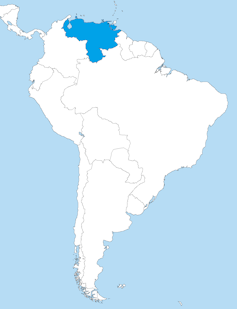
Venezuela’s location in South America.
Wikimedia Commons

Foreign companies, including those from the US, invested heavily in the growth of Venezuelan oil and played a heavy hand in its politics. In the face of US opposition, however, Venezuelan leaders began asserting more control over their main export resource. Venezuela was a key figure in the formation of the Organisation of Petroleum Exporting Countries (OPEC) in 1960, and it nationalised much of its oil industry in 1976.

This negatively impacted US companies like ExxonMobil and has fuelled the recent claims by the Trump administration that Venezuela “stole” US oil.


Economic prosperity, however, did not follow for most Venezuelans. The mismanagement of the oil industry led to a debt crisis and International Monetary Fund (IMF) intervention in 1988. Caracas erupted in protests in February 1989 and the government sent the military to crush the uprising. An estimated 300 people were killed, according to official totals, but the real figure could be 10 times higher.

In the aftermath, Venezuelan society became further split between the wealthy, who wanted to work with the US, and the working class, who sought autonomy from the US. This division has defined Venezuelan politics ever since.

Chávez’s rise to power

Hugo Chávez began his career as a military officer. In the early 1980s, he formed the socialist “Revolutionary Bolivarian Movement-200” within the army and began giving rousing lectures against the government.

Then, after the 1989 riots, Chávez’s recruitment efforts increased dramatically and he began planning the overthrow of Venezuela’s government. In February 1992, he staged a failed coup against the pro-US president, Carlos Andrés Pérez. While he was imprisoned, his group staged another coup attempt later in the year that also failed. Chavez was jailed for two years, but emerged as the leading presidential candidate in 1998 on a socialist revolutionary platform.

Chávez became a giant of both Venezuelan and Latin American politics. His revolution evoked the memory of Simón Bolívar, the great liberator of South America from Spanish colonialism. Not only was Chávez broadly popular in Venezuela for his use of oil revenue to subsidise government programs for food, health and education, he was well-regarded in like-minded regimes in the region due to his generosity.

Most notably, Chávez provided Cuba with billions of dollars worth of oil in exchange for tens of thousands of Cuban doctors working in Venezuelan health clinics.

He also set a precedent of standing up to the US and to the IMF at global forums, famously calling then-US President George W Bush “the devil” at the UN General Assembly in 2006.

US accused of fomenting a coup

Unsurprisingly, the US was no fan of Chávez.

After hundreds of thousands of opposition protesters took to the streets in April 2002, Chavez was briefly ousted in a coup by dissident military officers and opposition figures, who installed a new president, businessman Pedro Carmona. Chávez was arrested, the Bush administration promptly recognised Carmona as president, and the The New York Times editorial page celebrated the fall of a “would-be dictator”.

Chavez swept back into power just two days later, however, on the backs of legions of supporters filling the streets. And the Bush administration immediately faced intense scrutiny for its possible role in the aborted coup.

While the US denied involvement, questions lingered for years about whether the government had advance knowledge of the coup and tacitly backed his ouster. In 2004, newly classified documents showed the CIA was aware of the plot, but it was unclear how much advance warning US officials gave Chavez himself.

US pressure continues on Maduro

Maduro, a trade unionist, was elected to the National Assembly in 2000 and quickly joined Chávez’s inner circle. He rose to the office of vice president in 2012 and, following Chávez’s death the following year, won his first election by a razor-thin margin.

But Maduro is not Chávez. He did not have the same level of support among the working class, the military or across the region. Venezuela’s economic conditions worsened and inflation skyrocketed.

And successive US administrations continued to put pressure on Maduro. Venezuela was hit with sanctions in both the Obama and first Trump presidency, and the US and its allies refused to recognise Maduro’s win in the 2018 election and again in 2024.

Isolated from much of the world, Maduro’s government became dependent on selling oil to China as its sole economic outlet. Maduro also claims to have thwarted several coup and assassination attempts allegedly involving the US and domestic opposition, most notably in April 2019 and May 2020 during Trump’s first term.


US officials have denied involvement in any coup plots; reporting also found no evidence of US involvement in the 2020 failed coup.

Now, Trump has successfully removed Maduro in a much more brazen operation, with no attempts at deniability. It remains to be seen how Venezuelans and other Latin American nations will respond to the US actions, but one thing is certain: US involvement in Venezuelan politics will continue, as long as it has financial stakes in the country.

The Conversation

James Trapani does not work for, consult, own shares in or receive funding from any company or organisation that would benefit from this article, and has disclosed no relevant affiliations beyond their academic appointment.

ref. Before toppling Maduro, the US spent decades pressuring Venezuelan leaders over its oil wealth – https://theconversation.com/before-toppling-maduro-the-us-spent-decades-pressuring-venezuelan-leaders-over-its-oil-wealth-272679

Trump’s intervention in Venezuela: the 3 warnings for the world

Source: The Conversation – Global Perspectives – By Donald Rothwell, Professor of International Law, Australian National University

The January 3 US military operation in Venezuela seizing President Nicolás Maduro and his wife, Cilia Adela Flores de Maduro, was in equal measure audacious and illegal under international law.

It’s even more breathtaking that the Trump administration now says it “will run” Venezuela on an interim basis. The US will also seek to control the country’s vast oil interests.

Irrespective of its contested domestic politics and the chequered record of the Maduro regime, Venezuela remains a recognised sovereign state under international law. This includes permanent sovereignty over its natural resources. Any US seizure of Venezuelan oil would be a further violation of international law.

But the US hasn’t tried to justify its strikes with international law. Instead, the Trump administration is using domestic laws to ignore global rules entirely. It’s a new strategy, but one with no international legal basis, regardless of how you slice it.

Making the international domestic

Both the first and second Trump administrations have shown animosity towards the Maduro regime.

The US government has consistently raised two key issues: the role Venezuela has played in illegal Latin American migrants entering the US, and support for the flow of drugs into the US.

Both were major issues during the 2024 US presidential election campaign and are key planks of the Trump MAGA movement.

The legitimacy of the Maduro regime has also been called into question. There were disputed election outcomes in 2018 and 2024.

However, the legitimacy or otherwise of the Maduro regime is not a legal basis for a military intervention.

Rather, the Trump administration is relying on US domestic laws to justify its actions in Venezuela. A 2020 US grand jury indictment of Maduro and his wife for drug trafficking underpins the legal argument.

That Maduro has been paraded before television cameras in New York like any other detained prisoner further emphasises the importance of US domestic law in this matter. It’s unprecedented for a foreign head of state to be arrested in their presidential compound, detained and legally processed in the US within the space of 24 hours.

Maduro and his wife will eventually face trial on various criminal charges. That Nicolás Maduro is the Venezuelan president and therefore entitled to head of state immunity from criminal prosecution before a US court will presumably be set aside as the Trump administration does not recognise the legitimacy of his presidency.

Likewise, US courts will probably not bother themselves too much with the manner of Maduro’s arrest via US extra-territorial law enforcement in a foreign state.

In the normal course of events, once the US grand jury indictment had been released, Maduro’s extradition could have been sought via a US arrest warrant.

The Trump administration likely assumed any such extradition request would have been ignored. So, instead, it used the US military to enter Maduro’s Caracas compound to facilitate his arrest by Department of Justice officials.

Law enforcement or law breaking?

At the core of how the Trump administration has advanced its legal campaign against Venezuela and the Maduro regime has been its reliance on US law.

Starting in September, the US began targeting small boats linked to the Venezuelan drug trade through military strikes at sea.

The US justified these, in part, on the basis of extra-territorial enforcement of US laws against known cartels shipping drugs throughout the Caribbean to American entry points.


Read more:
Tracking the US build-up in the Caribbean


In December, the US Coast Guard began to pursue and seize oil tankers subject to US sanctions. This conduct was also justified on the basis of US law, with the sanctioned tankers being stopped and seized in waters off the Venezuelan coast on the high seas.

US law enforcement has now been extended to the seizure, arrest and detention of the Maduros.

By relying on the argument that the US is enforcing its own laws, the Trump administration provides itself with a domestic legal basis for its actions, no matter what international law may have to say.

This is a clear case of US exceptionalism towards international law, of which there is a long history. It reflects a US view that its own laws prevail over all other law. According to the US, international law should not unduly limit its ability to advance its national interests.

It’s also based on an assumption that any international opprobium it may encounter can be managed or safely ignored.

The 3 things to watch

There are three immediate regional and global lessons from these events.

First, the Trump administration has shown a vast capacity to sanction whomever it chooses based on domestic political whims. Individuals, entities and corporations have all been targeted through presidential executive orders, laws and force. Many will be on high alert.

Second, while the cumulative US actions against Venezuela violate the United Nations Charter, the UN will be virtually powerless to constrain the US. This is due to the veto powers held by the permanent members of its Security Council, not to mention Trump’s disdain for the UN generally.

Third, US allies and partners need to be very aware of the ramifications of this exceptional US law enforcement practice.

If, down the line, the US military encounters a more robust response than it did in Venezuela, it could trigger NATO treaty obligations for European countries and Canada, and ANZUS treaty obligations for Australia.

So, if the US continues down this road, there’s every chance the consequences of its interventionism could be felt by many around the world.

The Conversation

Donald Rothwell receives funding from Australian Research Council.

ref. Trump’s intervention in Venezuela: the 3 warnings for the world – https://theconversation.com/trumps-intervention-in-venezuela-the-3-warnings-for-the-world-272696

Gene editing in Indonesia: can new biotechnology solve old agricultural problems?

Source: The Conversation – Indonesia – By Emily A. Buddle, Senior Research Fellow, University of Adelaide

Like other developing countries, Indonesia is facing a familiar dilemma: how to feed a growing population while protecting its extraordinary biodiversity.

Food security has become a pressing concern amidst drought, pests and climate shifts. Scientists are turning to new technologies for answers. Biotechnology — specifically gene editing (GE) — emerges as a potential solution.

However, Indonesians hold diverse views on GE. While some support the technology, others oppose it.

Scientists are enthusiastic about the opportunities to enhance staple crops like rice and improve nutritional security.

Yet many still have questions. Can GE truly support smallholder farmers and help Indonesia achieve food sovereignty? Or will it simply revive the old controversies surrounding genetically modified crops?

Our 2024 study involving Indonesian stakeholders highlights that technical fixes alone cannot solve food insecurity. For gene editing to succeed, it must address the social inequalities – such as unequal land access – that farmers face.

Gene editing vs genetic modification: what is the difference?

Both gene editing and genetic modification refer to organisms with genetic material altered by humans to introduce desirable traits, such as drought tolerance or disease resistance.

While genetic modification often involves inserting genes from one species into another, gene editing makes small, targeted changes within the organism’s own DNA. In other words, this technology improves crop quality without adding foreign genes.

Advocates argue that this makes gene editing safer, tastier and more acceptable to the public than older modification methods.

But critics warn that even with these new methods, the same old questions remain: who controls the technology? Who benefits? And who gets left behind?

Indonesia’s reliance on imports

Smallholder farmers dominate Indonesia’s agricultural landscape, where rice remains the main staple food crop.

Despite increases in rice production and several other agricultural yields, the country still needs to import key commodities like corn and soybeans from the United States to produce tempeh and tofu for daily consumption.

Similarly, livestock feed supplies still rely heavily on imports of genetically modified soybean meal from Argentina and Brazil.

Lessons from the past: old setbacks to new technologies

To reduce this dependence on imports, the government revised regulations on genetically modified crops to enable domestic production.

The first commercial cultivation of modified crops, Bt cotton, took place between 2001 and 2002. However, the project ultimately failed after the provider, Monsanto, withdrew in 2003, citing difficult regulatory hurdles and limited land for cultivation.

Between 2003 and 2021, no commercial genetically modified crops were grown, apart from sugarcane in limited government-owned areas.

Following these setbacks, the government has looked towards gene editing. Since 2021, corn, potato and sugarcane varieties have been approved for commercial cultivation. While domestic production remains limited, Indonesia is a major importer of gene-edited commodities, particularly soybeans and corn, for both human consumption and livestock feed.

Today, researchers at Indonesia’s National Research and Innovation Agency (BRIN) are developing gene-edited varieties including rice, cassava and sorghum. The government remains optimistic, presenting gene editing as a way to boost productivity and reduce reliance on food imports.

Yet, questions remain over how this technology will reach farmers – and on whose terms


Baca juga:
NZ’s gene technology reform carries benefits and risks – a truly independent regulator will be vital


Fairness beyond technical fixes

Gene editing is often promoted as a quick technical fix for complex agricultural challenges. Yet its success and public acceptance depend on far more than science. It hinges on broader social and economic systems: who has access to seeds, who controls the knowledge and who decides which genetic changes are needed.

Our study shows that many people still do not fully understand the technology. Between April and August 2024, we interviewed 11 stakeholders in Indonesia. This included farmer groups, government officials, researchers, NGOs and consumer associations.

Many participants from civil society and farmers’ unions pointed to the ‘problem of socialisation’. They refer to a lack of shared understanding about the role gene technologies should play in Indonesia’s agricultural future. They also emphasised the importance of prioritising smallholder farmers, who continue to dominate the sector.

Gene editing may yield more drought-tolerant crops. However, it cannot resolve unequal access to land, credit and markets — the main challenges for smallholders.

A representative from a consumer association highlighted risks of ‘capital bias’. They noted that farmers could end up as company ‘employees’ rather than independent producers if they are pushed to adopt new technologies without transparent information.

Participants from the Indonesian Farmers Union also raised concerns about seed patents. They warned that local farm seeds could be recreated in a laboratory, reclassified and then patented for profit.

Innovation is often treated as the domain of scientists. Meanwhile, the social and ethical implications are left for others to handle afterwards. All participants agreed that public engagement is essential, yet none were ready to lead those efforts.


Baca juga:
Plants get a GMO glow-up: Genetically modified varieties are coming out of the lab and into homes and gardens


Shaping a shared future

Gene editing could play an important role in Indonesia’s food future – but not if it follows a ‘technology first, consultation later’ approach. Genuine communication requires discussing innovations beyond the scientists’ bubble and meaningfully involving those who shape agricultural and food systems, especially women.

As providers, cooks and household decision-makers, women farmers are well-positioned to play a crucial role in engaging and mobilising their communities. Their resilience is a vital resource for regional progress. Policymakers and researchers need to invest not only in laboratories but also in building trust, fostering dialogue and developing genuine collaboration with farmers and local communities.

Biotechnology may offer powerful tools, but it is not a silver bullet. We need to understand the specific social and cultural landscape in each locale to determine if and where the technology can be truly useful.

Indonesia’s path forward will depend on recognising that scientific innovation and social inclusion must grow together. Only by bringing both into alignment can gene editing truly contribute to a fair, sustainable and culturally grounded food system.

The Conversation

Emily A. Buddle has received funding from the Department of Primary Industries and Regions South Australia, the Australian Research Council and Meat and Livestock Australia. She is currently an Innovation Fellow with the Australian Research Council Training Centre for Future Crops Development. She is also a farmer in South Australia’s mid north region

Gloria Fransisca Katharina Lawi worked as a research fellow at the Biotechnology Center of Gadjah Mada University for KONEKSI. It was funded by the governments of Australia and Indonesia to promote knowledge partnerships.

Joan Leach has received research funding from the Australian Research Council, the National Health and Medicine Research Council, the Kavli Foundation and the UN FAO. She is a chief investigator in the ARC International Training Center for Future Crops.

ref. Gene editing in Indonesia: can new biotechnology solve old agricultural problems? – https://theconversation.com/gene-editing-in-indonesia-can-new-biotechnology-solve-old-agricultural-problems-269096

Can the US ‘run’ Venezuela? Military force can topple a dictator, but it cannot create political authority or legitimacy

Source: The Conversation – USA – By Monica Duffy Toft, Professor of International Politics and Director of the Center for Strategic Studies, The Fletcher School, Tufts University

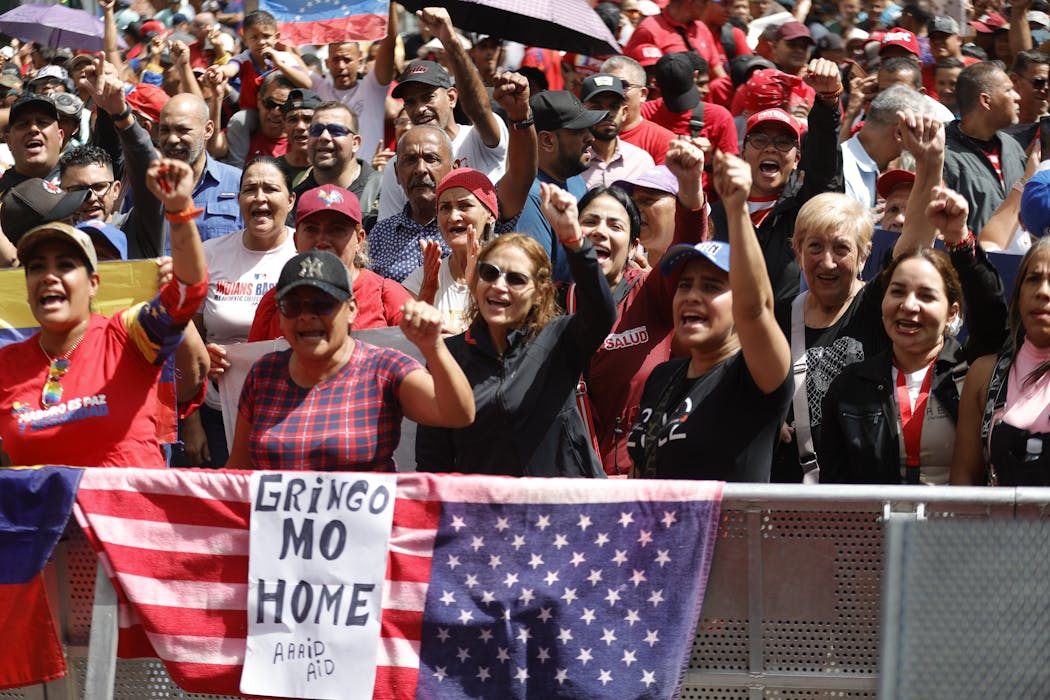
Supporters of Venezuelan President Nicolás Maduro gather during a demonstration in Caracas on Jan, 4, 2026.
Pedro Mattey/Anadolu via Getty Images

An image circulated over media the weekend of Jan. 3 and 4 was meant to convey dominance: Venezuela’s president, Nicolás Maduro, blindfolded and handcuffed aboard a U.S. naval vessel. Shortly after the operation that seized Maduro and his wife, Cilia Flores, President Donald Trump announced that the United States would now “run” Venezuela until a “safe, proper and judicious transition” could be arranged.

The Trump administration’s move is not an aberration; it reflects a broader trend in U.S. foreign policy I described here some six years ago as “America the Bully.”

Washington increasingly relies on coercion – military, economic and political – not only to deter adversaries but to compel compliance from weaker nations. This may deliver short-term obedience, but it is counterproductive as a strategy for building durable power, which depends on legitimacy and capacity. When coercion is applied to governance, it can harden resistance, narrow diplomatic options and transform local political failures into contests of national pride.

There is no dispute that Maduro’s dictatorship led to Venezuela’s catastrophic collapse. Under his rule, Venezuela’s economy imploded, democratic institutions were hollowed out, criminal networks fused with the state, and millions fled the country – many for the United States.

But removing a leader – even a brutal and incompetent one – is not the same as advancing a legitimate political order.

A man wearing sweatpants and a sweatshirt, in handcuffs and blindfolded.
An image of Venezuelan President Nicolás Maduro after his capture, posted by President Donald Trump and reposted by the White House.
White House X.com account

Force doesn’t equal legitimacy

By declaring its intent to govern Venezuela, the United States is creating a governance trap of its own making – one in which external force is mistakenly treated as a substitute for domestic legitimacy.

I write as a scholar of international security, civil wars and U.S. foreign policy, and as author of “Dying by the Sword,” which examines why states repeatedly reach for military solutions, and why such interventions rarely produce durable peace.

The core finding of that research is straightforward: Force can topple rulers, but it cannot generate political authority.

When violence and what I have described elsewhere as “kinetic diplomacy” become a substitute for full spectrum action – which includes diplomacy, economics and what the late political scientist Joseph Nye called “soft power” – it tends to deepen instability rather than resolve it.

More force, less statecraft

The Venezuela episode reflects this broader shift in how the United States uses its power. My co-author Sidita Kushi and I document this by analyzing detailed data from the new Military Intervention Project. We show that since the end of the Cold War, the United States has sharply increased the frequency of military interventions while systematically underinvesting in diplomacy and other tools of statecraft.

One striking feature of the trends we uncover is that if Americans tended to justify excessive military intervention during the Cold War between 1945–1989 due to the perception that the Soviet Union was an existential threat, what we would expect is far fewer military interventions following the Soviet Union’s 1991 collapse. That has not happened.

Even more striking, the mission profile has changed. Interventions that once aimed at short-term stabilization now routinely expand into prolonged governance and security management, as they did in both Iraq after 2003 and Afghanistan after 2001.

This pattern is reinforced by institutional imbalance. In 2026, for every single dollar the United States invests in the diplomatic “scalpel” of the State Department to prevent conflict, it allocates US$28 to the military “hammer” of the Department of Defense, effectively ensuring that force becomes a first rather than last resort.

“Kinetic diplomacy” – in the Venezuela case, regime change by force – becomes the default not because it is more effective, but because it is the only tool of statecraft immediately available. On Jan. 4, Trump told the Atlantic magazine that if Delcy Rodríguez, the acting leader of Venezuela, “doesn’t do what’s right, she is going to pay a very big price, probably bigger than Maduro.”

Lessons from Afghanistan, Iraq and Libya

The consequences of this imbalance are visible across the past quarter-century.

In Afghanistan, the U.S.-led attempt to engineer authority built on external force alone proved brittle by its very nature. The U.S. had invaded Afghanistan in 2001 to topple the Taliban regime, deemed responsible for the 9/11 terrorist attacks. But the subsequent two decades of foreign-backed state-building collapsed almost instantly once U.S. forces withdrew in 2021. No amount of reconstruction spending could compensate for the absence of a political order rooted in domestic consent.

Following the invasion by the U.S. and surrender of Iraq’s armed forces in 2003, both the U.S. Department of State and the Department of Defense proposed plans for Iraq’s transition to a stable democratic nation. President George W. Bush gave the nod to the Defense Department’s plan.

That plan, unlike the State Department’s, ignored key cultural, social and historical conditions. Instead, it proposed an approach that assumed a credible threat to use coercion, supplemented by private contractors, would prove sufficient to lead to a rapid and effective transition to a democratic Iraq. The United States became responsible not only for security, but also for electricity, water, jobs and political reconciliation – tasks no foreign power can perform without becoming, as the United States did, an object of resistance.

Libya demonstrated a different failure mode. There, intervention by a U.S.-backed NATO force in 2011 and removal of dictator Moammar Gadhafi and his regime were not followed by governance at all. The result was civil war, fragmentation, militia rule and a prolonged struggle over sovereignty and economic development that continues today.

The common thread across all three cases is hubris: the belief that American management – either limited or oppressive – could replace political legitimacy.

Venezuela’s infrastructure is already in ruins. If the United States assumes responsibility for governance, it will be blamed for every blackout, every food shortage and every bureaucratic failure. The liberator will quickly become the occupier.

Men carrying guns and celebrating, with huge black clouds behind them.
Iraqi Sunni Muslim insurgents celebrate in front of a burning U.S. convoy they attacked earlier on April 8, 2004, on the outskirts of the flashpoint town of Fallujah.
Karim Sahib, AFP/Getty Images

Costs of ‘running’ a country

Taking on governance in Venezuela would also carry broader strategic costs, even if those costs are not the primary reason the strategy would fail.

A military attack followed by foreign administration is a combination that undermines the principles of sovereignty and nonintervention that underpin the international order the United States claims to support. It complicates alliance diplomacy by forcing partners to reconcile U.S. actions with the very rules they are trying to defend elsewhere.

The United States has historically been strongest when it anchored an open sphere built on collaboration with allies, shared rules and voluntary alignment. Launching a military operation and then assuming responsibility for governance shifts Washington toward a closed, coercive model of power – one that relies on force to establish authority and is prohibitively costly to sustain over time.

These signals are read not only in Berlin, London and Paris. They are watched closely in Taipei, Tokyo and Seoul — and just as carefully in Beijing and Moscow.

When the United States attacks a sovereign state and then claims the right to administer it, it weakens its ability to contest rival arguments that force alone, rather than legitimacy, determines political authority.

Beijing needs only to point to U.S. behavior to argue that great powers rule as they please where they can – an argument that can justify the takeover of Taiwan. Moscow, likewise, can cite such precedent to justify the use of force in its near abroad and not just in Ukraine.

This matters in practice, not theory. The more the United States normalizes unilateral governance, the easier it becomes for rivals to dismiss American appeals to sovereignty as selective and self-serving, and the more difficult it becomes for allies to justify their ties to the U.S.

That erosion of credibility does not produce dramatic rupture, but it steadily narrows the space for cooperation over time and the advancement of U.S. interests and capabilities.

Force is fast. Legitimacy is slow. But legitimacy is the only currency that buys durable peace and stability – both of which remain enduring U.S. interests.

If Washington governs by force in Venezuela, it will repeat the failures of Afghanistan, Iraq and Libya: Power can topple regimes, but it cannot create political authority. Outside rule invites resistance, not stability.

The Conversation

Monica Duffy Toft does not work for, consult, own shares in or receive funding from any company or organization that would benefit from this article, and has disclosed no relevant affiliations beyond their academic appointment.

ref. Can the US ‘run’ Venezuela? Military force can topple a dictator, but it cannot create political authority or legitimacy – https://theconversation.com/can-the-us-run-venezuela-military-force-can-topple-a-dictator-but-it-cannot-create-political-authority-or-legitimacy-272683

Were the US actions in Venezuela legal under international law? An expert explains

Source: The Conversation – Global Perspectives – By Sarah Heathcote, Honorary Associate Professor in International Law, Australian National University

United States President Donald Trump has said the US will “run” Venezuela until a new government is installed, following the US military intervention in the country’s capital, Caracas.

American forces have seized Venezuela’s president, Nicolás Maduro, and his wife, and brought the pair to the US to face what Trump has described as a “narco-terrorism” trial.

This follows months of build-up of US military forces in the region.

The Russian Foreign Ministry has said the US attacks are:

an act of armed aggression against Venezuela. This is deeply concerning and condemnable. The pretexts used to justify such actions are unfounded.

So, what does international law say?

Was this an act of ‘force’ under the UN charter?

Article 2(4) of the United Nations Charter says:

All members shall refrain in their international relations from the threat or use of force against the territorial integrity or political independence of any state, or in any other manner inconsistent with the purposes of the United Nations.

Russia’s framing of the US’ Venezuela intervention as a condemnable “act of armed agression” is at least an affirmation of its own belief in the existence of international law.

Similarly, Russia appeals to international law when it claims, spuriously, that its own actions in Ukraine are justified under exceptions to the prohibition on armed aggression – or that they are mere “operations” within its own territory, and so for different legal reasons, lawful under international law.

Commentators have been quick to describe the US strikes in Venezuela as a breach of article 2(4) of the UN charter.

The US’ actions are only lawful if supported by a resolution from the UN Security Council; if the US was acting in self-defence; or – and this is often overlooked – if there was consent by the lawful government of Venezuela to the intervention.

There was no UN Security Council authorisation for the US to intervene in Venezuela, nor has the US been the victim of an ongoing or imminent act of aggression by Venezuela.

A claim of consent by the lawful Venezuelan government might have more ostensible credit because evidence suggests the 2024 presidential election was stolen from Maduro’s opponent, Edmundo González.

However, because the identity of the lawful government is contested (some countries have recognised Maduro’s win in the 2024 election) and the opposition controls no Venezuelan territory, the US can only intervene on the legal ground of consent with a Security Council resolution.

So, if you define the US’ actions in Venezuela as an act of “force” within the meaning of article 2(4) UN Charter, then yes, the US has engaged in a prohibited act, since none of the justifications apply.

What if it was just a ‘law enforcement operation’?

For its part, the Trump administration appears to be arguing the strikes on Venezuela were not a “use of force” in the first place, but rather a law enforcement operation.

In a press conference following the strikes, US Secretary of State Marco Rubio described the Venezuelan president as “a fugitive of American justice”. (Given the US Congress was not notified before the Venezuela strikes, this framing comes across as an attempt to obfuscate the need for Congressional authority to use force under US domestic law).

What, then, if the intervention was not a “use of force” as defined by the UN charter, but merely a law enforcement operation?

In making this assessment, one has to take into account the operation’s scale, target, location and the broader context.

Media reports have described 15,000 US troops amassing in the region by December, and the recent deployment of a US aircraft carrier near Venezuela.


Read more:
Tracking the US build-up in the Caribbean


The intervention in Venezuela came from the highest US authority (the president), targeted Venezuela’s acting head of state, and was executed against a background of unfriendly relations between the two states.

In this context, it is hard to see how this can be anything other than a “use of force” within the meaning of article 2(4) of the UN Charter.

It does not, in my view, constitute a law enforcement operation.

International law isn’t dead

Few will mourn the removal of Maduro, widely considered an autocrat. Democracy might even be restored to Venezuela.

Nonetheless, the US intervention in Venezuela was as brazen and unlawful as its military strike on Iran in June last year. As such, it challenges international law.

But international law is not “dead” just because the most powerful no longer respect it.

Breaches of the law are normal in any legal system. Indeed, they are expected or there would not be a need for the rule.

International law is created by all states, not just the powerful few. This makes international community reactions to breaches particularly important.

So, to preserve the rules-based international order, all states need to call out breaches of the law when they occur, including in the current instance.

The Conversation

Sarah Heathcote does not work for, consult, own shares in or receive funding from any company or organisation that would benefit from this article, and has disclosed no relevant affiliations beyond their academic appointment.

ref. Were the US actions in Venezuela legal under international law? An expert explains – https://theconversation.com/were-the-us-actions-in-venezuela-legal-under-international-law-an-expert-explains-272684

Cinq scénarios pour le Venezuela post-Maduro

Source: The Conversation – in French – By Robert Muggah, Richard von Weizsäcker Fellow na Bosch Academy e Co-fundador, Instituto Igarapé; Princeton University

Le flou règne sur l’avenir du Venezuela après la capture de son président par les États-Unis. Plusieurs voies sont envisageables, du maintien en place du régime chaviste à une prise de contrôle du pouvoir par Washington.


L’opération militaire menée par les États-Unis à l’aube du 1er janvier qui a permis de capturer Nicolas Maduro et son épouse puis de les emmener à New York, où ils ont été incarcérés, marque un tournant pour le continent américain. Après plusieurs mois de menaces d’intervention militaire et de renforcement constant des forces armées de Washington dans la région, les forces armées états-uniennes ont destitué un président étranger à l’issue d’une opération qui a duré un peu plus de deux heures.

Que ce soit sous le prétexte de la lutte contre le trafic de drogue ou au nom d’un changement de régime, le message est clair : les États-Unis sont prêts à agir de manière unilatérale, avec force et, au besoin, de façon illégale. Les répercussions seront vastes pour le Venezuela, bien sûr, mais aussi pour l’ensemble de l’Amérique latine.

Les réactions à l’intervention états-unienne ont été immédiates. La Colombie, qui a dépêché des troupes à sa frontière, se préparant à l’arrivée potentielle de réfugiés, a dénoncé les frappes comme un affront à la souveraineté des pays de la région. Cuba s’est jointe à l’Iran, à la Russie et à d’autres adversaires de Washington pour condamner le raid devant les Nations unies. Quelques gouvernements, notamment celui de l’Argentine, ont en revanche apporté leur soutien sans réserve à cette opération.

Donald Trump a annoncé que les États-Unis allaient « diriger » le Venezuela jusqu’à ce qu’il y ait une « transition sûre, appropriée et judicieuse » du pouvoir, et assuré que son administration « n’avait pas peur d’envoyer des troupes sur le terrain ».

Jusqu’à présent, peu de détails concrets sur la suite des événements ont été fournis. Beaucoup dépendra des prochaines actions de Washington et de la réaction de la classe politique vénézuélienne, qui est très divisée. En tant qu’expert des relations entre les États-Unis et l’Amérique latine, j’estime que cinq scénarios principaux semblent plausibles.

1. Trump déclare avoir eu gain de cause et en reste là

Dans ce premier scénario, Trump proclame que la mission a été accomplie, présente la capture de Maduro comme un triomphe et réduit rapidement le rôle des États-Unis dans l’avenir immédiat du pays. Les institutions vénézuéliennes restent largement intactes. L’actuelle vice-présidente Delcy Rodriguez, le ministre de l’intérieur Remigio Ceballos Ichaso et le ministre de la défense Vladimir Padrino Lopez dirigent un gouvernement reconstitué qui poursuit la ligne de gauche développée par feu Hugo Chavez, même si ce système est désormais privé de sa dernière figure de proue en la personne de Maduro.

Un tel développement conviendrait aux généraux états-uniens désireux de limiter les risques pour leurs troupes, ainsi qu’aux puissances étrangères soucieuses d’éviter un vide du pouvoir. A contrario, l’opposition vénézuélienne et les pays voisins qui ont subi des années d’afflux de réfugiés feraient la grimace.

Surtout, cela réduirait à néant l’influence sur le pays que Washington vient d’acquérir au prix de nombreux efforts. Après avoir pris la décision extraordinaire d’enlever un chef d’État, revenir en arrière et se contenter d’un léger remaniement du chavisme apparaîtrait comme une reculade contraire aux normes des interventions étrangères des États-Unis.

2. Un soulèvement populaire renverse le chavisme

Deuxième possibilité : le choc provoqué par la destitution de Maduro brise l’aura d’inévitabilité du gouvernement et déclenche un soulèvement populaire qui balaye le chavisme. Au vu de la vacance de la présidence et de l’affaiblissement des forces de sécurité, démoralisées ou divisées, une large coalition de partis d’opposition, de groupes de la société civile et de chavistes mécontents fait pression pour la mise en place d’un conseil de transition, peut-être sous l’égide de l’Organisation des États américains ou des Nations unies.

Reste qu’une telle révolution, en particulier lorsqu’elle est soutenue par une ingérence extérieure, se déroule rarement sans heurts. Des années de répression politique, de crime organisé, de misère économique et d’émigration ont vidé la classe moyenne et les syndicats vénézuéliens de leur substance. Les colectivos armés – des groupes paramilitaires ayant un intérêt au maintien de l’ancien régime – opposeraient une résistance farouche. Il en résulterait peut-être non pas une avancée démocratique rapide, mais une transition instable : un gouvernement provisoire fragile, des violences sporadiques et d’intenses luttes intestines sur les questions relatives aux amnisties et au contrôle du secteur pétrolier.

3. Les États-Unis installent à Caracas un pouvoir allié

Dans ce scénario, Washington tire parti de la nouvelle donne pour faire pression en faveur d’un changement complet de régime. Cela pourrait se traduire par un durcissement des sanctions à l’encontre des personnalités encore au pouvoir, par l’intensification des frappes contre les installations de sécurité et les milices, par un soutien secret aux factions insurgées et par l’utilisation du procès de Maduro comme d’une tribune mondiale pour délégitimer une fois pour toutes le chavisme.

Une personnalité reconnue en tant que leader de l’opposition serait portée au pouvoir à la suite d’une forme d’élection contrôlée, d’un conseil de transition ou d’une passation de pouvoir négociée – potentiellement, quelqu’un comme Maria Corina Machado, lauréate du prix Nobel de la paix 2025. Les États-Unis et leurs alliés proposeraient une restructuration de la dette et un financement de la reconstruction du pays en échange de réformes économiques libérales et d’un alignement géopolitique sur Washington.

Cette option est très risquée. Une transition ouvertement orchestrée par les États-Unis entacherait la légitimité du nouveau leadership vénézuélien, tant au niveau national qu’international. Elle aggraverait la polarisation du pays, renforcerait la dénonciation de l’impérialisme (ce qui est depuis longtemps un argument central du chavisme) et inciterait la Chine, Cuba, l’Iran et la Russie à s’ingérer également dans les affaires du pays. Un mouvement chaviste meurtri mais non brisé pourrait se transformer en résistance armée, faisant du Venezuela un nouveau théâtre d’insurrection de faible intensité.

4. Supervision par Washington et transition contrôlée

Une transition contrôlée : c’est l’option que Trump a ouvertement envisagée. Washington exercerait provisoirement sa tutelle sur le Venezuela. Les premières priorités seraient d’imposer une chaîne de commandement et de restaurer les capacités administratives du pays, de stabiliser la monnaie et le système de paiement, et de mettre en place des réformes progressives afin d’éviter l’effondrement de l’État pendant la transition.

Le calendrier politique serait alors une dimension essentielle. Washington exercerait une forte influence sur les dispositions provisoires en matière de gouvernance, les règles électorales et le calendrier des élections présidentielles et législatives, y compris la reconstitution des autorités électorales et la définition des conditions minimales pour la campagne électorale et l’accès aux médias. Les États-Unis n’auraient pas nécessairement besoin d’occuper le pays, mais ils pourraient avoir besoin de déployer des forces sur le terrain pour dissuader les fauteurs de troubles.

La logique économique de cette option reposerait sur le rétablissement rapide de la production pétrolière et des services de base grâce au soutien technique des États-Unis, à l’implication de leurs entreprises privées et à un allègement sélectif des sanctions. Des entreprises telles que Chevron, la seule grande compagnie pétrolière états-unienne encore implantée au Venezuela, ou des prestataires de services pétroliers comme Halliburton seraient probablement les premiers bénéficiaires.

Là aussi, les risques sont considérables. Comme dans le cas, présenté plus haut, de l’arrivée au pouvoir d’une équipe ouvertement alignée sur Washington, une tutelle états-unienne pourrait attiser les sentiments nationalistes et valider le discours anti-impérialiste propre au chavisme. La menace implicite de l’utilisation de la force pourrait dissuader les groupes criminels, mais elle pourrait également approfondir le ressentiment et durcir la résistance des groupes armés, des partisans de Maduro ou de toute autre personne opposée à l’occupation.

5. Conflit hybride et instabilité contrôlée

Finalement, le plus probable est que tous les scénarios ci-dessus seront en quelque sorte mélangés : on assisterait alors à une lutte prolongée dans laquelle aucun acteur ne l’emporterait complètement. La destitution de Maduro pourrait affaiblir le chavisme, sans totalement détruire ses réseaux dans l’armée, l’administration et les quartiers défavorisés. L’opposition pourrait être revigorée mais demeurerait divisée. Sous Trump, les États-Unis seront puissants sur le plan militaire, mais limités dans leur marge de manœuvre par la lassitude de leur population à l’égard des guerres étrangères, la perspective des élections de mi-mandat à venir et les doutes quant à la légalité de leurs méthodes.

Dans ce cas de figure, le Venezuela pourrait sombrer dans plusieurs années d’instabilité contrôlée. Le pouvoir pourrait de facto être partagé entre une élite chaviste affaiblie, des figures de l’opposition cooptées dans le cadre d’un accord transitoire et des acteurs sécuritaires contrôlant des fiefs locaux. Les frappes sporadiques et les opérations secrètes des États-Unis pourraient se poursuivre, en étant calibrées pour punir les fauteurs de troubles et protéger les partenaires privilégiés de Washington, sans aller jusqu’à une occupation de grande échelle.

Une doctrine Monroe 2.0 ?

Quel que soit l’avenir, ce qui semble clair pour l’instant, c’est que l’opération anti-Maduro peut être considérée, tant par ses partisans que par ses détracteurs, comme l’application d’une sorte de Doctrine Monroe 2.0. Cette version, qui fait suite à la doctrine originale du XIXe siècle dans laquelle Washington mettait en garde les puissances européennes contre toute ingérence dans sa sphère d’influence, est une affirmation plus musclée selon laquelle les rivaux lointains des États-Unis et leurs clients locaux ne seront pas autorisés à avoir leur mot à dire sur le continent américain.

Ce message agressif ne se limite pas à Caracas. Cuba et le Nicaragua, déjà soumis à de lourdes sanctions américaines et de plus en plus dépendants du soutien russe et chinois, verront le raid vénézuélien comme un avertissement indiquant que même les gouvernements bien établis ne sont pas à l’abri si leur politique n’est pas suffisamment alignée sur celle de Trump. La Colombie, théoriquement alliée des États-Unis mais actuellement dirigée par un gouvernement de gauche qui a vivement critiqué la politique vénézuélienne de Washington, se retrouve prise en étau.

Les États petits et moyens, et pas seulement ceux d’Amérique latine, ne peuvent qu’être inquiets. Le Panama, dont le canal est essentiel au commerce mondial et à la mobilité navale des États-Unis, pourrait faire l’objet d’une pression renouvelée, Washington souhaitant contrôler pouvoir compter dans ce pays sur un pouvoir local qui sera proche de lui et bloquera les avancées chinoises dans les ports et les télécommunications. Le Canada et le Danemark auront également regardé cet épisode de très près, l’administration Trump ayant récemment rappelé avec force qu’elle convoite le Groenland.

The Conversation

Robert Muggah est cofondateur de l’Institut Igarapé, un groupe de réflexion brésilien indépendant qui bénéficie du soutien financier des gouvernements du Royaume-Uni, de la Banque interaméricaine de développement et de divers donateurs locaux au Brésil. Robert Muggah est également cofondateur de SecDev, un cabinet de conseil en cybersécurité et risques géopolitiques, et chercheur à l’université de Princeton. De plus amples informations sur ses affiliations sont disponibles sur les sites web des deux institutions.

ref. Cinq scénarios pour le Venezuela post-Maduro – https://theconversation.com/cinq-scenarios-pour-le-venezuela-post-maduro-272695

La primera persona que firmó una obra literaria fue una mujer: Enheduanna

Source: The Conversation – (in Spanish) – By Zaradat Domínguez Galván, Profesora de Literatura, Universidad de Las Palmas de Gran Canaria

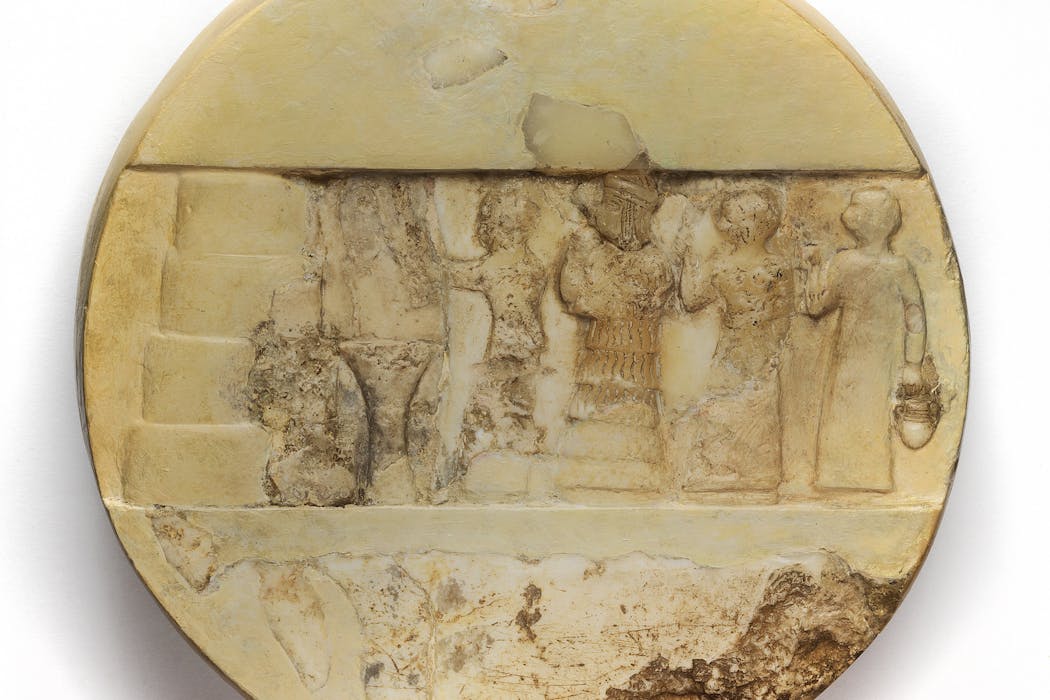
Disco de Enheduanna, encontrado en una cámara del templo Larsa de Nin-Gal (el Gig-par-ku). Penn Museum

Cuando preguntamos quién fue el primer autor literario de la historia, muchos piensan en Homero. La imagen del poeta ciego de la Antigua Grecia suele ocupar el podio de la tradición literaria occidental.

Pero lo cierto es que debemos mirar mucho más atrás, más allá de Grecia, más allá incluso del alfabeto, y dirigir nuestros ojos hacia el origen mismo de la escritura: la antigua Mesopotamia. Allí, hace más de 4 000 años, una mujer firmó su obra con su propio nombre: Enheduanna.

¿Quién fue Enheduanna?

Enheduanna vivió alrededor del año 2 300 a. e. c., en la ciudad de Ur, lo que hoy es el sur de Irak. Su figura destaca por varios motivos: fue suma sacerdotisa del dios lunar Nanna, lo cual le confirió un gran poder político y religioso. Además, fue hija del rey Sargón de Akkad, fundador del primer imperio mesopotámico, y, sobre todo, autora de una obra literaria de profundo contenido teológico, político y poético.

“Enheduanna” no era su identificación personal, sino un título religioso que podría traducirse como “alta sacerdotisa, ornamento del cielo”. Su verdadero nombre sigue siendo un misterio. Lo que no se discute es su impacto: Enheduanna escribió, firmó y dejó constancia de su autoría, lo que la convierte en la primera persona, hombre o mujer, que conocemos por haber hecho esto.

Escritura, poder y espiritualidad

La escritura cuneiforme ya existía desde mediados del cuarto milenio antes de nuestra era. Había surgido como una herramienta administrativa, útil para llevar registros económicos, controlar impuestos o contabilizar ganado. Sin embargo, hacia la época de Enheduanna, había empezado a emplearse también para expresar ideas religiosas, filosóficas y estéticas. Era un arte sagrado, vinculado a la diosa Nisaba, patrona de los escribas, el grano y el conocimiento.

En este contexto, la figura de esta autora es especialmente reveladora. Su obra combina una profunda devoción religiosa con un mensaje político claro. Su poesía se enmarca en una estrategia imperial: legitimar la dominación de Akkad sobre las ciudades sumerias mediante un lenguaje común, una fe compartida y un discurso teológico unificado.

Una obra de alto vuelo

De Enheduanna se conservan varias composiciones, entre las que destacan:

  • Exaltación de Inanna: un largo himno en el que ensalza a la diosa del amor y la guerra, Inanna, pidiéndole ayuda en tiempos de exilio. Se considera su obra más personal y poderosa.

  • Los himnos del templo: un conjunto de 42 himnos dedicados a distintos templos y divinidades de Sumer. Aquí, Enheduanna construye un mapa espiritual del territorio, exaltando la conexión entre religión y poder político.

  • Otros himnos fragmentarios, entre ellos uno dedicado a su dios Nanna.

Estos ejemplos no son simples textos religiosos: están estructurados con gran sofisticación, cargados de simbolismo, emoción y visión política. En ellos, Enheduanna aparece como mediadora entre dioses y humanos; entre su padre, el emperador, y las ciudades conquistadas.

¿Por qué no la conocemos?

Resulta chocante que Enheduanna no figure en los manuales escolares ni en la mayoría de cursos universitarios de literatura. Pocas personas fuera de los estudios de historia antigua o de género han oído hablar de ella.

Tableta, copia del himno Inanna B/Ninmesharra/Exaltación de Inanna, escrito por Enheduana.
Masha Stoyanova/Penn Museum

Es lícito preguntarse si el olvido de Enheduanna responde a una invisibilización sistémica de las mujeres en la historia cultural. Como apunta la historiadora del arte Ana Valtierra Lacalle, durante siglos se ha negado la presencia de mujeres escribas o artistas en la Antigüedad, a pesar de las evidencias arqueológicas que prueban que sabían leer, escribir y administrar recursos.

Enheduanna no fue una anomalía aislada: su existencia demuestra que las mujeres participaron activamente en el desarrollo de la civilización mesopotámica, tanto en la esfera religiosa como intelectual. El hecho de que ella fuera la primera persona en firmar un texto con su nombre debería tener el lugar que merece en la historia de la humanidad.

Enheduanna representa no solo un hito literario, sino también un símbolo poderoso de la capacidad de las mujeres para crear, pensar y liderar desde el origen mismo de la cultura escrita. Su voz resuena desde las tablillas de arcilla con una fuerza que atraviesa los milenios, puesto que con ella la historia comienza no solo con palabras, sino con una voz, con una experiencia subjetiva y con una conciencia autorreflexiva del acto de escribir que no debería pasar desapercibida.

The Conversation

Zaradat Domínguez Galván no recibe salario, ni ejerce labores de consultoría, ni posee acciones, ni recibe financiación de ninguna compañía u organización que pueda obtener beneficio de este artículo, y ha declarado carecer de vínculos relevantes más allá del cargo académico citado.

ref. La primera persona que firmó una obra literaria fue una mujer: Enheduanna – https://theconversation.com/la-primera-persona-que-firmo-una-obra-literaria-fue-una-mujer-enheduanna-267800

El talón de Aquiles de Europa: las tierras raras dejan a la UE expuesta a las condiciones de negocio impuestas por China

Source: The Conversation – (in Spanish) – By Gracia Abad Quintanal, Profesora Agregada de Relaciones Internacionales, Universidad Nebrija

Pla2na/Shutterstock

Para fabricar coches, componentes informáticos de inteligencia artificial, productos médicos y armas necesitamos elementos de tierras raras. Y esta demanda los ha convertido en el centro de una renovada competencia entre las principales potencias mundiales.

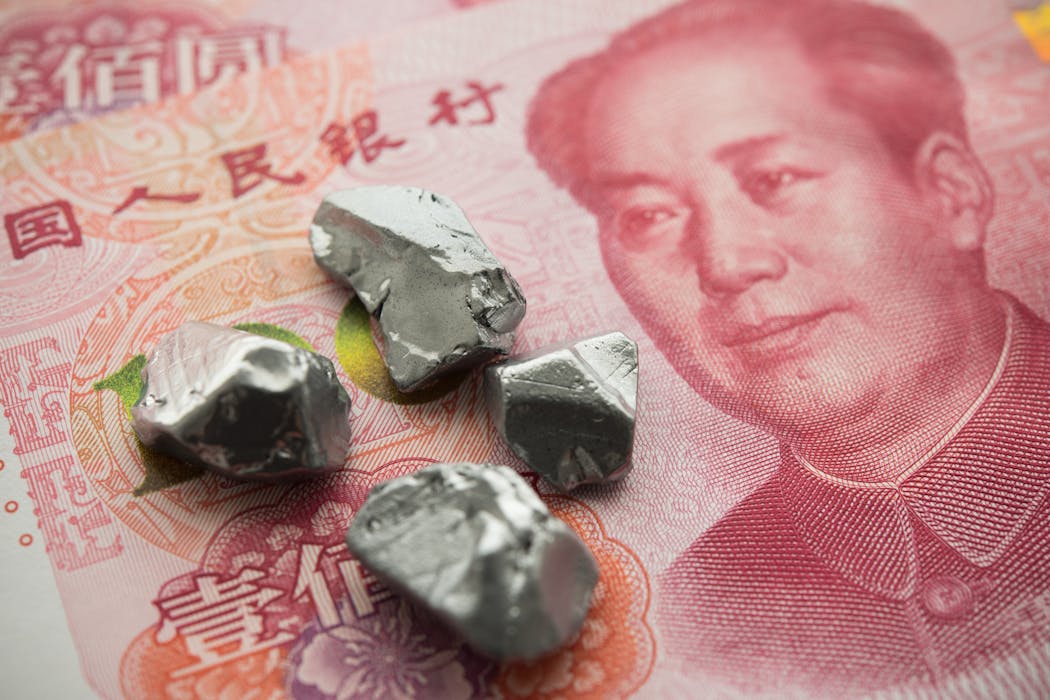
En este nuevo panorama, Estados Unidos y Europa se encuentran en desventaja, ya que China controla hasta el 90 % del comercio mundial de tierras raras. En gran medida esto se debe a que, durante décadas, ha promovido de forma discreta pero continua la extracción y el refinado de estas materias primas.

Ya en la década de 1950 China comenzó a explotar el yacimiento de Bayan Obo, en Mongolia Interior, que actualmente es la mina de tierras raras más grande del mundo. Paulatinamente fue aumentando significativamente sus inversiones para convertirse, en la década de 1990, en el líder mundial en producción y refinado. Hoy en día, la República Popular China extrae estas materias primas tanto dentro de sus propias fronteras como en otros países, especialmente en África, aunque gran parte del refinado sigue realizándose en la propia China.

Esto significa que, cuando el impulso continuo hacia las energías renovables y los sistemas de IA de alta potencia provocó un aumento de la demanda de tierras raras, China ya contaba con una amplia red para la extracción y el refinado de estos productos.

En el otro extremo del espectro, Europa va a la zaga tanto de Estados Unidos como de la República Popular China en la producción de tierras raras. Sin embargo, necesita estos materiales críticos para fabricar productos de alta tecnología, como compuestos farmacéuticos y coches eléctricos, e importa una proporción muy elevada de ellos de China, entre el 40 % y el 100 %, dependiendo de la fuente y de las materias primas incluidas.


Leer más:
The global race is on to secure critical minerals. Why do they matter so much?


Aranceles e interferencia estatal

Durante el último año, la guerra arancelaria a tres bandas desatada por la Administración Trump, en la que están implicados Estados Unidos, la UE y China, ha puesto de relieve la vulnerabilidad europea, que necesita urgentemente mantener el suministro de estos materiales a precios razonables. Por su parte, China es muy consciente de su ventaja económica, geopolítica y estratégica, y está decidida a no perderla.

Es evidente que Pekín está dispuesto a hacer todo lo posible para proteger su monopolio. En abril de 2025, China introdujo restricciones drásticas a sus exportaciones de estos materiales. Esto acaparó parte del debate en la cumbre UE-China celebrada en julio, donde se alcanzó un acuerdo provisional para levantar las restricciones.

No obstante, a finales de septiembre, el Gobierno neerlandés decidió tomar el control de Nexperia, una empresa de propiedad china con sede en los Países Bajos que se dedica principalmente a la producción de chips informáticos para la industria automovilística. La medida se tomó ante el intento de la empresa de eludir la legislación neerlandesa sobre propiedad intelectual.

El 9 de octubre, Pekín tomó represalias anunciando que volvería a limitar la exportación de tierras raras y tecnología a la UE. En concreto, iba a exigir licencias de exportación para todos los productos fabricados con más del 0,1 % de tierras raras procedentes de China, además de prohibir todas las exportaciones de tierras raras para la producción de armas. Las medidas amenazaban con ejercer una enorme presión sobre la industria manufacturera europea.

Sin embargo, la situación podría haberse calmado, al menos temporalmente, después de que el 19 de noviembre el Gobierno neerlandés anunciara, como gesto de “buena voluntad”, que se suspendía la incautación de Nexperia.


Leer más:
Chinese controls on rare earths could create challenges for the west’s plans for green tech


Chantaje económico

La situación planteada por las restricciones a la exportación chinas era tan grave que la Unión Europea incluso consideró, durante la reunión del Consejo Europeo celebrada en octubre, activar su mecanismo “antielusión”, una medida destinada a ser utilizada en situaciones de chantaje económico por parte de terceros países. Aunque, finalmente, no ha sido necesario

En estos momentos la UE sigue dos líneas de acción complementarias para mejorar su situación en relación con las tierras raras y los minerales críticos: las negociaciones con China y la diversificación de las fuentes de las que obtiene estos productos.

En lo que respecta a las negociaciones, la UE, a petición de su comisario de Comercio, Maroš Šefčovič, ha creado un “canal especial” de comunicación con China para tratar de garantizar el suministro. En este marco, los funcionarios europeos y chinos pueden trabajar juntos para dar prioridad a las solicitudes presentadas por las empresas de la UE. Hasta ahora, la iniciativa ha tenido éxito, ya que en pocos días desde el anuncio de la medida se han aprobado más de la mitad de las 2 000 solicitudes.

Además, a principios de noviembre, la UE se sumó finalmente al acuerdo alcanzado previamente por Estados Unidos y China para que esta última pudiera relajar temporalmente (durante un año) sus restricciones a la exportación mencionadas anteriormente.

En ese momento, la UE también estaba considerando otras medidas, incluida la aplicación de aranceles, para obligar a China a suministrarle tierras raras. Es posible que estas intenciones hayan facilitado el acuerdo.

Diversificación del suministro

Dado que China está claramente dispuesta a aprovechar su dominio de las tierras raras, la UE también tendrá que asegurarse su suministro en otros lugares. Con este fin, se aprobó una normativa destinada a garantizar el suministro de materias primas críticas. También se ha creado el plan RESourceEU para garantizar las materias primas, reducir la dependencia e impulsar la competitividad. Este plan se inspira en el de diversificación energética REPowerEU, puesto en marcha tras la invasión de Ucrania por Rusia en febrero de 2022.

La diversificación se basará tanto en la producción de estos materiales dentro de la UE como en las importaciones de terceros países distintos de la República Popular China. Dado que Europa no cuenta actualmente con minas de tierras raras en activo, gran parte de las materias primas procederán de una serie de iniciativas de reciclaje.

Aunque esta estrategia plantea retos en términos de costes económicos y medioambientales, es una batalla que la UE no puede permitirse perder si quiere tener alguna posibilidad de alcanzar una posición favorable en el orden mundial.

The Conversation

Gracia Abad Quintanal no recibe salario, ni ejerce labores de consultoría, ni posee acciones, ni recibe financiación de ninguna compañía u organización que pueda obtener beneficio de este artículo, y ha declarado carecer de vínculos relevantes más allá del cargo académico citado.

ref. El talón de Aquiles de Europa: las tierras raras dejan a la UE expuesta a las condiciones de negocio impuestas por China – https://theconversation.com/el-talon-de-aquiles-de-europa-las-tierras-raras-dejan-a-la-ue-expuesta-a-las-condiciones-de-negocio-impuestas-por-china-270806

La ‘receta’ social, una medida urgente en la era de la nueva longevidad

Source: The Conversation – (in Spanish) – By Jordi Miralbell Guerin, Doctor en Filosofía y Periodista. Director del Campus de la Experiencia, Universitat Internacional de Catalunya

Lucigerma/Shutterstock

Asistimos hoy a la llegada de los baby boomers a la jubilación. Según la tendencia marcada en los últimos años, estas personas nacidas entre 1957 y 1973 vivirán dos o tres décadas más que sus antecesores.

Son los protagonistas de “la nueva longevidad”. Como señala el psicólogo y gerontólogo Javier Yanguas en su libro Pasos hacia la nueva vejez (Destino, 2021), este nuevo período de su vida va a constar de tres etapas cronológicas con necesidades diferentes: una primera fase –históricamente nueva– en la que se sentirán mayores pero no viejos; una segunda de “fragilización”, en la que que aparecerá el dialogo con la patología; y, solo en la tercera fase, la dependencia.

Así son los nuevos mayores

El panorama ha cambiado, y las necesidades de los nuevos mayores también: ya no son las mismas de hace 20 o 30 años. No necesitan alfabetización digital. Han vivido la emancipación de la mujer y su avance en la vida pública.

Intelectualmente más preparadas, estas personas tienen un planteamiento ante el propio cuidado que difiere del de las otras generaciones. No quieren depender de sus hijos y valoran alcanzar un proyecto de vida en el que esté presente de un modo equilibrado su bienestar, su salud y sus relaciones sociales. Sin embargo, el autocuidado, la autonomía personal y el envejecimiento activo es un horizonte que les resulta insuficiente. Reclaman más.

Este es, en síntesis, el retrato dibujado en las conclusiones del I Seminario sobre la nueva longevidad, celebrado entre el 23 y 25 de octubre en Calonge i Sant Antoni (Girona) y organizado por el Campus de la Experiencia de la Universitat Internacional de Catalunya. Expertos de 16 universidades de todo el mundo constataron que las demandas de la generación que está llegando hoy a la jubilación no son únicamente sanitarias y asistenciales, sino también educativas, relacionales y de sentido.

¿Qué hacer con ese tiempo extra?

Como señala Yanguas, estos nuevos jubilados se encuentran mayoritariamente en buenas condiciones pero se ven abocados a una nueva vida post-laboral sin un propósito claro. Van a vivir más años que sus predecesores, pero ¿qué van a hacer con el tiempo extra? No se sabe, ni está prevista una respuesta clara.

Es una situación frustrante para ellos y para los demás, porque no se trata de alargar los años de vida, sino de llenar de vida los años, dotando esa etapa de sentido y propósito.

Además, los nuevos mayores son en muchas ocasiones víctimas de la soledad no deseada, que es la “epidemia silenciosa” de nuestro tiempo. Hoy día se estima que la sufren un 13,4 % de los españoles y que el 22,9 % experimenta este sentimiento durante todo el día. En Europa, alrededor de 30 millones de personas se sienten solas con frecuencia.

Esta soledad puede ser física, psicológica o espiritual, y, junto con la falta de sentido, tiene consecuencias en la salud: mayor sedentarismo, aislamiento, patologías y adicciones. Varios estudios coinciden en que el sentimiento de soledad provoca ansiedad, depresión y deterioro cognitivo en las personas mayores.


Leer más:
Así afecta la soledad al cerebro de las personas mayores


Por tanto, abordar la falta de sentido y la soledad no constituye un reto de orden sanitario sino social, y está mayoritariamente sin resolver.

Por este motivo, los expertos y académicos convocados en el citado encuentro animaron a trabajar desde el ámbito universitario con las instituciones públicas. El objetivo es medir los aspectos críticos de la “nueva longevidad” y diseñar políticas e iniciativas que van más allá del mero fomento del envejecimiento activo, el ejercicio físico y la autonomía personal.

Ocio “significativo”

La dotación de sentido en esta etapa de la vida procedería fundamentalmente del número y de la calidad de las relaciones sociales, particularmente entre iguales. Diversos estudios constatan que cuando las personas se vinculan a actividades “significativas” –clases interactivas, voluntariado, senderismo, talleres, viajes, etc.– recuperan el sentido vital y la pertenencia a un grupo. Esta participación y colaboración favorece además el bienestar y la calidad de vida.

El ocio, qué duda cabe, ocupa un lugar preeminente. Un ocio escogido libremente que fomente un verdadero empoderamiento de los mayores y su adaptación al contexto en el que viven: un mundo que cambia.

La educación universitaria para adultos mayores se revela como un medio óptimo para lograr este objetivo, al propiciar el crecimiento personal y la construcción de relaciones satisfactorias y sólidas entre iguales.
Así lo consagra el Principio 1 del Pilar Europeo de Derechos Sociales (2017), donde se garantiza el derecho a una educación, formación y aprendizaje permanente inclusivos y de calidad para que todos puedan participar plenamente en la sociedad y gestionar las transiciones laborales.

Una urgencia: la prescripción social

Para los expertos reunidos en Calonge urge extender iniciativas enmarcadas en la denominada “prescripción social” de los adultos mayores, como complemento de la prescripción médica. Se trata de una filosofía y una política pública ampliamente extendida en países del ámbito anglosajón que parte de una idea tan simple como radical: que la salud tiene una dimensión social muy importante.

Una intervención pequeña –una conversación, un momento de acompañamiento– puede cambiar el rumbo de una vida, mejorar la autonomía personal y la salud. Es un enfoque holístico que conecta a las personas con actividades significativas gracias al apoyo comunitario, que potencia su bienestar y su sentido vital.

Es decir, la prescripción social debe pasar de ser algo excepcional a algo esperado. Para ello, las administraciones, los ayuntamientos, los servicios de salud y las universidades deben colaborar impulsando medidas.

El vínculo entre el sistema sanitario y los recursos comunitarios ha de hacerse más tangible mediante la creación de redes de confianza, coordinación y conexión en las que estén presentes actividades, universitarias, culturales, artísticas, musicales, etc. Cada aula, parque o cafetería puede convertirse en un espacio de prescripción social. Y aunque cada proyecto sea distinto, todos forman parte, en realidad, de una misma red informal de fomento de bienestar.

Hay que construir puentes no solo entre salud y comunidad, sino también entre generaciones, culturas y disciplinas. De este modo no solo mejorará el bienestar individual, sino que también se transformará la manera en que las sociedades cuidan, conectan y prosperan en los tiempos de “la nueva longevidad”.

The Conversation

Las personas firmantes no son asalariadas, ni consultoras, ni poseen acciones, ni reciben financiación de ninguna compañía u organización que pueda obtener beneficio de este artículo, y han declarado carecer de vínculos relevantes más allá del cargo académico citado anteriormente.

ref. La ‘receta’ social, una medida urgente en la era de la nueva longevidad – https://theconversation.com/la-receta-social-una-medida-urgente-en-la-era-de-la-nueva-longevidad-270234

¡Ya vienen los drones magos!

Source: The Conversation – (in Spanish) – By Israel Quintanilla, Profesor de Ingeniería Aeroespacial, Universitat Politècnica de València

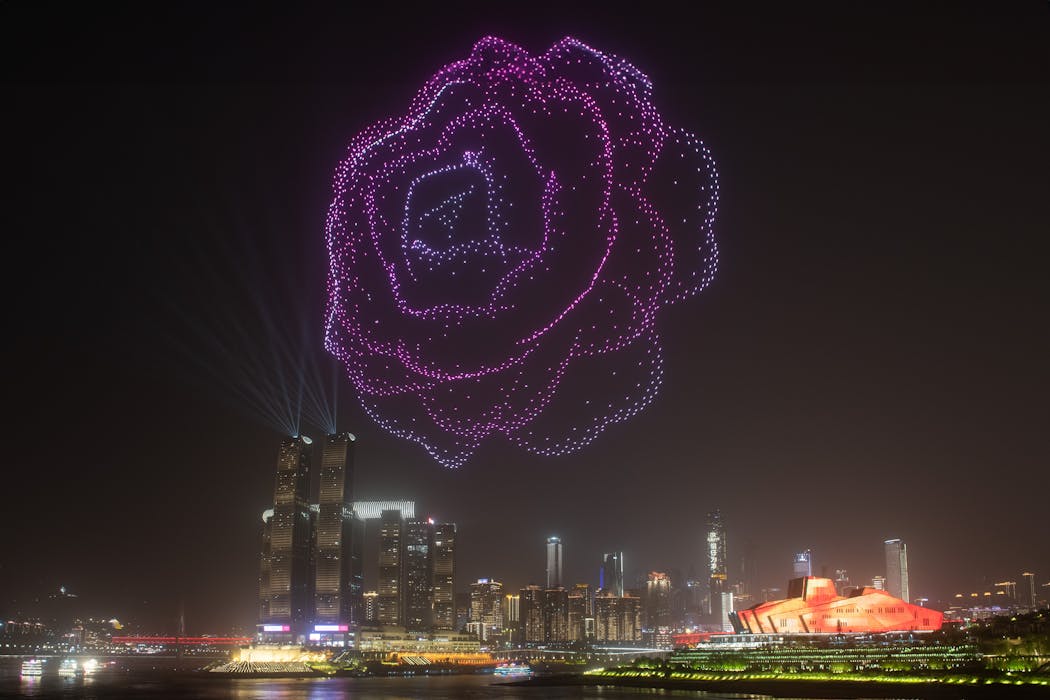
Espectáculo de drones en la ciudad china de Chongqing. dyl0807/Shutterstock

La tradición de los Reyes Magos ilusiona a niños y mayores por todo lo que conlleva: escribir la carta con los regalos deseados, ir a la cabalgata para ver desfilar a sus Majestades los Reyes Magos de Oriente y sus pajes reales, al cartero real, los acróbatas y malabaristas, las carrozas multicolor y los miles de caramelos que vuelan por los aires. Pero, sobre todo, lo que mas se espera es el despertar del día 6 de enero para abrir los regalos y compartir esa alegría con nuestros seres queridos.

A nuestras edades ya sabemos quiénes compran, empaquetan y transportan los regalos hasta el hogar. Ahora bien, sería posible, en un futuro próximo, que estos fueran depositados en los balcones y jardines por alguna tecnología con capacidad de ello. Sería posible que flotas de drones surcaran las aerovías de las ciudades para trasportar los regalos hasta las viviendas iluminadas. Porque, como parece que dijo Julio Verne, “todo lo que un hombre es capaz de imaginar, otro hombre es capaz de llevarlo a cabo”.

Cabalgata de los Reyes Magos en Madrid.
Wikimedia Commons., CC BY-SA

Tecnología cotidiana

Para que una tecnología se integre en la sociedad, se requiere de tres condicionantes obligados: que se encuentre en estado avanzado de desarrollo, que responda a una demanda de la sociedad y que haya una normativa que la regule.

El 1 de enero de 2021 entró en vigor una normativa europea sobre operaciones de drones que permite realizar vuelos en cualquier tipo de entorno, urbano o rural, siempre que se garantice la seguridad operacional. El 26 de enero de 2023 se aprobó otra sobre la gestión del espacio aéreo de estos vehículos (U-Space).

La conjunción de ambas regulaciones permite el vuelo de múltiples drones con capacidad de transporte, gestionados por un proveedor de servicios aéreos para vuelos en entornos urbanos y rurales.

Origen militar

Los drones surgieron en los inicios de la Primera Guerra Mundial, cuando se introdujo la aviación y fueron utilizados para entrenar a los pilotos de las fuerzas aéreas británicas (RAF) en el combate aéreo. Han pasado más de 100 años y, desde entonces, no han dejado de usarse en el terreno militar.

Tras un siglo de evolución tecnológica, actualmente, integran la tecnología más avanzada del ámbito aeronáutico. Además, son aeronaves capaces de volar de forma automática e integran sensores de todo tipo (RGB, multiespectral, térmicos, LiDAR, medición de gases…) para aplicaciones antes inimaginables. Asimismo, pueden garantizar la seguridad operacional e incorporar paracaídas.

Dron Ehang 184, creado en China para transporte de pasajeros.
Wikimedia Commons., CC BY

Taxis autónomos aéreos

Ya se emplean para transportar mercancías y pasajeros (en China, hay dos empresas certificadas para transporte de personas), con plataformas específicas de despegue y aterrizaje (vertipuertos). Integran en sus funcionalidades el resto de tecnologías en desarrollo (inteligencia artificial, 5G, Big Data, internet de las cosas, ciberseguridad…).

Existen, por otro lado, sistemas aún en desarrollo que permitirán la gestión del espacio aéreo especifico para drones, de forma que se pueda compatibilizar el vuelo de múltiples aeronaves autónomas con operaciones recurrentes de forma organizada y con la seguridad operacional necesaria. Los sistemas Detect and Avoid –sistemas de alerta de tráfico y evasión de colisión–, por ejemplo, facilitarán, en un futuro cercano, el vuelo de drones de forma autónoma.

Demanda real de la sociedad

En el caso concreto de España, la primera normativa de drones entró en vigor en el año 2014. Actualmente, hay más de 190 000 pilotos certificados para volar drones y más de 100 000 operadoras (empresas) dedicadas a la explotación comercial de esas aplicaciones.

Abarcan los campos de geomática y gestión del territorio, agricultura (desde generación de mapas prescriptivos hasta aplicaciones fitosanitarias), inspecciones industriales y energéticas (eléctrica, fotovoltaica y eólica), operaciones logísticas, ámbitos portuarios, biodiversidad, o seguridad y emergencias.

La Policía Nacional, la Guardia Civil, las policías autonómicas y las policías Locales tienen drones integrados en su operativa, además de los bomberos, protección civil y el Ejército, con la Unidad Militar de Emergencias (UME) como abanderada.

Una ayuda en momentos críticos

Así, se utilizaron drones en el volcán de la Palma para el seguimiento de los ríos de lava y medición de temperaturas.

En el caso de la dana, ocurrida en Valencia en 2024, se emplearon en las fases de emergencia y postemergencia con las siguientes misiones: búsqueda de desaparecidos; apoyo en rescates; vigilancia y revisión de infraestructuras críticas; realización de cartografía en 3D para análisis de daños y medición de volúmenes afectados; peritaciones de daños agrícolas y aplicación de fitosanitarios para evitar plagas; medición de gases atmosféricos; determinación de elementos del subsuelo (georradar); realización de batimetrías para revisión de las desembocadura del Turia y la Albufera; o lectura de matrículas de los coches apilados con IA para identificación. En 50 días, hubo un total de 1 360 operaciones aéreas, de las que el 78 % fueron realizadas con drones.

Navidad de 2050, Valencia

La cabalgata, en su paso por la plaza del Ayuntamiento, muestra sus mejores galas: infinidad de drones, de todos los tamaños y tipología, se acicalan con luces navideñas y muestran orgullosos los regalos en su panza. Sobrevuelan por encima de Sus Majestades los Reyes Magos de Oriente y su cohorte: los acróbatas, las carrozas… Miles de caramelos vuelan hacia las manos de los niños, golpeando algunas cabezas que, despistadas, miran embelesados los drones.

El centro de control de U-Space lleva preparándose todo el año. El panel principal de la sala muestra la ciudad digital con la posición de los drones y las rutas a seguir. El director de operaciones, sentado detrás de los controladores, suspira y da la orden: ¡que despeguen los Drones Magos!


The Conversation

Israel Quintanilla, como investigador de la Universidad Politécnica de Valencia (UPV) recibe fondos de proyectos de investigación europeos, nacionales y autonómicos.

ref. ¡Ya vienen los drones magos! – https://theconversation.com/ya-vienen-los-drones-magos-269966