Pourquoi les fonds verts peinent à convaincre malgré une épargne record

Source: The Conversation – France (in French) – By Syrine Gacem, Docteur en sciences de gestion – Finance, Université Bourgogne Europe

Les perceptions négatives des ménages sur le _greenwashing_ de certaines entreprises réduisent leurs investissements dans des fonds environnementaux. SKTStudio/Shutterstock

Alors que l’épargne des Françaises et des Français atteint 6,4 milliards d’euros au premier semestre 2025, elle n’est que peu dirigée vers la finance verte. Une étude, menée auprès de 2 215 investisseurs français âgés d’au moins 25 ans, cherche à comprendre les freins à l’investissement vert chez les ménages.


L’épargne des ménages français a atteint un niveau record au premier semestre de 2025, s’élevant à 6,4 milliards d’euros. Elle constitue un taux d’épargne de 18,9 % du revenu disponible. Un niveau si élevé qu’il attire désormais l’attention de l’État sur le financement de l’économie réelle.

Parallèlement, le vendredi 21 novembre 2025 a marqué la clôture de la COP30, où ont eu lieu des discussions rappelant l’ampleur des besoins de financement verts pour réussir la transition écologique. Les pays développés sont appelés à fournir au moins 1,1 milliard d’euros par an aux pays en développement d’ici 2035. « La finance est le levier d’accélération majeur », a rappelé le secrétaire exécutif d’ONU Climat, Simon Stiell, lors du Leaders’Summit au Brésil.

Malgré ce double constat d’abondance d’épargne des ménages et de besoin de financement des projets de transition écologique, l’investissement vert demeure une pratique marginale chez les ménages. Notre étude cherche à en comprendre les raisons.

Manque de transparence sur les fonds verts

Le manque de transparence sur l’impact écologique des fonds verts peut créer une ambiguïté chez les investisseurs particuliers quant à leur efficacité réelle à protéger l’environnement.

Un exemple emblématique est celui de DWS, filiale de Deutsche Bank, impliquée dans un scandale de dénomination environnementale trompeuse, après avoir exagéré les engagements verts de plusieurs de ses fonds. L’affaire s’est soldée par une amende de 25 millions d’euros infligée par la justice allemande en avril 2025.

Promesses écologiques non crédibles

Dans notre étude, nous avons mené une recherche auprès de 2 215 investisseurs français âgés d’au moins 25 ans, entre décembre 2021 et janvier 2022, via Panelabs.

L’échantillon est composé d’investisseurs âgés en moyenne de 47 ans, comprenant 47,3 % de femmes, disposant d’un revenu mensuel net moyen de 3 659 €, et ayant en moyenne un niveau d’éducation équivalent à bac+2. Afin d’évaluer leurs doutes sur l’efficacité réelle des fonds verts, nous leur avons posé la question suivante : « Les fonds verts sont un stratagème marketing pour vendre plus de fonds ». Les réponses étaient notées sur une échelle de 1 à 7, de « pas du tout d’accord » à « tout à fait d’accord ».

Les résultats sont clairs. Plus un investisseur estime que les fonds verts relèvent de promesses écologiques non crédibles, moins il est enclin à y investir. Concrètement, chaque point de hausse sur l’échelle de doute réduit la probabilité d’investir dans un fonds vert de 1,68 point de pourcentage. Mais ce n’est pas tout. Les investisseurs les plus méfiants allouent également des montants plus faibles à ces fonds.

Les jeunes plus sensibles à l’épargne verte

Ce frein n’impacte pas tous les investisseurs de la même manière. Deux profils s’avèrent moins sensibles à ces doutes : les plus jeunes, et ceux ayant un niveau d’éducation élevé. Ces derniers affichant des préférences environnementales très fortes ont tendance à accepter les fonds verts, sans trop les remettre en question, pour rester en accord avec leurs convictions écologiques. Ce phénomène s’explique notamment par la volonté d’éviter une dissonance cognitive entre leurs valeurs et leurs décisions financières.

Notre étude montre que ce frein affecte aussi bien les investisseurs conventionnels (qui n’ont jamais investi dans un fonds vert) que les investisseurs verts (ayant placé au moins 500 € dans un fonds vert). Chez les premiers, elle décourage l’intention d’investir dans des fonds verts. Chez les seconds, elle freine leurs investissements futurs.

Biais de négativité

L’effet dissuasif de la ruse marketing sur l’investissement vert peut s’expliquer à la lumière d’un mécanisme bien connu en psychologie comportementale : le biais de négativité. Ce phénomène décrit la tendance des individus à réagir plus fortement aux signaux négatifs qu’aux signaux positifs.

Nous constatons que les perceptions très négatives de la stratégie de communication verte réduisent significativement la probabilité d’investir. À l’inverse, une certaine confiance dans la communication environnementale ne suffit pas à stimuler l’investissement. Le doute pèse clairement plus lourd que la confiance.

Pourquoi cette asymétrie ? Parce qu’une perception négative de la stratégie marketing active deux leviers puissants. Elle déclenche des émotions négatives qui prennent souvent le dessus sur les raisonnements rationnels dans la prise de décision. En parallèle, ces émotions accentuent la perception du risque financier associé aux fonds verts, ce qui les rend moins attractifs aux yeux des investisseurs.

Renforcer la cohérence entre discours et réalité

Ces résultats appellent les décideurs publics et les acteurs financiers à recentrer leurs efforts sur le contrôle de la véracité de la communication des fonds verts. Tant que les inquiétudes des investisseurs individuels vis-à-vis du marketing des fonds verts ne sont pas levées, les politiques incitatives risquent de ne pas atteindre leur cible.

Ce constat fait écho aux évolutions récentes du cadre réglementaire européen. Ces dernières visent à réduire l’écart entre les promesses associées aux fonds verts et les projets réels dans lesquels ils investissent. Dans ce contexte, la mise en place de réglementations ciblées prend tout son sens. Des dispositifs comme le règlement SFDR ou la taxonomie verte visent à renforcer la transparence et à restaurer la confiance dans la finance verte, condition indispensable pour mobiliser l’investissement des citoyens au service de la transition écologique.

The Conversation

Les auteurs ne travaillent pas, ne conseillent pas, ne possèdent pas de parts, ne reçoivent pas de fonds d’une organisation qui pourrait tirer profit de cet article, et n’ont déclaré aucune autre affiliation que leur organisme de recherche.

ref. Pourquoi les fonds verts peinent à convaincre malgré une épargne record – https://theconversation.com/pourquoi-les-fonds-verts-peinent-a-convaincre-malgre-une-epargne-record-269666

Quand la tragédie grecque éclaire les crises : que nous apprend le braquage du Louvre ?

Source: The Conversation – France (in French) – By Mary-Lieta Clement, Enseignant chercheur – sciences de gestion, UCLy (Lyon Catholic University)

Le vol du Louvre a eu un retentissement mondial. Les failles de sécurité et autres mesures de mauvais management ont été décortiquées et révélées. Mais une autre approche est possible, inspirée de la tragédie grecque. Et si ce vol était l’expression d’une fatalité.


Le 19 octobre 2025, le Musée du Louvre a été frappé par un braquage spectaculaire, mettant en lumière la vulnérabilité même des institutions réputées être les mieux protégées. Au-delà du vol, cet événement invite à réfléchir sur la manière dont les organisations gèrent l’imprévisibilité, à la lumière des leçons des tragédies grecques.

Le cambriolage du Louvre a eu un retentissement mondial, à la hauteur de la réputation de ce lieu. En quelques minutes, des bijoux historiques ont été volés. Une part du prestige du Louvre a aussi disparu à cette occasion.

Si cet événement a d’abord été présenté comme le résultat d’une défaillance sécuritaire, il révèle aussi la vulnérabilité humaine et l’illusion de la maîtrise. Et si ce braquage n’était pas seulement un incident technique, mais une tragédie au sens grec ? C’est ce que se propose d’éclairer cet article.


À lire aussi :
Crise en Grèce : une tragédie qui finit bien ?


Coupable aveuglement ?

Comme les héros antiques, les institutions se heurtent parfois à leurs propres limites. Cette lecture de la crise à la lumière de la tragédie de grands dramaturges grecs (Eschyle, Sophocle, Euripide) nous invite à voir la crise non pas seulement comme le résultat d’une erreur, voire d’une faute, mais aussi comme une occasion de lucidité, voire de résilience.

Dans les tragédies antiques, le héros ne chute pas toujours par faiblesse, mais aussi par aveuglement. C’est en tentant de fuir la prophétie de l’oracle de Delphes, qu’Œdipe la réalise. Dès lors, son erreur n’est tant pas morale qu’existentielle. Refusant de reconnaître sa vulnérabilité, il interprète mal les avertissements qui lui sont envoyés. Au Louvre, un scénario de ce type s’est déroulé. Des alertes sur des failles de sécurité, même faibles, avaient été signalées depuis plusieurs années (le Figaro, 2025), mais n’ont pas été prises en compte.

La leçon donnée par la tragédie grecque dans ce contexte est d’apprendre à être lucide. Cela signifie savoir écouter les signaux d’alerte, qu’ils soient faibles ou évidents. Se préparer à une crise, c’est avant tout savoir reconnaître les avertissements et anticiper les vulnérabilités. Une fois cette disposition d’esprit adoptée, il devient possible de bien se préparer.

Penser l’imprévisible

L’approche par la tragédie invite à penser l’imprévisible. Comme les héros grecs, les personnes responsables de la sécurité dans le cas du braquage du Louvre, agissent au quotidien selon des routines et protocoles de pointe pour prévenir le vol. Pourtant, c’est arrivé. Rien ne le rendait certain, mais rien ne prévoyait qu’il ne surviendrait pas. La tragédie grecque nous enseigne que l’imprévisibilité ne vient pas toujours d’une faute, mais plutôt d’un écart irréductible entre ce que l’on prévoit et ce que le réel produit. Œdipe, en fuyant Corinthe, croit préserver ses parents. Toutefois, c’est précisément ce mouvement qui a accompli la prophétie.

La tragédie grecque nous invite ainsi à distinguer responsabilité et maîtrise absolue. Accepter l’imprévisible ne signifie pas considérer le braquage comme inévitable mais reconnaître l’idée que nul dispositif humain n’est infaillible. Le théâtre grec, nous fait prendre conscience de nos limites humaines tout en cherchant à anticiper les dangers. Il nous ouvre les yeux sur le risque et l’inscrit dans une conscience plus juste de la vulnérabilité humaine.

Le tragique et la pédagogie du dilemme

Le braquage du Louvre pose une question universelle : faut-il ouvrir largement les portes au public ou renforcer la sécurité au risque de dénaturer l’expérience culturelle ? La perspective tragique rappelle que toute décision comporte une perte. Œdipe en fuyant Corinthe pour sauver ses parents, sacrifie son statut royal pour devenir un « métèque » (au sens grec) à Thèbes. Se préparer à gérer une crise, c’est donc apprendre aux managers à faire des choix difficiles, accepter qu’une décision « moins mauvaise » soit parfois le seul possible et privilégier une éthique de la prudence. Elle invite a agir avec discernement et à réduire les risques sans viser une perfection illusoire.

Ainsi, la tragédie grecque, nous invite à former le dirigeant à faire des choix satisfaisant et réaliste et non des choix parfaits.

France 24 2025.

Après la crise : la sagesse tragique

Pour les Grecs, la tragédie était un rituel collectif de catharsis. Elle purifiait les émotions et permettait de réfléchir aux peurs et fautes de la cité (Aristote, La Poétique, IV.6, trad. 1997). De même, capitaliser sur une crise peut devenir une ressource pour les institutions culturelles. Il ne s’agit pas d’effacer le chaos, mais de le transformer en savoir partagé.

Plutôt que de clore l’affaire du Louvre dans une logique de blâme, la crise peut être une mise en récit – enquêtes, témoignages, débats internes, restitutions publiques – pour en tirer une leçon commune. Elle nous invite à la question suivante : comment réagirons-nous la prochaine fois, sachant qu’aucune institution culturelle n’est à l’abri de l’imprévisible ?

Ainsi, la tragédie devient un outil de résilience organisationnelle : non par l’oubli du drame, mais par l’intégration lucide de ses leçons, rappelant que la vraie maîtrise consiste moins à prévenir toutes les chutes qu’à apprendre à se relever ensemble.

The Conversation

Mary-Lieta Clement ne travaille pas, ne conseille pas, ne possède pas de parts, ne reçoit pas de fonds d’une organisation qui pourrait tirer profit de cet article, et n’a déclaré aucune autre affiliation que son organisme de recherche.

ref. Quand la tragédie grecque éclaire les crises : que nous apprend le braquage du Louvre ? – https://theconversation.com/quand-la-tragedie-grecque-eclaire-les-crises-que-nous-apprend-le-braquage-du-louvre-269645

La fin du secret sur les salaires, un choc culturel pour les entreprises françaises

Source: The Conversation – France (in French) – By Patrice Laroche, Professeur des Universités en sciences de gestion, Université de Lorraine

La directive européenne qui oblige de nombreuses entreprises à faire la transparence sur les salaires sera un vrai défi pour les directions de ressources humaines et les managers. Car, si des écarts de salaire peuvent se justifier, il faut savoir les expliquer, ce qui n’est pas toujours facile quand l’argent reste tabou. Quant aux salariés, comment réagiront-ils quand ils découvriront qu’ils sont plus ou moins bien payés que leurs collègues à poste équivalent ? C’est un grand chambardement qui attend les entreprises.


D’ici au 7 juin 2026, les entreprises françaises de plus de 100 salariés devront se conformer à la directive européenne du 10 mai 2023 sur la transparence salariale. Cette obligation, qui impose notamment de mesurer et de publier les écarts de rémunération, d’indiquer les salaires dans les offres d’emploi et d’expliquer les logiques salariales internes, constitue l’un des changements les plus structurants pour les directions des ressources humaines depuis les lois sur le reporting social et environnemental.

Dès lors, on peut se demander comment la transparence salariale va transformer les pratiques de rémunération, l’équité interne et le contrat social dans les entreprises françaises. Sous quelles conditions peut-elle devenir un levier de performance ?

La fin de l’opacité salariale

L’arrivée de cette directive apporte une rupture majeure : la fin de l’opacité salariale comme mode de gestion par défaut. Les entreprises devront désormais répondre à des questions qu’elles pouvaient jusque-là éviter : pourquoi deux salariés occupant des postes similaires ne gagnent-ils pas la même chose ? Quelle place donne-t-on à l’expérience, à l’expertise, à la performance ou à la rareté d’un profil ? La politique de rémunération est-elle cohérente avec les valeurs affichées par l’entreprise ?


À lire aussi :
Votre salaire est-il décent ?


Une enquête récente de l’Agence pour l’emploi des cadres (Apec) montre que ce besoin d’explication est déjà très présent. La moitié des cadres jugent insuffisante la communication de leur entreprise sur les logiques salariales et 46 % d’entre eux jugent la politique de rémunération de leur entreprise opaque (voir ci-dessous). La directive va obliger désormais à rendre explicite ce qui relevait souvent du non-dit voire du tabou.

Une politique de rémunération jugée plus opaque en France

Source : Apec (2025, page 5).

Triple révolution pour les DRH

Car la transparence salariale ne constitue pas uniquement une transformation juridique. Pour les directions des ressources humaines, elle impose une triple évolution.

La première consiste à clarifier la structure salariale. Dans beaucoup d’entreprises, les écarts actuels sont le résultat d’histoires individuelles, de recrutements opportunistes ou de négociations ponctuelles. La directive impose de passer d’une somme de cas particuliers à une architecture salariale claire et cohérente : familles de métiers, niveaux de responsabilité, critères d’évolution. Or, selon l’APEC, 66 % des entreprises n’offrent pas de grille salariale accessible en interne, ce qui montre l’ampleur du travail à mener. Cette structuration constitue un travail lourd, parfois très politique, mais nécessaire.

La deuxième évolution est narrative. Les DRH devront apprendre à dire ce qui, jusqu’ici, restait implicite. Il ne suffit pas de publier des chiffres ou des fourchettes. Il faut être capable de rendre compréhensible la logique des rémunérations. Pourquoi un ingénieur en cybersécurité est-il payé davantage qu’un chef de projet ? Pourquoi deux salariés d’une même équipe ne gagnent-ils pas la même chose ? La pédagogie devient un élément central de la gestion de la rémunération. Sans cette pédagogie, prévient l’Apec, la transparence risque d’alimenter la comparaison sociale et nourrir les frustrations.

La troisième évolution est managériale. Dans beaucoup d’organisations, les managers sont mal à l’aise lorsqu’il s’agit de parler rémunération. Par crainte d’ouvrir des demandes, par manque d’informations ou simplement parce que le sujet reste tabou. La transparence obligera à revoir cette posture. Les managers devront être formés à expliquer les critères, à répondre aux questions, à gérer les émotions liées à la comparaison et aux perceptions d’injustice. Une politique salariale juste mal expliquée peut devenir injuste dans la perception des salariés.

Des risques invisibles

Bien entendu, la transparence comporte des risques. Elle peut révéler des écarts historiques difficiles à justifier, générer des demandes de révision en cascade ou fragiliser des équipes si certains « talents » découvrent qu’ils sont moins bien rémunérés que des pairs. Elle peut également exposer l’entreprise à des contentieux si les écarts ne peuvent pas être expliqués de manière satisfaisante. L’étude de l’Apec rappelle d’ailleurs que près d’une entreprise sur deux anticipe une augmentation des tensions sociales si la transparence est mal pilotée.

La transparence ne créera pas les problèmes : elle va les mettre en lumière. Cependant, l’absence de préparation peut transformer un révélateur en déflagration sociale, d’où l’importance d’anticiper, de documenter et d’expliquer les écarts avant de rendre les données publiques, mais aussi de former les managers et de structurer un dialogue social capable d’accompagner cette transition sensible.

Transparence dans le recrutement

À ces risques s’en ajoute un autre, introduit par la directive européenne : l’obligation d’indiquer les salaires ou les fourchettes de rémunération dans les annonces d’emploi. Cette transparence sur les salaires d’embauche, pensée comme un outil de réduction des inégalités, comporte des effets ambigus. Elle peut rigidifier les pratiques de recrutement en limitant la capacité à ajuster la rémunération à la rareté d’un profil ou à l’expérience d’un candidat.

Elle peut aussi générer des tensions internes lorsque les salariés en poste découvrent que les nouveaux entrants bénéficient de niveaux de rémunération supérieurs, un phénomène déjà observé dans les secteurs en tension. Les résultats de l’Apec confirment ce risque : 36 % des cadres disent avoir déjà découvert que de nouveaux recrutés étaient mieux rémunérés qu’eux, ce qui alimente un sentiment d’injustice.

Enfin, elle peut alimenter des dynamiques de marché inattendues : inflation salariale dans certains métiers rares ou, au contraire, alignement vers le bas si les entreprises cherchent à limiter les attentes des candidats. Là encore, l’enjeu n’est pas tant la transparence que la capacité à la contextualiser et à la gouverner.

Redynamiser la négociation collective

Ces difficultés ne doivent pourtant pas masquer l’un des effets potentiels les plus prometteurs de la directive, la relance de la négociation collective. En obligeant les entreprises à expliciter leurs critères de rémunération, à documenter leurs grilles et à justifier leurs écarts, la transparence crée un besoin nouveau de régulation. Branches professionnelles et entreprises devront élaborer des référentiels communs, clarifier les niveaux de classification et définir les logiques d’évolution.

La transparence pourrait ainsi contribuer à revitaliser la négociation collective, notamment dans les branches, longtemps affaiblie par la montée des négociations individuelles et l’opacité salariale. Le syndicat CFE-CGC, par exemple, compte bien s’emparer de cette directive pour renforcer son positionnement sur les questions de justice salariale et accompagner les cadres dans l’appropriation de ces nouvelles obligations.

BFM Business, 2022.

Un révélateur d’équité

Les recherches récentes éclairent utilement cette transition. L’étude de Cédric Gutierrez, Tomasz Obloj et Todd Zenger montre que la transparence salariale ne provoque pas l’effondrement de la productivité que redoutent souvent les entreprises. En analysant plus de dix ans de données sur 20 000 universitaires américains, les auteurs démontrent que la publication des salaires n’a pas d’effet négatif global sur l’effort des salariés ; elle peut même légèrement l’accroître.

L’essentiel se joue ailleurs : la transparence agit comme un révélateur d’équité. Les individus qui découvrent être mieux rémunérés que ne le justifierait leur performance augmentent significativement leur effort pour « légitimer » leur position tandis que ceux qui se découvrent sous-payés réduisent modérément leur productivité (voire ci-dessous). Autrement dit, les salariés réagissent moins à l’inégalité brute qu’à l’injustice perçue.

Effet de l’iniquité sur la productivité

Source : Gutierrez et coll., 2025, page 1846.

Note : Les coefficients représentés correspondent aux années avant et après le choc de transparence, avec des intervalles de confiance à 95 %.

Et les salaires féminins ?

De leur côté, les économistes Klára Kantová et Michaela Hasíková montrent – à travers une méta-analyse combinant 268 estimations issues de 12 études menées dans plusieurs pays de l’Organisation de coopération et de développement économiques (OCDE) – que les lois de transparence salariale entraînent en moyenne une réduction modeste mais significative des différences de salaire entre les hommes et les femmes, de l’ordre de 1,2 % en faveur des femmes. Cet effet provient généralement d’une légère hausse des salaires féminins, mais aussi d’une compression salariale, c’est-à-dire d’un ralentissement de la progression salariale masculine.

L’analyse révèle toutefois que toutes les formes de transparence ne produisent pas les mêmes effets : les politiques les plus efficaces sont celles qui imposent une parution publique des données salariales, tandis que les dispositifs plus limités (simples obligations d’information interne ou mention d’une fourchette dans les offres d’emploi) ont des effets faibles, voire nuls. Au final, ces résultats offrent des repères importants pour concevoir des politiques réellement capables de corriger les inégalités salariales.

La transparence salariale n’est donc ni une panacée ni une menace : elle est un révélateur. Mal anticipée, elle expose brutalement les incohérences d’une politique salariale. Bien préparée, elle devient un levier de confiance, de cohérence et de performance.

La directive européenne offre une occasion rare : repenser la manière dont les entreprises articulent performance individuelle, justice perçue et reconnaissance. Encore faut-il accepter d’engager ce travail en profondeur – un travail qui, pour beaucoup d’entreprises, ne fait que commencer.

The Conversation

Patrice Laroche a reçu des financements de la CFE-CGC dans le cadre d’un projet de recherche consacré aux effets des disparités salariales sur la performance des organisations.

ref. La fin du secret sur les salaires, un choc culturel pour les entreprises françaises – https://theconversation.com/la-fin-du-secret-sur-les-salaires-un-choc-culturel-pour-les-entreprises-francaises-271689

Des écologistes expliquent pourquoi les oiseaux de montagne chantent à l’aube

Source: The Conversation – in French – By Mosikidi Toka, PhD candidate, University of the Free State

Trois espèces de fauvettes africaines refusent de se lever tôt et de chanter leurs mélodies habituelles du lever du jour quand il fait froid. Cette nouvelle découverte a été faite par une équipe d’écologistes spécialisés dans les paysages sonores dans le parc national montagneux sud-africain Golden Gate Highlands National Park. Le co-directeur de recherche de l’équipe, Toka Mosikidi, étudie la façon dont les animaux et l’environnement produisent et utilisent les sons, en particulier dans les montagnes, et termine actuellement un doctorat sur les sons des habitats naturels. Il a déployé des enregistreurs audio automatisés pour capter le chant des oiseaux et découvrir comment ceux-ci étaient affectés par les températures glaciales.

Quels oiseaux réveillaient chaque matin les zones humides dans votre étude ?

Nous avons étudié trois oiseaux chanteurs étroitement apparentés. Le premier est la fauvette des marais (Bradypterus baboecala).
Cette fauvette distinctement brune, avec le dessus pâle, est généralement aperçue se faufilant à travers la végétation dense des marais, comme les roseaux des zones humides.

Le deuxième oiseau était la Chloropète jaune d’Afrique (Iduna natalensis), un oiseau brun au ventre jaune et au croupion jaune qui vit dans les zones humides.

Le troisième était la fauvette des marais (Acrocephalus gracilirostris). On la voit généralement se balancer sur de grands roseaux. Cet oiseau se distingue par son plumage brun chaud et son ventre blanc.

Ces petits oiseaux chanteurs insectivores sont répandus dans toute l’Afrique australe, y compris dans les zones humides montagneuses. On peut également les observer dans les étangs et les barrages artificiels bordés de grands roseaux dans les zones résidentielles.

Ces trois espèces contribuent activement au chant matinal pendant la saison de reproduction.

Nous avons choisi d’étudier les fauvettes dans le parc national de Golden Gate Highlands car, en tant que parc de haute altitude en Afrique du Sud et partie intégrante de la chaîne de montagnes du Drakensberg, qui borde l’Afrique du Sud et le Lesotho, il connaît certains des hivers les plus froids d’Afrique australe.

Qu’est-ce que le chant matinal ?

De nombreuses espèces d’oiseaux participent au chant matinal. Il s’agit du moment où la communauté d’oiseaux chanteurs d’un habitat particulier chante intensément en chœur au lever du soleil, principalement avant et peu après l’aube.

Le chant matinal enregistré sur le premier site d’étude.
Avec l’aimable autorisation de Mosikidi Toka656 KB (download)

Dans l’hémisphère sud, ces chœurs ont généralement lieu de septembre à février. Les oiseaux chantent presque tous les jours pour de nombreuses raisons, mais c’est à l’aube, pendant la période de reproduction, qu’ils chantent le plus fort et le plus souvent afin d’attirer des partenaires.

En dehors de cette saison de reproduction, ils peuvent chanter pour défendre leur territoire ou rester en contact avec les autres. Pendant le chant matinal, ce sont principalement les mâles qui chantent pour impressionner les femelles, qui répondent souvent à leurs appels en chantant en retour.

Deuxième chant matinal enregistré dans le Golden Gate Highlands Park.
Avec l’aimable autorisation de Mosikidi Toka.1.25 MB (download)

L’intensité du chant est maximale avant le lever du soleil et diminue progressivement au fur et à mesure que la matinée avance. Les oiseaux qui participent au chant tentent tous de se démarquer, et non de se fondre dans la masse. Cela signifie qu’ils chantent à des moments ou à des fréquences spécifiques. Si chaque espèce a un créneau différent, elle a plus de chances de ne pas se retrouver en compétition pour ce « temps d’antenne ».

Pour l’oreille humaine, ce chœur matinal peut sembler un peu chaotique. Mais pour les vrais destinataires (les femelles), c’est un moment crucial : elles y repèrent le partenaire qui leur convient, au milieu de tous ces chanteurs mâles.

Que cherchiez-vous exactement à découvrir ?

Nous voulions voir comment des facteurs tels que la température, l’humidité, le vent, la pluie et la lune affectent le chant des oiseaux à l’aube dans une zone humide de haute montagne.

Ces informations aident les scientifiques à surveiller de plus près la faune des montagnes et à adapter les efforts de conservation au fur et à mesure que le climat change. Ces zones humides sont comme des systèmes d’alerte précoce. Des études montrent que le réchauffement climatique les fait déjà rétrécir. Ce qui risque de faire disparaître localement ces nombreuses plantes et animaux.

Pour comprendre comment les conditions météorologiques (froid, vent, humidité ou pluie) affectent le chant des oiseaux à l’aube, nous nous sommes concentrés sur des espèces étroitement apparentées. Si nous avions comparé des oiseaux très différents, tout changement dans leur chant aurait probablement été dû à leurs différences physiques, et non aux conditions météorologiques elles-mêmes.

Nous avons utilisé des enregistreurs audio spéciaux capables de capter les chants d’oiseaux sur de longues distances et pendant de longues périodes sans que nous soyons présents. Ces enregistreurs ont capté tous les chants du début à la fin du concert matinal.

Pour trouver les chants des oiseaux que nous étudiions, nous avons utilisé un programme informatique appelé Kaleidoscope Pro, qui permet de distinguer les cris d’oiseaux spécifiques parmi une vaste panoplie de sons.

Nous avons suivi le chant de chaque oiseau pour voir quand il commençait à chanter et à quelle fréquence il chantait chaque jour. Parallèlement, nous avons enregistré les données météorologiques quotidiennes (température, humidité, vent et pluie) provenant d’une station météorologique voisine. Nous avons aussi obtenu des informations sur les phases lunaires à partir de données en ligne.

Nous avons ensuite utilisé une approche mathématique pour déterminer comment la météo influençait le moment où nos oiseaux commençaient à chanter chaque matin, un peu comme pour comprendre ce qui pousse le coq à chanter au lever du soleil.

Quelles ont été vos conclusions ?

Notre étude a révélé que les trois espèces de fauvettes commençaient à chanter plus tôt les jours plus chauds et plus tard les jours plus froids. Ce qui était prévisible car ces oiseaux sont adaptés à cette région.

Au-delà de la température, nous avons découvert que les facteurs environnementaux influençaient différemment le début quotidien du chant matinal en chœur de l’aube selon les espèces

Humidité : une humidité plus élevée a conduit la fauvette jaune africaine à chanter plus tôt, tandis que la fauvette des marais a commencé à chanter plus tard. Les heures de chant de la fauvette des joncs n’ont pas été affectées par l’humidité.

Vent : la fauvette des marais et la fauvette des roseaux commençaient à chanter plus tôt les jours où il y a du vent. Le vent n’avait aucun effet sur la fauvette jaune d’Afrique.

Pluie : celle-ci retardait le début du chant matinal de la fauvette jaune d’Afrique et de la fauvette des roseaux. Cependant, les jours de pluie, la fauvette des marais se réveillait plus tôt pour chanter.

Lune : après des nuits plus claires, autour de la pleine lune, la fauvette des marais et la fauvette des roseaux commençaient à chanter plus tard le lendemain matin, tandis que la fauvette jaune n’était pas du tout affectée par les phases de la lune.

Pour toutes les espèces, le chant démarre le plus tôt au milieu de la saison de reproduction et le plus tard vers la fin.

Pourquoi cette recherche est-elle importante ?

Cette étude aide les scientifiques à comprendre comment le temps et le clair de lune affectent les oiseaux vivant dans les zones humides de haute montagne. Considérez cela comme une application météo dédiée aux oiseaux : à partir de la température, du vent et du clair de lune, ces modèles peuvent prédire quand les oiseaux chanteront, se reproduiront ou resteront silencieux, aidant ainsi les défenseurs de l’environnement à les protéger plus efficacement.

En savoir plus sur ces trois fauvettes nous permet de mieux comprendre comment les espèces s’adaptent à des environnements difficiles dans un climat en mutation.

Notre étude révèle également comment les conditions météorologiques quotidiennes influencent la faune sauvage. Elle montre que les écosystèmes des zones humides et les oiseaux chanteurs sont très vulnérables aux changements environnementaux, en particulier avec l’augmentation des activités humaines dans les zones protégées telles que le parc national des Golden Gate Highlands.

Nous pensons que cette recherche montre également la valeur des paysages sonores – les sons de la nature – non seulement pour notre plaisir, mais aussi pour comprendre comment l’écosystème fonctionne et peut être préservé.

The Conversation

Mosikidi Toka does not work for, consult, own shares in or receive funding from any company or organisation that would benefit from this article, and has disclosed no relevant affiliations beyond their academic appointment.

ref. Des écologistes expliquent pourquoi les oiseaux de montagne chantent à l’aube – https://theconversation.com/des-ecologistes-expliquent-pourquoi-les-oiseaux-de-montagne-chantent-a-laube-271544

Why do South African teachers still threaten children with a beating? A psychologist explains

Source: The Conversation – Africa – By Simangele Mayisela, Senior Lecturer, University of the Witwatersrand

Corporal punishment – usually referring to adults hitting children – was abolished in South Africa in 1997. The Constitutional Court had already ruled it incompatible with the bill of rights in 1995. In that judgement, the chief justice said that in his view, “juvenile whipping is cruel, it is inhuman and it is degrading” – as well as “unnecessary”. The South African Schools Act of 1996 also outlawed it. Anecdotal evidence suggests, however, that this practice is still common in many schools and homes. Educational psychologist Simangele Mayisela researched the subject for her 2017 doctorate, asking why some teachers and parents (and even children) believed it was an effective and harmless form of discipline.

How did you study the roots of this behaviour?

My PhD research used observations and interviews at a rural public school in a low-income area in South Africa to investigate the historical and socio-cultural origins of corporal punishment. I wanted to understand how teachers’ childhood and cultural exposure to corporal punishment had influenced their use of it, and how punishing children this way could affect their development.

There hadn’t been much research about how corporal punishment in schools could be passed on in culture from one generation to the next.

Under the oppressive apartheid regime’s system of “Bantu Education”, which aimed to keep black people subservient to white people, corporal punishment was widely used.

But even after South Africa became a democracy in 1994, this practice continued.

What did you see that suggested teachers had a deep belief about corporal punishment?

There were numerous examples.

I observed a grade 4 social science lesson on the types and functions of landmarks. The teacher used the example of Table Mountain in Cape Town as a natural landmark and the Ponte City tower in Johannesburg as a manmade landmark. One boy in the classroom raised his hand and, before he was called on to speak, said: “Sir, here in our village Ntabande (a hill) is a natural landmark and the Vilakazi tavern is a manmade landmark”. The teacher was angry because the boy had spoken without permission, and promised him a “hiding” after the lesson.

I also attended a community meeting about various issues, including scholar transport. The chief asked parents to give their children a hiding if they didn’t get to the bus on time. The message for teachers and parents was that traditional authority encouraged corporal punishment.

Study participants told me that parents supported the practice of teachers physically punishing their children.

In another sign of how people in this community thought about order, discipline, punishment and reward, I saw various kinds of sticks at the school where I did my research. They were not all used for inflicting pain; some were used for pointing to charts, for example. They had different names indicating different functions and intentions. In interviews, children referred to sticks as umqondisi (a person who makes something straight, puts things in order), uphiphizinyefu (cleaner of your mess), or “sweets”.

In the early childhood development class, children started the morning by reciting rhymes and moving their little bodies in meaningful imitative rhythm. One of the rhymes has this line:

Shaya tishela, shaya tishela, shaya tishela (hit the child, teacher).

What did teachers and children say about it?

In focus groups and interviews, generations of teachers (retired and working) said that when they were children, it was normal to be beaten at home and at school. It was hard to avoid being beaten, even if you behaved well.

It was not something to negotiate.

Yet they were grateful to their teachers for having used corporal punishment. They believed there was a direct relationship between that form of “discipline” and their academic success. It had enabled them to become teachers themselves. One teacher described it as “the very instrument that made you who you are”. And academic success was what they wanted for the children they were teaching.

Some could still recite things they had “learned” by rote as children. One mentioned how, when they were children, the teacher would walk around the classroom as learners wrote their essays, and unleash the “hookaai” (also a word for a whip used on animals) on them for spelling mistakes. The same kind of experience was described by the current generation of children in the study.

The teachers even referred to corporal punishment as “sweets” – making it sound like a reward.

In the way they spoke, the participants did not separate corporal punishment from the teaching and learning process. They seemed to think of the three – teaching, learning and beating – as one activity.

In my class there is a stick … I made sure that I leave no mark on a child.

Teachers believed that corporal punishment encouraged children to focus:

The person (child) begins to think.

All three generations of teachers in the study accepted corporal punishment as normal. They took this humiliating experience lightly, laughing about it. In psychology, this is a sign of coping and acceptance.

Several teachers spoke of it as part of their culture: “We believe that we must raise a child with a stick.”

Children had already internalised that idea. One said: “At home they say every child needs to be beaten.” And they believed they had called it upon themselves: “It’s me who has started her (the teacher)”. This created feelings of guilt: “If we start them, the teachers feel the pain”. Children also laughed when talking about punishment.

Of all the children interviewed, only one indicated that being beaten made him think about why he’d done what he did.

What are the outcomes of this disciplinary approach?

Being exposed to corporal punishment all the time made the community see it as a normal tool for raising children.

It appeared that teachers believed that corporal punishment produced desired behaviour from a child. But this was mainly from the child’s avoidance of physical pain, not from understanding what was “wrong” about their behaviour.


Read more:
Four reasons why physically punishing school children doesn’t work


In a classroom where children are motivated by avoiding pain and ridicule, there is little development of higher mental functions. Fear and anxiety interfere with thought processing, hindering development and learning. It’s likely to affect the development of psychological functions related to discipline like problem-solving, self-regulation and agency.

For instance, in this study, I observed two siblings from a child-headed family coming late for the whole week while I was at the school, and they would be beaten every day for latecoming. When I engaged with the siblings, they simply said they woke up late and their brother, in high school, also got to school late. They had not learned to solve the problem of being late for school and to regulate their sleep and waking up pattern. In line with education policy, these learners are an example of children experiencing social and economic learning barriers.

The reliance on corporal punishment as a discipline measure deprives children of a chance to discover for themselves what is true and right, and the knowledge and experience they will need in adulthood.

The Conversation

This study was funded by the National Research Fund (NRF) and Social Science Research Council (SSRC).

Simangele Mayisela is a registered Educational Psychologist, a faculty member in the Department of Psychology, University of the Witwatersrand and a Board Member of the Centre for the Study of Violence and Renciliation (CSVR).

ref. Why do South African teachers still threaten children with a beating? A psychologist explains – https://theconversation.com/why-do-south-african-teachers-still-threaten-children-with-a-beating-a-psychologist-explains-270904

Suplemento cultural: 2026, un buen momento para la ‘marujomanía’

Source: The Conversation – (in Spanish) – By Claudia Lorenzo Rubiera, Editora de Cultura, The Conversation

Bienvenidos a 2026 y a la “marujomanía”, o “mallomanía”, como bautizó Estrella de Diego a este movimiento en la entrevista que le hicimos hace unos días. Con la catedrática de Historia del Arte no hablamos solo de Maruja Mallo (de hecho, hablamos mucho más de la exposición que ha comisariado en el Museo Nacional Thyssen-Bornemisza de Madrid, y que sigue abierta hasta el 25 de enero Warhol, Pollock y otros espacios americanos), pero sí que le preguntamos cómo creía ella que debíamos denominar a la gallega: ¿era el arte de Mallo surrealista? ¿O lo surrealista era ella misma?

En el Museo Nacional Centro de Arte Reina Sofía se puede ver hasta el 16 de marzo la exposición Máscara y compás, una retrospectiva de la carrera de la artista. Tras pasear por la magnífica muestra uno comprende, como dice De Diego, a “un personaje complejo, culto y con un control en sus obras que era todo menos surrealista”. Almudena Baeza Medina, por su parte, defiende que, de todas las etiquetas que se le ocurren para definir a Maruja Mallo, la que más le gusta es la de “cibernética”, porque sus obras “son propuestas liberadoras lanzadas al espacio para que surjan comunicaciones inesperadas con minerales, vegetales, animales o humanos”.

Tanto Warhol, Pollock y el arte estadounidense del siglo XX como Maruja Mallo son dos opciones fabulosas que visitar si están en Madrid en las próximas semanas. Y si no, acérquense al museo de su localidad; siempre hay algo interesante en ellos. Le robo a Estrella de Diego otra de sus frases para recibir este año: “cada día que uno se levanta es una buena noticia, una buena noticia para aprender en general y para aprender para enseñar”. Aprendamos con alegría, pues.

La directora

Ya ha pasado el Concierto de Año Nuevo y todos hemos dado las tradicionales palmas al ritmo de la Marcha Radetzky. Pero este 2026, además, la Orquesta Filarmónica de Viena ha incluido en su repertorio, por segundo año en su historia (el primero fue 2025), obras compuestas por mujeres. En concreto, dos.

Una de las que sonaron en la Sala Dorada del Musikverein fue la estadounidense Florence Price. La otra, la austriaca Josephine Weinlich, fundó la primera orquesta de mujeres en Europa. Es bastante fascinante constatar la labor de creadoras como ella que no solo abrieron espacios para nosotras, sino que directamente los fabricaron. Y lo hicieron en una época en la que la señora que llevaba la batuta podía recibir una crítica (y no me la invento) que decía “sobre todo ello reina la atenta ama de casa, perdón, directora, con mano segura y ojo rápido”.

Pues eso.

‘Selfie’ aquí y ‘selfie’ allá

Vivimos rodeados de imágenes. Tal vez demasiadas. En mi móvil he acumulado más fotos en cinco años que las que había hecho en los 35 anteriores. Y cada una de ellas quiere decir algo, independientemente de la calidad que tenga.

La fotografía siempre ha tenido ese poder. Cuando Robert Capa retrató al miliciano en la guerra civil española, creó un icono, una metáfora del sufrimiento y la aleatoriedad de la contienda. ¿Realmente el hombre acababa de ser derribado por la bala? Los estudios actuales dicen que no, pero la imagen provocó lo que Capa quería que provocase.

Es decir, una imagen no es inocua. Tampoco lo fue en los inicios de esa nueva tecnología, aunque todavía se estuviese probando su utilidad. Por eso cuando sociólogos, científicos y curiosos decidieron dirigir sus objetivos a los pueblos indígenas, el retrato que hicieron de ellos decía más de quien estaba tomando la foto que de quien posaba para ella.

Las aventuras de Ulises

2026 también será el año de la Odisea. No lo digo yo, ni siquiera Homero desde donde quiera que esté. Lo dicen las expectativas que Hollywood ha puesto sobre el nuevo proyecto de Christopher Nolan (recordemos que el anterior, Oppenheimer, mano a mano con Barbie, reventó las salas de medio mundo).

Esta vez, el director británico ha decidido atreverse con el poema épico por excelencia, aunque las imágenes que se están publicando del rodaje y las declaraciones que están haciendo sus responsables han empezado a poner a la audiencia (y a los amantes del mundo clásico) a la defensiva. Habrá que esperar a julio para saber qué sucede en la pantalla.

Mientras tanto, recomendamos leer (o releer) una de las obras fundacionales de la literatura. Pero no porque forme parte del canon, sino porque no deja de ser una gran historia de aventuras, y una narración plagada de voces femeninas.

The Conversation

ref. Suplemento cultural: 2026, un buen momento para la ‘marujomanía’ – https://theconversation.com/suplemento-cultural-2026-un-buen-momento-para-la-marujomania-272578

Before toppling Maduro, the US spent decades pressuring Venezuelan leaders over its oil wealth

Source: The Conversation – Global Perspectives – By James Trapani, Associate Lecturer of History and International Relations, Western Sydney University

After US special forces swooped into Caracas to seize Venezuelan President Nicolás Maduro and topple his government, US President Donald Trump said the United States will now “run” Venezuela, including its abundant oil resources.

US companies were poised to invest billions to upgrade Venezuela’s crumbling oil infrastructure, he said, and “start making money for the country”. Venezuela has the world’s largest oil reserves – outpacing Saudi Arabia with 303 billion barrels, or about 20% of global reserves.

If this does eventuate – and that’s a very big “if” – it would mark the end of an adversarial relationship that began nearly 30 years ago.

Yes, the Trump administration’s military action in Venezuela was in many ways unprecedented. But it was not surprising given Venezuela’s vast oil wealth and the historic relations between the US and Venezuela under former President Hugo Chávez and Maduro.


A long history of US investment

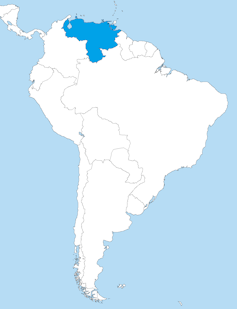
Venezuela is a republic of around 30 million people on the northern coast of South America, about twice the size of California. During much of the early 20th century, it was considered the wealthiest country in South America due to its oil reserves.

Venezuela’s location in South America.
Wikimedia Commons

Foreign companies, including those from the US, invested heavily in the growth of Venezuelan oil and played a heavy hand in its politics. In the face of US opposition, however, Venezuelan leaders began asserting more control over their main export resource. Venezuela was a key figure in the formation of the Organisation of Petroleum Exporting Countries (OPEC) in 1960, and it nationalised much of its oil industry in 1976.

This negatively impacted US companies like ExxonMobil and has fuelled the recent claims by the Trump administration that Venezuela “stole” US oil.


Economic prosperity, however, did not follow for most Venezuelans. The mismanagement of the oil industry led to a debt crisis and International Monetary Fund (IMF) intervention in 1988. Caracas erupted in protests in February 1989 and the government sent the military to crush the uprising. An estimated 300 people were killed, according to official totals, but the real figure could be 10 times higher.

In the aftermath, Venezuelan society became further split between the wealthy, who wanted to work with the US, and the working class, who sought autonomy from the US. This division has defined Venezuelan politics ever since.

Chávez’s rise to power

Hugo Chávez began his career as a military officer. In the early 1980s, he formed the socialist “Revolutionary Bolivarian Movement-200” within the army and began giving rousing lectures against the government.

Then, after the 1989 riots, Chávez’s recruitment efforts increased dramatically and he began planning the overthrow of Venezuela’s government. In February 1992, he staged a failed coup against the pro-US president, Carlos Andrés Pérez. While he was imprisoned, his group staged another coup attempt later in the year that also failed. Chavez was jailed for two years, but emerged as the leading presidential candidate in 1998 on a socialist revolutionary platform.

Chávez became a giant of both Venezuelan and Latin American politics. His revolution evoked the memory of Simón Bolívar, the great liberator of South America from Spanish colonialism. Not only was Chávez broadly popular in Venezuela for his use of oil revenue to subsidise government programs for food, health and education, he was well-regarded in like-minded regimes in the region due to his generosity.

Most notably, Chávez provided Cuba with billions of dollars worth of oil in exchange for tens of thousands of Cuban doctors working in Venezuelan health clinics.

He also set a precedent of standing up to the US and to the IMF at global forums, famously calling then-US President George W Bush “the devil” at the UN General Assembly in 2006.

US accused of fomenting a coup

Unsurprisingly, the US was no fan of Chávez.

After hundreds of thousands of opposition protesters took to the streets in April 2002, Chavez was briefly ousted in a coup by dissident military officers and opposition figures, who installed a new president, businessman Pedro Carmona. Chávez was arrested, the Bush administration promptly recognised Carmona as president, and the The New York Times editorial page celebrated the fall of a “would-be dictator”.

Chavez swept back into power just two days later, however, on the backs of legions of supporters filling the streets. And the Bush administration immediately faced intense scrutiny for its possible role in the aborted coup.

While the US denied involvement, questions lingered for years about whether the government had advance knowledge of the coup and tacitly backed his ouster. In 2004, newly classified documents showed the CIA was aware of the plot, but it was unclear how much advance warning US officials gave Chavez himself.

US pressure continues on Maduro

Maduro, a trade unionist, was elected to the National Assembly in 2000 and quickly joined Chávez’s inner circle. He rose to the office of vice president in 2012 and, following Chávez’s death the following year, won his first election by a razor-thin margin.

But Maduro is not Chávez. He did not have the same level of support among the working class, the military or across the region. Venezuela’s economic conditions worsened and inflation skyrocketed.

And successive US administrations continued to put pressure on Maduro. Venezuela was hit with sanctions in both the Obama and first Trump presidency, and the US and its allies refused to recognise Maduro’s win in the 2018 election and again in 2024.

Isolated from much of the world, Maduro’s government became dependent on selling oil to China as its sole economic outlet. Maduro also claims to have thwarted several coup and assassination attempts allegedly involving the US and domestic opposition, most notably in April 2019 and May 2020 during Trump’s first term.


US officials have denied involvement in any coup plots; reporting also found no evidence of US involvement in the 2020 failed coup.

Now, Trump has successfully removed Maduro in a much more brazen operation, with no attempts at deniability. It remains to be seen how Venezuelans and other Latin American nations will respond to the US actions, but one thing is certain: US involvement in Venezuelan politics will continue, as long as it has financial stakes in the country.

The Conversation

James Trapani does not work for, consult, own shares in or receive funding from any company or organisation that would benefit from this article, and has disclosed no relevant affiliations beyond their academic appointment.

ref. Before toppling Maduro, the US spent decades pressuring Venezuelan leaders over its oil wealth – https://theconversation.com/before-toppling-maduro-the-us-spent-decades-pressuring-venezuelan-leaders-over-its-oil-wealth-272679

Trump’s intervention in Venezuela: the 3 warnings for the world

Source: The Conversation – Global Perspectives – By Donald Rothwell, Professor of International Law, Australian National University

The January 3 US military operation in Venezuela seizing President Nicolás Maduro and his wife, Cilia Adela Flores de Maduro, was in equal measure audacious and illegal under international law.

It’s even more breathtaking that the Trump administration now says it “will run” Venezuela on an interim basis. The US will also seek to control the country’s vast oil interests.

Irrespective of its contested domestic politics and the chequered record of the Maduro regime, Venezuela remains a recognised sovereign state under international law. This includes permanent sovereignty over its natural resources. Any US seizure of Venezuelan oil would be a further violation of international law.

But the US hasn’t tried to justify its strikes with international law. Instead, the Trump administration is using domestic laws to ignore global rules entirely. It’s a new strategy, but one with no international legal basis, regardless of how you slice it.

Making the international domestic

Both the first and second Trump administrations have shown animosity towards the Maduro regime.

The US government has consistently raised two key issues: the role Venezuela has played in illegal Latin American migrants entering the US, and support for the flow of drugs into the US.

Both were major issues during the 2024 US presidential election campaign and are key planks of the Trump MAGA movement.

The legitimacy of the Maduro regime has also been called into question. There were disputed election outcomes in 2018 and 2024.

However, the legitimacy or otherwise of the Maduro regime is not a legal basis for a military intervention.

Rather, the Trump administration is relying on US domestic laws to justify its actions in Venezuela. A 2020 US grand jury indictment of Maduro and his wife for drug trafficking underpins the legal argument.

That Maduro has been paraded before television cameras in New York like any other detained prisoner further emphasises the importance of US domestic law in this matter. It’s unprecedented for a foreign head of state to be arrested in their presidential compound, detained and legally processed in the US within the space of 24 hours.

Maduro and his wife will eventually face trial on various criminal charges. That Nicolás Maduro is the Venezuelan president and therefore entitled to head of state immunity from criminal prosecution before a US court will presumably be set aside as the Trump administration does not recognise the legitimacy of his presidency.

Likewise, US courts will probably not bother themselves too much with the manner of Maduro’s arrest via US extra-territorial law enforcement in a foreign state.

In the normal course of events, once the US grand jury indictment had been released, Maduro’s extradition could have been sought via a US arrest warrant.

The Trump administration likely assumed any such extradition request would have been ignored. So, instead, it used the US military to enter Maduro’s Caracas compound to facilitate his arrest by Department of Justice officials.

Law enforcement or law breaking?

At the core of how the Trump administration has advanced its legal campaign against Venezuela and the Maduro regime has been its reliance on US law.

Starting in September, the US began targeting small boats linked to the Venezuelan drug trade through military strikes at sea.

The US justified these, in part, on the basis of extra-territorial enforcement of US laws against known cartels shipping drugs throughout the Caribbean to American entry points.


Read more:
Tracking the US build-up in the Caribbean


In December, the US Coast Guard began to pursue and seize oil tankers subject to US sanctions. This conduct was also justified on the basis of US law, with the sanctioned tankers being stopped and seized in waters off the Venezuelan coast on the high seas.

US law enforcement has now been extended to the seizure, arrest and detention of the Maduros.

By relying on the argument that the US is enforcing its own laws, the Trump administration provides itself with a domestic legal basis for its actions, no matter what international law may have to say.

This is a clear case of US exceptionalism towards international law, of which there is a long history. It reflects a US view that its own laws prevail over all other law. According to the US, international law should not unduly limit its ability to advance its national interests.

It’s also based on an assumption that any international opprobium it may encounter can be managed or safely ignored.

The 3 things to watch

There are three immediate regional and global lessons from these events.

First, the Trump administration has shown a vast capacity to sanction whomever it chooses based on domestic political whims. Individuals, entities and corporations have all been targeted through presidential executive orders, laws and force. Many will be on high alert.

Second, while the cumulative US actions against Venezuela violate the United Nations Charter, the UN will be virtually powerless to constrain the US. This is due to the veto powers held by the permanent members of its Security Council, not to mention Trump’s disdain for the UN generally.

Third, US allies and partners need to be very aware of the ramifications of this exceptional US law enforcement practice.

If, down the line, the US military encounters a more robust response than it did in Venezuela, it could trigger NATO treaty obligations for European countries and Canada, and ANZUS treaty obligations for Australia.

So, if the US continues down this road, there’s every chance the consequences of its interventionism could be felt by many around the world.

The Conversation

Donald Rothwell receives funding from Australian Research Council.

ref. Trump’s intervention in Venezuela: the 3 warnings for the world – https://theconversation.com/trumps-intervention-in-venezuela-the-3-warnings-for-the-world-272696

Gene editing in Indonesia: can new biotechnology solve old agricultural problems?

Source: The Conversation – Indonesia – By Emily A. Buddle, Senior Research Fellow, University of Adelaide

Like other developing countries, Indonesia is facing a familiar dilemma: how to feed a growing population while protecting its extraordinary biodiversity.

Food security has become a pressing concern amidst drought, pests and climate shifts. Scientists are turning to new technologies for answers. Biotechnology — specifically gene editing (GE) — emerges as a potential solution.

However, Indonesians hold diverse views on GE. While some support the technology, others oppose it.

Scientists are enthusiastic about the opportunities to enhance staple crops like rice and improve nutritional security.

Yet many still have questions. Can GE truly support smallholder farmers and help Indonesia achieve food sovereignty? Or will it simply revive the old controversies surrounding genetically modified crops?

Our 2024 study involving Indonesian stakeholders highlights that technical fixes alone cannot solve food insecurity. For gene editing to succeed, it must address the social inequalities – such as unequal land access – that farmers face.

Gene editing vs genetic modification: what is the difference?

Both gene editing and genetic modification refer to organisms with genetic material altered by humans to introduce desirable traits, such as drought tolerance or disease resistance.

While genetic modification often involves inserting genes from one species into another, gene editing makes small, targeted changes within the organism’s own DNA. In other words, this technology improves crop quality without adding foreign genes.

Advocates argue that this makes gene editing safer, tastier and more acceptable to the public than older modification methods.

But critics warn that even with these new methods, the same old questions remain: who controls the technology? Who benefits? And who gets left behind?

Indonesia’s reliance on imports

Smallholder farmers dominate Indonesia’s agricultural landscape, where rice remains the main staple food crop.

Despite increases in rice production and several other agricultural yields, the country still needs to import key commodities like corn and soybeans from the United States to produce tempeh and tofu for daily consumption.

Similarly, livestock feed supplies still rely heavily on imports of genetically modified soybean meal from Argentina and Brazil.

Lessons from the past: old setbacks to new technologies

To reduce this dependence on imports, the government revised regulations on genetically modified crops to enable domestic production.

The first commercial cultivation of modified crops, Bt cotton, took place between 2001 and 2002. However, the project ultimately failed after the provider, Monsanto, withdrew in 2003, citing difficult regulatory hurdles and limited land for cultivation.

Between 2003 and 2021, no commercial genetically modified crops were grown, apart from sugarcane in limited government-owned areas.

Following these setbacks, the government has looked towards gene editing. Since 2021, corn, potato and sugarcane varieties have been approved for commercial cultivation. While domestic production remains limited, Indonesia is a major importer of gene-edited commodities, particularly soybeans and corn, for both human consumption and livestock feed.

Today, researchers at Indonesia’s National Research and Innovation Agency (BRIN) are developing gene-edited varieties including rice, cassava and sorghum. The government remains optimistic, presenting gene editing as a way to boost productivity and reduce reliance on food imports.

Yet, questions remain over how this technology will reach farmers – and on whose terms


Baca juga:
NZ’s gene technology reform carries benefits and risks – a truly independent regulator will be vital


Fairness beyond technical fixes

Gene editing is often promoted as a quick technical fix for complex agricultural challenges. Yet its success and public acceptance depend on far more than science. It hinges on broader social and economic systems: who has access to seeds, who controls the knowledge and who decides which genetic changes are needed.

Our study shows that many people still do not fully understand the technology. Between April and August 2024, we interviewed 11 stakeholders in Indonesia. This included farmer groups, government officials, researchers, NGOs and consumer associations.

Many participants from civil society and farmers’ unions pointed to the ‘problem of socialisation’. They refer to a lack of shared understanding about the role gene technologies should play in Indonesia’s agricultural future. They also emphasised the importance of prioritising smallholder farmers, who continue to dominate the sector.

Gene editing may yield more drought-tolerant crops. However, it cannot resolve unequal access to land, credit and markets — the main challenges for smallholders.

A representative from a consumer association highlighted risks of ‘capital bias’. They noted that farmers could end up as company ‘employees’ rather than independent producers if they are pushed to adopt new technologies without transparent information.

Participants from the Indonesian Farmers Union also raised concerns about seed patents. They warned that local farm seeds could be recreated in a laboratory, reclassified and then patented for profit.

Innovation is often treated as the domain of scientists. Meanwhile, the social and ethical implications are left for others to handle afterwards. All participants agreed that public engagement is essential, yet none were ready to lead those efforts.


Baca juga:
Plants get a GMO glow-up: Genetically modified varieties are coming out of the lab and into homes and gardens


Shaping a shared future

Gene editing could play an important role in Indonesia’s food future – but not if it follows a ‘technology first, consultation later’ approach. Genuine communication requires discussing innovations beyond the scientists’ bubble and meaningfully involving those who shape agricultural and food systems, especially women.

As providers, cooks and household decision-makers, women farmers are well-positioned to play a crucial role in engaging and mobilising their communities. Their resilience is a vital resource for regional progress. Policymakers and researchers need to invest not only in laboratories but also in building trust, fostering dialogue and developing genuine collaboration with farmers and local communities.

Biotechnology may offer powerful tools, but it is not a silver bullet. We need to understand the specific social and cultural landscape in each locale to determine if and where the technology can be truly useful.

Indonesia’s path forward will depend on recognising that scientific innovation and social inclusion must grow together. Only by bringing both into alignment can gene editing truly contribute to a fair, sustainable and culturally grounded food system.

The Conversation

Emily A. Buddle has received funding from the Department of Primary Industries and Regions South Australia, the Australian Research Council and Meat and Livestock Australia. She is currently an Innovation Fellow with the Australian Research Council Training Centre for Future Crops Development. She is also a farmer in South Australia’s mid north region

Gloria Fransisca Katharina Lawi worked as a research fellow at the Biotechnology Center of Gadjah Mada University for KONEKSI. It was funded by the governments of Australia and Indonesia to promote knowledge partnerships.

Joan Leach has received research funding from the Australian Research Council, the National Health and Medicine Research Council, the Kavli Foundation and the UN FAO. She is a chief investigator in the ARC International Training Center for Future Crops.

ref. Gene editing in Indonesia: can new biotechnology solve old agricultural problems? – https://theconversation.com/gene-editing-in-indonesia-can-new-biotechnology-solve-old-agricultural-problems-269096

Can the US ‘run’ Venezuela? Military force can topple a dictator, but it cannot create political authority or legitimacy

Source: The Conversation – USA – By Monica Duffy Toft, Professor of International Politics and Director of the Center for Strategic Studies, The Fletcher School, Tufts University

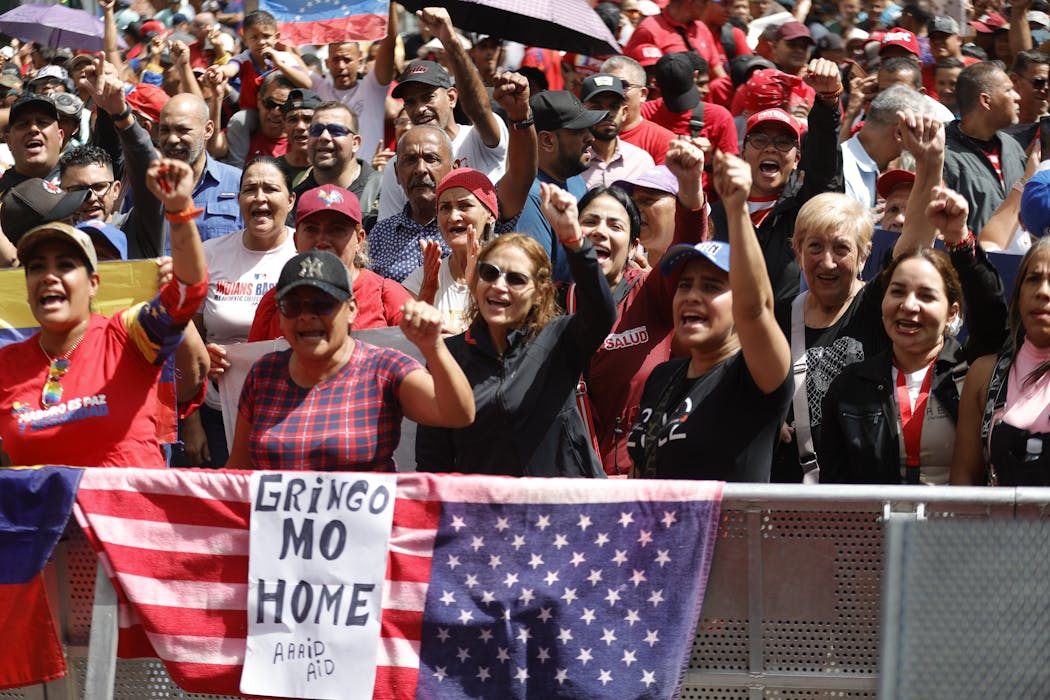
Supporters of Venezuelan President Nicolás Maduro gather during a demonstration in Caracas on Jan, 4, 2026.
Pedro Mattey/Anadolu via Getty Images

An image circulated over media the weekend of Jan. 3 and 4 was meant to convey dominance: Venezuela’s president, Nicolás Maduro, blindfolded and handcuffed aboard a U.S. naval vessel. Shortly after the operation that seized Maduro and his wife, Cilia Flores, President Donald Trump announced that the United States would now “run” Venezuela until a “safe, proper and judicious transition” could be arranged.

The Trump administration’s move is not an aberration; it reflects a broader trend in U.S. foreign policy I described here some six years ago as “America the Bully.”

Washington increasingly relies on coercion – military, economic and political – not only to deter adversaries but to compel compliance from weaker nations. This may deliver short-term obedience, but it is counterproductive as a strategy for building durable power, which depends on legitimacy and capacity. When coercion is applied to governance, it can harden resistance, narrow diplomatic options and transform local political failures into contests of national pride.

There is no dispute that Maduro’s dictatorship led to Venezuela’s catastrophic collapse. Under his rule, Venezuela’s economy imploded, democratic institutions were hollowed out, criminal networks fused with the state, and millions fled the country – many for the United States.

But removing a leader – even a brutal and incompetent one – is not the same as advancing a legitimate political order.

A man wearing sweatpants and a sweatshirt, in handcuffs and blindfolded.
An image of Venezuelan President Nicolás Maduro after his capture, posted by President Donald Trump and reposted by the White House.
White House X.com account

Force doesn’t equal legitimacy

By declaring its intent to govern Venezuela, the United States is creating a governance trap of its own making – one in which external force is mistakenly treated as a substitute for domestic legitimacy.

I write as a scholar of international security, civil wars and U.S. foreign policy, and as author of “Dying by the Sword,” which examines why states repeatedly reach for military solutions, and why such interventions rarely produce durable peace.

The core finding of that research is straightforward: Force can topple rulers, but it cannot generate political authority.

When violence and what I have described elsewhere as “kinetic diplomacy” become a substitute for full spectrum action – which includes diplomacy, economics and what the late political scientist Joseph Nye called “soft power” – it tends to deepen instability rather than resolve it.

More force, less statecraft

The Venezuela episode reflects this broader shift in how the United States uses its power. My co-author Sidita Kushi and I document this by analyzing detailed data from the new Military Intervention Project. We show that since the end of the Cold War, the United States has sharply increased the frequency of military interventions while systematically underinvesting in diplomacy and other tools of statecraft.

One striking feature of the trends we uncover is that if Americans tended to justify excessive military intervention during the Cold War between 1945–1989 due to the perception that the Soviet Union was an existential threat, what we would expect is far fewer military interventions following the Soviet Union’s 1991 collapse. That has not happened.

Even more striking, the mission profile has changed. Interventions that once aimed at short-term stabilization now routinely expand into prolonged governance and security management, as they did in both Iraq after 2003 and Afghanistan after 2001.

This pattern is reinforced by institutional imbalance. In 2026, for every single dollar the United States invests in the diplomatic “scalpel” of the State Department to prevent conflict, it allocates US$28 to the military “hammer” of the Department of Defense, effectively ensuring that force becomes a first rather than last resort.

“Kinetic diplomacy” – in the Venezuela case, regime change by force – becomes the default not because it is more effective, but because it is the only tool of statecraft immediately available. On Jan. 4, Trump told the Atlantic magazine that if Delcy Rodríguez, the acting leader of Venezuela, “doesn’t do what’s right, she is going to pay a very big price, probably bigger than Maduro.”

Lessons from Afghanistan, Iraq and Libya

The consequences of this imbalance are visible across the past quarter-century.

In Afghanistan, the U.S.-led attempt to engineer authority built on external force alone proved brittle by its very nature. The U.S. had invaded Afghanistan in 2001 to topple the Taliban regime, deemed responsible for the 9/11 terrorist attacks. But the subsequent two decades of foreign-backed state-building collapsed almost instantly once U.S. forces withdrew in 2021. No amount of reconstruction spending could compensate for the absence of a political order rooted in domestic consent.

Following the invasion by the U.S. and surrender of Iraq’s armed forces in 2003, both the U.S. Department of State and the Department of Defense proposed plans for Iraq’s transition to a stable democratic nation. President George W. Bush gave the nod to the Defense Department’s plan.

That plan, unlike the State Department’s, ignored key cultural, social and historical conditions. Instead, it proposed an approach that assumed a credible threat to use coercion, supplemented by private contractors, would prove sufficient to lead to a rapid and effective transition to a democratic Iraq. The United States became responsible not only for security, but also for electricity, water, jobs and political reconciliation – tasks no foreign power can perform without becoming, as the United States did, an object of resistance.

Libya demonstrated a different failure mode. There, intervention by a U.S.-backed NATO force in 2011 and removal of dictator Moammar Gadhafi and his regime were not followed by governance at all. The result was civil war, fragmentation, militia rule and a prolonged struggle over sovereignty and economic development that continues today.

The common thread across all three cases is hubris: the belief that American management – either limited or oppressive – could replace political legitimacy.

Venezuela’s infrastructure is already in ruins. If the United States assumes responsibility for governance, it will be blamed for every blackout, every food shortage and every bureaucratic failure. The liberator will quickly become the occupier.

Men carrying guns and celebrating, with huge black clouds behind them.
Iraqi Sunni Muslim insurgents celebrate in front of a burning U.S. convoy they attacked earlier on April 8, 2004, on the outskirts of the flashpoint town of Fallujah.
Karim Sahib, AFP/Getty Images

Costs of ‘running’ a country

Taking on governance in Venezuela would also carry broader strategic costs, even if those costs are not the primary reason the strategy would fail.

A military attack followed by foreign administration is a combination that undermines the principles of sovereignty and nonintervention that underpin the international order the United States claims to support. It complicates alliance diplomacy by forcing partners to reconcile U.S. actions with the very rules they are trying to defend elsewhere.

The United States has historically been strongest when it anchored an open sphere built on collaboration with allies, shared rules and voluntary alignment. Launching a military operation and then assuming responsibility for governance shifts Washington toward a closed, coercive model of power – one that relies on force to establish authority and is prohibitively costly to sustain over time.

These signals are read not only in Berlin, London and Paris. They are watched closely in Taipei, Tokyo and Seoul — and just as carefully in Beijing and Moscow.

When the United States attacks a sovereign state and then claims the right to administer it, it weakens its ability to contest rival arguments that force alone, rather than legitimacy, determines political authority.

Beijing needs only to point to U.S. behavior to argue that great powers rule as they please where they can – an argument that can justify the takeover of Taiwan. Moscow, likewise, can cite such precedent to justify the use of force in its near abroad and not just in Ukraine.

This matters in practice, not theory. The more the United States normalizes unilateral governance, the easier it becomes for rivals to dismiss American appeals to sovereignty as selective and self-serving, and the more difficult it becomes for allies to justify their ties to the U.S.

That erosion of credibility does not produce dramatic rupture, but it steadily narrows the space for cooperation over time and the advancement of U.S. interests and capabilities.

Force is fast. Legitimacy is slow. But legitimacy is the only currency that buys durable peace and stability – both of which remain enduring U.S. interests.

If Washington governs by force in Venezuela, it will repeat the failures of Afghanistan, Iraq and Libya: Power can topple regimes, but it cannot create political authority. Outside rule invites resistance, not stability.

The Conversation

Monica Duffy Toft does not work for, consult, own shares in or receive funding from any company or organization that would benefit from this article, and has disclosed no relevant affiliations beyond their academic appointment.

ref. Can the US ‘run’ Venezuela? Military force can topple a dictator, but it cannot create political authority or legitimacy – https://theconversation.com/can-the-us-run-venezuela-military-force-can-topple-a-dictator-but-it-cannot-create-political-authority-or-legitimacy-272683