Digital payments can expand financial inclusion — but only under the right conditions

Source: The Conversation – Canada – By Mesbah Sharaf, Professor of Economics, University of Alberta

Digital payments are often presented as a way to bring more people into the financial system. Mobile wallets, online transfers and app-based payment systems are now central to how governments, banks and technology firms talk about expanding access to financial services.

This is particularly significant today. Around the world, governments are investing heavily in digital finance as part of broader development and sustainability strategies. In Canada, public efforts have focused on strengthening digital payment infrastructure and regulation rather than expanding access directly.

Payments Canada is undertaking a multi-year modernization of core payment systems, including the development of a real-time payment rail, while the federal government has introduced a consumer-driven banking framework to support secure data sharing and innovation in financial services.

From emerging economies to high-income countries, digital payments are seen as tools for inclusion, resilience and growth, from India’s Unified Payments Interface to Brazil’s PIX instant payment system.

At the same time, digital payments do not work equally for everyone. Our recent research suggests a more complex picture of digital payments.

A more complex picture

Digital payment technologies can support financial inclusion, especially in places where traditional banking services are limited.

By reducing the need for physical bank branches, digital platforms can lower costs, save time and make basic financial services easier to use, particularly for low-income and rural populations who can access accounts and payments through mobile phones rather than in-person banking.

Evidence from multiple countries shows that digital financial services reduce transaction costs and expand access to formal financial tools for households and small businesses that were previously excluded.

For many households and small businesses — particularly in developing and emerging economies — this has expanded access to accounts and payment services.

Foundations matter for adoption

In our study, we reviewed research from the past decade about how digital payment technologies affect financial inclusion worldwide.

One of our key findings is that digital payment systems tend to perform best when certain conditions are already in place. Reliable internet and mobile networks, affordable devices and basic digital skills all matter for people to be able to use and benefit from digital payments.

Where these foundations are weak or uneven, adoption remains limited, even when digital payment options are widely available. Research shows that limited digital infrastructure, low internet access and weak technology readiness can act as significant barriers to adoption, meaning that simply introducing new technology does not guarantee that people will use it.

Trust also plays a crucial role. People are more likely to use digital payments when they trust the financial system behind them and feel confident their money is safe, and when security and privacy concerns are addressed.

In countries where financial institutions are weak or consumer protection is limited, digital platforms often struggle to gain widespread acceptance. This was the case with Nigeria’s eNaira, where fewer than 0.5 per cent of the population was using the digital currency a year after launch and most wallets remained inactive.

In such settings, cash frequently remains the preferred option, even when digital alternatives exist.

Persistent gender and socioeconomic gaps

Gender gaps are another recurring pattern. Across many countries, women are less likely than men to use digital financial services. These differences aren’t caused by technology itself, but by broader social and economic factors.

Women often have less access to mobile phones, lower digital literacy and less control over financial resources. As a result, digital payment systems can reflect — and sometimes reinforce — existing inequalities rather than eliminate them.

Income and education levels also influence adoption. People with higher incomes or more education are generally better positioned to adopt digital payments and benefit from them.

For lower-income users, concerns about fees, data costs, security and usability can discourage regular use. This helps explain why many digital payment platforms report high registration numbers but much lower levels of sustained activity.

The institutional and regulatory environment also shapes outcomes. Evidence shows that digital payments are more effective when supported by clear rules, strong consumer protections and well-functioning oversight.

When regulation is unclear or enforcement is weak, users may hesitate to rely on digital platforms for everyday transactions. When digital payments are integrated into a broader, trustworthy financial ecosystem, they are more likely to contribute to meaningful inclusion.

Promises and limits of technology

Newer technologies, such as blockchain-based payment systems, are sometimes presented as a way to overcome these challenges. While they may offer advantages in specific contexts, our research shows the evidence remains cautious.

Their effectiveness depends heavily on regulation, institutional capacity and user confidence. As with other digital tools, outcomes vary widely across countries and communities.

It’s clear that digital payments are not a simple solution. Their impact depends on how they’re designed, regulated and used within existing social and economic systems.

For policymakers and firms, this has important implications. Expanding financial inclusion is not just about introducing new technologies or increasing the number of digital accounts. It requires attention to affordability, usability, trust and the barriers faced by groups that are already disadvantaged. Without this broader perspective, digital finance risks widening gaps rather than closing them.

Digital payments can play a valuable role in promoting financial inclusion, but only under the right conditions. The evidence shows that technology can support inclusion, but it cannot replace the institutional, social and policy foundations on which inclusive financial systems ultimately depend.

The Conversation

The authors do not work for, consult, own shares in or receive funding from any company or organisation that would benefit from this article, and have disclosed no relevant affiliations beyond their academic appointment.

ref. Digital payments can expand financial inclusion — but only under the right conditions – https://theconversation.com/digital-payments-can-expand-financial-inclusion-but-only-under-the-right-conditions-272555

Venezuela attack, Greenland threats and Gaza assault mark the collapse of international legal order

Source: The Conversation – Canada – By Jorge H. Sanchez-Perez, Assistant Professor, Department of Philosophy, University of Alberta

The American invasion of Venezuela — along with fresh threats to annex Greenland — provide the world with a unique opportunity to perform a post-mortem examination on what was once known as the international rules-based legal order.

This legal order was based on rules enshrined in the United Nations Charter of 1945. Its collapse creates uncertainty that requires careful consideration from all those interested in world peace.


Read more:
Trump’s intervention in Venezuela: the 3 warnings for the world


First, however, it’s important to understand what legal orders are and how they can collapse.

Social rules come in different forms — some might be religious, some moral. But complex political communities tend to be ruled by another set of rules, legal ones.

Legal rules tend to be organized in what are commonly called legal orders, and these orders guide the actions of members of the political communities in their everyday lives. One goal of most legal orders is, usually, co-ordination among those who are part of a social group.

When we think about legal orders, we usually focus on the ones that are closer to our political communities, such as those connected to our cities, provinces and states. But there’s one legal order that tends to be ignored more often than not — the international legal order.

International law

One defining feature of international legal orders is that they are far removed from people within their own political communities, so negotiations to establish shared rules are usually carried out by representatives of large states or other powerful political entities.

Even though the international legal order feels isolated from everyday rules — like city laws telling us which side of the road to drive on — it shares the same basic features that make any system of co-ordination work.

One key feature is meeting the expectations of the people within a political community. For a legal order to last over time, it must do this. In other words, because legal orders are systems of co-ordination, they tend to endure as long as their rules are expected and accepted, even if those rules are unjust.

Although some people believe that a law must be just to count as law, that view is hard to sustain when we look at the past few hundred years of human history. Many periods offer clear examples of both domestic and international legal systems that upheld deeply unjust and morally troubling positions.

Yet it would be difficult to argue that there was no legal order in places like the Ottoman Empire or Nazi Germany. In both cases, genocide — among the gravest moral failures imaginable — occurred within functioning legal systems. This suggests that legal orders can persist even while enabling repeated immoral actions.

History also shows, however, that legal orders do collapse, and often more quickly and more frequently than many might expect.

The Ottoman Empire and Nazi Germany, for example, ceased to exist a long time ago. From a broader historical perspective, the legal order of the Roman Republic in the second century BCE no longer exists and bears little resemblance to the system governing modern Rome within Italy today.

Like the other legal orders mentioned, the post–Second World War order increasingly looks like a relic rather than a binding reality — a fact we must clearly recognize if we hope to save some of its positive features.

Fundamental rights

After the Second World War, one of the main agreements among most political communities around the world was that the previously held right to wage wars against other countries was no longer acceptable. Sovereignty consequently became one of the cornerstones of the international legal order.

This was enshrined in Articles 1 and 2 of the United Nations Charter. The logic was simple: as the charter’s preamble notes, repeated wars had brought immense suffering to people entitled to fundamental rights based on their dignity, worth and equality. As a result, this new order abolished the right of political communities to wage war for any reason.

In practice, however, this order rested on a watered-down version of that ideal. Even when sovereignty and human rights were violated via military action, the appearance of an aim to protect them had to be maintained. Powerful states could breach these principles so long as they preserved the illusion that they were attempting to uphold and safeguard sovereignty and rights.

This unspoken rule — that power could override law if the façade remained intact — underpinned the international legal order from 1945 to 2023.

As the world watched the assault on Gaza unfold — deemed a genocide by the United Nations — many western political communities that had helped build the post-war legal order abandoned even the pretense that sustained it.

Once the illusion of respect for sovereignty and human rights collapsed, the system lost a key element that had kept it functioning. This is why I’ve argued previously that the rules-based international order went to Gaza to die at the hands of those who created it.

Annexation made easy

Unlike U.S. President George W. Bush’s war in Iraq, which was framed by American diplomats as defending human rights, Donald Trump’s invasion of Venezuela and the capture of Nicolás Maduro weren’t presented as respecting any lofty principles.

His actions were grounded on the views that the U.S. has a claim to Venezuela’s oil. The intervention was driven by economic interests and hearkened back to the the Monroe Doctrine, an 1823 U.S. policy that promoted American imperialism.

The events in Venezuela suggest the post-1945 international legal order, which emphasized sovereignty and fundamental rights, has been replaced by one more like the pre-Second World War system, when nations could go to war for almost any reason.


Read more:
Trump’s squeeze of Venezuela goes beyond Monroe Doctrine – in ideology, intent and scale, it’s unprecedented


Under the legal order now in place, Canada and Greenland could easily be the next targets of American annexation. Similarly, Taiwan could be annexed by China and Ukraine by Russia.

What the world is witnessing now is the international rules-based order being stripped of whatever value it once had. It is time to accept this reality if we are to build a better international order next time.

The Conversation

Jorge H. Sanchez-Perez receives funding from the Social Sciences and Humanities Research Council of Canada (SSHRC).

ref. Venezuela attack, Greenland threats and Gaza assault mark the collapse of international legal order – https://theconversation.com/venezuela-attack-greenland-threats-and-gaza-assault-mark-the-collapse-of-international-legal-order-272690

La maternidad que heredamos: palabras, silencios y juicios que pasan de generación en generación

Source: The Conversation – (in Spanish) – By Patricia Catalá Mesón, Profesora Titular de Universidad del Area de Psicología Social, Universidad Rey Juan Carlos

Jurij Krupiak/Shutterstock

En cada conversación sobre maternidad hay algo más que consejos o anécdotas. Hay una herencia emocional que pasa de generación en generación, a veces en palabras, otras en gestos y muchas veces en silencios. Heredamos no solo maneras de cuidar, sino también formas de callar, de resistir, de amar y de temer. Las experiencias de maternidad se heredan, pero también los silencios.

En psicología perinatal sabemos que la experiencia de la maternidad no se limita al vínculo con el bebé: es también una transformación identitaria y emocional. Estudios sobre apego intergeneracional y memoria transgeneracional muestran cómo las vivencias, los miedos y las creencias de las generaciones anteriores influyen en la manera en que las mujeres viven su propia maternidad. Cada mujer, consciente o no, negocia entre lo heredado y lo elegido.

Durante los últimos años, como investigadora en este campo, he escuchado a cientos de mujeres hablar de su embarazo, su parto y su posparto. En esas conversaciones aparecen risas, cansancio, ternura, culpa y una tensión sutil. La que se da entre mujeres que se quieren, pero que a veces no saben cómo entenderse.

Tías, suegras o abuelas que “observan”

Muchas madres recientes me cuentan que se sienten observadas por las mujeres de su entorno: madres, tías, suegras, abuelas… Mujeres que también cuidaron Y que hicieron lo que pudieron con lo que tenían. Pero a menudo sus consejos suenan más a juicio que a apoyo.

En entrevistas de investigación y conversaciones clínicas, estas observaciones aparecen con frecuencia formuladas en expresiones como:

“Antes comíamos de todo en el embarazo y no pasaba nada”. “Antes bañábamos a los niños todos los días”. “Antes no había tantas tonterías con la comida”. “Nosotras no teníamos tiempo para esas cosas”. “Con tanto leer en internet, se os olvida el instinto”…

Formulaciones aparentemente cotidianas que no siempre se dicen con mala intención, pero que duelen. Duelen porque detrás hay una idea: que la forma en que hoy se vive la maternidad debe justificarse, defenderse o explicarse. Como si cada decisión tuviera que demostrar que es la correcta.

Maternidad intensiva: en busca de madres infalibles

La socióloga Sharon Hays definió hace tres décadas este fenómeno como “maternidad intensiva”, una forma de crianza en la que se espera que las madres sean emocionalmente disponibles, informadas y casi infalibles. Esa exigencia cultural se mezcla con los juicios intergeneracionales y refuerza la sensación de estar siempre siendo evaluada.

Lo paradójico es que antes también existían redes de apoyo, pero muchas de ellas eran silenciosas. Mujeres que acompañaban, que sostenían, pero que también callaban. Callaban el miedo, el dolor, la tristeza. Callaban porque no había espacio para hablar de la maternidad desde la vulnerabilidad. Y quizá por eso, cuando hoy las madres expresan su necesidad de espacio o de calma, esas generaciones pasadas no siempre saben cómo acompañarlas sin repetir el patrón del consejo o la corrección.

Algunas madres me cuentan que han tenido que pedir que no haya familiares en la sala de espera del paritorio o que las primeras visitas esperen unos días. No porque no quieran compañía, sino porque necesitan intimidad, silencio y reconocimiento. Pero esa petición, a menudo, se vive como rechazo. “Nosotras también parimos y no nos quejamos”, responden algunas. Y sí, ellas también lo hicieron, pero lo hicieron muchas veces sin ser escuchadas, sin poder elegir, sin poder parar.

La maternidad actual, en cambio, busca un lugar donde cuerpo y palabra se encuentren. Donde cada decisión (comer o no ciertos alimentos, elegir epidural o parto natural, amamantar o no, destetar o seguir) pueda hacerse desde la libertad, no desde el miedo al juicio. Porque la maternidad no es una competencia entre generaciones, sino un diálogo que aún está aprendiendo a hablar.

Frases que dejan huella

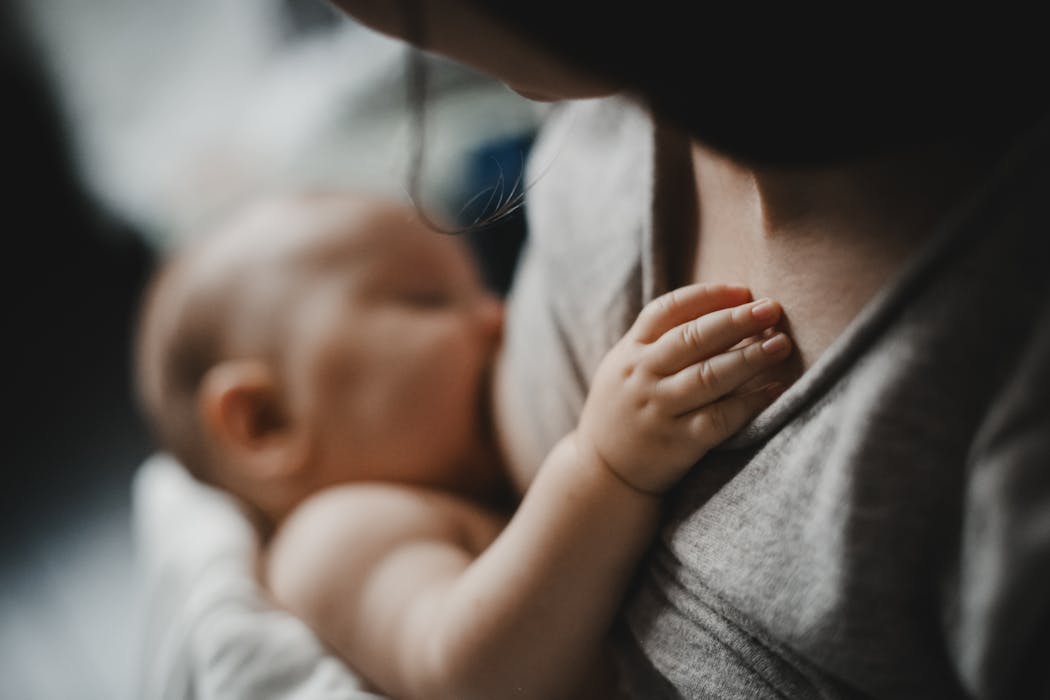
Incluso la lactancia, que debería ser un espacio íntimo y sereno, se convierte a menudo en tema de debate. “Tu leche no le llena y por eso llora tanto”. “Dale un biberón que así duerme mejor”. “Ya es mayor para seguir mamando”.

Son frases que parecen pequeñas, pero dejan huella. Minan la confianza, generan culpa y cuestionan el vínculo. Detrás de cada decisión hay una mujer que siente, duda y sostiene con su cuerpo y su mente. Que busca hacerlo bien, aunque a veces el entorno solo sepa decirle cómo debería hacerlo.

Hoy, desde la psicología, sabemos que la validación emocional y la escucha activa son factores protectores frente a la depresión posparto y el aislamiento materno. Acompañar sin juzgar no solo alivia: también previene sufrimiento psicológico y fortalece el bienestar del vínculo madre-bebé.

Quizá ha llegado el momento de romper esa cadena de juicios heredados. De sustituir el “antes se hacía así” por un “cuéntame cómo lo haces tú”. De pasar del consejo automático a la escucha auténtica. Acompañar no es enseñar, es estar. Es ofrecer presencia sin imponer, empatía sin corrección. Es aceptar que cada mujer, cada historia y cada época tienen su propio lenguaje.

Las investigaciones sobre transmisión emocional intergeneracional sugieren que los silencios también se heredan: no solo a través de relatos explícitos sobre la maternidad, sino también mediante una transmisión emocional implícita, hecha de gestos, climas afectivos y emociones no dichas.

Las heridas que una generación no pudo nombrar, la siguiente a menudo las siente sin saber por qué. Por eso cuando una mujer pide calma, busca silencio o defiende su manera de cuidar, no está rechazando a nadie. Está intentando escucharse. Está aprendiendo a cuidar desde un lugar más consciente, más propio y más en paz.

Agradecer la historia que nos trajo hasta aquí, con sus luces y sus sombras, es una manera de reconciliarnos. De honrar a las que nos precedieron sin cargar con sus silencios. De entender que no necesitamos tener razón para acompañarnos, solo respeto para mirarnos sin juicio.

Porque en cada generación hay una mujer que cuida, que sostiene y que aprende a hacerlo de nuevo, a su manera. Y cada vez que una de nosotras se atreve a hablar (a poner palabras donde antes hubo silencio), está tejiendo un puente entre pasado y futuro. Un puente hecho de escucha, ternura y presencia.

The Conversation

Este artículo se deriva del proyecto I-MARTERNA, financiado por la Comunidad de Madrid y la Universidad Rey Juan Carlos en el marco del convenio para la promoción de la investigación y transferencia de tecnología 2023–2026 (Código: 2023/00423/017, Línea A: Doctores emergentes).

ref. La maternidad que heredamos: palabras, silencios y juicios que pasan de generación en generación – https://theconversation.com/la-maternidad-que-heredamos-palabras-silencios-y-juicios-que-pasan-de-generacion-en-generacion-268420

Por qué dormimos peor que nunca aunque sepamos cada vez más sobre el sueño

Source: The Conversation – (in Spanish) – By Alfredo Rodríguez Muñoz, Catedrático de Psicología Social y de las Organizaciones, Universidad Complutense de Madrid

antoniodiaz/Shutterstock

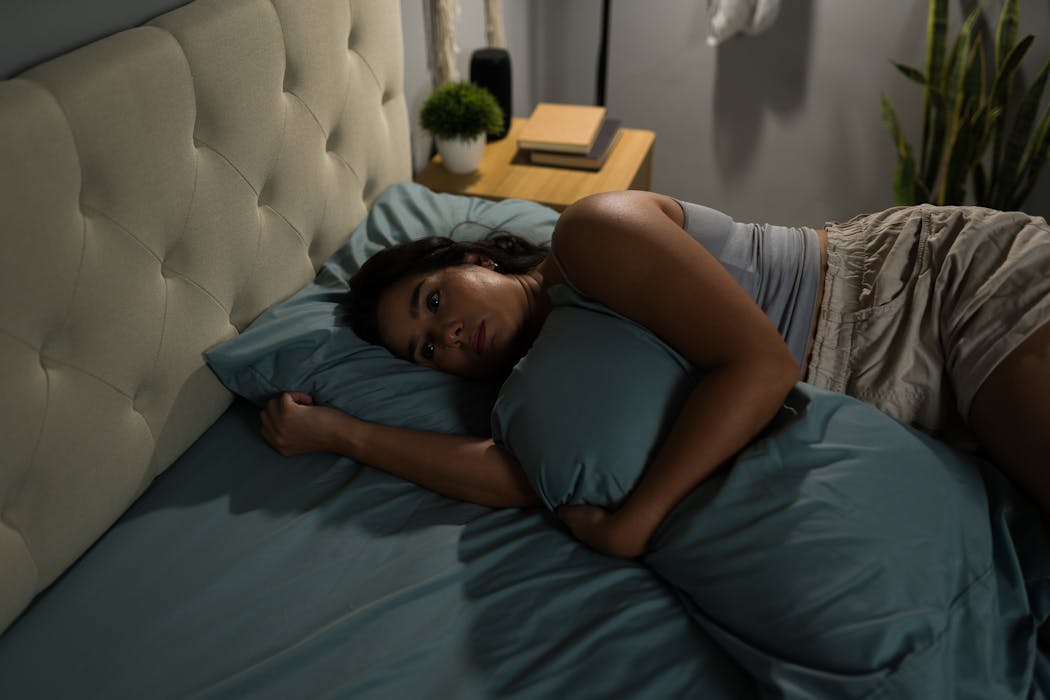
Nunca habíamos sabido tanto sobre el sueño como ahora. Conocemos cuántas horas diarias se recomiendan, qué papel juega la regularidad, cómo influyen las pantallas y por qué dormir mal afecta a la salud física y mental. La investigación científica sobre el descanso ha avanzado de forma notable en las últimas décadas. Y, sin embargo, cada vez más personas duermen mal en todo el mundo.

En España, por ejemplo, esta realidad es especialmente visible. Casi la mitad de la población reconoce no descansar bien. Diversos estudios estiman que alrededor del 40 % de las personas presenta problemas de insomnio y que aproximadamente un 14 % lo padece de forma crónica. Además, la tendencia es ascendente. A comienzos de la década de 2010 la prevalencia de insomnio crónico se situaba en torno al 6 %, menos de la mitad de la actual, como mostraban estudios poblacionales previos.

Saber cada vez más sobre el sueño y dormir cada vez peor se ha convertido en una paradoja. Esta no se explica por una falta de información ni por desinterés individual, sino por la forma en que hemos organizado el tiempo, el trabajo y la vida cotidiana. Hoy cada vez es más difícil algo tan básico como descansar bien.

Cuando el conocimiento no basta

Durante años, el sueño se ha abordado como una cuestión individual. Si alguien duerme mal, se asume que no sigue las recomendaciones adecuadas o que mantiene hábitos poco saludables. Este enfoque tiene un efecto claro: desplaza la responsabilidad hacia la persona y deja en segundo plano las condiciones sociales y laborales, que influyen decisivamente en el descanso.

Sabemos qué hacer para dormir mejor, pero no siempre podemos hacerlo.

La evidencia en psicología del trabajo y salud laboral muestra qué factores predicen una peor calidad del sueño, incluso entre personas bien informadas sobre hábitos saludables. Estos incluyen las jornadas extensas, los horarios impredecibles y la dificultad para desconectar mentalmente del trabajo.

A ello se suma un cambio profundo en la forma en que se estructura el día. En muchos casos la jornada ya no tiene un final claro. Correos electrónicos, mensajes y tareas pendientes prolongan la activación mental hasta bien entrada la noche.

La investigación sobre hiperconectividad y telepresión ha mostrado que esta disponibilidad permanente se asocia con mayor activación fisiológica y con dificultades para conciliar y mantener el sueño. El cuerpo necesita señales claras de cierre para iniciar el descanso. Cuando la noche se convierte en una extensión del día, ese proceso se vuelve más difícil.

El problema es que las formas de trabajar han cambiado, pero la biología no lo ha hecho. El cerebro humano funciona en ciclos y necesita alternar activación y recuperación. Dormir no es una pausa pasiva, sino un proceso activo en el que se consolidan recuerdos, se regulan emociones y se restaura la capacidad de pensar con claridad. La falta de sueño afecta de manera consistente a la atención, la memoria y la toma de decisiones.

A este problema se suma un factor menos visible, pero fundamental: vivimos cada vez más alejados de nuestros ritmos biológicos naturales. El sueño está regulado por relojes internos que se sincronizan con la luz, la regularidad y la alternancia entre día y noche. Sin embargo, horarios irregulares, exposición prolongada a luz artificial, trabajo nocturno y jornadas que se extienden más allá del atardecer generan un desajuste circadiano persistente.

El resultado no es solo dormir menos, sino hacerlo en momentos biológicamente inadecuados. Esto reduce la calidad del descanso incluso cuando el tiempo total de sueño parece suficiente.

Además, no todas las partes del sueño se pierden por igual. Las últimas horas de la noche, que suelen recortarse cuando nos acostamos tarde o madrugamos, son especialmente importantes para la regulación emocional y la integración de la información. Su pérdida se asocia con mayor irritabilidad, menor flexibilidad cognitiva y una mayor tendencia a responder de forma impulsiva al día siguiente.

Dormir menos no implica solo estar más cansado, sino funcionar de otra manera.

A este desajuste estructural se añade un componente cultural. En muchos entornos, especialmente laborales, el cansancio se ha normalizado e incluso valorado. Dormir poco continúa asociándose al compromiso, la responsabilidad y la ambición.

Sin embargo, la investigación muestra que la fatiga crónica no solo reduce el rendimiento. También deteriora el clima laboral, la cooperación y la calidad de las decisiones.

El sueño como responsabilidad individual y como negocio

En paralelo, el discurso del bienestar ha tendido a convertir el sueño en un producto de consumo. Aplicaciones, dispositivos de seguimiento, relojes que supuestamente registran cada fase del descanso, colchones inteligentes y programas especializados prometen ayudarnos a dormir mejor.

Aunque algunas de estas herramientas pueden resultar útiles, muchas abordan el problema desde una lógica individual. Este enfoque se centra en optimizar hábitos o métricas, sin cuestionar las condiciones sociales y laborales que dificultan el descanso.

En algunos casos, esta obsesión por medir y hacerlo bien puede incluso empeorar el problema. En los últimos años se ha acuñado el término “ortosomnia” para describir la ansiedad por dormir correctamente según indican los datos de los dispositivos. Personas que duermen razonablemente bien comienzan a preocuparse en exceso por sus puntuaciones, fases y despertares. Esto incrementa la vigilancia nocturna y dificulta el descanso. La paradoja es evidente: cuanto más se intenta controlar el sueño, más se escapa.

Todos estos discursos presentan el sueño como algo que se compra, se mide y se mejora, en lugar de como una necesidad biológica básica que debería estar protegida. Esta lógica refuerza la idea de que dormir bien es un logro personal, cuando en realidad depende de cómo se organizan los tiempos, las expectativas y las normas colectivas.

Tal combinación de factores alimenta una paradoja difícil de resolver con soluciones rápidas. Intentamos corregir con tecnología un problema que hemos creado organizando mal el tiempo y el trabajo. Ninguna aplicación puede compensar jornadas impredecibles, hiperconectividad constante y la imposibilidad real de desconectar.

The Conversation

Alfredo Rodríguez Muñoz no recibe salario, ni ejerce labores de consultoría, ni posee acciones, ni recibe financiación de ninguna compañía u organización que pueda obtener beneficio de este artículo, y ha declarado carecer de vínculos relevantes más allá del cargo académico citado.

ref. Por qué dormimos peor que nunca aunque sepamos cada vez más sobre el sueño – https://theconversation.com/por-que-dormimos-peor-que-nunca-aunque-sepamos-cada-vez-mas-sobre-el-sueno-272400

El visionario de la alta costura moderna: el olvidado Paul Poiret

Source: The Conversation – (in Spanish) – By Ana María Iglesias Botrán, Profesora del Departamento de Filología Francesa en la Facultad de Filosofía y Letras. Doctora especialista en estudios culturales franceses y Análisis del Discurso, Universidad de Valladolid

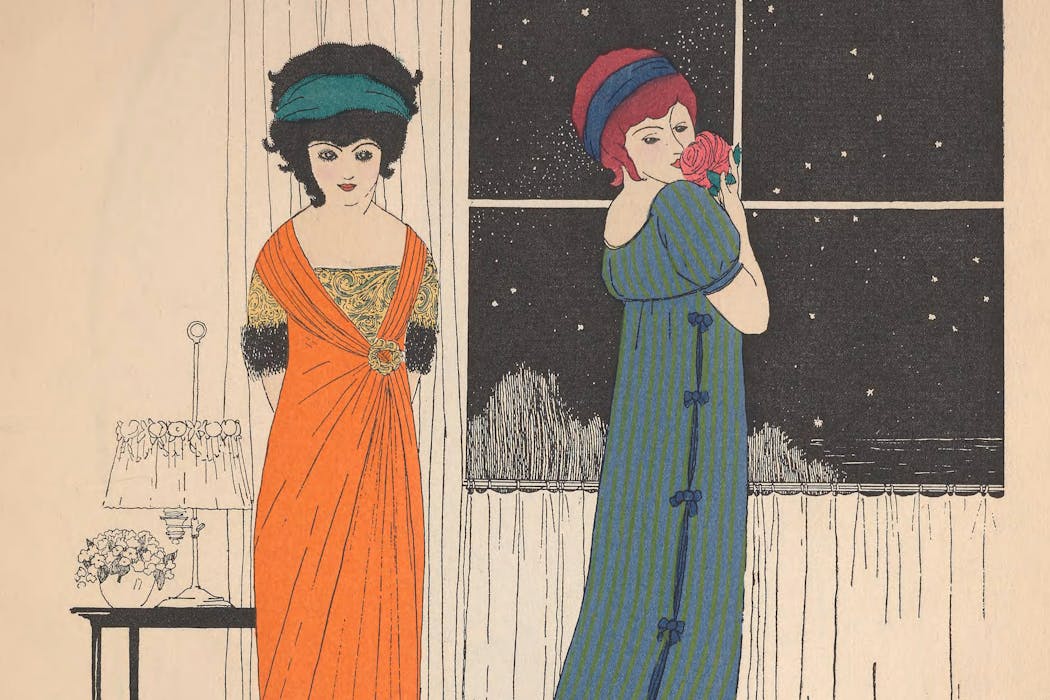
Ilustración de dos vestidos de Poiret hecha por Paul Iribe para _Les Robes de Paul Poiret_. Wikimedia Commons

Durante décadas en el olvido, Paul Poiret (París, 1879-1944) fue el diseñador de alta costura más importante de los inicios del siglo XX, el primero que realmente cambió la silueta femenina.

Retrato en blanco y negro de un hombre con chaleco blanco, corbata y chaqueta negra.
Retrato de Paul Poiret en 1913.
United States Library of Congress’s Prints and Photographs division

Con su personalidad arrolladora creó un proyecto creativo integral, una empresa próspera que abarcó todas las artes decorativas, y fue pionero en un estilo de negocio que inspiró a muchos diseñadores posteriores.

Además de ropa, fabricó perfumes, publicó libros, decoró barcos, viajó por el mundo, creó una escuela de arte para niñas, se empapó de las vanguardias y fue siempre consciente de estar generando un universo nuevo. Su desbordante creatividad lo llevó finalmente a la ruina y al olvido, pero siempre estuvo orgulloso de su aportación.

Afortunadamente, el Museo de Artes Decorativas en París le dedica en estos meses una exposición cuyo nombre le define: La moda es una fiesta.

Nueva silueta femenina

Liberar el cuerpo de la mujer fue su primer objetivo. Paul Poiret observaba y respetaba la anatomía natural femenina, y lograba que la ropa acompañase el movimiento del cuerpo con ligereza. Creó en sus diseños líneas rectas o curvadas y drapeados estratégicos que conservaban la elegancia y el estilo único de su firma.

En 1906 descartó definitivamente el corsé y diseñó sus creaciones partiendo del sujetador, un acto pionero de modernidad vigente hasta hoy. Diseñó la falda-pantalón, caftanes, kimonos y turbantes y también innovó al ser el primero en presentar a sus modelos con el pelo corto.

Este estilo novedoso y adelantado por su comodidad se puso de moda y causó furor entre las mujeres de la alta sociedad, las cocottes y las artistas más relevantes.

Diseños de Paul Poiret exhibidos en la exposición del Museo de Artes Decorativas de París.
Musée des Arts Décoratifs

Investigación y desarrollo

Pretendía crear una nueva estética, un lenguaje visual insólito. Por eso contrató a un químico para fabricar en su propio laboratorio nuevos tintes, investigando combinaciones armoniosas e innovadoras.

Para el diseño de los estampados, fundó en 1911 el Atelier Martine, un lugar de formación gratuita para jóvenes con talento artístico y pocos recursos. Allí, las niñas dibujaban libremente inspiradas en la naturaleza, sin intervención externa ni normas académicas.

Poiret transformaba estos dibujos de flores, alcachofas y margaritas en elementos decorativos que aplicaba tanto a tejidos de ropa como a cortinas, cojines y alfombras y otros objetos del hogar.

Primer modisto con perfume

Para él la moda no se limitaba a la ropa, sino a un estilo de vida basado en el arte que debía romper con los gustos de la belle époque e impregnarlo todo. Por eso, fue el primer diseñador en crear una línea de perfumes, ya que consideraba que el aroma también era una muestra del estilo personal.

Diez años antes de que Chanel sacara su mítico “N.º 5” (1921), Paul Poiret ya había fundado la sociedad comercial Les Parfums de Rosine (según el nombre de su hija mayor). Durante una década, fue el único modisto-perfumista de París, hasta que, además de Chanel, la casa Whorth (en 1924) y el diseñador Jean Patou (en 1925) siguieron sus pasos.

Para la creación de dos de sus aromas se inspiró en sus hijas. Otros evocaban el imaginario francés, como “Arlequinade”, el exotismo, como “Aladdin” o “Nuit de Chine” (Noche china), o la sensualidad, como “Fruit défendu”. Eran perfumes intensos, con ingredientes florales y exóticos.

Una vez más, recurrió a artistas para su producción. Todos los frascos eran sorprendentes, novedosos y elegantes, con formas geométricas o florales y tapones ornamentales. Son en sí mismos objetos de lujo y obras maestras pioneras del arte decorativo. Para el perfume “Arlequinade (1923)”, por ejemplo, cuya fragancia había sido creada por el perfumista Henri Alméras, contó con la artista del cubismo Marie Vassilieff para diseñar el frasco y con el escultor en vidrio Julien Viard para fabricarlo.

Hoy en día los perfumes de Poiret se conservan en la Osmothèque de París.

La moda es una fiesta

En su autobiografía Vistiendo la época cuenta que disfrutaba de la vida en todo momento. Por eso compartía su creatividad organizando fiestas temáticas que se volvieron míticas.

La primera, celebrada el 24 de junio de 1911, se tituló “La Mille et deuxième Nuit” (“La mil y dos noches”), y estaba inspirada en el clásico libro de relatos Las mil y una noches. En la invitación se indicaba claramente que “un disfraz inspirado en cuentos orientales [era] absolutamente obligatorio”.

Las cosas de Paul Poiret vistas por Georges Lepape, París, Paul Poiret, 1911. Ejemplar n.º 176/300. Fototipia coloreada con plantilla.
Les Arts Décoratifs

Poiret se disfrazó de sultán y su esposa Denise de princesa enjaulada, con pantalones de estilo oriental y una túnica con faldas acopladas que sería recordada por todos. La decoración, la comida, la música y las actuaciones giraron en torno al tema central y más de 300 invitados –artistas, escritores, aristócratas– asistieron luciendo diseños del anfitrión.

Fue una fastuosa puesta en escena de sus creaciones: exótica, innovadora, sorprendente, teatral y delirante, como las que hoy son habituales en las presentaciones de las grandes casas de moda.

¿Catálogos de moda u obras de arte?

Quiso que sus diseños llegaran a todos los rincones de Europa. Creó catálogos promocionales con ilustraciones de artistas de la época que él eligió y contribuyó a consagrar.

El 1908 le encargó uno a Paul Iribe: Los vestidos de Paul Poiret. En 1911 hizo lo mismo con Georges Lepape en Las cosas de Paul Poiret. En ellos, las mujeres llevan puestos sus diseños y aparecen fumando, en fiestas, charlando, rodeadas de escenarios que evocan lujo y sofisticación.

Estas recopilaciones son consideradas obras de arte de gran valor y hoy se conservan en la Biblioteca Nacional de Francia, el Museo Metropolitano de Arte de Nueva York y el Victoria & Albert Museum de Londres.

Fuente inagotable de inspiración

Foto en blanco y negro de una mujer vistiendo un traje pantalón a cuadros.
Traje de cuadros diseñado por Paul Poiret en 1914.
United States Library of Congress’s Prints and Photographs division

Su estilo influyó en grandes de la moda que le sucedieron: Christian Dior, Jean Paul Gaultier y John Galliano, entre otros, así como en Gabrielle Chanel. La diseñadora Elsa Schiaparelli, gran amiga y admiradora, le consideraba el Leonardo Da Vinci del sector.

Fue el precursor de los vestidos de los años 20 que Chanel retomó e hizo evolucionar con la creación de una elegancia funcional. Si Poiret renovó y liberó la silueta, Chanel la hizo cómoda, acortando las faldas, dejando libre la cintura, con materiales ligeros y adaptados al movimiento natural del cuerpo. Paul Poiret deploraba el estilo básico y extremadamente sencillo de Chanel que, curiosamente, él mismo había contribuido a crear y que denominaba el misérabilisme de luxe.

El camino a la ruina y el olvido

Durante la Primera Guerra Mundial, Poiret no desistió en su estilo artístico y fastuoso, sin tener en cuenta la realidad social: ante la escasez de la contienda, ignoró por ejemplo tejidos austeros como la lana.

Tampoco atendió a los nuevos gustos de la alta sociedad de posguerra: bailar el tango, bañarse en el mar, conducir coches, el deporte… Una vida más veloz y dinámica exigía vestidos cómodos y adecuados para cada ocasión. Otros diseñadores más conscientes de los cambios, como Chanel, supieron aprovechar los acontecimientos y triunfar.

Sus gastos desmedidos, su resistencia al cambio y las malas decisiones empresariales lo llevaron a la bancarrota. En 1929 tuvo que cerrar su casa de moda, todos sus bienes fueron subastados y su aportación ignorada.

Fue así como el diseñador que anunció la moda moderna y cuya influencia llega hasta hoy murió en 1944: enfermo, arruinado y olvidado.

The Conversation

Ana María Iglesias Botrán no recibe salario, ni ejerce labores de consultoría, ni posee acciones, ni recibe financiación de ninguna compañía u organización que pueda obtener beneficio de este artículo, y ha declarado carecer de vínculos relevantes más allá del cargo académico citado.

ref. El visionario de la alta costura moderna: el olvidado Paul Poiret – https://theconversation.com/el-visionario-de-la-alta-costura-moderna-el-olvidado-paul-poiret-266733

Cómo hacer mejores propósitos de año nuevo: encontrar lo que nos empuja, no buscar lo que nos falta

Source: The Conversation – (in Spanish) – By Juan-Antonio Moreno-Murcia, Catedrático de Universidad, Universidad Miguel Hernández

Pratchaya.Lee/Shutterstock

Cada comienzo de año tiene algo de ritual silencioso. Cambia el calendario, aflojamos un poco el ritmo y, casi sin darnos cuenta, aparece esa pregunta que vuelve siempre: ¿qué quiero ahora?

A veces la formulamos con palabras claras y queda flotando como una sensación difusa, pero está ahí. Se cuela en las listas de propósitos, en las conversaciones de enero, en esa mezcla rara de expectativa y cansancio que traen los comienzos. Y suele vivirse como si el deseo señalara todo lo que falta, como si el año nuevo fuera una oportunidad para corregir déficits acumulados. Más disciplina, más éxito, menos errores, menos malestar.

Sin embargo, esta forma de plantear los propósitos parte de una idea muy extendida, pero poco cuestionada: que deseamos porque carecemos de algo.

¿Deseamos porque nos falta algo?

Durante años he escuchado a personas muy distintas hablar de sus propósitos como si fueran parches. Como si al lograrlos, por fin, algo esencial quedara resuelto. Con el tiempo, y con mucha experiencia formativa, empecé a sospechar que ahí había una confusión de base. El deseo no es solo la expresión de una carencia. No deseamos únicamente porque algo no está, sino porque estamos vivos, porque hay en nosotros una fuerza que empuja, que insiste, que persevera.

Esta idea no es nueva. En la filosofía de Spinoza, el deseo es entendido como la expresión misma de la esencia humana, aquello que nos impulsa a perseverar en nuestro ser y a aumentar nuestra potencia de actuar. Desde esta perspectiva, el deseo no es un defecto que debamos corregir, sino la energía que sostiene nuestra vida activa.

Pensar así el deseo cambia radicalmente la forma en que encaramos los propósitos. Ya no se trata solo de fijar metas externas, sino de orientar una fuerza que ya está en marcha. Cada vez que formulamos un propósito, estamos decidiendo hacia dónde dirigir nuestra motivación.

El ‘querer’ frente al ‘gustar’

Numerosos estudios en psicología han mostrado que las personas solemos sobreestimar el impacto emocional duradero que tendrán ciertos logros o adquisiciones, un fenómeno conocido como “error de predicción afectiva”. Imaginamos que, cuando alcancemos eso que deseamos, llegará una alegría estable. Sin embargo, esa alegría suele ser breve y dependiente del resultado.

Existe una distinción importante entre el “querer” y el “gustar”. Mientras que el sistema dopaminérgico del “querer” nos empuja obsesivamente hacia la meta, no suele darnos satisfacción: la promesa de ese placer, al alcanzarse, hace desaparecer la satisfacción por la “adaptación hedónica”. Este fenómeno fue descrito por los expertos estadounidenses Philip Brickman y Donald T. Campbell en 1971 y se refiere a que los logros, recompensas o mejoras externas generan un aumento momentáneo de satisfacción, pero con el tiempo dejan de producir el mismo efecto emocional.


Leer más:
Cinco trucos basados en la ciencia para mantener los propósitos de comienzo de curso


Por ejemplo, comprar un teléfono nuevo suele generar entusiasmo y placer en los primeros días o semanas. Sin embargo, a medida que ese objeto se vuelve parte de la rutina cotidiana, la emoción inicial se desvanece y el nivel de satisfacción vuelve a ser similar al anterior, lo que a menudo reactiva el deseo de obtener algo nuevo.

Por esta razón muchos propósitos formulados con entusiasmo a comienzos de año se diluyen con el tiempo: el deseo que los sostenía estaba basado principalmente en la promesa de un placer momentáneo, vulnerable a la adaptación hedónica. Este tipo de metas, denominadas “extrínsecas”, como el dinero, la imagen o el estatus, se asocian con niveles más bajos de bienestar psicológico en comparación con metas intrínsecas vinculadas al crecimiento personal, las relaciones y la contribución al bienestar de otros.

Aunque la adaptación hedónica también se produce en las metas intrínsecas, estas tienden a sostenerse en el tiempo porque no dependen únicamente del placer inmediato, sino del significado, la coherencia personal y el valor del proceso mismo.

Orientar el deseo hacia el sentido

Cuando el deseo se vincula con un propósito más amplio, con algo que sentimos significativo, es decir cuando toma una orientación “eudaimónica” en lugar de hedónica, centrada en el sentido y los valores, no solo logramos mayor bienestar psicológico, sino también mejores indicadores de salud física, menor inflamación y mayor longevidad.

Otros hallazgos muestran que la alineación entre metas personales y valores internos predice mayor persistencia y menor desgaste emocional.

En otras palabras, además de afectar a cómo nos sentimos o cuán motivados estamos, la forma en que orientamos nuestros deseos influye en cómo nuestro cuerpo responde a la adversidad. Aprender a desear mejor aparece así no solo como una tarea ética o psicológica, sino también como una forma concreta de cuidado a largo plazo. No siempre es placentero en el corto plazo, pero es profundamente nutritivo en el largo.

Aumentar nuestra potencia de actuar

Aprender a vivir bien implica desarrollar la capacidad de distinguir entre deseos que aumentan nuestra potencia de actuar y deseos que la disminuyen. En términos motivacionales, se trata de pasar de una regulación externa o impulsiva a una regulación más integrada y autónoma. Este cambio no elimina el esfuerzo, pero lo vuelve más sostenible.

Orientar el deseo no implica reprimirlo ni controlarlo a la fuerza. Tampoco implica renunciar al placer. La tarea es reflexionar sobre nuestros deseos, comprenderlos y transformarlos cuando sea necesario. Cuando lo hacemos, el deseo deja de ser una fuente de frustración recurrente y se convierte en un motor de perseverancia.


Leer más:
Dopamina: el neurotransmisor que nos da la felicidad, pero también nos la quita


El proceso como objetivo, no el resultado

Por ejemplo, un propósito tradicional como “ir más al gimnasio” o “ponerse en forma” suele estar sostenido por motivaciones externas como la apariencia, la comparación social o la urgencia del cambio rápido. Cuando el entusiasmo inicial disminuye o los resultados no aparecen de inmediato, el esfuerzo se vive como una carga y el hábito tiende a abandonarse.

Transformar este propósito implica desplazar el foco desde el resultado hacia la experiencia: mover el cuerpo de una forma que resulte disfrutable, sentirse con más energía en la vida cotidiana o cuidar la salud para poder participar plenamente en actividades significativas. En este reencuadre, la actividad deja de ser un medio para alcanzar una meta externa y se convierte en una práctica con valor en sí misma.

Algo similar ocurre con “comer más sano”. Cuando el objetivo está centrado exclusivamente en el control, el peso o la restricción, suele generar tensión y fatiga. En cambio, si se reformula como elegir alimentos que mejoran el bienestar, escuchar las señales del cuerpo o cuidar la propia energía, la conducta se apoya en una motivación más integrada. Aunque el esfuerzo siga presente, ya no se experimenta como una imposición, sino como una forma coherente de cuidarse.

Una oportunidad para desear mejor

Un propósito bien orientado no siempre genera entusiasmo inmediato. A veces incluso incomoda. Pero tiene algo distintivo: no se agota rápido. Puede atravesar semanas difíciles sin desaparecer, porque no depende solo del estado de ánimo. Se apoya en un sentido más profundo. Y esto es clave al comenzar un año nuevo. La motivación inicial siempre se diluye. La pregunta importante es qué deseo queda cuando el entusiasmo decae.

Quizás el mejor propósito para un año que empieza no sea hacer más ni tener más, sino aprender a desear mejor. Aprender a escuchar qué hay detrás de nuestros anhelos, a distinguir entre lo que calma por un rato y lo que realmente nos nutre. El deseo, cuando está bien orientado, no promete una felicidad futura idealizada. Ofrece algo más sólido: una sensación de dirección.

Un año nuevo, entonces, no es tanto una oportunidad para corregir lo que falta, sino para orientar mejor esa fuerza que ya está en nosotros. Y eso, aunque no siempre se sienta espectacular, suele ser profundamente transformador.

The Conversation

Juan-Antonio Moreno-Murcia no recibe salario, ni ejerce labores de consultoría, ni posee acciones, ni recibe financiación de ninguna compañía u organización que pueda obtener beneficio de este artículo, y ha declarado carecer de vínculos relevantes más allá del cargo académico citado.

ref. Cómo hacer mejores propósitos de año nuevo: encontrar lo que nos empuja, no buscar lo que nos falta – https://theconversation.com/como-hacer-mejores-propositos-de-ano-nuevo-encontrar-lo-que-nos-empuja-no-buscar-lo-que-nos-falta-272711

Climate education proposals will prepare young people in England for changing careers and society

Source: The Conversation – UK – By Andrew Charlton-Perez, Head of School of Mathematical, Physical and Computational Sciences and Professor of Meteorology, University of Reading

PeopleImages/Shutterstock

The review of the national curriculum and assessment in England has proposed three big sets of changes for climate education.

First, to prepare learners for a changing world, it suggests that climate education should be one of five big “applied knowledge areas”: key points of focus that cut across all subject disciplines within the curriculum.

Second, as part of making citizenship teaching compulsory for all key stages, it proposes that age-appropriate climate education should be part of primary teaching. Third, it proposes that climate education is expanded and modernised within specific subjects: geography, science and design and technology.

If implemented together, these changes would bring education in England closer to the comprehensive coverage of climate, sustainability and nature that many people in the sector, including ourselves, have long recommended. It would begin to align education in England with countries around the world, such as Lebanon and Argentina that are seeking to bring climate education into their curricula. Young people have also long been clear about their ambitions for climate education.

The review focuses on the school curriculum. But its effects would extend across the whole education system. What is taught in schools shapes the knowledge, skills and expectations that young people bring into further and higher education. The review will influence qualification design, teacher training and school inspection priorities.

The response to the review has, however, been mixed. Laura Trott, shadow education secretary, has said that “forcing primary schools to use precious time to teach deprived pupils about media literacy and climate change before ensuring that they can read, write and add up is not going to encourage social mobility”.

At the other end of the spectrum, the Climate Majority Project expressed disappointment that the review framed climate as a technical or economic issue, “rather than the all-encompassing context shaping every young person’s future”.

Jobs for the future

The backdrop to the review’s proposals is the accelerating green transition and its impact on UK jobs and growth. Without improved climate education, school leavers in the UK are likely to remain at a significant disadvantage compared with their international peers.

In some countries, such as Sweden and Italy, education for sustainable development is a universal entitlement, meaning they’re better suited for the jobs of the green transition.

The case for climate education goes much further. It’s about preparing young people for the world they already inhabit: one increasingly shaped by climate change, biodiversity loss and limited resources. High-quality climate education helps learners make sense of these realities. It allows them to build critical thinking and problem-solving skills. Importantly, they can connect their learning to real-world purpose.

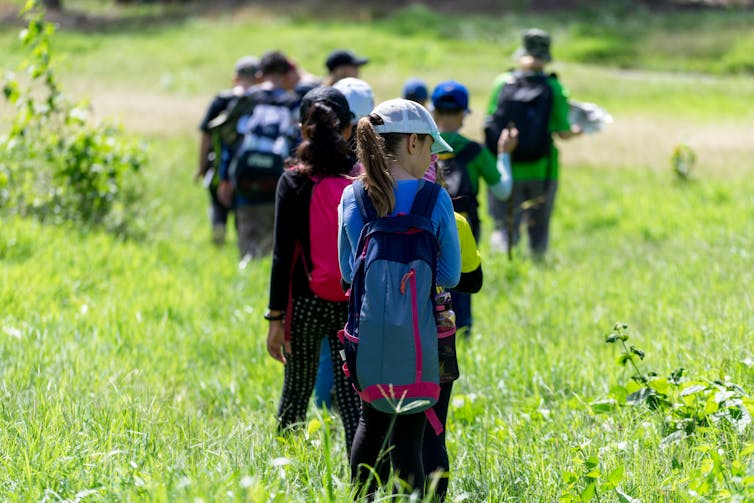
Children on field trip outdoors
Climate education helps young people understand the world they already live in.
NITINAI THABTHONG/Shutterstock

And far from detracting from core learning or social mobility, climate education deepens both. Global benchmarking systems such as Pisa, which compares education worldwide, increasingly recognise environmental literacy as an indicator of quality education.

The UK’s independent Climate Change Committee, which advises government on how to adapt and prepare for climate change as well as holding them accountable, has warned of the dangers of skills shortages. A lack of climate-related skills, the committee claims, are already constraining the country’s ability to prepare for and respond to climate change impacts. These include extreme weather, heatwaves and flooding.

Ensuring that all young people develop strong climate and nature literacy will therefore be essential for both personal resilience and national prosperity. This matters for every learner, regardless of whether they enter an explicitly “green” profession. All jobs and sectors will need to adapt.

There’s work to be done, though, in making the recommended changes a reality in schools. Luckily, there is already a substantial body of work showing how the curriculum could be changed.

Student campaign organisation Teach the Future has carried out a project that systematically reviews the existing English national curriculum. It suggests precise edits to embed climate and ecological education throughout. Sustainability, climate science and ecological justice are integrated into existing subjects, rather than treated as optional extras.

Alongside that sits the curriculum for climate literacy developed by the Royal Meteorological Society. University College London has also put together a detailed policy proposal. Together, these documents provide a robust foundation for the teams appointed to draft the new curriculum.

Curriculum change is much more than a framework for particular subjects. These changes will only make a genuine difference to learners, schools and society when every teacher has access to high-quality professional development and teaching resources. Consistent sector-wide standards should ensure that all young people benefit.

The curriculum review gives the education system in England a clear opportunity. Climate should be part of a high-quality education system.

The Conversation

Andrew Charlton-Perez receives funding from the Department for Education. He is affiliated, in a personal capacity, with the Labour party as a member and campaigner.

Charlotte works for the Environmental Association for Universities and Colleges (EAUC), who are recipients of Department for Education funding to support the delivery of the Climate Ambassadors project. In a personal rather than professional capacity, she is affiliated with the Green Party.

ref. Climate education proposals will prepare young people in England for changing careers and society – https://theconversation.com/climate-education-proposals-will-prepare-young-people-in-england-for-changing-careers-and-society-270733

Should AI be allowed to resurrect the dead?

Source: The Conversation – UK – By James Muldoon, Associate Professor in Management, University of Essex

The growing industry of ‘grieftech’ enables people to interact with dead relatives. Deepbrain AI

When Roro (not her real name) lost her mother to cancer, the grief felt bottomless. In her mid-20s and working as a content creator in China, she was haunted by the unfinished nature of their relationship. Their bond had always been complicated – shaped by unspoken resentments and a childhood in which care was often followed closely by criticism.

After her mother’s death, Roro found herself unable to reconcile the messiness of their past with the silence that followed. She shared her struggles with her followers on the Chinese social media platform Xiaohongshu (meaning “Little Red Book”), hoping to help them with their own journeys of healing.

Her writing caught the attention of the operators of AI character generator Xingye, who invited her to create an AI version of her mother as a public chatbot.

“I wrote about my mother, documenting all the important events in her life and then creating a story where she was resurrected in an AI world,” Roro told me through a translator. “You write out the major life events that shape the protagonist’s personality, and you define their behavioural patterns. Once you’ve done that, the AI can generate responses on its own. After it generates outputs, you can continue adjusting it based on what you want it to be.”

During the training process, Roro began to reinterpret her past with her mother, altering elements of their story to create a more idealised figure – a gentler and more attentive version of her. This helped her to process the loss, resulting in the creation of Xia (霞), a public chatbot with which her followers could also interact.

After its release, Roro received a message from a friend saying her mum would be so proud of her. “I broke down in tears,” Roro said. “It was incredibly healing. That’s why I wanted to create something like this – not just to heal myself, but also to provide others with something that might say the words they needed to hear.”

Grief in the age of deathbots

As I recount in my new book Love Machines, Roro’s story reflects the new possibilities technology has opened for people to cope with grief through conversational AI. Large language models can be trained using personal material including emails, texts, voice notes and social media posts to mimic the conversational style of a deceased loved one.

These “deathbots” or “griefbots” are one of the more controversial use cases of AI chatbots. Some are text-based, while others also depict the person through a video avatar. US “grieftech” company You, Only Virtual, for example, creates a chatbot from conversations (both spoken and written) between the deceased and one of their living friends or relatives, producing a version of how they appeared to that particular person.

Video by The Guardian.

While some deathbots remain static representations of a person at the time of their death, others are given access to the internet and can “evolve” through conversations. You, Only Virtual’s CEO, Justin Harrison, argues it would not be an authentic version of a deceased person if their AI could not keep up with the times and respond to new information.

But this raises a host of difficult questions about whether estimating the development of a human personality is even possible with current technology, and what effect interacting with such an entity could have on a deceased person’s loved ones.

Xingye, the platform on which Roro created her late mother’s chatbot, is one of the key prompts for proposed new regulations from China’s Cyberspace Administration, the national internet content regulator and censor, which seek to reduce the potential emotional harm of “human-like interactive AI services”.

What does digital resurrection do to grief?

Deathbots fundamentally change the process of mourning because, unlike seeing old letters or photos of the deceased, interacting with generative AI can introduce new and unexpected elements into the grieving process. For Roro, creating and interacting with an AI version of her mother felt surprisingly therapeutic, allowing her to articulate feelings she never voiced and achieve a sense of closure.

But not everyone shares this experience, including London-based journalist Lottie Hayton, who lost both her parents suddenly in 2022 and wrote about her experiences recreating them with AI. She said she found the simulations uncanny and distressing: the technology wasn’t quite there, and the clumsy imitations felt as if they cheapened her real memories rather than honoured them.

Official trailer for the grieftech documentary Eternal You.

There are also important ethical questions about whose consent is required for the creation of a deathbot, where they would be allowed to be displayed and what impact they could have on other family members and friends.

Does one relative’s desire to create a symbolic companion who helps them make sense of their loss give them the right to display a deathbot publicly on their social media account, where others will see it – potentially exacerbating their grief? What happens when different relatives disagree about whether a parent or partner would have wanted to be digitally resurrected at all?

The companies creating these deathbots are not neutral grief counsellors; they are commercial platforms driven by familiar incentives around growth, engagement and data harvesting. This creates a tension between what is emotionally healthy for users and what is profitable for firms. A deathbot that people visit compulsively, or struggle to stop talking to, may be a business success but a psychological trap.

These risks don’t mean we should ban all experiments with AI-mediated grief or dismiss the genuine comfort some people, like Roro, find in them. But they do mean that decisions about “resurrecting” the dead can’t be left solely to start-ups and venture capital.

The industry needs clear rules about consent, limits on how posthumous data can be used, and design standards that prioritise psychological wellbeing over endless engagement. Ultimately, the question is not just whether AI should be allowed to resurrect the dead, but who gets to do so, on what terms, and at what cost.

This article includes a link to bookshop.org. If you click the link and go on to buy from bookshop.org, The Conversation UK may earn a commission.

The Conversation

James Muldoon does not work for, consult, own shares in or receive funding from any company or organisation that would benefit from this article, and has disclosed no relevant affiliations beyond their academic appointment. James is the author of Love Machines: How Artificial Intelligence is Transforming Our Relationships (Faber).

ref. Should AI be allowed to resurrect the dead? – https://theconversation.com/should-ai-be-allowed-to-resurrect-the-dead-272643

Is Keir Starmer’s silence on Venezuela a mistake? What history tells us

Source: The Conversation – UK – By Martin Farr, Senior Lecturer in Contemporary British History, Newcastle University

It is unlikely that within the first few days of a great global event – one moreover triggered by its closest ally launching a coup and kidnapping a head of state – a British government has said so little. It took 16 hours for it to say anything at all, and then, not much. And it has said not much thereafter.

So little said, at such length: the prime minister, in his Sunday morning BBC TV interview; James Kariuki, chargé d’affaires in the UK Mission to the United Nations at Monday morning’s Security Council emergency session; and Yvette Cooper, foreign secretary, for over two hours in the House of Commons on Monday evening.

Yvette Cooper speaking in parliament.
The Foreign secretary makes a lengthy statement to the Commons on Venezuela.
Parliament TV

This is both explicable and arguable. For Britain, Venezuela is not particularly significant. There are trade interests but it is far away, of foreign tongue; absent from domestic political discourse. The last time a British prime minister and a Venezuelan president met – Tony Blair and Hugo Chavez – was in 2001.

However, other than in times of actual war (1812) the nadir in US-UK relations concerned Venezuela. A long-forgotten crisis was triggered in 1895 by a dispute over the border between it and British Guiana. The spat elicited the equally forgotten Olney corollary – a proposition from the US government which nonetheless repays reacquaintance in light of recent developments: “Today the United States is practically sovereign on this continent.”

The present crisis similarly concerns hemispheric hegemony. It evokes the better-known 1823 Monroe doctrine, as a warning to the old world to stay out of the new. It adds resource competition (oil: Venezuela has rather a lot, much of it exported to China), while challenging the post-1945 “rules-based order” (reminding us that it was only ever convention-based) and threatening to replace it with one based largely on power. And there’s the upending of the 1648 Westphalian states system, which found fulfilment 300 years later in the creation of the UN.

Hence fears as to what precedent the president has set. Outrage at the Security Council from Russia and China was purely performative given that Trump could not have done more to legitimise their plans for Ukraine and Taiwan. Moscow was almost wistful, admiring how the Americans had managed with Venezuela in an hour what they had failed to do with Ukraine in four years.

Channelling James Monroe and Richard Olney, but with Ukrainian ally Volodymyr Zelenskyy in mind much more than either, Keir Starmer would never break publicly with Trump over something in the Americas. Canada is the exception, as was made clear in the pushback against the US when Trump suggested a Commonwealth realm should become America’s “51st state”.

Silence buys influence?

Insofar as the UK government has a distinct response, it’s that there should be a transition to democracy in Venezuela, ideally by including opposition figures. Trump has said he won’t pursue so left-field an option.

The lack of contact with the president – Starmer unwisely saying publicly that he was seeking it – is embarrassing, and summoned the inevitable clichés about puppets and poodles. The hope (increasingly more than the expectation) is that silence buys influence.

If that was not a green light from the UK, there is one red line. Greenland. The clarity of the government’s response to Trump’s predations is surprising, if the reason for it is not. Denmark has long been a close UK ally, not least over Ukraine. But siding publicly with Copenhagen over Washington is something else Starmer would not ordinarily have been expecting to have to do.

But American-led international crises have upended other Labour premiers. In 1950, Clement Attlee rearmed for the Korean War, with cuts in public spending to pay for it. Labour was out of office the following year.

The next decade, Harold Wilson declined to have a public opinion over the Vietnam war, thereby infuriating both the Americans and the young he enfranchised in 1969. Labour was out of office the following year.

The best known example remains Iraq. On the back of two landslide election triumphs in 2003, Blair split his party and inflamed the public. Labour’s parliamentary majority was slashed two years later. Unquestioning support for an American president became Blair’s nemesis.

He was comfortable with that. But Trump has transgressed the only recognisable facet of what political identity Starmer actually has: adherence to the rule of law, and international law at that. Yet he can only be mute.

The apparent inconsistencies between Starmer’s past and present can be reconciled by the elemental fact that he’s prime minister. What animated the student, the activist, the lawyer, the MP, cannot in office.

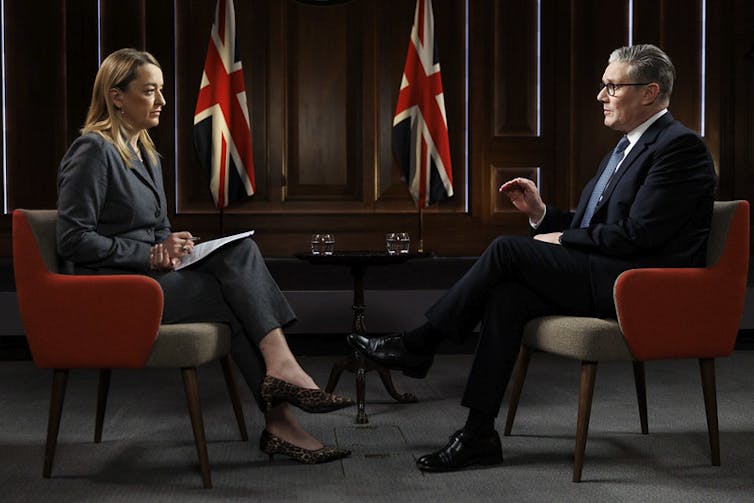
Laura Kuenssberg and Keir Starmer sitting opposite each other.
The prime minister in a New Year’s interview with the BBC.
Flickr/Number 10, CC BY-NC-ND

But it is that failure – that refusal – to opine that most exasperates MPs. Cooper’s fractious Venezuela statement highlighted fissures within Labour that are evident whenever the US, or Israel, is concerned.

Maduro was the kind of leader who gives leftwing governments a bad name, which is why only the hard left – Richard Burgon, John McDonnell – are incensed. The main threats to Starmer’s leadership come from the soft left – Angela Rayner, Andy Burnham – where such affairs have less salience, and the right – Wes Streeting, Al Carns – where they’re merely awkward.

For May’s impending local and national elections the impact may be clearer, and graver. The Liberal Democrats, Greens, Your Party, SNP and Plaid Cymru accept gratefully a gift that will go on giving on innumerable doorsteps throughout the spring.

The Conservatives happen to agree with the government’s policy, if not necessarily its delivery. Few of their voters will care about recondite international law. Fewer still, Reform UK voters. Almost unheard of, Nigel Farage, too, has been mute.

Desperate to engineer a narrative reset in 2026, Starmer, this mildest of prime ministers – politically, temperamentally – now finds himself faced with the so-called Donroe doctrine, Trump’s “update” to the Monroe doctrine.

It would be somewhat to understate to say that this was not the start to the year for which Starmer was hoping. As we gaze upon the most imperial of presidencies, he can only dream of a similar premiership.

The Conversation

Martin Farr does not work for, consult, own shares in or receive funding from any company or organisation that would benefit from this article, and has disclosed no relevant affiliations beyond their academic appointment.

ref. Is Keir Starmer’s silence on Venezuela a mistake? What history tells us – https://theconversation.com/is-keir-starmers-silence-on-venezuela-a-mistake-what-history-tells-us-272837

A speeding clock could solve Darwin’s mystery of gaps in animal fossil records

Source: The Conversation – UK – By Max Telford, Jodrell Professor of Zoology and Comparative Anatomy, UCL

Trilobites were among the first complex animals. Couperfield/Shutterstock

The oldest fossilised remains of complex animals appear suddenly in the fossil record, and as if from nowhere, in rocks that are 538 million years old.

The very oldest of these are simple fossilised marks (called Treptichnus) made by something worm-like with a head and a tail. A host of other animals appear rapidly, ancestors of the diverse animal groups we know today: ancient crab-like arthropods, shelled molluscs and the forebears of starfish and sea urchins.

The rapid arrival of animals so different to each other (and their absence in even slightly older rocks) was a headache for Charles Darwin because it seemed to go against his idea of gradual evolution – and it has confused scientists ever since. However, a recent paper may provide a solution.

In 1859, Darwin wrote in On the Origin of Species: “If my theory be true … during these vast … periods of time, the world swarmed with living creatures. To the question why we do not find records of these vast primordial periods, I can give no satisfactory answer.”

Today, scientists are in disagreement about when these ancient animals evolved. The problem stems from a late 20th-century invention called the molecular
clock
.

As I explain in my book the Tree of Life, the molecular clock relies on the idea that changes to genes accumulate steadily, like the regular ticks of a grandfather clock. If this idea holds true then simply counting the number of genetic differences between any two animals will let us calculate how distantly related they are – how old their shared ancestor is.

For example, humans and chimpanzees separated 6 million years ago. Let’s say that one chimpanzee gene shows six genetic differences from its human counterpart. As long as the ticks of the molecular clock are regular, this would tell us that one genetic difference between two species corresponds to one million years.

The molecular clock should allow us to place evolutionary events in geological time right across the tree of life.

When zoologists first used molecular clocks in this way, they came to the
extraordinary conclusion that the ancestor of all complex animals lived as long as
1.2 billion years ago. Subsequent improvements now give much more sensible estimates for the age of the animal ancestor at around 570 million years old. But this is still roughly 30 million years older than the first fossils.

This 30-million-year-long gap is actually rather helpful to Darwin. It means that there was plenty of time for the ancestor of complex animals to evolve, unhurriedly splitting to make new species which natural selection could gradually transform into forms as distinct as fish, crabs, snails and starfish.

The problem is that this ancient date leaves us with the idea that a host of ancient animals must have swum, slithered and crawled through these ancient seas for 30 million years without leaving a single fossil. Researchers expect gaps in the fossil record but this one would be a whopper.

Red starfish under water.
Starfish evolved their shape hundreds of millions of years ago.
Rich Carey/Shutterstock

A popular explanation for the missing fossils is that, for 30 million years, complex animals were tiny and squishy and so hard to fossilise. And then, around 540 million years ago, so the theory goes, these tiny animals began to grow larger, perhaps due to increasing oxygen levels. It is this increase in size that some scientists have used to explain the sudden appearance of complex animals in the fossil record.

The new paper by palaeontologist Graham Budd and mathematician Richard Mann gives a different explanation for the chasm between the ancient ancestor predicted by the molecular clock, and the more sudden, later appearance of complex fossils. Budd and Mann suggest that the molecular clock may not tick quite as regularly as we thought.

The new idea is that the moment that any big group of organisms first appears, evolution speeds up.

To return to our example, for a period of a few million years our imaginary clock could have ticked not once per million years but twice. A faster ticking clock would make it appear as if more time was passing, like pressing fast forward on a video, and this would push the age of the animal ancestor further back into the past.

Faster changing genes would also allow the animals’ appearance to change more quickly. This solves Darwin’s dilemma as it would make it easier for the various branches of the animal tree to become different from each other. The first animal ancestor could quickly diversify into vertebrates, molluscs, arthropods and starfish.

The overall effect of the new idea is to bring the age of the ancestor of complex animals much more in line with the appearance in the fossil record of its immediate descendants.

While the speeding clock idea needs testing, it could explain other mismatches between molecular clocks and fossil record. Perhaps the first flowering plants really existed for tens of millions of years before finally leaving a fossil. And it could help settle scientific debates about whether early primates, carnivores and rodents really lived alongside the last dinosaurs.

For the origins of the animals at least, I feel sure that Darwin would approve.

This article features references to books that have been included for editorial reasons, and may contain links to bookshop.org. If you click on one of the links and go on to buy something from bookshop.org The Conversation UK may earn a commission.

The Conversation

Max Telford does not work for, consult, own shares in or receive funding from any company or organisation that would benefit from this article, and has disclosed no relevant affiliations beyond their academic appointment.

ref. A speeding clock could solve Darwin’s mystery of gaps in animal fossil records – https://theconversation.com/a-speeding-clock-could-solve-darwins-mystery-of-gaps-in-animal-fossil-records-263988