La detención de Maduro redefine el futuro de Cuba y su fuente de sustento

Source: The Conversation – (in Spanish) – By Carmen Beatriz Fernández, Profesora de Comunicación Política en la UNAV, el IESA y Pforzheim, Universidad de Navarra

Raúl Castro (izquierda) y Nicolás Maduro durante una cumbre sobre el ébola en La Habana en 2014. Cubadebate / Flickr, CC BY

Y cuando despertó, el petróleo todavía estaba allí…

Se dice que uno muy parecido a este es el cuento más corto del mundo. Escrito por el guatemalteco Augusto Monterroso se refiere, probablemente, a los dinosaurios del poder, a alguno de tantos persistentes dictadores centroamericanos y a los fantasmas que sobreviven a los cambios aparentes.

En nuestra adaptación el dinosaurio no es solo el autoritarismo, las ideologías y las consignas de los años sesenta, sino el petróleo como factor estructural que ha condicionado decisiones políticas, alianzas ideológicas y modelos de supervivencia estatal de Cuba y Venezuela.

La relación entre ambas naciones ha sido un nodo estructural de la política latinoamericana durante más de seis décadas y ha estado permanentemente marcada por el petróleo. La reciente detención de Nicolás Maduro en Venezuela estrena un punto de inflexión geopolítico con consecuencias profundas para La Habana, cuyos vínculos energéticos, estratégicos y políticos con Caracas sostenían buena parte de su supervivencia como estado.

“Cuba está a punto de caer” ha asegurado Donald Trump. Y es que la historia de Venezuela y Cuba en el siglo XX puede entenderse como la historia de dos trayectorias paralelas que arrancan en 1958.

Ese año marca el inicio de la democracia venezolana con la caída de Marcos Pérez Jiménez y, al mismo tiempo, el triunfo de la Revolución cubana que culminará en 1959 con la llegada de Fidel Castro al poder. Dos proyectos políticos nacidos en simultáneo, pero destinados a recorrer senderos radicalmente distintos.

La comparación es elocuente: cuando Fidel Castro muere en 2016, en su cama y como dictador vitalicio, Venezuela había tenido ya diez presidentes electos que se habían alternado en el poder. Esa diferencia define dos modelos de relación con el poder, con la sociedad y con la libertad.

El recelo de Castro hacia Venezuela

Desde muy temprano, Castro tuvo a Venezuela “entre ceja y ceja” por un cálculo estratégico vinculado a esa democracia petrolera en plena expansión, con recursos energéticos clave y un peso regional considerable.

Durante los primeros días del gobierno de Rómulo Betancourt, Castro fue recibido como un héroe global, el líder que había derrotado a la dictadura de Fulgencio Batista. Sin embargo, esa luna de miel duró poco. Castro solicitó apoyo financiero y político para su revolución, y Betancourt se negó de manera tajante. A partir de ese momento, la relación se convirtió en una enemistad abierta.

Las consecuencias no tardaron en llegar. Cuba promovió e intentó exportar la lucha armada a Venezuela, incluyendo el intento de invasión por el pueblo de Machurucuto en 1967, durante el gobierno de Raúl Leoni, cuando guerrilleros entrenados bajo el modelo de la Sierra Maestra intentaron replicar la experiencia cubana en suelo venezolano. Incluso circulan relatos novelescos, como el de una jeringa que contenía veneno de cobra que buscaba asesinar a Betancourt, que ilustran hasta qué punto el conflicto fue intenso.

Décadas después, el vínculo entre ambos países daría un giro decisivo con la irrupción de Hugo Chávez. Tras el intento de golpe de Estado de 1992 y su posterior amnistía bajo el gobierno de Rafael Caldera, Chávez fue invitado a Cuba y recibido por Fidel Castro con honores de jefe de Estado. Chávez quedó hondamente deslumbrado por Castro y por la épica revolucionaria cubana. A partir de allí se forjó una relación política y personal que tendría consecuencias estructurales para Venezuela.

La relación se estrecha con Chávez

Cuando Chávez llega al poder por la vía electoral en 1998, se formaliza rápidamente una amplia red de convenios de cooperación con Cuba en materia de salud, educación, deporte y asistencia social. Los médicos cubanos llegaron a zonas históricamente desatendidas y se construyó a partir de allí un discurso de solidaridad y justicia social.

Sin embargo, más allá de lo visible, existía otro intercambio menos explícito: la experiencia del régimen cubano en control político, inteligencia, espionaje, represión y supervivencia autoritaria. Ese intercambio estructural se materializó principalmente a través del petróleo: Venezuela suministró decenas de miles de barriles diarios de crudo, lo que alivió presiones sobre la economía cubana y contribuyó a sostener servicios básicos y exportaciones de profesionales sanitarios en redes fraternas en América Latina y África.

Ese fue, probablemente, el aporte más decisivo de Cuba al proyecto chavista. La isla había sobrevivido durante décadas enfrentada a Estados Unidos, primero gracias al subsidio soviético y, tras la caída de la URSS, atravesando un período de extrema precariedad hasta encontrar en Venezuela una nueva fuente de sostén.

A cambio del petróleo venezolano, Cuba exportó un modelo de control del poder probado y eficaz. Chávez no solo encontró en Castro un aliado, sino un maestro. Ese aprendizaje explica buena parte de la deriva autoritaria venezolana posterior. Lo que comenzó como un proyecto político con legitimidad electoral terminó adoptando prácticas propias de un régimen diseñado para no irse nunca del poder. En ese sentido, los caminos paralelos de Venezuela y Cuba volvieron a encontrarse décadas después en el autoritarismo.

Los oficiales de Maduro

Un elemento que subraya de forma contundente la subordinación de la soberanía venezolana al aparato de seguridad cubano es el hecho de que 32 oficiales cubanos murieron defendiendo a Nicolás Maduro durante la operación militar que culminó con su captura, en lo que el gobierno de La Habana calificó como “acciones combativas” en cumplimiento de misiones oficiales.

El despliegue de personal castrense cubano en la protección del presidente venezolano y su muerte en combate simbolizan, de manera explícita, la pérdida de control autónomo de la defensa de Venezuela por parte de sus propias fuerzas armadas y la existencia de una estructura de seguridad paralela dirigida por La Habana.

Esta presencia militar, hasta ahora oficialmente negada por ambas partes en diversas ocasiones, demuestra de forma contundente que el régimen chavista había delegado una función central de soberanía (la seguridad presidencial) en agentes del Estado cubano. Es un fenómeno sin precedentes en la historia contemporánea de la región.

La ausencia del petróleo y la debacle del turismo

La relación Cuba–Venezuela no puede entenderse sin reconocer al petróleo como su verdadero hilo conductor: primero como promesa estratégica, luego como salvavidas económico y político y hoy como vacío que redefine los márgenes de maniobra del régimen cubano en un contexto internacional crecientemente adverso.

Desde mediados del siglo XX ha sido el pivote silencioso de la relación entre La Habana y Caracas. Actualmente, México es también un suplidor energético importante para la isla. El petróleo ha sido el equivalente contemporáneo del dinosaurio de Monterroso: una presencia atemporal.

Además, un elemento clave para entender la encrucijada económica de Cuba es la debacle de su sector turístico, tradicionalmente una de las pocas fuentes significativas de divisas no vinculadas al petróleo.

Un análisis reciente de Global Affairs señala que la isla no ha logrado recuperar los niveles de turismo internacional previos a la pandemia: mientras que en 2019 recibió más de 4,2 millones de visitantes extranjeros, en 2023 llegó apenas a 2,4 millones y las cifras de 2024 y 2025 muestran una tendencia regresiva.

Sin Venezuela como proveedor energético y sin un turismo robusto que genere divisas estables, la economía cubana se enfrenta a un déficit crítico de recursos externos. La caída de ambas fuentes de ingreso expone la fragilidad de un modelo económico dependiente, incapaz de sostenerse por sí mismo en ausencia de condiciones externas favorables.

Marco Rubio, hijo de inmigantes cubanos

La crisis actual de Cuba se agudiza con el férreo control de las exportaciones petroleras venezolanas a las que aspira Trump, y lo convierte ya en punto de inflexión que tensiona la supervivencia del régimen.

Además, en este escenario la figura del secretario de Estado, Marco Rubio, emerge como un actor central en el que convergen su trayectoria personal (hijo de inmigrantes cubanos) y su visión política, que ha situado a Cuba como un eje de confrontación diplomática y estratégica en la política exterior estadounidense contemporánea.

El desenlace de este nuevo capítulo vendrá dado por la conjunción de sanciones, presiones internas y reconfiguraciones geopolíticas.

El petróleo sigue estando “allí”, ya no como sostén automático del régimen cubano, sino como ausencia crítica que expone sus fragilidades estructurales y que determinará a corto plazo el futuro de Cuba.

The Conversation

Carmen Beatriz Fernández es consultora de DatastrategIA

ref. La detención de Maduro redefine el futuro de Cuba y su fuente de sustento – https://theconversation.com/la-detencion-de-maduro-redefine-el-futuro-de-cuba-y-su-fuente-de-sustento-272943


ICE killing of driver in Minneapolis involved tactics many police departments warn against − but not ICE itself

Source: The Conversation – USA – By Ben Jones, Assistant Professor of Public Policy and Research Associate in the Rock Ethics Institute, Penn State

A protester stands near a makeshift memorial honoring Renee Nicole Good, the victim of a fatal shooting in Minneapolis involving federal law enforcement agents. AP Photo/Tom Baker

Minneapolis is once again the focus of debates about violence involving law enforcement after an Immigration and Customs Enforcement officer shot and killed Renee Nicole Good, a 37-year-old mother, in her car.

The incident quickly prompted dueling narratives. Trump administration officials defended the shooting as justified, while local officials condemned it.

The shooting will also likely prompt renewed scrutiny of training and policy of officers and the question of them shooting at moving vehicles. There has been a recent trend in law enforcement toward policies that prohibit such shootings. It is a policy shift that has shown promise in saving lives.

Decades ago, the New York City Police Department prohibited its officers from shooting at moving vehicles. That led to a drop in police killings without putting officers in greater danger.

Debates over deadly force are often contentious, but as I note in my research on police ethics and policy, for the most part there is consensus on one point: Policing should reflect a commitment to valuing human life and prioritizing its protection. Many use-of-force policies adopted by police departments endorse that principle.

Yet, as in Minneapolis, controversial law enforcement killings continue to occur. Not all agencies have implemented prohibitions on shooting at vehicles. Even in agencies that have, some policies are weak or ambiguous.

In addition, explicit prohibitions on shooting at vehicles are largely absent from the law, which means that officers responsible for fatal shootings of drivers that appear to violate departmental policies still often escape criminal penalties.

In the case of ICE, which is part of the Department of Homeland Security, its policy on shooting at moving vehicles – unlike that of many police agencies – lacks a clear instruction for officers to get out of the way of moving vehicles where feasible. It’s an omission at odds with generally recognized best practices in policing.

ICE’s policy on shooting at moving vehicles

ICE’s current use-of-force policy prohibits its officers from “discharging firearms at the operator of a moving vehicle” unless it is necessary to stop a grave threat. The policy is explicit that deadly force should not be used “solely to prevent the escape of a fleeing suspect.”

That point is relevant for evaluating the fatal shooting in Minneapolis. Videos show one officer trying to open the door of the vehicle that Good was driving, while another officer appears to be in front of the vehicle as she tried to pull away.

Kristi Noem, the Homeland Security secretary, stands behind a podium at a news conference.
Homeland Security Secretary Kristi Noem said that an ICE officer ‘feared for his life’ before shooting a woman in Minneapolis.
AP/Yuki Iwamura

Shooting to prevent the driver simply from getting away would have been in violation of agency policy and obviously inconsistent with prioritizing the protection of life.

ICE’s policy lacks clear instruction, however, for its officers to get out of the way of moving vehicles where feasible. In contrast, the Department of Justice’s use-of-force policy makes it explicit that officers should not shoot at a vehicle if they can protect themselves by “moving out of the path of the vehicle.”

Notably, President Joe Biden issued an executive order in 2022 requiring federal law enforcement agencies – like ICE – to adopt use-of-force policies “that are equivalent to, or exceed, the requirements” of the Department of Justice’s policy.

Despite that order, the provision to step out of the way of moving cars never made it into the use-of-force policy that applies to ICE.

The rationale for not shooting at moving vehicles

Prioritizing the protection of life doesn’t rule out deadly force. Sometimes such force is necessary to protect lives from a grave threat, such as an active shooter. But it does rule out using deadly force when less harmful tactics can stop a threat. In such cases, deadly force is unnecessary – a key consideration in law and ethics that can render force unjustified.

That’s the concern involved with police shooting at moving vehicles. It often is not necessary because officers have a less harmful option to avoid a moving vehicle’s threat: stepping out of the way.

This guidance has the safety of both suspects and police in mind. Obviously, police not shooting lowers the risk of harm to the suspect. But it also lowers the risk to the officer in the vast majority of cases because of the laws of physics. If you shoot the driver of a car barreling toward you, that rarely brings a car to an immediate stop, and the vehicle often continues on its path.

Many police departments have incorporated these insights into their policies. A recent analysis of police department policies in the 100 largest U.S. cities found that close to three-quarters of them have prohibitions against shooting at moving vehicles.

The gap between policy and best practices for protecting life

The shooting in Minneapolis serves as a stark reminder of the stubborn gap that often persists between law and policy on the one hand and best law enforcement practices for protecting life on the other. When steps are taken to close that gap, however, they can have a meaningful impact.

Blendon Township, Ohio, police officer Connor Grubb greets a family member after being found not guilty at a Columbus courthouse.
Connor Grubb, a police officer in Blendon Township, Ohio, was acquitted in November of charges stemming from a killing that involved a pregnant woman fleeing in a car.
Doral Chenoweth/AP

Some of the most compelling examples involve local, state and federal measures that reinforce one another. Consider the “fleeing felon rule,” which used to allow police to shoot a fleeing felony suspect to prevent their escape even when the suspect posed no danger to others.

That rule was at odds with the doctrine of prioritizing the protection of life, leading some departments to revise their use-of-force policies and some states to ban the rule. In 1985, the U.S. Supreme Court ruled that it was unconstitutional for police to shoot a fleeing suspect who was not a danger.

Banning that questionable tactic notably led to a reduction in killings by police.

This history suggests that clear bans in law and policy on questionable tactics have the potential to save lives, while also strengthening the means for holding officers accountable.

The Conversation

Ben Jones does not work for, consult, own shares in or receive funding from any company or organization that would benefit from this article, and has disclosed no relevant affiliations beyond their academic appointment.

ref. ICE killing of driver in Minneapolis involved tactics many police departments warn against − but not ICE itself – https://theconversation.com/ice-killing-of-driver-in-minneapolis-involved-tactics-many-police-departments-warn-against-but-not-ice-itself-271907

Blue Monday is a myth but the winter blues are real — how to cope in the cold months

Source: The Conversation – Canada – By Joanna Pozzulo, Chancellor’s Professor, Psychology, Carleton University

In 2005, psychologist Cliff Arnall coined the term “Blue Monday” as part of a marketing campaign for a British travel agency to encourage people to book a holiday during the winter. Using a pseudo-scientific formula, the third Monday in January was determined to be the “bluest” day of the year, marked by sadness, low energy and withdrawal from social interaction.

Although Blue Monday has been debunked, the feelings associated with a colder, darker season are real.

Seasonal affective disorder (SAD) is a recognized form of depression connected to seasonal variation, with symptoms such as fatigue, irritability, appetite changes, loss of interest in pleasurable activities and feelings of hopelessness. According to the Canadian Psychological Association, approximately 15 per cent of Canadians report at least some symptoms of SAD.

It’s believed that the disorder may be connected to decreased exposure to sunlight, which in turn disrupts people’s circadian rhythms — the internal clock that co-ordinates our biological processes such as sleep and hormone production.

We can’t dictate when the sun shines, but there are several evidence-based strategies to support “wintering well.” For example, creating a cozy reading nook equipped with a warm blanket, hot chocolate and a good book provides a dedicated space for self-care that promotes relaxation. It also helps with mindfulness, which involves focusing your attention on the present and accepting your thoughts and feelings without judgment.

Why mindset and expectations matter

According to Kari Leibowitz, psychologist and author of How to Winter: Harness Your Mindset to Thrive on Cold, Dark Days, the key to better wintering is reframing — changing one’s perspective to find a more positive, constructive or empowering interpretation of the situation.

Cultures that thrive in winter anticipate it, considering it meaningful. Reframing the season as something to look forward to can raise morale.

Try replacing negative language about winter as something to be dreaded or endured with more appreciative language. For example, winter can provide an opportunity to rest and recharge. By adopting a positive mindset, overall well-being may improve.

The benefits of winter outdoor activity

Spending time outdoors can lift the spirit and boost energy. And although winter has fewer hours of daylight, it is important to take advantage of them. Spend some time outside in the late morning and early afternoon, when natural light tends to peak.

Winter weather, however, can make outdoor activity unappealing. Cold and icy conditions can even be hazardous to health. Cold weather can increase the risk of cardiovascular events by constricting blood vessels and raising blood pressure.

To spend time outdoors safely, invest in appropriate clothing suited to the temperature. On colder days, engage in light activity such as walking and keep outdoor stints short (about 15 minutes).

What hygge can teach about slowing down

Hygge is a Danish and Norwegian word dating back to the 1800s used to denote the concept of enjoying a slower-paced life while connecting with people you care about.

Hygge is often associated with creating a pleasant environment, such as lighting candles or staying warm by a fire, to foster positiveness.

When indoors, sit near windows to work or read. Consider increasing indoor lighting brightness. Use light bulbs rated as “daylight,” and think about adding lamps to supplement overhead lighting. This can increase serotonin to improve mood and help regulate circadian rhythms that in turn can support improved sleep quality, energy and focus.

Hygge-type activities, like knitting, colouring and playing board games, can support overall well-being. Enjoying simple meals with others or spending quiet time alone in nature are also ways to embrace the season.


Read more:
4 research-backed ways to beat the winter blues in the colder months


Listening to seasonal changes and self-care

Winter is a natural time to slow down, rest and restore, as evidenced by bears hibernating and bumblebees going underground to survive. Use this time to prepare for a more active upcoming season.

To take advantage of the slower pace of the season, reduce over-scheduling when possible. Adjust sleep routines to suit individual needs. Enjoy quieter evenings and earlier bedtimes. Accept that lower energy levels are normal in winter and that the season offers an opportunity to do less without guilt.

Spending more time indoors during the winter provides an opportunity to reconnect with hobbies and activities that have brought you joy in the past. For example, doing puzzles can provide a break from screens, which can decrease stress. Reading a good book can also provide a mental escape, allowing people to disconnect from worries. Creative activities such as baking can encourage a sense of purpose.

Choosing activities that are enjoyable and meaningful offers the greatest benefits for overall well-being. For more evidence-based strategies and book recommendations, join my Reading for Well-Being Community Book Club.

The Conversation

Joanna Pozzulo receives funding from Social Sciences and Humanities Research Council.

ref. Blue Monday is a myth but the winter blues are real — how to cope in the cold months – https://theconversation.com/blue-monday-is-a-myth-but-the-winter-blues-are-real-how-to-cope-in-the-cold-months-272882

Greenland, Venezuela and the ‘Donroe doctrine’

Source: The Conversation – UK – By Jonathan Este, Senior International Affairs Editor, Associate Editor, The Conversation

This newsletter was first published in The Conversation UK’s World Affairs Briefing email. Sign up to receive weekly analysis of the latest developments in international relations, direct to your inbox.


Watching Donald Trump and his defence and national security team announcing the US raid on Caracas on Saturday, it was hard not to conclude that while the US president was clearly using a script, there were points at which he seemed to be extemporising. At times he appeared as if he may be inventing US foreign policy as he went along, much to the visible discomfort of his secretary of state, Marco Rubio.

It must be challenging presenting a coherent message about American intentions in the region when the justification for the raid shifts randomly from a law enforcement operation to apprehend a “narco-terrorist”, to regime change to replace an illegitimate leader, to a bid to take control of the world’s largest oil reserves.

All of these have been canvassed in the days since. And, five days after the raid, it’s still not 100% clear what the US plans to do. But even so, it felt like a fairly important inflection point in global geopolitics: the point at which the US president and his senior advisers said out loud – and with particular emphasis – that the Trump administration will do whatever it likes, regardless of what anyone might think.

As the US secretary of defense, Pete Hegseth, told the assembled reporters and TV audiences around the world: “America can project our will anywhere, anytime.” He added: “This is America first. This is peace through strength. Welcome to 2026.”

Rubio, meanwhile, made sure everyone would be clear that this administration is serious: “I hope what people now understand is that we have a president [who] when he tells you that he’s going to do something, when he tells you he’s going to address a problem, he means it. He actions it.”

So what are we to make of Trump’s repeated assertions that the US plans to take control of Greenland, by fair means or foul? Denmark, of which Greenland is a part, is certainly taking the prospect seriously.

The country’s prime minister, Mette Frederiksen, warned this week that an aggressive attack on a Nato member by another Nato member would spell an end to the alliance. And on the face of it you’d have to think she’s right: the alliance was set up in 1949 to ensure peace in Europe. Its key clause, article 5, demands that an attack on one member state is considered an attack on the alliance as a whole.

But David Dunn, Mark Webber and Stefan Wolff, international security experts at the University of Birmingham, believe there is no need to panic – at least not yet. Nato has weathered deep disputes between member states before now. It got through Suez in the 1950s and the cod war between the UK and Iceland and the confrontation between Greece and Turkey over Cyprus in the 1970s.

But an aggressive move on Greenland, while not necessarily destroying Nato, would be likely to paralyse the alliance at a time when collective security is of paramount importance. Our three experts counsel caution at this point: US security concerns in the region could be addressed without an outright takeover of Greenland.

And, they write, with the US midterms approaching, the US president could well find himself distracted by more important domestic political concerns – particularly if his Republican party loses control of either or both houses of Congress. In other words, patience, vigilance and caution – for the present – are the advisable course of action for America’s European allies.


Read more:
US action against Greenland would undermine Nato, but now is not the time to panic


It’s a measure of how fast-moving the geopolitical situation has become that we spent Saturday worrying about the implications of the kidnapping of Venezuela’s president, Nicolás Maduro, but by Sunday the future of Greenland was on everyone’s lips.

This may well be down to a tweet posted on Saturday evening by Republican influencer Katie Miller, the wife of Stephen Miller, the White House deputy chief of staff. She posted a picture of Greenland overlaid with the Stars and Stripes and headed with the single word: “soon”. This prompted the Atlantic, in an interview with the US president the following morning, to enquire about the tweet and ask what the Trump administation’s intentions are toward Greenland. And suddenly the news agenda shifted.

Katie Miller is privy to the innermost workings of the administration. Her husband is one of Trump’s closest aides and, many believe, a key ideologue, having been steeped in America First ideology for his entire career. This week in an interview with CNN, Stephen Miller spelled out, in the starkest terms, his boss’s modus operandi: the notion that might is right. Or, as Miller put it: “We’re a superpower. And under President Trump, we are going to conduct ourselves as a superpower.”

Natasha Lindstaedt has traced Stephen Miller’s political evolution, from right-wing schoolboy the right hand of the 47th US president.


Read more:
Stephen Miller: portrait of Donald Trump’s ideologue-in-chief


What the ‘Donroe doctrine’ means for Venezuela

We had advance warning of this aggressive foreign policy stance late last year when the US published its national security strategy, in which it reasserted the two centuries-old Monroe doctrine, with its assertion that the US regards the western hemisphere as its exclusive backyard in which it should have carte blanche to impose its will on other nations.

Trump himself referred to this in his press conference to announce Operation Absolute Resolve: “They now call it the ‘Donroe’ document.” Stefan Wolff believes this assertive new stance in America’s backyard is an indication of a shift in the global order over the 12 months of Trump’s second term, in which the US, Russia and China essentially divide the world into three spheres of influence.

If the US can act with impunity in what he regards to be America’s backyard, he warns, what does this mean for Vladmir Putin’s war in Ukraine or Xi Jinping’s ambition to “reunite” Taiwan with mainland China, if necessary by force.


Read more:
Donald Trump’s raid on Venezuela foreshadows a new ‘great power’ carve-up of the world


Pablo Uchoa meanwhile – a former BBC journalist now researching Latin American politics at University College London’s Institute of the Americas – believes that Maduro is the guinea pig for Trump’s new aggressive stance.

Nicolás Maduro, handcuffed and wearing prison clothes, with Drug Enforcement Agency officers with theiur faces obscured.
In custody: Nicolás Maduro, handcuffed and wearing prison clothes, with Drug Enforcement Agency officers.
X

Uchoa, a biographer of Maduro’s populist predecessor, Hugo Chavez, warns of the US president’s hints about US intentions towards Columbia and Cuba, identifying Venezuela as the “laboratory where Trump has decided to flex America’s geopolitical muscles”.


Read more:
The ‘Donroe doctrine’: Maduro is the guinea pig for Donald Trump’s new world order


But how do Venezuelans feel about their president being snatched from his Caracas bunker? Matt Wilde and Harry Rogers, geographers at the University of Leicester, have been interviewing Venezuelans living in Spain, the US and Venezuela and were in Madrid talking to expats when the news of Maduro’s kidnapping broke on Saturday. They noted a range of emotions: much joy at the downfall of a controversial leader who many viewed as a brutal and illegitimate dictator, but also fear about what might happen next in their country.


Read more:
Venezuelans are reacting to Maduro’s capture with anger, fear, hope and joy


All about oil

If, as the US president has repeatedly stressed, the US raid on Venezuela was as much about taking control of the country’s oil supplies as anything else, it’s worth taking a look at what this might mean for oil prices.

With the prospect of the opening up of access to Venezuela’s “proven reserves” of more than 300 billion barrels of oil, you’d expect the price to fall – and indeed that has been the initial reaction, especially since Trump vowed to seize up to 50 million barrels of Venezuelan oil.

But Adi Imsirovic, a lecturer in energy systems at the University of Oxford, cautions that the situation is far less clear cut. It is likely to take years for Venezuelan oil production to recover from the long-term decline it has experienced over the past two decades. And the uncertainty caused by geopolitical turmoil tends to send oil prices up, not down.


Read more:
What the US strike on Venezuela could mean for global oil prices


It was no doubt with oil on their minds that the Trump administration ordered the boarding of two tankers linked to Venezuela on the grounds they were in breach of sanctions – one of which was sailing under a Russian flag. As they insist: they can do what they like, when they like. It’s down to experts in maritime law, such as Andrew Serdy of the University of Southampton to figure out the legality of the exercise.


Read more:
US boards a ship sailing under a Russian flag: what we know and don’t know about the legal position


Sign up to receive our weekly World Affairs Briefing newsletter from The Conversation UK. Every Thursday we’ll bring you expert analysis of the big stories in international relations.


The Conversation

ref. Greenland, Venezuela and the ‘Donroe doctrine’ – https://theconversation.com/greenland-venezuela-and-the-donroe-doctrine-273041

I served on the expert committee that advised the government on new dietary guidelines – most of our recommendations were ignored

Source: The Conversation – USA (3) – By Cristina Palacios, Professor and Chair of Dietetics and Nutrition, Florida International University

The Dietary Guidelines for Americans shape nutrition policy in the U.S. and abroad. Liudmila Chernetska/iStock via Getty Images Plus

Every five years, the U.S. government releases an updated set of recommendations on healthy eating. This document, called the Dietary Guidelines for Americans, has served as the cornerstone of nutrition policy for almost half a century.

On Jan. 7, 2026, the Department of Health and Human Services and the Department of Agriculture released the 2025-2030 edition of the guidelines. The updated guidelines recommend that people consume more protein and fat, and less ultraprocessed foods.

These guidelines are the foundation for governmental nutritional programs – for example, they are used to determine which foods are covered by the Supplemental Nutrition Assistance Program, or SNAP, as well as how school lunches are prepared. Eldercare centers and child care centers use them when providing meals, as do clinical nutritionists working with patients to help them achieve a healthy diet. And because the guidelines are so scientifically rigorous, many countries around the world base their own nutritional guidelines on them.

I’m a nutrition scientist specializing in developing interventions for preventing obesity. Between 2022 and 2024 I served on the scientific advisory committee tasked with assessing the best available evidence on a wide range of topics in nutrition in order to inform federal officials in updating the guidelines.

But most of the committee’s recommendations were ignored in developing the latest dietary guidelines.

On the surface, these guidelines share a lot of similarities with the previous version, published in 2020, but they also have a few important differences. In my view, however, irregularities in the process the government followed raise questions about the guidfelines’ final conclusions.

Grocery store shelves laden with packaged foods
Previous versions of the Dietary Guidelines for Americans have not referred to ultraprocessed foods by name, but mounting evidence links consuming such foods with chronic diseases.
Noel Hendrickson/Stone via Getty Images

How are the Dietary Guidelines for Americans developed?

For each update, HHS and USDA establish a scientific advisory committee like the one I served on. Members with expertise in different aspects of nutrition are carefully selected and vetted. They then spend two years reviewing the latest scientific studies to assess evidence about specific nutrition-related questions – such as the relationship between saturated fats in foods and cardiovascular disease and what strategies are most effective for weight management.

For each question, the committee first prepares a protocol to answer it, identifies the most rigorous studies and synthesizes its findings, discussing the evidence extensively. It then produces specific recommendations about the topic for the HHS and USDA. At each step, the public and the scientific community are invited to provide comments, which the committee considers.

All this scientific information is put together in a massive report, which the federal agencies then use to create the updated guidelines, translating the expert recommendations for the public and health professionals.

A departure from the norm

The advisory committee I served on functioned as usual – our report was published in December 2024.

But the dietary guidelines released on Jan. 7 were mainly not based on that report. Instead, they were based on a different scientific report that was also published on Jan. 7. That report drew some material from ours but went through a completely different process.

It was created by a group of people who were not vetted in the usual way, and although they repeated some of the same questions we did, they also explored other topics that were chosen with no input from the wider community of nutrition researchers or from the public. It was not based on a publicly available protocol, with no input from the scientific community, and it’s unclear how and to what degree it was peer-reviewed.

Essentially, the updated dietary guidelines were developed through a shadow process that bypassed the established methodology that’s been used to assess nutrition science behind the guidelines for many years.

What’s new in the 2025-2030 guidelines

Many of the recommendations in the 2020 guidelines and the ones released on Jan. 7 are broadly the same: that Americans should consume three servings of vegetables, two servings of fruits and three servings of dairy products per day, as well as replacing refined grains with whole grains, and limiting intake of sugar and sodium.

The main differences relate to recommendations about protein and dairy products.

The 2020 guidelines recommended that Americans focus on protein such as poultry and other lean meats, seafood, eggs, legumes, nuts and seeds. The updated version instead emphasizes eating protein at every meal from different protein sources – not specifically lean ones.

The most recent guidelines also recommend a higher amount of protein – specifically 1.2 to 1.6 grams of protein per kilogram of body weight per day, up from 0.8 grams per kilogram of body weight recommended in the Dietary Reference Intakes for the U.S, the official guidelines for nutrient recommendations. Recommending a higher protein intake goes beyond the mission of the dietary guidelines.

Also, the updated dietary guidelines now recommend full-fat dairy products, rather than low-fat ones as they did previously. But in my view, this recommendation isn’t practical, because it doesn’t raise the level of recommended saturated fat, which remains at 10%. To understand how this would work in practice, I roughly translated these recommendations into a typical menu based on my weight and calorie requirements. These changes would raise my saturated fat consumption well above this limit, so the messages are inconsistent.

The 2025-2030 Dietary Guidelines for Americans recommend more protein and suggest consuming full-fat rather than low-fat dairy – a departure from previous versions.

Naming ultraprocessed foods

Another difference is that the new recommendations specifically call out avoiding ultraprocessed foods. The previous guidelines did not explicitly name ultraprocessed foods but instead recommended consuming nutrient-dense foods, which means foods that have a lot of nutrients while also having relatively few calories. That is, in essence, less processed or whole foods.

Food scientists still lack a solid definition of ultraprocessed foods. Our committee actually spent a long time discussing this, and the Food and Drug Administration is currently working on creating a clear definition of the term that can guide research and policy.

Also, solid research on ultraprocessed foods has been limited. Most studies available for our review took a snapshot of people’s eating habits but didn’t track their effects over a long time or compare groups in randomized controlled trials, the gold-standard research method.

That’s changing, however. The committee did its assessment two years ago, but evidence linking ultraprocessed foods to chronic diseases is getting stronger.

Can Americans trust the science behind the 2025-2030 guidelines?

In my view, some of the changes in the 2025-2030 guidelines, such as limiting ultraprocessed foods, are beneficial. But the problem is that it’s not possible to determine whether the necessary scientific rigor was applied in developing them.

Much of the research on saturated fat consumption is still unsettled and controversial. That’s why it’s important to have a systematic and transparent process for evaluating the research, with input from experts with multiple perspectives who review the entire body of research published about a particular topic.

If you don’t do it properly, you can select the evidence that you prefer. That makes it easy for bias to creep in.

The Conversation

Cristina Palacios has received funding from NIH, USDA, RCMI and RTRN, the Robert Wood Johnson Foundation, the Children’s Trust, Caplan Foundation, and National Dairy Council for various research projects. She was part of the 2025 Dietary Guidelines Advisory Committee from 2022-2024. She has also been a consultant for the World Health Organization in several of their guidelines. Currently, she is part of the Scientific Advisory Committee for the Latin American Dairy Nutrition Congress.

ref. I served on the expert committee that advised the government on new dietary guidelines – most of our recommendations were ignored – https://theconversation.com/i-served-on-the-expert-committee-that-advised-the-government-on-new-dietary-guidelines-most-of-our-recommendations-were-ignored-272990

The western US is in a snow drought, and storms have been making it worse

Source: The Conversation – USA (2) – By Alejandro N. Flores, Associate Professor of Geoscience, Boise State University

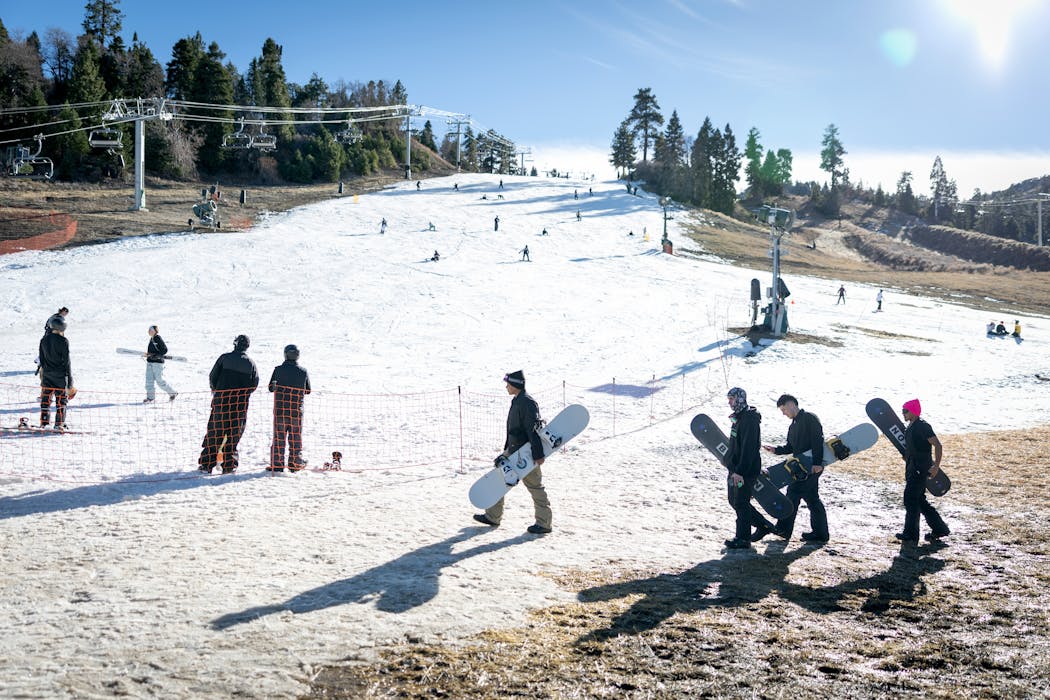
Skiers and snowboarders walk across dry ground to reach a slope at Bear Mountain ski resort on Dec. 21, 2025, in California. Eric Thayer/Los Angeles Times via Getty Images

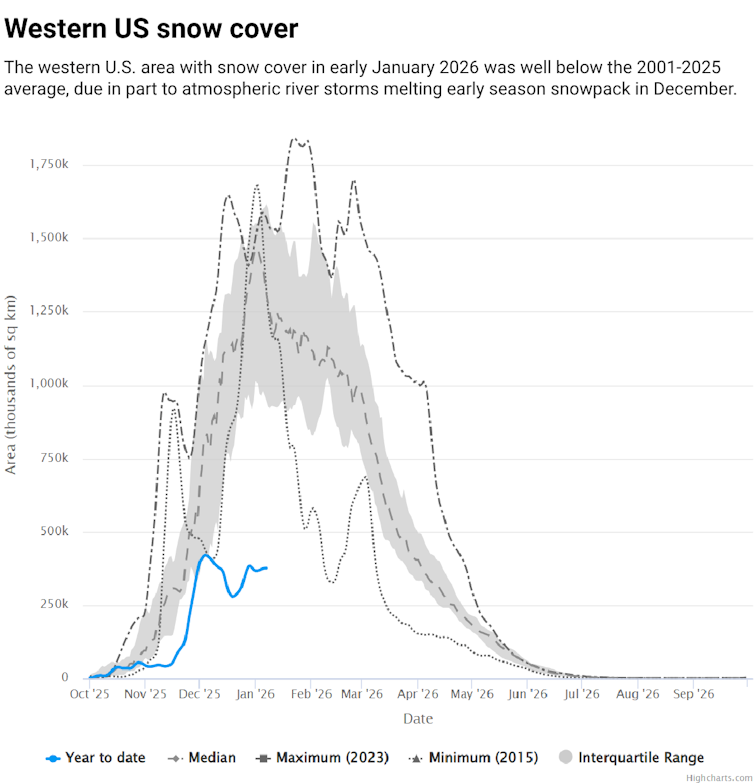
Much of the western U.S. has started 2026 in the midst of a snow drought. That might sound surprising, given the record precipitation from atmospheric rivers hitting the region in recent weeks, but those storms were actually part of the problem.

To understand this year’s snow drought – and why conditions like this are a growing concern for western water supplies – let’s look at what a snow drought is and what happened when atmospheric river storms arrived in December.

A chart shows very low snowpack in 2025 compared to average.

Chart source: Rittiger, K., et al., 2026, National Snow and Ice Data Center

What is a snow drought?

Typically, hydrologists like me measure the snowpack by the amount of water it contains. When the snowpack’s water content is low compared with historical conditions, you’re looking at a snow drought.

A snow drought can delayed ski slope opening dates and cause poor early winter recreation conditions.

It can also create water supply problems the following summer. The West’s mountain snowpack has historically been a dependable natural reservoir of water, providing fresh water to downstream farms, orchards and cities as it slowly melts. The U.S. Geological Survey estimates that up to 75% of the region’s annual water supply depends on snowmelt.

A map shows much of the West, with the exception of the southern Sierra Nevada and northern Rockies, with snowpack less than 50% of normal.
Snowpack is typically measured by the amount of water it contains, or snow water equivalent. The numbers show each location’s snowpack compared to its average for the date. While still early, much of the West was in snow drought as 2026 began.
Natural Resources Conservation Service

Snow drought is different from other types of drought because its defining characteristic is lack of water in a specific form – snow – but not necessarily the lack of water, per se. A region can be in a snow drought during times of normal or even above-normal precipitation if temperatures are warm enough that precipitation falls as rain when snow would normally be expected.

This form of snow drought – known as a warm snow drought – is becoming more prevalent as the climate warms, and it’s what parts of the West have been seeing so far this winter.

How an atmospheric river worsened the snow drought

Washington state saw the risks in early December 2025 when a major atmospheric river storm dumped record precipitation in parts of the Pacific Northwest. Up to 24 inches fell in the Cascade Mountains between Dec. 1 and Dec. 15. The Center for Western Weather and Water Extremes at Scripps Oceanographic Institute documented reports of flooding, landslides and damage to several highways that could take months to repair. Five stream gauges in the region reached record flood levels, and 16 others exceeded “major flood” status.

Yet, the storm paradoxically left the region’s water supplies worse off in its wake.

The reason was the double-whammy nature of the event: a large, mostly rainstorm occurring against the backdrop of an uncharacteristically warm autumn across the western U.S.

Water fills a street over the wheels of cars next to a river.
Vehicles were stranded as floodwater in a swollen river broke a levee in Pacific, Wash., in December 2025.
Brandon Bell/Getty Images

Atmospheric rivers act like a conveyor belt, carrying water from warm, tropical regions. The December storm and the region’s warm temperatures conspired to produce a large rainfall event, with snow mostly limited to areas above 9,000 feet in elevation, according to data from the Center for Western Weather and Water Extremes.

The rainfall melted a significant amount of snow in mountain watersheds, which contributed to the flooding in Washington state. The melting also decreased the amount of water stored in the snowpack by about 50% in the Yakima River Basin over the course of that event.

As global temperatures rise, forecasters expect to see more precipitation falling as rain in the late fall and early spring rather than snow compared with the past. This rain can melt existing snow, contributing to snow drought as well as flooding and landslides.

What’s ahead

Fortunately, it’s still early in the 2026 winter season. The West’s major snow accumulation months are generally from now until March, and the western snowpack could recover.

More snow has since fallen in the Yakima River Basin, which has made up the snow water storage it lost during the December storm, although it was still well below historical norms in early January 2026.

Scientists and water resource managers are working on ways to better predict snow drought and its effects several weeks to months ahead. Researchers are also seeking to better understand how individual storms produce rain and snow so that we can improve snowpack forecasting – a theme of recent work by my research group.

As temperatures warm and snow droughts become more common, this research will be essential to help water resources managers, winter sports industries and everyone else who relies on snow to prepare for the future.

The Conversation

Alejandro N. Flores receives funding from the National Science Foundation, US Department of Energy, NASA, USDA Agricultural Research Service, and Henry’s Fork Foundation.

ref. The western US is in a snow drought, and storms have been making it worse – https://theconversation.com/the-western-us-is-in-a-snow-drought-and-storms-have-been-making-it-worse-272549

How online communities are helping women stay in the skilled trades

Source: The Conversation – Canada – By Daniela Gatti, PhD Student, Centre of Industrial Relations and Human Resources, University of Toronto

Canada is facing a significant demographic challenge. Between 2019 and 2028, approximately 700,000 skilled trades workers are expected to retire, leaving a major gap in the future workforce.

Governments have responded with more investments to increase interest in the skilled trades and support training, including a recent announcement by the Ontario government to invest $2.6 million in Skills Ontario.

Canada needs more people in the skilled trades, especially women. Yet despite many recruitment efforts, women remain significantly underrepresented in the skilled trades. Only 7.9 per cent of skilled trades workers are women in Canada.

Our recent research shows that the problem is not only whether women are interested in entering the skilled trades, but if they’re able to remain once they do.

A double stigma on the job

Women who enter the trades face a double stigma. Trades work is often socially devalued. At the same time, women must work as minorities in workplaces shaped by masculine norms.

While the skilled trades offer financial independence and meaningful work, the reality is that many environments are hostile to women. The double stigma appears in daily interactions that question a woman’s competence and professional identity. To survive this double burden, women are building vital support in an unexpected place: online communities.

In our interviews with women across Canada working in electrical, carpentry and plumbing trades, participants described feeling very isolated. Many were the only woman on their job site.

This isolation often led to exclusion, scrutiny and harassment. One licensed electrician described keeping a running list of who she was mistaken for on-site, including “the carpenter’s wife,” “the painter,” and “the cleaning lady,” rather than being recognized as a professional.

Lack of support beyond the job site

Our research found this isolation often extended beyond the workplace. Family and friends, who should be a key source of career support, were often unsupportive. Participants described that personal networks questioned the legitimacy of their career choices or treated their work as temporary.

Several participants shared that family members viewed their career choice as a “waste” of potential. Parents expressed disappointment that they had not pursued university degrees or traditional office-based careers.

One participant noted that her parents’ disappointment was rooted in a mentality that viewed office work as the only measure of success. Others intentionally delayed telling their parents of their new jobs as trades apprentices because they assumed their families would be disappointed.

Even within the industry, potential role models sometimes reinforced these beliefs. One apprentice described meeting a female instructor who advised her: “Don’t wear pink…just keep your mouth shut.” Another participant was discouraged by her instructor from attending a women-in-trades conference, implying it would be a poor career move and would draw unwanted attention.

Turning to digital communities

When in-person support systems failed, many women turned to the digital world. Our research found that private online groups, particularly on Facebook and LinkedIn, have become essential spaces for building the support needed to remain in the trades.

These online communities offer something job sites often cannot: anonymity and psychological safety. In these spaces, women can ask technical questions, seek advice about workplace dynamics and share experiences without fear of being labelled incompetent or unprofessional. This safety allows them to access knowledge that would otherwise remain closed to them.

Crucially, these platforms provide validation. When women experience harassment or toxic behaviour, online communities help them distinguish between normal industry hardships and unacceptable abuse.

One participant described posting in a group about a supervisor’s behaviour. The group confirmed the situation was toxic and immediately shared job postings to help her exit that specific workplace while remaining in the industry in her city. This intervention directly aided her in her decision to remain in the industry.

Despite persistent stigma, participants found meaning in their work. Many described satisfaction in producing tangible results and valued the physical nature of their labour. For some, the trades offered an escape from unfulfilling desk jobs and a pathway to financial stability that justified enduring difficult environments.

However, staying requires resilience. Women often succeed by learning how to endure repeated barriers. Online groups provide the emotional fuel for this resilience. They gave women space to recharge in a safe environment before returning to the job site.

Why retention matters

If Canada hopes to replace the 700,000 tradespeople expected to retire this decade, focusing on recruitment is not enough. While attracting new workers is essential, retention is equally critical, particularly for women, who continue to face unique barriers that push them out of the trades prematurely.

Employers and policymakers need to recognize that the informal networks that have long supported men in the trades often exclude women, particularly those without generational ties to the industry. Without these networks, women can struggle to access critical knowledge, guidance and opportunities for professional growth.

In the absence of these networks, digital communities have emerged as a low-cost, high-impact solution. By acknowledging the value of these networks and integrating them into training, mentorship and support programs, the skilled trades can begin to address the double stigma women face, and create conditions that will help women to stay in the field.

The Conversation

Daniela Gatti receives funding from the Social Sciences and Humanities Research Council of Canada (SSHRC).

Mark Julien does not work for, consult, own shares in or receive funding from any company or organisation that would benefit from this article, and has disclosed no relevant affiliations beyond their academic appointment.

ref. How online communities are helping women stay in the skilled trades – https://theconversation.com/how-online-communities-are-helping-women-stay-in-the-skilled-trades-272554

A few reasons to feel hopeful about the climate in 2026

Source: The Conversation – UK – By Will de Freitas, Environment + Energy Editor, The Conversation

Renewables are becoming a logical economic choice across the world. Quality Stock Arts / shutterstock

This roundup of The Conversation’s climate coverage was first published in our award-winning weekly climate action newsletter, Imagine.

2025 was a brutal year for the climate: record temperatures, ever more extreme weather and so on. We rarely got a break from the bad news.

This week, rather than saying what’s going wrong, Imagine is looking at what’s starting to go right – and why it matters.

This isn’t blind faith. It’s what some academics call “grounded optimism”, based on data, momentum and the surprising resilience of people and ecosystems.

A positive tipping point?

We rightly spend a lot of time worrying about climate tipping points – the terrifying thresholds beyond which ecosystems collapse. Earlier this week we looked at the prospects of a sudden collapse in coral reefs, for instance.

But we rarely hear about “positive tipping points”. These are the moments when a sustainable technology or action becomes so affordable or popular that it kickstarts “irreversible, self-propelling change”.

The UK may have just passed one (tipping points, as the coral reefs author notes, are best noticed in hindsight). That’s according to Kai Greenlees and Steven R. Smith of the University of Exeter, who say the electric vehicle market is an example of a positive tipping point in action.

Despite misinformation campaigns, sales have surged in the UK, driven by a simple reality: they are getting cheaper and better.

“The more people buy them”, Greenlees and Smith write, “the cheaper and better they get, which makes even more people buy them – a self-propelling change towards a low-carbon road transport system.”

electric cars charging
Electric cars aren’t perfect, and many academics say we should move away from private car ownership. But for now, this is a welcome tipping point.
William Barton / shutterstock

At the time of writing, the authors only had access to 2024 data, when electric vehicles made up 19.6% of new cars in the UK.

That figure, they wrote, “puts this sector close to the critical 20-25% range for triggering the phase of self-propelling adoption, according to positive tipping points theory”.

Data for 2025 UK sales was released on Tuesday. The share of electric vehicles? 23.4%.


Read more:
UK may be on verge of triggering a ‘positive tipping point’ for tackling climate change


From crisis to innovation

In Pakistan, solar is booming – not because of climate pledges, or activist pressure, but because the grid has become expensive and unreliable. Something similar is playing out across south Asia, says Reihana Mohideen of the University of Melbourne.

Mohideen writes:

“Importantly, these moves often aren’t about climate change. Reasons range from cutting dependence on expensive fossil fuels and international market volatility to reducing reliance on unreliable power grids to finding ways to boost livelihoods.”

The world recently passed a massive milestone: renewables have finally overtaken coal to become the world’s leading source of electricity. And some of the most exciting developments are taking place in less wealthy economies.

Whether it’s Nepal moving to electric vehicles to stop relying on imported petrol or the Maldives installing solar because diesel is too expensive to ship to outer islands, Mohideen says the result is the same: clean energy is no longer just for rich nations. It is becoming a logical economic choice everywhere.


Read more:
Renewables have now passed coal globally – and growth is fastest in countries like Bhutan and Nepal


China doubles down

We can’t talk about global hope without considering the world’s largest emitter.

This newsletter has noted before the confusing paradox of China fast rolling out green technologies while still burning a colossal amount of coal to keep the lights on.

In an article on China’s five green economy challenges in 2026, Chee Meng Tan of the University of Nottingham notes the country’s grid can’t quite handle all the new solar power, while a cut-throat price war threatens progress on electric vehicles.

But Beijing is doubling down on greening its economy, he says, and still aims to achieve “‘carbon peaking’, where carbon dioxide emissions have reached a ceiling by 2030, and ‘carbon neutrality’, where net carbon dioxide emissions have been driven down to zero by 2060.”

The challenges Tan identifies will need to be overcome. But the sheer scale of investment suggests that in China the momentum is now undeniably pointed towards a low-carbon future.


Read more:
China’s five green economy challenges in 2026


Where the wild things thrive

Finally, some good news for climate-threatened ecosystems.

It’s easy to assume that global warming hits everywhere equally. But nature isn’t that simple. Researchers working in east Africa and California’s Sierra Nevada mountains have identified what they call “climate change refugia”.

These are specific pockets of resilience that remain buffered from the worst effects of warming. They can be quite small scale: a shaded meadow, a deep lake, or a valley that harbours cool air.

Toni Lyn Morelli of UMass Amherst and Diana Stralberg of the University of Alberta have written about their work identifying and mapping these safe havens. Their work means conservationists can prioritise protecting the specific meadows where ground squirrels can survive, or the corridors in Tanzania where elephants and lions can find enough water to endure a drought.

Morelli and Stralberg say that by “identifying and protecting the places where species can survive the longest, we can buy crucial decades for ecosystems”.


Read more:
Where the wild things thrive: Finding and protecting nature’s climate change safe havens


Don’t have time to read about climate change as much as you’d like?

Get a weekly roundup in your inbox instead. Every Wednesday, The Conversation’s environment editor writes Imagine, a short email that goes a little deeper into just one climate issue. Join the 45,000+ readers who’ve subscribed so far.


The Conversation

ref. A few reasons to feel hopeful about the climate in 2026 – https://theconversation.com/a-few-reasons-to-feel-hopeful-about-the-climate-in-2026-272930

Want to read more? Two experts give their tips on what you can do

Source: The Conversation – UK – By Paty Paliokosta, Associate Professor of Special and Inclusive Education, Kingston University

Makistock/Shutterstock

Reading promises so much: better mental health, a sense of wellbeing, cultural and educational enrichment, even greater confidence and eloquence.

It sounds irresistible; yet for many of us, the reality is very different. Half of the adults in the UK don’t read regularly for pleasure, and more than one in ten find reading difficult.

So why does something so rewarding feel so hard to do? For many adults, a disinterest in reading may well start in childhood. In 2025, only about one in three children and young people aged eight to 18 reported enjoying reading in their free time. And then if children do not see their own parents reading, they are unlikely to see being immersed in a book as a good use of leisure time.

The government’s Education Committee has recently launched an inquiry to explore how to keep the joy of reading alive.

In our research, we both (through different angles) explore ways to get people reading for joy.

Different ways of reading

Many people grow up feeling excluded from the joy of reading, and this may linger into adulthood. Research consistently shows that both children and adults with dyslexia or ADHD report lower levels of enjoyment and therefore tend to read less frequently.

This can be exacerbated by systemic school approaches and priorities that associate reading with national and international tests. Reading is reduced to a performance metric, rather than a source of pleasure.

Simple changes, such as altering the physical properties of the titles you read, or choosing graphic novels, can make a big difference. Neurodivergent readers can access books from publishers that specialise in using accessible fonts, layouts and language, for example.

Audiobooks offer another powerful alternative. Despite the relationship between brain representations of information perceived by listening versus reading is unclear, neuroscience research shows the way our brain represents meaning is nearly the same whether we are listening or reading.

Woman with headphones smiling while she washes dishes
Listening to an audiobook counts as reading!
Prostock-studio/Shutterstock

Audiobooks can transform stories from something squeezed in between deadlines into travel companions, kitchen buddies, or late-night unwinders. Accessible on phones, tablets, smart speakers and even through library loans, audiobooks fit seamlessly into busy lives. They can be a great way to get into books for those of us with low reading stamina who need frequent breaks.

For people with ADHD, audiobooks allow for physical movement while reading. They also engage young children effortlessly. Children, as young as three giggle through lively audio tales and tackle complex narratives with ease.

One of us (Paty) recalls her daughter proudly saying she could “see” the stories in her head – like her own private cinema – even preferring them to TV shows. What she didn’t know was that every laugh and every imagined scene was quietly building vocabulary and nurturing a love for books.

Read socially

The social dimensions and shared experiences of reading have been repeatedly highlighted. An example of tackling some of the systemic barriers around reading for pleasure in big scale is the KU Big Read project, launched by one of us (Alison Baverstock) in 2015 and which ran until 2024-25.

Before they started their undergraduate course, new students at Kingston University received a free book in the post – along with a letter from the author referring to their feelings just before starting university.

This gave everyone a shared experience, and a book to talk about, before the nerve-wracking first day. The transition to higher education is a momentous step, and the university saw a significant reduction in the dropout rate in its first year of the project.

The book consistently acted as a connector across the university, with staff and students helping to choose the book for the year ahead.

Men in book group
Look for a book group or online community to discuss what you read.
LightField Studios/Shutterstock

We invite you to put this into practice in your own lives. Look for an in-person or online book group or read-along, and make reading social. The book group that one of us (Paty) attends isn’t about pure literary critique, but about human connection.

Make reading a pleasure, not a chore

The charity Reading Force founded by one of us (Alison Baverstock), which promotes the use of shared reading to keep military families connected, has always encouraged making reading fun rather than a laboured and compulsory process. Families are given special scrapbooks to record their shared experience of reading together and the word “literacy” is never mentioned.

Reading is promoted as a fun activity for families, with colourful resources, free books and events with key authors such as charity patron Sir Michael Morpurgo. For families whose access to books may be limited, this can be a gentle, non-judgemental and exciting pathway. Feedback from this process has shown profound connection, wellbeing and emotional satisfaction.

This emotional satisfaction by reading things they would like to read as opposed to imposed ones is of utmost importance. Pick something that engages you, not the book you think you should be reading.

Representation and reading

Feeling represented in the stories you read – whether through your background, values, or identity – can be a powerful way to build a love for books.

Adults from diverse backgrounds have benefited from joining bilingual groups with their children, creating stories together and engaging with books. The gains are significant, not only in literacy and cultural belonging but also in stronger connections with their community.

When books showcase a variety of cultures and include characters of all abilities as central figures, they become more relatable and inviting for readers from all walks of life. And it is never too late.

The Conversation

Alison Baverstock is the founder and director of the charity Reading Force (1159890) which is funded by grants from organisations, charities and benevolent individuals/institutions.

Paty Paliokosta does not work for, consult, own shares in or receive funding from any company or organisation that would benefit from this article, and has disclosed no relevant affiliations beyond their academic appointment.

ref. Want to read more? Two experts give their tips on what you can do – https://theconversation.com/want-to-read-more-two-experts-give-their-tips-on-what-you-can-do-269450

Melatonin and childhood sleep problems: what parents should know

Source: The Conversation – UK – By Dipa Kamdar, Senior Lecturer in Pharmacy Practice, Kingston University

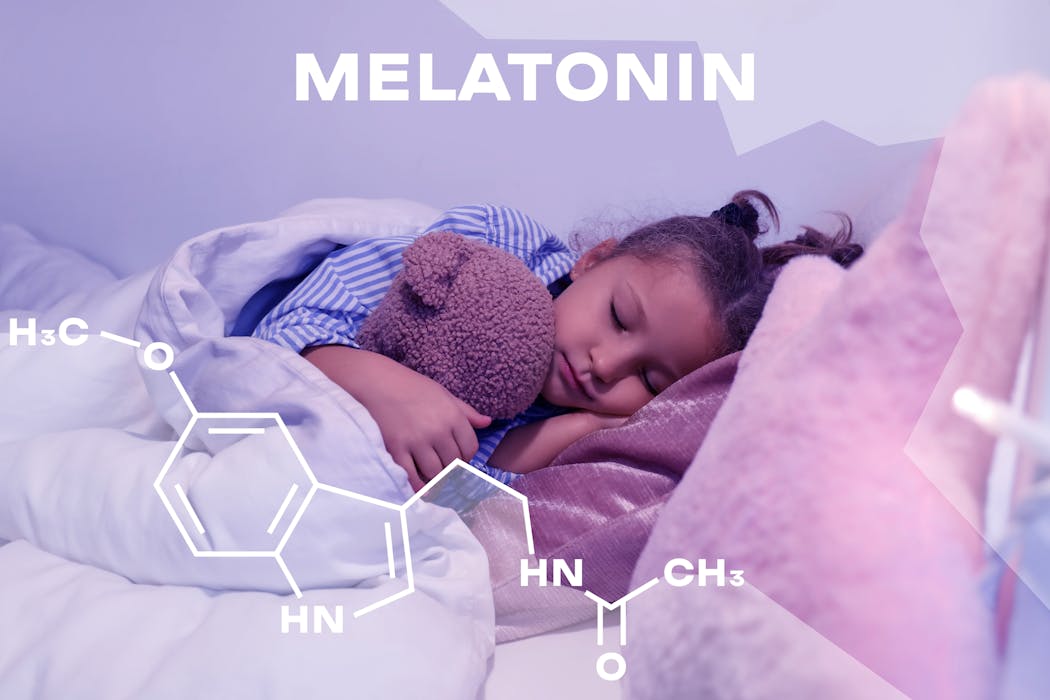
Melatonin use in children is rising fast. But long-term safety data is limited and regulation varies wildly. Pixel-Shot/Shutterstock

As families return to school-term routines, sleep difficulties often resurface. For many parents, particularly those raising children with neurodevelopmental conditions, melatonin has become a widely discussed option. Yet its growing use raises important questions about regulation, effectiveness and safety.

Melatonin is a hormone naturally produced by the pineal gland in the brain. It plays a key role in regulating the sleep–wake cycle, the body’s internal clock that helps us feel alert during the day and sleepy at night. Melatonin levels usually rise in response to darkness, signalling that it is time to sleep. The medication sold as melatonin is a synthetic version of this naturally occurring hormone.

In adults, melatonin is commonly used to manage jet lag or sleep disruption linked to shift work fatigue. In recent years, however, its use in children has increased. In England, overall melatonin use has risen sharply, from around two prescriptions per 1,000 people in 2008 to nearly 20 per 1,000 by 2019, representing a tenfold increase.

In the UK, melatonin is available only on prescription. It is licensed for the short-term treatment of insomnia in adults aged 55 and over. There are also limited melatonin preparations licensed for use in children with neurodevelopmental conditions or genetic brain conditions that disrupt normal sleep patterns.

Children with neurodevelopmental disorders commonly experience sleep difficulties. These may include problems falling asleep, irregular sleep–wake patterns, frequent night waking and shorter overall sleep duration.


Read more:
Can kids overdose on melatonin gummies? Yes, and an online store has suspended sales


In contrast, in the US melatonin is regulated as a dietary supplement rather than a medicine. It can be purchased in supermarkets and online without medical oversight. This looser regulation has raised concerns. Studies have found that the actual melatonin content in US supplements often differs substantially from what is stated on the label: in one analysis the measured amounts ranged from about 83% less than advertised to up to 478% more.

The scientific evidence for melatonin’s effectiveness in children is mixed, though there is some support for its use in specific groups. A trial involving children with autism spectrum disorder (ASD) found that those taking melatonin slept, on average, about 32 minutes longer than those given a placebo, after accounting for other factors that influence sleep. Melatonin also helped children fall asleep around 25 minutes faster.

Similar benefits have been reported in children with attention-deficit hyperactivity disorder (ADHD), where melatonin helped address disruptions to circadian rhythms, the body’s internal timing system, and improved overall sleep. A 2023 review examined children and adolescents with idiopathic chronic insomnia, meaning long-lasting insomnia with no identifiable medical cause.

It found moderate improvements in sleep, alongside an increase in side effects, though no serious adverse effects were reported. The authors recommended that melatonin should be used only when sleep problems persist despite non-pharmacological approaches, regardless of whether a child has ASD or ADHD.

Evidence on long-term benefit remains limited. Most clinical trials last only a few weeks or months. A 2024 UK clinical audit analysed data from more than 4,000 children and adolescents prescribed melatonin. It found wide variation in prescribing practices. While melatonin was usually started appropriately, follow-up was often poor. In many cases, prescriptions were continued without checking whether the medication was still effective or necessary.

Melatonin is often perceived as “natural”, but this does not mean it is risk-free. Its safety profile has been examined in a review of more than 30 clinical trials across different age groups. Daily doses ranged from very small amounts, such as 0.15mg, to higher doses of up to 12mg. Although a few studies followed participants for as long as 29 weeks, most were short-term, typically lasting no more than a month.

Across these trials, side effects were generally uncommon and mild. The most frequently reported included daytime sleepiness, headaches, dizziness, minor sleep disturbances and occasional drops in body temperature.

More serious effects, such as agitation, fatigue, mood changes, nightmares, skin irritation or heart palpitations, were rare. When side effects did occur, they usually resolved within a few days or stopped once melatonin was discontinued. Overall, melatonin appears to be well tolerated for most users, but the quality of evidence is low and robust long-term safety data is lacking.

A separate review focusing on children and adolescents similarly found that side effects were usually mild and non-serious. However, the authors noted mixed evidence suggesting that long-term use might affect pubertal development, highlighting an area where further research is needed.

More recently, a study reported a possible association between long-term melatonin use and heart failure in adults. However, the findings were not conclusive. Taken together, the lack of clear long-term safety evidence across all age groups reinforces the need for cautious prescribing and further high-quality research.

Regulation plays a major role in how closely melatonin use is monitored. In the UK, where it is only available on prescription, clinicians are expected to review its ongoing need, yet audits suggest this does not consistently happen. In the US, where melatonin is readily available as a supplement, families may understandably turn to it earlier, sometimes before trying behavioural approaches that may be equally or more effective.

Behavioural and environmental strategies remain the first-line approach for childhood sleep difficulties. These include maintaining consistent bedtime routines, limiting screen use in the hour before bed and optimising light exposure by keeping evenings dim and mornings bright. R

egular daytime exercise may help promote sleep, while avoiding sugary foods and caffeine before bedtime can reduce restlessness. Addressing anxiety and sensory sensitivities is particularly important for children with neurodivergence. Cognitive behavioural therapy for insomnia (CBT-I), adapted for children, can also be effective.


Read more:
Screen time is contributing to chronic sleep deprivation in tweens and teens – a pediatric sleep expert explains how critical sleep is to kids’ mental health


When these strategies are insufficient and sleep problems significantly affect a child’s wellbeing, melatonin may be considered under medical supervision. It should be used as part of a broader sleep plan rather than as a standalone solution.

The contrast between the UK’s prescription-only system and the US supplement market highlights how uneven the safeguards are. Ultimately, what children need most is support that prioritises strong foundations for healthy sleep.

The Conversation

Dipa Kamdar does not work for, consult, own shares in or receive funding from any company or organisation that would benefit from this article, and has disclosed no relevant affiliations beyond their academic appointment.

ref. Melatonin and childhood sleep problems: what parents should know – https://theconversation.com/melatonin-and-childhood-sleep-problems-what-parents-should-know-271665