A Philosopher Looks at Clothes by Kate Moran is engaging and unpretentious – we need more philosophy books like this

Source: The Conversation – UK – By Sarah Richmond, Honorary Associate Professor of Philosophy, UCL

With a few exceptions, philosophers have had little to say about clothes. Maybe this is because the topic seems frivolous, or feminine, unworthy of the attention of a predominantly male collection of thinkers.

Perhaps, too, the transience of fashion, and the fact that clothes belong – quite literally – to the domain of mere appearance, also has something to do with it. In A Philosopher Looks at Clothes, an engaging and informative book, Kate Moran, philosophy professor at Brandeis University in the US, urges us to think again.

As Moran points out, clothing looms large in life. Every day we dress, deciding how many layers to wear and whether we need a coat – or might a cardigan suffice? We gaze critically at other people’s choices (“OMG, those shoes!”). We wonder how to rise to the challenge of an imminent Eurovision-themed party.

From a historical point of view, also, our species-specific recourse to clothes stretches back to the earliest human society. In mythical time, it begins with Adam’s and Eve’s discovery, in shame, that they were naked. If fashion is transient, clothes, per se, are not.


Looking for something good? Cut through the noise with a carefully curated selection of the latest releases, live events and exhibitions, straight to your inbox every fortnight, on Fridays. Sign up here.


Clothes, Moran tells us, serve three basic purposes: protection, modesty and decoration. At once, these introduce questions of deep philosophical interest. Are the purposes equally important? Why, throughout human history, have we refused to settle merely for protection, desiring for example that a hat should be of some favoured colour or shape? To what extent do our decorative choices express our personal identity? Do clothes ever qualify as works of art? Why is modesty an abiding concern, given that we all know the contours of the unclothed body?

In many contexts, and especially today, clothes invite ethical and political assessment. Clothes communicate a great deal of information about us, including our social position and the causes we espouse.


Read more:
A brief history of the slogan T-shirt


We may knowingly exploit this, choosing to flaunt an obviously expensive garment or to wear our football team’s scarf. In other cases the meanings are imposed. The uniforms forced on prisoners, for example, emphasise subordination and erase their individuality.

Poignantly, research into textile history has uncovered a streak of resistance in even the most ill-treated captives. In concentration camps during the second world war some prisoners altered their uniforms, or mended them, or added pockets. As Moran remarks, these actions were not just practical; their aim, too, was to “recover some sense of identity and dignity”.

Portrait of Friedrich Nietzsche by Edvard Munch
Portrait of Friedrich Nietzsche by Edvard Munch (1906).
Thiel Gallery, Stockholm

In the brilliantly conceived series by Cambridge University Press to which this title belongs, each author discusses some general topic from a perspective that is philosophically informed and at the same time personal.

We need more books like these, to counteract the entrenched pretence of disinterestedness in philosophy. (Nietzsche, exceptionally, saw through it, denouncing philosophers as “advocates who do not want to be seen as such … sly spokesmen for prejudices that they christen as ‘truths’”.)

Knowledge of the significance, in an author’s life, of her subject-matter enriches the reader’s imaginative experience of a book. Describing herself as an “ardent hobbyist” who sews her own clothes, Moran provides an additional facet to her account of today’s fashion industry and its scandalous environmental costs.

The reader knows that Moran herself has found an alternative. This lends a certain authority to her judgement that, however futile it may seem for any one person to step off the fast-fashion bus: “There is an important moral difference between being inefficacious and being innocent.”

Moran shows how many areas of philosophy can illuminate the phenomenon of clothes: not only ethics and political thought, but also aesthetics, theories of communication, of personal identity, of gender and cultural appropriation.

For readers unfamiliar with academic philosophy, these forays offer a path into a rich conceptual landscape. Along the way, we are offered a multitude of riveting facts. Who would have guessed that pink has not always been for girls, and blue for boys? And there are pictures, too. My highlight was the “revenge dress” that Princess Diana wore to a gala dinner in the midst of hostilities with Charles, in a successful bid to divert press attention from his appearance on TV.

This article features references to books that have been included for editorial reasons, and may contain links to bookshop.org. If you click on one of the links and go on to buy something from bookshop.org The Conversation UK may earn a commission.

The Conversation

Sarah Richmond does not work for, consult, own shares in or receive funding from any company or organisation that would benefit from this article, and has disclosed no relevant affiliations beyond their academic appointment.

– ref. A Philosopher Looks at Clothes by Kate Moran is engaging and unpretentious – we need more philosophy books like this – https://theconversation.com/a-philosopher-looks-at-clothes-by-kate-moran-is-engaging-and-unpretentious-we-need-more-philosophy-books-like-this-260473

Floating babies, cosmic radiation and zero-gravity birth: what space pregnancy might actually involve

Source: The Conversation – UK – By Arun Vivian Holden, Emeritus Professor of Computational Biology, University of Leeds

Lidiia/Shutterstock

As plans for missions to Mars accelerate, so do questions about how the human body might cope. A return trip to the red planet would give more than enough time for someone to become pregnant and even give birth. But could a pregnancy be conceived and carried safely in space? And what would happen to a baby born far from Earth?

Most of us rarely consider the risks we survived before birth. For instance, about two thirds of human embryos do not live long enough to be born, with most losses happening in the first few weeks after fertilisation; often before a person even knows they’re pregnant. These early, unnoticed losses usually happen when an embryo either fails to develop properly or to implant successfully in the wall of the womb.

Pregnancy can be understood as a chain of biological milestones. Each one must happen in the right order and each has a certain chance of success. On Earth, these odds can be estimated using clinical research and biological models. My latest research explores how these same stages might be affected by the extreme conditions of interplanetary space.


Get your news from actual experts, straight to your inbox. Sign up to our daily newsletter to receive all The Conversation UK’s latest coverage of news and research, from politics and business to the arts and sciences.


Microgravity, the near-weightlessness experienced during spaceflight, would make conception more physically awkward but probably wouldn’t interfere much with staying pregnant once the embryo has implanted.

However, giving birth, and looking after a newborn, would be far more difficult in zero gravity. After all, in space, nothing stays still. Fluids float. So do people. That makes delivering a baby and caring for one a much messier and more complicated process than on Earth, where gravity helps with everything from positioning to feeding.

At the same time, the developing foetus already grows in something like microgravity. It floats in neutrally buoyant amniotic fluid inside the womb, cushioned and suspended. In fact, astronauts train for spacewalks in water tanks designed to mimic weightlessness. In that sense, the womb is already a microgravity simulator.

But gravity is only part of the picture.

Radiation

Outside Earth’s protective layers, there’s a more dangerous threat: cosmic rays. These are high-energy particles – “stripped-down” or “bare” atomic nuclei – that race through space at nearly the speed of light. They’re atoms that have lost all their electrons, leaving just the dense core of protons and neutrons. When these bare nuclei collide with the human body, they can cause serious cellular damage.

Here on Earth, we’re protected from most cosmic radiation by the planet’s thick atmosphere and, depending on the time of day, tens of thousands to millions of miles of coverage from the Earth’s magnetic field. In space, that shielding disappears.

When a cosmic ray passes through the human body, it may strike an atom, strip its electrons, and smash into its nucleus, knocking out protons and neutrons and leaving behind a different element or isotope. This can cause extremely localised damage – meaning that individual cells, or parts of cells, are destroyed while the rest of the body might remain unaffected. Sometimes the ray passes right through without hitting anything. But if it hits DNA, it can cause mutations that increase the risk of cancer.

Even when cells survive, radiation can trigger inflammatory responses. That means the immune system overreacts, releasing chemicals that can damage healthy tissue and disrupt organ function.

In the first few weeks of pregnancy, embryonic cells are rapidly dividing, moving, and forming early tissues and structures. For development to continue, the embryo must stay viable throughout this delicate process. The first month after fertilisation is the most vulnerable time.

A single hit from a high-energy cosmic ray at this stage could be lethal to the embryo. However, the embryo is very small – and cosmic rays, while dangerous, are relatively rare. So a direct hit is unlikely. If it did happen, it would probably result in an unnoticed miscarriage.

Pregnancy risks

As pregnancy progresses, the risks shift. Once the placental circulation – the blood flow system that connects mother and foetus – is fully formed by the end of the first trimester, the foetus and uterus grow rapidly.

That growth presents a larger target. A cosmic ray is now more likely to hit the uterine muscle, which could trigger contractions and potentially cause premature labour. And although neonatal intensive care has improved dramatically, the earlier a baby is born, the higher the risk of complications, particularly in space.

On Earth, pregnancy and childbirth already carry risks. In space, those risks are magnified – but not necessarily prohibitive.

But development doesn’t stop at birth. A baby born in space would continue growing in microgravity, which could interfere with postural reflexes and coordination. These are the instincts that help a baby learn to lift its head, sit up, crawl, and eventually walk: all movements that rely on gravity. Without that sense of “up” and “down,” these abilities might develop in very different ways.

And the radiation risk doesn’t go away. A baby’s brain continues to grow after birth, and prolonged exposure to cosmic rays could cause permanent damage – potentially affecting cognition, memory, behaviour and long-term health.

So, could a baby be born in space?

In theory, yes. But until we can protect embryos from radiation, prevent premature birth, and ensure babies can grow safely in microgravity, space pregnancy remains a high-risk experiment – one we’re not yet ready to try.

The Conversation

Arun Vivian Holden does not work for, consult, own shares in or receive funding from any company or organisation that would benefit from this article, and has disclosed no relevant affiliations beyond their academic appointment.

– ref. Floating babies, cosmic radiation and zero-gravity birth: what space pregnancy might actually involve – https://theconversation.com/floating-babies-cosmic-radiation-and-zero-gravity-birth-what-space-pregnancy-might-actually-involve-261142

Is today’s political climate making dating harder for young people?

Source: The Conversation – UK – By Katherine Twamley, Professor of Sociology, UCL

Drazen Zigic/Shutterstock

The last year has highlighted a political divide between young men and women. Data from elections in several countries shows that women aged 18-29 are becoming significantly more liberal, while young men are leaning more conservative. And a recent 30-country study found generation Z more divided than other generations on key questions around gender equality.

At the same time, there is growing evidence that this cohort is turning away from traditional dating and long-term romantic relationships. According to the National Survey of Family Growth, in the US between 2022 and 2023, 24% of men and 13% of women aged 22-34 reported no sexual activity in the past year.

This is a significant increase on previous years. And American teens are less likely to have romantic relationships than teenagers of previous generations.

In the UK, surveys over the past decades reveal a trend in reduced sexual activity, in terms of both frequency and number of partners, among young people. Dating apps are also losing their lustre, with the top platforms seeing significant user declines among heterosexual gen Z users in the last year.

Is the gendered political divide making dating harder? As sociologists of intimacy, our work has shown how relationships are affected by larger social, economic and political trends.

Our research on enduring gender inequality has shown that it can affect the perceived quality of intimate relationships and relationship stability. For example, heterosexual relationships are often underpinned by unequal divisions of emotional and domestic labour, even among partners with similar incomes.


Dating today can feel like a mix of endless swipes, red flags and shifting expectations. From decoding mixed signals to balancing independence with intimacy, relationships in your 20s and 30s come with unique challenges. Love IRL is the latest series from Quarter Life that explores it all.

These research-backed articles break down the complexities of modern love to help you build meaningful connections, no matter your relationship status.


Some commentators and researchers have identified a trend of “heteropessimism” — a disillusionment with heterosexual relationships, often marked by irony, detachment or frustration. Anecdotally, women have widely expressed weariness with the gender inequality that can emerge in relationships with men.

But heteropessimism has been identified among men too, and research has found that women are, on average, happier being single than men.

Take domestic labour. Despite progress towards gender equality in many areas, data shows that women in mixed sex relationships still shoulder the majority of housework and care. In the UK, women carry out an average of 60% more unpaid work than men. This gap persists even among couples who both work full-time.


Read more:
What is ‘heteropessimism’, and why do men and women suffer from it?


In Korea, persistent gender inequality is thought to be behind the 4B movement. Young Korean women, fed up with sexist stereotypes which tie women to traditional roles, have declared their rejection of marriage, childbirth, dating and sex with men.

Beyond Korea, young women have declared themselves “boy sober”. Harassment, abuse and “toxic behaviour” on dating apps has reportedly driven young women away from wanting to date at all.

Others have embraced voluntary celibacy. One reason is that, for some women, the erosion of reproductive rights, such as the overturning of Roe v Wade in the US, sharpens the political stakes of intimacy. Political disagreements that may once have been surmountable in a relationship are now deeply personal, affecting womens’ bodily autonomy and experiences of misogyny.

Of course, gender inequality does not just negatively affect women. In education, evidence suggests boys are falling behind girls at every level in the UK, though recent research shows this has reversed in maths and science. Men report feeling locked out of opportunities to care for their children through old-fashioned parental leave norms, which offer minimal opportunities for fathers to spend time with their children.

Some influencers capitalise on real and perceived losses for men, pushing regressive and sexist views of women and relationships into the social media feeds of millions of boys and young men.

Given all of the above, it is not entirely surprising that young men are more likely than young women to report that feminism has done more harm than good.

Anxiety and uncertainty

But there are wider political and economic issues that affect both young men and women, and how (or whether) they date each other. Gen Z are coming of age in a time of economic depression. Research shows that those experiencing financial stress have difficulties in establishing and maintaining intimate relationships.

This may partly be because early stages of romance are strongly associated with consumerism – dinner out, gifts and so on. But there is also a lack of mental space for dating when people are under pressure to make ends meet. Insecure finances also affect young people’s ability to afford their own homes and have access to private spaces with a partner.

There are, additionally, growing rates of mental ill health reported by young people worldwide. Anxieties abound around the pandemic, economic recession, the climate and international conflict.

These anxieties play out in the dating scene, with some feeling that entering into a romantic relationship is another risk to be avoided. Research with UK-based heterosexual dating app users aged 18-25 found that they often saw dating as a psychological stand-off – where expressing care too soon could result in humiliation or rejection.

Cartoonish illustration of a man holding a mobile phone, which shows a woman running away through an open door
Be vulnerable and risk rejection, or jump ship?
Dedraw Studio/Shutterstock

The result was that neither young men nor women felt safe expressing genuine interest. This left people stuck in the much-lamented “talking stage”, where relationships fail to progress.

As sociologist Lisa Wade and others have shown, even when casual sex is part of the picture, emotional attachment is often actively resisted. The proliferation of “hook-up culture” – characterised by casual sexual encounters that prioritise physical pleasure over emotional intimacy – may partly be a response to a cultural discomfort with vulnerability.

Gen Z’s turn away from dating doesn’t necessarily reflect a lack of desire for connection, but perhaps a heightened sense of vulnerability related to larger trends in mental ill-health and social, economic and political insecurity.

It may not be that young people are rejecting relationships. Rather, they may be struggling to find emotionally safe (and affordable) spaces where intimacy can develop.

The Conversation

The authors do not work for, consult, own shares in or receive funding from any company or organisation that would benefit from this article, and have disclosed no relevant affiliations beyond their academic appointment.

– ref. Is today’s political climate making dating harder for young people? – https://theconversation.com/is-todays-political-climate-making-dating-harder-for-young-people-257844

What was the Battle of Orgreave, and why has the government launched an inquiry into it?

Source: The Conversation – UK – By Steven Daniels, Lecturer in Politics, Edge Hill University

The UK’s home secretary, Yvette Cooper, has announced a full inquiry into the Battle of Orgreave, a large, violent clash between the National Union of Mineworkers and South Yorkshire police that took place over 40 years ago.

The clash was a flashpoint of the 1984-85 miners’ strike, in which mining communities fought to protect jobs and industry from closure. It descended into a violent confrontation between miners and police, with injuries and accusations of misconduct on both sides.

The announcement of an inquiry has been a long time coming for miners’ groups. Comparisons have been made to the Hillsborough tragedy and inquiry – another incident involving accusations of mistreatment by South Yorkshire Police.


Get your news from actual experts, straight to your inbox. Sign up to our daily newsletter to receive all The Conversation UK’s latest coverage of news and research, from politics and business to the arts and sciences.


The Battle of Orgreave took place on June 18 1984, outside Orgreave coking plant in Rotherham. The miners’ strike had been raging since March 1984, with both sides looking for opportunities to turn the tide in their favour.

Before ascending to the presidency of the National Union of Mineworkers (NUM) in 1982, British trade unionist Arthur Scargill had gained notoriety during the 1972 miners’ strike. He developed the “flying pickets” tactic. This approach saw large numbers of strikers from around the country descend on an industrially sensitive target, to pressure it into closing. These tactics successfully closed Saltley Gate gasworks in Birmingham, forcing the taxpayer-owned National Coal Board and Edward Heath’s government to concede the 1972 strike to the NUM.

In 1984, realising that British Steel’s furnaces would be vulnerable without coking coal, Scargill planned to repeat the 1972 victory at Orgreave.

On June 18, around 8,000 miners began assembling as early as 4am. They were met by 6,000 police in full riot gear. As lorries began arriving to collect coking coal, the conflict began around 8am. This unfolded in waves: mounted police would cavalry charge miners, splitting their lines, with “snatch squads” then swarming miners who had failed to retreat in time, arresting them.

This continued until the afternoon, when miners retreated into Orgreave village. Police continued trying to disperse miners, even cavalry-charging the village.

Miners’ groups allege that the police charged their lines despite their picket being peaceful in nature, and there was no trigger for violence. They claim only once police started charging did they retaliate in defence, throwing rocks and other missiles. Controversially, footage of these incidents was allegedly shown in reverse order by the BBC, painting the strikers as the aggressors.

Orgreave is considered a turning point, both in the strike, and in policing of protest. With the “flying pickets” strategy in tatters, the NUM struggled to maintain pressure and lost momentum as the months dragged on. The strike ended in March 1985 with a full, unconditional return to work.

The aftermath

Ninety-five miners were arrested that day, with 55 subsequently charged with riot. This was a serious charge, carrying the maximum penalty of life imprisonment. Many more reported injuries and accused South Yorkshire Police of being unnecessarily violent and heavy handed.

One of the most famous images from the day shows Lesley Boulton, a woman there to document the strike with her camera, with a mounted policeman swinging his truncheon at her head. This photo sums up the brutality of the day. Accusations also emerged of police removing their collar numbers, so as not to be identified.

Sensationally, the 1985 trial for riot collapsed after evidence from South Yorkshire Police was found to be unreliable. It was later revealed through archival material that officers were given direction or guidance in their statements.

It was also revealed that Margaret Thatcher herself attended a drinks reception for police chiefs involved in the strike, thanking them personally for “all they did and their forces did to maintain public order”. Even though the 55 miners were cleared of the charges, many were financially ruined, and unable to return to the coal industry.

Thirty-nine of those involved subsequently took legal action against South Yorkshire Police for unlawful arrest and malicious prosecution, settling for a payment of £425,000 and no admission of liability. Not a single police officer was prosecuted or punished for their role in Orgreave.


Read more:
New files add weight to calls for Battle of Orgreave inquiry


Calls for inquiry

Calls for an inquiry into the Battle of Orgreave, as well as the general standard of policing during the strike, have been ongoing for decades. As early as January 1985 (with the strike ongoing), the then home secretary, Leon Brittan, was resistant to any public inquiry into the conduct of police officers during the strike, fearing it would descend into a “witch-hunt”. John Major’s government similarly resisted such calls in 1991, believing them unnecessary.

In 2015, the Independent Police Complaints Commission declined to mount a formal investigation, despite finding evidence to suggest officers had indeed assaulted miners at Orgreave and other forms of misconduct. The commission argued that too much time had passed for the investigation to have any meaning.

Theresa May’s government rejected calls for an inquiry in 2016. The then home secretary Amber Rudd claimed an inquiry was not in the public interest, arguing policing standards had changed substantially since the 1980s and that the event had simply occurred too long ago. Rudd also said that many involved in the strike would have died, and most officers involved would no longer be employed by South Yorkshire Police.

The volunteer-run Orgreave Truth and Justice Campaign has long campaigned for a public inquiry, arguing that Orgreave was a serious miscarriage of justice that needs to be adequately addressed. They believe that a full inquiry will provide accountability and clarity regarding the role of the police and the state in such a tumultuous time period.

The Hillsborough inquiry shows what successful (and persistent) community action can achieve. Accusations made against South Yorkshire Police then were eventually proven correct. While there has yet to be any significantly successful legal action taken against officers involved in Hillsborough, the inquiry itself brought closure (and, crucially, the truth) to families involved. Mining communities will be hoping for similar closure with the Orgreave inquiry.

The Conversation

Steven Daniels consulted the Orgreave Truth and Justice Campaign on archival findings from his wider research in 2017.

– ref. What was the Battle of Orgreave, and why has the government launched an inquiry into it? – https://theconversation.com/what-was-the-battle-of-orgreave-and-why-has-the-government-launched-an-inquiry-into-it-261596

No wonder England’s water needs cleaning up – most sewage discharges aren’t even classified as pollution incidents

Source: The Conversation – UK – By Alex Ford, Professor of Biology, University of Portsmouth

oneSHUTTER oneMEMORY/Shutterstock

England’s privatised water industry may one day be considered a textbook case study of failed corporate responsibility, regulation and governance. The Cunliffe review, the recent report into England’s privatised water industry, concluded that the financial regulator, OfWat, needs to be disbanded and a new water regulator will be introduced.

For that to work effectively, better pollution monitoring and more clearly defined pollution incident criteria are essential. While politicians and water companies have claimed to be reducing pollution incidences, they might not strictly be tackling sources of pollution, so communications must be carefully scrutinised for disinformation.

The UK’s environment minister Steve Reed MP has described the water industry as “broken”. The public have rising water bills. Water companies owe over £60 billion in debts and have left the country with uncertain water security in the face of climate change.

The Environment Agency (EA) in England recently announced that serious pollution incidents in 2024 rose by 60% to 75 from 47 in the previous year. The EA classifies pollution incidents using a four-point scale called the common incident classification scheme. Trained EA officers consider the evidence reported via their incident hotline to assess its credibility and severity.


Get your news from actual experts, straight to your inbox. Sign up to our daily newsletter to receive all The Conversation UK’s latest coverage of news and research, from politics and business to the arts and sciences.


Category 1 is for major incidents, 2 for significant, 3 for minor incidents and 4 for no impact. Category 1 and 2 typically involve visible signs of dead fish floating. For salmon, if more than 10 adult or 100 young fish are dead, this is category 1. With fewer than ten adult and 100 young fish dead, it’s category 2.

No dead fish, no serious problem? The EA can also record damage on protected habitats as “pollution incidents” but these are harder to substantiate without investigative research that takes time and money.

Last year, more than 450,000 sewage discharges were recorded by event duration monitors. These are devices fitted to the end of overflow pipes that indicate when and for how long they have been discharging.

These discharges represent 3.6 million hours of untreated sewage going into our rivers and coasts. These contain chemical contaminants including pharmaceuticals, detergents and human pathogens. Only 75 incidents were recorded as serious or significant in 2024. Another 2,726 were classed as minor.

So lots of sewage discharges are not being classified as pollution incidents, despite containing pollutants. The EA advises its investigating officers to “record substantiated incidents that result in no environmental impact, or where the impact cannot be confirmed, as a category 4”.

The EA has been criticised for turning up late to 74% of category 1 and 2 pollution incidents and for being pressured to ignore low-level pollution – all claims that they have denied. However, they admit they are constrained by finances. Any new regulator must be adequately resourced and independent.

pollution from pipe out into environment
Pollution isn’t always classified as an official pollution incident.
YueStock/Shutterstock

In their recent report into pollution incidences, the EA states that they respond to all category 1 and 2 (serious and significant) water industry incidents and will be increasing their attendance at category 3 (minor) incidents. They highlight that more inspections will identify more issues. This shows some acceptance that the more incidents they attend, the more would be substantiated or recorded appropriately.

Most sewage discharges would not have been reported to, or recorded by, the EA as pollution incidents because they were permitted discharges from combined stormwater overflows. Water companies are allowed to discharge untreated wastewater under exceptional rainfall or snowfall conditions to prevent sewage backing up through the pipes.

Extra water flow in rivers from rainfall is meant to dilute chemical contaminants in wastewater. However, some discharges can last days or weeks. The EA is currently investigating whether water companies have been breaching their permits and discharging untreated wastewater when there is low or even no rainfall.

What counts as pollution?

The UN classifies pollution as “presence of substances and energy (for example, light and heat) in environmental media (air, water, land) whose nature, location, or quantity produces undesirable environmental effects”. This definition differs markedly from the EA’s working definition of pollution incidents.

Many sewage discharges containing low concentrations of pollutants won’t kill fish but might still be harmful to fish larvae or small insects, for example.

However, the broad picture from EA data is that invertebrate communities at least are in a better state than they were three decades ago before wastewater treatment plants were upgraded following the EU’s Urban Wastewater Directive.

Some pollutants bioaccumulate through the food chain, so they become concentrated in top predators such as orcas. Some chemicals mimic reproductive hormones even in low concentrations and can feminise fish, for example. High levels of nutrients from agriculture and sewage in rivers can cause fungal diseases in seagrass meadows.

Other families of chemicals build up in wildlife and people, such as persistent “forever chemicals”, much of which comes from wastewater discharges. Continued discharges of antibiotics into waterways might not be classified as pollution incidents but still pose a substantial risk to human and ecosystem health through bacteria developing antibiotic resistance.

The government has just committed to cut sewage pollution by 50% by December 2029 based on 2024 data. But it’s not yet clear whether these involve cutting the frequency of discharges, the duration or both.

This data could also be manipulated so that a large number of small discharges can be consolidated into one official discharge event. Currently, the volume of discharges from stormwater overflows isn’t known. Without this vital data we can’t ascertain the risk posed by their contaminants.


Don’t have time to read about climate change as much as you’d like?

Get a weekly roundup in your inbox instead. Every Wednesday, The Conversation’s environment editor writes Imagine, a short email that goes a little deeper into just one climate issue. Join the 45,000+ readers who’ve subscribed so far.


The Conversation

Alex Ford receives funding from the Natural Environment Research Council (NERC), EU, charities and industry including water companies.

– ref. No wonder England’s water needs cleaning up – most sewage discharges aren’t even classified as pollution incidents – https://theconversation.com/no-wonder-englands-water-needs-cleaning-up-most-sewage-discharges-arent-even-classified-as-pollution-incidents-261502

From ‘MMS’ to ‘aerobic oxygen’, why drinking bleach has become a dangerous wellness trend

Source: The Conversation – UK – By Adam Taylor, Professor of Anatomy, Lancaster University

Grossinger/Shutterstock

If something online promises to cure everything, it’s probably too good to be true. One of the most dangerous examples? Chlorine dioxide is often marketed under names like “Miracle Mineral Solution (MMS)” or “aerobic oxygen”, buzzwords that hint at health and vitality.

But in reality, these products can make you violently ill within hours – and in some cases, they can be fatal.

Despite what the name suggests, MMS is not just bleach. Bleach contains sodium hypochlorite, whereas MMS contains sodium chlorite – a different but equally toxic chemical.

When ingested, sodium chlorite can cause methemoglobinemia, a condition where red blood cells lose their ability to carry oxygen. It can also trigger haemolysis (the rupture of red blood cells), followed by kidney failure and death.


Get your news from actual experts, straight to your inbox. Sign up to our daily newsletter to receive all The Conversation UK’s latest coverage of news and research, from politics and business to the arts and sciences.


When sodium chlorite mixes with acid (such as stomach acid), it converts into chlorine dioxide, a bleaching agent. This compound has strong antimicrobial properties: it can kill bacteria, fungi and even viruses like SARS-CoV-2. For that reason, it’s commonly used in sanitising dental equipment and hospital tools like endoscopes. Its effectiveness at killing over 400 bacterial species makes it useful in cleaning – but not in humans.

While the mouth and oesophagus are lined with multiple cell layers, offering some protection, the stomach and intestines are far more vulnerable. These organs have a single-cell lining to absorb nutrients efficiently – but this also means they’re highly sensitive to damage.

That’s why ingesting chlorine dioxide often leads to nausea, vomiting, abdominal pain, and diarrhoea. In extreme cases, the chemical can burn through the gut lining, leading to bowel perforation – a medical emergency with a high risk of death.

Using MMS as an enema is equally dangerous. Chlorine dioxide can trigger an overproduction of reactive oxygen species – unstable molecules that damage cells and contribute to chronic gut conditions. This cellular stress may explain both the immediate symptoms and the long-term injuries seen in reported cases.

It doesn’t make a good mouthwash, either

Some sellers claim MMS can be used safely in the mouth because it’s found in dental cleaners. But clinical trials show it’s no more effective than other mouthwashes, and its oxidising power doesn’t distinguish between harmful microbes and healthy cells.

Yes, it may temporarily reduce bad breath, but it also disrupts protein synthesis, damages cell membranes, and harms the gut microbiome – the collection of helpful bacteria we rely on for digestion and immune health.

Chlorine dioxide doesn’t just attack the gut. It also affects the cardiovascular system. Documented risks include low blood pressure, fainting, and cardiac damage – including stroke and shock.

In some cases, it causes a dangerous blood disorder called disseminated intravascular coagulation (DIC). This condition causes abnormal clotting, followed by severe bleeding and potential organ failure, stroke and death.

Chlorine dioxide is also a respiratory irritant. Inhalation can inflame the nose, throat and lungs, and in severe cases, cause respiratory distress – particularly with repeated exposure in workplaces.

Studies of factory workers show that even low doses can lead to nasal inflammation, coughing and breathing difficulties. And some patients who drank chlorine dioxide to “treat” COVID-19 ended up with severe chemical lung injuries.

Risks to the brain, hormones and skin

Animal studies suggest chlorine dioxide can harm the nervous system, causing developmental delays, reduced movement, and slower brain growth. It also appears to affect the thyroid, potentially causing hormonal disruptions and delayed puberty.

It doesn’t stop there. Some people who consume chlorine dioxide also develop cerebral salt wasting syndrome, a condition where the kidneys lose too much sodium, leading to excessive urination, dehydration and dangerously low blood volume.

Skin contact isn’t safe either. Chlorine dioxide can irritate the skin, and lab studies show it can kill skin cells at high concentrations. People who’ve used it to treat fungal infections have ended up with chemical dermatitis instead.

Chlorine dioxide can be useful for disinfecting hospital tools, dental equipment and water supplies. But that doesn’t mean it belongs in your body. Many of its supposed “benefits” come from lab studies or animal research – not from safe, approved human trials.

There’s no evidence that drinking it cures any disease. There’s overwhelming evidence that it can harm or kill you.

So, if you’re tempted by a product that promises miracles with science-y language and zero regulation, take a step back. The risks are very real – and very dangerous.

The Conversation

Adam Taylor does not work for, consult, own shares in or receive funding from any company or organisation that would benefit from this article, and has disclosed no relevant affiliations beyond their academic appointment.

– ref. From ‘MMS’ to ‘aerobic oxygen’, why drinking bleach has become a dangerous wellness trend – https://theconversation.com/from-mms-to-aerobic-oxygen-why-drinking-bleach-has-become-a-dangerous-wellness-trend-260761

¿Pueden los pueblos abandonados convertirse en el futuro del país? Así resucitaría la España despoblada

Source: The Conversation – (in Spanish) – By Mónica Matellanes Lazo, PhD. Profesora Titular de Universidad en Comunicación y Publicidad. Departamento de Ciencias Sociales, Universidad Europea Miguel de Cervantes

La despoblación rural en España ha sido un fenómeno constante durante las últimas décadas, dejando a cientos de pueblos en estado de abandono. Las causas incluyen la migración hacia las ciudades, la falta de oportunidades económicas y la dificultad de acceso a servicios básicos.

Sin embargo, estos pueblos poseen un gran potencial para convertirse en motores de desarrollo sostenible, atrayendo a nuevos pobladores y generando oportunidades en diversos sectores como el turismo, la agricultura ecológica y el teletrabajo.

Historia de la despoblación rural

Desde mediados del siglo XX, España ha experimentado un progresivo abandono de su entorno rural debido a la industrialización y la búsqueda de mejores oportunidades en las ciudades. La mecanización agrícola redujo la necesidad de mano de obra en el campo, mientras que la falta de infraestructuras y servicios básicos dificultó la permanencia de la población en los pequeños municipios.

En la actualidad, la llamada “España vaciada” cuenta con numerosas zonas donde la densidad de población es inferior a 10 habitantes por kilómetro cuadrado. Sin embargo, con el apoyo adecuado, estos espacios pueden ser revitalizados y convertidos en polos de desarrollo económico y social.

Todo el potencial oculto

Los pueblos abandonados pueden ser el escenario perfecto para iniciativas innovadoras que impulsen la economía local. Algunas de las principales áreas de oportunidad incluyen:

  • Turismo rural y sostenible. Muchos de estos pueblos conservan un gran valor histórico, arquitectónico y paisajístico. La rehabilitación de edificaciones y la promoción de actividades como el senderismo, el ecoturismo y el agroturismo pueden convertirlos en destinos
    atractivos para viajeros que buscan experiencias auténticas y sostenibles.

  • Agricultura ecológica y producción local. La creciente demanda de productos orgánicos y sostenibles ofrece una oportunidad para el resurgimiento del sector agrícola en estos municipios. La producción de alimentos ecológicos, la ganadería extensiva y la reforestación pueden fomentar un modelo de desarrollo basado en la sostenibilidad y la autosuficiencia.

  • Fomento del teletrabajo y nuevos asentamientos. Con la digitalización y la flexibilidad laboral, muchas personas buscan entornos más tranquilos y saludables para vivir y trabajar. La mejora de la conectividad digital y el acceso a infraestructuras básicas permitiría atraer a teletrabajadores, emprendedores y nómadas digitales que revitalizarían la economía local.

  • Centros de innovación y emprendimiento rural. La creación de espacios de coworking rural y centros de innovación puede fomentar el emprendimiento en sectores como la tecnología, la artesanía y la educación. Estas iniciativas pueden generar empleo y atraer talento joven, promoviendo un modelo de desarrollo descentralizado.

Recuperación del patrimonio y la identidad cultural

La revitalización de los pueblos abandonados también pasa por rescatar su patrimonio cultural e histórico. La rehabilitación de edificaciones, la puesta en valor de oficios tradicionales y la promoción de festividades locales pueden contribuir a atraer visitantes y nuevos residentes.

Los retos y estrategias para la recuperación son muy diversos, y a pesar de su potencial, la recuperación de los pueblos abandonados en España enfrenta varios desafíos; entre ellos, la falta de inversión en infraestructuras, la dificultad de acceso a servicios esenciales como sanidad y educación y la necesidad de incentivos para atraer población y actividad económica.

Villalba de los Alcores, enclavado en la Tierra de Campos de la provincia de Valladolid, es un ejemplo de esas localidades con alma, historia milenaria y patrimonio latente. A pesar de su potencial cultural, paisajístico y arquitectónico, ha vivido, como tantos pueblos de la España vaciada, un proceso de despoblación y deterioro paulatino de su patrimonio.

Sin embargo, la recuperación de su muralla medieval y del conjunto urbano no es solo una cuestión estética, sino estratégica: puede convertirse en el motor de un renacimiento económico, cultural y demográfico.

Estrategias para revertir la situación

Son numerosos los incentivos fiscales y ayudas económicas para quienes decidan asentarse y emprender en estos territorios. El problema muchas veces es que no se comunica bien la información y los interesados carecen de estos datos.

También son notorios los planes de rehabilitación de viviendas que facilitan el acceso a la vivienda a precios asequibles.

Se está mejorando la conectividad digital y las infraestructuras de transporte para garantizar una vida cómoda y accesible. Al mismo tiempo, se están activando programas de formación en oficios tradicionales y nuevas tecnologías, orientados a generar empleo local. De esta forma, se fomenta el cooperativismo y la economía social y se promueve la creación de pequeñas empresas y redes de apoyo entre emprendedores.

Un valor añadido

Los pueblos abandonados en España representan una oportunidad única para la innovación y el desarrollo sostenible. De hecho, la propia pandemia sufrida hace unos años generó cierto oxígeno a zonas despobladas. Gracias a esta situación, los pequeños municipios registraron un crecimiento récord.

Con el apoyo adecuado de administraciones públicas y el sector privado, estos espacios pueden convertirse en ejemplos de recuperación exitosa, combinando tradición y modernidad a través de las acciones realizadas por los más jóvenes.

La revitalización de estas áreas no solo permitiría frenar la despoblación, sino que también contribuiría a diversificar la economía del país y a recuperar una parte esencial de su identidad cultural. Apostar por la recuperación de estos pueblos es invertir en el futuro del territorio y en una mejor calidad de vida para las generaciones venideras.

The Conversation

Las personas firmantes no son asalariadas, ni consultoras, ni poseen acciones, ni reciben financiación de ninguna compañía u organización que pueda obtener beneficio de este artículo, y han declarado carecer de vínculos relevantes más allá del cargo académico citado anteriormente.

– ref. ¿Pueden los pueblos abandonados convertirse en el futuro del país? Así resucitaría la España despoblada – https://theconversation.com/pueden-los-pueblos-abandonados-convertirse-en-el-futuro-del-pais-asi-resucitaria-la-espana-despoblada-253592

Las claves para ser una universidad emprendedora

Source: The Conversation – (in Spanish) – By Maite Couto-Ortega, Innovación, Emprendimiento, Adopción y Transferencia de Tecnología, Valorización de Resultados y Cooperación Universidad-Empresa, Mondragon Unibertsitatea

El mayor peso del conocimiento en la economía y el fenómeno de la globalización están transformando la educación superior. Las universidades deben preparar a los estudiantes para el aprendizaje permanente, de modo que no se queden rezagados ante las demandas cambiantes del mercado laboral.

Para afrontar este reto, es importante que se transformen en universidades emprendedoras. Europa, por ejemplo, impulsó reformas en su sistema de enseñanza superior para hacerlo más atractivo y competitivo a nivel global.

Gobernanza universitaria

Cuando, además de formar e investigar, las instituciones de educación superior innovan y fomentan el emprendimiento hablamos de universidades emprendedoras: motores de desarrollo económico y social de las regiones en las que se desempeñan. Esto les permite dar una mejor respuesta a las demandas del mercado y maximizar su impacto en la sociedad. No obstante, adoptar este enfoque en la docencia, la investigación y la divulgación les obliga a transformar su modelo de gobernanza universitaria.

La gobernanza de una organización se refiere al diseño, definición e implementación de las estrategias y estructuras que le van a permitir alcanzar sus objetivos. Para comprender cómo afecta el tipo de gobernanza al comportamiento emprendedor analizamos el caso de la facultad de Ingeniería de Mondragon Unibertsitatea, una universidad cooperativa que forma parte del grupo empresarial del mismo nombre.

Cooperativismo: compromiso y colaboración

Mondragon Unibertsitatea, de la que forma parte la Escuela Politécnica Superior, tiene sus orígenes en el movimiento cooperativo iniciado por el sacerdote vasco José María Arizmendiarrieta, a mediados de la década de los 50 del siglo pasado en el pueblo de Mondragón (Guipúzcoa).


Leer más:
Las cooperativas y la igualdad de derechos y oportunidades


Su funcionamiento se basa en la participación y las contribuciones de tres grupos de miembros:

  1. Miembros trabajadores, que incluyen al personal docente y no docente.

  2. Miembros beneficiarios, los estudiantes.

  3. Miembros colaboradores, principalmente empresas, instituciones y administraciones locales (por ejemplo, municipios y entidades intermunicipales), con igual representación en las Juntas de Gobierno y Asambleas Generales de la universidad y sus facultades.

Internamente, esta universidad cooperativa orienta sus objetivos mediante planes estratégicos cuatrienales, que cada año se complementan con los respectivos planes de gestión.

En términos de organización, utiliza una matriz en la que las tres misiones universitarias –enseñanza, investigación y transferencia y aprendizaje permanente– se sitúan en el plano vertical. Y en el plano horizontal, las materias de estudio: la mecánica y la electrónica. De este modo, las personas que participan en el proceso educativo responden a las necesidades de las tres misiones.

En general, en las organizaciones cooperativas, la gobernanza se alinea con los principios de gestión participativa, solidaridad en la distribución de recursos e intercooperación. Además, busca fortalecer el compromiso y la colaboración entre los cooperativistas para generar un sentido de pertenencia y una gestión inclusiva.

Comportamientos emprendedores

Que una universidad tenga una orientación emprendedora implica que enfoca su estrategia hacia comportamientos emprendedores como la capacidad de innovación, la asunción de riesgos y la proactividad para cumplir con las tres misiones universitarias.

Las líneas punteadas sugieren que los antecedentes y el contexto pueden influir en la gobernanza de MGEP; las flechas con línea continua muestran cómo antecedentes, contexto y gobernanza impactan en los comportamientos emprendedores.
Fuente: elaboración propia

Estos comportamientos se manifiestan mediante el uso de metodologías novedosas y en constante evolución, la generación de nuevos espacios para la investigación y en la calidad de la misma.

Con la transferencia de valor a la sociedad y el impulso a la formación continua –la tercera misión de las universidades, más allá de la enseñanza y la investigación– se fomentan la relación con las empresas y el emprendimiento académico. Esto se traduce en beneficios como: una mayor conexión con el sector productivo, la generación de nuevas iniciativas emprendedoras y una oferta académica dinámica y adaptable.

La gobernanza de la Escuela Politécnica

Una vez identificados los comportamientos emprendedores, el objetivo de nuestra investigación fue profundizar en la comprensión de cómo estos se interrelacionan con los elementos clave de la gobernanza universitaria en la Escuela Politécnica Superior Mondragon Unibertsitatea.

La gobernanza cooperativa de la MGEP se basa en estructuras horizontales para impulsar la participación individual, la comunicación abierta, el sentido de pertenencia y el aprendizaje continuo de todos sus miembros para una toma de decisiones transparente y equitativa.

En una organización cuya gobernanza es cooperativa, los comportamientos emprendedores pueden integrarse en las tres misiones universitarias (docencia, investigación, divulgación). Hay tres mecanismos clave que facilitan esta integración:

  1. El compromiso con una visión a largo plazo, animada por la apropiación compartida y un fuerte sentido de identificación con el desarrollo de la región.

  2. El uso de herramientas de gestión que permitan y alienten al personal a identificar y aprovechar activamente las oportunidades, incluyendo la participación en el capital y los incentivos.

  3. La práctica de vincular la toma de decisiones a la participación colectiva de las partes interesadas, fomentando la cohesión y la visión compartida.

Estos mecanismos, que fortalecen el compromiso, la innovación y la conexión con el entorno productivo, pueden servir de referencia para otras universidades. Aunque no todas las instituciones tienen una naturaleza cooperativa, muchas pueden adaptar estos enfoques para fomentar los comportamientos emprendedores y promover una cultura de participación, autogestión y toma de decisiones colaborativa.

The Conversation

Pertenezco a la universidad estudiada en el artículo

Davide Hahn, Lucía Rodríguez-Aceves y Tommaso Minola no reciben salarios, ni ejercen labores de consultoría, ni poseen acciones, ni reciben financiación de ninguna compañía u organización que pueda obtener beneficio de este artículo, y han declarado carecer de vínculos relevantes más allá del puesto académico citado.

– ref. Las claves para ser una universidad emprendedora – https://theconversation.com/las-claves-para-ser-una-universidad-emprendedora-251396

Cuando el arte cruza fronteras, ¿pierde un país su memoria?

Source: The Conversation – (in Spanish) – By María Elvira Lezcano González, Personal docente e investigador, especializada en Gestión e Interpretación del Patrimonio, Universidade da Coruña

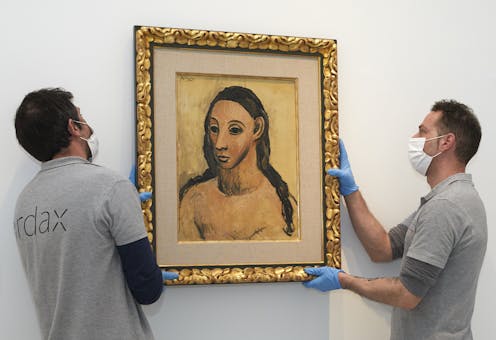
Dos operarios colocan el ‘Busto de mujer joven’ de Picasso en el Museo de Arte Reina Sofía para una exposición en 2022 después de que se intentase su venta ilegal en el extranjero en 2015. Sucesión Pablo Picasso, VEGAP, Madrid, 2022

Imagine que hereda un álbum familiar lleno de retratos con nombres, fechas y recuerdos de las generaciones que le precedieron.

Con el paso del tiempo algunas fotos van desapareciendo: alguien se lleva una, otra se extravía. El álbum, antes completo, empieza a perder coherencia. La historia se fragmenta y algunas personas desaparecen del relato. Esta situación, entendida como una metáfora de la memoria colectiva, puede trasladarse al patrimonio cultural. Cuando este no se protege, corre el riesgo de dispersarse, perderse o caer en el olvido.

La UNESCO, organismo dependiente de la ONU especializado en cultura, ciencia y educación, define el patrimonio cultural como “el legado que heredamos del pasado, con el que vivimos hoy en día y que transmitiremos a las generaciones futuras”. Este patrimonio incluye elementos tangibles e intangibles, dentro de los que encontramos bienes muebles (monumentos, edificios, yacimientos) e inmuebles (objetos que pueden ser trasladados, como cuadros, retablos, manuscritos, muebles, tapices, objetos litúrgicos y numismáticos, entre otros).

La Convención de París de 1978, también relacionada con la UNESCO, reafirma que los bienes muebles son parte del patrimonio común de la humanidad y que cada Estado es moralmente responsable de su salvaguarda. Aunque este organismo internacional ofrece recomendaciones y directrices, no impone leyes. La regulación efectiva depende de cada Estado.

En general, en el ámbito europeo, existen normas armonizadas, como algunas directivas y reglamentos referidos a la restitución de bienes culturales robados, sobre importación o exportación fuera de la UE. Estas normas buscan impedir el tráfico ilícito y proteger el patrimonio de los Estados miembros.

En España, la Ley 16/1985 del Patrimonio Histórico Español define una categoría específica de protección, la de los Bienes de Interés Cultural (BIC). Así se denominan los que poseen la máxima protección, que requieren una declaración, –excepto los que son ya considerados genéricos, como hórreos o castillos, entre otros–. Tanto los bienes muebles como los inmuebles pueden ser declarados BIC, lo que depende de las Comunidades Autónomas. En la actualidad todas las comunidades españolas poseen su propia ley de patrimonio.

¿Por qué proteger los bienes muebles?

Los bienes muebles son frágiles, portátiles y, por tanto, especialmente vulnerables. Entre los riesgos a los que se enfrentan se encuentran el deterioro por abandono, incorrecto almacenamiento o restauraciones inadecuadas, su venta o expolio, el tráfico ilícito o la salida ilegal del país.

Pintura de Jesucristo prendido por Pilatos y un soldado.
El Ecce Homo de Caravaggio se expone en el Museo del Prado, tras la cesión en préstamo del nuevo propietario que lo adquirió después de que la obra fuese declarada BIC y se prohibiese su salida de España.
Museo del Prado

El control legal sobre su exportación tiene lógica: los bienes de interés cultural no pueden salir del país libremente. Esto no implica negar su exhibición internacional, pero sí obliga a tramitar permisos.

Como regla general en España, los bienes con menos de 100 años no requieren autorización, los de más de esa antigüedad, incluidos en inventarios o catálogos generales, requieren permiso y los BIC o incoados como tales no pueden salir de forma definitiva ni con posibilidad de venta.

Existe el debate sobre si estas medidas perjudican al mercado del arte y las antigüedades. Es cierto que pueden frustrarse algunas operaciones de venta internacional. Sin embargo, como nos explica Laura Carro Abarrategui, gestora cultural especializada en arte contemporáneo:

“las restricciones no afectan de forma significativa al arte contemporáneo, no existen tantos condicionantes a la hora de trasladarlo, exhibirlo o venderlo. En cambio, las obras de grandes maestros ya fallecidos, cuyo valor es incalculable para el patrimonio histórico y cultural español, sí están sujetas a limitaciones. Pero, en términos porcentuales, son pocas las operaciones que se frustran. Algunas transacciones de gran peso económico pueden interrumpirse, pero estas restricciones son necesarias: debemos cuidar, mantener y difundir nuestro patrimonio, pero en ningún caso, perderlo”.

En efecto, se trata de un equilibrio entre protección e intercambio cultural.

Mirando al pasado: ventas, expolios y descontextualización

El patrimonio español ha sufrido numerosas ventas y pérdidas, algunas legales en su momento, pero que supusieron la enajenación y desarraigo de obras clave.

Un ejemplo clásico, en este caso de un bien inmueble, es la adquisición y traslado piedra a piedra, por parte del magnate de la prensa americana, William Randolph Hearst, del conjunto monástico de Santa María la Real de Sacramenia (Segovia) que en la actualidad se exhibe en Miami. No se trata de un caso aislado ni, en su momento, ilegal.

Fotografía del claustro de un monasterio.
El monasterio de Santa María la Real de Sacramenia, originalmente localizado en Segovia (España) y actualmente reconstruido en Miami (EE. UU.).
Rolf Müller/Wikimedia Commons, CC BY-SA

En lo que se refiere al patrimonio mueble, son conocidos algunos ejemplos poco exitosos de exportación e intento de venta ilegal de ciertos bienes, como el del Caravaggio descubierto hace unos años en España poco antes de ser subastado o el del Picasso-Botín.

Este último se trató de un caso de exportación ilícita en el que el banquero Jaime Botín intentó sacar de España, ilegalmente, el cuadro Busto de mujer joven de Picasso, adquirido previamente sin el permiso exigido por su valor histórico. A pesar de la negativa del Ministerio de Cultura, ocultó la obra e intentó trasladarla en 2015 a Suiza en su yate privado. Fue descubierto por las autoridades francesas y condenado a una multa millonaria y a tres años y un día de cárcel.

Hoy en día, las leyes protegen, aunque no consiguen evitar del todo que se cometan delitos. En España, las fuerzas de seguridad del Estado colaboran en esta tarea. Tanto la Policía Nacional, con la Brigada de Investigación del Patrimonio Histórico, como la Guardia Civil con su Grupo de Patrimonio Histórico (UCO), trabajan en el rastreo de piezas robadas, expoliadas o el tráfico ilícito. También cooperan con Europol, Interpol y otros organismos internacionales, pues en el ámbito internacional determinados delitos, robos arqueológicos o casos como los expolios del Estado Islámico, muestran que la protección es urgente.

Según Interpol, el tráfico de bienes culturales es “una actividad de bajo riesgo y alta rentabilidad para redes delictivas”.

Esta organización intergubernamental ha desarrollado un software, ID-Art, de reconocimiento de imágenes en el que están registrados más de 150 000 bienes culturales. La aplicación coteja así la fotografía introducida con una amplia base de datos de objetos artísticos robados.

Aunque iniciativas como esta contribuyen a la recuperación de numerosas piezas, muchas de ellas nunca llegan a aparecer. Ejemplo de ello son las pinturas de Francis Bacon sustraídas en 2015 del domicilio particular de su heredero en Madrid. Aunque cuatro de ellas han sido recuperadas gracias a la intervención de la Policía Nacional, diez años después la quinta permanece en paradero desconocido.

Imagen del cuarto 'Bacon' recuperado, en 2025, tras el robo diez años antes.
Imagen del cuarto ‘Bacon’ recuperado, en 2025, tras el robo diez años antes.
Policía Nacional

Biznietos del patrimonio

Los medios de comunicación son un vehículo útil para mostrar la realidad del problema. Aunque en ocasiones ofrecen un enfoque sensacionalista y sin continuidad, en otras sirven para una mayor visibilización de ciertos acontecimientos, para dejar constancia del valor de las piezas y para concienciar y reivindicar su valor cultural y simbólico para la comunidad local o nacional.

El pódcast La Fortuna es una herramienta valiosa para comprender los delitos contra el patrimonio cultural desde múltiples enfoques, no relacionados con el robo físico de objetos, sino con la apropiación simbólica de la cultura de un pueblo que esto supone.

Como señala el arqueólogo Carlos León Amores en el primer episodio, al referirse a los pecios (restos de barcos naufragados), foco de interés para los llamados “cazatesoros”: “Todos somos biznietos de estos barcos. Los tesoros no son solo oro: son parte de la historia de nuestros antepasados”.

Gracias a relatos como estos, la sociedad empieza a entender que proteger el patrimonio no es solo burocracia, sino responsabilidad colectiva. No somos sus dueños, sino sus custodios temporales. Cuidarlo es garantizar que la memoria, el arte y la historia sigan vivas. ¡Larga vida a los álbumes familiares y al patrimonio de nuestros pueblos!

The Conversation

María Elvira Lezcano González es miembro de la Asociación para al Interpretación del Patrimonio (AIP) y del Comité Español de Historia del Arte.

– ref. Cuando el arte cruza fronteras, ¿pierde un país su memoria? – https://theconversation.com/cuando-el-arte-cruza-fronteras-pierde-un-pais-su-memoria-260044

Edificios que se montan y se desmontan: la economía circular se cuela en la construcción

Source: The Conversation – (in Spanish) – By José Manuel Cabrero, Catedrático. Estructuras Arquitectónicas y Construcción con Madera. Cátedra Madera Onesta, Universidad de Navarra

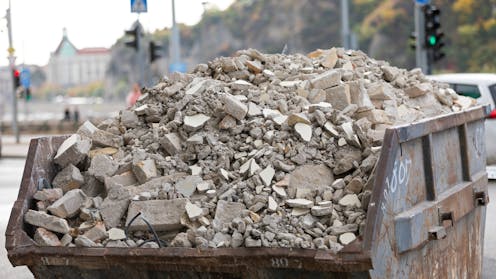
La industria de la construcción genera unos 2 200 millones de toneladas anuales de residuos a nivel global. Ocskay Mark/Shutterstock

Estamos ya más que acostumbrados a reciclar nuestros residuos domésticos. En España, por ejemplo, se gestionan cada año millones de toneladas de envases. Pero ¿sabía que los edificios y sus materiales también pueden reciclarse? Más aún, ¿imaginaba que un edificio puede desmontarse completamente y volverse a montar?

La Fórmula 1, a menudo laboratorio de innovaciones, nos ofrece un ejemplo tangible: el “pit box” de Red Bull, el F1Holzhaus (literalmente, “la casa de madera”). Se estrenó en el Gran Premio de España de 2019 y es desde entonces el “hogar” del equipo en Europa. Cada Gran Premio, catorce trabajadores ensamblan sus 1 221 metros cuadrados en solo 32 horas (y los desmontan en menos de un día).

Este edificio refleja un cambio en la concepción de la construcción, que ahora apuesta ineludiblemente por edificios sostenibles, capaces de adaptarse, modificarse y reutilizarse.

Los residuos de la construcción

La industria de la construcción es una de las mayores generadoras de residuos: unos 2 200 millones de toneladas anuales a nivel global. En Europa, cerca de 450 millones de toneladas, el 40 % del total de todos los residuos.

Más del 90 % de los desechos provienen de demoliciones, pero no deben olvidarse aquellos generados en obra (materiales sobrantes o rotos) y los que se producen durante la fabricación. Estos últimos pasan muy desapercibidos, pero aquí tiene un dato: las vigas de madera que podemos ver en un edificio son solo el 20 % de la madera original. Hasta el 80 % se ha quedado por el camino desde el bosque como residuos de producción (serrín, retales, partes desechadas…).

Este escenario revela los límites del modelo lineal –fabricar, usar, desechar–, que aún domina. Para contrarrestarlo, la economía circular propone el diseño para el desmontaje como estrategia. En él se reemplaza la demolición por un desmontaje sistemático, que permita recuperar y revalorizar los componentes.

Este cambio de paradigma (de “usar, tirar” a “usar, reusar, reciclar”), ya presente en otros ámbitos, comienza su andadura en la construcción a través de diversas iniciativas a nivel mundial que buscan integrar estos conceptos en edificios del futuro más seguros, sostenibles y duraderos. Son la muestra de cómo conseguirlo a partir de un diseño consciente, basado en conceptos como modularidad y estandarización. A esto se une un diseño adecuado de uniones reversibles, que permiten desmontar sin dañar (y por tanto, facilitan la reutilización) y herramientas digitales ya disponibles como los “pasaportes de materiales”, documentos digitales que localizan y cuantifican los productos y materiales del edificio, lo que simplificará enormemente su futura reutilización.


Leer más:
¿No tenemos ya suficientes edificios? El reto de aprovechar mejor los actuales


De residuos a materiales de construcción

Pero, evidentemente, la solución no es solo desmontar y reusar lo ya construido. En este cambio de modelo, del lineal al circular, es crucial también transformar los residuos en recursos. Se trata de superar el cascading, el “reciclaje” tradicional, en el que se reutilizan en productos de menor valor (como ejemplo, los residuos de madera que se trituran para fabricar paneles). En contraste, el upcycling propone que materiales ya descartados tengan una nueva vida como elementos de mayor valor o utilidad.


Leer más:
Vaqueros reciclados para el aislamiento acústico y térmico de edificios


Ya existen ideas concretas para aplicar el upcycling en construcción. Como hemos visto, casi todos sus residuos provienen de la demolición. Pero ¿y si esa basura de la construcción no fuera al vertedero? ¿Y si sirviera para hacer un nuevo edificio? Esa es el área de trabajo y exploración del diseñador español Lucas Muñoz. Observe el mobiliario y las lámparas del restaurante MO de Movimiento o del espacio CoLab de Sancal (ambos en Madrid) y piense cómo pueden estar hechos, a partir de qué materiales. ¿Lo adivina? Todo está fabricado con los residuos del local anterior.

También es necesario actuar en los residuos de producción (recuerde ese 80 % de madera que se pierde en el trayecto de la madera del bosque al edificio). A modo de ejemplo, el Proyecto PRISMA es una iniciativa que propone la fabricación de productos de alto valor añadido, como bloques de construcción (ladrillos de madera) a partir de los residuos sobrantes de los aserraderos que, de otro modo, irían a la producción de energía (serían quemados) o la fabricación de paneles.

Como ya hemos dicho, gracias al upcycling el residuo pasa a tener un valor mayor. Para ello es necesario buscar nuevas soluciones imaginativas. ¿Construir un edificio con botellas de refresco de plástico PET? Dicho y hecho: mire la fachada de EcoArk en Taiwan, construida encajándolas. Y por supuesto, el edificio es también enteramente desmontable.

Un edificio de color ocre en un parque
El edificio EcoArk en Taiwán, construido como sede de la Exposición Internacional de Flora de Taipei, es el primer edificio del mundo construido con basura, más de 1,5 millones de botellas de plástico PET.
Richie Chan/Shutterstock

Vallas que se montan y se desmontan

En realidad, nada de esto es nuevo. Lo hemos hecho durante generaciones, en una relación razonable y sana con nuestro entorno.

Acabemos con otro ejemplo de carreras: los encierros de San Fermín en Pamplona. Las vallas que protegen al público a lo largo de sus 848 metros de recorrido están hechas de pino silvestre del vecino valle del Roncal. Sus 900 postes, 2 700 tablones y 2 500 cuñas no son fabricados nuevos cada año (apenas se renueva un 2 % anualmente). Todo el vallado se desmonta tras las fiestas, se almacena y se vuelve a montar el año siguiente.

Esta estrategia demuestra cómo una gestión circular, en realidad basada en un conocimiento ancestral, es ahora el futuro de la construcción en el camino a un uso más eficiente y sostenible de los recursos.

The Conversation

José Manuel Cabrero recibe fondos del Ministerio de Ciencia e Innovación, del Fondo Europeo de Desarrollo Regional y de la Fundación Biodiversidad del Ministerio para la Transición Ecológica y el Reto Demográfico (MITECO) en el marco del Plan de Recuperación, Transformación y Resiliencia (PRTR) financiado por la Unión Europea – NextGenerationEU.

Rayder Willian Leonardo Laura recibe fondos de la Fundación Biodiversidad del Ministerio para la Transición Ecológica y el Reto Demográfico (MITECO) en el marco del Plan de Recuperación, Transformación y Resiliencia (PRTR) financiado por la Unión Europea – NextGenerationEU.

– ref. Edificios que se montan y se desmontan: la economía circular se cuela en la construcción – https://theconversation.com/edificios-que-se-montan-y-se-desmontan-la-economia-circular-se-cuela-en-la-construccion-260156