Weight loss drug demand continues to grow in the UK – here’s what’s being done to keep supplies readily available

Source: The Conversation – UK – By Liz Breen, Professor of Health Service Operations, School of Pharmacy & Medical Sciences, University of Bradford
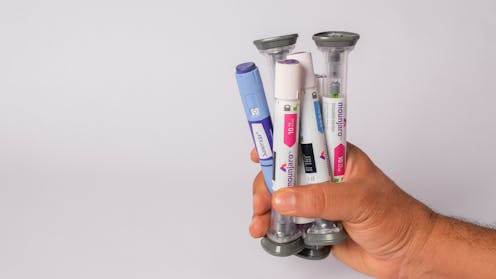
Demand for weight loss jabs has surged in the UK. Mohammed_Al_Ali/ Shutterstock

Over a fifth of people in the UK have tried to access a weight loss drug in the last year, according to a recent poll.

Weight loss jabs such as Mounjaro (tirzepatide) and Wegovy (semaglutide) are very effective in managing obesity. Clinical trials have shown that some people lose up to 26% of their body weight while using these drugs.

With this impact, it’s no wonder a growing number of people are seeking out these products – often buying them in private clinics or online. But with plans to expand access to these drugs through NHS prescriptions, there are concerns that supply may not meet demand – especially for those people in most need.

In the UK, NHS prescriptions for weight loss jabs are only approved for people who meet strict eligibility requirements. For example, to qualify early for Mounjaro from your GP, you must have health problems due to your weight and a body mass index greater than 40 (adjusted for ethnicity). People assessed by the NHS and given prescriptions will also have access to additional support – such as advice about diet and physical activity.

Weight loss drugs can be prescribed by specialist clinics and, increasingly, local GPs. But a lack of time and resources means even those who are eligible are left waiting. Consequently, people who can afford to do so are approaching private providers for access to these medicines – despite the potential risks to their health.

There’s also evidence that people who aren’t clinically eligible for weight loss jabs prescribed by the NHS are purchasing them from online pharmacies.

Supply issues

Demand for weight loss jabs is about to grow, as the provision of Mounjaro via GPs is imminent, pending the creation of an infrastructure to support safe local prescribing.

The number of monthly GP prescriptions in England for Mounjaro has already risen from under 3,000 in March 2024 (on introduction) to over 200,000 in May 2025. Mounjaro (also marketed in the US as Zepbound) is widely considered to be the best weight loss jab currently available and a great commercial success.

GP prescriptions of all forms of semaglutide (the active ingredient in Wegovy) are more stable, at around 130,000 items per month (including generics and products to treat diabetes).

While a number of GLP-1 drugs faced shortages last year (including Wegovy and Mounjaro), these shortages have now been resolved. Shortages were spurred by a spike in global demand for these drugs alongside stockpiling by private clinics to feed requests.

Still, there were reports early this year that certain strengths of Mounjaro were difficult to access. The reasons for this are not clear, but may be due to the novelty of access to this new medication or a lack of access to alternatives.

Around 220,000 people in England are due to be offered Mounjaro via the NHS over the next three years. However, it’s estimated that 3.4 million people in England could actually be eligible for Mounjaro.
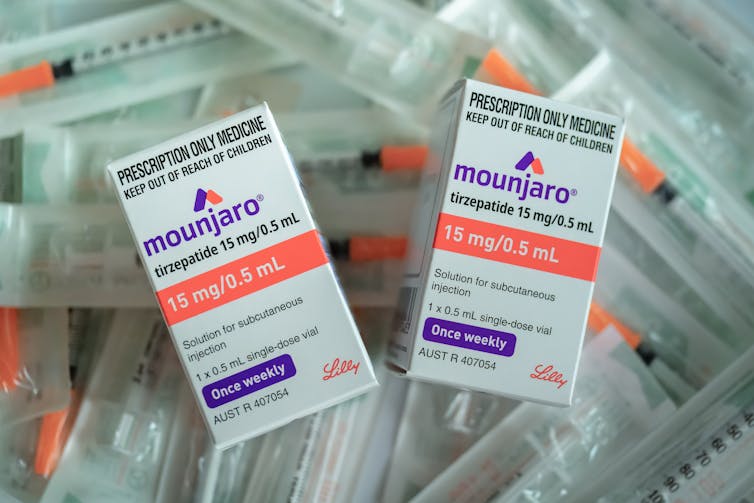
Two prescription boxes of Mounjaro 15mg.
Mounjaro will initially be offered to 220,000 people on the NHS over the next three years.
Cynthia A Jackson/ Shutterstock

Wider NHS access to this drug is being phased to manage staff workload and ensure good support for patients. Phased rollout may also help to ensure there is enough supply for those who need to be prescribed one of these medications.

Future access

It’s likely that demand for these weight loss drugs will only continue to grow in the UK, so it’s important that supply is readily available.

Regulatory agencies have taken some steps to tighten controls of online prescribing of weight loss drugs and prevent misuse. Registered online pharmacies must seek independent verification of key clinical information (such as from a GP or through a person’s medical records) instead of relying on questionnaires or phone calls.

However, weight loss products remain easy to access for people with money and savvy search skills, but who may be clinically ineligible. The scale of demand from this group is difficult to quantify, but it’s clear more needs to be done to keep patients safe and manage demand.

Several new weight loss drugs are undergoing trials in the UK. These drugs will work similarly to those already available but may be administered differently (such as an oral tablet). The trials for these and subsequent approvals will not only increase market competition, but also improve patient access and choice.

Key patents for the manufacture of semaglutide are also due to expire in 2026 and 2031. Once a pharmaceutical product is outside of its patented time frame, other companies can be approved to manufacture it as a generic product.

A generic product is approved on the basis that it works in the same manner and has equal benefits to the original product. The generics market allows new entrants and new versions of these very popular products onto the market.

Generic products are usually less expensive and so are bought (where still clinically safe and effective) by the NHS. This change could provide greater access to weight loss medications and save the NHS and patients money in the long term.

Generic semaglutide products will probably be available in the UK from 2032 but will be initially authorised to treat diabetes rather than weight loss. Still, this should have a positive impact on the availability of prescription drugs used for both diabetes and weight management.

Generic liraglutide is already available on the NHS for the treatment of diabetes. The liraglutide brand Saxenda is also marketed for weight management. However, liraglutide is less effective than Wegovy or Mounjaro and requires daily injections.

The number of monthly NHS prescriptions for liraglutide has fallen from over 40,000 in July 2020 to 1,000 in May 2025. This fall was most likely influenced by the discontinuation of the Victoza brand for type 2 diabetes in late 2024. Shortages of all types of GLP-1 drugs, which lasted until the end of 2024, may also have impacted demand for liraglutide.

For now, NHS staff can report on known demand for these products to inform manufacturing quantities and procurement. What isn’t known is the future demand for online or private purchases of weight management drugs. It’s this “unknown” demand that may mean supply security is challenged and unsustainable.


Get your news from actual experts, straight to your inbox. Sign up to our daily newsletter to receive all The Conversation UK’s latest coverage of news and research, from politics and business to the arts and sciences.

The Conversation

The authors do not work for, consult, own shares in or receive funding from any company or organisation that would benefit from this article, and have disclosed no relevant affiliations beyond their academic appointment.

– ref. Weight loss drug demand continues to grow in the UK – here’s what’s being done to keep supplies readily available – https://theconversation.com/weight-loss-drug-demand-continues-to-grow-in-the-uk-heres-whats-being-done-to-keep-supplies-readily-available-262065

Flames to floods: how Europe’s devastating wildfires are fuelling its next climate crisis

Source: The Conversation – UK – By Ioanna Stamataki, Senior Lecturer in Hydraulics and Water Engineering, University of Greenwich

In recent years, I have all too often found myself passing over an active wildfire when flying from London to my family home in Greece during the summer months. The sky glows an eerie, apocalyptic red, and the scent of smoke fills the cabin. Silence falls as we become unwilling witnesses to a tragic spectacle.

Now wildfires are again raging across the Mediterranean. But the flames themselves are only part of the story. As wildfires become more intense and frequent, they’re setting off a dangerous chain reaction – one that also includes a rising risk of devastating floods.

Wildfire viewed from a plane
Author’s photo from a plane landing in Athens last summer.
Ioanna Stamataki

In January 2024, Nasa reported that climate change is intensifying wildfire conditions, noting that the frequency of the most extreme wildfires had more than doubled over the past two decades. While some of this is driven by natural weather variability, human-induced warming is clearly playing a major role. Decades of rising temperatures combined with longer and more severe droughts have created ideal conditions for wildfires to ignite and spread.

This year, another brutal Mediterranean wildfire season is unfolding right before our eyes, with numerous active wildfire fronts across the region. As of July 22 2025, 237,153 hectares have burned in the EU – an increase of nearly 78% from the same period last year. The number of fires rose by about 45%, and CO₂ emissions increased by 23% compared to 2024. These are terrifying statistics.

Climate phenomena are closely interconnected

The fires themselves are bad enough. But they’re also closely connected to other climate-related extremes, including floods.

Natural hazards often trigger chain reactions, turning one disaster into many. In the case of floods, wildfires play a big role both through weather patterns and how the land responds to rain.

On the weather side, higher temperatures lead to more extreme rainfall, as warmer air can hold more moisture and fuels stronger storms. Intense wildfires can sometimes get so hot they generate their own weather systems, like pyrocumulus clouds – towering storm clouds formed by heat, smoke and water vapour. These clouds can spark sudden, localised storms during or shortly after the fire.

The damage doesn’t end when the flames die down. Satellite data shows that burned land can remain up to 10°C hotter for nearly a year, due to lost vegetation and damaged soil.

As the world warms, the atmosphere is able to hold about 7% more moisture for every extra degree. Recent temperatures of 40°C or more in Greece suggest a capacity for more downpours and more flooding.

Climate stripes chart for Greece
Greece is getting hotter and hotter (Each stripe represents one year, with blue indicating cooler and red indicating warmer than the 1961-2010 average).
Ed Hawkins / Show Your Stripes (Data: Berkeley Earth & ERA5-Land), CC BY-SA

Wildfires also make the land itself more vulnerable to flooding. Burnt areas respond much faster to rain, as there is less vegetation to slow down the water. Wildfires also change the soil structure, often making it water-repellent. This means more water runs off the surface, erosion increases, and it takes less rain to trigger a flood.

Under these conditions, a storm expected once every ten years can cause the sort of catastrophic flooding expected only every 100 to 200 years. Water moves much faster across scorched landscapes without plants to slow it down. Wildfires also leave behind a lot of debris, which can be swept up by fast-moving floodwaters.

While EU-wide data on post-wildfire flood risk is still limited, various case studies from southern Europe offer strong evidence of the connection. In Spain’s Ebro River Basin, for example, research found that if emissions remain high and climate policy is limited, wildfires will increase the probability of high flood risk by 10%.

Nature’s ability to regenerate is nothing short of magical, but recovering from a wildfire takes time. Burnt soil takes years to return to normal and, during that time, the risks of extreme rainfall are higher. Beyond the impact of wildfires on soil and water, it is important not to overlook the devastating loss of plant and animal species or even entire ecosystems, making the natural world less biodiverse and resilient.

To reduce the frequency and severity of extreme events, we must focus on repairing climate damage. This means moving beyond isolated perspectives and adopting a multi-hazard approach that recognises how disasters are connected.

Flooding after wildfires is just one example of how one crisis can trigger another. We need to recognise these cascading risks and focus on long-term resilience over short-term fixes.


Get your news from actual experts, straight to your inbox. Sign up to our daily newsletter to receive all The Conversation UK’s latest coverage of news and research, from politics and business to the arts and sciences.

The Conversation

Ioanna Stamataki currently receives funding from the Leverhulme Trust and the Royal Society for ongoing flood research. Previous research has been supported by the EPSRC and the Newton Fund (via the British Council) for career development and international collaboration.

– ref. Flames to floods: how Europe’s devastating wildfires are fuelling its next climate crisis – https://theconversation.com/flames-to-floods-how-europes-devastating-wildfires-are-fuelling-its-next-climate-crisis-262204

Why Donald Trump has stopped some conflicts but is failing with Ukraine and Gaza

Source: The Conversation – UK – By Stefan Wolff, Professor of International Security, University of Birmingham

In yet another twist in his unpredictable decision making, US president Donald Trump has dramatically shortened his original 50-day ultimatum to Vladimir Putin to call a ceasefire in Ukraine to a mere ten days. It’s an unmistakable sign of Trump’s frustration with the Russian leader who he now appears to view as the main obstacle to ending the war.

Progress has been similarly limited on another of Trump’s flagship foreign policy projects: ending the war in Gaza. As a humanitarian catastrophe engulfs the territory, Trump and some of his Maga base are finally challenging Israel’s denials that, after almost two years of war, many Gazans now face a real risk of starvation.

In neither case have his efforts to mediate and bring an end to the violence borne any fruit. But not all of Trump’s efforts to stop violence in conflicts elsewhere in the world have been similarly futile. The administration brokered a ceasefire between Rwanda and the Democratic Republic of Congo (DRC), which the two countries’ foreign ministers signed in Washington on June 27.

The US president has also claimed to be behind the ceasefire between India and Pakistan in May after the two sides had engaged in several days of fierce combat following a terror attack in Indian-administered Kashmir by a Pakistan-backed rebel group. And, drawing a clear parallel between this conflict and the border clashes between Cambodia and Thailand in July, Trump announced he had pushed both countries’ leaders to negotiate a ceasefire.

All of these ceasefires, so far, have held. By contrast, the ceasefire in the war between Israel and Hamas in Gaza, to which Trump contributed in January, even before he was inaugurated for his second term, broke down in March and fighting has escalated ever since. A short-lived ceasefire in Ukraine in April was barely worth its name given the countless violations.

Mixed record

Three factors can explain Trump’s mixed record of peacemaking to date. First, the US president is more likely to succeed in stopping the fighting where he has leverage and is willing to use it to force foreign leaders to bend to his will. For example, Trump was very clear that there would be no trade negotiations with Thailand or Cambodia “until such time as the fighting STOPS”.

The crucial difference, so far, with the situation in the war against Ukraine is that Trump has, and has used, similar leverage only with the Ukrainian president, Volodymyr Zelensky. This led to a US-Ukraine agreement on a 30-day ceasefire proposal just two weeks after the now-notorious row between Trump and Zelensky in the Oval Office.

The mere threat of sanctions against Russia, by contrast, has done little to persuade Putin to accept whatever deal might Trump offer him. Trump’s threats – which he has never followed through on – did not work in January or May. The Kremlin’s initial reactions to the latest ultimatum from the White House do not indicate a change in Putin’s attitude.

A second factor that may explain why Trump has had peacemaking success in some cases but not others is the level of complexity of US interests involved. When it comes to US relations with Russia and Israel, there is a lot more at stake for Trump.

The US president still appears keen to strike a grand bargain with Russia and China under which Washington, Beijing and Moscow would agree to recognise, and not interfere in, their respective spheres of influence. This could explains his hesitation so far to follow through on his threats to Putin.

Similarly, US interests in the Middle East – whether it’s over Iran’s nuclear programme or relations with America’s Gulf allies – have put strains on the alliance with Israel. Trump also needs to weigh carefully the impact of any move against, or in support of, Israel on his domestic support base.

In the deal Trump brokered between Rwanda and the DRC, the issues at stake were much simpler: access for US investors to the mineral riches of the eastern DRC. Just days into his second term, Trump acknowledged that the conflict was a “very serious problem”. Congo’s president, Felix Tshisekedi, responded by offering the US access to minerals in exchange for pushing Rwanda to a deal to end the invasion and stop supporting proxy forces in the DRC.

This leads to the third factor that has enabled Trump’s peace-making success so far: simpler solutions are easier to achieve. Thailand and Cambodia and India and Pakistan can go back to the situation before their recent fighting. That does not resolve any of the underlying issues in their conflicts, but returns their relations to some form of non-violent stability.

It is ultimately also in the interests of the conflict parties. They have had a chance to make their violent statements and reinforce what they will and won’t tolerate from the other side. The required investment by an external mediator to end battles that have achieved what the warring sides want anyway – to avoid further escalation – is consequently quite limited.

Complex conflicts

Getting to any kind of stability in Ukraine or the Middle East by contrast requires prolonged engagement and attention to detail. These conflicts are at a stage in which a return to how things were before is not in the interests of the parties or their external backers. Nudging warring parties along on the path to agreement under such conditions requires a well-designed process, which is absent in Ukraine and failing in Gaza.

Thanks to funding and personnel cuts, the US secretary of state, Marco Rubio, is now required to perform multiple roles. Trump relies on personal envoys with at best limited foreign policy expertise, while insisting he makes all the decisions. This ultimately suggests that the White House simply may not have the bandwidth for the level of engagement that would be necessary to get to a deal in Ukraine and the Middle East.

This is a self-inflicted opportunity lost, not only for the United States but also for the long-suffering people of Ukraine and the Middle East.

The Conversation

Stefan Wolff is a past recipient of grant funding from the Natural Environment Research Council of the UK, the United States Institute of Peace, the Economic and Social Research Council of the UK, the British Academy, the NATO Science for Peace Programme, the EU Framework Programmes 6 and 7 and Horizon 2020, as well as the EU’s Jean Monnet Programme. He is a Trustee and Honorary Treasurer of the Political Studies Association of the UK and a Senior Research Fellow at the Foreign Policy Centre in London.

– ref. Why Donald Trump has stopped some conflicts but is failing with Ukraine and Gaza – https://theconversation.com/why-donald-trump-has-stopped-some-conflicts-but-is-failing-with-ukraine-and-gaza-262241

From ‘God Emperor Trump’ to ‘St. Luigi,’ memes power the politics of feeling

Source: The Conversation – Canada – By Stuart J. Murray, Professor of Rhetoric and Ethics | Professeur titulaire en rhétorique et éthique, Carleton University

Why do images of Donald Trump as a galactic emperor or Luigi Mangione as a Catholic saint resonate so deeply with some people? Memes don’t just entertain — they shape how we identify with power, grievance and justice in the digital age.

A meme is a decontextualized video or image — often captioned — that circulates an idea, behaviour or style, primarily through social media. As they spread, memes are adapted, remixed and transformed, helping to solidify the communities around them.

Trump, the meme pope

Days after Pope Francis’s death in April 2025, Trump posted an AI-generated image of himself in papal regalia on Truth Social. The White House’s official X account then shared it, amplifying its reach.

Trump quickly dismissed it as a joke, but the image lingered.

Two days later, another emerged: Trump as galactic emperor, blending Star Wars aesthetics with the visual rhetoric of Warhammer 40,000, a popular dystopian sci-fi franchise featuring authoritarian rulers, imperial armies and endless war.

Trump memes like these once circulated semi-ironically in social media subcultures like Reddit and 4chan under the banner “God Emperor Trump.”

But what might previously have seemed like absurdist cosplay now carries the symbolic weight of executive power, blending religious and imperial imagery to project Trump as a mythical figure, not just a politician.

In-jokes

As I’ve argued in an article on MAGA and empathy, these memes draw on cultural codes not to parody power but to usurp it as instruments of official political communication.

Fact-checking can’t stop them. We know they are factually untrue, but they feel true and consolidate a shared sentiment among Trump’s base.

The meme is not a joke — it’s an in-joke only the in-group understands.

And that’s the point.

A meme is an accelerant, delivering compressed emotional payloads, short-circuiting debate and reinforcing people’s political identifications. Propelled by algorithms and designed to go viral, memes solicit immediate responses — outrage, loyalty, disgust, amusement.

Memes don’t ask what’s true or what’s just.

Instead, they curate — and encode — emotional alignment, replacing liberalism’s democratic ideal of reasoned public discourse with viral attachment: grievance recoded as identity.

Elon Musk and weaponizing empathy

On Feb. 20, 2025, days after Trump appointed Elon Musk to head his new Department of Government Efficiency (DOGE), the Tesla founder appeared at the Conservative Political Action Conference, an annual gathering of conservative activists and officials from across the U.S.

At the conference, Musk brandished a chainsaw, declaring: “I have become the meme!.” An image of him holding the chainsaw later actually became a meme.

The image projects libertarian efficiency and masculine bravado, but it more than just mocks bureaucracy — it glorifies cutting ties to domestic, global and humanitarian responsibilities.

Far from being merely a meme, it advances a policy of neglect that intentionally lets others die.

Experts estimate that DOGE’s purge of USAID could result in 14 million preventable deaths over the next five years, disproportionately affecting marginalized populations whose historical exploitation helped generate the wealth now wielded as power.

Individuals vs. the collective

But we are not meant to feel empathy. In early 2025, Musk called empathy “the fundamental weakness of western civilization,” claiming it is “weaponized by the left.”

Yet Musk doesn’t reject empathy entirely — only empathy for individuals, which he said risks “civilizational suicide.”


Read more:
MAGA’s ‘war on empathy’ might not be original, but it is dangerous


Instead, Musk believes we must have empathy for “civilization as a whole.” Such rhetoric — sacrificing individuals for the collective — recalls a chilling Nazi-era slogan: Du bist nichts, dein Volk ist alles (“You are nothing, your people are everything”). Musk has also drawn criticism for making public Nazi salutes and ethno-nationalist statements advocating for white people.


Read more:
How Elon Musk’s chatbot Grok could be helping bring about an era of techno-fascism


Mangione, the meme martyr

If Trump and Musk memes stage fantasies of absolute power, Mangione memes reply with fantasies of redemptive rupture.

Accused of killing UnitedHealthcare CEO Brian Thompson, Mangione has been lionized in memes that champion vulnerability and social justice, opposing the billionaire class — figures like Trump and Musk — who put profits over people.

These memes appear to oppose the MAGA meme machine, encoding class struggle as quiet defiance and anti-authoritarianism. Unlike Musk’s chainsaw-wielding bravado, which seems to mask a fragile ego, Mangione memes project a humble, rebellious heartthrob.

Yet, like Trump and Musk, Mangione has become a brand. His face adorns T-shirts and “St. Luigi” prayer candles, capitalizing on the popular meme that emerged soon after his arrest. This commodification mirrors right-wing meme economies, even if the message differs.

Emotional saturation

Mangione memes have helped raise over $1.2 million for his legal defence.

They don’t just reflect feeling — they organize it, channelling it into cultural, political and literal currency, including a Luigi crypto coin ($LUIGI) and a musical.

These memes share MAGA meme tactics: relentless repetition and emotional saturation. Instead of encouraging thoughtful debate, they rally communities around shared grievances, acts of defiance and collective faith.

Feeling our way through the feed

From MAGA to Mangione, meme-mythologies often function as rationalizations of violence — whether framed as righteous, purifying or revolutionary. But what unites Trump’s papal cosplay, Musk’s chainsaw and Mangione’s martyrdom isn’t their message but their form.

Whether cloaked in MAGA nostalgia or social justice sentiments, memes that appear to resist power often reproduce the structures that made that power so intoxicating in the first place.

We’ve seen how official White House and Department of Homeland Security social media memes have become increasingly cruel, sinister, polarizing and even radicalizing.


Read more:
‘Alligator Alcatraz’ showcases Donald Trump’s penchant for visual cruelty


Meanwhile, some liberals on the left continue to promote what is known as the “marketplace of ideas” — the belief that truth will prevail if all ideas are allowed to circulate freely. But reason doesn’t always triumph over power. And memes aren’t just ideas: they’re technologies that bypass deliberation to shape our feelings, identities and ways of communicating.

Consumed by media

We no longer “consume” media: we’re a function of the algorithms and AI powering today’s platforms. Like memes, AI tools like large language models can churn out plausible content that is nonetheless hateful, divisive and patently untrue.

Musk’s “I have become the meme” therefore reveals a paradox: he claims to master the meme, but no one can control its circulation or uptake. Trump and Mangione, too, are less individuals than avatars — produced by a digital culture that pre-shapes our perceptions of them.

The violence, however, is very real. If one violent act doesn’t justify counter-violence, it nonetheless structures and occasions it. Each side claims it is just.

Memes don’t ask: can we intentionally let others die and still be just? Answering this question is nearly impossible in a meme world. The answer will be a meme. And it will be a joke.

The Conversation

Stuart J. Murray receives funding from the Social Sciences and Humanities Research Council of Canada.

– ref. From ‘God Emperor Trump’ to ‘St. Luigi,’ memes power the politics of feeling – https://theconversation.com/from-god-emperor-trump-to-st-luigi-memes-power-the-politics-of-feeling-260388

Flawed notions of objectivity are hampering Canadian newsrooms when it comes to Gaza

Source: The Conversation – Canada – By Gabriela Perdomo, Assistant Professor, Mount Royal University

The response of Canada’s legacy news media to the Israeli government’s military action in Gaza for more than 640 days points to a problem within major Canadian news organizations, according to a new Canadian book, When Genocide Wasn’t News.

In the book, journalists — some writing under pseudonyms — say their newsrooms have been severely hampered by a culture of fear and an adherence to a notion of objectivity that no longer serves the public.

Israel’s relentless military actions in the Gaza Strip following the Oct. 7, 2023 attack and taking of 251 hostages by Hamas should be prominently featured news. The Israeli Defence Forces’ illegal attacks on children, hospitals and aid workers should also be making constant headlines. But news coverage on these attacks is scarce or misleading.

I research and teach media, monitor the news and edit an online publication about journalism in Canada. My PhD thesis focused on Latin America and examined how the mandate to be objective can be confusing in times of war. I also explored questions about how journalists understand and apply objectivity in different contexts.

I found journalists who support peace efforts can easily be accused of being “biased” in favour of those promoting peace.

Not all wars covered equally

Not all wars are covered the same. Noureddine Miladi, a media and communications professor at Qatar University, found Russia’s invasion of Ukraine in 2022 received far greater coverage in mainstream media than the war in Gaza. Part of this difference in coverage lies in the ability to send reporters to cover events first hand, which is impossible in the Gaza Strip, where outside journalists are banned from entry.


Read more:
The chilling effects of trying to report on the Israel-Gaza war


Another major factor affecting coverage is how newsrooms understand and apply their norms, including objectivity. Journalism production is influenced and impacted by the dynamics of place and power that surround it.

As Carleton University journalism professor Duncan McCue argues, an unexamined adherence to objectivity can perpetuate colonial points of view. University of British Columbia journalism professors Candis Callison and Mary Lynn Young, authors of a book about journalism’s racial reckoning in Canada, also make this argument.

Accusations of antisemitism

Accusations of bias can have an outsized impact on reporting and be used to silence journalists.

According to some journalists, there is an atmosphere of fear when it comes to reporting on the Middle East in mainstream newsrooms in Canada. Some have self-censored in response to threats.

Not only do journalists say they are facing threats, they also face a context in which governments, such as the province of Ontario, are adhering to definitions of antisemitism that equate it to criticism of Israel.

In Canada, news organizations and individual journalists attempting to report on the violence in the Gaza Strip are being accused of antisemitism by groups such as Honest Reporting, according to the Canadian Press Freedom Project. This means almost anyone reporting on the Israeli government’s actions in Gaza will receive hundreds of messages claiming the report is antisemitic.

Since many scholars and the United Nations Special Committee to investigate Israeli practices have called the Israeli government’s methods “consistent with genocide, including use of starvation as weapon of war,” urgent reporting is needed — and it’s not antisemitism to call out what experts have labelled global injustices.

Left-wing bias?

The culmination of decades of this type of criticism of news media has included a right-wing narrative that accuses media of a liberal bias. The trope of the liberal media as a threat has had a steady hold of the public imagination across North America since the Cold War.

Reporters who focused on stories about human rights, questioned the tactics and budgets of the military industrial complex or challenged the mistreatment of socialist activists as being unpatriotic were accused of having a liberal, left-wing, even communist, slant.

This isn’t a phemomenon limited to North America. Latin American politicians have a long history of using “left-wing bias” labels as a powerful tool to intimidate journalists.


Read more:
How news coverage influences countries’ emergency aid budgets – new research


What do journalists owe peace?

Research shows that audiences value objective journalism, or reporting that they deem non-partisan and keeps opinions at bay. But consumers also increasingly value journalism that is empathetic and emotionally resonant.

After United States President Donald Trump was first elected in 2016, journalism scholars recognized that a major failure of news coverage during the presidential campaign was not calling things what they were. For example, journalists used euphemisms such as “he misspoke” instead of reporting that Trump was lying, contributing to a crisis of relevance in journalism.

According to the Committee to Protect Journalists, the Israel-Gaza war has killed more journalistsr than in any other conflict it’s documented. But the allegedly deliberate targeting of journalists in Gaza, of whom at least 225 have been killed, has garnered little attention in newsrooms, despite calls by dozens of independent journalists to make the issue more visible.

This is another unprecedented set of events that should be reported on for Canadian audiences.

How will Canadian newsrooms do better? One idea could be that newsrooms join forces to fend off accusations of bias and antisemitism. They could start with reclaiming objectivity as a practice of information-gathering and moving away from objectivity as an ideal of dispassionate reporting.

They could also embrace, instead of fear, journalism’s liberal roots and reclaim journalism from a standpoint of clarity where actions against the rule of law, abuses of power, war profiteering, crimes against humanity — any illiberal acts — clearly fall on the wrong side of the liberal-democratic balance and therefore demand to be denounced. As veteran CBC journalist Carol Off has said, we need to denounce illiberal acts as anti-democratic ideology.

Every inhabitant of Gaza remains in imminent peril today, and the media have a responsibility to inform us about it.

The Conversation

Gabriela Perdomo does not work for, consult, own shares in or receive funding from any company or organisation that would benefit from this article, and has disclosed no relevant affiliations beyond their academic appointment.

– ref. Flawed notions of objectivity are hampering Canadian newsrooms when it comes to Gaza – https://theconversation.com/flawed-notions-of-objectivity-are-hampering-canadian-newsrooms-when-it-comes-to-gaza-260552

Sénégal : réformer l’enseignement, un acte de souveraineté intellectuelle vital

Source: The Conversation – in French – By Laurent Bonardi, Professeur associé, Directeur du département MBA. Spécialiste en management et en éducation., Groupe Supdeco Dakar

Alors que l’État du Sénégal annonce une réforme curriculaire d’envergure, touchant l’ensemble des cycles de l’enseignement primaire et secondaire, la question de la qualité, de l’inclusivité et de la pertinence des contenus éducatifs revient au cœur des débats. Le chercheur Laurent Bonardi auteur d’un ouvrage critique sur le système éducatif sénégalais explique à The Conversation Africa les enjeux de cette réforme, les défis structurels de l’école sénégalaise et les leviers pour bâtir une éducation plus équitable et adaptée aux réalités locales.


Pourquoi changer les programmes d’enseignement au Sénégal ?

Au Sénégal, comme ailleurs en Afrique, l’école reste fortement marquée par les héritages de la colonisation, dans ses structures, ses langues, ses références et ses finalités. À la faveur des débats actuels sur la souveraineté et la place de la jeunesse, la question des contenus enseignés à l’école revient avec force. Et il s’agit à n’en pas douter d’une question politique qui interroge la manière dont une société pense sa transmission, son histoire et son avenir.

Le système éducatif sénégalais s’est construit sur les fondations du modèle français hérité de la période coloniale. Cette continuité historique se manifeste dans la structure même des programmes, la langue d’enseignement, les finalités implicites de l’école et l’organisation des examens. L’élève modèle, dans ce système, est celui qui maîtrise des savoirs considérés comme universels, mais dont les références culturelles, historiques ou géographiques sont souvent exogènes.

L’histoire enseignée accorde ainsi une place centrale aux conflits européens du XXe siècle. A l’inverse, les résistances africaines à la colonisation, les empires ouest-africains, ou encore les penseurs africains contemporains restent peu valorisés. En littérature aussi, le déséquilibre est patent : les élèves étudient les écrivains français Molière, Victor Hugo ou Albert Camus, mais moins en profondeur les Sénégalais comme Cheikh Hamidou Kane, Aminata Sow Fall ou Birago Diop.

En philosophie, les programmes du baccalauréat continuent de privilégier René Descartes, Emmanuel Kant ou Jean-Jacques Rousseau, avec peu de place accordée aux traditions philosophiques africaines ou aux penseurs contemporains du continent.

Outre le contenu des disciplines, les formes mêmes de savoir valorisées posent question. Les savoirs endogènes – ceux transmis par l’oralité, par l’expérience, par les pratiques sociales – sont largement absents des curricula. L’école les ignore, parfois les stigmatise, comme si seule la connaissance académique, écrite et codifiée à l’occidentale méritait d’être transmise.

Au-delà de la marginalisation des savoirs africains, ce modèle renforce le fossé entre l’école et la société. Il prépare à des trajectoires d’expatriation ou à des concours formatés, plutôt qu’à des engagements locaux, citoyens et productifs. Ce décalage nuit à l’utilité même de l’école, qui ne répond plus aux besoins économiques, sociaux et culturels du pays. D’où l’urgence d’une réforme qui ne soit pas simplement pédagogique mais aussi politique, identitaire, économique et civilisationnelle.

Réformer les programmes d’enseignement est donc une question majeure de souveraineté intellectuelle. Dans un contexte mondial marqué par les recompositions géopolitiques et les tensions identitaires, une nation qui n’enseigne pas son histoire, sa géographie, ses savoirs, se condamne à rester en marge du récit mondial. Enseigner l’Afrique à l’Afrique, le Sénégal au Sénégal, c’est faire le choix d’une école qui ne reproduit plus des modèles importés, mais qui construit ses propres repères, en lien avec son territoire, son histoire et ses aspirations.

Qu’est-ce qui doit changer concrètement ?

La réforme doit porter à la fois sur les contenus, les langues, les méthodes et les finalités de l’enseignement.

Sur les contenus, il s’agit d’équilibrer les curricula en intégrant les savoirs africains, les figures historiques du continent, les littératures africaines, les traditions philosophiques endogènes et les expériences sociales locales. Il ne s’agit pas de rejeter les savoirs dits universels, mais de les recontextualiser.

Enseigner l’écologie à partir des pratiques agricoles locales, mobiliser les contes africains pour développer le langage, ou introduire les résistants sénégalais dans les manuels d’histoire ne sont pas des options folkloriques. Ce sont de puissantes voies d’ancrage culturel et de pertinence pédagogique.

Concernant la langue d’apprentissage, une évolution est également nécessaire car la recherche montre que les apprentissages fondamentaux se construisent plus solidement lorsque l’enfant reçoit un enseignement dans sa langue maternelle. Le maintien du français comme unique langue d’enseignement dès les premières années crée ainsi une barrière linguistique et cognitive, empêchant les élèves de penser le monde avec les mots de leur culture.

L’intégration progressive des langues nationales – wolof, sérère, pulaar, etc. – dans l’enseignement fondamental apparaît donc non seulement comme souhaitable, mais véritablement essentielle pour une meilleure appropriation des apprentissages.

Quant aux formes de savoir, il faut reconnaître la valeur éducative des savoirs endogènes telles que les pharmacopées traditionnelles, les mathématiques présentes dans l’artisanat, les formes orales de transmission ou les savoir-faire locaux. Ces contenus doivent sortir de la marginalité pour devenir matière à réflexion, à recherche et à transmission.

Enfin, l’école doit valoriser les compétences utiles au développement du pays, à savoir l’esprit d’analyse avec une grille de lecture locale, la culture entrepreneuriale, les capacités à travailler dans l’agriculture, les services ou l’artisanat, souvent plus représentatifs du tissu socio-économique réel que les filières généralistes surreprésentées.

Comment réussir une telle réforme ?

La réforme curriculaire ne peut être pensée comme une série d’initiatives isolées ou de projets pilotes, comme cela a été trop souvent le cas par le passé. Elle doit être globale, cohérente et structurelle.

Elle suppose d’abord une volonté politique forte, car toucher aux programmes, c’est toucher au cœur du projet de société. Il faut oser remettre en cause les héritages coloniaux, réécrire les programmes à partir des réalités sénégalaises, repenser les finalités de l’éducation non plus comme une sortie vers l’ailleurs, mais comme une insertion et une transformation de l’ici.

Cette réforme, pour être à la hauteur de ses ambitions, demande aussi un investissement massif dans la formation des enseignants. On ne peut exiger d’eux qu’ils valorisent des savoirs endogènes ou enseignent dans les langues nationales sans les y avoir formés. Parler une langue ou connaître un domaine n’est pas le seul pré-requis pour pouvoir l’enseigner. Il faut donc revoir la formation initiale, les concours, les manuels scolaires, les outils pédagogiques et les critères d’évaluation des compétences des élèves.

Il convient également de mobiliser la recherche et les ressources nationales. Les universités, les instituts de pédagogie, les conteurs ou encore les artisans doivent être mis à contribution pour reconstruire un patrimoine éducatif national. Il faut éditer de nouveaux manuels, concevoir des outils ancrés dans le territoire afin de permettre aux enseignants de s’appuyer sur des contenus légitimes, validés, accessibles.

Enfin, il faudra affronter les freins au changement car les résistances à une réforme curriculaire n’ont pas disparu. Elles tiennent à des raisons historiques, institutionnelles, mais aussi symboliques. L’école est encore perçue, dans de nombreuses familles, comme un moyen de sortir du local, de rejoindre un univers de réussite associé à l’Occident et à l’expatriation.

Modifier les programmes en faveur de contenus africains peut alors apparaître, à tort, comme un renoncement à cette ambition. Autre aspect à ne pas négliger, les financements de l’aide internationale en matière d’éducation s’accompagnent souvent de prescriptions implicites ou explicites sur les modèles pédagogiques à adopter.

The Conversation

Laurent Bonardi does not work for, consult, own shares in or receive funding from any company or organisation that would benefit from this article, and has disclosed no relevant affiliations beyond their academic appointment.

– ref. Sénégal : réformer l’enseignement, un acte de souveraineté intellectuelle vital – https://theconversation.com/senegal-reformer-lenseignement-un-acte-de-souverainete-intellectuelle-vital-262138

Le succès des groupes de K-pop en Europe, la consécration d’un long travail du gouvernement sud-coréen

Source: The Conversation – in French – By Sarah A. Son, Senior Lecturer in Korean Studies, University of Sheffield

Le « girl group » sud-coréen Blackpink se produira les 2 et 3 août 2025 au Stade de France, confirmant l’ampleur prise par la K-pop en France. Ce double concert illustre non seulement l’essor fulgurant du genre à l’échelle mondiale, mais aussi son implantation croissante sur la scène musicale hexagonale, portée par une stratégie culturelle coréenne ambitieuse et une communauté de fans en pleine expansion.

L’occasion pour nous de vous présenter cet article paru sur The Conversation en anglais en mars 2024, trois mois avant que le groupe de K-pop SEVENTEEN joue à Glastonbury (Angleterre).


La K-pop a atteint de nouveaux sommets internationaux au cours de la dernière décennie. Le groupe féminin Blackpink a marqué l’histoire en 2024 en rejoignant le « Billions Club » de Spotify avec leur single de 2020 How You Like That, dépassant le milliard d’écoutes. Le groupe de K-pop le plus célèbre, BTS, fait également partie de ce club grâce à ses titres Dynamite (2020) et Butter (2022).

Le succès mondial de la K-pop est le résultat d’une stratégie de marketing culturel habile, déployée par le gouvernement coréen en collaboration avec les industries créatives. Cette stratégie a coïncidé avec la généralisation de l’accès aux contenus culturels via les plates-formes de streaming et les réseaux sociaux, permettant de constituer une base de fans mondiale comptant plusieurs centaines de millions de personnes.

L’histoire du succès de la K-pop

Tout a commencé lorsque le gouvernement coréen a reconnu le potentiel économique du contenu créatif dans les années 1990. La Corée du Sud cherchait alors des moyens de se relever des ravages de la crise financière asiatique de 1997.

Même lorsque la libéralisation et la dérégulation imposées par le Fonds monétaire international ont été mises en œuvre dans les années 2000, le gouvernement a continué à soutenir les industries du cinéma, de la télévision et de la musique en gardant un contrôle ferme sur leur développement et leur exportation. Cela comprenait des incitations financières pour les sociétés de production et le développement d’infrastructures, notamment l’accès à Internet haut débit dans tout le pays, afin de soutenir la production et la consommation de contenus.

Cette stratégie a porté ses fruits. La popularité d’un flux constant de séries télévisées coréennes a commencé à croître au Japon et en Chine. Le gouvernement coréen a investi davantage encore dans les infrastructures pour faire croître l’industrie et diffuser les contenus au-delà de la région. Aujourd’hui, 60 % des abonnés de Netflix dans le monde ont déjà visionné un programme coréen sur la plateforme.

Le succès de la culture populaire coréenne se ressent également dans d’autres secteurs de l’économie. Les stars de la K-pop et du cinéma signent des contrats publicitaires avec des entreprises coréennes, faisant la promotion de cosmétiques, de machines à laver ou de smartphones auprès d’un public mondial.

Le marché des contenus culturels coréens est désormais l’un des plus importants au monde, évalué à environ 80 milliards de dollars US (environ 70 milliards d’euros) en 2024, soit un niveau proche de celui de la France et du Royaume-Uni. Sa croissance continue repose sur une politique multifacettes mêlant investissements financiers, allègements fiscaux et soutien institutionnel, tant dans le pays qu’à travers des centres culturels coréens implantés à l’étranger. Le gouvernement offre également des incitations financières pour encourager la coopération entre sociétés de production et conglomérats (par exemple LG ou Samsung), qui bénéficient eux-mêmes du rayonnement de la culture populaire coréenne à l’international.

Ce succès contribue également à la diplomatie publique de la Corée du Sud. La stratégie concertée de « nation branding » mise en place à la fin des années 2000 et dans les années 2010 par l’administration de Lee Myung-Bak visait à améliorer la position du pays dans les différents classements d’image de marque des nations. Lee reconnaissait le rôle que pouvait jouer le soft power pour asseoir la position de la Corée du Sud comme puissance d’influence modérée sur la scène internationale.

Depuis lors, les stars de la K-pop ont été impliquées dans la diplomatie publique du pays sur la scène internationale, notamment à l’ONU ou lors de la COP 26.

Un groupe de K-pop pas comme les autres ?

Cela ne signifie pas que le groupe SEVENTEEN, par exemple, ne soit qu’un rouage d’une vaste machine de production et d’exportation de contenus culturels coréens. Contrairement à de nombreux autres groupes de leur génération, les membres produisent une grande partie de leur propre travail, écrivent des chansons et des raps et chorégraphient eux-mêmes leurs danses.

Particularité inhabituelle, SEVENTEEN est composé de plusieurs sous-groupes. Il arrive que ces sous-groupes enregistrent séparément afin de mettre en valeur leurs compétences respectives en rap, danse et chant. Comme c’est souvent le cas dans la culture populaire coréenne, le groupe cherche à multiplier les points de connexion avec son public.

On peut citer en exemple la série de téléréalité du groupe, Going SEVENTEEN, mélange de jeux, de défis et de coulisses diffusé chaque semaine sur YouTube et V Live, une application coréenne de streaming en direct pour les célébrités.

Autre caractéristique commune à de nombreux groupes de K-pop, SEVENTEEN compte des membres originaires de différents pays, dont la Chine et les États-Unis. Cela les aide à se connecter avec leurs fans étrangers et garantit qu’il y a toujours un membre capable de participer aux médias internationaux dans d’autres langues que le coréen.

The Conversation

Sarah A. Son ne travaille pas, ne conseille pas, ne possède pas de parts, ne reçoit pas de fonds d’une organisation qui pourrait tirer profit de cet article, et n’a déclaré aucune autre affiliation que son organisme de recherche.

– ref. Le succès des groupes de K-pop en Europe, la consécration d’un long travail du gouvernement sud-coréen – https://theconversation.com/le-succes-des-groupes-de-k-pop-en-europe-la-consecration-dun-long-travail-du-gouvernement-sud-coreen-262277

Donald Trump à l’assaut des médias publics aux États-Unis

Source: The Conversation – in French – By Anaïs Le Fèvre-Berthelot, Maîtresse de conférences en civilisation des États-Unis, Université Rennes 2

Pris pour cible par Donald Trump et le camp conservateur, l’audiovisuel public américain fait face à des coupes budgétaires inédites. Derrière la dénonciation d’un prétendu biais gauchiste, c’est l’existence même des réseaux de radio et de télévision publiques qui est menacée, dans un paysage médiatique déjà dominé par les grands conglomérats privés.


Depuis l’accession au pouvoir de Donald Trump, les auditrices et auditeurs des stations de radio affiliées au réseau de la National Public Radio (NPR) reçoivent des e-mails de plus en plus nombreux et de plus en plus pressants de leurs stations favorites leur demandant de les soutenir, notamment financièrement, face aux attaques croissantes de l’administration fédérale.

Les réseaux de radio et de télévision publiques, NPR et PBS, figurent en effet parmi les premières cibles des décisions prises par le président des États-Unis qui, à la suite de la droite conservative, dénonce ce qu’il considère comme un gaspillage d’argent public au service d’une propagande gauchiste. Le Parti républicain multiplie ainsi les décrets présidentiels, les convocations mettant en scène l’intimidation des responsables des réseaux publics par les élus populistes, les propositions de loi et les coupes budgétaires pour affaiblir cet ennemi désigné.

Pour saisir la portée de ces attaques, qui s’inscrivent dans la droite ligne du projet autoritaire mené par Donald Trump et ses soutiens, il est nécessaire de comprendre la spécificité de l’audiovisuel dit « public » aux États-Unis. S’il existe bien des stations de radio et des chaînes de télévision qui reçoivent des fonds publics, elles s’inscrivent dans un modèle très différent des modèles européens, comme France Télévisions, Radio France ou la BBC.

Tout d’abord parce que, contrairement à ces dernières, elles occupent un statut relativement marginal dans un paysage audiovisuel états-unien très largement dominé par les conglomérats privés. Mais surtout parce qu’elles sont loin d’être intégralement financées par l’argent des contribuables et dépendent surtout de fonds privés, qu’il s’agisse de mécénat d’entreprises ou de dons provenant de particuliers ou d’organismes de philanthropie.

Des médias publics récents et faiblement financés par l’État fédéral

Dès qu’elle devient accessible au plus grand nombre dans les années 1920 et 1930, la radio aux États-Unis se structure autour d’un modèle économique commercial s’appuyant sur la publicité dans lequel ni l’État fédéral ni les États fédérés ne s’impliquent au-delà de la régulation des ondes et l’attribution des fréquences. Ce modèle s’impose ensuite à la télévision.

Ainsi, bien que les radioamateurs et quelques stations financées par des universités publiques ou par des municipalités s’efforcent dans la première moitié du XXe siècle de défendre une autre idée de la radiodiffusion, ancrée dans un idéal démocratique et de bien commun, avec des programmes éducatifs et de création artistique notamment, ce modèle reste marginal et essentiellement local jusqu’à l’adoption du Public Broadcasting Act en 1967 après des années d’activisme de la part de réformistes convaincus qui contribuent ainsi à la Great Society de Lyndon Johnson.

Cette loi crée la Corporation for Public Broadcasting (CPB), une entité de droit privé dont la mission est de redistribuer les fonds alloués par le gouvernement fédéral à des chaînes de télévision et des stations de radio locales qui s’affilient à des réseaux nationaux, dont le Public Broadcasting Service (PBS) pour la télévision et NPR pour les stations de radio. Ce fonctionnement vise à garantir l’indépendance des médias publics vis-à-vis du gouvernement fédéral, qui ne finance ainsi jamais directement la production de programmes.

Par ailleurs, les fonds distribués par la CPB, s’ils constituent une part importante du budget de certaines stations et chaînes, sont complétés par d’autres sources de financement qui proviennent des États, mais aussi et surtout du mécénat et des dons privés. Ainsi, en 2025, pendant que le gouvernement fédéral allouait 535 millions de dollars à la CPB (soit environ 1,50 dollar par habitant, alors que, ces dernières années, la Suisse en dépensait environ 150, le Royaume-Uni environ 75 et la France environ 60), les médias publics recevaient plus d’un milliard de dollars de dons privés.

Au-delà des déclarations de principe, le souci de préserver l’indépendance des chaînes et stations par rapport au pouvoir politique, mais aussi aux intérêts commerciaux, se lit donc dans la structure même des médias publics et de leur financement. Ainsi, PBS ne produit pas directement de programmes et n’est propriétaire d’aucune chaîne de télévision, l’entité sert simplement de point de connexion entre les producteurs et un réseau de chaînes membres qui parfois produisent elles-mêmes des émissions qui peuvent être distribuées à travers le pays via l’entremise de PBS ou d’autres réseaux, comme American Public Television, The Independent Television Service ou la National Educational Telecommunications Association. Ainsi, même l’émission d’information phare du réseau, PBS Newshour, est produite par une chaîne locale, WETA-TV, située à Washington, en collaboration avec des chaînes de New York, San Francisco, Saint-Louis et Chicago.

Du côté de la radio, les fonds alloués par la CPB représentent environ 10 % du budget des stations, mais moins de 1 % du budget annuel de NPR. De fait, la majorité des fonds fédéraux alloués aux médias audiovisuels publics sert en réalité à assurer les moyens techniques d’enregistrement et de diffusion des stations et chaînes locales. Parce que le budget alloué à la CPB n’est pas pérenne et doit être voté tous les ans par le Congrès, les médias publics se sont souvent retrouvés au centre de querelles politiciennes.

L’audiovisuel public au centre des affrontements partisans

La place occupée par l’audiovisuel public dans les débats politiques aux États-Unis est sans commune mesure avec son coût, mais elle peut s’expliquer par l’influence des stations de radio publiques même dans un paysage fragmenté et polarisé. NPR touche en effet 43 millions d’auditeurs et auditrices chaque semaine, et ses programmes témoignent d’un niveau d’exigence journalistique qui en fait une cible de choix pour les adeptes de la désinformation et autres faits alternatifs.

Depuis les années 1970, les médias publics sont critiqués, car ils s’adresseraient de manière prioritaire à un public blanc, éduqué et plutôt aisé financièrement. Ce biais nourrit les critiques venues de deux pôles du spectre politique : pour les conservateurs populistes, les médias publics par nature élitistes ne s’adressent pas au « pauvre petit blanc » ; pour le camp progressiste, les médias publics, dont on peut être en droit d’attendre une représentativité exemplaire en raison de leur statut, ne rendent pas suffisamment compte ni à l’antenne ni dans les coulisses, de la diversité ethnique, raciale et de genre, notamment de la population états-unienne.

Les affinités partisanes sont essentielles dans la perception que les Étatsuniennes et Étatsuniens ont des médias publics. Ainsi, en 2011, alors que 37 % des auditeurs démocrates faisaient confiance à NPR, ils n’étaient que 16 % parmi les auditeurs proches du Parti républicain, ces derniers, et notamment les plus conservateurs parmi eux, préférant écouter des talk-shows qui participent à la radicalisation des débats.

Des attaques conservatrices de plus en plus virulentes

Ce sont les conservateurs qui adressent à l’audiovisuel public les critiques les plus virulentes. Tous les présidents républicains, à l’exception de Gerald Ford, ont essayé de réduire le financement fédéral des médias publics (même si celui-ci ne représente que 0,01 % du budget fédéral). Les attaques s’intensifient à partir des années 1990, en même temps que se renforcent des médias privés partisans (comme les talk-shows radiophoniques conservateurs et Fox News) et que différentes branches du conservatisme s’allient pour dénoncer les médias audiovisuels publics pour des raisons à la fois sociales (les médias publics auraient un « biais libéral ») et fiscales (l’État devrait limiter ses dépenses au strict nécessaire). Ces attaques n’épargnent même pas la très populaire émission pour enfants Sesame Street.

Donald Trump avait déjà appelé à couper les financements de la CPB en 2017 et les attaques, qu’elles viennent du pouvoir exécutif ou de la sphère conservatrice plus largement, se sont accentuées avec son retour à la Maison-Blanche : en février, Elon Musk, encore à la tête du DOGE, a publié sur le réseau social dont il est propriétaire un message appelant à ne plus financer NPR (« Defund NPR. It should survive on its own. ») ; le sénateur républicain de la Louisiane, John Kennedy, a déposé début mars un projet de loi intitulé le « No Propaganda Act », qu’il défend en affirmant que l’audiovisuel public n’offre pas une programmation indépendante et qu’il n’y a plus besoin des médias publics aujourd’hui, car l’offre serait suffisamment diversifiée (90 % des médias aux États-Unis appartiennent à 6 grands conglomérats) ; le 1er mai 2025, Donald Trump a signé un décret présidentiel ordonnant à la CPB de ne plus financer PBS et NPR, au prétexte que le traitement de l’actualité y serait biaisé et, le Congrès a accepté le 16 juillet une demande de la Maison-Blanche de révoquer 1,1 milliard de dollars précédemment alloués à la CPB pour les deux prochaines années. Cette décision menace l’existence de plusieurs dizaines de stations de radio et de chaînes de télévision locales.

Une menace pour la démocratie

Au-delà des cas de NPR et PBS qui ont été érigés en symboles à abattre par les conservateurs, ces attaques constituent des menaces sérieuses pour la démocratie états-unienne. En effet, une étude de 2021 menée par Timothy Neff et Victor Pickard suggère qu’un financement élevé et stable des médias publics est un signe de bonne santé pour une démocratie. Lors de la signature du Public Broadcasting Act, le président Lyndon B. Johnson insistait sur l’importance de l’enrichissement intellectuel des citoyennes et citoyens états-uniens et définissait l’information et la connaissance comme des biens publics. Les attaques de l’administration Trump contre les médias publics s’inscrivent contre cette logique et participent d’un mouvement plus large de délégitimation des faits qui se manifeste aussi dans les menaces contre la liberté de la presse de manière générale et contre la science.

Non seulement les médias publics peuvent contribuer à la liberté et à l’indépendance de la presse, mais, dans le contexte états-unien, ils comblent aussi un vide dans un paysage audiovisuel où la concentration économique et la polarisation politique font loi. Les stations et chaînes locales aux États-Unis donnent accès à l’information à des communautés trop isolées pour être rentables pour le système commercial ; elles produisent et diffusent des programmes éducatifs ; elles permettent d’entendre des voix minorisées souvent absentes des médias commerciaux et elles permettent d’assurer la communication dans des situations d’urgence (comme lors des inondations en Caroline du Nord en 2024, des incendies en Californie de janvier 2025 ou d’un tremblement de terre en Alaska). Les médias publics relient les citoyennes et citoyens avec les communautés locale et nationale, ils jouent donc un rôle essentiel dans le renforcement de liens démocratiques aujourd’hui malmenés.

The Conversation

Anaïs Le Fèvre-Berthelot ne travaille pas, ne conseille pas, ne possède pas de parts, ne reçoit pas de fonds d’une organisation qui pourrait tirer profit de cet article, et n’a déclaré aucune autre affiliation que son organisme de recherche.

– ref. Donald Trump à l’assaut des médias publics aux États-Unis – https://theconversation.com/donald-trump-a-lassaut-des-medias-publics-aux-etats-unis-261790

Pacific tsunami: modern early warning systems prevent the catastrophic death tolls of the past

Source: The Conversation – UK – By Ian Main, Professor of Seismology and Rock Physics, University of Edinburgh

The earthquake in Russia’s Kamchatka peninsula on July 30 2025 may have been one of the most severe on record, with a magnitude of 8.8. But innovations in science and technology gave governments vital time to warn and evacuate their people from the resulting tsunami.

Millions of people escaped to higher ground before the tsunami hit.

The 2004 Boxing Day 9.3 magnitude earthquake and tsunami in Sumatra, which caused approximately 230,000 deaths, some as far away as Somalia on the other side of the Indian Ocean, shows how important these warnings are.

Early warning systems were not in place for the Indian Ocean in time for the 2004 disaster. But there is now a system in place, with 27 countries participating in the group effort.

The 2004 tsunami was particularly tragic because tsunami waves travel at a steady speed in the open ocean, about as fast as a jet plane. This means they can take several hours to reach shore across an ocean, with plenty of time for warning.

An early warning system for the Pacific Ocean, based in Hawaii, was created in 1948 following a deadly tsunami two years before. On April 1 1946, the magnitude 8.6 Aleutian Islands earthquake in the northern Pacific Ocean generated a tsunami that devastated parts of Hawaii hours later, leading to 146 fatalities.

The death toll was exacerbated by the leading wave being downwards. This happens in around 50% of tsunamis, and exposes the seashore in a similar way to when the tide goes out, but exposing a larger area than normal. People sometimes investigate out of curiosity, bringing them closer to the danger.

The accuracy and response times of early tsunami warnings have significantly improved since 1948.

How tsunamis happen

To understand the work involved in protecting coastal communities, first you need to understand how tsunamis are generated.

Tsunamis are caused by displacement of mass on the sea floor after an earthquake, landslide or volcanic eruption. This provides an energy source to set off a wave in the deep sea, not just near the surface like in the ocean waves we see whipped up by the wind and storms. Most are small. The Japanese word tsunami translates somewhat innocuously as “harbour wave”.

Detailed global mapping of the sea floor, pioneered by US geologist Marie Tharpe between 1957 and 1978, helped establish the modern theory of plate tectonics. It also improved the physical models for how the tsunami will travel in the ocean.

Wave height increases as it approaches the shore, and the topography of the sea floor can result in a complicated pattern of wave interference and concentration of the energy in stream-like patterns. The establishment of sea-floor observatories led to better data for the pressure at the sea floor (related to wave height) and satellite networks now directly monitor wave height globally using radar signals from space.

One of the factors that has helped scientists predict the range of a tsunami includes the setting up of the worldwide standard station network of seismometers in 1963, which allowed better estimations of earthquake location and magnitude.

These were superseded by the digital broadband global network of seismometers in 1978, which allowed more detail on the source to be calculated quickly. This includes a better estimate of earthquake size, the source rupture area and orientation in three dimensions.

It also tells scientists about the slip, which controls the pattern of displacement on the sea floor. This data is used to forecast the time of landing, the amplitude of the wave on the shoreline, and its height in areas where the wave travels further inland.

The Pacific Ocean warning system now has 46 countries contributing data. It also uses physical and statistical models for estimating tsunami height. The models developed as scientists learnt more about earthquake sources, mapped features on the sea floor and tested model forecasts against outcomes.

Today’s technology

The early warning systems we have today are due to a decades-long commitment to global research collaboration and open data. Scientists have also improved their forecast methods. Recently they started using trained AI algorithms which could improve the timeliness and accuracy.

Pioneered by the US Geological Survey, rapid data sharing is now used routinely to estimate earthquake parameters and make them available to the public soon after the rupture stops. This can be within minutes for an initial estimate then updated over the next few hours as more data comes in.

However, the forecast wave height is inherently uncertain, variable from place to place, and may turn out to be more or less than expected. Similarly, large earthquakes are rare, making it hard to estimate how likely they are on average, and therefore to design appropriate mitigation measures.

The 2011 Tohoku earthquake and tsunami in Japan destroyed or overtopped the eight-metre high protective sea walls that had been put in place based on such hazard estimates. There were over 19,000 fatalities. As a consequence, their height has been increased to 12-15 metres in some areas.

Early warning systems also rely on rapid communication to the public, including mass alerts communicated by mobile phone, coordination by the relevant authorities across borders, clear advice, and advance evacuation plans and occasional alarm tests or drills. Although tsunami waves slow down to the speed of a car as they approach the shore, it is impossible to outrun one, so it is better to act quickly and calmly.

The effectiveness of warnings also means accepting a degree of inconvenience in false alarms where the tsunami height is less than that forecast, because this is inevitable with the uncertainties involved. For good reason, authorities issuing alerts will err on the side of caution.

To give an example, nuclear power plants on Japan’s eastern seaboard were shut down on July 30.

So far it looks like the Pacific early warning system – combined with effective levels of preparedness and action by service providers and decision makers – has worked well in reducing the number of casualties that might have happened without it.

There will always be a level of uncertainty we will have to live with. On balance, it is a small price to pay for avoiding a catastrophe.

The Conversation

Ian Main is professor of Seismology and Rock Physics at the University of Edinburgh. He receives funding from UK Research and Innovation Research Council, a member of the UK Office for Nuclear Regulation Expert panel on external hazards, and acts as an independent reviewer for the Energy Industry-funded SeIsmic hazard and Ground Motion Assessment research program SIGMA3.

– ref. Pacific tsunami: modern early warning systems prevent the catastrophic death tolls of the past – https://theconversation.com/pacific-tsunami-modern-early-warning-systems-prevent-the-catastrophic-death-tolls-of-the-past-262283

Vasectomy, pain and regret: what online forum Reddit reveals about men’s experiences

Source: The Conversation – UK – By Kevin Pimbblet, Professor and Director of the Centre of Excellence for Data Science, AI and Modelling, University of Hull

Fabian Montano Hernandez/Shutterstock

Vasectomy has long been regarded as a permanent, safe and effective form of contraception. Its benefits are often summarised as minimally invasive and largely risk-free.

But that may not be the full story.

In recent years, vasectomy rates in the UK have declined significantly. It’s a puzzling trend, given that the procedure’s efficacy hasn’t changed. What has arguably shifted is how men talk about it. Not in doctors’ offices, but online.

As an AI researcher working with large-scale public data, I led a 2025 study using natural language processing (NLP) – a branch of artificial intelligence that analyses patterns in human language – to examine thousands of posts from r/vasectomy and r/postvasectomypain, which are subreddits (topic-specific discussion forums) on Reddit, a social media platform where users share and comment on content in themed communities.

My goal wasn’t to weigh in on urology (I’m not that kind of doctor), but to explore the emotional tone and self-reported outcomes in digital spaces where users speak candidly and in real time.

The findings are revealing and raise important questions about informed consent, online health discourse and the growing influence of social data on healthcare communication.

Fear, regret and pain?

The most common emotional response to vasectomy, whether being considered or already undergone, is fear. To assess this, we used a tool called NRClex, a crowd-trained emotion classifier. This is an AI model trained on thousands of labelled examples to detect emotional tone in text. It found that “fear” dominated more than 70% of user-generated content.

This isn’t surprising. Men on Reddit ask questions like “How bad is the pain?” “How long does it last?” and “Will I regret this?” These are not rare concerns: they’re central to the conversation.

While overall sentiment analysis shows that most users report positive outcomes, a significant minority express deep regret and ongoing pain – sometimes lasting for years after surgery.

This pain is often described as post-vasectomy pain syndrome (PVPS), a relatively little-known condition defined by new or chronic scrotal pain that continues for more than three months after the procedure.

PVPS is poorly understood and may have multiple causes, some anatomical, some neurological and some still unclear. Though some health authorities describe it as “rare,” our Reddit data suggests it could be more common, or at least more disruptive, than currently acknowledged.

We analysed more than 11,000 Reddit posts and found that the word “pain” appeared in over 3,700 of them; roughly one-third. In many cases, the pain described persisted well beyond the expected recovery period. The word “month” appeared in nearly 900 pain-related posts, while “year” appeared in over 600.

This is noteworthy. Post-surgical pain is typically expected to resolve within days or weeks. Yet our dataset suggests that 6%–8% of Reddit users discussing vasectomy report longer-term discomfort – a rate that aligns with the upper estimates in the urological studies. More recent research, including a large-scale postoperative study, argues that the incidence is likely much lower, perhaps under 1%.

Of course, we must emphasise that these are self-reported experiences. Not all mentions of “pain” equate to a formal PVPS diagnosis. It’s also important to acknowledge that people who are dissatisfied with a medical procedure are generally more likely to post about it online – a well-recognised bias in social data. Even so, the volume, consistency and emotional intensity of these posts suggest the issue warrants closer attention from clinicians and researchers alike.

Even more strikingly, around 2% of posts mention both “pain” and “regret”, implying serious, potentially life-altering consequences for a small but significant group of people.

On r/postvasectomypain – a subreddit specifically dedicated to discussing PVPS – the tone is even more sobering. Unsurprisingly, 74% of posts describe persistent, long-term pain. Additionally, 23% mention pain during sex and 27% report changes in sensitivity.

Posts on this forum also frequently reference vasectomy reversal surgery far more often than more specialised interventions such as microsurgical denervation: a complex nerve-removal procedure used in severe cases of chronic testicular pain, typically when other treatments have failed.

From AI to andrology: an ethical crossroads

Why is a professor of AI and physics analysing pain in urology forums?

Because in today’s digital world, people increasingly turn to online platforms like Reddit for health advice, peer support and decision-making – often before speaking to a clinician. As an AI researcher, I believe we have a responsibility to examine how these discussions shape public understanding, and what they can teach us about real-world healthcare challenges.

In this case, it’s possible that the drop in vasectomy uptake is linked, at least in part, to the open and emotional sharing of negative outcomes online. These posts are not scaremongering. They’re detailed, candid and often highly specific. They represent a type of real-world evidence that clinical trials and formal studies don’t always capture.

So, what should we take from all this?

Terms like “rare”, often used in consent forms and clinical conversations, can obscure the complexity and variability of patient outcomes. Pain following vasectomy, whether mild, temporary, chronic or debilitating, appears common enough to warrant more transparent and nuanced communication.

This is not an argument against vasectomy. It remains a safe, effective, and empowering option in reproductive planning. But truly informed consent should reflect both the clinical literature and the experiences of those who undergo the procedure, especially when such experiences are now publicly available in large volumes.

In a world where online forums double as health diaries, support networks and informal research registries, we must take them seriously. Medical language matters. Terms like “rare”, “uncommon” or “low risk” carry real emotional and moral weight. They shape expectations and influence decisions.

If even a small percentage of men experience long-term pain after vasectomy, that risk should be communicated clearly, in plain English – ideally with a range of percentages drawn from published studies.


Get your news from actual experts, straight to your inbox. Sign up to our daily newsletter to receive all The Conversation UK’s latest coverage of news and research, from politics and business to the arts and sciences.

The Conversation

Kevin Pimbblet currently receives funding from STFC, EPSRC, The British Academy, The Royal Astronomical Society, The British Ecological Society, and The Office for Students. None are in direct relation to this work.

– ref. Vasectomy, pain and regret: what online forum Reddit reveals about men’s experiences – https://theconversation.com/vasectomy-pain-and-regret-what-online-forum-reddit-reveals-about-mens-experiences-261633