¿Cómo sabe una golondrina cómo fabricar su nido y un oso cuándo hibernar?

Source: The Conversation – (in Spanish) – By Lluís Montoliu, Investigador científico del CSIC, Centro Nacional de Biotecnología (CNB – CSIC)

Dos moscas de la fruta apareándose Rhonny dayusasono/Shutterstock

¿Cómo sabe una cigüeña de qué manera debe construir su nido? ¿Cómo saben las madres de la mayoría de especies animales que deben proteger a sus crías y buscar alimento para ellas? ¿Cómo sabe un león o un lobo que debe proteger su territorio de intrusos e invasores? ¿Cómo sabe un oso que tiene que hibernar? ¿Cómo sabe un mamífero recién nacido que rápidamente debe buscar el pezón de la ubre de su madre para empezar a succionar comida? ¿Cómo saben los machos de muchas aves que deben desplegar su plumaje para atraer el interés de las hembras?

Todos estos, y muchos más, son los comportamientos que denominamos “innatos”, que no se aprenden necesariamente sino que se heredan, se transmiten de padres a hijos. Los nuevos individuos que nacen ya llegan al mundo equipados con ellos. ¿Pero cuál es el mecanismo molecular o celular que permite que determinadas conductas se hereden?

Esta es la pregunta que se planteó un equipo de investigadores japoneses de la Universidad de Nagoya y del Instituto de Información y Tecnologías de Comunicación en Kobe. Para resolverla, acudieron a una especie animal que fue una de las primeras en ser usada como modelo experimental en estudios genéticos: la mosca Drosophila.

Para su experimento, descrito en la revista Science, decidieron usar dos especies, Drosophila melanogaster y Drosophila suboscura, cuyo ancestro común vivió hace 30-35 millones de años. Para ponerlo en contexto, el ancestro común más próximo entre macacos Rhesus, Macacca mulatta, y la especie humana, Homo sapiens, vivió hace 25 millones de años.

Cortejar cantando o regalando comida

Pues bien, las dos especies de mosca, D. melanogaster y D. suboscura tienen comportamientos diametralmente distintos durante el cortejo precopulatorio que realiza el macho para atraer el interés de la hembra.

Los machos de la mayor parte de especies de moscas, incluida D. melanogaster, hacen vibrar sus alas y producen un sonido (la “canción nupcial”) para cortejar a las hembras como paso previo a la cópula. Se podría decir que los machos “cantan” para atraer a la hembra. Sin embargo, el cortejo de los machos de D. suboscura es completamente distinto: como paso previo a la cópula, el macho regurgita una gotita de comida y se la ofrece a la hembra.

Los investigadores japoneses se propusieron investigar el substrato genético de este comportamiento innato y se preguntaron si sería posible trasladarlo de algún modo a otra especie de mosca, como D. melanogaster, que no realiza estos obsequios de comida.

Dos moscas en una placa de Petri a cada lado de la imagen
Cortejos nupciales precópula de machos de D. suboscura (izquierda), regurgitando una gota de comida y ofreciéndosela a la hembra, y de machos de D. melanogaster (derecha), haciendo vibrar las alas para producir un sonido agradable a la hembra.
Lluís Montoliu, a partir de los fotogramas de las películas incluidas en el artículo en Science de Tanaka y col. 2025, CC BY-ND

Cambiar el comportamiento conservando los mismos genes

El gen que controla los cortejos nupciales en todos los machos de Drosophila se llama Fru. Este gen codifica la proteína FruM y está presente tanto en D. suboscura como en D. melanogaster. Es este mismo gen el responsable tanto del canto de los machos en D. melanogaster como el de los regalos de comida en D. suboscura. ¿Dónde está, entonces, la diferencia?

La diferencia la encontraron estos investigadores japonesas al analizar en qué neuronas se expresaba el gen Fru. Encontraron que en D. suboscura este gen se expresa en unas pocas neuronas productoras de insulina (apenas 16-18 neuronas). Cuando esto ocurre entonces estas neuronas desarrollan unas proyecciones celulares (neuritas) que las conectan con el centro cerebral que controla los comportamientos de cortejo. Sin embargo, en D. melanogaster el gen Fru no se expresa en estas neuronas productoras de insulina, y éstas tampoco se conectan con el núcleo cerebral controlador de las conductas de cortejos nupciales precópula.

Lo siguiente que hicieron estos científicos japoneses fue generar unas moscas D. melanogaster transgénicas capaces de expresar el gen Fru en las mismas neuronas productoras de insulina. Y entonces sucedió algo increíble: las moscas D. melanogaster que cantaban para atraer a las hembras empezaron a regurgitar gotitas de comida y a ofrecérselas a las hembras, cambiando totalmente su comportamiento innato de cortejo. Es decir, activando un solo gen en un nuevo territorio neuronal distinto consiguieron transferir un comportamiento innato entre dos especies de Drosophila separadas evolutivamente por… ¡más de 30 millones de años!

Lo que diferencia a estas dos especies de Drosophila no es la existencia de genes diferentes, sino la expresión de un mismo gen en distintas células. Si el gen Fru se expresa en neuronas productoras de insulina, los machos de las moscas Drosophila empiezan a regalar gotitas de comida regurgitada a las hembras. Si el gen Fru no se expresa en esas neuronas, entonces los machos solo “canturrean” haciendo vibrar sus alas para el cortejo.

Sin duda estamos ante un ejemplo extraordinario de la enorme relevancia de la epigenética en el comportamiento.

The Conversation

Los contenidos de esta publicación y las opiniones expresadas son exclusivamente las del autor y este documento no debe considerar que representa una posición oficial del CSIC ni compromete al CSIC en ninguna responsabilidad de cualquier tipo.

– ref. ¿Cómo sabe una golondrina cómo fabricar su nido y un oso cuándo hibernar? – https://theconversation.com/como-sabe-una-golondrina-como-fabricar-su-nido-y-un-oso-cuando-hibernar-263354

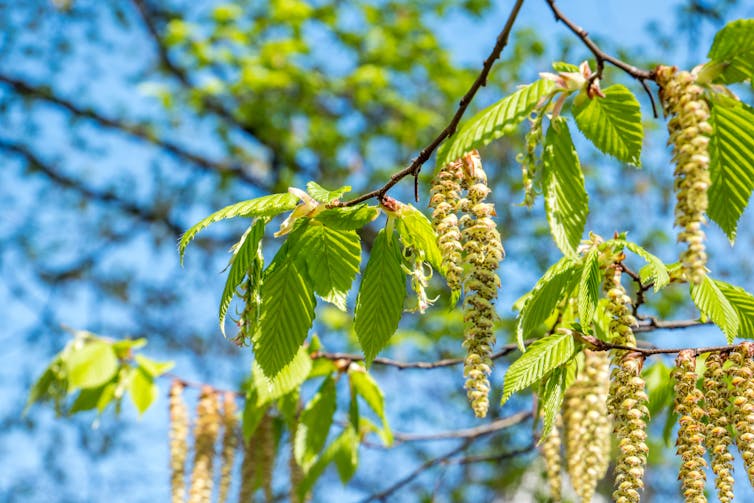
Hay fever: new immunotherapy approved in England for people with severe birch pollen allergies

Source: The Conversation – UK – By Heba Ghazal, Senior Lecturer, Pharmacy, Kingston University

Birch pollen allergy symptoms can sometimes last from January to June. Dragana Gordic/ Shutterstock

Around 25% of hay fever sufferers in the UK are allergic to birch tree pollen. This means that for a good chunk of the population, the arrival of spring and summer means sneezing, itchy eyes, blocked sinuses and days spent indoors avoiding pollen. But the recent approval of a new drug could mean relief from these symptoms for thousands living in England with severe allergies to birch pollen.

Birch pollen is the most common allergy-causing tree pollen across most parts of Europe and the UK. Pollen from birch-related trees including alder, hazel, oak, hornbeam and beech trees can also trigger symptoms – ranging from coughing, congestion and sneezing to itchy, watery eyes.

Symptoms are usually at their peak in April and May, but can sometimes last up to six months – from January to June. Research investigating UK pollen trends has also found that climate change – specifically rising temperatures – is making the UK birch pollen season longer and more severe.

Birch pollen allergies are triggered when the immune system mistakes pollen proteins for harmful pathogens. This causes the immune system to make immunoglobin E (IgE) antibodies – a type of immune defender that attaches itself to immune cells.

This means that the next time the body is exposed to the allergen, the IgE antibody will tell the immune cells to release the immune chemicals histamine, leukotrienes and prostaglandins to destroy the perceived pathogen. Histamine acts within seconds to cause itching, sneezing, swelling of blood vessels and mucus production.

New treatment

The standard treatment for birch pollen allergies include oral antihistamine and corticosteroid nasal sprays. However, a UK study found that even with both, only 38% reported good symptom control. That means up to 62% of people spend birch pollen allergy season fighting to control their symptoms.

But the National Institute for Health and Care Excellence (Nice) has just approved a new oral treatment for adults with severe allergies to birch tree pollen. The tablet, called Itulazax (betula verrucosa), is a type of immunotherapy.

Immunotherapy differs from standard allergy medications by targeting the root cause. The idea is simple: treat the allergy with the allergen that causes it – in this case birch pollen extract. Repeated exposure to tiny, controlled doses of the allergen then trains the immune system to build tolerance over time. The goal with immunotherapy is to change how the body reacts to the allergen entirely rather than just ease the symptoms.

A birch tree with pollen-producing flowers.
The new immunotherapy uses birch pollen extract to treat the allergy.
Animaflora PicsStock/ Shutterstock

Itulazax raises immune tolerance to birch pollen by reducing the number of IgE antibodies the immune system makes when exposed to birch pollen and increasing the number of protective antibodies the body makes. This significantly reduces major pollen allergy symptoms and prevents the body from mounting an immune response against birch pollen in the future.

The treatment is specifically approved for adults with severe birch pollen allergies who have not responded to regular allergy treatments. To qualify for treatment, a confirmed diagnosis is required through a skin prick or blood test showing a reaction to birch-related trees.

Clinical studies show the treatment is generally safe, with the most common side-effects being mild to moderate itching in the mouth and throat irritation – both linked to how it is taken under the tongue. As such, the first tablet must be taken under medical supervision – with at least 30 minutes of monitoring for immediate side-effects.

Though the treatment is effective, it’s not a quick fix. To see results treatment should start at least 16 weeks before the birch pollen season begins and continue through the season. So for people with severe symptoms, this means they may need to start taking the treatment in November. The course also lasts around three years.

Still, for the thousands of people in the UK who experience birch pollen allergies, this new treatment offers a solution for symptoms that can range from annoying to debilitating. The approval of this immunotherapy also offers hope that immunotherapies to treat other types of hay fever will someday be approved.

The Conversation

Heba Ghazal does not work for, consult, own shares in or receive funding from any company or organisation that would benefit from this article, and has disclosed no relevant affiliations beyond their academic appointment.

– ref. Hay fever: new immunotherapy approved in England for people with severe birch pollen allergies – https://theconversation.com/hay-fever-new-immunotherapy-approved-in-england-for-people-with-severe-birch-pollen-allergies-263286

The UK’s year of climate U-turns exposes a deeper failure

Source: The Conversation – UK – By Kevin Anderson, Professor of Energy and Climate Change, University of Manchester

Aerial-motion/Shutterstock

We’re now halfway through the UK government’s critical decade for tackling climate change – and 2025 is fast becoming a year of climate U-turns.

Airport expansions have been approved, the phaseout of gas-fired boilers shelved and, under the government’s latest industrial strategy, green levies on industrial energy bills that support renewables have been slashed. All while key indicators of global climate stability are deteriorating.

As carbon budget and energy policy researchers, we believe the UK’s official climate advisers, the Climate Change Committee (CCC), are failing to hold the government accountable for backsliding on climate action.

Worse still, the CCC’s recommendation that the UK reach net zero emissions by 2050 does not align with international commitments to limit global warming to 1.5°C and “well below 2°C”. It also fails to reflect the UN principle of fairness and equity whereby wealthier nations like the UK cut emissions earlier and faster than poorer countries.

In fact, it systematically undermines these promises, with the CCC’s 2025 seventh carbon budget (a landmark report that advises the UK government how to tackle its emissions for the period 2025-2050) a case in point.

Hiding carbon colonialism

As a signatory to UN climate agreements, the UK is obligated to “take precautionary measures” based on “best available scientific knowledge” to prevent “threats of serious or irreversible damage” to the climate. This includes setting carbon budgets rooted in the principles of equity and with a high chance of limiting warming to 1.5°C. Yet, scientists warn this window is closing fast.

Recent research concludes that from 2025, the world can emit no more than 160 gigatonnes of carbon dioxide (GtCO₂) for a 50% chance of not exceeding 1.5°C. Despite this, the CCC uses a global carbon budget almost 50% higher, at 235GtCO₂.

Internationally, the UK ranks tenth in wealth, fourth in historical cumulative emissions, and has per capita historical emissions four times the global average. Yet, the CCC disregards the UN principle that wealthy nations, whose prosperity was built on fossil fuels, must shoulder greater responsibility to rapidly cut emissions.

With just 0.84% of the global population, the UK’s equal share of the remaining 1.5°C carbon budget (160 GtCO₂) would be 1.34 GtCO₂. The CCC allocates it 3.7 GtCO₂ – nearly three times its equal per person share. However, even an equal share allocation would fall far short of the UN’s equity framework. Past CCC analyses have likewise embedded significant inequities.

Such misappropriation of the carbon budget shifts the burdens of climate change on to more vulnerable communities globally, prioritising the UK’s high-carbon norms over the right of low-income nations to sustainable development. The CCC’s departure from the UN’s core equity principle reveals how colonial norms remain deeply embedded in climate policy.

Net zero, explained by UCL’s climate scientist Mark Maslin.

Carbon removal roulette

Major societal transformations, such as moving from private car to public transport, are largely absent from the CCC’s recommendations. In contrast, large-scale engineered removals of carbon dioxide from the atmosphere and fossil fuel carbon capture and storage are assumed to be technically and socio-economically feasible.

The CCC definition of “feasible” prioritises near-term political convenience over scientific integrity and climate stability.

Despite a 4% decline in car travel over the past decade, the CCC estimates a per person increase of 10% by 2050. By avoiding pathways that challenge consumption norms, the CCC sidelines proven approaches like reducing car dependence or enforcing robust energy efficiency standards.

This highly cautious approach to behavioural change contrasts sharply with its assumptions on the future deployment of CDR, projecting UK engineered removals to increase from 0-13MtCO₂ by 2035, and 36MtCO₂ by 2050 – or nine and 26 times the total global level in 2024.

This scale of expansion contradicts historical trends. Similar heroic assumptions underpin CCS projections in electricity and blue hydrogen production (from natural gas). The CCC proposes the UK capture and store 33 MtCO₂ annually by 2050, triple the current global rate – for a technology that has barely advanced despite decades of promises and investment.

While some carbon removal is necessary to offset “impossible to mitigate” emissions from agriculture – for example, nitrous oxide from fertiliser use – using CDR to justify ongoing fossil fuel use is a high-risk approach that undermines the Paris climate commitments.


Read more:
Climate tipping points are nearer than you think – our new report warns of catastrophic risk


Nature-based carbon removal options are also overstated. The CCC projects removing 30 MtCO₂ per year by 2050 but insufficiently addresses the impacts on food security and land conflicts. Though reforesting offers ecological benefits, climate-driven wildfires, droughts and pests can rapidly re-release stored carbon. Such insecure carbon storage cannot offset guaranteed emissions from burning fossil fuels.

Ultimately, the CCC is deeply conservative on near-term changes to consumption norms, while embracing dangerously optimistic projections of future carbon removal technologies. It accepts temperatures will overshoot global targets significantly, and banks on future correction – despite the risk of triggering irreversible climate tipping points.

Hard truth

The allure of the CCC’s net zero 2050 advice is that it claims to offer a pathway to avoid both major social transformation and a rapid phaseout of fossil fuels, yet still meet the UK’s fair share of the 1.5°C commitment.

This politically appealing interpretation is scientifically flawed, downplays the gravity of climate risks and disregards principles of international justice. The CCC and others must stop being silent on these critical issues and end the carbon colonialism at the heart of the climate agenda.

The UK’s net zero 2050 framing isn’t just delaying urgent action, it normalises ecological breakdown while maintaining the illusion of responsible stewardship. It worsens climate impacts and undermines preparedness by presenting inadequate measures as 1.5°C compatible. A fundamental rethink of the UK’s climate policy requires a consensus that is grounded in equity, scientific integrity and transformative ambition.


Don’t have time to read about climate change as much as you’d like?

Get a weekly roundup in your inbox instead. Every Wednesday, The Conversation’s environment editor writes Imagine, a short email that goes a little deeper into just one climate issue. Join the 45,000+ readers who’ve subscribed so far.


The Conversation

Kevin Anderson is presenting views here that belong to the named authors, and do not necessarily reflect those of researchers within the Tyndall Centre for Climate Change Research.

Chris Jones has received funding from UKRI. The views in this article are of the author and do not necessarily reflect those of the Tyndall Centre for Climate Change Research.

Gaurav Gharde does not work for, consult, own shares in or receive funding from any company or organisation that would benefit from this article, and has disclosed no relevant affiliations beyond their academic appointment.

– ref. The UK’s year of climate U-turns exposes a deeper failure – https://theconversation.com/the-uks-year-of-climate-u-turns-exposes-a-deeper-failure-254499

Annulations dans les festivals de cinéma canadiens : un manque de courage qui nuit à la discussion

Source: The Conversation – in French – By Dorit Naaman, Alliance Atlantis Professor of Film and Media, Queen’s University, Ontario

Les festivals de cinéma sont des institutions culturelles qui offrent une occasion unique de visionner des œuvres méconnues, rarement distribuées dans les salles commerciales, pour le plus grand bonheur des cinéastes, des distributeurs et des festivaliers.

Ces festivals doivent toutefois répondre aux bailleurs de fonds et aux parties prenantes.

L’automne dernier, le Festival international du film de Toronto (TIFF) et les Rencontres internationales du documentaire de Montréal (RIDM) ont tous deux annulé la projection de documentaires suite aux protestations de groupes de pression pro-ukrainiens et propalestiniens.

De tels retraits soulèvent bien des questions sur le rôle des festivals, et leurs responsabilités envers les festivaliers, le grand public, les politiciens, les commanditaires, leurs auteurs, les groupes d’intérêt et l’art cinématographique.

En tant que documentariste et chercheuse intéressée aux représentations des combattants, j’ai analysé les deux films qui se concentrent tous deux sur des questions politiques contemporaines pertinentes pour notre compréhension de l’actualité.

Si les motifs d’annulation diffèrent, la réaction des deux festivals a clairement placé au premier plan les pressions de groupe d’intérêts au détriment du droit du public à un débat solide.

Russians at War

En septembre 2024, la programmation du documentaire Russians at War au Festival international du film de Toronto (TIFF) a suscité une levée de boucliers chez les groupes pro-ukrainiens, qui l’ont qualifié de propagande russe.

Le Congrès ukrainien canadien et d’autres partisans — dont l’ex-vice-première ministre Chrystia Freeland, elle-même d’origine ukrainienne — ont exigé le retrait du film.

Pour tourner son documentaire, la réalisatrice canadienne d’origine russe Anastasia Trifamova s’était intégrée à une unité de ravitaillement russe puis à une équipe médicale afin de gagner le front russe en Ukraine.

Sa narration, assez naïve, adopte une posture d’observation et de neutralité similaire à celle de documentaires, tels Armadillo et Restrepo (qui suivaient respectivement les troupes danoises et américaines en Afghanistan).

Selon le TIFF, Russians at War était une coproduction officielle canado-française financée par plusieurs agences canadiennes. Pour tourner son film, Anastasia Trifamova a déclaré qu’elle n’avait ni demandé ni reçu l’autorisation officielle de l’armée russe.

Le film documente un engrenage guerrier où les soldats sont à la fois auteurs et victimes de la violence. Il humanise les soldats, ce qui, on le conçoit, peut bouleverser les Ukrainiens et leurs partisans. Mais les émotions d’un groupe, aussi indigné soit-il, doivent-elles empêcher le public d’avoir les conversations difficiles qui sont le véritable objet du film ?

Dès les premières images, la cinéaste demande aux soldats pourquoi ils se battent et ceux-ci régurgitent la propagande russe (lutte contre le nazisme, défense des frontières). Plus tard, les soldats l’abordent pour exprimer leurs doutes quant au bien-fondé de la guerre et de leur présence en Ukraine.

Il en ressort une vision peu flatteuse de l’invasion russe, soulignant la futilité de cette guerre et son carnage parmi les soldats et les civils. Les troupes russes semblent peu entraînées et mal équipées pour combattre dans des batailles chaotiques.

Comme Armadillo et Restrepo, Russians at War représente les soldats sans les juger, favorisant une discussion essentielle sur les conflits armés. Selon mon analyse, on peut difficilement considérer ce film comme de la propagande russe, même si son autrice s’abstient de condamner catégoriquement la guerre dans ses voix hors champ sporadiques.

Le TIFF, informé de « menaces importantes pour le fonctionnement du festival et pour la sécurité du public », a annulé les projections prévues. Il a préféré le projeter après le festival au centre culturel TIFF Lightbox. Pourtant, le TIFF a tout de même assuré la sécurité pour Bliss, un film israélien également très controversé.

Rule of Stone

En novembre, les Rencontres internationales du documentaire de Montréal (RIDM) ont annulé la première canadienne de Rule of Stone.

Son auteure, la cinéaste israélo-canadienne Danae Elon, jette « un regard critique sur le projet colonialiste à Jérusalem-Est suivant sa conquête par les forces israéliennes en 1967 ». En tant que documentariste et professeure de cinéma et de médias, j’ai supervisé les recherches de Danae Elon pour ce film durant ses études de maîtrise.

Rule of Stone, dont le titre fait référence à un règlement remontant au Protectorat britannique qui imposait des façades de pierre à tous les édifices, montre comment « l’architecture et la pierre ont été les principales armes d’un processus silencieux, mais extraordinairement efficace, de colonisation et de dépossession » des Palestiniens.

L’auditoire apprend comment la planification, l’expansion et la construction des quartiers juifs ont été pensées pour évoquer les temps bibliques. Comme le note l’historien de l’architecture Zvi Efrat, ces nouveaux quartiers ont l’air, ou tentent d’avoir l’air, de remonter à des temps immémoriaux.

C’est la voix hors champ de Danae Elon qui assure la narration. Elle y mêle ses souvenirs d’enfance dans la Jérusalem des années 1970 et sa prise de conscience de cette « frénésie de construction ». Elle y raconte l’amitié de son père, le journaliste et auteur Amos Elon, avec l’architecte renommé Moshe Safdie à la triple nationalité israélienne, canadienne et américaine, et Teddy Kolek, le célèbre maire de Jérusalem.

Elle interviewe également des historiens, des urbanistes et des architectes, dont Moshe Safdie. Elle fait contraster l’expansion des quartiers juifs avec l’élimination progressive des Palestiniens de Jérusalem sur fond d’interdit de construction et de démolition de maisons. Elle y superpose des séquences d’Izzat Ziadah, un tailleur de pierre palestinien vivant dans une carrière, et qui fait visiter les décombres de sa maison.

Le RIDM avait invité Danae Elon à présenter son film en reconnaissance de son engagement personnel « à critiquer et à remettre en question l’État d’Israël » à travers ce documentaire.

le trailer de Rule of Stone.

Selon le quotidien La Presse, son retrait de la programmation est survenu après que le festival eut appris qu’une partie du financement provenait de la Fondation Makor pour les films israéliens, soutenu par le ministère israélien de la Culture et des Sports, ce qui embarrassait certains partenaires du festival.

Deux organisations, le Palestinian Film Institute et Regards palestiniens, qui font partie de la Campagne palestinienne pour le boycottage académique et culturel d’Israël (PACBI), ont contesté la projection. Ils ont justifié leur position en arguant que le « PACBI cible spécifiquement le financement institutionnel israélien dans les arts qui vise à blanchir et à légitimer l’État d’Israël ».

À mon avis, cette position s’écarterait des lignes directrices de cette campagne, qui stipulent :

En règle générale, les institutions culturelles israéliennes, sauf preuve du contraire, sont complices du maintien de l’occupation israélienne et du déni des droits fondamentaux des Palestiniens, que ce soit par leur silence ou leur implication réelle dans la justification, le blanchiment ou le détournement délibéré de l’attention des violations du droit international et des droits de la personne commises par Israël.

Le film n’aurait pas dû être touché par cet interdit, puisque la Fondation Makor finance régulièrement des films qui dénoncent les violations des droits de la personne à l’encontre des Palestiniens par Israël. Pour la seule année 2024, la liste comprend The Governor, The Village League et Death in Um al hiran.

Bien que le site web des RIDM ne fasse état d’aucun soutien à ce boycottage, le festival a annoncé que Danae Elon retirait son film. « La projection de mon film aux RIDM, a-t-elle écrit, ne sert pas l’objectif à long terme du festival, et il n’est pas possible aujourd’hui d’aborder les nuances dans la lutte commune pour la justice en Palestine. Je suis profondément attristée et bouleversée par ce qui a conduit à cette situation. »

Provoquer la conversation

L’annulation de ces deux films par deux festivals aussi réputés a certainement nui à leur distribution.

Ainsi, TVO, un des bailleurs de fonds de Russians at War, a décidé d’annuler sa diffusion quelques jours plus tard.

Quant à Rule of Stone, aucune salle montréalaise ne l’a encore projeté.

Les programmateurs des deux festivals avaient pourtant choisi ces deux films pour leur côté innovateur et leur capacité à susciter le débat. Les énoncés de mission des deux festivals promettent des films de grande qualité qui transforment ou renouvellent les relations du public avec le monde.

Cependant, en annulant ces deux films, les deux festivals ont démontré leur manque de courage à être de véritables espaces pour engager des conversations difficiles et nécessaires à notre compréhension du monde.

La Conversation Canada

Dorit Naaman ne travaille pas, ne conseille pas, ne possède pas de parts, ne reçoit pas de fonds d’une organisation qui pourrait tirer profit de cet article, et n’a déclaré aucune autre affiliation que son organisme de recherche.

– ref. Annulations dans les festivals de cinéma canadiens : un manque de courage qui nuit à la discussion – https://theconversation.com/annulations-dans-les-festivals-de-cinema-canadiens-un-manque-de-courage-qui-nuit-a-la-discussion-260756

Climate change is profoundly affecting livelihoods across Canada

Source: The Conversation – Canada – By Sara Dorow, Professor of Sociology, University of Alberta

For years, the International Labour Organization (ILO) has been sounding the alarm: climate change is having significant effects on the conditions, characteristics and availability of work.

As wildfires and other extreme weather events are destroying forests and threatening communities, ocean heating is impacting marine habitats and fisheries. Across these and other impacts of climate change, there is an undeniable relationship between the degradation of the environment and the degradation of work.

A research project I led with colleagues, Work-Life in Canada, reinforces this truth, revealing how climate change shapes not just what we do for work and under what conditions, but who we are and how we understand ourselves.

Over the last four years, our research team has photographed and interviewed more than 100 people from diverse walks of life across seven provinces. While we focused on the social meanings of their work, we constantly bumped into the ways, both subtle and direct, that changing environmental conditions are unravelling the social and economic fabric of people’s work lives.

We draw on two of our project sites to illustrate how climate change is impacting livelihoods — Lac La Ronge in northern Saskatchewan and Grand Manan Island in New Brunswick. The stories of participants, gathered by me, gender and women’s studies professor Angele Alook and sociology professor Karen Foster, are paired with the evocative documentary photography of our project collaborator, Martin Weinhold.

Together, words and images convey both the beauty of, and threats to, work-nature relations.

Wildfire

Cathy Clinton-Ratt and Julia Clinton are a Cree mother and daughter from the Lac La Ronge Indian Band who participated in the Work-Life in Canada project. Both held strong connections to Robertson Trading.

For nearly 60 years, Robertson Trading sustained the livelihoods of Indigenous people in the region through fur trade and buying their craft work.

Even after it closed in December 2023 (six months after our team visited the community), it still operated as a town bank and, importantly, housed hundreds of unique Indigenous artworks and traditional craft items collected since its inception.

Cathy’s moose hides and beadwork were sold and displayed at Robertson Trading for decades, and back in the day, she worked out of the craft co-operative just down the street.

Julia learned traditional hide making and beading skills from her mother and also worked at Robertson Trading for many years.

On June 4, 2025, Robertson Trading burned down in one of the many wildfires that tore through the area.

Wildfires are a natural occurrence in the boreal forest, but their frequency and spread in recent decades has been unprecedented.

Indigenous communities are especially affected. In June, La Ronge and nearby communities received a mandatory evacuation notice.

The fire destroyed the store’s entire collection of handcrafted items, including some of Cathy’s work.

As former manager Scott Robertson put it:

“The building was just a building, but the loss of the remaining contents — hundreds of pieces of Indigenous art and historical artefacts — is catastrophic … the beaded moosehide jackets and moccasins, the birch bark baskets, the antler carvings, the original paintings, etc., represent thousands of hours of handwork done by talented Indigenous artists and craftspeople, and are absolutely irreplaceable.”

That these items cannot simply be remade tells us that work is more than effort exchanged for a paycheque. It carries tradition, memory, identity and meaning — the stuff that social life is made of.

The loss of Roberston Trading highlights how meaningful work is enmeshed in a web of social-natural relations threatened by climate change.

Warming oceans

Grand Manan Island in New Brunswick, another of our project sites, further illustrates the threat to this web of work-life. Weir fishing — a sustainable practice of guiding fish into trap nets — has been practised for hundreds of years in Atlantic Canada.

While it declined significantly by the 1980s, some could still make a go of it.

Jeff Foster, a participant in our project, was one of those people. He knew everything about herring — not just as a resource to make a living on, but as a species with unique traits and behaviours.

When Martin Weinhold first photographed him in 2016, his weir fishing business was in full swing. A couple years later, Jeff turned over the fishery to his sons, happy to see a tradition continued.

But in 2023, Jeff’s sons reluctantly told him there were neither herring nor mackerel in their nets. A combination of warming waters and overfishing, especially by larger purse seiner operations, had greatly depleted the stocks.

For a while, Jeff’s sons had been able to keep the family weir going by working side jobs. But by 2024, when the Work-Life team visited Jeff, he was heartbroken.

His sons had switched to seasonal work with the lobster industry, which itself had only become an option as lobsters moved further north due to warming waters. What’s more, the weirs Jeff had built for a larger fish operation were being sold off to a lobster outfit.

Since then, the family has made the difficult decision to take down the family weir at the end of this year’s season. It will be the last time that they work together as a family at sea, and it spells the end of a specific story of who the Fosters are and where they belong.

‘Good’ work

In a 2018 paper, the ILO asserted that “a good future for work requires a stable and healthy environment.” The question is what “good” means.

Government policy tends to focus on things that can be easily quantified, like wages and hours of work. Our research reinforces that people and communities are attached to work in deeper ways, and that economic and social viability are enmeshed in the inevitable connections to nature that all forms of work depend on.

Primary research shows that climate and employment policies often remain mutually blind to each other. However, when we view work as “the fundamental interface between society and nature,” we understand how essential this relationship is to building an equitable future where people are able to do decent work.

This means ensuring that the policies and principles of a just energy transition are applied to all forms of work, not just green jobs, and that the stories of working people serve as important evidence in this endeavour.

The Conversation

Sara Dorow does not work for, consult, own shares in or receive funding from any company or organisation that would benefit from this article, and has disclosed no relevant affiliations beyond their academic appointment.

– ref. Climate change is profoundly affecting livelihoods across Canada – https://theconversation.com/climate-change-is-profoundly-affecting-livelihoods-across-canada-262704

¿Puede la vegetación recuperarse por sí sola después de un gran incendio?

Source: The Conversation – (in Spanish) – By José Manuel Fernández Guisuraga, Associate Professor in Applied Ecology and Remote Sensing, Universidad de León

Troncos ennegrecidos, suelos grises y un silencio abrumador. Este es el desolador panorama que queda tras los grandes incendios forestales, como los ocurridos en las comunidades autónomas de Galicia, Castilla y León y Extremadura durante la catastrófica temporada de incendios en verano de 2025 en España. Pero afortunadamente, la vida empieza a abrirse camino mucho antes de lo que imaginamos.

En cuestión de semanas, los primeros brotes verdes emergen entre las cenizas, transformando el paisaje devastado en un mosaico inesperado de vida. La regeneración natural tras los incendios en ecosistemas propensos al fuego es un proceso fascinante.

Estrategias de las plantas para sobrevivir al fuego

La vegetación de los ecosistemas terrestres de la península ibérica convive con el fuego desde hace miles de años, y muchas especies han desarrollado adaptaciones que les permiten regenerarse tras un incendio.

Algunas se recuperan por rebrote vegetativo a partir de yemas protegidas bajo la corteza, como los alcornoques (Quercus suber), o dispuestas en las raíces, como las encinas (Quercus ilex). Otras, como los brezos rojos (Erica australis), guardan yemas en órganos subterráneos llamados lignotubérculos. Esta estrategia les ayuda a regenerarse muy rápidamente, generando un manto verde que cubre el suelo desnudo en las etapas iniciales posincendio.

También hay especies cuya regeneración depende de la germinación de semillas, ya sea almacenadas en sus estructuras aéreas o en el banco de semillas del suelo. En pinos Mediterráneos como Pinus pinaster o Pinus halepensis, el fuego facilita la apertura de sus piñas y la liberación de semillas que germinan tras las primeras lluvias. Las plántulas se desarrollan en un entorno con menos competencia y abundancia de nutrientes, lo que facilita su establecimiento.

Gracias a estas estrategias, en la mayoría de los incendios de intensidad no muy elevada, la vegetación se recupera de forma natural, sin necesidad de intervención humana.


Leer más:
Beneficios de no cortar los árboles después de un incendio


¿Cuánto tarda en recuperarse un ecosistema?

La velocidad a la que se recupera la vegetación tras un incendio depende de varios factores, como la intensidad del fuego, la recurrencia de incendios anteriores, el tipo de ecosistema, el clima y las propiedades del suelo.

En los matorrales Mediterráneos, el rebrote puede ser visible en cuestión de semanas. Por ejemplo, en los brezales, la cobertura vegetal puede llegar a recuperarse por completo en menos de una década. En los pinares, en cambio, el proceso es más lento, pues las plántulas tardan años en alcanzar un porte que asegure su supervivencia resistiendo la competencia y la sequía.

En encinares y robledales, el rebrote suele ser vigoroso durante los primeros años, pero el bosque requiere varias décadas para recuperar su estructura y funciones originales.

En general, puede afirmarse que el color verde empieza a dominar cuando la vegetación comienza a regenerarse en meses, pero el regreso a un ecosistema maduro requiere décadas, principalmente en ecosistemas dominados por arbolado.

Qué hacer después de un incendio

La respuesta tras un incendio no debe ser precipitada. Intervenciones apresuradas, como reforestaciones sin una evaluación previa minuciosa, pueden resultar caras y poco eficaces. Las recomendaciones científicas coinciden en que el primer paso debe ser priorizar las zonas afectadas por una alta intensidad del fuego. En ellas, se suelen llevar a cabo actuaciones de emergencia para proteger el suelo frente a la erosión, especialmente en terrenos con fuertes pendientes.

En áreas menos dañadas, donde la respuesta de rebrote o germinación es intensa, lo más recomendable suele ser dejar que el ecosistema se regenere de manera natural y observar su evolución.

En muchos casos, apoyar estos procesos mediante la reducción de la competencia resulta muy efectivo. Solo cuando sea necesaria la reforestación, se recomienda recurrir a especies autóctonas resistentes al fuego.

Sin embargo, existen situaciones más críticas. Un caso especialmente delicado es el de las zonas que sufren incendios de alta intensidad en cortos periodos de tiempo. Bajo estas circunstancias, el negro puede seguir dominando el paisaje durante mucho tiempo y, en el mejor de los casos, la regeneración puede desembocar en una conversión del tipo de ecosistema. Esto ocurre porque los árboles jóvenes no llegan a producir semillas y las plantas rebrotadoras acaban agotando sus recursos. Así, un robledal o un pinar maduro pueden transformarse de manera permanente en un matorral. Si el objetivo es recuperar el ecosistema original, pueden ser prioritarias medidas activas de reforestación mediante siembras o plantaciones selectivas.


Leer más:
Y tras los incendios, matorrales: cómo recuperar los bosques y hacerlos más resistentes al fuego


Mirando al futuro

Tras un gran incendio no solo debemos pensar en cómo recuperar la vegetación perdida, sino también en cómo preparar el territorio para futuros incendios de gran intensidad. Esto implica favorecer paisajes en mosaico mediante prácticas agrícolas, ganaderas y silvícolas tradicionales, que reduzcan la acumulación de combustible y hagan los incendios más manejables.

En definitiva, la regeneración tras el fuego es un proceso natural, aunque no siempre garantizado. La clave está en comprender que no todos los incendios son iguales. Algunos abren oportunidades para que la vida renazca con fuerza, mientras que otros pueden iniciar una degradación irreversible si no actuamos con inteligencia.

The Conversation

José Manuel Fernández Guisuraga recibe fondos de la Unión Europea, del MITECO, de la Fundación Biodiversidad, de la Junta de Castilla y Leon y de la Universidad de León.

Leonor Calvo Galván recibe fondos de la Unión Europea, del MITECO, de la Fundación Biodiversidad, de la Junta de Castilla y Leon y de la Universidad de León.

– ref. ¿Puede la vegetación recuperarse por sí sola después de un gran incendio? – https://theconversation.com/puede-la-vegetacion-recuperarse-por-si-sola-despues-de-un-gran-incendio-263550

Our primate ancestors evolved in the cold – not the tropics

Source: The Conversation – UK – By Jason Gilchrist, Lecturer in the School of Applied Sciences, Edinburgh Napier University

Japan’s famous snow macaques are an exception among primates today. But our early ancestors often lived through weather like this. R7 Photo / shutterstock

Most people imagine our early primate ancestors swinging through lush tropical forests. But new research shows that they were braving the cold.

As an ecologist who has studied chimpanzees and lemurs in the field in Uganda and Madagascar, I am fascinated by the environments that shaped our primate ancestors. These new findings overturn decades of assumptions about how – and where – our lineage began.

The question of our own evolution is of fundamental importance to understanding who we are. The same forces that shaped our ancestors also shape us, and will shape our future.

The climate has always been a major factor driving ecological and evolutionary change: which species survive, which adapt and which disappear. And as the planet warms, lessons from the past are more relevant than ever.

The cold truth

The new scientific study, by Jorge Avaria-Llautureo of the University of Reading and other researchers, maps the geographic origins of our primate ancestors and the historical climate at those locations. The results are surprising: rather than evolving in warm tropical environments as scientists previously thought, it seems early primates lived in cold and dry regions.

These environmental challenges are likely to have been crucial in pushing our ancestors to adapt, evolve and spread to other regions. It took millions of years before primates colonised the tropics, the study shows. Warmer global temperatures don’t seem to have sped up the spread or evolution of primates into new species. However, rapid changes between dry and wet climates did drive evolutionary change.

One of the earliest known primates was Teilhardina, a tiny tree dweller weighing just 28 grams – similar to the smallest primate alive today, Madame Berthae’s mouse lemur. Being so small, Teilhardina had to have a high-calorie diet of fruit, gum and insects.

Small lemur peers out from behind tree
The first primates were about the size of a mouse lemur: tiny.
Jason Gilchrist

Fossils suggest Teilhardina differed from other mammals of the time as it had fingernails rather than claws, which helped it grasp branches and handle food – a key characteristic of primates to this day. Teilhardina appeared around 56 million years ago (about 10 million years after the extinction of the dinosaurs) and species dispersed rapidly from their origin in North America across Europe and China.

It is easy to see why scientists had assumed primates evolved in warm and wet climates. Most primates today live in the tropics, and most primate fossils have been unearthed there too.

But when the scientists behind the new study used fossil spore and pollen data from early primate fossil environs to predict the climate, they discovered that the locations were not tropical at the time. Primates actually originated in North America (again, going against what scientists had once believed, partly as there are no primates in North America today).

Some primates even colonised Arctic regions. These early primates may have survived seasonally cold temperatures and a consequent lack of food by living much like species of mouse lemur and dwarf lemur do today: by slowing down their metabolism and even hibernating.

Challenging and changeable conditions are likely to have favoured primates that moved around a lot in search of food and better habitat. The primate species that are with us today are descended from these highly mobile ancestors. Those less able to move didn’t leave any descendants alive today.

Gallery of lots of different primates
Over 56 million years, primates have evolved into all sorts of shapes and sizes.
Monkeys: Our Primate Relatives exhibition at the National Museum of Scotland. Jason Gilchrist

From past to future

The study demonstrates the value of studying extinct animals and the environment they lived in. If we are to conserve primate species today, we need to know how they are threatened and how they will react to those threats. Understanding the evolutionary response to climate change is crucial to conserving the world’s primates, and other species beyond.

When their habitats are lost, often through deforestation, primates are prevented from moving freely. With smaller populations, restricted to smaller and less diverse areas, today’s primates lack the genetic diversity to adapt to changing environments.

But we need more than knowledge and understanding to save the world’s primate species, we need political action and individual behaviour change, to tackle bushmeat consumption – the main reason primates are hunted by humans – and reverse habitat loss and climate change. Otherwise, all primates are at risk of extinction, ourselves included.


To learn more about primate diversity, behaviour, and threats to their survival, see Monkeys: Our Primate Family, as the exhibition ends its international tour with a return to the National Museum of Scotland in Edinburgh.

The Conversation

Jason Gilchrist does not work for, consult, own shares in or receive funding from any company or organisation that would benefit from this article, and has disclosed no relevant affiliations beyond their academic appointment.

– ref. Our primate ancestors evolved in the cold – not the tropics – https://theconversation.com/our-primate-ancestors-evolved-in-the-cold-not-the-tropics-263236

The UK Space Agency has been absorbed into the science department. The potential effects are still unclear

Source: The Conversation – UK – By Bleddyn Bowen, Associate Professor in Astropolitics and Space Warfare, School of Government and International Affairs (SGIA), Durham University

Tim Peake Fred Duval / Shutterstock

The UK Space Agency (UKSA) has become part of the government’s Department for Science, Innovation and Technology (DSIT). The announcement was made on August 20 2025 by Chris Bryant MP, minister of state for data protection and telecoms.

Cutting red tape and duplicative bureaucracy within DSIT and UKSA seems to be the main rationale in the press release – that and bringing “together the people who shape space policy and those who deliver it”.

Though it sounds like a demotion for UKSA, what the changes mean in practice for the crafting of UK space policy, and the direction of UK space policy itself, remain uncertain. More importantly, rearranging the deckchairs of DSIT and UKSA will not resolve the chronic problems facing British space policy.

The first problem is that UKSA has lacked a clear identity and responsibility over policy, regulation and research within civil space activities. It is not like Nasa or the European Space Agency (Esa) – UKSA does not operate satellites, nor conduct major research and development projects by itself.

UKSA has competed with the Civil Aviation Authority (CAA) over licensing and regulatory powers for satellite launches from the UK, which the CAA has possessed since the mid-2010s.

On research, UKSA acted mostly as a research council, rivalling the work traditionally performed by the UK Research and Innovation’s and Science and Technology Funding Council (STFC).

STFC apportions funding for space science and research for universities and industry. UKSA is also the main point of contact for distributing Esa funding for British industry and university contributions to Europe-wide space projects.

UK space policymaking

UK space policy has always been an interdepartmental and Cabinet Office concern, and UKSA has traditionally only factored into consultations on the regulatory and civil space research dimensions of UK space policies. Since 2021, DSIT has taken on more space policy responsibilities regarding industrial strategy, further eroding a unique role for UKSA.

UKSA therefore has not carved out a clear niche that other departments or executive agencies cannot already claim competency within. The UK government’s position that duplication needs to be addressed is not an unreasonable one. The devil is in the details – which are missing at this time.

It is hard to say whether the bureaucratic changes will be better or worse for the creation and implementation of civil UK space policy and space science research.

The optics of this move can be easily seen and inaccurately spun as a negative in cancelling the UK space programme. No actual space projects are being cancelled.

Saxavord is one of several launch sites under development in the UK.
AlanMorris / Shutterstock

The UK government has clearly recognised this, stressing that UKSA will retain a distinctive and recognisable branding in its new role, which has been effective at home and abroad in space science, industry promotion, and facilitating high-profile projects.

The second chronic problem that pre-dates UKSA – and will continue regardless of the musical chairs in Whitehall – is the lack of a coherent, joined-up national UK space programme with the funding to match. UKSA could never resolve these problems.

For example, the UK government has long pursued a policy of encouraging small satellite launch companies, yet has never allocated the funds necessary to deliver a tangible capability within any reasonable schedule, nor has it created a national UK satellite programme (civil or military) tailored to a high latitude launch profile, which could in turn create concrete demand for such a launcher.

After 15 years of drift, UK launch has gone from being ahead of the curve in Europe (with UK-based companies such as Skyrora and Orbex) to falling behind France, Sweden, or Spain as possibly the first new European small satellite launch providers.

This is a basic lesson in space programme design that seems lost on generations of British policymakers, but one that established satellite launching countries have taken to heart.

Modestly sized space powers have focused on crucial long-term national capability programmes and stumped up the cash for them, such as France’s Spot or India’s Insat programme. Such priorities are not evident in the UK across the civil and military space sectors.

As I explained to the UK House of Lords Select Committee’s UK Engagement with Space inquiry earlier this year, British space policy spreads out too little money in too many directions on small research projects rather than bold national infrastructural space programmes.

The government must also consider the security and military dimensions of space, which cannot exclude UKSA or the civil, industrial and research dimensions as they in turn provide the capability and know how to build British space systems.

The Boris Johnson government formed the National Space Council to drive and coordinate these partnerships, yet it was abolished by the Truss government and reinstated during the Sunak government. There have been no announcements from the Starmer government yet on any meetings of the council. This bureaucratic chaos has not helped efforts to cohere a strategic direction in space.

While the Ministry of Defence claims it wishes to invest in all manner of new space capabilities in the 2025 Strategic Defence Review, it cannot do so without a large injection of new funding, far beyond the billions already allocated for the military satellite Skynet 6 and defence satellite system ISTARI. More than funding, a clear decision on a specific capability is needed, rather than doing a little bit of everything.

Developing one kind of new satellite constellation, such as radar imagery for military operational needs – numbering in dozens of new satellites – would be the biggest undertaking for the MoD in space since the Skynet satellite communications system.

Doing the same for other capabilities at the same time, such as optical imagery, signals intelligence, or laser communications relays, would be as big a challenge again, and perhaps too much to take on at the same time.

For space policy wonks, academic researchers and the space industry, this rearrangement will not change much in the short term – for good and bad. UKSA was never fully independent to begin with, so the changes are likely to be more esoteric, subtle and bureaucratic.

That would require courageous policy decisions at the top of government to deliver a coherent, focused, joined-up and fully funded UK civil and defence space programmes.

The Conversation

These are the author’s own views and not that of any institution or organisation.

– ref. The UK Space Agency has been absorbed into the science department. The potential effects are still unclear – https://theconversation.com/the-uk-space-agency-has-been-absorbed-into-the-science-department-the-potential-effects-are-still-unclear-263563

Edinburgh TV festival: James Harding’s MacTaggart lecture is a passionate defence of the BBC

Source: The Conversation – UK – By Paul Tucker, Senior Lecturer in Broadcast Production, University of the West of Scotland

The agenda-setting centrepiece of every Edinburgh TV Festival is the MacTaggart lecture, celebrating its 50th anniversary in 2025. This year’s lecture was delivered by former BBC news director James Harding, and billed as a speech that would examine challenges to truth and trust in the media.

Co-founder of Tortoise Media – the “slow news” organisation that has recently bought The Observer – Harding has enjoyed a long career as a journalist and was also once editor of The Times newspaper.

He isn’t really a “TV person”, so Harding seems a strange choice to deliver the 50th MacTaggart. Why not someone who has TV running through their veins, like presenter and producer Richard Osman? Or someone who might reflect the MacTaggart’s beginnings as part of a festival that sought to offer a Scottish-based perspective to the the London-centric TV industry? Or someone who could at least ask the most pressing question facing TV: does it have any kind of future?

However, the organisers of the Edinburgh TV Festival promised the lecture would be “a provocative, kick-ass and insightful view from a visionary leader”.

However, as you might expect from someone who named their company after the humble tortoise, it was much gentler than that, poking its head out of its shell and gently tearing off some conversational topics rather than ripping into things. That said, the lecture was a passionate defence of the BBC that argued for a drastic increase in its funding.

Harding started by describing the BBC as “the most important source of information in this country and around the world”. It was time for the government to give real independence to the BBC in the same way it did with the Bank of England in 1997.

He expressed concern that as things stand, the BBC chair is in essence appointed by the prime minister with a budget set by the chancellor. He also pointed out that should parliament choose not to renew the charter in 2027, the BBC would cease to exist.

Harding argued for change that would see the BBC chair and board of directors appointed by the board itself (which does seem a somewhat circular process) and then approved by Ofcom. The charter, once renewed, would be open-ended (much like those for universities) and any funding – licence fee or otherwise – would be agreed by an independent panel that impartially advises government and is scrutinised by parliament.

That funding, Harding said, needs to be doubled to allow the BBC to function properly. He cited the iPlayer and Media City in Salford as being bold, successful developments of the kind the BBC can only make when properly financed. He admitted that this rise in funding could not come from an increase in licence fee alone, and said something must be done about the 2.5 million households that currently don’t pay it, underlining his support for the “every household pays” model.

Harding also suggested that the quasi-independent and still-developing work of BBC Studios, and in particular the monetising of the BBC archive, could be ways of increasing income for the corporation.

He made an impassioned plea for the BBC World Service to be properly funded, pointing out that it already has a bigger worldwide audience than Netflix. It could, he said, reach over a billion people in the next decade, fighting misinformation globally and providing a real source of soft power for the UK.

Harding’s arguments as to what the BBC could be in the future are perhaps more daring and contentious. He imagines “a BBC that thinks of itself more as the ‘people’s platform’ as well as a public service broadcaster, one that’s home to more varied thinking, but holds true to standards of truth and accuracy, diversity of opinion and fair treatment of people in the news”.

It would, he said, be an open platform that “would invite the BBC to think not just about how it informs and entertains, but how it educates too” – a kind of YouTube run by BBC editorial policy. This, he summed up, would be “a national investment in our future that will come back to reap multi-platform rewards that an investment in no other UK organisation can”.

I don’t think there is much I would argue with in James Harding’s MacTaggart lecture. I would just ask how all this is actually going to happen – how the debate moves out of the conference rooms of the TV festival. Harding obviously believes in the BBC. Yet when he was editor of The Times, a journalist of influence and power, he couldn’t stop the paper’s – and Rupert Murdoch’s – relentless criticism of the BBC.

We also now have an unofficial government opposition in Reform that believes, as Harding reminded the audience, that the BBC is out of touch and institutionally biased, and will be scrapped by Farage’s party should they come to power.

I agree with Harding that in a fragmented media world we must fight to preserve and properly fund the BBC. But that fight won’t be easy.


Looking for something good? Cut through the noise with a carefully curated selection of the latest releases, live events and exhibitions, straight to your inbox every fortnight, on Fridays. Sign up here.


The Conversation

Paul Tucker is a member of The Royal Television Society and a voting member of BAFTA.

– ref. Edinburgh TV festival: James Harding’s MacTaggart lecture is a passionate defence of the BBC – https://theconversation.com/edinburgh-tv-festival-james-hardings-mactaggart-lecture-is-a-passionate-defence-of-the-bbc-263661

Football fans will see Nigel Farage’s branded kit for the cynical move it is

Source: The Conversation – UK – By Josh Bland, ESRC-DTP PhD Researcher, University of Cambridge

As a new season begins, Nigel Farage’s Reform UK is making a play for the affections of the nation’s football fans by launching its very own football shirt. It’s a move that has already proven popular among Reform supporters. According to Zia Yusuf, a leading figure in the party, thousands were sold on their first day of retail.

Reform’s move to exploit the cultural capital of football speaks to a wider trend in British society: the explosion of the football shirt as a cultural behemoth.

Quite simply, football shirts are everywhere. They have been incorporated into high fashion as part of the nostalgic 90s “blokecore” trend. They are used by bands such as Oasis and Fontaines DC as forms of branded merchandise. And now they are being mobilised by political movements, such as Palestinian solidarity organisation FC Palestina, to spread specific messaging.

Instead of being merely the domain of football supporters, football shirts have become cultural canvases.

Crucially, I believe football shirts are a symbolic medium that is tailor-made for Reform’s current political purposes. Ahead of the 2029 election Farage’s goal is clear. His aim is to win over and mobilise a largely working-class, provincial voting base who feel alienated by “mainstream” politics.

It appears that Reform see football as a potential weapon in this task. From its origins in the industrial cities of late Victorian England, modern football has long been a central pillar of working-class culture in Britain. In particular, it has played a potent role in binding communities around shared sentiments of local tribalism. Given that Farage’s political campaigning to date has often been based around a narrative of fighting for authentic, local community interests against out-of-touch metropolitan elites, the appeal of football in the context of Reform’s politics seems straightforward.

The efficacy of football shirts as a culturally loaded tool of communication means that Farage and Reform may feel they have found their own iteration of the Maga hat: a way for followers to embody their political allegiances with a loud, brash piece of statement clothing that also signals deep roots in the nation’s working-class culture.

But there’s a level of hypocrisy at work here. In the lead up to the Uefa Euro 2020 championship, Farage denounced the England team for taking the knee before games, imploring them to “keep politics out of football”. This was followed by another episode of public pearl clutching in 2024 when Farage decried England’s kit design for featuring a technicolour version of the England flag that bore “no relationship to St. George’s cross whatsoever”.

Now Reform has produced a shirt that both explicitly politicises football culture and features a turquoise Union Jack.

But beyond the flagrant double standards of the launch, Reform’s move into football merchandise is potentially a political miscalculation, too.

As the Labour party continues to flail, offering no resolution to the country’s gaping inequality or fixes for its failing public services, let alone a cure for the divisiveness that increasingly define contemporary Britain, it feels that the 2029 election will be won and lost in England’s football loving provinces.

Football and pride

Football’s roots in working-class culture, pride in place and patriotism means that the hard right has always seen the sport as fertile ground. In this sense, Reform’s kit launch is part of a long tradition of attempted infiltrations of the game by the hard right. Most notoriously, the National Front used terraces as recruitment grounds in the 1970s and the Football Lads Alliance attempted similar when it launched in 2017.

But here lies the problem for Reform. These attempts have largely failed. Even at the peak of the National Front’s influence in the 1970s and early 80s they only ever succeeded in establishing themselves as a fringe group on the terraces – albeit a noisy and intimidating one – and have often faced fierce and organised anti-fascist resistance.

Equally, the establishment of the Premier League in 1992 has seen professional football in the UK embrace a more cosmopolitan future. Progressive anti-racist organisations such as Kick It Out have gained significant influence. The cast of players and managers who populate elite level football is now impressively international. In short, despite its roots in local working-class communities, British football increasingly embodies many of the globalist, progressive ideals that Farage so vehemently rejects.

Even more crucially, as I have found in my own research on football supporting communities in the north-east, football culture prizes authenticity.

For the communities I work with, support of a football team is starkly different to support of a political cause. It is a form of living, breathing heritage. It is a tradition that is passed between generations of a family like an heirloom. It is a culture within which supporters constantly perform their own authenticity through a lifetime of ritual – match attendance, shirt wearing and suffering with the team through thick and thin.

The transparency of Farage’s hijacking of football culture for his own ends may therefore be his downfall. Farage’s credibility as a voice on football will simply not measure up to supporters’ lofty standards. They will be aware that he has openly declared his love of cricket over football. They will be cognisant of his lack of interest in the game other than when there’s a nationalist point to make. Above all, they will see through his cynical attempts to exploit the symbols of the football supporting culture they cherish so dearly for his own political cause.

Of course football is an everyday working-class tradition. Of course it has huge cultural salience in the provincial constituencies Farage will target to win in the 2029 election. But Reform should take heed that just because football is popular, that doesn’t mean it is inevitably populist.

The Conversation

Josh Bland receives funding from The Economic and Social Science Research Council.

– ref. Football fans will see Nigel Farage’s branded kit for the cynical move it is – https://theconversation.com/football-fans-will-see-nigel-farages-branded-kit-for-the-cynical-move-it-is-263513