Iran’s latest internet blackout extends to phones and Starlink

Source: The Conversation – USA – By Amanda Meng, Senior Research Scientist, College of Computing, Georgia Institute of Technology

Protesters have filled the streets in Iranian cities, but the regime’s internet shutdown means little news gets in or out of the country. MAHSA/Middle East Images/AFP via Getty Images

The Iranian regime’s internet shutdown, initiated on Jan. 8, 2026, has severely diminished the flow of information out of the country. Without internet access, little news about the national protests that flared between Dec. 30, 2025, and Jan. 13, 2026, and the regime’s violent crackdown has reached the world. Many digital rights and internet monitoring groups have assessed the current shutdown to be the most sophisticated and most severe in Iran’s history.

We are a social scientist and two computer scientists at the Georgia Institute of Technology’s Internet Intelligence Lab who study internet connectivity.

Through the Internet Outage Detection and Analysis project, we have been measuring internet connectivity globally since 2011. The project was motivated by the internet shutdowns during the Arab Spring mass protests that began in December 2010 against Middle Eastern and North African regimes.

The project provides a public dashboard of internet connectivity measurements. Its long view of global internet connectivity offers insight into the Iranian regime’s developing sophistication in controlling information and shutting down the internet in the country.

Our measurements show that Iran has been in a complete internet shutdown since Jan. 8. This is longer than the 48½-hour shutdown in June 2025 during the Israel-Iran war and surpasses the duration of the November 2019 shutdown that lasted almost seven days. Compared to the two weeks of nightly mobile phone network shutdowns in September to October of 2022 during the Women, Life, Freedom protests, this shutdown is more complete by also closing down fixed-line connectivity.

Measuring internet connectivity

The Internet Outage Detection and Analysis project measures global internet connectivity through three signals related to internet infrastructure: routing announcements, active probing and internet background noise.

Core routers, unlike the router in your home, are responsible for directing traffic to and from networks. Routing announcements are how they communicate with each other. If a nation’s network of routers stop making these announcements, the network will disappear from the global internet.

We also measure the responsiveness of networks through probing. To create the probing signal, we continuously ping devices in millions of networks around the globe. Most devices are designed to automatically respond to these pings by echoing them back to the sender. We collect these responses and label networks as “connected/active.”

A tool we use dubbed “network telescope” captures internet background noise – traffic generated by hundreds of thousands of internet hosts worldwide. A drop in this signal can indicate an outage.

A history of shutdowns

The first nationwide shutdown that the Internet Outage Detection and Analysis project observed in Iran was during the “Bloody November” uprising that happened in 2019. During that shutdown, the primary method the regime used was turning off routing announcements, which stopped all traffic between routers. This is a blunt force tool that makes the internet essentially go dark; no connectivity is possible for affected networks.

However, our measurement reporting showed differences in signal-drop patterns among the three data sources we track. These patterns demonstrate the regime’s adoption of diverse disconnection mechanisms and large differences in the timing of disconnection by various Iranian internet service providers (ISPs).

This reporting also showed evidence that the 2019 blackout was not complete and some people were able to circumvent it. Nevertheless, as documented by Amnesty International, the internet darkness created a “web of impunity” that allowed the regime to violate international human rights law without any accountability.

In September 2022, the Women, Life, Freedom protests erupted after the killing of Mahsa Amini in state custody. To suppress the nationwide mobilization without exacting a high cost, the Iranian regime implemented nightly shutdowns affecting only mobile networks. Keeping fixed-line internet connections online limited the impact of these shutdowns to mitigate the economic, political and social costs.

These nightly internet curfews lasted about two weeks. During this time the regime implemented other forms of censorship, specifically blocking applications to further control the information environment and to prevent access to technologies for circumventing censorship.

In June 2025, the Israel-Iran war began and we observed initial degradation in internet connectivity, which often occurs during times of conflict, when internet and power infrastructure are affected by missile attacks. The Iranian regime shut down the internet over four days, citing national security as its rationale.

That time, the regime did not use routing announcements to implement the shutdown. Our measurement data shows that routing announcements were largely unaffected. Instead, the Iranian regime implemented the shutdown by interfering with key protocols that allow the internet to function, including transport layer security and the domain name system.

The regime used these techniques to shut off Iran’s connectivity with the global internet while allowing specific, sanctioned access in a policy called whitelisting. This strategy shows an increased sophistication in how the Iranian regime implements shutdowns and controls the flow of information.

Organizations that support digital human rights in Iran report that some Iranians were able to circumvent the shutdown using virtual private networks and various censorship-resilient technologies such as peer-to-peer networks.

The Iranian regime has targeted Starlink satellite internet service in its internet shutdown.

Jan. 8, 2026

On Dec. 30, 2025, the Internet Outage Detection and Analysis project team received reports of internet disruptions amid the start of nationwide protests. At 8 p.m. Iran Standard Time on Jan. 8, 2026, the Iranian regime shut down the internet. Our measurements show a nominal amount of responsiveness to our active probing, about 3%. This small amount could be an artifact of our measurements or lingering connectivity for whitelisted access, for example for Iranian government officials and services.

Outside of very limited whitelisted connectivity, digital human rights groups reported severely limited access to the internet both internationally and domestically. According to digital rights group Project Ainita, the Iranian regime implemented the shutdown by interfering with transport layer security and the domain name system. In addition, landline phone calls have been only intermittently available.

Aside from these more sophisticated techniques, this shutdown evokes the Bloody November shutdown of 2019 in that it has been ordered during a time of protest with mass civilian casualties.

Jammed satellites

Since Russia’s full-scale invasion of Ukraine in 2022, low Earth orbit satellite services, such as Starlink, can help people maintain internet connectivity during outages and government-ordered shutdowns. These satellite services can allow users to bypass damaged or state-censored terrestrial internet infrastructure.

However, accessing the internet via satellite services during a shutdown is not without risk. User terminals communicate with satellites via radio frequency links that can be detected through surveillance, for example from planes or drones, potentially exposing users’ locations and putting them at risk of being identified. Currently, the Iranian regime is using jammers to degrade the Starlink connection.

One of the most significant barriers to connecting users in Iran to satellite services is a logistical one. Providing connectivity via Starlink’s service would require distributing a large number of user terminals within the country, a feat that would be difficult because the devices are likely to be considered illegal contraband by the government. This severely limits the scale at which such services can be adopted.

Recent technological developments, however, may partially mitigate this challenge. Starlink’s direct-to-cell capability, which aims to provide LTE cellular connectivity directly to ordinary cellphones, could reduce dependence on specialized hardware. If they become widely available, such systems would allow users to connect using common devices already in circulation, sidestepping one of the most difficult barriers to providing connectivity.

Like other radio-based communications, however, direct-to-cell connectivity would remain vulnerable to signal jamming and other forms of electronic interference by the government.

For the time being, the Iranian regime controls the country’s internet infrastructure, which means it still has a virtual off switch.

The Conversation

Amanda Meng receives funding from the State Department.

Alberto Dainotti receives funding from the U.S. National Science Foundation. IODA was initially built with funding from the National Science Foundation and the Department of Homeland Security Science & Technology Directorate. A large body of IODA work was also funded by the U.S. State Department and by the Open Technology Fund.

Zachary Bischof receives funding from the State Department.

ref. Iran’s latest internet blackout extends to phones and Starlink – https://theconversation.com/irans-latest-internet-blackout-extends-to-phones-and-starlink-273439

Raccoons break into liquor stores, scale skyscrapers and pick locks – studying their clever brains can clarify human intelligence, too

Source: The Conversation – USA – By Kelly Lambert, Professor of Behavioral Neuroscience, University of Richmond

The moment you look away from those adorable eyes, these mischievous creatures will sneak out of your lab. Joshua J. Cotten/Unsplash, CC BY-SA

When a curious raccoon broke into an Ashland, Virginia, liquor store in December 2025, sampled the stock and passed out on the bathroom floor, the story went viral within minutes. The local animal shelter’s Facebook post was picked up by national and international outlets and quickly inspired raccoon-themed cocktails, “trashed panda” merchandise and even a cameo on “Saturday Night Live.”

For me, the story hit close to home. The store that hosted this inebriated bandit sits just blocks from the small behavioral neuroscience laboratory where I began investigating raccoon brains about 15 years ago. Although the so-called drunken raccoon made questionable decisions after breaking into the liquor store, the species – Procyon lotor – is known for its impressive intelligence, curiosity and problem-solving skills.

Despite being one of the most intriguing mammals living alongside humans, raccoons have avoided the scientific spotlight. Why aren’t more neuroscientists and psychologists studying raccoons? What have researchers missed about the mammalian brain by focusing on rodents instead?

Someone had a good time.

Why raccoons aren’t lab staples

In the U.S., it is estimated that laboratories use more than 100 million rodents, including mice and rats, each year. Rodents are ideal for research because they reproduce easily and adapt well to confinement. Scientists have tailored extensive research tools to study them. Long before rats dominated psychology labs, raccoons were actually a leading candidate for animal models of problem-solving and intelligence.

That ended when scientists realized they’d met their cognitive match. In one study, researchers reported that all raccoon participants escaped through the laboratory ventilation system.

Unsurprisingly, scientists promptly shifted to rodents. Practicality – not scientific suitability – ultimately crowned the rat as king of the laboratory. I have studied rats for decades, and I can confirm that none have ever disappeared into the ceiling.

Neither pet nor pest

Humans have an ambivalent relationship with raccoons. They appear too wild to be domesticated, too endearing to be treated purely as pests and too ubiquitous to be considered exotic wildlife. Even President Calvin Coolidge, who famously received a raccoon intended for the dinner table from a supporter in Mississippi, ended up keeping it as a beloved White House pet.

And the role confusion continues today with glimpses of humanlike behaviors in raccoons as they enter our living spaces. One report described raccoons interacting with playground equipment at a child care center on Canada’s west coast in ways similar to human children, and even breaking into classrooms as if they were auditing the morning lesson.

Raccoon climbing a metal ladder
Raccoons know how to get around.
RLO’Leary/Moment Open

Inspired by Montessori education principles, I visited a raccoon rehabilitation center in Saskatoon, Canada, called Bandit Ranch Rehab a few years ago. After introducing young raccoons to slinkies, puzzles and blocks, I sat in awe as they interacted with these objects with the focused enthusiasm of preschoolers on a mission.

This interspecies confusion seems to be mutual. Recent evidence suggests that urban raccoons are becoming increasingly tolerant of humans, especially when it suits them. But they are quick to leave when curiosity or opportunity calls.

Raccoon imagination

The drunken Ashland raccoon captured global attention because it fit the narrative people have projected onto the species: mischievous, opportunistic, clever and more than a little humanlike. But their sophisticated brains and mental capacities, aligning more with primates than other mammals, are even more intriguing.

Early behavioral research suggested that raccoons can learn a task, walk away and later return to solve it accurately – as if having mentally rehearsed the solution. In contrast, other species, including dogs and rats, needed to maintain continuous focus. Scientists have speculated that raccoons have mental imagery capabilities similar to humans.

Person kneeling on ground holding notebook, while a raccoon stands on its hind legs to also look at the notebook
Raccoons had some notes for the author’s student, too.
Kelly Lambert, CC BY-NC-SA

When a rogue raccoon scaled a 25-story skyscraper in Minneapolis several years ago, I couldn’t help but wonder what that animal was anticipating at the top. Do raccoons form internal representations of future outcomes? And if so, how much agency and foresight do they bring to their decisions?

To answer these questions, I have collaborated with wildlife biologists, veterinarians and neuroscientists around the country to study what may be one of the most underestimated and understudied brains in the animal kingdom.

What’s going on inside the raccoon brain?

Working with neuroscientist Suzana Herculano-Houzel, my laboratory at the University of Richmond has found that raccoons pack an astonishing number of neurons – an amount comparable to primates – into their brains. Scaled up to size, a raccoon brain would contain roughly the same number of neurons as a human brain.

We also found that raccoons possess specialized fast-conducting brain cells known as von Economo neurons, which are also found in humans, other great apes and a few additional large-brained mammals. In apes, these neurons appear in both the insula – a part of the brain important for processing internal body states – and the anterior cingulate, which plays a key role in emotional regulation. In raccoons, these neurons are present only in the insula and not in the anterior cingulate.

This neural arrangement may help explain the species’ striking combination of clever problem-solving and rapid decision-making during exploration – frequently leading to risky behaviors that can have unfortunate consequences. These findings raise the possibility that raccoon neuroscience could offer useful insights into the neural foundations of impulse control and distracted attention.

Two sets of raccoon paws held in a human hand
The dexterity of raccoon hands enables their humanlike escapades.
Zocha_K/iStock via Getty Images Plus

In collaboration with ecologist Sara Benson-Abram’s research team, we also found that raccoons with more sophisticated cognitive abilities had more neural cells in the hippocampus, reinforcing the idea that their learning and memory capacities map onto similar brain systems as those in people. Taxi drivers in London, who frequently use their knowledge of the 25,000 streets in London, also have a larger hippocampal area.

In addition to their impressive brains, raccoons’ dexterous hands play a key role in their cognitively creative escapades. Indeed, researchers have found that raccoon forepaws are mapped onto their cerebral cortex – the outer layer of the brain – in a similar manner as human hands. Both take up a lot of real estate in the brain. As journalist Carl Zimmer wrote, “The hand is where the mind meets the world.”

What raccoons can teach us about the human brain

As I argue in my upcoming book “Wild Brains,” understanding raccoon intelligence requires observing them in the environments they choose – not confining them to the small, simple spaces that suit rats and mice. So-called living laboratories that monitor wildlife without restricting their behavior may be scientists’ best chance at unlocking the secrets of this species’ remarkable mind.

In my graduate training, I was taught to avoid anthropomorphizing animal research subjects – to resist the temptation to project human thoughts and emotions onto nonhuman minds, because human brains likely contribute to uniquely human cognitive and emotional experiences. But primatologist Frans de Waal later introduced the useful counterpoint of anthropodenial: the mistaken assumption that animals cannot share emotional or cognitive capacities with humans simply because they are not human.

The drunken Ashland raccoon captured global attention not just because the story was funny, but because it felt familiar. People recognized something of themselves in this curious, impulsive, problem-solving animal navigating a very human environment. A willingness to lean away from anthropodenial – while remaining grounded in rigorous science – may open new paths for understanding raccoon intelligence and, ultimately, the wonderfully complex human brain.

The Conversation

Kelly Lambert received funding from the NIH and NSF.

ref. Raccoons break into liquor stores, scale skyscrapers and pick locks – studying their clever brains can clarify human intelligence, too – https://theconversation.com/raccoons-break-into-liquor-stores-scale-skyscrapers-and-pick-locks-studying-their-clever-brains-can-clarify-human-intelligence-too-272487

American farmers, who once fed the world, face a volatile global market with diminishing federal backing

Source: The Conversation – USA (2) – By Peter Simons, Lecturer in History, Hamilton College

American farmers face a changing future for their businesses. Roberto Schmidt/AFP via Getty Images

President Donald Trump appears to have upended an 85-year relationship between American farmers and the United States’ global exercise of power. But that link has been fraying since the end of the Cold War, and Trump’s moves are just another big step.

During World War II, the U.S. government tied agriculture to foreign policy by using taxpayer dollars to buy food from American farmers and send it to hungry allies abroad. This agricultural diplomacy continued into the Cold War through programs such as the Marshall Plan to rebuild European agriculture, Food for Peace to send surplus U.S. food to hungry allies, and the U.S. Agency for International Development, which aimed to make food aid and agricultural development permanent components of U.S. foreign policy.

During that period, the United States also participated in multinational partnerships to set global production goals and trade guidelines to promote the international movement of food – including the U.N.’s Food and Agriculture Organization, the International Wheat Agreement and the General Agreement on Tariffs and Trade.

When U.S. farmers faced labor shortfalls, the federal government created guest-worker programs that provided critical hands in the fields, most often from Mexico and the Caribbean.

At the end of World War II, the U.S. government recognized that farmers could not just rely on domestic agricultural subsidies, including production limits, price supports and crop insurance, for prosperity. American farmers’ well-being instead depended on the rest of the world.

Since returning to office in January 2025, Trump has dismantled the U.S. Agency for International Development. His administration has also aggressively detained and deported suspected noncitizens living and working in the U.S., including farmworkers. And he has imposed tariffs that caused U.S. trading partners to retaliate, slashing international demand for U.S. agricultural products.

Trump’s actions follow diplomatic and agricultural transformations that I research, and which began with the fall of the Soviet Union in 1991.

Feed the world, save the farm

Even before the nation’s founding, farmers in what would become the United States staked their livelihood on international networks of labor, plants and animals, and trade.

Cotton was the most prominent early example of these relationships, and by the 19th century wheat farmers depended on expanding transportation networks to move their goods within the country and overseas.

A drawing of people on foot and on horseback gathering cattle into a wooden pen.
Workers load cattle on a train for shipment to market in the late 19th century.
Bettmann via Getty Images

But fears that international trade could create economic uncertainty limited American farmers’ interest in overseas markets. The Great Depression in the 1930s reinforced skepticism of international markets, which many farmers and policymakers saw as the principal cause of the economic downturn.

World War II forced them to change their view. The Lend-Lease Act, passed in March 1941, aimed to keep the United States out of the war by providing supplies, weapons and equipment to Britain and its allies. Importantly for farmers, the act created a surge in demand for food.

And after Congress declared war in December 1941, the need to feed U.S. and allied troops abroad pushed demand for farm products ever higher. Food took on a significance beyond satisfying a wartime need: The Soviet Union, for example, made special requests for butter. U.S. soldiers wrote about the special bond created by seeing milk and eggs from a hometown dairy, and Europeans who received food under the Lend-Lease Act embraced large cans of condensed milk with sky-blue labels as if they were talismans.

Ropes hoist large boxes aboard a ship.
Crates of American hams, supplied through the Lend-Lease Act, are loaded on a ship bound for Britain in 1941.
Bettmann via Getty Images

Another war ends

But despite their critical contribution to the war, American farmers worried that the familiar pattern of postwar recession would repeat once Germany and Japan had surrendered.

Congress fulfilled farmers’ fears of an economic collapse by sharply reducing its food purchases as soon as the war ended in the summer of 1945. In 1946, Congress responded weakly to mounting overseas food needs.

Large bags are stacked in a pile, each with a tag on it saying it came from the U.S. to help Europe.
Bags of Marshall Plan flour wait in New York for shipment to Austria in 1948.
Ann Ronan Picture Library/Photo12/Universal Images Group via Getty Images

More action waited until 1948, when Congress recognized communism’s growing appeal in Europe amid an underfunded postwar reconstruction effort. The Marshall Plan’s more robust promise of food and other resources was intended to counter Soviet influence.

Sending American food overseas through postwar rehabilitation and development programs caused farm revenue to surge. It proved that foreign markets could create prosperity for American farmers, while food and agriculture’s importance to postwar reconstruction in Europe and Asia cemented their importance in U.S. foreign policy.

Farmers in the modern world

Farmers’ contribution to the Cold War shored up their cultural and political importance in a rapidly industrializing and urbanizing United States. The Midwestern farm became an aspirational symbol used by the State Department to encourage European refugees to emigrate to the U.S. after World War II.

American farmers volunteered to be amateur diplomats, sharing methods and technologies with their agricultural counterparts around the world.

By the 1950s, delegations of Soviet officials were traveling to the Midwest, including Soviet premier Nikita Khrushchev’s excursion to Iowa in 1959. U.S. farmers reciprocated with tours of the Soviet Union. Young Americans who had grown up on farms moved abroad to live with host families, working their properties and informally sharing U.S. agricultural methods. Certain that their land and techniques were superior to those of their overseas peers, U.S. farmers felt obligated to share their wisdom with the rest of the world.

The collapse of the Soviet Union undermined the central purpose for the United States’ agricultural diplomacy. But a growing global appetite for meat in the 1990s helped make up some of the difference.

U.S. farmers shifted crops from wheat to corn and soybeans to feed growing numbers of livestock around the world. They used newly available genetically engineered seeds that promised unprecedented yields.

Expecting these transformations to financially benefit American farmers and seeing little need to preserve Cold War-era international cooperation, the U.S. government changed its trade policy from collaborating on global trade to making it more of a competition.

In a large auditorium, people sit at a long table on a stage and sign papers.
World leaders sign the Marrakesh Agreement, creating the World Trade Organization, in 1994.
Jacques Langevin/Sygma/Sygma via Getty Images

The George H.W. Bush and Clinton administrations crafted the North American Free Trade Agreement and the World Trade Organization to replace the general agreement on trade and tariffs. They assumed American farmers’ past preeminence would continue to increase farm revenues even as global economic forces shifted.

But U.S. farmers have faced higher costs for seeds and fertilizer, as well as new international competitors such as Brazil. With a diminished competitive advantage and the loss of the Cold War’s cooperative infrastructure, U.S. farmers now face a more volatile global market that will likely require greater government support through subsidies rather than offering prosperity through commerce.

That includes the Trump administration’s December 2025 announcement of a US$12 billion farmer bailout. As Trump’s trade wars continue, they show that the U.S. government is no longer fostering a global agricultural market in which U.S. farmers enjoy a trade advantage or government protection – even if they retain some cultural and political significance in the 21st century.

The Conversation

Peter Simons does not work for, consult, own shares in or receive funding from any company or organization that would benefit from this article, and has disclosed no relevant affiliations beyond their academic appointment.

ref. American farmers, who once fed the world, face a volatile global market with diminishing federal backing – https://theconversation.com/american-farmers-who-once-fed-the-world-face-a-volatile-global-market-with-diminishing-federal-backing-271369

Deep reading can boost your critical thinking and help you resist misinformation – here’s how to build the skill

Source: The Conversation – USA (2) – By JT Torres, Director of the Harte Center for Teaching and Learning, Washington and Lee University

Just slowing down gives you time to question and reflect. Morsa Images/DigitalVision via Getty Images

The average American checks their phone over 140 times a day, clocking an average of 4.5 hours of daily use, with 57% of people admitting they’re “addicted” to their phone. Tech companies, influencers and other content creators compete for all that attention, which has incentivized the rise of misinformation.

Considering this challenging information landscape, strong critical reading skills are as relevant and necessary as they’ve ever been.

Unfortunately, literacy continues to be a serious concern. Reading comprehension scores have continued to decline. The majority of Gen Z parents are not reading aloud to their young children because they view it as a chore. Many college students cannot make it through an entire book.

With their endless scrolling and easy reposting and sharing of content, social media platforms are designed to encourage passive engagement that people use to relieve boredom and escape stress.

As a cognitive scientist and a literacy expert, we research the ways people process information through reading. Based on our work, we believe that deep reading can be an effective way to counter misinformation as well as reduce stress and loneliness. It can be tough to go deeper than a speedy skim, but there are strategies you can use to strengthen important reading skills.

woman sits on end of bed holding head in hand while looking at phone
Counterintuitively, social media can make you feel more bored and lonely.
Dmitrii Marchenko/Moment via Getty Images

Deep reading versus doomscrolling

People use smartphones and social media for a variety of reasons, such as to relieve boredom, seek attention, make connections and share news. The infinite amount of information available at your fingertips can lead to information overload, interfering with how you pay attention and make decisions. Research from cognitive science helps to explain how scrolling trains your brain to think passively.

To keep people engaged, social media algorithms feed people content similar to what they’ve already engaged with, reinforcing users’ beliefs with similar posts. Repeated exposure to information increases its believability, especially if different sources repeat the information, an effect known as illusory truth.

Deep reading, on the other hand, refers to the intentional process of engaging with information in critical, analytical and empathetic ways. It involves making inferences, drawing connections, engaging with different perspectives and questioning possible interpretations.

Deep reading does require effort. It can trigger negative feelings like irritation or confusion, and it can very often feel unpleasant. The important question, then: Why would anyone choose the hard work of deep reading when they can just scroll and skim?

Motivating mental effort

Mindless scrolling may come with unintended consequences. Smartphone and social media use is associated with increased boredom and loneliness. And doomscrolling is related to higher levels of existential anxiety and misanthropy.

In contrast, attention and effort, despite being exhausting, can deepen your sense of purpose and strengthen social connection. People also feel motivated to complete tasks that help them pursue personal goals, especially when these tasks are recognized by others. For these reasons, sharing books may be one tool to promote deep reading.

One example is a teacher who guides students through longer texts, like novels, paired with active discussions about the books to reinforce comprehension and interpretation. While the debate over the ongoing practice of assigning excerpts over full books in schools continues, evidence does suggest that sustained reading in social settings can promote lifelong enjoyment in reading.

With social connection in mind, social media can actually be used as a positive tool. BookTok is a popular online community of people who use TikTok to discuss and recommend books. Fans post in-depth analyses of “K-Pop Demon Hunters” and other movies or shows, demonstrating that close analysis still has a place in the endless scroll of social media.

three people laughing together at a table, with books open in front of them
Talking about what you’ve read can add a social dimension to what can be a solitary activity.
Alfonso Soler/iStock via Getty Images Plus

Slowing yourself down to read deeply

There are steps you can take to meaningfully engage with the constant stream of information you encounter. Of course, this process can be taxing, and people only have so much effort and attention to expend. It’s important to both recognize your limited cognitive resources and be intentional about how you direct those resources.

Simply being aware of how digital reading practices shape your brain can encourage new attitudes and habits toward how you consume information. Just pausing can reduce susceptibility to misinformation. Taking a few extra seconds to consciously judge information can counteract illusory truth, indicating that intentionally slowing down even just a bit can be beneficial.

Reading deeply means being able to intentionally choose when to read at different speeds, slowing down as needed to wrestle with difficult passages, savor striking prose, critically evaluate information, and reflect on the meaning of a text. It involves entering into a dialogue with the text rather than gleaning information.

Awareness does not mean that you never doomscroll at the end of a long day. But it does mean becoming conscious of the need to also stick with a single text more frequently and to engage with different perspectives.

You can start small, perhaps with poems, short stories or essays, before moving up to longer texts. Partner with a friend or family member and set a goal to read a full-length novel or nonfiction book. Accomplish that goal in small chunks, such as reading one chapter a day and discussing what you read with your reading buddy. Practicing deep reading, such as reading novels, can open you up to new perspectives and ideas that you can explore in conversation with others, in person or even on TikTok.

The Conversation

The authors do not work for, consult, own shares in or receive funding from any company or organization that would benefit from this article, and have disclosed no relevant affiliations beyond their academic appointment.

ref. Deep reading can boost your critical thinking and help you resist misinformation – here’s how to build the skill – https://theconversation.com/deep-reading-can-boost-your-critical-thinking-and-help-you-resist-misinformation-heres-how-to-build-the-skill-268082

Colorado ranchers and consumers can team up to make beef supply chains more sustainable

Source: The Conversation – USA (2) – By Jordan Kraft Lambert, Director of Ag Innovation and Partnerships, College of Business, Colorado State University

Beef production provides a valuable contribution to human health while also impacting the natural environment. Brandee Gillham courtesy of the Colorado Department of Agriculture., CC BY

Cowboys guided a herd of longhorn cattle through downtown Denver to celebrate the opening of the annual National Western Stock Show on Jan. 8, 2026. As ranchers bring their best cattle to compete for blue ribbons over the course of this month, it’s a good time to consider whether beef production can be part of a circular economy.

A herd of longhorn cattle fills a downtown street, guided by cowboys on horseback, with the Union Station building and sign in the distance.
Longhorn cattle are herded through downtown Denver in a parade marking the beginning of the National Western Stock Show on Jan. 8, 2026.
John Eisele, CSU Photography, CC BY

Circularity is an economic model where raw materials are responsibly sourced, waste products are put to best use and the system maximizes ecosystem functioning and human well-being.

As with most human activities, beef production provides a valuable contribution to human health while also impacting the natural environment, sometimes in negative ways.

We are innovators and researchers who live in Colorado and study the beef supply chain. Our work broadly focuses on investigating ways to make beef production more circular and sustainable.

Kim Stackhouse-Lawson and Sara Place are experts in cow burps and technologies to mitigate the methane associated with them. Jennifer Martin is an expert in meat processing and supply chains for byproducts like organ meats. Jordan Kraft Lambert is an expert in commercializing technologies that help farmers and ranchers steward the environment while feeding the world.

Beef is a source of complete protein. It has the full complement of amino acids humans need to build muscle and is a rich source of vitamin B12, which is necessary to ensure nervous system function and red blood cell formation. Beef produced in the U.S. each year meets the total protein needs of 40 million people and provides enough B12 to meet the needs of 137 million people, according to research.

In 2019, U.S. beef cattle production comprised about 3.7% of the country’s greenhouse gas emissions. Beef cattle production is also responsible for approximately 5% of U.S. water withdrawn from surface or groundwater, and 0.7% of the nation’s fossil fuel energy use.

Cows eating in a sun-drenched field. Black cows dot the golden field.
Cows can process waste that other animals and humans can’t, making them an important part of a circular economy.
Matthew Staver, CC BY

New tech to reduce environmental impact

Cows are able to digest tough, fibrous plant material that humans, pigs and chickens can’t. This makes them an important part of a circular economy because they can digest what would otherwise be considered waste from other industries, like the grain left over from making beer and almond hulls from almond milk. By using these ingredients to feed cattle instead of letting it rot in landfills, U.S. feedlots decreased the amount of human-edible feeds required to produce more beef protein.

When cattle are being fed waste products like almond hulls and spent grain, it’s easy for producers to include feed additives, like herbs and custom-made molecules. These additions may reduce the cows’ methane production by changing how the microbes in their stomachs process carbohydrates.

Cows with black hair and orange tags in their ears lean in between metal slats in a barnlike structure to a green tub with feed inside.
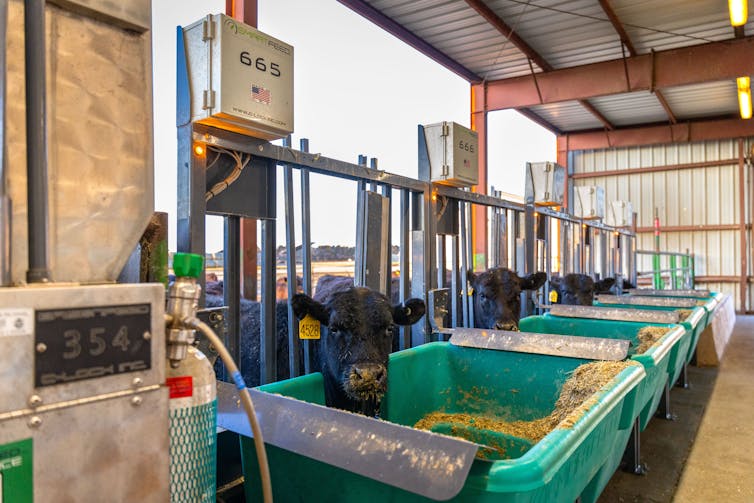
Cattle getting their burps measured at the Colorado State University Fort Collins Agricultural Research, Development and Education Center.
CSU AgNext, CC BY

For the same reason that cows can digest what would otherwise be considered waste, cows are able to eat grass. Grazing is important in dry regions like the mountains and high plains of Colorado. If the grass isn’t removed via grazing, it dries and becomes tinder for wildfire. In addition, many of these mountainous areas are too cold, rocky and steep to grow crops. Grazing can turn land that would otherwise be difficult to farm into food-producing land.

Until now, grazing required physical fences, which are costly to maintain and limit wildlife movement. But new technologies like virtual fencing allow Western Slope ranchers to use their smartphones to set digital boundaries. A collar on the cow beeps and buzzes to tell the cows where to go. Virtual boundaries are easy to change and visible only to the cow; thus, they support more environmentally-friendly grazing practices, protect streams and wildlife habitat and reduce wildfire fuel in dry seasons. While our recent research shows that this technology needs more development, it could be an important tool for beef’s role in a circular economy.

Cows out on a sunlit pasture that are wearing a green device the size of a phone around their necks.
Cattle in a pasture with virtual fence collars on the Central Plains Experimental Range near Nunn, Colo., within the larger Pawnee National Grasslands area.
CSU AgNext, CC BY

Beyond steak: Organ meats, pet treats and leather

In our experience, many U.S. consumers rarely eat cuts beyond steaks and ground beef — often due to a bad first experience with organ meats, like liver, or unfamiliarity with how to cook lesser-known cuts, like heart.

When customers won’t buy these cuts, Colorado’s beef producers who sell online or at farmers markets have to send them to the landfill. That costs the producer money and wastes the water, land and feed used to make these cuts.

Studies show that these cuts are among the most nutrient-dense parts of the animal, providing high levels of iron, B vitamins, choline and and other micronutrients. Making use of these lesser-known cuts can reduce emissions by using more of the animal and keep edible meat out of landfills, where it would otherwise rot, releasing greenhouse gases.

This does not mean anyone has to suffer through a meal of rubbery liver to save the planet. Many cultures globally value organ dishes, and U.S. tastes are expanding to include foods like lengua tacos made from beef tongue. Meanwhile, cooking tools such as sous vide can improve tenderness and juiciness by holding meat at precise temperatures for longer times.

Pets also benefit from eating organ meats, so these cuts are a key ingredient in pet foods and treats.

Consumer fashion choices matter too. About 270 million bovine hides are produced globally each year, and about 70% are turned into leather. Due to insufficient demand, remaining hides are burned or sent to the landfill, both of which release greenhouse gases.

Rather than letting these hides rot, they can be turned into leather, a durable, breathable and biodegradable high-performance material. When consumers choose to buy genuine leather boots, belts and car seats, they’re engaging in the circular economy.

For these reasons, Colorado State University is hosting Future Cowboy on Jan. 25, 2026, at the National Western Stock Show. It’s an event that lets Colorado foodies, fashionistas and cattle producers come together to explore circularity firsthand. The event will feature a leather fashion show, a ranch technology showcase and an opportunity try chef-prepared bison tongue and beef heart.

The Conversation

Jordan Kraft Lambert receives funding from the Small Business Association, Conscience Bay, Colorado Beef, Halter, and American Farm Credit.

Jennifer Martin has received research funding from the USDA, USDA-AMS, JBS, National Cattlemen’s Beef Association, Fats and Protein Research Foundation, Colorado Beef Council, and the National Pork Board She is currently serves as a board member for the Colorado Pork Producers Council and on various livestock boards.

Kim Stackhouse-Lawson has received funding from the Conscience Bay Research Foundation, USDA-NRCS, Cargill, DairyMax., CO-WY NSF Ascend Engine, Gerstner Philanthropies, Elanco Animal Health, Zoetis, Merck Animal Heath and Colorado Department of Agriculture.

Sara Place has received funding from the Grantham Foundation, USDA-NRCS, Cargill, Dairy Management Inc., CO-WY NSF Ascend Engine, Gerstner Philanthropies, Elanco Animal Health, Zoetis, Colorado Department of Agriculture, California Department of Food and Agriculture, and the American Hereford Association.

ref. Colorado ranchers and consumers can team up to make beef supply chains more sustainable – https://theconversation.com/colorado-ranchers-and-consumers-can-team-up-to-make-beef-supply-chains-more-sustainable-272582

International aid groups are dealing with the pain of slashed USAID funding by cutting staff, localizing and coordinating better

Source: The Conversation – USA (2) – By Sarah Stroup, Professor of Political Science, Middlebury College

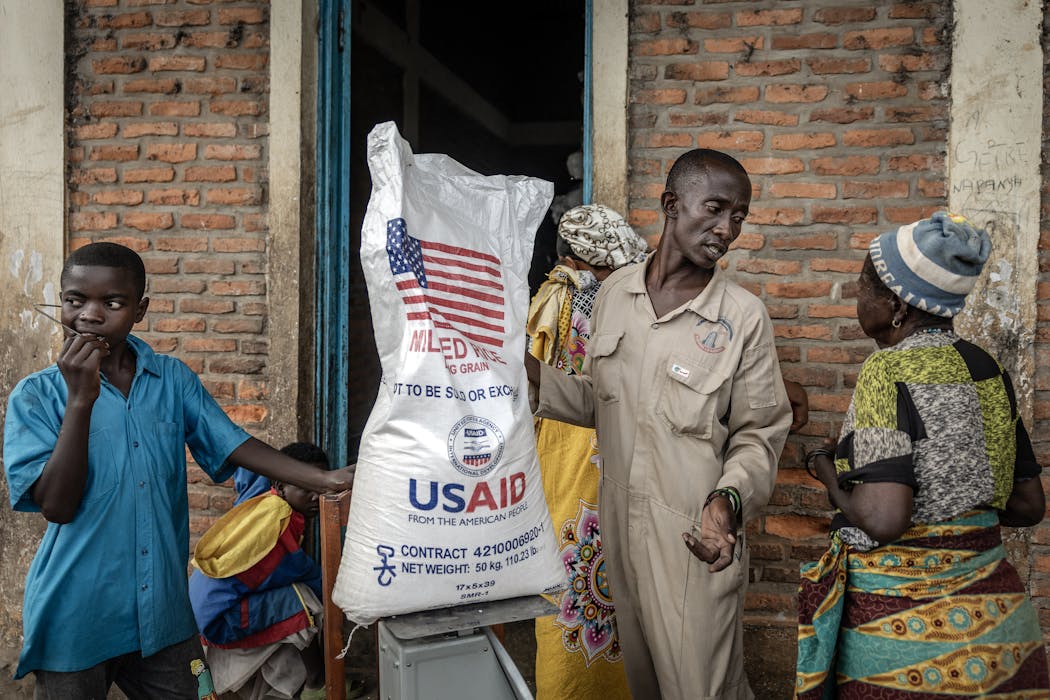
A Burundian official holds up a sack of rice from the final batches delivered by USAID before the agency’s closure. Luis Tato/AFP via Getty Images

Since Jan. 20, 2025, the first day of his second term in office, President Donald Trump has slashed U.S. foreign aid spending. It began with a stop-work order that paused spending on everything from treating tropical diseases in Mali to providing nutrition support in Nepal.

By early February 2025, billionaire Elon Musk announced that the U.S. Agency for International Development, the lead foreign aid agency, had been fed “into the wood chipper.” By July 1, USAID had ceased to exist, 83% of its programs had been canceled, and remaining aid programs were moved into the State Department – where it was unclear how they would be managed. Congress clawed back billions in previously approved aid spending, at Trump’s request, in July.

These developments rattled nongovernmental organizations around the world because about half of USAID’s funding was channeled through nongovernmental organizations prior to this upheaval. According to Tom Hart, who heads a coalition of U.S.-based NGOs, “We’re in a pivot moment, a massive transition, and things aren’t clear.”

Favoring government-to-government spending

According to the official foreignassistance.gov website, the U.S. spent US$32 billion on foreign aid in 2025, less than half of the $68 billion it spent in 2024. These figures include all of USAID’s budget.

The Trump administration is seeking to continue these cuts in its proposed budget for 2026. For example, its proposed $3.8 billion global health budget would mark a 60% decrease from actual 2025 spending.

But the budget the House of Representatives passed in January 2026 would spend $50 billion on international diplomacy and foreign aid, including $9.4 billion for global health and $5.5 billion for humanitarian aid.

The Trump administration has shown a clear preference for distributing U.S. foreign aid to other governments. That means most future aid is likely to be channeled bilaterally rather than contracted out through NGOs or private companies.

We, two scholars of international NGOs, have observed several strategies they are following to keep operating and meeting their missions.

Two former USAID employees explain how they have sought to maintain some of the services the programs they used to run provided.

Struggling to adapt

The first is simply scaling back.

Save the Children US had one-third of its funding frozen, restricting the humanitarian, health and education support it provides to kids in over 100 countries.

Eighty percent of Freedom House’s activities to promote human rights and democracy, which include everything from supporting judicial integrity in Moldova to enhancing media reporting on human rights in Uganda, were terminated.

World Vision, the world’s largest evangelical humanitarian organization, lost 10% of its budget, laid off as many as 3,000 employees and cut programs engaged in HIV/AIDS prevention and child health care and malnutrition in countries like Bangladesh, Kenya and Rwanda.

Search for Common Ground lost $23 million overnight – a 40% cut to its conflict resolution and peacebuilding efforts around the world.

Shifting from shocked to strategic

Once nongovernmental organizations overcame their initial shock, their leadership teams began to respond to USAID’s demise. Three strategies have emerged: reducing operations to focus on activities that support core missions, searching for new sources of reliable funding, and transforming the size and scope of their organizations.

Regardless how they’ve responded, NGOs have had to scale back. As of April 2025, 81 NGOs had closed at least one office. This includes streamlining activities, laying off staff, encouraging their early retirement and cutting pay.

These changes have allowed most NGOs to continue at least minimal operations. But doing more with less may simply not be sustainable for an exhausted workforce over the long term.

Tapping philanthropy and social enterprises

Philanthropy may fill some gaps. However, foundations and individual donors are also facing economic and political uncertainty. Charitable giving to international affairs has been on the rise, but the $35 billion in giving to international causes in 2024 would have to more than double to make up for the reduction in government spending.

Social entrepreneurship combines for-profit models with the mission orientation of nonprofits, and this approach, used by the Bangladesh Rural Advancement Committee and others, is often mentioned as a model for NGOs seeking to provide local services.

But building social enterprises takes time. And there do not seem to be any quick fixes that might restore funding for international NGOs to pre-2025 levels.

PBS NewsHour and the Pulitzer Center reported in 2025 on the impacts of USAID cuts in Africa.

Envisioning new models

The Trump administration has asserted that NGOs had become too dependent on government aid. Secretary of State Marco Rubio, whom Trump named USAID’s acting administrator until the agency was shuttered, has derided this relationship as the “NGO industrial complex.”

While scholars tend to be less dismissive, they have long highlighted that depending on powerful donors, including governments, can limit innovation and distract organizations from their missions.

USAID’s dissolution has expedited experts’ re-envisioning of the NGO model – the idea of private charitable organizations based in rich nations providing services in poor countries.

One push has been to move decision-making and resources to residents of the communities where NGOs are delivering goods and services, through a process development experts call “localization.”

For example, U.K.-based Christian Aid announced in April 2025 that it would close its own offices and instead work with established partner organizations in the countries where it works.

It has halved its staff in a year when revenues dropped by 14% due to the Trump administration’s slashing of its contributions to the U.N. World Food Program.

Losing so much funding has also made cooperation more necessary.

As a book that one of us (Hadden) wrote with University of Pennsylvania professor Sarah Bush shows, the NGO field had become more crowded and competitive since the mid-2010s.

Janti Soeripto, Save the Children’s chief executive officer, has said that in 2025 her organization began cooperating more extensively with MercyCorps and CARE to increase their collective “surge capacity,” or ability to respond to disasters in a quick, effective and efficient manner.

Some NGOs have also reportedly begun discussions about mergers to streamline costs and maintain valuable programs. Although mergers can be challenging when organizations have different values or workplace cultures, we believe that there will be fewer international NGOs in the years ahead.

Moving toward an uncertain future

A leaner, more financially diversified, more localized and better coordinated NGO sector could have positive consequences in the long run.

But we’re certain that the transition will be rocky, both for the people who benefit from the work of NGOs and for the experts and staff members who have built their careers around global poverty alleviation and improving public health in low-income countries.

Funding cuts shuttered many long-standing development and humanitarian programs, with devastating consequences. According to expert estimates, the dismantling of USAID could result in more than 14 million deaths by 2030, including over 4 million children under 5 years old in countries like Uganda, the Democratic Republic of Congo and Colombia.

The Trump administration’s new foreign aid plan cuts out NGOs to fund local governments, but those partner governments may not be able or willing to spend aid money better than their NGO counterparts.

It’s now up to NGO leaders to chart a new course.

According to Essi Lindstedt, a climate and development adviser, there is “a lot of agreement that the ‘old aid’ wasn’t right,” but we have “not yet seen a transition into something better.”

The Conversation

During her 2025-26 sabbatical year, Sarah Stroup has received funding from the Marion and Jasper Whiting Foundation. She is currently academic-in-residence at CMI-Martti Ahtisaari Foundation, a global peace mediation group.

Jennifer Hadden received funding from the National Science Foundation under grant No. 1758755.

ref. International aid groups are dealing with the pain of slashed USAID funding by cutting staff, localizing and coordinating better – https://theconversation.com/international-aid-groups-are-dealing-with-the-pain-of-slashed-usaid-funding-by-cutting-staff-localizing-and-coordinating-better-273184

New variant of the flu virus is driving surge of cases across the US and Canada

Source: The Conversation – USA (3) – By Zachary W. Binder, Associate Professor of Pediatrics, UMass Chan Medical School

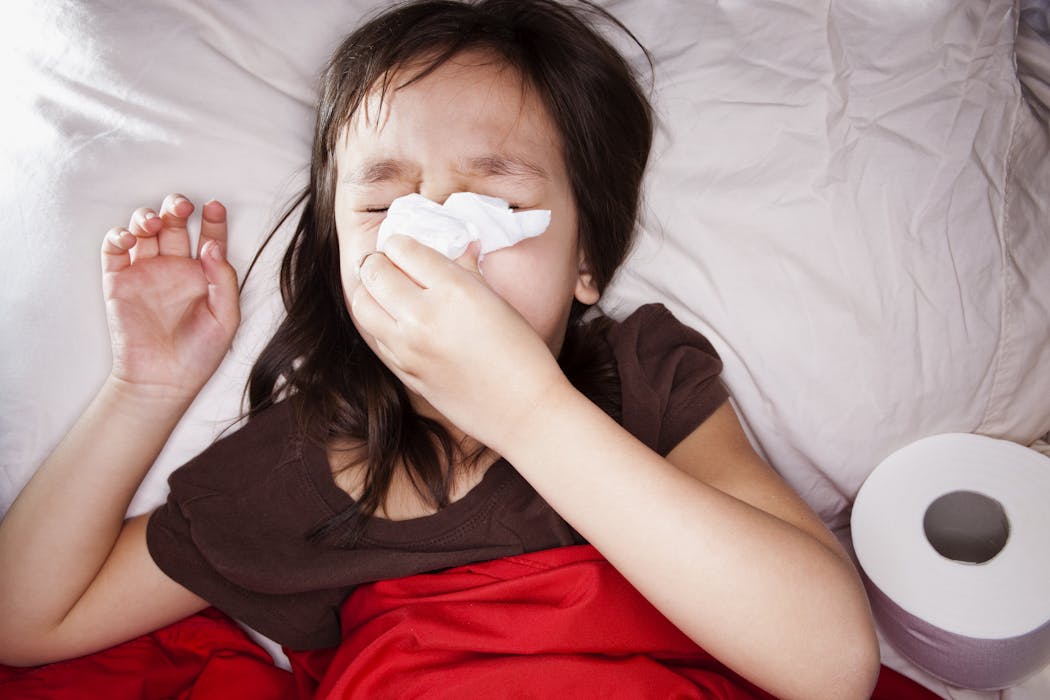
The 2025-2026 flu season seems to be affecting children more severely than usual. Renphoto/iStock via Getty Images

After a sharp uptick in flu cases in mid-December 2025, flu activity across the U.S. and Canada remains high.

Although cases are trending downward in Canada as of Jan. 9, 2026, the season has yet to peak in the U.S., according to data from the Centers for Disease Control and Prevention.

As an emergency room pediatrician in central Massachusetts, I’m seeing a tremendous amount of flu over the past few weeks. I’m hearing from colleagues in emergency rooms across the country that they are experiencing a similar explosion of flu cases.

In early January, New York state recorded the highest number of flu cases in a single week on record. Several other states, such as Colorado, are also experiencing record flu levels, and 44 out of 55 states and other jurisdictions are reporting high or very high flu activity, according to the CDC.

The spike in flu cases – widely referred to in media reports as a “superflu” – is largely driven by a newly identified subtype of the virus called subclade K.

What’s different about the current flu season?

Flu seasons vary every year. In 2024-2025, influenza cases rose fast beginning in October 2024. In contrast, the 2025-2026 season started out slow, but then it’s as if a switch was flipped in early to mid-December.

In the last week of December, throughout the United States, over 8% of doctors visits were for flu symptoms – the highest weekly rate since 2005. Emergency department visit rates for flu are spiking throughout the country, most notably in the South and Northeast, where rates exceeded the national average.

Over this same time period, more than 26% of flu tests taken throughout Canada were positive for influenza.

As of Jan. 15, the CDC estimates that flu has caused 15 million illnesses, 180,000 hospitalizations and 7,400 deaths this season. One small saving grace is that the flu this season hasn’t come on concurrently with either a respiratory syncytial virus – RSV – or COVID-19 surge, as it often does.

Public health experts expect flu rates to remain high for several more weeks.

Traditionally, the flu is most dangerous for people over 65 or those with underlying health conditions, with young children experiencing more mild symptoms. But this year’s strain is hitting kids harder. They are arriving in the emergency room after having had a high fever of more than 104 degrees for 5-7 days, or with flu complications including febrile seizures, croup or severe dehydration.

An especially high number of children is currently being hospitalized for flu, the CDC reports. As of Jan. 9, the U.S. had seen 17 deaths of children due to flu so far during the 2025-2026 season.

In 2024-2025, the deadliest year on record for kids, flu caused 289 pediatric deaths.

What is subclade K?

Every year, the subvariants of the influenza virus that are the most pervasive change slightly.

This year, the most prevalent variant is subclade K, which is a subtype of influenza H3N2. Subclade K was first detected in Australia in July 2025. It’s driving 91.5% of infections in the U.S. so far this season and is also responsible for the peak in Canada.

Subclade K has proved itself to be a particularly infectious variant, based on how quickly the volume of flu cases has surged. Its dominance may be driven by mutations that make it different from previous strains. Some scientists speculate that H3 influenza viruses have circulated at relatively low levels the past few years, which may have led to lower levels of immunity in the general population.

In my emergency department, we’re also seeing particularly high spiking fevers of 104 or 105 degrees, compared with more usual lower grade fevers. That in itself is not dangerous, but for young children it does result in more instances of febrile seizures and dehydration.

A child's intubated arm
Children are currently being hospitalized for flu at an especially high rate.
picture/iStock via Getty Images

How late is too late to get vaccinated?

Generally speaking, I recommend people get the flu shot, in line with guidelines by the American Academy of Pediatrics. Getting vaccinated for the flu has proved to decrease the risk of serious illness, hospitalization and death. People who get the vaccine are more likely to have milder cases.

For people still considering getting the flu shot for this season, I strongly recommend doing so sooner rather than later. Waiting longer would limit the window in which the vaccine is most effective. That’s because it takes a couple of weeks for the flu shot to impart its maximal benefits. Vaccination in mid-January would mean peak protection in late January and early February.

Flu season generally peaks in December through February in North America.

One thing to note, however, is that the strains that were chosen to be included in the 2025-2026 flu vaccine weren’t a great match for the predominantly circulating subclave K. Still, evidence suggests that this year’s vaccine does provide protection.

Should you take an at-home flu test?

In my opinion, in most cases home testing for flu is not especially useful.

Many people seek out flu tests to determine whether they should get antiviral therapies like Tamiflu. But while those therapies might decrease your symptoms slightly, they aren’t particularly effective, and they come with their own risks, such as upset stomach, vomiting and diarrhea. Most of my colleagues in the emergency department, myself included, rarely recommend them.

Whether you have the flu or a flu-like illness such as RSV, COVID-19 or rhinovirus, the recommendations for treating and managing the illness at home as well as the point at which I’d suggest someone seek care are no different.

Because of that, being able to put a label on the disease isn’t all that important. With the high levels of flu circulating now, if you’re feeling unwell and have signs of fever and upper respiratory symptoms, you can almost assume it’s the flu.

One exception is for people with underlying health conditions such as heart disease or severe asthma. For them, as for people who are hospitalized for flu, antiviral therapy may be recommended and thus testing for the flu can be helpful.

Basic precautions can protect you and your community

The same precautions apply for all flu-like illnesses, but it’s worth being particularly mindful of just how contagious subclade K seems to be.

It’s important to protect yourself and your community. Washing your hands frequently can minimize exposure to flu-containing droplets. Even more importantly, people who feel unwell – particularly if they have a fever – should stay home from work, school or activities, if possible, until they are fever-free for 24 hours.

The Conversation

Zachary W. Binder does not work for, consult, own shares in or receive funding from any company or organization that would benefit from this article, and has disclosed no relevant affiliations beyond their academic appointment.

ref. New variant of the flu virus is driving surge of cases across the US and Canada – https://theconversation.com/new-variant-of-the-flu-virus-is-driving-surge-of-cases-across-the-us-and-canada-273556

Thecla, the beast fighter: The saint who faced down lions and killer seals is one of many ‘leading ladies’ in early Christian texts

Source: The Conversation – USA (3) – By Christy Cobb, Associate Professor of Christianity, University of Denver

A relic said to be part of Saint Thecla’s arm has been kept in the Cathedral of Tarragona, Spain for centuries. Gaspar Ros/Wikimedia Commons, CC BY-SA

The Bible is filled with brave and courageous women.

Deborah, the judge who fought a war to protect her people. The widow Ruth, who wittingly convinces a man to marry her in order to continue the lineage of her mother-in-law, Naomi. Esther, who boldly stands up to an evil politician, Haman, in order to save the Jewish people from death. Judith, who beheads an opposing general in order to save her community.

The stories of these confident women are found in the Hebrew Bible, the sacred text of Judaism, which also forms half of the Christian Bible. But when it comes to the New Testament, where are the “leading ladies” of Christianity?

A small statue shows a woman wearing a crown as she puts one arm around a pillar and the other around a lion.
A reliquary of St. Thecla dating to the 15th or 16th century shows her with the lioness who defended her.
Daderot/Wikimedia Commons

While a few important women are mentioned – such as Mary, the mother of Jesus; and Mary Magdalene, who discovers his empty tomb – no women are the stars of their own books in this half of the Bible. Instead, one must look to the Christian apocrypha: texts that are not found in the New Testament but were written by early Christians. One example of a prominent woman in these writings is Thecla, venerated for her persistence, courage and influence.

Thecla makes frequent appearances in my research and teaching, which focus on gender and early Christian literature. Her story is memorable not only for its dramatic miracles but Thecla’s persistence as a woman who felt called to preach, teach and baptize.

Facing down fires and seals

Thecla’s story is told in a second-century text titled the Acts of Thecla, or the Acts of Paul and Thecla. The story begins when the apostle Paul, who spread Jesus’ gospel more than any other follower in early Christianity, visits the city of Iconium, in modern-day Turkey. Paul’s teachings there highlight celibacy, and he blesses the bodies of virgins, which he says are pleasing to God.

Thecla listens intently while sitting in her home by the window. She is so drawn to Paul’s voice that she refuses to move, eat or drink for three days and nights. Even though she is engaged to be married, she longs to be pure like the virgins Paul celebrates. Thecla’s mother and fiancé are troubled by this, and they convince the leaders of the city to arrest Paul.

An ornate carving depicts a woman, stripped to the waist, who holds out her arms as she seems to stand atop flames.
The altarpiece of the Cathedral of Tarragona shows Thecla miraculously surviving the flames.
Amadalvarez/Wikimedia Commons, CC BY

Thecla gains entry to the prison by trading her bracelets and sits with Paul and kisses his chains. During his trial, Thecla is questioned and refuses to answer. Her own mother calls for her to be burned because of her refusal to marry. Thecla is stripped naked and placed on a pyre, but no flames touch her. A miraculous storm erupts, the fire is extinguished, and Thecla survives.

Afterward, she cuts off her hair and dresses as a man in order to follow Paul in disguise. Thecla also asks that he baptize her. Paul asks instead that she have patience and takes her to the city of Antioch.

Thecla’s beauty attracts unwanted attention there, and a man named Alexander immediately falls in love with her. Rather than come to Thecla’s aid, Paul denies knowing her, and Alexander attempts to rape her. Thecla humiliates him by ripping his robe and tearing the wreath off his head. Alexander brings her to the governor of Antioch, who condemns her to face the beasts in the arena.

A circular stone with carvings of a bound woman flanked by two lions.
A relief of Thecla in the arena with wild beasts, now in the Nelson-Atkins Museum of Art.
R. Huggins/IslandsEnd via Wikimedia Commons, CC BY

The scene is terrifying and vivid. Thecla is stripped naked and thrown into the arena, where lions and bears are waiting to attack her. But a lioness walks over to Thecla, lies at her feet and protects her from the other animals.

In the midst of this danger, Thecla stands, reaches out her hands and prays to God. When she opens her eyes, she sees a pool of water filled with killer seals, yet throws herself in to baptize herself. Immediately after, lightning strikes and the seals are killed.

The governor finally releases Thecla and provides her with clothes. She goes immediately to Paul, who finally blesses her and commissions her to teach the gospel.

Women preaching

Many Christians in the ancient world viewed Thecla as an inspiration and an example for leadership. Yet not everyone approved of women teaching and preaching, including a second-century church father named Tertullian. He discouraged Christians from reading the Acts of Thecla and claimed that it was a forgery, since he did not think Paul – who wrote that women should be silent in church – would affirm a woman’s right to teach and baptize.

Tertullian’s warnings reflect controversies surrounding women’s leadership and imply that some women claimed Thecla’s example as justification for preaching.

Later Christians remembered Thecla through artwork as well as texts. For example, a fresco of Thecla – along with her mother and Paul – is depicted in a fifth- or sixth-century grotto just outside of Ephesus, an important city both in the Roman Empire and in early Christianity. The painter imagined Thecla looking out her window, just as the beginning of the Acts of Thecla describes.

In Egypt, a round, carved plate was discovered depicting Thecla with the lions at her feet. This fifth-century artistic depiction demonstrates how far the story of Thecla’s perseverance in the arena with the beasts had spread.

People in white pants and teal shirts form a human pyramid in front of a cathedral with a large, circular stained-glass window.
People form a ‘castell’ during celebrations for St. Thecla’s feast day in 2008.
Ferran Llorens/Flickr via Wikimedia Commons, CC BY-SA

Today, Thecla is the patron saint of the city of Tarragona, Spain, where the cathedral is named after her and images of Thecla decorate the altarpiece. Each year on Sept. 23, the feast day of St. Thecla, this Spanish city celebrates her story through parades, music, dancing and human towers called “castells.” A relic of her arm is processed through the city and displayed in the cathedral so that devotees can view it and pray for blessings.

Just as Thecla listened through her open window to Paul’s message, today Thecla’s story echoes to those who desire to hear the stories of courageous early Christian women.

The Conversation

Christy Cobb does not work for, consult, own shares in or receive funding from any company or organization that would benefit from this article, and has disclosed no relevant affiliations beyond their academic appointment.

ref. Thecla, the beast fighter: The saint who faced down lions and killer seals is one of many ‘leading ladies’ in early Christian texts – https://theconversation.com/thecla-the-beast-fighter-the-saint-who-faced-down-lions-and-killer-seals-is-one-of-many-leading-ladies-in-early-christian-texts-270346

Being cold doesn’t make you sick, so why are illnesses more common in winter?

Source: The Conversation – UK – By Manal Mohammed, Senior Lecturer, Medical Microbiology, University of Westminster

New Africa/Shutterstock

Many people across cultures grow up hearing that cold weather makes you sick. Going outside without a coat, breathing in cold air, sleeping in a chilly room, getting caught in cold rain or snow, or simply feeling chilled are often blamed for causing colds or flu.

This belief feels true to many people because illness often follows cold exposure. However, modern research shows that the connection between cold weather and illness is more nuanced than the idea that cold directly causes disease.

Cold temperatures themselves do not cause infections. Instead, they influence a combination of biological, environmental and social factors that make people more vulnerable to respiratory illnesses, especially during the winter months.

Colds and flu are caused by viruses, not by cold air. Viruses such as rhinoviruses, which cause the common cold, and influenza viruses spread from person to person through respiratory droplets or physical contact, regardless of the temperature outside. That said, rates of respiratory infections consistently increase during colder seasons in many parts of the world – a pattern that has been observed globally.


Read more:
Do I have to wear a jacket when it’s cold outside?


This seasonal pattern is partly due to the way that cold temperatures and low humidity affect viruses in the environment. Research shows that many respiratory viruses, including influenza viruses and coronaviruses, survive longer and remain infectious for extended periods in cold, dry conditions.

Dry air also causes tiny droplets released when people breathe, talk, cough or sneeze to evaporate quickly. This creates smaller particles that stay suspended in the air longer, increasing the chance that others will inhale them. As a result, cold, dry air helps viruses persist in the environment and improves their chances of reaching another person’s respiratory system.

Cold air also affects how the body defends itself against infection. Breathing in cold air lowers the temperature inside the nose and airways, which can trigger vasoconstriction. Vasoconstriction means the narrowing of blood vessels, which reduces blood flow to tissues.

In the lining of the nose and airways, this reduced blood flow can weaken local immune responses that normally help detect and eliminate viruses before they cause infection.

Cold exposure and cold-related stress can also interfere with the normal function of the airways, particularly in people with sensitive respiratory systems. Together, these effects can suppress the body’s first lines of defence in the nose and throat. Cold air does not create viruses, but it can make it easier for viruses to gain a foothold once exposure occurs.

Crowds and close contact

Seasonal changes in human behaviour and indoor environments also play a major role. Cold weather encourages people to spend more time indoors, often in close contact with others. Crowded spaces with poor ventilation allow virus-containing droplets to build up in the air, making transmission between people more likely.

During winter, reduced sunlight exposure leads to lower production of vitamin D in the skin. Vitamin D is involved in regulating immune function, and low levels are associated with weaker immune responses. Indoor heating, while essential for comfort, dries out the air.

Dry air can dry the lining of the nose and throat, reducing the effectiveness of mucus. Mucus normally traps viruses and helps move them out of the airways, a process known as mucociliary clearance. When this system is impaired, viruses have an easier time infecting cells.

Cold weather can be especially challenging for people with existing respiratory conditions such as asthma or allergic rhinitis, which is commonly known as hay fever. Epidemiological studies (research that examines patterns of disease in populations) show that cold conditions can worsen symptoms and increase functional impairment in these people. This can intensify the effects of respiratory infections when they occur.

Taken together, the evidence paints a clear picture of what cold weather does and does not do. Cold temperatures are linked with higher rates of respiratory infections, including influenza and coronaviruses, particularly in temperate regions during winter. Laboratory and environmental studies show that viruses survive longer and spread more easily in cold, dry air.

Cold exposure can also weaken immune defences in the nose and airways, including reduced mucus movement and decreased antiviral activity in nasal tissues. Behavioural and environmental factors typical of winter, such as indoor crowding, poor ventilation, and reduced sunlight leading to lower vitamin D levels, further increase the risk of viral spread.


Read more:
Vitamin D deficiency is widespread – but overusing supplements can also be dangerous


What the evidence does not support is the idea that simply being cold, such as stepping outside without a coat, directly causes a cold or flu. Instead, cold weather acts as a risk amplifier. It creates conditions that help viruses survive, spread, and overcome the body’s defences.

Understanding this distinction has practical value. Improving indoor ventilation and maintaining adequate humidity during winter can reduce transmission risk. Supporting immune health, including maintaining adequate vitamin D levels, may also help.

Public health messages are most effective when they focus on how viruses spread through contact and respiratory droplets, rather than reinforcing the myth that cold exposure alone causes illness.

In short, cold weather and illness are linked, but not in the way many people assume. Cold temperatures do not cause infections by themselves. Instead, they shape the biological, environmental and social conditions that allow respiratory viruses to thrive.

Recognising this complexity helps explain why colds and flu peak in winter and supports more effective strategies for prevention, while dispelling a simple but misleading belief about cold weather and sickness.

The Conversation

Manal Mohammed does not work for, consult, own shares in or receive funding from any company or organisation that would benefit from this article, and has disclosed no relevant affiliations beyond their academic appointment.

ref. Being cold doesn’t make you sick, so why are illnesses more common in winter? – https://theconversation.com/being-cold-doesnt-make-you-sick-so-why-are-illnesses-more-common-in-winter-272935

Have US tariffs failed to bite? China’s trade surplus hits a record US$1.2 trillion

Source: The Conversation – UK – By Jiao Wang, Assistant Professor of Economics, University of Sussex Business School, University of Sussex

Patrick Foto/Shutterstock

The numbers are in, and they paint a picture that defies the conventional wisdom of Washington’s trade hawks. In 2025, China’s trade surplus surged to a record high of US$1.2 trillion (£900 billion). In December alone, the surplus reached US$114 billion, driven by a higher-than-expected 6.6% growth in exports and 5.7% growth in imports.

The trade surplus refers to the amount by which Chinese exports outnumber its imports. And far from being strangled by external pressure – in particular from the US under Donald Trump – China’s export engine is running hotter than ever.

This creates a paradox for the ordinary observer. For several years, the narrative has been that the US is locked in a divisive trade war with China. This has brought sweeping tariffs intended to decouple the two economies and reduce American reliance on Chinese manufacturing.

Wrangling following Trump’s liberation day tariff announcement on April 2 2025 was apparently settled in November. This left the average tariff imposed on Chinese goods being imported to the US at 47%, down from 145%.

So if the world’s largest economy is shutting the door on Chinese goods, how can Beijing be posting its best export numbers in history? The answer suggests that the US has not won the trade war, and that China’s economy has proven far more adaptable than anticipated.

What happened in 2025 reveals a massive pivot in global trade flows. The tariffs did bite where they were intended: China’s direct exports to the US plummeted by 20% last year, and imports into China from the US fell by 14.6%. But while the front door to the American market was closing, China found other routes.

In 2025, exports to Africa continued to grow strongly by 26%, shipments to countries in the Association of Southeast Asian Nations (Asean) grew by 13%, and trade with Latin America climbed by 7%. Even exports to the EU managed an 8% rise, despite growing friction over European concerns about unfair competition from Chinese state-supported industries.

So, the 20% loss in the US market was mathematically overwhelmed by double-digit gains in the developing regions and emerging markets.

The ‘great reallocation’

Is this something completely new? No – China has been balancing its trade network continuously over the past decade, utilising its belt and road initiative. This is its strategy to boost trade through investment in new land and sea routes, which covers the historic Silk Road trade route.

In this way, China is seeking to reduce its dependence on western consumers. But there is a deeper layer to this success that explains why the trade war hasn’t reduced China’s global footprint.

Research has documented something called a “great reallocation” in supply chains, observed both in the first trade war – which began in 2018 when the US and China hit each other with tariffs in a struggle for trade dominance – and the current one. While direct US-China trade has decreased since 2018, the US has significantly increased imports from countries such as Vietnam and Mexico. And these “third-party countries” have simultaneously increased their imports of intermediate parts from China.

A Chinese container ship arrives in the Mexican port of Manzanillo
A Chinese container ship arrives in the Mexican port of Manzanillo.
Fernando Macias Romo/Shutterstock

In 2025, this trend accelerated. Chinese firms are not just exporting final goods – they are shipping components to factories in south-east Asia and Mexico, which are then being assembled and shipped to the US at very low or zero tariffs, under respective bilateral trade agreements with the US.

This means the US is still effectively buying Chinese goods. It’s just paying a middleman to dodge the tariffs.

The implications of this ballooning surplus are different from previous eras. When China joined the World Trade Organization in 2001, the world worried about it “dumping” cheap textiles and toys.

Today, the friction is over high-value industries. China’s 2025 export boom was driven by cars plus mechanical and electrical products – specifically, the “new three”: electric vehicles, lithium batteries and solar panels.

China is no longer just the world’s factory floor. It is becoming a hi-tech supplier and often a competitor to advanced economies’ own suppliers – which is where the ongoing tension arises from.

However, this export reliance also signals a domestic weakness. With China’s housing market still subdued and domestic investment declining, Chinese firms are eager to find demands elsewhere to keep their factories humming.

In 2026, this momentum shows little sign of slowing. The Global PMI (purchasing managers’ index, an indicator that assesses global market conditions) showed five consecutive months of expansion in 2025. This suggests the global economy is picking up some speed, which is good news for Chinese exporters.

However, in the long run, China running a trade surplus with more than 170 countries creates a structural imbalance that may become politically unsustainable. The challenge in Beijing, Washington and beyond is to find an equilibrium before this “winner-takes-all” dynamic forces even more drastic protectionist responses.

The Conversation

Jiao Wang does not work for, consult, own shares in or receive funding from any company or organisation that would benefit from this article, and has disclosed no relevant affiliations beyond their academic appointment.

ref. Have US tariffs failed to bite? China’s trade surplus hits a record US$1.2 trillion – https://theconversation.com/have-us-tariffs-failed-to-bite-chinas-trade-surplus-hits-a-record-us-1-2-trillion-273658