Every product we touch has a footprint. A phone, a fridge, a hospital syringe. Each begins and ends in the same place: the planet’s resources.
The EU’s recent ecodesign for sustainable products regulation aims to break the cycle of take, make, waste by forcing manufacturers to think circularly. Products will need to last longer, be easier to repair and feed back into the economy instead of the landfill.
It represents a major shift for most industries. But for healthcare, where safety and sterility come first, it could be revolutionary.
In the UK alone, the NHS generates approximately 156,000 tonnes of waste each year from hospitals and specialist clinics, equivalent to more than 5,700 40ft containers. Up to 90% of such waste comes from single-use disposable products or components.
Although medical products are included under the ecodesign regulation, the rules will only apply where patient health and safety are not compromised. Products that pose a risk to patients, such as those where infection, contamination, or reduced effectiveness could occur, may be exempt.
But are considerations for human health and environmental protection really at odds with one another? Or can we expand the principle of “do no harm” to include the planet itself?
In the US, climate commitments are being rolled back. The Trump administration’s withdrawal from the Paris climate agreement has slowed progress toward a more sustainable medtech industry. Implementation of new emissions standards has also been delayed, including rules to reduce ethylene oxide, a cancer-causing chemical used to sterilise surgical kits and medical devices.
These setbacks stall innovation in cleaner, safer alternatives such as CO₂ and UV light sterilisation. This matters because reusing devices, when safely sterilised, could dramatically reduce waste and resource use.
Fortunately, many sustainability gains in medtech are already within reach. By examining the full lifecycle of devices, from production to disposal, it is possible to identify where the biggest improvements can be made.
Green public procurement policies can immediately encourage healthcare providers to make more sustainable purchasing choices. Smarter research and development decisions can improve repairability, reduce material use and waste, and simplify components for easier assembly and disassembly.
Standardisation also enables interchangeable parts across devices, as seen with consumer products’ universal power supplies. This approach extends product lifespans and allows parts to be recovered and reprocessed for use in future devices, provided they meet the necessary medical standards.
Using consistent materials across devices also ensures they are directed into the correct waste, recycling, or reuse streams rather than ending up in landfill. Even sterile packaging can be reimagined to minimise volume, avoid mixed materials, and favour fully recyclable mono-materials.
Some of the world’s leading medtech companies are already proving what is possible. Medtronic is aiming for net-zero emissions by 2030 through designing smaller, longer-lasting products, investing in new materials and enforcing responsible sourcing across its supply chain.
Johnson and Johnson is cutting waste by recycling and using closed-loop systems to recapture valuable materials from single-use devices. The company also measures and publicly shares the environmental footprint of its products.
Abbott, a global healthcare and medical devices company, has committed to a 90% reduction in waste across its product lifecycles, with a particular focus on minimising the environmental impact of packaging.
The path to a sustainable medtech industry is not without challenges, but it is achievable. As regulations advance, companies innovate and healthcare professionals push for change, the sector has an opportunity to redefine what innovation really means. It is no longer just about safer, more efficient care – it is about care that protects the planet too.
With the medtech industry valued at US$587 billion in the US (£459 billion) alone, and 8% of that investment directed toward research and development, the potential for transformation is enormous. Imagine the progress if even a fraction of that funding were channelled into responsible innovation – empowering every stakeholder through education, engagement and sustainable action.
By aligning environmental responsibility with patient safety, and investing in circular design, smarter procurement, connected infrastructures and genuine collaboration, medtech can show that health and sustainability are not competing priorities. They are, in fact, inseparable.
Muireann McMahon does not work for, consult, own shares in or receive funding from any company or organisation that would benefit from this article, and has disclosed no relevant affiliations beyond their academic appointment.
This roundup of The Conversation’s climate coverage was first published in our award-winning weekly climate action newsletter, Imagine.
Have you recycled today? Opted to walk or get public transport instead of taking the car? We all make dozens of small choices every day, each with environmental pros and cons. Very often, these choices come down to how and where we as consumers spend our money. But one thing we probably don’t think about much is what our cash is doing when we’re not spending it.
Everyday bank deposits by “ordinary” people are a quiet powerhouse of potential for environmental change. In the UK alone, billions of pounds are deposited every month. Most of this cash is swirling around in the global economy, supporting industry and innovation, as well as individuals. The uncomfortable truth, though, is that this investment might be pumped into environmentally or socially damaging sectors that we wouldn’t support in our day-to-day lives.
Ever wondered how to spend or invest your money in ways that actually benefit people and planet? Or are you curious about the connection between insurance and the climate crisis?
Green Your Money is a new series from the business and environment teams at The Conversation exploring how to make money really matter. Practical and accessible insights from financial experts in the know.
When it comes to shifts towards greener living, consumers wield huge amounts of power. After all, they can determine which companies – and cultures – thrive. But beyond consumer spaces like the supermarket or the car showroom, it’s banks that decide how and where much of the world’s money enters the economy and which sectors benefit.
Styliani Panetsidou and Angelos Synapis are finance experts at the Centre for Resilient Business and Society at Coventry University. They say that in this age of climate crisis, decisions on where banks lend our money are immensely powerful. “To put it simply,” they say, “lending for housing can expand the property market, financing renewable energy can support low-carbon infrastructure, while funding coal mines or oil and gas extraction may risk locking in future carbon emissions over decades.”
Banks want returns, though. Historically, oil and gas have provided these. But in this sector too, the power of the consumer is becoming more evident and transparency around investments is slowly improving. Panetsidou and Synapis add: “With this in mind, perhaps it is time to consider whether the bank we select could subtly influence environmental outcomes.”
But still, investments in low-carbon energy companies fall short of those pumped into oil, gas and coal. There are banks out there that exclude fossil fuels from their loans and investments, but they’re not the default. Part of the problem could be that the consumer-bank relationship is often settled quite early in life. It’s even been said that we’re more likely to break up with our partner than with our bank.
This psychological inertia around banking has a strong grip, despite the potential for a simple switch to cut our environmental impact. Marcel Lukas, banking and finance expert at the University of St Andrews, says that despite systems that make changing banks easy and secure, it’s still not a transition that most consumers are likely to make. “The process works, but behaviour lags.”
He suggests three psychological hacks to rewire our preference for stability – and these behavioural changes can extend beyond banking. Lukas says they can “also shape decisions about savings products, energy tariffs and mobile contracts – choices that all come with environmental consequences”.
The intersection between climate and finance is rarely so evident as in the world of insurance. Extreme weather events aren’t just devastating for households and property owners, surging levels of weather-related claims are pushing the insurance industry to breaking point.
Repeated claims can leave homeowners sitting in a property that’s uninsurable and unmortgageable. The knock-on from this is falling house values, and a looming threat to the wider financial system worldwide.
Meilan Yan, financial economist, and water engineer Qiuhua Liang, of Loughborough University, say the clear warning signs aren’t being heeded. “Unless lenders adopt climate-adjusted risk models that integrate physical hazards such as flooding, storms and heatwaves,” they explain, “they risk underestimating the true exposure of their mortgage portfolios.”
The consequences go beyond the individual tragedy of a flood-ravaged home, while at the same time extreme weather events are no longer exceptional: “Traditional financial crises follow cycles of growth, downturn and recovery, but climate risk moves in only one direction.”
Don’t have time to read about climate change as much as you’d like?
In the wake of the 2007-08 global financial crisis, green finance has been increasingly celebrated as a way to tackle environmental challenges. Banks, investment funds and insurers have rolled out a growing range of green products, from green bonds to sustainability-linked loans. This momentum is encouraged by international environmental efforts such as the Paris climate agreement.
By aligning financial flows with sustainability goals, the world can supposedly “green finance” its way into a sustainable future.
But beneath this green spectacle lies a more complicated reality. Green finance refers to a wide-ranging mix of private and public funds, products and practices. For example, there’s no consensus regarding what makes a bond green.
There is also little clarity around what current environmental, social, governance (ESG) frameworks – which encourage businesses and authorities to disclose and monitor their environmental and social performance – are truly achieving.
Ever wondered how to spend or invest your money in ways that actually benefit people and planet? Or are you curious about the connection between insurance and the climate crisis?
Green Your Money is a new series from the business and environment teams at The Conversation exploring how to make money really matter. Practical and accessible insights from financial experts in the know.
In 2015, the former Bank of England governor and current Canadian prime minister, Mark Carney, insisted that finance can and must urgently account for climate risks. Meanwhile, Stuart Kirk, former global head of responsible investments at high street bank HSBC, argued that these risks were overstated and too far in the future to be material.
Environmental issues have become a concern for financiers, but not necessarily out of commitment to improving planetary health – rather due to reporting costs, transition risks and reputational pressure. High-profile greenwashing scandals, such as “green bonds” allegedly linked to deforestation in Sumatra, have further eroded trust. This raises questions about whether green finance is more a branding exercise than transformation.
ESG investing explained.
In the face of these ambiguities, the environmental sciences are involved in the expansion of green finance. As social scientists we have been following these developments, wondering whether they may help us pin down robust ways to develop green finance.
Some companies are now using science-based targets (emission reduction goals aligned with climate science), net zero transitions pathways or roadmaps, and high-integrity carbon credits (verified purchases of direct air capture credits to offset greenhouse gas emissions).
Most of these claim to rely on rigorous calculations. The language of science grants objectivity and legitimacy. At its most basic level, this “sciencewashing” uses the vocabulary and authority of science to claim sustainability outcomes.
Green finance also provides many employment opportunities for environmental scientists who can work as consultants, auditors and certifiers, to assess the quality of green claims. Many startups have emerged, offering a range of high-tech services to provide environmental data to companies. That includes monitoring deforestation through remote sensing or using sounds to analyse wildlife activity.
Green finance-related industries are flourishing and more and more environmental graduates are being recruited to quantify emissions, build risk metrics, monitor changes in biodiversity and verify credits.
Sciencewashing
Drawing on five years of research and combining data emerging from participation in green finance conferences and seminars, interviews and document analysis, our study warns against different forms of sciencewashing.
Financial centres, like London, thrive on green finance but beyond them the benefits are unclear. Taljat David/Shutterstock
Mounting evidence suggests a gap between the suggested possibilities and the actual outcomes of green finance. Many green finance products appear to serve financial markets and the wealthiest investors more than nature or vulnerable communities.
Even more concerning are the unintended consequences. Far from levelling the playing field, green finance can exacerbate inequality. For example, communities have been displaced to make room for renewable energy projects or offset schemes.
This creates what are known as green sacrifice zones: areas where environmental harm or social costs are tolerated in the name of advancing “green” goals.
Poorer countries often face higher borrowing costs in the name of climate risk, while wealthy economies continue to access cheaper capital. Insurance premiums are also rising in climate-vulnerable regions, pricing out those least able to afford them. So green finance can make the situation for the most vulnerable populations worse.
In its current form, green finance will most likely sustain business as usual, leaving the causes of environmental crisis untouched.
For green finance to deliver the transformative change its advocates promise, it must address the deeper political and social issues, such as the role of public authorities in regulating finance, or the relationship between green investment and global inequality.
If green finance is to serve collective wellbeing rather than the interests of a privileged few, we need rigorous and proactive public regulations and better public debates on what green finance ought to account for.
Don’t have time to read about climate change as much as you’d like?
The authors do not work for, consult, own shares in or receive funding from any company or organisation that would benefit from this article, and have disclosed no relevant affiliations beyond their academic appointment.
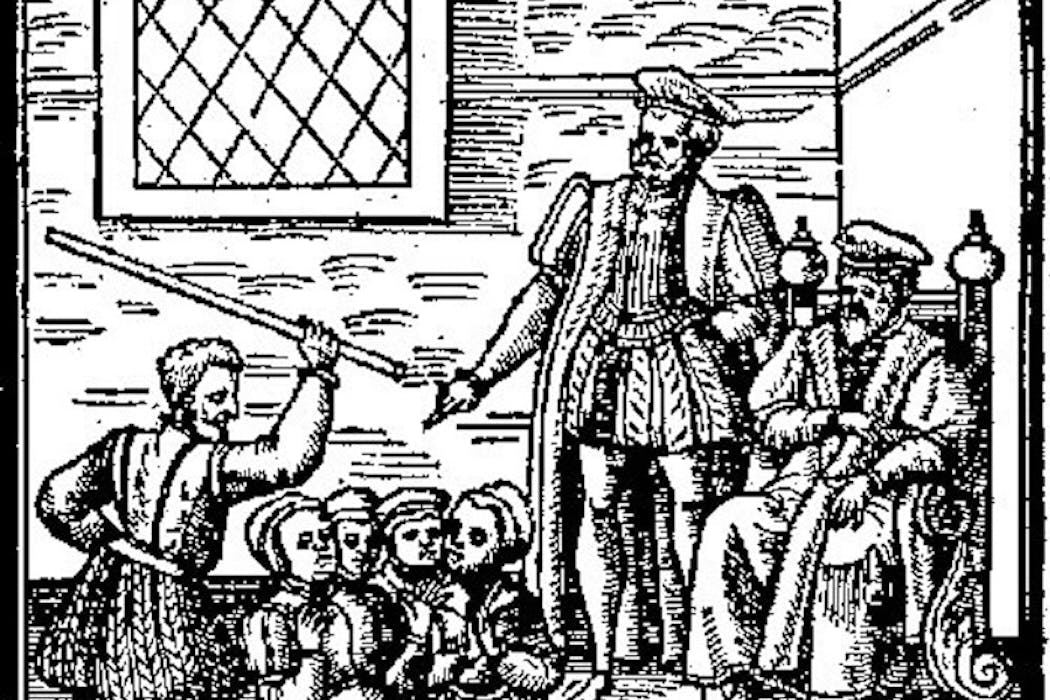
Suspected witches kneeling before James VI in Daemonologie, his 1597 treatise on witches. Wikimedia Commons
In the 16th century, witches and demons weren’t just for Halloween. People were terrified and preoccupied with them – even kings.
In 1590, James VI of Scotland – who was later also crowned James I of England – travelled by sea to Denmark to wed a Danish princess, Anne. On the return journey, the fleet was hit by a terrible storm and one of the ships was lost.
James, a pious Protestant who would go on to sponsor the translation of the King James bible, was convinced he’d been the target of witchcraft. On his return, he set in motion the brutal North Berwick witch trials.
A few years later, James decided to write a treatise called Daemonologie, setting out his views on the relationship between witches and their master, the devil.
Meanwhile, another firm Halloween favourite – ghosts – had fallen out of favour in the wake of the Protestant Reformation because they were seen as a hangover from Catholicism.
In this episode of The Conversation Weekly podcast, Penelope Geng, an associate professor of English at Macalester College in the US who teaches a class on demonology, takes us back to a time when beliefs around witches, ghosts and demons were closely tied to religious politics. She explains how these beliefs have come to influence the way witches and ghouls have been portrayed in popular culture ever since:
It seemed that at a very grassroots level, people believed in the existence of witches and devils. At a very high theological level, writers were talking about it. So I think, compared to today, the early modern period really was a moment in which people were somewhat obsessed with thinking about this eternal struggle between good and evil and their own place in this warfare.
You can also read an article Penelope Geng wrote on the difference between ghosts and demons, and the way they were portrayed in literature, as part of The Conversation’s Curious Kids series.
This episode of The Conversation Weekly was written and produced by Katie Flood, Mend Mariwany and Gemma Ware. Mixing by Eleanor Brezzi and theme music by Neeta Sarl.
Listen to The Conversation Weekly via any of the apps listed above, download it directly via our RSS feed or find out how else to listen here. A transcript of this episode is available on Apple Podcasts or Spotify.
Penelope Geng does not work for, consult, own shares in or receive funding from any company or organisation that would benefit from this article, and has disclosed no relevant affiliations beyond their academic appointment.
À l’Université de l’Alberta, par exemple, il n’y a plus de vice‑provost à l’équité, à la diversité et à l’inclusion. L’établissement dispose désormais d’un bureau de « l’accès, de la communauté et de l’appartenance ».
Si la langue évolue naturellement, ce changement ressemble davantage à un repli déguisé qu’à un véritable progrès, car il manque l’engagement délibéré nécessaire à l’équité.
Les efforts actuels de rebranding relèvent davantage de l’apaisement que du progrès. Ce sont des gestes réactifs, dictés par des pressions externes, plutôt que des réponses aux besoins et aux demandes des communautés les plus concernées.
Dans le monde des affaires, la tendance est frappante. Les mentions d’« EDI » dans les dépôts réglementaires des sociétés du S&P 500 ont chuté de 70 % depuis 2022, remplacées par des termes plus consensuels comme « appartenance » et « culture inclusive ».
Ce changement permet aux organisations d’échapper à leurs responsabilités, de masquer les inégalités et de remplacer les cadres d’équité mesurables par des platitudes vagues.
Pourquoi est-ce important ?
En adoucissant les termes utilisés, les organisations s’assurent un moyen socialement acceptable de se soustraire à la difficile mission qu’est l’équité. Comme si elles avaient « dépassé » l’équité, alors qu’elles n’ont jamais fait le travail nécessaire. C’est en quelque sorte une illusion.
Supprimer l’équité du langage organisationnel a des conséquences tangibles. Tout d’abord, cela compromet l’imputabilité. Les cadres d’équité efficaces créent des objectifs mesurables et vérifiables. Des termes tels que « appartenance » sont plus difficiles à définir et plus faciles à abandonner. Ils permettent aux organisations de prétendre s’engager en faveur de l’inclusion sans avoir à fournir les efforts nécessaires à un réel changement systémique.
Enfin, les organisations elles‑mêmes s’exposent à des risques. Les reculs en matière d’EDI nuisent au moral, à la rétention, à l’innovation et à la performance, et peuvent même accroître le risque juridique.
Un sondage de 2025 du Meltzer Center for Diversity, Inclusion, and Belonging (NYU) révèle que 80 % des dirigeants estiment que la réduction des efforts en équité augmente les risques réputationnels et juridiques. Il fait aussi état d’un large consensus selon lequel les initiatives d’EDI améliorent la performance financière des entreprises.
Mais la méritocratie suppose l’égalité des chances et occulte le fait que le « mérite » est une construction sociale qui dépend du contexte. Elle ignore que des barrières inégales – comme l’accès à l’éducation et aux réseaux – influencent la réussite individuelle, et ce outre les réalisations de la personne.
Par exemple, dans une étude réalisée auprès de 445 participants ayant une expérience en gestion, les chercheurs ont demandé aux participants de prendre des décisions concernant les primes, les promotions et les licenciements d’employés fictifs. Lorsque la culture d’une organisation mettait l’accent sur la méritocratie, les hommes recevaient des primes plus élevées que les femmes ayant les mêmes qualifications.
À l’inverse, lorsque la culture d’entreprise mettait plutôt l’accent sur le pouvoir discrétionnaire des dirigeants, le biais s’inversait en faveur des femmes. Cela s’explique vraisemblablement par le fait que l’énoncé signalait un biais de genre potentiel, déclenchant une sur‑correction.
Dans un troisième scénario, où ni la méritocratie ni la discrétion managériale n’étaient mises de l’avant, il n’y avait pas de différence significative dans les primes accordées.
Bien que le dernier scénario semble prometteur, la plupart des environnements de travail privilégient la méritocratie, consciemment ou non. La rémunération basée sur le mérite ou la performance demeure la norme dans la plupart des organisations, ce qui signifie que le premier scénario est le plus fréquent.
Sans transparence, le discours sur « qui mérite » une promotion/un bonus a tendance à renforcer les inégalités. Le népotisme, les avantages liés aux réseaux et la visibilité sélective comblent souvent le vide lorsque les cadres d’équité sont abandonnés. Les réseaux et la visibilité comptent, mais ils ne doivent pas être confondus avec le mérite.
Alors que certaines institutions reculent sur leurs engagements en matière d’EDI, d’autres au Canada et en Europe maintiennent le cap en intégrant l’équité à leur stratégie, à leur leadership et à leurs cadres de performance.
Pour faire progresser l’équité dans le contexte actuel, il faut à la fois une stratégie et une mobilisation continue. Voici par où les organisations peuvent commencer :
Établir et intégrer des objectifs explicites et mesurables en matière d’équité, alignés sur la stratégie de leur entreprise.
Améliorer la transparence des données en collectant et en partageant publiquement des informations désagrégées sur le recrutement, la promotion, l’équité salariale, le taux de rotation du personnel et l’expérience des employés.
Donner un véritable pouvoir décisionnel aux voix issues de la diversité dans l’élaboration des politiques et des initiatives. Les groupes‑ressources d’employés constituent un excellent point de départ.
Tenir les leaders imputables en les formant à promouvoir l’équité et en liant leurs incitatifs à des résultats concrets en matière de diversité, d’équité et d’inclusion.
Communiquez de manière transparente et authentique sur les impacts de l’EDI en partageant des témoignages et des indicateurs qui montrent comment les efforts en matière d’équité ont amélioré les performances de l’organisation.
Ces solutions fonctionnent déjà. Dans ma pratique de consultant, j’ai accompagné des organisations qui progressent en bâtissant la confiance, en dynamisant leurs équipes et en stimulant l’innovation. Au final, elles sont plus performantes et plus résilientes.
L’argument économique pour l’équité, la diversité et l’inclusion est bien établi : L’EDI stimule la performance, soutient la croissance et constitue un impératif de leadership. Dans le climat politique actuel, il est crucial de rester concentré sur les résultats plutôt que de se laisser entraîner par un discours qui présente l’équité comme inutile ou clivante.
La voie à suivre
Rebaptiser « l’équité » en « appartenance » ne fait pas avancer la justice, surtout en l’absence d’une définition partagée de ce que signifie réellement « appartenance ». Cela nie poliment la nécessité de démanteler de véritables barrières systémiques. Pour les personnes qui font face à ces barrières, cela sonne comme une promesse creuse.
Déjà des milliers d’abonnés à l’infolettre de La Conversation. Et vous ? Abonnez-vous gratuitement à notre infolettre pour mieux comprendre les grands enjeux contemporains.
Personne ne choisit sa race, son sexe, son milieu socio-économique, son orientation sexuelle, ni de vivre avec un handicap ou les séquelles durables du service militaire (par exemple, un trouble de stress post-traumatique). En revanche, les institutions peuvent choisir de s’attaquer aux inégalités liées à ces expériences et de démanteler les obstacles auxquels les individus sont confrontés.
Ce moment invite également à une réflexion honnête au sein même du secteur de l’EDI. Certaines initiatives ont dépassé les limites ou perdu de vue leur objectif, ce qui a contribué au contrecoup actuel. Reconnaître ouvertement ces faux pas fait partie du travail de reconstruction de la crédibilité de l’EDI.
Pour progresser, il est nécessaire de réduire la polarisation, d’ouvrir le dialogue, et de mieux coordonner les actions afin que chaque personne ait une chance équitable de s’épanouir et de réussir.
Simon Blanchette ne travaille pas, ne conseille pas, ne possède pas de parts, ne reçoit pas de fonds d’une organisation qui pourrait tirer profit de cet article, et n’a déclaré aucune autre affiliation que son organisme de recherche.
Source: The Conversation – (in Spanish) – By Raúl Rivas González, Catedrático de Microbiología. Miembro de la Sociedad Española de Microbiología., Universidad de Salamanca
El elemento visual más icónico de la festividad de Halloween es, sin duda, la Jack O’Lantern, una calabaza vaciada y tallada con apariencia de rostro, a menudo de aspecto grotesco o sonriente, que sirve de linterna. En el interior hueco de la calabaza se coloca una fuente de luz, tradicionalmente una vela, cuyo parpadeo proyecta sombras fantasmales y da vida a la mueca tallada, creando una atmósfera inconfundible de misterio y celebración.
La especie de calabaza más utilizada para Halloween –contracción de la expresión inglesa All Hallows’ Eve, que significa “víspera de Todos los Santos”– es la Cucurbita pepo; por ejemplo, las variedades Connecticut field o Jack O’Lantern. Debido a su color, forma redondeada y corteza resistente, resulta ideal para tallar. Pero ojo, porque no siempre se utilizó una calabaza: al principio se tallaban otras hortalizas. Concretamente, nabos.
Jack, el Tacaño
La leyenda más famosa asociada con el origen de la tradición de las hortalizas talladas de Halloween nos lleva a la Irlanda del siglo XVIII y está vinculada a una figura del folclore irlandés conocida como Jack el Tacaño, aunque también recibe los nombres de Jack el Herrero, Jack el Borracho o Jack el Excéntrico.
Jack engañó al diablo dos veces. Primero le convenció para que se transformara en una moneda con la que pagar una última bebida antes de llevárselo al infierno, y después lo dejó atrapado en la copa de un árbol. Para conseguir la libertad, el diablo tuvo que prometer a Jack que jamás volvería a reclamar su alma.
Sin embargo, cuando Jack murió, no pudo entrar en el cielo debido a su vida pecaminosa. El diablo cumplió el trato y nuestro hombre quedó condenado a vagar por la Tierra en la oscuridad eterna, sin poder descansar ni en el cielo ni en el infierno. El maligno, a modo de burla, le arrojó una brasa encendida del averno para que iluminara su camino. Jack puso la brasa dentro de un nabo hueco, que usó a modo de linterna. Y así quedó convertido en Jack O’Lantern (Jack, el de la linterna).
Samhain, la festividad gaélica
La celebración de Halloween tiene raíces arcaicas vinculadas, en gran parte, al festival celta conocido como Samhain, que marcaba el final de la temporada de cosechas y el comienzo del año nuevo celta. En el siglo XVIII, mucha gente de Irlanda celebraba el Samhain, la festividad gaélica, con sus rituales de ir de casa en casa en busca de comida y bebida. De ahí la tradición del “truco o trato”.
Como en la Irlanda preindustrial reinaba la oscuridad, muchos tallaban nabos, patatas y otras hortalizas de raíz y les añadían carbón o velas para crear faroles improvisados que sirvieran de guía a los asistentes. En ocasiones, incluso tallaban rostros en ellas.
Además, existía la creencia antigua que, en la noche de Halloween, la frontera entre el mundo de los vivos y el de los muertos se debilitaba, permitiendo a los espíritus buenos y malos regresar. Por esta razón, esa noche las linternas vegetales eran colocadas en las ventanas o entradas de las casas para ahuyentar a esos espíritus, incluido el de Jack O’Lantern. Con el tiempo, los lugareños comenzaron a tallar caras terroríficas en los nabos para ahuyentar a los espíritus malignos.
Un microorganismo cambió los nabos y las patatas por calabazas
La Gran Hambruna irlandesa, también conocida como “hambruna de la patata”, fue un periodo devastador de inanición, enfermedad y migraciones masivas que afectó a Irlanda entre 1845 y 1849, aunque las consecuencias se extendieron hasta 1852.
Aunque se desconocen las cifras exactas, los registros apuntan que al menos se produjeron 1 100 000 de muertes y una emigración masiva de otro millón de personas, lo que supuso un descenso poblacional de casi el 30 %. En realidad, el funesto desenlace del acontecimiento fue multifactorial: confluyeron motivos políticos, religiosos, económicos y, sobre todo, microbiológicos. En concreto, una plaga provocada por el oomiceto Phytophthora infestans, conocido como tizón tardío, destruyó la cosecha de patatas, el alimento básico para gran parte de la población irlandesa pobre. El patógeno es muy agresivo, y los vegetales y cultivos más importantes a los que afecta son la patata y el tomate.
Para desgracia de los irlandeses, el oomiceto se estableció en el suelo. Los siguientes años fueron demoledores, ya que el patógeno persistía y las patatas desaparecían o malograban. Por entonces, no existían sustancias químicas ni métodos genéticos para combatir a Phytophthora. La hambruna y las enfermedades asociadas se cebaron con los más pobres. La desnutrición facilitó la incidencia de infecciones severas como la fiebre tifoidea, la tuberculosis, la difteria o el cólera. Cientos de miles de personas no pudieron superar la debacle y perecieron.
Los irlandeses llevaron Halloween a Estados Unidos
Los más afortunados consiguieron emigrar en busca de nuevas oportunidades, aunque muchos lo hicieron en condiciones deplorables y sucumbieron durante la travesía. La colonia de emigrantes irlandeses más numerosa se estableció en Estados Unidos, un país de mayoría protestante. Sin embargo, más del 90 % de los migrantes irlandeses eran católicos, lo que supuso un impacto notable en la sociedad estadounidense.
De hecho, con los emigrantes irlandeses muchas tradiciones cruzaron el Atlántico. Cuando llegó el momento de celebrar Halloween, hubo un problema de gran magnitud: en América los nabos no eran fáciles de encontrar. Por suerte, los irlandeses inmigrantes encontraron una hortaliza nativa, mucho más grande, llamativa, abundante en otoño y fácil de vaciar y tallar: la calabaza. De inmediato, ésta sustituyó a los nabos y a cualquier otra hortaliza candidata.
Las calabazas talladas con rostros espeluznantes no tardaron en volverse esenciales en las celebraciones de Halloween. Aunque inicialmente servían para ahuyentar el espíritu de Jack y otras almas errantes, con el tiempo, la Jack O’Lantern evolucionó a un simple símbolo festivo. Hoy adorna las casas, mezclando terror y diversión durante todo el mes de octubre.
Calabazas divertidas, pero también peligrosas
Pero ojo, porque las calabazas pueden esconder un peligro. Un estudio publicado en el año 2006, analizó la rápida descomposición fúngica de las calabazas de Halloween (Cucurbita pepo) en Irlanda del Norte durante octubre de 2005. Encontraron que, tras ser talladas y exhibidas, desarrollaban un notorio deterioro microbiano. La investigación reveló la presencia de al menos cinco géneros de hongos (Penicillium, Gibberella, Mucor, Nectria y Fusarium), tres de ellos conocidos por causar infecciones en personas inmunocomprometidas, un riesgo que no había sido documentado previamente.
Por lo tanto, aunque estas hortalizas pueden seguir siendo parte de las festividades, en entornos sanitarios con pacientes vulnerables se recomienda la inspección periódica de las calabazas talladas para procurar minimizar la dispersión de esporas y realizar su descarte inmediato si se observa contaminación fúngica.
Raúl Rivas González no recibe salario, ni ejerce labores de consultoría, ni posee acciones, ni recibe financiación de ninguna compañía u organización que pueda obtener beneficio de este artículo, y ha declarado carecer de vínculos relevantes más allá del cargo académico citado.
Source: The Conversation – in French – By François Langot, Professeur d’économie, Directeur adjoint de l’i-MIP (PSE-CEPREMAP), Le Mans Université
Pour stabiliser la dette publique de la France, l’État doit réduire son déficit. Outre la hausse des prélèvements, il doit aussi de diminuer ses dépenses. Mais avant de les réduire, il importe de savoir comment ces dépenses ont évolué ces trente dernières années.
L’analyse historique des dépenses de l’État peut être utile pour prendre aujourd’hui des décisions budgétaires. Qu’ont-elles financé ? Les salaires des agents ? Des achats de biens et services ? Des transferts ? Quels types de biens publics ont-elles permis de produire (éducation, santé, défense…) ?
Le futur budget de l’État doit tenir compte de ces évolutions passées, des éventuels déséquilibres en résultant, tout en réalisant que ces choix budgétaires auront des impacts sur la croissance et les inégalités spécifiques à la dépense considérée.
Près de 30 milliards d’économies annoncées
Le projet de loi de finances actuellement discuté pour l’année 2026 prévoit 30 milliards d’euros d’économies, ce qui représente 1,03 % du PIB. Ces économies sont obtenues avec 16,7 milliards d’euros de réduction de dépenses (0,57 point de PIB), et 13,3 milliards d’euros de hausse de la fiscalité. Le déficit public, prévu à 5,6 % en 2025 (163,5 milliards d’euros pour 2025) ne serait donc réduit que de 18,35 %. Pour atteindre l’objectif de stabiliser la dette publique, il faudra amplifier cet effort les prochaines années pour économiser approximativement 120 milliards d’euros (4 points de PIB), soit quatre fois les économies prévues dans le PLF 2026.
Ces réductions à venir des dépenses s’inscrivent dans un contexte. En moyenne, dans les années 1990, les dépenses publiques représentaient 54 % du PIB. Dans les années 2020, elles avaient augmenté de 3 points, représentant alors 57 % du PIB, soit une dépense annuelle additionnelle de 87,6 milliards d’euros, ce qui représente plus de cinq fois les économies inscrites dans le PLF pour 2026. Depuis 2017, ces dépenses ont augmenté d’un point de PIB, soit une hausse annuelle de 29,2 milliards d’euros (1,75 fois plus que les économies du PLF 2026). Étant données ces fortes hausses passées, des réductions de dépenses sont possibles sans remettre en cause le modèle social français. Mais, quelles dépenses réduire ?
Chaque poste de dépense se compose d’achats de biens et services (B & S) utilisés par l’État (au sens large, c’est-à-dire l’ensemble des administrations publiques centrales, locales et de sécurité sociale) pour produire, de salaires versés aux agents, et de transferts versés à la population. Quel poste a fortement crû depuis 1995 ?
Le tableau 1 montre qu’en 1995, 40,2 % des dépenses étaient des transferts (soit 22,05 points de PIB), 35,5 % des achats de B & S (soit 19,45 points de PIB) et 24,3 % des salaires (soit 13,33 points de PIB). En 2023, 44,1 % étaient des transferts (+ 3,06 points de PIB), 34,5 % des achats de B & S (- 0,15 point de PIB) et 21,4 % des salaires (- 1,07 points de PIB). Le budget s’est donc fortement réorienté vers les transferts. Les dépenses consacrées aux salaires ont évolué moins vite que le PIB, le poids de ces rémunérations dans les dépenses baissant fortement.
Lecture : En 1995, les transferts représentaient 22,05 points de PIB, soient 40,2 % des dépenses totales. Le chiffre entre parenthèses indique la part de cette dépense dans les dépenses totales. Δ : différence entre 2023 et 1995 en points de PIB et le chiffre entre parenthèses l’évolution de la part.
L’État a donc contenu ces achats de B & S et réduit sa masse salariale, quand bien même les effectifs croissaient de plus de 20 % (données FIPECO). Simultanément, l’emploi salarié et non salarié du secteur privé augmentait de 27 % (données Insee). Des effectifs augmentant moins que dans le privé et une part de la production de l’État dans le PIB progressant révèlent une plus forte hausse de la productivité du travail du secteur public. Mais, ceci ne s’est pas traduit par une augmentation des rémunérations du public. Au contraire, l’écart de salaire entre le public et le privé s’est fortement réduit sur la période, passant de +11,71 % en 1996 en faveur du public (données Insee (1999) pour le public et Insee (1997) pour le privé), à 5,5 % en 2023 (données Insee (2024a) pour le privé et Insee (2024b) pour le public).
Cette première décomposition montre que l’organisation de la production de l’État (achat de B & S et salaires) n’a pas dérivé, mais que les hausses des dépenses de redistribution (+ 3,06 points de PIB en trente ans) ont fortement crû. Ces hausses de transferts correspondent aux trois quarts des économies nécessaires à la stabilisation de la dette publique.
De moins en moins d’argent pour les élèves et la défense
Les dépenses de l’État se décomposent en différents services, c’est-à-dire, en différentes fonctions (l’éducation, la défense, la protection sociale…). La figure 1 montre que les dépenses des services généraux, d’éducation et de la défense ont crû moins vite que le PIB depuis 1995 (surface rouge). En effet, leurs budgets en points de PIB ont respectivement baissé de 2,14 points, 0,78 point et 0,68 point de PIB. Si la baisse du premier poste peut s’expliquer, en partie, par la rationalisation liée au recours aux technologies de l’information, et la seconde par l’arrêt de la conscription, celle de l’éducation est plus surprenante.
Elle l’est d’autant plus que Aubert et al. (2025) ont montré que 15 % de ce budget incluait (soit 0,75 point de PIB) des dépenses de retraites qu’il « faudrait » donc réallouer vers les pensions pour davantage de transparence. La croissance constante de cette contribution aux pensions dans le budget de l’éducation indique que les dépenses consacrées aux élèves sont en forte baisse, ce qui peut être mis en lien avec la dégradation des résultats des élèves de France aux tests de type Pisa. Enfin, dans le contexte géopolitique actuel, la baisse du budget de la Défense peut aussi sembler « peu stratégique ».
Lecture : En 1995, les dépenses de protection sociale représentaient 21,41 points de PIB, dont 18,14 points de PIB en transferts, 1,16 point en salaires et 2,11 points en B&S ; en 2023, elles représentaient 23,33 points de PIB dont 20,16 points, 1,12 point en salaire et 2,0 points en B&S.
De plus en plus pour la santé et la protection sociale
La surface verte de la figure 1 regroupe les fonctions qui ont vu leurs budgets croître plus vite que le PIB, de la plus faible hausse (ordre public/sécurité, avec + 0,24 point de PIB) aux plus élevées (santé, + 1,72 point de PIB, et protection sociale, + 1,92 point de PIB). Ces deux postes de dépenses représentent 65,3 % des hausses. Viennent ensuite les budgets sport/culture/culte, environnement et logement qui se partagent à égalité 24 % de la hausse totale des dépenses (donc approximativement 8 % chacun). Enfin, les budgets des affaires économiques et de l’ordre public/sécurité expliquent les 10,7 % restant de hausse des dépenses, à hauteur de 6,4 % pour le premier et 4,3 % pour le second.
Si l’on se focalise sur les plus fortes hausses, c’est-à-dire, la santé et la protection sociale, les raisons les expliquant sont différentes. Pour la protection sociale, les dépenses de fonctionnement sont quasiment stables (B&S et salaires) alors que les prestations sont en forte hausses (+ 2 points de PIB). Les dépenses de santé voient aussi les prestations offertes croître (+ 1 point de PIB), mais se caractérisent par des coûts croissants de fonctionnement : + 0,6 point pour les B&S, et + 0,12 point de PIB pour les salaires des personnels de santé, alors que les rémunérations baissent dans le public, ceux des agents de l’éducation, par exemple, passant de 4,28 à 3,47 points de PIB (-0,81 points de PIB).
Dans la protection sociale, de plus en plus pour la maladie et les retraites
La protection sociale, premier poste de dépense (23,33 % du PIB), regroupe différentes sous-fonctions représentées dans la figure 2. À l’exception des sous-fonctions maladie/invalidité (+ 0,07 point de PIB), exclusion sociale (+ 0,43 point du PIB) et pensions (+ 2,41 points de PIB), les budgets de toutes les sous-fonctions de la protection sociale ont vu leur part baisser (surface en rouge). Les réformes des retraites ont donc été insuffisantes pour éviter que les pensions soient la dépense en plus forte hausse.
Enfin, si on ajoute aux dépenses de santé la partie des dépenses de protection sociale liée à la maladie et à l’invalidité (voir la figure 2), alors ces dépenses globales de santé ont crû de 1,79 point de PIB entre 1995 et 2023.
Quels enseignements tirer ?
Ces évolutions suggèrent que les budgets à venir pourraient cibler les économies sur les dépenses de santé et les pensions, ces deux postes ayant déjà fortement crû dans le passé. Évidemment, une partie de ces hausses est liée à l’inévitable vieillissement de la population. Mais une autre vient de l’augmentation des prestations versées à chaque bénéficiaire. Par exemple, la pension de retraite moyenne est passée de 50 % du salaire moyen dans les années 1990 à 52,3 % en 2023. Le coût de la prise en charge d’un infarctus du myocarde est passé de 4,5 Smic dans les années 1990 à 5,6 Smic dans les années 2020
France 24, octobre 2025.
En revanche, un rattrapage portant sur l’éducation et la Défense semble nécessaire au vu du sous-investissement passé et des défis à venir. Les rémunérations des agents du public doivent aussi être reconsidérées. Le tableau 2 montre que le PLF 2026 propose des mesures répondant en partie a ce rééquilibrage en réduisant les dépenses de protection sociale et en particulier les pensions. Enfin, le PLF 2026 prévoit une hausse du budget de la défense, alors que la réduction de 8,6 milliards d’euros des budgets des fonctions hors défense et ordre public épargne l’éducation.
Au-delà de ces arguments de rééquilibrage, les choix budgétaires doivent aussi reposer sur une évaluation d’impact sur l’activité (croissance et emploi). Les analyses de Langot et al. (2024) indiquent que les baisses de transferts indexés sur les gains passés (comme les retraites) peuvent avoir un effet positif sur la croissance, facilitant alors la stabilisation de la dette publique, au contraire des hausses des prélèvements.
Privilégier la production des biens publics aux dépens des transferts se justifie aussi au regard des enjeux géopolitiques et climatiques, et permet également de réduire les inégalités (voir André et al. (2023)).
Les auteurs ne travaillent pas, ne conseillent pas, ne possèdent pas de parts, ne reçoivent pas de fonds d’une organisation qui pourrait tirer profit de cet article, et n’ont déclaré aucune autre affiliation que leur organisme de recherche.
Suspected witches kneeling before James VI in Daemonologie, his 1597 treatise on witches. Wikimedia Commons
In the 16th century, witches and demons weren’t just for Halloween. People were terrified and preoccupied with them – even kings.
In 1590, James VI of Scotland – who was later also crowned James I of England – travelled by sea to Denmark to wed a Danish princess, Anne. On the return journey, the fleet was hit by a terrible storm and one of the ships was lost.
James, a pious Protestant who would go on to sponsor the translation of the King James bible, was convinced he’d been the target of witchcraft. On his return, he set in motion the brutal North Berwick witch trials.
A few years later, James decide to write a treatise called Daemonologie, setting out his views on the relationship between witches and their master, the devil.
Meanwhile, another firm Halloween favourite – ghosts – had fallen out of favour in the wake of the Protestant Reformation because they were seen as a hangover from Catholicism.
In this episode of The Conversation Weekly podcast, Penelope Geng, an associate professor of English at Macalester College in the US who teaches a class on demonology, takes us back to a time when beliefs around witches, ghosts and demons were closely tied to religious politics. She explains how these beliefs have come to influence the way witches and ghouls have been portrayed in popular culture ever since:
It seemed that at a very grassroots level, people believed in the existence of witches and devils. At a very high theological level, writers were talking about it. So I think, compared to today, the early modern period really was a moment in which people were somewhat obsessed with thinking about this eternal struggle between good and evil and their own place in this warfare.
You can also read an article Penelope Geng wrote on the difference between ghosts and demons, and the way they were portrayed in literature, as part of The Conversation’s Curious Kids series.
This episode of The Conversation Weekly was written and produced by Katie Flood, Mend Mariwany and Gemma Ware. Mixing by Eleanor Brezzi and theme music by Neeta Sarl.
Listen to The Conversation Weekly via any of the apps listed above, download it directly via our RSS feed or find out how else to listen here. A transcript of this episode is available on Apple Podcasts or Spotify.
Penelope Geng does not work for, consult, own shares in or receive funding from any company or organisation that would benefit from this article, and has disclosed no relevant affiliations beyond their academic appointment.
Source: The Conversation – UK – By Samuel Jesse Cox, Postdoctoral Fellow and Visiting Lecturer in English Literature, University of Tübingen
The Rose Field, the third and final volume in Philip Pullman’s The Book of Dust trilogy is finally in the hands of his readers.
This trilogy accompanies Pullman’s earlier series, His Dark Materials, and tells stories that happen both before and after those original books. Both trilogies follow Lyra Belacqua and her daemon, Pantalaimon – a manifestation of her soul in animal form. In The Rose Field, Lyra journeys deep into the desert for one final discovery about the mysterious substance that connects both series: Dust.
The title of Pullman’s first trilogy comes from John Milton’s 17th-century epic poem Paradise Lost, which tells the story of Satan’s rebellion against Heaven. In it, Milton wrote: “Unless th’ Almighty Maker them ordain / His dark materials to create more worlds.”
In Milton’s poem, the “dark materials” are the chaotic and primordial matter from which God could create new worlds. In Pullman’s stories, however, “dark materials” take the form of Dust – also called shadow particles, Rusakov particles, or dark matter.
Unlike Milton’s lifeless matter, Dust is alive and connected to consciousness and creativity. Through this idea, Pullman turns Milton’s vision upside down, rejecting divine authority and celebrating human imagination.
Across both trilogies, two opposing views of Dust exist. A restrictive theocratic organisation known as the Magisterium declares Dust original sin: “an emanation from the dark principle itself.” Yet due to Dust’s association with daemons and consciousness, Lyra, Pan and their allies remain convinced that Dust must be “good”.
To fully understand Pullman’s Dust we must go beyond Paradise Lost, back to the foundational story in the Judeo-Christian tradition: Genesis.
Dust thou art?
Northern Lights (1995) describes how Dust takes its name from a “curious verse” in the story of Adam and Eve’s fall in Genesis. In it, God curses Adam for eating forbidden fruit saying: “For dust thou art, and unto dust shalt thou return.”
In this moment, Adam and Eve leave behind their innocent, harmonious life with nature. Pullman pinpoints this as the moment in the Bible where a rift opens between humanity and the material world. From then on, humans move from living in unity with the material world to feeling separate from it, forced to struggle against nature instead of living alongside it.
The scholar Mary talking to Dust in the BBC adaptation of The Amber Spyglass.
In Pullman’s inversion, the Authority (God) did not simply create using Dust, but was, like all angels, formed from it. As one of the rebel angel characters explains in the final book of the original trilogy, The Amber Spyglass (2001): “Dust is only a name for what happens when matter begins to understand itself. Matter loves matter. It seeks to know more about itself and Dust is formed.”
This line reveals that Dust is not just connected to the human spirit – our thoughts, feelings, imagination and soul – but also presents a view of reality shaped by matter itself. Through Dust, ideas about the soul are linked to a sense of wonder at the material world.
This echoes the ancient Greek and Roman philosophers who first imagined the universe as made up of moving atoms. Yet throughout His Dark Materials, there is still a sense that humans are special, as human consciousness appears as the culmination of matter understanding itself.
New forms of alienation
In the Book of Dust trilogy, this shifts radically. Pullman has acknowledged that his new books are increasingly shaped by our current times, in which our detachment from our world is enabling the destruction of Earth.
For Pullman, belief in God has passed onto belief in another entity which will save us from the world and its toil: technology. If the split between humans and matter estranged us from the material world, now we face being alienated even from ourselves.
In this new context of alienation, Pullman’s concept of Dust evolves. It moves from being primarily associated with human creativity to implying that human consciousness is intrinsically linked to all matter.
As he writes in La Belle Savage (2017), the first instalment in the Book of Dust trilogy: “There is a field of consciousness that pervades the entire universe, and which makes itself apparent most fully – we believe – in human beings.”
After boldly overthrowing the figure of God (the Authority) in The Amber Spyglass, Pullman seems intent on challenging today’s dominant way of thinking by helping people rediscover a deeper, more imaginative relationship with the physical world.
If we see matter as just lifeless stuff that can only be measured or used, then humans aren’t really powerful – instead, we become spiritually and creatively impoverished.
Philip Pullman speaking about Dust.
In The Secret Commonwealth (2019), the second book in the Book of Dust trilogy, Lyra has fallen victim to this new disease, which grips the young of her world. A belief that: “Nothing is any more than what it is.” This separates her from her daemon Pan, who must set off in search for her “imagination”.
His Dark Materials offered a story of the endless battle against authoritarian and restrictive structures. Lyra and Pan’s final adventure in The Rose Field, meanwhile, is an allegorical search for those most human of qualities, in which society now holds a faltering faith: feeling and imagination.
Dust becomes a rich symbol that shows how deeply and permanently we’re connected to everything in the world – that we’re part of it, not separate from it.
The beauty of Pullman’s “Dust” is that we don’t need to inhabit Lyra’s world to see that this is true. The physical qualities of Dust tells us we are deeply connected to everything and everyone. We have the remnants of stars within us, as do even the most seemingly inert objects in our world.
The Roman poet Horace once declared: “We are but dust and shadow.” But in a world in a crisis of narration, we need storytellers like Pullman to illuminate our forgotten particles and darkest materials with light.
Looking for something good? Cut through the noise with a carefully curated selection of the latest releases, live events and exhibitions, straight to your inbox every fortnight, on Fridays. Sign up here.
This article features references to books that have been included for editorial reasons, and may contain links to bookshop.org. If you click on one of the links and go on to buy something from bookshop.org The Conversation UK may earn a commission.
Samuel Jesse Cox does not work for, consult, own shares in or receive funding from any company or organisation that would benefit from this article, and has disclosed no relevant affiliations beyond their academic appointment.
Plans to reform support for children with special educational needs in England have been delayed after the government announced its new policy would not be unveiled until 2026, rather than autumn 2025.
However, there has already been some indication of what the government will do. The education secretary, Bridget Phillipson, recently promised to set “clear expectations for schools” on how they work together with pupils’ parents. She also outlined her intention to overhaul the process by which parents can make complaints.
In a statement, Phillipson said: “To help us deliver the most effective set of reforms we can, I have taken the decision to have a further period of co-creation, testing our proposals with the people who matter most in this reform – the families – alongside teachers and other experts.”
The additional wait for the schools white paper that will set out the policy will be disappointing to those who are keen to see change in the system. But it also creates an opportunity to ensure the government gets reform right.
As an expert in inclusive education, I argue the call for closer collaboration and the explicit mention of family involvement are excellent signs. However, the government should rethink its framing of parental engagement as a set of expectations that schools must meet.
On paper, this approach looks as if it could safeguard the support children are entitled to. But in reality it risks reducing what can be a mutually respectful and beneficial partnership to a transactional checklist and added bureaucracy.
What is needed instead is effective partnerships with families based on authentic engagement and courageous conversations, based on respect, openness and compassion.
This change in culture can be supported by improved teacher training. This should promote inclusion as a shared responsibility, rather than as sheer accountability.
For example, for children with additional needs, transitions in their educational journey are important and potentially difficult moments. These include starting school, moving between primary and secondary, between mainstream and alternative educational provision, and into adulthood.
Making family involvement happen
Parents and carers can and should play an important role in their children’s education, and their voices should have power. This is particularly vital for children with special educational needs and disabilities.
Parents know their children best. They see their strengths, struggles, and the little things that make a big difference. Irrespective of this, they are routinely excluded or sidelined from decisions about their child’s education.
A recent House of Commons committee report on special educational needs highlights that many parents feel treated as inconvenient or unreasonable. These adversarial dynamics have severely eroded trust in the system.
Findings from an all-party parliamentary group inquiry into “loss of the love of learning” reveal that parents lose confidence in formal education: it’s perceived as a source of anxiety, stress and exclusion for children whose needs may require different teaching and learning approaches.
For these reasons, parental involvement must be central to reform of special educational needs support. Joint planning, emotional support, and coordination at every stage with teachers and others involved in the child’s journey is needed. This can help children adjust and reach emotional and developmental milestones.
We need to move away from a situation where parents are seen only as receivers of expertise, not as experts themselves.
Parents’ knowledge and experiences of disability and difference can lead to real change. It’s right that they are involved in decision making, at school and community level and in national consultations on education policy.
Parents’ experiences and knowledge can offer real value. Rido/Shutterstock
Without real input in decision making, the risk is that parental involvement becomes tokenistic rather than transformative, especially when deep-rooted systemic injustices remain in education for children with special educational needs.
Decent parental engagement requires other changes to the system. Children with special educational needs and disabilities often receive support from different services. These need to be coherent so that parent and carer involvement does not become fragmented. The Education Select Committee’s call for a joint workforce strategy on special educational needs and disabilities, including health and care services, must be taken seriously.
Equally, trust and respect needs to be reinstated towards teachers and Sencos: teachers who have an additional role as their school’s special educational needs coordinator. Despite often working in extremely hard conditions and with limited resources, teachers often absorb demonising attitudes and blame.
Sencos are not allocated the time and continued training required for their role. They also do not have the power to make strategic decisions on inclusion.
The Labour manifesto promised to “light the fire” of opportunity for every child. By truly bringing families into their children’s education, the upcoming white paper on schools could be that spark. Otherwise, it risks becoming another layer of bureaucracy in an already overwhelmed system.
Paty Paliokosta does not work for, consult, own shares in or receive funding from any company or organisation that would benefit from this article, and has disclosed no relevant affiliations beyond their academic appointment.