The apocrypha, Christianity’s ‘hidden’ texts, may not be in the Bible – but they have shaped tradition for centuries

Source: The Conversation – USA (3) – By Christy Cobb, Associate Professor of Christianity, University of Denver

Not all versions of the Bible contain the same texts. oneclearvision/iStock via Getty Images Plus

Of Jesus’ 12 disciples, Saint Peter is one of the most important. In the Book of Matthew, Jesus declares that Peter is the “rock” on which “I will build my church,” and Catholic tradition considers him the first pope. Martyred in Rome in the first century, Peter asked to be crucified upside down so that he would not die in the same way as Christ.

However, that famous story is not in the Bible. It appears in a text called “Acts of Peter,” an “apocryphal” writing.

In ancient Greek, “apocrypha” means “hidden.” The word is used for texts that are not part of an approved set of religious books, especially Christian texts outside the official biblical canon.

Yet these books are not so hidden. Some of them, like Acts of Peter, have shaped Christian tradition for centuries and are read by many people today. These stories are not only fun to read, but also provide valuable information about ideas that interested early Christians.

In my research as a scholar of early Christianity, I read and interpret apocryphal texts to explore the ways that early Jews and Christians understood and practiced their religion.

Capital-A ‘Apocrypha’

When the word is capitalized, “Apocrypha” refers to a set of Jewish texts that are found in Roman Catholic Bibles, but they are not included in most Protestant Bibles.

These texts were valued within ancient Judaism, yet are not included in the Jewish sacred text the Tanakh. The Tanakh is similar to what Christians call the “Old Testament” or the “Hebrew Bible,” but there are many important differences, including the order of texts and the books that are emphasized.

Examples of these Apocryphal books include Judith, Sirach and the First and Second Books of Maccabees. The story of Hanukkah comes from the Books of Maccabees when Jewish rebels overcame an oppressive ruler and rededicated the temple in Jerusalem – a reminder of the Apocryphal books’ significance.

Nine lit candles against a dark background.
The story of Hanukkah is rooted in the Books of the Maccabees.
Breslevmeir/Wikimedia Commons, CC BY-SA

Most Christians viewed the Apocrypha as scripture until the Protestant Reformation of the 16th century. During this period, Protestant reformers such as Martin Luther argued that these texts were valuable to Christians but should not be viewed as scripture.

Today, Roman Catholicism and Orthodox Christianity affirm these texts as a part of their canon. Thus, not all Christian Bibles include the same number of books.

Lower-case ‘apocrypha’

The word apocrypha is also used to reference a second set of texts: Christian books that are not included in the New Testament, the faith’s officially recognized set of texts.

The New Testament canon usually includes 27 books, including the four gospels that describe Jesus’ life – Matthew, Mark, Luke and John – and Acts, which describes the works of the apostles who continued Jesus’ ministry after his death. The New Testament also contains many books of letters, or Epistles, written by early Christian leaders, and Revelation, a vision of the end of the world.

Yet early Christians wrote more than just these books. These additional texts are often grouped together and referred to as “Christian apocrypha.” They include a number of different genres.

For example, apocryphal gospels tell of the life, ministry and death of Jesus. One of the earliest is the Gospel of Thomas, probably written in the mid-second century. Unlike the New Testament gospels, Thomas does not include the death of Jesus. Instead, it is a collection of sayings, many of which are also found in the New Testament gospels.

There are other apocryphal gospels named after important people in Jesus’ life and ministry, such as the Gospel of Mary. Named after one of Jesus’ female followers, Mary Magdalene, it notes that Jesus loved her more than any other woman.

A small, painted statue of crowned woman clutching a pillar in one arm and a small lion in the other.
A reliquary of St. Thecla dating to the 15th or 16th century shows her with the lioness who defended her from persecution.
Daderot/Princeton University Art Museum/Wikimedia Commons

Another genre is “apocryphal acts” – books that expand upon stories of the apostles who followed Jesus. One example is the Acts of Thecla, a story about a female follower of Jesus who was called to preach and teach the gospel. There are also apocryphal letters, apocalyptic texts and passion narratives that add details to the death and resurrection of Jesus.

One way to think about Christian apocryphal texts is as fan fiction written about the stories found in the New Testament. The New Testament gospels do not provide information about Jesus’ experience as a child. Yet there are apocryphal texts called “infancy gospels” that fill in the gaps, saying more about Jesus’ birth and how he navigated his perceived divine powers. In the “Infancy Gospel of Thomas,” the young Jesus brings a set of clay birds to life, rebukes his teacher and even kills his playmates.

Creating the canon

So why were these interesting texts not included in the New Testament?

The process of canonization was a slow one. Contrary to popular belief, there was not one early meeting of Christians to vote on which books should be in the New Testament. Instead, much of the canon developed slowly, as widely read texts circulated among the people and were read aloud.

Theology seems to have been a primary factor behind how the canon took shape. Early Christians fiercely debated things like Jesus’ nature: whether he was divine, human or both. Bishops and priests often challenged texts that did not conform with what became orthodox doctrine. Early Christians tended to read, copy, share and preserve the texts whose contents they already agreed with.

Even still, some Christians continued to read and value apocryphal texts. One of the oldest complete versions of the New Testament, the Codex Sinaiticus, dates to the fourth century and includes two apocryphal texts: the Shepherd of Hermas and the Epistle of Barnabas.

Christians throughout the years have continued to read and value the texts of the apocrypha. Medieval artwork illustrates this, as many stories only found within apocryphal texts are depicted on the ceilings of basilicas, on altarpieces and in paintings. Today, many Christians remain enthralled by these stories, which fill in gaps from the New Testament and provide intriguing details of the lives and ministries of biblical figures.

The Conversation

Christy Cobb does not work for, consult, own shares in or receive funding from any company or organization that would benefit from this article, and has disclosed no relevant affiliations beyond their academic appointment.

ref. The apocrypha, Christianity’s ‘hidden’ texts, may not be in the Bible – but they have shaped tradition for centuries – https://theconversation.com/the-apocrypha-christianitys-hidden-texts-may-not-be-in-the-bible-but-they-have-shaped-tradition-for-centuries-274103

How natural hydrogen, hiding deep in the Earth, could serve as a new energy source

Source: The Conversation – USA (2) – By Promise Longe, Ph.D. Candidate in Chemical and Petroleum Engineering, University of Kansas

A drilling site in northeastern France is part of an effort to measure and collect natural hydrogen. Jean-Christophe Verhaegen/AFP via Getty Images

In the search for more, new and cleaner sources of energy, a largely untapped resource is emerging: natural hydrogen.

Unlike hydrogen produced from industrial processes, natural hydrogen forms through geological reactions that occur normally within the Earth’s crust, meaning it costs nothing to make – though it costs some amount to extract – and does not emit any carbon dioxide or other human‑caused pollutants.

Today, hydrogen is used mainly in oil refining, production of ammonia for fertilizer and to make methanol, which can be a fuel and an ingredient in plastics. Emerging technologies are making hydrogen a viable fuel for cars, planes, ships and factories. Hydrogen demand around the world is projected to grow from around 90 million metric tons in 2022 to more than 500 million metric tons by 2050. Some of that supply could come from nature itself, as well.

To describe each source of hydrogen, energy researchers like me, and the energy industry as a whole, use a range of colors. In general, “gray” and “blue” hydrogen are made by burning fossil fuels, with blue hydrogen incorporating technology that captures the carbon dioxide produced in the process to reduce emissions. “Green” hydrogen comes from renewable‑energy‑powered electrolysis, using electricity to split water into hydrogen and oxygen. “White” or “gold” hydrogen occurs naturally underground and can be extracted directly with minimal processing.

How natural hydrogen forms

Natural hydrogen originates from several geological processes. The most well‑studied mechanism is serpentinization, a reaction where water interacts with iron‑rich rocks known as ultramafics, releasing hydrogen gas.

Serpentinization occurs in diverse settings around the world, including ocean ridges and continental formations such as the Midcontinent Rift in North America, a band of mostly igneous rocks with some sedimentary rocks mixed in, which extends from Minnesota through the Lake Superior region and southward toward Kansas.

Another process, thermogenic hydrogen formation, occurs in deep sedimentary basins when organic material decomposes under high temperatures, roughly 480 to 930 degrees Fahrenheit (250 to 500 degrees Celsius). These reactions can also produce hydrogen alongside other gases, such as methane or nitrogen.

Because these processes happen over millions of years, using natural hydrogen generally requires far less energy than human‑made methods such as electrolysis, which consumes roughly 50 kilowatt-hours of electricity per kilogram of hydrogen produced – enough to power an average home for a day or two, and more than the energy that kilogram of hydrogen can provide. Natural hydrogen is already made – it just has to be collected.

The science and the search

Researchers and exploration companies are developing methods similar to those used in oil and gas exploration to locate potential hydrogen accumulations. They are looking at three types of geological formations:

  1. Focused seepage, where hydrogen seeps naturally through cracks and faults. It tends to reach the surface and disperse quickly, making large-scale capture difficult.

  2. Coal beds, where hydrogen binds to coal layers, offer higher potential density but pose difficulties for extraction. The hydrogen must first be separated from the coal and then flow through tight rock layers to the extraction point.

  3. Reservoir‑trap‑seal systems, comparable to the rock formations that trap natural gas underground, are considered the most promising for commercial production because they can concentrate large volumes of hydrogen in well‑defined, drillable structures. However, they remain largely unproven in practice: The basic idea is well established, and geologists have a good sense of where those formations might occur, but they still lack detailed data on how much hydrogen these formations actually contain and how easy it would be to extract.

A large drill rig sits on open ground.
A drill site in eastern Kansas is one of several places companies are looking for natural hydrogen.
HyTerra

Massive reserves – somewhere

The U.S. Geological Survey estimates there could be more than 5 trillion metric tons of geological hydrogen underground around the world. But only a small fraction of that is estimated to be recoverable, both technically and in terms of reasonable costs.

However, even 2% of that total would be more than all proven natural gas reserves on the planetand enough to meet projected demand for the next 200 years, even accounting for increased consumption.

All of that reserve has built up over billions of years. The Earth naturally produces between 15 million and 31 million metric tons of natural hydrogen each year – less than 1% of the amount expected to be needed each year by 2050. But only a fraction of that is likely to be efficiently captured.

So geologic hydrogen is likely best viewed as a very large but ultimately finite source of low‑carbon energy that can substantially complement, but not replace, other energy sources, including various methods of producing hydrogen.

Global hot spots

Currently, only one hydrogen field, at Mali’s Bourakébougou village, produces natural hydrogen commercially, supplying tens of tons of hydrogen per year to power the village.

However, the number of companies exploring for natural hydrogen has increased rapidly, from roughly 10 in 2020 to about 40 by the end of 2023, according to Rystad Energy and related government and research‑lab reports.

Apart from that one field in Mali, exploration is concentrated in the United States, Australia, Canada and several European countries.

In the U.S., HyTerra’s Nemaha Project in Kansas has confirmed subsurface hydrogen concentrations reaching more than 90% hydrogen and 3% helium. The higher the concentration of hydrogen, the more efficient and cost‑effective it is to recover. HyTerra is also exploring elsewhere in the Midwest and Rocky Mountain regions.

A close-up image of a rock that is mottled in shades of green and gray.
The geologic process of forming serpentinite can produce hydrogen.
James St. John via Flickr, CC BY

Technical barriers

Transforming geological hydrogen into a commercial energy source presents tough scientific and technical challenges. Detecting and measuring hydrogen underground is difficult because of its small molecular size and reactivity with other elements in the rocks.

And if what’s found is low concentrations of hydrogen mixed with large amounts of other gases, it can be costly, even prohibitively so, to separate and purify the hydrogen before it can be used.

Economics and efficiency

The economic promise of natural hydrogen lies in its simplicity.

Because geological processes already performed the production work, early estimates suggest that extraction costs could be one‑tenth the production costs for other traditional hydrogen generation techniques – or possibly even less than that.

But those figures are based on the small amounts of hydrogen found so far and may not represent future large‑scale performance. Producing enough to serve commercial demand will require discovering large, high-quality accumulations.

As one leading research group noted, “This is not a gold rush.” It’s a careful exploration for scientific evidence that could lead, in time, to an abundant, carbon‑free and continuous energy source that complements other renewable energy sources.

The Conversation

Promise Longe does not work for, consult, own shares in or receive funding from any company or organization that would benefit from this article, and has disclosed no relevant affiliations beyond their academic appointment.

ref. How natural hydrogen, hiding deep in the Earth, could serve as a new energy source – https://theconversation.com/how-natural-hydrogen-hiding-deep-in-the-earth-could-serve-as-a-new-energy-source-273174

How to prevent elections from being stolen − lessons from around the world for the US

Source: The Conversation – USA – By Shelley Inglis, Senior Visiting Scholar with the Center for the Study of Genocide and Human Rights, Rutgers University

Research has found that voter fraud is rare in the United States. AP Photo/Bryon Houlgrave

President Donald Trump in his State of the Union address on Feb. 24, 2026, doubled down on his false claims that the U.S. elections system is compromised. He asserted that “the cheating is rampant in our elections. It’s rampant.”

These pronouncements follow the January 2026 FBI seizure of 2020 ballots from Fulton County, Georgia, and the president’s recent call for the Republican Party to nationalize elections. The Trump administration is also suing 24 states and Washington, D.C., for voter lists to monitor voter registrations.

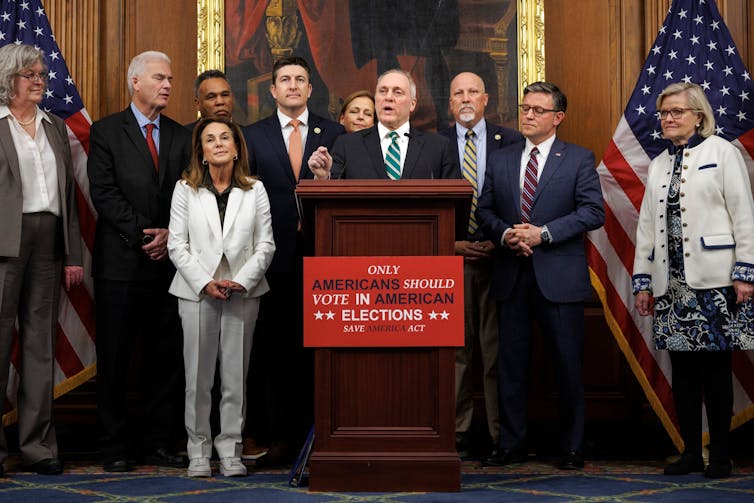
In his speech, Trump asked Republicans to pass the SAVE America Act. Approved by the House on Feb. 11, 2026, the measure would require that voters provide documentary proof of U.S. citizenship, effectively ending all online voter registration. “They want to cheat. They have cheated,” he said of Democrats.

These calls spread distrust in the U.S. electoral process, despite extensive evidence showing that voter fraud is rare, especially by noncitizens.

All this has led to speculation about how much further the Trump administration and Republican Party might go to tilt the 2026 midterm and 2028 presidential elections in their favor.

After decades of working internationally on democracy and peace-building, I know that efforts to undermine elections are not uncommon. Citizens of many affected countries have learned various techniques to help protect the integrity of their elections and democracy that may be helpful to Americans today.

International electoral assistance

Leaders, even in established democracies such as India, have used increasingly sophisticated and wide-ranging means to manipulate elections in their favor. Those means vary from legal changes that suppress votes to harassment and prosecution of the opposition, to promoting widespread disinformation campaigns.

These methods have evolved despite international efforts to counter rigged elections and improve election integrity. These countering efforts are called electoral assistance, and they support societies to develop electoral systems that reflect the will of the people and adhere to democratic principles.

Electoral assistance has been shown to strengthen transparency and election administration in countries such as Armenia and Mexico. It has also improved voter registration and education in countries such as Ghana and Colombia.

It’s mostly provided by international nonprofits, such as the National Democratic Institute and The Carter Center in the U.S. Multilateral organizations such as the United Nations also provide electoral assistance.

a group of men and women in formal wear stand around a podium that says ‘only americans should vote in american elections’
House Majority Leader Steve Scalise, R-La., speaks to reporters about the SAVE America Act alongside Republican leadership and supporters on Capitol Hill in Washington, D.C., on Feb. 11, 2026.
AP Photo/Tom Brenner

Five international responses to electoral manipulation

Here are five areas of electoral assistance that have shown some success internationally.

Early warning and community resilience: Early warning efforts track threats of violence and intimidation against election officials, candidates and voters. They seek to mitigate risks and prepare for crises. This happens from the early stages of an election through election day in countries such as Sri Lanka and Liberia.

Law enforcement, civic groups and election officials usually undertake these efforts together. But where such direct cooperation with government authorities is not feasible, civic groups can help by undertaking risk assessments and tracking coercion and threats. They can also raise alarms with officials and the media.

Indicators, or established metrics, can track sophisticated coercion tactics such as the misuse of government funds for campaign purposes. They also can track vote buying, like civic groups in North Macedonia did during 2024 parliamentary and 2025 local elections.

For these efforts to be successful, it’s critical that networks of trusted leaders urge early action to put in place greater safeguards long before election day. Raising alarms and urging action was done successfully by religious leaders in Kenya during general elections in 2022.

Real-time disinformation and local media reaction: Real-time fact-checking and debunking of false or manipulative information has proven critical to election integrity in countries such as Mexico and South Africa.

A highly organized and fast-moving approach involving media, technology companies and authorities successfully countered disinformation to ensure a competitive democratic election in Brazil in 2022. A coalition of Brazilian media outlets, for example, fact-checked political claims and viral rumors during the election period, using innovative tools such as online apps.

Robust local media play a particularly important role. In the 2024 presidential election of Maia Sandu in Moldova, a new investigative newspaper uncovered a Russia-backed network that paid people to attend anti-Sandu rallies and to vote against the president. That outlet had received training by an expert nonprofit group. It also received free legal advice and human resource management that were critical to its effectiveness.

Neutrality, transparency and systems reform: Amid efforts to sow doubt in elections, increasing transparency and ethical standards can help build awareness and deepen trust.

Various tools, such as codes of conduct that detail ethical standards, can be formulated for candidates, media and businesses. This has been done in Nigeria and the Philippines.

International groups, including the the International Foundation for Electoral Systems, published model commitments for advancing genuine and credible elections in 2024, which have been used for preelection assessments in Bangladesh.

Additionally, major technology companies such as Google and Meta in 2024 helped draft the international Voluntary Election Guidelines for Technology Companies. Meta also helped target false content and deepfakes during Australia’s 2025 election.

The neutrality of election officials is critical to tackle distrust. In New Zealand, high levels of public trust in elections align with robust neutrality rules for public officials. The key is to develop public awareness of such commitments and how they can be useful to hold election officials, media and businesses accountable.

More profoundly, the design of the electoral system can also be linked to levels of public trust and polarization. New Zealand, South Africa and Northern Ireland, for example, reformed from winner-take-all elections to proportional representation elections to address deep internal divisions and dissatisfaction with unrepresentative results.

Broad-based mobilization and civic campaigns: Significant voter turnout that delivers large winning margins make efforts to manipulate results more difficult.

In Zambia, for example, a landslide victory for the opposition candidate in the 2021 presidential elections was driven by high youth turnout and people switching parties in urban areas.

Mobilization efforts can span from public campaigns to digital tools and voter registration and education. These efforts can motivate key groups, such as youth, minority or overseas voters. Participation of diaspora groups in Poland’s 2023 parliamentary elections was a key factor in the opposition’s win.

Proactively building public awareness of election security measures, called prebunking campaigns, has demonstrated results in increasing trust in elections in Brazil and the U.S. Additionally, civic education has shown to have positive impact on voter choice of pro-democracy candidates over their preferred party.

Strategic coalitions and nonpartisan monitoring: Nonpartisan monitoring and observation of an electoral process is a key tool in the electoral assistance tool kit. Effective monitoring often involves coalitions of nonpartisan civic groups, which Senegal has used, and faith-based organizations, as in the Philippines, to ensure adequate coverage of polling stations and consistent application of standards.

Key tools, such as parallel vote tabulation, or “quick counts,” which provide independent and statistically accurate reports on the quality of voting and counting process, have helped verify official election results in Ukraine, Ghana and Paraguay.

International observation by entities such as the Organization for Security and Cooperation in Europe assesses whether elections meet global standards. Where it identifies serious flaws or fraud, such scrutiny can help justify mass protests or mobilization, such as in Serbia’s parliamentary and local elections in 2023, trigger new elections, such as in Bolivia’s general elections in 2019, or support international condemnation, such as in Georgia’s 2024 parliamentary elections. They also make recommendations on reforms, such as changes to elections laws and systems, to strengthen integrity and align with democratic principles.

The Conversation

From May 2023 until July 1, 2025, the author served in the Bureau for Democracy, Human Rights, and Governance at the United States Agency for International Development (U.S.A.I.D.).

ref. How to prevent elections from being stolen − lessons from around the world for the US – https://theconversation.com/how-to-prevent-elections-from-being-stolen-lessons-from-around-the-world-for-the-us-275390

Abortion laws show that public policy doesn’t always line up with public opinion

Source: The Conversation – USA – By Marlo Rossi, PhD Candidate in Public Affairs & Community Development, Rutgers University–Camden, Rutgers University

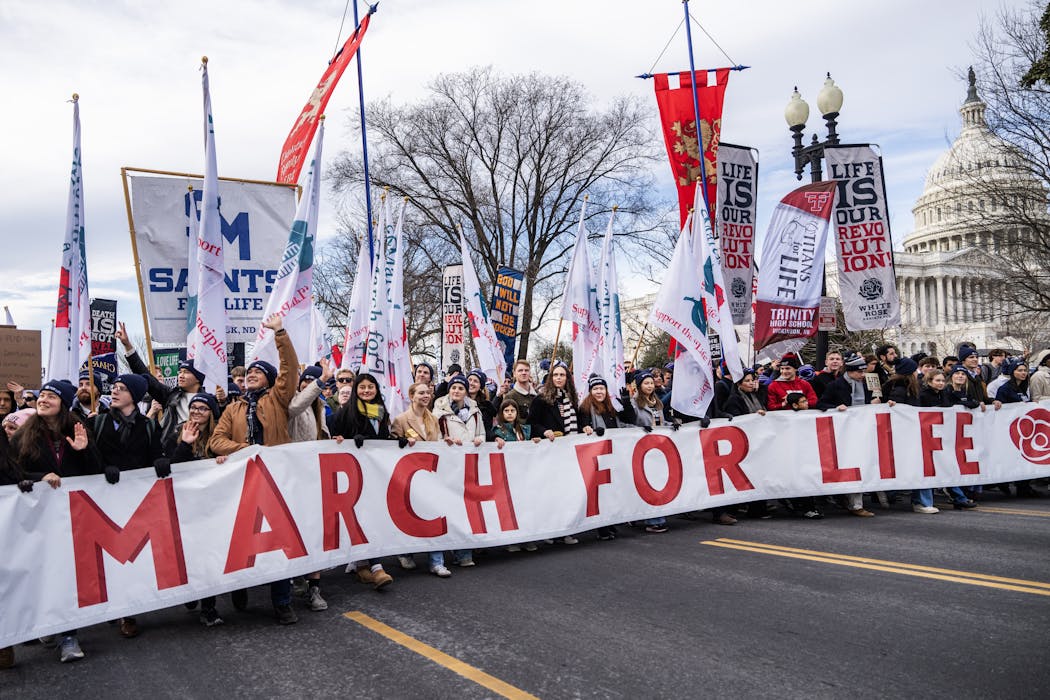
Participants in the annual March for Life protests in Washington call for an end to all abortions, on Jan. 23, 2026. CQ-Roll Call/Tom Williams via Getty Images

Representational government rests on a simple idea: that the laws the nation lives under generally reflect what the public wants. In the United States, few issues test that idea more than abortion.

In 2022, the U.S. Supreme Court ruled in Dobbs v. Jackson Women’s Health Organization that the Constitution does not guarantee a right to an abortion. The decision effectively overturned nearly 50 years of federally protected access to the procedure and returned primary authority over abortion policy to states.

Individual states now have the authority to enact permissive or restrictive abortion laws. These vary substantially, from near-total bans on the procedure – such as in Florida or Texas, where abortion is banned except in very limited circumstances – to guarantees of abortion access that are enshrined in state constitutions, including in California and Vermont.

Abortion serves as a clear example of how difficult it can be to translate public opinion into law. It is an issue where public views have remained relatively consistent over time, with the majority of the public supporting abortion rights according to polls. Still, laws have shifted dramatically from state to state and year to year.

As a researcher who studies the relationship between public opinion and state-level policy, I examine whether laws reflect the preferences of the American public. The dichotomy between abortion protections and restrictions suggests that this dynamic is often more complicated than many people might assume.

State legislatures, courts and election methods – and the interplay between them – all influence how public preferences are translated into law. Additionally, lobbying by well-connected interest groups that may represent a minority viewpoint can exert significant pressure on lawmakers, sometimes outweighing the desires of the broader public.

As a result, there is not always a direct line between what a majority of voters might want and the policies that are enacted.

Where public opinion stands

Despite these broad policy differences, public opinion has remained relatively stable around the abortion issue since the 1970s. Sixty-three percent of Americans say abortion should be legal in all or most cases, compared with 36% who say it should be illegal in all or most cases, according to the Pew Research Center. In 34 states and the District of Columbia, more people say abortion should be legal than say it should be illegal.

Even in states with restrictive policies, opinion is often closely divided. In Utah, where abortion is banned after 18 weeks of pregnancy, public opinion is split nearly down the middle.

Support for abortion does vary by religion, age, education level, political views and gender. Eighty-six percent of religiously unaffiliated Americans say abortion should be legal in all or most cases, compared with 25% of white evangelical Protestants, for example.

Similar divides appear across other partisan or demographic groups. About 85% of those who lean Democratic say abortion should be legal in most cases, according to Pew, compared with about 41% of those who lean Republican. Differences also emerge by education, with college graduates more likely to support legal abortion than those without a college degree. More women than men support abortion access, although the difference is relatively minor – 64% of women, 61% of men.

Abortion on the ballot

In response to the 2022 Dobbs decision, voters in multiple states turned to ballot initiatives, mostly to restore or affirm abortion rights. In 2024, voters in 10 states decided on abortion-related measures. Seven states passed measures to protect abortion rights: Arizona, Colorado, Maryland, Missouri,
Montana, Nevada and New York. Measures to enact protections failed in Florida, Nebraska and South Dakota.

Ballot initiatives are one of the few ways Americans can directly shape policy, though the rules for their passage vary by state. Citizen-generated initiatives are only available in about half the states.

In states such as Arizona and California, simple majorities were able to approve their 2024 measures affirming abortion protections. That same year, 57% of Florida voters supported a similar measure to protect abortion access up to 24 weeks of pregnancy, but that did not meet the state’s 60% threshold for passage of initiatives.

Even in states where ballot initiatives have passed, translating voter preferences into policy is not always a straight line. In Missouri, for example, the state Supreme Court in May 2025 allowed preexisting restrictions to remain in effect while legal challenges to a 2024 abortion rights amendment continued. Because that amendment remains part of the state constitution, legislators have placed a new measure on the November 2026 ballot specifically to repeal those protections and reinstate a nearly total ban.

Seen in this context, the abortion issue represents not only a debate about access. It also offers a clear example of how representation works in practice.

The relationship between public opinion and policy is not always direct or immediate, but is shaped by the institutions and processes that define American democracy.

The Conversation

Marlo Rossi does not work for, consult, own shares in or receive funding from any company or organization that would benefit from this article, and has disclosed no relevant affiliations beyond their academic appointment.

ref. Abortion laws show that public policy doesn’t always line up with public opinion – https://theconversation.com/abortion-laws-show-that-public-policy-doesnt-always-line-up-with-public-opinion-274699

Why US third parties perform best in the Northeast

Source: The Conversation – USA – By Bert Johnson, Professor of Political Science, Middlebury College

Hugh McTavish is running as the Independence-Alliance Party candidate for governor of Minnesota in 2026. UCG via Getty Images

A majority of Americans say they are “frustrated” or “angry” – or both – with Republicans and Democrats, according to the Pew Research Center. But that rarely translates into support for independent or third-party candidates.

One exception has been in the Northeast. Angus King of Maine and Bernie Sanders of Vermont are the Senate’s only independents. King, along with Lowell Weicker of Connecticut and Lincoln Chafee of Rhode Island, represent three of the five independent and third-party governors elected nationwide since 1990. And of the 23 current independent or third-party state legislators in the country, excluding technically nonpartisan Nebraska, 14 of them, or 61%, are in New England.

As a political scientist who has taught in Vermont for two decades, I was intrigued by the question of why third-party and independent candidates are so successful, relatively speaking, in the Northeast? And can this region teach us lessons about broadening the choices available to voters?

Market forces

In their classic book “Third Parties in America,” Steven Rosenstone, Roy Behr and Edward Lazarus argue that alternative parties succeed where motivation for third-party voting is high, constraints against doing so are low, or both.

Those may sound like obvious points, but let’s explore them individually. First, motivation. Third parties do better when voters are frustrated with the two major parties and see them as incapable or unwilling to respond to their needs.

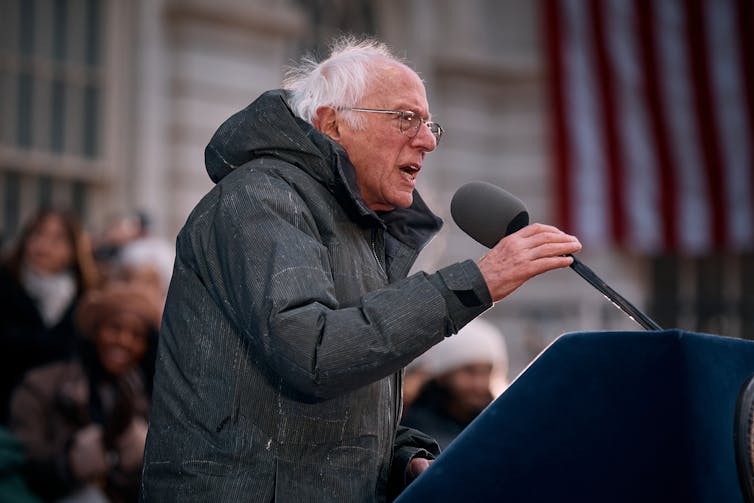
Sen. Bernie Sanders holds and leans into a microphone, wearing a heavy coat at an outdoor event.
Bernie Sanders has represented Vermont in the Senate as an independent since 2007 but twice ran for president as a Democrat.
AP Photo/Andres Kudacki

In a polarized national political climate, New Englanders might appear to be good candidates for anger. Vermont gave Donald Trump his smallest share of the 2024 presidential vote of any state – less than a third. Massachusetts was not far behind.

This should not necessarily be interpreted as enthusiasm for the Democrats. Pew found that two-thirds of Democrats are frustrated with their own party.

Channeling some of this discontent, Vermont Gov. Phil Scott, although a Republican, has frequently criticized Trump and accused the president and other politicians in Washington of creating “chaos.”

Still, the idea that discontent explains New England’s openness to third parties and independents clashes with other pieces of the picture. Other states where most voters are hostile to Trump, such as California, Maryland and Illinois, have few successful third-party or independent candidates.

And the Northeast has been fairly friendly territory for third parties and independents in very different national contexts. New England elected far more third-party and independent legislators than other regions back in 2010 as well, at a point during Barack Obama’s presidency when political discontent was most famously centered within the conservative tea party movement.

Limits on minor parties

That brings us to the second possibility: constraints on third parties, or their absence.

Unlike parliamentary democracies, including Brazil and Spain, that use proportional representation – giving some proportion of the seats even to parties that garner small shares of the overall vote – the U.S. system is stacked against third parties because of its “first-past-the-post” electoral system, under which candidates can win with pluralities of the vote.

This type of voting encourages citizens to consider only the two major parties because other candidates are generally considered not to have any realistic shot of winning. This helps explain why Sanders ran for president as a Democrat in 2016 and 2020.

Ross Perot gestures with his left hand while standing between George H.W. Bush and Bill Clinton, both seated on a stage.
Ross Perot was the last third-party candidate to reach a presidential debate stage, here standing between Republican George H.W. Bush and Democrat Bill Clinton in 1992.
AP Photo/Doug Mills

In presidential voting, the Electoral College sinks third-party chances – even if they have wide support – if their voters are not concentrated enough to win individual states. Running as an independent in 1992, businessman Ross Perot won 19% of the national vote but received exactly zero votes in the Electoral College.

These constraints, while formidable in national politics, play out differently at the state and local levels. Absent the Electoral College, there is less of a guarantee that the Democrat and Republican will always be perceived as the two most viable candidates in local races, especially in regions with lopsided support for one party or the other.

In areas with overwhelming Democratic support, the next most viable option might not be a Republican but a progressive. In areas with overwhelming Republican support, Democrats could be less viable than libertarians.

Access to the ballot

But if this is true, why do we not see just as many third-party and independent victories in red states, such as Alabama and Mississippi, as we do in Vermont and Maine? The answer lies in a seemingly mundane but crucial factor: ballot access laws.

States set the rules governing which candidates quality for the ballot. In almost every state, Democrats and Republicans have advantages over other parties or independents. But in the Northeast it is easier for independents and candidates from other parties to get on the ballot.

In no New England state does an independent candidate for a state legislative seat have to collect more than 150 signatures to secure a ballot spot. In Georgia, by contrast, candidates must collect signatures equal to 5% of the total number of registered voters in the jurisdiction holding an election, which can translate into thousands of signatures.

To see the impact of ballot access rules on candidates outside of the major parties, you only need look at one of the few states outside of New England where such candidates have done as well: Alaska.

Alaska has long had ballot access rules that are among the most open in the nation. Candidates for state House races need only pay a filing fee of US$30 to get a ballot line, and it is nearly as easy for them to file as a recognized party or group.

That helps explain why five independents currently serve in the Alaska House, that the state elected as governor a third-party candidate in 1990 and an independent in 2014, and reelected U.S. Sen. Lisa Murkowski as a write-in candidate after she lost the Republican primary in 2010.

Ease of ballot access attracts outsider candidates, increases competition, and gives voters an outlet for their frustrations.

To sum up, if people want more choices in elections, they will need to change the rules.

The Conversation

Bert Johnson does not work for, consult, own shares in or receive funding from any company or organization that would benefit from this article, and has disclosed no relevant affiliations beyond their academic appointment.

ref. Why US third parties perform best in the Northeast – https://theconversation.com/why-us-third-parties-perform-best-in-the-northeast-273749

Making sense of a chaotic planet: How understanding weather and climate risks depends on supercomputers like NCAR’s

Source: The Conversation – USA (2) – By Antonios Mamalakis, Assistant Professor of Data Science and Environmental Science, University of Virginia

Have you ever stopped to wonder how forecasters can predict the weather days in advance, or how scientists figure out how the climate might evolve under different policies?

The Earth system is a vast web of intertwined processes, from microscopic chemical reactions to towering storms. Ocean currents circulating deep in the Atlantic, forests exchanging carbon with the atmosphere, and humans altering the composition of the air all have effects that ripple through the system. These processes are governed by physical laws, such as conservation of mass, energy and momentum.

All of this plays out on such a large scale that no single human mind can truly grasp it in full. And yet, the system is so sensitive that a small perturbation, given enough time, can steer its trajectory in a dramatically different direction. This sensitivity is called “chaos,” also known as the “butterfly effect.” The planet is, at once, immense and delicate.

Despite this complexity and scale, scientists are able to simulate and anticipate how the climate will change.

How is this even possible? Behind the long-term climate projections that affect our lives sits one of the most remarkable scientific achievements of the modern era: climate models that run on supercomputers.

I am a climate data scientist. My colleagues and I try to understand extreme weather and long-term climate risks by using virtual versions of Earth inside these machines.

What a climate model really is

Here is the simplest way to picture a climate model:

Imagine dividing the entire planet into 3D boxes. At the surface, each box might represent an area 50 to 100 kilometers across. Then we stack boxes upward into the atmosphere and downward into the oceans to create a 3D grid wrapping around the globe.

Each box contains numbers: temperature, wind speed, humidity, sea ice thickness, soil moisture and hundreds of other variables. The model contains mathematical expressions that describe how these variables influence one another: how heat moves, how air rises and sinks, how moisture condenses into clouds, how the ocean absorbs and redistributes energy.

A globe with boxes around it and a close-up of some calculations taking place in one of those boxes.
Climate models are systems of differential equations based on the basic laws of physics, fluid motion and chemistry. They divide the planet into a 3D grid, apply the equations and evaluate the results. Within these models, the atmosphere component, for example, calculates winds, heat transfer, radiation, relative humidity and surface hydrology.
NOAA

We then let the model march forward in time, solving the math and updating every variable in every box. Then again. And again.

Now scale that up. Millions of grid boxes. Hundreds of variables per box. Calculations carried out millions of times to simulate decades or even centuries.

And because the system is chaotic, we do not run the model just once. We run it many times with slightly different initial conditions – what scientists call an ensemble – to make sure the result is in fact a true system response to the considered scenario, such as warming temperatures due to increased emissions, and not an effect of chaos.

The result is an astronomical number of calculations. Performing them requires computers capable of executing quadrillions of operations per second – what are known as petaflop-scale supercomputers. A petaflop equals 1 quadrillion – 1,000,000,000,000,000 – calculations per second!

From simulation to real-world decisions

These simulations inform decisions that affect everyday life: how high to elevate homes in flood-prone areas, how to design power grids resilient to prolonged heat waves, how to manage water resources during drought.

Urban planners, engineers, emergency managers and policymakers all rely on information derived from these models.

Dozens of major climate models have been developed around the world by universities, national laboratories and government agencies. Each modeling center builds its own code, makes its own physical assumptions, chooses its own grid resolution and operates its own supercomputing systems. Through international efforts such as the Coupled Model Intercomparison Project, modeling centers agree on common experiments: the same greenhouse gas scenarios and the same volcanic eruptions, for example.

When you hear that extreme rainfall is projected to intensify in a warmer world, or that the Arctic Ocean could become seasonally ice-free within decades, those conclusions are not the result of calculations carried out by a single scientist, a single team of scientists, or even a single model run. They emerge from dozens of independently developed models, run on room-sized supercomputers, under pre-agreed and carefully coordinated experiments.

A map created by an ensemble with multiple computer models shows areas of agreement.
In this example of the use of multiple models, areas in color and without hashmarks indicate regions with high agreement among models, where more than 80% of the models agree on the signs of change. The projections for annual maximum daily precipitation change were made using the Multi-model Coupled Model Intercomparison Project Phase 5 (CMIP5).
IPCC

This global collaboration is one of the reasons scientists know so much about climate change. These shared simulations allow scientists around the world to test hypotheses and explore future risks based on models’ consensus.

It is no surprise that the 2021 Nobel Prize in physics recognized pioneers of climate modeling. These models fundamentally transformed humanity’s ability to understand a complex planet.

There is no alternative way to answer “what if” questions about the future climate system. What happens if carbon dioxide doubles? What if emissions decline rapidly? What if a major volcanic eruption injects aerosols into the stratosphere? Because the climate system is so complex, and forces can push it outside the range of historical experience, the past is no longer a reliable guide to the future. So statistical models aren’t enough.

Artificial intelligence cannot replace this foundation either. AI has made impressive progress in short-term weather prediction, learning patterns from vast historical datasets, and producing forecasts with remarkable speed.

But climate projections require extrapolating to conditions the planet has not experienced in modern history – such as higher greenhouse gas concentrations. AI can accelerate simulations and analyze massive amounts of data today, but it cannot replace solving the physical equations that govern the system.

National supercomputing centers are essential

In the United States, major climate modeling efforts have been supported by national laboratories and federal centers, including NASA and the National Center for Atmospheric Research, or NCAR, along with a few research universities.

At NCAR, scientists developed the Community Earth System Model, a comprehensive climate model that’s arguably one of the best models to date and is used by researchers across the country and around the world to study climate change, severe weather, climate effects on wildfires, and atmospheric patterns. It has helped position the United States at the forefront of climate science and enabled the global research community to tackle some of the most pressing challenges of our time.

Running large ensembles with this model requires powerful hardware, data storage systems capable of handling petabytes of output, and engineers who keep these systems operational. This is not a matter of downloading and running a program on a laptop. It is a national-scale scientific enterprise that makes NCAR and its supercomputer essential.

In a warming climate, the stakes are high. The ability to simulate the Earth system at scale is one of the most powerful tools humanity has to prepare for the risks ahead.

The Conversation

Antonios Mamalakis does not work for, consult, own shares in or receive funding from any company or organization that would benefit from this article, and has disclosed no relevant affiliations beyond their academic appointment.

ref. Making sense of a chaotic planet: How understanding weather and climate risks depends on supercomputers like NCAR’s – https://theconversation.com/making-sense-of-a-chaotic-planet-how-understanding-weather-and-climate-risks-depends-on-supercomputers-like-ncars-276376

How protecting wilderness could mean purposefully tending it, not just leaving it alone

Source: The Conversation – USA (2) – By Clare E. Boerigter, Wilderness Fire Research Fellow at the Aldo Leopold Wilderness Research Institute, Rocky Mountain Research Station, United States Forest Service

A rare prescribed fire in a wilderness area burns in the Scapegoat Wilderness in Montana in 2011. Michael A. Munoz, CC BY-NC-ND

More than 110 million acres of land across the U.S. are protected in 806 federally designated wilderness areas – together an area slightly larger than the state of California. For the most part, these places have been left alone for decades, in keeping with the 1964 Wilderness Act’s directive that they be “untrammeled by man.”

But in a time when lands are experiencing the effects of climate change and people are renewing their understanding of Indigenous knowledge and stewardship practices, protecting these places may require action, not inaction.

New Mexico’s Gila Wilderness, where the Chihuahuan Desert converges with the Rocky Mountains, was the first to receive a formal wilderness designation in 1924. Now, all but six U.S. states contain wilderness. In Minnesota, the Boundary Waters Canoe Area Wilderness protects more than a thousand lakes and several hundred miles of streams. In Florida, the marshes and saltwater bays of the Marjory Stoneman Douglas Wilderness are home to flamingos, manatees and alligators.

These diverse ecosystems are the country’s most protected lands, where human activity is severely restricted. Federal regulations exclude resource extraction such as logging and mining; developments such as the building of roads and structures; low-level overflights by planes and helicopters; and mechanized equipment such as chain saws. People can walk, ride horses, canoe, fish and camp temporarily in these areas, but that’s about it.

Yet, research my colleagues and I have conducted indicates that this approach can make it difficult to address two of the biggest challenges facing wilderness.

First, the dominant American ideal of wilderness – as wildlands that flourish best in the absence of human management – conflicts with the growing understanding that many wilderness areas were and remain part of the ancestral homelands of Indigenous peoples, who in fact tended those lands for thousands of years.

And second, as climate change and other ecological stressors affect wilderness, some forms of human intervention could help sustain the very ecological qualities that led to these areas being so strictly protected.

A view of rolling hills with low vegetation.
Repeated severe fires have changed what was once a forest into a shrubfield in the Dome Wilderness in New Mexico.
Jonathan Coop, CC BY-NC-ND

Indigenous influence on landscapes

Many wilderness areas have long histories as homelands where Indigenous peoples lived, hunted and gathered.

In Alaska, the Inland Dena’ina people marked vast trail networks by physically modifying trees, including by scarring bark and cutting limbs. Many of these marked trees can be found within Lake Clark National Park, two-thirds of which is designated wilderness.

In Washington’s Indian Heaven Wilderness, Northwest tribes gathered to pick and then burn the area’s huckleberry fields, a practice that increased the abundance of both plants and berries.

In the Southwest, Indigenous peoples bred six species of agave plants to be more palatable than wild agaves; researchers have found four of these domesticated species in six wilderness areas.

These lands may seem wild to some, but as Indigenous ecologists Robin Wall Kimmerer and Frank Kanawha Lake observed in 2001, “Every landscape reflects the history and culture of the people who inhabit it.”

An aerial view of a landscape of standing dead tree trunks.
The Castle Fire in California’s Sierra Nevada in 2020 killed roughly 10% of the world’s population of sequoia trees.
Curtis Kvamme, CC BY-NC-ND

Ecological stressors intensify

The Wilderness Act’s strict rules are not able to protect wilderness areas in the U.S. from new and unprecedented ecological stressors.

For instance, many wilderness areas are experiencing uncharacteristically severe wildfires. These events are a result of climate change, fire suppression and the prevention of traditional Indigenous forest management practices, including burning. Together, those forces have resulted in large-scale disruptions of historical cycles of fire, in which wildfires were often more frequent but less severe.

Scholars recognize prescribed burning as an effective strategy to protect forests from catastrophic fires, though it remains controversial in wilderness as human intervention. Government policy allows lightning-ignited wildfires to burn in federal wilderness areas in certain circumstances, but most of these fires are still suppressed – a human intervention that is widely accepted.

In California’s Sequoia-Kings Canyon and John Krebs wilderness areas, recent intense wildfires have killed unprecedented numbers of giant sequoias, a species that historically thrived because of more frequent, less-intense fires. The 2020 Castle Fire is estimated to have killed between 7,500 and 10,600 large sequoias – or 10% to 14% of all sequoias in the Sierra Nevada – many of them in wilderness.

In New Mexico’s Dome Wilderness, repeated intense fires have killed entire forests, transforming these lands into shrublands. Models indicate that up to 30% of forested landscapes in the Southwest are vulnerable to this type of change.

A dark black tree trunk stands amid green plants and pink and purple flowers.
A fire-blackened tree stands in the Selway-Bitterroot Wilderness in Idaho and Montana, one of the few wilderness areas that allows many lightning-ignited fires to burn, with careful oversight and management by firefighters and land managers.
Mark Kreider, CC BY-NC-ND

The absence of fire can also be a problem for wilderness ecosystems. In the Boundary Waters Canoe Area Wilderness, researchers anticipate a significant decline in the area’s pine-dominated forests unless fire is reintroduced – with the potential for these forests to disappear within 150 years.

Helping fire resume its natural role on the landscape – through prescribed burning or letting natural fires burn, overseen by firefighters and land managers – isn’t easy. Tree-ring histories and archaeological, paleoecological and ethnographic records show that frequent burning of resting areas and campsites by the Anishinaabe people along commonly traveled waterways helped create the Boundary Waters’ open red pine forests. But the wilderness-protection group Wilderness Watch says that prescribed burning by federal land managers today constitutes “a prime example of humans imposing their will on Wilderness to try to create managers’ desired conditions rather than allowing nature to shape the area.”

And fire isn’t the only concern. A combination of climate change, invasions by a nonnative fungus called white pine blister rust and outbreaks of mountain pine beetles have led to whitebark pines’ listing as a threatened species. An iconic tree that can live between 500 and 1,000 years, whitebark pines are common in high-elevation wilderness areas in the West, where they provide key habitat and food for wildlife, help regulate snowmelt and reduce soil erosion.

For the Confederated Salish and Kootenai Tribes, whitebark pines are culturally significant, with their seeds serving as an important traditional food. The tribes have declared they feel a responsibility “to do all that we can to ensure the survival of this beautiful and ancient tree,” and developed a restoration plan for the Flathead Reservation in Montana, which includes the Mission Mountains Tribal Wilderness. But in federal wilderness, their approach – active tending through prescribed fire and replanting – would likely not be allowed.

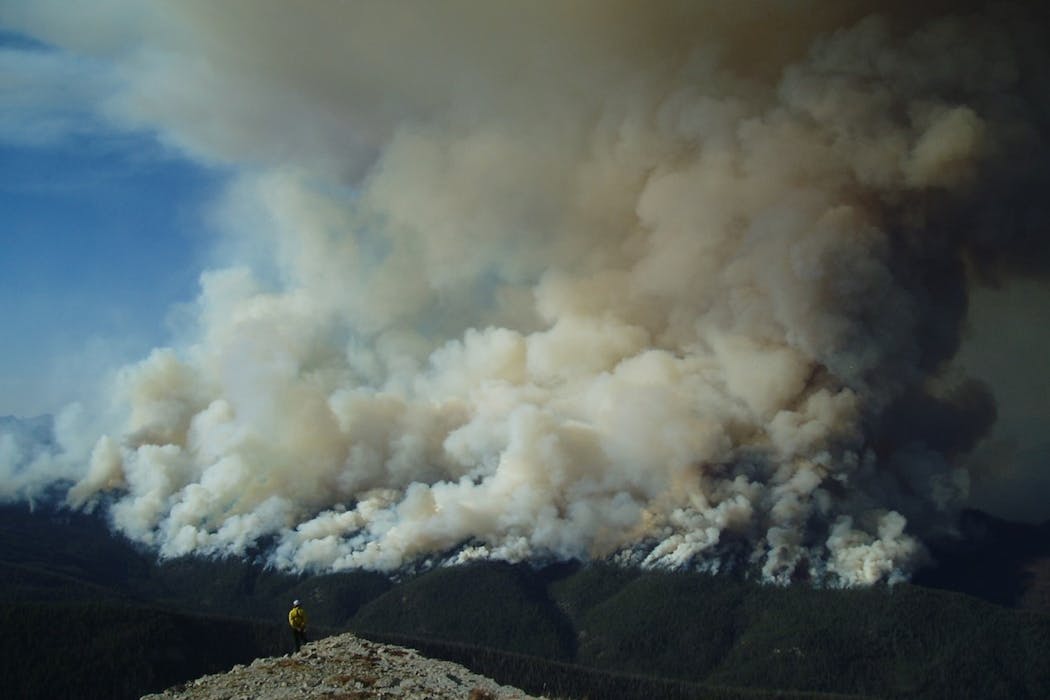
Smoke climbs above a wooded mountainside, with higher peaks in the background.
A lightning-ignited fire in 2022 in the Stephen Mather Wilderness in Washington is allowed to burn, with oversight and intervention as needed by federal land managers and firefighters.
Cedar Drake, CC BY-NC-ND

Reimagining federal wilderness management

Within tribal wildernesses, Indigenous nations honor spiritual connections between people and the land through relationships of reciprocity, as seen in the Mission Mountains Tribal Wilderness. There, members of the Confederated Salish and Kootenai Tribes are guaranteed the right not only to use the resources by hunting and fishing but also to connect with the landscape through cultural, spiritual and religious practices.

In recent years, managers at several federal wilderness areas have worked to include tribes in decisions about how these lands are stewarded. In California, a 2021 agreement gives the Federated Indians of Graton Rancheria a voice in the management of native tule elk at Tomales Point, most of which is part of the Phillip Burton Wilderness. In 2024, after pressure from the tribal community and others, the National Park Service began removing a 2-mile-long fence that prevented the tule elk from roaming freely and introduced new signs and interpretive programs that incorporated traditional ecological knowledge.

The long-debated question of how to best steward wilderness is increasingly urgent. In addition to its “untrammeled by man” provision, the Wilderness Act also says wilderness areas should be “protected and managed so as to preserve (their) natural conditions.” So the question remains whether people should leave small slices of nature entirely alone, even as humans alter the conditions of the planet, or whether some careful actions could help protect these precious places for generations to come.

Sean Parks, Jonathan Long, Jonathan Coop, Serra Hoagland, Melanie Armstrong and Don Hankins contributed to this article.

The Conversation

Clare E. Boerigter receives funding from the USDA Forest Service.

ref. How protecting wilderness could mean purposefully tending it, not just leaving it alone – https://theconversation.com/how-protecting-wilderness-could-mean-purposefully-tending-it-not-just-leaving-it-alone-272412

From moral authority to risk management: How university presidents stopped speaking their minds

Source: The Conversation – USA (2) – By Austin Sarat, William Nelson Cromwell Professor of Jurisprudence and Political Science, Amherst College

A growing number of colleges and universities have adopted policies in the last few years to remain politically neutral. kid-a/iStock / Getty Images Plus

Throughout the 20th century, college and university presidents spoke out on everything, from wars to civil rights struggles, with a sense of moral authority attempting to guide the course.

Their language was typically direct and free of jargon.

“Democracy is the best form of government. It is worth dying for,” Robert M. Hutchins, president of the University of Chicago, said during a June 1940 convocation address, a year and a half before the U.S. formally entered World War II.

Since 2023 and the start of the Israel-Hamas war, a growing number of university and college presidents have remained silent on politics. Others have used ambiguous language that makes them seem like “neutral bureaucrats,” as Wesleyan University President Michael S. Roth wrote in 2023.

Nearly 150 universities adopted “institutional neutrality” pledges from 2023 through the end of 2024. This coincided with university leaders responding to Palestinian rights protests on their campuses.

This kind of neutral approach was on display in December 2023, when Republican Congresswoman Elise Stefanik asked several university presidents during a House of Representatives committee hearing if “calling for the genocide of Jews” would violate their schools’ rules.

The presidents of Massachusetts Institute of Technology, Harvard University and the University of Pennsylvania all answered vaguely, with hesitation.

“If the speech turns into conduct it can be harassment, yes,” said Elizabeth Magill, then president of University of Pennsylvania. “It is a context-dependent decision, Congresswoman,” she continued.

Hedging, evading and speaking in platitudes has become the order of the day for university leaders, who are facing political and financial pressure under the Trump administration. Their communication style seems scripted by lawyers and communications officials, who are tasked with trying to keep universities out of trouble.

My scholarship on language and rhetoric suggests that how people speak – not just what they say – matters. This is especially true for university presidents and others in leadership positions.

A row of four women dressed formally are seen sitting at a table together.
Liz Magill, former president of the University of Pennsylvania, center left, is seen with other university presidents during a House Education and Workforce Committee hearing in December 2023.
Kevin Dietsch/Getty Images

Moral leadership in higher education

In 1921, Alexander Meiklejohn, then president of Amherst College, understood the importance of speaking on moral and political issues. He spoke out forcefully during a raging national controversy – namely, how the U.S. should respond to rising numbers of immigrants.

Calvin Coolidge, an Amherst grad and then vice president of the U.S., was among the political leaders who advocated for an immigration quota system favoring northern Europeans over immigrants from southern Europe or Asia.

Coolidge backed xenophobic immigration policies in 1921, then writing: “There are racial considerations too grave to be brushed aside for any sentimental reasons. Biological laws tell us that certain divergent people will not mix or blend.”

Meiklejohn opposed immigration quotas, and he publicly said in 1921 that America could either “be an Anglo-Saxon aristocracy of culture or a Democracy,” but not both.

One year after he became president, Coolidge made his choice when he signed the Immigration Act into law in 1924. This law created strict immigration quotas, dependent on people’s nationality, and barred people from Asia from entering the U.S.

College presidents oppose the Vietnam War

Decades later, university presidents like Kingman Brewster Jr. at Yale and Theodore Hesburgh at Notre Dame publicly opposed the U.S. becoming involved in the Vietnam War – without hesitation or legalistic qualifiers.

“We cannot urge students to have the courage to speak out unless we are willing to do so ourselves,” Hesburgh said in 1970.

In 1971, Brewster publicly criticized the U.S. attacks on Southeast Asia, saying the bombings showed that “America had no concern for the sanctity of human life.”

His views made headlines in The New York Times and attracted the ire of Vice President Spiro Agnew, who criticized him in several speeches.

Twenty-five years later, Howard Shapiro, at the time the president of Princeton University, praised the vocal, “moral” leadership that Brewster and Hersburgh showed.

He noted: “There was a time when great figures presided over our nation’s campuses – intellectual giants who led their faculty, students, alumni, trustees, and nation with grace, vision, and moral purpose.”

Risk management takes center stage

Current university presidents who are choosing neutral and cautious approaches to political issues have reason to watch what they say.

The Trump administration has made widespread cuts to university funding, pressured schools into deals to restore their funding, and launched investigations into several schools for civil rights violations.

Others in higher education leadership roles have seen how the presidents of Harvard and the University of Pennsylvania dramatically resigned in 2023 amid widespread criticism over their response to campus protests and reports of antisemitism.

The presidents of Columbia University and the University of Virginia also resigned in 2024 and 2025, respectively.

When university presidents do speak publicly on the Trump administration’s cuts to research funding and resulting job losses on their campuses, their language is rife with ambiguity and familiar slogans.

Princeton President Christopher Eisgruber, for example, assured Princeton’s community in a February 2026 letter that “We will sustain our commitments to excellence in teaching and research … and our other defining values.”

“As always, we will be guided by the values and principles set out in the University’s mission statement and strategic framework,” Eisgruber added.

Other prominent university and college presidents, meanwhile, write phrases like “sustaining our capacity” or make a promise to “do everything I can to ensure we continue to live by our values.”

These words sound good, but, to me at least, ultimately mean nothing.

It matters what college presidents say

It is hard to disentangle the full influence that college and university presidents have, and why what they say matters.

A 2001 survey by the American Council on Education found that “the vast majority of Americans rarely hear college presidents comment on issues of national importance, and when they do, they believe institutional needs rather than those of the students or the wider community drive such comments.”

Today, the same seems to be true.

Their choices about when and how to speak are important because, as law professor James Boyd White writes, what people say and write “helps establish an identity, or what the Greeks called an ethos – for oneself, for one’s audience, and for those one talks about.”

On college campuses and beyond, leaders’ words create “a community of people, talking to and about each other,” according to White.

That is never an easy job.

But, as Wesleyan University President Roth noted, it is always an important one, especially in a place like a university.

The Conversation

Austin Sarat does not work for, consult, own shares in or receive funding from any company or organization that would benefit from this article, and has disclosed no relevant affiliations beyond their academic appointment.

ref. From moral authority to risk management: How university presidents stopped speaking their minds – https://theconversation.com/from-moral-authority-to-risk-management-how-university-presidents-stopped-speaking-their-minds-276581

Pittsburgh nurses are fighting for better staffing ratios — and the research backs them up

Source: The Conversation – USA (3) – By Anna Mayo, Assistant Professor of Organizational Behavior, Carnegie Mellon University

New York nurses went on strike in January 2026, protesting unsafe staffing levels while demanding better patient safety, increased wages, improved working conditions and fairer contracts. Timothy A. Clary/AFP via Getty Images

Since nursing contract negotiations heated up in January 2026 at UPMC Magee-Womens Hospital in Pittsburgh and at UPMC Altoona, the debate shifted from standard wage disputes to a more fundamental question of patient safety: the nurse-to-patient ratio.

The New York State Nurses Association’s approach has become a primary blueprint for nursing labor strategy nationwide. By framing staffing ratios as a nonnegotiable safety standard, NYSNA shifted the focus of contract negotiations from simple wage increases to enforceable clinical mandates. In January, the new union held its first meeting with UPMC management to negotiate a contract. At the time of publication of this article, the NYSNA and the New York-Presbyterian/Columbia hospital had reached a tentative deal, though the provisions of the agreement have not been made public.

In fall 2025, 900 nurses at UPMC’s main hospitals in Pittsburgh voted to be represented by the Service Employees International Union, or SEIU.

Anna Mayo, assistant professor of organizational behavior at Carnegie Mellon University, explains the workload and staffing concerns that nurses face both in Pittsburgh hospitals and nationwide.

What are the key concerns in the nursing contract negotiations at Magee?

One big concern relates to nurse staffing, and specifically the nurse-to-patient ratio. Other issues include wages, health benefits, parental and sick leave, work hours and workplace violence mitigation measures. Magee is one of Pittsburgh’s biggest labor and delivery and neonatal centers, and nurses there say they’ve been working with what they describe as “unsafe patient loads.”

Magee nurses held a news conference in January 2026 advocating for more time with their patients by establishing minimum nurse-to-patient ratios. The main issue the nurses want resolved in their first collective bargaining agreement is a cap on how many patients a nurse can be assigned per shift. If Magee were to follow recommended industry standards set by the Association of Women’s Health, Obstetric and Neonatal Nurses, that would be one nurse assigned for every patient in active labor.

An outdoor building shot of UPMC Magee Women's Hospital.
UPMC Magee Womens Hospital is one of Pittsburgh’s biggest labor and delivery and neonatal centers.
AP Photo/Gene J. Puskar

Is there evidence linking nursing staffing levels to patient outcomes like mortality, infections or readmissions?

The short answer is yes. There is general agreement that having “safe” nursing staffing levels is related to better patient outcomes, but what exactly constitutes safe staffing is less clear.

These ratios commonly account for a nurse’s workload based on both numbers of patients and patient acuity – a measure of how much time a nurse needs to spend with a patient. Relevant patient factors include the severity of the case and need for medication or other interventions, patient mobility and status as a new admission or being close to discharge. Factors like a nurse’s experience level and the floor layout might also be considered in a measure of acuity. For example, patients who are farther away from each other can require more time for one nurse to monitor.

Even with advances in the use of artificial intelligence and electronic health record data to generate real-time predictions of acuity, current modeling is imperfect.

A 2025 study shows that how busy a nurse feels is often more important than the number of patients they have or current estimates of how much care those patients require. Even if the official numbers look OK, a nurse’s personal experience of the workload is a better predictor of whether they will miss a care task. Because there is not yet a clear and agreed-upon way to measure this, nurses and hospital leadership – who view the problem from their distinct positions – often disagree on what safe staffing actually looks like, which can lead to conflict.

A group of Black nurses gather around a smartboard patient chart.
Having safe staffing is better for patient outcomes, but the definition of ‘safe’ varies at each hospital.
Visual Vic/Moment Collection via Getty Images

As someone who studies the coordination of health care teams, I see a missing piece in the conversation about nurse staffing: the rest of the team. This could include other medical providers, therapists, dietitians, social workers and diagnostic staff.

In reality, you could have two nurses in the same unit with the same number of patients who appear to need the same amount of care. But one might be overtaxed while the other is doing fine, at least in part because of how the broader patient care teams are structured and working together.

When nursing units are understaffed, what happens to other health care workers on their team?

Evidence about understaffing and use of replacement workers is largely focused on patient outcomes, and it is mixed. One 2022 meta-analysis found no difference in patient outcomes during or outside of health care worker strikes. However, a research study using data from New York that focused on nursing strikes specifically suggests an increased risk of both mortality and readmission.

Research on health care teams, though, suggests there is also risk for teamwork breakdowns. Having replacement workers during a strike inherently creates patient care teams where team members haven’t worked together before. This lack of shared experience can negatively affect teamwork.

Are there any solutions?

Negotiations research suggests the key to conflict management is to understand the other party’s underlying interests. Nurses are clearly burnt out, and that should be taken seriously. However, accounting for the bigger picture – staffing decisions at the team level – could reduce the stress on nurses.

Three nurses work on patient charts outside patient rooms in a hospital.
The use of temporary replacement nurses when hospitals are understaffed is a common tactic.
David L. Ryan/The Boston Globe via Getty Images

For instance, how care teams are grouped can have serious implications as well. A nurse’s experience will depend on how difficult and time-consuming it is to coordinate and care for each patient. If a nurse has three patients and three different care teams instead of the same care team for all patients, the coordination costs are more burdensome.

There is some evidence of the benefits of team-based staffing in primary care and emergency departments. It could mitigate how drastic the difference in a nurse’s workload feels when comparing a load of one patient to two, three, and so on. Additionally, my research suggests low-cost interventions that spark increased nurse involvement can improve team coordination and patient outcomes, and so might also be a useful lever for affecting a nurse’s felt workload.

Looking at how patient care teams work together – instead of just focusing on nurses – might reveal new ways to help patients and staff. Solving these problems could reduce the need for strikes or protests in the first place and help hospital leaders better support their employees, their patients and the organization as a whole.

The Conversation

Anna Mayo does not work for, consult, own shares in or receive funding from any company or organization that would benefit from this article, and has disclosed no relevant affiliations beyond their academic appointment.

ref. Pittsburgh nurses are fighting for better staffing ratios — and the research backs them up – https://theconversation.com/pittsburgh-nurses-are-fighting-for-better-staffing-ratios-and-the-research-backs-them-up-274577

The cost of casting animals as heroes and villains in conservation science

Source: The Conversation – USA (3) – By Adam Meyer, PhD Candidate in Ecosystem Ecology, Memorial University of Newfoundland

When species are described as ‘destructive’ or ‘harmful’ without sufficient context, it can shape how people perceive and treat them. Beata Whitehead/Moment via Getty Images

Scientists are philosophers, explorers, data collectors and number crunchers. They are also storytellers, placing data within a broader scientific and societal context. How they tell these stories matters.

In our work as ecologists, we find that the “hero-villain” narrative trope is a popular tool in ecology and conservation writing. For example, wild pigs – a hybrid of human-introduced wild boars and domesticated pigs – are often characterized in science articles as “pest animals” that “devastate” or “destroy” ecological communities by preying on “vulnerable” species. One study deemed them the real “big bad wolf.”

This framing does not reflect technical terms but storytelling decisions meant to help readers understand the data and results to come.

But this way of storytelling has costs. In our recent paper, Beyond hero and villain narratives in ecology and conservation science, published in 2025 in the journal BioScience, we demonstrate that simplifying complex ecological stories into good guys and bad guys is limiting the way ecologist and conservation scientists understand and communicate science.

When villains don’t fit the script

In our paper, we show that using the hero-villain trope in ecology and conservation writing has three problems.

First, by definition, a villain is not only doing bad but is morally bad. As a result, villains are judged and held accountable for their deeds. But plants, animals and ecosystems are not morally responsible for their actions because they do not operate within human-constructed moral frameworks. The hero-villain trope therefore invites an inappropriate moral interpretation of nature.
When species are reported as destructive or harmful without careful context, the audience can easily internalize the species as inherently “bad” or “malicious,” which informs how we treat them.

For example, human-introduced predators such as rats and stoats in New Zealand are often villainized in academic literature, described as “disaster on four paws” and pitted against the “fragile populations of unique birds, lizards and insects.”

This framing then can convince people that excessively painful or violent eradication methods, such as slow-acting poison, are justified.

No clear-cut roles

Second, real ecosystems don’t have clear-cut heroes or villains. Rather, species’ roles in ecosystems are complex. For example, white-tailed deer perform ecosystem functions such as helping disperse seeds throughout their habitat, yet their presence can also lead to biodiversity loss due to high levels of plant consumption.

Therefore, reducing a species to “good” or bad” can misrepresent the multidimensional roles of animals in ecosystems, which frequently shift.

An animals with a thick, shaggy coat, standing in a snow-covered landscape.
A musk ox can affect ecosystems in very different ways, depending on its environment.
imageBROKER/Martina Melzer via Getty images

For example, due to the complex interplay between animals and soil properties, in wet tundra environments musk ox can lead to an increase in ecosystem carbon storage, while in dry tundra environments they can lead to a decrease in ecosystem carbon storage.

‘Good’ or ‘bad’ depends on human values

Finally, the hero–villain framing embeds cultural and ethical assumptions without always acknowledging them. These assumptions often reflect culturally specific beliefs about which species and ecosystems are valued.

For instance, many cultures value native species – typically meaning a species that has evolved in and occupied an ecosystem without human introduction. As a result, introduced animals are frequently deemed responsible for native species extinctions, even when evidence is lacking.

But whether a species is “native” is not automatically good or bad. Nonnative species can change ecosystems in ways that people value, such as restoring ecosystem diversity and functioning that was lost from human-driven extinctions. At the same time, nonnative species can also cause changes that people do not value, such as reducing abundance of native species.

The key point is that deciding which of these outcomes is “good” or “bad” depends on human values. When scientists describe species as villains without explaining these values, the framing can present values as objective scientific conclusions.

A different way to tell the story

Our paper highlights alternative narrative structures that scientists can use to engage readers without creating heroes and villains in academic writing and storytelling.

For example, a place-based narrative structure focuses on the description of a place and the characters within – think “Planet Earth,” the BBC’s landmark nature documentary series that immerses viewers in different ecosystems around the world.
This narrative structure guides the audience through a landscape and allows for the exploration of many characters in a nuanced, value-neutral and compelling way. A classic ecological example is Henry Chandler Cowles’ study of the Michigan sand dunes, which frames ecological dynamics through the instability of place itself. “Perhaps no topographic form is more unstable than a dune,” Cowles wrote, as plants must adapt “within years rather than centuries, the penalty for lack of adaptation being certain death.” The drama within the narrative comes from place – its constraints, its pressures, its opportunities.

Another powerful narrative tool we highlight that can be applied to academic storytelling is the “Will they, or won’t they?” structure, the kind of tension you see in “Pride and Prejudice” or “When Harry Met Sally.” This structure can work surprisingly well in ecology.

In our paper, we highlight partial migration – whereby some animals in a population migrate while others don’t – as an example of how someone could use this narrative tool.

Scientists are still figuring out why certain individuals make different choices. Is it driven by food availability, the presence of predators, or behaviors acquired by social learning?

Framing research narratives around that central, unresolved question – will an individual animal migrate or won’t they? – builds suspense and keeps readers engaged, without casting a hero or villain.

There’s no final battle scene in conservation. No singular villain to defeat, no final victory for the hero. Scientists know that understanding nature requires humility and a willingness to revise their stories as new information is gained.

By moving beyond heroes and villains, scientists can tell narratives that make space for nuance, recognize their own biases, and acknowledge conflict without caricature.

The Conversation

Adam Meyer receives funding from the National Science and Engineering Research Council of Canada.

Kristy Ferraro receives funding from the Natural Sciences and Engineering Research Council of Canada.

ref. The cost of casting animals as heroes and villains in conservation science – https://theconversation.com/the-cost-of-casting-animals-as-heroes-and-villains-in-conservation-science-263883