Why are so many statues naked? An art historian explains this tradition’s ancient roots

Source: The Conversation – USA (2) – By Anna Swartwood House, Associate Professor of Art History, University of South Carolina
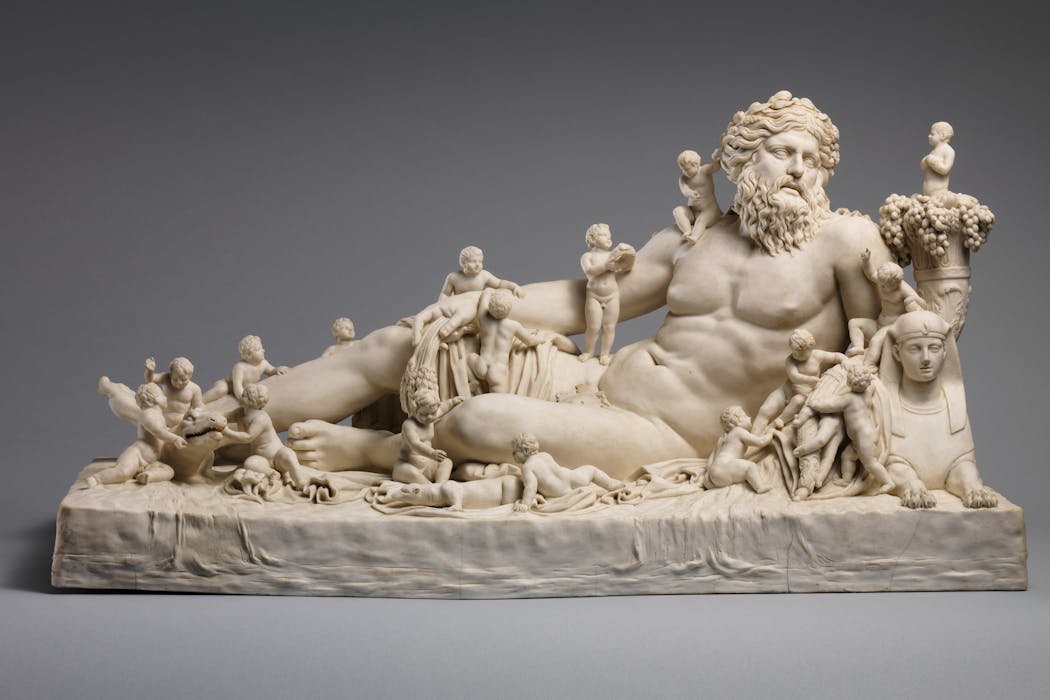
Artists have represented human bodies without clothes for a very long time. Metropolitan Museum of Art, CC BY

Curious Kids is a series for children of all ages. If you have a question you’d like an expert to answer, send it to CuriousKidsUS@theconversation.com.


Why are so many statues naked? – Artie, age 12, Astoria, New York


We are all born naked, and sculptures of the human body in its natural state are as old as humankind.

In the history of art, nudity does not have just one meaning; it can express everything from innocence to sexual desire, from triumph to defeat. The 20th-century art historian Kenneth Clark made a distinction between the “naked,” meaning unclothed and ashamed, and the “nude,” meaning the body in its most beautiful form. Most people today use the two words interchangeably, though.

The most influential male nude statues come from ancient Greece, starting in the sixth century B.C.E. There were a number of reasons for this cultural focus on the nude male body – in fact, the classics scholar Larissa Bonfante encouraged thinking of Greek nudity not just as a lack of clothing but as a “costume” in and of itself. In other words, nudity was something you wore in particular situations.

Carving in stone of an idealized nude male figure with one leg ahead of the other
Marble statue of a kouros from the sixth century B.C.E. in Greece.
The Metropolitan Museum of Art, CC BY

Artists portrayed many of the valued figures in Greek society – including gods, athletes, warriors and heroes – naked. Nudity was a feature of public life in certain settings: For example, athletes exercised and competed in the nude, and statues of the brawny nude demigod Herakles might adorn a temple. Nude, striding statues of young men called kouroi were used both as offerings to the gods and as grave markers.

Having a fine, athletic, youthful body, whether honed for athletic competition or for fighting wars, was not only a sign of being “kalos,” or beautiful, but also could prove your “arete,” or excellence.

Embodying ideals of beauty and excellence

white stone statue of a naked man with one foot ahead of the other
A Roman version of the ‘Spear Bearer,’ made following Polykleitos’ ideal proportions for the male body.
DEA/G. Nimatallah/De Agostini via Getty Images

These abstract ideals are exemplified in a famous statue called the “Spear Bearer,” made by the sculptor Polykleitos about 2,400 years ago. He believed that beauty was achieved through a harmony of parts. In addition to its symmetry, the “Spear Bearer” stands balanced in a “counterpoised” pose, with one supporting and one resting leg.

The “Spear Bearer” inspired many copies, including when it provided the model for the portrait of the first Roman emperor Augustus five centuries later.

stone statue of a man in draping toga raising one arm, with one leg forward
Roman emperor Augustus has the same stance but wears clothes.
Justin Benttinen/Wikimedia Commons, CC BY-SA

The emperor is shown with the same athletic build and “counterpoised” stance, but he has been transformed into a specific portrait via his aristocratic toga clothing and elaborately detailed armor.

Here, the body of the emperor projects an overall message of confident heroism, while his garments fill in details about his status and achievements. This statue illustrates how clothing can be very specific to a moment, place or role, while classical nudity may look more timeless.

The classics reborn

black and white drawing of a Renaissance artist drawing at the foot of a nude male statue
Many artists copied famous nude statues like the Apollo Belvedere, helping the ideal become an entrenched part of Western culture.
Sepia Times/Universal Images Group via Getty Images

Classical revivals such as the European Renaissance, around 1400-1600 C.E., and neoclassicism, around 1750-1900 C.E., brought back “heroic nudity,” each time helping it become even more a part of Western culture.

The rediscovery of ancient statues that had been buried in rubble after the fall of the Roman Empire excited artists of those eras, and they created many copies and adaptations of those models. Sketching and creating while studying nude live models became an important part of how artists trained, starting with the rise of art academies in the 1500s.

But like clothing, the nude “costume” could change over time.

For example, Michelangelo’s “David,” completed in 1504, imagines the Biblical hero as a pensive nude sporting only the rock and sling that will kill Goliath. The narrow-hipped body of “David” is a very different type from the “Spear Bearer” and does not fit Polykleitos’ ideal proportions.

large white statue of nude man with blurry people passing its pedestal in museum
Michaelangelo’s David is almost 17 feet tall.
Vincenzo Pinto/AFP via Getty Images

Nudity continued to be associated with godlike beauty and power. Michelangelo’s “Risen Christ,” for instance, shows Jesus standing heroically nude, divine and resurrected.

stone statue of man holding a large cross, in church setting
Michelangelo made the unusual choice to represent Jesus as an adult, nude.
THEPALMER/iStock via Getty Images Plus

And while an emperor would not usually have a nude portrait, French emperor Napoleon Bonaparte asked in 1802 to be sculpted as Mars, connecting him metaphorically to the Roman god of war and visually to the “Spear Bearer” and “Apollo Belvedere.”

A different standard for women

Female nudity in sculpture has its own history. Some of the earliest sculptures ever depict naked women with unnaturally exaggerated breasts, hips and pubic triangles, but scholars still disagree about how to interpret them.

4 angles of a sandy-colored carving of a woman's figure
Multiple views of the ‘Woman from Willendorf,’ which is about 4½ inches tall.
Bjørn Christian Tørrissen/Wikimedia Commons, CC BY-SA

For example, the 30,000-year-old Paleolithic “Woman from Willendorf,” discovered in 1908, was often called the “Venus of Willendorf,” associating her with the Roman goddess of love from tens of thousands of years later. But the figurine’s nakedness could have been more practical than erotic – to show bodily changes during pregnancy, for instance.

In ancient Mesopotamia 5,000 years ago, beautiful nudes depict both ideal women and goddesses. But in Greece, female nudity was considered inappropriate and did not become popular in statues until the fourth century B.C.E.

two side by side matching images of a statue of a nude woman
An 1860s slide of the Aphrodite statue on display in the Vatican.
Sepia Times/Universal Images Group via Getty Images

The best-known Greek female nude, the “Aphrodite of Knidos” by the sculptor Praxiteles, was revolutionary for its time and has inspired countless copies, particularly for her modest gesture covering her genitals. A Roman adaptation of this gesture covering both breasts and genitals is known as the Venus pudica type and is still seen frequently today.

stone statue of a stylized person kneeling
A kneeling statue of Hatshepsut is around 3,500 years old.
Metropolitan Museum of Art, CC BY

In Egypt, the first female pharaoh Hatshepsut presents a fascinating case of artists figuring out how to treat a female body in a traditionally male role. Topless and wearing a kilt and false beard like other pharaohs, her body is sexually ambiguous – that of a ruler rather than a woman.

Artists work in tradition – or not

Artists of every culture have explored the human body as a subject, so artists today are following in a very, very long tradition when they sculpt or paint the human figure without clothes.

They can be aiming for something that doesn’t seem as tied to one specific time or place, the way using clothes from a particular moment would. Or they could be trying to express some of the same ideals the ancient sculptors were, such as perfection, immortality or divinity.

black statue of a clothed modern woman, in a busy city plaza
‘Grounded In The Stars’ on display in New York City’s Times Square in 2025.
Spencer Platt/Getty Images

But many modern artists challenge these long traditions, creating statues of figures that are fully clothed. Consider Thomas J. Price’s “Grounded in the Stars”: a 12-foot, monumental sculpture of a woman standing in heroic counterpoise, wearing a T-shirt, leggings and comfortable shoes!


Hello, curious kids! Do you have a question you’d like an expert to answer? Ask an adult to send your question to CuriousKidsUS@theconversation.com. Please tell us your name, age and the city where you live.

And since curiosity has no age limit – adults, let us know what you’re wondering, too. We won’t be able to answer every question, but we will do our best.

The Conversation

Anna Swartwood House does not work for, consult, own shares in or receive funding from any company or organization that would benefit from this article, and has disclosed no relevant affiliations beyond their academic appointment.

ref. Why are so many statues naked? An art historian explains this tradition’s ancient roots – https://theconversation.com/why-are-so-many-statues-naked-an-art-historian-explains-this-traditions-ancient-roots-271821

Free 10-minute online programs aimed at overcoming depression led to real improvements – new research

Source: The Conversation – USA (3) – By Benjamin Kaveladze, Postdoctoral Fellow in Mental Health Resources, Dartmouth College

Free short, easily accessible programs could allow many more people to access mental health treatments. Elena Kalinicheva/iStock via Getty Images Plus

A well-designed 10-minute online exercise can spark small reductions in depression. That’s the key finding of my team’s paper, published in Nature Human Behaviour.

Many people believe that to start overcoming depression, they need a therapist, medication or a radical change in their environment. However, our study shows that taking small steps to learn practical skills can lead to measurable improvements in depressive symptoms.

In 2024, my team and I took to social media to pose a question to the field of mental health: If you could get 500 people struggling with depression to give you just 10 minutes of their attention, how would you spend that time? We received 66 responses from people around the world, including scientists, mental health app developers, popular YouTubers and students.

We chose what we considered the 12 most promising submissions to develop and rigorously test in one of the largest randomized controlled trials of mental health interventions ever conducted. These 12 “single-session interventions” ranged widely. Some used science-backed approaches emerging from in-person psychotherapy, while others were entirely novel. One featured a generative artificial intelligence-based expressive writing exercise. Another repurposed an inspirational Thai Life Insurance ad to show how helping others in small ways can make life more meaningful. Each intervention took under 10 minutes and was entirely self-guided.

In the study, we randomly assigned 7,505 American adult participants to complete one of the 12 single-session interventions or a control condition where they learned about trout. Participants answered questions about their well-being immediately after completing the intervention and again a month later. Each participant only completed the intervention (or control) one time.

Nearly all the interventions left users feeling hopeful and motivated to make positive changes immediately after completing them. But a month later, only two – Interactive Cognitive Reappraisal and Finding Focus – meaningfully reduced depression. These monthlong gains were small on average – around a 4% greater reduction on a standard depression measure for the top two exercises compared with the control – but small average effects can make a real difference, especially because these programs’ free, brief nature gives them a unique ability to reach people at a global scale.

Why it matters

Depression is a profound burden for the 332 million people it affects each year globally. While evidence-based treatments like psychotherapy are effective, long-term professional care is not an option for most people due to barriers like lack of access, cost and stigma. Our study is the first to show that single-session interventions can lead to monthlong reductions in depression in adults.

My team’s objective in studying single-session interventions is simple: If we can distill core elements of effective psychological treatments into short, user-friendly formats, many more people will be able to access science-backed support when they need it. The goal is not to replace therapists or psychiatrists, but to offer a reliable option for people who may otherwise receive no support at all. Single-session interventions like these can also be used to support traditional treatments, like for people on a waitlist to see a therapist.

This Thai life insurance ad on “believing in good” went viral and became the basis of an effective program for managing depression.

What’s next

Having identified effective single-session interventions for overcoming depression, our top priority is to spread the word that these evidence-based brief mental health resources are available online at no cost. For example, Koko, the team that created the most impactful intervention in our study, created free five- to 10-minute interventions for a range of mental health challenges. You can also try all 12 of the single-session interventions we tested. Our published paper has more information about each one’s effectiveness.

My team is continuing to research single-session interventions and study their implementation in a range of settings, including social media, schools and therapy waitlists. Our collaborators are exploring how AI can make single-session interventions more engaging and personalized to users’ needs.

For many people, depression can make gaining control of one’s thoughts and feelings seem out of reach. This study shows that taking just 10 minutes to learn evidence-based skills can be a valuable first step toward longer-term improvement.

The Research Brief is a short take on interesting academic work.

The Conversation

Benjamin Kaveladze has received funding from the National Institute of Mental Health (T32 MH115882).

ref. Free 10-minute online programs aimed at overcoming depression led to real improvements – new research – https://theconversation.com/free-10-minute-online-programs-aimed-at-overcoming-depression-led-to-real-improvements-new-research-272493

What decades of research reveal about involuntary substance use treatment – and why evidence points elsewhere

Source: The Conversation – USA (3) – By Susan E. Collins, Professor of Psychiatry and Behavioral Sciences, University of Washington

Since President Donald Trump issued a July 2025 executive order aimed at “ending crime and disorder on America’s streets,” national attention has increasingly focused on involuntary treatment as a response to visible homelessness and drug use.

A few months later, in September 2025, officials in Utah announced plans for a 16-acre facility on the edge of Salt Lake City that would hold up to 1,300 people experiencing homelessness after they are removed from public spaces and offered a choice: the facility’s abstinence-based shelter or jail time. The facility also plans to include 300 to 400 beds reserved for involuntary treatment, for adults who have psychiatric and substance use disorders.

Supporters of this facility describe it as a humane alternative to the streets, while detractors liken it to prison.

Since the release of the executive order, other proposals for expanding involuntary treatment for adults with substance use disorder have been cropping up across the U.S., including in New Jersey, Washington state and New York state.

I am a licensed clinical psychologist, substance-use treatment professional and researcher at the University of Washington. Throughout my three decades in the field, my research has focused on what works when it comes to substance use treatment, including among people experiencing homelessness.

I started reading research on involuntary treatment in 2018, when Ricky’s law – Washington’s version of involuntary treatment – was implemented where I live and work.

What I have learned is that involuntary treatment for adults with substance use disorders is necessary in extreme cases, but it does not outperform voluntary care and raises serious concerns about patient safety.

‘Involuntary’ or ‘forced’ treatment

People who have substance use disorder often experience pressure to enter treatment and stop using alcohol and drugs. This pressure ranges from informal coercion, like family pleas or providers leveraging housing or other services, to formal coercion, like treatment mandated by the court system.

Involuntary treatment, referred to in the U.S. as “involuntary civil commitment,” is distinct from these approaches and is the most restrictive means of formal coercion. Civil commitment authorizes a court, often based on a health care professional’s assessment, to order the involuntary deprivation of liberty, usually by confining a person to a locked treatment facility.

Unlike court-mandated treatment, which involves consent and choice, albeit limited, involuntary treatment does not involve consent and is often administered against a person’s will, with the length of treatment determined by court order and state law.

Such treatment is typically considered when a person poses an imminent risk of serious physical harm to themselves or others – for example, expressing suicidal or homicidal intent with a plan and means to carry it out. It may also be considered in cases of grave disability, such that an adult is unable to care for themselves without assistance.

woman standing in front of others during group therapy session
Evidence shows that voluntary treatment for substance use disorder tends to be more effective and less risky than involuntary treatment.
Olga Rolenko/Moment via Getty Images

A history of abuse

There is a reason involuntary treatment is reserved for these extreme cases. In the 19th and early 20th centuries, institutional abuses were rampant in state psychiatric hospitals, where patients were often confined and stripped of their civil rights for years, sometimes indefinitely. Through reforms in the 1960s, civil commitment law was applied in fewer cases, and legal protections for patients were strengthened.

But recent decades have seen a renewed interest in involuntary treatment specifically for substance use disorder. As of early 2026, 37 states and the District of Columbia have laws allowing involuntary treatment for substance use disorder, with most having added new and expanded civil commitment statutes in just the past 10 years.

In practice, these statutes vary widely in criteria, duration and utilization, reflecting a lack of consensus about their proper role.

Heightened risk of relapse, rearrest and death

Yet even as involuntary treatment for substance use disorder is being expanded, there is no clear scientific evidence that it is effective.

Three systematic reviews – wide-ranging analyses of the peer-reviewed, scientific literature – published in 2005, 2016 and 2023 have summarized the research on coercive substance use treatment in adults.

Within these reviews, some studies that are labeled as “involuntary treatment” actually refer to mandated but voluntary treatment, not civil commitment. When limited to studies of true involuntary treatment for substance use disorder, the literature indicates no measurable benefit and in some cases clear harm.

The most commonly cited harms are higher risk of relapse, rearrest and even death after release from treatment. In fact, one international research study showed that risk of death increases two- to nearly fourfold in the weeks following release, primarily due to overdose.

Unfortunately, there is no consistent and transparent program evaluation and reporting framework for involuntary substance use treatment in the U.S. To date, Massachusetts and Washington appear to be the only states to have published outcome evaluations of their involuntary substance use treatment programs.

Data from Massachusetts echoes the pattern reflected in the larger research literature: Adults with a history of involuntary treatment experienced 40% higher risk of death from overdose than people with no involuntary treatment history.

In its eight years of operation, Washington’s involuntary treatment program has published only one program evaluation. Findings showed mixed short-term results: There were modest reductions in emergency department use and homelessness, but lower rates of follow-up treatment for substance use and no change in arrests or employment. Most important, there has been no analysis of subsequent substance use outcomes or post-release mortality.

More data and more frequent reporting are needed to determine the effectiveness and safety of involuntary treatment for substance use disorder in the U.S.

In addition to documenting quantitative outcomes, documenting patients’ own subjective experiences of involuntary treatment for substance use disorder, as has been done for patients in involuntary treatment for psychiatric disorders, may help improve its delivery, even as it remains a last resort.

Calculating the cost

While patient health and civil liberties are top priorities, states also have to consider costs. It has been long documented that voluntary inpatient substance use treatment is substantially more expensive than lower-intensity, lower-barrier treatment and service settings. However, involuntary treatment layers on further costs of secured, statutorily designated placement with formal court proceedings and ongoing legal oversight.

Involuntary treatment under Massachusetts Section 35 law costs an estimated US$76,819 per male patient annually. In Washington, the average 11-day stay costs $7,298. Washington’s program yielded a low benefit-to-cost ratio, with the program losing approximately 81 cents for every dollar spent within the first year after treatment.

The few U.S. evaluations of involuntary treatment conducted to date have thus not indicated that involuntary treatment reduces publicly funded service costs sufficiently to offset its expense.

Box filled with green bags labeled Overdose Bag from Homeless Health Care Los Angeles
Harm reduction practices, such as distributing overdose kits, have proven effective in helping substance users.
Al Seib/Los Angeles Times via Getty Images

Other solutions

Meanwhile, the evidence consistently points to lower-barrier and voluntary approaches as more effective, less costly and less risky than involuntary treatment.

For people with substance use disorder who also experience homelessness, this includes a range of affordable and supportive housing options, from abstinence-based recovery housing to low-barrier permanent supportive housing paired with services, such as Housing First. Research shows Housing First effectively increases housing stability and reduces use of publicly funded services.

Evidence also supports implementing harm-reduction programs, including street-based engagement, syringe service programs and providing naloxone kits for overdose reversal. Collectively, these programs have been shown to prevent overdose, reduce transmission of blood-borne illness and connect people to voluntary services and treatment.

Effective behavioral treatments and medications that reduce craving and overdose risk, such as buprenorphine, methadone, naloxone and naltrexone, represent the gold standards in substance use treatment and overdose prevention.

Justice system diversion programs have been shown to be effective in keeping those convicted of low-level drug use and possession crimes out of jail. Case managers for these programs help participants find housing and vocational services, improving their stability. These programs reduce recidivism and relieve an already overloaded legal system.

Given the lack of existing evidence supporting involuntary treatment, I believe expanding it beyond acute, life-threatening crises is unwarranted. It is not a substitute for investing in and delivering lower-barrier, voluntary services that already have been shown to save lives, reduce harm and foster sustainable recovery.

The Conversation

Susan E. Collins is a Professor in the Department of Psychiatry and Behavioral Sciences at the University of Washington, where she also maintains a clinical practice. The perspectives provided in this article are her own and do not represent the positions of the University of Washington. Dr. Collins has previously conducted research and program evaluation projects funded by local, state, and federal agencies, as well as private nonprofit organizations. In one prior study, a pharmaceutical company provided medications but no research funding. She is a cofounder and equity holder in HaRT3S, a social purpose corporation, but does not currently receive funding from the company.

ref. What decades of research reveal about involuntary substance use treatment – and why evidence points elsewhere – https://theconversation.com/what-decades-of-research-reveal-about-involuntary-substance-use-treatment-and-why-evidence-points-elsewhere-268841

Failure of US-Iran talks was all too predictable — but turning to military strikes creates dangerous unknowns

Source: The Conversation – USA – By Nina Srinivasan Rathbun, Professor of International Relations, Munk School of Global Affairs & Public Policy, University of Toronto; USC Dornsife College of Letters, Arts and Sciences

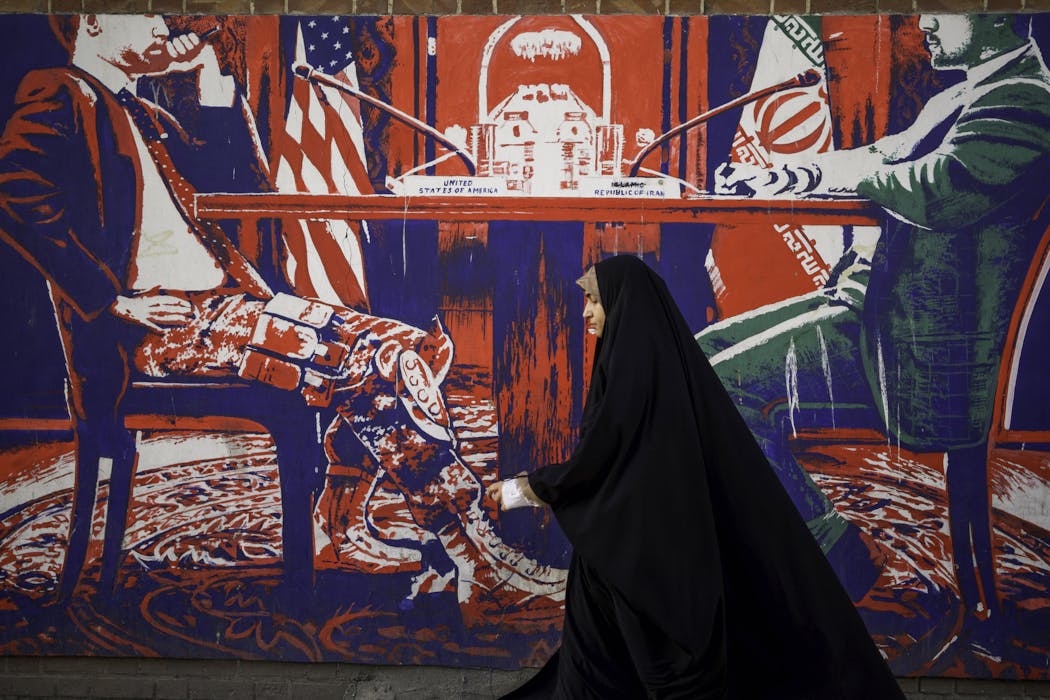
When it came to U.S.-Iran talks, the writing was on the wall. Mohammadali Najib/Middle East Images/AFP via Getty Images

Three rounds of nuclear talks between the U.S. and Iran failed to persuade President Donald Trump that a solution to the two country’s nuclear impasse lay in diplomacy, rather than military action. A perceived lack of progress in the last of those indirect negotiations on Feb 26, 2026, was enough to prompt Trump to green-light a massive onslaught of missiles that has degraded Iran’s offensive capabilities and killed Ayatollah Ali Khamenei and several members of Iran’s senior military leadership.

In response, Tehran has launched strikes across the Middle East, targeting Israel as well as Gulf states that host U.S. airbases. At least three Americans have been killed.

While the scale of the U.S., Israeli and Iranian strikes has taken some observers by surprise, the failure of the talks that led to them was all too predictable.

For diplomacy to be successful, both sides need to agree on the issues subject to negotiation and also believe that peaceful resolution is more valuable than military engagement. This clearly was not the case in the U.S.-Iran nuclear talks of 2025 and 2026.

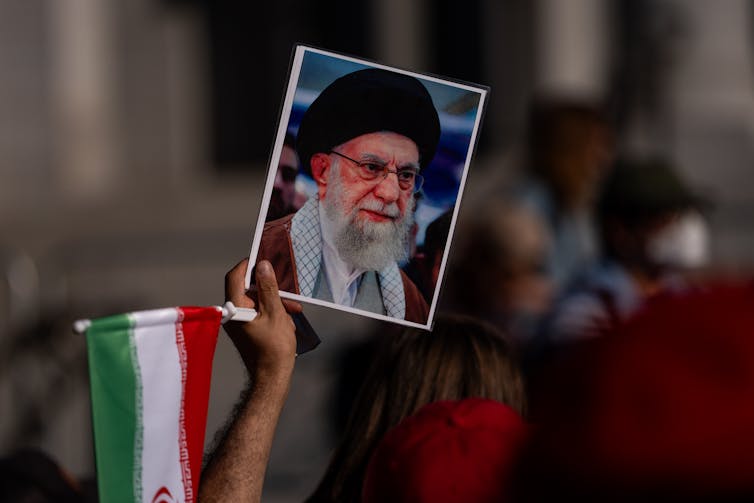
An arm holds aloft a photo of a man with a long beard.
A demonstrator holds a portrait of Ayatollah Ali Khamenei in Los Angeles on Feb. 28, 2026.
Qian Weizhong/VCG via Getty Images

As someone who has researched nonproliferation and U.S. national security for two decades and was involved in State Department nuclear diplomacy, I know that even under more favorable conditions, negotiations often fail. And the chances for success in the Iran-U.S. talks were always slim. In fact, publicly stated red lines by both sides were incompatible with each other – meaning negotiations were always likely to fail.

Iran wanted the talks confined only to guarantees about the civilian purpose of its nuclear program, not its missile program, support of regional proxy groups or human rights abuses. Essentially it wanted a return to 2015’s Joint Comprehensive Plan of Action, which halted Iran’s development of nuclear technology and stockpiling of nuclear material in exchange for lifting multiple international economic sanctions placed on Iran.

Meanwhile, Trump insisted on limits to Iran’s ballistic missiles and the cutting of Tehran’s support for regional militias. These were not included in the 2015 agreement, with parties ultimately deciding that a nuclear deal was better than the alternative of no deal at all.

False hope

Nevertheless, there had been a slim chance for a breakthrough of late.

While the positions of both the U.S. and Iranian governments had ossified since May 8, 2018 – the date when the first Trump administration withdrew the United States from the Obama-era Iran nuclear deal – there had been some recent movement by Iran, according to former U.S. diplomats involved in negotiations during the Obama and Biden administrations.

With U.S. military building up in the region, Iran appeared more willing to negotiate within the nuclear arena than before. There were plausible solutions to the issue of Iran’s enrichment of uranium capabilities, including maintaining a minimum domestic capacity to develop medical isotopes and a removal of Iran’s stockpile of enriched uranium necessary to build a nuclear bomb.

There was less openness on other points of contention. Notably, there was no movement on ballistic missiles, which had always been a red line. On the eve of the round of discussions held in Geneva on Feb. 17, Trump stated: “I think they want to make a deal.” Iran’s foreign minister, Abbas Araghchi, noted progress over the “guiding principles” of the talks.

But a lot of this optimism appeared to have dissipated by the time the two sides held another round of talks on Feb. 26. While mediator Oman’s negotiators continued to talk of progress, the U.S. side was noticeably silent. Reporting since has suggested that Trump was displeased with the way the talks had gone, setting the stage for the Feb. 28 attack.

Military brinkmanship

The threat of military action was, of course, a continued backdrop to the talks.

The USS Abraham Lincoln carrier group was deployed near Iranian waters in January as a signal of support to the Iranian protesters. The USS Gerald R Ford carrier group joined the buildup before the last round of talks.

Trump warned Iran that “if they don’t make a deal, the consequences are very steep.”

The thinking may have been that Iran, weakened by both the June 2025 U.S.-Israeli strikes and diminished capabilities of Tehran proxies Hamas and Hezbollah, was playing a weak hand in the talks.

Yet Iran also signaled a willingness to engage in military action. In the run-up to the last round of talks, Iran held military exercises and closed the Strait of Hormuz for a live-fire drill. Leaders in Tehran also declared that they would not restrain its response to another attack. The world is seeing that now, with a response that has seen Iran launch missiles across the Middle East and at rival Gulf nations.

Optimism has fallen before

Trump isn’t the first president to fail to secure a nuclear deal, although he is the first to respond to that failure with military action.

The Biden administration publicly pledged to strengthen and renew the Obama-era nuclear deal in 2021. However, Iran had significantly increased its nuclear technical capability during the years that had passed since the Joint Comprehensive Plan of Action collapsed. That increased the difficulty – just to return to the previous deal would have required Iran to give up the new technical capability it had achieved for no new benefits.

That window closed in 2022 after Iran removed all of the International Atomic Energy Agency’s surveillance and monitoring under the deal and started enriching uranium to near-weapons levels and stockpiling sufficient amounts for several nuclear weapons. The IAEA, the United Nations’ nuclear watchdog, maintains only normal safeguards that Iran had agreed to before the plan of action.

Optimism also existed for a short time in spring 2025 during five rounds of indirect talks that preceded the United States bombing Iran’s nuclear infrastructure in June as part of a broader Israeli attack.

A more unstable Middle East

When I worked in multilateral nuclear diplomacy for the U.S. State Department, we saw talks fail in 2009 regarding North Korea’s nuclear weapons program, after six years of on-and-off progress. The consequence of that failure is a more unstable East Asia and renewed interest by South Korea in developing nuclear weapons.

Unfortunately, the same dynamic appears to be playing out in the Middle East.

Military strikes have already killed more than 200 in Iran and across the region. A wider war in the Middle East is a possibility, and should the Iranian regime survive, it may commit to developing nuclear weapons given that the lack of them proved no deterrent to U.S. and Israeli military action.

Talks do not necessarily need an end point – in the shape of a deal – for them to have purpose. Under situations of increased military brinkmanship, talks could have helped the U.S. and Iran step back from the edge, build trust and perhaps develop better political relations – even if an actual deal remained out of reach.

Instead, Trump opted to go a different route.

This article includes sections originally published by The Conversation U.S. on Feb. 17, 2026.

The Conversation

Nina Srinivasan Rathbun does not work for, consult, own shares in or receive funding from any company or organization that would benefit from this article, and has disclosed no relevant affiliations beyond their academic appointment.

ref. Failure of US-Iran talks was all too predictable — but turning to military strikes creates dangerous unknowns – https://theconversation.com/failure-of-us-iran-talks-was-all-too-predictable-but-turning-to-military-strikes-creates-dangerous-unknowns-277209

The nation is missing millions of voters due to lack of rights for former felons

Source: The Conversation – USA – By Kevin B. Smith, Professor of Political Science, University of Nebraska-Lincoln

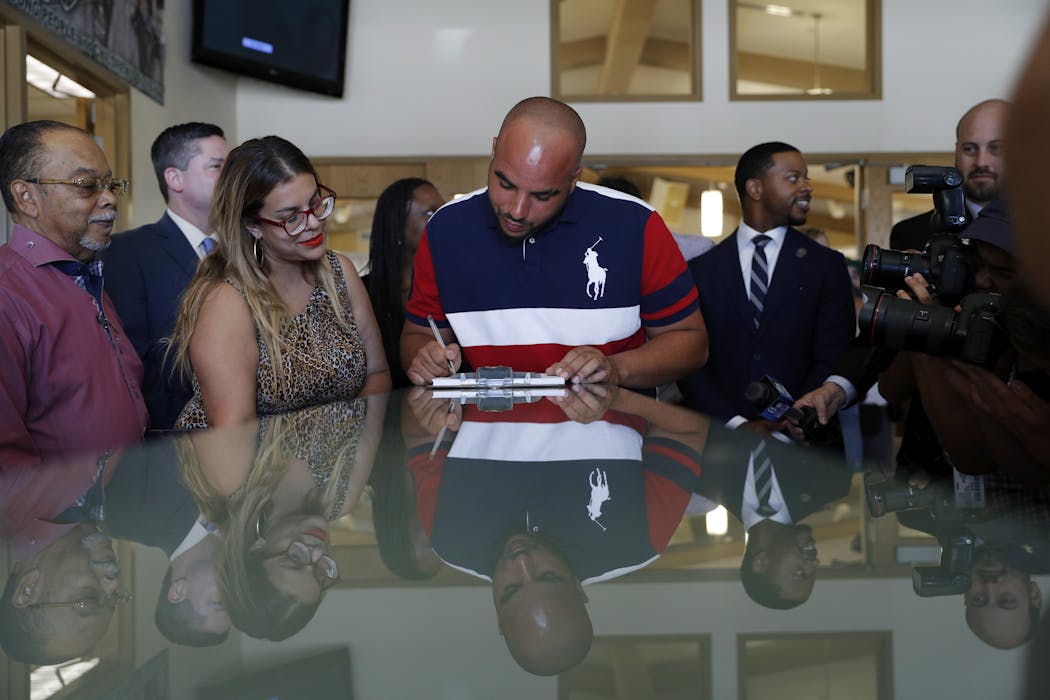
Javon Jackson, center, was able to register to vote following passage of a 2019 Nevada law that restored voting rights to formerly incarcerated individuals. AP Photo/John Locher

If you gathered every American with a prison record into one contiguous territory and admitted it to the union, you would create the 12th-largest state. It would be home to at least 7 million to 8 million people and hold a dozen votes in the Electoral College.

In a close presidential race, this hypothetical state of the formerly incarcerated could decide who wins the White House.

It may sound far-fetched to conceive of former felons determining the outcome of a presidential election, not by voting but by failing to vote. But there’s a real chance they already have – not just once, but twice. That’s in addition to affecting the outcomes of some U.S. Senate and gubernatorial elections.

I am a political scientist with a long-standing interest in the question of why mass incarceration rates vary so widely across states. My 2024 book, “The Jailer’s Reckoning,” explores that question and measures its political, social and economic impacts.

One of my findings is that the sheer number of people who’ve cycled through prisons over the past 40 years is influencing election outcomes.

Scholars vigorously debate the reasons why the United States locks up more of its citizens than any other liberal democracy, or even most authoritarian regimes. Less examined are the consequences of this decades-long social experiment in mass incarceration.

The consequences, however, likely include affecting the results of close elections. Incarceration certainly plays a key role in depressing voter turnout, which lags, in no small part, because felony convictions have made so many people ineligible.

Mass incarceration has led to a fast-growing bloc of citizens who either are legally barred from voting or have just stopped bothering. Under the right circumstances, this slice of the electorate is large enough to tip an election.

Imprisonment and the franchise

Felony conviction reduces political engagement, sometimes entirely. Inmates are legally barred from voting in all but two states, Maine and Vermont. Ten states bar ex-felons from voting either permanently or for some period of time, depending on the crime, absent unusual circumstances such as a governor’s pardon.

In Idaho, Oklahoma and Texas, a criminal record means that as many as 1 in 10 citizens are ineligible to vote. Among Black Americans, that number can jump to 1 in 5.

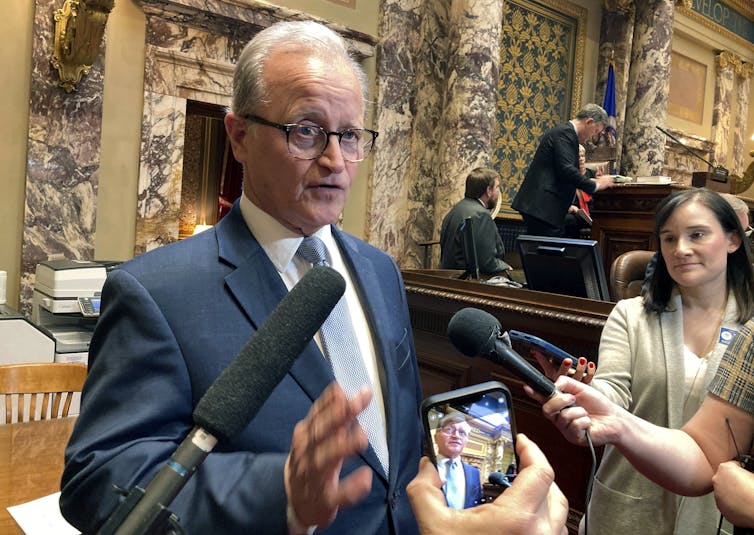
Standing in an ornate chamber, a man in a tie talks to reporters who hold microphones and cellphones up to his face.
Republican state Sen. Warren Limmer opposed a 2023 Minnesota bill that would have restored voting rights to former felons still on parole.
AP Photo/Steve Karnowski

However, even when legally eligible, ex-convicts rarely exercise the right to vote. Turnout rates among this population may be as low as 10%. Contact with the criminal justice system lowers political trust, which in turn reduces the likelihood of political engagement among ex-convicts.

Although scholars debate the exact partisan tilt of this potential constituency, there’s a consensus that it is disproportionately Democratic. The upper end of estimates suggest that if this group showed up to the polls, 70% would cast ballots for Democrats.

Even estimates that are much lower sketch a picture of an alternative political world. In 2000, roughly 7% of Florida’s 11.7 million voting-age residents were disenfranchised due to past convictions. They represented about 800,000 potential voters.

If 10% of them had voted and, say, 55% voted Democratic for president, that would have translated to a 6,000-vote swing for Vice President Al Gore. In reality, Texas Gov. George W. Bush won the state – and with it the presidency – by 537 votes.

Florida Republicans Ron DeSantis and Rick Scott may have owed their initial, tight gubernatorial victories to felony disenfranchisement, since the outcomes could have been much different if former felons had the franchise.

In 2018, Florida voters did approve a constitutional amendment to restore voting rights automatically to most former felons. But a subsequent law requiring felons to pay off fines and fees has kept nearly 1 million Floridians from being able to vote, according to the Sentencing Project, a group that opposes mass incarceration.

An electorate in the shadows

Serving time behind bars or having a felony record is not a social anomaly. It is an increasingly normalized feature of American life.

The most careful scholarly estimate suggests that at least 20 million Americans have served time in prison or lived under felony supervision, or both. That’s now a conservative estimate, as it is based on 2010 data.

Given their lack of voting habits, the millions of people in this group constitute a vast shadow electorate, far larger than the roughly 2% of American citizens legally ineligible to vote due to being currently incarcerated.

These disenfranchised or absent voters are a quiet force with the potential to reshape American democracy. The statistical models in my book show that in statewide races this constituency represents roughly a 1- or 2-percentage-point swing.

That might not sound like much, and in single-party strongholds it is not. In genuinely competitive statewide elections, however, a percentage point or two can be decisive.

Consider the 2016 presidential election. That year, the Electoral College outcome was decided by Michigan, Pennsylvania and Wisconsin. Donald Trump won all three states by less than a percentage point. Again, the outcome could easily have been different if voting rights for former felons were a given.

The Conversation

Kevin B. Smith does not work for, consult, own shares in or receive funding from any company or organization that would benefit from this article, and has disclosed no relevant affiliations beyond their academic appointment.

ref. The nation is missing millions of voters due to lack of rights for former felons – https://theconversation.com/the-nation-is-missing-millions-of-voters-due-to-lack-of-rights-for-former-felons-273328

Failure of US-Iran talks was all-too predictable – but Trump could still have stuck with diplomacy over strikes

Source: The Conversation – USA – By Nina Srinivasan Rathbun, Professor of International Relations, Munk School of Global Affairs & Public Policy, University of Toronto; USC Dornsife College of Letters, Arts and Sciences

When it came to U.S.-Iran talks, the writing was on the wall. Morteza Nikoubazl/NurPhoto via Getty Images

Three rounds of nuclear talks between the U.S. and Iran failed to persuade President Donald Trump that a solution to the two country’s nuclear impasse lay in diplomacy, rather than military action. A perceived lack of progress in the last of those indirect negotiations on Feb 26, 2026, was enough to prompt Trump to green-light a massive onslaught of missiles that has degraded Iran’s offensive capabilities and killed Ayatollah Ali Khamenei and several members of Iran’s senior military leadership.

In response, Tehran has launched strikes across the Middle East, targeting Israel as well as Gulf states that host U.S. airbases. At least three Americans have been killed.

While the scale of the U.S., Israeli and Iranian strikes has taken some observers by surprise, the failure of the talks that led to them was all too predictable.

For diplomacy to be successful, both sides need to agree on the issues subject to negotiation and also believe that peaceful resolution is more valuable than military engagement. This clearly was not the case in the U.S.-Iran nuclear talks of 2025 and 2026.

An arm holds aloft a photo of a man with a long beard.
A demonstrator holds a portrait of Ayatollah Ali Khamenei in Los Angeles on Feb. 28, 2026.
Qian Weizhong/VCG via Getty Images

As someone who has researched nonproliferation and U.S. national security for two decades and was involved in State Department nuclear diplomacy, I know that even under more favorable conditions, negotiations often fail. And the chances for success in the Iran-U.S. talks were always slim. In fact, publicly stated red lines by both sides were incompatible with each other – meaning negotiations were always likely to fail.

Iran wanted the talks confined only to guarantees about the civilian purpose of its nuclear program, not its missile program, support of regional proxy groups or human rights abuses. Essentially it wanted a return to 2015’s Joint Comprehensive Plan of Action, which halted Iran’s development of nuclear technology and stockpiling of nuclear material in exchange for lifting multiple international economic sanctions placed on Iran.

Meanwhile, Trump insisted on limits to Iran’s ballistic missiles and the cutting of Tehran’s support for regional militias. These were not included in the 2015 agreement, with parties ultimately deciding that a nuclear deal was better than the alternative of no deal at all.

False hope

Nevertheless, there had been a slim chance for a breakthrough of late.

While the positions of both the U.S. and Iranian governments had ossified since May 8, 2018 – the date when the first Trump administration withdrew the United States from the Obama-era Iran nuclear deal – there had been some recent movement by Iran, according to former U.S. diplomats involved in negotiations during the Obama and Biden administrations.

With U.S. military building up in the region, Iran appeared more willing to negotiate within the nuclear arena than before. There were plausible solutions to the issue of Iran’s enrichment of uranium capabilities, including maintaining a minimum domestic capacity to develop medical isotopes and a removal of Iran’s stockpile of enriched uranium necessary to build a nuclear bomb.

There was less openness on other points of contention. Notably, there was no movement on ballistic missiles, which had always been a red line. On the eve of the round of discussions held in Geneva on Feb. 17, Trump stated: “I think they want to make a deal.” Iran’s foreign minister, Abbas Araghchi, noted progress over the “guiding principles” of the talks.

But a lot of this optimism appeared to have dissipated by the time the two sides held another round of talks on Feb. 26. While mediator Oman’s negotiators continued to talk of progress, the U.S. side was noticeably silent. Reporting since has suggested that Trump was displeased with the way the talks had gone, setting the stage for the Feb. 28 attack.

Military brinkmanship

The threat of military action was, of course, a continued backdrop to the talks.

The USS Abraham Lincoln carrier group was deployed near Iranian waters in January as a signal of support to the Iranian protesters. The USS Gerald R Ford carrier group joined the buildup before the last round of talks.

Trump warned Iran that “if they don’t make a deal, the consequences are very steep.”

The thinking may have been that Iran, weakened by both the June 2025 U.S.-Israeli strikes and diminished capabilities of Tehran proxies Hamas and Hezbollah, was playing a weak hand in the talks.

Yet Iran also signaled a willingness to engage in military action. In the run-up to the last round of talks, Iran held military exercises and closed the Strait of Hormuz for a live-fire drill. Leaders in Tehran also declared that they would not restrain its response to another attack. The world is seeing that now, with a response that has seen Iran launch missiles across the Middle East and at rival Gulf nations.

Optimism has fallen before

Trump isn’t the first president to fail to secure a nuclear deal, although he is the first to respond to that failure with military action.

The Biden administration publicly pledged to strengthen and renew the Obama-era nuclear deal in 2021. However, Iran had significantly increased its nuclear technical capability during the years that had passed since the Joint Comprehensive Plan of Action collapsed. That increased the difficulty – just to return to the previous deal would have required Iran to give up the new technical capability it had achieved for no new benefits.

That window closed in 2022 after Iran removed all of the International Atomic Energy Agency’s surveillance and monitoring under the deal and started enriching uranium to near-weapons levels and stockpiling sufficient amounts for several nuclear weapons. The IAEA, the United Nations’ nuclear watchdog, maintains only normal safeguards that Iran had agreed to before the plan of action.

Optimism also existed for a short time in spring 2025 during five rounds of indirect talks that preceded the United States bombing Iran’s nuclear infrastructure in June as part of a broader Israeli attack.

A more unstable Middle East

When I worked in multilateral nuclear diplomacy for the U.S. State Department, we saw talks fail in 2009 regarding North Korea’s nuclear weapons program, after six years of on-and-off progress. The consequence of that failure is a more unstable East Asia and renewed interest by South Korea in developing nuclear weapons.

Unfortunately, the same dynamic appears to be playing out in the Middle East.

Military strikes have already killed more than 200 in Iran and across the region. A wider war in the Middle East is a possibility, and should the Iranian regime survive, it may commit to developing nuclear weapons given that the lack of them proved no deterrent to U.S. and Israeli military action.

Talks do not necessarily need an end point – in the shape of a deal – for them to have purpose. Under situations of increased military brinkmanship, talks could have helped the U.S. and Iran step back from the edge, build trust and perhaps develop better political relations – even if an actual deal remained out of reach.

Instead, Trump opted to go a different route.

This article includes sections originally published by The Conversation U.S. on Feb. 17, 2026.

The Conversation

Nina Srinivasan Rathbun does not work for, consult, own shares in or receive funding from any company or organization that would benefit from this article, and has disclosed no relevant affiliations beyond their academic appointment.

ref. Failure of US-Iran talks was all-too predictable – but Trump could still have stuck with diplomacy over strikes – https://theconversation.com/failure-of-us-iran-talks-was-all-too-predictable-but-trump-could-still-have-stuck-with-diplomacy-over-strikes-277209

Kansas revoked transgender people’s IDs overnight – researchers anticipate cascading health and social consequences

Source: The Conversation – USA – By Jae A. Puckett, Associate Professor of Psychology, Michigan State University

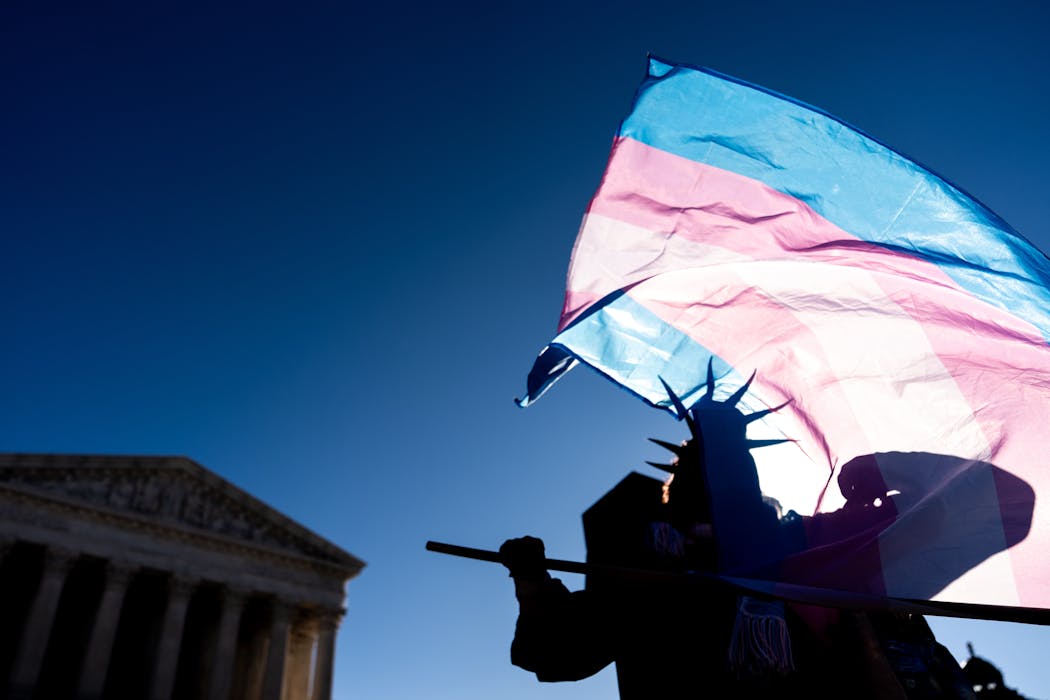
Anti-trans bills effectively restrict transgender people’s ability to participate fully in society. AP Photo/Julia Demaree Nikhinson

The number of bills directly targeting and undermining the existing legal rights of transgender and nonbinary people in the U.S. has been escalating, with sharp increases since 2021 and with each consecutive year. Kansas dealt the most radical blow yet on Feb. 26, 2026, as a law that immediately invalidates state-issued driver’s licenses, identification cards and birth certificates for holders whose gender marker does not match their sex assigned at birth took effect overnight.

This new law, called the House Substitute for Senate Bill 244, passed after legislators overrode the governor’s veto to rush it through legislation.

There is no grace period for this law, meaning trans and nonbinary people will have immediately invalid documents putting them at risk of a US$1,000 fine and up to six months in jail for driving with an invalid license. The law also restricts bathroom use to assigned sex at birth, and it allows citizens to sue transgender people for up to $1,000 for not complying.

While 21 states have passed similar bathroom restrictions, Kansas is the first to invalidate state-issued identification documents that were legally obtained.

We are researchers who study how marginalization and resilience affect the lives of trans and nonbinary people. Our work has documented how lack of access to accurate and affirming identification documents affects the health and well-being of this community.

By mandating the use of birth-assigned sex on identity documents, Kansas denies transgender people legal recognition and curtails their freedom of movement. These laws open the door to an even wider range of discriminatory policies.

People holding signs in protest, one reading 'My trans patients risk their health every day, because they are scared to use public restrooms. You just made this so much worse for them. I'll be sending the KS legislature the bill to treat those UTIs'
In addition to invalidating the IDs of transgender people, the Kansas law included what some have called a bounty hunter approach to bathroom restrictions.
AP Photo/John Hanna

ID is essential to participate in society

Invalidating someone’s identification documents has immediate and powerful consequences that cascade into all aspects of their life.

For example, without a valid driver’s license, many trans and nonbinary people will be unable to get to work, attend classes, pick up their children, visit the doctor, see friends or go to the grocery store. Trans and nonbinary people who need to drive with an invalid license risk fines and jail time, where they would be housed according to their sex assigned at birth.

Taking a train or bus is not a solution that would work for many people. Almost half of the U.S. population does not have access to public transportation, and for those who do, it is often poorly maintained, sparse or unreliable. The two transgender men who sued the state of Kansas to block the law noted how loss of their ability to drive makes them unable to work.

The effects of invalidating someone’s legal documents goes far beyond just transportation. Legal IDs are required to access health care, obtain housing, have a job, vote, attend college, access financial assistance or even purchase cold medicine at a pharmacy.

Health effects of incorrect ID

Not having identification documents with the correct gender marker also poses a safety and health risk.

Trans and nonbinary people who have not updated their identification documents are more likely to experience psychological distress and suicidality, in part due to increased day-to-day stress. For trans and nonbinary people whose physical appearance no longer aligns with their ID, not having updated documents puts them at increased risk for harassment and violence.

Roughly a quarter of trans and nonbinary people who have not updated their identification documents experience subsequent mistreatment when showing their IDs, including verbal harassment, assault and denial of services or access to settings. In our research, we similarly found that not having one’s gender legally affirmed is associated with greater discrimination and social rejection – one pathway to negative effects on mental and physical health.

To comply with the current law sets up an impossible situation for many trans and nonbinary people who have been using the restroom aligning with their gender identity and presentation for years. These individuals are set up to face violence, legal action or criminal penalties even when they are complying with the law, as using the restroom aligned with their sex assigned at birth will appear to others as contradicting their gender presentation.

Researchers and public health officials consider accurate and affirming identification documents an essential determinant of health. The World Health Organization, United Nations and the World Professional Association for Transgender Health have called for trans and nonbinary people to have the right to legal recognition of their gender.

Small LGBTQ+ and trans pride flags adorn two legislators' desks
Hundreds of anti-trans bills have circulated in the courts since 2021.
AP Photo/John Hanna

Another blow in a broader battle

The Kansas law is a flash point in the ongoing battle across the country for legal recognition of trans and nonbinary people’s existence.

The process for gender marker changes varies widely across states. Some require documentation of medical procedures to affirm one’s gender, while some do not allow gender marker changes at all. Some allow for gender-neutral gender markers, like the letter X.

According to the 2022 U.S. Trans Survey, which had over 92,000 participants, 59% of trans and nonbinary people have not updated their gender on any of their documents, and 23% have some of their documents updated but not others. This law and others like it will disadvantage even more trans and nonbinary people.

To us, this is about more than access to driving a car – it is a direct attack on the ability of trans and nonbinary people to live and survive. As of February 2026, 711 bills are under consideration across 41 states, with 110 at the national level. The restrictions these bills propose are far-reaching – prohibiting access to gender-affirming medical care, prohibiting students from using their chosen names and pronouns, banning trans and nonbinary youth from participating in sports, restricting access to bathroom facilities and censoring public education on issues related to gender.

In the face of these legislative efforts to control and erase trans and nonbinary people from public life, trans and nonbinary people, along with their allies, continue to stand up for each other and fight for their rights.

The Conversation

Jae A. Puckett co-leads the Gender Affirmation Project.

Noelle Martin is affiliated with the Gender Affirmation Project.

L. Zachary DuBois does not work for, consult, own shares in or receive funding from any company or organization that would benefit from this article, and has disclosed no relevant affiliations beyond their academic appointment.

ref. Kansas revoked transgender people’s IDs overnight – researchers anticipate cascading health and social consequences – https://theconversation.com/kansas-revoked-transgender-peoples-ids-overnight-researchers-anticipate-cascading-health-and-social-consequences-277052

Despite massive US attack and death of Ayatollah, regime change in Iran is unlikely

Source: The Conversation – USA – By Donald Heflin, Executive Director of the Edward R. Murrow Center and Senior Fellow of Diplomatic Practice, The Fletcher School, Tufts University

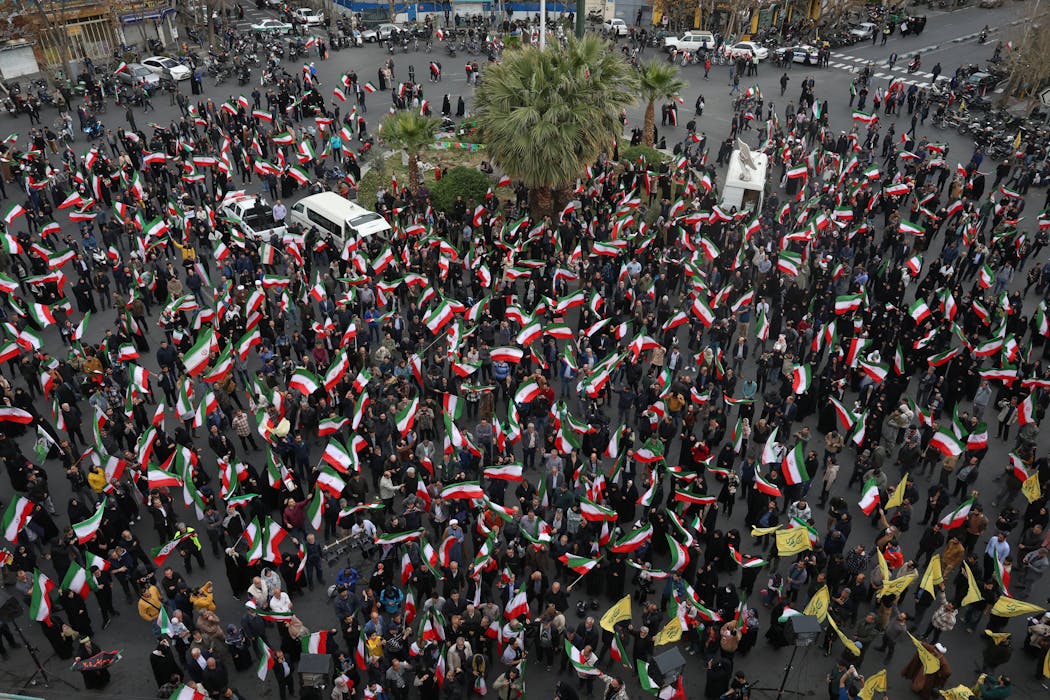
A group of demonstrators in Tehran wave Iranian flags in support of the government on Feb. 28, 2026 AP Photo/Vahid Salemi

After the largest buildup of U.S. warships and aircraft in the Middle East in decades, American and Israeli military forces launched a massive assault on Iran on Feb. 28, 2026.

President Donald Trump has called the attacks “major combat operations” and has urged regime change in Tehran. Iranian media reported Supreme Leader Ayatollah Ali Khamenei was killed in the strikes.

To better understand what this means for the U.S. and Iran, Alfonso Serrano, a U.S. politics editor at The Conversation, interviewed Donald Heflin, a veteran diplomat who now teaches at Tufts University’s Fletcher School.

Widespread attacks have been reported across Iran, following weeks of U.S. military buildup in the region. What does the scale of the attacks tell you?

I think that Trump and his administration are going for regime change with these massive strikes and with all the ships and some troops in the area. I think there will probably be a couple more days’ worth of strikes. They’ll start off with the time-honored strategy of attacking what’s known as command and control, the nerve centers for controlling Iran’s military. From media reporting, we already know that the residence of Khamenei was attacked.

What is the U.S. strategic end game here?

Regime change is going to be difficult. We heard Trump today call for the Iranian people to bring the government down. In the first place, that’s difficult. It’s hard for people with no arms in their hands to bring down a very tightly controlled regime that has a lot of arms.

The second point is that U.S. history in that area of the world is not good with this. You may recall that during the Gulf War of 1990-1991, the U.S. basically encouraged the Iraqi people to rise up, and then made its own decision not to attack Baghdad, to stop short. And that has not been forgotten in Iraq or surrounding countries. I would be surprised if we saw a popular uprising in Iran that really had a chance of bringing the regime down.

Several men wave flags in front of a building.
A group of men wave Iranian flags as they protest U.S. and Israeli strikes in Tehran, Iran, on Feb. 28, 2026.
AP Photo/Vahid Salemi

Do you see the possibility of U.S. troops on the ground to bring about regime change?

I will stick my neck out here and say that’s not going to happen. I mean, there may be some small special forces sent in. That’ll be kept quiet for a while. But as far as large numbers of U.S. troops, no, I don’t think it’s going to happen.

Two reasons. First off, any president would feel that was extremely risky. Iran’s a big country with a big military. The risks you would be taking are large amounts of casualties, and you may not succeed in what you’re trying to do.

But Trump, in particular, despite the military strike against Iran and the one against Venezuela, is not a big fan of big military interventions and war. He’s a guy who will send in fighter planes and small special forces units, but not 10,000 or 20,000 troops.

And the reason for that is, throughout his career, he does well with a little bit of chaos. He doesn’t mind creating a little bit of chaos and figuring out a way to make a profit on the other side of that. War is too much chaos. It’s really hard to predict what the outcome is going to be, what all the ramifications are going to be. Throughout his first term and the first year of his second term, he has shown no inclination to send ground troops anywhere.

Speaking of President Trump, what are the risks he faces?

One risk is going on right now, which is that the Iranians may get lucky or smart and manage to attack a really good target and kill a lot of people, like something in Jerusalem or Tel Aviv or a U.S. military base.

The second risk is that the attacks don’t work, that the supreme leader and whoever else is considered the political leadership of Iran survives, and the U.S. winds up with egg on its face.

The third risk is that it works to a certain extent. You take out the top people, but then who steps into their shoes? I mean, go back and look at Venezuela. Most people would have thought that who was going to wind up winning at the end of that was the head of the opposition. But it wound up being the vice president of the old regime, Delcy Rodríguez.

I can see a similar scenario in Iran. The regime has enough depth to survive the death of several of its leaders. The thing to watch will be who winds up in the top jobs, hardliners or realists. But the only institution in Iran strong enough to succeed them is the army, the Revolutionary Guards in particular. Would that be an improvement for the U.S.? It depends on what their attitude was. The same attitude that the vice president of Venezuela has been taking, which is, “Look, this is a fact of life. We better negotiate with the Americans and figure out some way forward we can both live with.”

But these guys are pretty hardcore revolutionaries. I mean, Iran has been under revolutionary leadership for 47 years. All these guys are true believers. I don’t know if we’ll be able to work with them.

Smoke rises over a city center.
Smoke rises over Tehran on Feb. 28, 2026, after the U.S. and Israel launched airstrikes on Iran.
Fatemeh Bahrami/Anadolu via Getty Images

Any last thoughts?

I think the timing is interesting. If you go back to last year, Trump, after being in office a little and watching the situation between Israel and Gaza, was given an opening, when Israeli Prime Minister Benjamin Netanyahu attacked Qatar.

A lot of conservative Mideast regimes, who didn’t have a huge problem with Israel, essentially said “That’s going too far.” And Trump was able to use that as an excuse. He was able to essentially say, “Okay, you’ve gone too far. You’re really taking risk with world peace. Everybody’s gonna sit at the table.”

I think the same thing’s happening here. I believe many countries would love to see regime change in Iran. But you can’t go into the country and say, “We don’t like the political leadership being elected. We’re going to get rid of them for you.” What often happens in that situation is people begin to rally around the flag. They begin to rally around the government when the bombs start falling.

But in the last few months, we’ve seen a huge human rights crackdown in Iran. We may never know the number of people the Iranian regime killed in the last few months, but 10,000 to 15,000 protesters seems a minimum.

That’s the excuse Trump can use. You can sell it to the Iranian people and say, “Look, they’re killing you in the streets. Forget about your problems with Israel and the U.S. and everything. They’re real, but you’re getting killed in the streets, and that’s why we’re intervening.” It’s a bit of a fig leaf.

Now, as I said earlier, the problem with this is if your next line is, “You know, we’re going to really soften this regime up with bombs; now it’s your time to go out in the streets and bring the regime down.” I may eat these words, but I don’t think that’s going to happen. The regime is just too strong for it to be brought down by bare hands.

This article was updated on Feb 28, 2026, to include confirmation of Ayatollah Ali Khamenei’s death.

The Conversation

Donald Heflin does not work for, consult, own shares in or receive funding from any company or organization that would benefit from this article, and has disclosed no relevant affiliations beyond their academic appointment.

ref. Despite massive US attack and death of Ayatollah, regime change in Iran is unlikely – https://theconversation.com/despite-massive-us-attack-and-death-of-ayatollah-regime-change-in-iran-is-unlikely-277180

Massive US attacks on Iran unlikely to produce regime change in Tehran

Source: The Conversation – USA – By Donald Heflin, Executive Director of the Edward R. Murrow Center and Senior Fellow of Diplomatic Practice, The Fletcher School, Tufts University

A group of demonstrators in Tehran wave Iranian flags in support of the government on Feb. 28, 2026 AP Photo/Vahid Salemi

After the largest buildup of U.S. warships and aircraft in the Middle East in decades, American and Israeli military forces launched a massive assault on Iran on Feb. 28, 2026.

President Donald Trump has called the attacks “major combat operations” and has urged regime change in Tehran.

To better understand what this means for the U.S. and Iran, Alfonso Serrano, a U.S. politics editor at The Conversation, interviewed Donald Heflin, a veteran diplomat who now teaches at Tufts University’s Fletcher School.

Widespread attacks have been reported across Iran, following weeks of U.S. military buildup in the region. What does the scale of the attacks tell you?

I think that Trump and his administration are going for regime change with these massive strikes and with all the ships and some troops in the area. I think there will probably be a couple more days’ worth of strikes. They’ll start off with the time-honored strategy of attacking what’s known as command and control, the nerve centers for controlling Iran’s military. From media reporting, we already know that the residence of Supreme Leader Ayatollah Ali Khamenei was attacked.

What is the U.S. strategic end game here?

Regime change is going to be difficult. We heard Trump today call for the Iranian people to bring the government down. In the first place, that’s difficult. It’s hard for people with no arms in their hands to bring down a very tightly controlled regime that has a lot of arms.

The second point is that U.S. history in that area of the world is not good with this. You may recall that during the Gulf War of 1990-1991, the U.S. basically encouraged the Iraqi people to rise up, and then made its own decision not to attack Baghdad, to stop short. And that has not been forgotten in Iraq or surrounding countries. I would be surprised if we saw a popular uprising in Iran that really had a chance of bringing the regime down.

Several men wave flags in front of a building.
A group of men wave Iranian flags as they protest U.S. and Israeli strikes in Tehran, Iran, on Feb. 28, 2026.
AP Photo/Vahid Salemi

Do you see the possibility of U.S. troops on the ground to bring about regime change?

I will stick my neck out here and say that’s not going to happen. I mean, there may be some small special forces sent in. That’ll be kept quiet for a while. But as far as large numbers of U.S. troops, no, I don’t think it’s going to happen.

Two reasons. First off, any president would feel that was extremely risky. Iran’s a big country with a big military. The risks you would be taking are large amounts of casualties, and you may not succeed in what you’re trying to do.

But Trump, in particular, despite the military strike against Iran and the one against Venezuela, is not a big fan of big military interventions and war. He’s a guy who will send in fighter planes and small special forces units, but not 10,000 or 20,000 troops.

And the reason for that is, throughout his career, he does well with a little bit of chaos. He doesn’t mind creating a little bit of chaos and figuring out a way to make a profit on the other side of that. War is too much chaos. It’s really hard to predict what the outcome is going to be, what all the ramifications are going to be. Throughout his first term and the first year of his second term, he has shown no inclination to send ground troops anywhere.

Speaking of President Trump, what are the risks he faces?

One risk is going on right now, which is that the Iranians may get lucky or smart and manage to attack a really good target and kill a lot of people, like something in Jerusalem or Tel Aviv or a U.S. military base.

The second risk is that the attacks don’t work, that the supreme leader and whoever else is considered the political leadership of Iran survives, and the U.S. winds up with egg on its face.

The third risk is that it works to a certain extent. You take out the top people, but then who steps into their shoes? I mean, go back and look at Venezuela. Most people would have thought that who was going to wind up winning at the end of that was the head of the opposition. But it wound up being the vice president of the old regime, Delcy Rodríguez.

I can see a similar scenario in Iran, if Khamenei and a couple of other leaders were taken out. But the only institution in Iran strong enough to succeed them is the army, the Revolutionary Guards in particular. Would that be an improvement for the U.S.? It depends on what their attitude was. The same attitude that the vice president of Venezuela has been taking, which is, “Look, this is a fact of life. We better negotiate with the Americans and figure out some way forward we can both live with.”

But these guys are pretty hardcore revolutionaries. I mean, Iran has been under revolutionary leadership for 47 years. All these guys are true believers. I don’t know if we’ll be able to work with them.

Smoke rises over a city center.
Smoke rises over Tehran on Feb. 28, 2026, after the U.S. and Israel launched airstrikes on Iran.
Fatemeh Bahrami/Anadolu via Getty Images

Any last thoughts?

I think the timing is interesting. If you go back to last year, Trump, after being in office a little and watching the situation between Israel and Gaza, was given an opening, when Israeli Prime Minister Benjamin Netanyahu attacked Qatar.

A lot of conservative Mideast regimes, who didn’t have a huge problem with Israel, essentially said “That’s going too far.” And Trump was able to use that as an excuse. He was able to essentially say, “Okay, you’ve gone too far. You’re really taking risk with world peace. Everybody’s gonna sit at the table.”

I think the same thing’s happening here. I believe many countries would love to see regime change in Iran. But you can’t go into the country and say, “We don’t like the political leadership being elected. We’re going to get rid of them for you.” What often happens in that situation is people begin to rally around the flag. They begin to rally around the government when the bombs start falling.

But in the last few months, we’ve seen a huge human rights crackdown in Iran. We may never know the number of people the Iranian regime killed in the last few months, but 10,000 to 15,000 protesters seems a minimum.

That’s the excuse Trump can use. You can sell it to the Iranian people and say, “Look, they’re killing you in the streets. Forget about your problems with Israel and the U.S. and everything. They’re real, but you’re getting killed in the streets, and that’s why we’re intervening.” It’s a bit of a fig leaf.

Now, as I said earlier, the problem with this is if your next line is, “You know, we’re going to really soften this regime up with bombs; now it’s your time to go out in the streets and bring the regime down.” I may eat these words, but I don’t think that’s going to happen. The regime is just too strong for it to be brought down by bare hands.

The Conversation

Donald Heflin does not work for, consult, own shares in or receive funding from any company or organization that would benefit from this article, and has disclosed no relevant affiliations beyond their academic appointment.

ref. Massive US attacks on Iran unlikely to produce regime change in Tehran – https://theconversation.com/massive-us-attacks-on-iran-unlikely-to-produce-regime-change-in-tehran-277180

Bad Bunny says reggaeton is Puerto Rican, but it was born in Panama

Source: The Conversation – USA (2) – By Brendan Frizzell, PhD Student in Sociology, USC Dornsife College of Letters, Arts and Sciences

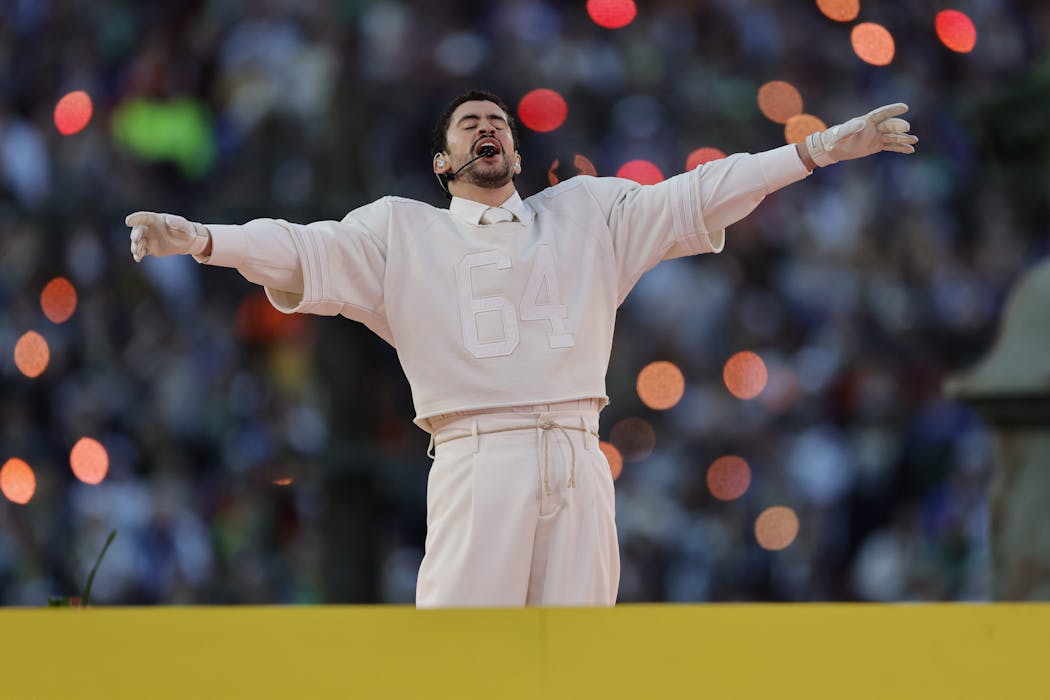
Puerto Rican reggaeton artist Bad Bunny performs the Super Bowl halftime show on Feb. 8, 2026, in Santa Clara, Calif. Bob Kupbens/Icon Sportswire via Getty Images

Bad Bunny likes to remind the world where he and his music come from.

In “EoO,” a song from his 2025 album “DeBÍ TiRAR MáS FOToS,” he raps, “‘Tás escuchando música de Puerto Rico” (“You’re listening to music from Puerto Rico”). Similarly, in the album’s second track, “VOY A LLeVARTE PA PR,” he announces that both he and reggaeton were born in Puerto Rico: “Aquí nací yo y el reggaetón, pa’ que sepa’.”

Puerto Rican artists like Bad Bunny certainly helped popularize the genre. But they didn’t create it.

In my own research of Latin America, I’ve explored how reggaeton comes from the small Central American nation of Panama, where the sound emerged from a swirl of sonic influences that included Spanish conquistadors, Caribbean immigrants and American colonizers.

English and Spanish collide

Understanding reggaeton requires understanding the intermingling of cultures and languages that Panama experienced over a relatively short period of time.

After Panama gained its independence from Spain in 1821, it became part of Gran Colombia, which, at its peak, included modern-day Colombia, Venezuela, Ecuador and Panama.

Throughout the 19th century, Panama experienced population growth and mass industrialization, and waves of Afro Caribbean immigrants arrived in northern Panama in search of economic opportunities. Since they came from former British colonies, many of them spoke English. Meanwhile, the many Afro Panamanians already living in the country, whose descendants had been trafficked as slaves, spoke Spanish.

These linguistic distinctions resulted in two primary groups of Black people in Panama: Spanish-speaking Afro Panamanians and English-speaking West Indians. They worked alongside one another on construction projects, such as the trans-Isthmus railroad, in the mid-19th century. But with their different languages, colonial histories and cultures, they didn’t always get along.

In 1903, Panama separated from Gran Colombia, becoming the independent nation we know today. The U.S. had supported Panama’s independence for strategic reasons: It wanted to build and control the Panama Canal to secure influence over maritime trade and military movement in the Western Hemisphere. While Gran Colombia had rebuffed earlier U.S. overtures, leaders of the newly independent Panama were more receptive to American interests.

Jim Crow is imported to the Canal Zone

Police brutality, exploitation and intra-racial and interracial tensions also served as scaffolding for reggaeton.

During the canal’s construction, the U.S. operated and controlled the Panama Canal Zone, a 553 square-mile (1,432 square-kilometer) parcel of land encompassing the canal. Up to 60,000 people lived there while the canal was being built, with residents segregated by race into “gold roll” and “silver roll” workers. Gold roll workers were usually white. Silver roll workers were Black, and they were tasked with the most dangerous jobs.

The Canal Zone’s white residents were far more likely to have access to health services and have proper sanitation; Afro Panamanian and immigrant workers from Barbados, the Antilles, Jamaica and other Caribbean countries were much more likely to be exposed to – and die from – malaria.

West Indians and Afro Panamanians also experienced police brutality. Black women, in particular, were harassed by white police officers, who often accused them of sex work.

While both West Indians and Afro Panamanians were subjected to segregation and police brutality, the Americans running the Canal Zone tended to treat the English-speaking West Indians better. Meanwhile, children born and raised in the Canal Zone were only taught English in schools, which Afro Panamanians resented.

These tensions led to the rise of “panameñismo,” a movement that sought to preserve and promote Spanish language and culture in Panama. This movement culminated in the passing of restrictive immigration laws targeted at West Indians and stripping second-generation West Indians of their citizenship.

Despite these anti-West Indian policies, many Jamaican, Barbadian and Antillean immigrants who had already built a life in Panama remained in the country even after the canal was completed in 1914.

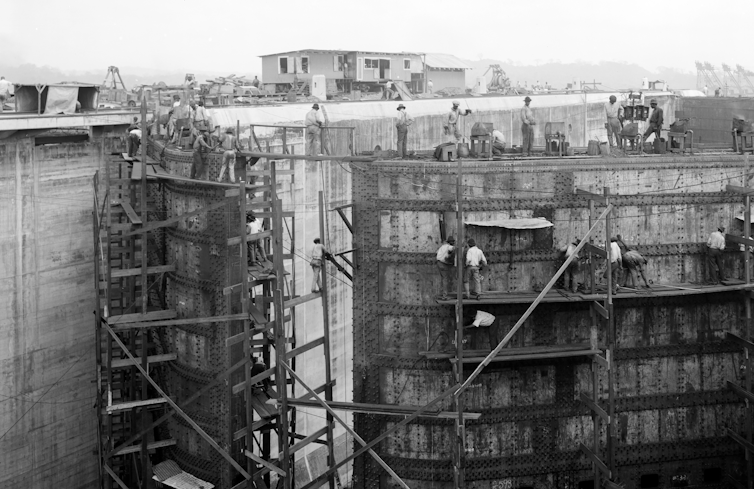
Black-and-white photo of a huge metal gate with tiny workers either posing or working from the wooden scaffolding.
Laborers work from scaffolding during the construction of the gates of Gatun Locks at the Panama Canal, c. 1914.
Detroit Publishing Company/Library of Congress via Getty Images

Reggae with a Spanish twist

In the 1960s and 1970s, Jamaicans introduced three subgenres of reggaemento, ska and dancehall – to Panama.

The lyrics were in English and Jamaican Patois, an English-based creole language. But it didn’t take long for an offshoot of reggae, “reggae en español,” to emerge. By the end of the 1970s, reggae en español had become popular in Panama and had spread throughout Latin America. Similarly, the nascent genre of hip-hop was gaining steam in the U.S. and eventually made its way to Panama, where an American presence had remained since the completion of the canal. It wasn’t until 1979 that the Canal Zone was abolished, and Panama did not have ownership over the canal until 2000.

It was out of this diverse mix of musical and linguistic influences that reggaeton was born, a genre that features the looping drum pattern – called “dembow riddim” – of Jamaican dancehall, the tropical vibe of reggae and a mixture of rapping and singing. Like reggae and hip-hop, reggaeton lyrics often emphasize Black solidarity and speak out against racial oppression and police violence.

The Panamanian artist Renato is credited with releasing the first reggaeton song, titled, “El D.E.N.I.,” in 1985.

The D.E.N.I. – an acronym for the Departamento Nacional de Investigaciones, or National Department of Investigations – was a tool of repression for Panama’s military dictatorship under Omar Torrijos in the 1970s and later under Manuel Noriega in the 1980s. The secret police force became entangled in drug trafficking and political corruption.

In ‘El D.E.N.I.,’ Renato denounces police brutality and racism.

In the song, Renato assumes the role of a racist police officer, the kind he encountered after relocating from the Canal Zone to Rio Abajo, an impoverished neighborhood in Panama City:

Con mi cara albina, te puedo golpear …

(With my albino face, I can hit you …)

Te voy a enseñar

(I am going to teach you)

Que a la justicia no se puede burlar

(That you cannot make fun of the justice system)

After its release, the track became a protest anthem against Panama’s military government.

While Renato’s popularity was growing in Panama, early Panamanian reggaeton artists and producers like El General were collaborating with Jamaican and American artists in New York City, where the underground dancehall and “hip-hop en español” scene thrived.

Even though El General primarily produced music, one of his tracks, “No Mas Guerra,” channeled the fighting spirit of original reggaeton, calling for Latin American communities to come together to end violence and wars.

A sanitized version of reggaeton goes mainstream

Despite not being responsible for its creation, Puerto Rico is where the genre went mainstream – largely thanks to the popular Puerto Rican artist Daddy Yankee.

Daddy Yankee’s music spread, in part, thanks to American brands like Kellogg’s and Reebok, whose ads featuring his songs were broadcast to American audiences. Few of his tracks contained the social justice themes that characterized early reggaeton.

Meanwhile, Tego Calderon, a Black Puerto Rican reggaeton artist, struggled to find a buyer for his 2003 debut album, “El Abayarde,” after being told he was too ugly for a musical career – a remark rooted in the anti-Blackness that’s pervasive in Puerto Rico.

Calderon’s experience in the industry and as a Black Puerto Rican dictated how he viewed the genre and created his music. Like Calderon, Renato and other Black reggaeton artists have spoken out against racism in reggaeton.

Man with afro wearing sunglasses and a red baseball jersey gestures while rapping into a microphone.
Reggaeton artist Tego Calderon performs at the BMG Music Showcase at Billboard Live in Miami Beach in 2003.
Rodrigo Varela/WireImage via Getty Images

Bringing reggaeton back to its roots

Though he may have the genre’s history slightly wrong, Bad Bunny’s own tracks return to reggaeton’s social justice roots.

Performed during the Super Bowl halftime show by Ricky Martin, Bad Bunny’s “LO QUE LE PASÓ A HAWAii” describes the history of U.S. colonialism in Hawaii and Puerto Rico, pointing out how local communities have been forced out by gentrifiers:

Quieren quitarme el río y también la playa

(They want to take the river and the beach away from me)

Quieren al barrio mío y que tus hijos se vayan

(They want my neighborhood and for your kids to leave)

And while the early-2000s reggaeton popularized by Daddy Yankee, Tego Calderon and Don Omar contained elements of misogyny and homophobia, Bad Bunny’s tracks “Yo Perreo Sola” and “YO VISTO ASÍ” build on feminist reggaeton anthems like Ivy Queen’s “Yo Quiero Bailar.”

Reggaeton was born out of a call for freedom, equality and justice. So I find it fitting that Bad Bunny is creating music that speaks to all types of people from all over the world.

The Conversation

Brendan Frizzell does not work for, consult, own shares in or receive funding from any company or organization that would benefit from this article, and has disclosed no relevant affiliations beyond their academic appointment.

ref. Bad Bunny says reggaeton is Puerto Rican, but it was born in Panama – https://theconversation.com/bad-bunny-says-reggaeton-is-puerto-rican-but-it-was-born-in-panama-276347