The inspiring and tragic story of Mabel Stark, America’s most famous female tiger trainer

Source: The Conversation – USA (2) – By Alessandro Meregaglia, Associate Professor and Archivist, Boise State University

Mabel Stark tamed tigers – and even wrestled with them. Circus and Allied Arts Collection, Illinois State University’s Special Collections, Milner Library

For the sharpest minds in show business, there’s always another hustle.

Take Joe Exotic, whose 2020 conviction for a murder-for-hire plot and violations of the Endangered Species Act hasn’t kept the eccentric tiger trainer out of the headlines.

Since beginning his 21-year sentence, the “Tiger King” star has started a cannabis brand, hawked digital art and begun work on an album tentatively titled “Jungle Rhapsody: A Tiger King Experience.” His most recent gambit involves selling personal phone calls from his cell – “What better Valentines gift could you ever get your loved one,” he posted on Instagram in January 2026.

But before Joe Exotic, there was Mabel Stark. Often described as America’s most famous female tiger trainer, the Tiger Queen was renowned for her pluck and charisma.

While researching Caxton Printers, the publisher of Stark’s autobiography, I came across unpublished archival material about Stark’s long career training animals. Like Joe Exotic, Stark had a knack for the spotlight. But even more impressively, she did it under the scrutiny of being a woman in a male-dominated world, while caring for her animals with love rather than fear.

From nurse to tiger trainer

Born Mary Ann Haynie in 1888 or 1889 – the exact year has always been a mystery – Stark grew up in Princeton, Kentucky. When she was 8 years old, she attended her first circus, where she was awed by the performances of trained animals.

Two decades would pass before she got a chance to try her hand at animal training.

Taking a vacation in California from her job as a nurse, Stark met Al Sands, manager of the Al G. Barnes Circus. After learning of her interest in training animals, he hired her on the spot.

Stark started by riding horses and training goats. It would take several years before she started working with tigers. But once she did, her career took off.

Crowds gathered to watch the “Tiger Girl” wrestle with big cats and wow audiences by commanding a dozen tigers at a time to follow her lead. Her wrestling act with her favorite tiger, Rajah – in which the duo would roll three or four times on the ground – became one of the best-known cat acts in the U.S.

She leveraged that success to join the Ringling Circus – the largest circus in the U.S. – for twice the pay.

As her popularity grew, Stark collaborated with screenwriter Gertrude Orr to write her life’s story.

Hold That Tiger” hit bookstores in 1938. Caxton Printers, a small publishing company in rural Idaho, issued the book and marketed it primarily to young readers. It proved popular, selling well enough to warrant multiple reprintings.

Known for giving a voice to first-time writers and authors from underrepresented groups, Caxton Printers found a niche market for circus-related titles. It also published books about Stark’s first employer, Al Barnes, as well as the Ringling Brothers and renowned lion trainer Louis Roth, who also happened to be one of Stark’s ex-husbands.

Female power in the ring

Stark was acutely aware of the path she was paving.

“I deliberately chose a field in which no other woman had specialized,” she wrote in her autobiography.

The conventional wisdom at the time, she added, was that “tigers were considered too dangerous for a woman to handle.”

Stark’s willingness to defy convention mattered. As circus historian Janet M. Davis noted, “circus women’s performances celebrated female power” and represented “a startling alternative to contemporary social norms.”

In early-20th-century American life, women might not have been able to vote or to serve on juries in most states, but in the ring, they commanded the audience’s attention riding bareback on horses, displaying strength and stamina, and performing gravity-defying acrobatic feats.

Stark’s schedule was relentless. She performed almost daily with traveling circuses, and she continually refined her act. In 1938, she worked with both tigers and lions at the same time, a first for a female trainer. She made history again working with 12 tigers in one cage.

A woman stands to the right of a tiger balancing on a chair with its front paws. In the background, a row of big cats pose on ledges.
Mabel Stark was able to work with 12 tigers in one cage.
Cinema Libre Studios

Whether it was due to the demands of her schedule or her preference for her cats, Stark’s relationships with men rarely worked out.

Over the course of her life, Stark married four times, three of which ended in divorce.

“I love these big cats as a mother loves her children,” she admitted to a friend. But “with husbands I was never happy.”

‘An animal trainer can’t have nerves’

Stark, aware of other trainers’ abusive behavior toward their tigers, took a different route.

“Kindness and patience are the biggest factors in training. … Trainers who try to beat animals into submission always get into trouble,” she said.

Yet her trade was not without danger.

“An animal trainer can’t have nerves. I haven’t had any since I gave up nursing,” she said in a 1922 New York Times interview. “They may be planting violets on me tomorrow, but while I have my health and strength, I’d rather take care of 10 tigers than a sick person.”

Stark had several serious accidents. Perhaps the worst was in 1928: After a circus train arrived late, Stark started her act without realizing her tigers hadn’t been fed for 24 hours. Two famished tigers attacked Stark after she fell in mud.

“As I lay there, helpless,” she wrote, “I wondered into how many pieces I would be torn, and how long it would take for the other tigers, growling and snarling restlessly on their seats, to finish me.” She suffered multiple broken bones, nearly lost her leg and required 300 stitches.

Woman holds a cup of tea while lying in a hospital bed.
Mabel Stark recovers in a Los Angeles hospital after her left arm was bitten by a tiger in 1935.
AP Photo/LMM

Another incident took place in 1950, when a tiger mauled her as she reached for its cub. Doctors initially thought they would have to amputate her arm but managed to save it.

Despite these close calls with her tigers, Stark maintained that “I am not afraid. I like the challenge of their roaring defiance.”

The stark reality

Stark toured with circuses until the late 1940s, when she was hired by Jungleland, a zoo located outside of Los Angeles.

Save for the three-and-a-half years she lived in Japan touring with her wild cat act, she spent the last 20 years of her career at Jungleland.

Stark never stopped drawing crowds to her show, nor did she shy away from the spotlight. She even appeared on the game show “What’s My Line?” in 1961 as a contestant whose profession the panel had to guess.

“Each year has left scars on my body, but it has also brought a full measure of happiness,” she recalled.
Stark worked at Jungleland until she was fired in 1967 after the park’s insurance company stopped covering her. Being away from her tigers devastated her, and she died by suicide just months later on April 20, 1968, at her home in Thousand Oaks.

The concluding paragraph of Stark’s autobiography anticipates the end of her life:

“The chute door opens as I crack my whip and shout, ‘Let them come!’ Out slink the striped cats, snarling and roaring, leaping at each other or at me. It’s a matchless thrill, and life without it is not worth while to me.”

The Conversation

Alessandro Meregaglia has received funding from the Idaho Humanities Council, the Bibliographical Society of America, and Boise State’s Institute for Advancing American Values for his research on Caxton Printers.

ref. The inspiring and tragic story of Mabel Stark, America’s most famous female tiger trainer – https://theconversation.com/the-inspiring-and-tragic-story-of-mabel-stark-americas-most-famous-female-tiger-trainer-276570

Formerly incarcerated Black men say they’re ‘doing OK’ while trying to cope with depression and PTSD

Source: The Conversation – USA (3) – By Helena Addison, Postdoctoral Fellow, Yale University

Community-based walk-in clinics and behavioral health centers can help men returning from jail or prison find support. Jacob Wackerhausen/iStock via Getty Images Plus

“People can assess me, interview me, incarcerate me, observe me, and they can think they know what I need,” said Shawn, a man in his early 50s who spent 15 years in and out of prison. “And that can be an educated assessment, but at the end of the day, I live inside of this body, inside of this head. I know what I need.”

Shawn is one of 29 formerly incarcerated Black men living in Philadelphia I interviewed as part of my research on coping with the mental health effects of imprisonment. His name and the names of other people quoted in this article are pseudonyms chosen to protect their privacy.

I study incarceration, mental health and access to health care. I’ve previously written about how confinement in jails and prisons leaves a lasting impact on mental health. But I also wanted to understand how the men I interviewed recognized and addressed their own mental health needs — through coping strategies, conversations with friends and family, and seeking mental health treatment.

Depressed but ‘doing OK’

Both research and clinical practice often fail to accurately capture how formerly incarcerated Black men identify their own mental health needs. That’s in part because implicit bias and anti-Black racism shape how mental health is assessed and treated in both correctional and community facilities.

Most of the men I spoke with said the mental health evaluations they received while incarcerated were designed only to “check the boxes” and conveyed a sense that no one really cared.

“They’d listen. They’d ask the pertinent questions,” Malcolm, 62, explained. “Then they’d talk down to you. And then they forget all about you.”

A few of the men received diagnoses they didn’t understand or believe. John, 29, described how a judge ordered him to have a mental health evaluation and that he was diagnosed as having post-traumatic stress disorder.

“I didn’t take it serious,” he said. “I didn’t start understanding mental health and believing it until I was locked up for a long period of time. I started reading up on it and studying it. …That’s how I started understanding therapy was important.”

Comparing the way participants described their mental health in their own words during the interviews with standardized screening tools revealed an important pattern. Most described themselves as “good,” “blessed,” “at peace” or “doing OK.” Yet nearly all reported symptoms of depression, anxiety or PTSD.

More than half reported three or more PTSD symptoms, such as trauma-related nightmares or feeling constantly on guard and easily startled.

These findings underscore that what appears to be resilience or well-being on the surface may mask underlying mental health needs, and the way those needs are expressed is shaped by culture and life experiences.

Young Black man wearing brown sweatshirt looks thoughtfully out of a window.
An appearance of resilience may mask underlying mental health needs.
Maskot/Maskot Collection via Getty Images

Coping mechanisms

Participants described self-reliance as essential to coping with incarceration and life after release. Physical separation from family and community, along with strained relationships and limited resources after release, left many feeling like they had to manage mental distress on their own.

“When you’re in prison, you learn to depend on yourself,” Ken, 56, said.

Some said incarceration reinforced existing coping strategies they’d had, such as exercising, praying, journaling, reading and meditation.

“I was always into being active,” said Tay, 31, who took part in a military-style bootcamp while incarcerated. “I learned how to use [exercise] to cope with my emotions.”

Others were introduced to new coping skills through educational, vocational and recreational programs inside their correctional facilities. Men spoke about how earning GEDs, taking college courses, learning trades and participating in other structured programs helped them manage stress and connect with others.

Unfortunately, the availability of such programs is limited.

Bottled-up feelings

Many of my study’s participants described wanting to “do things differently” after incarceration by expressing their emotions rather than suppressing them.

Some directly connected bottling up feelings to behaviors that had led to their incarceration.

“[You’ve] let a lot of stuff build up and then [you’ll] go outside and lash out on the first person you see,” David, 30, explained. “I’m getting more comfortable with expressing myself, whether it’s to my mom or if it’s to a friend.”

But finding the right people to confide in could be difficult.

“I try to express myself every day. People laugh and make a joke out of it,” Shakur, 21, said. “If I had somebody sitting one-on-one, talking to me about my problems, I’d feel better.”

Navigating romantic relationships was also difficult.

“We come back to them broken. And they trying to fix us, but they don’t know how to fix us. They’re broken too,” said Thomas, 44.

Mass incarceration doesn’t just fracture individuals – it erodes romantic relationships, as those left behind often navigate their own economic strain, limited resources and emotional distress.

Participants emphasized that speaking with people who shared similar experiences made it easier to express themselves and helped them navigate moments of distress.

Deep distrust of institutions

Many participants expressed deep distrust of mental health treatment within correctional facilities.

“Being a Black man living to 62 years old, I don’t trust the government from the Tuskegee experiment to the thing they had going on in Holmesburg prison,” said Carl. “How can you put your trust in that?”

Older Black man in suit stands at presidential podium while grey-haired white man claps hands behind him
Herman Shaw, 94, shown here with former President Bill Clinton in 1997, was one of nearly 400 Black men who were part of a government study that began in 1932. The participants were told that they were being treated for syphilis, but they were actually given a placebo.
Paul J. Richards/AFP via Getty Images

The Tuskegee study was a research study conducted by the U.S. federal government from 1932 to 1972. It followed Black men with syphilis but withheld effective treatment, even after the cure was made widely available in the 1940s. This caused preventable suffering and deaths.

During the Holmesburg Prison experiments, conducted at a Philadelphia prison from the 1950s through the 1970s, University of Pennsylvania researchers tested pharmaceuticals and chemicals on incarcerated men, many of them Black, without adequate informed consent.

Some of the men I interviewed also reported experiencing or witnessing mistreatment after reporting mental health concerns, and they expressed fears that seeking help while incarcerated would lead to punishment rather than support.

Stigma and seeking help

After release, participants shared concerns that they would be seen as “weak” by their peers for talking about their problems. This mental health stigma served as a barrier to seeking treatment.

“It’s not normal for guys like us, as far as being Black, African American, to reach out to a therapist,” said David.

Some men, like Antonio, who described feeling “like walls was closing in on me,” were motivated to seek treatment due to significant mental distress. Others were driven by a desire to improve their relationships with their wives or children.

Nearly 70% of participants had used formal mental health services at some point. Some were mandated to receive treatment, while others sought help voluntarily – sometimes at local walk-in clinics and behavioral health centers such as Wedge Recovery Centers, a Philadelphia staple that was mentioned by several participants but closed in May 2025 due to financial losses.

Communities can work together to reduce stigma around seeking mental health support and formal treatment, take expressions of mental distress from formerly incarcerated men seriously, and create spaces where they feel safe being vulnerable.

Participants named visible, neighborhood clinics with walk-in behavioral health services as places they felt able to go in moments of need. Increasing the visibility of these services, conducting outreach and integrating formerly incarcerated men as peer navigators can help build trust.

Read more of our stories about Philadelphia, or sign up for our Philadelphia newsletter on Substack.

The Conversation

Helena Addison received funding from National Institute of Nursing Research of the National Institutes of Health under Award Number F31NR020434, the Substance Abuse and Mental Health Administration and American Nurses Association Minority Fellowship Program, the University of Pennsylvania’s Presidential PhD Fellowship, and Jonas Philanthropies to support this study and/or her PhD training.

ref. Formerly incarcerated Black men say they’re ‘doing OK’ while trying to cope with depression and PTSD – https://theconversation.com/formerly-incarcerated-black-men-say-theyre-doing-ok-while-trying-to-cope-with-depression-and-ptsd-275071

Public defender shortage is leading to hundreds of criminal cases being dismissed

Source: The Conversation – USA – By Georges Naufal, Associate Research Scientist, Public Policy Research Institute, Texas A&M University

New York City Council member Rory Lancman is surrounded by public defenders at a 2018 press conference, where he demanded the prohibition of ICE arrests in all courthouses except when authorized by a judicial warrant. Hector Retamal/AFP via Getty Images

The Oregon Supreme Court on Feb. 5, 2026, issued a ruling that will have a wide impact. More than 1,400 criminal cases had to be dismissed, the justices ruled, due to lack of adequate counsel available for defendants.

Like other states, Oregon must provide defendants with legal representation if they cannot afford attorneys on their own. But Oregon has less than one-third of the attorneys it needs to provide adequate defense for indigents, or people who can’t afford counsel on their own.

Shortages of this scope are common around the country. Pennsylvania faces a similar shortage of about 30% of the public defenders it needs, with insufficient numbers of attorneys in nearly every county. New Mexico needs 67% more attorneys to provide effective counsel. Kansas needs 277 more public defenders, or roughly triple its current number.

As public policy researchers who study legal defense issues, we believe it’s clear that such shortages have repercussions throughout the criminal justice system.

Without enough lawyers providing indigent defense, defendants sit in jail longer, plead without guidance and risk wrongful convictions. Prosecutors face delays in clearing their cases. Court dockets slow, costs rise and public trust declines.

In other words, indigent defense shortages harm not only defendants but the justice system as a whole.

Rights to an attorney

The Sixth Amendment guarantees individuals facing criminal charges the right to defense counsel, at government expense if required. This right was clarified by a landmark Supreme Court case in 1963, Gideon v. Wainwright. The court ruled that states are required to provide attorneys to defendants who cannot afford an attorney.

About 80% to 90% of state defendants and more than 90% of federal defendants cannot afford a lawyer. The exact rate varies by state, year and type of charge, but it generally falls well above 50% of all criminal cases.

A woman wags her finger while addressing a man at close range.
Public defender Gordon Weekes, right, represented Nikolas Cruz, who was convicted in 2022 for a mass shooting in Parkland, Fla., four years earlier.
South Florida Sun Sentinel/Amy Beth Bennett via AP

Fulfilling the promise made in Gideon often falls to public defenders and private lawyers appointed by courts. Sixty-three years after the decision, the pool of lawyers willing to fulfill this promise is rapidly shrinking, aging and is overburdened, with lawyers sometimes working without pay.

Texas reflects this national problem. There are too few lawyers handling too many cases, putting the whole criminal justice system at risk. In a research report for the Texas Indigent Defense Commission, our team at Texas A&M University found that the state lost 1,345 attorneys who had been handling indigent defense cases between 2014 and 2023, or about one-fourth of all such attorneys. That decline happened even as the total number of lawyers in Texas grew by more than 25,000.

The problem is worse in rural areas, where judges cannot find enough attorneys to appoint, slowing court operations. In Texas, 27% of attorneys in rural counties are already overburdened and exceeding recommended caseload guidelines.

“I understand the irony of a prosecutor advocating for money for a public defender office, but at the end of the day it would help the county carry out its constitutional obligation,” Val Verde County prosecutor David Martinez told the Texas Tribune. “It would save the county hundreds of thousands of dollars in the long run.”

Fewer attorneys available

This problem is not new. A 2004 report from the American Bar Association outlined funding shortages that hampered hiring of defense counsel, leading to inexperienced and sometimes incompetent lawyers handling excessive caseloads.

But the problem has accelerated since the COVID-19 pandemic and its disruption of the labor market.

Our research shows that attorneys who take indigent defense cases often do so out of a strong sense of civic duty and commitment to public service. Attorneys are asked to do far more than just apply the law. They regularly help clients navigate housing, transportation, substance use and mental health needs. Without a strong sense of calling, many attorneys choose other areas of practice instead of public defense.

Some attorneys with a sense of motivation are still unable to join public service. Citing the cost of repaying law school loans, they enter private practice instead.

No simple solutions

The shortage of attorneys willing to take indigent defense cases is a serious policy problem. Solving it requires expanding the pool of attorneys who are available to take these cases – both the attorneys who are practicing today and the attorneys who will enter the profession in the future.

In a courtroom, a tattooed man sits while his attorney stands beside him.
Nick Reiner appears with deputy public defender Kimberly Greene during his arraignment in Los Angeles on Feb. 23, 2026. The son of U.S. movie director Rob Reiner pleaded not guilty to the fatal stabbing of his parents.
AFP/Chris Torres via Getty Images

Policymakers have mainly focused on expanding the pool of existing attorneys. The most common tools include increasing appointment fees, offering additional financial incentives and creating or expanding public defender offices.

These approaches can help in the short term, but their effects are limited. Raising fees rarely brings new attorneys into indigent defense; instead, it often lures attorneys from neighboring jurisdictions that already face shortages.

Raising fees for private lawyers also fails to address public defender offices, where attorneys are salaried and often paid less than prosecutors. Loan forgiveness programs can help recruitment and retention; research shows they matter for public service careers, but these programs are uneven across states and uncertain over time.

Financial incentives alone will not solve a workforce problem rooted in supply. A sustainable solution requires expanding the pool of prospective attorneys. We believe it would help for recruitment to begin much earlier, at the high school level, especially in rural areas, and continue through college and law school.

Current efforts tend to focus only on law students who are already committed to legal careers. Partnerships between counties, state agencies, bar associations, universities and community organizations could help build pipelines leading to public defense careers. They might offer, for example, internships and mentoring, or reduce barriers for students who want to serve their communities.

Expanding the pool of attorneys will require years of coordinated investment across states, counties, courts, law schools and the legal profession. Short-term incentives can prop up overburdened systems, but long-term recruitment will be needed to keep courts functioning and fully protect the constitutional right to counsel.

The Conversation

Georges Naufal has received funding from the Texas Indigent Defense Commission.

Emily Naiser has received funding from the Texas Indigent Defense Commission.

ref. Public defender shortage is leading to hundreds of criminal cases being dismissed – https://theconversation.com/public-defender-shortage-is-leading-to-hundreds-of-criminal-cases-being-dismissed-275534

Stressed out by politics? You’re not imagining it, and research shows that social media is largely to blame

Source: The Conversation – USA – By Stephen Neely, Associate Professor of Public Affairs, University of South Florida

Around 17% of American adults – roughly 44 million people – reported losing sleep over politics in 2024. MDV Edwards/iStock via Getty Images Plus

Does politics stress you out? Did the last election cause you to lose sleep, lose your temper or lose a friend? If so, you weren’t alone.

For the better part of two decades, the American Psychological Association has documented a steady increase in the phenomenon of “political stress” among American voters. However, research and reporting during that same period have focused primarily on the political consequences of increasing polarization and division rather than the psychological consequences of the modern political climate.

As a political scientist studying how the public engages with politics and media, I wondered: What does it mean to live in a political environment that is highly confrontational, emotionally charged and difficult to escape? And how does that environment affect people over time?

During the 2024 presidential election, I teamed up with three colleagues to answer those questions. Our book, The Anxious State: Stress Polarization, and Elections in America, published in January 2026, summarizes what we learned.

While several features of the modern political landscape contribute to political stress, one culprit in particular is alarmingly efficient at converting politics into chronic stress – social media.

Social media algorithms are designed to feed you content that provokes strong emotional reactions in order to keep you scrolling, clicking, commenting and sharing.

Political stress builds fast

We conducted four large, nationally representative surveys tracking Americans’ political attitudes and well-being, one every three months over the course of 2024. Across our election year surveys, roughly 4 in 10 American adults consistently reported that politics had caused them to experience at least one significant stress reaction in the past month. These included nontrivial conflicts with friends and family, sleep disruptions, lost tempers and being unable to mentally or emotionally disengage from politics.

In a country of roughly 260 million adults, that amounts to well over 100 million people experiencing measurable political stress in any given month.

In just one example, at each point in 2024, around 17% of American adults reported losing sleep over politics. This translates to roughly 44 million people nationwide. Sleep loss is not a trivial inconvenience. Extensive research shows that insufficient sleep is associated with impaired cognitive function, chronic health problems, diminished productivity and an increase in traffic accidents, just to name a few.

Our findings point to similar trends from the effects of lost tempers, fractured social networks and excessive political rumination. And while some degree of political stress might be expected in the lead-up to a highly consequential election, what surprised us most was how little these numbers changed over time. Despite a year filled with dramatic political events, reported levels of political stress rarely budged.

This stability suggests that political stress is no longer driven primarily by isolated moments of breaking news or electoral upheaval. Instead, it appears to be sustained by the environment in which people now encounter politics – and that environment is increasingly shaped by social media.

Why social media is different

Social media differs from earlier forms of political communication in a crucial way: Content is not presented chronologically or editorially; it is presented algorithmically. Platforms such as Facebook, X and TikTok are designed to maximize attention and engagement, which means they privilege content that provokes strong emotional reactions.

In other words, content that causes outrage, fear, moral condemnation and conflict is simply more likely to keep users scrolling, clicking, commenting and sharing.

As a result, political information on social media is more likely to reach people through a sensationalized and emotionally charged lens than information encountered through traditional news sources. And given the architecture of social networks, this content tends to reach users whether they seek it out or not.

Time spent online is stressful, but engagement makes it worse

Our findings show that even passive exposure to political content on social media is linked to elevated political stress. But active engagement – such as likes, reposts and comments – makes the problem substantially worse.

People who reported frequently encountering, commenting on or sharing political content online consistently exhibited the highest overall levels of political stress in our survey. Compared with those who primarily consumed political information passively and without engaging, active participants were far more likely to report losing sleep, losing their temper and feeling unable to disengage from politics.

In other words, the more that social media turns users from observers into participants in political conflict, the greater the psychological toll appears to be.

A generational divide

These effects, while substantial, were not distributed evenly across the population.

Younger Americans, particularly members of Gen Z, reported higher levels of political stress associated with social media use than older cohorts. This is not especially surprising. Younger adults are more likely to rely on social media as a primary source of political information.

For a generation that has never known a political environment without algorithmically curated feeds, the boundary between politics and everyday life is especially thin. Politics does not arrive at scheduled times, through discrete channels. Rather, it is interspersed with expressions of social identity, entertainment and peer interaction. And this constant exposure comes with a psychological cost.

Social media alone certainly isn’t to blame for the anxious and divisive state of America’s political climate. In our research, we identified a number of factors that contribute to Americans’ current levels of exhaustion with politics, including sharp increases in partisan hostility and negative – often uncivil – campaign tactics.

But social media nonetheless stands out for how efficiently it amplifies this stress – and that is unlikely to change unless and until voters become more aware that their emotions and well-being are being negatively influenced by the very platforms they turn to for information and connection.

The Conversation

I don’t own or “work for” the publisher selling our recent book, but the exposure for these data would presumably benefit both they and me.

ref. Stressed out by politics? You’re not imagining it, and research shows that social media is largely to blame – https://theconversation.com/stressed-out-by-politics-youre-not-imagining-it-and-research-shows-that-social-media-is-largely-to-blame-274849

‘Destruction is not the same as political success’: US bombing of Iran shows little evidence of endgame strategy

Source: The Conversation – USA – By Farah N. Jan, Senior Lecturer in International Relations, University of Pennsylvania

A plume of smoke rises after a strike in Tehran on March 2, 2026. AP Photo/Mohsen Ganji

Shortly after the opening salvo of U.S.-Israeli attacks on Iran on Feb. 28, 2026 – with missiles targeting cities across the country, some of which killed Supreme Leader Ayatollah Ali Khamenei – President Donald Trump declared the objective was to destroy Iran’s military capabilities and give rise to a change in government.

Framing the operation as a war of liberation, Trump called on Iranians to “take over your government.”

In the first days alone, Israel dropped over 2,000 bombs on Iranian targets, equal to half the tonnage of the 12-day Israel-Iran conflict in June 2025. Heavy U.S. bombing, meanwhile, has targeted Iran’s Revolutionary Guard as well as ballistic missile and aerial defense sites.

The destruction is real. But, as an international relations scholar, I know that destruction is not the same as political success. And the historical record of U.S. bombing campaigns aimed at regime change shows that the gap between the two – the point at which Afghanistan, Iraq and Libya campaigns all stalled – is where wars go to die.

Destruction is not strategy

Decades of scholarship dating back to World War I on using air power to force political change has established a consistent finding: Bombing can degrade military capacity and destroy infrastructure, but it does not produce governments more cooperative with the attacker.

Political outcomes require political processes – negotiation, institution-building, legitimate transitions of power.

Bombs cannot create any of these. Instead, what they reliably create is destruction, and destruction generates its own dynamics: rallying among the population, power vacuums, radicalization and cycles of retaliation.

The American record confirms this. In 2003, the George W. Bush administration launched “Shock and Awe” in Iraq with the explicit aim of regime change. The military objective was achieved in weeks. The political objective was never achieved at all.

The U.S. decision to disband the Iraqi army created a vacuum filled not by democratic reformers but by sectarian militias and eventually ISIS. The regime that eventually emerged was not friendly to American interests. It was deeply influenced by Iran.

In 2011, the Obama administration led a NATO air campaign in Libya that quickly expanded from civilian protection into regime change. Dictator Moammar Gadhafi was overthrown and killed.

But there was no plan for political transition. Chaos and political instability have endured since. Asked what his “worst mistake” was as president, Barack Obama said, “Probably failing to plan for the day after, what I think was the right thing to do, in intervening in Libya.” Libya remains a failed state today.

The intervention also sent a powerful signal to countries pursuing nuclear weapons: Gaddhafi had dismantled his nuclear program in 2003. Eight years later, NATO destroyed his regime.

Even Kosovo, often cited as the success story of coercive air power, undermines the case. Seventy-eight days of NATO bombing did not, by themselves, compel Slobodan Milosevic, president of the Federal Republic of Yugoslavia, to withdraw.

What changed was the credible threat of a ground invasion combined with Russia’s withdrawal of diplomatic support. The political outcome – contested statehood, ongoing ethnic tensions – is hardly the stable governance that air power advocates promise.

The pattern is consistent: The United States repeatedly confuses its unmatched capacity to destroy from the air with the ability to dictate political outcomes.

Why this war?

The recent U.S. attacks on Iran raise a fundamental question: Why is the United States fighting this war at all?

The administration has declared regime change as its objective, justifying the campaign on the grounds of Iran’s nuclear program and missile capabilities.

But that nuclear program was being actively negotiated in Geneva days before the strikes. And Iran’s foreign minister told NBC the two sides were close to a deal. Then the bombs fell.

Iran did not attack America. And it currently does not have the capability to threaten the American homeland. What Iran challenges is Israel’s regional military dominance, and I believe it is Israel’s objective of neutralizing a rival that is driving this operation.

Israel targeted 30 senior Iranian leaders in the opening strikes. Israeli officials described it as a preemptive attack to “remove threats to the State of Israel.” I see the strategic logic for these killings as Israel’s, and Americans are absorbing the costs.

U.S. military bases in Bahrain, Qatar, Kuwait, the UAE, Jordan, and Saudi Arabia have taken Iranian missile fire. American service members are in harm’s way – three have already been killed – not because Iran attacked them, but I believe because their president committed them to someone else’s war without a clear endgame.

Smoke rises from buildings.
Smoke rises from a reported Iranian strike in the area where the U.S. Embassy is located in Kuwait City on March 2, 2026.
AFP via Getty Images

Each coercive step in this conflict – from the 2018 withdrawal from the nuclear deal, to the 2020 assassination of Qasem Soleimani, Iran’s most powerful military commander, to the June 2025 strikes – was framed as restoring leverage.

Each produced the opposite, eliminating diplomatic off-ramps, accelerating the very threats it aimed to contain.

The regime is not one man

Decapitation strikes assume that removing a leader removes the obstacle to political change. But Iran’s political system is institutional — the Guardian Council, the Assembly of Experts and the Revolutionary Guard have survived for four decades.

The system has succession mechanisms, but they were designed for orderly transitions, not for active bombardment. The group most likely to fill the vacuum is the Revolutionary Guard, whose institutional interest lies in escalation, not accommodation.

There is a deeper irony. The largest protests since 1979 swept Iran just weeks ago. A genuine domestic opposition was growing. The strikes have almost certainly destroyed that movement’s prospects.

Decades of research on rally-around-the-flag effects – the tendency of populations to unite behind their government when attacked by a foreign power – confirms that external attacks fuse regime and nation, even when citizens despise their leaders.

Iranians who were chanting “death to the dictator” are now watching foreign bombs fall on their cities during Ramadan, hearing reports of over 100 children killed in a strike on a girls school in Minab.

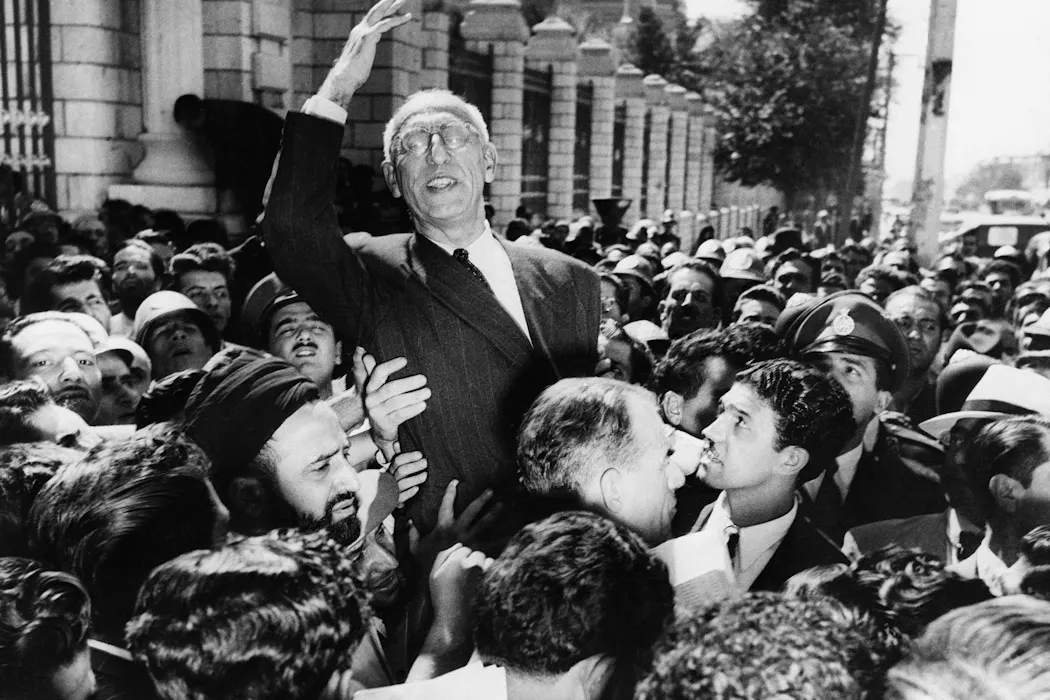
Trump’s call for Iranians to “seize control of your destiny” echoes a familiar pattern. In 1953, the CIA overthrew Iran’s democratically elected prime minister in the name of freedom.

That produced the Shah, the Shah’s brutal reign led to the Iranian Revolution in 1979, and the revolution produced the Islamic Republic now being bombed.

What comes next? And what guarantee is there that whatever emerges will be any friendlier to Israel or the United States?

What does success look like?

This is the question no one in Washington has answered. If the objective is regime change, who governs 92 million people after?

If the objective is stability, why are American bases across the Middle East absorbing missile fire?

There is no American theory of political endgame in Iran — only a theory of destruction. That theory has been tested in Afghanistan, Iraq and Libya – and Iran itself over the preceding eight months. It has failed every time, not because of poor execution, but because the premise is flawed.

Air power can raze a government’s infrastructure. It cannot build the political order that must replace it. Iran, with its sophisticated military, near-nuclear capability, proxy networks spanning the region and a regime now martyred by foreign attack, will likely not be the exception.

U.S. law prohibits the assassination of foreign leaders, and instead Israel killed Iran’s supreme leader while American warplanes filled the skies overhead. Washington has called the result freedom at hand, but it has not answered the only question that matters: What comes next?

The Conversation

Farah N. Jan does not work for, consult, own shares in or receive funding from any company or organization that would benefit from this article, and has disclosed no relevant affiliations beyond their academic appointment.

ref. ‘Destruction is not the same as political success’: US bombing of Iran shows little evidence of endgame strategy – https://theconversation.com/destruction-is-not-the-same-as-political-success-us-bombing-of-iran-shows-little-evidence-of-endgame-strategy-277201

Ayatollah Ali Khamenei’s killing plays into Shiite Islam’s reverence for martyrs, but not for all Iranians

Source: The Conversation – USA (3) – By Eric Lob, Associate Professor of Politics and International Relations, Florida International University

A banner with the image of Ali Khamenei during a memorial vigil in Tehran, Iran. Majid Saeedi/Getty Images

The day Ayatollah Ali Khamenei was killed, the Iranian government called for 40 days of public mourning in line with Shiite tradition. It also praised the supreme leader for his martyrdom – a concept considered sacred and significant in the Islamic Republic and Shiite Islam.

While some Iranians came out to commemorate Khamenei, others celebrated his demise. The scenes reflected the contradictions in how Khamenei was perceived: by some as a martyr, and by others as an oppressor.

Women in headscarves hold portraits of Ayatollah Ali Khamenei.
Demonstrators mourn the death of Ayatollah Ali Khamenei outside the Israeli consulate in Istanbul, on March 1, 2026.
AP Photo/Khalil Hamra

The theology of martyrdom

The roots of Shiite reverence for martyrdom date back centuries. After the death of the Prophet Muhammad in 632, a dispute emerged over who would inherit the leadership of the Muslim community. On one side was the prophet’s senior companion and father-in-law, Abu Bakr. On the other was his cousin and son-in-law, Ali ibn Abi Talib, who became the first Shiite imam.

In 680, the Battle of Karbala took place in present-day Iraq between Hussain ibn Ali – the grandson of the Prophet Muhammad and the third Shiite imam – and Yazid ibn Mu’awiya. Yazid was the second Umayyad caliph, which means deputy of God, and the ruler of the early Islamic empire.

Before the battle, negotiations had failed between Hussain and Yazid’s governor. Hussain refused to swear allegiance to Yazid, believing him to be unjust and not the rightful successor. In a 10-day battle that followed, most of Hussain’s army, including some of his closest companions and relatives, was slain. Hussain’s followers, who believed him to be the third Imam – after his father Ali and older brother Hasan ibn Ali – came to be called Shiites. Since then, martyrdom has held a central place among Shiites. They comprise the smaller of the two main branches of Islam, with Sunni being the larger one.

Iran has become the epicenter of Shiite Islam, which is the official state religion. Ninety to 95% of the population identify accordingly.

Every year on the 10th of Muharram, the first month of the Islamic calendar and the same day as the Battle of Karbala, Shiite Muslims inside and outside of Iran observe Ashura and commemorate the slaying of Hussain by reenacting his death and performing self-flagellation, among other rituals.

Iranian political rhetoric

In Iran and other parts of the Muslim world, contemporary politics is often framed in this seventh-century language of moral resistance.

After the Islamic Republic of Iran was established under Ayatollah Ruhollah Khomeini in 1979, martyrdom appeared as a central theme. This was particularly the case during and after the Iran-Iraq War, which lasted eight years in the 1980s and was perceived and portrayed as a holy war.

During the war, the Islamic Republic suffered hundreds of thousands of casualties. After Khomeini reluctantly accepted a United Nations-brokered ceasefire, he compared the decision to drinking a “poisoned chalice.” In other words, he considered the compromise a crushing defeat that contradicted his goal of overthrowing Iraqi President Saddam Hussein, even if it enabled the Iranian regime to survive.

After the war, public space in Iran was increasingly filled with revolutionary and religious symbols related to wartime sacrifice and martyrdom. They included street signs named after prominent people who died in the war, murals and posters of the fallen, and media programs and publications dedicated to the conflict – symbols which were still prominent when I visited Iran between 2009-2011.

The Islamic Republic’s Foundation of Martyrs and Veterans Affairs – Bonyad-e Shahid va Omur-e Ithargaran – provided services for veterans and families of the fallen in the war and other conflicts. Like other foundations under the purview of Khamenei, who succeeded Khomeini after his death in 1989, it also participated in profit-seeking activities.

It is against this backdrop that Khamenei’s actions leading up to the American and Israeli strikes on Feb. 28 that cost him his life must be seen.

During the three rounds of U.S.-Iran negotiations in Oman and Geneva before the current conflict, Khamenei refused to capitulate to President Donald Trump’s demands. They comprised curbing not only Iran’s nuclear enrichment, but also its missile program and support for its regional proxies. Khamenei directed his negotiators not to yield ground, particularly on those last two points, seen as red lines in Tehran – even as Trump amassed the most military assets in the region since the U.S. invasion of Iraq in 2003.

Authoritarianism, protests, polarization

Demonstrators carry Iranian flags and chant slogans during a rally.
Iranian demonstrators living in Cyprus attend a protest outside the presidential palace in Nicosia on Feb. 14, 2026.
AP Photo/Petros Karadjias

For over three decades, Khamenei subjected Iranians to severe authoritarianism and repression, culminating in him ordering the security forces to shoot and kill thousands of Iranians during the protests in January 2026, not to mention those in previous years.

He deprived the families of deceased protesters from holding funerals for their loved ones. His regime also reportedly required them to pay for the ammunition that had been used to kill their relatives before receiving the body for burial.

And despite recurrent waves of protests – the January unrest followed similar waves in 2017-18, 2019-20 and 2022-23 – Khamenei refused to listen to the demands of demonstrators for political, economic and social change. The furthest he was willing to go was to make cosmetic concessions while ruthlessly repressing citizens.

He also refused to reform the system from within and placed the political elites who pushed him in that direction under house arrest or in prison.

During his almost 37-year rule, Khamenei accumulated massive power and wealth. As supreme leader, he commanded the armed forces, appointed the head of the judiciary, supervised the state media, and possessed a parallel body that vetted electoral candidates and vetoed parliamentary legislation.

Although Khamenei appeared austere in public, he held sizeable assets. Setad, a quasi-state organization under his direct control, was estimated to be worth US$95 billion as of 2013.

He continued support for regional proxies, such as Hamas and Hezbollah, while maintaining a confrontational rhetoric toward the U.S. and Israel. Since 2024, these actions led to Israeli and American intervention in Iran that brought death and destruction to the country, and ultimately the strikes that killed him. The strikes also killed some of his closest relatives, including his daughter, son-in-law, grandchild and daughter-in-law.

In the end, some Iranians will remember Khamenei as a martyr – someone who stood firmly by his principles and faced a more powerful enemy, even if it meant losing his life.

But others, now rejoicing in the streets, will remember him as an oppressor who put personal power and profit above the public interest.

The Conversation

Eric Lob is affiliated with the Carnegie Endowment for International Peace.

ref. Ayatollah Ali Khamenei’s killing plays into Shiite Islam’s reverence for martyrs, but not for all Iranians – https://theconversation.com/ayatollah-ali-khameneis-killing-plays-into-shiite-islams-reverence-for-martyrs-but-not-for-all-iranians-277207

Why are so many statues naked? An art historian explains this tradition’s ancient roots

Source: The Conversation – USA (2) – By Anna Swartwood House, Associate Professor of Art History, University of South Carolina

Artists have represented human bodies without clothes for a very long time. Metropolitan Museum of Art, CC BY

Curious Kids is a series for children of all ages. If you have a question you’d like an expert to answer, send it to CuriousKidsUS@theconversation.com.


Why are so many statues naked? – Artie, age 12, Astoria, New York


We are all born naked, and sculptures of the human body in its natural state are as old as humankind.

In the history of art, nudity does not have just one meaning; it can express everything from innocence to sexual desire, from triumph to defeat. The 20th-century art historian Kenneth Clark made a distinction between the “naked,” meaning unclothed and ashamed, and the “nude,” meaning the body in its most beautiful form. Most people today use the two words interchangeably, though.

The most influential male nude statues come from ancient Greece, starting in the sixth century B.C.E. There were a number of reasons for this cultural focus on the nude male body – in fact, the classics scholar Larissa Bonfante encouraged thinking of Greek nudity not just as a lack of clothing but as a “costume” in and of itself. In other words, nudity was something you wore in particular situations.

Carving in stone of an idealized nude male figure with one leg ahead of the other
Marble statue of a kouros from the sixth century B.C.E. in Greece.
The Metropolitan Museum of Art, CC BY

Artists portrayed many of the valued figures in Greek society – including gods, athletes, warriors and heroes – naked. Nudity was a feature of public life in certain settings: For example, athletes exercised and competed in the nude, and statues of the brawny nude demigod Herakles might adorn a temple. Nude, striding statues of young men called kouroi were used both as offerings to the gods and as grave markers.

Having a fine, athletic, youthful body, whether honed for athletic competition or for fighting wars, was not only a sign of being “kalos,” or beautiful, but also could prove your “arete,” or excellence.

Embodying ideals of beauty and excellence

white stone statue of a naked man with one foot ahead of the other
A Roman version of the ‘Spear Bearer,’ made following Polykleitos’ ideal proportions for the male body.
DEA/G. Nimatallah/De Agostini via Getty Images

These abstract ideals are exemplified in a famous statue called the “Spear Bearer,” made by the sculptor Polykleitos about 2,400 years ago. He believed that beauty was achieved through a harmony of parts. In addition to its symmetry, the “Spear Bearer” stands balanced in a “counterpoised” pose, with one supporting and one resting leg.

The “Spear Bearer” inspired many copies, including when it provided the model for the portrait of the first Roman emperor Augustus five centuries later.

stone statue of a man in draping toga raising one arm, with one leg forward
Roman emperor Augustus has the same stance but wears clothes.
Justin Benttinen/Wikimedia Commons, CC BY-SA

The emperor is shown with the same athletic build and “counterpoised” stance, but he has been transformed into a specific portrait via his aristocratic toga clothing and elaborately detailed armor.

Here, the body of the emperor projects an overall message of confident heroism, while his garments fill in details about his status and achievements. This statue illustrates how clothing can be very specific to a moment, place or role, while classical nudity may look more timeless.

The classics reborn

black and white drawing of a Renaissance artist drawing at the foot of a nude male statue
Many artists copied famous nude statues like the Apollo Belvedere, helping the ideal become an entrenched part of Western culture.
Sepia Times/Universal Images Group via Getty Images

Classical revivals such as the European Renaissance, around 1400-1600 C.E., and neoclassicism, around 1750-1900 C.E., brought back “heroic nudity,” each time helping it become even more a part of Western culture.

The rediscovery of ancient statues that had been buried in rubble after the fall of the Roman Empire excited artists of those eras, and they created many copies and adaptations of those models. Sketching and creating while studying nude live models became an important part of how artists trained, starting with the rise of art academies in the 1500s.

But like clothing, the nude “costume” could change over time.

For example, Michelangelo’s “David,” completed in 1504, imagines the Biblical hero as a pensive nude sporting only the rock and sling that will kill Goliath. The narrow-hipped body of “David” is a very different type from the “Spear Bearer” and does not fit Polykleitos’ ideal proportions.

large white statue of nude man with blurry people passing its pedestal in museum
Michaelangelo’s David is almost 17 feet tall.
Vincenzo Pinto/AFP via Getty Images

Nudity continued to be associated with godlike beauty and power. Michelangelo’s “Risen Christ,” for instance, shows Jesus standing heroically nude, divine and resurrected.

stone statue of man holding a large cross, in church setting
Michelangelo made the unusual choice to represent Jesus as an adult, nude.
THEPALMER/iStock via Getty Images Plus

And while an emperor would not usually have a nude portrait, French emperor Napoleon Bonaparte asked in 1802 to be sculpted as Mars, connecting him metaphorically to the Roman god of war and visually to the “Spear Bearer” and “Apollo Belvedere.”

A different standard for women

Female nudity in sculpture has its own history. Some of the earliest sculptures ever depict naked women with unnaturally exaggerated breasts, hips and pubic triangles, but scholars still disagree about how to interpret them.

4 angles of a sandy-colored carving of a woman's figure
Multiple views of the ‘Woman from Willendorf,’ which is about 4½ inches tall.
Bjørn Christian Tørrissen/Wikimedia Commons, CC BY-SA

For example, the 30,000-year-old Paleolithic “Woman from Willendorf,” discovered in 1908, was often called the “Venus of Willendorf,” associating her with the Roman goddess of love from tens of thousands of years later. But the figurine’s nakedness could have been more practical than erotic – to show bodily changes during pregnancy, for instance.

In ancient Mesopotamia 5,000 years ago, beautiful nudes depict both ideal women and goddesses. But in Greece, female nudity was considered inappropriate and did not become popular in statues until the fourth century B.C.E.

two side by side matching images of a statue of a nude woman
An 1860s slide of the Aphrodite statue on display in the Vatican.
Sepia Times/Universal Images Group via Getty Images

The best-known Greek female nude, the “Aphrodite of Knidos” by the sculptor Praxiteles, was revolutionary for its time and has inspired countless copies, particularly for her modest gesture covering her genitals. A Roman adaptation of this gesture covering both breasts and genitals is known as the Venus pudica type and is still seen frequently today.

stone statue of a stylized person kneeling
A kneeling statue of Hatshepsut is around 3,500 years old.
Metropolitan Museum of Art, CC BY

In Egypt, the first female pharaoh Hatshepsut presents a fascinating case of artists figuring out how to treat a female body in a traditionally male role. Topless and wearing a kilt and false beard like other pharaohs, her body is sexually ambiguous – that of a ruler rather than a woman.

Artists work in tradition – or not

Artists of every culture have explored the human body as a subject, so artists today are following in a very, very long tradition when they sculpt or paint the human figure without clothes.

They can be aiming for something that doesn’t seem as tied to one specific time or place, the way using clothes from a particular moment would. Or they could be trying to express some of the same ideals the ancient sculptors were, such as perfection, immortality or divinity.

black statue of a clothed modern woman, in a busy city plaza
‘Grounded In The Stars’ on display in New York City’s Times Square in 2025.
Spencer Platt/Getty Images

But many modern artists challenge these long traditions, creating statues of figures that are fully clothed. Consider Thomas J. Price’s “Grounded in the Stars”: a 12-foot, monumental sculpture of a woman standing in heroic counterpoise, wearing a T-shirt, leggings and comfortable shoes!


Hello, curious kids! Do you have a question you’d like an expert to answer? Ask an adult to send your question to CuriousKidsUS@theconversation.com. Please tell us your name, age and the city where you live.

And since curiosity has no age limit – adults, let us know what you’re wondering, too. We won’t be able to answer every question, but we will do our best.

The Conversation

Anna Swartwood House does not work for, consult, own shares in or receive funding from any company or organization that would benefit from this article, and has disclosed no relevant affiliations beyond their academic appointment.

ref. Why are so many statues naked? An art historian explains this tradition’s ancient roots – https://theconversation.com/why-are-so-many-statues-naked-an-art-historian-explains-this-traditions-ancient-roots-271821

Free 10-minute online programs aimed at overcoming depression led to real improvements – new research

Source: The Conversation – USA (3) – By Benjamin Kaveladze, Postdoctoral Fellow in Mental Health Resources, Dartmouth College

Free short, easily accessible programs could allow many more people to access mental health treatments. Elena Kalinicheva/iStock via Getty Images Plus

A well-designed 10-minute online exercise can spark small reductions in depression. That’s the key finding of my team’s paper, published in Nature Human Behaviour.

Many people believe that to start overcoming depression, they need a therapist, medication or a radical change in their environment. However, our study shows that taking small steps to learn practical skills can lead to measurable improvements in depressive symptoms.

In 2024, my team and I took to social media to pose a question to the field of mental health: If you could get 500 people struggling with depression to give you just 10 minutes of their attention, how would you spend that time? We received 66 responses from people around the world, including scientists, mental health app developers, popular YouTubers and students.

We chose what we considered the 12 most promising submissions to develop and rigorously test in one of the largest randomized controlled trials of mental health interventions ever conducted. These 12 “single-session interventions” ranged widely. Some used science-backed approaches emerging from in-person psychotherapy, while others were entirely novel. One featured a generative artificial intelligence-based expressive writing exercise. Another repurposed an inspirational Thai Life Insurance ad to show how helping others in small ways can make life more meaningful. Each intervention took under 10 minutes and was entirely self-guided.

In the study, we randomly assigned 7,505 American adult participants to complete one of the 12 single-session interventions or a control condition where they learned about trout. Participants answered questions about their well-being immediately after completing the intervention and again a month later. Each participant only completed the intervention (or control) one time.

Nearly all the interventions left users feeling hopeful and motivated to make positive changes immediately after completing them. But a month later, only two – Interactive Cognitive Reappraisal and Finding Focus – meaningfully reduced depression. These monthlong gains were small on average – around a 4% greater reduction on a standard depression measure for the top two exercises compared with the control – but small average effects can make a real difference, especially because these programs’ free, brief nature gives them a unique ability to reach people at a global scale.

Why it matters

Depression is a profound burden for the 332 million people it affects each year globally. While evidence-based treatments like psychotherapy are effective, long-term professional care is not an option for most people due to barriers like lack of access, cost and stigma. Our study is the first to show that single-session interventions can lead to monthlong reductions in depression in adults.

My team’s objective in studying single-session interventions is simple: If we can distill core elements of effective psychological treatments into short, user-friendly formats, many more people will be able to access science-backed support when they need it. The goal is not to replace therapists or psychiatrists, but to offer a reliable option for people who may otherwise receive no support at all. Single-session interventions like these can also be used to support traditional treatments, like for people on a waitlist to see a therapist.

This Thai life insurance ad on “believing in good” went viral and became the basis of an effective program for managing depression.

What’s next

Having identified effective single-session interventions for overcoming depression, our top priority is to spread the word that these evidence-based brief mental health resources are available online at no cost. For example, Koko, the team that created the most impactful intervention in our study, created free five- to 10-minute interventions for a range of mental health challenges. You can also try all 12 of the single-session interventions we tested. Our published paper has more information about each one’s effectiveness.

My team is continuing to research single-session interventions and study their implementation in a range of settings, including social media, schools and therapy waitlists. Our collaborators are exploring how AI can make single-session interventions more engaging and personalized to users’ needs.

For many people, depression can make gaining control of one’s thoughts and feelings seem out of reach. This study shows that taking just 10 minutes to learn evidence-based skills can be a valuable first step toward longer-term improvement.

The Research Brief is a short take on interesting academic work.

The Conversation

Benjamin Kaveladze has received funding from the National Institute of Mental Health (T32 MH115882).

ref. Free 10-minute online programs aimed at overcoming depression led to real improvements – new research – https://theconversation.com/free-10-minute-online-programs-aimed-at-overcoming-depression-led-to-real-improvements-new-research-272493

What decades of research reveal about involuntary substance use treatment – and why evidence points elsewhere

Source: The Conversation – USA (3) – By Susan E. Collins, Professor of Psychiatry and Behavioral Sciences, University of Washington

Since President Donald Trump issued a July 2025 executive order aimed at “ending crime and disorder on America’s streets,” national attention has increasingly focused on involuntary treatment as a response to visible homelessness and drug use.

A few months later, in September 2025, officials in Utah announced plans for a 16-acre facility on the edge of Salt Lake City that would hold up to 1,300 people experiencing homelessness after they are removed from public spaces and offered a choice: the facility’s abstinence-based shelter or jail time. The facility also plans to include 300 to 400 beds reserved for involuntary treatment, for adults who have psychiatric and substance use disorders.

Supporters of this facility describe it as a humane alternative to the streets, while detractors liken it to prison.

Since the release of the executive order, other proposals for expanding involuntary treatment for adults with substance use disorder have been cropping up across the U.S., including in New Jersey, Washington state and New York state.

I am a licensed clinical psychologist, substance-use treatment professional and researcher at the University of Washington. Throughout my three decades in the field, my research has focused on what works when it comes to substance use treatment, including among people experiencing homelessness.

I started reading research on involuntary treatment in 2018, when Ricky’s law – Washington’s version of involuntary treatment – was implemented where I live and work.

What I have learned is that involuntary treatment for adults with substance use disorders is necessary in extreme cases, but it does not outperform voluntary care and raises serious concerns about patient safety.

‘Involuntary’ or ‘forced’ treatment

People who have substance use disorder often experience pressure to enter treatment and stop using alcohol and drugs. This pressure ranges from informal coercion, like family pleas or providers leveraging housing or other services, to formal coercion, like treatment mandated by the court system.

Involuntary treatment, referred to in the U.S. as “involuntary civil commitment,” is distinct from these approaches and is the most restrictive means of formal coercion. Civil commitment authorizes a court, often based on a health care professional’s assessment, to order the involuntary deprivation of liberty, usually by confining a person to a locked treatment facility.

Unlike court-mandated treatment, which involves consent and choice, albeit limited, involuntary treatment does not involve consent and is often administered against a person’s will, with the length of treatment determined by court order and state law.

Such treatment is typically considered when a person poses an imminent risk of serious physical harm to themselves or others – for example, expressing suicidal or homicidal intent with a plan and means to carry it out. It may also be considered in cases of grave disability, such that an adult is unable to care for themselves without assistance.

woman standing in front of others during group therapy session
Evidence shows that voluntary treatment for substance use disorder tends to be more effective and less risky than involuntary treatment.
Olga Rolenko/Moment via Getty Images

A history of abuse

There is a reason involuntary treatment is reserved for these extreme cases. In the 19th and early 20th centuries, institutional abuses were rampant in state psychiatric hospitals, where patients were often confined and stripped of their civil rights for years, sometimes indefinitely. Through reforms in the 1960s, civil commitment law was applied in fewer cases, and legal protections for patients were strengthened.

But recent decades have seen a renewed interest in involuntary treatment specifically for substance use disorder. As of early 2026, 37 states and the District of Columbia have laws allowing involuntary treatment for substance use disorder, with most having added new and expanded civil commitment statutes in just the past 10 years.

In practice, these statutes vary widely in criteria, duration and utilization, reflecting a lack of consensus about their proper role.

Heightened risk of relapse, rearrest and death

Yet even as involuntary treatment for substance use disorder is being expanded, there is no clear scientific evidence that it is effective.

Three systematic reviews – wide-ranging analyses of the peer-reviewed, scientific literature – published in 2005, 2016 and 2023 have summarized the research on coercive substance use treatment in adults.

Within these reviews, some studies that are labeled as “involuntary treatment” actually refer to mandated but voluntary treatment, not civil commitment. When limited to studies of true involuntary treatment for substance use disorder, the literature indicates no measurable benefit and in some cases clear harm.

The most commonly cited harms are higher risk of relapse, rearrest and even death after release from treatment. In fact, one international research study showed that risk of death increases two- to nearly fourfold in the weeks following release, primarily due to overdose.

Unfortunately, there is no consistent and transparent program evaluation and reporting framework for involuntary substance use treatment in the U.S. To date, Massachusetts and Washington appear to be the only states to have published outcome evaluations of their involuntary substance use treatment programs.

Data from Massachusetts echoes the pattern reflected in the larger research literature: Adults with a history of involuntary treatment experienced 40% higher risk of death from overdose than people with no involuntary treatment history.

In its eight years of operation, Washington’s involuntary treatment program has published only one program evaluation. Findings showed mixed short-term results: There were modest reductions in emergency department use and homelessness, but lower rates of follow-up treatment for substance use and no change in arrests or employment. Most important, there has been no analysis of subsequent substance use outcomes or post-release mortality.

More data and more frequent reporting are needed to determine the effectiveness and safety of involuntary treatment for substance use disorder in the U.S.

In addition to documenting quantitative outcomes, documenting patients’ own subjective experiences of involuntary treatment for substance use disorder, as has been done for patients in involuntary treatment for psychiatric disorders, may help improve its delivery, even as it remains a last resort.

Calculating the cost

While patient health and civil liberties are top priorities, states also have to consider costs. It has been long documented that voluntary inpatient substance use treatment is substantially more expensive than lower-intensity, lower-barrier treatment and service settings. However, involuntary treatment layers on further costs of secured, statutorily designated placement with formal court proceedings and ongoing legal oversight.

Involuntary treatment under Massachusetts Section 35 law costs an estimated US$76,819 per male patient annually. In Washington, the average 11-day stay costs $7,298. Washington’s program yielded a low benefit-to-cost ratio, with the program losing approximately 81 cents for every dollar spent within the first year after treatment.

The few U.S. evaluations of involuntary treatment conducted to date have thus not indicated that involuntary treatment reduces publicly funded service costs sufficiently to offset its expense.

Box filled with green bags labeled Overdose Bag from Homeless Health Care Los Angeles
Harm reduction practices, such as distributing overdose kits, have proven effective in helping substance users.
Al Seib/Los Angeles Times via Getty Images

Other solutions

Meanwhile, the evidence consistently points to lower-barrier and voluntary approaches as more effective, less costly and less risky than involuntary treatment.

For people with substance use disorder who also experience homelessness, this includes a range of affordable and supportive housing options, from abstinence-based recovery housing to low-barrier permanent supportive housing paired with services, such as Housing First. Research shows Housing First effectively increases housing stability and reduces use of publicly funded services.

Evidence also supports implementing harm-reduction programs, including street-based engagement, syringe service programs and providing naloxone kits for overdose reversal. Collectively, these programs have been shown to prevent overdose, reduce transmission of blood-borne illness and connect people to voluntary services and treatment.

Effective behavioral treatments and medications that reduce craving and overdose risk, such as buprenorphine, methadone, naloxone and naltrexone, represent the gold standards in substance use treatment and overdose prevention.

Justice system diversion programs have been shown to be effective in keeping those convicted of low-level drug use and possession crimes out of jail. Case managers for these programs help participants find housing and vocational services, improving their stability. These programs reduce recidivism and relieve an already overloaded legal system.

Given the lack of existing evidence supporting involuntary treatment, I believe expanding it beyond acute, life-threatening crises is unwarranted. It is not a substitute for investing in and delivering lower-barrier, voluntary services that already have been shown to save lives, reduce harm and foster sustainable recovery.

The Conversation

Susan E. Collins is a Professor in the Department of Psychiatry and Behavioral Sciences at the University of Washington, where she also maintains a clinical practice. The perspectives provided in this article are her own and do not represent the positions of the University of Washington. Dr. Collins has previously conducted research and program evaluation projects funded by local, state, and federal agencies, as well as private nonprofit organizations. In one prior study, a pharmaceutical company provided medications but no research funding. She is a cofounder and equity holder in HaRT3S, a social purpose corporation, but does not currently receive funding from the company.

ref. What decades of research reveal about involuntary substance use treatment – and why evidence points elsewhere – https://theconversation.com/what-decades-of-research-reveal-about-involuntary-substance-use-treatment-and-why-evidence-points-elsewhere-268841

The nation is missing millions of voters due to lack of rights for former felons

Source: The Conversation – USA – By Kevin B. Smith, Professor of Political Science, University of Nebraska-Lincoln

Javon Jackson, center, was able to register to vote following passage of a 2019 Nevada law that restored voting rights to formerly incarcerated individuals. AP Photo/John Locher

If you gathered every American with a prison record into one contiguous territory and admitted it to the union, you would create the 12th-largest state. It would be home to at least 7 million to 8 million people and hold a dozen votes in the Electoral College.

In a close presidential race, this hypothetical state of the formerly incarcerated could decide who wins the White House.

It may sound far-fetched to conceive of former felons determining the outcome of a presidential election, not by voting but by failing to vote. But there’s a real chance they already have – not just once, but twice. That’s in addition to affecting the outcomes of some U.S. Senate and gubernatorial elections.

I am a political scientist with a long-standing interest in the question of why mass incarceration rates vary so widely across states. My 2024 book, “The Jailer’s Reckoning,” explores that question and measures its political, social and economic impacts.

One of my findings is that the sheer number of people who’ve cycled through prisons over the past 40 years is influencing election outcomes.

Scholars vigorously debate the reasons why the United States locks up more of its citizens than any other liberal democracy, or even most authoritarian regimes. Less examined are the consequences of this decades-long social experiment in mass incarceration.

The consequences, however, likely include affecting the results of close elections. Incarceration certainly plays a key role in depressing voter turnout, which lags, in no small part, because felony convictions have made so many people ineligible.

Mass incarceration has led to a fast-growing bloc of citizens who either are legally barred from voting or have just stopped bothering. Under the right circumstances, this slice of the electorate is large enough to tip an election.

Imprisonment and the franchise

Felony conviction reduces political engagement, sometimes entirely. Inmates are legally barred from voting in all but two states, Maine and Vermont. Ten states bar ex-felons from voting either permanently or for some period of time, depending on the crime, absent unusual circumstances such as a governor’s pardon.

In Idaho, Oklahoma and Texas, a criminal record means that as many as 1 in 10 citizens are ineligible to vote. Among Black Americans, that number can jump to 1 in 5.

Standing in an ornate chamber, a man in a tie talks to reporters who hold microphones and cellphones up to his face.
Republican state Sen. Warren Limmer opposed a 2023 Minnesota bill that would have restored voting rights to former felons still on parole.
AP Photo/Steve Karnowski

However, even when legally eligible, ex-convicts rarely exercise the right to vote. Turnout rates among this population may be as low as 10%. Contact with the criminal justice system lowers political trust, which in turn reduces the likelihood of political engagement among ex-convicts.

Although scholars debate the exact partisan tilt of this potential constituency, there’s a consensus that it is disproportionately Democratic. The upper end of estimates suggest that if this group showed up to the polls, 70% would cast ballots for Democrats.

Even estimates that are much lower sketch a picture of an alternative political world. In 2000, roughly 7% of Florida’s 11.7 million voting-age residents were disenfranchised due to past convictions. They represented about 800,000 potential voters.

If 10% of them had voted and, say, 55% voted Democratic for president, that would have translated to a 6,000-vote swing for Vice President Al Gore. In reality, Texas Gov. George W. Bush won the state – and with it the presidency – by 537 votes.

Florida Republicans Ron DeSantis and Rick Scott may have owed their initial, tight gubernatorial victories to felony disenfranchisement, since the outcomes could have been much different if former felons had the franchise.

In 2018, Florida voters did approve a constitutional amendment to restore voting rights automatically to most former felons. But a subsequent law requiring felons to pay off fines and fees has kept nearly 1 million Floridians from being able to vote, according to the Sentencing Project, a group that opposes mass incarceration.

An electorate in the shadows

Serving time behind bars or having a felony record is not a social anomaly. It is an increasingly normalized feature of American life.

The most careful scholarly estimate suggests that at least 20 million Americans have served time in prison or lived under felony supervision, or both. That’s now a conservative estimate, as it is based on 2010 data.

Given their lack of voting habits, the millions of people in this group constitute a vast shadow electorate, far larger than the roughly 2% of American citizens legally ineligible to vote due to being currently incarcerated.

These disenfranchised or absent voters are a quiet force with the potential to reshape American democracy. The statistical models in my book show that in statewide races this constituency represents roughly a 1- or 2-percentage-point swing.

That might not sound like much, and in single-party strongholds it is not. In genuinely competitive statewide elections, however, a percentage point or two can be decisive.

Consider the 2016 presidential election. That year, the Electoral College outcome was decided by Michigan, Pennsylvania and Wisconsin. Donald Trump won all three states by less than a percentage point. Again, the outcome could easily have been different if voting rights for former felons were a given.

The Conversation

Kevin B. Smith does not work for, consult, own shares in or receive funding from any company or organization that would benefit from this article, and has disclosed no relevant affiliations beyond their academic appointment.

ref. The nation is missing millions of voters due to lack of rights for former felons – https://theconversation.com/the-nation-is-missing-millions-of-voters-due-to-lack-of-rights-for-former-felons-273328