During a solar eclipse, astronomers who study heliophysics are able to study the Sun’s corona – its outer atmosphere – in ways they are unable to do at any other time.
The brightest part of the Sun is so bright that it blocks the faint light from the corona, so it is invisible to most of the instruments astronomers use. The exception is when the Moon blocks the Sun, casting a shadow on the Earth during an eclipse. But as an astronomer, I know eclipses are rare, they last only a few minutes, and they are visible only on narrow paths across the Earth. So, researchers have to work hard to get their equipment to the right place to capture these short, infrequent events.
In their quest to learn more about the Sun, scientists at the European Space Agency have built and launched a new probe designed specifically to create artificial eclipses.
Meet Proba-3
This probe, called Proba-3, works just like a real solar eclipse. One spacecraft, which is roughly circular when viewed from the front, orbits closer to the Sun, and its job is to block the bright parts of the Sun, acting as the Moon would in a real eclipse. It casts a shadow on a second probe that has a camera capable of photographing the resulting artificial eclipse.
The two spacecraft of Proba-3 fly in precise formation about 492 feet (150 meters) apart. ESA-P. Carril, CC BY-NC-ND
Having two separate spacecraft flying independently but in such a way that one casts a shadow on the other is a challenging task. But future missions depend on scientists figuring out how to make this precision choreography technology work, and so Proba-3 is a test.
This technology is helping to pave the way for future missions that could include satellites that dock with and deorbit dead satellites or powerful telescopes with instruments located far from their main mirrors.
The side benefit is that researchers get to practice by taking important scientific photos of the Sun’s corona, allowing them to learn more about the Sun at the same time.
An immense challenge
The two satellites launched in 2024 and entered orbits that approach Earth as close as 372 miles (600 kilometers) – that’s about 50% farther from Earth than the International Space Station – and reach more than 37,282 miles (60,000 km) at their most distant point, about one-sixth of the way to the Moon.
During this orbit, the satellites move at speeds between 5,400 miles per hour (8,690 kilometers per hour) and 79,200 mph (127,460 kph). At their slowest, they’re still moving fast enough to go from New York City to Philadelphia in one minute.
While flying at that speed, they can control themselves automatically, without a human guiding them, and fly 492 feet (150 meters) apart – a separation that is longer than the length of a typical football stadium – while still keeping their locations aligned to about one millimeter.
They needed to maintain that precise flying pattern for hours in order to take a picture of the Sun’s corona, and they did it in June 2025.
The Proba-3 mission is also studying space weather by observing high-energy particles that the Sun ejects out into space, sometimes in the direction of the Earth. Space weather causes the aurora, also known as the northern lights, on Earth.
Christopher Palma does not work for, consult, own shares in or receive funding from any company or organization that would benefit from this article, and has disclosed no relevant affiliations beyond their academic appointment.
President Donald Trump is again attacking the American press – this time not with fiery rally speeches or by calling the media “the enemy of the people,” but through the courts.
Since the heat of the November 2024 election, and continuing into July, Trump has filed defamation lawsuits against “60 Minutes” broadcaster CBS News and The Wall Street Journal. He has also sued the Des Moines Register for publishing a poll just before the 2024 election that Trump alleges exaggerated support for Democratic candidate Kamala Harris and thus constituted election interference and fraud.
These are in addition to other lawsuits Trump filed against the news media during his first term and during his years out of office between 2021 and 2025.
At the heart of Trump’s complaints is a familiar refrain: The media is not only biased, but dishonest, corrupt and dangerous.
The president isn’t just upset about reporting on him that he thinks is unfair. He wants to redefine what counts as libel and make it easier for public officials to sue for damages. A libel suit is a civil tort claim seeking damages when a person believes something false has been printed or broadcast about them and so harmed their reputation.
Redefining libel in this way would require overturning the Supreme Court’s 1964 ruling in New York Times Co. v. Sullivan, one of the most important First Amendment legal rulings in American constitutional history
Trump made overturning Sullivan a talking point during his first campaign for president; his lawsuits now put that threat into action. And they raise the question: What happened in Sullivan, and why does it still matter?
President Donald Trump discusses U.S. libel laws on Jan. 10, 2018, calling them a ‘sham’ and a ‘disgrace’ during comments to reporters at the White House.
What Sullivan was about
As chair of a public policy institute devoted to strengthening deliberative democracy, I have written two books about themedia and the presidency, and another about media ethics. My research traces how news institutions shape civic life and why healthy democracies rely on free expression.
In 1960, The New York Times published a full-page advertisement titled “Heed Their Rising Voices”. The ad, which included an appeal for readers to send money in support of Martin Luther King Jr. and the movement against Jim Crow, described brutal and unjust treatment of Black students and protesters in Montgomery, Alabama. It also emphasized episodes of police violence against peaceful demonstrations.
The ad was not entirely accurate in its description of the behavior of either protesters or the police.
It claimed, for instance, that activists had sung “My Country ’Tis of Thee” on the steps of the state capitol during a rally, when they actually had sung the national anthem. It said that “truckloads of police armed with shotguns and tear-gas” had “ringed” a college campus, when the police had only been deployed nearby. And it asserted that King had been arrested seven times in Alabama, when the real number was four.
Though the ad did not identify any individual public officials by name, it disparaged the behavior of Montgomery police.
As Montgomery’s police commissioner, he oversaw the police department. Sullivan claimed that because the ad maligned the conduct of law enforcement, it had implicitly defamed him. In 1960 in Alabama, a primary defense against libel was truth. But since there were mistakes in the ad, a truth defense could not be raised. Sullivan sued for damages, and an Alabama jury awarded him US$500,000, equivalent to $5,450,000 in 2025.
The message to the press was clear: criticize Southern officials and risk being sued out of existence.
In fact, the Sullivan lawsuit was not an isolated incident, but part of a broader strategy. In addition to Sullivan, four other Montgomery officials filed suits against the Times.
In Birmingham, public officials filed seven libel lawsuits over Times reporter Harrison Salisbury’s trenchant reporting about racism in that city. The lawsuits helped push the Times to the edge of bankruptcy. Salisbury was even indicted for seditious libel and faced up to 21 years in prison.
Alabama officials also sued CBS, The Associated Press, the Saturday Evening Post and Ladies’ Home Journal – all for reporting on civil rights and the South’s brutal response.
Montgomery, Ala., Police Commissioner L.B. Sullivan, second left, and his attorneys celebrate his $500,000 libel suit victory in a county court on Nov. 3, 1960. Bettman/Getty Images
Writing for the court, Justice William Brennan held that public officials cannot prevail in defamation lawsuits merely by showing that statements are false. Instead, they must prove such statements are made with “actual malice”. Actual malice means a reporter or press outlet knew their story was false or else acted with reckless disregard for the truth.
The decision set a high bar.
Before the ruling, the First Amendment’s protections for speech and the press didn’t offer much help to the press in libel cases.
After it, public officials who wanted to sue the press would have to prove “actual malice” – real, purposeful untruths that caused harm. Honest mistakes weren’t enough to prevail in such lawsuits. The court held that errors are inevitable in public debate and that protecting those mistakes is essential to keeping debate open and free.
Nonviolent protest and the press
In essence, the court ruling blocked government officials from suing for libel with ulterior motives.
King and other civil rights leaders relied on a strategy of nonviolent protest to expose injustice through public, visible actions.
When protesters were arrested, beaten or hosed in the streets, their goal was not chaos – it was clarity. They wanted the nation to see what Southern oppression looked like. For that, they needed press coverage.
If Sullivan’s lawsuit had succeeded, it could have bullied the press away from covering civil rights altogether. The Supreme Court recognized this danger.
Trump is a perfect example of this dynamic. He masterfully uses social media, rallies, televised interviews and impromptu remarks to push back. He doesn’t need the courts.
Giving public officials the power to sue over news stories they dislike could well create a chilling effect on the media that undermines government accountability and distorts public discourse.
“The theory of our Constitution is that every citizen may speak his mind and every newspaper express its view on matters of public concern and may not be barred from speaking or publishing because those in control of government think that what is said or written is unwise,” Brennan wrote.
“In a democratic society, one who assumes to act for the citizens in an executive, legislative, or judicial capacity must expect that his official acts will be commented upon and criticized.”
Why Sullivan still matters
The Sullivan ruling is more than a legal doctrine. It is a shared agreement about the kind of democracy Americans aspire to. It affirms a press duty to hold power to account, and a public right to hear facts and information that those in power want to suppress.
The ruling protects the right to criticize those in power and affirms that the press is not a nuisance, but an essential part of a functioning democracy. It ensures that political leaders cannot insulate themselves from scrutiny by silencing their critics through intimidation or litigation.
Trump’s lawsuits seek to undo these press protections. He presents himself as the victim of a dishonest press and hopes to use the legal system to punish those he perceives to be his detractors.
The decision in the Sullivan case reminds Americans that democracy doesn’t depend on leaders who feel comfortable. It depends on a public that is free to speak.
Stephanie A. (Sam) Martin does not work for, consult, own shares in or receive funding from any company or organization that would benefit from this article, and has disclosed no relevant affiliations beyond their academic appointment.
Source: The Conversation – USA (2) – By Stephen Herzog, Professor of the Practice, Middlebury Institute of International Studies at Monterey, Middlebury
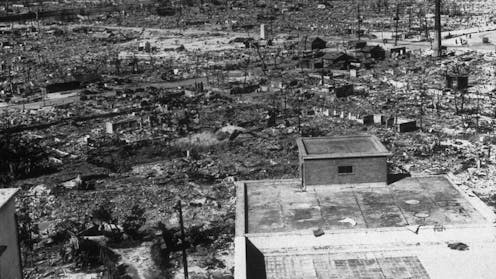
The city of Hiroshima was destroyed when the United States dropped atomic bomb “Little Boy” on Aug. 6, 1945.Hulton Archive/Getty Images
Eighty years ago – on Aug. 6 and 9, 1945 – the U.S. military dropped atomic bombs on Hiroshima and Nagasaki, Japan, thrusting humanity into a terrifying new age. In mere moments, tens of thousands of people perished in deaths whose descriptions often defy comprehension.
The moral shock of the U.S. attacks reverberated far beyond Japan, searing itself into the conscience of global leaders and the public. It sparked a movement I and others continue to study: the efforts of the international community to ensure that such horrors are never repeated.
Inspectors from the International Atomic Energy Agency visit an Iraqi nuclear facility in 2003, seeking to ensure that the country did not use peaceful nuclear materials to develop weapons. Ramzi Haidar/AFP via Getty Images
Racing toward the brink
The memories of Hiroshima and Nagasaki cast a long shadow over global efforts to contain nuclear arms. The 1968 Treaty on the Non-Proliferation of Nuclear Weapons, more commonly known as the Nuclear Nonproliferation Treaty, was a powerful, if imperfect, effort to prevent future nuclear catastrophe. Its creation reflected not just morality, but also the practical fears and self-interests of nations.
“It was like a procession of ghosts. I say ‘ghosts’ because they simply did not look like human beings. Their hair was rising upwards, and they were covered with blood and dirt, and they were burned and blackened and swollen. Their skin and flesh were hanging, and parts of the bodies were missing. Some were carrying their own eyeballs.”
Nuclear dangers increased further with the advent of hydrogen bombs, or thermonuclear weapons, capable of destruction far greater than the atomic bombs dropped on Hiroshima and Nagasaki. What had once seemed a decisive end to a global war now looked like the onset of an era wherein no city or civilization would truly be safe.
These shifting perceptions shaped how nations viewed the nuclear age. In the decades following World War II, nuclear technology rapidly spread. By the early 1960s, the United States and the Soviet Union aimed thousands of nuclear warheads at one another.
Meanwhile, there were concerns that countries in East Asia, Europe and the Middle East would acquire the bomb. U.S. President John F. Kennedy even warned that “15 or 20 or 25 nations” might be able to develop nuclear weapons during the 1970s, resulting in the “greatest possible danger” to humanity – the prospect of its extinction. This warning, like much of the early nonproliferation rhetoric, drew its urgency from the legacies of Hiroshima and Nagasaki.
Perhaps the starkest indication of the gravity of the stakes emerged during the Cuban missile crisis of October 1962. For 13 days, the world teetered on the edge of nuclear annihilation until the Soviet Union withdrew its missiles from Cuba in exchange for the secret withdrawal of U.S. missiles from Turkey. During those long days, U.S. and Soviet leaders – and external observers – witnessed how quickly the risks of global destruction could escalate.
A Soviet freighter, center, is escorted out of Cuban waters by a U.S. Navy plane and the destroyer USS Barry during the 1962 Cuban missile crisis. Underwood Archives/Getty Images
Crafting the grand bargain
In the wake of such “close calls” – moments where nuclear war was narrowly averted due to individual judgment or sheer luck – diplomacy accelerated.
There were three groups of negotiating parties. The United States was joined by its NATO allies Britain, Canada, Italy and France – which only observed. The Soviet Union led a communist bloc containing Bulgaria, Czechoslovakia, Poland and Romania. And there were nonaligned countries: Brazil; Burma, now known as Myanmar; Ethiopia; India; Mexico; Nigeria; Sweden, which only joined NATO in 2024; and the United Arab Republic, now known as Egypt.
U.S. leaders and their Soviet counterparts therefore sought to promote nonproliferation abroad. Perhaps just as important as ensuring nuclear forbearance among their adversaries was preventing a cascade of nuclear proliferation among allies that could embolden their friends and spiral out of control.
Standing apart from these Cold War blocs were the nonaligned countries. Many of them approached the atomic age through a humanitarian and moral lens. They demanded meaningful action toward nuclear disarmament to ensure that no other city would suffer the tragic fate of Hiroshima and Nagasaki.
The nonaligned countries refused to accept a two-tiered treaty merely codifying inequality between nuclear “haves” and “have-nots.” In exchange for agreeing to forgo the bomb, they demanded two crucial commitments that shaped the resulting treaty into what historians often describe as a “grand bargain.”
The nonaligned countries agreed in the treaty to permit the era’s existing nuclear powers – Britain, China, France, the Soviet Union (later Russia) and the United States – to temporarily maintain their arsenals while committing to future disarmament. But in exchange, they were promised peaceful nuclear technology for energy, medicine and development. And to reduce the risks of anyone turning peaceful nuclear materials into weapons, the treaty empowered the International Atomic Energy Agency to conduct inspections around the world.
U.S. President Lyndon B. Johnson, right, looks on as Secretary of State Dean Rusk signs the Nuclear Non-Proliferation Treaty on July 1, 1968. Corbis via Getty Images
Legacies and limits
The treaty entered into force in 1970 and with, 191 member nations, is today among the world’s most universal accords. Yet, from the outset, its provisions faced limits. Nuclear-armed India, Israel and Pakistan have always rejected the treaty, and North Korea later withdrew to develop its own nuclear weapons.
The treaty represents a complex compromise between morality and pragmatism, between the painful memories of Hiroshima and Nagasaki and hard-edged geopolitics. Despite its many imperfections and its de facto promotion of nuclear inequality, the treaty is credited with limiting nuclear proliferation to just nine countries today. It has done so through civilian nuclear energy incentives and inspections that give countries confidence that their rivals are not building the bomb. Countries also put pressure on each other to obey the rules, such as when the international community condemned, sanctioned and isolated North Korea after it withdrew from the treaty and tested a nuclear weapon.
But the treaty continues to face serious challenges. Critics argue that its disarmament provisions remain vague and unfulfilled, with some scholars contending that nonnuclear countries should exit the treaty to encourage the great powers to disarm. Nuclear-armed countries continue to modernize – and in some cases, expand – their arsenals, eroding trust in the grand bargain.
Tensions between India and Pakistan can often carry veiled, or even explicit, threats of nuclear action. Mukesh Gupta/AFP via Getty Images
The treaty may be embattled, but it remains intact. Worryingly, the world today appears far removed from the vision of avoiding nuclear catastrophe that Hiroshima and Nagasaki helped awaken. As nuclear dangers intensify and disarmament stalls, moral clarity risks fading into ritual remembrance.
I believe that for the sake of humanity’s future, the tragedies of the atomic bombings must remain a stark and unmistakable warning, not a precedent. Ultimately, the Nuclear Nonproliferation Treaty’s continued relevance depends on whether nations still believe that shared security begins with shared restraint.
Stephen Herzog does not work for, consult, own shares in or receive funding from any company or organization that would benefit from this article, and has disclosed no relevant affiliations beyond their academic appointment.
We have developed a new way to secure video transmissions so even quantum computers in the future won’t be able to break into private video livestreams or recordings. We are computer scientists who studycomputer security. Our research introduces quantum-safe video encryption, which combines two complementary techniques: quantum encryption and secure internet transmission.
With our encryption system, a hacker wouldn’t be able to access or understand the video data because it’s scrambled using a quantum key that changes unpredictably. Cryptographic keys scramble data so that only someone with the correct key can unscramble it. If the hacker even tries to peek, the system detects it and raises an alarm. The video also travels in the digital equivalent of a locked box over the internet, so nobody can swap or tamper with it in transit.
Quantum encryption scrambles video data using truly random cryptographic keys based on quantum physics. Unlike traditional encryption that relies on mathematical complexity, quantum encryption uses the fundamental unpredictability of quantum states to generate unbreakable keys.
Quantum refers to the scale of atoms and molecules, which behave in counterintuitive ways. Quantum computers take advantage of these strange behaviors to solve problems that are difficult or impossible for ordinary computers.
We combine this quantum encryption scheme with secure transmission over the internet using transport layer security. This is the encryption scheme used to keep connections between web browsers and web pages private.
Our approach works by converting each video frame into a quantum image representation, essentially a mathematical framework that captures visual information in quantum states. We then scramble the data by combining it with quantum-generated random keys, making the encrypted video statistically indistinguishable from pure noise.
Quantum encryption explained.
And because quantum encryption is resistant to future technology such as quantum computers, that video is safe for years to come.
Why it matters
Today’s encryption works well, until tomorrow’s quantum computers arrive. These super-powerful machines will be able to crack most current encryption methods in seconds. That means today’s private videos, stored on cloud platforms or transmitted over the internet, could be decrypted years from now.
More dangerously, these stolen videos can be manipulated into deepfakes: AI-generated videos that can make anyone appear to say or do anything. A forged video can ruin reputations, sway decisions and even incite violence. A secure encryption system not only protects privacy, it helps protect truth.
But most existing work focuses on images, or only on key exchange, without fully securing live or stored video data.
What’s next
We’re working toward scaling this system to encrypt full video files and real-time video streams, such as those used in video conferencing and surveillance systems.
Next steps include reducing the performance overhead for smoother playback and testing the system in real-world environments. We’re also exploring how it can work alongside deepfake detection tools, so we not only stop hackers from accessing videos but also prove the videos haven’t been altered.
While our framework shows strong early results, practical use will depend on phased adoption as quantum systems become more accessible over the years.
The Research Brief is a short take on interesting academic work.
The authors do not work for, consult, own shares in or receive funding from any company or organization that would benefit from this article, and have disclosed no relevant affiliations beyond their academic appointment.
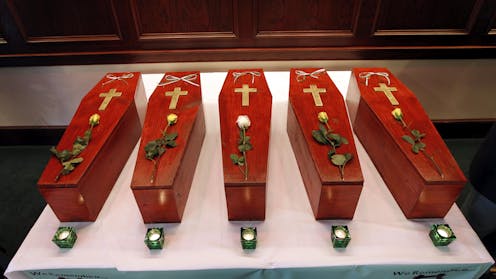
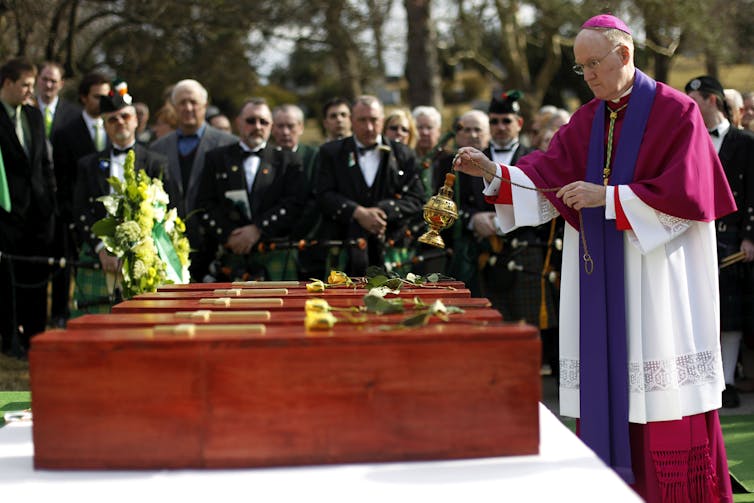
Caskets of Irish railroaders whose remains were excavated from a mass grave outside Philadelphia.AP Photo/Matt Rourke
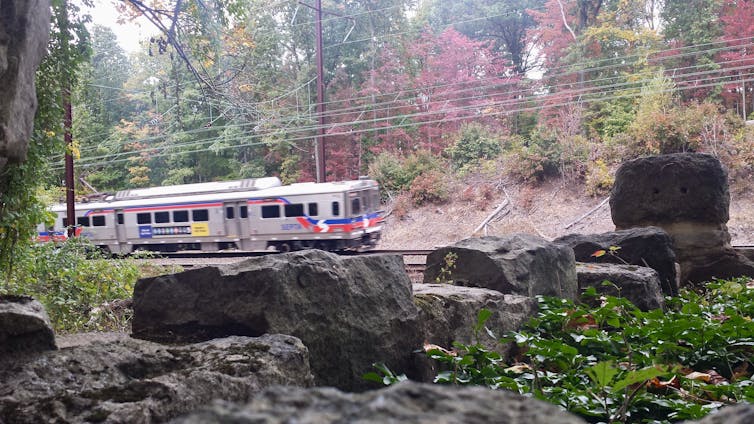
When commuters on the R5 SEPTA train that connects suburban Chester County to Philadelphia approach Malvern station, they might spot a square stone monument on the right side in a clearing surrounded by a thick stand of forest.
Above it, a sign paid for by the Amtrak electrical workers union and suspended from the trees reads:
BURIAL PLOT OF IRISH RAILROAD WORKERS: At this site, known as Duffy’s Cut, fifty-seven Irish immigrant railroad workers from the counties of Donegal, Tyrone, Derry and Leitrim died of cholera and murder in the summer of 1832.
I’m a historian at Immaculata University, about one mile west of Duffy’s Cut. In 2004, my colleagues and I were the ones to discover the mass grave when we excavated the site with the permission of the Pennsylvania Historical and Museum Commission.
My students, who were about the same age as Duffy’s workers in 1832, provided a great deal of the labor at the excavation.
More recently, in May 2025, we discovered human remains that suggest a second Irish immigrant railroader mass grave 11 miles west of Duffy’s Cut, in Downingtown.
A SEPTA commuter train passes Duffy’s Cut in Malvern, Pa. William E. Watson, CC BY-NC-SA
57 dead railroaders
Duffy’s Cut was named after an Irish Catholic immigrant railroad contractor named Philip Duffy, who lived from 1783-1871 and was probably from County Donegal in northwest Ireland.
I learned about the site and its possible mass grave from Pennsylvania Railroad documents that survived in my family.
A 1909 file, labeled “History of Duffy’s Cut Stone enclosure east of Malvern, Pennsylvania, which marks the burial place of 57 track laborers who were victims of the cholera epidemic of 1832,” was compiled by future Pennsylvania Railroad president Martin W. Clement when he was an assistant supervisor. My grandfather, who was Clement’s executive assistant and later director of personnel, obtained the file before the records were auctioned off in 1972, and my brother showed me the file in 2002.
The Philadelphia & Columbia Railroad, the predecessor of the Pennsylvania Railroad, wanted to shorten the travel time from Philadelphia to Pittsburgh from three to four weeks by Conestoga wagon to three to four days by rail, canal and river.
The file my brother had in his possession stated that the dead railroaders at Duffy’s Cut were young men, recently arrived from Ireland. It also said the cost of mile 59 was vastly more expensive than the typical Philadelphia & Columbia Railroad mile. Laying a typical mile of P&C railroad cost US$5,000 in the 1830s. But at mile 59, gouging the landscape with a “cut” to lay the tracks on level ground and bridging the valley with a fill – an earthen bridge – cost $32,000. Although the work was especially difficult, the common laborers received about 25 cents a day.
Fragment of an Irish-made clay pipe unearthed near the Duffy’s Cut mass grave. AP Photo/Matt Rourke
Most of the men had sailed from the city of Derry in the north of Ireland to Philadelphia from April to June of 1832 aboard the John Stamp. The ship pulled into the Lazaretto quarantine station on the Delaware River in Essington, Pennsylvania, before sailing on to Philadelphia.
Forty-seven laborers from the John Stamp ship joined 10 other Irish immigrant workers who were already living with Duffy in a rental house in Willistown, a mile south of the work site.
Yet almost as soon as they arrived to the work camp at mile 59, so did cholera, which had spread to Philadelphia from New York City.
Cholera in the camps
Americans could read about the spread of cholera across Europe in 1831 in the newspapers, but very little was known about the disease until decades later.
Cholera is a bacterial infection that spreads due to poor sanitary practices in which human feces get into drinking water, via excrement passed into streams or by seepage from outhouses to wells.
But in 1832, people believed cholera was linked to intemperance and vice, which were thought to weaken the body. According to the prevailing miasma theory, it caused outbreaks once airborne. Immigrants and the poor were thought to be especially susceptible to the disease and primary vectors for its spread.
Cholera causes extreme diarrhea and vomiting that lead to rapid electrolyte loss. In 1832 it was fatal in about 50% of cases. In the Delaware Valley, cholera cases mounted from July into August 1832. Philadelphia registered its peak number of cases, 173, on Aug. 6 and peak number of deaths, 76, on Aug. 7. The hardest-hit areas in the region were working-class neighborhoods and canal and railroad work camps.
A typical crew on a P&C mile numbered 100 to 120 men. However, the work by Irish immigrants was segregated along sectarian lines on the railroads in the U.S., as it was in the Belfast dockyards at the same time. The other half of the workers at mile 59, according to Canal Commission reports, were Irish Protestant immigrants who worked for an Irish Protestant contractor and did the less dangerous work of laying tracks. They did not die of cholera.
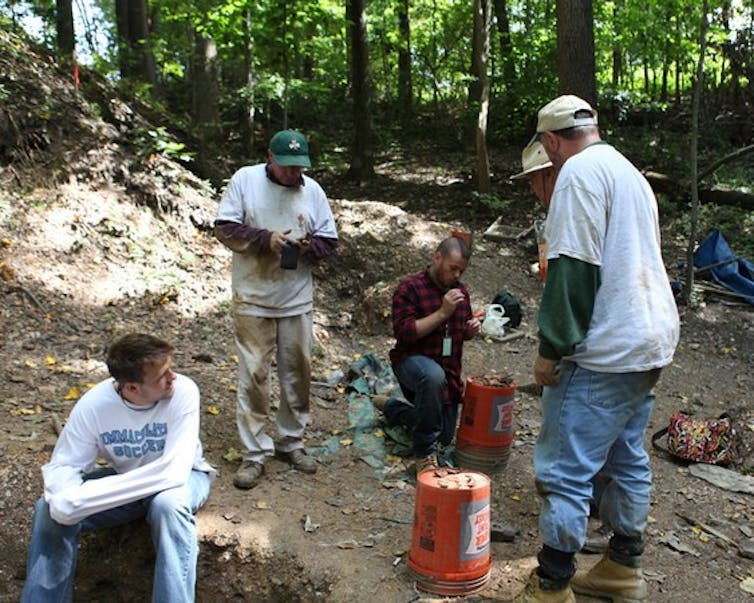
The author, second from left, and his team at the dig site at Duffy’s Cut in 2011. William E. Watson, CC BY-NC-SA
Signs of a massacre
To excavate the site, we partnered with the Chester County Emerald Society, a law enforcement group that cleared our work with the county district attorney, and the coroner, in case we found human remains. The University of Pennsylvania Museum provided ground-penetrating radar, as well as archaeological and anthropological assistance for the dig. Staff trained my students in how to properly excavate and handle artifacts and bones.
Our research team uncovered seven sets of remains between 2009 and 2012 in the remaining eastern portions of the fill. The skeletons had been buried in coffins sealed with an exceptional number of nails, perhaps to contain the cholera.
Analysis at the UPenn Museum showed evidence of violence to each of the skulls – with one skull showing both an ax blow and a bullet encased in the skull. Researchers found no evidence of defensive wounds on any skeleton, suggesting that the men might have been tied up before being killed.
After our team analyzed the remains, we came to the startling conclusion that the men didn’t die from cholera – they were massacred.
I believe that fear of cholera, an epidemic that some clergymen in America and England called “a chastisement for the sins of the people,” and anti-immigrant sentiment fueled violence against them by native-born populations.
After forensic examinations of the remains, five of the skeletons were reburied during a ceremony at West Laurel Hill Cemetery in Bala Cynwyd in 2012. My team determined the identities of two of the deceased – 18-year-old John Ruddy from County Donegal and 29-year-old Catherine Burns, the daughter of one of the workers, from County Tyrone – and their remains were returned to their home counties in Ireland in 2013 and 2015.
Bishop Michael J. Fitzgerald takes part in a funeral at West Laurel Hill Cemetery in 2012 for the five 19th-century Irish immigrants whose remains were excavated from the Duffy’s Cut site. AP Photo/Matt Rourke
A second mass grave in Chester County
Historical records led us to what we believe is a second mass grave in Chester County.
An article in the Nov. 7, 1832, issue of the Village Record newspaper in West Chester reported that one man from Duffy’s Cut fled westward down the unfinished track line to another Irish immigrant railroader crew “near the line of East Bradford and East Caln.”
This was P&C mile 48 in Downingtown, Pennsylvania. It was under the direction of Irish immigrant contractor Peter Connor, whose crew of 100 to 120 men was reported to have all died around the same time as Duffy’s crew.
Forty years later, Charles Pennypacker’s 1909 “History of Downingtown” recorded that the dead Irishmen in Downingtown were carted north to a field where they were buried in a mass grave on the property of present-day Northwood Cemetery, “in the eastern part of the cemetery, near the gully.”
File photo from March 24, 2009, shows bones recovered from the mass grave at Duffy’s Cut. AP Photo/Matt Rourke, File
On May 15, 2025, the Duffy’s Cut team unearthed the first human remains from the Downingtown crew in the exact place reported by Pennypacker. This work has just started.
Up and down the East Coast, there are numerous mass graves of anonymous workers who died of epidemics and overwork in the 1820s and 1830s. Most of those people will never have their stories told.
At Duffy’s Cut, and now at the Downingtown site, we hope to humanize some of the hardworking immigrants who died building a crucial part of America’s industrial landscape.
Visitors can view artifacts found at Duffy’s Cut at the Duffy’s Cut Museum in the Gabriele Library at Immaculata University in Malvern, Pa.
William E. Watson serves as the unpaid director of the 501 c 3 educational non-profit and in 2016 served as director of an NEH summer teachers’ institute at Immaculata University. .
Source: The Conversation – USA (2) – By Lauren Gifford, Faculty, Ecosystem Science & Sustainability; Director, Soil Carbon Solutions Center, Colorado State University
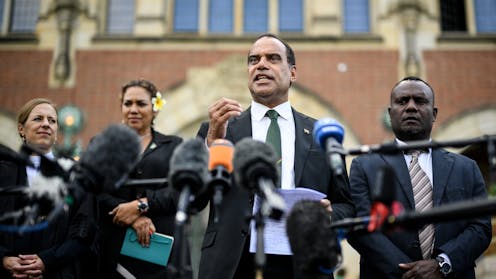
Ralph Regenvanu, climate change minister of Vanuatu, speaks outside the International Court of Justice in The Hague on July 23, 2025.John Thys/AFP via Getty Images
The International Court of Justice issued a landmark advisory opinion in July 2025 declaring that all countries have a legal obligation to protect and prevent harm to the climate.
The court, created as part of the United Nations in 1945, affirmed that countries must uphold existing international laws related to climate change and, if they fail to act, could be held responsible for damage to communities and the environment.
The opinion opens a door for future claims by countries seeking reparations for climate-related harm.
But while the ruling is a big global story, its legal effect on the U.S. is less clear. We study climate policies, law and solutions. Here’s what you need to know about the ruling and its implications.
Small island states like Vanuatu, Tuvalu, Barbados and others across the Pacific and Caribbean are among the most vulnerable to climate change, yet they have contributed little to global emissions.
Waves hit the shore in Majuro, the capital of the Marshall Islands, during a storm on Nov. 27, 2019. Waves inundated parts of the island, washing rocks and debris into roads. Hilary Hosia/AFP via Getty Images
Their economies depend on tourism, agriculture and fishing, all sectors easily disrupted by climate change. For example, coral reefs are bleaching more often and dying due to ocean warming and acidification, undermining fisheries, marine biodiversity and economic sectors such as tourism.
When disasters hit, the cost of recovery often forces these countries to take on debt. Climate change also undermines their credit ratings and investor confidence, making it harder to get the money to finance adaptive measures.
The Maldives, shown in a satellite image from 2020, has an average elevation of less than 5 feet (1.5 meters) above sea level. With limited land where people can live, the country has tried to build up new areas of its islands for housing. NASA Earth Observatory
Tuvalu and Kiribati have discussed digital nationhood and leasing land from other countries so their people can relocate while still retaining citizenship. Some projections suggest nations like the Maldives or Marshall Islands could become largely uninhabitable within decades.
For these countries, sea-level rise is taking more than their land – they’re losing their history and identity in the process. The idea of becoming climate refugees and separating people from their homelands can be culturally destructive, emotionally painful and politically fraught as they move to new countries.
More than a nonbinding opinion
The International Court of Justice, commonly referred to as the ICJ or World Court, can help settle disputes between states when requested, or it can issue advisory opinions on legal questions referred to it by authorized U.N. bodies such as the General Assembly or Security Council. The advisory opinion process allows its 15 judges to weigh in on abstract legal issues – such as nuclear weapons or the Israeli occupation of the Palestinian territories – without a formal dispute between states.
While the court’s advisory opinions are nonbinding, they can still have a powerful impact, both legally and politically.
The rulings are considered authoritative statements regarding questions of international law. They often clarify or otherwise confirm existing legal obligations that are binding.
What the court decided
The ICJ was asked to weigh in on two questions in this case:
“What are the obligations of States under international law to ensure the protection of the climate system … from anthropogenic emissions of greenhouse gases?”
“What are the legal consequences under these obligations for States where they, by their acts and omissions, have caused significant harm to the climate system?”
In its 140-page opinion, the court cited international treaties and relevant scientific background to affirm that obligations to protect the environment are indeed a matter of international environmental law, international human rights law and general principles of state responsibility.
The decision means that in the authoritative opinion of the international legal community, all countries are under an obligation to contribute to the efforts to reduce global greenhouse emissions.
To the second question, the court found that in the event of a breach of any such obligation, three additional obligations arise:
The country in breach of its obligations must stop its polluting activity, which would mean excess greenhouse gas emissions in this case.
It must ensure that such activities do not occur in the future.
It must make reparations to affected states in terms of cleanup, monetary payment and apologies.
While the ICJ’s opinion doesn’t assign blame to specific countries or trigger direct reparations, it may provide support for future legal action in both international and national courts.
U.S. courts rarely treat international law that has not been incorporated into domestic law as binding. And the U.S. has not consented to ICJ jurisdiction in previous climate cases.
Contentious cases before international tribunals can be brought by one country against another, but they require the consent of all the countries involved. So there is little chance that the United States’ responsibility for climate harms will be adjudicated by the World Court anytime soon.
Still, the court’s opinion sends a clear message: All countries are legally obligated to prevent climate harm and cannot escape responsibility simply because they aren’t the only nation to blame.
The unanimous ruling is particularly remarkable given the current hostile political climate in the United States and other industrial nations around climate change and responses to it. It represents a particularly forceful statement by the international community that the responsibility to ensure the health of the global environment is a legal duty held by the entire world.
Vulnerable countries now have a more concrete, legally grounded base to claim rights and press for accountability against historical and ongoing climate harm – including financial claims.
How it will be used in the coming years remains unclear, but the opinion gives small island states in particular a powerful narrative and a legal tool set.
Lauren Gifford receives funding from the National Science Foundation and the US Department of Agriculture.
Daimeon Shanks-Dumont does not work for, consult, own shares in or receive funding from any company or organization that would benefit from this article, and has disclosed no relevant affiliations beyond their academic appointment.
Source: The Conversation – USA (3) – By Julie Walsh, Whitehead Associate Professor of Critical Thought and Associate Professor of Philosophy, Wellesley College
An illustration from ‘The History of Witches and Wizards,’ published in 1720, depicting witches offering wax dolls to the devil.Wellcome Collection/Wikimedia Commons
Between 1400 and 1780, an estimated 100,000 people, mostly women, were prosecuted for witchcraft in Europe. About half that number were executed – killings motivated by a constellation of beliefs about women, truth, evil and magic.
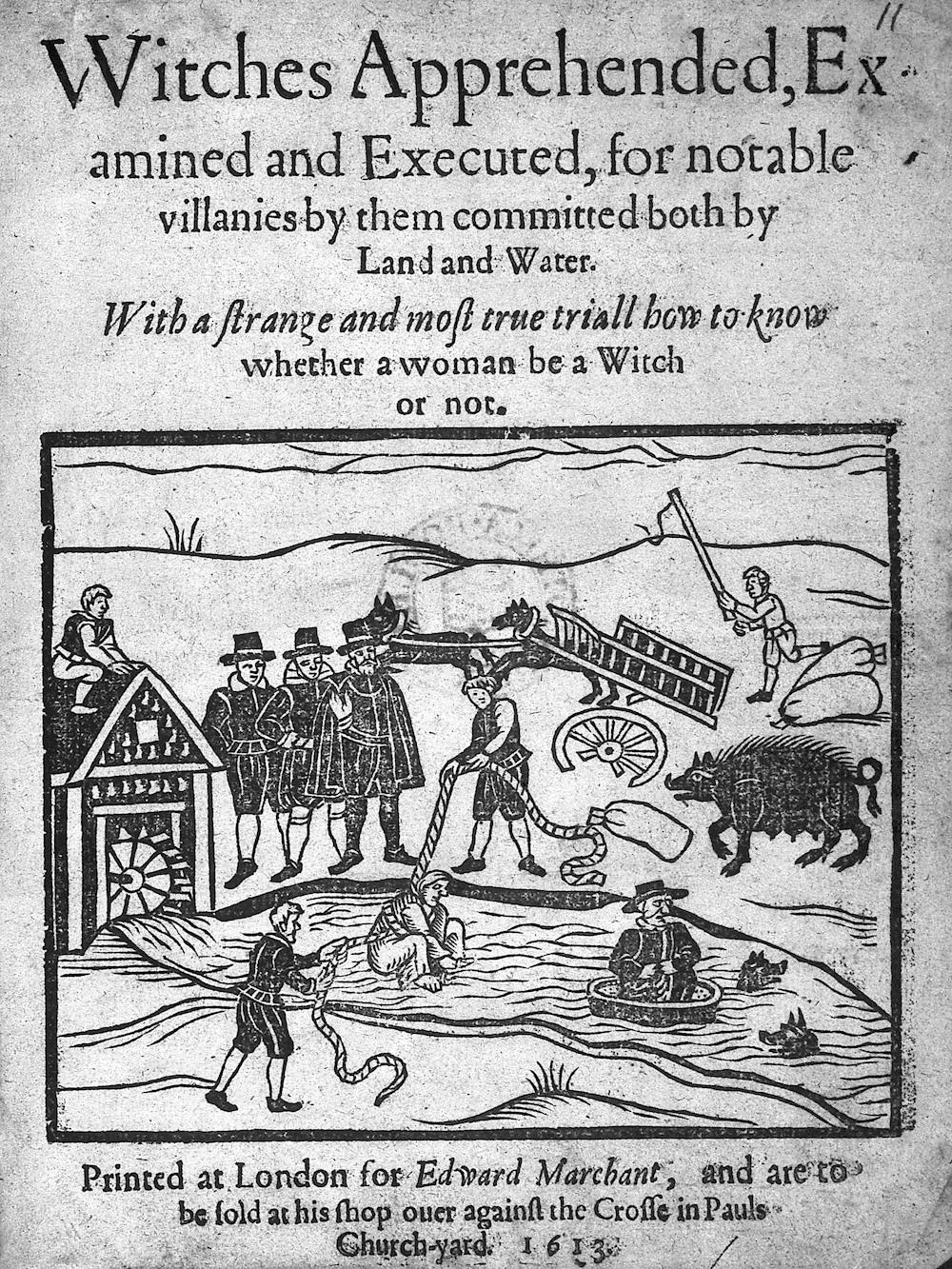
But the witch hunts could not have had the reach they did without the media machinery that made them possible: an industry of printed manuals that taught readers how to find and exterminate witches.
The printing press, invented around 1440, revolutionized how information spread – helping to create the era’s equivalent of a viral conspiracy theory.
By 1486, two Dominican friars had published the “Malleus Maleficarum,” or “Hammer of Witches.” The book has three central claims that came to dominate the witch hunts.
First, it describes women as morally weak and therefore more likely to be witches. Second, it tightly links witchcraft with sexuality. The authors claim that women are sexually insatiable – part of what leads them to witchcraft. Third, witchcraft involves a pact with the devil, who tempts would-be witches through pleasures such as orgies and sexual favors. After establishing these “facts,” the authors conclude with instructions for interrogating, torturing and punishing witches.
Prior to 1500, witch hunts in Europe were rare. But after the “Malleus Maleficarum,” they picked up steam. Indeed, new printings of the book correlate with surges in witch-hunting in Central Europe. The book’s success wasn’t just about content; it was about credibility. Pope Innocent VIII had recently affirmed the existence of witches and conferred authority on inquisitors to persecute them, giving the book further authority.
Ideas about witches [from earlier texts and folklore] – such as the fact that witches could use spells to make penises vanish – were recycled and repackaged in the “Malleus Maleficarum,” which in turn served as a “source” for future works. It was often quoted in later manuals and woven into civic law.
The popularity and influence of the book helped crystallize a new domain of expertise: demonologist, an expert on the nefarious activities of witches. As demonologists repeated one another’s spurious claims, an echo chamber of “evidence” was born. The identity of the witch was thus formalized: dangerous and decisively female.
Skeptics fight back
Not everyone bought into the witch hysteria. As early as 1563, dissenting voices emerged – though, notably, most didn’t argue that witches weren’t real. Instead, they questioned the methods used to identify and prosecute them.
These skeptics also identified something more insidious: the moral responsibility of people spreading the stories. In 1677, English chaplain, physician and philosopher John Webster wrote a scathing critique, claiming that most demonologists’ texts were straightforward copy and paste jobs where the authors repeated one another’s lies. The demonologists offered no original analysis, no evidence and no witnesses – failing to meet the standards of good scholarship.
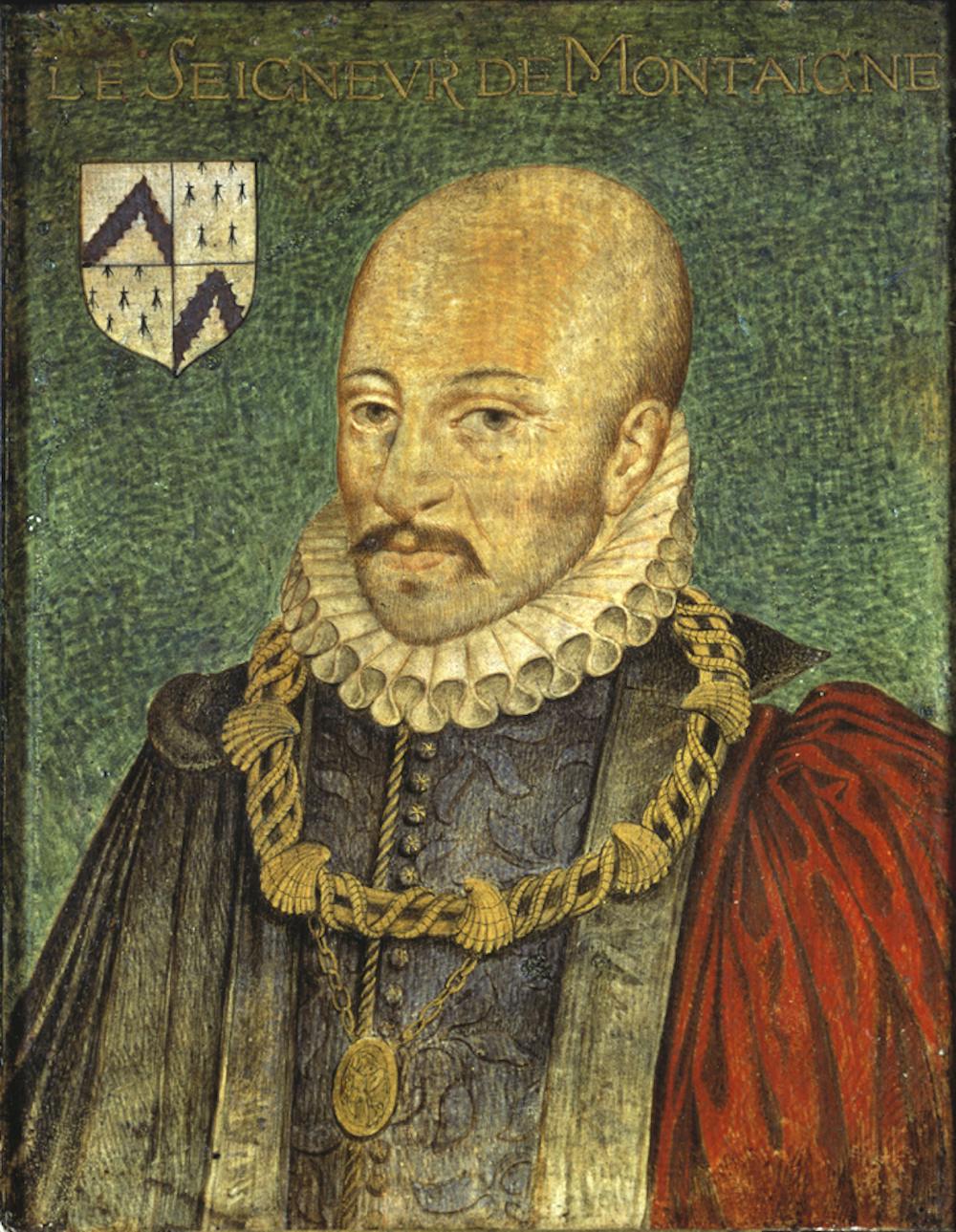
The cost of this failure was enormous. As Montaigne wrote, “The witches of my neighborhood are in mortal danger every time some new author comes along and attests to the reality of their visions.”
Demonologists benefited from the social and political status associated with the popularity of their books. The financial benefit was, for the most part, enjoyed by the printers and booksellers – what today we refer to as publishers.
Witch hunts petered out throughout the 1700s across Europe. Doubt about the standards of evidence, and increased awareness that accused “witches” may have been suffering from delusion, were factors in the end of the persecution. The skeptics’ voices were heard.
“If they were to cease punishing (women accused of witchcraft) and treat them as mad people,” Malebranche wrote, “in a little while they would no longer be sorcerers.”
Today’s researchers have identified similar patterns in how misinformation and disinformation – false information intended to confuse or manipulate people – spreads online. We’re more likely to believe stories that feel familiar, stories that connect to content we’ve previously seen. Likes, shares and retweets becomes proxies for truth. Emotional content designed to shock or outrage spreads far and fast.
Social media channels are particularly fertile ground. Companies’ algorithms are designed to maximize engagement, so a post that receives likes, shares and comments will be shown to more people. The more viewers, the higher the likelihood of more engagement, and so on – creating a cycle of confirmation bias.
Speed of a keystroke
Early modern skeptics reserved their harshest criticism not for those who believed in witches but for those who spread the stories. Yet they were curiously silent on the ultimate arbiters and financial beneficiaries of what got printed and circulated: the publishers.
Today, 54% of American adults get at least some news from social media platforms. These platforms, like the printing presses of old, don’t just distribute information. They shape what we believe through algorithms that prioritize engagement over accuracy: The more a story is repeated, the more priority it gets.
The witch hunts offer a sobering reminder that delusion and misinformation are recurring features of human society, especially during times of technological change and social upheaval. As we navigate our own information revolution, those early skeptics’ questions remain urgent: Who bears responsibility when false information leads to real harm? How do we protect the most vulnerable from exploitation by those who profit from confusion and fear?
In an age when anyone can be a publisher, and extravagant tales spread at the speed of a keystroke, understanding how previous societies dealt with similar challenges isn’t just academic – it’s essential.
Julie Walsh receives funding from the National Science Foundation
Vaccination against shingles increased among adults age 50 and older in the U.S. during the COVID-19 pandemic, but not equally across all population groups. That’s the key finding from a new study my colleagues and I published in the journal Vaccine.
Shingles is caused by the reactivation of the varicella-zoster virus, the same virus that causes chickenpox. It leads to a painful rash and potentially serious complications – especially in older adults – such as persistent nerve pain, vision loss and neurological problems. While antiviral treatments can ease symptoms, vaccination is the most effective way to prevent shingles.
We analyzed nationally representative survey data from almost 80,000 adults age 50 and over between 2018 and 2022, collected by the Centers for Disease Control and Prevention to monitor the health of the U.S. population. The survey tracked vaccination rates in people of different ethnic backgrounds as well as other factors such as sex, household income and the presence of chronic conditions like diabetes and cardiovascular disease.
The uptake of shingles vaccines rose notably during the pandemic – from 25.1% of people for whom it is recommended in 2018-2019, to 30.1% during 2020-2022. We observed this overall increase across nearly all groups in our study.
We saw the greatest relative increases among groups that historically have had lower rates of shingles vaccination. These included adults ages 50-64, men, people from racial and ethnic minority groups such as non-Hispanic Black adults, those with lower household incomes, current smokers and people without chronic conditions like cancer or arthritis.
Shingles is caused by the same virus that causes chickenpox. It leads to a painful rash and other potentially serious complications. Irena Sowinska/Moment via Getty Images
Why it matters
In the U.S., the CDC recommends shingles vaccination for all adults age 50 and older. However, uptake has been low, partly due to limited awareness, cost concerns and missed opportunities during routine health care visits.
The COVID-19 pandemic, while disruptive, may have inadvertently created new opportunities to improve adult vaccination uptake, particularly among groups with historically low uptake of the shingles vaccine. Factors contributing to this shift likely included heightened public awareness of the importance of vaccination, more frequent health care encounters, especially during COVID-19 vaccine rollouts, and the expanded availability of adult vaccines in pharmacies and primary care settings.
However, major inequities persist. While shingles vaccination rates improved across the board, groups that had lower uptake before the pandemic continued to lag behind wealthier, non-Hispanic white populations with greater health care access. Overall, the vaccination rate for shingles is still low – below other vaccines such as the flu vaccine.
This gap reflects long-standing disparities in getting needed health care, which became even more prominent during the pandemic. It also highlights the need for fairer policies and customized outreach efforts to underserved communities that build trust and raise awareness about the health benefits of the shingles vaccine.
What still isn’t known
Although the upward trend we observed is encouraging, several questions remain. For example, we could not tell from the survey data we worked with whether participants received both doses of the Shingrix vaccine. Both are needed for full protection against shingles.
Nor could we tell whether participants received the shingles vaccine alongside their COVID-19 vaccination. Receiving multiple vaccines at a single health care visit makes vaccination more convenient and may boost vaccine uptake by reducing the number of needed visits. Also unknown is how immunocompromised people fared during this period. Current guidelines recommend that immunocompromised adults regardless of age also receive the shingles vaccine, but the data only included adults age 50 and over.
Addressing these questions in future studies would help public health experts develop strategies to encourage more eligible people to receive the shingles vaccine.
The Research Brief is a short take on interesting academic work.
Jialing Lin does not work for, consult, own shares in or receive funding from any company or organization that would benefit from this article, and has disclosed no relevant affiliations beyond their academic appointment.
On July 24, 2025, the American pro wrestling celebrity Hulk Hogan, whose real name was Terry Bollea, died at the age of 71. Hogan had chronic lymphocytic leukemia and a history of atrial fibrillation, or A-fib, a condition in which the upper chambers of the heart, or atria, beat irregularly and often rapidly. His cause of death has been confirmed as acute myocardial infarction, commonly known as a heart attack.
Hogan became a household name in the 1980s and has long been known for maintaining fitness and a highly active lifestyle, despite having had 25 surgeries in 10 years, including a neck surgery in May.
Hogan’s death has brought renewed attention to the importance of maintaining heart health through exercise. Many people think that bodybuilders are the “picture” of health. However, the truth is that too much muscle can increase strain on the heart and may actually be harmful. It may seem ironic, then, that people who exercise to extreme levels and appear healthy on the outside can, in fact, be quite unhealthy on the inside.
As the director of sports cardiology at the University of Colorado Anschutz Medical Campus, I see patients of all age groups and at varying levels of fitness who are interested in promoting health by incorporating exercise into their lifestyle, or by optimizing their current exercise program.
More exercise and less sedentary behavior reduces the risk of heart disease, stroke, cancer and dementia. andreswd/E+ via Getty Images
Exercise is the foundation for good health
When people think of vital signs, they usually think about things such as heart rate, blood pressure, temperature, breathing rate and blood oxygen levels. However, the American Heart Association also includes “fitness” as an additional vital sign that should be considered when determining a patient’s overall health and risk of heart disease, cancer and death.
While fitness may be determined in various ways, the best way is by checking what is known as peak oxygen uptake, or VO2 max, through a specialized evaluation called a cardiopulmonary exercise test. These can be performed at many doctors’ offices and clinics, and they provide a wealth of information related to overall health, as well as heart, lung and skeletal muscle function.
In fact, a large study done by the Cleveland Clinic found that a low level of fitness poses a greater risk of death over time than other traditional risk factors that people commonly think of, such as smoking, diabetes, coronary artery disease and severe kidney disease.
When it comes to brain health, the American Stroke Association emphasizes the importance of routine exercise and avoiding sedentary behavior in their 2024 guidelines on primary prevention of stroke. The risk of stroke increases with the amount of sedentary time spent throughout the day and also with the amount of time spent watching television, particularly four hours or more per day.
Regarding cognitive decline, the Alzheimer’s Society states that regular exercise reduces the risk of dementia by almost 20%. Furthermore, the risk of Alzheimer’s disease is twice as high among individuals who exercise the least, when compared to individuals who exercise the most.
There is also strong evidence that regular exercise reduces the risk of certain types of cancer, especially, colon, breast and endometrial cancer. This reduction in cancer risk is achieved through several mechanisms.
Finally, exercise improves the quality of life for all people, regardless of their health or their age. In 2023, Hulk Hogan famously quipped, “I’m 69 years old, but I feel like I’m 39.”
7,000 steps is just over 3 miles – depending on your pace, that’s about 40 to 60 minutes of walking.
These organizations all recommend doing at least 150 minutes per week of moderate-intensity exercise, or at least 75 minutes per week of vigorous-intensity exercise. Moderate exercises include activities such as walking briskly (2.5 to 4 miles per hour), playing doubles tennis or raking the yard. Vigorous exercise includes activities such as jogging, running or shoveling snow.
A good rule of thumb for figuring out how hard a specific exercise is is to apply the “talk test”: During moderate-intensity exercise, you can talk, but not sing, during the activity. During vigorous intensity exercise, you can say only a few words before having to stop and take a breath.
There is a lot of solid data to support these recommendations. For example, in a very large analysis of about 48,000 people followed for 30 years, the risk of death from any cause was about 20% lower among those who followed the physical activity guidelines for Americans.
Life can be busy, and some people may find it challenging to squeeze in at least 150 minutes of exercise throughout the course of the week. However, “weekend warriors” – people who cram all their exercise into one to two days over the weekend – still receive the benefits of exercise. So, a busy lifestyle during the week should not prevent people from doing their best to meet the guidelines.
What about the number of steps per day? In a new analysis in The Lancet, when compared with walking only 2,000 steps per day, people who walked 7,000 steps per day had a 47% lower risk of death from any cause, a 25% lower risk of developing heart disease, about a 50% lower risk of death from heart disease, a 38% lower risk of developing dementia, a 37% lower risk of dying from cancer, a 22% lower risk of depression and a 28% lower risk of falls.
One question that many patients ask me – and other doctors – is: “Is it ever too late to start exercising?” There is great data to suggest that people can reap the benefits even if they don’t begin an exercise program into their 50s.
However, in a study of previously sedentary adults with an average age of 53, two years of regular exercise reversed the age-related stiffening of the heart that otherwise occurs in the absence of routine exercise.
And it is important to remember that you do not have to look like a body builder or fitness guru in order to reap the benefits of exercise.
Almost three-quarters of the total benefit to heart, brain and metabolic health that can be gained from exercise will be achieved just by following the guidelines.
William Cornwell does not work for, consult, own shares in or receive funding from any company or organization that would benefit from this article, and has disclosed no relevant affiliations beyond their academic appointment.
The nation has a long history of similar efforts, including a wildly unpopular 1980 attempt by Reagan administration Interior Secretary James Watt to promote development and expand private concessions in the parks. But debate over using public national park land for private profit dates back more than a century before that.
As I explain in my forthcoming book, no park has played a more central role in that debate than Yosemite, in California.
Early concerns
In early 1864, Central American Steamship Transit Company representative Israel Ward Raymond wrote a letter to John Conness, a U.S. senator from California, urging the government to move swiftly to preserve the Yosemite Valley and the Mariposa Grove of giant sequoia trees to prevent them from falling into private hands. Five months later, President Abraham Lincoln signed the Yosemite Grant Act, ceding the valley and the grove to the state of California, “upon the express conditions that the premises shall be held for public use, resort, and recreation.” This was years before Yellowstone became the first federal land designated a national park in 1872.
California said their businesses threatened the state’s ability to develop roads and trails in Yosemite by competing for tourist dollars. A legal battle ensued and was not resolved until an 1872 U.S. Supreme Court ruling found that the men’s land claims had not been fully validated according to the procedures of the time. The California legislature paid both men compensation for their land, and both left the park.
Yet, as my research has found, the role of private interests in the park remained unsolved. Private companies under contract to the National Park Service have long provided needed amenities such as lodging and food within the national parks. But questions over what is acceptable in national parks in the pursuit of profit have shaped Yosemite’s history for generations.
In 1925, I found, the question centered on the right to build the first gas station inside the park, in Yosemite Valley. Two private businesses, the Curry Camping Company and the Yosemite National Park Company, had long competed for tourist dollars within the park. Each wanted to build a gas station to boost profits.
Frustrated over the need to decide, National Park Service Director Horace Albright ordered the rival firms to simplify management of the park’s concessions. The companies merged, and the newly formed Yosemite Park and Curry Company was granted the exclusive rights to run lodges, restaurants and other facilities within the park, including the new gas station.
But as I found in my research, the park service and the concessions company did not always see eye to eye on the purpose of the park. The conflict between profit and preservation is perhaps most clearly illustrated by the construction of a ski area within the park in the early 1930s. The park service initially opposed the development of Badger Pass Ski Area as not conducive to the national park ideal, but the Yosemite Park and Curry Company insisted it was key to boosting winter use of the park.
In 1973, the Music Corporation of America, an entertainment conglomerate, bought the Yosemite Park and Curry Company. The company already had a tourist attraction operating near Hollywood, where visitors could pay to tour movie sets, but had not yet changed its name to Universal Studios or launched major theme parks in Florida and California. Its purchase of the park’s concessions set off a firestorm of controversy over fears of turning Yosemite into a theme park.
That didn’t happen, but annual park visitor numbers climbed from 2.5 million to 3.8 million over the 20 years MCA ran the concessions, which sparked concerns about development and overcrowding in the park. Conservationists argued the park service had allowed the corporate giant to promote and develop the park in ways that threatened the very aspects of the park most people came to enjoy.
With three restaurants, two service stations with a total of 15 gas pumps, two cafeterias, two grocery stores, seven souvenir shops, a delicatessen, a bank, a skating rink, three swimming pools, a golf course, two tennis courts, kennels, a barbershop, a beauty shop, Badger Pass Ski Area and three lodges, the Yosemite Valley was a busy commercial district. Critics argued that such development contradicted the park service’s mandate to leave national parks unimpaired for the enjoyment of future generations.
Falling profits and consolidation within the music industry led MCA to sell its concessions rights in Yosemite in 1993. The Delaware North Companies, a global hospitality corporation, took over and ran the park’s concessions until 2016, when it sold the rights to Aramark.
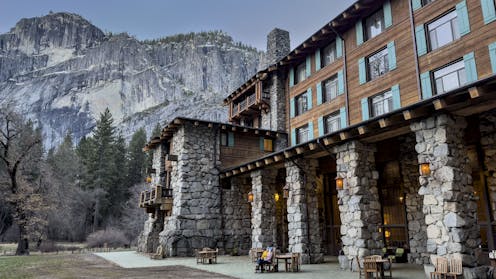
But in that sale, the question of public resources and private profits arose again. Delaware North demanded $51 million in compensation for Aramark continuing to use the names of several historic properties within the park, such as the Ahwahnee, a hotel, and Curry Village, another group of visitor accommodations. The company claimed those names were a part of its assets under its contract with the park service.
The park service rejected the claim, saying the names, which dated back more than a century, belonged to the American people. But to avoid legal problems during the transition, the agency temporarily renamed several sites, including calling the Ahwahnee the Majestic Yosemite Hotel and changing Curry Village to Half Dome Village. Public outrage erupted, denouncing the claim by Delaware North as commercial overreach that threatened to distort Yosemite’s heritage. In 2019, the park service and Aramark agreed to pay Delaware North a total of $12 million to settle the dispute, and the original names were restored.
Protesters unfurl an upside-down U.S. flag from the top of El Capitan in Yosemite National Park in February 2025, protesting Trump administration changes to the National Park Service.
Renewed interest in commercial efforts
In June 2025, Yosemite again took center stage in the dispute over the role of federal funding versus private interests at the start of the second Trump administration when a group of climbers unfurled an American flag upside down off El Capitan in protest of the administration’s cuts in personnel and slashing of the park service’s budget.
Whichever side prevails in the short term, the debate over the role of private interests within national parks like Yosemite will undoubtedly continue.
Michael Childers does not work for, consult, own shares in or receive funding from any company or organization that would benefit from this article, and has disclosed no relevant affiliations beyond their academic appointment.

























.jpg)


