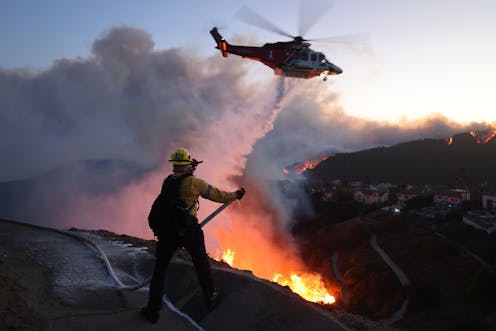
As the Colorado River slowly dries up, states angle for influence over future water rights

Source: The Conversation – USA (2) – By Sarah Porter, Director of the Kyl Center for Water Policy, ASU Morrison Institute for Public Policy, Arizona State University
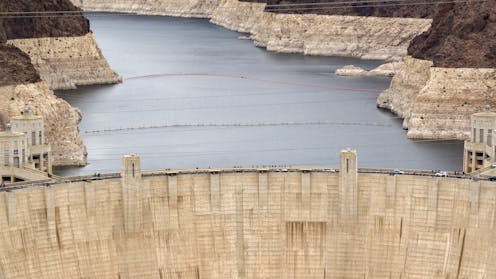
Lake Mead, impounded by Hoover Dam, contains far less water than it used to. Kevin Carter/Getty Images

The Colorado River is in trouble: Not as much water flows into the river as people are entitled to take out of it. A new idea might change that, but complicated political and practical negotiations stand in the way.

The river and its tributaries provide water for about 5 million acres of cropland and pasture, hydroelectric power for millions of people, recreation in the Grand Canyon, and critical habitat for fish and other wildlife. Thirty federally recognized Native American tribes assert rights to water from the Colorado River system. It is also an important source of drinking water for cities within the Colorado River Basin, including Phoenix, Tucson and Las Vegas, and cities outside the basin, such as Los Angeles, San Diego, Salt Lake City, Denver and Albuquerque.

The seven Colorado Basin states have been grappling with how to deal with declining Colorado River supplies for a quarter century, revising usage guidelines and taking additional measures as drought has persisted and reservoir levels have continued to decline. The current guidelines will expire in late 2026, and talks on new guidelines have been stalled because the states can’t agree on how to avoid a future crisis.

In June 2025, Arizona suggested a new approach that would, for the first time, base the amount of water available on the river’s actual flows, rather than on reservoir level projections or historic apportionments. While the proposal has been praised as offering “a glimmer of hope,” coming to agreement on the details presents daunting challenges for the Colorado Basin.

The Colorado River Compact

The 1922 Colorado Compact divided the 250,000-square-mile Colorado River Basin into an Upper Basin – which includes parts of Colorado, New Mexico, Utah and Wyoming, as well as the northeastern corner of Arizona – and a Lower Basin, encompassing most of Arizona and parts of California and Nevada. The compact apportions each basin 7.5 million acre-feet of water from the river each year. An acre-foot of water is enough to cover 1 acre in water 1 foot deep, which amounts to approximately 326,000 gallons. According to a 2021 estimate from the Arizona Department of Water Resources, 1 acre-foot is sufficient to supply 3.5 single-family households in Arizona for one year.

Anticipating a future treaty with Mexico for sharing Colorado River water, the compact specified that Mexico should be supplied first with any surplus available and any additional amount needed “borne equally” by the two divisions. A 1944 water-sharing treaty between Mexico and the U.S. guarantees Mexico at least 1.5 million acre-feet of Colorado River water annually.

The compact also specified that the Upper Basin states of Colorado, New Mexico, Utah and Wyoming “will not cause the flow of the river … to be depleted below an aggregate of 75,000,000 acre-feet for any period of 10 consecutive years.”

The Lower Basin states of Arizona, California and Nevada contend that this provision is a “delivery obligation,” requiring the Upper Basin to ensure that over any 10-year period, a total of at least 75 million acre-feet flows to the Lower Basin.

By contrast, the Upper Basin states contend that the language merely creates a “non-depletion obligation” that caps their collective use at 7.5 million acre-feet per year in times when additional use by the Upper Basin would cause less than 75 million acre-feet to be delivered to the Lower Basin over a 10-year period.

This disagreement over the compact’s language is at the heart of the differences between the two basins.

Snow sits on steep rocky slopes.
Snowfall in Western mountains, including the Flatirons outside Boulder, Colo., is the primary source of water for the Colorado River Basin.
AP Photo/Thomas Peipert

A small source area

Nearly all of the water in the Colorado River system comes from snow that falls in the Rocky Mountains in the Upper Basin. About 85% of the Colorado Basin’s flows come from just 15% of the basin’s surface area. Most of the rest of the basin’s lands are arid or semi-arid, receiving less than 20 inches of precipitation a year and contributing little to the flows of the Colorado River and its tributaries.

Rain and snowfall vary dramatically from year to year, so over the course of the 20th century, the Colorado Basin states – with the assistance of the U.S. Bureau of Reclamation, the agency of the Department of the Interior responsible for operating federal water and power projects in the U.S. West – developed a complex system of reservoirs to capture the extra water in wet years so it could be available in drier years. The most notable reservoirs in the system are Lake Mead, impounded by Hoover Dam, which was completed in 1936, and Lake Powell, impounded by Glen Canyon Dam, completed in 1966.

Over the past 25 years, the quantity of water stored in Lake Mead and Lake Powell has declined significantly. A primary driver of this decline is a lengthy drought likely amplified by climate change: One study estimated that the region may be suffering its driest spell in 1,200 years.

But human errors are also adding up. The Colorado Compact’s original negotiators made unrealistically optimistic assumptions about the river’s average annual flow – perhaps knowingly. In their book “Science be Dammed,” Colorado River experts Eric Kuhn and John Fleck document how compact negotiators willfully or wishfully ignored available data about the river’s actual flows. Kuhn and Fleck argue the negotiators knew it would be decades before demand would exceed the river’s water supply, and they wanted to sell a big vision of Southwestern development that would merit massive federal financing for reservoirs and other infrastructure.

In addition, the current Colorado River system accounting does not factor in the roughly 1.3 million acre-feet of water lost annually from Lake Mead due to evaporation into the air or seepage into the ground. This accounting gap means that under normal annual releases to satisfy the apportionments to the Lower Basin and Mexico, Lake Mead’s water level is steadily declining.

Stabilization efforts

The seven Colorado River states and Mexico have taken significant steps to stabilize the reservoirs. In 2007, they agreed to new guidelines to coordinate the operations of Lake Mead and Lake Powell to prevent either reservoir from reaching catastrophically low levels. They also agreed to reduce the amount of water available to Arizona and Nevada depending on how low Lake Mead’s levels go.

When the 2007 guidelines proved insufficient to keep the reservoir levels from declining, the Colorado Basin states and Mexico agreed in 2019 to additional measures, authorizing releases from Upper Basin reservoirs under certain conditions and additional cuts to water users in the Lower Basin and Mexico.

By 2022, projections for the reservoir levels looked so dire that the states started negotiating additional near-term measures to reduce the amount of water users withdrew from the river. The federal government helped out, too: $4 billion of Inflation Reduction Act funding has helped pay the costs of water-conservation measures, primarily by agricultural districts, cities and tribes.

These reductions are real. In 2023, Arizona, California and Nevada used only 5.8 million acre-feet of Colorado River water – their lowest combined annual consumption since 1983. The Lower Basin’s total consumption in 2024 was slightly higher, at 6.09 million acre-feet.

People stand on a boat looking at a body of water and mountains beyond.
Lake Powell, a key Colorado River reservoir, holds only one-third as much water as it is designed to contain.
Rebecca Noble/Getty Images

A new opportunity?

With the 2007 guidelines and additional measures expiring in 2026, the deadline for a new agreement looms. As the Colorado River states try to work out a new agreement, Arizona’s new proposal of a supply-driven approach offers hope, but the devil’s in the details. Critical components of that approach have not been ironed out – for instance, the percentage of the river’s flows that would be available to Arizona, California and Nevada.

If the states can’t agree, there is a chance that the secretary of the Interior, acting through the Bureau of Reclamation, may decide on his own how to balance the reservoirs and how much water to deliver out of them. That decision would almost certainly be taken to court by states or water users unhappy with the result.

And the Lower Basin states have said they are fully prepared to go to court to enforce what they believe to be the Upper Basin’s delivery obligation, which, the Upper Basin has responded, it is prepared to dispute.

In the meantime, farmers in Arizona’s Yuma County and California’s Imperial County cannot be sure that in the next few years they will have enough water to produce winter vegetables and melons for the nation. The Colorado River Basin’s municipal water providers are worried about how they will meet demands for tap water for homes and businesses. And tribal nations fear that they will not have the water they need for their farms, communities and economies.

The Conversation

Sarah Porter is the Director of the Kyl Center for Water Policy, part of Arizona State University’s Morrison Institute for Public Policy. In 2021, the Kyl Center for Water Policy received a grant from the Walton Family Foundation to develop a data visualization tool showing how Colorado River shortage will impact cities, tribes and agricultural districts in Arizona.

ref. As the Colorado River slowly dries up, states angle for influence over future water rights – https://theconversation.com/as-the-colorado-river-slowly-dries-up-states-angle-for-influence-over-future-water-rights-254132

Teen drivers face unique challenges during ‘100 deadliest days’ of summer, but safety measures can make a difference

Source: The Conversation – USA (2) – By Shannon Roberts, Associate Professor of Industrial Engineering, UMass Amherst

Summer is the riskiest time of year for teenage drivers. Martin Novak/Moment via Getty Images

The last few weeks of summer, heading into Labor Day weekend, can sometimes mean vacations and driving more miles on the road for all people, including teens.

Traffic crashes are the No. 1 cause of death for teens, and the crash rate for teen drivers is disproportionately higher than the share of licensed teen drivers.

In addition to this grim statistic, summer is the riskiest time for teen drivers. The 100 deadliest days represent the period from Memorial Day to Labor Day when the number of fatal crashes involving teen drivers dramatically increases. A third of each year’s teen driver crashes occur during the summer.

We are scholars who research transportation safety and teen driver behavior. Our expertise helps us understand that these 100 days are not just a statistical fluke – they reflect a dangerous intersection of factors such as inexperience and a propensity to take risks.

A young woman turns to face a young man while sitting in a convertible car
More time on the road means more risk for inexperienced drivers.
Klaus Vedfelt/Digital Vision via Getty Images

What makes summer different?

Regardless of the season, some teen drivers engage in risky behaviors that increase their likelihood of a fatal crash, such as getting distracted, driving with friends in the vehicle, driving under the influence, not wearing seat belts and a lack of hazard awareness.

Teens also have more free time in the summer, since most aren’t in school. Combined with the longer days and better weather, teens drive more over the summer. More time on the road means more risk, especially for inexperienced drivers.

Teens may also be more likely to drive after dark during the summer, in comparison to more experienced drivers. But nighttime driving is also when visibility is reduced and crash risks are higher, particularly for teens who haven’t fully developed the skills necessary for night driving. This increased exposure, in addition to teens’ general risky driving tendencies, contributes to the 100 deadliest days for teen drivers.

The increased crash risk for teens over the summer isn’t equally distributed either. Crashes with teen drivers that lead to serious injuries are more likely to occur with male drivers, in rural areas, for those of lower socioeconomic status and for those with disorders, such as attention deficit and hyperactivity disorder.

A rear view of an instructor holding a clipboard and guiding a student during a driving lesson.
Driver’s education programs can be effective, but not all teenagers have access to them.
Antonio Diaz/iStock via Getty Images

Teaching young drivers

Driver’s education programs are the formal method to teach teen drivers the rules of the road.

In driver’s education programs, teens receive information about driver and road safety though classroom and behind-the-wheel instruction in preparation for the licensing exam. Some states require teens to complete a driver’s education course if they want to receive a license under the age of 18. Of teens who have a license, nearly 80% of them have gone through some form of driver’s education.

Though driver’s education programs can be helpful, their effects are not equally felt. In some states, teens and their guardians must pay out of pocket for driver’s education courses to obtain a license. This makes driver’s education and, as a consequence, obtaining a driver’s license inequitable.

There are also driving school deserts – areas where the poverty rate is 20% or above and there are no behind-the-wheel driver education courses within a 10- to 15-minute drive. This makes driver education courses inaccessible. Many of these driving school deserts happen to be in areas with high populations of minorities.

Over 20 years ago, graduated driver licensing was introduced to reduce teen crash rates. This is a phased licensing system wherein teen drivers are restricted in terms of when, where and with whom they can drive until they turn 18. Such a system allows teens to gradually learn and gain experience with driving over time.

Graduated driver licensing has been implemented in all 50 states, and it has been shown to reduce teen driver crash rates. However, its effectiveness is limited to those who participate in the system. A large number of teens are unlicensed and are of low socioeconomic status. Many of these unlicensed teens forgo the entire process and remain unlicensed but still drive, well into their 20s when the graduated driver licensing restrictions are lifted.

A father shows his teenage son the functions that buttons in a car performs.
Adults can serve as good role models for teenagers who are learning to drive.
fotostorm/E+ via Getty Images

Making summer safer

There are two things people can do to turn the 100 deadliest days into the 100 safest days.

First, it is important that communities offer free supplementary training programs for teen drivers, because becoming a safe and responsible teen driver shouldn’t be limited to those with resources. As one example, in collaboration with industry partners, we have developed a program called Risk-ATTEND. It is a free, online, evidence-based program that teaches teen drivers how to anticipate risks while driving. Our research has shown that programs such as these can improve teen driving skills and may be especially effective for teen drivers in high-poverty areas.

Second, our research has shown that parents and guardians still play an important role in influencing teen driver behavior. Studies show that teens mirror the behaviors they observe: If they see adults text and drive, they’re more likely to do the same.

Once teenagers become old enough to drive, it is also important to establish rules and guidelines about expectations to establish clarity and accountability. Written agreements or checklists can address high-risk conditions such as nighttime driving, driving with other young passengers, phone use and adherence to speed limits.

Systems to help monitor and enforce rules have been shown to be effective in improving teen driver behavior. One such program is Checkpoints, which is a Connecticut-based program in which families agree to limit teen driving during high-risk conditions. Teens face consequences for violating these limits, such as a temporary loss of driving privileges. However, the limits are gradually lifted as they gain driving experience.

A young woman with curly smiles as she drives a car.
Programs that monitor teen driver behavior have shown promising results.
Fotografía de eLuVe/Moment via Getty Images

More than rules matter

Ultimately, preventing crashes in the summer and beyond extends beyond mere adherence to regulations. Avoiding them fundamentally hinges on cultivating a robust safety culture that emphasizes a collective commitment to risk reduction and continuous improvement in driving practices.

For teens, the summer months present unique challenges and opportunities.

Drawing on best practices, such as training programs, teens can build essential skills in varied conditions before gaining full, unsupervised privileges.

The Conversation

Shannon Roberts receives funding from the Massachusetts Department of Transportation, National Science Foundation, Sloan Foundation, and US Department of Transportation. She has received funding from GM and Toyota Collaborative Safety Research Center in past years.

Anuj Kumar Pradhan receives funding from the Massachusetts Department of Transportation, National Institutes of Health, and the US Department of Transportation. He has received funding from Toyota Collaborative Safety Research Center and State Farm in past years.

ref. Teen drivers face unique challenges during ‘100 deadliest days’ of summer, but safety measures can make a difference – https://theconversation.com/teen-drivers-face-unique-challenges-during-100-deadliest-days-of-summer-but-safety-measures-can-make-a-difference-260899

‘KPop Demon Hunters’ is attracting huge audiences worldwide – young Philadelphians told us K-pop culture inspires innocence, joy and belonging

Source: The Conversation – USA (2) – By A. Stefanie Ruiz, Assistant Professor in Nonprofit Leadership, College of Behavioral, Social and Health Sciences, Clemson University

‘KPop Demon Hunters,’ released June 20, 2025, is Netflix’s most-watched original animated film ever.
Netflix

“Born with voices that could drive back the darkness,” the character Celine, a former K-pop idol, narrates at the start of Netflix’s new release “KPop Demon Hunters.” “Our music ignites the soul and brings people together.”

The breakout success of “KPop Demon Hunters,” Netflix’s most-watched original animated film, highlights how “hallyu,” or the Korean Wave, keeps expanding its pop cultural reach. The movie, which follows a fictional K-pop girl group whose members moonlight as demon slayers, amassed over 26 million views globally in a single week and topped streaming charts in at least 33 countries.

From K-pop and K-dramas to beauty products and e-sports, hallyu – which refers to the global popularity of South Korean culture – has drawn in millions of fans worldwide. But beyond entertainment, many young people describe how their engagement with Korean culture supports their mental health and sense of belonging.

We conducted interviews with 30 non-Korean hallyu fans aged 18-30 in Philadelphia in 2019 to understand how they experience Korean cultural content. Our findings were recently published in the peer-reviewed World Leisure Journal.

The core themes, such as the emotional support, community building and cultural exploration offered by hallyu, remain relevant today, especially as Korean media continues to expand their global influence and resonate with new generations of fans.

A light space in a heavy world

Participants described hallyu, especially K-pop and K-dramas, as a refuge from the stress and negativity they associate with mainstream Western media.

“I think Western music is a lot … more mellow,” a 24-year-old social worker explained. “It’s like a blunt kind of depression … it doesn’t make you go out in the world and smile at everything.”

In contrast, K-pop was often described as uplifting, playful and emotionally resonant. This contrast was especially important for individuals who felt overwhelmed by the hypersexualized or violent content common in Western pop culture.

“I feel like the stories in [Korean dramas] make more of an effort to connect with people,” said a 22-year-old communications associate. “They’re not as explicit. [For instance, simply] holding hands is a huge deal.”

Another participant, a 19-year-old college student and part-time barista who identified as asexual, shared: “I really like seeing content where they portray a hug or simple kisses as extremely intimate. … [I]t just makes me more comfortable.”

Music as emotional medicine

For many interviewees, hallyu had become a form of emotional self-care.

“It supplements my happiness,” a 25-year-old researcher said. “I’m a pretty optimistic person; it just kind of supplements that baseline optimism.”

Others described how specific songs helped them through difficult times. The college student and barista recalled listening to the boy band BTS’ “Magic Shop” during a spell of depression. “I would just wrap a blanket around myself, sip tea … and it made me feel immensely better,” she said.

‘Magic Shop’ by BTS.

This therapeutic effect is not accidental. BTS, one of the most globally recognized K-pop groups, has built its brand around messages of self-love and mental health awareness.

“They try to spread a message of loving yourself,” a 24-year-old medical assistant explained. “Like no one can love you unless you love yourself first.”

Building community online and offline

Another key benefit of hallyu culture is the sense of community it fosters. Individuals from all backgrounds and ages connect through social media, fan clubs and local events.

“I’ve met a lot of people through [the K-pop club] on Temple’s campus,” one participant said. “We’d watch K-pop and K-dramas together. … [T]hat is still one of our major connections.”

Online platforms also play a crucial role. Individuals share translations, create fan art and organize charity projects in honor of their favorite idols.

“We do projects for BTS’ birthdays,” a 28-year-old government appraiser said. She also donated blood on the birthday of Mingyu, a member of the K-pop group Seventeen.

Exploring identity and culture

For many Asian American fans, hallyu has also become a way to explore and affirm their cultural identity.

“I think the Asian cultural dynamic … is familiar to me,” a Chinese American participant said. “It encouraged me to be more proud of my own culture.”

Another Chinese American participant, a third-year college student, reflected on how Korean dramas helped her appreciate traditional values: “They made me more aware … of how you should talk or act around people. It’s constantly reminding me of ways I can self-improve.”

Even non-Asian fans connected with the values portrayed in Korean media. One Jewish participant, a 26-year-old Ph.D. candidate, noted the similarities between Korean and Jewish family structures: “Our morals, our values … just fit very well together.”

A meaningful investment of time

While some fans acknowledged that their engagement with hallyu could be time-consuming, many saw it as a worthwhile investment.

“It’s probably an embarrassing amount of time,” one participant admitted. “But pretty much anytime I’m bored, I turn to K-pop.”

Another compared their hallyu consumption to “therapy sessions.”

Others described how, over time, they became more involved in fan communities or online content, and this deeper level of engagement often led to skill-building and personal growth as they learned video editing, translation, event planning and even fundraising. Participants who raised money for animal shelters or dance studios, for example, said they were inspired by the values promoted in hallyu culture. These efforts helped them feel more connected to both their idols and one another.

“I created a huge analysis on costuming in a certain music video for Seventeen,” a 26-year-old restaurant manager said. “I just couldn’t help myself.”

In a media landscape often dominated by cynicism and spectacle, the Korean Wave offers an alternative: a space where joy, vulnerability and connection are not only possible, but celebrated.

‘Don’t Wanna Cry’ by Seventeen.

Read more of our stories about Philadelphia.

The Conversation

The authors do not work for, consult, own shares in or receive funding from any company or organization that would benefit from this article, and have disclosed no relevant affiliations beyond their academic appointment.

ref. ‘KPop Demon Hunters’ is attracting huge audiences worldwide – young Philadelphians told us K-pop culture inspires innocence, joy and belonging – https://theconversation.com/kpop-demon-hunters-is-attracting-huge-audiences-worldwide-young-philadelphians-told-us-k-pop-culture-inspires-innocence-joy-and-belonging-262179

A toxicologist’s guide to poison ivy’s itch and bee stings’ burning pain – 2 examples of nature’s chemical warfare

Source: The Conversation – USA (3) – By Christopher P. Holstege, Professor of Emergency Medicine and Pediatrics, University of Virginia

There’s a lot to explore out there. aldomurillo/E+ via Getty Images

Enjoying the outdoors carries the danger of running into nature’s less-friendly side: toxic plants and animals.

As toxicologists at the University of Virginia’s Blue Ridge Poison Center, we see many patients each year suffering from itchy rashes from poison ivy and stings from wasps or bees.

Plants and animals deploy toxins most often in order to defend themselves. Learning how they do that and what happens when the human body is exposed to these substances can offer insights on how to prevent or manage these encounters with nature.

The goal is not to scare people away from the outdoors, but to equip them with the knowledge to appreciate these organisms’ intricate self-preservation strategies and to protect themselves in return.

Poison ivy, a ubiquitous source of itch

Whether in a remote state park or on a city playground, most people have encountered poison ivy. This plant is recognizable by its characteristic arrangement of leaves growing in groups of three with edges that vary from smooth to jagged. It can take many forms: a single small plant, a mass of ground cover, a small bush, or a climbing vine reaching many feet up a tree or building.

Poison ivy with big leaves growing on a tree
Poison ivy contains an oily chemical called urushiol that most people are allergic to.
Chris Light via Wikimedia Commons, CC BY

Poison ivy – its scientific name is Toxicodendron radicans – and its close relatives poison oak and poison sumac contain an oily substance called urushiol. This chemical is found in every part of the plant: the leaves, roots, stems and even the small white berries it produces in late summer.

About 75% of people will develop an allergic reaction on contact with urushiol. Urushiol has antimicrobial properties, and scientists think its job in the poison ivy plant is to protect it from diseases.

Because it is so oily, urushiol spreads easily. It can transfer from the plant to your skin, clothes, garden tools or even your pets. Direct plant contact isn’t the only risk: If urushiol is on your clothing or a pet’s fur and your skin later brushes against it, you can develop the same rash as you’d get from directly touching the plant.

A white goat munches plants including poison ivy.
Goats happily munch poison ivy as part of their expansive vegetarian diet. Only people and perhaps some other primates are allergic to poison ivy.
Terry Donovan via flickr, CC BY

From plant to skin

Urushiol triggers a delayed allergic reaction. When the oil touches your skin, it binds to skin cells, changing their shape. A molecule called CD1a then clocks urushiol as a foreign substance, prompting the immune system to mount an attack on the cells – hence the rash.

The symptoms do not appear instantly; the rash usually appears 12 to 48 hours after exposure. It often starts as redness and itching, then develops into small bumps or fluid-filled blisters. The reaction can be mild or severe, depending on how sensitive you are and how much urushiol got on your skin.

The rash itself isn’t contagious. Fluid from the blisters doesn’t spread it. What spreads the rash to other areas of your body or to others is the urushiol lingering on your skin, clothing, tools or pets. Once the oil is adequately washed away, the rash can’t spread to other people or to other areas of your body.

If you have touched poison ivy, wash the area as soon as you can with soap and water and change your clothes if possible. After that, the rash will eventually resolve on its own. You can help alleviate symptoms by using a topical steroid or anti-itch cream on the rash. In severe cases, or if the face is affected, patients may require oral steroids to treat the symptoms.

Bees and wasps: Home defenders

Bees and wasps are most active in the late summer. Because of this, we receive more frequent poison center calls about them during this season.

A bee sitting on a red and yellow flower
Stinging is how bees protect themselves and their hives from predators and attackers.
Ionenlaser via Wikimedia Commons, CC BY

Bees and wasps generally sting to defend their hives or nests or to protect themselves from perceived threats. They store venom in their abdominal sacs. When they sting, the venom flows through their stinger and is injected into their target’s skin.

This venom is a clear, slightly acidic liquid loaded with various active ingredients. For example, it contains enzymes such as phospholipase A2 that break down cell membranes, and peptides such as melittin that cause pain. The venom also contains natural chemicals such as histamine and epinephrine that affect blood vessels and the immune system.

Sting mechanics

Unlike with poison ivy, where the immune system’s reaction to the substance causes irritation, with bee and wasp stings it’s primarily the substance itself that causes pain – although immune response can still play a role. As soon as the venom enters a person’s skin, their body reacts.

A sharp, burning pain comes first as the components of the venom begin to inflict damage, followed by redness and then swelling of the area. Symptoms commonly peak within a few hours and fade within a day. However, some people have stronger reactions with larger areas of swelling that can last for several days. This is because everyone’s immune system is slightly different, and some people tend to have stronger reactions than others to foreign substances.

A closeup of a bee's stinger
A bee’s stinger is sharp and barbed, and it can continue to deliver venom for up to a minute if it remains stuck in your skin.
US Geological Survey via Wikimedia Commons

In rare cases, the immune system overreacts, releasing large amounts of histamine and other chemicals all at once. Histamine is most often released in response to a foreign substance, causing symptoms of an allergic reaction. This can lead to anaphylaxis, a severe allergic reaction that can make breathing difficult, lower blood pressure and cause airway swelling, and which can quickly become life-threatening.

Getting stung multiple times at once can also be life-threatening due to the sheer amount of venom injected, even in people without a bee venom allergy.

If you’re stung and the stinger is stuck in the skin, it should be removed immediately by the quickest means available. Bee stingers are barbed and can continue to deliver venom for up to a minute. Most bee or wasp stings require only symptomatic treatment, such as an over-the-counter steroid cream or oral antihistamine to reduce itching and swelling.

However, people who begin to develop more severe symptoms such as full body hives, vomiting or difficulty breathing should immediately seek emergency care. Anaphylactic reactions require rapid treatment with a medication called epinephrine and close monitoring in the hospital.

The Conversation

The authors do not work for, consult, own shares in or receive funding from any company or organization that would benefit from this article, and have disclosed no relevant affiliations beyond their academic appointment.

ref. A toxicologist’s guide to poison ivy’s itch and bee stings’ burning pain – 2 examples of nature’s chemical warfare – https://theconversation.com/a-toxicologists-guide-to-poison-ivys-itch-and-bee-stings-burning-pain-2-examples-of-natures-chemical-warfare-261156

Vaccines hold tantalizing promise in the fight against dementia

Source: The Conversation – USA (3) – By Anand Kumar, Professor and Department Head of Psychiatry, University of Illinois Chicago

Researchers are in the earliest phase of piecing together how the shingles vaccine could play a role in lowering the risk of dementia. PM Images/DigitalVision via Getty Images

Over the past two centuries, vaccines have been critical for preventing infectious diseases. The World Health Organization estimates that vaccination prevents between 3 million and 5 million deaths annually from diseases like diphtheria, tetanus, influenza, measles and, more recently, COVID-19.

While there has long been broad scientific consensus that vaccines prevent or mitigate the spread of infections, there is new research suggesting that the therapeutic impact might go beyond the benefit of preventing infectious diseases.

An April 2025 study published in the prominent journal Nature found tantalizing evidence that the herpes zoster – or shingles – vaccine could lower the risk of dementia in the general population by as much as 20%.

We are a team of physician scientists with expertise in the clinical and basic science of neurodegenerative disorders and dementia.

We believe that this study potentially opens the door to other breakthroughs in understanding and treating dementia and other degenerative disorders of the brain.

A role for vaccines in reducing dementia risk?

One of the major challenges researchers face when trying to study the effects of vaccines is finding an unvaccinated “control group” for comparison – a group that is similar to the vaccine group in all respects, save for the fact that they haven’t received the active vaccine. That’s because it’s unethical to assign some patients to the control group and deprive them of vaccine protection against a disease such as shingles.

The Nature study took advantage of a policy change in Wales that went into effect in 2013, stating that people born on or after September 2, 1933, were eligible for the herpes zoster vaccination for at least a year, while those born before that cutoff date were not. The vaccine was administered to prevent shingles, a painful condition caused by the same virus that causes chickenpox, which can lie dormant in the body and be reactivated later in life.

The researchers used the policy change as a natural laboratory of sorts to study the effect of shingles vaccination on long-term health outcomes. In a statistically sophisticated analysis of health records, the team found that the vaccine reduced the probability of getting dementia by one-fifth over a seven-year period. This means that people who received the shingles vaccine were less likely to develop clinical dementia over the seven-year follow-up period, and women benefited more than men.

The study design allowed researchers to compare two groups without actively depriving any one group of access to vaccination. The two groups were also of comparable age and had similar medical comorbidities – meaning similar rates of other medical conditions such as diabetes or high blood pressure.

Results from this and other related studies raise the possibility that vaccines may have a broader role in experimental therapeutics outside the realm of infectious diseases.

These studies also raise provocative questions about how vaccines work and how our immune system can potentially prevent dementia.

How vaccines might be protective

One scientific explanation for the reduction of dementia by the herpes zoster vaccine could be the direct protection against the shingles virus, which may play a role in exacerbating dementia.

However, there is also the possibility that the vaccine may have conferred protection by activating the immune system and providing “trained immunity,” in which the immune system is strengthened by repeated exposure to vaccines or viruses.

The study did not differentiate between different types of dementia, such as dementia due to Alzheimer’s disease or dementia due to stroke. Additionally, researchers cannot draw any definitive conclusions about possible mechanisms for how the vaccines could be protective from an analysis of health records alone.

The next step would be a prospective, randomized, double-blind, placebo-controlled study – the “gold standard” for clinical trials in medicine – to directly examine how the herpes zoster vaccine compares with a placebo in their ability to reduce the risk of dementia over time. Such studies are necessary before any vaccines, as well as other potential therapies, can be recommended for routine clinical use in the prevention of dementia.

Brain image of early Alzheimer's disease
Randomized, placebo-controlled trials are needed in order to determine how the shingles vaccine compares with a placebo over time in protecting against dementia.
Peter Dazeley/Getty Images News

The challenges of untangling dementia

Dementia is a major noncommunicable disease that is a leading cause of death around the world.

A January 2025 study provided updated figures on lifetime dementia risk across different subsets of the U.S. population. The researchers estimate that the lifetime risk of dementia after age 55 is 42% – more than double earlier estimates. The dementia risk was 4% by age 75, and 20% by age 85, with the majority of risk occurring after 85. The researchers projected that the number of new cases of dementia in the U.S. would double over the next four decades from approximately 514,000 cases in 2020 to 1 million in 2060.

Once considered a disease largely confined to the developed world, the deleterious effects of dementia are now apparent throughout the globe, as life expectancy increases in many formerly developing countries. While there are different forms of dementia with varying clinical manifestations and underlying neurobiology, Alzheimer’s disease is the most common.

Prospective studies that specifically test how giving a vaccine changes the risk for future dementia may benefit from studying patient populations with specific types of dementia because each version of dementia might require distinct treatments.

Unfortunately, for the past two to three decades, the amyloid hypothesis of Alzheimer’s disease – which posits that accumulation of a protein called amyloid in the brain contributes to the disorder – dominated the scientific conversation. As a result, most of the efforts in the experimental therapeutics of Alzheimer’s disease have focused on drugs that lower the levels of amyloid in the brain.

However, results to date have been modest and disappointing. The two recently approved amyloid-lowering therapies have only a minimal impact on slowing the decline, are expensive and have potentially serious side effects. And no drug currently approved by the Food and Drug Administration for clinical use reverses the cognitive decline.

Studies based on health records suggest that past exposure to viruses increase the risk of dementia, while routine vaccines, including those against tetanus, diphtheria, pertussis, pneumonia, shingles and others, reduce the risk.

Innovation and an open mind

There is sometimes a tendency among scientists to cling to older, familiar models of disease and a reluctance to move in more unconventional directions.

Yet the process of doing science has a way of teaching researchers like us humility, opening our minds to new information, learning from our mistakes and going where that data takes us in our quest for effective, lifesaving therapies.

Vaccines may be one of those paths less traveled. It is an exciting possibility that may open the door to other breakthroughs in understanding and treating degenerative disorders of the brain.

The Conversation

Jalees Rehman receives funding from NIH.

Anand Kumar does not work for, consult, own shares in or receive funding from any company or organization that would benefit from this article, and has disclosed no relevant affiliations beyond their academic appointment.

ref. Vaccines hold tantalizing promise in the fight against dementia – https://theconversation.com/vaccines-hold-tantalizing-promise-in-the-fight-against-dementia-257807

Wildfire season is starting weeks earlier in California – a new study shows how climate change is driving the expansion

Source: The Conversation – USA (2) – By Gavin D. Madakumbura, Postdoctoral Researcher, University of California, Los Angeles

Firefighters battle in Pacific Palisades, Calif., on Jan. 7, 2025 David Swanson/AFP via Getty Images

Fire season is expanding in California, with an earlier start to wildfire activity in most of the state. In parts of the northern mountains, the season is now starting more than 10 weeks earlier than it did in the 1990s, a new study shows.

Atmospheric scientists Gavin Madakumbura and Alex Hall, two authors of the study, explain how climate warming has been driving this trend and why the trend is likely to continue.

What did your study find about how wildfire season is changing?

Over the past three decades, California has seen a trend toward more destructive wildfire seasons, with more land burned, but also an earlier start to fire season. We wanted to find out how much of a role climate change was playing in that shift to an earlier start.

We looked at hundreds of thousands of fire records from 1992 to 2020 and documented when fire season started in each region of the state as temperatures rose and vegetation dried out.

While other research has observed changes in the timing of fire season in the western U.S., we identified the drivers of this trend and quantified their effects.

The typical onset of summer fire season, which is in May or June in many regions, has shifted earlier by at least one month in most of the state since the 1990s, and by about 2½ months in some regions, including the northern mountains. Of that, we found that human-caused climate change was responsible for advancing the season between six and 46 days earlier across most of the state from 1992 to 2020.

Our results suggest that as climate warming trends continue, this pattern will likely persist, with earlier starts to fire season in the coming years. This means longer fire seasons, increasing the potential for more of the state to burn.

California typically leads the nation in the number of wildfires, as well as the cost of wildfire damage. But the results also provide some insight into the risks ahead for other fire-prone parts of North America.

What’s driving the earlier start to fire season?

There are a few big contributors to long-term changes in wildfire activity. One is how much fuel is available to burn, such as grasses and trees. Another is the increase in ignition sources, including power lines, as more people move into wildland areas. A third is how dry the fuel is, or fuel aridity.

We found that fuel aridity, which is controlled by climate conditions, had the strongest influence on year-to-year shifts in the timing of the onset of fire season. The amount of potential fuel and increase in ignition sources, while contributing to fires overall, didn’t drive the trend in earlier fires.

Year-to-year, there will always be some natural fluctuations. Some years are wet, others dry. Some years are hotter than others. In our study, we separated the natural climate variations from changes driven by human-caused climate warming.

We found that increased temperatures and vapor pressure deficit – a measure of how dry the air is – are the primary ways climate warming is shifting the timing of the onset of fire season.

Just as a warmer, drier year can lead to an earlier fire season in a single year, gradual warming and drying caused by climate change are systematically advancing the start of fire seasons. This is happening because it is increasing fuel flammability.

Why has the start to fire season shifted more in some regions than others?

The biggest shifts we’ve seen in fire season timing in California have been in the northern mountains.

In the mountains, the winter snowpack typically keeps the ground and forests wet into summer, making it harder for fires to burn. But in warmer years, when the snowpack melts earlier, the fire potential rises earlier too.

A map of California shows where fires season is starting earlier. Most of the state is starting at least 1 days per year earlier now.

Gavin Madakumbura, et al., Science Advances, 2025

Those warmer years are becoming more common. The reason climate change has a stronger impact in mountain regions is that snowpack is highly sensitive to warming. And when it melts sooner, vegetation dries out sooner.

In contrast, drier regions, such as desert ecoregions, are more sensitive to precipitation changes than to temperature changes. When assessing the influence of climate change in these areas, we mainly look at whether precipitation patterns have shifted due to climate warming. However, there is a lot of natural year-to-year variability in precipitation, and that makes it harder to identify the influence of climate change.

It’s possible that when precipitation changes driven by climate warming become strong enough, we may detect a stronger effect in these regions as well.

The Conversation

Gavin D. Madakumbura receives funding from the Gordon and Betty Moore Foundation.

Alex Hall receives funding from the NSF, DOE, NOAA, LADWP, and State of California, among other sources.

ref. Wildfire season is starting weeks earlier in California – a new study shows how climate change is driving the expansion – https://theconversation.com/wildfire-season-is-starting-weeks-earlier-in-california-a-new-study-shows-how-climate-change-is-driving-the-expansion-262666

How states are placing guardrails around AI in the absence of strong federal regulation

Source: The Conversation – USA – By Anjana Susarla, Professor of Information Systems, Michigan State University

The California State Capitol has been the scene of numerous efforts to regulate AI. AP Photo/Juliana Yamada

U.S. state legislatures are where the action is for placing guardrails around artificial intelligence technologies, given the lack of meaningful federal regulation. The resounding defeat in Congress of a proposed moratorium on state-level AI regulation means states are free to continue filling the gap.

Several states have already enacted legislation around the use of AI. All 50 states have introduced various AI-related legislation in 2025.

Four aspects of AI in particular stand out from a regulatory perspective: government use of AI, AI in health care, facial recognition and generative AI.

Government use of AI

The oversight and responsible use of AI are especially critical in the public sector. Predictive AI – AI that performs statistical analysis to make forecasts – has transformed many governmental functions, from determining social services eligibility to making recommendations on criminal justice sentencing and parole.

But the widespread use of algorithmic decision-making could have major hidden costs. Potential algorithmic harms posed by AI systems used for government services include racial and gender biases.

Recognizing the potential for algorithmic harms, state legislatures have introduced bills focused on public sector use of AI, with emphasis on transparency, consumer protections and recognizing risks of AI deployment.

Several states have required AI developers to disclose risks posed by their systems. The Colorado Artificial Intelligence Act includes transparency and disclosure requirements for developers of AI systems involved in making consequential decisions, as well as for those who deploy them.

Montana’s new “Right to Compute” law sets requirements that AI developers adopt risk management frameworks – methods for addressing security and privacy in the development process – for AI systems involved in critical infrastructure. Some states have established bodies that provide oversight and regulatory authority, such as those specified in New York’s SB 8755 bill.

AI in health care

In the first half of 2025, 34 states introduced over 250 AI-related health bills. The bills generally fall into four categories: disclosure requirements, consumer protection, insurers’ use of AI and clinicians’ use of AI.

Bills about transparency define requirements for information that AI system developers and organizations that deploy the systems disclose.

Consumer protection bills aim to keep AI systems from unfairly discriminating against some people, and ensure that users of the systems have a way to contest decisions made using the technology.

a mannequin wearing a device across the chest with four wires attached to circular pads attached to the torso
Numerous bills in state legislatures aim to regulate the use of AI in health care, including medical devices like this electrocardiogram recorder.
VCG via Getty Images

Bills covering insurers provide oversight of the payers’ use of AI to make decisions about health care approvals and payments. And bills about clinical uses of AI regulate use of the technology in diagnosing and treating patients.

Facial recognition and surveillance

In the U.S., a long-standing legal doctrine that applies to privacy protection issues, including facial surveillance, is to protect individual autonomy against interference from the government. In this context, facial recognition technologies pose significant privacy challenges as well as risks from potential biases.

Facial recognition software, commonly used in predictive policing and national security, has exhibited biases against people of color and consequently is often considered a threat to civil liberties. A pathbreaking study by computer scientists Joy Buolamwini and Timnit Gebru found that facial recognition software poses significant challenges for Black people and other historically disadvantaged minorities. Facial recognition software was less likely to correctly identify darker faces.

Bias also creeps into the data used to train these algorithms, for example when the composition of teams that guide the development of such facial recognition software lack diversity.

By the end of 2024, 15 states in the U.S. had enacted laws to limit the potential harms from facial recognition. Some elements of state-level regulations are requirements on vendors to publish bias test reports and data management practices, as well as the need for human review in the use of these technologies.

a Black woman with short hair and hoop earrings sits at a conference table
Porcha Woodruff was wrongly arrested for a carjacking in 2023 based on facial recognition technology.
AP Photo/Carlos Osorio

Generative AI and foundation models

The widespread use of generative AI has also prompted concerns from lawmakers in many states. Utah’s Artificial Intelligence Policy Act requires individuals and organizations to clearly disclose when they’re using generative AI systems to interact with someone when that person asks if AI is being used, though the legislature subsequently narrowed the scope to interactions that could involve dispensing advice or collecting sensitive information.

Last year, California passed AB 2013, a generative AI law that requires developers to post information on their websites about the data used to train their AI systems, including foundation models. Foundation models are any AI model that is trained on extremely large datasets and that can be adapted to a wide range of tasks without additional training.

AI developers have typically not been forthcoming about the training data they use. Such legislation could help copyright owners of content used in training AI overcome the lack of transparency.

Trying to fill the gap

In the absence of a comprehensive federal legislative framework, states have tried to address the gap by moving forward with their own legislative efforts. While such a patchwork of laws may complicate AI developers’ compliance efforts, I believe that states can provide important and needed oversight on privacy, civil rights and consumer protections.

Meanwhile, the Trump administration announced its AI Action Plan on July 23, 2025. The plan says “The Federal government should not allow AI-related Federal funding to be directed toward states with burdensome AI regulations … ”

The move could hinder state efforts to regulate AI if states have to weigh regulations that might run afoul of the administration’s definition of burdensome against needed federal funding for AI.

The Conversation

Anjana Susarla does not work for, consult, own shares in or receive funding from any company or organization that would benefit from this article, and has disclosed no relevant affiliations beyond their academic appointment.

ref. How states are placing guardrails around AI in the absence of strong federal regulation – https://theconversation.com/how-states-are-placing-guardrails-around-ai-in-the-absence-of-strong-federal-regulation-260683

Philadelphia is using AI-driven cameras to keep bus lanes clear – transparency can help build trust in the system

Source: The Conversation – USA – By Murugan Anandarajan, Professor of Decision Sciences and Management Information Systems, Drexel University

More than 150 Southeastern Pennsylvania Transportation Authority buses across Philadelphia are equipped with cameras that detect vehicles blocking bus lanes. Han Zheng via Wikimedia Commons, CC BY-SA

The Southeastern Pennsylvania Transportation Authority piloted a new enforcement tool in Philadelphia in 2023: AI-powered cameras mounted on seven of its buses. The results were immediate and dramatic: In just 70 days, the cameras flagged over 36,000 cars blocking bus lanes.

The results of the pilot gave the transportation authority, also called SEPTA, valuable data into bus route obstruction and insights into the role of technology to combat these problems.

In May 2025, SEPTA and the Philadelphia Parking Authority officially launched the program citywide. More than 150 buses and 38 trolleys across the city are fitted with similar artificial intelligence systems that scan license plates for possible violations. The system uses AI-powered cameras that use computer vision technology to spot vehicles blocking bus lanes and scans license plates to identify the vehicles breaking the rules. If the system flags a possible infraction, a human reviewer confirms it before a fine is issued: US$76 in Center City, $51 elsewhere.

This rollout comes as SEPTA faces a $213 million budget shortfall, with imminent service cuts and fare hikes.

I’m a professor of information systems and the academic director of LeBow College of Business’s Center for Applied AI and Business Analytics at Drexel University. The center’s research focuses on how organizations use AI, and what that means for trust, fairness and accountability.

In a recent survey the center conducted with 454 business leaders from industries including technology, finance, health care, manufacturing and government, we found that the use of AI is often rolled out faster than the governance needed to make sure it works fairly and transparently.

That gap between efficiency and oversight is especially common in public-sector organizations, according to our survey.

That’s why I believe it’s important for SEPTA to manage its AI enforcement system carefully to earn public trust, while minimizing risks.

Fairness and transparency

When cars block a bus lane, they clog traffic. The resulting delays can mess up a person’s day, causing missed connections or making riders late for work. That can leave riders with the feeling they can’t rely on the transit system.

So, if AI enforcement helps keep those lanes clear, it’s a win. Buses move faster, and commutes are quicker.

A promo video for the Southeastern Pennsylvania Transportation Authority and Philadelphia Parking Authority’s new camera system that detects cars blocking bus lanes.

But here’s the issue: Good intentions don’t work if the system feels unfair or untrustworthy. Our survey also found that more than 70% of the surveyed organizations don’t fully trust their own data. In the context of public enforcement, whether it’s transit agencies or parking authorities, that’s a warning sign.

Without trustworthy data, AI-powered ticketing can turn efficiency into costly mistakes, such as wrongly issued citations that must be refunded, lost staff time correcting errors, and even legal challenges. Public confidence matters here because people are most likely to follow the rules and accept penalties when they see the process as accurate and transparent.

Furthermore, this finding from our survey really caught my attention: Only 28% of organizations report having a well-established AI governance model in place. Governance models are the guardrails that keep AI systems trustworthy and aligned with human values.

That’s troubling enough when private companies are using AI. But when a public agency like SEPTA looks at a driver’s license plate and sends the driver a ticket, the stakes are higher. Public enforcement carries legal authority and demands a higher level of fairness and transparency.

The AI label effect

One may ask, “Isn’t this ticketing system just like red-light or speed cameras?”

Technically, yes. The system detects rule-breaking, and a human reviews the evidence before a citation is issued.

But simply labeling the technology as AI can transform how it’s perceived. This is known as the framing effect.

Just calling something AI-driven can make people trust it less. Research has shown, whether a system is grading papers or hiring workers, that the exact same process draws more skepticism when AI is mentioned than when it isn’t. People hear “AI” and assume the machine is making judgment calls, so they start looking for flaws. Even if they think that AI is accurate, the trust gap never closes.

That perception means public agencies need to align AI-based enforcement with transparency, visible safeguards and easy ways to challenge mistakes. These measures increase trust in AI-based enforcement.

We’ve seen what can go wrong, and how quickly trust can erode, when an AI-based enforcement system malfunctions. In late 2024, AI cameras on Metropolitan Transportation Authority buses in New York City wrongly issued thousands of parking tickets, including nearly 900 cases where the drivers had actually followed the rules and parked legally.

Even if such errors are rare, they can damage public confidence in the system.

Build trust into the system

The Organization for Economic Cooperation and Development, the international body setting AI policy standards across dozens of countries, has found that people are most likely to accept AI-driven decisions when they understand how those decisions are made and have a clear, accessible way to challenge mistakes.

In short, AI enforcement tools should work for people, not just on them. For SEPTA, that could mean the following:

–Publishing clear bus-lane rules and any exceptions, so people know what’s allowed.

–Explaining safeguards, like the fact that every bus-camera violation is reviewed by Philadelphia Parking Authority staff before a ticket is issued.

–Offering a straightforward appeals process with management review and a right to appeal.

–Sharing enforcement data, such as how many violations and appeals are processed.

These steps signal that the system is fair and accountable, helping shift it from feeling like a ticketing machine into a public service that people can trust.

Read more of our stories about Philadelphia.

The Conversation

Murugan Anandarajan does not work for, consult, own shares in or receive funding from any company or organization that would benefit from this article, and has disclosed no relevant affiliations beyond their academic appointment.

ref. Philadelphia is using AI-driven cameras to keep bus lanes clear – transparency can help build trust in the system – https://theconversation.com/philadelphia-is-using-ai-driven-cameras-to-keep-bus-lanes-clear-transparency-can-help-build-trust-in-the-system-262180

Iron nanoparticles can help treat contaminated water – our team of scientists created them out of expired supplements

Source: The Conversation – USA – By Ahmed Ibrahim Yunus, Ph.D. Candidate in Environmental Engineering, Georgia Institute of Technology

Scientists used pharmaceutical waste to create a new material with interesting properties. Mitrija/iStock via Getty Images

Today, approximately 1,800,000 acres of land in the United States is used for landfill waste disposal. In terms of volume, the U.S alone generated over 290 million tons of solid waste in 2018, an amount equivalent to about 235,000 Olympic-size swimming pools, assuming an average solid waste density of a half ton per cubic meter.

Roughly 9% – about 26 million tons – of this waste is made up of iron and steel. These are resources with a stable market value used in various civil infrastructure projects. As a team of environmental engineers, we wanted to know whether we could use iron-rich waste to produce iron oxide nanoparticles – a useful tool for combating water pollution and building engineering hardware.

All about nanoparticles

Iron oxide nanoparticles consist of iron and oxygen atoms and, because of their size, they exhibit unique physical and chemical properties. They are extremely small, typically at the nanoscale – one-billionth of a meter – in diameter.

The iron oxide nanoparticles we synthesized were a distinctive group called magnetite and maghemite. Initial studies have shown that nanoparticles in this group could help drugs get to the right part of the body, make batteries in electric vehicles more efficient and improve sensors for detecting toxic gas, as well as sound and motion.

Because these nanoparticles are made of iron, they’re both magnetic and stable. Their tiny size gives them a large surface area relative to their volume, allowing them to grab pollutants in water. Additionally, their magnetic nature makes them ideal for building extremely small and thin electrical components.

In our work, we wanted to find a new way to produce them using waste materials. In our newest study, published in the RSC Sustainability journal, we developed an eco-friendly method to synthesize iron oxide nanoparticles from expired over-the-counter iron supplements. This approach not only gives value to discarded products but also supports a more sustainable and circular method of production.

The research process

To conduct our study, we used a method called hydrothermal carbonization to produce these magnetic nanoparticles. We were able to source a large amount of expired iron supplements from a local health care center.

The hydrothermal carbonization process uses a turbocharged version of the kind of pressure cooker you might have in your kitchen. For our recipe, we combined 20 grams each of expired iron supplements and water in a specialized pressure reactor. We then cooked the mixture at 527 degrees Fahrenheit (275 degrees Celsius) for six to 12 hours. Under this intense temperature and pressure, the supplements broke down, which produced tiny – 10- to 11-nanometer – particles.

The end product included a solid charcoal-like material called hydrochar, which made up about 20% to 22% of the product. The hydrochar consisted of the iron oxide nanoparticles and graphite, a carbon-rich material that gave the hydrochar its charcoal-like look. The rest became gas and a dark, tarlike liquid separate from the hydrochar.

Hydrothermal carbonization is not the only method used to make iron oxide nanoparticles. There are other conventional methods such as coprecipitation, which involves mixing chemicals to form solids. Another method is pyrolysis, where materials are heated in the absence of oxygen. And finally, gasification, which heats materials in the presence of oxygen.

These methods usually require a higher energy input, around 1,292 to 1,832 degrees Fahrenheit (700 to 1,000 C), or harsh salt chemicals. In contrast, hydrothermal carbonization, the method we used, is water-based and can happen at a low temperature.

A diagrom showing the research process -- in the first column, the creation of the particles from expired supplements, in the 2nd, three tests the researchers run, and in the third, potential applications including sensors, semiconductors, treating water
Initial research shows that nanoparticles created from iron clears some pollutants from wastewater. After creating the nanoparticles, researchers test them using a variety of scientific techniques. The nanoparticles have several potential future applications in the technology field.
Ahmed Yunus

We compared our hydrothermal carbonization process’s energy use with other methods and found it had the lowest environmental impact.

From polluted water to clean

The iron oxide nanoparticles we created are very useful for water treatment. They are particularly good at removing oil and heavy metals such as lead, cadmium, zinc and chromium from water. These are pollutants known to cause serious health issues, including cancer.

You can either mix them with polluted water or allow the water to pass through them, similar to a common household filter.

To test their performance, we mixed our iron oxide nanoparticles in wastewater samples containing methylene blue dye, a common pollutant in textile and manufacturing wastewater. We found they removed over 95% of the dye, and because the particles are magnetic, we could remove them from the treated water using a magnet so they didn’t contaminate the water.

Two vials of water, one a bright blue and one more clear.
Water polluted with methylene blue cleared up after treatment with iron oxide nanoparticles over 48 hours, and the nanoparticles attach to a magnet.
Yunus et al., 2025

Depending on the type of pollutants in the water, iron oxide nanoparticles can sometimes be reused after they’re heated again.

Moving forward

We produced a small amount of these nanoparticles in the lab for this study. However, large quantities of iron waste are sent to landfills. These include materials such as steel sludge and metal scraps. So in theory, many more of these nanoparticles could be produced in the future. If produced in large enough quantities, large water and wastewater plant filtration systems could use these particles to treat much larger amounts of water.

But landfill waste isn’t all one type of waste. Iron-rich waste may be contaminated with other materials, making its sourcing, sorting and recycling both resource-intensive and costly. To scale up this technology sustainably, researchers will need to first overcome these challenges.

On the bright side, economists predict that alternative metals, including iron oxide nanoparticles, may help meet production demands for future technologies and artificial intelligence. These nanoparticles can be used to manufacture high-performance computing components. These components include magnetic memory storage and semiconductors found in our everyday technologies.

Lots of the critical metals currently used are expensive, scarce or geopolitically sensitive: cobalt, nickel and lithium. As a result, our team is starting to explore how this hydrothermal carbonization-based method can be scaled and applied to other types of waste materials.

Our long-term goal is to expand the tool kit for sustainable nanoparticle production while continuing to address both environmental challenges and materials demands for future innovations.

The Conversation

Ahmed Ibrahim Yunus receives funding from Georgia Tech Renewable Bioproduct Institute and the United States Department of Energy. This research project was headed by Dr. Samuel Darko while supported by Dr. Yongsheng Chen and Dr. Joe F. Bozeman III.

Joe Frank Bozeman III receives funding from the Georgia Institute of Technology’s Renewable Bioproduct Institute.

ref. Iron nanoparticles can help treat contaminated water – our team of scientists created them out of expired supplements – https://theconversation.com/iron-nanoparticles-can-help-treat-contaminated-water-our-team-of-scientists-created-them-out-of-expired-supplements-260364

History shows why FEMA is essential in disasters, and how losing independent agency status hurt its ability to function

Source: The Conversation – USA (2) – By Susan L. Cutter, Distinguished Professor of Geography and Director of the Hazards Vulnerability & Resilience Institute, University of South Carolina

FEMA workers help residents who lost homes in the 2025 Los Angeles wildfires apply for aid. Allen J. Schaben/Los Angeles Times via Getty Images

When the head of the Federal Emergency Management Agency’s urban search and rescue team resigned after the deadly July 4, 2025, Texas floods, he told colleagues he was frustrated with bureaucratic hurdles that had delayed the team’s response to the disaster, acccording to media reports. The move highlighted an ongoing challenge at FEMA.

Ever since the agency lost its independent status and became part of the Department of Homeland Security in the early 2000s, it has faced complaints about delays caused by layers of bureaucracy and red tape, leaders at the top with little experience in emergency response, and whiplash policy changes.

Now, the Trump administration is cutting jobs at FEMA and talking about dismantling the agency, which would push more responsibility for disaster response to the states.

Yet, federal emergency management is crucial in America.

I run the Hazards Vulnerability & Resilience Institute at the University of South Carolina and for years have worked with states and communities facing hazards and disasters. To better understand FEMA’s value, let’s take a look back at how the nation responded to disasters before the agency existed, and what history reveals about when FEMA was most effective.

Disaster response without the US government

Before 1950, disaster relief and response were not considered a federal responsibility. When a hurricane, flood or tornado hit, community members and humanitarian groups, such as the American Red Cross or Salvation Army, brought in food, shelter and medical aid and solicited charitable donations to help people rebuild.

State and local governments had primary responsibility for disaster response. But mostly people relied on family, neighbors and charity.

Three men ride on the outside of a car going through floodwater all around it.
The water stretched for miles during the Great Mississippi River Flood. This highway, between the cities of Mounds and Cairo, Ill., was flooded on March 25, 1927.
Archival Photography by Steve Nicklas, NOS, NGS.

Federal aid was approved on a case-by-case basis. War Department guidelines in 1917 stated that aid would be allowed only if a senior military officer certified that responding to the disaster would exceed local and state resources.

Then the Great Mississippi Flood of 1927 and the 1930s Dust Bowl gave new meaning to the concept of disaster in America.

In 1927, the Mississippi River broke through its levees, submerging more than 1 million acres of land across seven states. An estimated 700,000 people were displaced from their homes and workplaces.

Rows of tents with people sitting in front of them.
Thousands of people displaced by the 1927 Mississippi River flood stayed in tents set up by the federal government, like at this refugee camp on high ground in Vicksburg, Miss.
Historic NWS Collection/NOAA via Wikimedia Commons

Herbert Hoover, then U.S. commerce secretary, was given full authority to create, coordinate and carry out the federal relief effort. The Red Cross set up camps using tents provided by the War Department. Coast Guard and Navy boats rescued people stranded by flooding. But the response drew criticism for the lack of direct federal money to help flood survivors and the treatment of Black sharecroppers and laborers.

A few years later, the droughts of the Dust Bowl era began destroying crops in the Great Plains, causing widespread damage.

Federal disaster aid begins to take shape

After the flood, the federal government began to formalize its role in disaster management.

Flood control projects became a federal responsibility with the passage of the Flood Control Act of 1928. President Franklin D. Roosevelt’s New Deal provided emergency relief to farmers in the Great Plains and set up the Soil Conservation Service to help them reduce the effects of future droughts. These were among the first disaster mitigation policies at the federal level.

A farmer tends a young tree.
A farmer in Pratt, Kan., tends to trees planted as part of a Soil Conservation Service effort to help prevent soil from blowing during the Dust Bowl.
AP Photo

There was little coordination among agencies, however. Various aspects of disaster relief and recovery were handled by the departments of Defense, Agriculture, and Housing and Urban Development and the Small Business Administration. Each had its own rules and requirements.

In 1950, Congress passed the Federal Disaster Relief Act, establishing the first permanent authority for federal disaster relief.

The act gave the president the responsibility to determine how aid would be distributed and which agencies would be involved. The legislation also broadened the federal mission to include disaster preparedness and mitigation and formalized the process for issuing presidential disaster declarations.

The creation of FEMA

By the 1970s, large-scale disasters such as hurricanes Betsy (1965) and Camille (1969), and the fragmented disaster response, led the National Governors Association to call for a single comprehensive emergency management agency. Its report provided the blueprint for President Jimmy Carter’s 1979 executive order that established the Federal Emergency Management Agency, or FEMA.

The new agency became the home for emergency management within the executive branch. It was intentionally designed as an independent federal administrative agency that could work across federal agencies to support state and local governments in times of crisis.

People around a table, several with government agency logos on their clothes.
FEMA Director James Lee Witt, second from left, and other federal officials meet with New Jersey Gov. Christine Todd Whitman, Sen. Frank Lautenberg and Rep. Marge Roukema to discuss disaster recovery aid following Hurricane Floyd in 1999.
Andrea Booher/FEMA News Photo

FEMA wasn’t created to lead the disaster response. Instead it helps state and local officials by mobilizing federal resources, such as search and rescue, debris removal and funding when a disaster overwhelms the state’s capacity. FEMA could do this quickly because of established federal contracts and its ability to move equipment and responders into the region before a disaster hits.

When things began to fall apart

However, FEMA’s ability to act fast changed after the Sept. 11, 2001, terrorist attacks. The agency was restructured as a unit in the newly formed Department of Homeland Security. But the Department of Homeland Security’s focus was on terrorism and law enforcement, not natural disasters.

The loss of autonomy and direct reporting to Congress, unfunded mandates outside the scope of the 1988 Stafford Disaster Relief and Emergency Assistance Act, and major increases in the number of large and complex disasters stretched FEMA’s capabilities.

When Hurricane Katrina hit New Orleans in 2005, FEMA’s response drew widespread criticism. It was slow to deploy people and supplies and lacked enough experienced responders who knew what to do. Decision-makers were not familiar with new national response plans. Further breakdowns in communications and a lack of coordination among agencies led Congress to declare the Hurricane Katrina response a failure of initiative and agility.

A woman with a Red Cross T-shirt talks to an evacuee holding a baby and sitting on a cot in the Superdome football stadium. The floor is filled with cots and people.
A Red Cross volunteer talks with a woman whose home flooded during Hurricane Katrina in 2005. The Superdome was turned into an evacuation center and drew widespread complaints about cleanliness and safety.
AP Photo/Andrea Booher

FEMA’s reputation improved after the government brought in more experienced leadership and committed to preparedness planning and better response capabilities.

However, the first Trump administration, from 2017 to 2021, reversed those gains. Three different heads of FEMA in four years led to understaffing and conflicting directions.

FEMA had to battle misinformation during Hurricane Helene in 2024, including some amplified by then-presidential candidate Donald Trump.

As Trump took office for the second time in 2025, he and his administration talked about dismantling FEMA and pushing more disaster management to states. Job cuts and resignations at FEMA reduced the number of employees with training and experience vital in disasters. Political appointees to senior roles in the agency and in the Department of Homeland Security lacked emergency management training and experience.

A new policy that all purchases over US$100,000 be personally approved by Homeland Secretary Kristi Noem led to more resignations. For disaster response, a delay in waiting for a signature to work its way up the chain can cost lives.

What now?

Dismantling FEMA and leaving little or no federal coordination of disaster response puts states in a difficult position.

States must balance their budgets every year, and increasingly “rainy day” funds are insufficient to cover unexpected large disasters. As the federal government shifts other financial responsibilities to states, funds will diminish further.

A single disaster can cause hundreds of millions of dollars in damage and require widespread disaster response and then relief efforts. Since 1980, the cumulative cost of weather-related disasters has exceeded $2.9 trillion. With a warming atmosphere producing more intense storms, increasing human and economic harm are likely.

Members of Congress have proposed making FEMA an independent, Cabinet-level agency again. I see some distinct advantages in doing so:

  • Fewer management layers would enable faster deployment of federal supplies and personnel to assist disaster response.

  • A streamlined, more nimble agency could cut red tape for disaster survivors needing assistance, meaning delivering relief funding faster and more equitably.

  • If an independent FEMA had responsibility for recovery beyond its current 180-day reimbursement limits, that could improve long-term recovery efforts, especially if Congress provided permanent funding streams and consistent rules and regulations.

The Trump administration’s efforts to dismantle FEMA are shortsighted in my view. Instead, I believe the best move is to restore FEMA as an independent executive agency as it was originally envisioned.

The Conversation

Susan L. Cutter receives funding from the U.S. National Science Foundation.

ref. History shows why FEMA is essential in disasters, and how losing independent agency status hurt its ability to function – https://theconversation.com/history-shows-why-fema-is-essential-in-disasters-and-how-losing-independent-agency-status-hurt-its-ability-to-function-262477