Sexism in science: 7 women whose trailblazing work shattered stereotypes

Source: – By Christa Kuljian, Research Associate, WiSER, University of the Witwatersrand

Seven women were part of a trailblazing network of feminist scientists in the 1970s, 1980s, and 1990s in the Boston area in the US. Christa Kuljian is a science writer and historian of science who focuses much of her research on issues of science and society, gender and race. She is the author of two previous books of narrative nonfiction – Sanctuary and Darwin’s Hunch. In her new book Our Science, Ourselves she focuses on the life stories of the seven women. We asked her about her book.

How did you choose the scientists you focused on in the book?

I grew up in the Boston area in the 1970s, and in high school, my parents gave me a copy of the revolutionary guide to women’s health, Our Bodies, Ourselves, which was published by the Boston Women’s Health Book Collective. In the early 1980s, I studied the history of science at Harvard and took a course with Ruth Hubbard called Bio 109: Biology and Women’s Issues.

Hubbard, in 1974, was the first woman to achieve tenure in biology at Harvard, and she features in the book. Her course taught about how scientists, including Charles Darwin, promoted stereotypes and myths about women’s biology. The idea for Our Science, Ourselves grew from that formative experience in Hubbard’s course.

But it also had roots in another, more recent experience. In 2016, I published Darwin’s Hunch: Science, Race and the Search for Human Origins, about the history of palaeoanthropology in South Africa. The book explores questions that some of my history of science professors might have asked. What influence did the social and political context of colonialism and apartheid have on the search for human origins?

After it was published, I was struck by several stories that brought science and sexism into the popular media. In July 2017, James Damore at Google wrote that “the gender gap in tech” likely existed because of biological differences between men and women, and he received support from popular psychologist Jordan Peterson.

In September 2018, an Italian physicist, Alessandro Strumia, said that the low number of women in physics was proof that women were innately less capable than men. He suggested that male scientists were being discriminated against to give opportunities to women.

These statements reminded me of what former Harvard president Larry Summers had said back in 2005. Drawing on the work of psychologist and popular writer Steven Pinker, Summers spoke of women having a “different availability of aptitude” in science and math.

Why were these myths about women’s biology still having an impact in the 21st century? I decided to go back to my class notes and look more closely at Hubbard’s research. Who had she worked with at the time? What were other scientists with a feminist awareness saying in the 1970s and 1980s?

As a result of many interviews, and research in the archives, I discovered a fascinating network of women, all of whom contributed to feminist critiques of science, and ultimately to the field of feminist science studies.

Our Science, Ourselves follows the lives of Ruth Hubbard, Rita Arditti, Evelyn Fox Keller, Evelynn Hammonds, Anne Fausto-Sterling, Banu Subramaniam and Nancy Hopkins.

None of these women scientists were born in Boston, but they all moved there to study, take a job, conduct research, or network with other scientists. Part of what made Boston interesting to me was the critical mass of colleges, universities and scientists, but also the presence of social movements that influenced these women, including Science for the People, the Combahee River Collective and others.

Could you tell us about one or two of these women’s stories?

One of them is Rita Arditti. An Argentinian geneticist at Harvard Medical School, she led a protest in December 1969 at the annual conference of the American Association for the Advancement of Science in Boston. Along with 12 colleagues carrying posters and pamphlets, she arrived unannounced at a special luncheon for women scientists, calling for an end to discrimination against women in science. Most of the women ignored Arditti, but Hubbard was in the audience and paid attention. The protest did have a ripple effect on the association.

Over time, Arditti and Hubbard became friends, became active in a new organisation called Science for the People, and began to write not only about discrimination against women scientists, but also about how science portrayed women’s biology in stereotypical ways.

Another is Evelynn Hammonds, who studied physics at Spelman College, a historically Black women’s college in Atlanta. In 1976, she read an important report, The Double Bind: The Price of Being a Minority Woman in Science, co-authored by Shirley Malcom and published by the American Association for the Advancement of Science.

With Malcom’s encouragement, Hammonds applied to and was accepted at MIT in the Boston area. Over time, she joined a growing network of women who were critiquing their science. She became a teaching assistant for Hubbard and rented an apartment from Arditti, and became a foundational influence in gender, race and the history of science.

Hammonds emphasised that when speaking out against scientific sexism it was important to speak out against scientific racism as well, and that it was critical to address both.

How do the current US administration policies on science and diversity relate to your book?

Sudip Parikh, the CEO of the American Association for the Advancement of Science, said in testimony before the US Senate appropriations committee on 30 April 2025:

The scientific community is in paralysis right now.

The current attack on science has had a major impact, ending funding for important scientific research. Young scientists and science students are concerned for their future. The US administration’s policy of cutting funds to any programmes related to diversity or equity is an onslaught on decades of progress in this area, and will have a grave impact on the scientific research agenda.

There is a growing list of words that have been scrubbed from US government websites and documents, including “women”, “race”, “racism”, “feminism”, “activist” and “bias”. The use of any of these words in scientific research proposals can result in federal funding being cut. For example, the US Food and Drug Administration published an announcement in mid-2024 that discussed the importance of diversity in clinical trials. That document is no longer available on the website.

The women in Our Science, Ourselves made important contributions by highlighting how scientific institutions historically have been exclusionary. They also shone a light on how scientific research questions and analysis can be biased (rather than always neutral or objective), thereby affecting the knowledge they produce.

The tools that feminist science studies has developed are critical to the sciences because they ask new questions, and develop new methodologies that help science account for gender and racial bias. Who is doing science? Who decides on the research questions? Who offers analysis and who benefits?

The US administration’s actions are a major setback for science and scientific research, as well as gender, race and sexuality studies, which have made vital contributions to science, medicine and technology. The history of these fields and the life stories of some of the dynamic women in them, can offer readers inspiration for the present moment.

Our Science, Ourselves is available from University of Massachusetts Press and Amazon in the US, on Kindle, and from Love Books in Johannesburg, South Africa.

The Conversation

Christa Kuljian received research funding from Harvard University’s Schlesinger Library on the History of Women in America and from the Consortium for History of Science, Technology and Medicine (CHSTM) in Philadelphia. She is a member of the History of Science Society.

ref. Sexism in science: 7 women whose trailblazing work shattered stereotypes – https://theconversation.com/sexism-in-science-7-women-whose-trailblazing-work-shattered-stereotypes-257265

Preventing the next pandemic: One Health researcher calls for urgent action

Source: – By Hung Nguyen-Viet, Program Leader (ai), HEALTH at ILRI / CGIAR, International Livestock Research Institute

The world is facing daunting health challenges with the rise of zoonotic diseases – infections that are transmissible from animals to humans. These diseases – which include Ebola, avian flu, COVID-19 and HIV – show how the health and wellbeing of humans, animals and ecosystems are closely connected.

Zoonotic diseases have become more and more common due to factors such as urbanisation, deforestation, climate change and wildlife exploitation. These dangers are not limited by borders: they are global and demand a coordinated response.

By looking at health holistically, countries can address the full spectrum of disease control – from prevention to detection, preparedness, response and management – and contribute to global health security.

The World Health Organization has a basis for such an approach: One Health. This recognises the interdependence of the health of people, animals and the environment and integrates these fields, rather than keeping them separate.

I lead the health programme at the International Livestock Research Institute, where we are looking for ways to effectively manage or eliminate livestock-related diseases, zoonotic infections and foodborne illnesses that disproportionately affect impoverished communities.

My work focuses on the link between health and agriculture, food safety, and infectious and zoonotic diseases.

For example in Kenya we are part of an initiative of the One Health Centre in Africa to roll out canine vaccination and have so far vaccinated 146,000 animals in Machakos county.

In Ethiopia and Vietnam we worked in a programme to improve the hygiene practices of butchers in traditional markets.

In another project we work in 11 countries to strengthen One Health curricula in universities.

The lessons from the One Health projects implemented with partners across Asia and Africa are that there’s an urgent need for action on three fronts. These are: stronger cross-sectoral collaboration; greater engagement with policymakers to translate research findings into actionable strategies; and the development of adaptable and context-specific interventions.

But, having been active in this area for the last decade, I am impatient with the slow pace of investment. We know that prevention is better than cure. The cost of prevention is significantly lower than that of managing pandemics once they occur. Urgent steps, including much higher levels of investment, need to be taken.

What’s in place

In 2022 the World Health Organization, the Food and Agriculture Organisation, the United Nations Environment Programme and the World Organisation for Animal Health developed a joint One Health plan of action. They identified key areas to respond more efficiently to health threats. These included:

  • Reducing risks from emerging and re-emerging zoonotic epidemics. Actions include, for example, tightening regulations around farming and trade in wildlife and wild animal products.

  • Controlling and eliminating endemic, zoonotic, neglected tropical and vector-borne diseases by understanding the attitudes and knowledge of communities bearing the greatest burdens of these diseases. And boosting their capacity to fight them.

  • Strengthening action against food safety risks by monitoring new and emerging foodborne infections.

  • Curbing the silent pandemic of antimicrobial resistance, one of the top 10 global public health threats facing humanity.

Other collaborations include the Prezode (Preventing Zoonotic Disease Emergence) initiative to research all aspects of diseases of animal origin. This was launched in 2021 by French president Emmanuel Macron.

The Africa One Health University Network operates in ten African countries to address One Health workforce strengthening in Africa.

One Health has gained traction globally. But there’s still a great deal to be done.

The cost of inaction

According to a 2022 World Bank estimate, preventing a pandemic would cost approximately US$11 billion per year, while managing a pandemic can run up to US$31 billion annually. So the investment return of 3:1 is an important reason to call for investment in One Health.

The Pandemic Fund was launched in November 2022 by leaders of the Group of 20 nations and hosted by the World Bank Group to help low- and middle-income countries prepare better for emerging pandemic threats. US$885 million has been awarded to 47 projects to date through the two rounds in the last three years.

However, relative to the US$11 billion per year required for prevention, this investment is modest. Urgent investment in One Health needs to be made by countries themselves, in particular low- and middle-income countries.

The last two World One Health congresses (in Singapore in 2022, and in Cape Town in 2024) called for investment in One Health. There were also calls for investment in One Health at regional level to prevent zoonotic diseases and the next pandemic.

At the 78th World Health Assembly in Geneva, member states of the World Health Organization (WHO) formally adopted by consensus the world’s first Pandemic Agreement. The landmark decision culminates more than three years of intensive negotiations launched by governments in response to the devastating impacts of the COVID-19 pandemic.

This is major global progress in One Health and disease prevention.

But the lessons of COVID-19 have shown us that the cost of inaction is incalculable in terms of lives lost, economic turmoil and societal disruption. To date, there have been over 777 million cases of COVID-19, including more than 7 million deaths worldwide.

According to estimates by the International Monetary Fund, COVID will have caused a cumulative production loss of US$13.8 trillion by 2024.

The choice is clear: invest today to prevent tomorrow’s pandemics, or pay a heavy price in the future.

The Conversation

Hung Nguyen-Viet does not work for, consult, own shares in or receive funding from any company or organisation that would benefit from this article, and has disclosed no relevant affiliations beyond their academic appointment.

ref. Preventing the next pandemic: One Health researcher calls for urgent action – https://theconversation.com/preventing-the-next-pandemic-one-health-researcher-calls-for-urgent-action-255229

Eating wild meat carries serious health risks – why it still happens along the Kenya-Tanzania border

Source: – By Ekta Patel, Scientist, International Livestock Research Institute

Pastoralist communities, their livestock and diverse wildlife species coexist within a biodiversity-rich landscape stretching along the Kenya–Tanzania border.

However, at this wildlife-livestock interface, local communities face mounting challenges. Shifts in land use, prolonged droughts, erratic rainfall patterns and increasing land degradation are placing growing pressure on the landscape. In addition, conflict between people and wildlife is on the rise, and many households rely on wild animals for food.

Communities in the region eat a wide range of wild animals, from rodents, elephant shrews and birds to small antelopes and larger ungulates like bushbuck. This meat (“bush meat” as it is also popularly known in Africa) provides a valuable source of animal protein and minerals, especially where alternative domestic protein sources are scarce.

Although hunting and consuming wild animals is illegal in Kenya, this is not the case in Tanzania, where certain forms of hunting for wild animals are permitted. Yet in both countries, many people eat wild meat regularly, often without awareness of the risks. These risks include zoonotic disease transmission and potential impacts on wildlife populations.

Wild meat is a known source of zoonotic infections and disease spillover to humans. In fact, as many as three-quarters of emerging infectious diseases originate from wildlife. Illnesses such as anthrax, mpox, Ebola, and HIV have all been linked to close interactions between humans and wild animals.

Despite these risks, wild meat consumption remains widespread, with some households eating it daily or weekly. Preventing future disease outbreaks requires a clear understanding of these health risks, as well as the underlying social, cultural and economic reasons that drive people to rely on wild meat.

We set out to understand why people were eating wild meat along the Kenya-Tanzania border and whether they understood the risks of zoonotic diseases. Cases of anthrax have already been reported in this area.

Our study involved interviews in border communities during the COVID pandemic – the most famous case of zoonotic disease transmission in recent times. We wanted to know whether communities understood the pandemic’s link to wild meat and if this affected their consumption of it.

What stood out was that people at the border settlements kept eating wild meat or even ate more of it. This shows that economic necessity, cultural preferences and limited alternatives remain key drivers even when the world is in crisis.

Though this research was done during COVID-19, it gives us insights into how people react when things get tough, especially when it comes to food and health.

What’s driving wild meat consumption

We found that several factors drove wild meat consumption, despite growing awareness of the health risks.

Poverty

Economic factors, particularly household income and limited financial means, strongly influenced wild meat consumption, particularly in communities with limited alternative protein sources. For instance, the COVID-19 pandemic had a severe impact on local economies. Tourism, a key source of income for border communities, experienced sharp declines. As household revenues fell, reliance on wild meat as an affordable protein source increased.

Economic stability plays a crucial role in shaping consumption behaviours: 81% of those surveyed at the border settlements indicated they would stop eating wild meat if cheaper alternatives were available.

The type of animal

Perceptions of disease risks varied depending on the species consumed.

Approximately 79% of respondents believed that certain animals posed a higher risks of zoonotic disease transmission. Hyenas were perceived as the most dangerous, followed by primates and snakes. These findings suggest that while economic necessity influences wild meat consumption, risk perception also shapes dietary choices.

Gender plays a role

Men expressed more concern over conservation and health risks than women. Men were also more likely to advocate against selling wild meat. Women exhibited lower concern regarding zoonotic disease risks, including COVID-19. These insights highlight the need for gender-sensitive interventions to address wild meat consumption.

Education levels

Education levels also influenced risk perception. Respondents with formal education displayed a stronger awareness of zoonotic transmission pathways. They were also more receptive to conservation and public health messaging. This highlights the importance of education in promoting safer and more sustainable practices within communities.

National policies

Despite sharing ecosystems and wildlife populations, Kenya and Tanzania have adopted fundamentally different governance approaches to wild meat. This in turn shapes outcomes for conservation, biodiversity and public health.

Kenya follows a centralised and protectionist model. Hunting and consumption of wild animals are prohibited under the Wildlife Conservation and Management Act. This zero-tolerance policy is rooted in strong conservation principles aimed at protecting biodiversity.

However, in practice, it has driven the activity underground, creating a thriving black market. This undermines conservation and enforcement efforts. It also increases the risk of zoonotic disease transmission due to unregulated handling and consumption of wild animals.

Tanzania, by contrast, uses a decentralised, regulated slaughterhouse model. Licensed wild meat hunting and consumption is legal under regulation, particularly through game-controlled areas and permits introduced in 2020. This approach is meant to enable communities to benefit economically from wildlife and reduce incentives for illegal hunting.

The existence of two divergent systems across a porous border creates challenges. These include illegal cross-border trade, conflicting conservation objectives, and uneven protection of biodiversity. There are also difficulties in implementing coordinated surveillance or public health interventions.

The contrasting regulations in Kenya and Tanzania significantly influence wild meat consumption choices.

In Kenya, where wild meat is strictly prohibited, consumption appears to be through informal and unregulated channels. This increases health risks and limits consumer awareness. In contrast, Tanzania’s regulated licensing system provides a legal pathway for access. This makes wild meat consumption more visible and, in some cases, perceived as safer. These differing policies shape how communities access, justify and engage with wild meat, often driving cross-border trade and complicating enforcement and risk communication efforts.

What’s next?

Addressing the risks associated with wild meat trade requires a multifaceted strategy that balances health, equity and sustainability.

We suggest an intervention that prioritises economic stability and ensuring affordable alternative protein sources are accessible, especially in food-insecure settings.

Public health education is also essential. An increasing awareness of zoonotic disease risks can help shift consumption behaviour.

Because men and women perceived the dangers of wild meat consumption differently, gender-sensitive approaches should be integrated. It should also be noted that, although women are rarely the primary hunters, they are often prosecuted for possession or sale of wild meat. Gender disparities on how laws are applied must be addressed.

Legal frameworks and enforcement mechanisms must be strengthened to address cross-border wildlife trade, particularly in regions with differing policies like Kenya and Tanzania. They should also reduce the risks faced by individuals who may unknowingly engage in illegal practices due to a lack of clarity.

We continue to work with national and regional stakeholders. This includes government bodies and technical partners who are actively engaging with us to co-develop One Health solutions. These solutions integrate public health, environmental sustainability and community well-being.

Finally, community engagement and participation should be at the core of any intervention. This will ensure that policies are locally relevant, culturally sensitive and supported by those directly affected to reduce the risks of zoonotic disease spillover.

The Conversation

The authors do not work for, consult, own shares in or receive funding from any company or organisation that would benefit from this article, and have disclosed no relevant affiliations beyond their academic appointment.

ref. Eating wild meat carries serious health risks – why it still happens along the Kenya-Tanzania border – https://theconversation.com/eating-wild-meat-carries-serious-health-risks-why-it-still-happens-along-the-kenya-tanzania-border-252947

A quarter of the world’s population are adolescents: major report sets out health and wellbeing trends

Source: – By Alex Ezeh, Dornsife Endowed Professor of Global Health, Drexel University

The Lancet has released its second global commission report on Adolescent Health and Wellbeing. Adolescents are defined as 10- to 24-year-olds. The report builds on the first one, done in 2016. The latest report presents substantial original research that supports actions it recommends to be taken across sectors as well as at global, regional, country and local level. The co-chairs of the commission, Sarah Baird, Alex Ezeh and Russell Viner, together with the youth commissioners lead, Shakira Choonara, give a guide to the report’s findings.

What were the key findings?

The report noted significant improvements in some aspects of adolescent health and wellbeing since the 2016 report. These include reductions in:

  • communicable, maternal and nutritional diseases, particularly among female adolescents

  • the burden of disease from injuries

  • substance use, specifically tobacco and alcohol

  • teenage pregnancy.

It also found that there had been an increase in age at first marriage and in education, especially for young women.

Despite this progress, adolescent health and wellbeing is said to be at a tipping point. Continued progress is being undermined by rapidly escalating rates of
non-communicable diseases and mental disorders, accompanied by threats from compounding and intersecting megatrends. These include climate change and environmental degradation, the growing power of commercial influences on health, rising conflict and displacement, rapid urbanisation, and the aftermath of the COVID-19 pandemic.

These megatrends are outpacing responses from national governments and the international community.

What’s unique about today’s cohort of adolescents?

Born between 2000 and 2014, this is the first cohort of humans who will live their entire life in a time when the average annual global temperature has consistently been 0.5°C or higher above pre-industrial levels.

At roughly 2 billion adolescents, they are the largest cohort of adolescents in the history of humanity. And this number will not be surpassed as populations age and fertility rates fall in even the poorest countries.

They are the first generation of global digital natives. They live in a world of immense resources and opportunities, with unprecedented connectedness made possible by the rapid expansion of digital technologies. This is true even in the hardest-to-reach places.

Growing participation in secondary and tertiary education is equipping adolescents of all genders with new economic opportunities and providing pathways out of poverty.

These opportunities, however, are not being realised for most adolescents. Increasing numbers continue to grow up in settings with limited opportunities. In addition, investments in adolescent health and wellbeing continue to lag relative to their population share or their share of the global burden of disease.

Investments in adolescents accounted for only 2.4% of the total development assistance for health in 2016-2021. This was despite the fact that adolescents accounted for 25.2% of the global population in that period and 9.1% of the total burden of disease. We use development assistance as a measure because, while governments also invest in adolescents, it’s difficult to account for how much this is. For example, when a government supports a health facility, it serves the entire population.

Yet, the report provides evidence to show that the return on investments in adolescent health and wellbeing is highly cost-effective and at par with investments in children.

What’s the news for adolescents in Africa?

The report recognises the special place of Africa in the global future of adolescents. It notes that, by the end of this century, nearly half of all adolescents will live in Africa.

Currently, adolescents in Africa experience higher burdens of communicable, maternal and nutritional diseases, at more than double the global average for both male and female adolescents. They also have a higher prevalence of anaemia, adolescent childbearing, early marriage and HIV infection. They are much less likely to complete 12 years of schooling and more likely to not be in education, employment, or training.

Female adolescents in sub-Saharan Africa have the highest adolescent fertility rate at 99.4 births per 1,000 female adolescents aged 15-19 (the global average is 41.8). They have also experienced the slowest decline between 2016 and 2022.

Globally, there was progress in reducing child marriage between 2016 and 2022. But in eight countries in 2022, at least one in three female adolescents aged 15–19 years was married. All but one of these eight countries were in sub-Saharan Africa. Niger (50.2%) and Mali (40.6%) had the highest proportion of married female adolescents.

The practice of child marriage is declining in south Asia and becoming more concentrated in sub-Saharan Africa. As the report notes:

it continues because of cultural norms, fuelled by economic hardships, insurgency, conflict, ambiguous legal provisions, and lack of political will to enforce legal provisions.

What should be Africa’s focus areas?

Beyond adolescent sexual and reproductive health concerns in sub-Saharan Africa, obesity is increasing fastest in the region. This illustrates the vulnerability of adolescents to the power of commercial interests.

Since 1990, obesity and overweight has increased by 89% in prevalence among adolescents aged 15–19 years in sub-Saharan Africa. This is the largest regional increase.

The absence of data on adolescents is a problem. Adolescents in sub-Saharan Africa are absent in many data systems. For example, data on adolescent mental health in sub-Saharan Africa is virtually absent.

Stronger data systems are needed to understand and track progress on the complex set of determinants of adolescent health and wellbeing.

Another area of concern is the massive inequities within countries, often gendered or by geography. While female adolescents in Kenya are experiencing substantial declines in the burden of HIV and sexually transmitted infections, adolescent males are experiencing increasing burdens. In South Africa, years of healthy life lost to maternal disorders show more than 10-fold differences between the Western Cape and North West provinces.

Where there’s been strong political leadership, remarkable changes have been seen. Take the case of Benin Republic. The adolescent fertility rate in the country declined from 26% in 1996 to 20% in 2018 and child marriage from 39% to 31% over the same period. Strong political leadership has also led to substantial reductions in female genital mutilation or cutting. This fell from 12% of girls in Benin in 2001 to 2% in 2011–12 among 15–19-year-old girls in Benin Republic. Political leadership also facilitated the expansion, by the national parliament in 2021, of the grounds under which women, girls, and their families could access safe and legal abortion.

But for every country that takes positive steps to protect the health and wellbeing of adolescents, several others regress.

The last decade has witnessed regression in several countries. In 2024, The Gambia attempted to repeal a 2015 law criminalising all acts of female genital mutilation or cutting. In 2022, Nigeria’s federal government ordered the removal of sex education from the basic education curriculum.

What are the recommended courses of action?

The report calls for a multisectoral approach across multiple national ministries and agencies, including the office of the head of state, and within the UN system.

Coordination and accountability mechanisms for adolescent health and wellbeing also need to be strengthened.

Laws and policies are needed to protect the health and rights of adolescents, reduce the impact of the commercial determinants of health, and promote healthy use of digital and social media spaces and platforms.

Strong political leadership at local, national, and global levels is essential.

The report also calls for prioritised investments, the creation of enabling environments to transform adolescent health and wellbeing, and the development of innovative approaches to address complex and emerging health threats.

It calls for meaningful engagement of adolescents in policy, research, interventions and accountability mechanisms that affect them.

Without these concerted actions, we risk failing our young people and losing out on the investments being made in childhood at this second critical period in their development.

The current adverse international aid climate is particularly affecting adolescents as much development assistance relates to gender and sexual and reproductive health. Concerted action in addressing adolescent health and wellbeing is an urgent imperative for sub-Saharan Africa.

The Conversation

Alex Ezeh is a fellow at the Stellenbosch Institute for Advanced Study (Stias).

Russell Viner and Sarah Baird do not work for, consult, own shares in or receive funding from any company or organisation that would benefit from this article, and have disclosed no relevant affiliations beyond their academic appointment.

ref. A quarter of the world’s population are adolescents: major report sets out health and wellbeing trends – https://theconversation.com/a-quarter-of-the-worlds-population-are-adolescents-major-report-sets-out-health-and-wellbeing-trends-257282

How does Marburg virus spread between species? Young Ugandan scientist’s photos give important clues

Source: – By Alexander Richard Braczkowski, Research Fellow at the Centre for Planetary Health and Resilient Conservation Group, Griffith University

In the shadows of Python Cave, Uganda, a leopard leaps from a guano mound – formed by bat excrement – and sinks its teeth into a bat. But this is no ordinary bat colony. The thousands of Egyptian fruit bats (Rousettus aegyptiacus) found in this cave are known carriers of one of the world’s deadliest viruses: Marburg, a close cousin of Ebola.

Over just four months, our cameras recorded 261 predator encounters: crowned eagles, Nile monitors, leopards, pythons and blue monkeys all caught feeding on, or scavenging from this virus-harbouring colony.

And yet, this wasn’t the work of a global health agency or virology lab. The discovery came from a 25-year-old Ugandan undergraduate, Bosco Atukwatse, working with our small Volcanoes Safaris Partnership Trust Kyambura Lion Project team in Queen Elizabeth National Park. His only tools: a trail camera, curiosity and ecological instinct.

I am a conservation scientist with over 17 years of experience in wildlife ecology, monitoring and human-wildlife conflict. I’m the co-founder of the Kyambura Lion Project, which made this discovery.

For years, scientists studying how diseases spread from animals to humans have hypothesised that zoonotic diseases jump from a wildlife reservoir (like a bat) to an intermediate host (monkey) and potentially to us, humans.

For past Marburg outbreaks in Uganda, two spillover pathways have been identified: the first, involves humans coming into contact with a fruit bat habitat (namely caves filled with bat guano). Indeed, fruit bats are thought to have infected two tourists at Python Cave in 2007 and 2008.

The second pathway involves humans and animals eating the same fruit that bats have fed upon or made contact with. This second spillover pathway was identified by Centers for Disease Control and Prevention scientists in 2023. They tracked bats from the cave entering cultivated gardens to feed.

But Atukwatse and the team of young Ugandan scientists (Yahaya Ssemakula, Johnson Muhereza, Orin Cornille and Winfred Nsabimana) have potentially found another pathway: predation by at least 14 species.

Such rich visual evidence of a viral interface – bats, predators and people – is virtually non-existent in the literature. Many theoretical depictions of this process exist, and there are isolated incidents of a monkey predating on a bat or wildlife feeding on bat guano, but Atukwatse’s discovery of this many different predators repeatedly feeding on a known Marburg virus reservoir is a first.

His discovery highlights two uncomfortable truths:

  • many potential zoonotic interfaces remain undocumented – often right under our noses

  • the people most likely to detect them first are those living closest to wild frontiers.

But the bigger message is this: global health institutions need to stop overlooking local scientists and start funding field-based detection systems across Africa and Asia.

If we want to detect the next outbreak early, we should be empowering more Atukwatses, not waiting for the next lab test.

A hunch pays off

In early February 2025, Atukwatse and our small team of local scientists was expanding our long-term African leopard and spotted hyena monitoring grid into a new part of Queen Elizabeth National Park – the Kyambura Wildlife Reserve and Maramagambo forest.

Atukwatse had heard from nearby guides that a large bat cave lay close to the survey grid. That kind of site, he reasoned, could be perfect leopard territory: a place to hunt, rest or avoid the heat.

This is ecological attentiveness at its best – the field biology equivalent of a commodities trader spotting volatility in a geopolitical flashpoint.

Atukwatse had his radar on and acted on instinct, setting five camera traps at the cave’s entrance and along the surrounding animal trails. Just one week later, he got what he hoped for: three separate clips of a leopard hunting bats in broad daylight. He left the cameras in place in protective casing. He checked them every 7–10 days.

But that was just the beginning.

The scale of the discovery

When I first looked at Atukwatse’s videos, our joint excitement was around the leopard footage. We knew they were adaptable and could even eat small rodents , but no one had ever recorded them eating bats in Africa.

As more clips came in, we realised something bigger was unfolding. Blue monkeys were seen grabbing bats mid-roost. A crowned eagle and a Nile monitor fought over two bat carcasses. A fish eagle – typically a piscivore, which is a carnivorous species that primarily eats fish – was filmed clutching bats in its talons.


Read more:
African wild dogs: DNA tests of their faeces reveal surprises about what they eat


Over 304 trap-nights, Atukwatse’s traps recorded 261 independent predator events from at least 14 different species.

Then came the second shock: over 400 human visitors – many of them tourists – were filmed approaching the cave mouth without any protective gear. Some stood just metres from a known Marburg virus reservoir. Importantly, the Uganda Wildlife Authority has built a sanctioned viewing platform about 35 metres from the cave. However, tourists broke park rules and walked within two metres of the cave mouth.

It was only after I visited the cave myself to take stills of the team that we put this all together. Atukwatse had just found the first visual evidence, at a large scale in nature, of at least 14 predators feeding on a known wildlife virus reservoir harbouring one of Earth’s deadliest viruses.

This wasn’t the result of million-dollar pathogen surveillance. It wasn’t even the core aim of our leopard survey. This happened because a young Ugandan field scientist followed his ecological gut.

Why does the discovery matter?

For decades, disease ecologists have known that major outbreaks often originate in wildlife – swine flu, avian flu and even SARS-CoV-2 all trace back to animal hosts. But what’s often missing is direct observation of spillover interfaces – the exact moments when a virus jumps from a bat, goose, or other animal into new species like humans, livestock or other wildlife.

Atukwatse’s discovery may be the first large-scale visual record of such an interface in nature: a roost of Egyptian fruit bats known to harbour a deadly virus, actively predated upon by at least 14 species, with hundreds of humans visiting the same cave mouth unprotected.

This may be a Rosetta Stone moment for spillover ecology – shifting our understanding from hypothetical models to a real, observable interface.

These kinds of spillover sites exist in other places in nature: in a Chinese wet market where a civet meets a meat processor, or in a Gabonese village where a bat is butchered for bushmeat. The difference? Most of them go undocumented. Atukwatse just filmed one.

The Conversation

Alexander Richard Braczkowski is the scientific director of the Volcanoes Safaris Partnership Trust Kyambura Lion Project.

ref. How does Marburg virus spread between species? Young Ugandan scientist’s photos give important clues – https://theconversation.com/how-does-marburg-virus-spread-between-species-young-ugandan-scientists-photos-give-important-clues-259806

Parents who oppose sex education in schools often don’t discuss it at home

Source: The Conversation – USA (2) – By Robin Pickering, Professor and Chair, Public Health, Gonzaga University

Lawmakers and school boards across the country have established policies that limit what schools can teach about gender, sexuality and reproductive health. Alexmia/iStock via Getty Images

Public battles over what schools can teach about sex, identity and relationships, often framed around “parental rights,” have become more intense in recent years.

Behind the loud debate lies a quiet contradiction. Many parents who say sex education should be taught only at home don’t actually provide it there, either.

As a scholar of sex education, I found that parents strongly opposed to comprehensive sex education in schools were the least likely to discuss health-promoting concepts such as consent, contraception, gender identity and healthy relationships. I discuss similar themes in my book, “A Modern Approach to the Birds and the Bees.”

Comprehensive sex education delays sexual activity, increases contraceptive use and reduces teen pregnancy and sexually transmitted infection rates. It has a complex history, but has long received bipartisan support.

In recent years, however, old debates over sex education and funding have taken a sharper turn.

In June 2025, the Trump administration ordered California to remove gender-identity materials from sex education lessons or risk losing over US$12 million in federal funding.

This directive is part of a broader shift. Since the early 1980s, abstinence-focused policy has existed at the federal level under Reagan with the Adolescent Family Life Act. In recent years, however, a wave of state-level legislation, often driven by conservative advocacy groups, has tried to limit what schools can teach about sexuality.

The parents’ rights movement

In 2023, Florida expanded its Parental Rights in Education, also known as the “Don’t Say Gay” law, to extend limits on discussing sexual orientation and gender identity to all K–12 grades. The law states that sex can be defined only as strictly binary, limits discussions of gender and sexuality, imposes rules on pronoun use and increases school board authority over curricula.

Other states, including Texas, Oklahoma, Louisiana and Kentucky, have imposed similar restrictions.

A word cloud illustration with phrases such as sex education, birth control, teen pregnancy and social stigma.
Federal, state and local efforts have sought to control or limit sex education in schools.
tupungato/iStock via Getty Images

Local school boards in states such as Florida, Idaho, Tennessee and Utah have removed textbooks, cut health courses and banned books with LGBTQ+ themes. Conservative, local school boards are reshaping sex education nationwide even though the vast majority of Americans oppose efforts to restrict books in public schools and are confident in public schools’ selection of books.

Who’s having the talk?

A Black couple sit on a couch, speaking with a young boy.
A national survey on parental attitudes and beliefs about school-based sex education revealed that some families do not practice what they preach.
diane39/iStock via Getty Images

As laws limit teaching about sex, gender and identity, I wanted to explore whether parents are stepping in to fill the gaps.

About 10% of the surveyed parents said sex education should happen only at home. Those parents were also most likely to say they “almost never” or “never” discussed sex, sexuality and romance with their children.

By contrast, parents who supported comprehensive, school-based sex ed were significantly more likely to discuss subjects including consent, contraception, identity and healthy relationships at home.

The survey also found that parents who opposed comprehensive sex education were more likely to believe commonly circulated misinformation, such as the idea that talking about sex encourages early sexual activity and that condoms are not effective.

These preliminary findings align with a robust body of peer-reviewed literature suggesting that parents who are more resistant to school-based sex ed are also less likely and less equipped to have open, informed conversations at home.

These findings point to a gap between expert recommendations and what parents do.

At the federal level, the Trump administration slashed funding for comprehensive sex education. The administration also expanded funding for abstinence-only programs, despite evidence of their ineffectiveness.

Risks rise without education

A girl covers the eyes of a boy while she looks at a computer screen in a darkened room.
Teenagers learn about sex online, and pornography is among the top sources of information.
redhumv?E+ via Getty Images

A 2022 report from Common Sense Media found that nearly half of teens report learning about sex online, with pornography among the top sources.

Research indicates that even when schools and families avoid topics related to sexuality, young people still encounter sexual content. Yet, advocacy groups such as Moms for Liberty support the removal of what it considers “age-inappropriate” or “sexually explicit” materials from classrooms and school libraries.

The absence of structured, accurate education likely has implications for public health. According to the CDC, individuals ages 15 to 24 account for nearly half of all new sexually transmitted infections in the U.S.

Mississippi, Alabama and Arkansas have some of the highest teen birth and sexually transmitted infection rates. Yet, these states are also among those with the most restrictive sex education policies and poorest sex ed ratings.

These communities also face higher poverty, limited health care access and lower educational attainment. The combination deepens health disparities.

LGBTQ+ youth are especially vulnerable to sexually transmitted infections and related health challenges. This vulnerability is compounded in regions with limited access to inclusive education.

A 2023 CDC report found that students who receive inclusive sex education feel more connected to school and experience lower rates of depression and bullying. These benefits are especially critical for LGBTQ+ youth.

As debates over sex education continue, I believe it’s important for policymakers, school boards and communities to weigh parental input and public health data.

The Conversation

I am the author of the book, “A Modern Approach to the Birds and the Bees” which I mentioned in the article and do benefit from its sale.

ref. Parents who oppose sex education in schools often don’t discuss it at home – https://theconversation.com/parents-who-oppose-sex-education-in-schools-often-dont-discuss-it-at-home-258892

Astronomers have discovered another puzzling interstellar object − this third one is big, bright and fast

Source: The Conversation – USA – By Darryl Z. Seligman, Assistant Professor, Michigan State University

The Haleakala Observatory, left, houses one telescope for the ATLAS system. That system first spotted the object 3I/ATLAS, which isn’t visible in this image. AP Photo/Lindsey Wasson

Astronomers manning an asteroid warning system caught a glimpse of a large, bright object zipping through the solar system late on July 1, 2025. The object’s potentially interstellar origins excited scientists across the globe, and the next morning, the European Space Agency confirmed that this object, first named A11pl3Z and then designated 3I/ATLAS, is the third ever found from outside our solar system.

Current measurements estimate that 3I/ATLAS is about 12 miles (20 kilometers) wide, and while its path won’t take it close to Earth, it could hold clues about the nature of a previous interstellar object and about planet formation in solar systems beyond ours.

On July 2 at 3 p.m. EDT, Mary Magnuson, an associate science editor at The Conversation U.S., spoke to Darryl Z. Seligman, an astrophysicist at Michigan State University who has been studying 3I/ATLAS since its discovery.

What makes 3I/ATLAS different from its predecessors?

We have discovered two interstellar objects so far, ’Oumuamua and Comet 2I/Borisov. ’Oumuamua had no dust tail and a significant nongravitational acceleration, which led to a wide variety of hypotheses regarding its origin. 2I/Borisov was very clearly a comet, though it has a somewhat unique composition compared to comets in our solar system.

All of our preparation for the next interstellar object was preparing for something that looked like a ’Oumuamua, or something that looked like Borisov. And this thing doesn’t look like either of them, which is crazy and exciting.

This object is shockingly bright, and it’s very far away from the Earth. It is significantly bigger than both of the interstellar objects we’ve seen – it is orders of magnitude larger than ’Oumuamua.

For some context, ’Oumuamua was discovered when it was very close to the Earth, but this new object is so large and bright that our telescopes can see it, even though it is still much farther away. This means observatories and telescopes will be able to observe it for much longer than we could for the two previous objects.

It’s huge and it’s much farther away, but it is also much faster.

When I went to bed last night, I saw an alert about this object, but nobody knew what was going on yet. I have a few collaborators who figure out the orbits of things in the solar system, and I expected to wake up to them saying something like “yeah, this isn’t actually interstellar.” Because a lot of times you think you may have found something interesting, but as more data comes in, it becomes less interesting.

Then, when I woke up at 1 a.m., my colleagues who are experts on orbits were saying things like “no, this is definitely interstellar. This is for real.”

How can astronomers tell if something is an interstellar object?

The eccentricity of the object’s orbit is how you know that it’s interstellar. The eccentricity refers to how noncircular an orbit is. So an eccentricity of zero is a pure circle, and as the eccentricity increases, it becomes what’s known as an ellipse – a stretched out circle.

An animation showing a line with a dot labeled ''Oumuamua' that intersects the oval-shaped ellipses showing the orbits of Earth, Mars and other planets.
A hyperbolic orbit isn’t a closed loop, as this rendering of ‘Oumuamua’s trajectory shows. All the planets have oval-shaped elliptical orbits, which close in a loop. The interstellar object instead passes through but doesn’t come back around.
Tomruen/Wikimedia Commons, CC BY-SA

And then once you get past an eccentricity of one, you go from an ellipse to a hyperbolic orbit, and that is unbound. So while an elliptical orbit is stretched out, it still orbits and comes back around. An object with a hyperbolic orbit comes through and it leaves, but it never comes back. That type of orbit tells you that it didn’t come from this solar system.

When researchers are collecting data, they’re getting points of light on the sky, and they don’t know how far away they are. It’s not like they see them and can just tell, “oh, that’s eccentric.” What they’re seeing is how far away the object is compared with other stars in the background, what its position is and how fast it’s moving. And then from that data, they try to fit the orbit.

This object is moving fast for how far away it is, and that’s what’s telling us that it could be hyperbolic. If something is moving fast enough, it’ll escape from the solar system. So a hyperbolic, unbound object inherently has to be moving faster.

This is a real-time process. My collaborators have preexisting software, which will, every night, get new observations of all the small bodies and objects in the solar system. It will figure out and update what the orbits are in real time. We’re getting data points, and with more data we can refine which orbit fits the points best.

What can scientists learn from an interstellar object?

Objects like this are pristine, primordial remnants from the planet formation process in other planetary systems. The small bodies in our solar system have taught us quite a lot about how the planets in the solar system formed and evolved. This could be a new window into understanding planet formation throughout the galaxy.

As we’re looking through the incoming data, we’re trying to figure out whether it’s a comet. In the next couple of weeks, there will likely be way more information available to say if it has a cometary tail like Borisov, or if it has an acceleration that’s not due to a gravitational pull, like ’Oumuamua.

If it is a comet, researchers really want to figure out whether it’s icy. If it contains ices, that tells you a ton about it. The chemistry of these small bodies is the most important aspect when it comes to understanding planet formation, because the chemical composition tells you about the conditions the object’s solar system was in when the object formed.

For example, if the object has a lot of ices in it, you would know that wherever it came from, it didn’t spend much time near a star, because those ices would have melted. If it has a lot of ice in it, that could tell you that it formed really far away from a star and then got ejected by something massive, such as a planet the size of Jupiter or Neptune.

Fundamentally, this object could tell astronomers more about a population of objects that we don’t fully understand, or about the conditions in another solar system.

We’ve had a couple of hours to get some preliminary observations. I suspect that practically every telescope is going to be looking at this object for the next couple of nights, so we’ll get much more information about it very soon.

The Conversation

Darryl Z. Seligman is supported by an NSF Astronomy and Astrophysics Postdoctoral Fellowship under award AST-2303553. This research award is partially funded by a generous gift of Charles Simonyi to the NSF Division of Astronomical Sciences. The award is made in recognition of significant contributions to Rubin Observatory’s Legacy Survey of Space and Time.

ref. Astronomers have discovered another puzzling interstellar object − this third one is big, bright and fast – https://theconversation.com/astronomers-have-discovered-another-puzzling-interstellar-object-this-third-one-is-big-bright-and-fast-260391

War, politics and religion shape wildlife evolution in cities

Source: The Conversation – USA – By Elizabeth Carlen, Living Earth Collaborative Postdoctoral Fellow, Washington University in St. Louis

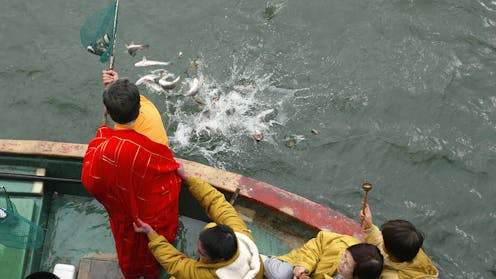
A Buddhist monk in Hong Kong releases fish and chants prayers during a ceremony to free the spirits of tsunami victims. Samantha Sin/AFP via Getty Images

People often consider evolution to be a process that occurs in nature in the background of human society. But evolution is not separate from human beings. In fact, human cultural practices can influence evolution in wildlife. This influence is highly pronounced in cities, where people drastically alter landscapes to meet their own needs.

Human actions can affect wildlife evolution in a number of ways. If people fragment habitat, separated wildlife populations can evolve to be more and more different from each other. If people change certain local conditions, it can pressure organisms in new ways that mean different genes are favored by natural selection and passed on to offspring – another form of evolution that can be driven by what people do.

In a recent review, evolutionary biologists Marta Szulkin, Colin Garroway and I, in collaboration with scientists spread across five continents, explored how cultural processes – including religion, politics and war – shape urban evolution. We reviewed dozens of empirical studies about urban wildlife around the globe. Our work highlights which human cultural practices have and continue to shape the evolutionary trajectory of wild animals and plants.

Religious practices

If you’ve traveled internationally, you may have noticed the menu at any one McDonald’s restaurant is shaped by the local culture of its location. In the United Arab Emirates, McDonald’s serves an entirely halal menu. Vegetarian items are common and no beef is served in Indian McDonald’s. And in the United States, McDonald’s Filet-O-Fish is especially popular during Lent when observant Catholics don’t consume meat on Fridays.

Similarly, ecosystems of cities are shaped by local cultural practices. Because all wildlife are connected to the environment, cultural practices that alter the landscape shape the evolution of urban organisms.

Yellow and black salamander facing the camera
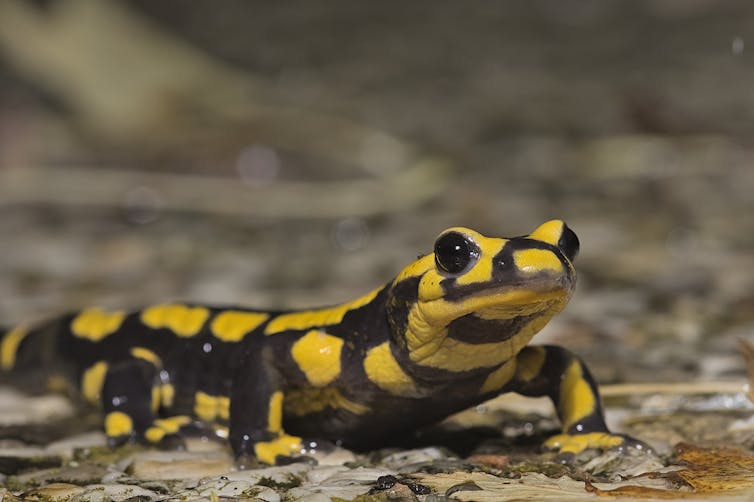
Populations of fire salamanders have different genes depending on which side of city walls in Oviedo, Spain, they live on.
Patrice Skrzynski via Getty Images

For example, in Oviedo, Spain, people constructed walls around religious buildings between the 12th and 16th centuries. This division of the city led to different populations of fire salamanders inside and outside the walls. Because salamanders can’t scale these walls, those on opposite sides became isolated from each other and unable to pass genes back and forth. In a process that scientists call genetic drift, over time salamanders on the two sides became genetically distinct − evidence of the two populations evolving independently.

Imagine dumping out a handful of M&Ms. Just by chance, some colors might be overrepresented and others might be missing. In the same way, genes that are overrepresented on one side of the wall can be in low numbers or missing on the other side. That’s genetic drift.

Introducing non-native wildlife is another way people can alter urban ecosystems and evolutionary processes. For example, prayer animal release is a practice that started in the fifth or sixth century in some sects of Buddhism. Practitioners who strive to cause no harm to any living creature release captive animals, which benefits the animal and is meant to improve the karma of the person who released it.

However, these animals are often captured from the wild or come from the pet trade, thereby introducing non-native wildlife into the urban ecosystem. Non-natives may compete with local species and contribute to the local extinction of native wildlife. Capturing animals nearby has downsides, too. It can diminish local populations, since many die traveling to the release ceremony. The genetic diversity of these local populations in turn decreases, reducing the population’s ability to survive.

Black and white photo showing a cart filled with dead birds and a group of people marching alongside
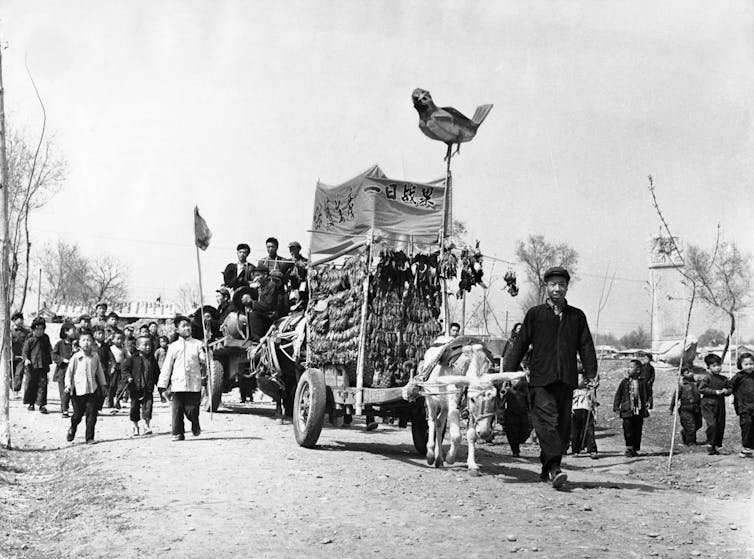
More than a thousand sparrows killed by peasants in 1958 are displayed on a cart near Beijing, China.
Sovphoto/Universal Images Group via Getty Images

Influence of politics

Politically motivated campaigns have shaped wildlife in various ways.

Starting in 1958, for instance, the Chinese Communist Party led a movement to eliminate four species that were considered pests: rats, flies, mosquitoes and sparrows. While the first three are commonly considered pests around the world, sparrows made the list because they were “public animals of capitalism” due to their fondness for grain. The extermination campaign ended up decimating the sparrow population and damaging the entire ecosystem. With sparrows no longer hunting and eating insects, crop pests such as locusts thrived, leading to crop destruction and famine.

In the United States, racial politics may be shaping evolutionary processes in wildlife.
For instance, American highways traverse cities according to political agendas and have often dismantled poor neighborhoods of color to make way for multilane thoroughfares. These highways can change how animals are able to disperse and commingle. For example, they prevent bobcats and coyotes from traveling throughout Los Angeles, leading to similar patterns of population differentiation as seen in fire salamanders in Spain.

Wildlife during and after war

Human religious and political agendas often lead to armed conflict. Wars are known to dramatically alter the environment, as seen in current conflicts in Gaza and Ukraine.

A large brown bird with white wing spots perching on a tree trunk
The Russia-Ukraine war affected migration of greater spotted eagles.
Nimit Virdi via Getty Images

While documenting evolutionary changes to urban wildlife is secondary to keeping people safe during wartime, a handful of studies on wildlife have come out of active war zones. For example, the current Russia-Ukraine war affected the migration of greater spotted eagles. They made large diversions around the active war zone, arriving later than usual at their breeding grounds. The longer route increased the energy the eagles used during migration and likely influenced their fitness during breeding.

Wars limit access to resources for people living in active war zones. The lack of energy to heat homes in Ukraine during the winter has led urban residents to harvest wood from nearby forests. This harvesting will have long-term consequences on forest dynamics, likely altering future evolutionary potential.

A similar example is famine that occurred during the Democratic Republic of Congo’s civil wars (1996-1997, 1998-2003) and led to an increase in bushmeat consumption. This wildlife hunting is known to reduce primate population sizes, making them more susceptible to local extinction.

Even after war, landscapes experience consequences.

For example, the demilitarized zone between North Korea and South Korea is a 160-mile (250-kilometer) barrier, established in 1953, separating the two countries. Heavily fortified with razor wire and landmines, the demilitarized zone has become a de facto nature sanctuary supporting thousands of species, including dozens of endangered species.

The collapse of the Soviet Union and the end of the Cold War led to the establishment of the European Green Belt, which runs along the same path as the Iron Curtain. This protected ecological network is over 7,800 miles (12,500 kilometers) long, allowing wildlife to move freely across 24 countries in Europe. Like the Korean DMZ, the European Green Belt allows for wildlife to move, breed and exchange genes, despite political boundaries. Politics has removed human influence from these spaces, allowing them to be a safe haven for wildlife.

While researchers have documented a number of examples of wildlife evolving in response to human history and cultural practices, there’s plenty more to uncover. Cultures differ around the world, meaning each city has its own set of variables that shape the evolutionary processes of wildlife. Understanding how these human cultural practices shape evolutionary patterns will allow people to better design cities that support both humans and the wildlife that call these places home.

The Conversation

Ideas for this article were developed as part of a NSF funded Research Coordination Network (DEB 1840663). Elizabeth Carlen was funded by the Living Earth Collaborative.

ref. War, politics and religion shape wildlife evolution in cities – https://theconversation.com/war-politics-and-religion-shape-wildlife-evolution-in-cities-260184

From glass and steel to rare earth metals, new materials have changed society throughout history

Source: The Conversation – USA – By Peter Mullner, Distinguished Professor in Materials Science and Engineering, Boise State University

Steel played a large role in the Industrial Revolution. Monty Rakusen/DigitalVision via Getty Images

Many modern devices – from cellphones and computers to electric vehicles and wind turbines – rely on strong magnets made from a type of minerals called rare earths. As the systems and infrastructure used in daily life have turned digital and the United States has moved toward renewable energy, accessing these minerals has become critical – and the markets for these elements have grown rapidly.

Modern society now uses rare earth magnets in everything from national defense, where magnet-based systems are integral to missile guidance and aircraft, to the clean energy transition, which depends on wind turbines and electric vehicles.

The rapid growth of the rare earth metal trade and its effects on society isn’t the only case study of its kind. Throughout history, materials have quietly shaped the trajectory of human civilization. They form the tools people use, the buildings they inhabit, the devices that mediate their relationships and the systems that structure economies. Newly discovered materials can set off ripple effects that shape industries, shift geopolitical balances and transform people’s daily habits.

Materials science is the study of the atomic structure, properties, processing and performance of materials. In many ways, materials science is a discipline of immense social consequence.

As a materials scientist, I’m interested in what can happen when new materials become available. Glass, steel and rare earth magnets are all examples of how innovation in materials science has driven technological change and, as a result, shaped global economies, politics and the environment.

A diagram showing red arrows, labeled 'politics in' 'society in' 'environment in' 'technology in' etc, leading to a box labeled 'innovation' with arrows pointing away from that box with the same labels but 'out' instead of 'in.'
How innovation shapes society: Pressures from societal and political interests (orange arrows) drive the creation of new materials and the technologies that such materials enable (center). The ripple effects resulting from people using these technologies change the entire fabric of society (blue arrows).
Peter Mullner

Glass lenses and the scientific revolution

In the early 13th century, after the sacking of Constantinople, some excellent Byzantine glassmakers left their homes to settle in Venice – at the time a powerful economic and political center. The local nobility welcomed the glassmakers’ beautiful wares. However, to prevent the glass furnaces from causing fires, the nobles exiled the glassmakers – under penalty of death – to the island of Murano.

Murano became a center for glass craftsmanship. In the 15th century, the glassmaker Angelo Barovier experimented with adding the ash from burned plants, which contained a chemical substance called potash, to the glass.

The potash reduced the melting temperature and made liquid glass more fluid. It also eliminated bubbles in the glass and improved optical clarity. This transparent glass was later used in magnifying lenses and spectacles.

Johannes Gutenberg’s printing press, completed in 1455, made reading more accessible to people across Europe. With it came a need for reading glasses, which grew popular among scholars, merchants and clergy – enough that spectacle-making became an established profession.

By the early 17th century, glass lenses evolved into compound optical devices. Galileo Galilei pointed a telescope toward celestial bodies, while Antonie van Leeuwenhoek discovered microbial life with a microscope.

A large round, convex glass lens mounted on a metal stand, with a technician wearing scrubs looking at it.
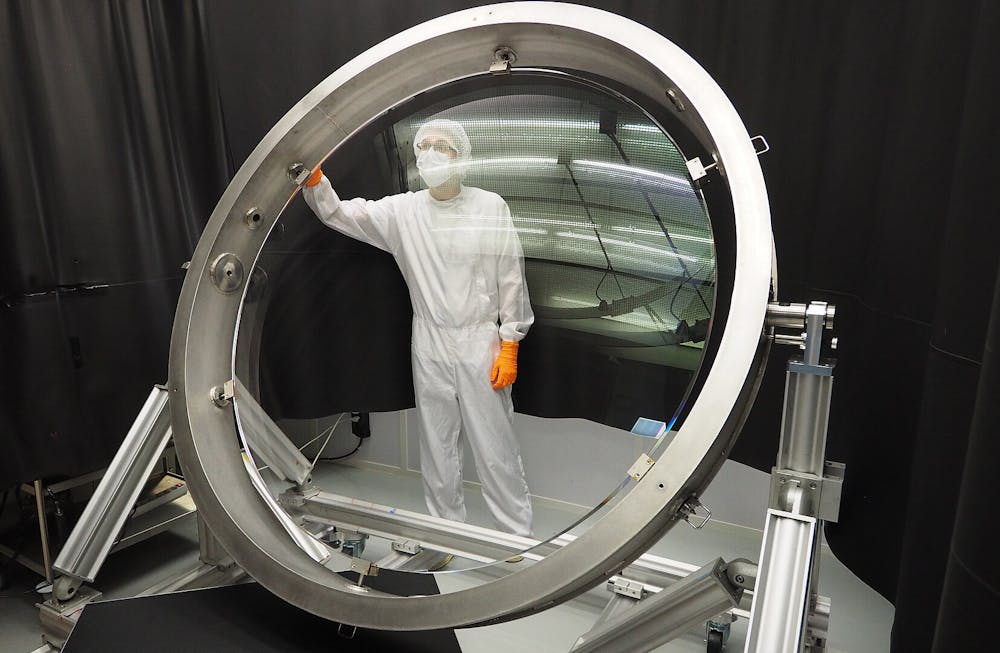
The glass lens of the Vera Rubin Observatory, which surveys the night sky.
Large Synoptic Survey Telescope/Vera Rubin Observatory, CC BY

Lens-based instruments have been transformative. Telescopes have redefined long-standing cosmological views. Microscopes have opened entirely new fields in biology and medicine.

These changes marked the dawn of empirical science, where observation and measurement drove the creation of knowledge. Today, the James Webb Space Telescope and the Vera C. Rubin Observatory continue those early telescopes’ legacies of knowledge creation.

Steel and empires

In the late 18th and 19th centuries, the Industrial Revolution created demand for stronger, more reliable materials for machines, railroads, ships and infrastructure. The material that emerged was steel, which is strong, durable and cheap. Steel is a mixture of mostly iron, with small amounts of carbon and other elements added.

Countries with large-scale steel manufacturing once had outsized economic and political power and influence over geopolitical decisions. For example, the British Parliament intended to prevent the colonies from exporting finished steel with the iron act of 1750. They wanted the colonies’ raw iron as supply for their steel industry in England.

Benjamin Huntsman invented a smelting process using 3-foot tall ceramic vessels, called crucibles, in 18th-century Sheffield. Huntsman’s crucible process produced higher-quality steel for tools and weapons.

One hundred years later, Henry Bessemer developed the oxygen-blowing steelmaking process, which drastically increased production speed and lowered costs. In the United States, figures such as Andrew Carnegie created a vast industry based on Bessemer’s process.

The widespread availability of steel transformed how societies built, traveled and defended themselves. Skyscrapers and transit systems made of steel allowed cities to grow, steel-built battleships and tanks empowered militaries, and cars containing steel became staples in consumer life.

Bright hot metal pouring out of a large metal furnace.
White-hot steel pouring out of an electric arc furnace in Brackenridge, Penn.
Alfred T. Palmer/U.S. Library of Congress

Control over steel resources and infrastructure made steel a foundation of national power. China’s 21st-century rise to steel dominance is a continuation of this pattern. From 1995 to 2015, China’s contribution to the world steel production increased from about 10% to more than 50%. The White House responded in 2018 with massive tariffs on Chinese steel.

Rare earth metals and global trade

Early in the 21st century, the advance of digital technologies and the transition to an economy based on renewable energies created a demand for rare earth elements.

A wind turbine with three thin blades rising out of the water.
Offshore turbines use several tons of rare earth magnets to transform wind into electricity.
Hans Hillewaert/Wikimedia Commons, CC BY-SA

Rare earth elements are 17 chemically very similar elements, including neodymium, dysprosium, samarium and others. They occur in nature in bundles and are the ingredients that make magnets super strong and useful. They are necessary for highly efficient electric motors, wind turbines and electronic devices.

Because of their chemical similarity, separating and purifying rare earth elements involves complex and expensive processes.

China controls the majority of global rare earth processing capacity. Political tensions between countries, especially around trade tariffs and strategic competition, can risk shortages or disruptions in the supply chain.

The rare earth metals case illustrates how a single category of materials can shape trade policy, industrial planning and even diplomatic alliances.

Six small piles of rock
Mining rare earth elements has allowed for the widespread adoption of many modern technologies.
Peggy Greb, USDA

Technological transformation begins with societal pressure. New materials create opportunities for scientific and engineering breakthroughs. Once a material proves useful, it quickly becomes woven into the fabric of daily life and broader systems. With each innovation, the material world subtly reorganizes the social world — redefining what is possible, desirable and normal.

Understanding how societies respond to new innovations in materials science can help today’s engineers and scientists solve crises in sustainability and security. Every technical decision is, in some ways, a cultural one, and every material has a story that extends far beyond its molecular structure.

The Conversation

The National Science Foundation, the Department of Energy, NASA, and other national and regional agencies have funded former research of Peter Mullner.

ref. From glass and steel to rare earth metals, new materials have changed society throughout history – https://theconversation.com/from-glass-and-steel-to-rare-earth-metals-new-materials-have-changed-society-throughout-history-258244

Conservatives notch 2 victories in their fight to deny Planned Parenthood federal funding through Medicaid

Source: The Conversation – USA (3) – By Rachel Rebouché, Professor of Law, Temple University

Conservatives have won two important battles in their decades-long campaign against Planned Parenthood, a network of affiliated clinics that are the largest provider of reproductive health services in the U.S.

One of these victories was a U.S. Supreme Court ruling handed down on June 26, 2025. The other is a provision in the multitrilion-dollar tax-and-spending package President Donald Trump has made his top legislative priority. Both follow the same strategy: depriving Planned Parenthood – and all other providers of abortion care – from getting reimbursed by Medicaid, the government health insurance program that mainly covers low-income adults and children, as well as people with disabilities.

Because Medicaid covers nearly 80 million Americans, this bill, and the Supreme Court’s decision, will sever federal support for health care that has nothing to do with abortion, such as annual exams, birth control and prenatal care. Abortions account for 3% of all of Planned Parenthood’s services.

As a scholar of reproductive rights, I have studied how abortion politics shape the broader provision of reproductive health care.

I see in both the legislation and the court’s ruling a culmination of a strategy to defund Planned Parenthood that was in full swing by 2007, toward the end of the George W. Bush administration. This campaign hinges on a strategy of insisting that federal and state dollars are supporting abortion care when they do not.

A clinic escort in a rainbow-striped vest assists a patient entering a Planned Parenthood clinic.
A clinic escort assists a patient at a Planned Parenthood health center in Philadelphia in 2022.
Angela Weiss/AFP via Getty Images

Congress and the Supreme Court

Trump’s package of tax breaks, spending increases and safety net changes passed in the House and the Senate by razor-thin margins.

One of the bill’s provisions will make it impossible for patients with Medicaid coverage to get any health care services at clinics like Planned Parenthood.

The provision will last only for a year.

The House approved the same version of the package that the Senate had passed a week after the U.S. Supreme Court ruled that states cannot be sued by patients if they make it impossible for Planned Parenthood clinics to be reimbursed by Medicaid.

The case, Medina v. Planned Parenthood South Atlantic, arose when a South Carolina woman wanted to get gynecological care at her local Planned Parenthood clinic. The rationale South Carolina Gov. Henry McMaster gave for the state’s policy was that Planned Parenthood is an abortion provider.

Man in suit speaks into a microphone, flanked by other people who are standing in front of a building surrounded by scaffolding.
South Carolina Gov. Henry McMaster stands outside the Supreme Court building in Washington in April 2025 and speaks about his state’s legal dispute regarding Medicaid funding for health care at Planned Parenthood clinics.
Kayla Bartkowski/Getty Images

Medicaid and abortion

To be clear, neither the legal dispute nor the provision in the legislative package had anything to do with the use of federal or state dollars to fund abortion.

Although Planned Parenthood offers abortion where and when it is legal, this provision and the court’s decision concern Medicaid reimbursement for all other services. Abortion care is not covered by Medicaid under federal law except in cases of rape, incest or a threat to the pregnant patient’s life.

Medicaid patients instead have relied on their plan at Planned Parenthood clinics when they get annual exams, prenatal care, mental health support, birth control, treatment for sexually transmitted infections, cervical cancer screenings and fertility referrals.

None of those services will be covered by Medicaid for a year. Patients will have to find another health care provider – as long as one is available.

While that provision is in effect, Medicaid won’t be allowed to reimburse Planned Parenthood for any services, mirroring what states just won the right to do in the Supreme Court ruling – but at the national level.

Although the bill blocks Medicaid funding for Planned Parenthood for only 12 months, the ruling lets states exclude any provider from its Medicaid program because they also provide abortions.

In other words, people who rely on Medicaid funding will lose access to all of those essential services not just at Planned Parenthood but potentially at any other providers that also offer abortion care.

Given the number of states that ban almost all abortion, I have no doubt that more states will do that, especially if this Medicaid funding provision expires after a year without being renewed.

A protester holds a sign aloft that says 'Women on Medicaid deserve choices too,' with another sign in the background that says 'Keep Abortion Legal,'
Abortion-rights demonstrators holds a sign in front of the Supreme Court building in Washington as the Medina v. Planned Parenthood South Atlantic case is heard on April 2, 2025.
Tom Williams/CQ-Roll Call via Getty Images

Roots of this defunding strategy

Politicians began to call for defunding Planned Parenthood about 20 years ago, following efforts by anti-abortion activists to discredit the organization altogether.

U.S. Rep. Mike Pence introduced the first federal legislation aimed at “defunding” Planned Parenthood in 2007. It failed to muster enough support in Congress to become law. States such as Texas then started down that path.

The first national legislative success came in 2015. Both houses of Congress passed a budget reconciliation measure with a provision to defund Planned Parenthood that year, but President Barack Obama vetoed it. Republicans had threatened to shut down the government over those demands. A year later, the GOP included a call to defund Planned Parenthood in its presidential campaign platform.

Before Obama left office, his administration passed a rule in December 2016 protecting federal funds for family planning for health care facilities that also provided abortion. The Trump administration rolled back that rule in 2017.

The Trump administration relied on an argument that any support for a health care provider that offers patients abortion services, no matter how segregated the sources of funding, is tantamount to subsidizing abortion.

What to expect next

Nationally, 16 million women of reproductive age rely on Medicaid, and 1 in 5 women will visit a Planned Parenthood clinic for health care at least once in their lives. Those clinics depend on Medicaid reimbursement to offer an array of reproductive health care services, such as prenatal care, that are not tied to abortion.

If Planned Parenthood clinics can’t bill Medicaid for those services, many will close. Planned Parenthood estimates that it could see almost 200 closures – 90% of them in states where abortion is legal. That means over 1 million low-income people risk losing access to their health care provider.

And once clinics close, they may never reopen, U.S. Sen. Patty Murray, a Washington Democrat, recently predicted.

Should the number of Planned Parenthood clinics plummet, it will threaten access to contraceptives, which are all the more important in preventing unwanted pregnancies for people living in states that have banned abortion. Researchers have repeatedly found that unwanted pregnancies, when people are denied access to abortion services, are correlated with increased debt, missed educational and employment opportunities, mental health problems, and diminished care for a family’s older children.

In addition, pregnant patients and new parents may have more limited options for prenatal and postnatal care. That could cause the country’s already-high rates of maternal and infant mortality to increase.

The Conversation

Rachel Rebouché does not work for, consult, own shares in or receive funding from any company or organization that would benefit from this article, and has disclosed no relevant affiliations beyond their academic appointment.

ref. Conservatives notch 2 victories in their fight to deny Planned Parenthood federal funding through Medicaid – https://theconversation.com/conservatives-notch-2-victories-in-their-fight-to-deny-planned-parenthood-federal-funding-through-medicaid-260233