Banks retreat from climate change commitments – but it’s business more than politics

Source: The Conversation – USA (2) – By David L Levy, Professor Emeritus of Management, UMass Boston
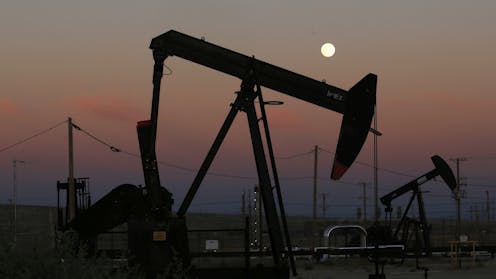
The oil – and fossil fuel financing – continues to profitably flow. AP Photo/Gary Kazanjian

Another business-led effort to fight climate change is unraveling.

On Aug. 27, 2025, the Net-Zero Banking Alliance suspended its activities after several major U.S. and European banks backed out.

While most observers are blaming the strong political backlash in the U.S. against climate change action and sustainable investing, we believe the banks didn’t need much of a push: These net-zero alliances never made much business sense and were not particularly effective at fighting climate change. Indeed, for us the puzzle was why they had flourished in the first place.

To examine their rise and fall, we recently conducted a research project that encompassed interviews with more than 80 executives from various financial institutions, activist organizations and oil and gas companies.

Powerful allies grasped climate risks

The Net-Zero Banking Alliance was founded in 2021. Members agreed to limit lending to carbon-intense sectors so that total greenhouse gas emissions from companies in the banks’ loan portfolios are close to zero by 2050.

This target aligned with the goals of the Paris Agreement but was not binding and lacked clear shorter-term targets and plans. Similar net-zero networks were established for insurance, asset management and other financial areas, all under the umbrella of the United Nations Environment Program’s Finance Initiative. Over the past 16 months, the insurance and asset managers’ alliances have also suspended their activities.

These net-zero alliances were built on the premise that climate risk equals financial risk and that the challenge requires a collective response. Their goal was to leverage the power of finance to push companies to decarbonize their products and processes.

Key financial regulators, central banks and a few of the largest asset managers propelled these alliances because they perceived that climate change poses serious long-term systemic risks to markets and economies around the world. Influential figures such as Larry Fink, the CEO of BlackRock, the world’s largest asset manager, and former Bank of England head Mark Carney, now the prime minister of Canada, lent legitimacy to these initiatives.

Some environmental groups also supported these alliances as a smart strategy to pressure companies on climate. Many other financial institutions then joined the net-zero bandwagon, but our research revealed that they didn’t do so because of concern about climate-related financial risks. Rather, they felt an array of pressure from peers, investors, activists, regulators and even their families.

Many people we interviewed mentioned reputational risk as a key driver and saw a low-carbon transition as inevitable, driven by regulation, technological innovation and consumer demand. This was the Biden era, with billions of dollars flowing to clean energy through the Inflation Reduction Act.

The burgeoning field also spawned a specialized but lucrative industry of data providers and consultants who actively marketed carbon management, disclosure and broader sustainability services. The global market for sustainability data and software was estimated at more than US$1 billion in 2024 and growing rapidly.

Climate strategy and sustainability reporting was the fastest-growing business sector for accounting and consulting firms. And asset managers were happy to collect higher fees for funds screened for sustainability – even though these funds have not outperformed the broader market.

These vested interests spurred continued expansion of net-zero networks. Indeed, at its peak in 2024, the Net-Zero Banking Alliance included over 140 members globally with $74 trillion in estimated total assets, representing over 40% of global banking assets.
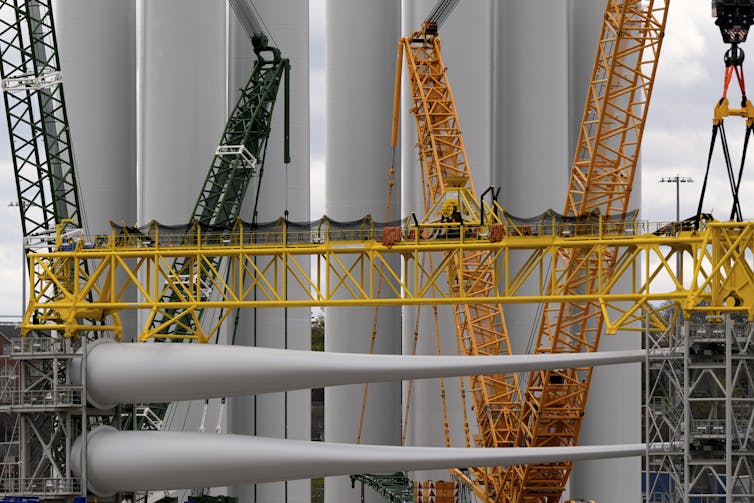
wind turbine components await assembly on a pier in connecticut
The Trump administration has canceled several offshore wind farm projects, such as one that’s nearly complete and intended to serve Rhode Island and Connecticut – though its fate is still in court.
AP Photo/Julia Demaree Nikhinson

Political backlash

Given the size and scope of these net-zero networks, what triggered their rapid collapse?

One major factor, of course, was the political backlash against anything connected with climate action and sustainable investing following the 2024 election of President Donald Trump.

Finance officials in more than 20 U.S. states have demanded that major asset managers restrict the use of environment, social and governance benchmarks, accusing them of eroding “traditional fiduciary duty” and claiming they hurt investors.

In August, 23 Republican attorneys general accused organizations created to set standards for corporate climate disclosures of operating an anticompetitive “climate cartel” and violating antitrust laws.

Fossil fuels – too lucrative to abandon

While the political pressure in the U.S. has indeed been intense, the collapse of net-zero networks and the broader corporate retreat from climate commitments is largely due to the continued profitability of fossil fuels and the high costs and risks of deep decarbonization. Investors and banks, of course, want to keep on financing profitable companies and avoid pressuring their clients to take risky measures.

Oil companies such as BP and Shell that had relatively strong climate targets suffered financially as a result, prompting them to retreat from these targets and shift capital from renewable projects back toward fossil fuels. High energy prices in the wake of the Russia-Ukraine war made the sector even more lucrative. Low-carbon fuels and processes for industries such as aviation, steel and cement are still very expensive.

Moreover, the Trump administration is abolishing most subsidies for clean energy and freezing permits for offshore wind, while easing regulations and opening more land for oil and gas exploration.

These economic incentives made it hard for the banking alliance to reduce financing for fossil fuels – and the money has kept on flowing into oil and gas projects.

European banks that sharply cut funding to fossil fuel companies saw their business diverted to other banks and to private, nonbank sources of finance, which has soared in the past two years. Facing this loss of business, major banks’ lending to oil and gas companies surged in 2024, driving loans to a three-year high of $869 billion.

The costs of membership in the net-zero alliances also increased over time, with the adoption of stricter standards that called for specific plans and timelines for ending fossil fuel financing entirely. The new standards also required loan recipients to disclose Scope 3 emissions, which include emissions from a company’s suppliers and customers.

Managers in financial institutions told us that the increasingly complex and demanding requirements were generating strong pushback from their clients. We also heard that membership was turning from a reputational asset to a liability, as activist organizations called out the hypocrisy of continued fossil fuel lending despite their commitments to phasing it out.

Ignoring climate change’s long-term risks

Although banks are rushing back to finance fossil fuel projects, these loans typically have long terms of 10 to 25 years. This means they carry the risk that an eventual transition to clean energy will make these projects worthless, “stranded assets.” One study estimates that investors are currently exposed to more than $1 trillion in potential losses.

Why do banks often ignore these risks?

Our interviewees mentioned the organizational silos that separate analysts who assess climate risks from the loan originators. In other words, the employees deciding where to lend money may not be talking to the team that best understands the long-term risks. Moreover, current risk assessment tools are quite crude and don’t generate the quantitative metrics that loan underwriters want.

Finally, loans are increasingly repackaged and sold, or securitized, into the larger corporate debt market, obscuring the risks.

Climate risks are real and growing

The Net-Zero Banking Alliance isn’t disappearing entirely. The group is currently deciding on whether to restructure into a much weaker “framework initiative” that provides voluntary guidance instead of binding commitments.

And some banks leaving the alliance have stated that they will maintain their climate goals and sustainability policies.

But climate risks are real and growing. The Boston Consulting Group recently estimated that just the physical risks – floods, drought and wildfires – could cost companies up to 25% of their profits by 2050 and substantially cut global GDP.

A transition to a low-carbon economy will cost trillions of dollars and create massive disruption – as well as opportunities – as new technologies and companies emerge. The longer that action is delayed, the greater the risks to the planet – and of more drastic shocks to the global economy and financial system.

The Conversation

David L Levy receives funding from the BSF, the Bi-national US-Israel Science Foundation

Rami Kaplan receives funding from the BSF, the Bi-national US-Israel Science Foundation

ref. Banks retreat from climate change commitments – but it’s business more than politics – https://theconversation.com/banks-retreat-from-climate-change-commitments-but-its-business-more-than-politics-265176

Why you seriously need to stop trying to be funny at work

Source: The Conversation – USA (2) – By Peter McGraw, Professor of Marketing and Psychology, University of Colorado Boulder

Goofing off at the office doesn’t do you any good. Milan Markovic/E+ via Getty Images

How can you get ahead in your career and still enjoy the ride?

One solution offered in business books, LinkedIn posts and team-building manuals is to use humor. Sharing jokes, sarcastic quips, ironic memes and witty anecdotes, the advice goes, will make you more likable, ease stress, strengthen teams, spark creativity and even signal leadership potential.

We are professors of marketing and management who study humor and workplace dynamics. Our own research – and a growing body of work by other scholars – shows that it’s harder to be funny than most people think. The downside of cracking a bad joke is often larger than what you might gain by landing a good one.

Fortunately, you don’t have to tell sidesplitting jokes to make humor work for you. You can learn to think like a comedian instead.

Humor is risky business

Comedy works by bending and breaking norms – and when those rules aren’t broken in just the right way, it’s more likely to harm your reputation than to help your team.

We developed the “benign violation theory” to explain what makes things funny – and why attempts at humor so often backfire, especially in the workplace. Essentially, humor arises when something is both wrong and OK at the same time.

People find jokes funny when they break rules while seeming harmless. Miss one of those ingredients when you tell a joke and your audience won’t appreciate it. When it’s all benign and there’s no violation, you get yawns. When it’s all violation and not benign, you could end up triggering outrage.

It’s hard enough to get laughs in the darkness of a comedy club. Under fluorescent office lights, that razor-thin line becomes even harder to walk. What feels wrong but OK to one colleague can feel simply wrong to another, especially across differences in seniority, culture, gender or even the mood they’re in.

The hit sitcom ‘The Office’ pokes fun at the cringeworthy jokes cracked by a hapless boss.

An advertising study

In our experiments, when everyday people are asked to “be funny,” most attempts land flat or cross lines.

In a humorous caption contest with business students, described in Peter McGraw’s book on global humor practices, “The Humor Code,” the captions weren’t particularly funny to begin with. However, the ones that were rated by judges as the most funny were often also rated the most distasteful.

Being funny without being offensive is of paramount importance. This is particularly true for women, as a robust literature shows women face harsher backlash than men for behavior seen as offensive or norm-violating such as expressing anger, acting dominantly or even “making asks” in negotiations.

Don’t be that guy.

You might end up getting no respect

Research by other scholars who examine leader and manager behavior in organizations tells a similar story.

In one study, managers who used humor effectively were seen as more confident and competent, boosting their status. Yet when their attempts misfired, those same managers lost status and credibility. Other researchers have found that failed humor doesn’t just hurt a manager’s status – it also makes employees less likely to respect that manager, seek their advice, or trust their leadership.

Even when jokes land, humor can backfire. In one study, marketing students instructed to write “funny” copy for advertisements wrote ads that were funnier, but also less effective, than students instructed to write “creative” or “persuasive” copy.

Another study found that bosses who joke too often push employees into pretending to be amused, which drains energy, reduces job satisfaction and increases burnout. And the risks are higher for women due to a double standard. When women use humor in presentations, they are often judged as being less capable and having lower status than men.

The bottom line is that telling a great joke rarely gets you a promotion. And cracking a bad one can jeopardize your job – even if you’re not a talk show host who earns a living making people laugh.

Flip the script

Instead of trying to be funny on the job, we recommend that you focus on what we call “thinking funny” – as described in another of McGraw’s books, “Shtick to Business.”

“The best ideas come as jokes,” advertising legend David Ogilvy once said. “Try to make your thinking as funny as possible.”

But Ogilvy wasn’t telling executives to crack jokes in meetings. He was encouraging employees to think like comedians by flipping expectations, leveraging their networks and finding their niche.

Comics often lead you one way and then flip the script. Comedian Henny Youngman, a master of one-liners, famously quipped, “When I read about the dangers of drinking, I gave up … reading.” The business version of this convention is to challenge an obvious assumption.

For example, Patagonia’s “Don’t Buy This Jacket” campaign, which the outdoor gear company rolled out Black Friday in 2011 as a full-page ad in The New York Times, paradoxically boosted sales by calling out overconsumption.

To apply this method, pick a stale assumption your team holds, such as that adding features to a product always improves it or that having more meetings will lead to smoother coordination, and ask, “What if the opposite were true?”

You’ll discover options that standard brainstorming misses.

Create a chasm

When comedian Bill Burr has his fans in stitches, he knows some people won’t find his jokes funny – and he doesn’t try to win them over.

We’ve observed that many of the best comics don’t try to please everyone. They succeed by deliberately narrowing their audience. And we also find that businesses that do the same build stronger brands.

For example, when Nebraska’s tourism board embraced “Honestly, it’s not for everyone” in a 2019 campaign, targeting out-of-state visitors, web traffic jumped 43%.

Some people want hot tea. Others want iced tea. Serving warm tea satisfies no one. Likewise, you can succeed in business by deciding whom your idea is for, and whom it’s not for, then tailoring your product, policy or presentation accordingly.

Cooperate to innovate

Stand-up may look like a solo act. But comics depend on feedback – punch-ups from fellow comedians and reactions from audiences – iterating jokes in the same way lean startups may innovate new products.

Building successful teams at work means listening before speaking, making your partners look good, and balancing roles. Improv teacher Billy Merritt has described three types of improvisers. Pirates are risk-takers. Robots are structure builders. Ninjas are adept at both, taking risks and building structures.

A team designing a new app, for instance, needs all three: Pirates to propose bold features, robots to streamline the interface, and ninjas to bridge gaps. Empowering everyone in these roles leads to braver ideas with fewer blind spots.

Gifts aren’t universal

Telling someone to “be funny” is like telling them to “be musical.” Many of us can keep a beat, but few have what it takes to become rock stars.

That’s why we argue that it’s smarter to think like a comedian than to try to act like one.

By reversing assumptions, cooperating to innovate, and creating chasms, professionals can generate fresh solutions and stand out – without becoming an office punchline.

The Conversation

The authors do not work for, consult, own shares in or receive funding from any company or organization that would benefit from this article, and have disclosed no relevant affiliations beyond their academic appointment.

ref. Why you seriously need to stop trying to be funny at work – https://theconversation.com/why-you-seriously-need-to-stop-trying-to-be-funny-at-work-265036

Personal scandals sink CEOs faster than financial fraud, research shows

Source: The Conversation – USA (2) – By Michael Nalick, Assistant Professor of Management, University of Denver

A CEO’s canoodling with his company’s human resources chief – caught on the “kiss cam” at a Coldplay concert – made global headlines this summer. Beyond the memes and tabloid fodder, personal lives were shattered and a company was left in turmoil after its leader’s sudden exit.

The case, involving the AI firm Astronomer, may be the most visible of recent CEO personal scandals – think sex affairs, drug abuse or embarrassing behavior – but it’s not an isolated incident. Just weeks following the Coldplay “kiss cam,” the CEO of Nestlé was shown the door for similar behavior involving a relationship with a subordinate. Personal scandals have been the top cause of CEO terminations in recent years.

How do these scandals stack up to other corporate indiscretions, such as financial fraud? As a management professor, I knew that there’s lots of research on CEOs’ financial crimes, but surprisingly little on personal misdeeds.

So my colleagues and I examined nearly 400 CEO scandals involving either financial or personal misconduct. In this research, published in August 2025 in the journal Strategic Organization, we found that not all CEO scandals are treated equally: The type makes all the difference.

An exuberant woman in the stands at a Phillies game is shown on a jumbotron holding up a sign reading: We are not here cheating on our significant others -- go Phils!
The Coldplay incident became the subject of ridicule at public events for days, such as at this July 18, 2025, Major League Baseball game.
Isaiah Vazquez/Getty Images

Personal scandals are harder to survive

For most people, personal indiscretions – such as having an extramarital affair or abusing drugs – are a private matter. But for CEOs, even scandals unrelated to business create doubt about their judgment, integrity and leadership. The result is usually career-ending for the CEO, research shows, and can create lasting harm for the company.

We found that CEOs overwhelmingly exit in the wake of personal scandals – five times as often as CEOs who commit financial misconduct do, in fact. And strong business performance doesn’t tend to offer protection.

For example, Hewlett-Packard’s Mark Hurd, who’s widely credited with turning around HP in the mid-2000s, was ousted following a very visible personal misconduct scandal 15 years ago. The fallout was swift: The company’s stock fell nearly 10% immediately after the announcement, and with leadership in a tailspin, it dropped more than 40% within a year.

Why bad numbers come with better odds

Companies are also routinely accused of “cooking the books.” In recent months, several firms have been forced to restate their earnings after their financial statements didn’t add up. These scandals shake investor trust, trigger sharp drops in company stock and often lead to the chief financial officer’s departure – with some CEOs following suit.

However, while cooking the books is considered a severe form of corporate misconduct, our research suggests that it has fewer job-ending repercussions for CEOs than personal scandals do. Roughly half of all CEOs implicated in financial scandals survive, we found – because, unlike in personal scandals, CEOs can often shift blame.

We also found that CEOs dismissed due to financial scandals tend to be replaced with outside candidates, which has been shown to stabilize a company’s stock price and lead to stronger long-term performance.

It might be surprising to learn that a CEO’s personal misconduct can come at a greater cost – both to the business and the executive – than outright financial fraud. Is corporate America overestimating the importance of CEOs’ private behavior? Or is it underestimating the importance of cooking the books?

While I don’t have answers to these questions, I think our findings show the need for more discussion – and more research.

The Conversation

I have received funding from Deloitte for a separate project on sociopolitical activism.

ref. Personal scandals sink CEOs faster than financial fraud, research shows – https://theconversation.com/personal-scandals-sink-ceos-faster-than-financial-fraud-research-shows-265725

Why Argentina is looking to the Trump administration for a bailout − and what the US Treasury can do to help

Source: The Conversation – USA (2) – By Arturo Porzecanski, Research Fellow, Center for Latin American & Latino Studies, American University

Done deal? U.S. President Donald Trump shakes hands with Argentine counterpart Javier Milei during a bilateral meeting on Sept. 23, 2025. Chip Somodevilla/Getty Images

President Donald Trump vowed to help out his Argentine counterpart Javier Milei on Sept. 23, 2025, a day after the U.S. administration said “all options” were on the table in regard to a bailout for the Latin American country’s rocky economy.

A day after Trump and Milei’s meeting on the sidelines of the United Nations General Assembly in New York, U.S. Treasury Secretary Scott Bessent said he was prepared to lend Argentina up to US$20 billion via currency swaps and bond purchases.

But what caused Milei to go hat in hand to the U.S. in the first place? And what would a U.S. bailout of Argentina look like? For answers, The Conversation turned to Arturo Porzecanski, an expert on Latin American economies at American University.

Why is the Argentine government seeking a bail out?

The event that sparked discussion of U.S. intervention was a sharp sell-off of the Argentine currency, the peso, as well as the country’s stocks and bonds.

Over the course of three days ending on Sept. 19, the country’s central bank spent over $1 billion of its hard-currency reserves defending the Argentine peso from further depreciation. To be sure, instead of dialing up his contacts in the Trump administration, Milei could have allowed the currency to find its market-clearing value – that is, the price at which supply and demand match.

Alternatively, he could have kept up the effort to stabilize the peso by spending still more billions of dollars previously borrowed from the International Monetary Fund.

However, he decided to call Washington and ask for financial support, hoping that the friendship with Trump he has been cultivating from even before Milei was elected would finally pay off.

The Argentine authorities fear that a sharper depreciation will reignite expectations of high inflation, and they also wish to conserve those IMF funds to help cover nearly $20 billion in interest and principal payments on dollar debts coming due in the next 15 months. The Argentine government would also rather not have the central bank raise interest rates by tightening monetary policy still more, nor implement additional cuts in government spending given that the economy is either stagnant or already in a recession.

Argentina’s economy got here because prior to Milei taking office in December 2023, his predecessor applied very loose monetary and fiscal policies – such as keeping interest rates low and spending high to stimulate the economy – as well as business-unfriendly regulations. That rocketed annual inflation into triple digits and led to the crumbling of confidence among domestic and foreign investors, thus complicating the government’s ability to refinance its maturing debt obligations.

While Milei reversed many of those harmful policies during the course of 2024, notably achieving a balanced government budget and a sharp deceleration of inflation, his popular support and confidence in his ability to manage the country’s remaining challenges have weakened in recent months.

A woman casts a vote into a box.
Argentine voters handed President Javier Milei a political blow in legislative elections on Sept. 7, 2025.
Tobias Skarlovnik/Getty Images

The economy has stalled, with job losses and unemployment rising. Phone recordings suggesting corruption involving the president’s family were released. And Milei’s party did surprisingly poorly in recent elections that took place in the large province of Buenos Aires. With midterm congressional elections scheduled for Oct. 26, Milei badly needs political and financial support from the Trump administration in order to stabilize the local financial markets and project a sense of order.

What options are there for the US to help Argentina?

The U.S. government has already been unusually supportive of Argentina from its dominant positions on the board of directors of the IMF, World Bank and Inter-American Development Bank. Earlier this year, it helped the country to secure from them pledges and disbursements worth tens of billions of dollars in new loans.

What is very new and different now is the prospect of direct lending from the U.S. Treasury to the government of Argentina. As previewed by Treasury Secretary Scott Bessent on Sept. 24, his team is currently in negotiations with their counterparts in Argentina for a $20 billion swap line, which presumably would involve the Treasury’s temporary purchase of Argentine pesos in exchange for the delivery of U.S. dollars. This could possibly be supplemented by the Treasury’s temporary purchase of Argentine government bonds, likely payable in dollars, whether newly issued or already in circulation.

Bessent’s announcement, coming on the heels of Trump’s vow to help out his Argentine counterpart, has prompted local and foreign investors to regain confidence in Argentina, such that beaten-up stocks and bonds have bounced back and the currency has appreciated.

This immediate and enthusiastic market response, if sustained, means that the Treasury may not have to spend too many billions of U.S. dollars to boost public confidence in Milei and Argentina, at least until the upcoming midterm elections.

Should Milei’s party do well in the late-October contest, enabling it to gain seats in the House and Senate and thus have more political support in the national legislature, a relatively small and temporary investment may yield a worthwhile payoff for the Trump and Milei administrations.

Why is the US keen on helping out?

Normally the U.S. government does not involve itself directly in foreign bailouts unless a country is systemically important – namely, when its troubles affect its neighbors, a number of other countries, or the United States itself.

For example, in the 1990s the U.S. Treasury offered direct support to other countries during crises in Mexico, East Asia and Russia, and in 1995 Argentina was one of the beneficiaries. And in 2008, in the wake of the global financial crisis, the Fed made available dollars in exchange for the currencies of about a dozen foreign countries – currency swaps mainly with European countries but also with Brazil, Canada and Mexico, since the meltdown affected Washington’s North American neighbors and many nations in Europe.

Moreover, in most cases, whatever Treasury or Fed funding is made available is soon repaid by upcoming loans from institutions such as the IMF and the World Bank, or else by major banks or institutional investors. In other words, most U.S. official support has been of the “bridge lending” kind, because the Treasury and the Fed can act within days, whereas other financial actors require weeks or even months to approve and disburse funding.

In the case of Argentina, it is notable that Bessent has stated that Argentina is systemically important, even though its troubles have so far not affected any other country. Left unsaid is how Argentina would repay the U.S. Treasury, because the pipeline of upcoming disbursements from official international organizations is not very large.

Therefore, the funds under discussion are not clear bridges to anything. In similar circumstances in the past, the U.S. Treasury has sought payment guarantees from foreign governments. Given the transactional approach favored by Trump, certain conditions may be demanded from Argentina – a country endowed with lithium, rare earths, shale oil and other resources.

What is the US Treasury’s Exchange Stabilization Fund?

The Exchange Stabilization Fund is the Treasury’s crisis-funding vehicle through which the bridging loan to prop up the Argentine currency would be made.

The fund was established in the mid-1930s. It was endowed with the profits that the U.S. Treasury realized when the official price of gold rose from $20.67 to $35 per ounce, increasing the value of U.S. government gold holdings.

For several decades through the 1980s, namely before the U.S. currency was allowed to float freely, the fund’s main purpose was to provide the funding for Treasury operations to affect the price of the dollar. A secondary purpose was to provide short-term, government-to-government loans mainly to Latin American countries, yet starting in the mid-1990s this became its primary objective.

The last Exchange Stabilization Fund loan was granted to Uruguay in mid-2002, in the wake of a major financial crisis in next-door Argentina that had triggered a bank run in Uruguay – and threatened to spread elsewhere around the region. The Treasury sent $1.5 million to Uruguay on a Monday to back at least the government-owned banks, and the funds were returned to Washington that same Friday. The bank run was stopped and thus the loan succeeded magnificently.

The Conversation

Arturo Porzecanski does not work for, consult, own shares in or receive funding from any company or organization that would benefit from this article, and has disclosed no relevant affiliations beyond their academic appointment.

ref. Why Argentina is looking to the Trump administration for a bailout − and what the US Treasury can do to help – https://theconversation.com/why-argentina-is-looking-to-the-trump-administration-for-a-bailout-and-what-the-us-treasury-can-do-to-help-265924

How the First Amendment protects Americans’ speech − and how it does not

Source: The Conversation – USA – By Ray Brescia, Associate Dean for Research and Intellectual Life, Albany Law School

Demonstrators protest the suspension of the “Jimmy Kimmel Live!” show on Sept. 18, 2025, in Los Angeles, Calif. Photo by Mario Tama/Getty Images

Imagine a protest outside the funeral of a popular political leader, with some of the protesters celebrating the death and holding signs that say things like “God Hates the USA/Thank God for 9/11,” “America is Doomed” and “Don’t Pray for the USA.”

No matter the political leanings of that leader, most Americans would probably abhor such a protest and those signs.

What would tolerate such activities, no matter how distasteful? The First Amendment.

The situation described above is taken from an actual protest, though it did not involve the funeral of a political figure. Instead, members of the Westboro Baptist Church protested outside the funeral of Marine Lance Cpl. Matthew Snyder, a U.S. service member killed in Iraq.

Through demonstrations like this, members of this group were conveying their belief that the U.S. is overly tolerant of those they perceive as sinners, especially people from the LGBTQ community, and that the death of U.S. soldiers should be recognized as divine retribution for such sinfulness.

Snyder’s family sued for intentional infliction of emotional distress, among other claims. A jury issued a US$5 million jury award in favor of the family of the deceased service member. But in a nearly unanimous decision issued in 2011, the U.S. Supreme Court found that the First Amendment insulated the protesters from such a judgment.

This holding is particularly instructive today.

The Trump administration has vowed to crack down on what it calls hate speech. It has labeled antifa, a loosely organized anti-fascist group, a terrorist organization. And it has sought to punish figures such as TV host Jimmy Kimmel for statements perceived critical of conservative activists.

What the First Amendment makes clear is that it does not just protect the rights of speakers who say things with which Americans agree. Or, as the Supreme Court said in a separate decision it issued one year after the case involving the funeral protesters: “The Nation well knows that one of the costs of the First Amendment is that it protects the speech we detest as well as the speech we embrace.”

But free speech is not absolute. As a legal scholar who has studied political movements, free speech and privacy, I realize the government can regulate speech through what are known as “reasonable time, place, and manner” restrictions. These limits cannot depend upon the content of the speech or expressive conduct in which a speaker is engaged, however.

For example, the government can ban campfires in an area prone to wildfires. But if it banned the burning of the U.S. flag only as a form of political protest, that would be an unconstitutional restriction on speech.

Protected and unprotected speech

There are certain categories of speech that are not entitled to First Amendment protection. They include incitement to violence, obscenity, defamation and what are considered “true threats.”

When, for example, someone posts threats on social media with reckless disregard for whether they will instill legitimate fear in their target, such posts are not a protected form of speech. Similarly, burning a cross on someone’s property as a means of striking terror in them such that they fear bodily harm also represents this kind of true threat.

There are also violations of the law that are sometimes prosecuted as “hate crimes,” criminal acts driven by some discriminatory motive. In these cases, it’s generally not the perpetrator’s beliefs that are punished but the fact that they act on them and engage in some other form of criminal conduct, as when someone physically assaults their victim based on that victim’s race or religion. Such motives can increase the punishment people receive for the underlying criminal conduct.

Speech that enjoys the strongest free-speech protections is that which is critical of government policies and leaders. As the Supreme Court said in 1966, “There is practically universal agreement that a major purpose of (the First) Amendment was to protect the free discussion of governmental affairs.”

As the late Justice Antonin Scalia would explain in 2003, “The right to criticize the government” is at “the heart of what the First Amendment is meant to protect.”

Restrictions on government action

The First Amendment prevents the government from taking direct action to curtail speech by, for example, trying to prevent the publication of material critical of it. Americans witnessed this in the Pentagon Papers case, where the Supreme Court ruled that the government could not prevent newspapers from publishing a leaked – and politically damaging – study on U.S. military involvement in Vietnam.

But it also applies when the government acts in indirect ways, such as threatening to investigate a media company or cutting funding for a university based on politically disfavored action or inaction.

In 2024 the Supreme Court ruled unanimously that the state of New York’s efforts to punish companies that did business with the National Rifle Association because of the organization’s political positions violated the group’s First Amendment rights.

Similarly, in recent months, courts have ruled on First Amendment grounds against Trump administration efforts to punish law firms or to withhold funds from Harvard University.

And just last week, a federal court in Florida threw out a lawsuit filed by President Trump against The New York Times seeking $15 billion for alleged harm to the president’s investments and reputation.

Nevertheless, some people fear government retribution for criticizing the administration. And some, like the TV network ABC, have engaged in speech-restricting action on their own, such as taking Kimmel temporarily off the air for his comments critical of conservative activists in the wake of Charlie Kirk’s killing.

Before Kimmel’s suspension, Federal Communications Commission Chairman Brendan Carr described his negotiations with ABC’s parent company, Disney, to take action against him. “We could do this the easy way or the hard way,” Carr said. And Trump said that some media companies might “lose their license” for criticizing the president. It is encouraging that, in the face of these threats, ABC has reversed course and agreed to put Kimmel back on the air.

A man listens to reporters.
President Trump speaks to reporters aboard Air Force One after attending a memorial service for conservative activist Charlie Kirk in Glendale, Ariz., on Sept. 21, 2025.
AP Photo/Julia Demaree Nikhinson

The First Amendment protects speech across the political spectrum, even speech Americans do not like. Both liberal comedian Jon Stewart and conservative commentator Tucker Carlson have recently agreed on this. As Carlson said recently, “If they can tell you what to say, they’re telling you what to think. … There is nothing they can’t do to you because they don’t consider you human.”

Just last year in the NRA case referenced above, the Supreme Court clearly stated that even indirect government efforts to curtail protected speech are indeed unconstitutional. In light of that ruling, efforts to limit criticism of the administration, any administration, should give all Americans, regardless of their political views, great pause.

The Conversation

Ray Brescia does not work for, consult, own shares in or receive funding from any company or organization that would benefit from this article, and has disclosed no relevant affiliations beyond their academic appointment.

ref. How the First Amendment protects Americans’ speech − and how it does not – https://theconversation.com/how-the-first-amendment-protects-americans-speech-and-how-it-does-not-265655

Detroit’s Gordie Howe bridge is poised to open as truck traffic between US-Canada slows – low-income residents are deciding whether to stay or go

Source: The Conversation – USA – By Paul Draus, Professor of Sociology, University of Michigan-Dearborn

The Gordie Howe International Bridge connects Detroit, Mich., and Windsor, Ontario. John Coletti/Photodisc via Getty Images

Watching the space between two nations shrink became a regular pastime for Detroiters over the past decade as the segments of the Gordie Howe International Bridge gradually grew, extending meter by meter from Ontario on one side and Michigan on the other.

The gap finally closed in July 2024 with the two halves coming together in a long-awaited kiss.

The official grand opening of the bridge was originally scheduled for fall of 2025, but it seems now likely to be delayed into 2026.

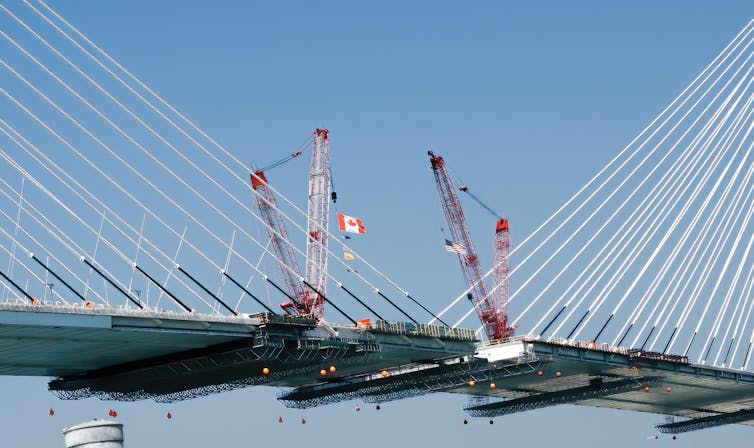
Canadian and American flags are held by cranes on either side of a large suspension bridge.
Completion of the Gordie Howe International Bridge is months behind schedule.
Steven Kriemadis/iStock/Getty Images Plus via Getty Images

I’m a sociologist who has worked alongside neighborhood revitalization projects in Detroit for the past 15 years. I’ve observed the bridge project – and the many tensions around it – from the perspective of adjacent communities of Delray and Mexicantown, communities that are largely home to low-income Latino, Black and white residents.

The costs and benefits of this binational behemoth are complex and intertwined.

Clearing a chokehold

Boosters on both sides of the border have spoken frequently of the bridge’s expected benefits.

Detroit and Windsor would finally be free of the perpetual chokehold produced by the privately owned Ambassador Bridge.

Auto parts will flow more freely over the border, according to the Cross-Border Institute at the University of Windsor. And the Detroit Greenways Coalition is celebrating that its advocacy led to the inclusion of free pedestrian and bike lanes.

People living close to the existing bridge will gain some relief from truck traffic and pollution. But this burden won’t simply disappear – it will be shifted nearby, where others will have to cope with increased traffic flowing over six lanes 24 hours a day.

Large signs affixed to a bridge over a highway, in white lettering on green signs, show the exits for the Ambassador Bridge and the closed Gordie Howe International Bridge.
Signs for the Ambassador Bridge and soon-to-be opened on-ramp to the Gordie Howe International Bridge.
Valaurian Waller/The Conversation, CC BY-ND

A political football

The costs and benefits of the bridge were contested from the beginning.

In the early days, the debate concentrated on who would own the bridge and who would pay for it.

Once just a concept known by the acronym DRIC, or Detroit River International Crossing, the project became real under former Michigan Gov. Rick Snyder. In July 2018, representatives from both Ottawa and Washington broke ground on the bridge situated in an area of Detroit empty enough to contain its significant footprint and bear its weight without fear of sinkholes from underground salt mines.

“Every Michigander should thank every Canadian,” said Snyder at the time, alluding to the agreement that Canadian taxpayers alone would pay for the bridge’s construction in exchange for collecting all the tolls.

The bridge’s designers attempted to honor the cultural and natural history of the region. It was named after the legendary Canadian hockey player who was also a longtime stalwart for the Detroit Red Wings. The bridge’s towers are adorned with murals by First Nations artists.

But serious questions remain.

Today the debates center on whether the Trump administration’s increased tariffs and trade conflicts with Canada could negatively affect the value of the bridge – and if it will ever pay for itself. Even before President Donald Trump took office for the second time, truck traffic on the Ambassador Bridge was down, falling 8% from 2014 to 2024.

One bridge was always a bad idea, (nearly) everyone agreed

Residents and politicians have long agreed that having a single, privately owned bridge connecting Detroit and Windsor was a bad idea. This felt especially apparent after the 9/11 terrorist attacks laid bare the possibility of suddenly losing critical infrastructure.

For many years, travelers’ only other connection between Canada and Detroit has been a tunnel that runs underneath the Detroit River. However, the tunnel doesn’t offer direct access to interstate highways, making it less suitable for commercial trucks.

Adding another bridge makes it harder to disrupt trade and transport.

But the project has had one stalwart critic. Matty Moroun, the trucking billionaire who purchased the Ambassador Bridge in 1979, ferociously protected his asset against potential competition. He actively sought to thwart the construction, launching numerous lawsuits against the state of Michigan and the Windsor-Detroit Bridge Authority, the entity managing construction of the new bridge.

Those lawsuits continued even after Moroun’s death in 2020, as his heirs asserted significant damages to the value of their property.

Was enough done for nearby homeowners?

Others have criticized the attempts to compensate the residents of Delray, a once-vibrant neighborhood that has been impacted by industrialization since the 1960s.

Benefits negotiated for residents and homeowners affected by the construction have not increased as the project’s costs ballooned and the timeline to complete it stretched out.

The cost of the Gordie Howe bridge is now estimated at around $6.4 billion Canadian – or about $US4.7 billion. That is $700 million more than the original projected cost. The project is at least 10 months behind schedule.

Construction materials stacked behind a brick house.
Materials for an on-ramp construction to the new Gordie Howe International Bridge are stored in a residential neighborhood in Southwest Detroit on Aug. 26, 2025.
Valaurian Waller/The Conversation, CC BY-ND

Simone Sagovac, director of the SW Detroit Community Benefit Coalition, said they did not anticipate the immense scale of the development and its continued effects on the community.

“That scale affected health and quality of life significantly every day, with years of continuous industrial dust causing sinus problems, headaches, and increasing asthma, and then there will be thousands of daily truck impacts to come,” Sagovac wrote to me in an email.

A baseline health impact assessment, issued in 2019 by University of Michigan researchers working closely with the coalition, expressed concern about the heightened airborne pollution that would likely activate asthma, especially in children. Matching the findings of so many other epidemiological studies, the assessment found that residents living within 500 feet (152 meters) of a truck route reported a significantly higher likelihood of experiencing asthma or allergies affecting their breathing.

Sagovac wrote that the project took 250 homes, 43 businesses and five churches by eminent domain, and “saw the closing of more after.” One hundred families left the neighborhood via a home swap program funded as a result of the benefits agreement administered by a local nonprofit. Two hundred and seventy families remain, but most businesses have left the area over decades of decline.

The families that remain are often long-term residents wanting or needing a cheap place to live and willing to put up with dust, noise and smells from nearby factories and a sewage treatment plant.

“They constantly face illegal dumping and other unanswered crimes, and will face the worst diesel emissions exposure and other trucking and industry impacts,” Sagovac wrote.

Heather Grondin, chief relations officer of the Windsor-Detroit Bridge Authority, wrote in an emailed statement
that they have taken steps to minimize impacts from construction and that they regularly meet with the community to hear concerns.

“Construction traffic is using designated haul routes to minimize community impacts, traffic congestion and wear and tear on existing infrastructure while maximizing public and construction safety,” Grondin wrote.

According to Grondin, cars will be forced to follow a “no idling” rule on the American side to minimize pollution. Other aspects of the Community Benefits Plan included $20,000 in free repairs for 100 homes, planting hundreds of trees and investing in programs addressing food insecurity and the needs of young people and seniors, Grondin wrote.

A large cable bridge spans across a vast body of water. Dark clouds with speckled light appear in the background.
It costs $9 to cross the Ambassador Bridge in a car. Tolls on the Gordie Howe bridge (pictured) haven’t been announced yet.
Paul Draus, CC BY-ND

An updated Health Impacted Assessment is expected to be released later in 2025.

History lost

Lloyd Baldwin, a historian for the Michigan Department of Transportation, was tasked with evaluating whether local landmarks like the legendary Kovacs Bar needed to be preserved.

“Kovacs Bar was one among many working-class bars in the Delray neighborhood but stands out for its roughly eight-decade association as a gathering place for the neighborhood and downriver Hungarian-American community,” Baldwin wrote in one such report.

The bar was nonetheless demolished in November 2017.

This was not MDOT’s only loss. While the agency made some sincere efforts to leverage other benefits for residents who remained, dynamic factors at many levels were out of the agency’s control.

For one thing, the numerous lawsuits filed by the bridge company over parcels of contested land limited MDOT’s ability to talk openly to the public about the land acquisition process.

In the period of legal limbo, Baldwin said, “the neighborhood imploded.”

Baldwin gave the example of the Berwalt Manor Apartments, built in the 1920s and located on Campbell Street near the bridge entrance. MDOT committed to preserve the historic building and proposed to mitigate the environmental impacts on mostly low-income residents by paying for new windows and HVAC units once the bridge was built.

But the speed of development outstripped the pace of community compensation. The building passed through probate court in 2018 and has since changed hands multiple times, so it is now unclear whether there are any low-income residents left to benefit from upgrades.

Benefits yet to be measured

On the brighter side, environmentalists have pointed to the expansion and connection of bicycle trails and bird migration corridors as long-term benefits of the Gordie Howe bridge.

On the Canadian side, the bridge construction falls largely outside of Windsor’s residential neighborhoods, so it caused less disruption. As part of the project,bike lanes, enhanced landscaping, and gathering spaces were added to an approach road called Sandwich Street.

Cross-border tourism spurred on by a proposed system of greenways called the “Great Lakes Way” may provide new opportunities for people and money to flow across the Detroit River, improving the quality of life for communities that remain.

But if the trade war between the Trump administration and Canada continues, observers may question whether the bridge is a graceful gift of infrastructure to two nations or one of the world’s longest and skinniest white elephants.

The Conversation

Paul Draus is affiliated with the Downriver Delta CDC and Friends of the Rouge. The Fort Street Bridge Park, a project that Draus is affiliated with, received a donation for a public sculpture from the Windsor Detroit Bridge Authority in 2020.

ref. Detroit’s Gordie Howe bridge is poised to open as truck traffic between US-Canada slows – low-income residents are deciding whether to stay or go – https://theconversation.com/detroits-gordie-howe-bridge-is-poised-to-open-as-truck-traffic-between-us-canada-slows-low-income-residents-are-deciding-whether-to-stay-or-go-260280

2 newly launched NASA missions will help scientists understand the influence of the Sun, both from up close and afar

Source: The Conversation – USA – By Ryan French, Research Scientist, Laboratory for Atmospheric and Space Physics, University of Colorado Boulder

NASA’s IMAP mission is one of two launching in September 2025. NASA/Princeton University/Patrick McPike

Even at a distance of 93 million miles (150 million kilometers) away, activity on the Sun can have adverse effects on technological systems on Earth. Solar flares – intense bursts of energy in the Sun’s atmosphere – and coronal mass ejections – eruptions of plasma from the Sun – can affect the communications, satellite navigation and power grid systems that keep society functioning.

On Sept. 24, 2025, NASA launched two new missions to study the influence of the Sun on the solar system, with further missions scheduled for 2026 and beyond.

I’m an astrophysicist who researches the Sun, which makes me a solar physicist. Solar physics is part of the wider field of heliophysics, which is the study of the Sun and its influence throughout the solar system.

The field investigates the conditions at a wide range of locations on and around the Sun, ranging from its interior, surface and atmosphere, and the constant stream of particles flowing from the Sun – called the the solar wind. It also investigates the interaction between the solar wind and the atmospheres and magnetic fields of planets.

The importance of space weather

Heliophysics intersects heavily with space weather, which is the influence of solar activity on humanity’s technological infrastructure.

In May 2024, scientists observed the strongest space weather event since 2003. Several Earth-directed coronal mass ejections erupted from the Sun, causing an extreme geomagnetic storm as they interacted with Earth’s magnetic field.

This event produced a beautiful light show of the aurora across the world, providing a view of the northern and southern lights to tens of millions of people at lower latitudes for the first time.

However, geomagnetic storms come with a darker side. The same event triggered overheating alarms in power grids around the world, and triggered a loss in satellite navigation that may have cost the U.S. agricultural industry half a billion dollars.

However, this is far from the worst space weather event on record, with stronger events in 1989 and 2003 knocking out power grids in Canada and Sweden.

But even those events were small compared with the largest space weather event in recorded history, which took place in September 1859. This event, considered the worst-case scenario for extreme space weather, was called the Carrington Event. The Carrington Event produced widespread aurora, visible even close to the equator, and caused disruption to telegraph machines.

If an event like the Carrington event occurred today, it could cause widespread power outages, losses of satellites, days of grounded flights and more. Because space weather can be so destructive to human infrastructure, scientists want to better understand these events.

NASA’s heliophysics missions

NASA has a vast suite of instruments in space that aim to better understand our heliosphere, the region of the solar system in which the Sun has significant influence. The most famous of these missions include the Parker Solar Probe, launched in 2018, the Solar Dynamics Observatory, launched in 2010, the Solar and Heliospheric Observatory, launched in 1995, and the Polarimeter to Unify the Corona and Heliosphere, launched on March 11, 2025.

The most recent additions to NASA’s collection of heliophysics missions launched on Sept. 24, 2025: Interstellar Mapping and Acceleration Probe, or IMAP, and the Carruthers Geocorona Observatory. Together, these instruments will collect data across a wide range of locations throughout the solar system.

IMAP is en route to a region in space called Lagrange Point 1. This is a location 1% closer to the Sun than Earth, where the balancing gravity of the Earth and Sun allow spacecraft to stay in a stable orbit.

IMAP contains 10 scientific instruments with varying science goals, ranging from measuring the solar wind in real time to improve forecasting of space weather that could arrive at Earth, to mapping the outer boundary between the heliosphere and interstellar space.

IMAP will study the solar wind from a region in space nearer to the Sun where spacecraft can stay in a stable orbit.

This latter goal is unique, something scientists have never attempted before. It will achieve this goal by measuring the origins of energetic neutral atoms, a type of uncharged particle. These particles are produced by plasma, a charged gas of electrons and protons, throughout the heliosphere. By tracking the origins of incoming energetic neutral atoms, IMAP will build a map of the heliosphere.

The Carruthers Geocorona Observatory is heading to the same Lagrange-1 orbit as IMAP, but with a very different science target. Instead of mapping all the way to the very edge of the heliosphere, the Carruthers Geocorona Observatory is observing a different target – Earth’s exosphere. The exosphere is the uppermost layer of Earth’s atmosphere, 375 miles (600 kilometers) above the ground. It borders outer space.

Specifically, the mission will observe ultraviolet light emitted by hydrogen within the exosphere, called the geocorona. The Carruthers Geocorona Observatory has two primary objectives. The first relates directly to space weather.

The observatory will measure how the exosphere – our atmosphere’s first line of defense from the Sun – changes during extreme space weather events. The second objective relates more to Earth sciences: The observatory will measure how water is transported from Earth’s surface up into the exosphere.

A radarlike image of a sphere, with a bright spot shown in yellow, with a green and red outline.
The first image of Earth’s outer atmosphere, the geocorona, taken from a telescope designed and built by the late American space physicist and engineer George Carruthers. The telescope took the image while on the Moon during the Apollo 16 mission in 1972.
G. Carruthers (NRL) et al./Far UV Camera/NASA/Apollo 16, CC BY

Looking forward

IMAP and the Carruthers Geocorona Observatory are two heliophysics missions researching very different parts of the heliosphere. In the coming years, future NASA missions will launch to measure the object at the center of heliophysics – the Sun.

In 2026, the Sun Coronal Ejection Tracker is planned to launch. It is a small satellite the size of a shoebox – called a CubeSat – with the aim to study how coronal mass ejections change as they travel through the Sun’s atmosphere.

In 2027, NASA plans to launch the much larger Multi-slit Solar Explorer to capture high-resolution measurements of the Sun’s corona using a state-of-the-art instrumentation. This mission will work to understand the origins of solar flares, coronal mass ejections and heating within the Sun’s atmosphere.

The Conversation

Ryan French receives funding from NASA.

ref. 2 newly launched NASA missions will help scientists understand the influence of the Sun, both from up close and afar – https://theconversation.com/2-newly-launched-nasa-missions-will-help-scientists-understand-the-influence-of-the-sun-both-from-up-close-and-afar-264646

NASA will say goodbye to the International Space Station in 2030 − and welcome in the age of commercial space stations

Source: The Conversation – USA – By John M. Horack, Professor of Mechanical and Aerospace Engineering, The Ohio State University

The International Space Station will be brought down in 2030. NASA via AP

For 24 hours a day, seven days a week since November 2000, NASA and its international partners have sustained a continuous human presence in low-Earth orbit, including at least one American – a streak that will soon reach 25 years.

When viewed in the history of spaceflight, the International Space Station is perhaps one of humanity’s most amazing accomplishments, a shining example of cooperation in space among the United States, Europe, Canada, Japan and Russia. But all good things must come to an end.

An emblem featuring a photo of the ISS with a ring around it featuring countries' flags.
The International Space Station’s emblem features the flags of the original signatory states.
CSA/ESA/JAXA/NASA/ROSCOSMOS

In 2030, the International Space Station will be deorbited: driven into a remote area of the Pacific Ocean.

I’m an aerospace engineer who has helped build a range of hardware and experiments for the ISS. As a member of the spaceflight community for over 30 years and a 17-year member of the NASA community, it will be hard for me to see the ISS come to an end.

Since the first pieces of the International Space Station were launched in 1998, the station has been home to significant research accomplishments across domains that include materials science, biotechnology, astronomy and astrophysics, Earth science, combustion and more.

Astronauts performing research inside the space station and payload experiments attached to the station’s exterior have generated many publications in peer-reviewed science journals. Some of them have advanced our understanding of thunderstorms, led to improvements in the crystallization processes of key cancer-fighting drugs, detailed how to grow artificial retinas in space, explored the processing of ultrapure optical fibers and explained how to sequence DNA in orbit.

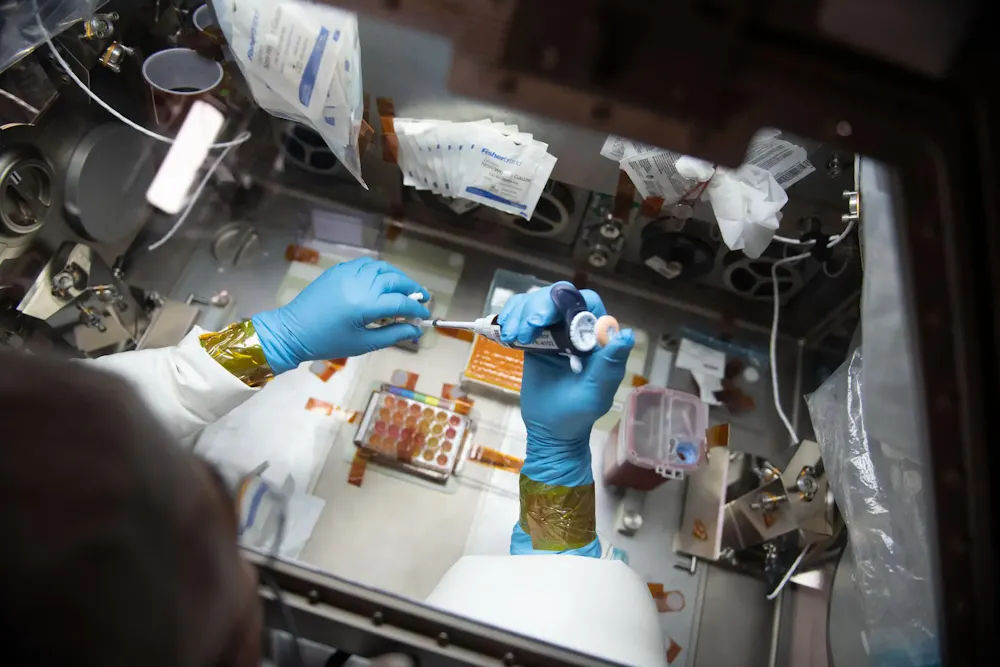
A top-down view of a scientist wearing gloves and a lab coat pipetting at a work bench on the ISS
The ISS’s microgravity environment has made it the optimal environment for a variety of scientific research projects.
NASA, CC BY

In total, more than 4,000 experiments have been conducted aboard the ISS, resulting in more than 4,400 research publications dedicated to advancing and improving life on Earth and helping forge a path for future space exploration activities.

The ISS has proven the value of conducting research in the unique environment of spaceflight – which has very low gravity, a vacuum, extreme temperature cycles and radiation – to advance scientists’ understanding of a wide range of important physical, chemical and biological processes.

Keeping a presence in orbit

But in the wake of the station’s retirement, NASA and its international partners are not abandoning their outpost in low-Earth orbit. Instead, they are looking for alternatives to continue to take advantage of low Earth orbit’s promise as a unique research laboratory and to extend the continuous, 25-year human presence some 250 miles (402 kilometers) above the Earth’s surface.

In December 2021, NASA announced three awards to help develop privately owned, commercially operated space stations in low-Earth orbit.

For years, NASA has successfully sent supplies to the International Space Station using commercial partners, and the agency recently began similar business arrangements with SpaceX and Boeing for transporting crew aboard the Dragon and Starliner spacecraft, respectively.

A conical white spacecraft with two rectangular solar panels in space, with the Earth in the background.
SpaceX’s Dragon capsule docks at the ISS.
NASA TV via AP

Based on the success of these programs, NASA invested more than US$400 million to stimulate the development of commercial space stations and hopefully launch and activate them before the ISS is decommissioned.

Dawn of commercial space stations

In September 2025, NASA issued a draft announcement for Phase 2 partnership proposals for commercial space stations. Companies that are selected will receive funding to support critical design reviews and demonstrate stations with four people in orbit for at least 30 days.

NASA will then move forward with formal design acceptance and certification to ensure that these stations meet NASA’s stringent safety requirements. The outcome will allow NASA to purchase missions and other services aboard these stations on a commercial basis – similar to how NASA gets cargo and crew to the ISS today.

Which of these teams will be successful, and on what timescale, remains to be seen.

While these stations are being built, Chinese astronauts will continue to live and work aboard their Tiangong space station, a three-person, permanently crewed facility orbiting approximately 250 miles (402 km) above the Earth’s surface. Consequently, if the ISS’s occupied streak comes to an end, China and Tiangong will take over as the longest continually inhabited space station in operation: It’s been occupied for approximately four years and counting.

Photos and videos from the ISS allow you to see Earth from above.

In the meantime, enjoy the view

It will be several years before any of these new commercial space stations circle the Earth at around 17,500 miles per hour (28,000 kilometers per hour) and several years before the ISS is deorbited in 2030.

So while you have a chance, take a look up and enjoy the view. On most nights when the ISS flies over, it is simply magnificent: a brilliant blue-white point of light, usually the brightest object in the sky, silently executing a graceful arc across the sky.

Our ancestors could hardly have imagined that one day, one of the brightest objects in the night sky would have been conceived by the human mind and built by human hands.

The Conversation

John M. Horack receives extramural research funding from NASA, Voyager Technologies, and other spaceflight-related sources, as part of his work as a Professor at The Ohio State University.

ref. NASA will say goodbye to the International Space Station in 2030 − and welcome in the age of commercial space stations – https://theconversation.com/nasa-will-say-goodbye-to-the-international-space-station-in-2030-and-welcome-in-the-age-of-commercial-space-stations-264936

Hobbits of Flores evolved to be small by slowing down growth during childhood, new research on teeth and brain size suggests

Source: The Conversation – USA – By Tesla Monson, Professor of Anthropology, Western Washington University

Hobbits are exceptions to the rule that older ancient humans had proportionally larger wisdom teeth and smaller brains. Jim Watson/AFP via Getty Images

Until Homo floresiensis was discovered, scientists assumed that the evolution of the human lineage was defined by bigger and bigger brains. Via a process called encephalization, human brains evolved to be relatively more massive than would be expected based on corresponding body size.

This proportionally bigger brain is what anthropologists argued enabled us and our relatives to perform more complex tasks such as using fire, forging and wielding tools, making art and domesticating animals.

Under a heading 'Bigger Brains' six hominid head models with other text in an exhibit case
Exhibit on brain size at the Smithsonian’s National Museum of Natural History in Washington, D.C.
Tesla Monson

But these theories had to be thrown out the window when archaeologists announced our fossil cousins Homo floresiensis via scientific publication in 2004. Homo floresiensis lived from about 700,000 to 60,000 years ago in the rainforests of Indonesia, partially contemporaneous with our own species.

Aptly nicknamed Hobbits, Homo floresiensis were short-statured, at just over 3 feet (1 meter) tall, and had a chimp-size brain. This discovery upended the assumption that brains have been increasing in size over the past several million years and generated confusion about what separates recent human relatives in our genus Homo from our more ancient ancestors.

Our new research on the skulls and teeth provides a novel theory for how the Hobbits evolved to be small.

We are professors of anthropology at Western Washington University. After attending a 2023 workshop for biological anthropologists studying juveniles in the fossil record, we began looking at brain size changes across human evolution.

Our previous work on the proportions of molar teeth generated new insights into the evolution of pregnancy by demonstrating that fetal growth rates are tightly linked to molar proportions in primates. Now, we wanted to see whether we could uncover a relationship between tooth proportions and brain size among our fossil relatives.

Paleontologists have only limited skeletal materials, sometimes only a few teeth, for many fossil species, including Homo floresiensis. If tooth proportions can provide information about fossil brain size, it opens up a world of possibilities for assessing past changes in encephalization.

Reconstructing brain size using teeth

We collated data on tooth and brain size for 15 fossil species on the human family tree, spanning about 5 million years of evolution. Somewhat oxymoronically, the third molars – otherwise known as wisdom teeth – have gotten proportionally smaller as brain size has gotten larger throughout human evolution, for most species.

Overall, human relatives with relatively larger wisdom teeth are more ancient and had smaller brains. More recent taxa, like Homo neanderthalensis, had relatively smaller third molars, compared to their other teeth, and larger brains.

This relationship allows researchers to figure out something about brain size for fossils that are incomplete, perhaps existing only as a few lone teeth. Since teeth are predominately made of inorganic matter, they survive in the fossil record much more often than other parts of the body, making up the vast majority of paleontological materials recovered. Being able to know more about brain size from just a few teeth is a truly useful tool.

sideways view through a glass museum case of a standing partial skeleton
A replica of LB1, the most complete skeleton of Homo floresiensis, in profile in an exhibit at the Smithsonian’s National Museum of Natural History.
Tesla Monson

Scientists recognize now that the formation of the brain and the teeth are inextricably connected during gestation. And for most species, larger brains are correlated with smaller wisdom teeth.

The one exception in genus Homo is Homo floresiensis, the Hobbit. The wisdom teeth of the Hobbits are small proportional to the other molars – the typical pattern for members of genus Homo. But their brains are also small, which is quite unusual.

There are two primary ways for brain size to decrease: by slowing down growth during gestation before birth or by slowing down growth after birth, during childhood. Because teeth develop early in gestation, slowing down growth rates during pregnancy tends to affect tooth shape and size, or even whether the teeth develop at all. Slowing growth later, during childhood, influences skeletal shape and size in other ways, because different parts of the body develop at different times.

Our new research provides evidence that the body size of Homo floresiensis likely shrank from a larger-bodied Homo ancestor by slowing down growth during childhood. The Hobbits’ small wisdom teeth suggest that, at least in utero, they were on track for the proportionally bigger brains that are the trademark of humans and their relatives. Any brake that slowed down brain growth likely occurred after birth.

In fact, this is the same mechanism through which some short-statured modern human populations have adapted to their local ecological conditions.

Getting small on islands

The small body size of Homo floresiensis was likely an adaptation to the unique conditions of their island environment on Flores.

Evolving small body size as an adaptation to living on an isolated island is known as insular nanism. There are many examples of other mammals becoming small on islands over the past 60 million years. But one of the most relevant examples is the dwarf elephant, Stegodon sondaarii, that lived on Flores and was hunted by H. floresiensis for food.

Both Homo floresiensis and Homo luzonensis, another short, island hominin from southeast Asia, likely evolved very short stature because of the ecological effects of limited food availability and lack of large predators, which tends to characterize island habitats.

Because brain size and body size are tightly linked, body size evolution inherently affects brain evolution. Among modern humans, larger people have larger brains, and smaller people have smaller brains.

But people with smaller brains are certainly no less intelligent than people with larger brains. Variation in body size dictates brain size; it is not a measure of cognitive ability. The island Hobbits crafted tools, hunted large-for-them game in the form of pygmy elephants, and likely made and used fire.

Our research supports that their small body size originated from a slowdown in growth during childhood. But this process would likely have had little impact on brain function or cognitive ability. We hypothesize that the Hobbits were small but highly capable.

multiple skulls behind glass with text notation in a museum case.
Exhibit of cranial variation in fossil hominids, with Homo floresiensis in the foreground, at the Smithsonian’s National Museum of Natural History.
Tesla Monson

Understanding the evolution of us

New research, including our study, continues to reinforce the importance of understanding how pregnancy and child growth and development evolved. If we want to know what distinguishes humans from our evolutionary ancestors, and how we evolved, we must understand how the earliest moments of life have changed and why.

Our work also encourages the reevaluation of endless attention on increasing brain size as the predominant force in human evolution. Other species in genus Homo had small brains but were likely not much different from us.

The Conversation

Tesla Monson receives funding from the National Science Foundation.

Andrew Weitz does not work for, consult, own shares in or receive funding from any company or organization that would benefit from this article, and has disclosed no relevant affiliations beyond their academic appointment.

ref. Hobbits of Flores evolved to be small by slowing down growth during childhood, new research on teeth and brain size suggests – https://theconversation.com/hobbits-of-flores-evolved-to-be-small-by-slowing-down-growth-during-childhood-new-research-on-teeth-and-brain-size-suggests-261257

How a devastating grape pest is reshaping vineyards across Colorado’s Western Slope

Source: The Conversation – USA – By Charlotte Oliver, Extension Associate Professor, Colorado State University

Colorado’s $3.9 billion wine industry is threatened by a tiny aphid. Courtesy of Charlotte Oliver

Grape phylloxera, or Daktulosphaira vitifoliae, is an aphidlike insect that attacks grapevines with devastating effects. In Colorado, where wine is an estimated US$3.9 billion dollar industry, phylloxera poses a significant threat.

In 2015, several vineyards in the Grand Valley American Viticultural Area on Colorado’s Western Slope observed that groups of their vines were not thriving. The vines were yellowing and producing limited fruit. All the normal issues, such as nutritional deficiencies and irrigation problems, were investigated and nothing turned up.

So, in 2016, two Colorado State University researchers began surveying vineyards in Mesa County and found the industry’s worst nightmare – phylloxera, which had infested the roots in several local vineyards.

The pair expanded their survey and covered more than 350 vineyard acres across Mesa, Delta and Montezuma counties, where wine grapes are grown. Phylloxera was found in both Mesa and Delta counties in 18 vineyards for a total of 34 scattered acres. The phylloxera wasn’t centralized, which made controlling its spread complicated.

In response to the researchers’ findings, the Colorado Wine Industry Development Board and the Colorado Association for Viticulture and Enology began an education campaign in 2017 to minimize visitors to vineyards and help vineyards manage soil movement, the primary mode of phylloxera spread.

As the viticulture extension specialist at Colorado State University, I spend a lot of time helping Coloradans work with their grapevines. In 2024, I took over the research at Colorado State University on the phylloxera infestation that is still active nine years after it was discovered. I plan to continue tracking phylloxera’s spread and training producers on what to do when, not if, this pest appears in their vineyard.

What is phylloxera?

Black and white illustrations of the various forms of phylloxera, an aphid-like insect.
Phylloxera has a below-ground and above-ground form, each of which attack grapevines.
Bildagentur-online/Getty Images

Phylloxera have two discrete forms during their life cycle: an above-ground, winged form called alates and a below-ground, wingless, root-feeding form called radicoles.

The above-ground form of the insect causes galls, which are lumpy swellings on the grape leaves, that generally have limited impact on the vine’s health.

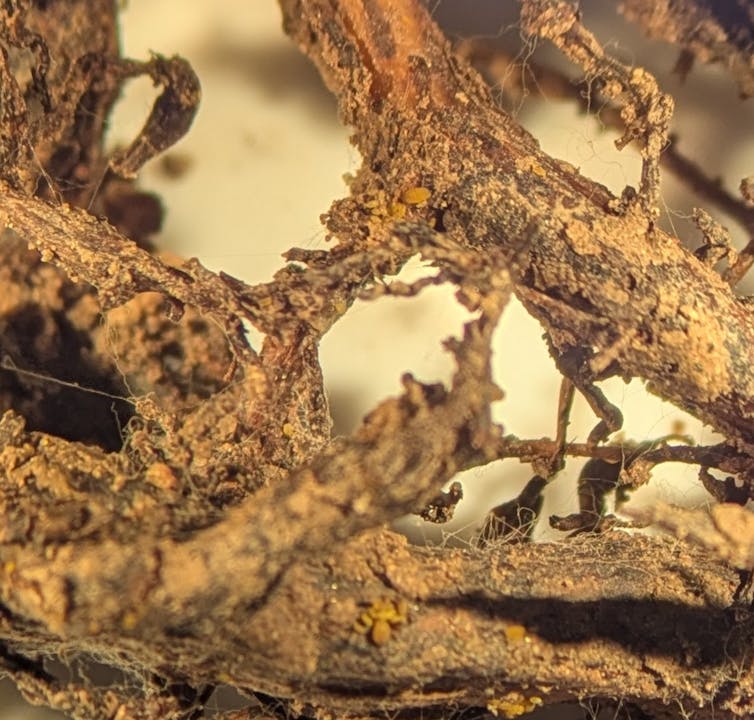
However, the below-ground insects that feed on the vine’s roots cause severe damage. The roots are the vine’s main tool for foraging for nutrients and water, so when they are compromised the vine starts to suffer and eventually dies four to seven years after being infected. Sometimes phylloxera’s infestation looks like a lack of nutrition or water, so knowing what is wrong with the vines can require a lot of searching and testing. The real issue is that as the vine declines, it also stops producing a commercially viable quantity of fruit, which is 2.5-4 tons per acre. No fruit means no wine, so the vines have to be removed.

Managing the ‘wine blight’

Grapevines, like a lot of other perennial crops, including peaches and apples, are usually grafted, which is when the top of one plant and the roots of another plant are combined to make one continuous plant. Usually, the grafting is to change something about the physicality of the plant, such as making it bigger or smaller. With grapes, the main reason to graft is to protect the vine from damage from a single pest – grape phylloxera.

There are alternatives such as insecticides, but they are Band-Aids, because insecticides suppress only the pest. Grape roots, and the phylloxera on them, can go far deeper into the soil than the soil insecticide treatments, and some of the treatments to the leaves can be damaging to honeybees.

Another potential solution is using modern varieties of grapes that were bred by crossing native North American grapes with the standard European wine grape. By adding in North American grapes, the new varieties are more tolerant of the phylloxera and can handle some damage. The issue with these varieties, such as Chambourcin and Aromella, is that consumers have never heard of them, which is a major factor when people buy wine. These varieties also have more Concord grape flavors that are less common to wine drinkers outside of the East Coast of the U.S.

Globe-trotting pests

A video from TerraVox Winery in Missouri about the history of phylloxera.

Phylloxera is native to the East Coast and Midwestern United States, but now it’s found in all grape-growing regions worldwide.

In the late 1800s, phylloxera started making its way around the world. Phylloxera can fly when it is in its above-ground life cycle, but the below-ground insects can be spread any time soil is moved. It hitched a ride to France in the early 1860s on North American grape plants that were being imported to help with powdery mildew, which is the most economically damaging fungal disease of grapes. Powdery mildew, or Erysiphe necator, can attack all growing tissues of a vine, including blooms, leaves and shoots, and control can account for approximately 37% of gross grape production cost.

Over the course of three decades after phylloxera was introduced to France, it caused approximately 2.5 million acres of vines to be replaced.

Once it crossed the Atlantic, phylloxera was flying over borders and road-tripping from vineyard to vineyard on workers’ shoes and tractors. By the beginning of the 1900s, phylloxera had spread throughout France, Portugal, Germany and then Spain and established itself as a permanent problem. The European varieties of grapes had no resistance to phylloxera, and the insects found ways to evade chemical management, making yearly insecticide applications a necessity.

Brown root stock is magnified and infested with little brown insects.
Phylloxera attacks the roots of grapevines.
Courtesy of Charlotte Oliver

While phylloxera is native to the U.S., until recently, there were several states that did not have it, including Colorado, Oregon and Washington.

Colorado’s 50-year-old wine grape industry benefited from the absence of phylloxera. Vineyards owners planted mostly self-rooted European variety vines starting around the mid-1980s. Self-rooted vines are not grafted, which means that a Chardonnay vine was Chardonnay both above and below ground.

Currently, there are areas in multiple countries such as Australia and China, and certain states such as Washington, where phylloxera is present but well contained through quarantine. However, there are concerns for the future. Computer modeling has offered ideas about the future expansion of phylloxera’s survival range on both a regional and global scale.

What does the future hold?

In a 2019 survey by the same research team, more phylloxera was found in vineyards in Delta County as well as a new vineyard outside of Denver. Currently, many Colorado vineyards are in the middle of overhauling their vineyards. The spread of phylloxera as well as the frequency of freezes has led to extensive death in vineyards across the Western Slope.

The percentage of acreage planted with nongrafted, non-European grapes has increased to 25% in recent years, according to results from statewide surveys. Approximately 30% of the replaced vineyards were with new modern varieties, and the rest were replaced with grafted European varieties.

While the European grafted vine may provide a higher-priced fruit due to market demand, the modern varieties have a lot of appeal. Since the vines are more phylloxera tolerant, they do not have to be grafted, so they can easily be recovered when a harsh fall freeze happens.

While the Colorado wine industry has accepted that phylloxera is here to stay, expanded surveys are needed to better understand how far this pest has spread, especially in the more isolated areas of the West Elks American Viticultural Area, in Delta County, the southwest corner of Colorado, in Montezuma County, and in Fremont and Pueblo counties.

Additionally, future phylloxera spread may be better estimated by studying soil texture and temperature, which has been done in models created by Washington State University. Phylloxera may be less likely to survive in certain areas of Colorado. If those areas are also suitable for grape production, it could help direct the locations of future plantings, especially of European varieties.

Read more of our stories about Colorado.

The Conversation

Charlotte Oliver does not work for, consult, own shares in or receive funding from any company or organization that would benefit from this article, and has disclosed no relevant affiliations beyond their academic appointment.

ref. How a devastating grape pest is reshaping vineyards across Colorado’s Western Slope – https://theconversation.com/how-a-devastating-grape-pest-is-reshaping-vineyards-across-colorados-western-slope-263088