Seasonal allergies – triggered by pollen – appear to make deaths by suicide more likely. Our findings, published in the Journal of Health Economics, show that minor physical health conditions like mild seasonal allergies, previously thought not to be an immediate trigger of suicide, are indeed a risk factor.
To evaluate the link between seasonal allergies and suicide, my co-authors and I combined daily pollen measurements with daily suicide counts across 34 U.S. metropolitan areas.
Because both pollen and suicide are sensitive to weather conditions, we carefully accounted for temperature, rainfall and wind. We also controlled for differences in local climate and plant life, since pollen levels vary by region, and for seasonal averages that might otherwise obscure results. This allowed us to compare suicide counts on days with unexpectedly high pollen to days with little or none in the same county.
The results were striking. Relative to days with no or low levels of pollen, we found that deaths by suicide rose by 5.5% when pollen levels are moderate and 7.4% when levels are high. The increase was even larger among people with a known history of mental health conditions or treatment. We also showed that on high-pollen days, residents of affected areas experience more depressive symptoms and exhaustion.
Our analysis suggests that allergies exacerbate existing vulnerabilities, pushing some people toward crisis. We suspect that sleep disruption is the link between allergies and suicide rates.
Symptoms include sneezing, congestion, itchy eyes and scratchy throat. Most people experiencing these symptoms feel sluggish during the day and sleep poorly at night. Allergy sufferers might not realize, however, that these symptoms reduce alertness and cognitive functioning – some of the factors that can worsen mental health and increase vulnerability to suicidal thoughts and behaviors.
Suicide rates have been growing steadily in the past two decades, by 37% between 2000 and 2018. According to the Centers for Disease Control and Prevention, more than 49,000 Americans died by suicide in 2022, and over 616,000 visited emergency departments for self-harm injuries.
That means more people will experience stronger allergy symptoms, with ripple effects not only for physical health but also for sleep, mood and mental well-being.
Despite the scale of the problem, there are no national systems in the U.S. to consistently measure and communicate pollen levels. Most communities lack reliable forecasts and alert systems that would allow vulnerable people to take precautions. This gap limits both prevention and research.
More broadly, people should be aware that during peak allergy season, reduced alertness, sleep disruptions and mood fluctuations may place an increased burden on their mental health, in addition to the allergy symptoms.
In terms of policy, improving pollen monitoring and public communication could help people anticipate high-risk days. Such infrastructure would also support further research, particularly in rural areas where data is currently lacking. Our next step, supported by the American Foundation for Suicide Prevention, is to examine the impact of pollen on rural communities.
The Research Brief is a short take on interesting academic work.
Shooshan Danagoulian receives funding from American Foundation of Suicide Prevention.
Artificial intelligence technology has begun to transform higher education, raising a new set of profound questions about the role of universities in society. A string of high-profile corporate partnerships reflect how universities are embracing AI technology.
As a social scientist who studies educational technology and organizational partnerships, I view these collaborations as part of a decades-long shift toward the “corporatization” of higher education – where universities have become increasingly market-driven, aligning their priorities, culture and governance structures with industry partners.
I see the rise of generative AI as accelerating this trend, which risks undermining higher education’s autonomy and public service mission. Examining the underlying organizational forces that shape the future of higher education can shed light on how AI challenges universities’ traditional principles – and how they might resist corporate influence.
The rise of corporate partnerships
Over the past 50 years, private sector support for university research has increased tenfold, outpacing overall growth in higher education research spending. A pivotal shift came in 1980, when universities gained the right to retain intellectual property from federally funded research. This made commercialization of university research far easier. Over time, corporate involvement pushed university research toward commercial needs and increasingly exposed universities to the profit motive.
As colleges continue to close at record rates, the imperative to attract tuition dollars and research grants increasingly dictates institutional priorities. I argue that universities risk sidelining research that serves the public interest by looking toward corporate funding and partnerships to fill the gaps.
In my view, the shift away from public-good scholarship to monetizable content and services shaped by external industry partners jeopardizes the academic freedom and intellectual stewardship that once anchored the mission of higher education. For example, under financial constraints, university administrators may be inclined to overlook glaring value misalignments between their public mission and the commercial objectives of AI firms.
The forces driving universities’ AI initiatives
At many universities, AI adoption and the turn toward corporate collaborations are driven by more than economic vulnerabilities. The broad range of partnerships with AI companies across higher education can provide insight into the deeper dynamics at work.
The California State University system aims to become the first and largest ‘AI-powered university system,’ motivated in part to prepare students for careers in an AI-driven economy. Myung J. Chun via Getty Images
This underscores how AI partnerships are not guided by market incentives alone. Before universities grew into multibillion-dollar businesses, their decision-making was primarily driven by markers of intellectual prestige, such as scholarly excellence and faculty reputation. Universities largely held a monopoly over knowledge production and served as the primary gatekeepers of intellectual legitimacy, until the digital revolution dramatically decentralized access to knowledge and its production. Universities now coexist in – and increasingly compete with – a crowded, complex ecosystem of companies and organizations that produce original research.
Generative AI represents a powerful new mode of knowledge production and synthesis, which further threatens to upend traditional forms of scholarship. Confronted with challenges to their authority, universities may attempt to preserve their elite intellectual status by rushing into partnerships with AI companies eager to capture the higher education market.
My interpretation is that economic pressures and the pursuit of prestige may be converging to reinforce a technocratic approach to higher education, where university decision-making is primarily guided by performance metrics and corporate-style governance rather than the public interest.
The recent surge in AI partnerships puts in plain view the growing dominance of market forces in higher education. As universities continue to adopt AI technologies, the consequences for intellectual freedom, democratic decision-making and commitment to the public good will become an increasingly pressing question.
Research support was provided by undergraduate research assistant Mehra Marzbani, whose contributions are gratefully acknowledged.
In today’s hot housing market, winning a bidding war can feel like a triumph. But my research shows it often comes with a catch: Homebuyers who win bidding wars tend to experience a “winner’s curse,” systematically overpaying for their new homes.
I’m a real estate economist, and my colleagues and I analyzed nearly 14 million home sales in 30 U.S. states over roughly two decades. We found that people who paid more than the asking price for their homes – a reliable sign of a bidding war – were more likely to default on their mortgages and saw significantly weaker returns.
How much weaker? On average, homebuyers who won bidding wars saw annual returns that were about 1.3 percentage points lower than those who didn’t, we found. We specifically looked at “unlevered” returns – basically, the returns you’d get if you bought the home outright with cash, without factoring in a mortgage.
Since the typical homeowner in our sample held a property for 6.3 years before selling it, this translates to about an 8.2% overpayment. Bidding-war winners were also 1.9 percentage points likelier to default.
Perhaps that loss would be worth it to someone who absolutely loves the property – but we found that homebuyers who purchase after a bidding war are also faster to resell. This suggests their overpayment is based less on enduring affection and more on bidding-war fever.
We also found that the effects of the winner’s curse – lower home appreciation and higher default rates – are stronger in places where bidding wars are more common. One example is my hometown of Rochester, New York, which has become a bidding-war hot spot in recent years.
Who bears the brunt? Lower-income, Black and Hispanic buyers are more likely to overpay in bidding wars, we found, making them more likely to suffer from the winner’s curse. This suggests that hot housing markets can worsen inequality.
Why it matters
While housing is the largest single form of wealth Americans own, past research on the winner’s curse mostly dealt with land auctions and company mergers – not the nation’s roughly 76 million owner-occupied, single-family homes. Our work is the first to show the direct evidence of the winner’s curse in residential housing markets.
This matters now because the housing market is cooling. Those who bought in the post-pandemic housing market and listed their homes in 2025 are already facing the risk of selling at a loss. Because this risk falls disproportionately on Black and Hispanic homebuyers, it could further widen the wealth gap.
By one measure, foreclosures are up 18% year over year. If the brunt of these losses falls on lower-income or otherwise vulnerable homeowners, the result could be an increase in housing insecurity and homelessness.
The good news is that the winner’s curse may be preventable. Better resources to prepare first-time homebuyers and comprehensive financial education related to mortgages and debt could help.
What still isn’t known
It’s possible more transparent bidding processes – or even formal auction systems for popular homes – could better inform prospective buyers and help them stave off the temptation of overpayment. Should the U.S. require real estate brokers or banks to caution their clients to think twice before going above the asking price? Or would that be unfair to sellers? Experimental research on these points would be useful.
Finally, our research focuses on the U.S. housing market. Whether the winner’s curse afflicts buyers in other countries remains an open question.
The Research Brief is a short take on interesting academic work.
Soon Hyeok Choi does not work for, consult, own shares in or receive funding from any company or organization that would benefit from this article, and has disclosed no relevant affiliations beyond their academic appointment.
Source: The Conversation – USA (2) – By Kathy M. Newman, Associate Professor of English, Carnegie Mellon University, Carnegie Mellon University
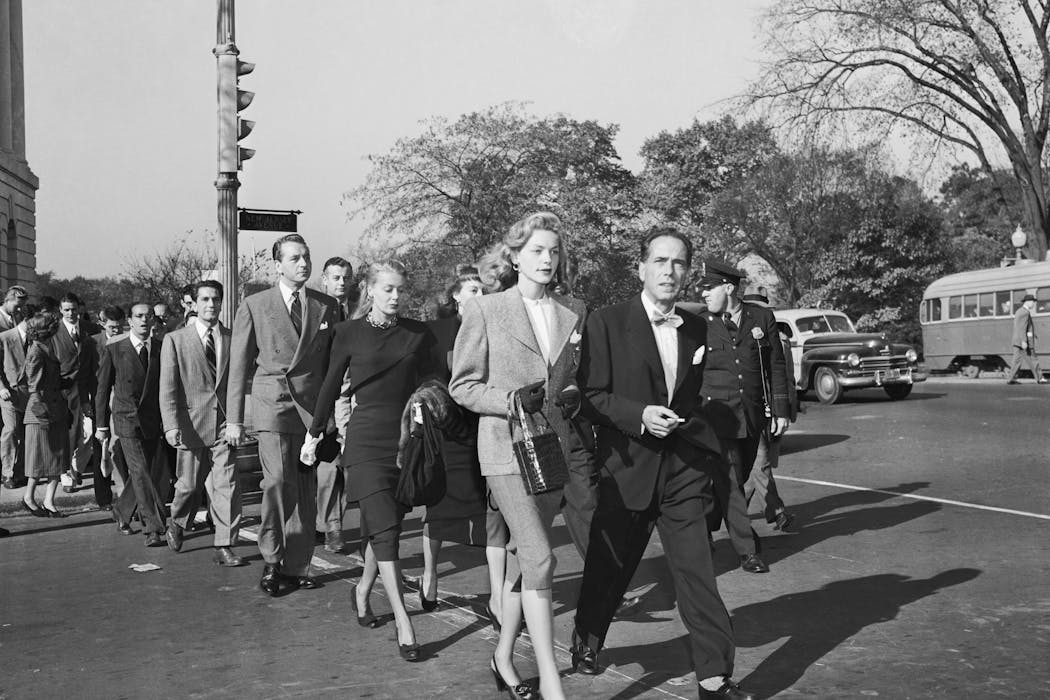
Movie stars, led by Lauren Bacall and Humphrey Bogart, protest hearings by the House Committee on Un-American Activities in 1947.Bettmann/Getty Images
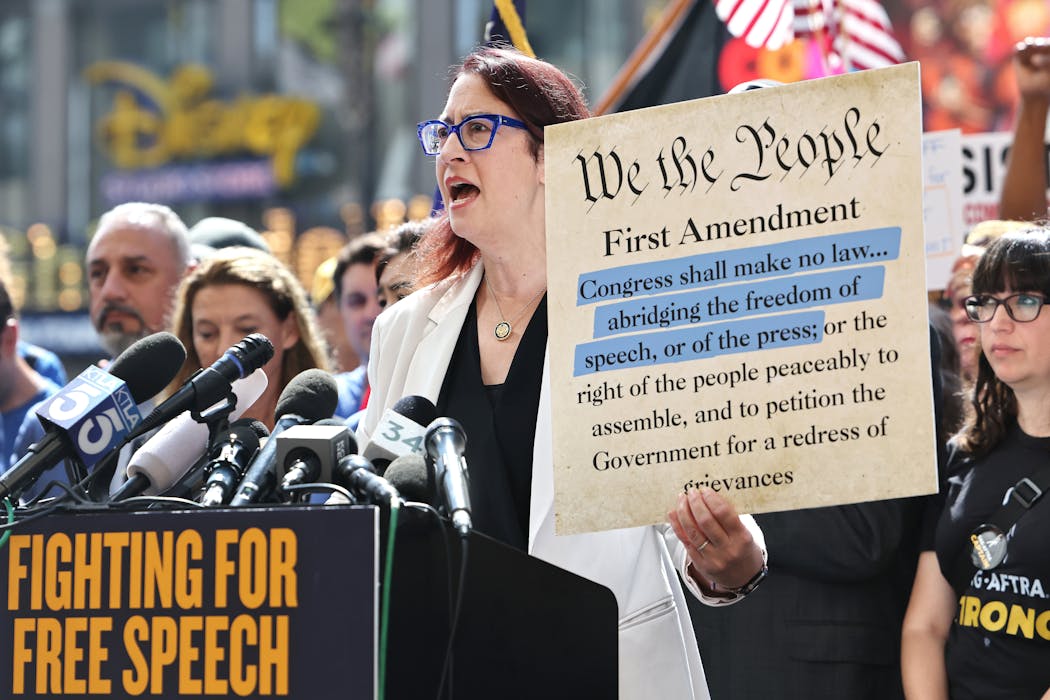
Jane Fonda is joining forces with more than 500 celebrities and Hollywood heavyweights to defend free speech.
The membership roll already includes scores of famous actors like Jamie Lee Curtis, Viola Davis, Whoopi Goldberg, Pedro Pascal, Natalie Portman and Michael Keaton. Successful directors like Spike Lee and Ben Stiller have signed on, along with singer and actress Barbra Streisand and pop star and songwriter Billie Eilish.
Fonda, a star who has championed progressive causes since the 1970s, explained when she announced the group’s new edition on Oct. 1, 2025, that the effort isn’t really new. Instead, it marks the relaunch of the Committee for the First Amendment, an organization her father, actor Henry Fonda, had belonged to.
The original Committee for the First Amendment was formed in October 1947 at a time when the U.S. government worried that there were communists in Hollywood who were putting left-wing propaganda into the movies.
Jane Fonda, here shown attending the 2024 Hollywood Climate Summit at the Academy of Motion Picture Arts and Sciences, has been a famous activist almost as long as she’s been a leading lady. Kevin Winter/Getty Images
Hearings divided Hollywood
The attack on Hollywood started when a bipartisan congressional committee held a series of highly publicized hearings in 1947 on what it said was the “communist infiltration of the motion picture industry.”
Ayn Rand, a Russian-born novelist and screenwriter who hated communism, was one of the witnesses. She testified that the 1944 MGM movie “Song of Russia” showed clean, well-dressed, happy peasants, which she said was a sanitized, propagandized version of life in the USSR.
Another movie that came under suspicion was “It’s a Wonderful Life.” The FBI complained that the 1946 blockbuster, which starred Jimmy Stewart as a broken man who learns the true value of his life, “deliberately maligned the upper classes” with its negative portrayal of Mr. Potter, the town’s richest man.
The HUAC hearings continued for a decade and divided Hollywood. The committee’s interrogators demanded that people turn on each other and “name names.” Due to these hearings, as well as an anti-communist publication called Red Channels, hundreds of screenwriters, directors, producers, actors and musicians were fired or blacklisted for having ties to liberal groups.
Nine of 10 Hollywood writers, directors and producers, indicted by a Washington grand jury on charges of contempt of Congress, surrender in a group at the U.S. Marshals Service office in Los Angeles on Dec. 10, 1947. AP Photo/Harold Filan
Fighting back
The HUAC hearings brought Hollywood stars and the flashbulbs of the nation’s press corps to Capitol Hill. Conservative screen idols like Gary Cooper testified that communism wasn’t “on the level.”
Friendly witnesses, like Rand and Cooper, were allowed to read prepared statements and to speak for as long as they liked. Such courtesies were not granted to the 10 “unfriendly” witnesses – the suspected communists who became known as the “Hollywood 10.”
Screenwriter John Howard Lawson was the first of the Hollywood 10 to testify. Lawson, after refusing to answer if he was a communist or not, was shouted down by Rep. J. Parnell Thomas, a New Jersey Republican who served as HUAC chair. After Lawson was removed from the courtroom, HUAC’s chief investigator, Robert Stripling, read detailed evidence of Lawson’s communist affiliations.
Prominent Hollywood liberals understood that these hearings were an attack on free speech, free assembly and other rights guaranteed by the First Amendment.
Ira Gershwin, the lyricist known for his hit show tunes such as “I Got Rhythm” and “They Can’t Take That Away From Me,” hosted the first gathering of the Committee for the First Amendment at his Beverly Hills mansion. Attendees included Judy Garland, Humphrey Bogart, Lauren Bacall and Gene Kelly.
The committee quickly raised US$13,000 – the equivalent of $188,000 today – and chartered an airplane to Washington. Upon their arrival in the capital, they marched and spoke out in support of the Hollywood 10. Next, they produced a radio broadcast, “Hollywood Fights Back,” as a defense of the rights of Americans to write, produce, act in and see whatever movies they pleased.
The committee released an initial statement with 35 signatories. A few months later, it published a pamphlet with more than 300 additional names supporting the effort.
Purging Hollywood
If you’ve never heard of that committee, or if you only learned about it recently when the new version made headlines, you’re not alone. The group fizzled out almost as quickly as it had mobilized.
Bogart, perhaps its most famous member, soon retracted his support for the Hollywood 10, saying in March 1948 that he regretted his trip to Washington.
Two crucial developments kneecapped the committee. First, the HUAC cited the Hollywood 10 for contempt of Congress. They were later tried in court and convicted of that crime. They eventually served prison time.
Also, studio executives drafted new hiring policies for the movie industry. Later known as the “Waldorf declaration” because the meeting took place in the Waldorf-Astoria hotel in Manhattan, the studio heads announced that the Hollywood 10 would be fired and banned from any studio, and that all the studios would agree to fire and ban any known communists.
Over the next decade, hundreds more stars and other key players in the entertainment industry were fired, purged and blacklisted in what became known as the blacklist era.
The Committee for the First Amendment ultimately failed to protect the Hollywood 10 from professional attacks or incarceration, nor did it prevent hundreds of others from being blacklisted.
Bad timing
But I don’t believe that the original Committee for the First Amendment was destined to fail.
The Hollywood 10’s legal strategy, rooted in the First Amendment, reflected the hope that their convictions might be eventually overturned by the Supreme Court.
After President Harry Truman replaced them, the Supreme Court declined to hear the appeals. Most of the Hollywood 10 served prison sentences between 1950 and 1951.
Why bother?
Given that the Committee for the First Amendment failed to protect Hollywood from conservative repression in the 1940s and 1950s, why would anyone revive it?
One reason is that there are parallels between the blacklist era and today.
For example, the Trump administration is trying to get comedians who poke fun at him kicked off the air, as evidenced by talk show host Jimmy Kimmel being temporarily pulled off the air.
Hollywood has also seen a surge in labor organizing. Many members of the new Committee for the First Amendment were on the front lines of the screenwriters and actors strikes of 2023.
Finally, this fight is arguably worth waging. Most Americans see the First Amendment as enshrining valuable rights. An October 2025 Marist poll found that 4 in 5 Americans think the U.S. is restricting First Amendment freedoms too much.
‘The Pajama Game,’ a hit movie made in the 1950s, featured a fight by workers for higher pay.
Resilience and silence
Many look at the blacklist era as a time of capitulation by progressives in the face of repression. While there’s some validity to these claims, I’ve found that many progressive filmmakers also banded together, using allegory and other creative techniques to make movies with progressive – sometimes radical – messages.
Take “The Pajama Game,” for example. It’s a musical comedy about labor trouble in a pajama factory. While the film is a sexy, frothy romp, on the one hand, the film also casts Doris Day as Babe, a feisty union steward. In “Racing with the Clock,” workers sing about the pressure they feel to speed up the pace of their labor.
Scenes include workers organizing a slowdown, sabotaging machinery and going on strike. The last word spoken in the film is “solidarity.”
To me, the revival of the Committee for the First Amendment draws attention to the dangers implicit in efforts to muzzle writers, artists and filmmakers.
“Silence the artist, and you silence the most articulate voice the people have,” the actress Katherine Hepburn said in May 1947 in a speech written for her by Dalton Trumbo, one of the Hollywood 10. “Destroy culture and you destroy one of the strongest sources of inspiration from which a people can draw strength to fight for a better life.”
Kathy M. Newman does not work for, consult, own shares in or receive funding from any company or organization that would benefit from this article, and has disclosed no relevant affiliations beyond their academic appointment.
Source: The Conversation – USA – By Richard Forno, Teaching Professor of Computer Science and Electrical Engineering, and Associate Director, UMBC Cybersecurity Institute, University of Maryland, Baltimore County
The federal cybersecurity agency is crippled by layoffs and shutdown furloughs.The Conversation, CC BY-ND
As the United States experiences its latest government shutdown, most of the daily operations of the federal government have ground to a halt. This includes much of the day-to-day work done by federal information technology and cybersecurity employees, including those at the nation’s leading civilian cybersecurity agency, the Cybersecurity and Infrastructure Security Agency.
CISA is among the entities that will see the deepest staffing reductions during the shutdown that began Oct. 1, 2025, according to Department of Homeland Security documentation. Only about one-third of its employees remain on the job after federal employees were furloughed. As if cybersecurity wasn’t challenging enough, fewer CISA employees are being asked to do more and more work protecting American cyberspace during the shutdown. And they’ll be working with the promise of getting paid for their efforts at some date in the future once the shutdown ends.
The current CISA situation is grim, from my vantage point as a cybersecurity researcher and former industry practitioner. The agency was already experiencing deep cuts to its staff and resources before the shutdown. And now, coinciding with the shutdown, a key law that enabled the agency to facilitate information-sharing with the private sector has expired.
Taken together, the cyberdefense agency is being hobbled at a time when the need for its services has never been greater, from the ongoing China-led Salt Typhoon attack on U.S. telecommunications networks to ransomware, data breaches and threats to infrastructure.
CISA was created in 2007 within the Department of Homeland Security. As its name implies, the agency is charged with digital security matters across the federal government. The agency also works with the companies that operate and secure the numerous critical infrastructure sectors of the American economy, such as phone networks, the electric grid and energy pipelines. Additionally, it helps state and local governments across the country secure their vulnerable networks and data.
CISA also publishes threat and vulnerability alerts for the government and cybersecurity community and engages with public and private stakeholders on best practices in response to emerging vulnerabilities. Prior to the recent expiration of the 2015 Cybersecurity Information Sharing Act, the agency also made it easier for organizations to share useful information with the government to help cybersecurity teams better protect their systems.
Shutdown-mandated furloughs at the nation’s cybersecurity agency present an opportunity for malicious hackers.
Political football
The agency takes a nonpartisan approach to cybersecurity matters. However, some politicians have accused the agency of political bias for its work helping states protect their voting infrastructure from cyberattacks and external influence. Specifically, the agency was repeatedly maligned for calling the 2020 election the “most secure” in history. For some in elected office, this work on election security has tarnished CISA’s reputation and perhaps explains recent budgetary actions taken against the agency.
Since the Trump administration took office in January 2025, nearly 1,000 CISA employees have departed the agency through voluntary buyouts or deferred resignations. By the end of May 2025, nearly all of CISA’s senior leadership had resigned or had announced plans to do so.
For 2026, the president’s draft budget proposes to reduce CISA’s head count by nearly one-third, dramatically cutting staff from its risk management and stakeholder engagement divisions. Other cuts will significantly reduce the agency’s collaboration activities and funding for CISA’s various cybersecurity education and training programs.
Making the problem worse, the government shutdown began at the same time that Congress failed to renew the Cybersecurity Information Sharing Act. This law provided a legal shield that allowed companies and infrastructure operators to share timely and often sensitive information with CISA about the cyberattacks, vulnerabilities and incidents that they were encountering.
In the wake of the law’s expiration, prudent companies may consider restricting what information they share with the government. Without the indemnification provided by CISA, many companies will likely have their legal teams review any information to be shared with the government. And that takes time.
Unfortunately, adversaries do not reduce their attacks against the U.S. based on available federal cyber defense funding or the status of cybersecurity laws. In fact, malicious hackers often strike when their target’s guard is down.
Charting a better course
Early in my career I had to work through a prolonged government shutdown. I’ve also participated in and developed assorted public-private information-sharing environments to exchange intelligence and analysis on cyber- and national security matters. And having been in the D.C. area for over 30 years, I’ve seen how government works. So I have a good idea of what’s needed to improve American cybersecurity. The following suggestions are a starting point.
First, Congress could ensure that critical security agencies such as CISA are immune from the threat of recurring federal government shutdowns. If it desired, Congress could set budgets for America’s security agencies on a biennial basis – as 16 states already do for their entire budgets.
In terms of cybersecurity funding, the White House’s proposed 2026 budget reduces research and education on cybersecurity. For example, the nation’s premiere federal cybersecurity scholarship program to recruit, educate and place future federal cybersecurity workers would be reduced by over 60%. Protecting this funding would allow CISA and the federal government to maintain the pipeline for a robust and capable cybersecurity workforce both today and into the future.
Companies could develop new or expand existing nongovernmental information-sharing networks that are not completely dependent on the government to facilitate or fund, such as the Cyber Threat Alliance or the Center for Internet Security. Cybersecurity relies on trust. But right now, the instability of the federal government makes it difficult to rely on any entity under its policy or funding influence, no matter how well time-tested and trusted. Regardless, without legal protections, the information-sharing utility of these services will be limited.
Cybersecurity risks remain even if the federal government shuts down. So this is another reminder that each of us is responsible for our own cybersecurity. Individual users should continue to remain vigilant, follow accepted best practices for cybersecurity and always be mindful about online risks.
It’s ironic that the federal government is shutting down, CISA is being eviscerated and the Cybersecurity Information Sharing Act has expired just as the country begins to observe national Cybersecurity Awareness Month – another collaborative public engagement activity that CISA promotes to help improve cybersecurity for all Americans.
Richard Forno has received funding related to cybersecurity research and education from the National Science Foundation (NSF), the Department of Defense (DOD), the US Army, State of Maryland, and private companies during his academic career since 2010. From 2012-2025 he co-directed UMBC’s Scholarship For Service program.
Genetic inheritance may sound straightforward: One gene causes one trait or a specific illness. When doctors use genetics, it’s usually to try to identify a disease-causing gene to help guide diagnosis and treatment. But for most health conditions, the genetics is far more complicated than how clinicians are currently looking at it in diagnosis, counseling and treatment.
Your DNA carries millions of genetic variants you inherit from your parents or develop by chance. Some are common variants, shared by many people. Others are rare variants, found in very few people or even unique to a family. Together, these variants shape who you are – from visible traits such as height or eye color to health conditions such as diabetes or heart disease.
In our newly published research in the journal Cell, my team and I found that a genetic mutation involved in neurodevelopmental and psychiatric conditions such as autism and schizophrenia is affected by multiple other genetic variants, changing how these conditions develop. Our findings support the idea that, rather than focusing on single genes, taking the whole genome into account would provide insight into how researchers understand what makes someone genetically predisposed to certain diseases and how those diseases develop.
Primary and secondary variants
Certain rare variants can cause problems on their own, such as the genetic mutations that cause sickle cell anemia and cystic fibrosis. But in many cases, whether someone actually develops symptoms of disease depends on what else is happening across the genome.
While a primary variant might trigger a disease, secondary variants can alter how that disease develops and progresses. Think of it like a song: The melody (primary variant) is the main part of the song, but the bassist and drummer (secondary variants) can change its groove and rhythm.
That’s why two people with the same genetic mutation can seem so different. One person might have severe symptoms, another person mild symptoms, and another none at all. These variations can even occur within the same family. This phenomenon, called variable expressivity, arises from differences in the secondary variants a person has. In most cases, these variants amplify the effects of the primary mutation. A higher number of secondary variants on top of a primary variant generally leads to more severe disease.
Mutations are a source of genetic variation.
Sometimes, a primary variant and a secondary variant together can cause two different disorders in the same person, such as Prader-Willi syndrome and Pitt-Hopkins syndrome. Other times, secondary variants have no obvious effect on their own but together can tip the balance of whether and how a disease will appear, even in the absence of a primary variant. This can be seen in the development of heart disease in children.
Insights from a missing piece of a chromosome
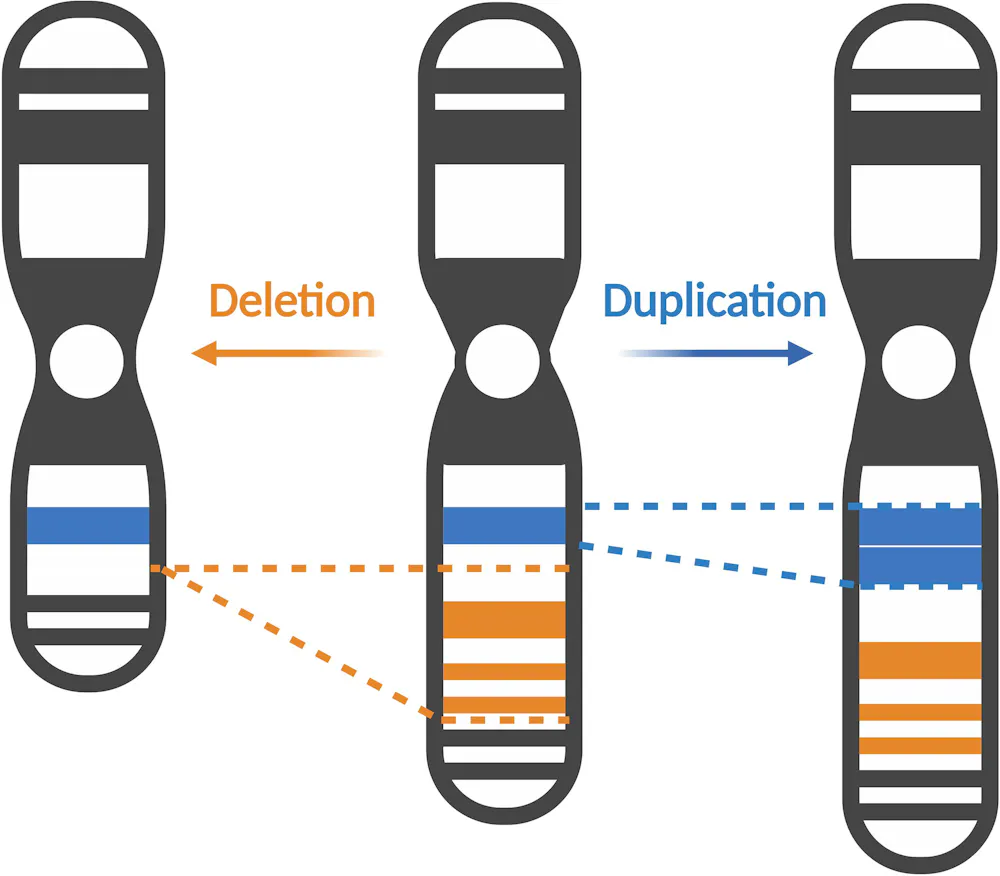
My team and I studied a genetic change known as a 16p12.1 deletion, where a small piece of chromosome 16 is missing. Researchers have linked this mutation to developmental delay, intellectual disability and psychiatric conditions such as schizophrenia. Yet most children inherit this genetic variant from a parent who has milder symptoms, different symptoms or sometimes no symptoms at all.
To understand why this happens, we analyzed 442 individuals from 124 families carrying this genetic mutation. We found that children lacking this piece of chromosome 16 had more secondary variants elsewhere in the genome compared to their carrier parents. These secondary variants took many forms, including both small changes and large deletions, duplications and expansions of their DNA.
Each type of secondary variant was associated with different health outcomes. Some were linked to smaller head size and reduced cognitive function, while others contributed to higher rates of psychiatric or developmental symptoms. This suggests that while a 16p12.1 deletion makes the genome more sensitive to neurodevelopmental disorders, which symptoms manifest depends on which other variants are present.
The story gets even more complex when considering the fact that children not only inherit a 16p12.1 deletion from one parent but also inherit secondary variants from both parents.
My team and I found that the symptoms of the parent with this genetic mutation often match those of their spouse. For example, a parent with a 16p12.1 deletion who shows signs of anxiety or depression is more likely to have a partner who also has these symptoms. This pattern, called assortative mating, means that when parents with overlapping genetic risks have children, those risks can combine and accumulate.
Over generations, this stacking of secondary variants can lead to children who have more severe symptoms than their parents.
Biases in genetics research
One reason why scientific understanding of secondary variants has lagged is that genetic research often depends on who is recruited to participate in these studies and how researchers recruit them.
Most studies recruit patients affected with a particular disease. Families recruited from genetic clinics typically have children with severe versions of the disease. But if studies focus only on patients with the most acute symptoms, researchers may overestimate the effects of primary variants and miss the subtler role that secondary variants may play in how a disease develops.
But if researchers were to study people drawn from the general population – say, by recruiting people from a large shopping mall – some might carry the same primary variant but have far milder symptoms or none at all. This variability allows researchers to better dissect how different parts of the genome interact with each other and affect how a disease develops.
In our study, for example, we found that people with a 16p12.1 deletion who were recruited from the general population often had milder symptoms and different patterns of secondary variants compared to those who were recruited in a clinic.
Instead of a deterministic view where one mutation equals one outcome, a more complex model accounts for the fact that whether and how a disease develops depends on the interplay between different genetic variants and environment. This has implications for how genetics is used in the clinic.
Currently, a child who tests positive for a genetic variant might be diagnosed with a disease tied to that mutation. In the future, doctors might also examine the child’s broader genetic profile to better predict their developmental trajectory, psychiatric risk or response to therapies. Families could be counseled with a more realistic picture of their child’s probability of developing a disease, rather than assuming every person with the same genetic variant will share the same outcome.
The science is still emerging. Larger and more diverse datasets and models that can better capture the subtle effects of genetic variants and environmental factors are still needed. But what’s clear is that secondary variants are not secondary in importance.
By embracing this complexity, I believe genetics can move closer to its ultimate promise: not just explaining why disease happens, but predicting who is most at risk and personalizing care for each individual.
Santhosh Girirajan receives funding from the National Institutes of Health.
Source: The Conversation – USA – By Donald Nieman, Professor of History and Provost Emeritus, Binghamton University, State University of New York
Supporters of free speech gather in September 2025 to protest the suspension of ‘Jimmy Kimmel Live!’, across the street from the theater where the show is produced in Hollywood.Mario Tama/Getty Images
Bipartisan agreement is rare in these politically polarized days.
But that’s just what happened in response to ABC’s suspension of “Jimmy Kimmel Live!” The suspension followed the Federal Communications Commission chairman’s threat to punish the network for Kimmel’s comments about Charlie Kirk’s alleged killer.
While bipartisan agreement may be rare, it’s not surprising that it came in defense of the First Amendment – and a popular TV show. A recent poll found that a whopping 90% of respondents called the First Amendment “vital,” while 64% believed it’s so close to perfection that they wouldn’t change a word.
In just 45 words, it bars Congress from establishing or preventing the free exercise of religion, interfering with the peoples’ right to assemble and petition, or abridging freedom of speech or the press.
Handwritten revisions by senators during the process of altering and consolidating the amendments to the U.S. Constitution proposed by James Madison of Virginia. National Archives
Soured on bills of rights
Building a strong national government was the focus of Madison and the other delegates who met in Philadelphia in May 1787 to draft the Constitution.
The government could not pay its debts, defend the frontier or protect commerce from interference by states and foreign governments.
Although Madison and the other framers aimed to create a stronger national government, they cared about protecting liberty. Many had helped create state constitutions that included pioneering bills of rights.
By the time the Constitutional Convention met, however, Madison had soured on such measures. During the 1780s, he had watched with alarm as state legislatures trampled on rights explicitly guaranteed by their constitutions. Bills of rights, he concluded, weren’t sufficient to protect rights.
The Constitution they wrote created a government powerful enough to promote the national interests while maintaining a check on state legislatures. It also established a system of checks and balances that ensured federal power wasn’t abused.
In the convention’s waning days, delegates briefly discussed adding a bill of rights but unanimously decided against it. They had sweated through almost four months of a sweltering Philadelphia summer and were ready to go home. When Virginia’s John Rutledge noted “the extreme anxiety of many members of the Convention to bring the business to an end,” he was stating the obvious. With the Constitution in final form, few had the appetite to haggle over the provisions of a bill of rights.
That decision nearly proved fatal when the Constitution went to the states for ratification.
The new Constitution’s supporters, known as Federalists, faced fierce opposition from Anti-Federalists who charged that a powerful national government, unrestrained by a bill of rights, would inevitably lead to tyranny.
Ratification conventions in three of the most critical states – Massachusetts, New York and Virginia – were narrowly divided; ratification hung in the balance. Federalists resisted demands to make ratification contingent on amendments suggested by state conventions. But they agreed to add a bill of rights – after the Constitution was ratified and took effect.
The three critical states ratified without condition, and by midsummer 1788, the Constitution had been approved.
However, when the First Congress met in March 1789, the Federalist majority didn’t prioritize a bill of rights. They had won and were ready to move on.
Madison, now a Federalist leader in the House of Representatives, insisted that his party keep its word. He warned that failure to do so would undermine trust in the new government and give Anti-Federalists ammunition to demand a new convention to do what Congress had left undone.
But Madison wasn’t just arguing for his party keeping its word. He had also changed his mind.
The ratification debates and Madison’s correspondence with Thomas Jefferson led him to think differently about a bill of rights. He now thought it harmless and possibly helpful. Its provisions, Madison conceded, might become “fundamental maxims of a free government” and part of “the national sentiment.” Broad popular support for a bill of rights might provide a check on government officials and how they wielded power.
Madison pushed his colleagues relentlessly. Wary of provisions that would weaken the national government, he developed a slate of amendments focused on individual rights. Ultimately, Congress approved 12 amendments – ensuring rights from freedom of speech to protection from cruel and unusual punishment – and sent them to the states for ratification.
As Madison anticipated, the First Amendment wasn’t a cure for a government bent on suppressing dissent. From the Sedition Act in the 1790s to McCarthyism in the 1950s and the Trump administration’s assault on the First Amendment, government has used its awesome powers to pursue and punish critics.
Perhaps the ultimate protection for First Amendment rights is “national sentiment,” as Madison suggested. Norm-breaking presidents can disregard the law, and judges may cave. But public sentiment is a powerful force, as Jimmy Kimmel can attest.
Donald Nieman receives funding from the National Endowment for the Humanities and the American Council of Learned Societies. He is affiliated with Braver Angels.
In a series of cases over the past 15 years, the Supreme Court has moved in a pro-presidential direction.Geoff Livingston/Getty Images
President Donald Trump set the tone for his second term by issuing 26 executive orders, four proclamations and 12 memorandums on his first day back in office. The barrage of unilateral presidential actions has not yet let up.
These have included Trump’s efforts to remove thousands of government workers and fire several prominent officials, such as members of the Corporation for Public Broadcasting and the chair of the Commission on Civil Rights. He has also attempted to shut down entire agencies, such as the Department of Education and the U.S. Agency for International Development.
As a political science scholar who studies presidential power, I believe Trump’s recent actions mark the culmination of the unitary executive theory, which is perhaps the most contentious and consequential constitutional theory of the past several decades.
A prescription for a potent presidency
In 2017, Trump complained that the scope of his power as president was limited: “You know, the saddest thing is that because I’m the president of the United States, I am not supposed to be involved with the Justice Department. I am not supposed to be involved with the FBI, I’m not supposed to be doing the kind of things that I would love to be doing. And I’m very frustrated by it.”
The unitary executive theory suggests that such limits wrongly curtail the powers of the chief executive.
Formed by conservative legal theorists in the 1980s to help President Ronald Reagan roll back liberal policies, the unitary executive theory promises to radically expand presidential power.
There is no widely agreed upon definition of the theory. And even its proponents disagree about what it says and what it might justify. But in its most basic version, the unitary executive theory claims that whatever the federal government does that is executive in nature – from implementing and enforcing laws to managing most of what the federal government does – the president alone should personally control it.
This means the president should have total control over the entire executive branch, with its dozens of major governmental institutions and millions of employees. Put simply, the theory says the president should be able to issue orders to subordinates and to fire them at will.
President Donald Trump signs executive orders in the Oval Office next to a poster displaying the Trump Gold Card on Sept. 19, 2025. AP Photo/Alex Brandon
The president could boss around the FBI or order the U.S. attorney general to investigate his political opponents, as Trump has done. The president could issue signing statements – a written pronouncement – that reinterpret or ignore parts of the laws, like George W. Bush did in 2006 to circumvent a ban on torture. The president could control independent agencies such as the Securities and Exchange Commission and the Consumer Product Safety Commission. The president might be able to force the Federal Reserve to change interest rates, as Trump has suggested. And the president might possess inherent power to wage war as he sees fit without a formal authorization from Congress, as officials argued during Bush’s presidency.
A constitutionally questionable doctrine
A theory is one thing. But if it gains the official endorsement of the Supreme Court, it can become governing orthodoxy. It appears to many observers and scholars that Trump’s actions have intentionally invited court cases by which he hopes the judiciary will embrace the theory and thus permit him to do even more. And the current Supreme Court appears ready to grant that wish.
Until recently, the judiciary tended to indirectly address the claims that now appear more formally as the unitary executive theory.
During the country’s first two centuries, courts touched on aspects of the theory in cases such as Kendall v. U.S. in 1838, which limited presidential control of the postmaster general, and Myers v. U.S. in 1926, which held that the president could remove a postmaster in Oregon.
In 1935, in Humphrey’s Executor v. U.S., the high court unanimously held that Congress could limit the president’s ability to fire a commissioner of the Federal Trade Commission. And in Morrison v. Olson the court in 1988 upheld the ability of Congress to limit the president’s ability to fire an independent counsel.
Some of those decisions aligned with some unitary executive claims, but others directly repudiated them.
These decisions clearly suggest that long-standing, anti-unitarian landmark decisions such as Humphrey’s are on increasingly thin ice. In fact, in Justice Clarence Thomas’ 2019 concurring opinion in Seila Law LLC v. CFPB, where the court ruled the Consumer Financial Protection Bureau’s leadership structure was unconstitutional, he articulated his desire to “repudiate” the “erroneous precedent” of Humphrey’s.
Several cases from the court’s emergency docket, or shadow docket, in recent months indicate that other justices share that desire. Such cases do not require full arguments but can indicate where the court is headed.
In Trump v. Wilcox, Trump v. Boyle and Trump v. Slaughter, all from 2025, the court upheld Trump’s firing of officials from the National Labor Relations Board, the Merit Systems Protection Board, the Consumer Product Safety Commission and the Federal Trade Commission.
Previously, these officials had appeared to be protected from political interference.
Remarks by conservative justices in those cases indicated that the court will soon reassess anti-unitary precedents.
In Trump v. Boyle, Justice Brett Kavanaugh wrote, “whether this Court will narrow or overrule a precedent … there is at least a fair prospect (not certainty, but at least a reasonable prospect) that we will do so.” And in her dissent in Trump v. Slaughter, Justice Elena Kagan said the conservative majority was “raring” to overturn Humphrey’s and finally officially embrace the unitary executive.
In short, the writing is on the wall, and Humphrey’s may soon go the way of Roe v. Wade and other landmark decisions that had guided American life for decades.
As for what judicial endorsement of the unitary executive theory could mean in practice, Trump seems to hope it will mean total control and hence the ability to eradicate the so-called “deep state.” Other conservatives hope it will diminish the government’s regulatory role.
Kagan recently warned it could mean the end of administrative governance – the ways that the federal government provides services, oversees businesses and enforces the law – as we know it:
“Humphrey’s undergirds a significant feature of American governance: bipartisan administrative bodies carrying out expertise-based functions with a measure of independence from presidential control. Congress created them … out of one basic vision. It thought that in certain spheres of government, a group of knowledgeable people from both parties – none of whom a President could remove without cause – would make decisions likely to advance the long-term public good.”
If the Supreme Court officially makes the chief executive a unitary executive, the advancement of the public good may depend on little more than the whims of the president, a state of affairs normally more characteristic of dictatorship than democracy.
Graham G. Dodds does not work for, consult, own shares in or receive funding from any company or organization that would benefit from this article, and has disclosed no relevant affiliations beyond their academic appointment.
Being from Buffalo means getting to eat some of the best wings in the world. It means scraping snow and ice off your car in frigid mornings. And it means making a lifelong vow to the city’s NFL franchise, the Bills – for better or worse, till death do us part.
When I grew up in New York’s second-largest city, my community was bound together by loyalty to a football team that always found new ways to break our hearts. And yet at the start of each NFL season, we always found reasons to hope – we couldn’t help ourselves.
Coming from this football-crazed culture, I often wondered about the psychology of fandom. This eventually led me to pursue a Ph.D. in sport consumer behavior. As a doctoral student, I was most interested in one question: Is fandom good for us?
I found a huge body of research on the psychological and social effects of fandom, and it certainly made being devoted to a team look good. Fandom builds belonging, helps adults make friends, boosts happiness and even provides a buffer against traumatic life events.
While fandom appears to be a boon for our mental health, strikingly little research had been conducted on the relationship between fandom and physical health.
So I decided to conduct a series of studies – mainly of people in Western countries – on this topic. I found that being a sports fan can have some drawbacks for physical health, especially among the most committed fans.
Tailgating culture revolves around alcohol. Research shows that college sports fans binge drink at significantly higher rates than nonfans, are more likely to do something they later regretted and are more likely to drive drunk. Meanwhile, watch parties encourage being stationary for hours and mindlessly snacking. And, of course, fandom goes hand in hand with heavily processed foods like wings, nachos, pizza and hot dogs.
One fan told me that when watching games, his relationship with food is “almost Pavlovian”; he craves “decadent” foods the same way he seeks out popcorn at the movies.
Fans kick back to watch games at Caesars Palace Race and Sports Book in Las Vegas. George Rose/Getty Images
Inside the stadium, healthy options have traditionally been scarce and overpriced. A Sports Illustrated writer joked in 1966 that fans leave stadiums and arenas with “the same body chemistry as a jelly doughnut.”
Little seems to have changed since. One Gen Z fan I recently interviewed griped, “You might find one salad with a plain piece of lettuce and a quarter of a tomato.”
Eating away the anxiety and pain
The relationship between fandom and physical health isn’t just about guzzling beer, sitting for hours on end or scarfing down hot dogs.
One study analyzed sales from grocery stores. The researchers found that fans consume more calories – and less healthy food – on the day following a loss by their favorite team, a reaction the researchers tied to stress and disappointment.
Emotions like anger, sadness and disappointment lead to stronger cravings. And this relationship is tied to how your favorite team performs when it matters most. For example, we found that games between rivals and closely contested games yield more pronounced effects. Emotional states generated by the game are also significantly correlated with increased beer sales in the stadium.
High-calorie cultures
In another paper, my co-authors and I found that fans often feel torn between their desire to make healthy choices and their commitment to being a “true fan.”
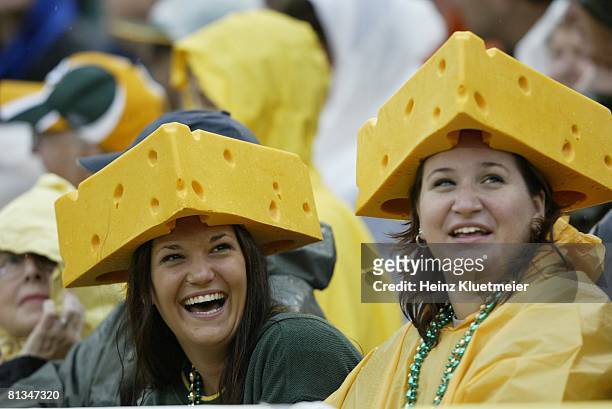
Every fan base develops its own culture. These unwritten rules vary from team to team, and they aren’t just about wearing a cheesehead hat or waving a Terrible Towel. They also include expectations around drinking, eating and lifestyle.
These health-related norms are shaped by a variety of factors, including the region’s culture, team history and even team sponsorships.
For example, the Cincinnati Bengals partner with Skyline Chili, a regional chain that makes a meat sauce that’s often poured over hot dogs or spaghetti. One Bengals fan I interviewed observed that if you attend a Bengals game, sure, you could eat something else – but a “true fan” eats Skyline.
I have two studies in progress that show how hardcore fans typically align their health behaviors with the health norms of their fan base. This becomes a way to signal their allegiance to the team, improve their standing among fellow fans, and contribute to what makes the fan base distinct in the eyes of its members.
Cheese and sausages are synonymous with Wisconsin – and being a fan of the state’s NFL team, the Green Bay Packers. Jeff Haynes/AFP via Getty Images
In Buffalo, for example, tailgating often revolves around alcohol – so much so that Bills fans have a reputation for over-the-top drinking rituals.
And in New Orleans, Saints fans often link fandom to Louisiana food traditions. As one fan explained: “People make a bunch of fried food or huge pots of gumbo or étouffée, and eat all day – from hours before the game until hours after.”
A new generation of health-conscious fans
The fan experience is shaped by the culture in which it is embedded. Teams actively help shape these cultures, and there’s a business argument to be had for teams to play a bigger role in changing some of these norms.
If stadiums and tailgates continue to revolve around beer and nachos, why would a generation attuned to fitness influencers and “fitspiration” buy in? To reach this market, I think the sports industry will need to promote its professional sports teams in new ways.
Some teams are already doing so. The British soccer team Liverpool has partnered with the exercise equipment company Peloton. Another club, Manchester City, has teamed up with a nonalcoholic beer brand as the official sponsor of its practice uniforms.
And several European soccer clubs have even joined a “Healthy Stadia” movement, revamping in-stadium food options and encouraging fans to walk and bike to the stadium.
For the record, I don’t think the solution is replacing typical fan foods with smoothies and salads. Alienating core consumers is generally not a sound business strategy.
I think it’s reasonable, however, to suggest sports teams might add more healthy options and carefully evaluate the signals they send through sponsorships.
As one fan I recently interviewed said: “The NFL has had half-assed efforts like Play 60” – a campaign encouraging kids to get at least 60 minutes of physical activity per day – “while also making a ton of money from beer, food and, back in the day, cigarette advertisements. How can sports leagues seriously expect people to be healthier if they promote unhealthy behaviors?”
Today’s consumers want to support brands that reflect their values. This is particularly true for Gen Zers, many of whom are savvy enough to see through hollow campaigns and quick to reject hypocrisy. In the long run, I think this type of dissonance – sandwiching a Play 60 commercial between ads for Uber Eats and Anheuser-Busch – will prove counterproductive.
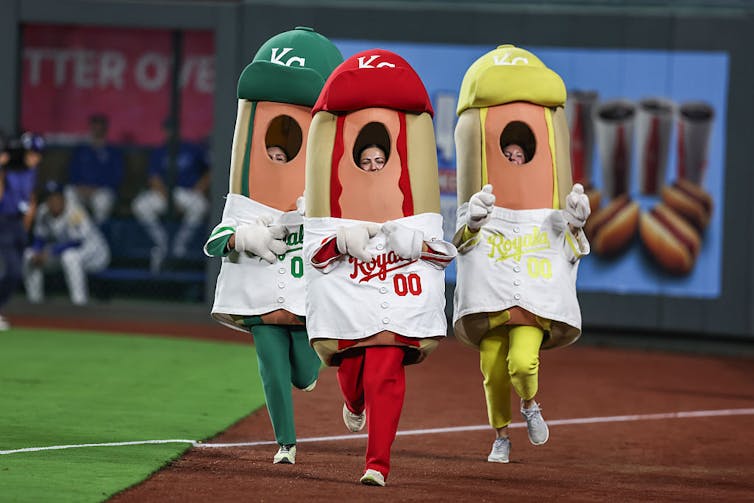
Relish, ketchup and mustard ‘race’ during a September 2025 baseball game between the Kansas City Royals and Seattle Mariners, in an encapsulation kind of dissonance between showcasing both physical activity and junk food at sporting events. Scott Winters/Icon Sportswire via Getty Images
I, as much as anyone else, understand what makes fandom special – and yes, I’ve eaten my share of wings during Bills games. But public health is a pressing concern, and though the sports industry is well-positioned to address this issue, fandom isn’t helping. Actually, my research suggests it’s having the opposite effect.
Striking the balance I’m advocating will be tricky, but the sports industry is filled with bright problem-solvers. In the film “Moneyball,” Brad Pitt’s character, Billy Beane, famously says sports teams must “adapt or die.” He was referring to the need for baseball teams to integrate analytics into their decision-making.
Professional sports teams eventually got that message. Maybe they’ll get this one, too.
Aaron Mansfield does not work for, consult, own shares in or receive funding from any company or organization that would benefit from this article, and has disclosed no relevant affiliations beyond their academic appointment.
As a tribal member of Spirit Lake Nation in North Dakota and the former president of Cankdeska Cikana Community College in Fort Totten, North Dakota, I recognize the difference that tribal colleges and universities, like the one I used to work at, can have in rerouting Native students’ education journeys.
Tribal colleges and universities, or TCUs, are public institutions that are founded and run by a Native American tribe and focus on serving Native American students and communities.
There are 35 accredited TCUs across 13 states, including Montana, Arizona, Oklahoma, North Dakota and South Dakota. All of these schools are nonprofits.
While a single Native tribe sometimes sets up a tribal college, in other cases a consortium of tribes or the federal government helps establish a school.
Despite their differences, tribal colleges and universities all have the same mission of teaching Indigenous history, culture and languages.
All the tribal colleges also offer associate degrees and certifications. Twenty-two of them have only baccalaureate programs, and nine have master’s programs. Navajo Technical University, a tribal college in Crownpoint, New Mexico, which has the largest enrollment size of all the TCUs, began offering a first of its kind doctorate program in Diné Studies in 2024. This program focuses on the language, culture and history of the Diné people, also known as Navajo people.
TCUs keep their tuition relatively low in part because a majority of their funding comes from the federal government. They also receive funding from philanthropic organizations.
TCUs also generally have minimal overhead costs, since most students live off-campus and only a handful of these colleges and universities offer on-campus housing. Most TCUs have both in-person and online courses.
While there is no single profile of a TCU student, I found that it is common to encounter a 30-year-old, single mother who works full time while trying to earn a college degree.
Several factors prevented most Native American students from attending a college or university.
The cost of college was prohibitive, and many Native American students were also not adequately prepared for college in high school. These students and their families also feared that higher education could force them to assimilate into Western and white culture, and erase their own Native traditions and languages.
A long political relationship
When considering this historical context, it is important to understand that Native Americans have a unique relationship with the federal government.
Native Americans largely consider this relationship a political one, bound by the various legal precedents, federal policies and executive orders from the 1800s and onward. These orders and policies from the past several hundred years vary, but they often focus on questions of land, assimilation and the political independence of Native tribes.
Alongside the creation of new tribal colleges and universities over the past several decades, more and more Native people living on reservations have graduated from high school and received higher education degrees.
The percentage of Native college graduates rose 125% from 1990 to 2020. While 4.5% of Native students living on reservations received a college degree in 1990, that percentage rose to 10.3% with at least a college degree in 2020, according to findings by Harvard Kennedy School in September 2025.
Yet, unlike the high school trends, Native people still graduate college at a much lower rate than the general American population.
In 1990, 20.3% of all Americans had at least a college degree. In 2020, 34.3% of Americans had a college degree at a minimum, according to the Harvard Kennedy School findings.
A professor at Navajo Technical University participates in a veterinary technology program conducted with the Department of Agriculture in 2019 in Crownpoint, N.M. Flickr/U.S. Department of Agriculture, CC BY
A lasting impact
While tribal colleges and universities receive state and federal funding, they are chronically underfunded and often operate in survival mode. In some cases, they lack money to make needed repairs on campus buildings.
One major reason for this shortfall: While Congress agreed in the late 1970s to annually give tribal colleges $8,000 for each Native student they enroll, it has not met this financial and political commitment.
Tribal colleges annually receive $250 million less than what the federal government promised them, a 2024 ProPublica investigation found.
Tribal college and universities’ futures were cast in doubt in the spring of 2025, when the Trump administration announced a proposal to cut the Bureau of Indian Education’s annual budget from $183 million to $22 million. The Bureau of Indian Education is part of the Department of the Interior and oversees education for Native students.
But the Department of Education went on to announce in September that it would make a one-time, $495 million investment in historically Black colleges and universities and TCUs.
I think it is important to recognize that TCUs make broad contributions to society, well beyond the impact they have on individual students.
TCUs teach entrepreneurship and business development and serve as pilot sites in launching businesses, for example.
For every federal dollar invested in tribal colleges, the schools return $1.60 in tax revenue through the increased tax payments of their alumni and their alumni’s employers, according to a September 2025 report by the American Indian Higher Education Consortium, a national organization that represents TCUs.
TCU alumni also generated $3.8 billion in added income, or gross domestic product, to the national economy from October 2022 through September 2023.
These schools offer a unique pathway for Native students to attend a higher education institution, while teaching them the skills they need to build a stable career.
I served as President of Cankdeska Cikana Community College (CCCC) one of the 34 tribal colleges located in North Dakota and that is affiliated with AIHEC. I am a member of the Spirit Lake Dakota Tribe who chartered CCCC in the 1970s. As a tribal college President, I served on the AIHEC Board of Directors and its Executive Committee.