When banks issue their defrauded customers refunds and successfully identify the perpetrators, fraud victims are 60% more likely to stick with their bank than customers that didn’t experience any fraud.
But if customers get their stolen money back but never learn who the perpetrators are, they are 40% more likely to take their accounts elsewhere than customers who weren’t defrauded.
We believe this pattern emerged because identifying fraudsters can signal competence and rebuild trust. But when no one is caught, even with a refund, customers are more likely to see the fraud incident as a lapse in capability and blame the bank itself.
We partnered with a major U.S. bank that shared five years of data covering 422,953 customers, including 22,953 who experienced a single instance of fraud.
These customers were victims of account-based fraud, meaning that perpetrators had surreptitiously siphoned away money from their accounts, often through various scams.
Every defrauded customer got a refund, but the perpetrators were identified only about 13% of the time. Our findings support what’s known as the “service recovery paradox”: When a business handles a problem well, its customers can become more loyal than if no problem had occurred.
Customers who had recently opened their bank accounts and those with few prior interactions with the banks were the most likely to leave if the perpetrators were never identified.
Customers in cases where perpetrators weren’t identified within the next three months – and who had opened their accounts years earlier and were more engaged with their banks – were more likely to stay put because they are more familiar with the bank’s technological capabilities and, therefore, are more likely to forgive the bank.
Our results suggest that when perpetrators are identified, customers can regain confidence in their bank’s ability to safeguard their accounts. When the fraudsters aren’t caught, they lose more trust instead.
Financial fraud of many kinds is growing increasingly common.
Why it matters
Financial fraud is both costly and pervasive. More than one-third of U.S. consumers were targeted by attempted financial fraud in 2024, and nearly 40% of those attempts led to a financial loss. Total losses from defrauded consumers totaled more than US$12.5 billion in 2024.
U.S. regulations generally require banks to issue customers full refunds whether or not the perpetrator of a fraud is caught. But when customers get refunds after being defrauded, it doesn’t automatically restore their trust in a bank or app.
What still isn’t known
We focused on fraud cases that the customers themselves reported. It’s unclear whether they would have responded the same way had their banks detected the fraud instead. Another open question is whether similar patterns hold for other debacles, such as data breaches that make customers’ personal information vulnerable to exploitation.
Vamsi Kanuri does not work for, consult, own shares in or receive funding from any company or organization that would benefit from this article, and has disclosed no relevant affiliations beyond their academic appointment.
But our new research suggests that in a digital world full of influencers – trusted tastemakers with large online followings – being too attractive can actually backfire, particularly in the fitness space.
We call this the “beauty backfire effect,” and we put it to the test in a series of laboratory experiments.
We showed hundreds of study participants mock Instagram posts from fictitious fitness influencer accounts. The posts were identical in every way, except for one key difference: how attractive the influencer was. We judged this by asking independent raters to evaluate photos of real influencers ahead of time.
The results were striking: We found that extremely attractive fitness influencers – or “fitfluencers” – got fewer likes and follows than their moderately attractive peers.
Why? Because people viewed them as less relatable.
In fact, in one of our studies, people who saw an extremely attractive fitfluencer reported having lower self-esteem afterward. In contrast, seeing a moderately attractive fitfluencer gave some participants a small confidence boost, likely because the image felt more attainable.
Interestingly, the beauty backfire effect wasn’t as strong in other domains. When we ran the same experiment with finance influencers in the mix, appearance didn’t matter as much. That’s not entirely surprising, of course. For a financial coach, looks aren’t tied to credibility. Meanwhile, for a fitness coach, they’re central.
But the beauty backfire effect isn’t inevitable. In a final analysis, we explored whether self-presentation style could close the relatability gap.
When highly attractive influencers adopted a humble tone, sharing their struggles, training challenges or fitness plateaus, the engagement gap disappeared, we found. But when they adopted a prideful tone, boasting about their natural talent or exceptional dedication, the gap grew even larger.
This suggests that humility can be a powerful communication tool for influencers who might otherwise seem “out of reach.”
Why it matters
Fitfluencers depend on their appearance as a kind of credential. A sculpted physique signals expertise in health and wellness. But engagement isn’t just about how good someone looks on camera. It’s about whether followers feel they can connect with them.
This is where relatability comes in. Audiences connect with fitfluencers who feel like real, reachable versions of themselves. But extreme attractiveness does the opposite: It turns an attainable goal into an impossible ideal, and what should inspire instead alienates.
This effect aligns with classic social comparison theory. People judge themselves in relation to others. If the gap between self and fitfluencer seems too wide, comparisons become discouraging, not motivating. In other words, the more “perfect” the fitfluencer looks, the less followers believe they can realistically be like them – and the less likely they are to engage.
Social media platforms have been taking note. These days, TikTok, Snapchat and other outlets build their appeal on candid, authentic content over polished, airbrushed imagery. In this new landscape, perfection can be a liability.
Our research shows that extreme attractiveness might grab attention but can undermine connection, the true currency of the influencer economy. For brands and creators, the takeaway is clear: Success may depend less on looking flawless and more on sounding real.
What’s next
Our findings raise new questions about how beauty shapes influence online.
For instance, gender appears to matter. In a follow-up study, highly attractive female fitness influencers faced stronger backlash than equally attractive men, perhaps reflecting a broader social tendency to judge women’s looks more harshly. Future research could explore whether similar biases apply to other visible traits, such as race or disability.
The effect may also extend beyond fitness. Industries built around appearance – fashion, beauty or lifestyle content – could show the same pattern.
Finally, not all audiences respond alike. People new to fitness or younger users still forming their identities may be especially prone to negative comparisons with highly attractive fitfluencers. Understanding these differences could help creators and platforms foster healthier engagement online.
Justin Palmer contributed research for this article as an undergraduate.
The authors do not work for, consult, own shares in or receive funding from any company or organization that would benefit from this article, and have disclosed no relevant affiliations beyond their academic appointment.
In the opening scene of “It Might Get Loud,” a 2008 music documentary, musician Jack White appears surrounded by scrap wood and garbage. He hammers nails into a board, wraps wire around a glass Coca-Cola bottle as a makeshift guitar bridge, attaches a pickup, and plugs the contraption into a vintage Sears Silvertone amplifier – anything more modern or of better quality would never do.
White then uses his signature slide bar to play a distorted, electric riff on the rudimentary instrument. He declares, matter-of-factly, “Who says you need to buy a guitar?” and casually puffs a cigarette.
This scene of manufacturing innovation, crafting what is needed out of what is available, is a signature of The White Stripes, the influential rock band White co-founded in the late 1990s.
Drummer Meg White and guitarist/vocalist Jack White, originally Jack Gillis before taking Meg White’s name during their four-year marriage, make up The White Stripes. Hailing from Detroit, the band helped lead the garage rock revival, releasing six studio albums between 1999 and 2007.
Their recordings “Elephant,” “Get Behind Me Satan” and “Icky Thump” each won Grammys for Best Alternative Music Album. The White Stripes’ last televised performance together was “We’re Going to Be Friends” in 2009 on the final episode of “Late Night With Conan O’Brien.”
The band’s legacy of innovation has earned them a place in the Rock & Roll Hall Fame. They will be inducted in Los Angeles on Nov. 8, 2025, along with Outkast, Cyndi Lauper and Soundgarden.
I find The White Stripes’ experiment in sonic complexity particularly impressive because it was created by just two performers. Their soundscape relied on instrumental and vocal manipulations of tone and timbre and on stylistic fusions of blues, folk music, garage rock and movements such as British punk and Dutch De Stijl art.
Several songs directly reference Detroit icons. The jaunty 2001 single “Hotel Yorba,” which blends blues and folk while heavily featuring acoustic guitar, honors a Detroit hotel built in 1926. The music video was partially filmed outside the aging building, with indoor scenes filmed elsewhere.
Jack White said the band wanted to know more about the Hotel Yorba’s history but were chased out by an armed manager. In September 2025, the hotel was closed due to unsafe living conditions.
In contrast, the song “The Big Three Killed My Baby,” released in 1999, refers to Detroit’s major automakers at the time: Ford, General Motors and Chrysler. Infused with a punk style, the song discusses the conflict between gas and electric engines. With a tone of anguish, it serves as a biting critique of these companies’ lack of creativity and, as the song states, the use of “planned obsolescence,” which intentionally limits a product’s useful life cycle. The close of the song reveals that what has truly been killed is the consumer’s common sense.
“I always look at playing the guitar as an attack. … It can’t be this wimpy thing where you’re pushed around by the idea, the characters, or the song itself,” Jack White said in a 2010 interview. “It’s every player’s job to fight against all of that.”
Likewise, spontaneity, lack of set lists and real-time creativity were hallmarks of their performances.
A 2002 live performance of “Dead Leaves and the Dirty Ground” begins with brief, chaotic, distorted guitar-wailing and a single, powerful strike of bass drum and cymbal. The performance features a blues-infused rock riff and sweet vocal melodies with high-pitched repetitions and steady cymbal beats punctuated by bass drum and tom hits. That’s the raw, unfiltered, unmitigated, underproduced, auto-tune-avoidant intensity and artistic sound for which The White Stripes strove.
The White Stripes perform “Dead Leaves and the Dirty Ground” on “Saturday Night Live” in 2002.
A sound forged by punk and blues
The White Stripes had many influences, including the Flat Duo Jets, who shared their instrumentation of drum, guitar and vocals, and similarly fused styles such as ’50s rockabilly and blues-inspired punk. They were also heavily ensconced in the Detroit garage rock and punk scenes, which included bands such as The Detroit Cobras, The Dirtbombs, The Paybacks and Rocket 455. Each act was unique in how it deployed its creative foundations, mainly a primal, raw, electric sound with consistent, pounding rhythms and edgy vocal timbres.
Acknowledged delta blues influences included Blind Willie McTell and Son House, whose “Grinnin’ in Your Face” – Jack White’s favorite song – maintains a powerful simplicity echoed throughout many White Stripes songs.
A folklike acoustic sound is mirrored in The White Stripes’ tracks “You’ve Got Her in Your Pocket” and “It’s True That We Love One Another.” Similar acoustic simplicity is heard in “Your Southern Can Is Mine,” “Apple Blossom” and “This Protector,” which use imperfections of intonation, melodic repetition, prescribed harmonic structures and soulful sounds.
The harder edges of punk and garage rock are equally present in the opening riffs of the songs “Icky Thump,” “Blue Orchid,” “Fell in Love With a Girl” and midway through “Seven Nation Army.”
Meg White’s tom and bass drum pulsations – as recognizable and definitive of The White Stripes’ sound as Jack White’s electrified blues riffs – are heard in the openings of the songs “Jimmy the Exploder,” “Little Cream Soda,” “The Hardest Button to Button,” “Astro” and even “Seven Nation Army,” which became a popular sports arena staple.
More than a mere look backward, The White Stripes served as a catalyst of progress, raising the stature of the underground Detroit sound to the world’s stage.
Nathan Fleshner does not work for, consult, own shares in or receive funding from any company or organization that would benefit from this article, and has disclosed no relevant affiliations beyond their academic appointment.
Providing supplies of HIV medications does not ensure they will get into the hands of those who need them most.Per-Anders Pettersson/Getty Images
Protecting public health abroad benefits Americans.
In a globalized world, diseases and their social and economic impacts do not stay within national boundaries. Increased rates of untreated HIV in any part of the world increase the risk of transmission for U.S. citizens.
Changes made in the first year of President Donald Trump’s second term to address the global HIV epidemic, however, may not keep Americans safe.
In September 2025, the U.S. Department of State announced its America First Global Health Strategy, a plan that aims to make “America safer, stronger, and more prosperous” by encouraging other governments to take responsibility for their citizens’ health and to promote U.S. commercial and faith-based interests. It includes the commitment to purchase and distribute the breakthrough HIV preventive drug lenacapavir for up to 2 million people – principally pregnant and breastfeeding women – in 10 countries heavily affected by HIV.
Since President George Bush initiated the program in 2003, PEPFAR has saved an estimated 26 million lives. HIV deaths have declined by 70% since 2004, and new infections fell after the program’s inception. PEPFAR helped put the world on track to ending the HIV pandemic by promoting access to highly effective drugs, supporting community-led outreach and programs, and building health care infrastructure.
HIV clinics dependent on PEPFAR funding have shuttered with the Trump administration’s significant cuts to the program. AFP/Getty Images
On Jan. 20, 2025, President Donald Trump signed an executive order that paused funding for all foreign aid programs, including PEPFAR. It shuttered PEPFAR-supported clinics and outreach programs, halted medical and supply shipments, and prompted mass layoffs of the global HIV workforce. It also dissolved USAID, which provided essential infrastructure for PEPFAR to do its work.
Legal pushback in the months following the Trump administration’s dismantling of USAID allowed limited parts of PEPFAR to restart. However, access to HIV medication was explicitly limited to only pregnant and breastfeeding women. This strategy excludes prevention and care to the majority of people who are vulnerable to HIV infection.
The Trump administration’s new global HIV prevention strategy prioritizes preventing mother-to-child HIV transmission. About 120,000 children under the age of 5 were newly infected with HIV in 2024, or around 9% of the 1.3 million new infections that year.
However, 55% of new infections worldwide occur among “key populations,” a catchall term coined by UNAIDS and WHO. These include sex workers, people who use injectable drugs, men who have sex with men, transgender people, prisoners, and the sex partners of these individuals. These groups are considered “key” because of their heightened vulnerability to HIV infection and because ending the HIV pandemic cannot be achieved without their access to prevention, testing and treatment.
Meeting vulnerable communities where they are is critical to effective HIV care. STR/AFP via Getty Images
The Trump administration’s new strategy favors pregnant and breastfeeding women and cuts out other vulnerable communities. It proposes funding government health care workers in lieu of peers without ensuring these workers will be adequately equipped to provide unprejudiced care. The plan withdraws support for community-led, nongovernmental organizations that bridge gaps in care and offer sensitivity training to providers.
Many people who are vulnerable to or living with HIV view government-run medical care with profound distrust and apprehension. Some participants in my own research have told me they would rather die than seek care in a government-run facility. They recount dehumanizing experiences in these facilities, including undergoing invasive procedures without consent and being openly humiliated. Health care workers have also violated patient confidentiality by disclosing patients’ sexuality and HIV status to family members, friends, neighbors, landlords or employers.
The strategy shifts funds to faith-based institutions, citing potential financial support from tithes and donations as well as greater reach through faith leaders. However, research has shown that faith-based and government health care institutions evoke fear of stigmatization, mistreatment, arrest and denial of services among many who are most at-risk for HIV.
Effectively addressing HIV requires more than providing supplies or medical treatment. Although treatments to manage and prevent HIV infection are highly effective under ideal conditions, these are not the circumstances of many people living with and vulnerable to HIV. Treatment is lifelong and needs to be taken regularly. Additionally, the epidemic is often concentrated in networks of people who face societal discrimination, making care retention and engagement difficult.
The Trump administration’s new global health strategy requires community health care workers to consolidate their work across four distinct diseases: malaria, polio, tuberculosis and HIV. However, very different populations are vulnerable to these diseases, and each has unique social, psychological and medical concerns and needs.
For example, malaria and polio primarily affect children under 5, but the former requires strategies to reduce the mosquito bites that transmit disease, while the latter requires childhood immunization. Meanwhile, HIV primarily affects adolescents and adults and requires interventions addressing sexual health and harm reduction.
Research and lessons learned over decades of global health work suggest that carefully tailoring prevention and care strategies to each vulnerable population and addressing their unique social, behavioral, structural and medical needs improves their effectiveness.
A healthy world makes a safe and prosperous US
The 55 countries that most recently benefited from PEPFAR may seem far from U.S. soil. But in an interconnected world, their epidemic is an American epidemic.
The Trump administration’s reversal of decades of progress on ending the HIV pandemic – and weakening U.S. leadership and humanitarian effort in the fight against HIV – has already led to thousands of deaths. Every new HIV infection will incur global economic and societal costs by draining labor capacity in high-burden countries while increasing health care and caregiving costs. This global insecurity and economic instability has precedents in the initial HIV crisis and the COVID-19 pandemic.
Ensuring people living with HIV worldwide receive appropriate treatment and care advances U.S. national security, diplomatic and economic interests. Ensuring that citizens in other countries enjoy good health permits their economies to thrive and America’s in turn. I believe a healthy world is a more prosperous, peaceful and stable world, to everyone’s benefit.
Robin Lin Miller has previously received research and evaluation funding from the U.S. Department of State, Centers for Disease Control and Prevention, National Institute of Mental Health, National Institute of Drug Abuse, the Eunice Kennedy Shriver National Institute of Child Health and Development, American Foundation for AIDS Research, Michigan Department of Community Health, Michigan AIDS Fund, AIDS Foundation of Chicago, and the Health Services Improvement Fund.
When the Trump administration gave Immigration and Customs Enforcement access to a massive database of information about Medicaid recipients in June 2025, privacy and medical justice advocates sounded the alarm. They warned that the move could trigger all kinds of public health and human rights harms.
But most people likely shrugged and moved on with their day. Why is that? It’s not that people don’t care. According to a 2023 Pew Research Center survey, 81% of American adults said they were concerned about how companies use their data, and 71% said they were concerned about how the government uses their data.
At the same time, though, 61% expressed skepticism that anything they do makes much difference. This is because people have come to expect that their data will be captured, shared and misused by state and corporate entities alike. For example, many people are now accustomed to instinctively hitting “accept” on terms of service agreements, privacy policies and cookie banners regardless of what the policies actually say.
At the same time, data breaches have become a regular occurrence, and private digital conversations exposing everything from infidelity to military attacks have become the stuff of public scrutiny. The cumulative effect is that people are loath to change their behaviors to better protect their data − not because they don’t care, but because they’ve been conditioned to think that they can’t make a difference.
Policy reforms could help to change this perception, but they haven’t yet. In contrast to a growing number of countries that have comprehensive data protection or privacy laws, the United States offers only a patchwork of policies covering the issue.
At the federal level, the most comprehensive data privacy laws are nearly 40 years old. The Privacy Act of 1974, passed in the wake of federal wiretapping in the Watergate and the Counterintelligence Program scandals, limited how federal agencies collected and shared data. At the time government surveillance was unexpected and unpopular.
The Electronic Communications Privacy Act of 1986 extended protections against telephone wire tapping to include electronic communications, which included services such as email. But the law did not account for the possibility that most digital data would one day be stored on cloud servers.
Since 2018, 19 U.S. states have passed data privacy laws that limit companies’ data collection activities and enshrine new privacy rights for individuals. However, many of these laws also include exceptions for law enforcement access.
These laws predominantly take a consent-based approach – think of the pesky banner beckoning you to “accept all cookies” – that encourages you to give up your personal information even when it’s not necessary. These laws put the onus on individuals to protect their privacy, rather than simply barring companies from collecting certain kinds of information from their customers.
The privacy paradox
For years, studies have shown that people claim to care about privacy but do not take steps to actively protect it. Researchers call this the privacy paradox. It shows up when people use products that track them in invasive ways, or when they consent to data collection, even when they could opt out. The privacy paradox often elicits appeals to transparency: If only people knew that they had a choice, or how the data would be used, or how the technology works, they would opt out.
But this logic downplays the fact that options for limiting data collection are often intentionally designed to be convoluted, confusing and inconvenient, and they can leave users feeling discouraged about making these choices, as communication scholars Nora Draper and Joseph Turow have shown. This suggests that the discrepancy between users’ opinions on data privacy and their actions is hardly a contradiction at all. When people are conditioned to feel helpless, nudging them into different decisions isn’t likely to be as effective as tackling what makes them feel helpless in the first place.
Resisting data disaffection
The experience of feeling helpless in the face of data collection is a condition we call data disaffection. Disaffection is not the same as apathy. It is not a lack of feeling but rather an unfeeling – an intentional numbness. People manifest this numbness to sustain themselves in the face of seemingly inevitable datafication, the process of turning human behavior into data by monitoring and measuring it.
It is similar to how people choose to avoid the news, disengage from politics or ignore the effects of climate change. They turn away because data collection makes them feel overwhelmed and anxious – not because they don’t care.
Taking data disaffection into consideration, digital privacy is a cultural issue – not an individual responsibility – and one that cannot be addressed with personal choice and consent. To be clear, comprehensive data privacy law and changing behavior are both important. But storytelling can also play a powerful role in shaping how people think and feel about the world around them.
We believe that a change in popular narratives about privacy could go a long way toward changing people’s behavior around their data. Talk of “the end of privacy” helps create the world the phrase describes. Philosopher of language J.L. Austin called those sorts of expressions performative utterances. This kind of language confirms that data collection, surveillance and abuse are inevitable so that people feel like they have no choice
Cultural institutions have a role to play here, too. Narratives reinforcing the idea of data collection as being inevitable come not only from tech companies’ PR machines but also mass media and entertainment, including journalists. The regular cadence of stories about the federal government accessing personal data, with no mention of recourse or justice, contributes to the sense of helplessness.
Alternatively, it’s possible to tell stories that highlight the alarming growth of digital surveillance and frame data governance practices as controversial and political rather than innocuous and technocratic. The way stories are told affects people’s capacity to act on the information that the stories convey. It shapes people’s expectations and demands of the world around them.
The ICE-Medicaid data-sharing agreement is hardly the last threat to data privacy. But the way people talk and feel about it can make it easier – or more difficult – to ignore data abuses the next time around.
The authors do not work for, consult, own shares in or receive funding from any company or organization that would benefit from this article, and have disclosed no relevant affiliations beyond their academic appointment.
Assembly member Zohran Mamdani attends a news conference on universal child care at Columbus Park Playground on Nov. 19, 2024, in New York City.Michael M. Santiago/Getty Images
Zohran Mamdani, the 34-year-old New York State Assembly member and democratic socialist, was elected New York City’s mayor on Nov. 4, 2025, after pledging to make the city more affordable through policies that include freezing rents, providing free public buses and a network of city-owned grocery stores.
Of all of Mamdani’s campaign commitments, free high-quality child care for every New Yorker from 6 weeks to 5 years old – while boosting child care workers’ wages to match that of the city’s public school teachers – could be the most transformative.
The cost of child care in New York City is expensive. More than 80% of families with young children cannot afford the average annual cost of US$26,000 for center-based care. A recent study found that families with young children are twice as likely to leave the city as those without children. The study identified housing and child care costs as key drivers of migration out of the city.
New York’s child care problem mirrors a nationwide system that is seen by many experts as broken. U.S. families spend between 8.9% and 16% of their median income on full-day care for one child. And prices have been rising: Between 1990 and 2024, the cost of day care and preschool rose 263%, much faster than overall inflation.
Despite high prices, child care workers are poorly paid: In 2024, the median pay for child care workers, who are mostly women and often women of color, was $15.41 an hour, or $32,050 a year. That’s nearly at the bottom of all occupations when ranked by annual pay. Additionally, child care programs face high turnover, and it’s difficult for them to recruit and retain qualified staff. Program quality suffers as a result.
As a feminist scholar who has written extensively about child care, I believe Mamdani’s promise of free universal child care, with decent pay for child care staff, could transform the politics and the reality of child care in New York and beyond.
An example to the nation
During the Great Depression, the Works Projects Administration, a New Deal agency created to combat unemployment, established 14 emergency nursery schools in New York. Opened between 1933 and 1934, these schools were primarily intended to offer employment opportunities to unemployed teachers, but they also became a form of de facto child care for parents employed on various work-relief projects.
In 1941, the lack of adequate child care prompted the administration of Mayor Fiorello La Guardia to fund a handful of already existing nursery schools, including the New Deal nurseries whose federal funding had dried up. New York became the only U.S. city to provide publicly subsidized child care services.
While most wartime child care centers were shuttered at war’s end, in New York a citywide grassroots mobilization of parents forced the city to keep its centers operating. It marked the first peacetime allocation of municipal tax dollars for child care programs.
People hold signs as they attend a news conference at Columbus Park Playground, Nov. 19, 2024, in New York City. Michael M. Santiago/Getty Images
Building blocks
In the 1960s, under the liberal administration of Mayor John Lindsay, public child care in New York City was expanded, and in 1967 child care workers organized a union, AFSCME Local 205 Day Care Employees.
After a bitter three-week strike in 1969 to protest low wages and poor working conditions, child care workers won a contract that included a wage scale comparable to that of elementary school teachers in the city’s public school system. The contract also included a training program that allowed them to upgrade their skills and get credit for it.
When President Richard Nixon vetoed federal child care legislation in 1971 that would have provided federal funding for child care programs across the nation, New York’s child care movement took to the streets to demand universal child care, even if the federal government refused to fund it. Groups like the Day Care Forum and the Committee for Community Controlled Child Care staged demonstrations on the city’s Triborough Bridge – since renamed the Robert F. Kennedy Bridge – and set up a one-day “model day care center” on the lawn of City Hall.
Though far from universal, the child care system in New York today boasts the largest publicly supported system in the country, and can serve as the building blocks for Mamdani’s plan.
Transformative beyond New York
Mamdani’s campaign estimated that his universal child care plan would cost $6 billion annually. To fund his policies, Mamdani has proposed an increase of the state’s corporate tax rate and raising the city’s income tax by 2 percentage points on New Yorkers earning more than $1 million a year. While Mamdani will need the assistance of Gov. Kathy Hochul to raise taxes, Hochul supports universal child care, even if she disagrees on how to pay for it.
Universal child care has positive economic impacts, including more women in the workforce and more money in the pockets of parents to spend in the economy. Research from the liberal Center for American Progress concluded that the availability of affordable high-quality child care would lead 51% of stay-at-home parents to find work, and about a third of employed parents to work more hours.
In New York, the disposable income of families could increase by up to $1.9 billion due to the avoidance of child care costs.
If he can find the money to pay for it, with universal child care, Mamdani could blaze a trail that other policymakers follow.
Simon Black does not work for, consult, own shares in or receive funding from any company or organization that would benefit from this article, and has disclosed no relevant affiliations beyond their academic appointment.
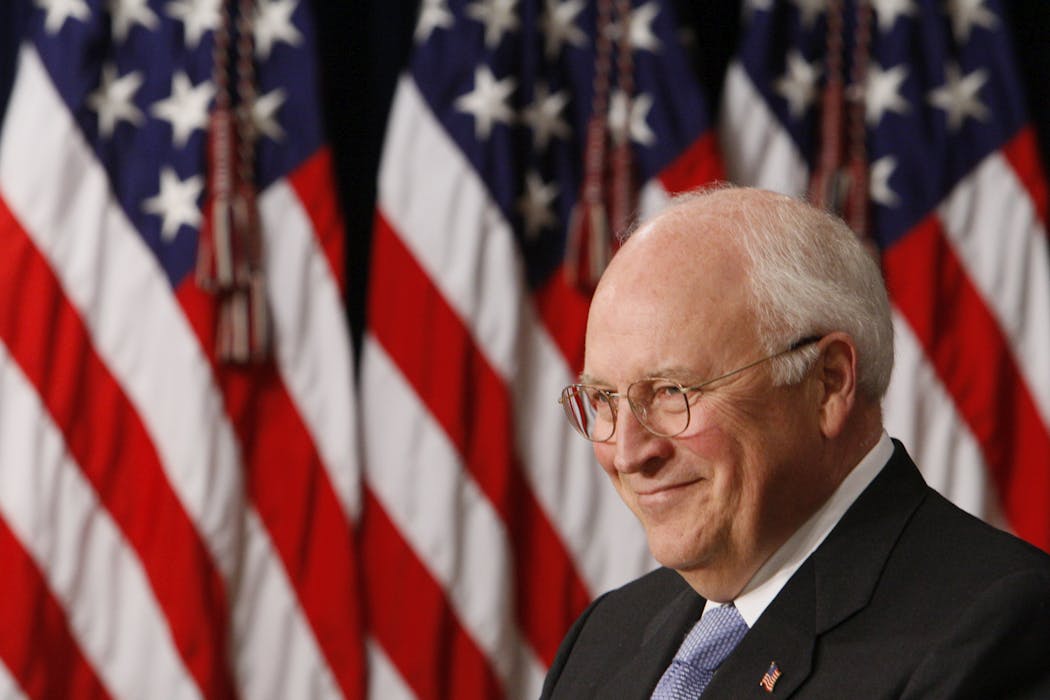
As Cheney told an interviewer in 2005: “I do have the view that over the years there had been an erosion of presidential power and authority, that it’s reflected in a number of developments – the War Powers Act. … I am one of those who believe that was an infringement upon the authority of the President. … A lot of the things around Watergate and Vietnam, both, in the ’70s served to erode the authority, I think, the President needs to be effective especially in a national security area.”
Cheney’s experience in the Ford years set in place a decades-long effort to enhance presidential power, to reinvigorate an office that he believed Congress had wrongly diminished. When Bush surprisingly picked Cheney to be his vice president in July 2000, Cheney finally had a chance to right that perceived wrong.
Now, nearly two decades later, President Donald Trump is using this theory to push his agenda. He set the tone for his second term by issuing 26 executive orders, four proclamations and 12 memorandums on his first day back in office. The barrage of unilateral presidential actions has not yet let up.
These have included Trump’s efforts to remove thousands of government workers and fire several prominent officials, such as members of the Corporation for Public Broadcasting and the chair of the Commission on Civil Rights. He has also attempted to shut down entire agencies, such as the Department of Education and the U.S. Agency for International Development.
As a political science scholar who studies presidential power, I believe Trump’s recent actions mark the culmination of the unitary executive theory, which is perhaps the most contentious and consequential constitutional theory of the past several decades.
A prescription for a potent presidency
In 2017, Trump complained that the scope of his power as president was limited: “You know, the saddest thing is that because I’m the president of the United States, I am not supposed to be involved with the Justice Department. I am not supposed to be involved with the FBI, I’m not supposed to be doing the kind of things that I would love to be doing. And I’m very frustrated by it.”
The unitary executive theory suggests that such limits wrongly curtail the powers of the chief executive.
Formed by conservative legal theorists in the 1980s to help President Ronald Reagan roll back liberal policies, the unitary executive theory promises to radically expand presidential power.
There is no widely agreed upon definition of the theory. And even its proponents disagree about what it says and what it might justify. But in its most basic version, the unitary executive theory claims that whatever the federal government does that is executive in nature – from implementing and enforcing laws to managing most of what the federal government does – the president alone should personally control it.
This means the president should have total control over the executive branch, with its dozens of major governmental institutions and millions of employees. Put simply, the theory says the president should be able to issue orders to subordinates and to fire them at will.
President Donald Trump signs executive orders in the Oval Office next to a poster displaying the Trump Gold Card on Sept. 19, 2025. AP Photo/Alex Brandon
The president could boss around the FBI or order the U.S. attorney general to investigate his political opponents, as Trump has done. The president could issue signing statements – a written pronouncement – that reinterpret or ignore parts of the laws, like George W. Bush did in 2006 to circumvent a ban on torture. The president could control independent agencies such as the Securities and Exchange Commission and the Consumer Product Safety Commission. The president might be able to force the Federal Reserve to change interest rates, as Trump has suggested. And the president might possess inherent power to wage war as he sees fit without a formal authorization from Congress, as officials argued during Bush’s presidency.
A constitutionally questionable doctrine
A theory is one thing. But if it gains the official endorsement of the Supreme Court, it can become governing orthodoxy. It appears to many observers and scholars that Trump’s actions have intentionally invited court cases by which he hopes the judiciary will embrace the theory and thus permit him to do even more. And the current Supreme Court appears ready to grant that wish.
Until recently, the judiciary tended to indirectly address the claims that now appear more formally as the unitary executive theory.
During the country’s first two centuries, courts touched on aspects of the theory in cases such as Kendall v. U.S. in 1838, which limited presidential control of the postmaster general, and Myers v. U.S. in 1926, which held that the president could remove a postmaster in Oregon.
In 1935, in Humphrey’s Executor v. U.S., the high court unanimously held that Congress could limit the president’s ability to fire a commissioner of the Federal Trade Commission. And in Morrison v. Olson the court in 1988 upheld the ability of Congress to limit the president’s ability to fire an independent counsel.
Some of those decisions aligned with some unitary executive claims, but others directly repudiated them.
These decisions clearly suggest that long-standing, anti-unitarian landmark decisions such as Humphrey’s are on increasingly thin ice. In fact, in Justice Clarence Thomas’ 2019 concurring opinion in Seila Law LLC v. CFPB, where the court ruled the Consumer Financial Protection Bureau’s leadership structure was unconstitutional, he articulated his desire to “repudiate” the “erroneous precedent” of Humphrey’s.
Several cases from the court’s emergency docket, or shadow docket, in recent months indicate that other justices share that desire. Such cases do not require full arguments but can indicate where the court is headed.
In Trump v. Wilcox, Trump v. Boyle and Trump v. Slaughter, all from 2025, the court upheld Trump’s firing of officials from the National Labor Relations Board, the Merit Systems Protection Board, the Consumer Product Safety Commission and the Federal Trade Commission.
Previously, these officials had appeared to be protected from political interference.
Remarks by conservative justices in those cases indicated that the court will soon reassess anti-unitary precedents.
In Trump v. Boyle, Justice Brett Kavanaugh wrote, “whether this Court will narrow or overrule a precedent … there is at least a fair prospect (not certainty, but at least a reasonable prospect) that we will do so.” And in her dissent in Trump v. Slaughter, Justice Elena Kagan said the conservative majority was “raring” to overturn Humphrey’s and finally officially embrace the unitary executive.
In short, the writing is on the wall, and Humphrey’s may soon go the way of Roe v. Wade and other landmark decisions that had guided American life for decades.
As for what judicial endorsement of the unitary executive theory could mean in practice, Trump seems to hope it will mean total control and hence the ability to eradicate the so-called “deep state.” Other conservatives hope it will diminish the government’s regulatory role.
Kagan recently warned it could mean the end of administrative governance – the ways that the federal government provides services, oversees businesses and enforces the law – as we know it:
“Humphrey’s undergirds a significant feature of American governance: bipartisan administrative bodies carrying out expertise-based functions with a measure of independence from presidential control. Congress created them … out of one basic vision. It thought that in certain spheres of government, a group of knowledgeable people from both parties – none of whom a President could remove without cause – would make decisions likely to advance the long-term public good.”
If the Supreme Court officially makes the chief executive a unitary executive, the advancement of the public good may depend on little more than the whims of the president, a state of affairs normally more characteristic of dictatorship than democracy.
Judicial approval of the unitary executive theory might well have pleased Cheney by enshrining a significant means of enhancing presidential power. But ironically, the former vice president would be displeased for such power to be accessible to the current president, whom Cheney criticized, calling Trump a “threat to our republic.”
Graham G. Dodds does not work for, consult, own shares in or receive funding from any company or organization that would benefit from this article, and has disclosed no relevant affiliations beyond their academic appointment.
The planetary radar, built in 1960 in Crimea, from which the Morse signal ‘MIR, Lenin, USSR’ was sent in November 1962.National Radio Astronomy Observatory Archive
As humans began to explore outer space in the latter half of the 20th century, radio waves proved a powerful tool. Scientists could send out radio waves to communicate with satellites, rockets and other spacecraft, and use radio telescopes to take in radio waves emitted by objects throughout the universe.
However, sometimes radio telescopes would pick up the artificial radio signals from telecommunications. This interference threatened sensitive astronomy observations, causing inaccurate data and even damaging equipment. While this interference frustrated scientists, it also sparked an idea.
During the Cold War, a new field emerged at the intersection of radio astronomy and radio communications. It put forward the idea that astronomers could search for radio communications from possibly existing extraterrestrial civilizations. Astronomy usually dealt with observing the universe’s natural phenomena. But this new field made the detection of technologically, or artificially produced radio waves, the object of a natural science.
This field has continued today and is now called the search for extraterrestrial intelligence, or SETI. SETI encompasses all that scientists do to search for intelligent life beyond Earth. It includes one of the original uses of radio telescopes: to study signals from across the galaxy in hopes of detecting intelligent messages.
When the idea behind SETI was first proposed and pursued in the 1960s, only two countries, the U.S. and the USSR, had the technical capability for it. As the only space powers at the time, they were the key actors affected by radio frequency interference.
As a historian of science, I’ve worked to make sense of what happened throughout the history of Soviet SETI during the space race by analyzing a range of primary sources. SETI captured the scientific imagination of many prominent Soviet astronomers in the 1960s and early 1970s.
Astronomers have not yet confirmed any detection of radio signals – or any other kinds of signs – from extraterrestrial civilizations. But many scientists are still searching, even as their bold ideas run into obstacles. Some evidence suggests humans might be the only intelligent life in the universe.
Soviet SETI: The golden age of radio astronomy
SETI is intertwined with the profound changes brought by radio astronomy. Up until the second part of the 20th century, scientists could see astronomical objects and phenomena only in optical or visible light. Optical light is the same kind of light that the human eye is sensitive to.
After World War II, scientists figured out that they could peacefully use radar antennas, developed for use in that war, to detect radio signals coming from objects out in the universe. Deciphering these signals allowed researchers to study astronomical objects in the universe. They learned, for example, about the most abundant element: hydrogen.
In the former Soviet Union, the prominent radio astronomy pioneer Iosif Samuilovich Shklovsky played a key role in detecting radio signals from hydrogen.
Scientists knew that every chemical element would absorb certain wavelengths of light and reflect others, and the light signals that an object absorbed or reflected could tell astronomers what element it was. Most hydrogen could not be observed directly in optical light, so astronomers didn’t spot it out in space until they started looking beyond the visible light spectrum.
Shklovsky figured out how to detect hydrogen with radio waves, which helped astronomers map the distribution and motion of hydrogen gas in and between galaxies.
Historians generally consider the year 1960 the start of the golden age of radio astronomy. After the detection of hydrogen, astronomers discovered previously unknown types of stars, such as pulsarsand quasars. These phenomena offered scientists new insights into the nature of astrophysical phenomena and fundamental physics.
The Priroda issue in which Shklovsky’s article ‘Is Communication with Intelligent Beings of Other Planets Possible?’ was published. Priroda/RAS
Shklovsky later grew fascinated with the possibility of using radio waves to contact other intelligent beings in the universe. In 1960, he published an article on this topic in one of the country’s most prestigious scientific journals.
Shklovsky’s article soon expanded into a widely popular book called “Universe, Life, Intelligence,” published in 1962. That same year, the USSR’s Academy of Sciences sent its first radio message in the direction of Venus from a radar in Crimea.
The experiment involved bouncing radio signals off the surface of Venus to transmit the following words using Morse code: Lenin, USSR and mir, which in Russian means both world and peace. Even though statistically increasing radio interference risk, this message was mainly symbolic. The Soviet Union wanted to depict its technological might and wasn’t expecting to communicate with extraterrestrials. Soviet SETI was thus not yet a real pursuit.
Iosif S. Shklovsky at a SETI conference in Soviet Russia in 1975. NRAO/AUI/NSF
Starting an organized search
Shklovsky and the majority of other radio astronomers pursuing the search for extraterrestrial intelligence were all located in central Russia at the time. The USSR Academy of Sciences was also located there. But this group needed more formal measures to move their search from a few initiatives into a coordinated effort.
Due to concerns over unwanted public attention, the scientists organized a conference far from Moscow, at the Byurakan Astrophysical Observatory in the Soviet Republic of Armenia, in 1964. At this conference, researchers formed a group specifically dedicated to studying artificial radio signals from space. With this group, SETI became a top-down, state-led activity.
A 1971 Conference Proceedings volume focused on SETI (CETI in Cyrillic) and was published in Russian.
With this validation, scientists could now theoretically look for artificial signals, potentially from an alien origin. However, any discussions about artificial radio signals were subject to strict government surveillance, given the fact that military satellites depended on them, too.
Soviet scientists faced several obstacles. For example, their own government’s secrecy made coordination difficult. The Cold War also set limits on developing SETI internationally. However, they had a green light to search and study peculiar signals they suspected had artificial origin.
International collaboration
Efforts to collaborate internationally on artificial signals culminated in 1971 with a symposium, again at Byurakan. There, about 50 scientists – the majority from the U.S. and the USSR, but also some from Czechoslovakia, Hungary, the U.K. and Canada – agreed to disagree on how to best conduct SETI.
Some in attendance compared this gathering to Noah’s Ark, because an almost equal number of prominent scientists from East and West of the Iron Curtain managed to meet that year. And the gathering took place in Armenia at the foot of Mount Ararat, located in neighboring Turkey. This mountain is where archaeologists believe Noah’s Ark may have beached.
After almost a week of discussion at Byurakan, the two geopolitical blocks designated an official SETI group. That group still exists today, and it still connects researchers all around the world who conduct SETI research. Given the secrecy around radio signals in space, this international SETI group marked a momentous diplomatic achievement at the height of the Cold War.
Postcard with Soviet scientists conducting SETI experiments in the Pamir region of Tajikistan, with a note on the back to their U.S. correspondent. NRAO/AUI/NSF
SETI started in the Soviet Union with a few strong Moscow-based initiatives. It continued through group events in Armenia – from the first state-level Soviet conference to the international one.
SETI is the first and only domain of astronomy to study artificial radio signals themselves. It indirectly addressed radio frequency interference during a time when these frequencies were highly unregulated.
Remarkably, SETI began even before this allocation plan. SETI continues its rich legacy today by continuing to search for signals – and along the way discovering new astrophysical objects and phenomena.
Gabriela Radulescu has received funding from the Smithsonian National Air and Space Museum as a Guggenheim Postdoctoral Fellow (2024-2025), from the American Institute of Physics for a Grant-in-Aid, as well as from the Elsa-Neumann Scholarship and the Technical University of Berlin Coordinating Office for Women’s Advancement and Gender Equality for her doctoral research.
For decades, farmers have sought to conserve water in agriculture, with a focus on improving irrigation efficiency. That has included decreasing the practice of flood irrigation, in which water flows through trenches between rows of plants. Instead, many farmers are adopting more precise methods of delivering water to plants’ roots, such as sprinklers and drip systems.
In recent years, policymakers, researchers and consumers have come to look more closely at opportunities to conserve water throughout the entire process of growing, shipping, selling and eating food. Working with colleagues, we have identified several key ways to reduce water used in agriculture – some of which directly involve farmers, but two of which everyone can follow, to help reduce how much water is used to grow the food they eat.
The condition of the soil also matters. Many farmers have focused on short-term productivity, relying on fertilizers or frequent tillage to boost yields from one season to the next. But over time, those practices wear down the soil, making it less fertile and less able to hold water.
Adapting on-farm practices addresses only part of the water conservation effort. While crops are grown in fields, they move through a vast network of processors, distributors, supermarkets and households before being eaten, wasted or lost. At each link in this chain, consumers’ choices determine how much agricultural water is ultimately saved.
People’s dietary preferences, in particular, play a major role in agricultural water use. Producing meat requires significantly more water than growing plant-based foods.
While eliminating meat altogether is not everyone’s goal, even modest shifts in diet, whether reducing overall meat consumption or selecting proteins that use less water to produce, can ease the strain. Producing a pound of beef requires an estimated 1,800 gallons of water, compared with about 500 gallons for a pound of chicken.
Replacing all meat with the equivalent quantities of plant-based foods with comparable nutrition profiles could cut the average American’s food-related water use by nearly 30%. Even replacing a small amount of meat with plant-based foods or meats that require less water can make a difference.
While a single meal may seem inconsequential, if multiplied across millions of households these choices translate into meaningful water savings.
Perhaps the simplest and most powerful step people can take to save water used in agriculture is to cut back on food waste.
In the United States, 22% of total water use is tied to producing food that ultimately goes uneaten.
In developing countries, losses often result from limited storage and transportation, but in high-income nations like the United States, most waste happens at the retail and household level. In the U.S., households alone account for nearly 50% of all food discarded nationwide.
This creates a major opportunity for everyone to contribute to water conservation. Understanding the water embedded in different foods can make people more mindful about what ends up in the trash.
And on top of feeling good about helping the environment, there’s a financial reward: Wasting less food also means saving the money spent on food that would have gone to waste.
Huma Tariq Malik receives funding from USDA.
Thomas Borch receives funding from NSF, USDA, and NOAA.
Oklahoma’s short-lived PragerU teacher assessment was one of the final projects under former Superintendent Ryan Walters, who resigned in September 2025. eyegelb/iStock/Getty Images Plus
Oklahoma’s former state education Superintendent Ryan Walters oversaw several controversial education policies in recent years, including mandating in 2024 that all Oklahoma public teachers incorporate the Bible into their lesson plans.
One unprecedented move Walters made was adopting a teacher assessment called The America-First Assessment, designed by PragerU, a conservative nonprofit media company. Walters said the purpose of this exam, which went live in August 2025, was to screen out “woke indoctrination.”
By authorizing this assessment, Walters signed off on a conservative and far-right political organization having a say in which prospective teachers from out of state receive their Oklahoma teaching licenses.
The exam was short-lived. Walters’ replacement, Lindel Fields, announced at the end of October 2025 that Oklahoma would no longer use this assessment. Fields also rescinded the Bible mandate for Oklahoma schools.
But other states could still adopt the exam, free of charge. The exam and its controversy offers a window into the current politicization of state education systems, this time with respect to the licensing of teachers.
Walter’s “anti-woke” teacher exam is a unique kind of experiment. The test was not made by a professional assessment company and does not legitimately assess professional knowledge related to the subjects teachers teach.
Ryan Walters bows his head in prayer alongside the state’s Board of Education members in April 2023, during his time as Oklahoma’s education superintendent. Sue Ogrocki/Associated Press
A politicized test for teachers
The America-First exam consists of 34 multiple-choice questions that ask about the U.S. Constitution, government, religious liberty, history and Supreme Court cases. One question asks, “What are the first three words of the Constitution?” Another question asks, “What does the Second Amendment protect?” Other questions inquire about gender and sex, with questions like, “What is the fundamental biological distinction between males and females?” and “Which chromosome pair determines biological sex in humans?”
Walters made the political purpose of the exam clear.
“We have to make sure that the teachers in our classrooms, as we’re recruiting these individuals, aren’t a bunch of woke, Marxist activists,” Walters said in August 2025.
Walters has also said the exam was designed to specifically root out liberal teacher applicants who might fill teacher vacancies in Oklahoma and bring progressive training on race and gender with them, or what Walters called “blue state indoctrination.”
When the test went live in August, it expanded to all teachers from other states trying to get a license to teach in Oklahoma.
An exam you cannot fail
The America-First Assessment is not like the typical licensure exams made by professional assessment companies. These other exams cover the specific subject matter teachers should know to do their job: math for math teachers, science for science teachers, and so on.
Instead of a subject-specific focus, the America-First Assessment is mostly aligned with President Donald Trump’s “America first” talking points, particularly through its focus on gender and sex.
The most striking aspect of the exam, however, is that it is impossible to fail. If you don’t know the first three words of the U.S. Constitution, you can guess answers until you get it right. In fact, the test will advance to the next question only after you register a correct answer. Everyone who finishes the test will get 100% correct.
As a result, as some observers have pointed out, the exam resembles a political ideology test and not a legitimate assessment of professional knowledge.
Unlike the SAT, which considers its content proprietary, legally protected information, many of the America-First Assessment questions are publicly available.
Further, unlike established exams such as the SAT and GRE, the America-First exam has no technical information about how it was designed or what the questions are supposed to measure. As a result, the exam resembles a “MAGA loyalty test,” according to American Federation of Teachers President Randi Weingarten.
A conservative media company expands into teacher assessment
Conservative radio host Dennis Prager founded PragerU in 2009. The company produces educational and entertainment videos rooted in conservative ideology.
PragerU’s more than 5,000 online videos include short segments such as “Make Men Masculine Again,” “How Many Radical Islam Sleepers are in the United States?” and “America Was Founded on Freedom Not Slavery.” Prominent far-right influencers including Ben Shapiro, Candace Owens and Charlie Kirk have appeared in videos.
PragerU’s primary YouTube page has more than 3.4 million subscribers.
In its children’s video “Frederick Douglass: The Outspoken Abolitionist,” the fictionalized cartoon of Douglass warns children to “stay away from radicals” who want to change the American system rather than work within it. “Our system is wonderful, and our Constitution is a glorious liberty document. We just need to convince enough Americans to be true to it,” he concludes.
In 2021, the company launched PragerU Kids, an offshoot targeting school-age children and educators with lesson plans, worksheets and other learning materials tied to its videos. Some other states, including Florida, New Hampshire and Montana, have approved PragerU’s videos as curriculum for their public schools to consider using since 2023.
The company’s move into teacher assessments in 2025 expands its influence beyond curriculum into who can earn a teaching license.
Copies of the Bible are displayed in August 2024 at the Bixby High School library in Bixby, Okla. Joey Johnson/Associated Press
A possible strategy for other states
Both Walters and PragerU CEO Marissa Streit pitched the exam as an option for all “pro-America” states at its launch in August 2025. Some conservative policy analysts have also praised this strategy’s goals of ridding public schools of all “woke” teachers.
As a result, it is unlikely this is the last people will hear of PragerU or other private media companies trying to screen teachers.
Emery Petchauer does not work for, consult, own shares in or receive funding from any company or organization that would benefit from this article, and has disclosed no relevant affiliations beyond their academic appointment.