The AI therapist will see you now: Can chatbots really improve mental health?

Source: The Conversation – USA (3) – By Pooja Shree Chettiar, Ph.D. Candidate in Medical Sciences, Texas A&M University

Chatbot ‘therapists’ use artificial intelligence to mimic real-life therapeutic conversations. Pooja Shree Chettiar/ChatGPT, CC BY-SA

Recently, I found myself pouring my heart out, not to a human, but to a chatbot named Wysa on my phone. It nodded – virtually – asked me how I was feeling and gently suggested trying breathing exercises.

As a neuroscientist, I couldn’t help but wonder: Was I actually feeling better, or was I just being expertly redirected by a well-trained algorithm? Could a string of code really help calm a storm of emotions?

Artificial intelligence-powered mental health tools are becoming increasingly popular – and increasingly persuasive. But beneath their soothing prompts lie important questions: How effective are these tools? What do we really know about how they work? And what are we giving up in exchange for convenience?

Of course it’s an exciting moment for digital mental health. But understanding the trade-offs and limitations of AI-based care is crucial.

Stand-in meditation and therapy apps and bots

AI-based therapy is a relatively new player in the digital therapy field. But the U.S. mental health app market has been booming for the past few years, from apps with free tools that text you back to premium versions with an added feature that gives prompts for breathing exercises.

Headspace and Calm are two of the most well-known meditation and mindfulness apps, offering guided meditations, bedtime stories and calming soundscapes to help users relax and sleep better. Talkspace and BetterHelp go a step further, offering actual licensed therapists via chat, video or voice. The apps Happify and Moodfit aim to boost mood and challenge negative thinking with game-based exercises.

Somewhere in the middle are chatbot therapists like Wysa and Woebot, using AI to mimic real therapeutic conversations, often rooted in cognitive behavioral therapy. These apps typically offer free basic versions, with paid plans ranging from US$10 to $100 per month for more comprehensive features or access to licensed professionals.

While not designed specifically for therapy, conversational tools like ChatGPT have sparked curiosity about AI’s emotional intelligence.

Some users have turned to ChatGPT for mental health advice, with mixed outcomes, including a widely reported case in Belgium where a man died by suicide after months of conversations with a chatbot. Elsewhere, a father is seeking answers after his son was fatally shot by police, alleging that distressing conversations with an AI chatbot may have influenced his son’s mental state. These cases raise ethical questions about the role of AI in sensitive situations.
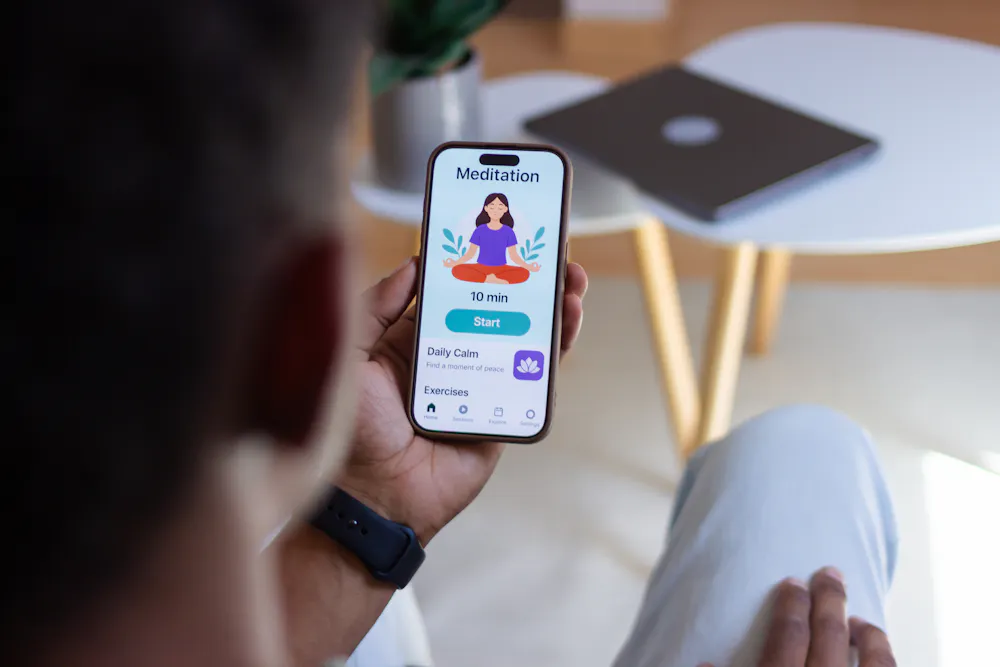
Back view of a person using a meditation app on a smartphone.
Guided meditation apps were one of the first forms of digital therapy.
IsiMS/E+ via Getty Images

Where AI comes in

Whether your brain is spiraling, sulking or just needs a nap, there’s a chatbot for that. But can AI really help your brain process complex emotions? Or are people just outsourcing stress to silicon-based support systems that sound empathetic?

And how exactly does AI therapy work inside our brains?

Most AI mental health apps promise some flavor of cognitive behavioral therapy, which is basically structured self-talk for your inner chaos. Think of it as Marie Kondo-ing, the Japanese tidying expert known for helping people keep only what “sparks joy.” You identify unhelpful thought patterns like “I’m a failure,” examine them, and decide whether they serve you or just create anxiety.

But can a chatbot help you rewire your thoughts? Surprisingly, there’s science suggesting it’s possible. Studies have shown that digital forms of talk therapy can reduce symptoms of anxiety and depression, especially for mild to moderate cases. In fact, Woebot has published peer-reviewed research showing reduced depressive symptoms in young adults after just two weeks of chatting.

These apps are designed to simulate therapeutic interaction, offering empathy, asking guided questions and walking you through evidence-based tools. The goal is to help with decision-making and self-control, and to help calm the nervous system.

The neuroscience behind cognitive behavioral therapy is solid: It’s about activating the brain’s executive control centers, helping us shift our attention, challenge automatic thoughts and regulate our emotions.

The question is whether a chatbot can reliably replicate that, and whether our brains actually believe it.

A user’s experience, and what it might mean for the brain

“I had a rough week,” a friend told me recently. I asked her to try out a mental health chatbot for a few days. She told me the bot replied with an encouraging emoji and a prompt generated by its algorithm to try a calming strategy tailored to her mood. Then, to her surprise, it helped her sleep better by week’s end.

As a neuroscientist, I couldn’t help but ask: Which neurons in her brain were kicking in to help her feel calm?

This isn’t a one-off story. A growing number of user surveys and clinical trials suggest that cognitive behavioral therapy-based chatbot interactions can lead to short-term improvements in mood, focus and even sleep. In randomized studies, users of mental health apps have reported reduced symptoms of depression and anxiety – outcomes that closely align with how in-person cognitive behavioral therapy influences the brain.

Several studies show that therapy chatbots can actually help people feel better. In one clinical trial, a chatbot called “Therabot” helped reduce depression and anxiety symptoms by nearly half – similar to what people experience with human therapists. Other research, including a review of over 80 studies, found that AI chatbots are especially helpful for improving mood, reducing stress and even helping people sleep better. In one study, a chatbot outperformed a self-help book in boosting mental health after just two weeks.

While people often report feeling better after using these chatbots, scientists haven’t yet confirmed exactly what’s happening in the brain during those interactions. In other words, we know they work for many people, but we’re still learning how and why.

AI chatbots don’t cost what a human therapist costs – and they’re available 24/7.

Red flags and risks

Apps like Wysa have earned FDA Breakthrough Device designation, a status that fast-tracks promising technologies for serious conditions, suggesting they may offer real clinical benefit. Woebot, similarly, runs randomized clinical trials showing improved depression and anxiety symptoms in new moms and college students.

While many mental health apps boast labels like “clinically validated” or “FDA approved,” those claims are often unverified. A review of top apps found that most made bold claims, but fewer than 22% cited actual scientific studies to back them up.

In addition, chatbots collect sensitive information about your mood metrics, triggers and personal stories. What if that data winds up in third-party hands such as advertisers, employers or hackers, a scenario that has occurred with genetic data? In a 2023 breach, nearly 7 million users of the DNA testing company 23andMe had their DNA and personal details exposed after hackers used previously leaked passwords to break into their accounts. Regulators later fined the company more than $2 million for failing to protect user data.

Unlike clinicians, bots aren’t bound by counseling ethics or privacy laws regarding medical information. You might be getting a form of cognitive behavioral therapy, but you’re also feeding a database.

And sure, bots can guide you through breathing exercises or prompt cognitive reappraisal, but when faced with emotional complexity or crisis, they’re often out of their depth. Human therapists tap into nuance, past trauma, empathy and live feedback loops. Can an algorithm say “I hear you” with genuine understanding? Neuroscience suggests that supportive human connection activates social brain networks that AI can’t reach.

So while in mild to moderate cases bot-delivered cognitive behavioral therapy may offer short-term symptom relief, it’s important to be aware of their limitations. For the time being, pairing bots with human care – rather than replacing it – is the safest move.

The Conversation

Pooja Shree Chettiar does not work for, consult, own shares in or receive funding from any company or organization that would benefit from this article, and has disclosed no relevant affiliations beyond their academic appointment.

ref. The AI therapist will see you now: Can chatbots really improve mental health? – https://theconversation.com/the-ai-therapist-will-see-you-now-can-chatbots-really-improve-mental-health-259360

Wildfire smoke can make your outdoor workout hazardous to your health – an exercise scientist explains how to gauge the risk

Source: The Conversation – USA (3) – By John C. Quindry, Professor of Integrative Physiology and Athletic Training, University of Montana

Air pollution from wildfire smoke can worsen heart and lung disease. helivideo/iStock via Getty Images Plus

As the summer’s sunny days take hold, many people turn to outdoor exercise.

But in parts of North America, pleasant weather often aligns with wildfire season. As summers get drier, both the frequency and the intensity of wildfires have grown, producing more polluting smoke.

A fire’s smoke can spread across several states, leaving people at risk for the health consequences of air pollution.

Exercisers and health experts are asking whether the benefits of outdoor exercise are negated when the skies are hazy with wildfire smoke.

How does air pollution make people sick?

Air pollution’s components depend on its source. For instance, traffic-related air pollution consists largely of vehicle exhaust and brake and tire wear, while industrial pollution contains significant amounts of ozone.

Wildfires produce huge quantities of airborne particles, also called fine particulate matter. These particles are less than 2.5 micrometers in diameter – about a tenth the size of a pollen grain.

Particles of that size, which air quality experts refer to as PM2.5, raise serious health concerns because they are tiny enough to be carried to the air sacs in the deepest parts of the lungs. From there, they can cross into the blood stream, leading to bodywide inflammation – essentially, the immune system’s fight response – which can promote or aggravate multiple chronic illnesses.

Research shows that long-term exposure to wildfire smoke is linked to lung diseases, heart disease and other conditions. Since these illnesses take decades to develop, scientists think that the health problems caused by wildfire smoke inhalation accumulate after years of exposure.

One-time smoke exposures may have cumulative effects

My research team and others are investigating how short-term smoke exposure might also influence long-term health outcomes such as heart and lung diseases.

Particulate matter from wildfire smoke can aggravate chronic illnesses.

To estimate the effects of exposure from a single fire event, environmental scientists can study a variety of factors such as immune system markers of inflammation, signs of physiologic stress and changes in heart, blood vessel and nervous system function. How exactly smoke exposures worsen disease is still poorly understood, but these immediate responses in the body may also be linked to developing chronic disease.

In a study published in June 2025, my colleagues and I examined these outcomes in healthy participants who exercised during a wildfire simulation in our air inhalation lab. The air was filtered to contain high concentrations of PM2.5 particles produced by burning local pine trees – the equivalent to being downwind of a major wildfire.

We asked 20 generally healthy participants in their mid-20s to exercise on a stationary cycle at about half their maximum effort for two hours while breathing the smoke. We found that participants’ blood vessel and nervous system function declined immediately after their smoky exercise session. These stress indicators bounced back to normal within an hour of returning to a clean air environment.

Half of our study participants had a heightened response to physiological stress, which scientists think may signify a heightened risk of chronic diseases. We selected them based on a stress test administered before the experiment: Specifically, their blood pressure spiked when their hands were dipped in ice water for two minutes. The stress-responsive participants experienced significantly stronger declines in blood vessel and nervous system function than people in the typical response group, suggesting that exercise in a very smoky climate may affect some people more than others.

While it isn’t possible to predict who is most at risk, our study underscores the need to think carefully about exposure to wildfire smoke.

How smoky is too smoky for outdoor exercise?

Unfortunately, precise air quality thresholds based on factors such as age and medical condition do not exist. But some simple guidelines and considerations can help.

The first step is to check the air quality where you live at the government website AirNow. It uses a scale called the Air Quality Index, created by the Environmental Protection Agency in 1999 – which ranks air quality regionally on a scale from 0 to 500. The website is searchable by ZIP code. The reading for a given region reflects the contribution of several pollutants, including PM2.5 levels.

Scale for interpreting AirNow air quality readings
The Air Quality Index ranks air quality at six levels.
U.S. Environmental Protection Agency

When the air quality is ranked “good,” the decision is simple – get out there and enjoy the outdoors. And there is little debate that people should generally limit their outdoor exposure when air quality levels cross into the “unhealthy” threshold – or at least be aware that doing so poses health risks.

The risks and benefits of exercising outdoors when air quality is in the “moderate” and “unhealthy for sensitive” ranges are less clear, particularly for people who don’t have chronic health conditions.

Gauging your risk

One major factor in deciding when and whether to exercise outdoors is your health status. AirNow recommends that people with chronic conditions err on the side of caution and remain indoors when smoke levels cause the air quality rating to approach the “unhealthy for sensitive” category.

That advice may be obvious for people with diagnosed lung conditions such as asthma or chronic obstructive pulmonary disease, given that particles from wildfire smoke aggravate the lungs. But studies suggest it’s true for milder disease states, too. For example, a large study of people with elevated but not clinically high blood pressure indicated that those who lived downwind of air pollution were more likely to develop high blood pressure and, ultimately, heart disease.

Another consideration is the time of day. As the afternoon heats up, the column of air we breathe expands, diluting the particulate counts. And afternoon winds frequently blow stagnant air out of the valleys and downtown areas where particulate matter can concentrate during the cooler parts of the day. That means evening workouts may be safer than early-morning ones, though direct confirmation with air quality readings is key.

Also important is the intensity at which you exercise. Higher-intensity exercise means deeper, more frequent breathing, which likely elevates your exposure to harmful air. So you might choose a shorter jog over a longer run when air quality is moderate or poor.

My lab is currently working to quantify how much pollution a person breathes in while exercising in smoky conditions, based on their exercise intensity, exercise duration and local particulate counts. This line of research is still in its infancy, but our early findings and other published research suggest that when wildfire smoke puts air quality into the “moderate” and “unhealthy for sensitive” range, people can dial down the effects of smoke exposure by decreasing their exercise intensity or the time they spend outside.

The Conversation

John C. Quindry received funding from the United States Department of Agriculture Forest Service and the National Institutes of Health – INBRE/RAIN.

ref. Wildfire smoke can make your outdoor workout hazardous to your health – an exercise scientist explains how to gauge the risk – https://theconversation.com/wildfire-smoke-can-make-your-outdoor-workout-hazardous-to-your-health-an-exercise-scientist-explains-how-to-gauge-the-risk-255812

Jimmy Swaggart’s rise and fall shaped the landscape of American televangelism

Source: The Conversation – USA (3) – By Diane Winston, Professor and Knight Center Chair in Media & Religion, USC Annenberg School for Communication and Journalism

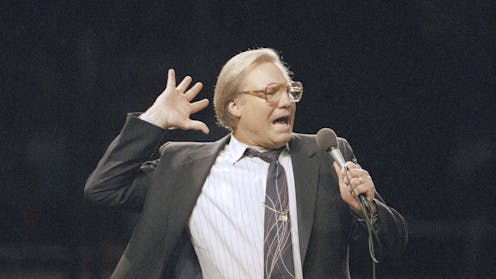
Rev. Jimmy Swaggart preaches at the Los Angeles Memorial Sports Arena on March 29, 1987. AP Photo/Mark Avery, file

Jimmy Swaggart, one of the most popular and enduring of the 1980s televangelists, died on July 1, 2025, but his legacy lives.

Along with Jerry Falwell and Pat Robertson, he drew an audience in the millions, amassed a personal fortune and introduced a new generation of Americans to a potent mix of religion and politics.

Swaggart was an old-time evangelist whose focus was “saving souls.” But he also preached on conservative social issues, warning followers about the evils of abortion, homosexuality and godless communism.

[Swaggart also denounced] what he called “false cults,” including Catholicism, Judaism and Mormonism. In fact, his denunciations of other religions, as well as his attacks on rival preachers, made him a more polarizing figure than his politicized brethren.

As a reporter, I covered Swaggart in the 1980s. Now, as a scholar of American religion, I argue that while Swaggart did not build institutions like Falwell’s Moral Majority or Robertson’s 700 Club, he helped to spread right-wing positions on social issues, such as sexual orientation and abortion, and to shape the image of televangelists in popular culture..

Swaggart’s cousins

Born into a hardscrabble life in a small Louisiana town, Swaggart grew up alongside his cousins Jerry Lee Lewis, the future rockabilly pioneer, and future country singer Mickey Gilley.

All three loved music and singing. They polished their playing on an uncle’s piano and sneaked into African American nightclubs to hear the jazz and blues forbidden by their parents.

A man playing the piano in front of a huge crowd.
Jimmy Swaggart delivering a sermon at the Flora Blanca Stadium in El Salvador.
Cindy Karp/Getty Images

While Gilley and Lewis turned their musical talent into recording and performing careers, Swaggart felt called to the ministry. He dropped out of high school, married at 17, began preaching at 20 and was ordained at 26.

He was licensed by the Assemblies of God, a Pentecostal denomination that believes the Holy Spirit endows believers with spiritual gifts that include speaking in tongues and faith healing.

The glory years

Pentecostals were nicknamed Holy Rollers because of their tendency to shake, quake and roll on the floor when feeling the Holy Spirit. Their preachers excelled at rousing audiences’ ardor, and Swaggart commanded the stage better than most. He paced, pounced and poured forth sweat while begging listeners to turn from sin and accept Jesus.

Starting small, he drew crowds while preaching on a flatbed trailer throughout the South. His following grew, and in 1969 he opened the Family Worship Center in Baton Rouge.

A man holding a briefcase in one hand stands next to a sign on a wall that says, 'Jimmy Swaggart Evangelistic Association.'
Evangelist Jimmy Swaggart leaves his office complex in Baton Rouge, La., on Jan. 7, 1977.
AP Photo

At capacity, the church held 10,000 worshippers, who represented a broad swath of America: young girls and grannies, white and Black, bankers and farmers. His sermons began calmly but built to a fever pitch. CBS newsman Dan Rather once called him the “country’s greatest speaker.”

During services, Swaggart also sang and played piano. In 1982, Newsweek magazine noted his musical chops, naming him the “King of Honky Tonk Heaven.” His music crossed gospel, country and honky-tonk – songs with a strong rhythmic beat – and he sold 17 million albums over his lifetime.

By 1975, Swaggart’s on-stage charisma powered the launch of a television ministry that would reach millions within a decade. Viewers were captivated by his soulful tunes and fire-and-brimstone sermons. At its height, Swaggart’s show was televised in 140 countries, including Peru, the Philippines and South Africa.

His ministry also became the largest mail-order business in Louisiana, selling books, tapes, T-shirts and biblical memorabilia. Thanks to the US$150 million raised annually from donations and sales, Swaggart lived in an opulent mansion, possessed a private jet previously owned by the Rockefellers, sported a yellow gold vintage Rolex and drove a Jaguar.

The downfall

Swaggart disliked competition and had a history of humiliating rival preachers. Wary of the Rev. Marvin Gorman, a Pentecostal minister whose church also was in Louisiana, Swaggart accused the man of adultery. Gorman admitted his infidelity and was defrocked.

Gorman had heard rumors about Swaggart’s own indiscretions, and he and his son decided to tail the famed evangelist. In 1988, they caught Swaggart at a motel with a prostitute, and Gorman reported the incident to Swaggart’s denomination. He also gave news outlets photos of Swaggart and the prostitute. In a tearful, televised apology, Swaggart pleaded for a second chance.

While his fans were willing, the Assemblies of God had conditions: Swaggart received the standard two-year suspension for sexual immorality. Defying the ruling, Swaggart went back to work after three months, and the denomination defrocked him.

A woman lying curled up on carpeted steps with her head in her arms.
A parishioner overcome with grief lies on steps to the altar after Jimmy Swaggart’s confession of sexual indiscretions.
Thomas S. England/Getty Images

Swaggart might have succeeded as an independent minister, but in 1991 the police stopped his car for driving on the wrong side of the road. Inside they found the preacher with a prostitute. This time, Swaggart did not ask for forgiveness. Instead, he informed his congregation, “The Lord told me it’s flat none of your business.”

Afterward, Swaggart never regained his former standing. His mail-order business dried up, donations fell, and attendance at services cratered. But up until his death, he kept on, in his own words, as an “old-fashioned, Holy Ghost-filled, shouting, weeping, soul-winning, Gospel-preaching preacher.”

Swaggart’s legacy

Swaggart, like other 1980s televangelists, brought right-wing politics into American homes. But unlike Jerry Falwell and Pat Robertson, Swaggart was less interested in winning elections than saving souls. In fact, when Robertson considered a presidential run in 1988, Swaggart initially tried to dissuade him – then changed his mind and supported him.

Swaggart’s calls for a return to conservative Christian norms live on – not just in Sunday sermons but also in today’s world of tradwives, abortion restrictions and calls to repeal gay marriage. His music lives on, too. The day before he died, the Southern Gospel Music Association Hall of Fame inducted him as a member.

But his legacy also survives in popular culture. In recent years, both reality television and scripted series have starred preachers shaped in the image of Swaggart and his peers. Most exaggerate his worst characteristics for shock and comedic effect.

Preachers of L.A.,” a 2013 reality show that profiled six Los Angeles pastors, featured blinged-out ministers whose sermons mixed hip-hop with the Bible. The fictional “Greenleaf” followed the scandals of an extended family’s Memphis megachurch, while “The Righteous Gemstones,” a dark spoof of Southern preachers, turned a family ministry into a site for sex, murder and moneymaking.

But these imitations can’t match the reality. Swaggart was a larger-than-life minister whose story – from small-town wannabe to disgraced pastor, to preaching to those who would listen – had it all: sex, politics, music and religion.

For those who want a taste of the real thing, The King of Honky Tonk Heaven lives on. You can see his old services and Bible studies streaming daily on his network.

The Conversation

Diane Winston does not work for, consult, own shares in or receive funding from any company or organization that would benefit from this article, and has disclosed no relevant affiliations beyond their academic appointment.

ref. Jimmy Swaggart’s rise and fall shaped the landscape of American televangelism – https://theconversation.com/jimmy-swaggarts-rise-and-fall-shaped-the-landscape-of-american-televangelism-260377

Dune patterns in California desert hold clues that help researchers map Mars’ shifting sands

Source: The Conversation – USA – By Lauren Berger, Ph.D. Student in Geology, Texas A&M University

The author did some of her fieldwork at the Algodones Dunes in California. Ryan Ewing

Our two-person team loaded the car with a GPS, a drone, notebooks, sample bags, a trowel and a flat spatula lovingly called a scoopula. Then we drove 30 minutes in our rented truck from Yuma, Arizona, to the Algodones Dunes, a sandy field bordering California, Arizona and Mexico. The day was sunny, with a strong breeze. Turning off the highway, we carefully headed onto a gravelly path that acted as our road.

After making decent – if bumpy – progress, we pulled off onto the sand flats and drove slowly toward the dunes, worried we might get stuck in the sand. Having arrived on the outskirts of the Algodones, we stopped and loaded our backpacks, then set off into the desert on foot.

An image of desert sand.
The coarse- and fine-grained sand at the Algodones Dunes.
Lauren Berger

It was November 2022. As a graduate student at Texas A&M University, I was beginning part of my Ph.D. research with my adviser, geology professor Ryan Ewing. We were looking for coarse-grained sand ripples, which are patterned piles of sand shaped by wind. Sand ripples and sand dunes are types of aeolian bedforms, which are wind-created geologic features.

Aeolian bedforms are common on Earth and across the solar system, including on Mars, Venus, Pluto, the Saturn moon Titan, the Neptune moon Triton, and Comet 67P. These geological features, among the first landforms observed by remote images of planetary surfaces, are robust indicators of a world’s wind patterns.

A woman in the desert, near a tripod and a GPS target.
Flying a drone at Algodones. Note the GPS on the tripod, and a GPS target on the ground, which was also a landing pad for the drone.
Ryan Ewing

Measuring sand patterns in person

The shapes and patterns of aeolian bedforms can reveal the environmental conditions that created them.

Two sizes of the same bedform, such as small dunes on top of big dunes, are called compound bedforms. I study compound bedforms at two scales – the meter- and centimeter-sized coarse-grained ripples at the dunes here on Earth, and the kilometer- and meter-sized dunes on Mars.

At the Algodones, I measured the height of each large coarse-grained sand ripple and the distance between neighboring ripples. Then we flew our drone low and steady, above the ripples, to create high-resolution images. The drone data allows us to do further measurements on the ripples later, back at my desk.

On that day, I learned an essential rule of fieldwork in the desert: Don’t forget a shovel. Otherwise, if your vehicle gets stuck, as ours did, you’ll have to dig it out by hand. Luckily for us, a dune buggy driver passing by helped us out and we were able to get back to Yuma in time for dinner.

Four aerial photographs of sand ripples.
High-resolution drone images of the sand ripples at Algodones.
Lauren Berger

My introduction to Mars

I first became interested in aeolian bedforms during my sophomore year of college, when I interned at the NASA Jet Propulsion Laboratory. My job was to view surface images of Mars and then map the sand ripples in the regions where Perseverance, the Mars rover, might land. I assessed the areas where ripples could be hazards – places where the rover could get stuck in the sand, the way our rental truck did in the Algodones.

I mapped those sand ripples on Mars for two years. But while I mapped, I became fascinated with the patterns the ripples made.

A black and white aerial image of a dune on Mars.
A potential compound dune on Mars.
NASA/JPL-Caltech

Now, as a graduate student and aspiring planetary geologist, my time is split between work in the field and at my computer, where I have stitched together the drone’s photographs of the Algodones to create a large image of the entire study area. I then look for compound dunes on the Martian surface in images taken by the Mars reconnaissance orbiter’s context camera.

Scientists already know about Earth’s weather patterns, sand grain size and wind data. By measuring different parts of bedforms on both planets – such as their height, shape and spacing – I can compare the similarities and differences of the bedforms to find clues to the wind patterns, grains and atmosphere on Mars. Slowly but surely, as I listen to Studio Ghibli soundtracks, I’m creating the first database of compound dunes on Mars.

A black and white aerial images of dune fields on Mars.
Two dune fields on Mars, both inside an impact crater.
NASA/JPL-Caltech

Developing this database is essential to the proposed human mission to Mars. Dust storms are frequent, and some can encircle the entire planet. Understanding aeolian bedforms will help scientists know where to put bases so they don’t get buried by moving sand.

It is wonderful to spend an afternoon ping-ponging all over a planet that’s 140 million miles from us, seeing gorgeous terrain while I try to answer questions about the compound dunes on Mars. How common are they? Where do they form? How do they compare to those on Earth? I hope to answer these questions as I work toward earning my Ph.D in geology.

The Conversation

Lauren Berger receives funding from NASA FINESST. Lauren Berger would like to acknowledge the help of her mentors Dr. Ryan Ewing (NASA Johnson Space Center), Dr. Marion Nachon (Texas A&M University), and Dr. Julia Reece (Texas A&M University).

ref. Dune patterns in California desert hold clues that help researchers map Mars’ shifting sands – https://theconversation.com/dune-patterns-in-california-desert-hold-clues-that-help-researchers-map-mars-shifting-sands-251761

Trump’s ‘big’ bill gives millions of taxpayers a new charitable tax break, but whether it will help nonprofits is unclear

Source: The Conversation – USA (2) – By Daniel Hungerman, Professor of Economics, University of Notre Dame

Tax policy changes can influence how much Americans donate. Douglas Rissing/iStock via Getty Images Plus

The multitrillion-dollar bill that President Donald Trump signed into law on July 4, 2025, will change how the U.S. tax code treats charitable donations. It also has several tax provisions that affect some colleges, universities and other nonprofits. The Conversation U.S. asked Daniel Hungerman, an economist who studies charitable activities and public policy, to explain how these tax policies could influence charitable giving and affect nonprofits.

What will change for donors?

The consequences generally vary depending on how much money a donor gives to charity. They also depend on whether a donor claims the standard deduction – as about 90% of U.S. taxpayers have done since the 2017 tax reforms took effect during the first Trump administration – or itemizes their tax returns.

Anyone taking the standard deduction, which will rise in 2025 to US$15,750 for an individual and $31,500 for married couples filing jointly, will get a new broadly available tax break of up to $1,000 for giving to a charitable nonprofit if they file on their own. Married couples filing jointly may deduct $2,000 from their taxable income if they give at least that amount to charity. To put this into sharper perspective, the average middle-income household gives about $3,300 annually.

Americans who give a bit more than the typical donor – say, between $5,000 and $20,000 – will see major changes too. In some places, it will become easier for people to deduct more of the amount they pay in state and local taxes from their federal taxes – at least for a few years. Those taxpayers may also deduct their charitable giving from their income when they file their taxes.

But there’s a new catch. People who itemize their taxes can’t claim the charitable deduction unless they give at least the equivalent of 0.5% of their adjusted gross income to charity. For example, someone who earns $100,000 a year would have to donate at least $500 to qualify for this tax break.

A similar new catch will apply to corporate donations: Unless corporations give at least 1% of their taxable income to charity, they will no longer get a charitable tax deduction.

The tax law also revises a rule that limits how much the biggest donors can give to charity and still get a tax break.

What could that mean for charitable giving?

Based on my research on tax policies and donations, I don’t expect the $1,000 charitable deduction for taxpayers who take the standard deduction to boost giving. The government has tried this before.

The first time was in the 1980s. Starting in 1982, people taking the standard deduction could take a charitable deduction. The amount changed annually. In 1984, for example, it was $75 – $236 in 2025 dollars. Congress ended this experiment with the 1986 tax reforms.

There was also a temporary $300 charitable deduction for people who took the standard deduction in 2020.

The results were underwhelming both times, for two reasons.

First, the maximum size of those tax breaks was too small in those earlier efforts. Many people were already giving enough to max out this new benefit. When that happens, the government is giving up tax revenue without encouraging people to donate more.

To be fair, there are a couple of reasons that things might be better this time. First, $1,000 in 2025 – or $2,000 for married couples filing jointly – is more money than the $300 deduction in 2020. Also, this time it is permanent. A permanent provision gives charities time to publicize the bill and people time to learn about it.

Another concern with this bill is that Americans who have not given to charity in the past might not begin to open their wallets but will still try to get the new $1,000 charitable deduction anyway by lying about it on their tax returns. There is evidence that a growing number of taxpayers try to game the tax system this way. The only way to stave off that sort of tax evasion would require additional work by the IRS, costing more tax dollars.

This part of the tax law also sends a message that giving is not just for the wealthy, but that everyone can do it and get a tax break for it. That could help halt or reverse a decline in gifts from people who aren’t rich. And it makes me wonder whether a charitable deduction for people who don’t itemize their tax returns will work better this time around.

What’s happening to higher education?

The government will raise its tax on the income earned by the endowments held by some colleges and universities from 1.4% to as much as 8%. The system is complicated and hinges on how large an endowment is per student enrolled. Colleges attended by fewer than 3,000 students don’t have to pay this tax.

Endowments are pooled financial investments that belong to a nonprofit. Those assets usually come from donations, and the income they earn typically flows into the nonprofit’s budget.

Several prominent schools are bracing for higher taxes. Yale University, for example, says it will have to pay $280 million once this goes into effect.

The higher endowment tax is unlikely to raise a whole lot of tax revenue, but it could force some schools to scale back financial aid, hike tuition or freeze hiring.

What about K-12 schools?

Perhaps the most significant change will be a new federal K-12 educational tax credit. Starting in 2027, it will be available to help offset the cost of private K-12 school tuition or other educational expenses, such as homeschooling. If someone makes a $1 gift to a nonprofit scholarship-granting organization – which would then deliver those funds to the school the donor designates – the government will cut their tax bill by $1. This tax credit can be worth up to $1,700 per year.

Many details about how this system would work are yet to be determined.

I believe that this provision could mark another step in the transformation of how private schools are funded in the United States. Beyond that, many private schools are run by churches, and many churches running schools already get large amounts of their funding from vouchers issued by state and local governments. Ultimately, private K-12 education could become an increasing source of revenue for churches.

What about nonprofits that provide social services?

Even if the megabill boosts charitable giving, nonprofits providing social services are likely to find themselves financially squeezed.

That’s because the bill also cuts spending and tightens eligibility restrictions on the Supplemental Nutrition Assistance Program, also known as food stamps, and Medicaid, the public health insurance program that mainly covers people who are low-income or have disabilities.

I have researched the effects of the welfare reforms President Bill Clinton signed into law in 1996. One of my findings was that when the government cut spending on safety net programs by a dollar, charities, including churches, stepped in to provide 25 cents of services or more. But for every extra dollar needed to compensate for lost government spending, donors only gave 5 cents more.

Another concern is that this bill makes permanent increases in the standard deduction – which I’ve found to have historically lowered charitable giving considerably. Perhaps the deduction for people who don’t itemize their tax returns, together with the state-and-local-taxes change, will counteract this trend. But it is certainly possible that Americans will give less to charity starting in 2025 compared with a world where there were no Trump tax reforms at all.

The Conversation

Daniel Hungerman is a professor at the University of Notre Dame, and a Research Associate at the National Bureau of Economic Research.

ref. Trump’s ‘big’ bill gives millions of taxpayers a new charitable tax break, but whether it will help nonprofits is unclear – https://theconversation.com/trumps-big-bill-gives-millions-of-taxpayers-a-new-charitable-tax-break-but-whether-it-will-help-nonprofits-is-unclear-260379

How Philadelphia’s sanitation strike differed from past labor disputes in the city

Source: The Conversation – USA – By Francis Ryan, Associate Professor of Labor Studies and Employment Relations, Rutgers University

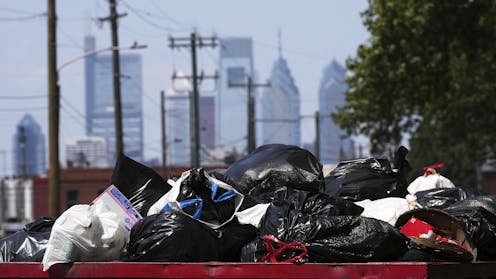
Trash piled up in Philadelphia during the 8-day strike that ended July 9, 2025. AP Photo/Matt Slocum

The Philadelphia municipal workers strike ended after eight days in the early hours of July 9, 2025.

The American Federation of State, County and Municipal Employees District Council 33 union’s 9,000 blue-collar workers, including sanitation workers, 911 dispatchers, city mechanics and water department staff, were called back to work immediately. The deal involves a three-year contract with 3% annual raises and an additional step in the union pay scale for veteran workers.

The Conversation U.S. asked Francis Ryan, a professor of labor studies at Rutgers University and author of “AFSCME’s Philadelphia Story: Municipal Workers and Urban Power in Philadelphia in the Twentieth Century,” about the history of sanitation strikes in Philly and what made this one unique.

Has anything surprised you about this strike?

This strike marked the first time in the history of labor relations between the city of Philadelphia and AFSCME District Council 33 union where social media played a significant role in how the struggle unfolded.

The union got their side of the story out on Instagram and other social media platforms, and citizens took up or expressed sympathy with their cause.

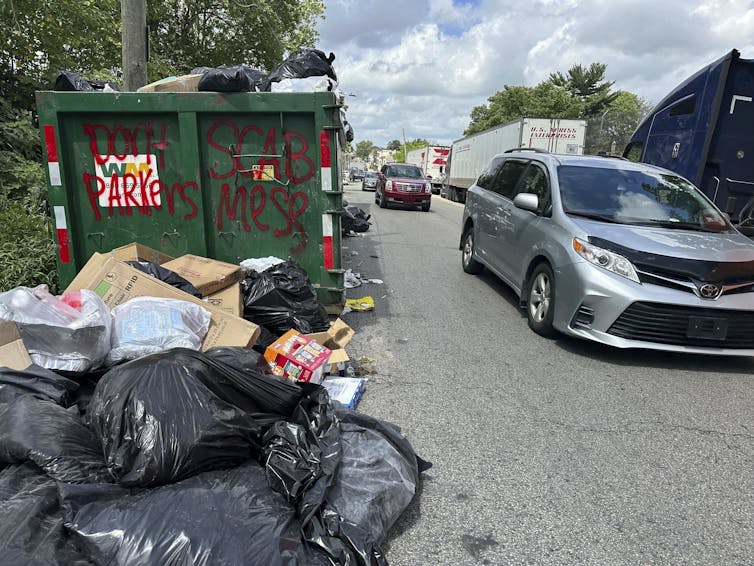
Piles of garbage on the street beside a green dumpster spray-painted with 'Don't Scab Parker's Mess'
Some city residents referred to the garbage buildup sites as ‘Parker piles.’
AP Photo/Tassanee Vejpongsa

How successful are trash strikes in Philly or other US cities?

As I describe in my book, Philadelphia has a long history of sanitation strikes that goes back to March 1937. At that time, a brief work stoppage brought about discussions between the city administration and an early version of the current union.

When over 200 city workers were laid off in September 1938, city workers called a week-long sanitation strike. Street battles raged in West Philadelphia when strikers blocked police-escorted trash wagons that were aiming to collect trash with workers hired to replace the strikers.

Philadelphia residents, many of whom were union members who worked in textile, steel, food and other industries, rallied behind the strikers. The strikers’ demands were met, and a new union, AFSCME, was formally recognized by the city.

This strike was a major event because it showed how damaging a garbage strike could be. The fact that strikers were willing to fight in the streets to stop trash services showed that such events had the potential for violence, not to mention the health concerns from having tons of trash on the streets.

There was another two-week trash strike in Philadelphia in 1944, but there wouldn’t be another for more than 20 years.

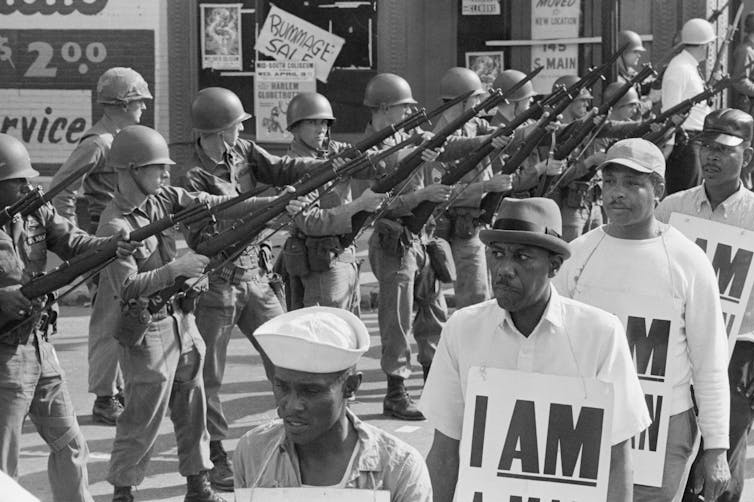
However, a growing number of sanitation strikes popped up around the country in the 1960s, the most famous being the 1968 Memphis sanitation strike.

Black-and-white photo of a line of Black men walking past a row of white soldiers in uniform with bayonets fixed
Black sanitation workers peacefully march wearing placards reading ‘I Am A Man’ during the 1968 sanitation strike in Memphis, Tenn.
Bettmann via Getty Images

In Memphis, Tennessee, a majority African American sanitation workforce demanded higher wages, basic safety procedures and recognition of their union. Rev. Martin Luther King Jr. rallied to support the Memphis workers and their families as part of his Poor Peoples’ Campaign, which sought to organize working people from across the nation into a new coalition to demand full economic and political rights.

On April 4, 1968, King was assassinated. His death put pressure on Memphis officials to settle the strike, and on April 16 the strikers secured their demands.

Following the Memphis strike, AFSCME began organizing public workers around the country, and through the coming years into the 1970s, there were sanitation strikes and slowdowns across the nation including in New York, Atlanta, Cleveland and Washington. Often, these workers, who were predominantly African American, gained the support of significant sections of the communities they served and secured modest wage boosts.

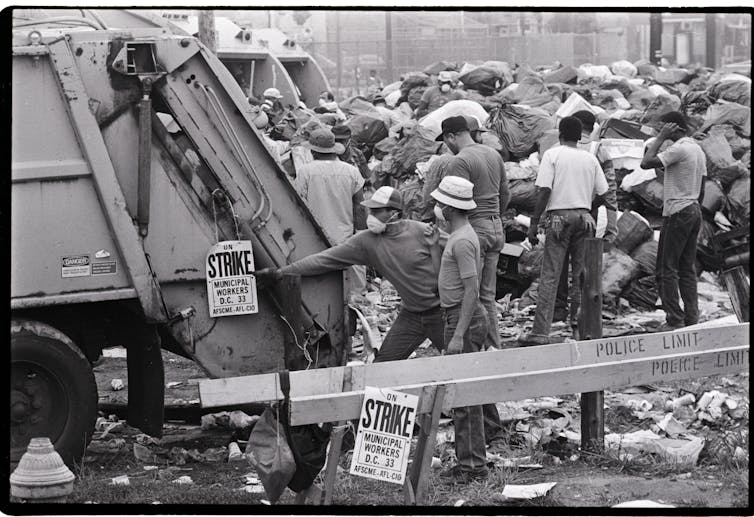
By the 1980s, such labor actions were becoming fewer. In 1986, Philadelphia witnessed a three-week sanitation strike that ended with the union gaining some of its wage demands, but losing on key areas related to health care benefits.

Black-and-white photo of men standing alongside a huge pile of trash and two trash trucks
Workers begin removing mounds of trash after returning to work after an 18-day strike in Philadelphia in July 1986.
Bettmann via Getty Images

How do wages and benefits for DC33 workers compare to other US cities?

District Council 33 President Greg Boulware has said that the union’s members make an average salary of US$46,000 per year. According to MIT’s Living Wage Calculator, that is $2,000 less than what a single adult with no kids needs to reasonably support themselves living in Philadelphia.

Prior to this deal, sanitation workers who collect curbside trash earned a salary of $42,500 to $46,200, or $18-$20 an hour. NBC Philadelphia reported that those wages are the lowest of any of the major cities they looked at. Hourly wages in the other cities they looked at ranged from $21 an hour in Dallas to $25-$30 an hour in Chicago.

Unlike other eras, the fact that social media makes public these personal narratives and perspectives – like from former sanitation worker Terrill Haigler, aka “Ya Fav Trashman” – is shaping the way many citizens respond to these disruptions. I saw a level of support for the strikers that I believe is unprecedented going back as far as 1938.

What do you think was behind this support?

The COVID-19 pandemic made people more aware of the role of essential workers in society. If the men and women who do these jobs can’t afford their basic needs, something isn’t right. This may explain why so many people saw things from the perspective of striking workers.

At the same time, money is being cut from important services at the federal, state and local levels. The proposed gutting of Philadelphia’s mass transit system by state lawmakers is a case in point. Social media allows people to make these broader connections and start conversations.

This article was originally published on July 8, 2025, and has been updated to include details of the strike’s resolution.

The Conversation

Francis Ryan does not work for, consult, own shares in or receive funding from any company or organization that would benefit from this article, and has disclosed no relevant affiliations beyond their academic appointment.

ref. How Philadelphia’s sanitation strike differed from past labor disputes in the city – https://theconversation.com/how-philadelphias-sanitation-strike-differed-from-past-labor-disputes-in-the-city-260676

‘Big Beautiful Bill’ will have Americans paying higher prices for dirtier energy

Source: The Conversation – USA (2) – By Daniel Cohan, Professor of Civil and Environmental Engineering, Rice University

Congress passed Donald Trump’s tax and spending bill on July 3, 2025. Kevin Carter/Getty Images

When congressional Republicans decided to cut some Biden-era energy subsidies to help fund their One Big Beautiful Bill Act, they could have pruned wasteful subsidies while sparing the rest. Instead, they did the reverse. Americans will pay the price with higher costs for dirtier energy.

The nearly 900-page bill that President Donald Trump signed on July 4, 2025, slashes incentives for wind and solar energy, batteries, electric cars and home efficiency while expanding subsidies for fossil fuels and biofuels. That will leave Americans burning more fossil fuels despite strong public and scientific support for shifting to renewable energy.

As an environmental engineering professor who studies ways to confront climate change, I think it is important to distinguish which energy technologies could rapidly cut emissions or need a financial boost to become viable from those that are already profitable but harm the environment. Unfortunately, the Republican bill favors the latter while stifling the former.

A large piece of mechanical equipment picks up coal from the ground.
The Spring Creek Mine in Decker, Mont., is just one mine in the Powder River Basin, the most productive coal-producing region in the U.S.
AP Photo/Matthew Brown

Cuts to renewable electricity

Wind and solar power, often paired with batteries, provide over 90% of the new electricity added nationally and around the world in recent years. Natural gas turbines are in short supply, and there are long lead times to build nuclear power plants. Wind and solar energy projects – with batteries to store excess power until it’s needed – offer the fastest way to satisfy growing demand for power. Recent technological breakthroughs put geothermal power on the verge of rapid growth.

However, the One Big Beautiful Bill Act rescinds billions of dollars that the Inflation Reduction Act, enacted in 2022, devoted to boosting domestic manufacturing and deployments of renewable energy and batteries.

It accelerates the phaseout of tax credits for factories that manufacture equipment needed for renewable energy and electric vehicles. That would disrupt the boom in domestic manufacturing projects that had been stimulated by the Inflation Reduction Act.

Efforts to build new wind and solar farms will be hit even harder. To receive any tax credits, those projects will need to commence construction by mid-2026 or come online by the end of 2027. The act preserves a slower timeline for phasing out subsidies for nuclear, geothermal and hydrogen projects, which take far longer to build than wind and solar farms.

However, even projects that could be built soon enough will struggle to comply with the bill’s restrictions on using Chinese-made components. Tax law experts have called those provisions “unworkable,” since some Chinese materials may be necessary even for projects built with as much domestic content as possible. For example, even American-made solar panels may rely on components sourced from China or Chinese-owned companies.

Princeton University professor Jesse Jenkins estimates that the bill will mean wind and solar power generate 820 fewer terawatt-hours in 2035 than under previous policies. That’s more power than all U.S. coal-fired power plants generated in 2023.

That’s why BloombergNEF, an energy research firm, called the bill a “nightmare scenario” for clean energy proponents.

However, one person’s nightmare may be another man’s dream. “We’re constraining the hell out of wind and solar, which is good,” said U.S. Rep. Chip Roy, a Texas Republican who is backed by the oil and gas industry.

Workers install solar panels on a roof.
Federal tax credits for homeowners who install solar panels will now expire at the end of 2025.
AP Photo/Michael Conroy

Electric cars and efficiency

Cuts fall even harder on Americans who are trying to reduce their carbon footprints and energy costs. The quickest phaseout comes for tax credits for electric vehicles, which will end on Sept. 30, 2025. And since the bill eliminates fines on car companies that fail to meet fuel economy standards, other new cars are likely to guzzle more gas.

Tax credits for home efficiency improvements such as heat pumps, efficient windows and energy audits will end at the end of 2025. Homeowners will also lose tax credits for installing solar panels at the end of the year, seven years earlier than under the previous law.

The bill also rescinds funding that would have helped cut diesel emissions and finance clean energy projects in underserved communities.

A car connects to a large metal box with a thick cable.
Federal tax credits for buying electric vehicles will end on Sept. 30, 2025.
AP Photo/Jae C. Hong

Support for biofuels and fossil fuels

Biofuels and fossil fuels fared far better under the bill. Tens of billions of dollars will be spent to extend tax credits for biofuels such as ethanol and biodiesel.

Food-based biofuels do little good for the climate because growing, harvesting and processing crops requires fertilizers, pesticides and fuel. The bill would allow forests to be cut to make room for crops because it directs agencies to ignore the effects of biofuels on land use.

Meanwhile, the bill opens more federal lands and waters to leasing for oil and gas drilling and coal mining. It also slashes the royalties that companies pay to the federal government for fuels extracted from publicly owned land. And a new tax credit will subsidize metallurgical coal, which is mainly exported to steelmakers overseas.

The bill also increases subsidies for using captured carbon dioxide to extract more oil and gas from the ground. That makes it less likely that captured emissions will only be sequestered to combat climate change.

Summing it up

With fewer efficiency improvements, fewer electric vehicles and less clean power on the grid, Princeton’s Jenkins projects that the law will increase household energy costs by over $280 per year by 2035 above what they would have been without the bill. The extra fossil fuel-burning will negate 470 million tons of anticipated emissions reductions that year, a 7% bump.

The bill will also leave America’s clean energy transition further behind China, which is deploying more solar and wind power and electric vehicles than the rest of the world combined.

No one expected President Joe Biden’s Inflation Reduction Act to escape unscathed with Republicans in the White House and dominating both houses of Congress, even though many of its projects were in Republican-voting districts. Still, pairing cuts to clean energy with support for fossil fuels makes Trump’s bill uniquely harmful to the world’s climate and to Americans’ wallets.

This article includes some material previously published on June 10, 2025.

The Conversation

Daniel Cohan receives research funding from the Carbon Hub at Rice University. He previously received research funding from Project InnerSpace, the Mitchell Foundation, the National Science Foundation, NASA, and the Environmental Protection Agency.

ref. ‘Big Beautiful Bill’ will have Americans paying higher prices for dirtier energy – https://theconversation.com/big-beautiful-bill-will-have-americans-paying-higher-prices-for-dirtier-energy-260588

How the Catholic Church helped change the conversation about capital punishment in the United States

Source: The Conversation – USA (3) – By Austin Sarat, William Nelson Cromwell Professor of Jurisprudence and Political Science, Amherst College

Helen Prejean has been one of the most high-profile opponents of the death penalty for decades. Brooks Kraft LLC/Sygma via Getty Images

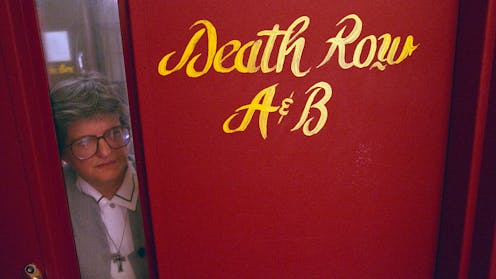
Thirty years ago, the film “Dead Man Walking” had its debut in movie theaters around the United States. It was a box office hit, and critics lavished it with praise. Lead actress Susan Sarandon won an Academy Award for her portrayal of Sister Helen Prejean, the spiritual adviser to a death row inmate played by Sean Penn.

But the film’s impact went far beyond the artistic realm. It exposed a mass audience to a perspective on the death penalty informed by the Catholic faith of a devout, if somewhat unconventional, nun.

The actual Sister Helen had published her memoir, “Dead Man Walking,” two years before, raising her profile as an activist against the death penalty. Recalling her experience outside the execution chamber of Elmo Patrick Sonnier, one of the people she counseled, Prejean later wrote, “I touched him in the only way I could. I told him: ‘Look at my face. I will be the face of Christ, the face of love for you.’”

She made it her mission to show that “everybody’s worth more than the worst thing they’ve ever done in their life.” As she once told an interviewer, “Jesus said, ‘Love your enemy.’ Jesus didn’t say, ‘Execute the hell out of the enemy.’”

That belief was featured prominently in the film and offered a counterpoint to the popular tough-on-crime rhetoric of the 1990s. Back then, 80% of the American public supported capital punishment.

Today, that is no longer true. Support for the death penalty has declined to around 50%.

As a death penalty scholar, I have studied those changes. The church’s anti-death penalty teaching has helped provide both a moral foundation and political respectability for those working to end the death penalty.

The 1995 film was inspired by Prejean’s memoir.

Church teachings

But that teaching is relatively new in the church, dating back to the past half-century. For most of its history, the Catholic Church did not oppose the death penalty.

During the Middle Ages, the church endorsed the execution of heretics and held firm that secular authorities could and should put people to death for serious crimes. And in the early 20th century, Vatican City’s penal code permitted the death penalty for anyone who attempted to kill a pope. Pope Paul VI changed that in 1969.

When John Paul II became pope a decade later, he pushed the church further away from its historic embrace of the death penalty, calling it “cruel and unnecessary.” And in 2018, under Pope Francis, the Vatican revised the section on capital punishment in the Catechism, the summary of Catholic doctrine.

The death penalty “is inadmissible because it is an attack on the inviolability and dignity of the person,” and deprives “the guilty of the possibility of redemption,” the new version says. This teaching committed the church to work for its abolition.

In his 2020 encyclical Fratelli Tutti, Francis stated that the death penalty is “inadequate from a moral standpoint and no longer necessary from that of penal justice.” In 2024, he again called for “the abolition of the death penalty, a provision at odds with Christian faith and one that eliminates all hope of forgiveness and rehabilitation.”

Impact in the US

The changed situation of capital punishment in this country is largely attributable to a change in the strategy and tactics of the abolitionist movement. Instead of talking about the death penalty in abstract terms, activists began to focus on the day-to-day realities of its administration.

Today, advocates in what I have called the “new abolitionism” focus on the prospect of executing the innocent, racial discrimination in capital sentencing, and the financial costs associated with the death penalty. Among Catholics working to end the death penalty, however, the moral questions about state killing have long been a central focus.

The U.S. Conference of Catholic Bishops focused on morality in its own campaign to end capital punishment, which was launched in 2005. And from time to time, popes have made special appeals to government officials in the U.S., asking them to spare the life of someone awaiting execution.

A close-up photo of the chest of a man wearing a priest's collar and a red sticker that says 'abolish the death penalty.'
A seminarian attends a public hearing in Connecticut in 2011 on legislation to replace capital punishment with life in prison for certain murders.
AP Photo/Jessica Hill

Legal historian Sara Mayeux argues that Catholic anti-death penalty activism in the U.S. has been less intense than anti-abortion work. Nevertheless, the impact of the church is reflected in the fact that in the past 50 years, Catholic support for capital punishment fell more than it did among evangelicals, mainline Protestants, Black Protestants and other religious groups.

In December 2024, as the term of President Joe Biden, a devout Catholic, was coming to a close, the Catholics Mobilizing Network, which advocates against capital punishment, called on the president to commute the sentences of the 40 people then on federal death row. Francis, too, publicly prayed for their sentences to be commuted.

Biden did so for 37 federal death row inmates, changing their sentences to life in prison without parole.

Anti-death penalty superstar

As the church’s official position against capital punishment has evolved, Prejean has been a consistent voice asking Americans to recognize and respond to the humanity of all those touched by murder. She is, in words I am sure she would resist, a superstar in the movement, thanks to her countless public appearances, interviews, protests and actions to lobby legislators.

A seated woman in a black blazer and a cross necklace gestures as she speaks with other people seated in a circle.
Sister Helen Prejean talks to detainees during a discussion of ‘Dead Man Walking’ at Department Of Corrections Division 11 in Chicago.
AP Photo/Nam Y. Huh

In 2021, she wrote, “I’m on fire to abolish government killing because I’ve seen it far too close-up, and I have a pretty good idea by now how it works – or doesn’t.”

Thirty years ago, “Dead Man Walking” gave its viewers a chance to see capital punishment “close-up.” It didn’t preach or hit anyone over the head with an overtly abolitionist message. Instead, it asked viewers to see the death penalty from many sides and make up their own minds about whether anyone should be put to death, even for the most horrible crimes.

Between then and now, America has undertaken precisely the kind of conversation about capital punishment that the film exemplified and inspired.

The Conversation

Austin Sarat does not work for, consult, own shares in or receive funding from any company or organization that would benefit from this article, and has disclosed no relevant affiliations beyond their academic appointment.

ref. How the Catholic Church helped change the conversation about capital punishment in the United States – https://theconversation.com/how-the-catholic-church-helped-change-the-conversation-about-capital-punishment-in-the-united-states-260481

Trump administration’s lie detector campaign against leakers is unlikely to succeed and could divert energy from national security priorities

Source: The Conversation – USA – By Brian O’Neill, Professor of Practice, International Affairs, Georgia Institute of Technology

The Department of Homeland Security and FBI are reportedly using polygraphs aggressively to identify dissenters. standret/Getty Images

The Trump administration has recently directed that a new wave of polygraphs be administered across the executive branch, aimed at uncovering leaks to the press.

As someone who has taken roughly a dozen polygraphs during my 27-year career with the CIA, I read this development with some skepticism.

Polygraphs carry an ominous, almost mythological reputation among Americans. The more familiar and unofficial term – lie detector tests – likely fuels that perception. Television crime dramas have done their part, too, often portraying the device as an oracle for uncovering the truth when conventional methods fail.

In those portrayals, the polygraph is not merely a tool – it’s a window into the soul.

Among those entering government service, especially in national security, the greater anxiety is not the background check but passing the polygraph. My advice is always the same: Don’t lie.

It’s the best – and perhaps only – guidance for a process that most assessments have concluded is a more subjective interpretation than empirical science.

Why the polygraph persists

Polygraphs are “pseudo-scientific” in that they measure physiological responses such as heart rate, blood pressure and perspiration. The assumption is that liars betray themselves through spikes in those signals. But this presumes a kind of psychological transparency that simply doesn’t hold up. A person might sweat and tremble simply from fear, anger or frustration – not deceit.

There also are no specific physiological reactions associated with lying. The National Academy of Sciences in 2003, and the American Psychological Association in a 2004 review, concluded that the polygraph rests more on theater than fact. Recent assessments, published in 2019, have reached the same conclusion.

Accordingly, polygraph results are not generally admissible in U.S. courts. Only a handful of states – such as Georgia, Arizona and California – permit their use even under limited conditions. And they typically require that both parties agree to admission and a judge to approve it. Unconditional admissibility remains the exception, not the rule.

And yet, inside many national security agencies, polygraphs remain central to the clearance process – a fact I observed firsthand during my time overseeing personnel vetting and analytic hiring within the intelligence community.

While not treated as conclusive, polygraph results often serve as a filter. A candidate’s visible discomfort – or the examiner’s subjective judgment that a response seems evasive – can stall or end the hiring process. For instance, I know that government agencies have halted clearances after an examiner flagged elevated reactions to questions about past drug use or foreign contacts, even when no disqualifying behavior was ultimately documented.

Exterior view of a federal building with an American flag flying on a mast.
The FBI’s J. Edgar Hoover headquarters building in Washington in 2016.
AP Photo/Cliff Owen

In some cases, an examiner’s suggestion that a chart shows an anomaly has led otherwise strong applicants to volunteer details they hadn’t planned to share – such as minor security infractions, undeclared relationships, or casual drug use from decades earlier – that, while not disqualifying on their own, reshape how their trustworthiness is perceived.

The polygraph’s power lies in creating the conditions under which deception is confessed.

A predictable pattern

No administration has been immune to the impulse to investigate leaks. The reflex is bipartisan and familiar: An embarrassing disclosure appears in the press – contradicting official statements or exposing internal dissent – and the White House vows to identify and punish the source. Polygraphs are often part of this ritual.

During his first term, Trump intensified efforts to expose internal dissent and media leaks. Department guidelines were revised to make it easier for agencies to obtain journalists’ phone and email records, and polygraphs were reportedly used to pressure officials suspected of talking to the press. That trend has continued – and, in some areas, escalated.

Recent policies at the Pentagon now restrict unescorted press access, revoke office space for major outlets and favor ideologically aligned networks. The line between legitimate leak prevention and the surveillance or sidelining of critical press coverage has grown increasingly blurred.

At agencies such as the Department of Homeland Security and the FBI, polygraphs are reportedly being used more frequently – and more punitively – to identify internal dissenters. Even “cold cases,” such as the leak of the Supreme Court’s Dobbs opinion ahead of its overturning of Roe v. Wade, have been reopened, despite prior investigations yielding no definitive source.

Government reaction varies

Not all leaks are treated the same. Disclosures that align with official narratives or offer strategic advantage may be quietly tolerated, even if unauthorized. Others, especially those that embarrass senior officials or reveal dysfunction, are more likely to prompt formal investigation.

In 2003, for example, the leak of CIA officer Valerie Plame’s identity – widely seen as retaliation for her husband’s criticism of the Iraq War – triggered a federal investigation. The disclosure embarrassed senior officials, led to White House aide Scooter Libby’s conviction for perjury, later commuted, and drew intense political scrutiny.

A man dressed in a suit and tie rides in the back seat of a car.
Lewis Libby, Vice President Dick Cheney’s chief of staff, rides in the backseat of a limousine on Oct. 27, 2005, in McLean, Va.
Win McNamee/Getty Images

Leaks involving classified material draw the sharpest response when they challenge presidential authority or expose internal disputes. That was the case in 2010 with Chelsea Manning, whose disclosure of diplomatic cables and battlefield reports embarrassed senior officials and sparked global backlash. Government reaction often depends less on what was disclosed than on who disclosed it – and to what effect.

A narrow set of disclosures, such as those involving espionage or operational compromise, elicit broad consensus as grounds for prosecution. But most leaks fall outside that category. Most investigations fade quietly. The public rarely learns what became of them. Occasionally, there is a vague resignation, but direct accountability is rare.

What the future holds

Trump’s polygraph campaign is not likely to eliminate leaks to the press. But they may have a chilling effect that discourages internal candor while diverting investigative energy away from core security priorities.

Even if such campaigns succeed in reducing unauthorized disclosures, they may come at the cost of institutional resilience. Historically, aggressive internal enforcement has been associated with declining morale and reduced information flow – factors that can hinder adaptation to complex threats.

Some researchers have suggested that artificial intelligence may eventually offer reliable tools for detecting deception. One recent assessment raised the possibility, while cautioning that the technology is nowhere near operational readiness.

For now, institutions will have to contend with the tools they have – imperfect, imprecise and more performative than predictive.

The Conversation

As a former US intelligence officer, I am required to submit any written draft, before sharing it with other persons, for prepublication review. I submitted this draft to CIA’s Prepublication Review Board, which responded on 11 June: “No classified information was identified. Therefore, no changes are required for publication or sharing with others.”

ref. Trump administration’s lie detector campaign against leakers is unlikely to succeed and could divert energy from national security priorities – https://theconversation.com/trump-administrations-lie-detector-campaign-against-leakers-is-unlikely-to-succeed-and-could-divert-energy-from-national-security-priorities-259128

My city was one of hundreds expecting federal funds to help manage rising heat wave risk – then EPA terminated the grants

Source: The Conversation – USA – By Brian G. Henning, Professor of Philosophy and Environmental Studies and Science, Gonzaga University

The Pacific Northwest heat wave of 2021 left cities across Washington state sweltering in dangerous temperatures. AP Photo/Ted S. Warren

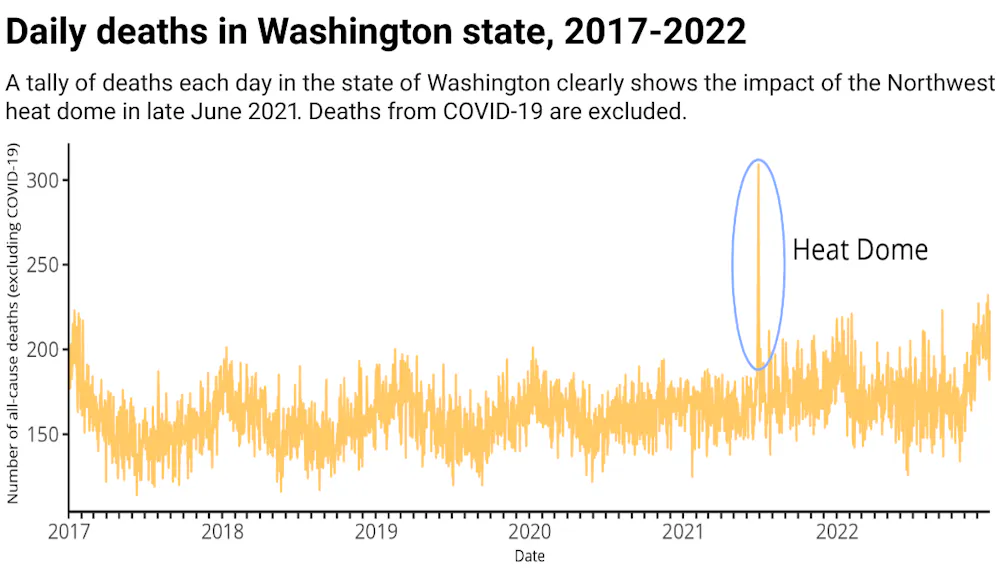
In June 2021, a deadly heat wave pushed temperatures to 109 degrees Fahrenheit (43 Celsius) in Spokane, Washington, a northern city near the Idaho border where many homes weren’t built with central air conditioning.

As the heat lingered for over a week, 19 people died in Spokane County and about 300 visited hospitals with signs of heat-related illnesses.

Scientists say it’s not a matter of if, but when, another deadly heat wave descends on the region. To help save lives, the city teamed up with my university, Gonzaga, to start preparing for a hotter future.

A line chart shows a big spike in deaths the week of the heat dome.
A chart of all deaths, excluding COVID-19, shows the extraordinary impact the 2021 heat dome had in Washington.
‘In the Hot Seat’ report, 2022

We were excited and relieved when the community was awarded a US$19.9 million grant from the Environmental Protection Agency to help it take concrete steps to adapt to climate change and boost the local economy in the process. The grant would help establish resilience hubs with microgrids and help residents without air conditioning install energy-efficient cooling systems. The city doesn’t have the means to make these improvements on its own, even if they would save lives and money in the long run.

Less than a year later, the Trump administration abruptly terminated the funding.

Spokane’s grant wasn’t the only one eliminated – about 350 similar grants that had been awarded to help communities across the country manage climate changes, from extreme heat and wildfire smoke to rising seas and flooding, were also terminated on the grounds that they don’t meet the White House’s priorities. Many other grants to help communities have also been terminated.

Many of the communities that lost funding are like Spokane: They can’t afford to do this kind of work on their own.

Why cities like Spokane need the help

Like many communities in the American West, Spokane was founded in the late 19th century on wealth from railroads and resource extraction, especially gold, silver and timber.

Today, it is a city of 230,000 in a metro area of a half-million people, the largest on the I-90 corridor between Minneapolis and Seattle. In many ways, Spokane could be on the cusp of a renaissance.

In January 2025, the U.S. Department of Commerce announced a $48 million grant to develop a tech hub that could put the Inland Northwest on a path to become a global leader in advanced aerospace materials. But then, in May, the Trump administration rescinded that grant as well.

The lost grants left the economy – and Spokane’s ability to adapt fast enough to keep up with climate changes – uncertain.

Spokane Falls includes a 25-foot dam and falls that tumble below it
Heat waves are becoming a growing risk in Spokane, known for its river and falls that tumble near downtown.
Roman Eugeniusz/Wikimedia Commons, CC BY-SA

This is not a wealthy area. The median household income is nearly $30,000 less than the state average. More than 13 out of every 100 people in Spokane live in poverty, above the national average, and over 67% of the children are eligible for free or reduced lunch.

The city is a light blue island in a dark red sea, politically speaking, with a moderate mayor. Its congressional district has voted Republican by wide margins since 1995, the year that then-House Speaker Tom Foley lost his reelection bid.

Lessons from the 2021 heat dome

The 2021 heat wave was a catalyzing event for the community. The newly formed Gonzaga Institute for Climate, Water and the Environment brought together a coalition of government and community partners to apply for the EPA’s Climate and Environmental Justice Community Change Grant Program. The grants, funded by Congress under the Inflation Reduction Act of 2022, were intended to help communities most affected by pollution and climate change build adaptive capacity and boost the safety of their residents.

A key lesson from the 2021 heat dome was that temporary, or pop-up, cooling centers don’t work well. People just weren’t showing up. Our research found that the best approach is to strengthen existing community facilities that people already turn to in moments of difficulty.

Half the $19.9 million award was for outfitting five resilience hubs in existing libraries and community centers with solar arrays and battery backup microgrids, allowing them to continue providing a safe, cool space during a heat wave if the power shuts down.

The locations and plans for five resilience hubs to serve Spokane, and the infrastructure they would receive.
Gonzaga Institute for Climate, Water and the Environment

Another $8 million in grant funding was meant to provide 300 low- to moderate-income homeowners with new high-efficiency electric heat pump heating, ventilation and air conditioning systems, providing more affordable utility bills while improving their ability to cool their homes and reducing fossil fuel emissions.

Communities are left with few options

Now, this and other work is at risk in Spokane and cities and towns like it around the country that also lost funding.

According to the Trump administration, the program – designed to help hundreds of communities around the country become safer – was “no longer consistent with EPA funding priorities.”

A class action lawsuit was recently filed over the termination of the grants by a coalition that includes Earth Justice and the Southern Environmental Law Center. If the case is successful, Spokane could see its funding restored.

Meanwhile, the city and my team know we have to move fast, with whatever money and other resources we can find, to help Spokane prepare for worsening heat. We formed the Spokane Climate Resilience Collaborative – a partnership between community organizations, health officials and the city – as one way to advance planning for and responding to climate hazards such as extreme heat and wildfire smoke.

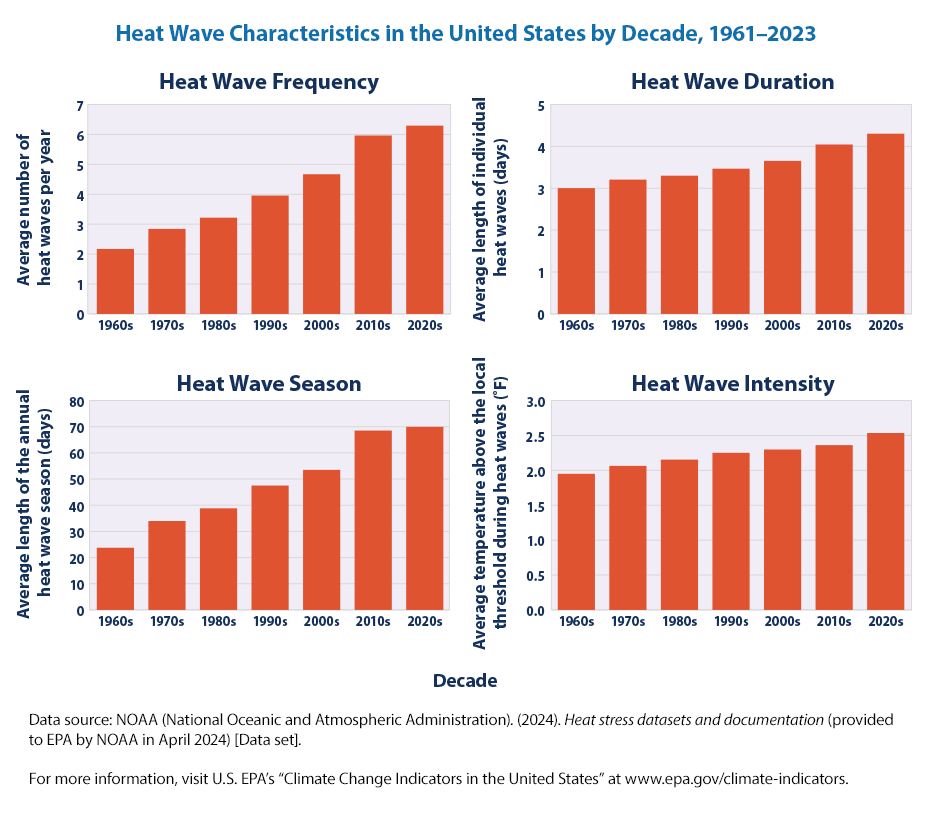
As concentrations of heat-trapping gasses accumulate in the atmosphere, both the frequency and severity of heat waves increase. It is only a matter of time before another deadly heat dome arrives.

The Conversation

Brian G. Henning receives funding from the Environmental Protection Agency.

ref. My city was one of hundreds expecting federal funds to help manage rising heat wave risk – then EPA terminated the grants – https://theconversation.com/my-city-was-one-of-hundreds-expecting-federal-funds-to-help-manage-rising-heat-wave-risk-then-epa-terminated-the-grants-259009