Sulfur-based batteries could offer electric vehicles a greener, longer-range option

Source: The Conversation – USA (2) – By Golareh Jalilvand, Assistant Professor of Chemical Engineering, University of South Carolina

Sulfur is abundant and inexpensive, making it an attractive ingredient for making batteries. Alanna Dumonceaux/Design Pics Editorial/Universal Images Group via Getty Images

Picture an electric car that could go 600, 700 or even 1,000 miles on a single charge. That’s much farther than the longest-range electric vehicles on the U.S. market, according to Car and Driver magazine – and twice as far the official rating for the long-range, rear-wheel-drive Tesla Model 3, which has a maximum rated range of 363 miles.

Current EVs use lithium-ion batteries, which are also found in smartphones, laptops and even large-scale energy storage systems connected to the power grid. A standard for decades, these batteries have been tweaked and improved by generations of scientists and are now close to their physical limits. Even with the best materials and most optimized designs, there is only so much energy that can be packed into a lithium-ion battery.

I’m a materials engineer who studies these batteries and seeks alternatives with better performance, improved environmental sustainability and lower cost. One promising design uses sulfur, which could boost battery capacity significantly, though some key roadblocks remain before it can be widely used.

Lithium-sulfur vs. Lithium-ion

Any battery has three basic components: a positively charged region, called the cathode; a negatively charged region, called the anode; and a substance called the electrolyte in between, through which charged atoms, also known as ions, move between the cathode and anode.

In a lithium-ion battery, the cathode is made of a metal oxide, typically containing metals such as nickel, manganese and cobalt, bonded with oxygen. The materials are layered, with lithium ions physically between the layers. During charging, lithium ions detach from the layered cathode material and travel through the electrolyte to the anode.

The anode is usually graphite, which is also layered, with room for the lithium ions to fit between them. During discharge, the lithium ions leave the graphite layers, travel back through the electrolyte and reinsert into the layered cathode structure, recombining with the metal oxide to release electricity that powers cars and smartphones.

A schematic diagram of the inner workings of a lithium-sulfur battery.
Lithium-sulfur batteries like this one have different chemistry than more commonly known lithium-ion batteries.
Egibe via Wikimedia Commons, CC BY-SA

In a lithium-sulfur battery, the lithium ions still move back and forth, but the chemistry is different. Its cathode is made of sulfur embedded in a carbon matrix that conducts electricity, and the anode is made primarily of lithium itself, rather than graphite layers with lithium in between.

During discharging, the lithium ions travel from the anode, through the electrolyte to the cathode, where – rather than sliding in between the cathode layers – they chemically convert sulfur in sequential steps to a series of compounds called lithium sulfides. During charging, the lithium ions separate from the sulfide compounds, leave the cathode behind and travel back to the anode.

The charging and discharging process for lithium-sulfur batteries is a chemical conversion reaction that involves more electrons than the same process in lithium-ion batteries. That means a lithium-sulfur battery can theoretically store much more energy than a lithium-ion battery of the same size.

Sulfur is inexpensive and abundantly available worldwide, meaning battery manufacturers do not need to rely on scarce metals such as nickel and cobalt, which are unevenly distributed on Earth and often sourced from regions such as the Democratic Republic of Congo, which has limited worker safety regulations and fair labor practices.

Those advantages could deliver batteries with far more capacity and that are cheaper and more sustainable to produce.

Why aren’t lithium-sulfur batteries widely used yet?

The biggest obstacle to mass production and use of sulfur-based batteries is durability. A good lithium-ion battery, like those in an electric vehicle, can go through thousands of cycles of discharging and recharging before its capacity starts to fade. That amounts to thousands of car rides.

But lithium-sulfur batteries tend to lose capacity much more quickly, sometimes after fewer than 100 cycles. That’s not very many trips at all.

The reason lies in the chemistry. During the chemical reactions that store and release energy in a lithium-sulfur battery, some of the lithium sulfide compounds dissolve into the liquid electrolyte of the battery.

When that happens, those amounts of both sulfur and lithium are removed from being used in any remaining reactions. This effect, known as “shuttling,” means that with each round of discharging and recharging, there are fewer elements available to release and store energy.

In the past couple of decades, research has produced improved designs. Earlier versions of these batteries lost much of their capacity within a few dozen discharge–recharge cycles, and even the best laboratory prototypes struggled to survive beyond a few hundred.

New prototypes retain more than 80% of their initial capacity even after thousands of cycles. This improvement comes from redesigning the key parts of the battery and adjusting the chemicals involved: Special electrolytes help prevent the lithium sulfides from dissolving and shuttling.

The electrodes have also been improved, using materials such as porous carbon that can physically trap the intermediate lithium sulfides, stopping them from wandering away from the cathode. This helps the discharge and recharge reactions happen without so many losses, making the reactions more efficient so the battery lasts longer.

The road ahead

Lithium-sulfur batteries are no longer fragile laboratory curiosities, but there are significant challenges before they can become serious contenders for real-world energy storage.

In terms of safety, lithium-sulfur batteries have a less volatile cathode than lithium-ion batteries, but research is continuing into other aspects of safety.

Another problem is that the more energy a lithium-sulfur battery stores, the fewer cycles of charging it can handle. That’s because the chemical reactions involved are more intense with increased energy.

This trade-off may not be a major obstacle for using these batteries in drones or grid-level energy storage, where ultrahigh energy densities are less critical. But for electric vehicles, which demand both high energy capacity and long cycle life, scientists and battery researchers still need to sort out a workable balance. That means the foundation for the next generation of lithium-sulfur batteries is likely still a few years down the road.

The Conversation

Golareh Jalilvand receives funding from NantG Power LLC, and the US Department of Energy for research on lithium-sulfur batteries.

ref. Sulfur-based batteries could offer electric vehicles a greener, longer-range option – https://theconversation.com/sulfur-based-batteries-could-offer-electric-vehicles-a-greener-longer-range-option-263896

Want to make America healthy again? Stop fueling climate change

Source: The Conversation – USA (2) – By Jonathan Levy, Professor and Chair, Department of Environmental Health, Boston University

Extreme heat can threaten human health, but it’s only one way climate change puts lives at risk. Drew Angerer/Getty Images

If you’ve been following recent debates about health, you’ve been hearing a lot about vaccines, diet, measles, Medicaid cuts and health insurance costs – but much less about one of the greatest threats to global public health: climate change.

Anybody who’s fallen ill during a heat wave, struggled while breathing wildfire smoke or been injured cleaning up from a hurricane knows that climate change can threaten human health. Studies show that heat, air pollution, disease spread and food insecurity linked to climate change are worsening and costing millions of lives around the world each year.

The U.S. government formally recognized these risks in 2009 when it determined that climate change endangers public health and welfare.

However, the Trump administration is now moving to rescind that 2009 endangerment finding so it can reverse U.S. climate progress and help boost fossil fuel industries, including lifting limits on greenhouse gas emissions from vehicles and power plants. The administration’s arguments for doing so are not only factually wrong, they’re deeply dangerous to Americans’ health and safety.

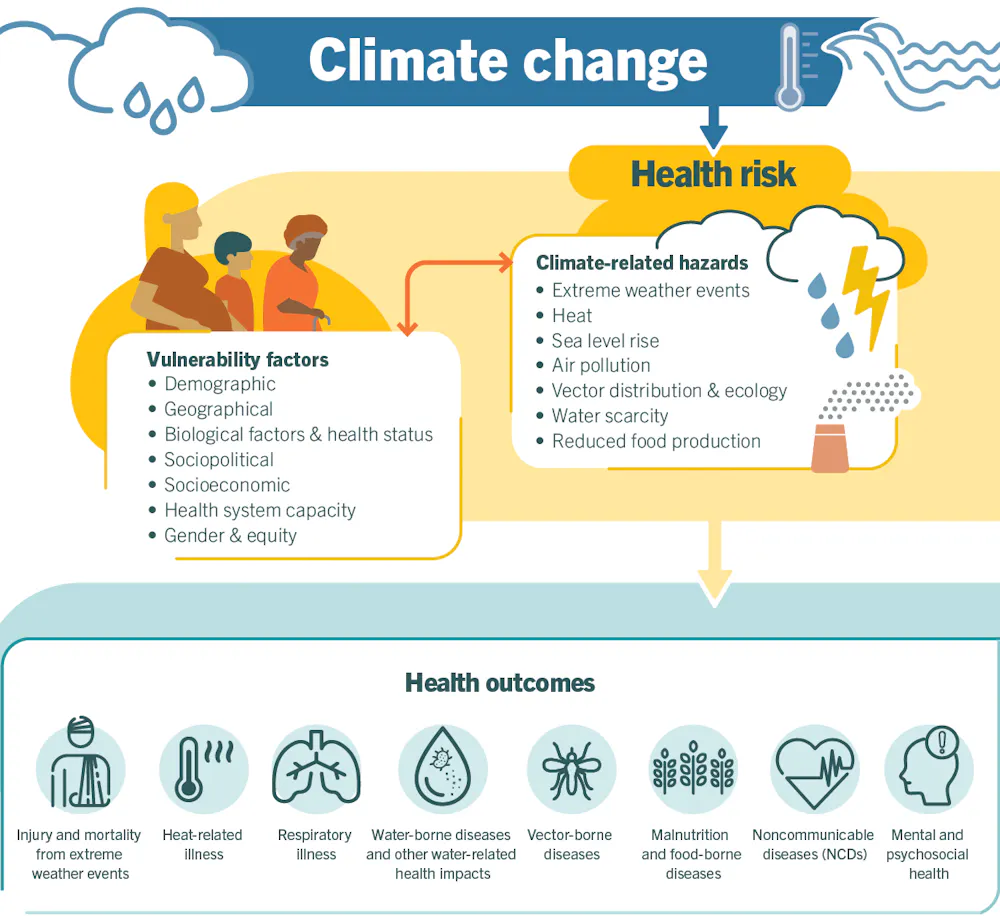
Health risks and outcomes related to climate change.
World Health Organization

As physicians, epidemiologists and environmental health scientists who study these effects, we’ve seen growing evidence of the connections between climate change and harm to people’s health. More importantly, we see ways humanity can improve health by tackling climate change.

Here’s a look at the risks and some of the steps individuals and governments can take to reduce them.

Extreme heat

Greenhouse gases from vehicles, power plants and other sources accumulate in the atmosphere, trapping heat and holding it close to Earth’s surface like a blanket. Too much of it causes global temperatures to rise, leaving more people exposed to dangerous heat more often.

Most people who get minor heat illnesses will recover, but more extreme exposure, especially without enough hydration and a way to cool off, can be fatal. People who work outside, are elderly or have underlying illnesses such as heart, lung or kidney diseases are often at the greatest risk.

Heat deaths have been rising globally, up 23% from the 1990s to the 2010s, when the average year saw more than half a million heat-related deaths. Even in the U.S., the Pacific Northwest heat dome in 2021 killed hundreds of people.

Climate scientists predict that with advancing climate change, many areas of the world, including U.S. cities such as Miami, Houston, Phoenix and Las Vegas, will confront many more days each year hot enough to threaten human survival.

Extreme weather

Warmer air holds more moisture, so climate change brings increasing rainfall and storm intensity, worsening flooding, as many U.S. communities have experienced in recent years. Warm ocean water also fuels more powerful hurricanes.

Increased flooding carries health risks, including drownings, electrocution and water contamination from human pathogens and toxic chemicals. People cleaning out flooded homes also face risks from mold exposure, injuries and mental distress.

A man carries boxes out of a house that flooded up to its second story.
Flooding from hurricanes and other extreme storms can put people at risk of injuries during the cleanup while also triggering dangerous mold growth on wet wallboard, carpets and fabric. This home flooded up to its second flood during Hurricane Irma in 2017.
Sean Rayford/Getty Images

Climate change also worsens droughts, disrupting food supplies and causing respiratory illness from dust and dry conditions as well as wildfires. And rising temperatures and aridity dry out forest and grasslands, making them more vulnerable to catching fire, which creates other health risks.

Air pollution

Wildfires, along with other climate effects, are also worsening air quality around the country.

Wildfire smoke is a toxic soup of microscopic particles (known as fine particulate matter, or PM2.5) that can penetrate deep in the lungs and hazardous compounds such as lead, formaldehyde and dioxins generated when homes, cars and other materials burn at high temperatures. Smoke plumes can travel thousands of miles downwind and trigger heart attacks and elevate lung cancer risks, among other harms.

Meanwhile, warmer conditions favor the formation of ground-level ozone, a heart and lung irritant. Burning of fossil fuels also generates dangerous air pollutants that cause a host of health problems, including heart attacks, strokes, asthma flare-ups and lung cancer.

Infectious diseases

Because they are cold-blooded organisms, insects are directly influenced by temperature. So as temperatures have risen, mosquito biting rates have risen as well. Warming also shortens the development time of disease agents that mosquitoes transmit.

Mosquito-borne dengue fever has turned up in Florida, Texas, Hawaii, Arizona and California. New York state just saw its first locally acquired case of chikungunya virus, also transmitted by mosquitoes.

A world map shows where mosquitos are most likely to transmit the dengue virus
As global temperatures rise, regions are becoming more suitable for mosquitoes to transmit dengue virus. The map shows a suitability scale, with red areas already suitable for dengue transmissions and yellow areas becoming more suitable.
Taishi Nakase, et al., 2022, CC BY

And it’s not just insect-borne infections. Warmer temperatures increase diarrhea and foodborne illness from Vibrio cholerae and other bacteria and heavy rainfall increases sewage-contaminated stormwater overflows into lakes and streams. At the other water extreme, drought in the desert Southwest increases the risk of coccidioidomycosis, a fungal infection known as valley fever.

Other impacts

Climate change can threaten health in numerous other ways. Longer pollen seasons can increase allergen exposures. Lower crop yields can reduce access to nutritious foods.

Mental health can also suffer, with anxiety, depression and post-traumatic stress following disasters, and increased rates of violent crime and suicide tied to high-temperature days.

A older man holds a door for a woman at a cooling center.
New York and many other cities now open cooling centers during heat waves to help residents, particularly older adults who might not have air conditioning at home, stay safe during the hottest parts of the day.
Angela Weiss/AFP via Getty Images

Young children, older adults, pregnant women and people with preexisting medical conditions are among the highest-risk groups. Often, lower-income people are also at greater risk because of higher rates of chronic disease, higher exposures to climate hazards and fewer resources for protection, medical care and recovery from disasters.

What can people and governments do?

As an individual, you can reduce your risk by following public health advice during heat waves, storms and wildfires; protecting yourself against tick and mosquito bites; and spending time in green space that improves your mental health.

You can also make healthy choices that reduce your carbon footprint, such as:

However, there are limits to what individuals can do alone.

Actions by governments and companies are also necessary to protect people from a warmer climate and stop the underlying causes of climate change.

Workplace safety can be addressed through rules to reduce heat exposure for people who work outdoors in industries such as agriculture and construction. Communities can open cooling centers during heat waves, provide early warning systems and design drinking water systems that can handle more intense rainfall and runoff, reducing contamination risks.

Governments can ensure that public transit is available and not overly expensive to reduce the number of vehicles on the road. They can promote clean energy rather than fossil fuels to cut emissions, which can also save money since the cost of solar energy has dropped spectacularly. In fact, both solar and wind energy are less expensive than fossil fuel energy.

Yet the U.S. government is currently going in the opposite direction, cutting support for renewable energy while subsidizing the fossil fuel industries that endanger public health.

To really make America healthy, in our view, the country can’t ignore climate change.

The Conversation

Jonathan Levy receives funding from the National Institutes of Health, the Federal Aviation Administration, the City of Boston, and the Mosaic Foundation.

Howard Frumkin has no financial conflicts of interest to report. He is a member of advisory boards (or equivalent committees) for the Planetary Health Alliance; the Harvard Center for Climate, Health, and the Global Environment; the Medical Society Consortium on Climate Change and Health; the Global Consortium on Climate and Health Education; the Yale Center on Climate Change and Health; and EcoAmerica’s Climate for Health program—all voluntary unpaid positions.

Jonathan Patz receives funding from the National Institutes of Health. He is affiliated with the Medical Society Consortium for Climate and Health, and its affiliate Healthy Climate Wisconsin.

Vijay Limaye is affiliated with the Natural Resources Defense Council.

ref. Want to make America healthy again? Stop fueling climate change – https://theconversation.com/want-to-make-america-healthy-again-stop-fueling-climate-change-269269

New technologies like AI come with big claims – borrowing the scientific concept of validity can help cut through the hype

Source: The Conversation – USA (2) – By Kai R. Larsen, Professor of Information Systems, University of Colorado Boulder

Closely examining the claims companies make about a product can help you separate hype from reality. Flavio Coelho/Moment via Getty Images

Technological innovations can seem relentless. In computing, some have proclaimed that “a year in machine learning is a century in any other field.” But how do you know whether those advancements are hype or reality?

Failures quickly multiply when there’s a deluge of new technology, especially when these developments haven’t been properly tested or fully understood. Even technological innovations from trusted labs and organizations sometimes result in spectacular failures. Think of IBM Watson, an AI program the company hailed as a revolutionary tool for cancer treatment in 2011. However, rather than evaluating the tool based on patient outcomes, IBM used less relevant measures – possibly even irrelevant ones, such as expert ratings rather than patient outcomes. As a result, IBM Watson not only failed to offer doctors reliable and innovative treatment recommendations, it also suggested harmful ones.

When ChatGPT was released in November 2022, interest in AI expanded rapidly across industry and in science alongside ballooning claims of its efficacy. But as the vast majority of companies are seeing their attempts at incorporating generative AI fail, questions about whether the technology does what developers promised are coming to the fore.

Black screen with IBM Watson logo on a Jeopardy stand with $1,200 stood between two contestants with $0 each
IBM Watson wowed on Jeopardy, but not in the clinic.
AP Photo/Seth Wenig

In a world of rapid technological change, a pressing question arises: How can people determine whether a new technological marvel genuinely works and is safe to use?

Borrowing from the language of science, this question is really about validity – that is, the soundness, trustworthiness and dependability of a claim. Validity is the ultimate verdict of whether a scientific claim accurately reflects reality. Think of it as quality control for science: It helps researchers know whether a medication really cures a disease, a health-tracking app truly improves fitness, or a model of a black hole genuinely describes how it behaves in space.

How to evaluate validity for new technologies and innovations has been unclear, in part because science has mostly focused on validating claims about the natural world.

In our work as researchers who study how to evaluate science across disciplines, we developed a framework to assess the validity of any design, be it a new technology or policy. We believe setting clear and consistent standards for validity and learning how to assess it can empower people to make informed decisions about technology – and determine whether a new technology will truly deliver on its promise.

Validity is the bedrock of knowledge

Historically, validity was primarily concerned with ensuring the precision of scientific measurements, such as whether a thermometer correctly measures temperature or a psychological test accurately assesses anxiety. Over time, it became clear that there is more than just one kind of validity.

Different scientific fields have their own ways of evaluating validity. Engineers test new designs against safety and performance standards. Medical researchers use controlled experiments to verify treatments are more effective than existing options.

Researchers across fields use different types of validity, depending on the kind of claim they’re making.

Internal validity asks whether the relationship between two variables is truly causal. A medical researcher, for instance, might run a randomized controlled trial to be sure that a new drug led patients to recover rather than some other factor such as the placebo effect.

External validity is about generalization – whether those results would still hold outside the lab or in a broader or different population. An example of low external validity is how many early studies that work in mice don’t always translate to people.

Construct validity, on the other hand, is about meaning. Psychologists and social scientists rely on it when they ask whether a test or survey really captures the idea it’s supposed to measure. Does a grit scale actually reflect perseverance or just stubbornness?

Finally, ecological validity asks whether something works in the real world rather than just under ideal lab conditions. A behavioral model or AI system might perform brilliantly in simulation but fail once human behavior, noisy data or institutional complexity enter the picture.

Across all these types of validity, the goal is the same: ensuring that scientific tools – from lab experiments to algorithms – connect faithfully to the reality they aim to explain.

Evaluating technology claims

We developed a method to help researchers across disciplines clearly test the reliability and effectiveness of their inventions and theories. The design science validity framework identifies three critical kinds of claims researchers usually make about the utility of a technology, innovation, theory, model or method.

First, a criterion claim asserts that a discovery delivers beneficial outcomes, typically by outperforming current standards. These claims justify the technology’s utility by showing clear advantages over existing alternatives.

For example, developers of generative AI models such as ChatGPT may see higher engagement with the technology the more it flatters and agrees with the user. As a result, they may program the technology to be more affirming – a feature called sycophancy – in order to increase user retention. The AI models meet the criterion claim of users considering them more flattering than talking to people. However, this does little to improve the technology’s efficacy in tasks such as helping resolve mental health issues or relationship problems.

AI sycophancy can lead users to break relationships rather than repair them.

Second, a causal claim addresses how specific components or features of a technology directly contribute to its success or failure. In other words, it is a claim that shows researchers know what makes a technology effective and exactly why it works.

Looking at AI models and excessive flattery, researchers found that interacting with more sycophantic models reduced users’ willingness to repair interpersonal conflict and increased their conviction of being in the right. The causal claim here is that the AI feature of sycophancy reduces a user’s desire to repair conflict.

Third, a context claim specifies where and under what conditions a technology is expected to function effectively. These claims explore whether the benefits of a technology or system generalize beyond the lab and can reach other populations and settings.

In the same study, researchers examined how excessive flattery affected user actions in other datasets, including the “Am I the Asshole” community on Reddit. They found that AI models were more affirming of user decisions than people were, even when the user was describing manipulative or harmful behavior. This supports the context claim that sycophantic behavior from an AI model applies across different conversational contexts and populations.

Measuring validity as a consumer

Understanding the validity of scientific innovations and consumer technologies is critical for scientists and the general public. For scientists, it’s a road map to ensure their inventions are rigorously evaluated. And for the public, it means knowing that the tools and systems they depend on – such as health apps, medications and financial platforms – are truly safe, effective and beneficial.

Here’s how you can use validity to understand the scientific and technological innovations happening around you.

Because it is difficult to compare every feature of two technologies against each other, focus on which features you value most from a technology or model. For example, do you prefer a chatbot to be accurate or better for privacy? Examine claims for it in that area, and check that it is as good as claimed.

Consider not only the types of claims made for a technology but also which claims are not made. For example, does a chatbot company address bias in its model? It’s your key to knowing whether you see untested and potentially unsafe hype or a genuine advancement.

By understanding validity, organizations and consumers can cut through the hype and get to the truth behind the latest technologies.

The Conversation

The authors do not work for, consult, own shares in or receive funding from any company or organization that would benefit from this article, and have disclosed no relevant affiliations beyond their academic appointment.

ref. New technologies like AI come with big claims – borrowing the scientific concept of validity can help cut through the hype – https://theconversation.com/new-technologies-like-ai-come-with-big-claims-borrowing-the-scientific-concept-of-validity-can-help-cut-through-the-hype-259030

Turn shopping stress into purposeful gift giving by cultivating ‘consumer wisdom’ during the holidays

Source: The Conversation – USA (2) – By Michael Luchs, JS Mack Professor of Business, William & Mary

The most meaningful gifts reflect the giver’s values and identity – and the recipient’s, too. Halfpoint images/Moment via Getty Images

Every fall I anticipate the winter holidays with almost childlike joy. I look forward to familiar traditions with friends and family, eggnog in my coffee, and the sense that everyone is feeling a little lighter and more connected.

At the same time, I feel anxious and annoyed by the manufactured sense of urgency around gift giving: the endless searching and second-guessing shaped by advertisers, retailers and cultural expectations.

Don’t get me wrong, I mostly love giving – and, yes, receiving – gifts during the holidays. But as a researcher who studies consumer psychology, I see how those same forces, amplified by constant buying opportunities and frictionless online payments, make us especially vulnerable and often unwise this time of year.

Buying behavior, including gift giving, doesn’t just reflect needs and wants but also our values. Frequently, the values we talk about are more akin to aspirational ideals. Our actual values are revealed in the seemingly inconsequential choices we make day after day – including shopping.

The cumulative effects of our spending behaviors carry enormous implications for society, the environment and everyone’s well-being – from the purchaser and recipient to people working throughout the supply chain. This makes consumer behavior an especially important place to apply the emerging social science research on wisdom. While wisdom is defined in different ways, it can be understood as seeing decisions through a broader, values-informed perspective and acting in ways that promote well-being.

Over the past decade, consumer psychology researcher David Mick and I have studied what that means when it comes to consumption. “Consumer wisdom?” you may wonder. Isn’t that an oxymoron?

But there are vast differences in how we consume – and as our research shows, this can lead to very different effects on individual well-being.

Defining consumer wisdom

Building on some of David’s earlier work, I began my own research on consumer wisdom in the summer of 2015, interviewing dozens of people across the U.S. whom others in their communities had identified as models of wisdom. Previous research guided me to settings where I could easily find people who represented different aspects of wisdom: practicality on farms in upstate New York; environmental stewardship in Portland, Oregon; and community values in Tidewater, Virginia.

I didn’t use the term “wisdom,” though. It can be intimidating, and people often define it narrowly. Instead, I spoke with people whose peers described them as exemplary decision-makers – people leading lives that considered both the present and the future, and who balanced their needs with others’ needs.

'A woman wearing a green headscarf and holding a credit card in one hand smiles as she looks down at a tablet.
Consumer wisdom helps support well-being – and not just the purchaser’s.
Fajrul Islam/Moment via Getty Images

From those conversations, David and I developed a theory of consumer wisdom. With the help of a third co-author, Kelly Haws, we validated this framework through national surveys with thousands of participants, creating the consumer wisdom scale.

The scale shows how consumer wisdom is not some lofty ideal but a set of practical habits. Some are about managing money. Some are about goals and personal philosophy, and others are about broader impact.

We have found that six dimensions capture the vast majority of what we would call consumer wisdom:

  1. Responsibility: managing resources to support a rewarding yet realistic lifestyle.
  2. Purpose: prioritizing spending that supports personal growth, health and relationships.
  3. Perspective: drawing on past experiences and anticipating future consequences.
  4. Reasoning: seeking and applying reliable, relevant information; filtering out the noise of advertising and pop culture.
  5. Flexibility: being open to alternatives such as borrowing, renting or buying used.
  6. Sustainability: spending in ways that support the buyer’s social or environmental goals and values.

These are not abstract traits. They are everyday ways of aligning your spending with your goals, resources and values.

Importantly, people with higher scores on the scale report greater life satisfaction, as well as better health, financial security and sense of meaning in life. These results hold even after accounting for known determinants of well-being, such as job satisfaction and supportive relationships. In other words, consumer wisdom makes a distinctive and underappreciated contribution to well-being.

A man and woman who appear to be in the 60s or 70s pause and look at a product as they push a grocery cart through a market.
One tenet of consumer wisdom is sustainability: Does your purchase support the world you want to live in?
Luis Alvarez/Digital Vision via Getty Images

Putting it in practice

These six dimensions offer a different lens on holiday norms – one that can reframe how to think about gifts.

Interestingly, the English word “gift” traces back to the Old Norse rune gyfu, which means generosity. It’s a reminder that true giving is not about checking boxes on referral, revenue-generating gift guides or yielding to slick promotions or fads. Generosity is about focusing on another person’s well-being and our relationship with them.

From the perspective of consumer wisdom, that means asking what will genuinely contribute to the recipient’s life. One of the most important dimensions of consumer wisdom is “purpose”: the idea that thoughtful spending can nurture personal growth, health, enjoyment and sense of connection. Out with trendy gadgets, fast fashion and clutter-creating décor or knickknacks – things that feel exciting in the moment but are quickly forgotten. In with quality headphones, a shared cooking class, a board game, and a workshop or tools to support a hobby – gifts that can spark growth, joy and deeper connection.

In my ongoing research, people have described wise gifts as those that define value from the recipient’s perspective – gifts that stay meaningful and useful over time. The wisest gifts, respondents say, also affirm the recipient’s identity, showing that the giver truly understands and values them.

Wiser consumption is learnable, measurable and consequential. By choosing gifts that reflect purpose and the original spirit of “gyfu” – true generosity – we can make the holidays less stressful. More importantly, we can make them more meaningful: strengthening relationships in ways that bring joy long after.

The Conversation

Michael Luchs received funding from the Templeton Foundation through a grant from the University of Chicago School of Divinity.

ref. Turn shopping stress into purposeful gift giving by cultivating ‘consumer wisdom’ during the holidays – https://theconversation.com/turn-shopping-stress-into-purposeful-gift-giving-by-cultivating-consumer-wisdom-during-the-holidays-265564

Star-shaped cells make a molecule that can ‘rewire’ the brains of mice with Down syndrome – understanding how could lead to new treatments

Source: The Conversation – USA – By Ashley Brandebura, Assistant Professor of Neuroscience, University of Virginia

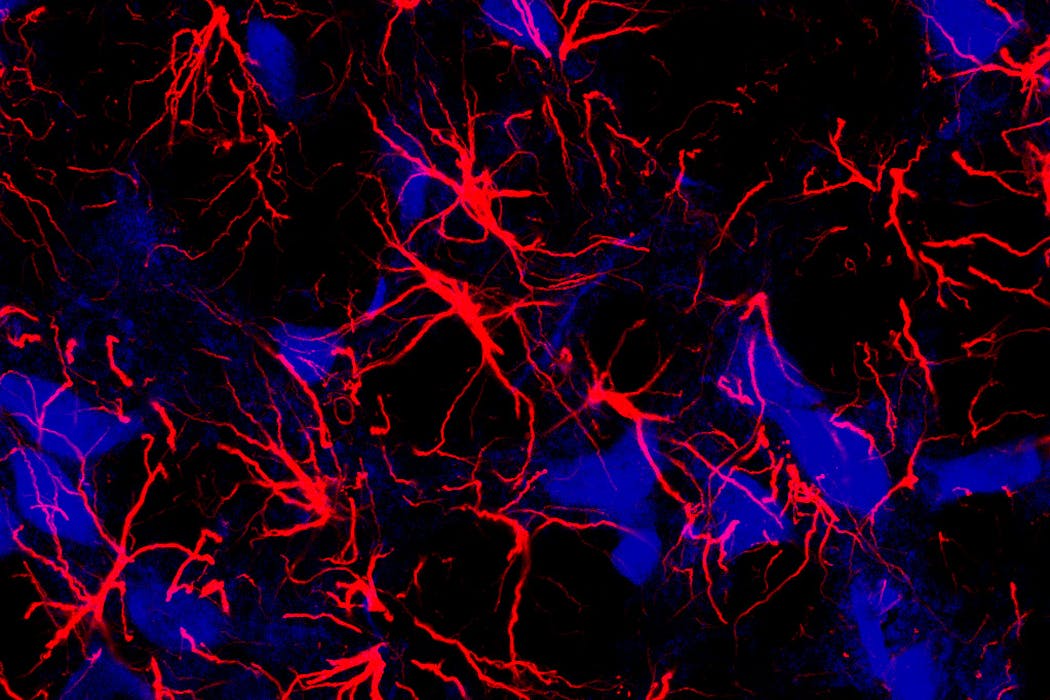
Astrocytes (red) are vital to forming neural connections. Jeffrey C. Smith Lab, National Institute of Neurological Disorders and Stroke/NIH

Delivering a connection-building protein to star-shaped cells in the brain could reverse changes to neural circuits seen in Down syndrome, according to new research my colleagues and I published in the journal Cell Reports.

Down syndrome is caused by an error in cell division during development. Individuals receive three copies of chromosome 21 instead of the typical two copies, resulting in duplicates of the genes encoded on chromosome 21. This trisomy leads to a multitude of changes to heart and immune function as well as neurodevelopmental impairments.

Changes to the structure of neurons in people with Down syndrome alter how they connect with each other. One major type of brain cell called astrocytes helps form connections between neurons. These star-shaped cells have many thin arms that extend into the spaces between neurons. They also secrete various proteins that are vital to forming the proper neural connections necessary for brain function.

Researchers have found that mouse models of several neurodevelopmental disorders, including Down syndrome, have altered levels of astrocyte proteins during development. My colleagues and I hypothesized that these changes might contribute to the changes in neural connections seen in Down syndrome. Could restoring the proper levels of some of these astrocyte proteins “rewire” the brain?

Identifying an astrocyte protein

First, we needed to pick a candidate astrocyte protein to test our hypothesis. A previous study had identified a list of astrocyte proteins that were altered in a mouse model of Down syndrome. We focused on proteins present in lower levels in Down syndrome astrocytes compared to astrocytes without the condition. We thought there might not be enough of these proteins available to help form neural connections.

Among the top 10 proteins we identified was a molecule called pleiotrophin, or Ptn. This protein is known to help guide axons – long extensions that neurons use to send information to each other – to their targets during development. So it made sense that it might also help neurons form the branching arms they use to receive information.

We found that mice unable to produce Ptn had neurons with fewer branching arms, similar to what we saw in mice with Down syndrome. This correlation implies that proper Ptn levels are necessary to affect neuron branching during brain development.

Restoring neurons in Down syndrome

Next, we wanted to know if delivering Ptn to astrocytes changes neural connections in mice with Down syndrome.

To answer that question, we packaged the gene for Ptn into a small virus with its replication genes removed. Called adeno-associated viruses, these tools allow researchers to deliver genetic material to specific targets in the body and are used for applications like gene therapy. We delivered the Ptn gene into astrocytes throughout the entire brain of adult mice with Down syndrome so we could evaluate its effects.

We focused on the visual cortex and the hippocampus, areas of the brain involved in vision and memory that are both critically affected in Down syndrome. After enhancing the ability of astrocytes to produce Ptn, we found that both regions recovered levels of neural branching density similar to those of mice without Down syndrome.

Two children sitting at a table coloring, one holding glasses aloft
Down syndrome can cause visual impairment.
yacobchuk/iStock via Getty Images Plus

Finally, we wanted to see if we could actually restore electrical activity levels in the hippocampus by increasing astrocyte Ptn levels. Measuring electrical activity can indicate whether neurons are functioning properly. After delivering the Ptn gene to the astrocytes of mice with Down syndrome, we found the electrical activity of their hippocampus restored to levels no different from mice without Down syndrome.

Together, our findings show that delivering Ptn to the astrocytes of mice can reverse changes to neuron structure and function seen in Down syndrome. While our findings are far from ready to be used in the clinic, more research could help us understand whether and how Ptn could help improve the health of human patients.

Rewiring the brain

More broadly, our findings suggest that astrocyte proteins have the potential to rewire the brain in other neurodevelopmental conditions.

Typically, adult brains have low plasticity, meaning they have a decreased capacity to form new connections between neurons. This means it can be difficult to change neural circuits in adults. Our hope is that further exploration on how astrocyte proteins can alter the adult brain could lead to new treatments for neurodevelopmental disorders like Fragile X syndrome or Rett syndrome, or to neurodegenerative diseases like Parkinson’s disease.

The Conversation

Ashley Brandebura receives funding from NIH NINDS and NIA.

ref. Star-shaped cells make a molecule that can ‘rewire’ the brains of mice with Down syndrome – understanding how could lead to new treatments – https://theconversation.com/star-shaped-cells-make-a-molecule-that-can-rewire-the-brains-of-mice-with-down-syndrome-understanding-how-could-lead-to-new-treatments-268739

Students of color are at greater risk for reading difficulties – even in kindergarten

Source: The Conversation – USA (3) – By Paul L. Morgan, Director, Institute for Social and Health Equity, University at Albany, State University of New York

The achievement gap for young readers is stark, even in kindergarten. andresr/E+ via Getty Images

Black, Hispanic and Native American students are more likely than white or Asian students to struggle with reading – and that gap emerges early, according to our new research. During kindergarten, they are more likely to score in the lowest 10% on assessments measuring skills such as letter recognition, vocabulary and recognizing common sight words. Large racial and ethnic differences in the risks for reading difficulties continue as students move through elementary school – a pattern largely explained by family income and early academic skills.

Our study, published online in November 2025 in the Journal of School Psychology, finds that about 15% of Black, Hispanic and Native American kindergartners score in the lowest 10% of reading scores, compared to 6% and 8% of white and Asian students, respectively. By fifth grade, 18%, 16% and 10% of Black, Hispanic and Native American students are struggling. The contrasting rate for white and Asian students is about 5%.

We analyzed data collected by the U.S. Department of Education’s National Center for Education Statistics from 2010-2016. This data includes direct academic assessments as well as surveys of the students and their parents, teachers and school administrators.

We used standard statistical methods to explore how a wide range of factors across homes and schools – measured during kindergarten – helped explain whether students later experienced reading difficulties. A key factor, according to our analysis, is the family’s socioeconomic status: a measure including household income and parental education levels and occupations.

Kindergartners who struggled with initial reading, math and science skills, as well as more general learning abilities such as working memory, were also at higher risk for reading difficulties throughout elementary school.

Why it matters

U.S. elementary students’ reading achievement has been declining in recent years. The gap between the highest- and lowest-scoring readers is increasing too.

Supporting these children is important. Students who wrestle with reading are more likely to later experience anxiety and depression. Adults with reading difficulties are also more likely to be incarcerated and unemployed. In one study, for example, about half of Texas prisoners were poor readers.

Because our findings suggest Black, Hispanic and Native American students are at higher risk for reading difficulties by kindergarten, students from these groups may have greater needs for early reading interventions that provide extra help with phonics, vocabulary and reading fluency. Some of these students may also have unrecognized learning disabilities.

Yet students of color are less likely to be identified with disabilities, including dyslexia – even when the students are experiencing early and significant reading difficulties.

What still isn’t known

How economic and educational policies and practices can best help lower the risks of reading difficulties is poorly understood. There is some evidence that cash transfers to financially struggling families may increase children’s later reading achievement. Poverty is also associated with lower exposure to age-appropriate books and other early literacy materials and fewer opportunities to acquire a larger vocabulary.

Our longitudinal research adds to the very limited understanding of the early economic, environmental, cognitive, academic and behavioral factors that help shape elementary students’ reading abilities. Most other studies have focused on a single grade and examined a limited set of specific skills – such as how children process sounds – instead of multiple grades and a more general set of risk factors.

More research is needed to identify the full range of reasons why elementary students begin to struggle in reading and what can be done to best help them.

The Research Brief is a short take on interesting academic work.

The Conversation

Paul L. Morgan receives funding from the National Science Foundation, the National Institute of Child Health and Human Development, and the Institute of Education Sciences.

Eric Hengyu Hu does not work for, consult, own shares in or receive funding from any company or organization that would benefit from this article, and has disclosed no relevant affiliations beyond their academic appointment.

ref. Students of color are at greater risk for reading difficulties – even in kindergarten – https://theconversation.com/students-of-color-are-at-greater-risk-for-reading-difficulties-even-in-kindergarten-249429

Under Ron DeSantis’ leadership, Florida leads the nation in executions in 2025

Source: The Conversation – USA – By Austin Sarat, William Nelson Cromwell Professor of Jurisprudence and Political Science, Amherst College

Florida has executed 15 prisoners in 2025 so far, with two more executions scheduled for November. MediaNews Group/Reading Eagle via Getty Images

After years of steady decline in the number of people executed in the United States, there has been a sharp reversal in 2025.

So far this year, 41 people have been killed in 11 states, with five more executions scheduled before the end of the year.

If all the scheduled executions are carried out, that would make 2025 the year with the most executions since 2010, when 46 inmates were put to death. That year, Texas led the way with 17 executions, while Florida carried out only one.

But this year, the Sunshine State is leading the charge. Florida has executed 15 prisoners in 2025 – the most ever in a single year since 1976, when a brief national moratorium on the death penalty was lifted. Two of the five remaining executions scheduled for 2025 are set to happen in Florida. Texas and Alabama are tied for a distant second, with five executions each.

As someone who has studied the death penalty for decades, what is happening in Florida right now seems to me to be especially important. While in some ways the state is distinctive, in many others it is a microcosm of America’s death penalty system.

The history of the death penalty in Florida

According to the Death Penalty Information Center, Florida carried out its first execution in 1827, 18 years before it became a state.

Almost 100 years later, in 1923, Florida replaced hanging with the electric chair as its method of execution. After a brief pause in the use of capital punishment in the 1970s, it was one of the first states to get back in the death penalty business.

In the 1990s, the state had several gruesome botched electrocutions. In three cases, the condemned man caught on fire before dying in the chair. To this day, the electric chair remains legal in Florida, though in 2000 the state Legislature enacted a law whereby prisoners may choose between the electric chair and lethal injection.

Over the years, the U.S. Supreme Court has taken the state to task for various constitutional defects in its death penalty laws and practices. In its 1982 decision in Enmund v. Florida, the court ruled that Florida could not use the death penalty to punish people who were minor participants in a crime that led to a murder. And in 2014, the Supreme Court found that Florida was unconstitutionally denying the kind of intellectual disability claims by people with low IQ scores that made them ineligible to be given death sentences.

But these rulings have not stopped the state from continuing to go its own way in death penalty cases. In 2020, the Florida Supreme Court ended the practice of having a court review capital sentences. This review was meant to ensure that those sentences met the U.S. Constitution’s requirements that they be meted out only in cases that truly warrant them and that they be proportional. To determine proportionality, the court undertaking such a review would compare the case in front of them with similar cases in the same jurisdiction in which the death penalty had been imposed.

Then in 2023, Florida enacted legislation ending the requirement of jury unanimity in death cases. Now, it takes only eight out of 12 jurors to send someone to death row. Only three other death penalty states do not require jury unanimity. In Missouri and Indiana, a judge may decide if the jury’s decision isn’t unanimous, and in Alabama, a 10-2 decision is sufficient.

Racial inequality on death row

As in the rest of the country, racial discrimination has long been a feature of Florida’s death penalty system.

Thirty-five percent of the 278 people currently on Florida’s death row are Black. But Black people make up only about 17% of Florida’s overall population.

This is actually lower than the approximately 40% of inmates on death row who are Black nationwide, despite the fact that Black people make up just 14% of the U.S. population.

Across the nation, 13 of the 41 inmates executed so far in 2025 have been Black or Latino men.

Florida leads the nation in the number of people – 30 – who have been sentenced to death only to be exonerated later. Of those, 57% were Black.

A record-setting year

Today, Florida has the second-largest death row population in the United States, with 256 inmates awaiting executions. Only California has more, with 580 inmates on death row, but it has had a moratorium on executions since 2006.

As Florida’s governor, Ron DeSantis is responsible for issuing death warrants. In 2025, he has signed a record-setting 15 so far. That’s the most death warrants in the state in a single year since 2014, when Gov. Rick Scott signed off on putting eight people to death.

Though he is Catholic, DeSantis does not subscribe to the church’s staunch opposition to the death penalty. The Florida Catholic Conference of Bishops has been outspoken in taking him to task for his position on capital punishment and for presiding over an execution spree. But that has not stopped him.

Florida Gov. Ron DeSantis standing on stage in front of a crowd of thousands
Critics of Florida Gov. Ron DeSantis, seen here speaking during the 2024 Republican National Convention, allege that his record-setting number of executions in 2025 is a bid for attention on the national political stage.
Matt Rourke/AP Photo

Indeed, on Nov. 3, 2025, the governor said that capital punishment is “an appropriate punishment for the worst offenders.” He added that it could be a “strong deterrent” if the state carried out executions more quickly.

DeSantis has served as governor since 2019, and prior to 2025, he had signed nine death warrants. He says that he was focused on other priorities early in his term and during the COVID-19 pandemic.

The governor, who is term limited, is in his second and last term. DeSantis’ critics allege that the recent uptick in executions is an attempt to garner attention and prove his tough-on-crime bona fides to a national audience.

Florida: Setting the trend, or bucking it?

The total number of executions in the U.S. went from a high of 98 executions in 1999 to a low of 11 in 2021. But that number has increased every year since.

While only one state, Indiana, has resumed executions after a long hiatus, no other state has increased its use of the death penalty as quickly as Florida has. Elsewhere, the common pattern of allowing people to languish on death row for decades, and in some states seemingly permanently, has held.

And although the problems that have long plagued Florida’s death penalty system remain unaddressed, it now stands alone in dramatically escalating its own pace of executions and is leading America to its own 2025 execution revival.

Read more stories from The Conversation about Florida.

The Conversation

Austin Sarat does not work for, consult, own shares in or receive funding from any company or organization that would benefit from this article, and has disclosed no relevant affiliations beyond their academic appointment.

ref. Under Ron DeSantis’ leadership, Florida leads the nation in executions in 2025 – https://theconversation.com/under-ron-desantis-leadership-florida-leads-the-nation-in-executions-in-2025-269125

Electric fields steered nanoparticles through a liquid-filled maze – this new method could improve drug delivery and purification systems

Source: The Conversation – USA – By Daniel K. Schwartz, Professor of Chemical and Biological Engineering, University of Colorado Boulder

Nanoparticles move through materials like tiny cars through a maze. OsakaWayne Studios/Moment via Getty Images

In the home, the lab and the factory, electric fields control technologies such as Kindle displays, medical diagnostic tests and devices that purify cancer drugs. In an electric field, anything with an electrical charge – from an individual atom to a large particle – experiences a force that can be used to push it in a desired direction.

When an electric field pushes charged particles in a fluid, the process is called electrophoresis. Our research team is investigating how to harness electrophoresis to move tiny particles – called nanoparticles – in porous, spongy materials. Many emerging technologies, including those used in DNA analysis and medical diagnostics, use these porous materials.

Figuring out how to control the tiny charged particles as they travel through these environments can make them faster and more efficient in existing technologies. It can also enable entirely new smart functions.

Ultimately, scientists are aiming to make particles like these serve as tiny nanorobots. These could perform complex tasks in our bodies or our surroundings. They could search for tumors and deliver treatments or seek out sources of toxic chemicals in the soil and convert them to benign compounds.

To make these advances, we need to understand how charged nanoparticles travel through porous, spongy materials under the influence of an electric field. In a new study, published Nov. 10, 2025, in the Proceedings of the National Academy of Sciences, our team of engineering researchers led by Anni Shi and Siamak Mirfendereski sought to do just that.

Weak and strong electric fields

Imagine a nanoparticle as a tiny submarine navigating a complex, interconnected, liquid-filled maze while simultaneously experiencing random jiggling motion. While watching nanoparticles move through a porous material, we observed a surprising behavior related to the strength of the applied electric field.

A weak electric field acts only as an accelerator, boosting the particle’s speed and dramatically improving its chance of finding any exit from a cavity, but offering no directional guidance – it’s fast, but random.

In contrast, a strong electric field provides the necessary “GPS coordinates,” forcing the particle to move rapidly in a specific, predictable direction across the network.

This discovery was puzzling but exciting, because it suggested that we could control the nanoparticles’ motion. We could choose to have them move fast and randomly with a weak field or directionally with a strong field.

The former allows them to search the environment efficiently while the latter is ideal for delivering cargo. This puzzling behavior prompted us to look more closely at what the weak field was doing to the surrounding fluid.

A diagram showing tiny particles in a porous material. On the left they are searching without direction – by moving from cavity to cavity randomly, labeled 'weak field' – and on the right they are drifting in a particular direction – by escaping from each cavity toward the neighboring cavity dictated by the electric field, labeled 'strong field'
This diagram shows how a particle moves through a porous material over time in a weak or strong electric field. The darkest color indicates the starting point of the particle, and successively lighter colors represent the particle’s position after more time has passed. The particle in a weak field moves randomly, while the particle in a strong field gradually moves in the direction determined by the electric field.
Anni Shi

By studying the phenomenon more closely, we discovered the reasons for these behaviors. A weak field causes the stagnant liquid to flow in random swirling motions within the material’s tiny cavities. This random flow enhances a particle’s natural jiggling and pushes it toward the cavity walls. By moving along walls, the particle drastically increases its probability of finding a random escape route, compared to searching throughout the entire cavity space.

A strong field, however, provides a powerful directional push to the particle. That push overcomes the natural jiggling of the particle as well as the random flow of the surrounding liquid. It ensures that the particle migrates predictably along the direction of the electric field. This insight opens the door for new, efficient strategies to move, sort and separate particles.

Tracking nanoparticles

To conduct this research, we integrated laboratory observation with computational modeling. Experimentally, we used an advanced microscope to meticulously track how individual nanoparticles moved inside a perfectly structured porous material called a silica inverse opal.

A zoomed in microscope image of a porous material, which is made up of small circles, each with three small cavities, arranged in a grid pattern.
A scanning electron micrograph of a silica inverse opal, showing a cross section of the engineered porous material with cavities, 500 nanometers in diameter, set in small holes, 90 nanometers in diameter.
Anni Shi

We then used computer simulations to model the underlying physics. We modeled the particle’s random jiggling motion, the electrical driving force and the fluid flow near the walls.

By combining this precise visualization with theoretical modeling, we deconstructed the overall behavior of the nanoparticles. We could quantify the effect of each individual physical process, from the jiggling to the electrical push.

A large, see-through box connected to machinery.
This high-resolution fluorescence microscope, in the advanced light microscopy core facility at the University of Colorado Boulder, obtained three-dimensional tracks of nanoparticles moving within porous materials.
Joseph Dragavon

Devices that move particles

This research could have major implications for technologies requiring precise microscopic transport. In these, the goal is fast, accurate and differential particle movement. Examples include drug delivery, which requires guiding “nanocargo” to specific tissue targets, or industrial separation, which entails purifying chemicals and filtering contaminants.

Our discovery – the ability to separately control a particle’s speed using weak fields and its direction using strong fields – acts as a two-lever control tool.

This control may allow engineers to design devices that apply weak or strong fields to move different particle types in tailored ways. Ultimately, this tool could improve faster and more efficient diagnostic tools and purification systems.

What’s next

We’ve established independent control over the particles’ searching using speed and their migration using direction. But we still don’t know the phenomenon’s full limits.

Key questions remain: What are the upper and lower sizes of particles that can be controlled in this way? Can this method be reliably applied in complex, dynamic biological environments?

Most fundamentally, we’ll need to investigate the exact mechanism behind the dramatic speedup of these particles under a weak electric field. Answering these questions is essential to unlocking the full precision of this particle control method.

Our work is part of a larger scientific push to understand how confinement and boundaries influence the motion of nanoscale objects. As technology shrinks, understanding how these particles interact with nearby surfaces will help design efficient, tiny devices. And when moving through spongy, porous materials, nanoparticles are constantly encountering surfaces and boundaries.

The collective goal of our and others’ related research is to transform the control of tiny particles from a process of trial and error into a reliable, predictable science.

The Conversation

Daniel K. Schwartz receives funding from the US Department of Energy, the National Science Foundation, and the National Institutes of Health.

Ankur Gupta receives funding from the National Science Foundation and the Air Force Office of Scientific Research.

ref. Electric fields steered nanoparticles through a liquid-filled maze – this new method could improve drug delivery and purification systems – https://theconversation.com/electric-fields-steered-nanoparticles-through-a-liquid-filled-maze-this-new-method-could-improve-drug-delivery-and-purification-systems-268553

Blame the shutdown on citizens who prefer politicians to vanquish their opponents rather than to work for the common good

Source: The Conversation – USA – By Robert B. Talisse, W. Alton Jones Professor of Philosophy, Vanderbilt University

Who is really responsible for the longest government shutdown in history? iStock/Getty Images Plus

The United States was founded on the idea that government exists to serve its people. To do this, government must deliver services that promote the common good. When the government shuts down, it fails to meet its fundamental purpose.

While government shutdowns are not new in the U.S., most have lasted less than a week. At 40 days, the current shutdown may well be on the way to an end this week, as enough Senate Democratic caucus members have voted with Republicans on a measure to reopen the government. But it will remain the longest in the history of the nation.

When the government shuts down for such a long time, it inflicts hardships, anxieties and irritations on its citizens. You might wonder why elected officials allow lengthy disruptions to happen.

It is common to blame the politicians for the shutdown. However, as a philosopher who researches democracy, I think the fault lies also with us, the citizens. In a democracy, we generally get the politics we ask for, and the electorate has developed a taste for political spectacle over competent leadership.

American democracy has grown increasingly tribal, leading us to become more invested in punishing our partisan rivals than in demanding competent government. We are infatuated with the spectacle of our side dominating the other.

Understandably, politicians have embraced obstruction. They have learned that deadlock can pay, because they have the support of their voters in behaving this way. Politics is no longer about representation and policy, it’s now about vanquishing and even humiliating the other side.

Three women and two men on a stage with American flags flanking them, and one of them speaking at a lectern.
U.S. Sen. Maggie Hassan speaks at a press conference with other Senate Democratic caucus members who voted to restore government funding, in Washington, D.C., on Nov. 9, 2025.
Nathan Posner/Anadolu via Getty Images

More fervent, not better informed

To see this, we must examine polarization. Let’s start by distinguishing two kinds of polarization.

First is political polarization. It measures the divide between the U.S.’s two major parties. When political polarization is severe, the common ground among the parties falls away. This naturally undermines cooperation. That Republicans and Democrats are politically polarized is certainly part of the explanation for the shutdown.

But that’s not the entire story. As I argue in my book “Civic Solitude,” the deeper trouble has to do with belief polarization.

Unlike political polarization, which measures the distance between opposing groups, belief polarization occurs within a single group. In belief polarization, like-minded people transform into more extreme version of themselves: Liberals become more liberal, conservatives become more conservative, Second Amendment advocates become more pro-gun, environmentalists become more green, and so on.

Importantly, this shift is driven by the desire to fit in with one’s peers, not by evidence or reason. Hence, we become more fervent but no better informed.

Additionally, our more extreme selves are also more tribal and conformist. As we shift, we become more antagonistic toward outsiders. We also become more insistent on uniformity within our group, less tolerant of differences.

Animosity and obstruction

The combination of intensifying antagonism toward those on the “other side” and escalating cohesion among those on “your side” turns all aspects of life into politics.

In the U.S. today, liberals and conservatives are heavily socially segregated. They live in different neighborhoods, work in different professions, vacation in different locations, drive different vehicles and shop in different stores. Everyday behavior has become an extension of partisan affiliation.

Ironically, as everyday life becomes politically saturated, politics itself becomes more about lifestyle and less about policy. Research suggests that while animosity across the parties has intensified significantly, citizens’ disagreements over policy have either remained stable or eased. We dislike one another more intensely yet are not more divided.

This paints a grim portrait of U.S. democracy. Note that this condition incentivizes politicians to amplify their contempt for political rivals. Politicians seek to win elections, and stoking negative feelings such as fear and indignation are potent triggers of political behavior, including voting.

Consequently, when citizens are belief polarized, animosity and obstruction become winning electoral strategies. Meanwhile, politicians are released from the task of serving the common good.

A group of people standing behind a man who's standing at a lectern, behind a sign that says 'The DEMOCRAT SHUTDOWN.'
U.S. Speaker of the House Mike Johnson speaks during a news conference with House Republican leadership at the U.S. Capitol on Nov. 6, 2025.
Saul Loeb/AFP via Getty Images

Channeling contempt

It is no surprise that discussions of the shutdown have consistently focused on blame.

The Republicans, who hold the congressional majority, have sought to score points by depicting the shutdown as the Democrats’ fault. Several official websites maintained by the federal government included statements denouncing the shutdown as strictly the doing of the Democrats. Their aim has been to channel citizens’ frustration into contempt for the Democratic Party.

At the beginning of the shutdown, House Speaker Mike Johnson claimed that there was “literally nothing to negotiate” with congressional Democrats.

But there’s the rub. Democratic government is fundamentally a matter of negotiation. Neither winning an election nor being a member of the majority party means that you can simply call the shots. The constitutional procedures by which our representatives govern are designed to force cooperation, collaboration and compromise.

Thanks to polarization, however, these noble ideals of political give-and-take have dissolved. Cooperation is now seen as surrender to political enemies. That’s very clear in many Democrats’ outraged reactions to the eight senators from their caucus who have now voted with Republicans to end the shutdown.

Meanwhile, more than 1 million government employees haven’t been paid, many crucial government services have been interrupted, diminished or suspended, and, with the Thanksgiving holiday approaching, travelers are experiencing flight disruptions. While there may be an end to the shutdown on the near horizon, any deal could simply postpone crucial policy debates and could well end in another shutdown in the new year.

The key to avoiding this kind of failure is to become a citizenry that demands competent government over partisan domination.

The Conversation

Robert B. Talisse does not work for, consult, own shares in or receive funding from any company or organization that would benefit from this article, and has disclosed no relevant affiliations beyond their academic appointment.

ref. Blame the shutdown on citizens who prefer politicians to vanquish their opponents rather than to work for the common good – https://theconversation.com/blame-the-shutdown-on-citizens-who-prefer-politicians-to-vanquish-their-opponents-rather-than-to-work-for-the-common-good-269041

A bold new investment fund aims to channel billions into tropical forest protection – one key change can make it better

Source: The Conversation – USA (2) – By Jason Gray, Environmental Attorney, Emmett Institute on Climate Change and the Environment, University of California, Los Angeles

Cattle, the No. 1 cause of tropical deforestation, roam on tropical forest land that was stripped bare in Acre, Brazil. AP Photo/Eraldo Peres

The world is losing vast swaths of forests to agriculture, logging, mining and fires every year — more than 20 million acres in 2024 alone, roughly the size of South Carolina.

That’s bad news because tropical forests in particular regulate rainfall, shelter plant and animal species and act as a thermostat for the planet by storing carbon, keeping it out of the atmosphere where it would heat up the planet. The United Nations estimates that deforestation and forest degradation globally contribute about 11% of total greenhouse gas emissions.

Over the years, countries have committed to reverse that forest loss, and many organizations, governments, and Indigenous and local communities have worked hard to advance those goals. Many of their efforts have been at least partly successful.

For instance, Brazil credits stronger law enforcement and better monitoring at the state and national levels for helping reduce illegal land clearing and deforestation in the Amazon. The deforestation rate there fell by 31% from 2023 to 2024.

A ranger puts a red line on a tree to mark it. Villagers stand near by with evidence of cut down trees around them.
A forest ranger in Indonesia marks a tree to encourage protecting it in an area where villagers have cleared forest for a coffee plantation.
AP Photo/Dita Alangkara

Funding from governments and the private sector is helping communities restore land that has already been cleared. Often this involves planting native tree species that bring additional economic value to communities by providing fruits and nuts.

Other programs protect forests through payments for ecosystem services, such as paying landowners to maintain existing forests and the benefits those forests provide. These programs provide money to a government, community or landowner based on verified results that the forest is being protected over time.

And yet, despite these and many other efforts, the world is falling short on its commitments to protect tropical forests. The planet lost 6.7 million hectares of tropical forest, nearly 26,000 square miles (67,000 square kilometers), in 2024 alone.

Law enforcement is not enough by itself. When enforcement is weakened, as happened in Brazil from 2019 to 2023, illegal land clearing and forest loss ramp back up. Programs that pay landowners to keep forests standing also have drawbacks. Research has shown they might only temporarily reduce deforestation if they don’t continue payments long term.

The problem is that deforestation is often driven by economic factors such as global demand for crops, cattle and minerals such as gold and copper. This demand provides significant incentives to farmers, companies and governments to continue clearing forests.

The amount of money committed to protecting forests globally is about US$5.7 billion per year – a fraction of the tens of billions of dollars banks and investors put into the companies that drive deforestation.

Simply put, the scale of the deforestation problem is massive, and new efforts are needed to truly reverse the economic drivers or causes of deforestation.

In order to increase the amount of funding to protect tropical forests, Brazil launched a global program on Nov. 6, 2025, ahead of the annual U.N. climate conference, called the Tropical Forest Forever Facility, or TFFF. It is an innovative approach that combines money from countries and private investors to compensate countries for preserving tropical forests.

As an environmental law scholar who works in climate policy development, including to protect tropical forests, I believe this program has real promise. But I also see room to improve it by bringing in states and provinces to ensure money reaches programs closer to the ground that will pay off for the environment.

What makes the Tropical Forest Forever Facility different?

The Tropical Forest Forever Facility seeks to tackle the deforestation problem by focusing on the issue of scale – both geographic and economic.

First, it will measure results across entire countries rather than at the smaller landowner level. That can help reduce deforestation more broadly within countries and influence national policies that currently contribute to deforestation.

Second, it seeks to raise billions of dollars. This is important to counter the economic incentives for clearing forests for agriculture, livestock and timber.

The mechanics of raising these funds is intriguing – Brazil is seeking an initial $25 billion from national governments and foundations, and then another $100 billion from investors. These funds would be invested in securities – think the stock and bond markets – and returns on those investments, after a percentage is paid to investors, would be paid to countries that demonstrate successful forest protection.

These countries would be expected to invest their results-based payments into forest conservation initiatives, in particular to support communities doing the protection work on the ground, including ensuring that at least 20% directly supports local communities and Indigenous peoples whose territories often have the lowest rates of deforestation thanks to their efforts.

Most of the loss to commodities is in South America and Southeast Asia.
Where different types of deforestation are most prominent. Shifting agriculture, shown in yellow, reflects land temporarily cleared for agriculture and later allowed to regrow.
Project Drawdown, data from Curtis et al., 2018, CC BY-ND

Finally, the Tropical Forest Forever Facility recognizes that, like past efforts, it is not a silver bullet. It is being designed to complement other programs and policies, including carbon market approaches that raise money for forest protection by selling carbon credits to governments and companies that need to lower their emissions.

What has been the reaction so far?

The new forest investment fund is attracting interest because of its size, ambition and design.

Brazil and Indonesia were the first to contribute, committing $1 billion each. Norway added $3 billion on Nov. 7, and several other countries also committed to support it.

The Tropical Forest Forever Facility still has a long way to go toward its $125 billion goal, but it will likely draw additional commitments during the U.N. climate conference, COP30, being held Nov. 10-21, 2025, in Brazil. World leaders and negotiators are meeting in the Amazon for the first time.

An aerial view of the Caquetá region, with a river winding through forest and areas of deforested land.
In Caquetá, Colombia, a mix of training for farmers, expanding their ability to sell the fruit they grow, and a local government program that pays landowners relatively small amounts to restore forests helped reduce local deforestation by 67% from 2021 to 2023.
Guillermo Legaria/AFP via Getty Images

How can the Tropical Forest Forever Facility be improved?

The Tropical Forest Forever Facility’s design has drawn some criticism, both for how the money is raised and for routing the money through national governments. While the fund’s design could draw more investors, if its investments don’t have strong returns in a given year, the fund might not receive any money, likely leaving a gap in expected payments for the programs and communities protecting forests.

Many existing international funding programs also provide money solely to national governments, as the Amazon Fund and the U.N.’s Global Environment Facility do. However, a lot of the actual work to reduce deforestation, from policy innovation to implementation and enforcement, takes place at the state and provincial levels.

One way to improve the Tropical Forest Forever Facility’s implementation would be to include state- and provincial-level governments in decisions about how payments will be used and ensure those funds make it to the people taking action in their territories.

The Governors’ Climate and Forests Task Force, a group of 45 states and provinces from 11 countries, has been giving feedback on how to incorporate that recommendation.

The task force developed a Blueprint for a New Forest Economy, which can help connect efforts such as the Tropical Forest Forever Facility to state- and community-level forest protection initiatives so funding reaches projects that can pay off for forest protection.

The Tropical Forest Forever Facility is an example of the type of innovative mechanism that could accelerate action globally. But to truly succeed, it will need to be coordinated with state and provincial governments, communities and others doing the work on the ground. The world’s forests – and people – depend on it.

The Conversation

Jason Gray is the Project Director of the Governors’ Climate and Forests Task Force, a project of the Emmett Institute on Climate Change and the Environment at UCLA School of Law. The GCF Task Force receives funding support from the Norwegian Agency for Development Cooperation.

ref. A bold new investment fund aims to channel billions into tropical forest protection – one key change can make it better – https://theconversation.com/a-bold-new-investment-fund-aims-to-channel-billions-into-tropical-forest-protection-one-key-change-can-make-it-better-269374