Hybrid workers are putting in 90 fewer minutes of work on Fridays – and an overall shift toward custom schedules could be undercutting collaboration

Source: The Conversation – USA (2) – By Christos Makridis, Associate Research Professor of Information Systems, Arizona State University; Institute for Humane Studies

It gets lonely if you stick around an office until late afternoon on Fridays. Dimitri Otis/Stone via Getty Images

Do your office, inbox and calendar feel like a ghost town on Friday afternoons? You’re not alone.

I’m a labor economist who studies how technology and organizational change affect productivity and well-being. In a study published in an August 2025 working paper, I found that the way people allocate their time to work has changed profoundly since the COVID-19 pandemic began.

For example, among professionals in occupations that can be done remotely, 35% to 40% worked remotely on Thursdays and Fridays in 2024, compared with only 15% in 2019. On Mondays, Tuesdays and Wednesdays, nearly 30% worked remotely, versus 10% to 15% five years earlier.

And white-collar employees have also become more likely to log off from work early on Fridays. They’re starting the weekend sooner than before the pandemic, whether while working at an office or remotely as the workweek comes to a close. Why is that happening? I suspect that remote work has diluted the barrier between the workweek and the weekend – especially when employees aren’t working at the office.

The changing rhythm of work

The American Time Use Survey, which the U.S. Labor Department’s Bureau of Labor Statistics conducts annually, asks thousands of Americans to recount how they spent the previous day, minute by minute. It tracks how long they spend working, commuting, doing housework and caregiving.

Because these diaries cover both weekdays and weekends, and include information about whether respondents could work remotely, this survey offers the most detailed picture available of how the rhythms of work and life are changing. This data also allows me to see where people conduct each activity, making it possible to estimate the share of time American professionals spend working from home.

When I examined how the typical workday changed between 2019 and 2024, I saw dramatic shifts in where, when and how people worked throughout that period.

Millions of professionals who had never worked remotely suddenly did so full time at the height of the pandemic. Hybrid arrangements have since become common; many employees spend two or three days a week at home and the rest in the office.

I found another change: From 2019 to 2024, the average number of minutes worked on Fridays fell by about 90 minutes in jobs that can be done from home. That change accounts for other factors, such as a professional’s age, education and occupation.

The decline for employees with jobs that are harder to do remotely was much smaller.

Even if you just look at the raw data, U.S. employees with the potential to work remotely were working about 7½ hours per weekday on average in 2024, down about 13 minutes from 2019. These averages mask substantial variation between those with jobs that can more easily be done remotely and those who must report to the office most of the time.

For example, among workers in the more remote-intensive jobs, they spent 7 hours, 6 minutes working on Fridays in 2024, but 8 hours, 24 minutes in 2019.

That means I found, looking at the raw data, that Americans were working 78 fewer minutes on Fridays in 2024 than five years earlier. And controlling for other factors (e.g., demographics), this is actually an even larger 90-minute difference for employees who can do their jobs remotely.

In contrast, those employees were working longer hours on Wednesdays. They worked 8 hours, 24 minutes on Wednesdays in 2024, half an hour more than the 7 hours, 54 minutes logged on that day of the week in 2019. Clearly, there’s a shift from some Friday hours, with employees making up the bulk of the difference on other weekdays.

Fridays have long been a little different

Although employees are shifting some of this skipped work time to other days of the week, most of the reduction – whether at the office or at home – has gone to leisure.

To be sure, Fridays have always been a little different than other weekdays. Many bosses allowed their staff to dress more casually on Fridays and permitted people to depart early, long before the pandemic began. But the ability to work remotely has evidently amplified that tendency.

This informal easing into the weekend, once confined to office norms, can be a morale booster. But as it has expanded, it’s become more individualized through remote and hybrid arrangements.

Those workers in remote-intensive occupations who are single, young or male reduced their working hours across the board the most, relative to 2019, although their time on the job increased a bit in 2024.

Pencils on a desk spell out TGIF, an abbreviation of thank God it's Friday.
Office workers have always been eager to get started with their weekends.
Epoxydude/fStop via Getty Images

The benefits and limits of flexibility

There are a few causal studies on the effects of remote work on productivity and well-being in the workplace, including some in which I participated. A general takeaway is that people tend to spend less time collaborating and more time on independent tasks when they work remotely.

That’s fine for some professions, but in roles that depend on frequent coordination, that pattern can complicate communication or weaken team cohesion. Colocation – being physically present with your colleagues – does matter for some types of tasks.

But even if productivity doesn’t necessarily suffer, every hour of unscheduled, independent work can be an hour not spent in coordinated effort with colleagues. That means what happens when people clock out or log off early on a Friday – whether at home or at their office – depends on the nature of their work.

In occupations that require continuous handoffs – such as journalism, health care or customer service – staggered schedules can actually improve efficiency by spreading coverage across more hours in the day.

But for employees in project-based or collaborative roles that depend on overlapping hours for brainstorming, review or decision-making, uneven schedules can create friction. When colleagues are rarely online at the same time, small delays can compound and slow collective progress.

The problem arises when flexible work becomes so individualized that it erodes shared rhythms altogether. The time-use data I analyzed suggests that remote-capable employees now spread their work more unevenly across the week, with less overlap in real time.

Eventually, that can make it harder to sustain the informal interactions and team cohesion that once happened organically when everyone left the office together at the end of the week. As some of my other research has shown, that also can reduce job satisfaction and increase turnover in jobs requiring greater coordination.

Businesswoman interacts with her with teammates in meeting at their office.
For many professions, team interaction is easier to have when people work at an office.
Morsa Images/DigitalVision via Getty Images

The future of work

To be sure, allowing employees to do remote work and have some scheduling flexibility on any day of the week isn’t necessarily bad for business.

The benefits – in terms of work-life balance, autonomy, recruitment and reducing turnover – can be very real.

Flexible and remote arrangements expand the pool of potential applicants by freeing employers from strict geographic limits. A company based in Chicago can now hire a software engineer in Boise or a designer in Atlanta without requiring relocation.

This wider reach increases the supply of qualified candidates. It can – particularly in jobs requiring more coordination – also improve retention by allowing employees to adjust their work schedules around family or personal needs rather than having to choose between relocating or quitting.

What’s more, many women who might have had to exit the labor force altogether when they became parents have been able to remain employed, at least on a part-time basis.

But in my view, the erosion of Fridays may go beyond what began as an informal tradition – leaving the office early before the weekend begins. It is part of a broader shift toward individualized schedules that expand autonomy but reduce shared time for coordination.

The Conversation

Christos Makridis is also a senior researcher for Gallup, and provides economics research counsel for think tanks.

ref. Hybrid workers are putting in 90 fewer minutes of work on Fridays – and an overall shift toward custom schedules could be undercutting collaboration – https://theconversation.com/hybrid-workers-are-putting-in-90-fewer-minutes-of-work-on-fridays-and-an-overall-shift-toward-custom-schedules-could-be-undercutting-collaboration-267921

Can the world quit coal?

Source: The Conversation – USA (2) – By Stacy D. VanDeveer, Professor of Global Governance & Human Security, UMass Boston

A fisherman looks at the Suralaya coal-fired power plant in Cilegon, Indonesia, in 2023. Ronald Siagian/AFP via Getty Images

As world leaders and thousands of researchers, activists and lobbyists meet in Brazil at the 30th annual United Nations climate conference, there is plenty of frustration that the world isn’t making progress on climate change fast enough.

Globally, greenhouse gas emissions and global temperatures continue to rise. In the U.S., the Trump administration, which didn’t send an official delegation to the climate talks, is rolling back environmental and energy regulations and pressuring other countries to boost their use of fossil fuels – the leading driver of climate change.

Coal use is also rising, particularly in India and China. And debates rage about justice and the future for coal-dependent communities as coal burning and coal mining end.

But underneath the bad news is a set of complex, contradictory and sometimes hopeful developments.

The problem with coal

Coal is the dirtiest source of fossil fuel energy and a major contributor of greenhouse gas emissions, making it bad not just for the climate but also for human health. That makes it a good target for cutting global emissions.

A swift drop in coal use is the main reason U.S. greenhouse gas emissions fell in recent years as natural gas and renewable energy became cheaper.

Today, nearly a third of all countries worldwide have pledged to phase out their unabated coal-burning power plants in the coming years, including several countries you might not expect. Germany, Spain, Malaysia, the Czech Republic – all have substantial coal reserves and coal use today, yet they are among the more than 60 countries that have joined the Powering Past Coal Alliance and set phase-out deadlines between 2025 and 2040.

Several governments in the European Union and Latin America are now coal phase-out leaders, and EU greenhouse gas emissions continue to fall.

Progress, and challenges ahead

So, where do things stand for phasing out coal burning globally? The picture is mixed. For example:

  • The accelerating deployment of renewable energy, energy storage, electric vehicles and energy efficiency globally offer hope that global emissions are on their way to peaking. More than 90% of the new electricity capacity installed worldwide in 2024 came from clean energy sources. However, energy demand is also growing quickly, so new renewable power does not always replace older fossil fuel plants or prevent new ones, including coal.

  • China now burns more coal than the rest of the world combined, and it continues to build new coal plants. But China is also a driving force in the dramatic growth in solar and wind energy investments and electricity generation inside China and around the world. As the industry leader in renewable energy technology, it has a strong economic interest in solar and wind power’s success around the world.

  • While climate policies that can reduce coal use are being subject to backlash politics and policy rollbacks in the U.S. and several European democracies, many other governments around the world continue to enact and implement cleaner energy and emissions reduction policies.

Phasing out coal isn’t easy, or happening as quickly as studies show is needed to slow climate change.

To meet the 2015 Paris Agreement’s goals of limiting global warming to well under 2 degrees Celsius (3.6 Fahrenheit) compared to pre-industrial times, research shows that the world will need to rapidly reduce nearly all fossil fuel burning and associated emissions – and it is not close to being on track.

Ensuring a just transition for coal communities

Many countries with coal mining operations worry about the transition for coal-dependent communities as mines shut down and jobs disappear.

No one wants a repeat of then-Prime Minister Margaret Thatcher’s destruction of British coal communities in the 1980s in her effort to break the mineworkers union. Mines rapidly closed, and many coal communities and regions were left languishing in economic and social decline for decades.

Two men put coal chunks into a sack with a power plant in the background.
Two men collect coal for cooking outside the Komati Power Station, where they used to work, in 2024, in Komati, South Africa. Both lost their jobs when Eskom closed the power plant in 2022 under international pressure to cut emissions.
Per-Anders Pettersson/Getty Images

Other regions have also struggled as coal facilities shut down.

But as more countries phase out coal, they offer examples of how to ensure coal-dependent workers, communities, regions and entire countries benefit from a just transition to a coal-free system.

At local and national levels, research shows that careful planning, grid updates and reliable financing schemes, worker retraining, small-business development and public funding of coal worker pensions and community and infrastructure investments can help set coal communities on a path for prosperity.

A fossil fuel nonproliferation treaty?

At the global climate talks, several groups, including the Powering Past Coal Alliance and an affiliated Coal Transition Commission, have been pushing for a fossil fuel nonproliferation treaty. It would legally bind governments to a ban on new fossil fuel expansion and eventually eliminate fossil fuel use.

The world has affordable renewable energy technologies with which to replace coal-fired electricity generation – solar and wind are cheaper than fossil fuels in most places. There are still challenges with the transition, but also clear ways forward. Removing political and regulatory obstacles to building renewable energy generation and transmission lines, boosting production of renewable energy equipment, and helping low-income countries manage the upfront cost with more affordable financing can help expand those technologies more widely around the world.

Shifting to renewable energy also has added benefits: It’s much less harmful to the health of those who live and work nearby than mining and burning coal is.

So can the world quit coal? Yes, I believe we can. Or, as Brazilians say, “Sim, nós podemos.”

The Conversation

Stacy D. VanDeveer does not work for, consult, own shares in or receive funding from any company or organization that would benefit from this article, and has disclosed no relevant affiliations beyond their academic appointment.

ref. Can the world quit coal? – https://theconversation.com/can-the-world-quit-coal-269772

NASA goes on an ESCAPADE – twin small, low-cost orbiters will examine Mars’ atmosphere

Source: The Conversation – USA – By Christopher Carr, Assistant Professor of Aerospace Engineering, Georgia Institute of Technology

This close-up illustration shows what one of the twin ESCAPADE spacecraft will look like conducting its science operations. James Rattray/Rocket Lab USA/Goddard Space Flight Center

Envision a time when hundreds of spacecraft are exploring the solar system and beyond. That’s the future that NASA’s ESCAPADE, or Escape and Plasma Acceleration and Dynamics Explorers, mission will help unleash: one where small, low-cost spacecraft enable researchers to learn rapidly, iterate, and advance technology and science.

The ESCAPADE mission launched on Nov. 13, 2025 on a Blue Origin New Glenn rocket, sending two small orbiters to Mars to study its atmosphere. As aerospace engineers, we’re excited about this mission because not only will it do great science while advancing the deep space capabilities of small spacecraft, but it also will travel to the red planet on an innovative new trajectory.

The ESCAPADE mission is actually two spacecraft instead of one. Two identical spacecraft will take simultaneous measurements, resulting in better science. These spacecraft are smaller than those used in the past, each about the size of a copy machine, partly enabled by an ongoing miniaturization trend in the space industry. Doing more with less is very important for space exploration, because it typically takes most of the mass of a spacecraft simply to transport it where you want it to go.

A patch with a drawing of two spacecraft, one behind the other, on a red background and the ESCAPADE mission title.
The ESCAPADE mission logo shows the twin orbiters.
TRAX International/Kristen Perrin

Having two spacecraft also acts as an insurance policy in case one of them doesn’t work as planned. Even if one completely fails, researchers can still do science with a single working spacecraft. This redundancy enables each spacecraft to be built more affordably than in the past, because the copies allow for more acceptance of risk.

Studying Mars’ history

Long before the ESCAPADE twin spacecraft Blue and Gold were ready to go to space – billions of years ago, to be more precise – Mars had a much thicker atmosphere than it does now. This atmosphere would have enabled liquids to flow on its surface, creating the channels and gullies that scientists can still observe today.

But where did the bulk of this atmosphere go? Its loss turned Mars into the cold and dry world it is today, with a surface air pressure less than 1% of Earth’s.

Mars also once had a magnetic field, like Earth’s, that helped to shield its atmosphere. That atmosphere and magnetic field would have been critical to any life that might have existed on early Mars.

A view of Mars' crater-flecked surface from above.
Today, Mars’ atmosphere is very thin. Billions of years ago, it was much thicker.
©UAESA/MBRSC/HopeMarsMission/EXI/AndreaLuck, CC BY-ND

ESCAPADE will measure remnants of this magnetic field that have been preserved by ancient rock and study the flow and energy of Mars’ atmosphere and how it interacts with the solar wind, the stream of particles that the sun emits along with light. These measurements will help to reveal where the atmosphere went and how quickly Mars is still losing it today.

Weathering space on a budget

Space is not a friendly place. Most of it is a vacuum – that is, mostly empty, without the gas molecules that create pressure and allow you to breathe or transfer heat. These molecules keep things from getting too hot or too cold. In space, with no pressure, a spacecraft can easily get too hot or too cold, depending on whether it is in sunlight or in shadow.

In addition, the Sun and other, farther astronomical objects emit radiation that living things do not experience on Earth. Earth’s magnetic field protects you from the worst of this radiation. So when humans or our robotic representatives leave the Earth, our spacecraft must survive in this extreme environment not present on Earth.

ESCAPADE will overcome these challenges with a shoestring budget totaling US$80 million. That is a lot of money, but for a mission to another planet it is inexpensive. It has kept costs low by leveraging commercial technologies for deep space exploration, which is now possible because of prior investments in fundamental research.

For example, the GRAIL mission, launched in 2011, previously used two spacecraft, Ebb and Flow, to map the Moon’s gravity fields. ESCAPADE takes this concept to another world, Mars, and costs a fraction as much as GRAIL.

Led by Rob Lillis of UC Berkeley’s Space Sciences Laboratory, this collaboration between spacecraft builders Rocket Lab, trajectory specialists Advanced Space LLC and launch provider Blue Origin – all commercial partners funded by NASA – aims to show that deep space exploration is now faster, more agile and more affordable than ever before.

NASA’s ESCAPADE represents a partnership between a university, commercial companies and the government.

How will ESCAPADE get to Mars?

ESCAPADE will also use a new trajectory to get to Mars. Imagine being an archer in the Olympics. To hit a bull’s-eye, you have to shoot an arrow through a 15-inch – 40-centimeter – circle from a distance of 300 feet, or 90 meters. Now imagine the bull’s-eye represents Mars. To hit it from Earth, you would have to shoot an arrow through the same 15-inch bull’s-eye at a distance of over 13 miles, or 22 kilometers. You would also have to shoot the arrow in a curved path so that it goes around the Sun.

Not only that, but Mars won’t be at the bull’s-eye at the time you shoot the arrow. You must shoot for the spot that Mars will be in 10 months from now. This is the problem that the ESCAPADE mission designers faced. What is amazing is that the physical laws and forces of nature are so predictable that this was not even the hardest problem to solve for the ESCAPADE mission.

It takes energy to get from one place to another. To go from Earth to Mars, a spacecraft has to carry the energy it needs, in the form of rocket fuel, much like gasoline in a car. As a result, a high percentage of the total launch mass has to be fuel for the trip.

When going to Mars orbit from Earth orbit, as much as 80% to 85% of the spacecraft mass has to be propellant, which means not much mass is dedicated to the part of the spacecraft that does all the experiments. This issue makes it important to pack as much capability into the rest of the spacecraft as possible. For ESCAPADE, the propellant is only about 65% of the spacecraft’s mass.

ESCAPADE’s route is particularly fuel-efficient. First, Blue and Gold will go to the L2 Lagrange point, one of five places where gravitational forces of the Sun and Earth cancel out. Then, after about a year, during which they will collect data monitoring the Sun, they will fly by the Earth, using its gravitational field to get a boost. This way, they will arrive at Mars in about 10 more months.

This new approach has another advantage beyond needing to carry less fuel: Trips from Earth to Mars are typically favorable to save fuel about every 26 months due to the two planets’ relative positions. However, this new trajectory makes the departure time more flexible. Future cargo and human missions could use a similar trajectory to have more frequent and less time-constrained trips to Mars.

ESCAPADE is a testament to a new era in spaceflight. For a new generation of scientists and engineers, ESCAPADE is not just a mission – it is a blueprint for a new collaborative era of exploration and discovery.

This article was updated on Nov. 13, 2025 to reflect the ESCAPADE launch’s date and success.

The Conversation

Christopher E. Carr is part of the science team for the Rocket Lab Mission to Venus (funding from Schmidt Sciences and NASA). More information is available at https://www.morningstarmissions.space/rocketlabmissiontovenus

Glenn Lightsey does not work for, consult, own shares in or receive funding from any company or organization that would benefit from this article, and has disclosed no relevant affiliations beyond their academic appointment.

ref. NASA goes on an ESCAPADE – twin small, low-cost orbiters will examine Mars’ atmosphere – https://theconversation.com/nasa-goes-on-an-escapade-twin-small-low-cost-orbiters-will-examine-mars-atmosphere-269321

How the Plymouth Pilgrims took over Thanksgiving – and who history left behind

Source: The Conversation – USA (3) – By Thomas Tweed, Professor Emeritus of American Studies and History, University of Notre Dame

‘The First Thanksgiving, 1621,’ by Jean L. G. Ferris. Library of Congress

Nine in 10 Americans gather around a table to share food on Thanksgiving. At this polarizing moment, anything that promises to bring Americans together warrants our attention.

But as a historian of religion, I feel obliged to recount how popular interpretations of Thanksgiving also have pulled us apart.

Communal rituals of giving thanks have a longer history in North America, and it was only around the turn of the 20th century that most people in the U.S. came to associate Thanksgiving with Plymouth “Pilgrims” and generic “Indians” sharing a historic meal.

The emphasis on the Pilgrims’ 1620 landing and 1621 feast erased a great deal of religious history and narrowed conceptions of who belongs in America – at times excluding groups such as Native Americans, Catholics and Jews.

Farming faiths and harvest festivals

The usual Thanksgiving depiction overlooks Indigenous rituals that give thanks, including harvest festivals.

The Wampanoag, who shared food with the Pilgrims in 1621, continue to celebrate the cranberry harvest, and similar feasts were held long before Columbus sailed and Pilgrims landed.

As I note in my 2025 book, “Religion in the Lands That Became America,” for instance, celebrants gathered for a communal feast in the late 11th century in the 50-acre plaza of Cahokia. That Native city, across the river from present-day St. Louis, was the largest population center north of Mexico before the American Revolution.

An overhead view of a grassy green area with several raised mounds.
The St. Louis, Mo., skyline is seen beyond Monks Mound at Cahokia Mounds State Historic Site in Collinsville, Ill., on July 11, 2019.
Daniel Acker for The Washington Post via Getty Images

Cahokians and their neighbors came in late summer or early autumn to give deities thanks, smoke ritual tobacco and eat special food – not corn, their dietary staple, but symbolically significant animals such as white swans and white-tailed deer. So, those Cahokians attended a thanks-giving feast five centuries before the Pilgrims’ harvest-time meal.

‘Days of Thanksgiving’

The usual depiction also de-emphasizes the tradition of officials announcing special “Days of Thanksgiving,” a practice familiar to the Pilgrims and their descendants.

The Pilgrims, who settled in what is now Plymouth, Massachusetts, were separatist Puritans who had denounced the Catholic elements that remained in the Protestant Church of England. They first sought to form their own “purified” church and community in Holland. After about 12 years, many of them moved again, crossing the Atlantic in 1620. The Pilgrims’ colony southeast of Boston was gradually absorbed into Massachusetts Bay Colony, founded in 1630 by a larger group of Puritans who did not split from England’s official church.

As historians have noted, Puritan ministers in Massachusetts’ state-sanctioned Congregational Church didn’t just speak on Sundays. Now and then they also gave special thanksgiving sermons, which expressed gratitude for what the community considered divine interventions, from military victory to epidemic relief.

The practice continued and spread. During the American Revolution, for instance, the Continental Congress declared a Day of Thanksgiving to commemorate the victory at Saratoga in 1777. President James Madison announced Days of Thanksgiving during the War of 1812. Leaders of the United States and the Confederate states did the same during the Civil War.

This tradition influenced Americans such as Sarah Hale, who called for a national Thanksgiving holiday. A magazine editor and poet best known for “Mary Had a Little Lamb,” she successfully pitched the idea to Abraham Lincoln in 1863.

Harvest feast of 1621

Many Americans’ view of “The First Thanksgiving” resembles the scene depicted in a Jean Ferris painting by that name. Finished around 1915, it is similar to another popular image painted around the same time, Jennie Augusta Brownscombe’s “The First Thanksgiving at Plymouth.”

A painting in muted colors of a small group of people in plain clothing seated around a table outside, with a log cabin in the background.
‘The First Thanksgiving at Plymouth’ by Jennie A. Brownscombe.
Stedelijk Museum De Lakenhal/Wikimedia Commons

Both images distort the historical context and misrepresent Indigenous attendees from the nearby Wampanoag Confederacy. The Native leaders wear headdresses from Plains tribes, and there are too few Indigenous attendees.

Only one eyewitness account survives: a 1621 letter from the Pilgrim Edward Winslow. He reported that the Wampanoag’s leader, Massasoit, brought 90 men. That means, some historians suggest, the shared meal was as much a diplomatic event marking an alliance as an agricultural feast celebrating a harvest.

Ferris’ painting also implies that the English provided the food. Plymouth residents brought “fowl,” as Winslow recalled – probably wild turkey – but the Wampanoag added five killed deer. Even the harvest of “Indian corn” depended on Native aid. Tisquantum or Squanto, the lone survivor of the village that the Pilgrims called Plymouth, had offered lifesaving advice about planting as well as diplomacy.

The image’s cheerful scene also obscures how death had destabilized the area. The Pilgrims lost almost half their group to famine or exposure that first winter. After earlier European contact, however, even larger numbers of the Wampanoag had died in a regional epidemic that raged between 1616-1619. That’s why the Pilgrims found Squanto’s village abandoned, and why both communities were open to the alliance he brokered.

Pilgrims’ primacy

The Pilgrims were latecomers to the Thanksgiving table. Lincoln’s 1863 proclamation, published in Harper’s Monthly, mentioned “the blessing of fruitful fields,” but not the Pilgrims. Nor were Pilgrims depicted in the magazine’s illustrated follow-up. The page showed town and country, as well as emancipated slaves, celebrating the feast day by praying at “the Union altar.” For years before and after the proclamation, in fact, many Southerners resisted Thanksgiving, which they saw as a Northern, abolitionist holiday.

Several small black-and-white illustrations around a larger one of a woman with long hair and a star headdress kneeling in prayer.
This ‘Thanksgiving Day’ illustration, made by cartoonist Thomas Nast, commemorated its first celebration as a U.S. holiday.
Syracuse University Art Museum

The Pilgrims’ absence makes sense, since they were not the first Europeans to land on North America’s eastern coast – or to give thanks there. Spanish Catholics had founded St. Augustine in 1565. According to an eyewitness account, the Spanish leader asked a priest to celebrate Mass on Sept. 8, 1565, which Native Americans attended, and “ordered that the Indians be fed.”

Two decades later, an English group had tried and failed to establish a colony on Roanoke Island, North Carolina – including a Jewish engineer. The English had more success when they settled Jamestown, Virginia, in 1607. A commander leading a new group to Virginia was instructed to mark “a day of Thanksgiving to Almighty God” in 1619, two years before the Plymouth meal.

But over the years, Plymouth’s Pilgrims still moved slowly toward the center of the national holiday – and America’s founding narrative.

In 1769, Plymouth residents promoted their town by organizing a “Forefathers’ Day.” In 1820 the Protestant politician Daniel Webster gave a speech commemorating the bicentennial of the landing at Plymouth Rock and praising the Pilgrims’ arrival as “the first footsteps of civilized man” in the wilderness. Then in an 1841 volume, “Chronicles of the Pilgrim Fathers,” a Boston minister reprinted the 1621 eyewitness account and described the shared harvest meal as “the first Thanksgiving.”

Rising immigration

Between 1880 and 1920, the Pilgrims emerged as the central characters in national narratives about both Thanksgiving Day and America’s origin. It was no coincidence that these years were the peak of immigration to the U.S., and many Americans saw the new immigrants as inferior to those who had landed at Plymouth Rock.

An illustration in faded colors of a group of men and women standing, a bit disoriented, on a hill beside the ocean.
A late-1800s depiction of the Plymouth landing, published by the printmaking business Currier and Ives.
Mabel Brady Garvan Collection/Yale University Art Gallery

Irish Catholics already had a presence in Boston when the “Pilgrim Fathers” volume appeared in 1841, and more came after the Irish potato famine later that decade. Boston’s foreign-born population increased further as poverty and politics pushed Italian Catholics and Russian Jews to seek a better life in America.

The same was happening in many northern cities, and some Protestants were alarmed. In an 1885 bestseller called “Our Country,” a Congregational Church minister warned that “the glory is departing from many a New England village, because men, alien in blood, in religion, and in civilization, are taking possession of homes in which were once reared the descendants of the Pilgrims.”

During the 300th anniversary of the Pilgrims’ landing and harvest meal, celebrated in 1920 and 1921, the federal government issued commemorative stamps and coins. Officials staged pageants, and politicians gave speeches. About 30,000 people gathered in Plymouth, for instance, to hear President Warren Harding and Vice President Calvin Coolidge praise the “Pilgrim Spirit.”

Soon nativist worries about the newcomers, especially Catholics and Jews, led Coolidge to sign the Immigration Act of 1924, which would largely close America’s borders for four decades.

Americans kept telling the Pilgrim story after U.S. immigration policy became more welcoming in 1965, and many will tell it again next year as we celebrate the nation’s 250th anniversary. Understood in its full context, it’s a story worth telling. But we might use caution since, as history reminds us, stories about the country’s spiritual past can either bring us together or pull us apart.

The Conversation

Thomas Tweed does not work for, consult, own shares in or receive funding from any company or organization that would benefit from this article, and has disclosed no relevant affiliations beyond their academic appointment.

ref. How the Plymouth Pilgrims took over Thanksgiving – and who history left behind – https://theconversation.com/how-the-plymouth-pilgrims-took-over-thanksgiving-and-who-history-left-behind-267944

Black and Latino homeowners in Philly face discrimination when appraisers assess their properties

Source: The Conversation – USA (2) – By Gregory Squires, Professor Emeritus of Sociology, George Washington University

Home appraisal bias contributes to racial wealth disparities and violates the Fair Housing Act.
Jeff Fusco/The Conversation U.S., CC BY-SA

For most families, owning a home is the primary way to accumulate wealth and transfer that wealth to future generations.

But in Philadelphia and other U.S. cities, studies have shown that if you live in a Black or Hispanic neighborhood, your home is more likely to be appraised below its market value when compared to homes in non-Hispanic white neighborhoods. This is called home appraisal bias.

An appraisal represents an expert opinion of the value of a home. It is determined by a licensed professional who applies industry standard rules and practices.

The appraisal is critical to securing a mortgage to purchase a home or to refinancing an existing mortgage. It can determine whether an applicant gets a mortgage and influence how much the mortgage costs. For example, if a borrower must take out a mortgage for more than 80% of a property’s value, they may be required to pay for private mortgage insurance in some cases. Getting the appraisal value right is key to ensuring that homebuyers and those seeking to refinance a mortgage can do so under fair and equal conditions.

We are two academics who study urban places and the people who live in them. Together, we have more than 80 years of experience working at federal civil rights agencies, teaching at research universities and consulting for the housing industry, city and state agencies, and nonprofits.

Most recently we have been working with Philadelphia Mayor Cherelle Parker on a plan to reduce racial bias in home appraisals in Philly.

Fair Housing Act of 1968

In 1968, President Lyndon Johnson signed the Fair Housing Act, which made it unlawful to deny housing based on race, color, religion or national origin. Congress added sex in 1974 and handicap and familial status in 1988.

The Fair Housing Act was passed just seven days after the assassination of the Rev. Martin Luther King Jr. and two months after the release of the Kerner Commission report. This federal report examined the causes of racial violence in the U.S. in the 1960s and concluded, “Our nation is moving toward two societies, one black, one white, separate and unequal.”

Passage of the Fair Housing Act did not end housing discrimination. But over the years, residential segregation has declined slowly, and the most egregious and overt discriminatory acts, such as cross burnings and blockbusting, rarely happen anymore.

In recent years, attention has focused on racial disparities in home valuation established by appraisals. This reflects, in part, some high-profile, public allegations of racial bias in appraising revealed through homeowners’ “whitewashing” of their homes.

Whitewashing describes how a Black homeowner who receives a low appraisal removes all signs that a Black person lives in a home, replaces family photos with photos of white people, and has a white friend at home when a second appraiser arrives, giving the impression that it is the home of a white family. Bias is revealed when the second appraisal produces a higher value than the first.

The fact that 94% of appraisers and assessors in the U.S. are white may be a contributing factor.

Appraisal discrimination is unfair, contributes to racial wealth disparities and violates the Fair Housing Act.

Home appraisal bias is a national issue

Multiple studies establish that homes in Black and brown neighborhoods across the U.S., all else equal, are valued less than comparable homes in white neighborhoods. Appraisal bias is just one factor in this, as are historical and contemporary redlining and real estate practices, individual choices and other factors.

One way to identify appraisal discrimination would be to compare how often appraisals are below agreed-upon sale prices in nonwhite neighborhoods compared to white neighborhoods. Our research has documented that appraisals themselves are sometimes biased representations of home values.

Nationally, the percentage of appraisals below the sale price is substantially greater in nonwhite neighborhoods than in white neighborhoods. There is no apparent reason that appraisals should be systematically higher or lower than sale prices in nonwhite or white neighborhoods.

It’s a Philly issue too

Appraisal bias also persists in Philadelphia, as we’ve demonstrated in our own analyses using the Federal Housing Finance Agency’s uniform appraisal dataset, or UAD.

The UAD is the only neighborhood-level source of information on home appraisal activity. However, the dataset reports less than half of census tracts in Philadelphia because the FHFA often suppresses data due to privacy concerns. In tracts with few transactions, reporting the data could identify individual homeowners.

Earlier this year, we employed a different approach using 2021-24 lending data from the Home Mortgage Disclosure Act. HMDA is an annually released federal database containing detailed information on most mortgage applications in the U.S. The data includes race, mortgage characteristics, property value, location and other details.

We wanted to understand whether there was a pattern of denied applications for cash-out refinance mortgages where the lender’s single reason for denial was collateral, which is generally established by the appraisal. Cash-out refinance mortgages are loans that pay off the homeowner’s existing loan and allow that homeowner to additionally borrow some of the equity they have in their home.

Our study shows that it was substantially more frequent that collateral was the single reason for that denial in nonwhite neighborhoods and for nonwhite homeowners.

This was the case whether the homeowner was seeking a conventional mortgage or a mortgage insured by the Federal Housing Administration. FHA borrowers frequently have lower credit or a lower down payment than a conventional borrower and pay an insurance fee that compensates for the higher risk they represent.

These two Philadelphia-based studies used different methodologies to arrive at the same conclusion, which we shared in a September 2025 report for the nonprofit Reinvestment Fund, where one of us is a senior adviser. That conclusion is this: Whether you want to buy a home or access the stored wealth in the home you already own in Philadelphia, you are disadvantaged in the valuing of the real estate if you are a person of color or if the home is located in a mostly Black or Hispanic neighborhood.

Possible solutions

Remedies are available, but in the current political climate the burden is increasingly on local governments, nonprofit advocacy groups and industry actors rather than the federal government.

More transparency: The home appraisal industry is opaque. While the uniform appraisal dataset provides some insight into appraisal bias, much of its data is not public. Further, the U.S. Department of Housing and Urban Development has not included neighborhood-level appraisal data for Federal Housing Administration transactions.

A national database of appraisals, similar to the HMDA database for loan applications, would improve transparency and accountability. While the HMDA did not eliminate lending discrimination, it is a valuable tool to uncover and address discrimination.

Get informed: A fair appraisal ensures that homeowners have an independent, accurate, expert opinion of the value of their home. But homeowners must understand how that opinion was derived and how they can contest that opinion of value when appropriate. Some lenders now allow an owner to get a second opinion if the owner feels the appraised value is inaccurate.

Raise public awareness: Local officials can inform the public about the nuts and bolts of appraisals and outline what can be done when bias occurs. Philadelphia is taking steps. The city’s Home Appraisal Bias Program is working to increase diversity of local appraisers, enhance appraisal transparency and educate consumers.

File a complaint: HUD has substantially pulled back from combating appraisal bias, including disbanding the Biden-era PAVE Task Force, which was making progress on the issue. The Trump administration has further impaired enforcement of the Fair Housing Act through layoffs and the withdrawal of critical policies long found to be effective in fighting housing discrimination.

Nevertheless, those who believe they have been subjected to appraisal bias can file complaints with HUD or their state or local fair housing agencies. This will at least create a record of the frequency of the issue.

Given the reduced role of the federal government today, there is an extra burden on state and local civil rights agencies and nonprofits to ensure alleged violations are investigated and, when appropriate, prosecuted.

Read more of our stories about Philadelphia and Pennsylvania, or sign up for our Philadelphia newsletter on Substack.

The Conversation

The authors do not work for, consult, own shares in or receive funding from any company or organization that would benefit from this article, and have disclosed no relevant affiliations beyond their academic appointment.

ref. Black and Latino homeowners in Philly face discrimination when appraisers assess their properties – https://theconversation.com/black-and-latino-homeowners-in-philly-face-discrimination-when-appraisers-assess-their-properties-268479

What’s a ‘black box’ warning? A pharmacologist explains how these labels protect patients

Source: The Conversation – USA (3) – By C. Michael White, Distinguished Professor of Pharmacy Practice, University of Connecticut

Black box warnings can influence whether or not clinicians decide to prescribe a drug. SDI Productions/E+ via Getty Images

A “black box” warning on a health product sounds pretty scary – maybe even more so when it’s suddenly being taken off the packaging.

Americans were reminded of this type of public health messaging on Nov. 10, 2025, when the Food and Drug Administration announced it is removing the “black box” warning from hormone replacement therapy for menopause.

But what are these warnings, anyway? What’s their history, and how do they affect a drug’s use?

I am a clinical pharmacologist and pharmacist studying drug prescribing, safety and effectiveness for over 25 years.

Black box warnings – or as the FDA officially calls them, boxed warnings – are a tool for alerting pharmacists and clinicians that the medication may have serious risks. These health care professionals are then expected to communicate those risks to consumers.

An official source of drug information

Black box warnings for particular medications appear on the product package inserts that the FDA requires pharmaceutical companies to create for each prescription drug.

Product package inserts provide official information about the drug to health care professionals. These pamphlets are attached to bulk containers of drugs purchased by pharmacies so that the pharmacist has the most updated official information on the product. The package inserts are also published in textbooks such as the Physician’s Desk Reference and on websites maintained by drug manufacturers.

The requirement for product package inserts came out of a consumer protection law passed in 1966, called the Fair Packaging and Labeling Act, which aimed to prevent unfair or deceptive packaging in products used by consumers.

The package insert carries a set of official information about the drug, provided by the manufacturer and regulated by the FDA. The insert must include who the drug is approved for, proper dosing and administration, and a description of the key clinical trial results that showed it was effective and safe.

It must also disclose any health risks that the drug poses – such as a boxed warning.

Flagging safety risks

The FDA has two categories for the health risks that medications could pose: precautions and warnings. Both are listed on the package insert.

Precautions warn clinicians of possible harm that could result in minor or moderate injury to patients. Warnings, on the other hand, alert them to the potential risk of dangerous adverse events that could result in serious injury or death. The most serious warnings for a drug are called boxed warnings. The text of those warnings is enclosed by a black box on the insert so they will not be missed by clinicians.

According to a 2022 study, more than 400 medications currently carry black box warnings.

The FDA announced it was removing the black box warning from hormone therapy for menopause.

Antidepressants are one example. While such drugs can lessen the severity of depression symptoms, researchers have found that during the first few weeks of taking them, patients have an increased risk of suicide – particularly children and young adults. The FDA first issued a black box warning about the drugs’ use in children and adolescents in 2004 and expanded the warning to young adults in 2007.

Another example is clozapine, a drug used to suppress delusions experienced by people with schizophrenia. Although the drug is very effective, the FDA first gave it a black box warning when it was reintroduced to the market in 1989 because it can stop the production of white blood cells, potentially leading to life-threatening infections.

Hormone replacement therapy for menopause got its black box warning in 2003 after a clinical trial called the Women’s Health Initiative pointed to an increased risk of breast cancer without a reduced risk of heart disease in women who used it.

In subsequent years, reanalyses of the Women’s Health Initiative results, as well as data from other studies, have shown that the therapy is safe in women ages 50 to 60. Newer, safer formulations of estrogen and progestin have also emerged. These factors prompted the FDA to remove the warnings in November 2025, saying the therapy doesn’t pose significant risks.

Medical and legal realities

Black box warnings can influence clinicians’ choice of whether or not to prescribe a particular drug. For example, since other drugs for schizophrenia do not carry the serious risks that clozapine does, clinicians usually reserve that medicine for people who could not use those other drugs.

The black box warnings can also play a role in malpractice cases. In some states, package inserts and any warnings they contain can be used to establish a standard of care, leaving clinicians who deviate from them liable for damages. In other states, the warnings they list can be used to support findings of negligence.

For instance, the black box warning on the insert of the drug thalidomide states it can cause birth defects. It instructs clinicians to obtain a
a negative pregnancy test before use and ensure the patient is not able to get pregnant or is taking precautions to avoid pregnancy before prescribing. Failure to do so could make the clinician liable if the person taking the drug bears a child with birth defects.

Product package inserts are living documents. As new information becomes available, the FDA may find a medication’s risk is untenable and request the drug be removed from the market. Or it may decide to remove the boxed warning from the drug if new data shows the drug is less dangerous than previously thought.

The Conversation

C. Michael White does not work for, consult, own shares in or receive funding from any company or organization that would benefit from this article, and has disclosed no relevant affiliations beyond their academic appointment.

ref. What’s a ‘black box’ warning? A pharmacologist explains how these labels protect patients – https://theconversation.com/whats-a-black-box-warning-a-pharmacologist-explains-how-these-labels-protect-patients-269470

Let’s go on an ESCAPADE – NASA’s small, low-cost orbiters will examine Mars’ atmosphere

Source: The Conversation – USA – By Christopher Carr, Assistant Professor of Aerospace Engineering, Georgia Institute of Technology

This close-up illustration shows what one of the twin ESCAPADE spacecraft will look like conducting its science operations. James Rattray/Rocket Lab USA/Goddard Space Flight Center

Envision a time when hundreds of spacecraft are exploring the solar system and beyond. That’s the future that NASA’s ESCAPADE, or escape and plasma acceleration and dynamics explorers, mission will help unleash: one where small, low-cost spacecraft enable researchers to learn rapidly, iterate, and advance technology and science.

The ESCAPADE mission will launch in mid-November 2025 on a Blue Origin New Glenn rocket, sending two small orbiters to Mars to study its atmosphere. As aerospace engineers, we’re excited about this mission because not only will it do great science while advancing the deep space capabilities of small spacecraft, but it also will travel to the red planet on an innovative new trajectory.

The ESCAPADE mission is actually two spacecraft instead of one. Two identical spacecraft will take simultaneous measurements, resulting in better science. These spacecraft are smaller than those used in the past, each about the size of a copy machine, partly enabled by an ongoing miniaturization trend in the space industry. Doing more with less is very important for space exploration, because it typically takes most of the mass of a spacecraft simply to transport it where you want it to go.

A patch with a drawing of two spacecraft, one behind the other, on a red background and the ESCAPADE mission title.
The ESCAPADE mission logo shows the twin orbiters.
TRAX International/Kristen Perrin

Having two spacecraft also acts as an insurance policy in case one of them doesn’t work as planned. Even if one completely fails, researchers can still do science with a single working spacecraft. This redundancy enables each spacecraft to be built more affordably than in the past, because the copies allow for more acceptance of risk.

Studying Mars’ history

Long before the ESCAPADE twin spacecraft Blue and Gold were ready to go to space – billions of years ago, to be more precise – Mars had a much thicker atmosphere than it does now. This atmosphere would have enabled liquids to flow on its surface, creating the channels and gullies that scientists can still observe today.

But where did the bulk of this atmosphere go? Its loss turned Mars into the cold and dry world it is today, with a surface air pressure less than 1% of Earth’s.

Mars also once had a magnetic field, like Earth’s, that helped to shield its atmosphere. That atmosphere and magnetic field would have been critical to any life that might have existed on early Mars.

A view of Mars' crater-flecked surface from above.
Today, Mars’ atmosphere is very thin. Billions of years ago, it was much thicker.
©UAESA/MBRSC/HopeMarsMission/EXI/AndreaLuck, CC BY-ND

ESCAPADE will measure remnants of this magnetic field that have been preserved by ancient rock and study the flow and energy of Mars’ atmosphere and how it interacts with the solar wind, the stream of particles that the sun emits along with light. These measurements will help to reveal where the atmosphere went and how quickly Mars is still losing it today.

Weathering space on a budget

Space is not a friendly place. Most of it is a vacuum – that is, mostly empty, without the gas molecules that create pressure and allow you to breathe or transfer heat. These molecules keep things from getting too hot or too cold. In space, with no pressure, a spacecraft can easily get too hot or too cold, depending on whether it is in sunlight or in shadow.

In addition, the Sun and other, farther astronomical objects emit radiation that living things do not experience on Earth. Earth’s magnetic field protects you from the worst of this radiation. So when humans or our robotic representatives leave the Earth, our spacecraft must survive in this extreme environment not present on Earth.

ESCAPADE will overcome these challenges with a shoestring budget totaling US$80 million. That is a lot of money, but for a mission to another planet it is inexpensive. It has kept costs low by leveraging commercial technologies for deep space exploration, which is now possible because of prior investments in fundamental research.

For example, the GRAIL mission, launched in 2011, previously used two spacecraft, Ebb and Flow, to map the Moon’s gravity fields. ESCAPADE takes this concept to another world, Mars, and costs a fraction as much as GRAIL.

Led by Rob Lillis of UC Berkeley’s Space Sciences Laboratory, this collaboration between spacecraft builders Rocket Lab, trajectory specialists Advanced Space LLC and launch provider Blue Origin – all commercial partners funded by NASA – aims to show that deep space exploration is now faster, more agile and more affordable than ever before.

NASA’s ESCAPADE represents a partnership between a university, commercial companies and the government.

How will ESCAPADE get to Mars?

ESCAPADE will also use a new trajectory to get to Mars. Imagine being an archer in the Olympics. To hit a bull’s-eye, you have to shoot an arrow through a 15-inch – 40-centimeter – circle from a distance of 300 feet, or 90 meters. Now imagine the bull’s-eye represents Mars. To hit it from Earth, you would have to shoot an arrow through the same 15-inch bull’s-eye at a distance of over 13 miles, or 22 kilometers. You would also have to shoot the arrow in a curved path so that it goes around the Sun.

Not only that, but Mars won’t be at the bull’s-eye at the time you shoot the arrow. You must shoot for the spot that Mars will be in 10 months from now. This is the problem that the ESCAPADE mission designers faced. What is amazing is that the physical laws and forces of nature are so predictable that this was not even the hardest problem to solve for the ESCAPADE mission.

It takes energy to get from one place to another. To go from Earth to Mars, a spacecraft has to carry the energy it needs, in the form of rocket fuel, much like gasoline in a car. As a result, a high percentage of the total launch mass has to be fuel for the trip.

When going to Mars orbit from Earth orbit, as much as 80% to 85% of the spacecraft mass has to be propellant, which means not much mass is dedicated to the part of the spacecraft that does all the experiments. This issue makes it important to pack as much capability into the rest of the spacecraft as possible. For ESCAPADE, the propellant is only about 65% of the spacecraft’s mass.

ESCAPADE’s route is particularly fuel-efficient. First, Blue and Gold will go to the L2 Lagrange point, one of five places where gravitational forces of the Sun and Earth cancel out. Then, after about a year, during which they will collect data monitoring the Sun, they will fly by the Earth, using its gravitational field to get a boost. This way, they will arrive at Mars in about 10 more months.

This new approach has another advantage beyond needing to carry less fuel: Trips from Earth to Mars are typically favorable to save fuel about every 26 months due to the two planets’ relative positions. However, this new trajectory makes the departure time more flexible. Future cargo and human missions could use a similar trajectory to have more frequent and less time-constrained trips to Mars.

ESCAPADE will be a testament to a new era in spaceflight. For a new generation of scientists and engineers, ESCAPADE is not just a mission – it is a blueprint for a new collaborative era of exploration and discovery.

The Conversation

Christopher E. Carr is part of the science team for the Rocket Lab Mission to Venus (funding from Schmidt Sciences and NASA). More information is available at https://www.morningstarmissions.space/rocketlabmissiontovenus

Glenn Lightsey does not work for, consult, own shares in or receive funding from any company or organization that would benefit from this article, and has disclosed no relevant affiliations beyond their academic appointment.

ref. Let’s go on an ESCAPADE – NASA’s small, low-cost orbiters will examine Mars’ atmosphere – https://theconversation.com/lets-go-on-an-escapade-nasas-small-low-cost-orbiters-will-examine-mars-atmosphere-269321

Space debris struck a Chinese spacecraft – how the incident could be a wake-up call for international collaboration

Source: The Conversation – USA – By R. Lincoln Hines, Assistant Professor of International Affairs, Georgia Institute of Technology

China’s Shenzhou-20 spacecraft – shown here hitching a ride on a Long March-2F carrier rocket – was hit by a piece of space debris. Pedro Pardo/AFP via Getty Images

China’s Shenzhou-20 spacecraft took a hit from a piece of space debris floating through orbit, causing Chinese officials to delay the spacecraft’s return from its Tiangong space station in early November 2025.

In addition to stranding the three Chinese astronauts – called taikonauts – who were set to return to Earth, this incident highlights the increasing risks posed to China and the broader international community by the growing amount of space debris.

I study China’s space program. My research suggests that national pride plays an important role in China’s growing space ambitions. As China continues to invest in expensive space capabilities, it will also likely become increasingly sensitive to losing them. The rise in space debris may create incentives for Chinese officials to cooperate with the United States on measures that reduce the risk of collisions.

Space debris – a growing issue

Space debris is creating growing problems for space operations. It includes any artificial objects in orbit not operating as satellites or spacecraft. It ranges in size from a fleck of paint to large rocket bodies roughly the size of a school bus.

In the most commonly used orbit – low Earth orbit – this debris can move at speeds of roughly 18,000 mph, almost seven times the speed of a bullet. At such high speeds, even tiny pieces of space debris can be highly destructive, to the point that this debris might continue to multiply until one day it makes certain critical orbits unusable. When space debris collides with other objects and fragments, they can break into smaller pieces, generating even more debris.

It’s somewhat ironic that China’s spacecraft took a hit from space junk. The country is responsible for creating the majority of space debris. In 2007, China blew up a defunct Fengyun-1c weather satellite to test an anti-satellite weapon. It generated the most space debris in history – over 3,000 pieces are still orbiting today.

This short clip shows the increase in space debris in orbit around Earth.

On several occasions, the International Space Station has had to maneuver to narrowly avoid being struck by debris from this test, including as recently as 2021.

Anti-satellite weapons

Why would China, or any other country, want to develop an anti-satellite weapon? Satellites provide significant benefits to militaries. They help with reconnaissance and intelligence, allow for the precise targeting and guidance of long-range munitions, support communication over large distances and supply weather data, to name just a few uses.

These advantages were showcased during the first Gulf War, often called the “first space war.” The United States used space technologies to quickly and decisively defeat the Iraqi military within weeks, and with far fewer casualties than expected. The Gulf War had a profound impact on Chinese military thinking, with analysts in the People’s Liberation Army recognizing the importance of space technologies in modern warfare.

Whereas the United States has been and remains highly dependent on space capabilities, China has historically been less dependent on them. This means that China has traditionally had far less to lose from striking satellites in orbit and comparatively more to gain from disabling an adversary’s satellites.

Since the 1990s, China has invested in technologies that can jam, disable or outright destroy another country’s satellites. This effort has been driven by a desire to counter what it sees as a key vulnerability of the U.S. military – its heavy reliance on space capabilities.

Yet much has changed since China’s first anti-satellite test in 2007.

China has gradually narrowed the gap with the United States in space capabilities and is now one of the most powerful spacefaring nations on Earth. As a result, China now has more at stake if it were to lose access to space.

Space debris is becoming a serious threat to Chinese interests in space. In 2022, for example, reports emerged that debris from Russia’s 2021 ASAT test came dangerously close to a Chinese satellite. Similarly, in 2021 China filed a claim at the United Nations that China’s Tiangong space station had to perform avoidance maneuvers due to “close encounters” with Starlink satellites. And now, in November 2025, China’s Shenzhou-20 spacecraft has actually been struck by space debris.

Recognizing the problem

It is too early to gauge how seriously Chinese officials view the threat of space debris. However, the high-profile nature of this recent incident may alert China’s public and officials to the risks posed by space debris.

China’s space station, its astronauts and its satellites are important to the Chinese Communist Party. If space debris permanently destroyed parts or all of China’s space station, or even killed a Chinese astronaut, it would likely lead to significant public outcry.

China’s space station is a project over three decades in the making and is the crown jewel of its space program. The Tiangong is set to become the only space station in orbit if the United States proceeds with its plans to deorbit the ISS in 2030.

A space station, which looks like several connected cylinders with solar panels coming off them, orbiting the planet Earth.
An illustration of China’s Tiangong space station.
alejomiranda/iStock via Getty Images

Just as an owner of an expensive Lamborghini may become increasingly worried about dangerous road conditions that may damage their prized possession, Chinese officials may become anxious about China’s ability to operate its space station should space junk continue to clutter low Earth orbit.

Even if space debris does not damage China’s space station, it still poses a risk to Chinese satellites. And low Earth orbit is likely to become only more crowded, as SpaceX has announced plans to add up to 40,000 Starlink satellites in orbit, and China plans to add tens of thousands more satellites in low Earth orbit through its Guowang and Qianfan satellite megaconstellations.

China’s growing vulnerability to space debris creates an area of mutual concern where the United States and China may be able to work together to avoid future accidents.

Three astronauts walking down a street lined with crowds in stands waving Chinese flags.
China’s human spaceflight program is a point of national pride.
Greg Baker/AFP via Getty Images

Risk-reduction measures could include the two countries notifying each other about potential collisions. China and the United States could also open discussions around how to safely operate satellites or remove them from orbit when they’re no longer useful.

It remains to be seen what lessons Chinese decision-makers draw from this recent episode. But the problem of space debris is not going away.

The Conversation

R. Lincoln Hines does not work for, consult, own shares in or receive funding from any company or organization that would benefit from this article, and has disclosed no relevant affiliations beyond their academic appointment.

ref. Space debris struck a Chinese spacecraft – how the incident could be a wake-up call for international collaboration – https://theconversation.com/space-debris-struck-a-chinese-spacecraft-how-the-incident-could-be-a-wake-up-call-for-international-collaboration-269268

Why rural Maine may back Democrat Graham Platner’s populism in the Senate campaign − but not his party

Source: The Conversation – USA – By Nicholas Jacobs, Goldfarb Family Distinguished Chair in American Government, Colby College; Institute for Humane Studies

Graham Platner, left, Democratic candidate for U.S. Senate, chats with his neighbor, Denis Nault, on Nov. 3, 2025, in Sullivan, Maine. AP Photo/Robert F. Bukaty

Every few years, Democrats try to convince themselves they’ve found the one – a candidate who can finally speak fluent rural, who looks and sounds like the voters they’ve lost.

In 2024, that hope was pinned on Tim Walz, the flannel-wearing, “Midwestern nice” governor whose small-town roots were supposed to unlock the rural Midwest for a Harris–Walz victory.

It did not.

Now those expectations have migrated to New England, onto Graham Platner – the tattooed veteran and oyster farmer from Maine who swears from the stump, wears sweatshirts instead of suits, and, some believe, could be the party’s blue-collar savior against Sen. Susan Collins, the Republican incumbent running her sixth campaign for U.S. Senate.

I study rural politics and live in rural Maine. I’m skeptical whether Platner can reach the independents and rural moderates Democrats need. But I also see why people think he might: He’s speaking to grievances that are real, measurable and decades in the making.

Platner represents Democrats’ anxieties about class and geography – a projection of the authenticity they hope might reconcile their national brand with rural America. On paper, he’s the kind of figure they imagine can bridge the divide: a plainspoken Mainer.

But his story cuts both ways. He’s the grandson of a celebrated Manhattan architect, his father is a lawyer and his mother is a restaurateur whose business caters to summer tourists. He attended the elite Hotchkiss School.

It’s a life of silver spoons and salt air. That tension mirrors the Democratic party itself, led and funded by urban professionals who are increasingly aware of just how far they strayed from their working-class roots.

If Platner is to prevail, he must assemble a coalition that expands beyond what the party has become – concentrated in urban and coastal enclaves, financed nationally and culturally distant from much of rural America.

Yet Platner’s immediate hurdle isn’t rural Maine at all. It is the Democratic primary, and those voters do not live where his campaign imagery is set.

A group of people in a meeting listen to someone.
Crowd members at a town hall meeting in the southern Maine town of Ogunquit listen to U.S. senatorial candidate Graham Platner on Oct. 22, 2025.
Sophie Park/Getty Images

Opportunity zone

In 2024, nearly 6 in 10 registered Democrats in Maine lived south of the state capital Augusta. That part of the state would not constitute an urban metropolis anywhere else in the U.S., but it is a drastically different world than the one Platner is fighting for.

The party’s gravitational center sits in Cumberland and York counties: Greater Portland and the southern coastal strip. That electorate is more educated, affluent and urban than the state as a whole, clustered in Portland’s walkable neighborhoods, college towns such as Brunswick and artsy coastal communities that swell with summer tourists.

Southern Maine – closer in feel to Boston’s suburbs than to the paper mills and potato fields up north – is where Democrats are already strong. Collins’ vulnerability lies instead among independents in small cities and towns, in deindustrialized and rural counties drifting rightward for two decades.

The 2020 U.S. Senate race – one that nearly every analyst, myself included, thought Collins was doomed to lose to Democrat Sara Gideon – makes that reality clear.

Collins outperformed Donald Trump in every county. She built commanding margins in rural Maine, offsetting Democratic gains in Portland and the southern coast. Her real breakthrough came in the kinds of small towns where Trump lost and she won or closed the margin: Ellsworth, Brewer, Machias, Gardiner and Winterport.

Those former mill towns and service hubs once anchored the Maine Democratic Party. They’re home to exactly the kinds of voters who, in principle, might give someone like Platner a hearing: not deeply ideological, modestly skeptical of both parties and wary of national polarization.

But they are also the voters least represented in the Democratic primary electorate or the donor class fueling Platner’s campaign.

Doing it as a Democrat

According to the most recent Federal Election Commission figures, only about 12% of Platner’s haul has even come from inside Maine. The nationalization of campaign finance is becoming more common for U.S. Senate candidates.

But there are two differences worth noting.

Platner’s in-state share is higher and more geographically diffuse than Gideon’s 2020 campaign. Then, in what became Maine’s most expensive Senate race, just 4% of Gideon’s war chest was homegrown. Most of that Maine money was heavily concentrated in Portland and the southern coastal corridor.

While 64% of Gideon’s Maine total fundraising amount came from the three southernmost counties, 88% of Platner’s current in-state funding is from outside the urban-suburban core of southern Maine.

That divergence matters. It suggests that while Platner’s campaign is still fueled by national money, its local base – however small – extends beyond the usual Portland orbit.

And there is a reason Platner’s message has not been dead on arrival.

The economic populism he’s advancing speaks directly to the material frustrations many rural residents express – frustration with corporate consolidation, rising costs and the feeling that prosperity never reaches their communities.

The 2024 Cooperative Election Study shows that rural independents and moderates often share progressive instincts on precisely these issues: Large majorities of rural, moderate/independent New Englanders support higher taxes on the wealthy and expanded health coverage. Platner is emphasizing those issues – corporate power, health costs, infrastructure, wages – where the urban–rural divide is narrowest.

Platner may be closing that gap. In an October 2025 survey, 58% of likely Democratic primary voters named him as their first choice for the 2026 Senate nomination. While that support has likely changed in the aftermath of two controversies – his chest tattoo that resembled a Nazi icon and recent posts on Reddit, including one in which he says rural people “actually are” “stupid” and “racist” – that poll’s most notable finding is the consistency of support across income and education levels.

Still, while his message may bridge income and education, the biggest obstacle facing Platner is the simplest one: He’s trying to do all of this as a Democrat.

A woman in a red parka speaking into a microphone at a lectern, in front of an American flag.
Republican U.S. Sen. Susan Collins speaks on Nov. 4, 2020, in Bangor, Maine, after Democratic challenger Sara Gideon called her to concede.
AP Photo/Robert F. Bukaty

Hearing, not speaking

Being anchored in metropolitan and professional networks far removed from rural life shapes not only what Democrats stand for but how they speak, focusing on moral and cultural commitments that resonate nationally but feel abstract in smaller, locally based communities.

That’s why even an economically resonant message struggles once it meets the national brand.

Rural independents and moderates often agree with Democrats on taxes, health care and wages. Those alignments fade when policy is framed through the institutions and moral language of a party many no longer see as compatible with rural ways of living.

It’s not clear yet how Platner will respond on issues that don’t poll well in rural Maine – environmental regulation, gun control or immigration – where loyalty to the national agenda has undone many would-be reformers before him.

And that schism is not because rural voters misunderstand their “self-interest” or because racial dog whistles have led them astray. It is hostility toward a party that, with rare exception, sees the future as something rural America must adapt to, not something it should help define.

That is the danger of treating biography as the solution to a decades-long realignment. Platner might be as close as Democrats have come in years to a candidate who can talk credibly to rural voters about power, place and policy. But he still has to do it while wearing the “scarlet D” – the weight of a party brand built over generations.

Whether he wins or loses, his campaign already points to a deeper question: Can Democrats do more than rent rural authenticity? Put more bluntly, the real test is not whether Platner can speak to rural Maine, it is whether his party can finally learn to hear it.

The Conversation

Nicholas Jacobs does not work for, consult, own shares in or receive funding from any company or organization that would benefit from this article, and has disclosed no relevant affiliations beyond their academic appointment.

ref. Why rural Maine may back Democrat Graham Platner’s populism in the Senate campaign − but not his party – https://theconversation.com/why-rural-maine-may-back-democrat-graham-platners-populism-in-the-senate-campaign-but-not-his-party-269466

Global companies are still committing to protect the climate – and they’re investing big money in clean tech

Source: The Conversation – USA (2) – By Lily Hsueh, Associate Professor of Economics and Public Policy, Arizona State University

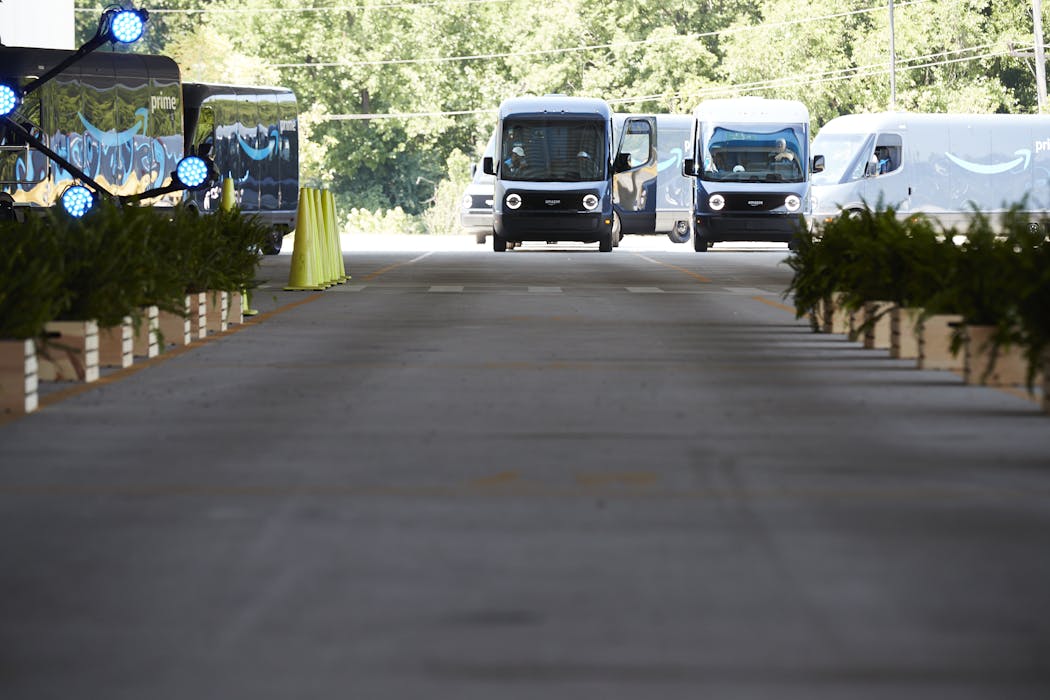
Electric delivery vehicles powered by renewable energy are helping several multinationals lower their emissions. Mustafa Hussain/Getty Images

The Trump administration has given corporations plenty of convenient excuses to retreat from their climate commitments, with its moves to withdraw from the Paris Agreement, roll back emissions regulations, and scale back clean energy incentives.

But will the world’s largest corporations follow its lead?

Some multinational companies have indeed scaled back. For instance, Wells Fargo dropped its goal for the companies the bank finances to reach net-zero emissions by 2050, saying the conditions necessary for meeting that goal, such as policy certainty, consumer behavior and the pace of clean technology development, hadn’t fully materialized. Oil giant BP told investors that earlier optimism about a fast transition to renewable energy was “misplaced” given the changing regulatory environment.

However, many others, including the world’s largest retailer, Walmart, aren’t trading their long-term risk planning for Washington’s focus on short-term cost savings. They are continuing their climate policies, but often doing so quietly to avoid scrutiny.

These companies still face ongoing pressure from state and local governments, the European Union, customers and other sources to reduce their impact on the climate. They also see ways to gain a competitive advantage from investing in a cleaner future.

A large Walmart store with the roof shining with solar panels in the sun.
Nearly half of the energy powering Walmart’s vast global operations comes from renewable sources in 2025, like this solar plant atop a store in Yucca Valley, Calif.
AP Photo/Ringo H.W. Chiu

As a professor of economics and public policy, I study what motivates global businesses to engage in environmentally friendly behavior. For my new book, “Corporations at Climate Crossroads,” I interviewed executives and analyzed corporate climate actions and environmental performance of Global 500 and S&P 500 companies over the past decade.

These companies’ climate decisions are driven by a complex interplay of pressures from existing and future laws and the need to earn goodwill with employees, customers, investors, regulators and others.

States wield influence, too

In the U.S., state climate regulations affect multinational corporations. That’s especially true in California – the world’s fifth largest economy and the state with the largest population.

While President Donald Trump dismantles U.S. climate policies, California has moved in the opposite direction.

California’s newly enacted climate laws extend its cap-and-trade program, now called “cap and invest,” which is designed to ratchet down corporate emissions. They also lock in binding targets to reach net-zero greenhouse gas emissions by 2045. And they set clean-power levels that rival the Europe Union’s Green Deal and outpace most national governments.

Other states have joined California in committing to meet the goals of the international Paris climate agreement as part of the U.S. Climate Alliance. The bipartisan coalition of 24 governors, from Arizona’s to Vermont’s, represents over half of the U.S. population.

Several states have been considering “polluters pay” laws. These laws would require companies to pay for their contributions to climate change, with the money going into funds for adaptation projects. Vermont and New York passed similar laws in 2024.

Climate laws still apply in Europe and elsewhere

Outside the U.S., several countries have climate regulations that multinational companies must meet.

The European Union aims to cut its emissions by at least 50% by 2030 through policies including binding climate reporting rules for large corporations and carbon taxes for goods entering the EU, along with initiatives to support innovation and competitiveness in clean energy and green infrastructure.

Companies also face emissions reporting requirements in the United Kingdom, New Zealand, Singapore, California and cities like Hong Kong. Timelines for some of those laws have shifted, but they’re moving forward.

The International Court of Justice also issued a recent advisory opinion establishing that countries around the globe have a legal obligation to protect the climate. That decision may ultimately increase pressure on global businesses to reduce their contributions to climate change.

Multinationals put pressure on supply chains

Multinational companies’ efforts to reduce their climate impact puts pressure on their suppliers – meaning many more companies must take their climate impact into consideration.

For instance, U.S.-based Walmart operates over 10,000 stores across 19 countries and is the largest single buyer of goods in the world. That means it faces a wide range of regulations, including tracking and reducing emissions from its suppliers.

Given its enormous purchasing volume, Walmart’s procurement standards ripple through vast supply chains. In 2017, it launched Project Gigaton, aiming to cut 1 gigaton of supply-chain greenhouse gas emissions by 2030. Suppliers including Nestle, Unilever, Coca Cola, Samsung and Hanes helped the company reach its target six years early through practical measures such as boosting energy efficiency, redesigning packaging, and reducing food waste.

Walmart did push back the deadlines for two of its more ambitious emissions reduction targets in 2025. At the same time, almost half of its electricity worldwide came from renewable energy in 2024, its emissions per unit of revenue fell, and it is working toward zero emissions from its operations by 2040.

There are profits to be made in clean tech

In addition to facing pressure from buyers and governments, companies see profits to be made from investing in climate-friendly clean technology.

Since 2016, investments in clean energy have outpaced that of fossil fuels globally. This trend has only hastened, with nearly twice as much invested in clean energy as fossil fuels in 2025.

Lately, myriad new business opportunities for multinational companies and start-ups alike have focused on meeting AI’s energy demand through clean energy.

From 2014 to 2024, the climate tech sector yielded total returns of nearly 200%, and U.S. investment in climate tech was still growing in 2025.

In the first half of 2025, close to one-fifth of the over 1,600 venture deals in climate tech were made by corporations for strategic reasons, such as technology access, supply chain integration, or future product offerings.

Companies look to the future

As climate risks grow alongside political headwinds, companies are facing both pushes toward and pulls away from protecting the planet from catastrophic effects. Oil and gas companies, for example, continue to invest in new oil and gas development. However, they also forecast renewable energy growth accelerating and are investing in clean tech.

The corporate leaders I interviewed, from tech companies like Intel to sporting goods and apparel companies like Adidas, talked about aligning sustainability efforts and initiatives across their business globally whenever possible.

This proactive approach allows them to more seamlessly collect data and respond to pressures arising domestically and globally, minimizing the need for costly patchwork efforts later. Moreover, global businesses know they will continue to face demands from their customers, investors and employees to be better stewards of the planet.

The Conversation

Lily Hsueh does not work for, consult, own shares in or receive funding from any company or organization that would benefit from this article, and has disclosed no relevant affiliations beyond their academic appointment.

ref. Global companies are still committing to protect the climate – and they’re investing big money in clean tech – https://theconversation.com/global-companies-are-still-committing-to-protect-the-climate-and-theyre-investing-big-money-in-clean-tech-268761