Children living near oil and gas wells face higher risk of rare leukemia, studies show

Source: The Conversation – USA (3) – By Lisa McKenzie, Associate Professor of Health, Department of Environmental & Occupational Health, University of Colorado Anschutz Medical Campus
The U.S. has nearly 1 million oil and natural gas wells. Some, like the one here in Commerce City, Colo., are within a few thousand feet of schools and neighborhoods. RJ Sangosti/Getty Images

Acute lymphocytic leukemia is one of the most commonly diagnosed cancers in children, although it is rare. It begins in the bone marrow and rapidly progresses.

Long-term survival rates exceed 90%, but many survivors face lifelong health challenges. Those include heart conditions, mental health struggles and a greater chance of developing a second cancer.

Overall cancer rates in the U.S. have declined since 2002, but childhood acute lymphocytic leukemia rates continue to rise. This trend underscores the need for prevention rather than focusing only on treatment for this disease.

A growing body of literature suggests exposure to the types of chemicals emitted from oil and natural gas wells increases the risk of developing childhood acute lymphocytic leukemia.
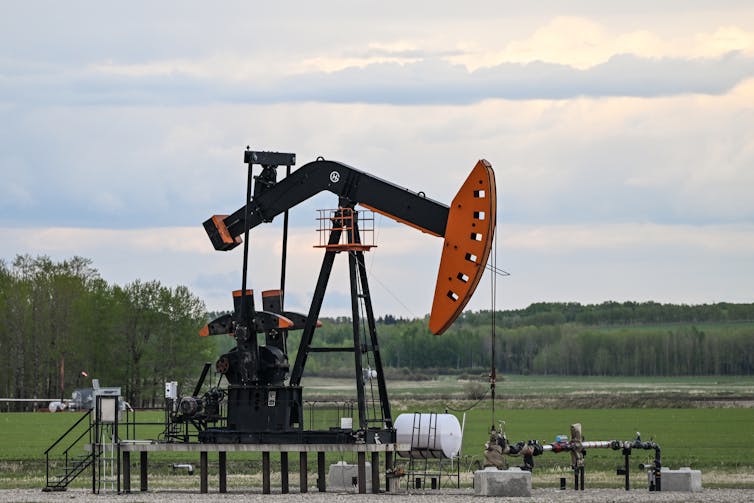
Oil and gas drill extracting oil from the earth.
Heavy machinery injects water under the surface of the earth to push oil and natural gas out.
NurPhoto/GettyImages

We are environmental epidemiologists focused on understanding the health implications of living near oil and natural gas development operations in Colorado and Pennsylvania. Both states experienced a rapid increase in oil and natural gas development in residential areas beginning in the early 21st century. We’ve studied this issue in these states, using different datasets and some different approaches.

2 studies, similar findings

Both of our studies used a case-control design. This design compares children with cancer, known as cases, with children without cancer, known as controls. We used data from statewide birth and cancer registries.

We also used specialized mapping techniques to estimate exposure to oil and natural gas development during sensitive time windows, such as pregnancy or early childhood.

The Colorado study looked at children born between 1992 and 2019. The study included 451 children diagnosed with leukemia and 2,706 children with no cancer diagnosis. It considered how many oil and natural gas wells were near a child’s home and how intense the activity was at each well. Intensity of activity included the volume of oil and gas production and phase of well production.

The Colorado study found that children ages 2-9 living in areas with the highest density and intensity wells within eight miles (13 kilometers) of their home were at least two times more likely to be diagnosed with acute lymphocytic leukemia. Children with wells within three miles (five kilometers), of their home bore the greatest risk.

The Pennsylvania study looked at 405 children diagnosed with leukemia between 2009 and 2017 and 2,080 children without any cancer diagnosis. This study found that children living within 1.2 miles (two kilometers) of oil and natural gas wells at birth were two to three times more likely to be diagnosed with acute lymphocytic leukemia between ages 2 to 7 than those who lived farther than 1.2 miles away.

The risk of developing leukemia was more pronounced in children who were exposed during their mother’s pregnancy.

The results of our two studies are also supported by a previous study in Colorado published in 2017. That study found children diagnosed with acute lymphocytic leukemia were four times more likely to live in areas with a high density of oil and natural gas wells than children diagnosed with other cancers.

Policy implications

To extract oil and natural gas from underground reserves, heavy drilling equipment injects water and chemicals into the earth under high pressure. Petroleum and contaminated wastewater are returned to the surface. It is well established that these activities can emit cancer-causing chemicals. Those include benzene, as well as other pollutants, to the air and water.

The U.S. is the world’s largest producer of oil and natural gas. There are almost 1 million producing wells across the country, and many of these are located in or near residential areas. This puts millions of children at increased risk of exposure to cancer-causing chemicals.

In the U.S., oil and natural gas development is generally regulated at the state level. Policies aimed at protecting public health include establishing minimum distances between a new well and existing homes, known as a setback distance. These policies also include requirements for emission control technologies on new and existing wells and restrictions on the construction of new wells.

Setbacks offer a powerful solution to reduce noise, odors and other hazards experienced by communities near oil and gas wells. However, it is challenging to establish a universal setback that optimally addresses all hazards. That’s because noise, air pollutants and water contaminants dissipate at different rates depending on location and other factors.

In addition, setbacks focus exclusively on where to place oil and natural gas wells but do not impose any restrictions on releases of air pollutants or greenhouse gases. Therefore, they do not address regional air quality issues or mitigate climate change.
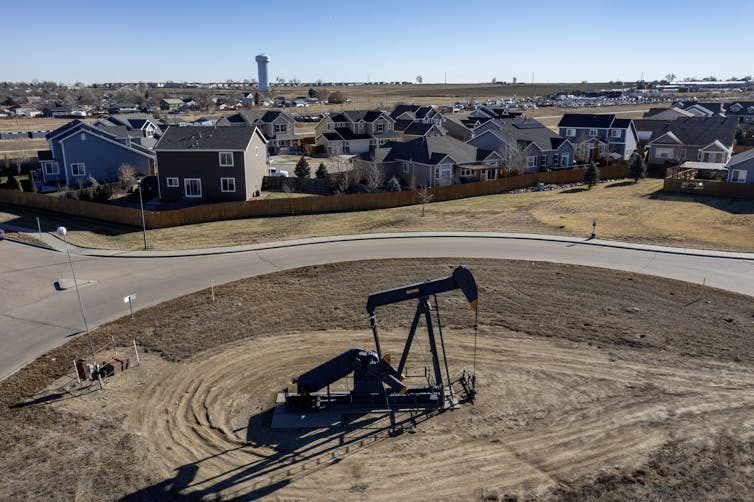
An oil rig sits across the street from a residential neighborhood in Frederick, Colorado.
In many U.S. cities there are set distances that oil and gas wells are allowed to be from places such as schools and neighborhoods. In this Frederick, Colo., neighborhood the oil rig is very near houses.
UGC/GettyImages

Furthermore, current U.S. setback distances range from just 200 feet to 3,200 feet. Our results indicate that even the largest setback of 3,200 feet (one kilometer) is not sufficient to protect children from an increased leukemia risk.

Our results support a more comprehensive policy approach that considers both larger setback distances and mandatory monitoring and control of hazardous emissions on both new and existing wells.

Future research

More research is needed in other states, such as Texas and California, that have oil and natural gas development in residential areas, as well as on other pediatric cancers.

One such cancer is acute myeloid leukemia. This is another type of leukemia that starts in bone marrow and rapidly progresses. This cancer has exhibited a strong link to benzene exposure in adult workers in several industries, including the petroleum industry. Researchers have also documented a moderate cancer link for children exposed to vehicular benzene.

It remains unclear whether benzene is the culprit or if another agent or combination of hazards is an underlying cause of acute myeloid leukemia.

Even though questions remain, we believe the existing evidence coupled with the seriousness of childhood acute lymphocytic leukemia supports enacting further protective measures. We also believe policymakers should consider the cumulative effects from wells, other pollution sources and socioeconomic stressors on children and communities.

Read more of our stories about Colorado and Pennsylvania.

The Conversation

Lisa McKenzie receives funding from the American Cancer Society and the University of Colorado Cancer Center.

Nicole Deziel receives funding from the American Cancer Society, the National Institutes of Health, and the Yale School of Public Health.

ref. Children living near oil and gas wells face higher risk of rare leukemia, studies show – https://theconversation.com/children-living-near-oil-and-gas-wells-face-higher-risk-of-rare-leukemia-studies-show-252994
When grief involves trauma − a social worker explains how to support survivors of the recent floods and other devastating losses

Source: The Conversation – USA (3) – By Liza Barros-Lane, Assistant Professor of Social Work, University of Houston-Downtown

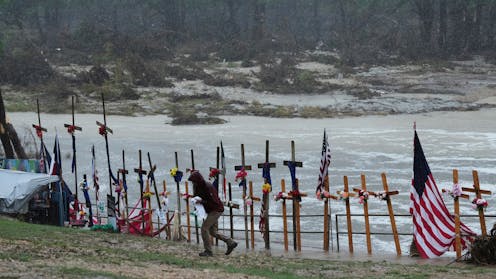
Rain falls over a makeshift memorial for flood victims along the Guadalupe River on July 13, 2025, in Kerrville, Texas. AP Photo/Eric Gay

The July 4, 2025, floods in Kerr County, Texas, swept away children and entire families, leaving horror in their wake. Days later, flash floods struck Ruidoso, New Mexico, killing three people, including two young children.

These are not just devastating losses. When death is sudden, violent, or when a body is never recovered, grief gets tangled up with trauma.

In these situations, people don’t only grieve the death. They struggle with the terror of how it happened, the unanswered questions and the shock etched into their bodies.

I’m a social work professor, grief researcher and the founder of The Young Widowhood Project, a research initiative aimed at expanding scholarship and public understanding of premature spousal loss.

I was widowed when I was 36. In July 2020, my husband, Brent, went missing after testing a small, flat-bottomed fishing boat called a Jon boat. His body was recovered two days later, but I never saw his remains.

Both my personal loss and professional work have shown me how trauma changes the grieving process and what kind of support actually helps.

To understand how trauma can complicate grief, it’s important to first understand how people typically respond to loss.

Grief isn’t a set of stages

Many people still think of grief through the lens of psychiatrist Dr. Elisabeth Kübler-Ross’ five stages of grief, popularized in the early 1970s: denial, anger, bargaining, depression and acceptance.

But in fact, this model was originally designed for people facing their own deaths, not for mourners. In the absence of accessible grief research in the 1960s, it became a leading framework for understanding the grieving process – even though it wasn’t meant for that.

Despite this misapplication, the stages model has shaped cultural expectations: namely, that grief ends once people reach the “acceptance” stage. But research doesn’t support this idea. Trying to force grief into this model can cause real harm, leaving mourners feeling they’re grieving “wrong.”

In reality, mourning is often lifelong. Most people go through an acute period of overwhelming pain right after the loss. This is usually followed by integrated grief, where the pain softens but the loss is still part of everyday life, returning in waves.

Although grief is unique to each person and relationship, researchers have found that mourners often strive to a) make sense of the death; b) adjust to a world without their loved one; c) form an ongoing connection with their deceased loved one in new ways; and d) figure out who they are without their loved one.

It’s difficult and at times disorienting work, but most people find ways to carry their grief and keep living.

A grandmother embraces a young woman in front of a wall of flowers.
Julia Mora embraces her granddaughter, Isla Meyer, during a vigil for Texas flood victims on July 11, 2025.
AP Photo/Gerald Herbert

When grief and trauma collide

However, some losses carry an extra layer of pain, confusion and trauma.

Sudden, unexpected, accidental, violent or deeply tragic deaths – like those experienced during the recent floods – can lead to what researchers call traumatic bereavement: grief that is disrupted by the traumatic nature of the death.

People experiencing traumatic bereavement often endure a longer and more intense acute grief period. They may be haunted by disturbing images, nightmares or relentless thoughts about how their loved one died or suffered. Many wrestle with dread, spiritual disorientation and a shattered sense of safety in the world.

Some of these deaths are also considered “ambiguous” – unclear or unconfirmed loss – such as when a body is never recovered or is too damaged to view. Without physical confirmation, mourners often feel stuck in disbelief and helplessness.

This was true in my case. Not seeing my husband’s body left a part of me suspended between knowing and not knowing. I knew he had died but couldn’t fully believe it, no matter how much I lived with the reality of his absence. For a long time, I caught myself repeating these words every morning: “Brent is dead. Brent is dead.”

In many cases, these reactions aren’t short term. Many people affected by traumatic loss remain overwhelmed and sometimes physically and emotionally impaired for years. Symptoms may taper over time, but they rarely disappear entirely.

Supporting mourners

Traumatic bereavement can feel unbearable. Many mourners struggle with intense, long-lasting reactions that can leave them feeling helpless, altered or even unrecognizable to themselves. They may appear withdrawn, forgetful or emotionally drained because their systems are overwhelmed. Coping can look messy or self-destructive, but these are often survival strategies, not conscious choices. I’ve also seen how those same struggles become more survivable when mourners don’t have to carry them alone. If you’re supporting someone through traumatic loss, here are three ways to help.

  • Make space for the horror. Listen without flinching. Acknowledge the full weight of what happened and how terrifying and unjust the loss was. This means saying things like, “This should never have happened,” or “What you went through is beyond words.” It means staying present when the mourner speaks about what haunts them. Let them know they don’t have to carry this alone. You may feel the urge to say something hopeful such as, “At least the body was recovered,” but there is no silver lining in these cases. Instead, say: “There’s nothing I can say to fix this, but I’m not going anywhere.”

  • Help them find others who can understand. Trauma can be isolating. Mourners often feel uniquely overwhelmed or confused. Support groups, peer companions and therapists trained in treating grief and trauma can offer the kind of recognition and validation that even the most devoted friend may not be able to provide.

  • Take care of yourself, too. Being present for someone in deep grief takes energy, especially if you were personally affected by the loss. Stay connected to replenishing people, practices and routines. If you don’t, you may begin to experience trauma, too. Taking care of yourself will help you remain grounded so that you can show up.

I believe supporting someone through traumatic bereavement is one of the most meaningful things you can do. You don’t need perfect words or a plan. What sustains them won’t be advice or solutions, but your simple, powerful act of staying.

The Conversation

Liza Barros-Lane does not work for, consult, own shares in or receive funding from any company or organization that would benefit from this article, and has disclosed no relevant affiliations beyond their academic appointment.

ref. When grief involves trauma − a social worker explains how to support survivors of the recent floods and other devastating losses – https://theconversation.com/when-grief-involves-trauma-a-social-worker-explains-how-to-support-survivors-of-the-recent-floods-and-other-devastating-losses-260908

Catholic clergy are speaking out on immigration − more than any other political issue except abortion

Source: The Conversation – USA (3) – By Evan Stewart, Assistant Professor of Sociology, UMass Boston

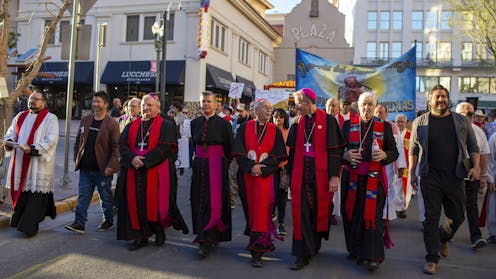
Catholic bishops invited by Mark Seitz, center, the bishop of El Paso, Texas, lead a march in solidarity with migrants on March 24, 2025, in downtown El Paso. AP Photo/Andres Leighton

Catholic priests across the U.S. discuss immigration with their congregations more than leaders in many other faith traditions, according to our new research published in the journal Sociological Focus.

Catholic priests also said they discussed immigration more than nearly all other political issues, including hunger in their communities, capital punishment, health care and the environment. Abortion was the only one priests discussed slightly more often.

Our study, which uses data from the 2022 National Survey of Religious Leaders, found that 71% of Catholic priests surveyed said they spoke about any political issue with their congregations. Among them, just over half talked about immigration.

In white conservative Protestant congregations, Black Protestant congregations and non-Christian congregations, only about a quarter of leaders who discussed political issues said they talked about immigration. Leaders of white liberal Protestant congregations, however, talked about the topic almost as much as Catholic leaders did.

Why it matters

The United States has a long history of religious leaders addressing political matters, on both the left and the right – and today is no different.

With immigration raids on the rise across the country and an unprecedented level of funding approved for deportations, Catholic bishops in the U.S. are speaking out. Many of them have called for compassion and care for migrants and the need to uphold human dignity and due process, regardless of someone’s immigration status – in line with Catholic social teaching.

As sociologists who study politics and religion, we wanted to know what is happening on the ground in congregations. Given the church’s teachings about caring for the vulnerable, we expected that Catholic clergy might be particularly likely to speak out.

However, the percentage of people affiliated with a religious congregation is decreasing, and those who do attend are increasingly politically conservative. Rank and file Catholics are very divided on their support for immigrants, according to a 2024 national survey by the Center for Applied Research in the Apostolate.

In this context, we were curious about whether clergy would discuss a political issue such as immigration with their congregations or say they avoid it altogether.

What still isn’t known

The survey we used is from 2022, before some of today’s immigration enforcement policies took effect. That said, these findings demonstrate that immigration was on the radar for Catholic leaders before the recent changes under the current administration.

Because we focused on survey data, we got a good picture of trends among Catholic leaders nationwide. However, we could look only at whether religious leaders reported discussing immigration; we could not know exactly what they said, or how. There is much more to learn about what kinds of political messages come from the pulpit today and what messages tend to stick with congregants.

We did find that Catholic leaders of congregations where the majority of worshipers are Hispanic were much more likely to talk about immigration, compared with leaders of non-Catholic Hispanic congregations and Catholic leaders of mostly white congregations. Because Hispanic communities in the U.S. are facing the brunt of the immigration crackdown, this finding shows that Catholic leaders have been addressing the needs of their communities.

What’s next

Catholic parishioners may be exposed to different opinions about immigration from religious and political leaders. Diane, one of the authors, is furthering this research by conducting interviews with Catholics in Greater Boston. By asking church members to talk through their attitudes toward immigrants, we can learn more about how people make sense of complicated ethical questions.

The Research Brief is a short take on interesting academic work.

The Conversation

Diane Beckman received funding from Duke University to conduct research using data from the National Survey of Religious Leaders.

Evan Stewart does not work for, consult, own shares in or receive funding from any company or organization that would benefit from this article, and has disclosed no relevant affiliations beyond their academic appointment.

ref. Catholic clergy are speaking out on immigration − more than any other political issue except abortion – https://theconversation.com/catholic-clergy-are-speaking-out-on-immigration-more-than-any-other-political-issue-except-abortion-260485

Why drones and AI can’t quickly find missing flood victims, yet

Source: The Conversation – USA – By Robin R. Murphy, Professor of Computer Science and Engineering, Texas A&M University

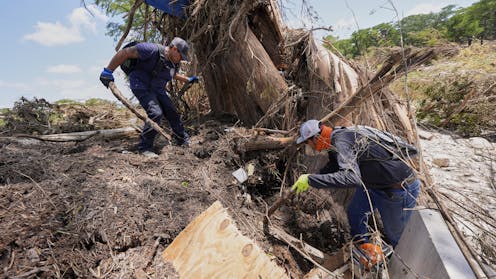
The landscape In the aftermath of a flood makes it challenging to spot victims. AP Photo/Gerald Herbert

For search and rescue, AI is not more accurate than humans, but it is far faster.

Recent successes in applying computer vision and machine learning to drone imagery for rapidly determining building and road damage after hurricanes or shifting wildfire lines suggest that artificial intelligence could be valuable in searching for missing persons after a flood.

Machine learning systems typically take less than one second to scan a high-resolution image from a drone versus one to three minutes for a person. Plus, drones often produce more imagery to view than is humanly possible in the critical first hours of a search when survivors may still be alive.

Unfortunately, today’s AI systems are not up to the task.

We are robotics reseachers who study the use of drones in disasters. Our experiences searching for victims of flooding and numerous other events show that current implementations of AI fall short.

However, the technology can play a role in searching for flood victims. The key is AI-human collaboration.

a large red SUV with a white horizontal stripe and symbols and lettering along the side
Drones have become standard equipment for first responders, but floods pose unique challenges.
Eric Smalley, CC BY-ND

AI’s potential

Searching for flood victims is a type of wilderness search and rescue that presents unique challenges. The goal for machine learning scientists is to rank which images have signs of victims and indicate where in those images search-and-rescue personnel should focus. If the responder sees signs of a victim, they pass the GPS location in the image to search teams in the field to check.

The ranking is done by a classifier, which is an algorithm that learns to identify similar instances of objects – cats, cars, trees – from training data in order to recognize those objects in new images. For example, in a search-and-rescue context, a classifier would spot instances of human activity such as garbage or backpacks to pass to wilderness search-and-rescue teams, or even identify the missing person themselves.

A classifier is needed because of the sheer volume of imagery that drones can produce. For example, a single 20-minute flight can produce over 800 high-resolution images. If there are 10 flights – a small number – there would be over 8,000 images. If a responder spends only 10 seconds looking at each image, it would take over 22 hours of effort. Even if the task is divided among a group of “squinters,” humans tend to miss areas of images and show cognitive fatigue.

The ideal solution is an AI system that scans the entire image, prioritizes images that have the strongest signs of victims, and highlights the area of the image for a responder to inspect. It could also decide whether the location should be flagged for special attention by search-and-rescue crews.

Where AI falls short

While this seems to be a perfect opportunity for computer vision and machine learning, modern systems have a high error rate. If the system is programmed to overestimate the number of candidate locations in hopes of not missing any victims, it will likely produce too many false candidates. That would mean overloading squinters or, worse, the search-and-rescue teams, which would have to navigate through debris and muck to check the candidate locations.

Developing computer vision and machine learning systems for finding flood victims is difficult for three reasons.

One is that while existing computer vision systems are certainly capable of identifying people visible in aerial imagery, the visual indicators of a flood victim are often very different compared with those for a lost hiker or fugitive. Flood victims are often obscured, camouflaged, entangled in debris or submerged in water. These visual challenges increase the possibility that existing classifiers will miss victims.

Second, machine learning requires training data, but there are no datasets of aerial imagery where humans are tangled in debris, covered in mud and not in normal postures. This lack also increases the possibility of errors in classification.

Third, many of the drone images often captured by searchers are oblique views, rather than looking straight down. This means the GPS location of a candidate area is not the same as the GPS location of the drone. It is possible to compute the GPS location if the drone’s altitude and camera angle are known, but unfortunately those attributes rarely are. The imprecise GPS location means teams have to spend extra time searching.

How AI can help

Fortunately, with humans and AI working together, search-and-rescue teams can successfully use existing systems to help narrow down and prioritize imagery for further inspection.

In the case of flooding, human remains may be tangled among vegetation and debris. Therefore, a system could identify clumps of debris big enough to contain remains. A common search strategy is to identify the GPS locations of where flotsam has gathered, because victims may be part of these same deposits.

aerial view of a landscape with green rings superimposed
A machine learning algorithm identified piles of debris large enough to contain bodies in an aerial image of a flood aftermath.
Center for Robot-Assisted Search and Rescue and University of Maryland

An AI classifier could find debris commonly associated with remains, such as artificial colors and construction debris with straight lines or 90-degree corners. Responders find these signs as they systematically walk the riverbanks and flood plains, but a classifier could help prioritize areas in the first few hours and days, when there may be survivors, and later could confirm that teams didn’t miss any areas of interest as they navigated the difficult landscape on foot.

The Conversation

Robin R. Murphy receives funding from the National Science Foundation. She is affiliated with the Center for Robot-Assisted Search and Rescue.

Thomas Manzini is affiliated with the Center for Robot Assisted Search & Rescue (CRASAR), and his work is funded by the National Science Foundation’s AI Institute for Societal Decision Making (AI-SDM).

ref. Why drones and AI can’t quickly find missing flood victims, yet – https://theconversation.com/why-drones-and-ai-cant-quickly-find-missing-flood-victims-yet-261035

The golden oyster mushroom craze unleashed an invasive species – and a worrying new study shows it’s harming native fungi

Source: The Conversation – USA (2) – By Aishwarya Veerabahu, Ph.D. Candidate in Botany, University of Wisconsin-Madison

Golden oyster mushrooms can be cultivated, but they can also escape into the wild. DDukang/iStock/Getty Images Plus

Golden oyster mushrooms, with their sunny yellow caps and nutty flavor, have become wildly popular for being healthy, delicious and easy to grow at home from mushroom kits.

But this food craze has also unleashed an invasive species into the wild, and new research shows it’s pushing out native fungi.

In a study we believe is the first of its kind, fellow mycologists and I demonstrate that an invasive fungus can cause environmental harm, just as invasive plants and animals can when they take over ecosystems.

A woman with a phone camera takes pictures of large clumps of yellow mushrooms growing all over the base of a tree.
A scientist documents golden oyster mushrooms growing wild in a Wisconsin forest, where these invasive fungi don’t belong. DNA tests showed the species had pushed out other native fungi.
Aishwarya Veerabahu

Native mushrooms and other fungi are important for the health of many ecosystems. They break down dead wood and other plant material, helping it decay. They cycle nutrients such as carbon and nitrogen from the dead tissues of plants and animals, turning it into usable forms that enter the soil, atmosphere or their own bodies. Fungi also play a role in managing climate change by sequestering carbon in soil and mediating carbon emissions from soil and wood.

Their symbiotic relationships with other organisms also help other organisms thrive. Mycorrhizal fungi on roots, for example, help plants absorb water and nutrients. And wood decay fungi help create wooded habitats for birds, mammals and plant seedlings.

However, we found that invasive golden oyster mushrooms, a wood decay fungus, can threaten forests’ fungal biodiversity and harm the health of ecosystems that are already vulnerable to climate change and habitat destruction.

The dark side of the mushroom trade

Golden oyster mushrooms, native to Asia, were brought to North America around the early 2000s. They’re part of an international mushroom culinary craze that has been feeding into one of the world’s leading drivers of biodiversity loss: invasive species.

As fungi are moved around the world in global trade, either intentionally as products, such as kits people buy for growing mushrooms at home, or unintentionally as microbial stowaways along with soil, plants, timber and even shipping pallets, they can establish themselves in new environments.

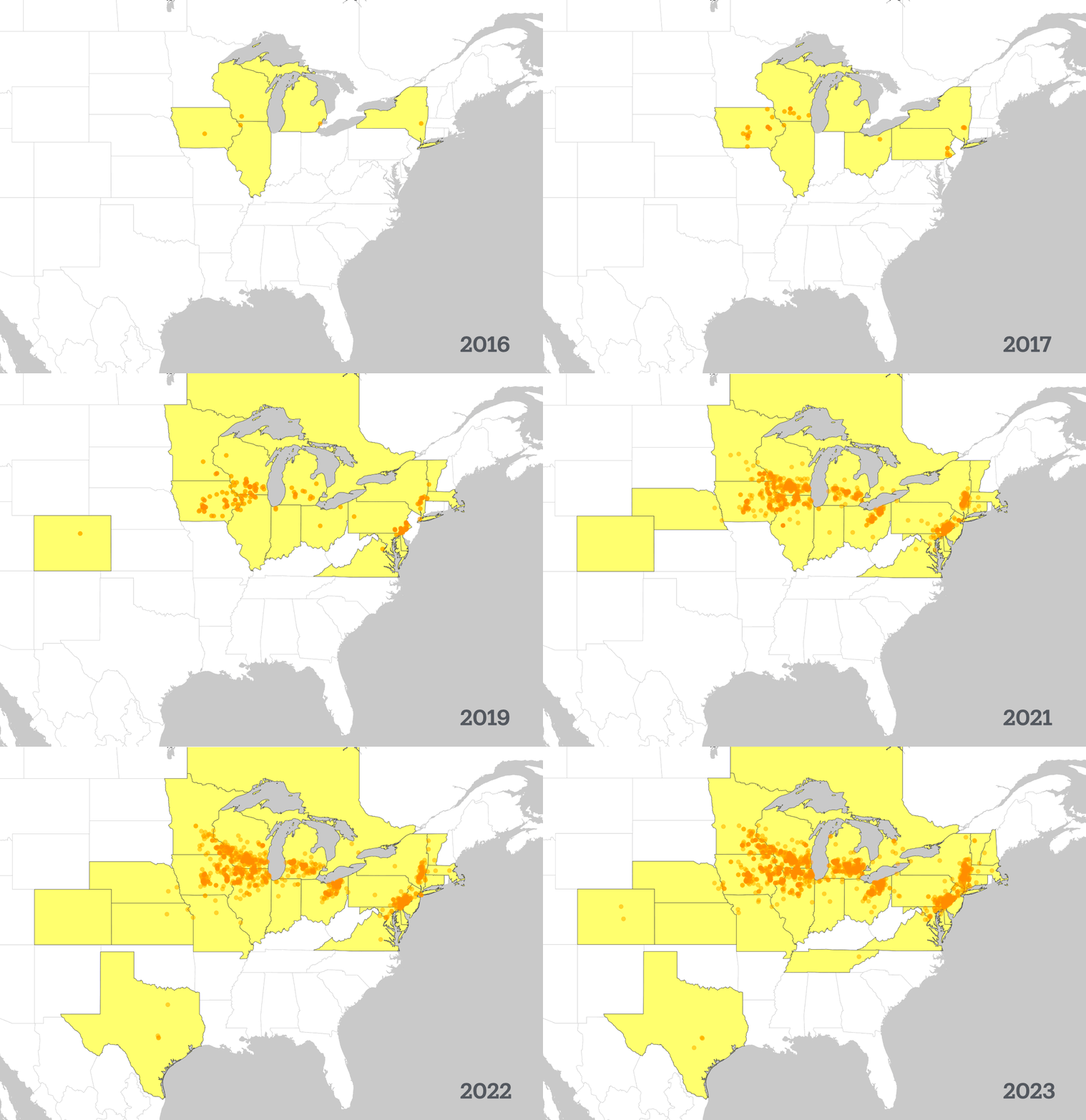
Where golden oyster mushrooms, an invasive species in North America, have been reported in the wild, including in forests, parks and neighborhoods. Red dots indicate new reports each year. States in yellow have had a report at some point. Aishwarya Veerabahu

Many mushroom species have been cultivated in North America for decades without becoming invasive species threats. However, golden oyster mushrooms have been different.

No one knows exactly how golden oyster mushrooms escaped into the wild, whether from a grow kit, a commercial mushroom farm or outdoor logs inoculated with golden oysters – a home-cultivation technique where mushroom mycelium is placed into logs to colonize the wood and produce mushrooms.

As grow kits increased in popularity, many people began buying golden oyster kits and watching them blossom into beautiful yellow mushrooms in their backyards. Their spores or composted kits could have spread into nearby forests.

Evidence from a pioneering study by Andrea Reisdorf (née Bruce) suggests golden oyster mushrooms were introduced into the wild in multiple U.S. states around the early 2010s.

Species the golden oysters pushed out

In our study, designed by Michelle Jusino and Mark Banik, research scientists with the U.S. Forest Service, our team went into forests around Madison, Wisconsin, and drilled into dead trees to collect wood shavings containing the natural fungal community within each tree. Some of the trees had golden oyster mushrooms on them, and some did not.

We then extracted DNA to identify and compare which fungi, and how many fungi, were in trees that had been invaded by golden oyster mushrooms compared with those that had not been.

We were startled to find that trees with golden oyster mushrooms housed only half as many fungal species as trees without golden oyster mushrooms, sometimes even less. We also found that the composition of fungi in trees with golden oyster mushrooms was different from trees without golden oyster mushrooms.

For example, the gentle green “mossy maze polypore” and the “elm oyster” mushroom were pushed out of trees invaded by golden oyster mushrooms.

Mossy green mushrooms grow like shelfs on the side of a tree trunk.
Mossy maze polypore growing on a stump. This is one of the native species that disappeared from trees when the golden oyster mushroom moved in.
mauriziobiso/iStock/Getty Images Plus

Another ousted fungus, Nemania serpens, is known for producing diverse arrays of chemicals that differ even between individuals of the same species. Fungi are sources of revolutionary medicines, including antibiotics like penicillin, cholesterol medication and organ transplant stabilizers. The value of undiscovered, potentially useful chemicals can be lost when invasive species push others out.

The invasive species problem includes fungi

Given what my colleagues and I discovered, we believe it is time to include invasive fungi in the global conversation about invasive species and examine their role as a cause of biodiversity loss.

That conversation includes the idea of fungal “endemism” – that each place has a native fungal community that can be thrown out of balance. Native fungal communities tend to be diverse, having evolved together over thousands of years to coexist. Our research shows how invasive species can change the makeup of fungal communities by outcompeting native species, thus changing the fungal processes that have shaped native ecosystems.

There are many other invasive fungi. For example, the deadly poisonous “death cap” Amanita phalloides and the “orange ping-pong bat” Favolaschia calocera are invasive in North America. The classic red and white “fly agaric” Amanita muscaria is native to North America but invasive elsewhere.

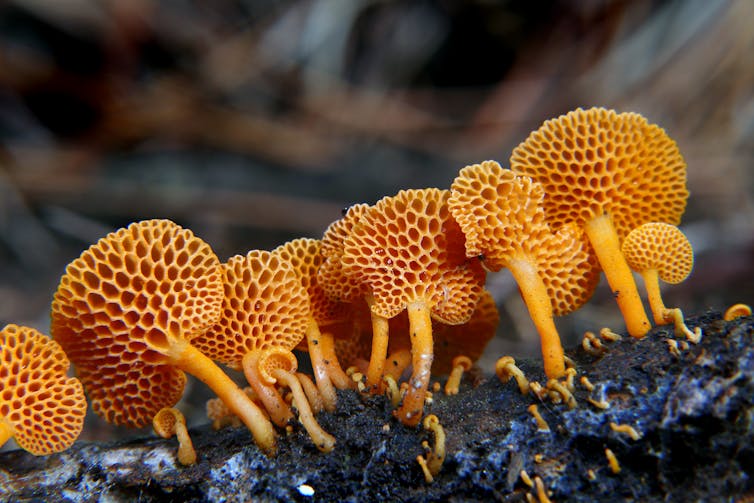
Bright orange mushrooms the texture of ping-pong paddles.
The orange ping-pong bat mushroom is invasive in North America. These were photographed in New Zealand.
Bernard Spragg. NZ/Flickr Creative Commons

The golden oyster mushrooms’ invasion of North America should serve as a bright yellow warning that nonnative fungi are capable of rapid invasion and should be cultivated with caution, if at all.

Golden oyster mushrooms are now recognized as invasive in Switzerland and can be found in forests in Italy, Hungary, Serbia and Germany. I have been hearing about people attempting to cultivate them around the world, including in Turkey, India, Ecuador, Kenya, Italy and Portugal. It’s possible that golden oyster mushrooms may not be able to establish invasive populations in some regions. Continued research will help us understand the full scope of impacts invasive fungi can have.

What you can do to help

Mushroom growers, businesses and foragers around the world may be asking themselves, “What can we do about it?”

For the time being, I recommend that people consider refraining from using golden oyster mushroom grow kits to prevent any new introductions. For people who make a living selling these mushrooms, consider adding a note that this species is invasive and should be cultivated indoors and not composted.

If you enjoy growing mushrooms at home, try cultivating safe, native species that you have collected in your region.

Most mushrooms you see in the grocery store are grown indoors.

There is no single right answer. In some places, golden oyster mushrooms are being cultivated as a food source for impoverished communities, for income, or to process agricultural waste and produce food at the same time. Positives like these will have to be considered alongside the mushrooms’ negative impacts when developing management plans or legislation.

In the future, some ideas for solutions could involve sporeless strains of golden oysters for home kits that can’t spread, or a targeted mycovirus that could control the population. Increased awareness about responsible cultivation practices is important, because when invasive species move in and disrupt the native biodiversity, we all stand to lose the beautiful, colorful, weird fungi we see on walks in the forest.

The Conversation

Aishwarya Veerabahu receives funding from UW-Madison Dept. of Botany, the UW Arboretum, the Society of Ecological Restoration, and the Garden Club of America. Aishwarya Veerabahu was an employee of the USDA Forest Service.

ref. The golden oyster mushroom craze unleashed an invasive species – and a worrying new study shows it’s harming native fungi – https://theconversation.com/the-golden-oyster-mushroom-craze-unleashed-an-invasive-species-and-a-worrying-new-study-shows-its-harming-native-fungi-259006

When big sports events expand, like FIFA’s 2026 World Cup matches across North America, their climate footprint expands too

Source: The Conversation – USA (2) – By Brian P. McCullough, Associate Professor of Sport Management, University of Michigan

Lionel Messi celebrates with fans after Argentina won the FIFA World Cup championship in 2022 in Qatar. Michael Regan-FIFA/FIFA via Getty Images

When the FIFA World Cup hits North America in June 2026, 48 teams and millions of soccer fans will be traveling to and from venues spread across the United States, Canada and Mexico.

It’s a dramatic expansion – 16 more teams will be playing than in recent years, with a jump from 64 to 104 matches. The tournament is projected to bring in over US$10 billion in revenue. But the expansion will also mean a lot more travel and other activities that contribute to climate change.

The environmental impacts of giant sporting events like the World Cup create a complex paradox for an industry grappling with its future in a warming world.

A sustainability conundrum

Sports are undeniably experiencing the effects of climate change. Rising global temperatures are putting athletes’ health at risk during summer heat waves and shortening winter sports seasons. Many of the 2026 World Cup venues often see heat waves in June and early July, when the tournament is scheduled.

There is a divide over how sports should respond.

Some athletes are speaking out for more sustainable choices and have called on lawmakers to take steps to limit climate-warming emissions. At the same time, the sport industry is growing and facing a constant push to increase revenue. The NCAA is also considering expanding its March Madness basketball tournaments from 68 teams currently to as many as 76.

A sweating soccer player squirts water from a bottle onto his forehead during a match.
Park Yong-woo of team Al Ain from Abu Dhabi tries to cool off during a Club World Cup match on June 26, 2025, in Washington, D.C., which was in the midst of a heat wave. Some players have raised concerns about likely high temperatures during the 2026 World Cup, with matches scheduled June 11 to July 19.
AP Photo/Julia Demaree Nikhinson

Estimates for the 2026 World Cup show what large tournament expansions can mean for the climate. A report from Scientists for Global Responsibility estimates that the expanded World Cup could generate over 9 million metric tons of carbon dioxide equivalent, nearly double the average of the past four World Cups.

This massive increase – and the increase that would come if the NCAA basketball tournaments also expand – would primarily be driven by air travel as fans and players fly among event cities that are thousands of miles apart.

A lot of money is at stake, but so is the climate

Sports are big business, and adding more matches to events like the World Cup and NCAA tournaments will likely lead to larger media rights contracts and greater gate receipts from more fans attending the events, boosting revenues. These are powerful financial incentives.

In the NCAA’s case, there is another reason to consider a larger tournament: The House v. NCAA settlement opened the door for college athletic departments to share revenue with athletes, which will significantly increase costs for many college programs. More teams would mean more television revenue and, crucially, more revenue to be distributed to member NCAA institutions and their athletic conferences.

When climate promises become greenwashing

The inherent conflict between maximizing profit through growth and minimizing environmental footprint presents a dilemma for sports.

Several sport organizations have promised to reduce their impact on the climate, including signing up for initiatives like the United Nations Sports for Climate Action Framework.

However, as sports tournaments and exhibition games expand, it can become increasingly hard for sports organizations to meet their climate commitments. In some cases, groups making sustainability commitments have been accused of greenwashing, suggesting the goals are more about public relations than making genuine, measurable changes.

For example, FIFA’s early claims that it would hold a “fully carbon-neutral” World Cup in Qatar in 2022 were challenged by a group of European countries that accused soccer’s world governing body of underestimating emissions. The Swiss Fairness Commission, which monitors fairness in advertising, considered the complaints and determined that FIFA’s claims could not be substantiated.

A young man looks up as he prepares to board a plane on the tarmac in Milan, Italy, for a flight to Rome on Dec. 15, 2024.
Alessandro Bastoni, of Inter Milan and Italy’s national team, prepares to board a flight from Milan to Rome with his team.
Mattia Ozbot-Inter/Inter via Getty Images

Aviation is often the biggest driver of emissions. A study that colleagues and I conducted on the NCAA men’s basketball tournament found about 80% of its emissions were connected to travel. And that was after the NCAA began using the pod system, which is designed to keep teams closer to home for the first and second rounds.

Finding practical solutions

Some academics, observing the rising emissions trend, have called for radical solutions like the end of commercialized sports or drastically limiting who can attend sporting events, with a focus on fans from the region.

These solutions are frankly not practical, in my view, nor do they align with other positive developments. The growing popularity of women’s sports shows the challenge in limiting sports events – more games expands participation but adds to the industry’s overall footprint.

Further compounding the challenges of reducing environmental impact is the amount of fan travel, which is outside the direct control of the sports organization or event organizers.

Many fans will follow their teams long distances, especially for mega-events like the World Cup or the NCAA tournament. During the men’s World Cup in Russia in 2018, more than 840,000 fans traveled from other countries. The top countries by number of fans, after Russia, were China, the U.S., Mexico and Argentina.

There is an argument that distributed sporting events like March Madness or the World Cup can be better in some ways for local environments because they don’t overwhelm a single city. However, merely spreading the impact does not necessarily reduce it, particularly when considering the effects on climate change.

How fans can cut their environmental footprint

Sport organizations and event planners can take steps to be more sustainable and also encourage more sustainable choices among fans. Fans can reduce their environmental impact in a variety of ways. For example:

  • Avoid taking airplanes for shorter distances, such as between FIFA venues in Philadelphia, New York and Boston, and carpool or take Amtrak instead. Planes can be more efficient for long distances, but air travel is still a major contributing factor to emissions.

  • While in a host city, use mass transit or rent electric vehicles or bicycles for local travel.

  • Consider sustainable accommodations, such as short-term rentals that might have a smaller environmental footprint than a hotel. Or stay at a certified green hotel that makes an effort to be more efficient in its use of water and energy.

  • Engage in sustainable pregame and postgame activities, such as choosing local, sustainable food options, and minimize waste.

  • You can also pay to offset carbon emissions for attending different sporting events, much like concertgoers do when they attend musical festivals. While critics question offsets’ true environmental benefit, they do represent people’s growing awareness of their environmental footprint.

Through all these options, it’s clear that sports face a significant challenge in addressing their environmental impacts and encouraging fans to be more sustainable, while simultaneously trying to meet ambitious business and environmental targets.

In my view, a sustainable path forward will require strategic, yet genuine, commitment by the sports industry and its fans, and a willingness to prioritize long-term planetary health alongside economic gains – balancing the sport and sustainability.

The Conversation

Brian P. McCullough does not work for, consult, own shares in or receive funding from any company or organization that would benefit from this article, and has disclosed no relevant affiliations beyond their academic appointment.

ref. When big sports events expand, like FIFA’s 2026 World Cup matches across North America, their climate footprint expands too – https://theconversation.com/when-big-sports-events-expand-like-fifas-2026-world-cup-matches-across-north-america-their-climate-footprint-expands-too-259437

Examining mushrooms under microscopes can help engineers design stronger materials

Source: The Conversation – USA – By Mohamed Khalil Elhachimi, PhD Student in Mechanical Engineering, Binghamton University, State University of New York

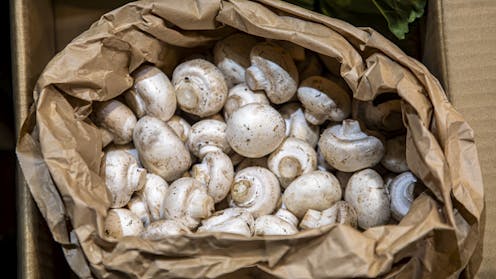
White button mushrooms are one of the types studied to inform stronger materials. DigiPub/Moment via Getty Images

Pick up a button mushroom from the supermarket and it squishes easily between your fingers. Snap a woody bracket mushroom off a tree trunk and you’ll struggle to break it. Both extremes grow from the same microscopic building blocks: hyphae – hair-thin tubes made mostly of the natural polymer chitin, a tough compound also found in crab shells.

As those tubes branch and weave, they form a lightweight but surprisingly strong network called mycelium. Engineers are beginning to investigate this network for use in eco-friendly materials.

A diagram showing a mushroom with hyphae filaments labeled, as well as the mycelium filaments underground.
Filaments called hyphae are a mushroom’s support structures both above and below ground, and the mycelium network links multiple mushrooms together.
Milkwood.net/Flickr, CC BY-NC-SA

Yet even within a single mushroom family, the strength of a mycelium network can vary widely. Scientists have long suspected that how the hyphae are arranged – not just what they’re made of – holds the key to understanding, and ultimately controlling, their strength. But until recently, measurements that directly link microscopic arrangement to macroscopic strength have been scarce.

I’m a mechanical engineering Ph.D. student at Binghamton University who studies bio-inspired structures. In our latest research, my colleagues and I asked a simple question: Can we tune the strength of a mushroomlike material just by changing the angle of its filaments, without adding any tougher ingredients? The answer, it turns out, is yes.

2 edible species, many tiny tests

In our study, my team compared two familiar fungi. The first was the white button mushroom, whose tissue uses only thin filaments called generative filaments. The second was the maitake, also called hen-of-the-woods, whose tissue mixes in a second, thicker type of hyphae called skeletal filaments. These skeletal filaments are arranged roughly in parallel, like bundles of cables.

A diagram showing two electron microscope images of long, thin filaments. On the right, the filaments are arranged in parallel.
The two types of mushrooms used in the study: The white button mushroom is monomitic, shown on the left, meaning it has only one type of hyphae. The maitake is shown on the right, and is dimitic, meaning it has two types of hyphae.
Mohamed Khalil Elhachimi

After gently drying the caps and stems to remove any water, which can soften the material and skew the results, we zoomed in with scanning electron microscopes and tested the samples at two very different scales.

First, we tested macro-scale compression. A motor-driven piston slowly squashed each mushroom while sensors recorded how hard the sample pushed back – the same way you might squeeze a marshmallow, only with laboratory precision.

Then we pressed a diamond tip thinner than a human hair into individual filaments to measure their stiffness.

The white mushroom filaments behaved like rubber bands, averaging about 18 megapascals in stiffness – similar to natural rubber. The thicker skeletal filaments in maitake measured around 560 megapascals, more than 30 times stiffer and approaching the stiffness of high-density polyethylene – the rigid plastic used in cutting boards and some water pipes.

Two mushroom photos, the left is a bracket mushroom with many leaflike structures attached together, the right is button mushrooms which are spherical caps with conical stems.
The two mushrooms tested include the maitake, left, and the button mushroom.
Lance Cheung/USDA and edenpictures/Flickr, CC BY

But chemistry is only half the story. When we squeezed entire chunks, the direction we squeezed in mattered even more for the maitake. Pressing in line with its parallel skeletal filaments made the block 30 times stiffer than pressing across the grain. By contrast, the tangled filaments in white mushrooms felt equally soft from every angle.

A digital mushroom and twisting the threads

To separate geometry from chemistry, we converted snapshots from the microscope into a computer model using a 3D Voronoi network – a pattern that mimics the walls between bubbles in a foam. Think of ping-pong balls crammed in a box: Each ball is a cell, and the walls between cells become our simulated filaments.

We assigned those filaments by the stiffness values measured in the lab, then virtually rotated the whole network to angles of 0 degrees, 30 degrees, 60 degrees, 90 degrees and completely random.

Horizontal (0 degrees) filaments flexed like a spring mattress. Vertical (90 degrees) filaments supported weight almost as firmly as dense wood. Simply tilting the network to 60 degrees nearly doubled its stiffness compared with 0 degrees – all without changing a single chemical ingredient.

A diagram showing five arrangements of fibers, where the fibers are tilted different degrees.
The researchers modeled structures with different fiber orientations to see which are the strongest: (a) represents a horizontal fiber orientation, (b) a 30-degree fiber orientation, (c) a 60-degree fiber orientation, (d) a vertical fiber orientation, and (e) a random fiber orientation.
Mohamed Khalil Elhachimi

Basically, we found that orientation alone could turn a mushy sponge into something that stands up to serious pressure. That suggests manufacturers could make strong, lightweight, biodegradable parts – such as shoe insoles, protective packaging and even interior panels for cars – simply by guiding how a fungus grows rather than by mixing in harder additives.

Greener materials – and beyond

Startups already grow “leather” made from mycelium – the threadlike fungal network – for handbags, and mycelium foam as a Styrofoam replacement.

Guiding fungi to lay their filaments in strategic directions could push performance much higher, opening doors in sectors where strength-to-weight ratio is king: think sporting goods cores, building-insulation panels or lightweight fillers inside aircraft panels.

The same digital tool kit also works for metal or polymer lattices printed layer by layer. Swap the filament properties in the model, let the algorithm pick the best angles, and then feed that layout into a 3D printer.

One day, engineers might dial up an app that says something like, “I need a panel that’s stiff north-south but flexible east-west,” and the program could spit out a filament map inspired by the humble maitake.

Our next step is to feed thousands of these virtual networks into a machine learning model so it can predict – or even invent – filament layouts that hit a targeted stiffness in any direction.

Meanwhile, biologists are exploring low-energy ways to coax real fungi to grow in neat rows, from steering nutrients toward one side of a petri dish to applying gentle electric fields that encourage filaments to align.

This study taught us that you don’t always need exotic chemistry to make a better material. Sometimes it’s all about how you line up the same old threads – just ask a mushroom.

The Conversation

Mohamed Khalil Elhachimi does not work for, consult, own shares in or receive funding from any company or organization that would benefit from this article, and has disclosed no relevant affiliations beyond their academic appointment.

ref. Examining mushrooms under microscopes can help engineers design stronger materials – https://theconversation.com/examining-mushrooms-under-microscopes-can-help-engineers-design-stronger-materials-260477

What is peer review? The role anonymous experts play in scrutinizing research before it gets published

Source: The Conversation – USA – By Joshua Winowiecki, Assistant Professor of Nursing, Michigan State University

Reviewer 1: “This manuscript is a timely and important contribution to the field, with clear methodology and compelling results. I recommend publication with only minor revisions.”

Reviewer 2: “This manuscript is deeply flawed. The authors’ conclusions are not supported by data, and key literature is ignored. Major revisions are required before it can be considered.”

These lines could be pulled from almost any editorial decision letter in the world of academic publishing, sent from a journal to a researcher. One review praises the work, while another sees nothing but problems. For scholars, this kind of contradiction is common. Reviewer 2, in particular, has become something of a meme: an anonymous figure often blamed for delays, rejections or cryptic critiques that seem to miss the point.

But those disagreements are part of the peer-review process.

a robot holds a manuscript and says 'No. No. I don't like the font.'
A world of memes – like this one shared on Reddit – has sprung up about the ridiculous feedback provided by a mythical Reviewer #2.
Reddit/r/medicalschool

As a clinical nurse specialist, educator and scholar who reviews studies in nursing and health care and teaches others to do so critically as well, I’ve seen how peer review shapes not just what gets published, but what ultimately influences practice.

Peer review is the checkpoint where scientific claims are validated before they are shared with the world. Researchers and scholars submit their findings to academic journals, which invite other scholars with similar expertise – those are the peers – to assess the work. Reviewers look at the way the scholar designed the project, the methods they used and whether their conclusions stand up.

The point of peer review

This process isn’t new. Versions of peer review have been around for centuries. But the modern form – anonymous, structured and managed by journal editors – took hold after World War II. Today, it is central to how scientific publishing works, and nowhere more so than health, nursing and medicine. Research that survives review is more likely to be trusted and acted upon by health care practitioners and their patients.

Millions of research papers move through this process annually, and the number grows every year. The sheer volume means that peer review isn’t just quality control, it’s become a bottleneck, a filter of sorts, and a kind of collective judgment about what counts as credible.

In clinical fields, peer review also has a protective role. Before a study about a new medication, procedure or care model gains traction, it is typically evaluated by others in the field. The point isn’t to punish the authors – it’s to slow things down just enough to critically evaluate the work, catch mistakes, question assumptions and raise red flags. The reviewer’s work doesn’t always get credit, but it often changes what ends up in print.

So, even if you’ve never submitted a paper or read a scientific journal, peer-reviewed science still shows up in your life. It helps shape what treatments are available, what protocols and guidelines your nurse practitioner or physician uses, and what public health advice gets passed along on the news.

This doesn’t mean peer review always works. Plenty of papers get published despite serious limitations. And some of these flawed studies do real harm. But even scholars who complain about the system often still believe in it. In one international survey of medical researchers, a clear majority said they trusted peer-reviewed science, despite frustrations with how slow or inconsistent the process can be.

What actually happens when a paper is reviewed?

Before a manuscript lands in the hands of reviewers, it begins with the researchers themselves. Scientists investigate a question, gather and analyze their data and write up their findings, often with a particular journal in mind that publishes new work in their discipline. Once they submit their paper to the journal, the editorial process begins.

At this point, journal editors send it out to two or three reviewers who have relevant expertise. Reviewers read for clarity, accuracy, originality and usefulness. They offer comments about what’s missing, what needs to be explained more carefully, and whether the findings seem valid. Sometimes the feedback is collegial and helpful. Sometimes it’s not.

high angle of woman marking papers with laptop in background
Peer reviewers’ comments can help researchers revise and strengthen their work.
AJ_Watt/E+ via Getty Images

Here is where Reviewer 2 enters the lore of academic life. This is the critic who seems especially hard to please, who misreads the argument, or demands rewrites that would reshape the entire project. But even these kinds of reviews serve a purpose. They show how work might be received more broadly. And many times they flag weaknesses the author hadn’t seen.

Review is slow. Most reviewers aren’t paid, with nearly 75% reporting they receive no compensation or formal recognition for their efforts. They do this work on top of their regular clinical, teaching or research responsibilities. And not every editor has the time or capacity to sort through conflicting feedback or to moderate tone. The result is a process that can feel uneven, opaque, and, at times, unfair.

It doesn’t always catch what it is supposed to. Peer review is better at catching sloppy thinking than it is at detecting fraud. If data is fabricated or manipulated, a reviewer may not have the tools, or the time, to figure that out. In recent years, a growing number of published papers have been retracted after concerns about plagiarism or faked results. That trend has shaken confidence in the system and raised questions about what more journals should be doing before publication.

Imperfect but indispensable

Even though the current peer-review system has its shortcomings, most researchers would argue that science is better off than it would be without the level of scrutiny peer review provides. The challenge now is how to make peer review better.

Some journals are experimenting with publishing reviewer comments alongside articles. Other are trying systems where feedback continues after publication. There are also proposals to use artificial intelligence to help flag inconsistencies or potential errors before human reviewers even begin.

These efforts are promising but still in the early stages of development and adoption. For most fields, peer review remains a basic requirement for legitimacy, while some, such as law and high-energy physics, have alternate methods of communicating their findings. Peer review assures a reader that a journal article’s claim has been tested, scrutinized and revised.

Peer review doesn’t guarantee truth. But it does invite challenge, foster transparency, offer reflection and force revision. That’s often where the real work of science begins.

Even if Reviewer 2 still has notes.

The Conversation

Joshua Winowiecki does not work for, consult, own shares in or receive funding from any company or organization that would benefit from this article, and has disclosed no relevant affiliations beyond their academic appointment.

ref. What is peer review? The role anonymous experts play in scrutinizing research before it gets published – https://theconversation.com/what-is-peer-review-the-role-anonymous-experts-play-in-scrutinizing-research-before-it-gets-published-258255

California farmers identify a hot new cash crop: Solar power

Source: The Conversation – USA (2) – By Jacob Stid, Ph.D. student in Hydrogeology, Michigan State University

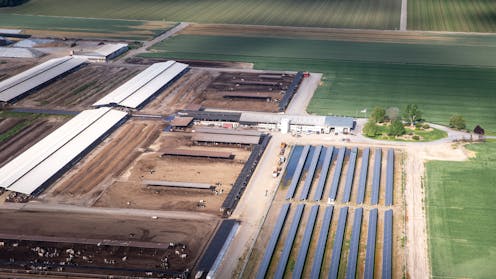
This dairy farm in California’s Central Valley has installed solar panels on a portion of its land. George Rose/Getty Images

Imagine that you own a small, 20-acre farm in California’s Central Valley. You and your family have cultivated this land for decades, but drought, increasing costs and decreasing water availability are making each year more difficult.

Now imagine that a solar-electricity developer approaches you and presents three options:

  • You can lease the developer 10 acres of otherwise productive cropland, on which the developer will build an array of solar panels and sell electricity to the local power company.
  • You can select 1 or 2 acres of your land on which to build and operate your own solar array, using some electricity for your farm and selling the rest to the utility.
  • Or you can keep going as you have been, hoping your farm can somehow survive.

Thousands of farmers across the country, including in the Central Valley, are choosing one of the first two options. A 2022 survey by the U.S. Department of Agriculture found that roughly 117,000 U.S. farm operations have some type of solar device. Our own work has identified over 6,500 solar arrays currently located on U.S. farmland.

Our study of nearly 1,000 solar arrays built on 10,000 acres of the Central Valley over the past two decades found that solar power and farming are complementing each other in farmers’ business operations. As a result, farmers are making and saving more money while using less water – helping them keep their land and livelihood.

A hotter, drier and more built-up future

Perhaps nowhere in the U.S. is farmland more valuable or more productive than California’s Central Valley. The region grows a vast array of crops, including nearly all of the nation’s production of almonds, olives and sweet rice. Using less than 1% of all farmland in the country, the Central Valley supplies a quarter of the nation’s food, including 40% of its fruits, nuts and other fresh foods.

The food, fuel and fiber that these farms produce are a bedrock of the nation’s economy, food system and way of life.

But decades of intense cultivation, urban development and climate change are squeezing farmers. Water is limited, and getting more so: A state law passed in 2014 requires farmers to further reduce their water usage by the mid-2040s.

Workers on farmland with mountains in the background.
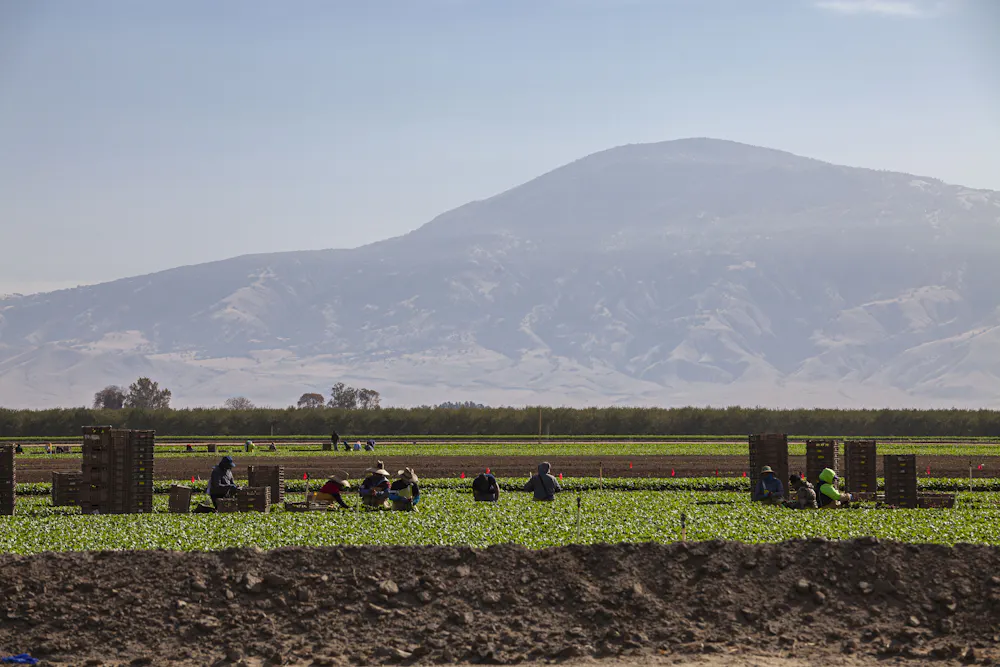
California’s Central Valley is some of the most productive cropland in the country.
Citizen of the Planet/UCG/Universal Images Group via Getty Images

The trade-offs of installing solar on agricultural land

When the solar arrays we studied were installed, California state solar energy policy and incentives gave farm landowners new ways to diversify their income by either leasing their land for solar arrays or building their own.

There was an obvious trade-off: Turning land used for crops to land used for solar usually means losing agricultural production. We estimated that over the 25-year life of the solar arrays, this land would have produced enough food to feed 86,000 people a year, assuming they eat 2,000 calories a day.

There was an obvious benefit, too, of clean energy: These arrays produced enough renewable electricity to power 470,000 U.S. households every year.

But the result we were hoping to identify and measure was the economic effect of shifting that land from agricultural farming to solar farming. We found that farmers who installed solar were dramatically better off than those who did not.

They were better off in two ways, the first being financially. All the farmers, whether they owned their own arrays or leased their land to others, saved money on seeds, fertilizer and other costs associated with growing and harvesting crops. They also earned money from leasing the land, offsetting farm energy bills, and selling their excess electricity.

Farmers who owned their own arrays had to pay for the panels, equipment and installation, and maintenance. But even after covering those costs, their savings and earnings added up to US$50,000 per acre of profits every year, 25 times the amount they would have earned by planting that acre.

Farmers who leased their land made much less money but still avoided costs for irrigation water and operations on that part of their farm, gaining $1,100 per acre per year – with no up-front costs.

The farmers also conserved water, which in turn supported compliance with the state’s Sustainable Groundwater Management Act water use reduction requirements. Most of the solar arrays were installed on land that had previously been irrigated. We calculated that turning off irrigation on this land saved enough water every year to supply about 27 million people with drinking water or irrigate 7,500 acres of orchards. Following solar array installation, some farmers also fallowed surrounding land, perhaps enabled by the new stable income stream, which further reduced water use.

A view of farmland with irrigation sprinklers spraying widely.
Irrigation is key to cropland productivity in California’s Central Valley. Covering some land with solar panels eliminates the need for irrigation of that area, saving water for other uses elsewhere.
Citizen of the Planet/UCG/Universal Images Group via Getty Images

Changes to food and energy production

Farmers in the Central Valley and elsewhere are now cultivating both food and energy. This shift can offer long-term security for farmland owners, particularly for those who install and run their own arrays.

Recent estimates suggest that converting between 1.1% and 2.4% of the country’s farmland to solar arrays would, along with other clean energy sources, generate enough electricity to eliminate the nation’s need for fossil fuel power plants.

Though many crops are part of a global market that can adjust to changes in supply, losing this farmland could affect the availability of some crops. Fortunately, farmers and landowners are finding new ways to protect farmland and food security while supporting clean energy.

One such approach is agrivoltaics, where farmers install solar designed for grazing livestock or growing crops beneath the panels. Solar can also be sited on less productive farmland or on farmland that is used for biofuels rather than food production.

Even in these areas, arrays can be designed and managed to benefit local agriculture and natural ecosystems. With thoughtful design, siting and management, solar can give back to the land and the ecosystems it touches.

Farms are much more than the land they occupy and the goods they produce. Farms are run by people with families, whose well-being depends on essential and variable resources such as water, fertilizer, fuel, electricity and crop sales. Farmers often borrow money during the planting season in hopes of making enough at harvest time to pay off the debt and keep a little profit.

Installing solar on their land can give farmers a diversified income, help them save water, and reduce the risk of bad years. That can make solar an asset to farming, not a threat to the food supply.

The Conversation

Jacob Stid works for Michigan State University. Funding for this work came from the US Department of Agriculture’s National Institute of Food and Agriculture program and the Department of Earth and Environmental Sciences at Michigan State University. He also receives funding from the Foundation for Food and Agricultural Research.

Annick Anctil receives funding from NSF and USDA.

Anthony Kendall receives funding from the USDA, NASA, the NSF, and the Foundation for Food and Agricultural Research. He is an Assistant Professor at Michigan State University, and serves on the nonprofit board of the FLOW Water Advocates.

ref. California farmers identify a hot new cash crop: Solar power – https://theconversation.com/california-farmers-identify-a-hot-new-cash-crop-solar-power-259653

Angels, witches, crystals and black cats: How supernatural beliefs vary across different groups in the US

Source: The Conversation – USA (3) – By Christopher P. Scheitle, Associate Professor of Sociology, West Virginia University

Education, income and demographics shape our views of the unseen world, a survey found. karetoria/Collection Moment via Getty Images

Younger Americans are more likely to express belief in witchcraft and luck, as our new research shows.

As sociologists who research the social dynamics of religion in the United States, we conducted a nationally representative survey in 2021. Our survey posed dozens of questions to 2,000 Americans over the age of 18 on a wide range of beliefs in supernatural phenomena – everything from belief in the devil to belief in the magical power of crystals.

Our statistical analyses found that supernatural beliefs in the United States tend to group into four types.

The first represents what many consider “traditional religious beliefs.” These include beliefs in God, the existence of angels and demons, and belief in the soul and its journey beyond this lifetime.

A second represents belief in “spiritual and mental forces,” some of which are associated with either paranormal or new age beliefs. These include communicating with the dead, predicting the future, or believing that one’s soul can travel through space or time.

A third group represents belief in “witches and witchcraft.” This was measured on our survey with questions about the existence of “black magic” and whether it was “possible to cast spells on people.”

The fourth and final group represents beliefs in supernatural forces that shape “luck” – for instance, that “black cats bring bad luck.”

Our analysis finds that higher education and higher income are associated with lower levels of all four types of supernatural belief. Those with a bachelor’s degree or higher, for instance, score below average on all four types of belief, while those with less education score higher than average on all four.

Looking at race and ethnicity, we found that Latino or Hispanic individuals were more likely than white individuals to express belief in the “witches and witchcraft” form of supernatural belief. About 50% of Latino or Hispanic individuals in our survey, for example, strongly agreed that “witches exist.” This compares with about 37% of white individuals.

Comparing gender differences, we find that women are more likely than men to believe in the “spiritual and mental forces” forms of supernatural belief. For instance, about 31% of women in our survey agreed that “it is possible to communicate with the dead” compared with about 22% of men.

Why it matters

Our research addresses two key questions: first, whether people who hold one type of supernatural belief are also more likely to hold other types of supernatural beliefs; and second, how do different types of supernatural belief vary across key demographic groups, such as across educational levels, racial and ethnic groups, and gender?

Answering these questions can be surprisingly difficult. Most scientific surveys of the U.S. public include, at best, only one or two questions about religious beliefs; rarely do they include questions about other types of supernatural beliefs, such as belief in paranormal or superstitious forces. This could lead to an incomplete understanding of how supernatural beliefs and practices are changing in the United States.

An increasing number of Americans are leaving organized religion. However, it is not clear that supernatural beliefs have or will follow the same trajectory – especially beliefs that are not explicitly connected to those religious identities. For example, someone can identify as nonreligious but believe that the crystal they wear will provide them with supernatural benefits.

Moreover, recognizing that supernatural beliefs can include more than traditionally religious supernatural beliefs may be vital for better understanding other social issues. Research has found, for example, that belief in paranormal phenomena is associated with lower trust in science and medicine.

What’s next

Our survey provides some insight into the nature and patterns of supernatural belief in the U.S. at one point in time, but it does not tell us how such beliefs are changing over time.

We would like to see future surveys – both ours or from other social scientists – that ask more diverse questions about belief in supernatural beings and forces that will allow for an assessment of such changes.

The Research Brief is a short take on interesting academic work.

The Conversation

Christopher P. Scheitle receives funding from the National Science Foundation and the John Templeton Foundation. The research discussed in this article was supported by a grant from the Science and Religion: Identity and Belief Formation grant initiative spearheaded by the Religion and Public Life Program at Rice University and the University of California-San Diego and provided by the Templeton Religion Trust via The Issachar Fund.

Bernard DiGregorio receives funding from the National Science Foundation. The research discussed in this article was funded by a grant from the Science and Religion: Identity and Belief Formation grant initiative spearheaded by the Religion and Public Life Program at Rice University and the University of California-San Diego and provided by the Templeton Religion Trust via The Issachar Fund.

Katie E. Corcoran receives funding from the National Science Foundation, the John Templeton Foundation, and the Patient-Centered Outcomes Research Institute. The research discussed in this article was supported by a grant from the Science and Religion: Identity and Belief Formation grant initiative spearheaded by the Religion and Public Life Program at Rice University and the University of California-San Diego and provided by the Templeton Religion Trust via The Issachar Fund.

ref. Angels, witches, crystals and black cats: How supernatural beliefs vary across different groups in the US – https://theconversation.com/angels-witches-crystals-and-black-cats-how-supernatural-beliefs-vary-across-different-groups-in-the-us-258377