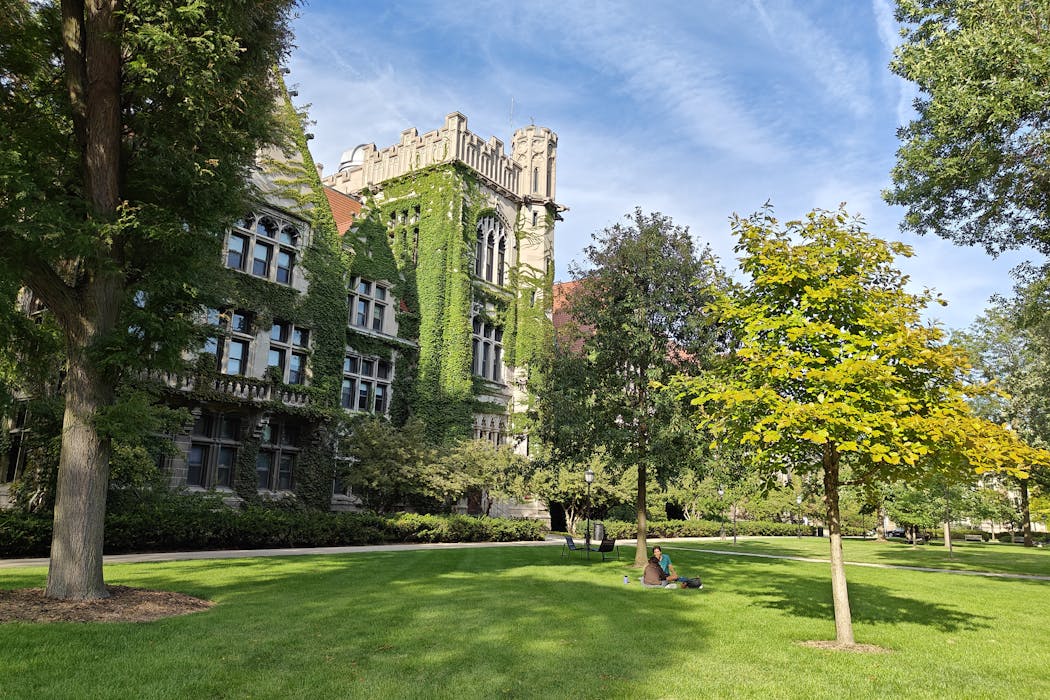
Students at elite universities tend to talk a good game when it comes to religious pluralism. Many of them show up on day one already saying all the right things about respecting different faiths.
But here’s the paradox: They don’t grow from there, according to our research published in The Journal of Higher Education. Students at less selective colleges, meanwhile, do develop more pluralistic attitudes. And by their fourth year, they participate in interfaith activities, such as taking courses about different religions or joining in interfaith dialogues, just as much as anyone else.
Religious pluralism goes beyond tolerance or diversity, which are simply coexisting with people of different faiths. Pluralism involves actively seeking to understand other traditions, talking with people from other backgrounds and working with them toward common goals.
As scholars of religionand education, we worked with sociologist of education David Shuang Song to study how students’ attitudes and actions change over time. We examined data from more than 3,100 students at 112 colleges, using the Interfaith Diversity Experiences and Attitudes Longitudinal Survey. Our study tracked students for four years, measuring two things: their attitudes about appreciating different faiths, and their actual participation in interfaith activities.
First, freshmen at highly selective schools – institutions that typically admit fewer than 1 in 5 applicants – often start with stronger support for religious pluralism. Compared with freshmen at less selective schools, they are more likely to agree with questions like “I respect people who have religious or nonreligious perspectives that differ from my own,” though the difference was modest.
Second, fourth-year students at less selective schools showed more pluralistic attitudes than at the start of college. In contrast, students at elite institutions maintained their high initial attitudes without any measurable change.
Third, students at all types of institutions participated in more interfaith activities by the end of college, on average, with less selective schools showing slightly larger gains. That might mean attending services of different faiths, taking courses about other religions or joining dialogue groups.
The bottom line: At less selective colleges, students tended to develop stronger attitudes about religious pluralism, and they also increased their interfaith activities. At elite colleges, students increased their activities, but their attitudes more often remained flat.
Our findings reveal an interesting paradox: Elite institutions admit students who already express strong support for religious pluralism on surveys. On average, however, students’ attitudes don’t deepen during college, although their interfaith activities do increase somewhat.
And students’ answers to questions about pluralism don’t necessarily demonstrate genuine commitment. For example, these attitudes may be part of how some elite students learn to seem culturally sophisticated – voicing ideals they associate with being open-minded, cosmopolitan and educated.
The findings may challenge assumptions about where meaningful education about diversity occurs. On average, less selective institutions, which educate most college students, begin with students less inclined toward pluralism. Yet in general, we found that these schools successfully foster growth in both attitudes and behavior – particularly when interfaith programs are integrated into everyday campus life and curriculum. All colleges can challenge students through experiences like interfaith events, research projects or internships.
What’s next
Today’s college students are tomorrow’s civic leaders, educators, policymakers and professionals. If institutions are struggling to cultivate the skills students need to have conversations and collaborate with people from diverse religious backgrounds, the cultural divides that already fracture our democracy are at risk of deepening.
We believe colleges must go beyond performative pluralism to foster the habits of curiosity, humility and collaboration. Pluralism isn’t just a campus value. It’s a civic necessity.
The Research Brief is a short take on interesting academic work.
The authors do not work for, consult, own shares in or receive funding from any company or organization that would benefit from this article, and have disclosed no relevant affiliations beyond their academic appointment.
Source: The Conversation – USA (2) – By Alton C. Byers, Faculty Research Scientist, Institute of Arctic and Alpine Research, University of Colorado Boulder
U.S. Geological Survey staff check monitoring equipment in Suicide Basin in June 2025. By August, the basin had filled with meltwater.Jeff Conaway/U.S. Geological Survey
Each summer in the mountains above Juneau, Alaska, meltwater from the massive Mendenhall Glacier flows into mountain lakes and into the Mendenhall River, which runs through town.
Since 2011, scientists and local officials have kept a close eye on one lake in particular: Suicide Basin, an ice-dammed bowl on an arm of the glacier. Glacier ice once covered this area, but as the ice retreated in recent decades, it left behind a large, deep depression.
In the summers of 2023 and 2024, meltwater filled Suicide Basin, overflowed and escaped through tunnels in the ice, sending surges of water downstream that flooded neighborhoods along the river.
The glacial flood risks that Juneau is now experiencing each summer are becoming a growing problem in communities around the world. As an Earth scientist and a mountain geographer, we study the impact that ice loss can have on the stability of the surrounding mountain slopes and glacial lakes, and we see several reasons for increasing concern.
These and other icy regions have provided freshwater for people living downstream for centuries – almost 2 billion people rely on glaciers today. But as glaciers melt faster, they also pose potentially lethal risks.
Water from the melting ice often drains into depressions once occupied by the glacier, creating large lakes. Many of these expanding lakes are held in place by precarious ice dams or rock moraines deposited by the glacier over centuries.
Imja Lake, a glacial lake in the Mount Everest region of Nepal, began as meltwater ponds in 1962 and now contains 90 million cubic meters of water. Its water level was lowered to protect downstream communities. Alton Byers
The Mendenhall Glacier floods, where glacial ice holds back the water, are classic jökulhlaup, or “glacier leap” floods, first described in Iceland and now characteristic of Alaska and other northern latitude regions.
Scientists investigate flooding from Mendenhall Glacier’s Suicide Basin.
Avalanches, rockfalls and slope failures can also trigger glacial lake outburst floods.
These are growing more common as frozen ground known as permafrost thaws, robbing mountain landscapes of the cryospheric glue that formerly held them together. These slides can create massive waves when they plummet into a lake. The waves can then rupture the ice dam or moraine, unleashing a flood of water, sediment and debris.
That dangerous mix can rush downstream at speeds of 20-60 mph (30-100 kph), destroying homes and anything else in its path.
The casualties of such an event can be staggering. In 1941, a huge wave caused by a snow and ice avalanche that fell into Laguna Palcacocha, a glacial lake in the Peruvian Andes, overtopped the moraine dam that had contained the lake for decades. The resulting flood destroyed one-third of the downstream city of Huaraz and killed between 1,800 and 5,000 people.
Governments have responded to this widespread and growing threat by developing early warning systems and programs to identify potentially dangerous glacial lakes. In Juneau, the U.S. Geological Survey starts monitoring Suicide Basin closely when it begins to fill.
Some governments have taken steps to lower water levels in the lakes or built flood-diversion structures, such as walls of rock-filled wire cages, known as gabions, that divert floodwaters from villages, infrastructure or agricultural fields.
Where the risks can’t be managed, communities have been encouraged to use zoning that prohibits building in flood-prone areas. Public education has helped build awareness of the flood risk, but the disasters continue.
Flooding from inside and thawing permafrost
The dramatic nature of glacial lake outburst floods captures headlines, but those aren’t the only risks.
Englacial conduit floods originate inside of glaciers, commonly on steep slopes. Meltwater can collect inside massive systems of ice caves, or conduits. A sudden surge of water from one cave to another, perhaps triggered by the rapid drainage of a surface pond, can set off a chain reaction that bursts out of the ice as a full-fledged flood.
An englacial conduit flood begins in the Himalayas. Elizabeth Byers.
Thawing mountain permafrost can also trigger floods. This permanently frozen mass of rock, ice and soil has been a fixture at altitudes above 19,685 feet (6,000 meters) for millennia.
As permafrost thaws, even solid rock becomes less stable and is more prone to breaking, while ice and debris are more likely to become detached and turn into destructive and dangerous debris flows. Thawing permafrost has been increasingly implicated in glacial lake outburst floods because of these new sources of potential triggers.
A glacial outburst flood in Barun Valley started when nearly one-third of the face of Saldim Peak in Nepal fell onto Langmale Glacier and slid into a lake. The top image shows the mountain in 2016. The lower shows the same view in 2017. Elizabeth Byers (2016), Alton Byers (2017)
How mountain regions can reduce the risk
A study published in 2024 counted more than 110,000 glacial lakes around the world and determined 10 million people’s lives and homes are at risk from glacial lake outburst floods.
To help prepare and protect communities, our research points to some key lessons:
Some of the most effective early warning systems have proven to be cellphone alerts. If combined with apps showing real-time water levels at a dangerous glacial lake, residents could more easily assess the danger.
Projects to lower glacier lakes aren’t always effective. In the past, at least two glacial lakes in the Himalayas have been lowered by about 10 feet (3 meters) when studies indicated that closer to 65 feet (20 meters) was needed. In some cases, draining small, emerging lakes before they develop could be more cost effective than waiting until a large and dangerous lake threatens downstream communities.
People living in remote mountain regions threatened by glacial lakes need a reliable source of information that can provide regular updates with monitoring technology.
Recently it has become clear that even tiny glacial lakes can be dangerous given the right combination of cascading events. These need to be included in any list of potentially dangerous glacial lakes to warn communities downstream.
The U.N. declared 2025 the International Year of Glaciers’ Preservation and 2025-2034 the decade of action in cryospheric sciences. Scientists on several continents will be working to understand the risks and find ways to help communities respond to and mitigate the dangers.
This is an update to an article originally published March 19, 2025, to include the latest Alaska flooding.
Suzanne OConnell receives funding from The National Science Foundation
Alton C. Byers does not work for, consult, own shares in or receive funding from any company or organization that would benefit from this article, and has disclosed no relevant affiliations beyond their academic appointment.
Source: The Conversation – USA (2) – By Alton C. Byers, Faculty Research Scientist, Institute of Arctic and Alpine Research, University of Colorado Boulder
U.S. Geological Survey staff check monitoring equipment in Suicide Basin in June 2025. By August, the basin had filled with meltwater.Jeff Conaway/U.S. Geological Survey
Each summer in the mountains above Juneau, Alaska, meltwater from the massive Mendenhall Glacier flows into mountain lakes and into the Mendenhall River, which runs through town.
Since 2011, scientists and local officials have kept a close eye on one lake in particular: Suicide Basin, an ice-dammed bowl on an arm of the glacier. The glacier once covered this area, but as the ice retreated in recent decades, it left behind a large, deep depression.
In the summers of 2023 and 2024, meltwater filled Suicide Basin, overflowed its rim and escaped through tunnels in the ice, sending surges of water downstream that flooded neighborhoods along the river.
The glacial flood risks that Juneau is now experiencing each summer are becoming a growing problem in communities around the world. As an Earth scientist and a mountain geographer, we study the impact that ice loss can have on the stability of the surrounding mountain slopes and glacial lakes, and we see several reasons for increasing concern.
Two photo shows the same scene 125 years apart. The glacier loss is evident, and the lake between Suicide Glacier and Mendenhall Glacier didn’t exist in 1893. NOAA/Alaska Climate Adaptation Science Center
These and other icy regions have provided freshwater for people living downstream for centuries – almost 2 billion people rely on glaciers today. But as glaciers melt faster, they also pose potentially lethal risks.
Water from the melting ice often drains into depressions once occupied by the glacier, creating large lakes. Many of these expanding lakes are held in place by precarious ice dams or rock moraines deposited by the glacier over centuries.
Imja Lake, a glacial lake in the Mount Everest region of Nepal, began as meltwater ponds in 1962 and now contains 90 million cubic meters of water. Its water level was lowered to protect downstream communities. Alton Byers
The Mendenhall Glacier floods, where glacial ice holds back the water, are classic jökulhlaup, or “glacier leap” floods, first described in Iceland and now characteristic of Alaska and other northern latitude regions.
Scientists investigate flooding from Mendenhall Glacier’s Suicide Basin.
Avalanches, rockfalls and slope failures can also trigger glacial lake outburst floods.
These are growing more common as frozen ground known as permafrost thaws, robbing mountain landscapes of the cryospheric glue that formerly held them together. These slides can create massive waves when they plummet into a lake. The waves can then rupture the ice dam or moraine, unleashing a flood of water, sediment and debris.
That dangerous mix can rush downstream at speeds of 20-60 mph (30-100 kph), destroying homes and anything else in its path.
The casualties of such an event can be staggering. In 1941, a huge wave caused by a snow and ice avalanche that fell into Laguna Palcacocha, a glacial lake in the Peruvian Andes, overtopped the moraine dam that had contained the lake for decades. The resulting flood destroyed one-third of the downstream city of Huaraz and killed between 1,800 and 5,000 people.
Governments have responded to this widespread and growing threat by developing early warning systems and programs to identify potentially dangerous glacial lakes. In Juneau, the U.S. Geological Survey starts monitoring Suicide Basin closely when it begins to fill.
Some governments have taken steps to lower water levels in the lakes or built flood-diversion structures, such as walls of rock-filled wire cages, known as gabions, that divert floodwaters from villages, infrastructure or agricultural fields.
Where the risks can’t be managed, communities have been encouraged to use zoning that prohibits building in flood-prone areas. Public education has helped build awareness of the flood risk, but the disasters continue.
Flooding from inside and thawing permafrost
The dramatic nature of glacial lake outburst floods captures headlines, but those aren’t the only risks.
Englacial conduit floods originate inside of glaciers, commonly on steep slopes. Meltwater can collect inside massive systems of ice caves, or conduits. A sudden surge of water from one cave to another, perhaps triggered by the rapid drainage of a surface pond, can set off a chain reaction that bursts out of the ice as a full-fledged flood.
An englacial conduit flood begins in the Himalayas. Elizabeth Byers.
Thawing mountain permafrost can also trigger floods. This permanently frozen mass of rock, ice and soil has been a fixture at altitudes above 19,685 feet (6,000 meters) for millennia.
As permafrost thaws, even solid rock becomes less stable and is more prone to breaking, while ice and debris are more likely to become detached and turn into destructive and dangerous debris flows. Thawing permafrost has been increasingly implicated in glacial lake outburst floods because of these new sources of potential triggers.
A glacial outburst flood in Barun Valley started when nearly one-third of the face of Saldim Peak in Nepal fell onto Langmale Glacier and slid into a lake. The top image shows the mountain in 2016. The lower shows the same view in 2017. Elizabeth Byers (2016), Alton Byers (2017)
How mountain regions can reduce the risk
A study published in 2024 counted more than 110,000 glacial lakes around the world and determined 10 million people’s lives and homes are at risk from glacial lake outburst floods.
To help prepare and protect communities, our research points to some key lessons:
Some of the most effective early warning systems have proven to be cellphone alerts. If combined with apps showing real-time water levels at a dangerous glacial lake, residents could more easily assess the danger.
Projects to lower glacier lakes aren’t always effective. In the past, at least two glacial lakes in the Himalayas have been lowered by about 10 feet (3 meters) when studies indicated that closer to 65 feet (20 meters) was needed. In some cases, draining small, emerging lakes before they develop could be more cost effective than waiting until a large and dangerous lake threatens downstream communities.
People living in remote mountain regions threatened by glacial lakes need a reliable source of information that can provide regular updates with monitoring technology.
Recently it has become clear that even tiny glacial lakes can be dangerous given the right combination of cascading events. These need to be included in any list of potentially dangerous glacial lakes to warn communities downstream.
The U.N. declared 2025 the International Year of Glaciers’ Preservation and 2025-2034 the decade of action in cryospheric sciences. Scientists on several continents will be working to understand the risks and find ways to help communities respond to and mitigate the dangers.
This is an update to an article originally published March 19, 2025, to include the latest Alaska flooding.
Suzanne OConnell receives funding from The National Science Foundation
Alton C. Byers does not work for, consult, own shares in or receive funding from any company or organization that would benefit from this article, and has disclosed no relevant affiliations beyond their academic appointment.
A new wave of climate research is sounding a stark warning: Human activity may be driving drought more intensely – and more directly – than previously understood.
This drought has been linked to the Pacific Decadal Oscillation, a climate pattern that swings between wet and dry phases every few decades. Since a phase change in the early 2000s, the region has endured a dry spell of epic proportions.
The PDO was thought to be a natural phenomenon, governed by unpredictable natural ocean and atmosphere fluctuations. But new research published in the journal Nature suggests that’s no longer the case.
Working with hundreds of climate model simulations, our team of atmosphere, earth and ocean scientists found that the PDO is now being strongly influenced by human factors and has been since the 1950s. It should have oscillated to a wetter phase by now, but instead it has been stuck. Our results suggest that drought could become the new normal for the region unless human-driven warming is halted.
The science of a drying world
For decades, scientists have relied on a basic physical principle to predict rainfall trends: Warmer air holds more moisture. In a warming world, this means wet areas are likely to get wetter, while dry regions become drier. In dry areas, as temperatures rise, more moisture is pulled from soils and transported away from these arid regions, intensifying droughts.
While most climate models simulate this general pattern, they often underestimate its full extent, particularly over land areas.
Arizona Game and Fish Department workers pump water into a wildlife water catchment south of Tucson in July 2023. In normal years, the catchment receives enough rainwater, but years of drought have changed that. Andrew Caballero-Reynolds/AFP via Getty Images
Yet countries are already experiencing drought emerging as one of the most immediate and severe consequences of climate change. Understanding what’s ahead is essential, to know how long these droughts will last and because severe droughts can have sweeping affects on ecosystems, economies and global food security.
Human fingerprints on megadroughts
Simulating rainfall is one of the greatest challenges in climate science. It depends on a complex interplay between large-scale wind patterns and small-scale processes such as cloud formation.
Until recently, climate models have not offered a clear picture of how rainfall patterns are likely to change in the near future as greenhouse gas emissions from vehicles, power plants and industries continue to heat up the planet. The models can diverge sharply in where, when and how precipitation will change. Even forecasts that average the results of several models differ when it comes to changes in rainfall patterns.
We looked back at the pattern of PDO phase changes over the past century using an exceptionally large ensemble of climate simulations. The massive number of simulations, more than 500, allowed us to isolate the human influences. This showed that the shifts in the PDO were driven by an interplay of increasing warming from greenhouse gas emissions and cooling from sun-blocking particles called aerosols that are associated with industrial pollution.
From the 1950s through the 1980s, we found that increasing aerosol emissions from rapid industrialization following World War II drove a positive trend in the PDO, making the Southwest rainier and less parched.
After the 1980s, we found that the combination of a sharp rise in greenhouse gas emissions from industries, power plants and vehicles and a reduction in aerosols as countries cleaned up their air pollution shifted the PDO into the negative, drought-generating trend that continues today.
This finding represents a paradigm shift in our scientific understanding of the PDO and a warning for the future. The current negative phase can no longer be seen as just a roll of the climate dice – it has been loaded by humans.
Our conclusion that global warming can drive the PDO into its negative, drought-inducing phase is also supported by geological records of past megadroughts. Around 6,000 years ago, during a period of high temperatures, evidence shows the emergence of a similar temperature pattern in the North Pacific and widespread drought across the Southwest.
Tropical drought risks underestimated
The past is also providing clues to future rainfall changes in the tropics and the risk of droughts in locations such as the Amazon.
One particularly instructive example comes from approximately 17,000 years ago. Geological evidence shows that there was a period of widespread rainfall shifts across the tropics coinciding with a major slowdown of ocean currents in the Atlantic.
These ocean currents, which play a crucial role in regulating global climate, naturally weakened or partially collapsed then, and they are expected to slow further this century at the current pace of global warming.
A recent study of that period, using computer models to analyze geologic evidence of earth’s climate history, found much stronger drying in the Amazon basin than previously understood. It also shows similar patterns of aridification in Central America, West Africa and Indonesia.
The results suggest that rainfall could decline precipitously again. Even a modest slowdown of a major Atlantic Ocean current could dry out rainforests, threaten vulnerable ecosystems and upend livelihoods across the tropics.
What comes next
Drought is a growing problem, increasingly driven by human influence. Confronting it will require rethinking water management, agricultural policy and adaptation strategies. Doing that well depends on predicting drought with far greater confidence.
Climate research shows that better predictions are possible by using computer models in new ways and rigorously validating their performance against evidence from past climate shifts. The picture that emerges is sobering, revealing a much higher risk of drought across the world.
Pedro DiNezio receives funding from the U.S. National Science Foundation, National Oceanic and Atmospheric Administration, and WTW Research Network.
Timothy Shanahan does not work for, consult, own shares in or receive funding from any company or organization that would benefit from this article, and has disclosed no relevant affiliations beyond their academic appointment.
Source: The Conversation – USA – By M. Hadi Amini, Associate Professor of Computing and Information Sciences, Florida International University
Data poisoning can make an AI system dangerous to use, potentially posing threats such as chemically poisoning a food or water supply. ArtemisDiana/iStock via Getty Images
Imagine a busy train station. Cameras monitor everything, from how clean the platforms are to whether a docking bay is empty or occupied. These cameras feed into an AI system that helps manage station operations and sends signals to incoming trains, letting them know when they can enter the station.
The quality of the information that the AI offers depends on the quality of the data it learns from. If everything is happening as it should, the systems in the station will provide adequate service.
But if someone tries to interfere with those systems by tampering with their training data – either the initial data used to build the system or data the system collects as it’s operating to improve – trouble could ensue.
An attacker could use a red laser to trick the cameras that determine when a train is coming. Each time the laser flashes, the system incorrectly labels the docking bay as “occupied,” because the laser resembles a brake light on a train. Before long, the AI might interpret this as a valid signal and begin to respond accordingly, delaying other incoming trains on the false rationale that all tracks are occupied. An attack like this related to the status of train tracks could even have fatal consequences.
We are computer scientists who studymachine learning, and we research how to defend against this type of attack.
Data poisoning explained
This scenario, where attackers intentionally feed wrong or misleading data into an automated system, is known as data poisoning. Over time, the AI begins to learn the wrong patterns, leading it to take actions based on bad data. This can lead to dangerous outcomes.
In the train station example, suppose a sophisticated attacker wants to disrupt public transportation while also gathering intelligence. For 30 days, they use a red laser to trick the cameras. Left undetected, such attacks can slowly corrupt an entire system, opening the way for worse outcomes such as backdoor attacks into secure systems, data leaks and even espionage. While data poisoning in physical infrastructure is rare, it is already a significant concern in online systems, especially those powered by large language models trained on social media and web content.
A famous example of data poisoning in the field of computer science came in 2016, when Microsoft debuted a chatbot known as Tay. Within hours of its public release, malicious users online began feeding the bot reams of inappropriate comments. Tay soon began parroting the same inappropriate terms as users on X (then Twitter), and horrifying millions of onlookers. Within 24 hours, Microsoft had disabled the tool and issued a public apology soon after.
Data poisoning explained.
The social media data poisoning of the Microsoft Tay model underlines the vast distance that lies between artificial and actual human intelligence. It also highlights the degree to which data poisoning can make or break a technology and its intended use.
Data poisoning might not be entirely preventable. But there are commonsense measures that can help guard against it, such as placing limits on data processing volume and vetting data inputs against a strict checklist to keep control of the training process. Mechanisms that can help to detect poisonous attacks before they become too powerful are also critical for reducing their effects.
Fighting back with the blockchain
At Florida International University’s solid lab, we are working to defend against data poisoning attacks by focusing on decentralized approaches to building technology. One such approach, known as federated learning, allows AI models to learn from decentralized data sources without collecting raw data in one place. Centralized systems have a single point of failure vulnerability, but decentralized ones cannot be brought down by way of a single target.
Federated learning offers a valuable layer of protection, because poisoned data from one device doesn’t immediately affect the model as a whole. However, damage can still occur if the process the model uses to aggregate data is compromised.
This is where another more popular potential solution – blockchain – comes into play. A blockchain is a shared, unalterable digital ledger for recording transactions and tracking assets. Blockchains provide secure and transparent records of how data and updates to AI models are shared and verified.
By using automated consensus mechanisms, AI systems with blockchain-protected training can validate updates more reliably and help identify the kinds of anomalies that sometimes indicate data poisoning before it spreads.
Blockchains also have a time-stamped structure that allows practitioners to trace poisoned inputs back to their origins, making it easier to reverse damage and strengthen future defenses. Blockchains are also interoperable – in other words, they can “talk” to each other. This means that if one network detects a poisoned data pattern, it can send a warning to others.
At solid lab, we have built a new tool that leverages both federated learning and blockchain as a bulwark against data poisoning. Other solutions are coming from researchers who are using prescreening filters to vet data before it reaches the training process, or simply training their machine learning systems to be extra sensitive to potential cyberattacks.
Ultimately, AI systems that rely on data from the real world will always be vulnerable to manipulation. Whether it’s a red laser pointer or misleading social media content, the threat is real. Using defense tools such as federated learning and blockchain can help researchers and developers build more resilient, accountable AI systems that can detect when they’re being deceived and alert system administrators to intervene.
M. Hadi Amini has received funding for researching security of transportation systems from U.S. Department of Transportation. Opinions expressed represent his personal or professional opinions and do not represent or reflect the position of Florida International University.
This work was partly supported by the National Center for Transportation Cybersecurity and Resiliency (TraCR). Any opinions, findings, conclusions, and recommendations expressed in this material are those of the authors and do not necessarily reflect the views of TraCR, and the U.S. Government assumes no liability for the contents or use thereof.
Ervin Moore has received funding for researching security of transportation systems from U.S. Department of Transportation. Opinions expressed represent his personal or professional opinions and do not represent or reflect the position of Florida International University.
This work was partly supported by the National Center for Transportation Cybersecurity and Resiliency (TraCR). Any opinions, findings, conclusions, and recommendations expressed in this material are those of the authors and do not necessarily reflect the views of TraCR, and the U.S. Government assumes no liability for the contents or use thereof.
Have you ever walked face-first into a spiderweb while on a hike? Or swept away cobwebs in your garage?
You may recognize the orb web as the classic Halloween decoration or cobwebs as close neighbors with your dust bunnies. These are just two among the many types of spiderweb architectures, each with a unique structure specially attuned to the spider’s environment and the web’s intended job.
While many spiders use their webs to catch prey, they have also evolved unusual ways to use their silk, from wrapping their eggs to acting as safety lines that catch them when they fall.
As a materials scientist who studies spiders and their silks, I am curious about the relationship between spiderweb architecture and the strength of the silks spiders use. How do the design of a web and the properties of the silk used affect a spider’s ability to catch its next meal?
Webs’ ancient origins
Spider silk has a long evolutionary history. Researchers believe that it first evolved around 400 million years ago. These ancestral spiders used silk to line their burrows, protect their vulnerable eggs and create sensory paths and guidelines as they navigated their environment.
To understand what ancient spiderwebs could have looked like, scientists look to the lampshade spider. This spider lives in rock outcroppings in the Appalachian and Rocky mountains. It is a living relative of some of the most ancient spiders to ever make webs, and it hasn’t changed much at all since web-building first evolved.
A lampshade spider in its distinctive web between rocks. Tyler Brown, CC BY-SA
Aptly named for its web shape, the lampshade spider makes a web with a narrow base that widens outward. These webs fill the cracks between rocks where the spider can be camouflaged against the rough surface. It’s hard for a prospective meal to traverse this rugged landscape without being ensnared.
Web diversity
Today, all spider species produce silk. Each species creates its own specific web architecture that is uniquely suited to the type of prey it eats and the environment it lives in.
Take the orb web, for example. These are aerial, two-dimensional webs featuring a distinctive spiral. They mostly catch flying or jumping prey, such as flies and grasshoppers. Orb webs are found in open areas, such as on treelines, in tall grasses or between your tomato plants.
Compare that to the cobweb, a structure that is most often seen by the baseboards in your home. While the term cobweb is commonly used to refer to any dusty, abandoned spiderweb, it is actually a specific web shape typically designed by spiders in the family Theridiidae. This spiderweb has a complex, three-dimensional architecture. Lines of silk extend downwards from the 3D tangle and are held affixed to the ground under high tension. These lines act as a sticky, spring-loaded booby trap to capture crawling prey such as ants and beetles. When an insect makes contact with the glue at the base of the line, the silk detaches from the ground, sometimes with enough force to lift the meal into the air.
Watch a redback spider build the high-tension lines of a cobweb and ensnare unsuspecting ants.
Web weirdos
Imagine you are an unsuspecting beetle, navigating your way between strands of grass when you come upon a tightly woven silken floor. As you begin to walk across the mat, you see eight eyes peeking out of a silken funnel – just before you’re quickly snatched up as a meal.
Spiders such as funnel-web weavers construct thick silk mats on the ground that they use as an extension of their sensory systems. The spider waits patiently in its funnel-shaped retreat. Prey that come in contact with the web create vibrations that alert the spider a tasty treat is walking across the welcome mat and it’s time to pounce.
Jumping spiders are another unusual web spinner. They are well known for their varied colorations, elaborate courtship dances and being some of the most charismatic arachnids. Their cuteness has made them popular, thanks to Lucas the Spider, an adorable cartoon jumping spider animated by Joshua Slice. With two huge front eyes giving them depth perception, these spiders are fantastic hunters, capable of jumping in any direction to navigate their environment and hunt.
But what happens when they misjudge a jump, or worse, need to escape a predator? Jumpers use their silk as a safety tether to anchor themselves to surfaces before leaping through the air. If the jump goes wrong, they can climb back up their tether, allowing them to try again. Not only does this safety line of silk give them a chance for a redo, it also helps with making the jump. The tether helps them control the direction and speed of their jump in midair. By changing how fast they release the silk, they can land exactly where they want to.
Orb-weaving spiders usually start with a proto-web. Scientists think this initial construction is an exploratory stage, when the spider assesses the space available and finds anchor points for its silk. Once the spider is ready to build its main web, it will use the proto-web as a scaffold to create the frame, spokes and spiral that will help with absorbing energy and capturing prey. These structures are vital for ensuring that their next meal won’t rip right through the web, especially insects such as dragonflies that have an average cruising speed of 10 mph. When complete, the orb weaver will return to the center of the web to wait for its next meal.
The diversity in a spider’s web can’t all be achieved with one material. In fact, spiders can create up to seven types of silk, and orb weavers make them all. Each silk type has different material and mechanical properties, serving a specific use within the spider’s life. All spider silk is created in the silk glands, and each different type of silk is created by its own specialized gland.
Orb weavers rely on the stiff nature of the strongest fibers in their arsenal for framing webs and as a safety line. Conversely, the capture spiral of the orb web is made with extremely stretchy silk. When a prey item gets caught in the spiral, the impact pulls on the silk lines. These fibers stretch to dissipate the energy to ensure the prey doesn’t just tear through the web.
Spider glue is a modified silk type with adhesive properties and the only part of the spiderweb that is actually sticky. This gluey silk, located on the capture spiral, helps make sure that the prey stays stuck in the web long enough for the spider to deliver a venomous bite.
To wrap up
Spiders and their webs are incredibly varied. Each spider species has adapted to live within its environmental niche and capture certain types of prey. Next time you see a spiderweb, take a moment to observe it rather than brushing it away or squishing the spider inside.
Notice the differences in web structure, and see whether you can spot the glue droplets. Look for the way that the spider is sitting in its web. Is it currently eating, or are there discarded remains of the insects it has prevented from wandering into your home?
Observing these arachnid architects can reveal a lot about design, architecture and innovation.
Ella Kellner does not work for, consult, own shares in or receive funding from any company or organization that would benefit from this article, and has disclosed no relevant affiliations beyond their academic appointment.
National Guard members arrive at the Guard’s headquarters at D.C. Armory on Aug. 12, 2025 in Washington. Anna Moneymaker/Getty Images
With his Aug. 11, 2025, announcement that he was sending the National Guard – along with federal law enforcement – into Washington, D.C. to fight crime, President Donald Trump edged U.S. troops closer to the kind of military-civilian confrontations that can cross ethical and legal lines.
When a sitting commander in chief authorizes acts like these, which many assert are clear violations of the law, men and women in uniform face an ethical dilemma: How should they respond to an order they believe is illegal?
The question may already be affecting troop morale. “The moral injuries of this operation, I think, will be enduring,” a National Guard member who had been deployed to quell public unrest over immigration arrests in Los Angeles told The New York Times. “This is not what the military of our country was designed to do, at all.”
We are scholars of international relations and international law. We conducted survey research at the University of Massachusetts Amherst’s Human Security Laband discovered that many service members do understand the distinction between legal and illegal orders, the duty to disobey certain orders, and when they should do so.
President Donald Trump, flanked by Secretary of Defense Pete Hegseth and Attorney General Pam Biondi, announced at a White House news conference on Aug. 11, 2025, that he was deploying the National Guard to assist in restoring law and order in Washington. Hu Yousong/Xinhua via Getty Images
Compelled to disobey
U.S. service members take an oath to uphold the Constitution. In addition, under Article 92 of the Uniform Code of Military Justice and the U.S. Manual for Courts-Martial, service members must obey lawful orders and disobey unlawful orders. Unlawful orders are those that clearly violate the U.S. Constitution, international human rights standards or the Geneva Conventions.
Service members who follow an illegal order can be held liable and court-martialed or subject to prosecution by international tribunals. Following orders from a superior is no defense.
Our poll, fielded between June 13 and June 30, 2025, shows that service members understand these rules. Of the 818 active-duty troops we surveyed, just 9% stated that they would “obey any order.” Only 9% “didn’t know,” and only 2% had “no comment.”
When asked to describe unlawful orders in their own words, about 25% of respondents wrote about their duty to disobey orders that were “obviously wrong,” “obviously criminal” or “obviously unconstitutional.”
Another 8% spoke of immoral orders. One respondent wrote that “orders that clearly break international law, such as targeting non-combatants, are not just illegal — they’re immoral. As military personnel, we have a duty to uphold the law and refuse commands that betray that duty.”
Just over 40% of respondents listed specific examples of orders they would feel compelled to disobey.
The most common unprompted response, cited by 26% of those surveyed, was “harming civilians,” while another 15% of respondents gave a variety of other examples of violations of duty and law, such as “torturing prisoners” and “harming U.S. troops.”
One wrote that “an order would be obviously unlawful if it involved harming civilians, using torture, targeting people based on identity, or punishing others without legal process.”
A tag cloud of responses to UMass-Amherst’s Human Security Lab survey of active-duty service members about when they would disobey an order from a superior. UMass-Amherst’s Human Security Lab, CC BY
Soldiers, not lawyers
But the open-ended answers pointed to another struggle troops face: Some no longer trust U.S. law as useful guidance.
Writing in their own words about how they would know an illegal order when they saw it, more troops emphasized international law as a standard of illegality than emphasized U.S. law.
Others implied that acts that are illegal under international law might become legal in the U.S.
“Trump will issue illegal orders,” wrote one respondent. “The new laws will allow it,” wrote another. A third wrote, “We are not required to obey such laws.”
Several emphasized the U.S. political situation directly in their remarks, stating they’d disobey “oppression or harming U.S. civilians that clearly goes against the Constitution” or an order for “use of the military to carry out deportations.”
Still, the percentage of respondents who said they would disobey specific orders – such as torture – is lower than the percentage of respondents who recognized the responsibility to disobey in general.
This is not surprising: Troops are trained to obey and face numerous social, psychological and institutional pressures to do so. By contrast, most troops receive relatively little training in the laws of war or human rights law.
When we explicitly reminded troops that shooting civilians was a violation of international law, their willingness to disobey increased 8 percentage points.
Drawing the line
As my research with another scholar showed in 2020, even thinking about law and morality can make a difference in opposition to certain war crimes.
The preliminary results from our survey led to a similar conclusion. Troops who answered questions on “manifestly unlawful orders” before they were asked questions on specific scenarios were much more likely to say they would refuse those specific illegal orders.
When asked if they would follow an order to drop a nuclear bomb on a civilian city, for example, 69% of troops who received that question first said they would obey the order.
But when the respondents were asked to think about and comment on the duty to disobey unlawful orders before being asked if they would follow the order to bomb, the percentage who would obey the order dropped 13 points to 56%.
While many troops said they might obey questionable orders, the large number who would not is remarkable.
Military culture makes disobedience difficult: Soldiers can be court-martialed for obeying an unlawful order, or for disobeying a lawful one.
Yet between one-third to half of the U.S. troops we surveyed would be willing to disobey if ordered to shoot or starve civilians, torture prisoners or drop a nuclear bomb on a city.
The service members described the methods they would use. Some would confront their superiors directly. Others imagined indirect methods: asking questions, creating diversions, going AWOL, “becoming violently ill.”
Criminologist Eva Whitehead researched actual cases of troop disobedience of illegal orders and found that when some troops disobey – even indirectly – others can more easily find the courage to do the same.
Whitehead’s research showed that those who refuse to follow illegal or immoral orders are most effective when they stand up for their actions openly.
The initial results of our survey – coupled with a recent spike in calls to the GI Rights Hotline – suggest American men and women in uniform don’t want to obey unlawful orders.
Some are standing up loudly. Many are thinking ahead to what they might do if confronted with unlawful orders. And those we surveyed are looking for guidance from the Constitution and international law to determine where they may have to draw that line.
Zahra Marashi, an undergraduate research assistant at the University of Massachusetts Amherst, contributed to the research for this article.
Charli Carpenter directs Human Security Lab which has received funding from University of Massachusetts College of Social and Behavioral Sciences, the National Science Foundation, and the Lex International Fund of the Swiss Philanthropy Foundation.
Geraldine Santoso and Laura K Bradshaw-Tucker do not work for, consult, own shares in or receive funding from any company or organization that would benefit from this article, and have disclosed no relevant affiliations beyond their academic appointment.
Vehicles, energy production and industry are the largest emissions sources in the U.S.David McNew/Getty Images
Earth’s atmosphere contains carbon dioxide, which is good for life on Earth – in moderation. Plants use CO2 as the source of the carbon they build into leaves and wood via photosynthesis. In combination with water vapor, CO2 insulates the Earth, keeping it from turning into a frozen world. Life as we know it on Earth would not exist without CO2 in the atmosphere.
Since the industrial revolution began, however, humans have been adding more and more carbon dioxide to the Earth’s atmosphere, and it has become a problem.
The atmospheric concentration of CO2 has risen by more than 50% since industries began burning coal and other fossil fuels in the late 1700s, reaching concentrations that haven’t been found in the Earth’s atmosphere in at least a million years. And the concentration continues to rise.
More CO2 in the air means temperatures at the Earth’s surface rise. As temperature rises, the water cycle accelerates, leading to more floods and droughts. Glaciers melt, and warmer ocean water expands, raising sea levels.
We are living with an increasing frequency or intensity of wildfires, heat waves, flooding and hurricanes, all influenced by increasing CO2 concentrations in the atmosphere.
The ocean also absorbs some of that CO2, making the water increasingly acidic, which can harm species crucial to the marine food chain.
Where is this additional CO2 coming from?
The biggest source of additional CO2 is the combustion of fossil fuels – oil, natural gas and coal – to power vehicles, electricity generation and industries. Each of these fuels consists of hydrocarbons built by plants that grew on the Earth over the past few hundred million years.
These plants took CO2 out of the planet’s atmosphere, died, and their biomass was buried in water and sediments.
Today, humans are reversing hundreds of millions of years of carbon accumulation by digging these fuels out of the Earth and burning them to provide energy.
The U.S. emitted 5,053 million metric tons of CO2 into the atmosphere in 2022, the last year for which a complete emissions inventory is available. We also emit other greenhouse gases, including methane, from natural gas production and animal agriculture, and nitrous oxide, created when microbes digest nitrogen fertilizer. But carbon dioxide is about 80% of all U.S. greenhouse gas emissions.
Of those 5,053 million metric tons of CO2 emitted by the U.S. in 2022, 93% came from the combustion of fossil fuels.
More specifically: about 35% of the CO2 emissions were from transportation, 30% from the generation of electric power, and 16%, 7% and 5% from on-site consumption of fossil fuels by industrial, residential and commercial buildings, respectively. Electric power generation served industrial, residential and commercial buildings roughly equally.
What fossil fuels are being burned?
Transportation is dominated by petroleum products, or oil – think gasoline and diesel fuel.
Nationwide, power plants consume roughly equal fractions of coal and natural gas. Natural gas use has been increasing and coal decreasing in this sector, with this trend driven by the rapid expansion of the shale gas industry in the U.S.
U.S. forests are removing CO2 from the atmosphere, but not rapidly enough to offset human emissions. U.S. forests removed and stored about 920 million metric tons of CO2 in 2022.
How US CO2 emissions have changed
Emissions from the U.S. peaked around 2005 at 6,217 million metric tons of CO2. Since then, emissions have been decreasing slowly, largely driven by the replacement of coal by natural gas in electricity production.
Some additional notable trends will impact the future:
First, the U.S. economy has become more energy efficient over time, increasing productivity while decreasing emissions.
Second, solar and wind energy generation, while still a modest fraction of total energy production, has grown steadily in recent years and emits essentially no CO2 into the atmosphere. If the nation increasingly relies on renewable energy sources and reduces burning of fossil fuels, it will dramatically reduce its CO2 emissions.
Solar and wind energy became cheaper as a new energy source than natural gas and coal, but the Trump administration is cutting federal support for renewable energy and is doubling down on subsidies for fossil fuels. The growth of data centers is also expected to increase demand for electricity. How the U.S. meets that demand will impact national CO2 emissions in future years.
How US emissions compare globally
The U.S. ranked second in CO2 emissions worldwide in 2022, behind China, which emitted about 12,000 million metric tons of CO2. China’s annual CO2 emissions surpassed U.S. emissions in 2005 or 2006.
Added up over time, however, the U.S. has emitted more CO2 into the atmosphere than any other nation, and we still emit more CO2 per person than most other industrialized nations. Chinese and European emissions are both roughly half of U.S. emissions on a per capita basis.
Greenhouse gases in the atmosphere mix evenly around the globe, so emissions from industrialized nations affect the climate in developing countries that have benefited very little from the energy created by burning fossil fuels.
The takeaway
There have been some promising downward trends in U.S. CO2 emissions and upward trends in renewable energy sources, but political winds and increasing energy demands threaten progress in reducing emissions.
Reducing emissions in all sectors is needed to slow and eventually stop the rise of atmospheric CO2 concentrations. The world has the technological means to make large reductions in emissions. CO2 emitted into the atmosphere today lingers in the atmosphere for hundreds to thousands of years. The decisions we make today will influence the Earth’s climate for a very long time.
Kenneth J. Davis does not work for, consult, own shares in or receive funding from any company or organization that would benefit from this article, and has disclosed no relevant affiliations beyond their academic appointment.
Source: The Conversation – USA (2) – By Deborah L. Schussler, Professor of Education Policy and Leadership, University at Albany, State University of New York
In the past 20 years in the U.S., mindfulness transitioned from being a new-age curiosity to becoming a more mainstream part of American culture, as people learned more about how mindfulness can reduce their stress and improve their well-being.
Researchers estimate that over 1 million children in the U.S. have been exposed to mindfulness in their schools, mostly at the elementary level, often taught by classroom teachers or school counselors.
I have been researching mindfulness in K-12 American schools for 15 years. I have investigated the impact of mindfulness on students, explored the experiences of teachers who teach mindfulness in K-12 schools, and examined the challenges and benefits of implementing mindfulness in these settings.
I have noticed that mindfulness programs vary in what particular mindfulness skills are taught and what lesson objectives are. This makes it difficult to compare across studies and draw conclusions about how mindfulness helps students in schools.
A student practices mindfulness during a session at Roberta T. Smith Elementary School in May 2024 in Rex, Ga. AP Photo/Sharon Johnson
Some people might think mindfulness means simply practicing breathing, for example.
A common definition from Jon Kabat-Zinn, a mindfulness expert who helped popularize mindfulness in Western countries, says mindfulness is about “paying attention in a particular way, on purpose, nonjudgmentally, in the present moment.”
Essentially, mindfulness is a way of being. It is a person’s approach to each moment and their orientation to both inner and outer experience, the pleasant and the unpleasant. Fundamental to mindfulness is how a person chooses to direct their attention.
A few years ago, I decided to investigate school mindfulness programs themselves and consider what it means for children to learn mindfulness at schools. What do the programs actually teach?
I believe that understanding this information can help educators, parents and policymakers make more informed decisions about whether mindfulness belongs in their schools.
In 2023, my colleagues and I conducted a deep dive into 12 readily available mindfulness curricula for K-12 students to investigate what the programs contained. Across programs, we found no consistency of content, teaching practices or time commitment.
For example, some mindfulness programs in K-12 schools incorporate a lot of movement, with some specifically teaching yoga poses. Others emphasize interpersonal skills such as practicing acts of kindness, while others focus mostly on self-oriented skills such as focused attention, which may occur by focusing on one’s breath.
We also found that some programs have students do a lot of mindfulness practices, such as mindful movement or mindful listening, while others teach about mindfulness, such as learning how the brain functions.
Finally, the number of lessons in a curriculum ranged from five to 44, meaning some programs occurred over just a few weeks and some required an entire school year.
Despite indications that mindfulness has some positive impacts for school-age children, the evidence is also not consistent, as shown by other research.
Some experts believe, though, that the lack of results in this 2022 study on mindfulness was partially due to a curriculum that might have been too advanced for middle school-age children.
Mindfulness looks and is taught differently across various K-12 schools in the U.S. Ariel Skelley/Digital Vision
The connection between mindfulness and education
Since attention is critical for students’ success in school, it is not surprising that mindfulness appeals to many educators.
Research on student engagement and executive functioning supports the claim that any student’s ability to filter out distractions and prioritize the objects of their thoughts improves their academic success.
Even before social media, teachers perennially struggled to get students to pay attention. Reviews of multiple studies have shown some positive effects of mindfulness on outcomes, including improvements in academic achievement and school adjustment.
A 2023 report from the Centers for Disease Control and Prevention cites mindfulness as one of six evidence-based strategies K-12 schools should use to promote students’ mental health and well-being.
A relatively new trend
Knowing what is in the mindfulness curriculum, how it is taught and how long the student spends on mindfulness matters. Students may be learning very different skills with significantly different amounts of time to reinforce those skills.
Researchers suggest, for example, that mindfulness programs most likely to improve academic or mental health outcomes of children offer activities geared toward their developmental level, such as shorter mindfulness practices and more repetition.
In other words, mindfulness programs for children cannot just be watered down versions of adult programs.
Mindfulness research in school settings is still relatively new, though there is encouraging data that mindfulness can sharpen skills necessary for students’ academic success and promote their mental health.
In addition to the need for more research on the outcomes of mindfulness, it is important for educators, parents, policymakers and researchers to look closely at the curriculum to understand what the students are actually doing.
Deborah L. Schussler receives funding from Spencer Foundation.
It took more than a century for Chicago’s Haymarket Square to get this memorial to the historic labor strife that occurred there. Jeffrey Sklansky
Most of the world observes International Workers’ Day on May 1 or the first Monday in May each year, but not the United States and Canada. Instead, Americans and Canadians have celebrated Labor Day as a national holiday on the first Monday in September since 1894, 12 years after the first observance of Labor Day in New York City.
The celebrations aren’t the same.
In much of Europe, Asia, Africa and Latin America, the event commonly called May Day honors workers’ political and economic power, often with demonstrations by socialist or workers’ parties and tributes to national labor rights. America’s Labor Day features labor union parades in many places, but for most Americans, it’s less about organized labor and more about barbecues, beach days and back-to-school sales.
Both holidays, however, arose during the same period, in the U.S. nearly 150 years ago, in the midst of an explosive labor uprising in America’s industrial heartland. Their founding united native-born and immigrant workers in an extraordinary alliance to demand an eight-hour workday at a time when American workers toiled an average of 10 or more hours daily, six days a week.
The call for shorter hours was rooted in a big idea: that workers’ days belonged to them, even if employers owned their workplaces and paid for their work. That idea inspired the loftiest goals of a growing labor movement that spanned from Chicago and New York to Stockholm and Saint Petersburg. And the labor activism of the late 1800s still casts a distant light on Labor Day today, carrying a vital message about the struggle for control of workers’ daily lives.
I’m a historian at the University of Illinois Chicago, where I study the history of labor. The fight for shorter hours is no longer a top issue for organized labor in the U.S.. But it was a crusade for the eight-hour day that brought together the diverse coalition of labor groups that created Labor Day and May Day in the 1880s.
On Labor Day, U.S. beaches are crowded with people who spend the late-summer holiday relaxing and having fun. One such destination is Chincoteague Island, Va., seen here on Labor Day weekend in 2018. Bastiaan Slabbers/NurPhoto via Getty Images
Labor Day’s radical roots
Led by socialist-leaning trade unions, Labor Day’s founders included skilled, native-born craft workers defending control over their trades, immigrant laborers seeking relief from daylong drudgery, and revolutionary anarchists who saw the quest for control of the workers’ day as a step toward seizing factories and smashing the state.
They originally chose Sept. 5, 1882, for the first Labor Day to coincide with a general assembly in New York City of what was then the largest and broadest association of American workers, the Knights of Labor. Two years later, labor leaders moved the annual event to the first Monday in September, giving the majority of workers a two-day weekend for the first time.
As Labor Day parades and picnics spread, many American cities and states soon made it an official holiday. But since few employers gave workers the day off in its early years, Labor Day likewise became “a virtual one-day general strike in many cities,” according to historians Michael Kazin and Steven Ross.
American roots of May Day
My students come from working-class, mostly immigrant families, and Chicago’s history of labor conflict is all around our downtown campus in the heart of what were once meatpacking plants, stockyards and crowded immigrant neighborhoods.
My office is about 12 blocks from the spot – surrounded today by upscale office buildings – where the eight-hour movement reached a bloody climax in the battle of Haymarket Square. May Day commemorates that battle.
On May 1, 1886, unions of skilled workers organized by their crafts or trades led a nationwide general strike for the eight-hour day. They were joined by radical socialists, militant anarchists and many members of the Knights of Labor. More than 100,000 workers took part across the country.
The most dramatic demonstrations happened in Chicago, which had become the second-largest city in the U.S. after years of swift growth. Nearly 40,000 striking Chicago workers shut down much of that burgeoning industrial, agricultural and commercial hub. Three days later, a bomb thrown at a rally in Haymarket Square killed seven police officers, sparking a sweeping nationwide crackdown on labor activism.
And they were honoring the memory of the eight labor activists who had been tried and convicted for the Haymarket bombing solely on the basis of their speeches and radical politics, in what was widely viewed as a rigged trial. Four “Haymarket martyrs” had been hanged and a fifth died by suicide before he could be executed.
Though May 1 had long been associated with European celebrations of springtime, its modern meaning has deeper American roots that precede the Haymarket tragedy. It was on that date in 1867 that workers in Chicago celebrated an earlier victory.
At the end of the Civil War, campaigns for an eight-hour workday arose in cities across the country, championing a common interpretation of the abolition of slavery: for many workers, emancipation meant that employers purchased only their labor, not their lives.
Employers might monopolize workers’ means of making a living, but not their hours and days.
The movement led to laws declaring an eight-hour day in six states, including Illinois, where the new rule went into effect on May 1, 1867. But employers widely disobeyed or circumvented the laws, and states failed to enforce them while they lasted, so workers continued to struggle for a shorter workday.
Seizing the day
In the 19th century, American workers’ labor came to be measured by how long they worked and how much they were paid. While they were divided by their widely different wages, they were united by the generally uniform hours at each workplace.
The demand for a shorter workday without a pay cut was designed to appeal to all wage earners no matter who they were, where they were from, or what they did for a living.
Labor leaders said shorter hours meant employers would have to hire more people, creating jobs and boosting hourly pay. Spending less time on the job would enable workers to become bigger consumers, spurring economic growth.
Having “eight hours for work, eight hours for rest, and eight hours for what we will,” a popular labor movement refrain, would also leave more time for education, organization and political action.
Most broadly, the fight for shorter hours encapsulated workers’ struggle to control their own time, both on and off the job. That far-reaching struggle included efforts to limit the number of years people spent earning a living by ending child labor and creating pensions for retired workers – a topic I’m currently researching.
Benjamin Franklin famously said, “Time is money,” meaning that time off costs money that workers could be making on the job. But the message of the movement for a shorter workday was that the worth of workers’ lives could not be calculated in dollars and cents.
Diverging holidays
In the Haymarket battle’s aftermath, the alliance of radicals and reformers, factory operatives and skilled artisans, U.S.-born workers and immigrant laborers began to come apart. And as union leaders in the American Federation of Labor parted ways with socialists and anarchists, each side of the divided workers’ movement claimed one of the two labor days as its own, making the holidays appear increasingly opposed and losing sight of their shared foundation in the campaign for a shorter workday.
Conservative politicians and employers hostile to unions began to equate labor organizing with bomb throwing. In response, trade unions seeking acceptance as part of American industry and democracy displayed their allegiance on Labor Day by waving the American flag, singing patriotic songs and portraying themselves as proud, native-born Americans as opposed to foreign workers with subversive ideas.
Many political radicals and the immigrant workers among whom they found much of their following, meanwhile, came to identify more with the international workers’ movement associated with May Day than with American business and politics. They disavowed May Day’s origins among American trade unions, even as many trade unions distanced themselves from the radical roots of Labor Day. By the turn of the century, May Day moved further from the center of American culture, while Labor Day became more mainstream and less militant.
A member of Sheet Metal Workers Local 105 walks in the small annual Labor Day parade hosted by the Los Angeles/Long Beach Harbor Labor Coalition on Sept. 5, 2022, in Wilmington, Calif. Mario Tama/Getty Images
20th-century gains and losses
In the 20th century, labor unions won shorter hours for many of their members across the country. But they detached that demand from the broader agenda of workers’ autonomy and international solidarity.
Workers’ productivity did keep climbing as Keynes predicted, and their wages rose apace – until the 1970s. But their work hours did not decline, leaving the three-hour day a forgotten vision of what organized labor might achieve.
Jeffrey Sklansky is a member of UIC United Faculty, the labor union representing the bargaining units of Tenure/Tenure-Track and full-time Non-Tenure Track faculty at the University of Illinois Chicago.