Understanding the violence against Alawites and Druze in Syria after Assad

Source: The Conversation – USA (3) – By Güneş Murat Tezcür, Professor and Director of the School of Politics and Global Studies, Arizona State University

Bedouin fighters at Mazraa village on the outskirts of Sweida city, during clashes in southern Syria on July 18, 2025. AP Photo/Ghaith Alsayed

In July 2025, clashes between the Druze religious minority and Sunni Arabs backed by government-affiliated forces led to hundreds of deaths in Sweida province in southern Syria. Israel later launched dozens of airstrikes in support of the Druze.

This eruption of violence was an eerie reminder of what had unfolded in March 2025 when supporters of the fallen regime led by Bashar Assad, an Alawite, targeted security units. In retaliation, militias affiliated with the newly formed government in Damascus carried out indiscriminate killings of Alawites.

While exact figures remain difficult to verify, more than 1,300 individuals, most of them Alawites, lost their lives. In some cases, entire families were summarily executed.

Although the Syrian government promised an investigation into the atrocities, home invasions, kidnappings of Alawite women and extrajudicial executions of Alawite men continue.

The violence in Sweida also bore a sectarian dimension, pitting members of a religious minority against armed groups aligned with the country’s Sunni majority.

A key difference, however, involved the active Israeli support for the Druze and the U.S. efforts to broker a ceasefire.

Post-Assad Syria has seen promising developments, including the lifting of international sanctions, a resurgence of civil society and the end of diplomatic isolation. There was even a limited rapprochement with the main Kurdish political party controlling northeastern Syria.

The persistent violence targeting the Alawites and, to a more limited extent, the Druze, starkly contrasts with these trends. As a scholar of religious minorities and the Middle East, I argue that the current political situation reflects their historical persecution and marginalization.

History of the Alawites

The Alawites emerged as a distinct religious community in the 10th century in the region of the Latakia coastal mountains, which today make up northwestern Syria.

Although their beliefs have some commonalities with Shiite Islam, the Alawites maintain their own unique religious leadership and rituals. Under the Ottoman regime in the late 19th century, they benefited from reforms such as the expansion of educational opportunities and economic modernization, while gaining geographical and social mobility.

After Hafez Assad, the father of Bashar, came to power in a coup in 1970, he drew upon his Alawite base to reinforce his regime. Consequently, Alawites became disproportionately represented in the officer corps and intelligence services.

Prior to the civil war, which began in 2011, their population was estimated at around 2 million, constituting roughly 10% of Syria’s population. During the civil war, Alawite young men fighting for the regime suffered heavy casualties. However, most Alawites remained in Syria, while Sunni Arabs and Kurds were disproportionately displaced or became refugees.

Several people, including women and children, stand next to parked vehicles.
Members of the Alawite minority gather outside the Russian air base in Hmeimim, near Latakia in Syria’s coastal region, on March 11, 2025, as they seek refuge there after violence and retaliatory killings in the area.
AP Photo/Omar Albam

Among Syria’s minorities, two key factors make the Alawites most vulnerable to mass violence in post-Assad Syria. The first factor is that, like the Druze, Alawites have their own distinct beliefs that deviate from Sunni Islam. Their religious practices and teachings are often described as “esoteric” and remain mostly inaccessible to outsiders.

In my 2024 book “Liminal Minorities: Religious Difference and Mass Violence in Muslim Societies,” I categorize the Alawites and Druze in Syria alongside Yezidis in Iraq, Alevis in Turkey and Baha’is in Iran as “liminal minorities” – religious groups subject to deep-seated stigmas transmitted across generations.

These groups are often treated as heretics who split from Islam and whose beliefs and rituals are deemed beyond the pale of acceptance. For instance, according to Alawite beliefs, Ali, the son-in-law of Prophet Muhammad, is a divine manifestation of God, which challenges the idea of strict monotheism central to Sunni Islam.

From the perspective of Sunni orthodoxy, these groups’ beliefs have been a source of suspicion and disdain. A series of fatwas by prominent Sunni clerics from the 14th to the 19th century declared Alawites heretics.

Resentment against the Alawites

The second factor contributing to the Alawites’ vulnerability is the widespread perception that they were the main beneficiaries of the Assad regime, which engaged in mass murder against its own citizens. Although power remained narrowly concentrated under Assad, many Alawites occupied key positions in the security apparatus as well as the government.

In today’s political landscape where the central government remains weak and its control over various armed groups is limited, religious stigmatization and political resentment create fertile ground for mass violence targeting the Alawites.

The massacres of March 2025 were accompanied by sectarian hate speech, including open calls for the extermination of the Alawites, both in the streets and on social media.

While many Sunni Muslims in Syria also perceive the Druze as heretics, they maintained a greater degree of distance from the Assad regime and were less integrated into its security apparatus.

Nonetheless, in recent months the situation deteriorated rapidly in the Druze heartland. The Druze militias and local Bedouin tribes engaged in heavy fighting in July 2025. Unlike the Alawites, the Druze received direct military assistance from Israel, which has its small but influential Druze population. This further complicates peaceful coexistence among religious groups in post-Assad Syria.

A sober future

Sunni Arab identity is central to the newly formed government in Damascus, which can come at the expense of religious and ethnic pluralism. However, it has incentives to rein in arbitrary violence against the Alawites and Druze. Projecting itself as a source of order and national unity helps the government internationally, both diplomatically and economically.

Internally, however, the new government remains fractured and lacks effective control over vast swaths of territory. While it pays lip service to transitional justice, it is also cautious about being perceived as overly lenient toward individuals associated with the Assad regime and its crimes. Meanwhile, Alawite and Druze demands for regional autonomy continue to stoke popular Sunni resentments and risk triggering further cycles of instability and violence.

I believe that in a post-Assad Syria defined by fractured governance and episodic retribution, the Alawites as well as Druze are likely to face deepening marginalization.

The Conversation

Güneş Murat Tezcür does not work for, consult, own shares in or receive funding from any company or organization that would benefit from this article, and has disclosed no relevant affiliations beyond their academic appointment.

ref. Understanding the violence against Alawites and Druze in Syria after Assad – https://theconversation.com/understanding-the-violence-against-alawites-and-druze-in-syria-after-assad-255292

Binary star systems are complex astronomical objects − a new AI approach could pin down their properties quickly

Source: The Conversation – USA – By Andrej Prša, Professor of Astrophysics and Planetary Science, Villanova University

In a binary star system, two stars orbit around each other. ESO/L. Calçada, CC BY

Stars are the fundamental building blocks of our universe. Most stars host planets, like our Sun hosts our solar system, and if you look more broadly, groups of stars make up huge structures such as clusters and galaxies. So before astrophysicists can attempt to understand these large-scale structures, we first need to understand basic properties of stars, such as their mass, radius and temperature.

But measuring these basic properties has proved exceedingly difficult. This is because stars are quite literally at astronomical distances. If our Sun were a basketball on the East Coast of the U.S., then the closest star, Proxima, would be an orange in Hawaii. Even the world’s largest telescopes cannot resolve an orange in Hawaii. Measuring radii and masses of stars appears to be out of scientists’ reach.

Enter binary stars. Binaries are systems of two stars revolving around a mutual center of mass. Their motion is governed by Kepler’s harmonic law, which connects three important quantities: the sizes of each orbit, the time it takes for them to orbit, called the orbital period, and the total mass of the system.

I’m an astronomer, and my research team has been working on advancing our theoretical understanding and modeling approaches to binary stars and multiple stellar systems. For the past two decades we’ve also been pioneering the use of artificial intelligence in interpreting observations of these cornerstone celestial objects.

Measuring stellar masses

Astronomers can measure orbital size and period of a binary system easily enough from observations, so with those two pieces they can calculate the total mass of the system. Kepler’s harmonic law acts as a scale to weigh celestial bodies.

An animation of a large star, which appears stationary, with a smaller, brighter star orbiting around it and eclipsing it when it passes in front.
Binary stars orbit around each other, and in eclipsing binary stars, one passes in front of the other, relative to the telescope lens.
Merikanto/Wikimedia Commons, CC BY-SA

Think of a playground seesaw. If the two kids weigh about the same, they’ll have to sit at about the same distance from the midpoint. If, however, one child is bigger, he or she will have to sit closer, and the smaller kid farther from the midpoint.

It’s the same with stars: The more massive the star in a binary pair, the closer to the center it is and the slower it revolves about the center. When astronomers measure the speeds at which the stars move, they can also tell how large the stars’ orbits are, and as a result, what they must weigh.

Measuring stellar radii

Kepler’s harmonic law, unfortunately, tells astronomers nothing about the radii of stars. For those, astronomers rely on another serendipitous feature of Mother Nature.

Binary star orbits are oriented randomly. Sometimes, it happens that a telescope’s line of sight aligns with the plane a binary star system orbits on. This fortuitous alignment means the stars eclipse one another as they revolve about the center. The shapes of these eclipses allow astronomers to find out the stars’ radii using straightforward geometry. These systems are called eclipsing binary stars.

By taking measurements from an eclipsing binary star system, astronomers can measure the radii of the stars.

More than half of all Sun-like stars are found in binaries, and eclipsing binaries account for about 1% to 2% of all stars. That may sound low, but the universe is vast, so there are lots and lots of eclipsing systems out there – hundreds of millions in our galaxy alone.

By observing eclipsing binaries, astronomers can measure not only the masses and radii of stars but also how hot and how bright they are.

Complex problems require complex computing

Even with eclipsing binaries, measuring the properties of stars is no easy task. Stars are deformed as they rotate and pull on each other in a binary system. They interact, they irradiate one another, they can have spots and magnetic fields, and they can be tilted this way or that.

To study them, astronomers use complex models that have many knobs and switches. As an input, the models take parameters – for example, a star’s shape and size, its orbital properties, or how much light it emits – to predict how an observer would see such an eclipsing binary system.

Computer models take time. Computing model predictions typically takes a few minutes. To be sure that we can trust them, we need to try lots of parameter combinations – typically tens of millions.

This many combinations requires hundreds of millions of minutes of compute time, just to determine basic properties of stars. That amounts to over 200 years of computer time.

Computers linked in a cluster can compute faster, but even using a computer cluster, it takes three or more weeks to “solve,” or determine all the parameters for, a single binary. This challenge explains why there are only about 300 stars for which astronomers have accurate measurements of their fundamental parameters.

The models used to solve these systems have already been heavily optimized and can’t go much faster than they already do. So, researchers need an entirely new approach to reducing computing time.

Using deep learning

One solution my research team has explored involves deep-learning neural networks. The basic idea is simple: We wanted to replace a computationally expensive physical model with a much faster AI-based model.

First, we computed a huge database of predictions about a hypothetical binary star – using the features that astronomers can readily observe – where we varied the hypothetical binary star’s properties. We are talking hundreds of millions of parameter combinations. Then, we compared these results to the actual observations to see which ones best match up. AI and neural networks are ideally suited for this task.

In a nutshell, neural networks are mappings. They map a certain known input to a given output. In our case, they map the properties of eclipsing binaries to the expected predictions. Neural networks emulate the model of a binary but without having to account for all the complexity of the physical model.

Neural networks detect patterns and use their training to predict an output, based on an input.

We train the neural network by showing it each prediction from our database, along with the set of properties used to generate it. Once fully trained, the neural network will be able to accurately predict what astronomers should observe from the given properties of a binary system.

Compared to a few minutes of runtime for the physical model, a neural network uses artificial intelligence to get the same result within a tiny fraction of a second.

Reaping the benefits

A tiny fraction of a second works out to about a millionfold runtime reduction. This brings the time down from weeks on a supercomputer to mere minutes on a single laptop. It also means that we can analyze hundreds of thousands of binary systems in a couple of weeks on a computer cluster.

This reduction means we can obtain fundamental properties – stellar masses, radii, temperatures and luminosities – for every eclipsing binary star ever observed within a month or two. The big challenge remaining is to show that AI results really give the same results as the physical model.

This task is the crux of my team’s new paper. In it we’ve shown that, indeed, the AI-driven model yields the same results as the physical model across over 99% of parameter combinations. This result means the AI’s performance is robust. Our next step? Deploy the AI on all observed eclipsing binaries.

Best of all? While we applied this methodology to binaries, the basic principle applies to any complex physical model out there. Similar AI models are already speeding up many real-world applications, from weather forecasting to stock market analysis.

The Conversation

Andrej Prša receives funding from the National Aeronautics and Space Administration.

ref. Binary star systems are complex astronomical objects − a new AI approach could pin down their properties quickly – https://theconversation.com/binary-star-systems-are-complex-astronomical-objects-a-new-ai-approach-could-pin-down-their-properties-quickly-253387

Trump has fired the head of the Library of Congress, but the 225-year-old institution remains a ‘library for all’ – so far

Source: The Conversation – USA – By Alex H. Poole, Associate Professor of Information Science, Drexel University

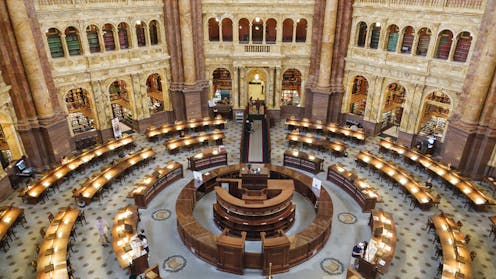
The main reading room is seen at the Library of Congress on June 13, 2025, in Washington. Kevin Carter/Getty Images

Carla Hayden, the 14th librarian of Congress, who has held the position since 2016, received an unexpected email on May 8, 2025.

“Carla, on behalf of President Donald J. Trump, I am writing to inform you that your position as the Librarian of Congress is terminated effective immediately. Thank you for your service,” wrote Trent Morse, deputy director of presidential personnel at the White House.

White House Press Secretary Karoline Leavitt later explained that Hayden, who was the first woman, Black person and professionally trained librarian to oversee the Library of Congress, had done “quite concerning things,” on the job, including “putting inappropriate books in the library for children.”

Democratic politicians sharply criticized Hayden’s termination, saying the firing was unjust. It was actually about Trump punishing civil servants “who don’t bend to his every will,” New York Sen. Chuck Schumer said.

An information science scholar, I have written extensively about the history of libraries and archives, including the Library of Congress. To fully understand the role Hayden played for the past nine years, I think it is important to understand what the Library of Congress does, and the overlooked and underappreciated role it has played in American life.

A middle-aged woman with light brown skin and dark hair stands and smiles with her hands clasped together.
Carla Hayden, the recently fired librarian of Congress, attends an event in March 2025 in Washington.
Shannon Finney/Getty Images

The Library of Congress’ work

The Library of Congress is an agency that was first established, by an act of Congress, in 1800. The act provided for “the purchase of such books as may be necessary for the use of Congress at the said city of Washington, and for fitting up a suitable apartment for containing them.” Its chief librarian is appointed by the president and confirmed by the Senate.

The library has six buildings in Washington that hold a print and online collection of nearly 26 million books, as well as more than 136 million other items, including manuscripts, maps, sheet music and prints and photographs.

It also houses historic documents, like Thomas Jefferson’s rough draft of the Declaration of Independence and James Madison’s notes on the 1787 Constitutional Convention.

The library is the property of the American people. Anyone over the age of 16 with a government-issued photo identification can enter its buildings and read or view its materials on-site. The Library of Congress was partially designed as a research institution to suit the needs of members of Congress, and only Congress members can borrow items from the library and take them home.

The Library of Congress has an annual budget of about US$900 million, with a staff of 3,263. In 2024, the library’s staff helped acquire 1,437,832 million new items, issue nearly 69,000 library cards and answer more than 764,000 reference requests, among other tasks.

The library’s deep roots

The library has evolved alongside the U.S. itself. Five years before the Constitutional Convention of 1787, future president James Madison called for a library to provide materials to help inform Congress and its members. In 1800, President John Adams signed a bill that established the institution, which began with a $5,000 government appropriation, equivalent to more than $127,000 today.

The library’s first collection included 152 works in 740 volumes imported from England. It occupied a space in a Washington Senate office that measured just 22 feet by 34 feet.

The British army torched the infant library and its collection that had grown to 3,000 books in 1814, during the War of 1812. In response, former president Thomas Jefferson sold his personal collection of 6,479 books to the library, which he called “unquestionably the choicest collection of books in the U.S.

Tragedy struck again in 1851, with a fire that incinerated two-thirds of the library’s 55,000 volumes, including most of Jefferson’s personal collection.

The organization rebounded in the next few years, as it purchased the 40,000-volume Smithsonian library in 1866, among other new acquisitions.

Ainsworth Spofford, the sixth librarian of Congress, boosted the library’s national image in the late 1800s when he tried to centralize the country’s patchwork copyright system.

Spofford also successfully lobbied Congress to pass the Copyright Act of 1870, which stipulated that any party registering a work for copyright needed to deposit two copies of that work with the library.

A growing place in American life

As its collections burgeoned in both scale and scope in the latter part of the 19th century, the library assumed an increasingly visible role and became known by some as “the nation’s library.” By 1900, it had nearly 1 million printed books and other materials.

The opening of a new library building in 1897, offering services to blind people with a designated reading room containing 500 raised character – or braille – books and music items, epitomized the library’s new status.

President Theodore Roosevelt said in 1901 that the library was “the one national library of the United States” and that was “a unique opportunity to render to the libraries of this country – to American scholarship – service of the highest importance.”

The library’s work, and global approach, continued to grow during the 20th century.

By the late 1900s, the library held materials in more than 450 languages.

It continued to add remarkable items to its collection, including a Gutenberg Bible, the first book printed in Europe from movable metal type, a kind of printing technology, in 1455.

Documenting the evolution of democracy, the library also assumed stewardship of 23 presidents’ official papers, from George Washington to Calvin Coolidge, during this time frame.

A public service

While primarily designated a research institution for Congress, the library has also catered to a diverse range of patrons, including by mail and telephone.

As one Science Digest writer noted in 1960, reference staff members fielded questions ranging from “What was the color of a mastodon’s eye?” to “How many words are there in the English language?” and “Could you suggest a name for twins?”

The library’s register of copyrights received similarly diverse and even humorous inquiries. One older woman seeking to publish her poetry wrote in 1954 to request “a poetic license” to ensure her work conformed to the law.

In the late 20th century, the library focused on a new democratic national and international mission, as it embraced a new role. Daniel Boorstin, the librarian from 1975 to 1987, termed that role a “multimedia encyclopedia.”

A congressional resolution marking the Library of Congress’s bicentennial in 2000 noted that it was “the largest and most inclusive library in human history,” as it digitized its collections to extend its reach still further with the growth of the internet.

As the library marks its 225th year, it continues to represent, as David Mearns, chief of the library’s manuscript division, said in 1947, “the American story.”

A large building is seen with the sun shining on it on a clear day.
The Thomas Jefferson Building of the Library of Congress is seen on June 11, 2025, in Washington.
Kevin Carter/Getty Images

A library for all

Following Hayden’s dismissal, Trump appointed Deputy Attorney General Todd Blanche, his former personal lawyer, as acting librarian of Congress.

Hayden has contended that her dismissal, which occurred alongside other firings of top civil servants, including the national archivist, represents a broad threat to people’s right to easily access free information.

Democracies are not to be taken for granted,” Hayden said in June. She explained in an interview with CBS that she never had a problem with a presidential administration and is not sure why she was dismissed.

“And the institutions that support democracy should not be taken for granted,” Hayden added.

In her final annual report as librarian, Hayden characterized the institution as “truly, a library for all.” So far, even without her leadership, it remains just that.

The Conversation

Alex H. Poole does not work for, consult, own shares in or receive funding from any company or organization that would benefit from this article, and has disclosed no relevant affiliations beyond their academic appointment.

ref. Trump has fired the head of the Library of Congress, but the 225-year-old institution remains a ‘library for all’ – so far – https://theconversation.com/trump-has-fired-the-head-of-the-library-of-congress-but-the-225-year-old-institution-remains-a-library-for-all-so-far-257508

How the nature of environmental law is changing in defense of the planet and the climate

Source: The Conversation – USA (2) – By Dana Zartner, Professor of International Studies, University of San Francisco

A 2017 New Zealand law recognizes inherent rights of the Whanganui River. Jason Pratt, CC BY-SA

While the dangerous effects of climate change continue to worsen, legal efforts to address a range of environmental issues are also on the rise.

Headlines across the globe tout many of these legal actions: South Korea’s Climate Law Violates Rights of Future Generations; Ukraine is Ground Zero in Battle for Ecocide Law; Paris Wants to Grant the River Seine Legal Personhood; and Montana Court Rules Children Have the Right to a Healthy Environment, to name a few recent examples.

As an environmental lawyer, I see that most of these suits use one of five legal strategies that have been developed over the past couple of decades. These approaches vary in terms of who is filing the lawsuit, against whom, and whether the underlying legal perspective is based on protecting human rights or the rights of the environment itself. But they all share an innovative approach to protect all life on this planet.

1. Right to a healthy environment

In 2022, the United Nations declared that humans have “the right to a clean, healthy and sustainable environment … essential to protecting human life, well-being and dignity.” More than 150 countries have similar declarations in their constitutions or laws, often alongside protections for other human rights, such as those to education and medical care.

These rights are held by humans, so people can sue for alleged violations. Typically they sue one or more government agencies, whose responsibility it is to protect human rights.

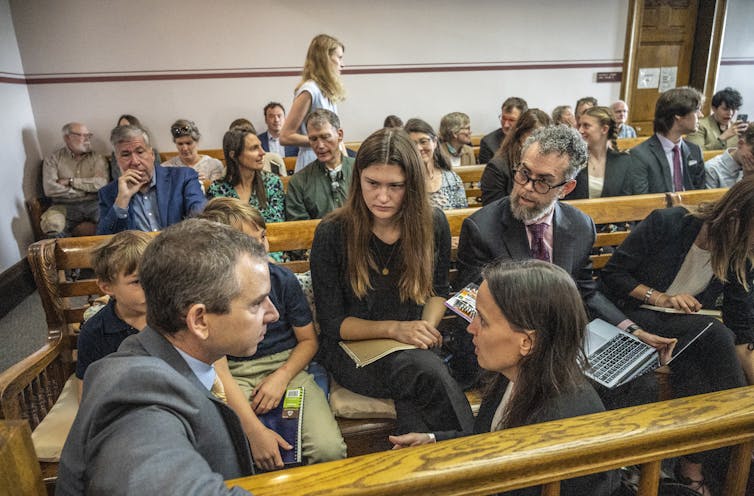
One recent case using this approach was Held v. Montana, in which a group of young people in 2024 won a lawsuit against the state of Montana for violating the state constitution’s right to a “clean and healthful environment.” The state Supreme Court agreed with the plaintiffs and struck down a law barring the consideration of climate effects when evaluating proposals for fossil fuel extraction. Similar cases have been heard in the U.S. and other countries around the world.

A young woman and two young boys listen as lawyers talk. Young people fill two rows of benches behind them in the small court room.
Rikki Held, the lead plaintiff in the Montana case, center seated, confers with the Our Children’s Trust legal team before the start of the trial on June 12, 2023.
William Campbell/Getty Images

2. The rights of future generations

A legal concept called “intergenerational equity” is the idea that present generations must “responsibly use and conserve natural resources for the benefit of future generations.” First codified in international law in the 1972 Stockholm Declaration, the principle has been gaining popularity in recent decades. International organizations and national governments have enshrined this principle in law.

Focused on humans’ rights, these laws allow people and groups to bring claims, usually against governments, for allowing activities that are altering the environment in ways that will harm future generations. One well-known case that relied on this legal principle is Future Generations v. Ministry of the Environment and Others, in which a Colombian court in 2018 agreed with young people who had sued, finding that the Colombian government’s allowance of “rampant deforestation in the Amazon” violated the pact of intergenerational equity.

3. Government responsibility

Another human-centered approach is the public trust doctrine, which establishes “that certain natural and cultural resources are preserved for public use” and that governments have a responsibility to protect them for everyone’s benefit.

While the concept of “public trust” has long existed in the law, recently it has been used to bring suit against governments for their failure to address climate change and other environmental degradation. In Urgenda Foundation v. the State of the Netherlands, a Dutch court held in 2019 that the government has a responsibility to mitigate the effects of climate change due to the “severity of the consequences of climate change and the great risk of climate change occurring.” Since the decision, the Dutch government has sought to reduce emissions by phasing out the use of coal, increasing reliance on renewable energy and aiming to achieve carbon neutrality by 2050.

Government responsibility for the public trust was also a basis of the Juliana v. U.S. case, where a group of young people sued the U.S. government for breaching the public trust by not doing enough to curb greenhouse gas emissions. The U.S. Supreme Court ultimately declined to hear an appeal of a lower court’s ruling, but the lack of a specific ruling by the nation’s highest court has given continued hope to new cases, which continue to be filed based on the same principle.

A documentary examining the movement to protect the rights of nature.

4. Rights of nature

The rights of nature is one of the fastest-growing environmental legal strategies of the past decade. Since Ecuador recognized the rights of Pachamama, the Quechua name for Mother Earth, in its Constitution in 2008, more than 500 laws on the rights of nature have been enacted around the world.

The principle recognizes the legal rights of natural entities, such as rivers, mountains, ecosystems or even something as specific as wild rice. The laws that grant these rights don’t focus on humans but rather nature itself, often including language that the natural entity has the right to “exist and persist.”

The laws then provide a mechanism for the natural entity – whether through a specific group assigned legal guardianship or other community efforts – to protect itself by filing lawsuits in court. In the 2018 Colombian case, the court found that the Amazon ecosystem has rights, which must be respected and protected.

Similarly, in Bangladesh in 2019 the courts recognized the rights of all the country’s rivers, requiring, among other things, a halt on damaging development along the rivers that block their natural flow. The court also created a commission to serve as legal guardians of the country’s rivers.

People walk through an area of rocks to a grassy plain.
The destruction of a dam in Ukraine, which emptied this former reservoir, is being investigated as a possible crime of ecocide.
Tarasov/Ukrinform/Future Publishing via Getty Images

5. Defining a new crime: Ecocide

In 2024, the governments of Vanuatu, Fiji and Samoa formally proposed that the international community recognize a new crime under international law. Called “ecocide,” the principle takes a nature-focused approach and includes any unlawful act committed with “the knowledge that there is a substantial likelihood of severe and either widespread or long-term damage to the environment.”

Put another way, what genocide is to humans, ecocide is to nature. It is being proposed as an addition to the 2002 Rome Statute, which created the International Criminal Court to prosecute war crimes, genocide and crimes against humanity.

While the idea is relatively new, in addition to the international efforts, several countries have incorporated ecocide into their laws – including Vietnam, France, Chile and Ukraine. A Ukrainian prosecutor is currently investigating the June 2023 destruction of a dam in a Russian-occupied area of the country as a potential crime of ecocide, because of the widespread flooding and habitat destruction that resulted.

The European Union has also incorporated ecocide into its Environmental Crime Directive, which applies to all EU member countries, providing them with a mechanism to hear ecocide claims in their national courts.

Using these ideas

Each of these legal concepts has the potential to increase protection for the environment – and the people who live in it. But determining which strategy has the greatest chance of success depends on the details of the existing law and legal system in each community.

All of these legal strategies have a role in the fight to protect and preserve the environment as an integral, interdependent living thing that is vitally important to us as humans but also in its own right.

The Conversation

Dana Zartner is a volunteer with the Earth Law Center assisting with the editing of toolkits and guides, but has not worked on any of its lawsuits.

ref. How the nature of environmental law is changing in defense of the planet and the climate – https://theconversation.com/how-the-nature-of-environmental-law-is-changing-in-defense-of-the-planet-and-the-climate-258982

2 ways cities can beat the heat: Which is best, urban trees or cool roofs?

Source: The Conversation – USA (2) – By Ian Smith, Research Scientist in Earth & Environment, Boston University

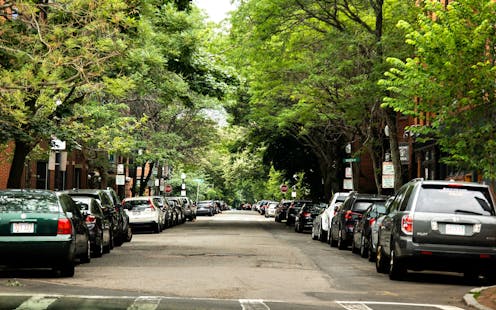
Trees like these in Boston can help keep neighborhoods cooler on hot days. Yassine Khalfalli/Unsplash, CC BY

When summer turns up the heat, cities can start to feel like an oven, as buildings and pavement trap the sun’s warmth and vehicles and air conditioners release more heat into the air.

The temperature in an urban neighborhood with few trees can be more than 10 degrees Fahrenheit (5.5 Celsius) higher than in nearby suburbs. That means air conditioning works harder, straining the electrical grid and leaving communities vulnerable to power outages.

There are some proven steps that cities can take to help cool the air – planting trees that provide shade and moisture, for example, or creating cool roofs that reflect solar energy away from the neighborhood rather than absorbing it.

But do these steps pay off everywhere?

We study heat risk in cities as urban ecologists and have been exploring the impact of tree-planting and reflective roofs in different cities and different neighborhoods across cities. What we’re learning can help cities and homeowners be more targeted in their efforts to beat the heat.

The wonder of trees

Urban trees offer a natural defense against rising temperatures. They cast shade and release water vapor through their leaves, a process akin to human sweating. That cools the surrounding air and reduces afternoon heat.

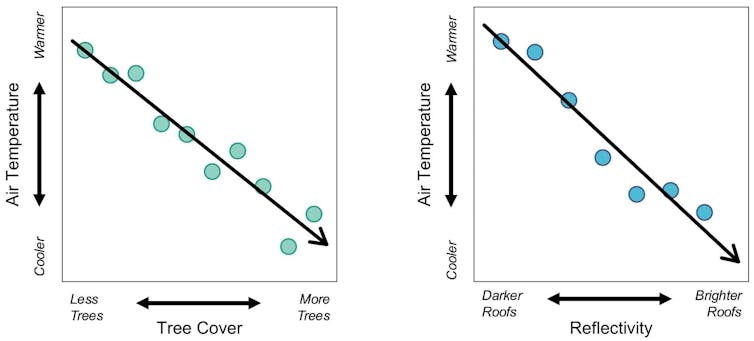
Adding trees to city streets, parks and residential yards can make a meaningful difference in how hot a neighborhood feels, with blocks that have tree canopies nearly 3 F (1.7 C) cooler than blocks without trees.

Two maps of New York City show how vegetation matches cooler areas by temperature.
Comparing maps of New York’s vegetation and temperature shows the cooling effect of parks and neighborhoods with more trees. In the map on the left, lighter colors are areas with fewer trees. Light areas in the map on the right are hotter.
NASA/USGS Landsat

But planting trees isn’t always simple.

In hot, dry cities, trees often require irrigation to survive, which can strain already limited water resources. Trees must survive for decades to grow large enough to provide shade and release enough water vapor to reduce air temperatures.

Annual maintenance costs – about US$900 per tree per year in Boston – can surpass the initial planting investment.

Most challenging of all, dense urban neighborhoods where heat is most intense are often too packed with buildings and roads to grow more trees.

How cool roofs can help on hot days

Another option is “cool roofs.” Coating rooftops with reflective paint or using light-colored materials allows buildings to reflect more sunlight back into the atmosphere rather than absorbing it as heat.

These roofs can lower the temperature inside an apartment building without air conditioning by about 2 to 6 F (1 to 3.3 C), and can cut peak cooling demand by as much as 27% in air-conditioned buildings, one study found. They can also provide immediate relief by reducing outdoor temperatures in densely populated areas. The maintenance costs are also lower than expanding urban forests.

Two workers apply paint to a flat roof.
Two workers apply a white coating to the roof of a row home in Philadelphia.
AP Photo/Matt Rourke

However, like trees, cool roofs come with limits. Cool roofs work better on flat roofs than sloped roofs with shingles, as flat roofs are often covered by heat-trapping rubber and are exposed to more direct sunlight over the course of an afternoon.

Cities also have a finite number of rooftops that can be retrofitted. And in cities that already have many light-colored roofs, a few more might help lower cooling costs in those buildings, but they won’t do much more for the neighborhood.

By weighing the trade-offs of both strategies, cities can design location-specific plans to beat the heat.

Choosing the right mix of cooling solutions

Many cities around the world have taken steps to adapt to extreme heat, with tree planting and cool roof programs that implement reflectivity requirements or incentivize cool roof adoption.

In Detroit, nonprofit organizations have planted more than 166,000 trees since 1989. In Los Angeles, building codes now require new residential roofs to meet specific reflectivity standards.

In a recent study, we analyzed Boston’s potential to lower heat in vulnerable neighborhoods across the city. The results demonstrate how a balanced, budget-conscious strategy could deliver significant cooling benefits.

For example, we found that planting trees can cool the air 35% more than installing cool roofs in places where trees can actually be planted.

However, many of the best places for new trees in Boston aren’t in the neighborhoods that need help. In these neighborhoods, we found that reflective roofs were the better choice.

By investing less than 1% of the city’s annual operating budget, about US$34 million, in 2,500 new trees and 3,000 cool roofs targeting the most at-risk areas, we found that Boston could reduce heat exposure for nearly 80,000 residents. The results would reduce summertime afternoon air temperatures by over 1 F (0.6 C) in those neighborhoods.

While that reduction might seem modest, reductions of this magnitude have been found to dramatically reduce heat-related illness and death, increase labor productivity and reduce energy costs associated with building cooling.

Not every city will benefit from the same mix. Boston’s urban landscape includes many flat, black rooftops that reflect only about 12% of sunlight, making cool roofs that reflect over 65% of sunlight an especially effective intervention. Boston also has a relatively moist growing season that supports a thriving urban tree canopy, making both solutions viable.

Two aerial images show very different building coloring in two cities.
Phoenix, left, already has a lot of light-colored roots, compared with Boston, right, where roofs are mostly dark.
Imagery © Google 2025.

In places with fewer flat, dark rooftops suitable for cool roof conversion, tree planting may offer more value. Conversely, in cities with little room left for new trees or where extreme heat and drought limit tree survival, cool roofs may be the better bet.

Phoenix, for example, already has many light-colored roofs. Trees might be an option there, but they will require irrigation.

Getting the solutions where people need them

Adding shade along sidewalks can do double-duty by giving pedestrians a place to get out of the sun and cooling buildings. In New York City, for example, street trees account for an estimated 25% of the entire urban forest.

Cool roofs can be more difficult for a government to implement because they require working with building owners. That often means cities need to provide incentives. Louisville, Kentucky, for example, offers rebates of up to $2,000 for homeowners who install reflective roofing materials, and up to $5,000 for commercial businesses with flat roofs that use reflective coatings.

Two charts show improvements
In Boston, planting trees, left, and increasing roof reflectivity, right, were both found to be effective ways to cool urban areas.
Ian Smith et al. 2025

Efforts like these can help spread cool roof benefits across densely populated neighborhoods that need cooling help most.

As climate change drives more frequent and intense urban heat, cities have powerful tools for lowering the temperature. With some attention to what already exists and what’s feasible, they can find the right budget-conscious strategy that will deliver cooling benefits for everyone.

The Conversation

Lucy Hutyra has received funding from the U.S. federal government and foundations including the World Resources Institute and Burroughs Wellcome Fund for her scholarship on urban climate and mitigation strategies. She was a recipient of a 2023 MacArthur Fellowship for her work in this area.

Ian Smith does not work for, consult, own shares in or receive funding from any company or organization that would benefit from this article, and has disclosed no relevant affiliations beyond their academic appointment.

ref. 2 ways cities can beat the heat: Which is best, urban trees or cool roofs? – https://theconversation.com/2-ways-cities-can-beat-the-heat-which-is-best-urban-trees-or-cool-roofs-260188

Caution in the C-suite: How business leaders are navigating Trump 2.0

Source: The Conversation – USA (2) – By Erran Carmel, Professor of Business, American University Kogod School of Business

In the first months of Donald Trump’s second term as president, his policies – from sweeping tariffs and aggressive immigration enforcement to attacks on diversity, equity and inclusion – have thrown U.S. businesses into turmoil, leading to a 26-point decline in CEO confidence.

Yet despite this volatility, many American corporations have remained notably restrained in their public responses.

This might come as a surprise. After all, in recent decades, CEOs have become increasingly willing to speak out about social and political issues. But while some universities and law firms have publicly pushed back against the Trump administration, business leaders are seemingly opting for caution.

What would it take for these titans of corporate America to speak out against Trump’s policies? We are a professor and a graduate student who study business, and back in 2018, one of us – Dr. Carmel – conducted an analysis asking this very question. More recently, we gathered new data looking at how business leaders are responding to Trump’s second term.

The 2018 analysis, involving data from about 200 leading U.S. CEOs, found that most business leaders remained publicly neutral on Trump, and only a handful expressed strong opposition. Silence was often a strategic choice, with many leaders staying mum due to fear of retaliation. The evidence also suggested that Trump could one day cross a line that would prompt a broader CEO backlash.

Seven years later, that line hasn’t yet appeared, even as Trump’s footprint on corporate America is now far more direct and substantial.

Most notable are Trump’s tariffs, first announced in April 2025, which have roiled global markets and unnerved CEOs. And there are many other ripples: Some companies, such as CBS’ parent company, Paramount – which is seeking the Trump administration’s approval for a merger – have decided to self-censor. Others, including Disney and Meta, gave in to Trump’s lawsuits and paid multimillion-dollar settlements, against the counsel of many outside experts. CEOs also have to deal with the threat of backlash from both the right and left.

Against this backdrop, we collected new public data to see how corporate leaders are responding to the second Trump administration. Just as in 2018, we examined the 232 companies that make up the Business Roundtable – a club of the most powerful American businesses.

We assessed the actions that these companies took regarding DEI and whether they experienced any backlash. We focused on these criteria as a way to assess whether CEOs are seeking either to support or placate Trump, or to stand on other principles. We also collected other data, including public statements from CEOs and campaign donations.

DEI as a bellwether

Corporate DEI actions were an early, useful way to gauge a business’s stances, since, from the outset, the Trump administration identified DEI as a “scourge” to be eliminated. Although the White House’s anti-DEI directives have applied to the executive branch and federal contractors, some private businesses rushed to make changes as well.

By May, just a bit over 100 days into Trump’s second term, a significant number of companies had decided to go along with Trump’s preferences. Sixty-nine of the 232 companies in the Business Roundtable rolled back their DEI initiatives in some way, while just 20 companies announced that they kept their DEI programs in place. There’s no information either way on the remaining 61% – likely because they decided it’s better to stay out of the news.

DEI-related actions have tapered off since May, but there’s still an impact. For example, the Federal Communications Commission pressured T-Mobile to eliminate DEI. Only then was its merger approved.

Companies that scaled back their DEI initiatives sometimes pointed to the political environment as a factor. Meta, for example, said in an internal memo that it was ending its DEI efforts due to a “shifting legal and policy landscape.” Other companies, including Verizon and Comcast, reportedly rolled back DEI programs because they feared legal action by the federal government.

Some corporations announced changes through internal announcements, legal filings or quiet updates to their websites, suggesting they want to stay out of the media spotlight.

A small number of Business Roundtable companies stood firm on their DEI policies – to mixed results. When Marriott’s CEO voiced support for DEI at a corporate leadership event, he reportedly received 40,000 appreciative emails from employees. On the other hand, after Coca-Cola reiterated its “commitment to sponsoring an inclusive workplace,” the right-wing activist Robby Starbuck — who The New York Times has described as “the anti-DEI agitator that companies fear most” – said Coca-Cola “should be very nervous about continuing with its woke policies.”

Bracing for backlash

Overall, 22% of Business Roundtable companies saw some sort of backlash to their actions. Most came from the political right: 36 companies were called out by conservatives, another eight by progressives, and eight more faced bipartisan backlash.

With more than three years left in Trump’s second term, it’s worth asking what lies ahead. We think the most likely scenario is that companies will continue to try to stay off the president’s radar and placate him when they must. After all, following the split with Elon Musk, Trump quite explicitly threatened to use presidential powers to hurt Musk’s businesses. Any CEO gets the implications.

While our analysis primarily focused on social issues, policies at the business core may push U.S. companies to confront Trump. Tariff policy is a prime example. Back in April, major retailers like Walmart quietly warned Trump that tariffs could lead to empty shelves and higher prices. More recently, the CEO of Goldman Sachs publicly warned that tariffs “have raised the level of uncertainty to a degree I do not think is healthy for investment and growth.”

These are voices of criticism – but worded quite softly.

The Conversation

The authors do not work for, consult, own shares in or receive funding from any company or organization that would benefit from this article, and have disclosed no relevant affiliations beyond their academic appointment.

ref. Caution in the C-suite: How business leaders are navigating Trump 2.0 – https://theconversation.com/caution-in-the-c-suite-how-business-leaders-are-navigating-trump-2-0-260557

I teach college and report on Colorado media — there should be more professors doing the same in other states

Source: The Conversation – USA (2) – By Corey Hutchins, Manager, Colorado College Journalism Institute, Colorado College

Newsletters that cover a state’s media landscape are few and far between, according to a new report. iStock / Getty Images Plus

Over the years, the crisis facing local news has meant the disappearance of reporting on the arts, politics, sports and local government.

Newspapers have disappeared from many local communities, and the ranks of individual local journalists have plummeted over the past two decades.

The retrenchment has also led to a loss of something else: reporters and columnists at local news organizations who decades ago regularly focused on their local media as a beat.

There are very few of them left.

I’m an instructor at Colorado College, where I manage the Journalism Institute. I also compulsively keep track of our state’s shifting media landscape.

Recently, I produced a nationwide study called “Local News as a Public Good: Increasing Visibility Through University-Led Statewide Newsletters.”

The Center for Community News at the University of Vermont solicited and published the report. The goal was to find out who is doing similar work and where.

The Center for Community News is interested in fostering partnerships between academic programs and local newsrooms. The center is also seeking to find other ways higher-ed institutions are supporting their state’s media ecosystem — so they were especially interested in media newsletters being produced at a college or university.

Few state-based newsletters

The problem is, there weren’t many to track. I found just six, including my own, while researching for the report.

Very few states, it turns out, “have a dedicated publication, site, or newsletter that regularly and independently reports on and analyzes ongoing developments in the local media scene,” the report found.

A screenshot of the Substack newsletter Corey Hutchins publishes every week.
‘Inside the News in Colorado’ is the author’s newsletter, in which he obsessively tracks the media landscape in Colorado.
Corey Hutchins via Substack

My own weekly Substack newsletter is called “Inside the News in Colorado.” Each week, I report on, comment on and analyze the goings on in Colorado’s media scene. I connect local developments to what’s happening nationally, and I explore what makes the state’s local news ecosystem unique.

My newsletter also pokes and prods, critiques and uplifts, and seeks to spark debate and a better understanding about the practice of local journalism. And it maintains a weekly running tab on the health of the state’s media landscape.

Other newsletters across the country include NC Local, authored by Catherine Komp. The Newsroom Digest, out of the Center for Cooperative Media at Montclair State University in New Jersey, is another. Gateway Journalism Review from Southern Illinois University Carbondale’s School of Journalism, in the College of Arts and Media made the list. And Media Nation by Northeastern University professor Dan Kennedy in Massachusetts is another.

Kennedy has been producing Media Nation for more than 20 years and writes more about national media issues. But he mixes it with plenty of local and regional happenings.

If someone were to, say, leak an internal email from The Boston Globe, it is likely they would do so with Media Nation.

The NC Local newsletter’s format is a mix of digestible roundups and some original reporting.

A recurring item titled “Well Done” offers “noteworthy work from the NC news & information ecosystem.” The most-clicked links each week tend to come from a bulletin board section where Komp rounds up job postings and opportunities.

The chunky Newsroom Digest newsletter highlights notable local journalism in New Jersey. It comes with a “Media Moves” section that introduces its audience to new local journalists and tracks newsroom personnel changes.

While they differ in style and delivery, each is filling a gap in coverage in their state or region by reporting on an important industry: their own.

“When I was at the (Boston) Phoenix, I think all of us at the alternative press thought big local media were a powerful local institution that ought to be held to account just like big business and everything else,” Media Nation’s Kennedy said for the report.

Where to house the news about the news?

I believe colleges and universities make good places to produce these kinds of state-based media newsletters.

Journalism departments in particular are likely equipped to run them, especially if they have practitioners on the faculty. They are outside of a state’s established media organizations but also adjacent to them.

Richard Watts, the director of the Center for Community News, commissioned the “Local News as a Public Good” study. He says there are important reasons for more newsletters consistently reporting on local media in individual states.

“They draw attention to the key role local news plays by writing about the stories and the impact of those stories,” he said. “They help amplify and they showcase the importance of the media ecosystem for a vibrant democracy.”

Furthermore, such newsletters can serve as the “canary in the coal mine to draw attention to media platforms in trouble, or actions by unscrupulous owners,” Watts added. “And they can share ideas and best practices across the system to help strengthen individual media platforms. And, lastly, they help create a community of stakeholders committed to the importance of a free press.”

To that end, the Center for Community News at the University of Vermont is looking to help anyone in a higher-ed program who might be interested in launching a state-based media newsletter.

“I think a really good person to do something like this is, first, someone who is doing more than just reporting on the industry or ecosystem,” said Komp of NC Local in the Center for Community News study.

“It does need to be somebody who is engaging with journalists, with publishers, with journalism educators, with students, with funders, in ways that are not just reporting on what’s happening but in ways that are looking to always find solutions and address challenges.”

Read more of our stories about Colorado.

The Conversation

Corey Hutchins consults for the Center for Community News at the University of Vermont where he is working on a project to help colleges and universities create state-based media newsletters.

ref. I teach college and report on Colorado media — there should be more professors doing the same in other states – https://theconversation.com/i-teach-college-and-report-on-colorado-media-there-should-be-more-professors-doing-the-same-in-other-states-260891

How germy is the public pool? An infectious disease expert weighs in on poop, pee and perspiration – and the deceptive smell of chlorine

Source: The Conversation – USA (3) – By Lisa Cuchara, Professor of Biomedical Sciences, Quinnipiac University

A 2023 CDC report tracked more than 200 pool-associated outbreaks over a four-year period. But a few basic precautions can ward off these dangers. Maria Korneeva/Moment via Getty Images

On hot summer days, few things are more refreshing than a dip in the pool. But have you ever wondered if the pool is as clean as that crystal blue water appears?

As an immunologist and infectious disease specialist, I study how germs spread in public spaces and how to prevent the spread. I even teach a course called “The Infections of Leisure” where we explore the risks tied to recreational activities and discuss precautions, while also taking care not to turn students into germophobes.

Swimming, especially in public pools and water parks, comes with its own unique set of risks — from minor skin irritations to gastrointestinal infections. But swimming also has a plethora of physical, social and mental health benefits. With some knowledge and a little vigilance, you can enjoy the water without worrying about what might be lurking beneath the surface.

The reality of pool germs

Summer news headlines and social media posts often spotlight the “ick-factor” of communal swimming spaces. These concerns do have some merit.

The good news is that chlorine, which is widely used in pools, is effective at killing many pathogens. The not-so-good news is that chlorine does not work instantly – and it doesn’t kill everything.

Every summer, the Centers for Disease Control and Prevention issues alerts about swimming-related outbreaks of illness caused by exposure to germs in public pools and water parks. A 2023 CDC report tracked over 200 pool-associated outbreaks from 2015 to 2019 across the U.S., affecting more than 3,600 people. These outbreaks included skin infections, respiratory issues, ear infections and gastrointestinal distress. Many of the outcomes from such infections are mild, but some can be serious.

Germs and disinfectants

Even in a pool that’s properly treated with chlorine, some pathogens can linger for minutes to days. One of the most common culprits is Cryptosporidium, a microscopic germ that causes watery diarrhea. This single-celled parasite has a tough outer shell that allows it to survive in chlorine-treated water for up to 10 days. It spreads when fecal matter — often from someone with diarrhea — enters the water and is swallowed by another swimmer. Even a tiny amount, invisible to the eye, can infect dozens of people.

Collection of visual symbols for pool rules
Showering before and after swimming in a public pool helps avoid both bringing in and taking out pathogens and body substances.
Hafid Firman Syarif/iStock via Getty Images Plus

Another common germ is Pseudomonas aeruginosa, a bacterium that causes hot tub rash and swimmer’s ear. Viruses like norovirus and adenovirus can also linger in pool water and cause illness.

Swimmers introduce a range of bodily residues to the water, including sweat, urine, oils and skin cells. These substances, especially sweat and urine, interact with chlorine to form chemical byproducts called chloramines that may pose health risks.

These byproducts are responsible for that strong chlorine smell. A clean pool should actually lack a strong chlorine odor, as well as any other smells, of course. It is a common myth that a strong chlorine smell is a good sign of a clean pool. In fact, it may actually be a red flag that means the opposite – that the water is contaminated and should perhaps be avoided.

How to play it safe at a public pool

Most pool-related risks can be reduced with simple precautions by both the pool staff and swimmers. And while most pool-related illnesses won’t kill you, no one wants to spend their vacation or a week of beautiful summer days in the bathroom.

These 10 tips can help you avoid germs at the pool:

  • Shower before swimming. Rinsing off for at least one minute removes most dirt and oils on the body that reduce chlorine’s effectiveness.

  • Avoid the pool if you’re sick, especially if you have diarrhea or an open wound. Germs can spread quickly in water.

  • Try to keep water out of your mouth to minimize the risk of ingesting germs.

  • Don’t swim if you have diarrhea to help prevent the spread of germs.

  • If diagnosed with cryptosporidiosis, often called “crypto,” wait two weeks after diarrhea stops before returning to the pool.

  • Take frequent bathroom breaks. For children and adults alike, regular bathroom breaks help prevent accidents in the pool.

  • Check diapers hourly and change them away from the pool to prevent fecal contamination.

  • Dry your ears thoroughly after swimming to help prevent swimmer’s ear.

  • Don’t swim with an open wound – or at least make sure it’s completely covered with a waterproof bandage to protect both you and others.

  • Shower after swimming to remove germs from your skin.

The Conversation

Lisa Cuchara is affiliated with American Society for Microbiology

ref. How germy is the public pool? An infectious disease expert weighs in on poop, pee and perspiration – and the deceptive smell of chlorine – https://theconversation.com/how-germy-is-the-public-pool-an-infectious-disease-expert-weighs-in-on-poop-pee-and-perspiration-and-the-deceptive-smell-of-chlorine-260996

Imaginary athletes: Creating make-believe teammates, competitors and coaches during play

Source: The Conversation – USA – By Tracy Gleason, Professor of Psychology, Wellesley College

What would an imaginary companion add to a child’s solo practice? Elkhophoto/iStock via Getty Images Plus

The coach, the specialized equipment, the carefully tailored exercise regimen – they’re all key to athletic performance. But imagination might be an unexpected asset when it comes to playing sports.

The idea that athletic achievement depends on the mind isn’t new. Sport psychologists have known for years that working with an athlete on their mental game – visualizing the skill, kinesthetically feeling the swing – has a positive impact on actual performance. But these mental simulations draw only upon mental imagery – seeing and feeling the physical goals in the mind’s eye. Imagination offers a much wider range of possibilities.

What if your game could be helped by an imaginary friend?

In a recent retrospective study of college students, we discovered that imagination comes in handy in athletics in ways that are surprisingly social. The creation of what we termed imaginary athletes – a person or being that a child imagined in the context of athletics – enabled and motivated athletic play, especially for children between the ages of about 6 and 12. Imaginary athletes also provided companionship during athletic play.

boy on empty playground holds basketball looks like he's about to shoot
An imaginary teammate or competitor might help improve a child’s game.
NoSystem images/E+ via Getty Images

Remembering childhood imaginary athletes

The most basic form of an imaginary athlete might be a wall, fence or even tree that makes a good opponent in a pinch. For a child or adolescent practicing a sport alone, a surface that provides a ball return or a steady target for a throw gives opportunities for practice usually requiring other players.

Is it any wonder, then, if the branches of the tree start to resemble a wide receiver’s arms, or an invisible goalie emerges in front of the fence? Solitary play might be a lot more fun if a make-believe teammate could provide an assist, or an invisible coach could appear and shout instructions during practice.

The college students in our study reported that such support, even if imaginary, made them play a little longer or try a little harder as kids.

About 41% of our sample of 225 college students reported creating at least one imaginary athlete at some point in middle childhood or early adolescence. Most, but not all, of these beings fell into three categories based on their characteristics.

The first we called placeholders, such as ghost runners. They are typically generic, amorphous, imaginary teammates created by groups of children when not enough real players are available.

The second type functioned as what we named athletic tools. They helped kids focus on their performance and improve their skills, usually by providing a worthy competitor, sometimes based on an admired professional athlete. The skills of athletic tools were often just above those of the child, drawing out the desire to be better, stronger, faster.

Social relationships, our name for the third kind of imaginary athlete, primarily served emotional functions, relieving loneliness and providing the child or adolescent with a sense of belonging, safety or companionship as they engaged in their sport.

Students who remembered imaginary athletes differed from their peers in two ways. First, more men than women reported creating these imaginary beings, possibly owing to the greater investment in and importance of athletics among boys versus girls. Second, people with imaginary athletes scored higher than those without on a current-day measure of predilection for imagination, but they were not more likely to report having created a make-believe friend or animal as a child.

Imagination is a valuable power

Creating an imaginary other might seem like a quirky, perhaps even childish, addition to sports practice. But actually, this behavior is entirely logical. After all, imagination is the core of human thought. Without it, we couldn’t conceptualize anything outside of the present moment that wasn’t already stored in memory. No thinking about the future, no consideration of multiple outcomes to a decision, no counterfactuals, daydreams, fantasies or plans.

Why wouldn’t people apply such a fundamental tool of day-to-day thought in athletic contexts? Participation in sports is common, especially among school-age kids, and many college students in our study described drawing upon their imaginations frequently when playing sports, especially when doing so in their free time.

girl about to kick a soccer ball
Imagination is a core part of being human – it’s not a surprise it comes out on the sports field.
Erik Isakson/Tetra images via Getty Images

The creation of imaginary athletes is also unsurprising because it’s one of myriad ways that imagination enhances people’s social worlds throughout their lives. Above all else, social relationships are what matter most to people, and using imagination in thinking about them is common. For instance, people imagine conversations with others, particularly those close to them, sometimes practicing the delivery of bad news or envisioning the response to a proposal of marriage.

In early childhood, kids create imaginary companions who help them learn about friendship and other’s perspectives. And in adolescence, when people focus on developing their autonomy and their own identities, they create parasocial relationships that let them identify with favorite celebrities, characters and media figures. Even in older age, some widows and widowers imagine continued relationships with their deceased spouses. These “continuing bonds” are efforts to cope with loss through imaginary narratives that are fed by and extrapolate upon years of interactions.

At each point in their developmental trajectory, people might recruit imagination to help them understand, manage, regulate and enjoy the social aspects of life. Imaginary athletes are merely one manifestation of this habit.

Because so many children and adolescents spend a lot of time engaged in sports, athletics can be a major environment for working on the developmental tasks of growing up. As children learn about functioning as part of a group, forming, maintaining and losing friendships, and mastering a range of skills and abilities, imaginary athletes provide teammates, coaches and competitors tailored to the needs of the moment.

Of course, an imaginary athlete is but one tool that children and adolescents might use to address developmental tasks such as mastering skills or negotiating peer relationships. Children who aren’t fantasy-prone might create complex training regimens to practice their skills, and they might manage their friendships by talking through problems with others.

But some report that turning inward generated real athletic and social benefits. “I got confidence out of my [imaginary athletes],” reported one participant. “If I could imagine beating someone, and [winning], then I felt like I could do anything.”

The Conversation

The authors do not work for, consult, own shares in or receive funding from any company or organization that would benefit from this article, and have disclosed no relevant affiliations beyond their academic appointment.

ref. Imaginary athletes: Creating make-believe teammates, competitors and coaches during play – https://theconversation.com/imaginary-athletes-creating-make-believe-teammates-competitors-and-coaches-during-play-254879

Methane leaks from gas pipelines are a hidden source of widespread air pollution

Source: The Conversation – USA (2) – By Younes Ben Zaied, Full Professor in Finance, EDC Paris Business School

Gas pipelines can be dangerous to human health even if people don’t damage them by digging. Jim West/UCG/Universal Images Group via Getty Images

The Trump administration is decreasing the attention federal regulators pay to pipeline leaks. But leaks from natural gas pipelines don’t just waste energy and warm the planet – they can also make the air more dangerous to breathe. That air pollution threat grows not just in the communities where the leaks happen but also as far as neighboring states, as our analysis of gas leaks and air pollution levels across the U.S. has found.

For instance, in September 2018 the Merrimack Valley pipeline explosion in Massachusetts, which released roughly 2,800 metric tons of methane, damaged or destroyed about 40 homes and killed one person. We found that event caused fine-particle air pollution concentrations in downwind areas of New Hampshire and Vermont to spike within four weeks, pushing those areas’ 2018 annual average up by 0.3 micrograms per cubic meter. That’s an increase of about 3% of the U.S. EPA’s annual health standard for PM2.5. Elevated air pollution then showed up in New York and Connecticut through the rest of 2018 and into 2019.

In our study, we examined pipeline leak data from the U.S. Pipeline and Hazardous Materials Safety Administration from 2009 to 2019 and data about the state’s level of small particulate matter in the air from Columbia University’s Center for International Earth Science Information Network. We also incorporated, for each state, data on environmental regulations, per-capita energy consumption, urbanization rate and economic productivity per capita.

In simple terms, we found that in years when a state – or its neighboring states – experienced more methane leak incidents, that state’s annual average fine-particle air pollution was measurably higher than in years with fewer leaks.

A pile of wood and rubble sits next to a basketball hoop.
A 2018 natural gas leak and explosion in Massachusetts destroyed and damaged homes, killed one person and increased air pollution over a wide area.
John Tlumacki/The Boston Globe via Getty Images

Methane’s role in fine‑particle formation

Natural gas is primarily made of methane, a powerful greenhouse gas. But methane also helps set off chemical reactions in the air that lead to the formation of tiny particles known as PM2.5 because they are smaller than 2.5 micrometers (one ten-thousandth of an inch). They can travel deep into the lungs and cause health problems, such as increasing a person’s risk of heart disease and asthma.

The role of methane in exacerbating air pollution is well researched. In short, when methane is released into the atmosphere, it reacts with other chemicals that are already there, such as nitrogen oxides and volatile organic compounds. Often, sunlight triggers these reactions, which then form a type of fine particulate matter called “secondary organic aerosols,” which make up between 20% and 50% of total ambient PM2.5 mass.

So, when natural gas leaks, energy is wasted, the planet warms and air quality drops. These leaks can be massive, like the 2015 Aliso Canyon disaster in California, which sent around 100,000 metric tons of methane into the atmosphere.

But smaller leaks are also common, and they add up, too: Because the federal database systematically undercounts minor releases, we estimate that undocumented small leaks in the U.S. may total on the order of 15,000 metric tons of methane per year – enough to raise background PM2.5 by roughly 0.1 micrograms per cubic meter in downwind areas. Even this modest increase can contribute to health risks: There is no safe threshold for PM2.5 exposure, with each rise of 1 microgram per cubic meter linked to heightened mortality from cardiovascular and respiratory diseases.

On a flat piece of ground with some pipes emerging from it, a cloud of vapor escapes from a pipe.
Even relatively small methane leaks, like this one in 2022 in Pennsylvania, affect both the climate and air pollution levels that damage people’s health.
Pennsylvania Department of Environmental Protection via AP

Preventing leaks to protect climate and health

The most direct way to reduce this problem is to reduce the number and quantity of methane leaks from pipelines. This could include constructing them in ways or with materials or processes that are less likely to leak. Regulations could create incentives to do so or require companies to invest in technology to detect methane leaks quickly, as well as encourage rapid responses when a leak is identified, even if it appears relatively small at first.

Reducing pipeline leaks would not just conserve the energy that is contained in the methane and reduce the global warming that results from increasing amounts of methane in the atmosphere. Doing so would also improve air quality in communities that are home to pipelines and in surrounding areas and states.

The Conversation

The authors do not work for, consult, own shares in or receive funding from any company or organization that would benefit from this article, and have disclosed no relevant affiliations beyond their academic appointment.

ref. Methane leaks from gas pipelines are a hidden source of widespread air pollution – https://theconversation.com/methane-leaks-from-gas-pipelines-are-a-hidden-source-of-widespread-air-pollution-257786