Pope Leo XIV and the Armenian patriarch of Constantinople, Archbishop Sahag II Mashalian, celebrate a liturgy in the Armenian Apostolic Cathedral of Istanbul, Turkey, on Nov. 30, 2025.Dilara Acikgoz/AP Photo
The trip marked the 1,700th anniversary of the Council of Nicaea, which resolved core doctrinal differences, with the aim of advancing Christian unity at the time.
Through interfaith dialogue and symbolic acts, religious leaders often act as diplomats to strengthen relationships with other faith groups as part of religious diplomacy.
Traditional diplomacy often prioritizes political and economic interests, whereas religious diplomacy builds on identities and values. But as a scholar of religion and politics, I have often seen how religious diplomacy complements conventional diplomatic tools – the pope’s visit being the most recent example.
Despite Turkey’s significance in the history of Christianity, today Christians constitute less than 0.5% of its population. These include diverse Christian communities, from Armenian Orthodox, Greek Orthodox and Syriac Orthodox to Roman Catholic and Protestant.
Turkey’s constitution guarantees religious freedom, but Christians face legal and administrative hurdles in matters such as building places of worship.
The pope met with Muslim leaders to foster dialogue. He visited Istanbul’s Blue Mosque, an architectural icon for Turkish Muslims. In a meeting with Turkish President Recep Tayyip Erdoğan, the pope emphasized Turkey’s role as “a bridge between East and West, Asia and Europe.”
Even the pro-government media, which does not usually support rights for religious minorities, highlighted Turkey’s responsibility to provide religious freedoms for its Christian minorities in its coverage of the trip.
Christians make up about a third of the Lebanese population – the largest proportion of any country in the Middle East.
Maronite Catholics, an Eastern Catholic community that traces its roots to the fourth century, constitute the largest group among Lebanese Christians. They are followed by Greek Orthodox communities, concentrated in Beirut and Mount Lebanon. Other groups include Melkite Greek Catholics, Armenian Apostolic, Armenian Catholics, Syriac Orthodox, Syriac Catholics, Assyrians, Chaldean Catholics, Copts and various Protestant communities.
Christians in Lebanon enjoy constitutional protections and better political representation than Christians in other Middle Eastern countries. Lebanon’s confessional system allocates power among religious communities. The president must be a Maronite Christian, the prime minister must be a Sunni Muslim, the speaker of the parliament must be a Shia Muslim; parliament and cabinet seats are split equally between Christians and Muslims.
The pope advised political leaders to prioritize cooperation over sectarian interests within its confessional political system. As a gesture, he joined Muslim leaders in Martyrs’ Square in Beirut and shared readings from both the Gospels and the Quran.
Through his visits to Turkey and Lebanon, Pope Leo XIV intertwined religious teachings with cultural gestures to promote a message of peaceful coexistence.
By meeting Christian groups in Turkey and Lebanon, he offered moral support and visibility to minorities facing insecurity and emigration pressures. By meeting with Muslim leaders, he showcased the Vatican’s commitment to coexistence and dialogue with Islam.
It remains to be seen whether the pope’s religious diplomacy will lead to tangible policy outcomes. Yet, one thing is clear: Religious diplomacy serves as a valuable tool for encouraging dialogue and understanding as it did with the pope’s visit.
Ramazan Kılınç does not work for, consult, own shares in or receive funding from any company or organization that would benefit from this article, and has disclosed no relevant affiliations beyond their academic appointment.
Students at Arizona State University protest against a Republican student group encouraging people to report undocumented immigrants in January 2025 . Ross D. Franklin/Associated Press
The University of South Carolina is the largest public university in the state. Wikimedia, CC BY
Bumpy path to higher education for undocumented students
In 1982, the Supreme Court ruled that students could not be discriminated against based on their immigration status.
This ruling ensured that immigrant students could not be denied entrance to public K-12 schools.
The caveat is that the ruling did not extend to higher education.
In 1996, Congress approved the Illegal Immigration Reform and Responsibility Act, which made it harder for undocumented immigrants who are deported to reenter the U.S., among other changes to increase border security.
This law also said that states could not provide in-state tuition to undocumented students at public universities, unless they gave the same benefits to out-of-state American citizens.
Also in the early 2000s, California, Illinois, Washington and New York also passed similar legislation that allows undocumented immigrants to receive in-state tuition – and in some cases, state scholarships – at state universities.
Even some conservative states, such as Utah, Oklahoma andKansas, passed such legislation during the early 2000s that let undocumented immigrants pay in-state tuition at public universities and colleges.
The tide turns
But just a few years later, things began to shift.
Georgia and Alabama quickly followed suit with similar bans.
In 2012, after Congress created the Deferred Action for Childhood Arrivals program to allow immigrants who came to the U.S. as children to temporarily work, study and stay in the U.S., some schools in South Carolina briefly banned DACA students from attending public universities – despite the new federal law.
The schools reversed course the next year following a lawsuit by the American Civil Liberties Union of South Carolina, but still required DACA students to pay out-of-state tuition.
The trend toward more restrictive policies toward undocumented students has continued during the Trump administration.
In February 2025, Florida passed a law that revoked in-state tuition for undocumented students. Florida still allows undocumented immigrants to enroll at public colleges and universities, as long as they pay full tuition.
And over the summer, the Department of Justice challenged Oklahoma’sand Texas’ in-state tuition policies, which had allowed all undocumented students to pay in-state tuition.
Texas andOklahoma still allow DACA recipients to attend public universities and pay in-state tuition rates.
As of 2025, 22 states and Washington D.C. allow undocumented students to pay in-state tuition. The remaining states, meanwhile, either do not have a state policy, require undocumented immigrants to pay out-of-state tuition, or bar them entirely from attending public universities.
A challenging environment
Overall, these shifts make it harder for many undocumented students to go to and stay in college.
The price of in-state tuition at public universities varies, but it typically offers in-state residents a much lower tuition rate than students coming from out of state. While the average in-state tuition at public colleges costs about US$11,610 for the 2024-25 school year, out-of-state students paid $30,780, on average, during this same time frame.
Undocumented students do not qualify for federal financial aid, so paying out-of-state tuition at a public university usually prevents immigrants from pursuing a college degree.
I began teaching social studies at a high school in South Carolina in 2012, soon after many of these restrictions on immigrant students were enacted. I found that many educators and students were not aware of these restrictions until students applied to colleges or sought state licenses.
My students included DACA recipients who completed a two-year program in areas like cosmetology, only then to be told they would not be allowed to practice in the state.
My later research focused on DACA students who aspired to become educators but had to either stop pursuing that goal or go out of state to teach. Other immigrant students I surveyed in my research said they lost motivation in the high school classroom due to the restrictions to pursue higher education.
Students stage a walkout at a high school in Charlotte, N.C., on Nov. 18, 2025, protesting Border Patrol operations targeting undocumented immigrants. John Moore/Getty Images
Carryover effects
Policies that make it easier for undocumented immigrants to attend college don’t just affect individual students and their families – they also have a positive effect on local economies.
Research from 2025 shows that when undocumented students can pay in-state tuition, they become more likely to have a job after graduation.
Another study from Clemson University and the nonprofit group Hispanic Alliance found that South Carolina could be losing up to $68 million a year in revenue due to the license policy for DACA recipients.
I have known undocumented people who are aspiring doctors and teachers and moved to other states since they could not study or receive professional licenses in South Carolina.
Restrictive education policies could mean that some of the most talented immigrant students will leave their respective states. However, the average undocumented immigrant student will not usually pursue or delay higher education if the tuition is not affordable.
I believe these policies will ultimately mean a less educated and productive society.
William McCorkle does not work for, consult, own shares in or receive funding from any company or organization that would benefit from this article, and has disclosed no relevant affiliations beyond their academic appointment.
When pregnant women drink water that comes from wells downstream of sites contaminated with PFAS, known as “forever chemicals,” the risks to their babies’ health substantially increase, a new study found. These risks include the chance of low birth weight, preterm birth and infant mortality.
Even more troubling, our team of economicresearchers and hydrologists found that PFAS exposure increases the likelihood of extremely low-weight and extremely preterm births, which are strongly associated with lifelong health challenges.
Both approaches have important limitations. Rats and humans have different bodies, exposures and living conditions. And independent factors, such as kidney functioning, may in some cases be the true drivers of health problems.
We wanted to learn about the effects of PFAS on real-world human lives in a way that comes as close as possible to a randomized experiment. Intentionally exposing people to PFAS would be unethical, but the environment gave us a natural experiment of its own.
We looked at the locations of wells that supply New Hampshire residents with drinking water and how those locations related to birth outcomes.
We collected data on all births in the state from 2010 to 2019 and zoomed in on the 11,539 births that occurred within 3.1 miles (5 kilometers) of a site known to be contaminated with PFAS and where the mothers were served by public water systems. Some contamination came from industries, other from landfills or firefighting activities.
A conceptual illustration shows how PFAS can enter the soil and eventually reach groundwater, which flows downhill. Industries and airports are common sources of PFAS. The homes show upstream (left) and downstream (right) wells. Melina Lew
PFAS from contaminated sites slowly migrate down through soil into groundwater, where they move downstream with the groundwater’s flow. This created a simple but powerful contrast: pregnant women whose homes received water from wells that were downstream, in groundwater terms, from the PFAS source were likely to have been exposed to PFAS from the contaminated site, but those who received water from wells that were upstream of those sites should not have been exposed.
Using outside data on PFAS testing, we confirmed that PFAS levels were indeed greater in “downstream” wells than in “upstream” wells.
The locations of utilities’ drinking water wells are sensitive data that are not publicly available, so the women likely would not have known whether they were exposed. Prior to the state beginning to test for PFAS in 2016, they may not have even known the nearby site had PFAS.
PFAS connections to the riskiest births
We found what we believe is clear evidence of harm from PFAS exposure.
Women who received water from wells downstream of PFAS-contaminated sites had on average a 43% greater chance of having a low-weight baby, defined as under 5.5 pounds (2,500 grams) at birth, than those receiving water from upstream wells with no other PFAS sources nearby. Those downstream had a 20% greater chance of a preterm birth, defined as before 37 weeks, and a 191% greater chance of the infant not surviving its first year.
Per 100,000 births, this works out to 2,639 additional low-weight births, 1,475 additional preterm births and 611 additional deaths in the first year of life.
Looking at the cases with the lowest birth weights and earliest preterm births, we found that the women receiving water from wells downstream from PFAS sources had a 180% greater chance of a birth under 2.2 pounds (1,000 grams) and a 168% greater chance of a birth before 28 weeks than those with upstream wells. Per 100,000 births, that’s about 607 additional extremely low-weight births and 466 additional extremely preterm births.
PFAS contamination is costly
When considering regulations to control PFAS, it helps to express the benefits of PFAS cleanup in monetary terms to compare them to the costs of cleanup.
We used the New Hampshire data and locations of PFAS-contaminated sites in 11 other states with detailed PFAS testing to estimate costs from PFAS exposure nationwide related to low birth weight, preterm births and infant mortality.
The results are eye-opening. We estimate that the effects of PFAS on each year’s low-weight births cost society about US$7.8 billion over the lifetimes of those babies, with more babies born every year.
We found the effects of PFAS on preterm births and infant mortality cost the U.S. about $5.6 billion over the lifetimes of those babies born each year, with some of these costs overlapping with the costs associated with low-weight births.
We believe that just the reproductive health benefits of protecting water systems from PFAS contamination could justify the EPA’s rule.
Treating PFAS
There is still much to learn about the risks from PFAS and how to avoid harm.
We studied the health effects of PFOA and PFOS, two “long-chain” species of PFAS that were the most widely used types in the U.S. They are no longer produced in the U.S., but they are still present in soil and groundwater. Future work could focus on newer, “short-chain” PFAS, which may have different health impacts.
Our results indicate that pregnant women have special reason to be concerned about exposure to long-chain PFAS through drinking water. If pregnant women suspect their drinking water may contain PFAS, we believe they should strongly consider installing water filters that can remove PFAS and then replacing those filters on a regular schedule.
Ashley Langer receives funding from the National Science Foundation.
Bo Guo and Derek Lemoine do not work for, consult, own shares in or receive funding from any company or organization that would benefit from this article, and have disclosed no relevant affiliations beyond their academic appointment.
Health insurance premiums in the U.S. significantly increased between 1999 and 2024, outpacing the rate of worker earnings by three times, according to our newly published research in the journal JAMA Network Open.
Premiums can rise if the costs of the medical services they cover increase. Using consumer price indices for the main components of medical care – such as services provided in clinics and hospitals as well as administrative expenses – based on federal data and data from the Kaiser Family Foundation, we found that the cost of hospital services increased the most, while the cost of physician services and prescription drugs rose more slowly.
Some of the premium increases can be attributed to an increase in hospital outpatient visits and coverage of GLP-1 drugs. But research, including our own, suggests that premiums have rapidly escalated mostly because health system consolidation – when hospitals and other health care entities merge – has led hospitals to raise prices well above their costs.
One study found that for nonprofit health systems, the greatest pay increases between 2012 and 2019 went to hospital CEOs who grew the profits and size of their organizations the most. However, the financial reward of delivering above-average quality of care declined. Increased charity care – free or discounted health services nonprofit hospitals must provide some of their patients who cannot afford medical care – was not significantly tied to CEO compensation.
Board members set performance criteria that determine the base salary and bonus payments for CEOs. Over half of board members at top U.S. hospitals have professional backgrounds in finance or business. As a result, researchers and advocates have raised concerns that financial success is the dominant priority at these institutions.
One way to help ensure that nonprofit hospitals make the health of their local communities a top priority is to require their boards to disclose their executive compensation guidelines for salary and bonuses, similar to the information that for-profit health care companies disclose to their stockholders. The general public could pressure companies to put greater weight on affordability and quality of care when setting performance targets for nonprofit hospital executives.
Some economists suggest that hospital prices be regulated. This approach involves capping prices for health care services at the most expensive hospitals and restricting price growth for all hospitals. Regulators would also focus on flexible but service-specific oversight to quickly respond to unintended market disruptions.
What employers can do
Costs for health insurance coverage provided by employers are expected to surge by 9.5% in 2026.
Employers, who bear the bulk of premium increases when purchasing insurance for their workers, could include more price sensitivity when designing benefits for their employees to help keep insurance affordable for workers.
One study found that a health insurance plan that introduced three copayment levels corresponding to three hospital tiers of low, medium and high prices achieved savings of 8% per hospital stay after three years, with no evidence of a reduction in quality.
Roughly one-third of large employers are offering nontraditional health plans in 2026. For example, a variable copay plan has no or low deductibles and sets higher copayments for services at providers charging higher fees.
Restraining price growth among nonprofit hospitals would introduce greater price competition to the health care market, likely forcing for-profit providers to lower their prices as well.
Vivian Ho has received grant funding from HCSC Affordability Cures Initiative and ArnoldVentures. She is a Fellow at Rice University’s Baker Institute for Public Policy
Salpy Kanimian does not work for, consult, own shares in or receive funding from any company or organization that would benefit from this article, and has disclosed no relevant affiliations beyond their academic appointment.
Why can’t I wiggle my toes individually, like I can with my fingers? – Vincent, age 15, Arlington, Virginia
One of my favorite activities is going to the zoo where I live in Knoxville when it first opens and the animals are most active. On one recent weekend, I headed to the chimpanzees first.
Their breakfast was still scattered around their enclosure for them to find. Ripley, one of the male chimpanzees, quickly gathered up some fruits and vegetables, sometimes using his feet almost like hands. After he ate, he used his feet to grab the fire hoses hanging around the enclosure and even held pieces of straw and other toys in his toes.
I found myself feeling a bit envious. Why can’t people use our feet like this, quickly and easily grasping things with our toes just as easily as we do with our fingers?
I’m a biological anthropologist who studies the biomechanics of the modern human foot and ankle, using mechanical principles of movement to understand how forces affect the shape of our bodies and how humans have changed over time. Your muscles, brain and how human feet evolved all play a part in why you can’t wiggle individual toes one by one.
Humans are primates, which means we belong to the same group of animals that includes apes like Riley the chimp. In fact, chimpanzees are our closest genetic relatives, sharing almost 98.8% of our DNA.
Evolution is part of the answer to why chimpanzees have such dexterous toes while ours seem much more clumsy.
Our very ancient ancestors probably moved around the way chimpanzees do, using both their arms and legs. But over time our lineage started walking on two legs. Human feet needed to change to help us stay balanced and to support our bodies as we walk upright. It became less important for our toes to move individually than to keep us from toppling over as we moved through the world in this new way.
Human hands became more important for things such as using tools, one of the hallmark skills of human beings. Over time, our fingers became better at moving on their own. People use their hands to do lots of things, such as drawing, texting or playing a musical instrument. Even typing this article is possible only because my fingers can make small, careful and controlled movements.
People’s feet and hands evolved for different purposes.
Muscles that move your fingers or toes
Evolution brought these differences about by physically adapting our muscles, bones and tendons to better support walking and balance. Hands and feet have similar anatomy; both have five fingers or toes that are moved by muscles and tendons. The human foot contains 29 muscles that all work to help you walk and stay balanced when you stand. In comparison, a hand has 34 muscles.
Most of the muscles of your foot let you point your toes down, like when you stand on tiptoes, or lift them up, like when you walk on your heels. These muscles also help feet roll slightly inward or outward, which lets you keep your balance on uneven ground. All these movements work together to help you walk and run safely.
The big toe on each foot is special because it helps push your body forward when you walk and has extra muscles just for its movement. The other four toes don’t have their own separate muscles. A few main muscles in the bottom of your foot and in your calf move all four toes at once. Because they share muscles, those toes can wiggle, but not very independently like your fingers can. The calf muscles also have long tendons that reach into the foot; they’re better at keeping you steady and helping you walk than at making tiny, precise movements.
In contrast, six main muscle groups help move each finger. The fingers share these muscles, which sit mostly in the forearm and connect to the fingers by tendons. The thumb and pinky have extra muscles that let you grip and hold objects more easily. All of these muscles are specialized to allow careful, controlled movements, such as writing.
So, yes, I have more muscles dedicated to moving my fingers, but that is not the only reason I can’t wiggle my toes one by one.
Divvying up brain power
You also need to look inside your brain to understand why toes and fingers work differently. Part of your brain called the motor cortex tells your body how to move. It’s made of cells called neurons that act like tiny messengers, sending signals to the rest of your body.
Your motor cortex devotes many more neurons to controlling your fingers than your toes, so it can send much more detailed instructions to your fingers. Because of the way your motor cortex is organized, it takes more “brain power,” meaning more signals and more activity, to move your fingers than your toes.
Even though you can’t grab things with your feet like Ripley the chimp can, you can understand why.
Hello, curious kids! Do you have a question you’d like an expert to answer? Ask an adult to send your question to CuriousKidsUS@theconversation.com. Please tell us your name, age and the city where you live.
And since curiosity has no age limit – adults, let us know what you’re wondering, too. We won’t be able to answer every question, but we will do our best.
Steven Lautzenheiser does not work for, consult, own shares in or receive funding from any company or organization that would benefit from this article, and has disclosed no relevant affiliations beyond their academic appointment.
Most Americans imagine human trafficking as a violent kidnapping or a “stranger danger” crime – someone abducted from a parking lot or trapped in a shipping container brought in from another country.
In most cases, traffickers spend months or even years building trust and creating emotional and economic bonds with their victims. They use a variety of coercion and control techniques such as emotional abuse, forced criminality, financial abuse, and physical and sexual abuse to entrap their victims.
Meanwhile, the perpetrators are making money off their victims’ unpaid labor, including unwanted sex work. Human trafficking is estimated to be a US$172 billion industry.
The story of Jeffrey Epstein is just one example of how traffickers use a combination of manipulation, economic dependency and coercion – rather than physical captivity – to entrap vulnerable people and slowly erode their autonomy. Many victims don’t even realize they’re being exploited due to the manipulations of their traffickers.
Epstein’s crimes have attracted the national spotlight due to the fame and power of his clientele. His case demonstrates the harsh reality that human trafficking is far more common and complex than most people imagine.
Misconceptions about what trafficking looks like have made it harder to see and harder to measure. The available data on this crime and its victims has long been fragmented, incomplete and inconsistent. Law enforcement, government organizations such as health departments, and nonprofits that provide advocacy and victim services collect information differently. The same case could be counted multiple times by different agencies, while other victims go entirely uncounted, making it nearly impossible to understand the true scope of trafficking and effectively fight it.
Florida steps up
To address this problem, Florida in 2023 passed Senate Bill 7064, a law requiring all state and local government agencies and nongovernmental organizations that receive federal or state funding to send their human trafficking data to the USF TIP lab.
We also conducted a self-report survey in 2024 to learn more about trafficking victims living in Florida. The survey was administered by YouGov using a representative sample of 2,500 Florida residents. And we established BRIGHT – Bridging Resources and Information Gaps in Human Trafficking – which connects survivors directly with services such as housing, mental health counseling, transportation and more, helping them move from crisis to stability. Besides serving as a resource for trafficking victims, BRIGHT allows us to measure and track the availability of victim services relative to the need for them.
Since starting TIPSTR in 2023, we’ve been putting all of the data together to create a picture of the complexities, depth and breadth of trafficking, as well as the resources that address the problem, both statewide and in each of Florida’s 67 counties.
All of these features make Florida economically vibrant – but they also create vulnerabilities. Transient labor markets, seasonal employment and high migration make it easier for traffickers to exploit workers and harder for authorities to detect exploitation. Often, buyers travel into Florida as tourists with the idea that “what happens in Florida stays in Florida,” creating a market for sex trafficking.
What we’ve found so far
2024 was the first full year for which we collected data, and we published our findings in July 2025 in the 2024 TIPSTR Report. The report demonstrates both the scale of the problem and the importance of reliable data.
The report also analyzes Florida counties with populations above 500,000, evaluating each county’s risk, resilience and response capacity on a scale from low to high.
Our self-report survey found that an estimated 500,000 current Florida residents were exploited or trafficked at work, and an estimated 200,000 were trafficked for sex. Minors made up half of those trafficked for sex and a quarter of those exploited at work. Although many of these survivors were exploited outside of Florida, these people need services locally to help get their lives on track.
Of those reporting human trafficking, only 9% to 12% reported this crime to law enforcement, confirming our concerns that it remains largely hidden from view. This is why it’s critical that TIPSTR doesn’t solely rely on law enforcement data.
Our analysis of the available data revealed wide variation across Florida counties in both the level of risk and the robustness of response systems. Some regions show strong resilience due to coordinated task forces and survivor services, while others struggle with underreporting and limited resources.
Translating data into action
At the same time, there are encouraging signs. The TIPSTR data shows prosecutions are increasing, and coordination among law enforcement, service providers and community organizations has strengthened.
Going forward, we hope our analysis of the data collected by TIPSTR will help the reporting agencies find new ways to respond. And tracking trends can allow policymakers to measure the effectiveness of programs run by different groups.
In fact, this is already happening. One sheriff’s office shared with us that when it saw how many illicit massage businesses were in its county, it started investigating them. In another instance, a nonprofit told us it had used the report to show why it needs more funding to expand its programs.
Law enforcement can now use TIPSTR’s cross-agency data to connect cases. Service providers can coordinate care across counties, reducing duplication and ensuring continuity for survivors.
We hope that the report will also be used to develop broader awareness campaigns and better victim identification practices.
The importance of a long-term database
The system we’ve created will allow us to track the data for years to come. From a research perspective, this is critical, because it means our team can assess whether new policies and prevention strategies are making a measurable impact over time.
As criminologists, we believe that what Florida has built through TIPSTR can serve as a model for other states. Data alone cannot end human trafficking, but without it, we are fighting a hidden problem we cannot fully see.
Read more stories from The Conversation about Florida.
Shelly M. Wagers receives funding from National Institute of Justice and Mel Greene Foundation.
Joan A. Reid receives funding from National Institute of Justice and Mel Greene Foundation.
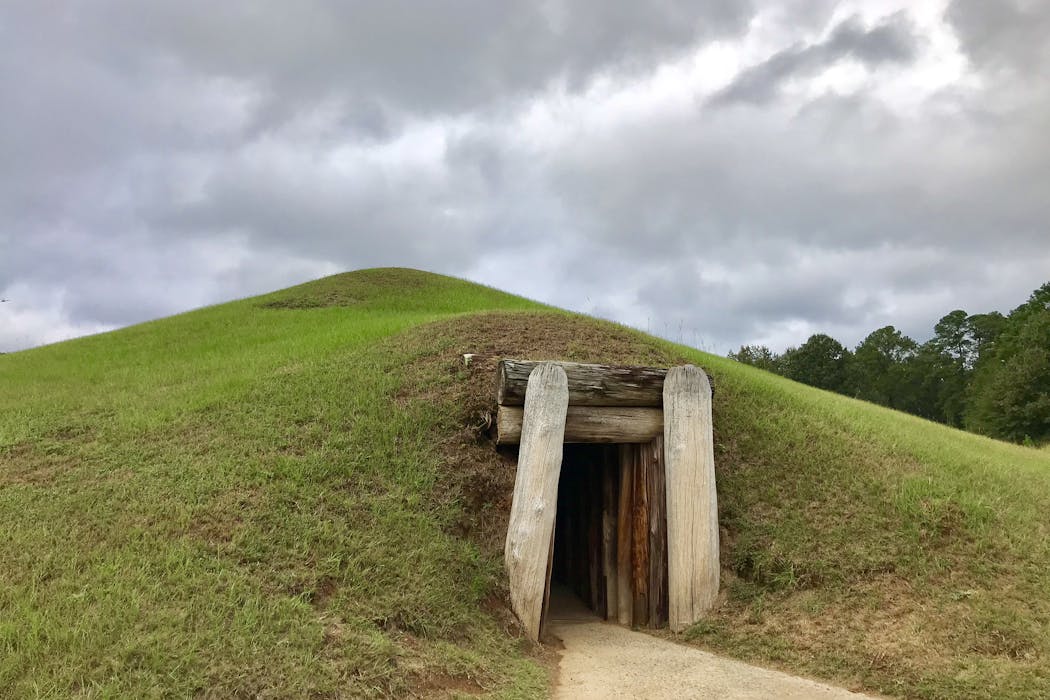
Ocmulgee Mounds, a site in central Georgia with 12,000 years of Indigenous history, may be on the verge of becoming the newest U.S. national park. This is the flagship designation of the National Park Service system, which includes many types of properties in addition to formally designated national parks.
Although this redesignation may not include much change for the site itself, it could mean quite a lot to visitors, supporters and locals alike.
The 3,000-acre park protects land and features important to the Mississippian culture, which built the mounds there starting roughly 3,000 years ago, and the Muscogee (Creek) Nation, for which the site is an ancestral homeland.
As a geographer who studies parks and the naming of places, I have seen that when a National Park Service unit is redesignated as a national park, as a pending bill in Congress currently proposes for Ocmulgee Mounds, it does not typically change the funding available to run the site. That’s especially true at a time when National Park Service funding and personnel are being cut. However, a park redesignation does serve political purposes and affects how visitors perceive that park.
How parks are designated
The National Park Service manages 433 units with 19 different designations, such as “national battlefields,” “national lakeshores” and “national scenic trails.” Only 63 of these units carry the formal title or designation of “national park.”
All but one of these categories can be bestowed only by Congress. National monuments, however, can be created by the president directly, under the provisions of the Antiquities Act of 1906.
In rare cases, a community, group or other organization proposes adding an area that is not currently managed by the National Park Service to the system, but this takes a lot of time and is different from the more common process of changing the formal designation of a property already within the system.
My analysis of the contentious redesignation of the Jefferson National Expansion Memorial in St. Louis to Gateway Arch National Park in 2018 found that it was not done to offer additional protection to this site of national importance. Rather, the move was meant to take advantage of the public significance of the “national park” label and thereby attract more tourists and tourism revenue to the local economy.
Changing the designation contradicted the park service’s own declaration that the term “national park” should be used for an area that “contains a variety of resources and encompasses large land or water areas to help provide adequate protection of the resources.”
During congressional hearings, the deputy director of the National Park Service, Robert Vogel, recommended the site not be labeled a national park but rather a national monument, because the site “is too small and limited in the range of resources the site protects and interprets to be called a national park.”
The redesignation effort for Ocmulgee Mounds has two primary aspects. First, it would declare the area a national park.
Second, it would add additional land to this protected area, designating that portion as a national preserve. The distinction matters: Public hunting, including traditional Indigenous hunting, is not allowed in national parks, but it is allowed in national preserves. And while national parks are managed by the National Park Service under the Department of Interior, national preserves can be managed in collaborative partnership with other groups, including local Indigenous people with cultural ties to the land.
The only real changes in these places, though, would be in marketing – the signs, brochures and merchandise sold in gift shops. But these changes would have an important effect: The tagline of “new national park” markets well and is believed to help attract more visitors to the site. But it won’t actually protect these landscapes any better than they already are under the stewardship of the National Park Service.
Seth T. Kannarr does not work for, consult, own shares in or receive funding from any company or organization that would benefit from this article, and has disclosed no relevant affiliations beyond their academic appointment.
Home borrowing costs, like other long-term rates, are not directly controlled by the Fed – but they still feel its influence.athima tongloom/Moment via Getty Images
For most of us, the main impact tends to be how much we have to pay to borrow to buy a house or car. But for the Federal Reserve, the purpose of its monetary policy is mandated by Congress.
This is widely known as the Federal Reserve’s dual mandate: promoting maximum employment and stable prices. The Fed itself refers to these two objectives regularly in its Federal Open Market Committee statements announcing its monetary policy decisions.
A third objective of monetary policy, however, is less well-known: moderate long-term interest rates.
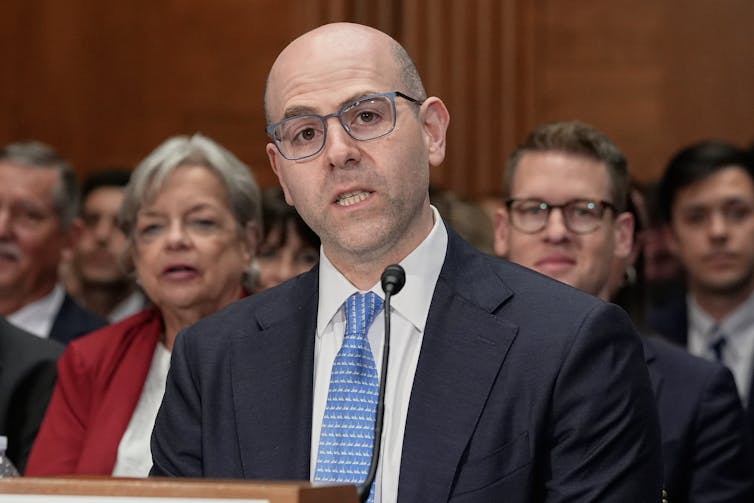
This “third mandate” was a big news story in September 2025, when the Trump administration’s newly appointed Fed governor, Stephen Miran, referred to it in his testimony before the Senate Banking Committee. Financial markets paid close attention to this aspect of the testimony because the comments suggested that Miran and other presidential appointees may focus on this third mandate – and on driving down long-term borrowing costs – more than the Fed has in the recent past.
I’ve been closely following how the Fed conducts monetary policy for many years. Miran is correct that Congress has tasked the U.S. central bank with all three of these objectives – but that’s not the whole story. In fact, none of these goals were originally spelled out in the act that set up the Fed over a century ago.
Since then, the Fed’s goals have been revised several times – typically in response to a crisis.
The Fed’s shifting goals
The original purpose of the Fed, as explained in the Federal Reserve Act of 1913, was to provide flexibility in the nation’s currency supply and to supervise the U.S. banking system. The current dual mandate was not part of the original goals of the Fed.
Instead, its core goal was to reduce the frequent banking panics that were costly to the economy and sharply increased interest rates.
The first big change in the goals, in response to the Great Depression, was the Employment Act of 1946 that stated the goal of federal government policy – and, therefore that of the Fed – is to “promote maximum employment, production and purchasing power.”
This is where the two goals of the dual mandate first began to emerge, with purchasing power implying the Fed needed to keep inflation low.
Following the macroeconomic instability of the 1970s with high unemployment and high inflation, Congress enacted the Federal Reserve Reform Act of 1977 that formalized the Fed mandate: “maintain long run growth of the monetary and credit aggregates commensurate with the economy’s long run potential to increase production, so as to promote the goals of maximum employment, stable prices, and moderate long-term interest rates.”
In other words, Congress gave the Fed three mandates to follow in monetary policy.
Stephen Miran mentioned the third mandate during his testimony before the Senate Banking Committee in September 2025. AP Photo/Mariam Zuhaib
What happened to the third mandate?
So why doesn’t the Fed still talk about that third mandate?
Part of the answer is that moderate long-term interest rates are a natural by-product of successfully managing the other two.
In pursuit of low inflation and maximum employment, the Fed primarily uses a short-term interest rate, known as the Federal Funds rate. When journalists report that the Fed raised or lowered interest rates, this refers to the so-called target rate that the central bank uses to control the Fed Funds rate. For example, the current target rate is a range of 3.75% to 4%, while the effective Fed Funds rate is 3.89%. Banks use the funds rate as the cost other banks must pay to borrow reserve funds for one day.
However, most of the interest rates that matter to people, businesses and the economy at large have much longer terms – such as five, 10 or 30 years. Examples include mortgages, car loans and corporate bonds. The Fed does not directly control these longer-term interest rates, which are set by financial markets.
So if markets believe the Fed has inflation under control, they tend to keep long-term rates on mortgages and everything else low because they don’t expect the Fed will increase its target rate. If inflation is running high, long-term rates tend to rise because markets expect the Fed to have to lift its short-term rate to deal with it. But if unemployment is running high, long-term rates tend to fall because markets expect the Fed to reduce its short-term rate to deal with that.
Longer-term rates are, therefore, not independent of the dual mandate of the Fed. They are often an outcome of how successfully the Fed is meeting the dual mandate of full employment and stable prices currently and in the future.
As a result, the Fed doesn’t typically talk about this third mandate.
Promoting economic stability
That said, the Fed has, at times, although very rarely, influenced long-term rates directly.
For example, in late 2010, following the Great Recession of 2007-2009, the Fed purchased billions of dollars’ worth of long-term Treasury bonds and other securities – a program known as “QE2” for quantitative easing – in an effort to lower the cost of borrowing for consumers and businesses. The Fed did something similar in 1961 with Operation Twist, similarly with an aim to support the U.S. economy by reducing long-term borrowing costs.
But even this phase of quantitative easing was primarily about meeting the Fed’s dual mandate. More specifically, since inflation was already low, the Fed was trying to boost hiring in the wake of the Great Recession.
The Fed is keenly aware that longer-term interest rates that are not aligned with its dual mandate can be an important source of instability in the economy. A modern central bank’s primary goal is to promote stability in the economy, so longer-term interest rates should be at levels that are appropriate to ensure current and future economic stability.
Arabinda Basistha does not work for, consult, own shares in or receive funding from any company or organization that would benefit from this article, and has disclosed no relevant affiliations beyond their academic appointment.
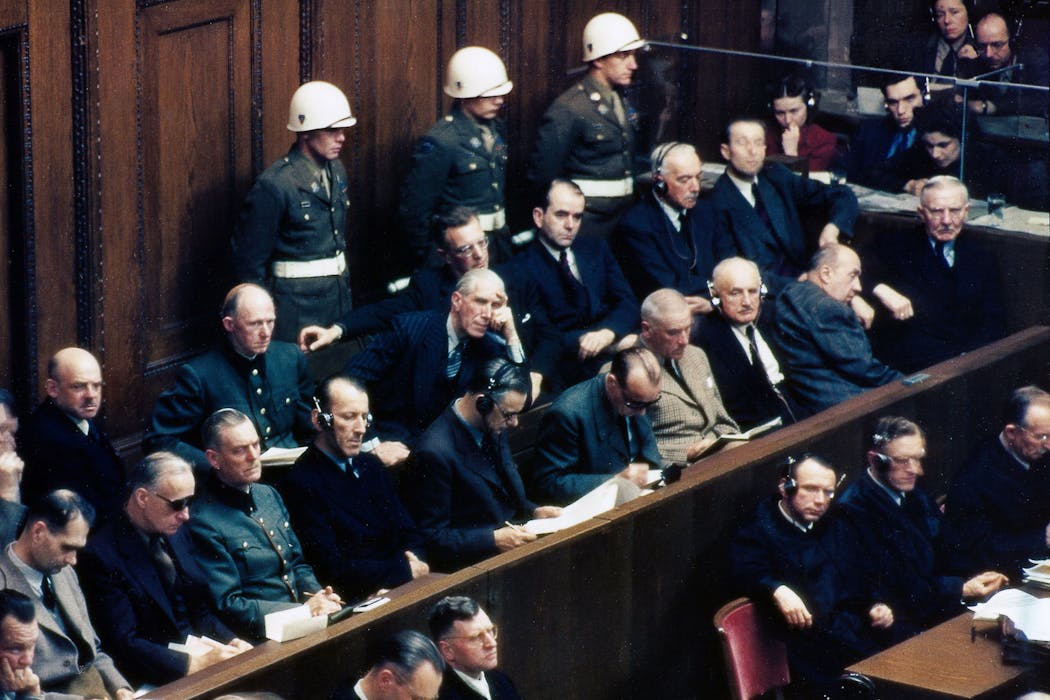
The film “Nuremberg” depicts events surrounding the post-World War II International Military Tribunal – the first and best-known of the Nuremberg trials – which was created to carry out the “just and prompt trial and punishment of the major war criminals of the European Axis.”
Nazi party leaders Hermann Göring, Alfred Rosenberg and Wilhelm Keitel were among the 24 people who ended up being indicted. Six organizations were also indicted, including the Gestapo and the SS. The tribunal, which took place in Nuremberg, Germany, and resulted in 19 convictions, attracted worldwide media attention.
The public’s understanding of these terms is due, in large part, to the success of the Nuremberg trials and the remarkable degree of international cooperation they required. But the shakiness of international justice today, along with the ongoing complexity of legal and moral conceptions of guilt, shows the limits of the law when it comes to holding the worst of the worst accountable.
Not the first attempt at international justice
These trials were not the first effort to prosecute war crimes in an international court.
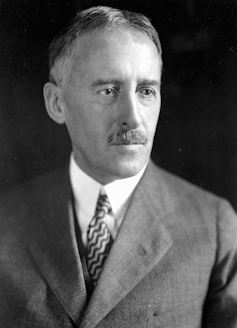
U.S. Secretary of War Henry L. Stimson was a key proponent of an international tribunal to hold Nazis to account. Library of Congress
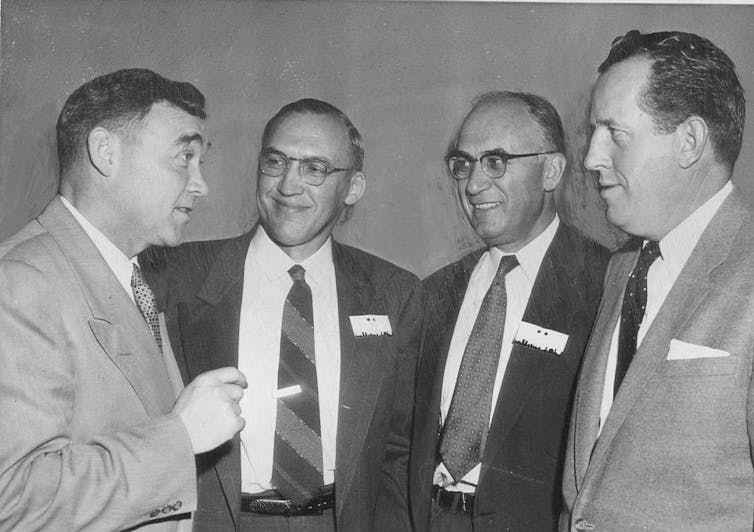
Several years before the end of World War II, officials in the U.K., U.S. and USSR had already begun to discuss what mechanisms would be best for handling a defeated Germany. Some officials, such as U.S. Secretary of War Henry L. Stimson, argued in favor of trials that adhered closely to American legal principles. Others, like British Foreign Secretary Anthony Eden, objected, specifically citing the failure of the Leipzig trials.
But several aspects were different this time around.
When the four chief prosecutors of the International Military Tribunal, representing the U.K., U.S., USSR and France, filed the indictment for the Nuremberg trials, most of the accused were already in custody. The prosecuting attorneys also had access to a trove of Nazi documents to build their cases.
There still needed to be a solid legal basis for the trials. Some defendants argued that their actions, at the time, had been legal under German law.
For these reasons, the charter that established the International Military Tribunal represented a significant development by outlining and defining the specific crimes that would fall under its jurisdiction: war crimes, crimes against peace and crimes against humanity.
While the category of war crimes was based on existing international conventions, crimes against peace and crimes against humanity had not been previously codified.
The International Military Tribunal proceedings began on Nov. 20, 1945, and the hearings lasted until Sept. 1, 1946. Four judges – one from each of the countries convening the tribunal – presided over the case. Each of the four convening countries also appointed a chief prosecutor to lead the prosecution. Defendants were allowed to select their own legal counsel, subject to the court’s approval.
On Oct. 1, 1946, after a month of deliberation, the judges issued the final rulings. Of the 22 individual defendants, 19 were found guilty, 12 of whom were sentenced to death.
Atrocities committed by Allied forces, however, were not subject to the court’s scrutiny as possible war crimes, nor were actions taken by Allied governments domestically, including the incarceration of Japanese Americans by the U.S. government.
Even U.S. Supreme Court Chief Justice Harlan Fiske Stone expressed misgivings about the legal precedent he saw the trials setting. In a letter discussing International Military Tribunal chief prosecutor Robert H. Jackson – who, at the time, was Stone’s colleague on the Supreme Court – Stone lamented, “I don’t mind what he does to the Nazis, but I hate to see the pretense that he is running a court and proceeding according to common law.”
Questions about the complicity of everyday German citizens and those in Nazi-occupied territories were also left unresolved. To philosopher Hannah Arendt, the verdicts felt rather hollow.
“The Nazi crimes, it seems to me, explode the limits of law,” she wrote to her friend and fellow philosopher Karl Jaspers. “This guilt, in contrast to all criminal guilt, oversteps and shatters any and all legal systems. … We are simply not equipped to deal, on a human, political level, with a guilt that is beyond crime.”
In “Nuremberg,” psychiatrist Douglas Kelley, played by Rami Malek, attempts to understand Hermann Göring’s personality and motivations in order to prevent future atrocities. Kelley assumes Göring will come off as an exemplar of evil. But he finds Göring to be largely ordinary, even likable, and not so different from many Americans.
Psychiatrist Douglas Kelley, on the left, was played by Rami Malek in the film ‘Nuremberg.’ The Denver Post/Getty Images
Nuremberg laid the groundwork
While the Nuremberg trials left plenty of further work to do in developing a fair and functional framework for international justice, they represented a landmark development in international law, most directly in the adoption of the Nuremberg Principles, a set of guidelines regarding what constitutes a war crime.
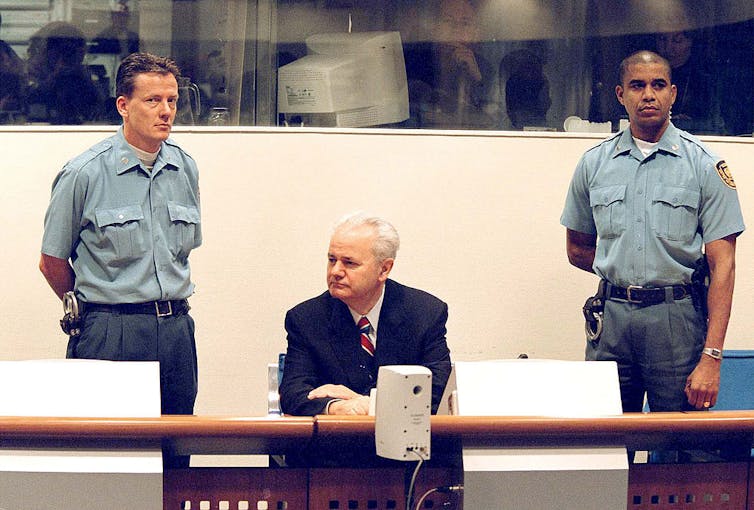
Former Yugoslav President Slobodan Milosevic appears before the U.N. war crimes tribunal at The Hague on Feb. 13, 2002. Pool Photo/Getty Images
A fragile consensus today
After the International Military Tribunal issued its verdicts, Stimson remained a stalwart proponent of the trials he’d championed.
“It was not a trick of the law which brought them to the bar,” he wrote in 1947. It was the “massed angered forces of common humanity.”
In the 80 years since, the world has witnessed countless conflicts and atrocities unfold across the globe, yet only a relatively small number of the alleged perpetrators have been tried before international courts.
Beyond staunch disagreement over how to stop them, you’ll see debates over whether they even constitute crimes in the first place. The legitimacy of international courts is also disputed: In August 2025, the U.S. – which does not belong to the International Criminal Court – imposed sanctions on ICC officials after the court issued arrest warrants against top Israeli officials over alleged crimes in Gaza.
Watching “Nuremberg” in light of Stimson’s claim, you might wonder how to view this current moment vis-à-vis this earlier era.
Have political and social conditions shifted to such an extent that appealing to the “forces of common humanity” is no longer a viable political strategy? Or is the takeaway that there is always value in endeavoring to cultivate some form of consensus – no matter how small – over whether certain lines can never be crossed?
Even if consensus remains elusive, one thing is clear: The world’s knowledge of terms like “genocide” and “crimes against humanity” provides a universally understood way to push back against unfolding atrocities.
B.B. Blaber does not work for, consult, own shares in or receive funding from any company or organization that would benefit from this article, and has disclosed no relevant affiliations beyond their academic appointment.
Federal agents in military fatigues chat with Chicago police officers in Chicago’s Brighton Park neighborhood on Oct. 4, 2025, after federal agents shot a woman during a confrontation.Joshua Lott/The Washington Post via Getty Images
In early 2025, in an effort to facilitate its deportation goals, the Trump administration entered into hundreds of agreements with local police departments to essentially deputize them to act as federal immigration agents.
The bulk of these agreements were signed in Republican strongholds such as Texas and Florida, places where the immigration policies of state leaders aligned with those of the Trump administration.
But as Trump ramped up his deportation efforts over the course of 2025, how would immigration enforcement play out in sanctuary cities and states?
Sanctuary policies aim to focus local policing on community safety rather than immigration enforcement. In 2016, there were approximately 340 of these sanctuary jurisdictions in the U.S. By the start of Trump’s second term, there were just over 1,000 of them
Would local police in sanctuary cities and states step in to protect someone they knew hadn’t committed a felony or was a citizen? Would officers in these places admonish ICE agents for failing to follow proper protocol?
Instead, over the course of 2025, videos from sanctuary jurisdictions – including Chicago, California and Worcester, Massachusetts – showed local police acting more like auxiliary enforcers.
Peter Mancina.
In Peter Mancina’s forthcoming book “On the Side of ICE: Policing Immigrants in a Sanctuary State,” he explores the cultural, bureaucratic and political roadblocks to enacting immigrant-friendly policing reforms, with a focus on New Jersey, where Mancina works as an adjunct law professor at Rutgers University.
In an interview, edited for length and clarity, Mancina explains why sanctuary policies don’t necessarily change what happens on the ground.
The adoption of sanctuary policies grew dramatically during the first Trump administration. Yet at various points in the book, you call them a “rebrand,” a “public relations facade” and “immigration enforcement assistance with an immigrant friendly face.” What’s behind those characterizations?
There’s an internal tension to sanctuary policies. There’s this broader sanctuary movement that’s been around since roughly 1980, which came about largely in response to U.S. involvement in Central American civil wars and protecting immigrants fleeing these and other conflicts.
The activists started working with city officials sympathetic to their cause in cities such as San Francisco to create resolutions protecting immigrants that were largely symbolic. After the San Francisco Police Department was found to be ignoring the resolution, the city created the country’s first sanctuary ordinance in 1989. With this ordinance, activists hoped that local police could be prevented from collaborating with federal immigration officers.
But many activists assumed that the kind of ethics and the values that existed in the sanctuary movement could actually be taken up in policy and implemented, because there’s this notion that when you pass a law or ordinance it will be implemented as written.
A major part of the book is to say, “Actually, that’s not how policy works.” It fits within these bureaucratic cultures. And in policing culture, there’s already this web of relationships that local cops have with federal agents, and these cultures have their own value systems. Something that people don’t really talk about is that local police aren’t just used by ICE as these local enforcers of immigration law. In fact, a lot of times local law enforcement look to ICE as partners and collaborators.
Where does the breakdown happen between policy and practice?
These current policies largely acknowledge the fact that the majority of the undocumented people that local law enforcement encounter don’t have criminal backgrounds. They say that what we want to target are these really terrible people who are the violent criminals.
These criminals are framed as the exception to the rule. But these exceptions still end up leading to quite a few people being transferred by local police and jails to ICE. And the exceptions can easily be exploited or broadened by the boots on the ground – the police tasked with following the policy – because there’s often this gray area in the language.
So what ends up happening is that there really isn’t any sort of major decrease in deportations in sanctuary jurisdictions. In 2018, New Jersey Attorney General Gurbir Grewal issued his Immigrant Trust Directive, which barred local law enforcement from helping federal authorities carry out civil-immigration enforcement. The last year before it was implemented, local police turned 1,000 people being held in local jails over to ICE. After it went into effect, that number went down slightly the following year, to 700 people. That’s still a lot of undocumented people being turned over. And it’s because local police were able to apply those “exceptional circumstances” in many of those cases.
In the book, you relay this one instance in New Jersey where ICE calls in the local police as backup, and the local police – aware of the state’s new Immigrant Trust Directive – describe their role on the scene to local activists and passersby as “protecting public safety.” Yet you point out that they actually are helping ICE, because their cars are parked to block the street so the targeted immigrant can’t drive away.
You can have a policy, like the one that the Los Angeles City Council passed in 2024, which was basically written as a “no cooperation policy.” And still, it’s not possible to actually pull off in practice, because you then have those cases like the one you just mentioned, where even if you ban “immigration enforcement practices” like making immigration-related arrests, basic public safety policing is going to still happen, whether that’s crowd control or traffic control.
So when local police show up at an immigration home arrest or a worksite raid, they often become part of immigration enforcement by virtue of the fact that they’re there to protect pedestrians, route traffic, respond to violence or protect ICE agents.
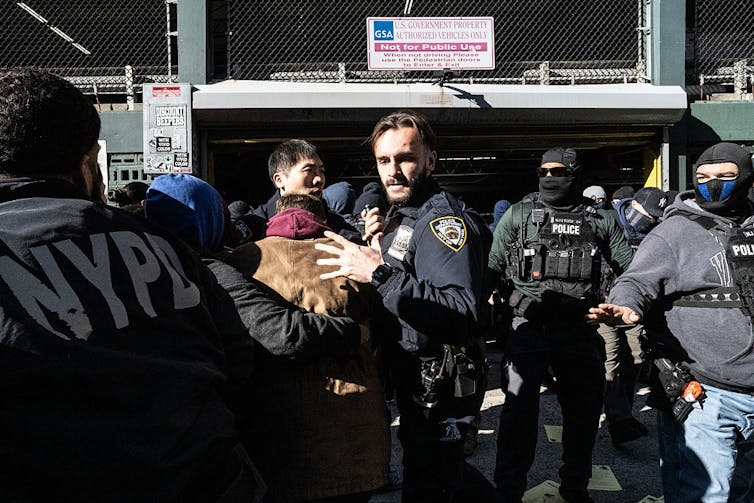
You’ll see this on social media, when protests rapidly form to surround ICE officers during raids. Police step in to assist ICE by protecting them as they haul someone away. This turns emergency assistance and crowd control into a form of immigration enforcement itself.
NYPD officers respond as protestors block a garage used by ICE vans ahead of a purported ICE raid on New York City’s Canal Street on Nov. 29, 2025. Stephanie Keith/Getty Images
Ultimately, when you get down into the procedural level of how you implement this stuff, it’s actually not possible to avoid cooperating. Complete non-cooperation and complete protection simply do not happen.
I’ve also seen local law enforcement agencies in sanctuary jurisdictions simply post all of their inmate information online. ICE agents can routinely check those databases and show up to arrest them once the inmates are released.
Under the George W. Bush administration, there was the Secure Community program, in which the Department of Homeland Security required local police to check the immigration status of anyone that they fingerprint. The Obama administration actually expanded this program. How have programs like this facilitated what you describe as a “professional kinship” between local police and federal agents?
The way I see it, local police and federal agencies have different missions and different objectives, but they see themselves as being able to help each other accomplish their various goals.
Many local police departments have long seen deportations as just another tool that they can use to get criminals off the street for good. Once they’ve arrested an undocumented person, they assume that if they’re deported, there won’t be an opportunity for them to return to the community to commit more crimes. And this view has been ingrained and reinforced through these collaborative partnerships like the Secure Communities program.
Interestingly, during the height of the Secure Communities program, (legal scholars) Adam Cox and Thomas Miles conducted a statistical analysis of 3,000 counties from 2005 to 2013 that assisted ICE by turning people over to them from local jails.
They found, across the board, that crime in these counties didn’t decrease. It sounds counterintuitive. But when most people deported through jail transfers are people with low-level jail bookings – and not serious convictions – it makes more sense. It also doesn’t stop people who are part of a criminal enterprise from figuring out a way to get back into the country after being deported.
I want to go back to that term “sanctuary.” Opponents of sanctuary policies seem to have used it as a cudgel, and I think that’s because the layperson understands “sanctuary” as total protection. You obviously show that not to be the case. Have you seen elected officials avoiding the term?
Around 2011 or 2012, officials started walking back the way they framed sanctuary policies. They were clearly sanctuary policies in terms of how they’d been crafted and what they attempt to do. But places like Chicago, for example, called theirs a “Welcoming City” ordinance.
These new terms emerged largely due to attacks by right-wing outlets such as Fox News and Breitbart. There was just a lot of bad press.
And, yeah, politicians are running away from the term: I’ve heard different ones say, you know, “This is not a sanctuary policy,” even though it’s been crafted using almost the exact same language as policies that are explicitly described as sanctuary policies.
As I noted earlier, there was a time when activists and lawmakers thought these policies really were going to stop local jails and local police from helping to deport people. They just didn’t anticipate the durability of local-federal partnerships and their tenacity in finding ways to circumvent the intentions of lawmakers.
I think over time – as the spirit of these policies continues to be violated by many local law enforcement officers – the term “sanctuary” has been used in more of an aspirational sense.
Do local officers ever get disciplined for violating sanctuary policy?
I actually studied this – separate from the book – in San Francisco, where the police chief had issued a sanctuary city order.
If an officer violates a local department order, it can go in their police file. These write-ups can add up and can lead to an actual firing under police union rules.
In every single case where there was a violation of the sanctuary rules, the only thing that was issued was a verbal admonishment. So no write-ups. It’s the equivalent of someone saying, “Don’t do that again,” and leaving it at that.
They knew their superiors were aware. So it was not nothing. In certain circumstances, those who had violated the order were told to go back to the San Francisco Police Academy for training on the sanctuary ordinance.
But none of it went into their files. You could say it was a very lenient culture around those rules.
Returning to New Jersey: Was there any follow-up on whether local police departments were adhering to the Immigrant Trust Directive?
So when the trust directive was implemented, the New Jersey attorney general’s office created training for all law enforcement officers. It was an online video that they had to watch. It was a few hours long. It was very technical. I watched it. Though some officers were allowed to do other work while watching, they all had to do it, and there was a very firm accounting of ensuring that every officer got that training.
I also know that in the first year, they required local agencies to report back any instances of cooperation with federal immigration authorities. But after that first year, the follow-up seems to have stopped altogether. There were no further documented reports.
I also managed a team of researchers that did a public records request of over 400 agencies across the state. I wanted to see whether local police departments had changed their policies to include the dictates of the Immigration Trust Directive.
I was able to get access to records from 68% of all law enforcement agencies in the state. Of those, only 55% had actually changed their procedures so they were compliant with the Immigrant Trust Directive. Keep in mind, there were still pro-immigration enforcement procedures that were already on the books from Anne Milgram’s tenure (New Jersey’s attorney general from 2007 to 2010), when officers were encouraged to inquire about immigration status. It turns out many departments didn’t even tweak these internal policies and procedures.
What has stood out to you about the deportation efforts of the second Trump administration?
What’s happening are extensions of what’s been happening over the past few decades, in terms of the federal government looking to partner with different agencies at the local, state and federal levels, whether it’s sheriff’s departments, the ATF, the FBI or the Secret Service.
But none of this coordination has ever happened to the degree we’re seeing right now. The administration is assigning people within these various agencies to do full-time immigration enforcement.
What’s been really amazing to me, too, has been the amplification of the 287(g) program. These are agreements signed with the Department of Homeland Security that permits local police officers to go out and find undocumented people to arrest and be potentially deported in the course of their everyday policing activities. So it allows them to double as a federal officer.
Over the course of your 15 years studying sanctuary policing – either for this book or for your other studies – did you ever encounter instances where local police arrived at the scene of an ICE raid or an arrest and took the side of undocumented immigrants or citizens for one reason or another, whether that meant admonishing ICE agents for their aggressiveness or telling them, “Hey, you’re not following proper protocol.”