With wolves absent from most of eastern North America, can coyotes replace them?

Source: The Conversation – USA – By Alex Jensen, Postdoctoral Associate – Wildlife Ecology, North Carolina State University
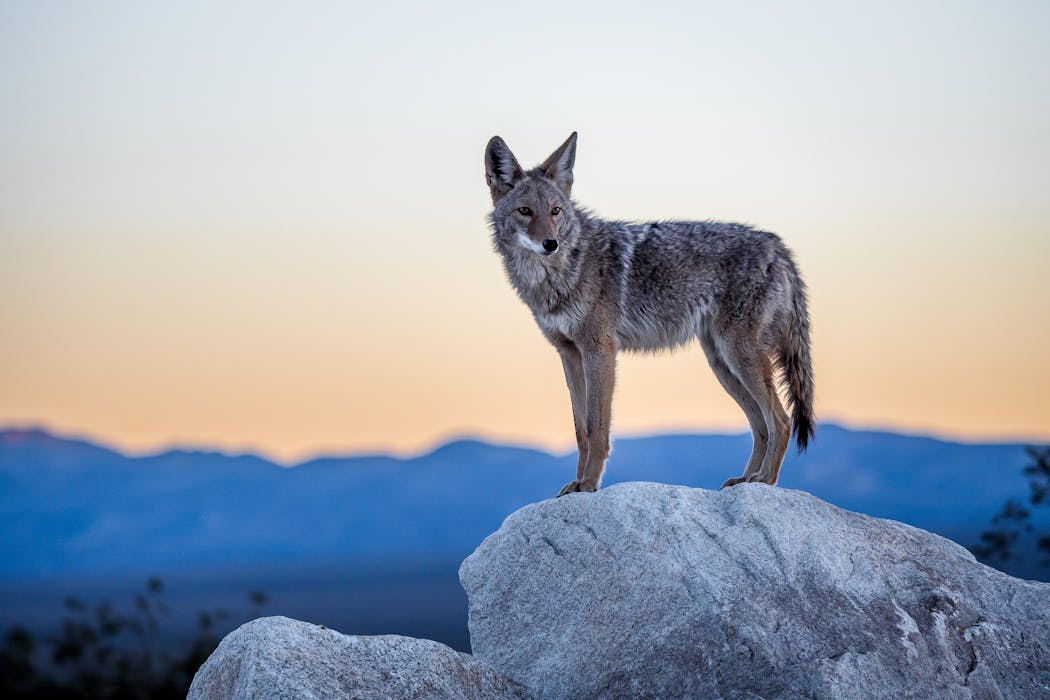
Coyotes have expanded across the United States. Davis Huber/500px via Getty Images

Imagine a healthy forest, home to a variety of species: Birds are flitting between tree branches, salamanders are sliding through leaf litter, and wolves are tracking the scent of deer through the understory. Each of these animals has a role in the forest, and most ecologists would argue that losing any one of these species would be bad for the ecosystem as a whole.

Unfortunately – whether due to habitat loss, overhunting or introduced specieshumans have made some species disappear. At the same time, other species have adapted to us and spread more widely.

As an ecologist, I’m curious about what these changes mean for ecosystems – can these newly arrived species functionally replace the species that used to be there? I studied this process in eastern North America, where some top predators have disappeared and a new predator has arrived.

A primer on predators

Wolves used to roam across every state east of the Mississippi River. But as the land was developed, many people viewed wolves as threats and wiped most of them out. These days, a mix of gray wolves and eastern wolves persist in Canada and around the Great Lakes, which I collectively refer to as northeastern wolves. There’s also a small population of red wolves – a distinct and smaller species of wolf – on the coast of North Carolina.

The disappearance of wolves may have given coyotes the opportunity they needed. Starting around 1900, coyotes began expanding their range east and have now colonized nearly all of eastern North America.

A map of central to eastern North America. Parts of southern Canada are marked as 'current northeast wolf range,' the northeast US is marked 'current coyote and historical wolf range,' the rest of the southern and eastern US is marked 'red wolf range' and to the west is marked 'coyote range ~1900.'
Coyotes colonized most of eastern North America in the wake of wolf extirpation.
Jensen 2025, CC BY

So are coyotes the new wolf? Can they fill the same ecological role that wolves used to? These are the questions I set out to answer in my paper published in August 2025 in the Stacks Journal. I focused on their role as predators – what they eat and how often they kill big herbivores, such as deer and moose.

What’s on the menu?

I started by reviewing every paper I could find on wolf or coyote diets, recording what percent of scat or stomach samples contained common food items such as deer, rabbits, small rodents or fruit. I compared northeastern wolf diets to northeastern coyote diets and red wolf diets to southeastern coyote diets.

I found two striking differences between wolf and coyote diets. First, wolves ate more medium-sized herbivores. In particular, they ate more beavers in the northeast and more nutria in the southeast. Both of these species are large aquatic rodents that influence ecosystems – beaver dam building changes how water moves, sometimes undesirably for land owners, while nutria are non-native and damaging to wetlands.

Second, wolves have narrower diets overall. They eat less fruit and fewer omnivores such as birds, raccoons and foxes, compared to coyotes. This means that coyotes are likely performing some ecological roles that wolves never did, such as dispersing fruit seeds in their poop and suppressing populations of smaller predators.
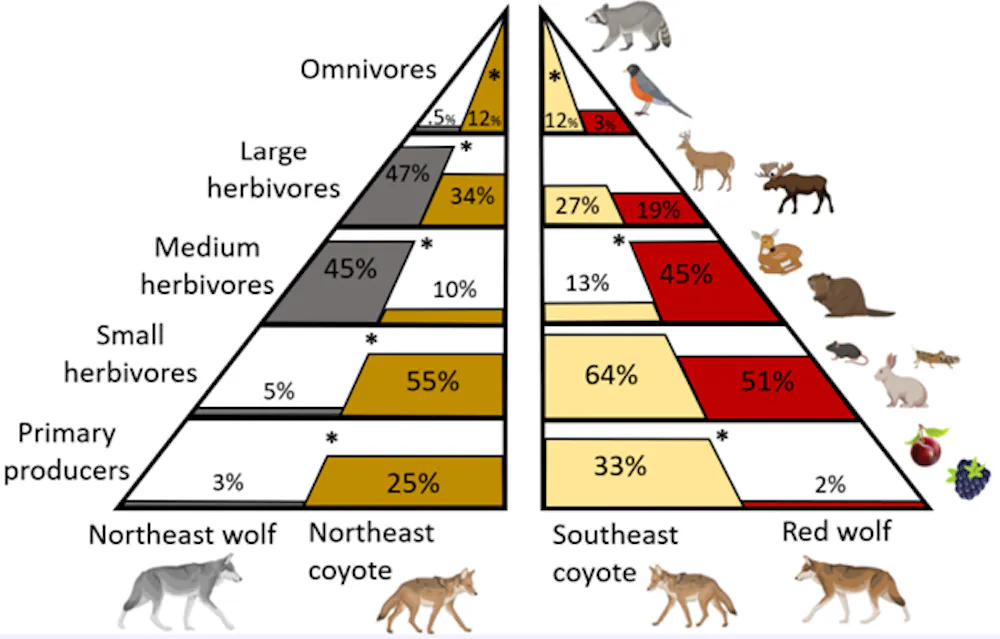
A diagram showing the diets of wolves and coyotes
Grouping food items by size and trophic level revealed some clear differences between wolf and coyote diets. Percents are the percent of samples containing each level, and stars indicate a statistically significant difference.
Alex Jensen, CC BY

Killing deer and moose

But diet studies alone cannot tell the whole story – it’s usually impossible to tell whether coyotes killed or scavenged the deer they ate, for example. So I also reviewed every study I could find on ungulate mortality – these are studies that tag deer or moose, track their survival, and attribute a cause of death if they die.

These studies revealed other important differences between wolves and coyotes. For example, wolves were responsible for a substantial percentage of moose deaths – 19% of adults and 40% of calves – while none of the studies documented coyotes killing moose. This means that all, or nearly all, of moose in coyote diets is scavenged.

Coyotes are adept predators of deer, however. In the northeast, they killed more white-tailed deer fawns than wolves did, 28% compared to 15%, and a similar percentage of adult deer, 18% compared to 22%. In the southeast, coyotes killed 40% of fawns but only 6% of adults.

Rarely killing adult deer in the southeast could have implications for other members of the ecological community. For example, after killing an adult ungulate, many large predators leave some of the carcass behind, which can be an important source of food for scavengers. Although there is no data on how often red wolves kill adult deer, it is likely that coyotes are not supplying food to scavengers to the same extent that red wolves do.
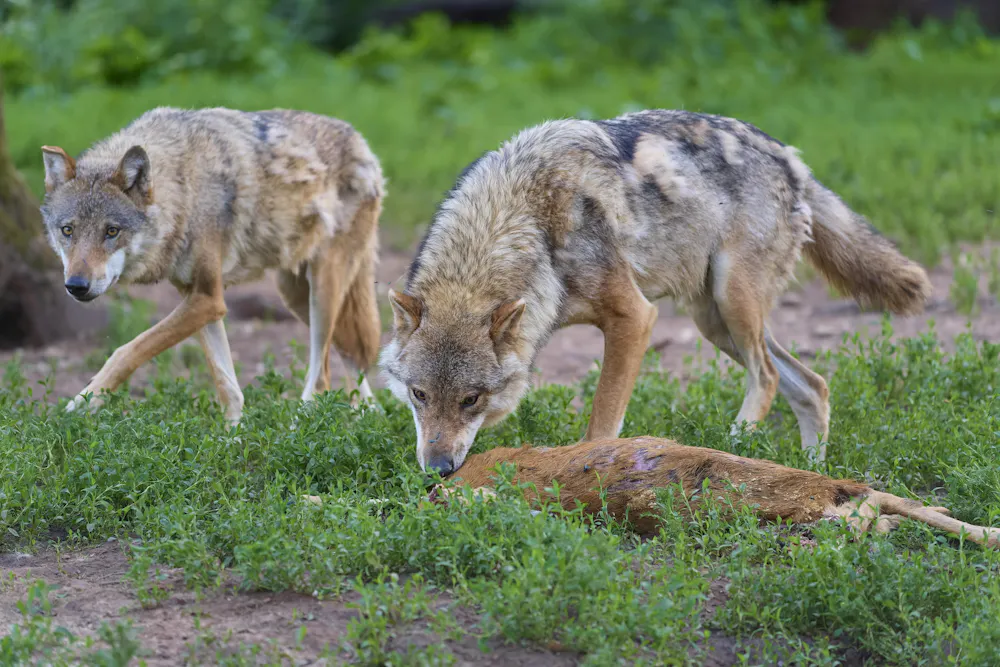
Two wolves walking through the grass. One is sniffing a dead deer on the ground.
Wolves and coyotes both kill a substantial proportion of deer, but they focus on different age classes.
imageBROKER/Raimund Linke via Getty Images

Are coyotes the new wolves?

So what does this all mean? It means that although coyotes eat some of the same foods, they cannot fully replace wolves. Differences between wolves and coyotes were particularly pronounced in the northeast, where coyotes rarely killed moose or beavers. Coyotes in the southeast were more similar to red wolves, but coyotes likely killed fewer nutria and adult deer.

The return of wolves could be a natural solution for regions where wildlife managers desire a reduction in moose, beaver, nutria or deer populations.

Yet even with the aid of reintroductions, wolves will likely never fully recover their former range in eastern North America – there are too many people. Coyotes, on the other hand, do quite well around people. So even if wolves never fully recover, at least coyotes will be in those places partially filling the role that wolves once had.

Indeed, humans have changed the world so much that it may be impossible to return to the way things were before people substantially changed the planet. While some restoration will certainly be possible, researchers can continue to evaluate the extent to which new species can functionally replace missing species.

The Conversation

Alex Jensen does not work for, consult, own shares in or receive funding from any company or organization that would benefit from this article, and has disclosed no relevant affiliations beyond their academic appointment.

ref. With wolves absent from most of eastern North America, can coyotes replace them? – https://theconversation.com/with-wolves-absent-from-most-of-eastern-north-america-can-coyotes-replace-them-270235

‘This year nearly broke me as a scientist’ – US researchers reflect on how 2025’s science cuts have changed their lives

Source: The Conversation – USA – By Carrie McDonough, Associate Professor of Chemistry, Carnegie Mellon University

U.S. researchers are seeking the light at the end of a rough year for science. Westend61/Getty Images

From beginning to end, 2025 was a year of devastation for scientists in the United States.

January saw the abrupt suspension of key operations across the National Institutes of Health, not only disrupting clinical trials and other in-progress studies but stalling grant reviews and other activities necessary to conduct research. Around the same time, the Trump administration issued executive orders declaring there are only two sexes and ending DEI programs. The Trump administration also removed public data and analysis tools related to health disparties, climate change and environmental justice, among other databases.

February and March saw a steep undercutting of federal support for the infrastructure crucial to conducting research as well as the withholding of federal funding from several universities.

And over the course of the following months, billions of dollars of grants supporting research projects across disciplines, institutions and states were terminated. These include funding already spent on in-progress studies that have been forced to end before completion. Federal agencies, including NASA, the Environmental Protection Agency, the National Oceanic and Atmospheric Administration and the U.S. Agency for International Development have been downsized or dismantled altogether.

The Conversation asked researchers from a range of fields to share how the Trump administration’s science funding cuts have affected them. All describe the significant losses they and their communities have experienced. But many also voice their determination to continue doing work they believe is crucial to a healthier, safer and more fair society.


Pipeline of new scientists cut off

Carrie McDonough, Associate Professor of Chemistry, Carnegie Mellon University

People are exposed to thousands of synthetic chemicals every day, but the health risks those chemicals pose are poorly understood. I was a co-investigator on a US$1.5 million grant from the EPA to develop machine-learning techniques for rapid chemical safety assessment. My lab was two months into our project when it was terminated in May because it no longer aligned with agency priorities, despite the administration’s Make America Healthy Again report specifically highlighting using AI to rapidly assess childhood chemical exposures as a focus area.

Labs like mine are usually pipelines for early-career scientists to enter federal research labs, but the uncertain future of federal research agencies has disrupted this process. I’m seeing recent graduates lose federal jobs, and countless opportunities disappear. Students who would have been the next generation of scientists helping to shape environmental regulations to protect Americans have had their careers altered forever.

Protestors holding signs supporting science in front of a domed federal building
Many researchers are working to advocate for science in the public sphere.
John McDonnell/AP Photo

I’ve been splitting my time between research, teaching and advocating for academic freedom and the economic importance of science funding because I care deeply about the scientific and academic excellence of this country and its effects on the world. I owe it to my students and the next generation to make sure people know what’s at stake.


Fewer people trained to treat addiction

Cara Poland, Associate Professor of Obstetrics, Gynecology and Reproductive Biology, Michigan State University

I run a program that has trained 20,000 health care practitioners across the U.S. on how to effectively and compassionately treat addiction in their communities. Most doctors aren’t trained to treat addiction, leaving patients without lifesaving care and leading to preventable deaths.

This work is personal: My brother died from substance use disorder. Behind every statistic is a family like mine, hoping for care that could save their loved one’s life.

With our federal funding cut by 60%, my team and I are unable to continue developing our addiction medicine curriculum and enrolling medical schools and clinicians into our program.

Meanwhile, addiction-related deaths continue to rise as the U.S. health system loses its capacity to deliver effective treatment. These setbacks ripple through hospitals and communities, perpetuating treatment gaps and deepening the addiction crisis.


Communities left to brave extreme weather alone

Brian G. Henning, Professor of Philosophy and Environmental Studies and Sciences, Gonzaga University

In 2021, a heat dome settled over the Northwest, shattering temperature records and claiming lives. Since that devastating summer, my team and I have been working with the City of Spokane to prepare for the climate challenges ahead.

We and the city were awarded a $19.9 million grant from the EPA to support projects that reduce pollution, increase community climate resilience and build capacity to address environmental and climate justice challenges.

People sitting at chairs and tables spread out in a large warehouse-like room
Cooling centers are becoming more critical as extreme heat becomes more common.
Nathan Howard/Getty Images

As our work was about to begin, the Trump administration rescinded our funding in May. As a result, the five public facilities that were set to serve as hubs for community members to gather during extreme weather will be less equipped to handle power failures. Around 300 low-income households will miss out on efficient HVAC system updates. And our local economy will lose the jobs and investments these projects would have generated.

Despite this setback, the work will continue. My team and I care about our neighbors, and we remain focused on helping our community become more resilient to extreme heat and wildfires. This includes pursuing new funding to support this work. It will be smaller, slower and with fewer resources than planned, but we are not deterred.


LGBTQ+ people made invisible

Nathaniel M. Tran, Assistant Professor of Health Policy and Administration, University of Illinois Chicago

This year nearly broke me as a scientist.

Shortly after coming into office, the Trump administration began targeting research projects focusing on LGBTQ+ health for early termination. I felt demoralized after receiving termination letters from the NIH for my own project examining access to preventive services and home-based care among LGBTQ+ older adults. The disruption of publicly funded research projects wastes millions of dollars from existing contracts.

Then, news broke that the Centers for Disease Control and Prevention would no longer process or make publicly available the LGBTQ+ demographic data that public health researchers like me rely on.

But instead of becoming demoralized, I grew emboldened: I will not be erased, and I will not let the LGBTQ+ community be erased. These setbacks renewed my commitment to advancing the public’s health, guided by rigorous science, collaboration and equity.

Two people wearing surgical masks embracing, paintings of Frida Kahlo on the wall behind them
Research on LGBTQ+ health informs the kind of care patients receive.
Jessica Rinaldi/The Boston Globe via Getty Images


Pediatric brain cancer research squelched

Rachael Sirianni, Professor of Neurological Surgery, UMass Chan Medical School

My lab designs new cancer treatments. We are one of only a few groups in the nation focused on treating pediatric cancer that has spread across the brain and spinal cord. This research is being crushed by the broad, destabilizing impacts of federal cuts to the NIH.

Compared to last year, I am working with around 25% of our funding and less than 50% of our staff. We cannot finish our studies, publish results or pursue new ideas. We have lost technology in development. Students and colleagues are leaving as training opportunities and hope for the future of science dries up.

I’m faced with impossible questions about what to do next. Do I use my dwindling research funds to maintain personnel who took years to train? Keep equipment running? Bet it all on one final, risky study? There are simply no good choices remaining.


Inequality in science festers

Stephanie Nawyn, Associate Professor of Sociology, Michigan State University

Many people have asked me how the termination of my National Science Foundation grant to improve work cultures in university departments has affected me, but I believe that is the wrong question. Certainly it has meant the loss of publications, summer funding for faculty and graduate students, and opportunities to make working conditions at my and my colleagues’ institutions more equitable and inclusive.

But the greatest effects will come from the widespread terminations across science as a whole, including the elimination of NSF programs dedicated to improving gender equity in science and technology. These terminations are part of a broader dismantling of science and higher education that will have cascading negative effects lasting decades.

Infrastructure for knowledge production that took years to build cannot be rebuilt overnight.

The Conversation

Carrie McDonough receives funding from the U.S. EPA. She previously led the Pittsburgh chapter of Stand Up for Science and volunteers with Indivisible Pittsburgh, Casa San Jose and Pittsburgh Healthcare Workers and Scientists.

Brian G. Henning received funding from the Environmental Protection Agency.

Cara Poland receives funding from the Michigan Health Endowment Fund, the State of Michigan, and SAMHSA. She previously received funding from NIDA, Blue Cross Blue Shield Foundation of Michigan, and Michigan Opioid Partnership. She is the vice president and legislative and public policy chair of the American Society of Addiction Medicine and opioid task force chair of the Michigan State Medical Society.

Nathaniel M. Tran receives funding from the National Institute on Aging, RRF Foundation on Aging, and the University of Illinois Chicago.

Rachael Sirianni receives funding from the National Institutes of Health and Ian’s Friends Foundation. She is a member of the Board of Directors for the nonprofit fundraising group Cofund Connect, Inc. She previously received funding from the Department of Defense, the National Science Foundation, the Ben and Catherine Ivy Foundation, the Morgan Adams Foundation, the Amyotrophic Lateral Sclerosis Foundation, and the Matthew Larson Foundation.

Stephanie J. Nawyn received funding from the National Science Foundation.

ref. ‘This year nearly broke me as a scientist’ – US researchers reflect on how 2025’s science cuts have changed their lives – https://theconversation.com/this-year-nearly-broke-me-as-a-scientist-us-researchers-reflect-on-how-2025s-science-cuts-have-changed-their-lives-271282

What are gas stove manufacturers trying to hide? Warning labels

Source: The Conversation – USA – By Alan K. Chen, Thompson G. Marsh Law Alumni Professor, University of Denver

Colorado was the first state to pass a law requiring warning labels on gas stoves. mapodile/GettyImages

Colorado passed first-in-the-nation legislation requiring warning labels on gas stoves in June 2025. These warnings are similar to what is required by cigarette labeling laws.

The required labels urge consumers to educate themselves about the air quality implications of indoor gas stoves and direct consumers to the Colorado Department of Public Health and Environment for information on the health impacts. This could have a substantial impact, as government agencies estimate that about one-third of Colorado’s households use gas as their primary cooking source.

The law went into effect on Aug. 6. The Association of Home Appliance Manufacturers is now suing Colorado and is asking a federal court to temporarily block the law from being enforced while the case proceeds. The parties are awaiting a hearing on this request.

I’m a legal scholar with expertise in First Amendment law. I research and publish papers focusing on laws, such as the new Colorado statute, that compel businesses to disclose information to consumers.

In my opinion, in opposing warning labels, the gas industry and its trade association are weaponizing the First Amendment to undermine a commonsense regulation that aims to keep residents safe and informed.

Warning labels in the US

Walk down an aisle in any toy store and you’ll see tags alerting parents to the risk of choking. Flip over your prescription medication and you can read its side effects and interactions with other drugs. In the grocery store, food products have labels bearing information about calorie and sugar content to help consumers make healthier decisions.

A crumbled cigarette box with a Surgeon General's warning on the side.
Warning labels on cigarettes have been required in the U.S. since 1965.
MediaNews Group/Reading Eagle via Getty Images

Often taken for granted, these warning labels provide critical information to protect Americans’ health and safety. Perhaps the most recognizable warning labels can be found on cigarette packages, required in the U.S. since 1965, to inform customers about the health harms of smoking. Despite the fact that warning labels on cigarettes have saved millions of lives, the tobacco industry fought tooth and nail against them to keep consumers in the dark. Since that time, federal, state and local laws requiring businesses to make truthful factual disclosures about their products have become commonplace.

Colorado lawsuit

In its lawsuit, the gas industry invokes the First Amendment’s compelled speech doctrine. This doctrine prohibits the government from forcing people to make ideological statements they don’t actually believe, such as reciting the Pledge of Allegiance.

A 9News report on the lawsuit against Colorado’s new law.

In 2018, in National Institute of Family and Life Advocates v. Becerra, the U.S. Supreme Court greatly expanded this rule and opened the door for challenges to government efforts to require businesses to disclose truthful statements of fact. The court held that the government cannot compel businesses to disclose factual information if it is “controversial.”

Of course, it would be hard to find a manufacturer who does not think such disclosures are controversial, given that businesses are likely to disagree that their products are dangerous. If a subjective claim that a disclosure is controversial is all it takes to strike a law down, many such laws are vulnerable to legal attacks.

Interest groups representing the tobacco industry, the gas industry and others have seized on this opportunity to dismantle what most people understand to be routine labeling requirements. For example, companies have filed lawsuits challenging federal laws requiring companies to disclose that they use “conflict minerals” and local laws requiring beverage manufacturers to disclose that drinking sugar-sweetened drinks “contributes to obesity, diabetes and tooth decay.”

In its lawsuit, the Association of Home Appliance Manufacturers, a trade association that lobbies on behalf of the home appliance industry, argues that Colorado’s law compels gas stove manufacturers to place warning labels on their products that it believes contain “scientifically controversial and factually misleading” information around gas stoves.

However, abundant evidence shows that cooking with a gas stove releases pollutants that harm human health. Multiple studies have shown that burning methane gas produces nitrogen oxide, carbon monoxide, formaldehyde and benzene that can worsen respiratory illnesses such as asthma and increase the risk of cancer.

A young child wears a mask connected to a white tube over their face.
Cooking with gas stoves indoors has been linked to human health harms such as asthma.
Michael Robinson Chavez/GettyImages

Furthermore, in 2022, the American Medical Association recognized that gas stove use can increase household air pollution, the risk of childhood asthma and asthma severity. The same year, the American Public Health Association recommended putting warning labels on gas stoves as an official policy position.

Public health advocates contend that the gas industry has known about the health harms of gas stoves for decades, but that the industry has repeatedly attempted to paint its products in a better light.

A 2023 expose by The New York Times, for example, revealed that the gas industry paid toxicologist Julie Goodman to downplay the health impacts of gas stoves. Just eight years earlier, Goodman provided testimony on behalf of tobacco companies. A judge described her testimony on tobacco as “contrary to consensus of the scientific community.”

Risk to consumers

If the Association of Home Appliance Manufacturers’ claim succeeds in court, it could, in my analysis, make it much easier for companies to fund biased research or bring in experts to argue that something is not well-established science.

For example, a drug manufacturer could hire an expert to dispute the side effects of a drug. Food producers might claim their experts disagree with the science underlying nutrition and calorie information required by government regulation. Even manufacturers of everyday items such as lawnmowers or toasters could hire experts and proclaim that their products pose no safety harms.

Everyday people would bear the brunt of harm from the invalidation of warning label laws. These people currently have the right to know critical health and safety information before buying any product. If we let corporate interests undermine regulations such as warning labels, I believe we will no longer be able to inform the public about commonsense steps they can take to protect their health.

Read more of our stories about Colorado.

The Conversation

Alan K. Chen does not work for, consult, own shares in or receive funding from any company or organization that would benefit from this article, and has disclosed no relevant affiliations beyond their academic appointment.

ref. What are gas stove manufacturers trying to hide? Warning labels – https://theconversation.com/what-are-gas-stove-manufacturers-trying-to-hide-warning-labels-271370

There’s little evidence tech is much help stopping school shootings

Source: The Conversation – USA – By Emily Greene-Colozzi, Assistant Professor of Criminology and Justice Studies, UMass Lowell

Schools are increasingly turning to technology like ShotSpotter to address the threat of mass shootings. Jessica Rinaldi/The Boston Globe via Getty Images

A group of college students braved the frigid New England weather on Dec. 13, 2025, to attend a late afternoon review session at Brown University in Providence, Rhode Island. Eleven of those students were struck by gunfire when a shooter entered the lecture hall. Two didn’t survive.

Shortly after, a petition circulated calling for better security for Brown students, including ID-card entry to campus buildings and improved surveillance cameras. As often happens in the aftermath of tragedy, the conversation turned to lessons for the future, especially in terms of school security.

There has been rapid growth of the nation’s now US$4 billion school security industry. Schools have many options, from traditional metal detectors and cameras to gunshot detection systems and weaponized drones. There are also purveyors of artificial-intelligence-assisted surveillance systems that promise prevention: The gun will be detected before any shots are fired, and the shooting will never happen.

They appeal to institutions struggling to protect their communities, and are marketed aggressively as the future of school shooting prevention.

I’m a criminologist who studies mass shootings and school violence. In my research, I’ve found that there’s a lack of evidence to support the effectiveness of these technological interventions.

Grasping for a solution

Implementation has not lagged. A survey from Campus Safety Magazine found that about 24% of K-12 schools report video-assisted weapons detection systems, and 14% use gunshot detection systems, like ShotSpotter.

Gunshot detection uses acoustic sensors placed within an area to detect gunfire and alert police. Research has shown that gunshot detection may help police respond faster to gun crimes, but it has little to no role in preventing gun violence.

Still, schools may be warming to the idea of gunshot detection to address the threat of a campus shooter. In 2022, the school board in Manchester, New Hampshire, voted to implement ShotSpotter in the district’s schools after a series of active-shooter threats.

Other companies claim their technologies provide real-time visual weapons detection. Evolv is an AI screening system for detecting concealed weapons, which has been implemented in more than 400 school buildings since 2021. ZeroEyes and Omnilert are AI-assisted security camera systems that detect firearms and promise to notify authorities within seconds or minutes of a gun being detected.

These systems analyze surveillance video with AI programs trained to recognize a range of visual cues, including different types of guns and behavioral indicators of aggression. Upon recognizing a threat, the system notifies a human verification team, which can then activate a prescribed response plan.

But even these highly sophisticated systems can fail to detect a real threat, leading to questions about the utility of security technology. Antioch High School in Nashville, Tennessee, was equipped with Omnilert’s gun detection technology in January 2025 when a student walked inside the school building with a gun and shot several classmates, one fatally, before killing himself.

cameras mounted on a ceiling painted green
School security technology firm ZeroEyes uses this greenscreen lab to test and train artificial intelligence to spot visible guns.
AP Photo/Matt Slocum

Lack of evidence

This demonstrates an enduring problem with the school security technology industry: Most of these technologies are untested, and their effect on safety is unproven. Even gunshot detection systems have not been studied in the context of school and mass shootings outside of simulation studies. School shooting research has very little to offer in terms of assessing the value of these tools, because there are no studies out there.

This lack is partly due to the low incidence of mass and school shootings. Even with a broad definition of school shootings – any gunfire on school grounds resulting in injury – the annual rate across America is approximately 24 incidents per year. That’s 24 more than anyone would want, but it’s a small sample size for research. And there are few, if any, ethically and empirically sound ways to test whether a campus fortified with ShotSpotter or the newest AI surveillance cameras is less likely to experience an active shooter incident because the probability of that school being victimized is already so low.

Existing research provides a useful overview of the school safety technology landscape, but it offers little evidence of how well this technology actually prevents violence. The National Institute of Justice last published its Comprehensive Report on School Safety Technology in 2016, but its finding that the adoption of biometrics, “smart” cameras and weapons detection systems was outpacing research on the efficacy of the technology is still true today. The Rand Corporation and the University of Michigan Institute for Firearm Injury Prevention have produced similar findings that demonstrate limited or no evidence that these new technologies improve school safety and reduce risks.

While researchers can study some aspects of how the environment and security affect mass shooting outcomes, many of these technologies are too new to be included in studies, or too sparsely implemented to show any meaningful impact on outcomes.

My research on active and mass shootings has suggested that the security features with the most lifesaving potential are not part of highly technical systems: They are simple procedures like lockdowns during shootings.

The tech keeps coming

Nevertheless, technological innovations continue to drive the school safety industry. Campus Guardian Angel, launched out of Texas in 2023, promises a rapid drone response to an active school shooter. Founder Justin Marston compared the drone system to “having a SEAL team in the parking lot.” At $15,000 per box of six drones, and an additional monthly service charge per student, the drones are equipped with nonlethal weaponry, including flash-bangs and pepper spray guns.

In late 2025, three Florida school districts announced their participation in Campus Guardian Angel’s pilot programs.

Three school districts in Florida are part of a pilot program to test drones that respond to school shootings.

There is no shortage of proposed technologies. A presentation from the 2023 International Conference on Computer and Applications described a cutting-edge architectural design system that integrates artificial intelligence and biometrics to bolster school security. And yet, the language used to describe the outcomes of this system leaned away from prevention, instead offering to “mitigate the potential” for a mass shooting to be carried out effectively.

While the difference is subtle, prevention and mitigation reflect two different things. Prevention is stopping something avoidable. Mitigation is consequence management: reducing the harm of an unavoidable hazard.

Response versus prevention

This is another of the enduring limitations of most emerging technologies being advertised as mass shooting prevention: They don’t prevent shootings. They may streamline a response to a crisis and speed up the resolution of the incident. With most active shooter incidents lasting fewer than 10 minutes, time saved could have critical lifesaving implications.

But by the time ShotSpotter has detected gunshots on a college campus, or Campus Guardian Angel has been activated in the hallways of a high school, the window for preventing the shooting has long since passed.

The Conversation

Emily Greene-Colozzi receives funding from the National Institute of Justice.

ref. There’s little evidence tech is much help stopping school shootings – https://theconversation.com/theres-little-evidence-tech-is-much-help-stopping-school-shootings-272233

Understanding climate change in America: Skepticism, dogmatism and personal experience

Source: The Conversation – USA (2) – By Gary W. Yohe, Professor of Economics and Environmental Studies, Wesleyan University

Warmer temperatures can supercharge storms. Joe Raedle/Getty Images

Scientists are trained to be professional skeptics: to always judge the validity of a claim or finding on the basis of objective, empirical evidence. They are not cynics; they just ask themselves and each other a lot of questions.

If they see a claim that a finding is true, they will ask: “Why?” They may hypothesize that if that finding is true, then some related findings must also be true. If it’s unclear whether one or more of those other findings is true, they will do more work to find out.

It is no wonder that science moves so slowly, especially on really important topics such as climate change.

Dogmatism is the opposite of skepticism. It is the proclivity to assert opinions as unequivocally true without taking account of contrary evidence or the contradictory findings. It is why public debate over scientific findings never seems to go away.

An example of the difference is the reaction to the Intergovernmental Panel on Climate Change’s finding in 1995 that “evidence suggests a discernible human influence on global climate.” The IPCC’s assessment reports involve hundreds of researchers from around the world who reviewed the global scientific understanding of the planet’s changing climate.

It’s an instructive case in the differences between skepticism and dogmatism, and it’s something to think about as you hear people talk about climate change.

Origins of a dogmatic response

Shortly after the IPCC released that finding in 1995, persistent and well-organized attacks on the science began. Many came from groups supported by the owners of Koch Industries, a conglomerate involved in oil refining and chemicals.

Their strategies mimicked earlier assaults on science and scientists who had warned the public that smoking posed a serious threat to their health. This time it was a warning about fossil fuels’ impact on the climate.

The similarity should not be a surprise. Science historians Naomi Oreskes and Erik Conway, in their 2011 book “Merchants of Doubt,” and American historian Nancy MacLean, in her 2010 book “Democracy in Chains,” have explained how the strategy was written by some of the same people who had tried to stop efforts to tighten tobacco regulations a decade or so earlier.

The dogma presented to the public for fighting regulation held that personal freedoms are paramount and that they are not to be diminished by any efforts designed explicitly to improve the general welfare.

What a skeptical response looks like

Climate scientists understood in 1995 that they must provide more than laboratory results, which go back to Svante Arrhenius’ work in 1895 demonstrating a causal correlation between increasing carbon dioxide concentrations and rising temperatures.

They also accepted the challenge of exploring collections of associated effects that should also be true if human activity was changing the climate.

Scientists have since examined dozens of different independently monitored aspects of climate change and confirmed the expected fingerprints of climate change all around the world.

Since the upper layers of the oceans absorb 90% of the atmosphere’s excess heat, they should be persistently warming as global temperatures rise. Has that happened? Yes, it has.

Since land-based ice melts when temperatures get too warm, global sea level should rise. And it should rise by more than would happen with thermal expansion of warming ocean water alone. Is it? Data shows that it is.

A line chart showing meltwater as the top contributor, followed by thermal expansion
The major contributors to sea level rise.
NOAA Climate.gov

Syukuro Manabe and Richard Wetherald argued in 1967 that the upper atmosphere should cool while surface temperatures rise in response to higher carbon dioxide concentrations. Has it cooled over the past 50 years? Yes, it has, just as Manabe predicted.

A temperature map of the atmosphere shows cooling in the upper atmosphere, above the tropopause, and warming below it, over the past two decades.
The upper atmosphere has been cooling while the lower atosphere, close to Earth’s surface, has warmed over the past two decades. The gray line marks the tropopause, between the lower troposphere and higher stratosphere.
IPCC 6th Assessment Report

By 2021, as the evidence piled up, the IPCC’s Sixth Assessment stated: “It is unequivocal that human influence has warmed the global climate system since pre-industrial times. Combining the evidence from across the climate system increases the level of confidence in the attribution of observed climate change to human influence and reduces the uncertainties associated with assessments based on single variables. Large-scale indicators of climate change in the atmosphere, ocean, cryosphere and at the land surface show clear responses to human influence consistent with those expected based on model simulations and physical understanding.”

Convincing the public

But has the public been convinced? The data on this is mixed.

Annual surveys conducted by the Yale Program on Climate Change Communication have found that the percentage of Americans “alarmed” about climate change rose over the past 11 years – from 15% in 2014 to 26% in 2024. And they show that much of that increase came from an increase in concern among Americans who earlier considered themselves “concerned” or “cautious.”

Over the same time period, though, the proportion of citizens in the survey who considered themselves “disengaged,” “doubtful” or “dismissive” shrank only modestly, from 29% to 27%.

Other surveys suggest that personal experience likely plays a significant role in how people understand climate change.

Many local and national news stations have mentioned climate change as a contributing factor in their extensive coverage of destructive wildfires in Los Angeles and Hawaii, flash floods in North Carolina and Texas, persistent drought across the Southwest, extreme heat waves and destructive hurricanes.

Some of their viewers could certainly be coming around to believing what evidence shows: that climate-related disasters have become more frequent and more intense.

Americans are also directly experiencing other effects of climate change on their homes, health and wallets. For example:

Stories like these do not make the national news very often, but they do show up in conversations around the kitchen table.

Reaching those with dismissive views

So, how can those Americans who are dismissive of climate change be reached? Some dogmatically believe claims that “climate change is a hoax” despite ever-growing evidence to the contrary.

Talking about personal experiences with extreme weather events, wildfires or droughts and their connections to rising global temperatures can help.

It might also help to remind them of failed dogma from the past that was disproved by science, yet people continued for years to believe them. For example, we know today that the Earth is not flat, the Sun does not circle the Earth, and living organisms cannot materialize spontaneously from nonliving matter.

The shift in public perceptions of climate risks leaves me hopeful that more people are acknowledging the scientific understanding of climate change and catching up with the climate scientists who have produced, questioned, reexamined and reaffirmed their findings through rigorous application of the scientific method.

The Conversation

Gary W. Yohe does not work for, consult, own shares in or receive funding from any company or organization that would benefit from this article, and has disclosed no relevant affiliations beyond their academic appointment.

ref. Understanding climate change in America: Skepticism, dogmatism and personal experience – https://theconversation.com/understanding-climate-change-in-america-skepticism-dogmatism-and-personal-experience-271516

Resolve to stop punching the clock: Why you might be able to change when and how long you work

Source: The Conversation – USA (2) – By Jennifer Tosti-Kharas, Professor of Management, Babson College

The U.S. workweek hasn’t always been 40 hours long, so maybe something else is possible. Gearstd/iStock via Getty Images Plus

About 1 in 3 Americans make at least one New Year’s resolution, according to Pew Research. While most of these vows focus on weight loss, fitness and other health-related goals, many fall into a distinct category: work.

Work-related New Year’s resolutions tend to focus on someone’s current job and career, whether to find a new job or, if the timing and conditions are right, whether to embark on a new career path.

We’re an organizational psychologist and a philosopher who have teamed up to study why people work – and what they give up for it. We believe that there is good reason to consider concerns that apply to many if not most professionals: how much work to do and when to get it done, as well as how to make sure your work doesn’t harm your physical and mental health – while attaining some semblance of work-life balance.

Country music icon Dolly Parton wrote and sang the theme song in the movie ‘9 to 5,’ and had a starring role as well.

How we got here

Most Americans consider the 40-hour workweek, which calls for employees being on the job from nine to five, to be a standard schedule.

This ubiquitous notion is the basis of a hit Dolly Parton song and 1980 comedy film, “9 to 5,” in which the country music star had a starring role. Microsoft Outlook calendars by default shade those hours with a different color than the rest of the day.

This schedule didn’t always reign supreme.

Prior to the Great Depression, which lasted from 1929-1941, 6-day workweeks were the norm. In most industries, U.S. workers got Sundays off so they could go to church. Eventually, it became customary for employees to get half of Saturday off too.

Legislation that President Franklin D. Roosevelt signed into law as part of his sweeping New Deal reforms helped establish the 40-hour workweek as we know it today. Labor unions had long advocated for this abridged schedule, and their activism helped crystallize it across diverse occupations.

Despite many changes in technology as well as when and how work gets done, these hours have had a surprising amount of staying power.

Americans work longer hours

In general, workers in richer countries tend to work fewer hours. However, in the U.S. today, people work more on average than in most other wealthy countries.

For many Americans, this is not so much a choice as it is part of an entrenched working culture.

There are many factors that can interfere with thriving at work, including boredom, an abusive boss or an absence of meaning and purpose. In any of those cases, it’s worth asking whether the time spent at work is worth it. Only 1 in 3 employed Americans say that they are thriving.

What’s more, employee engagement is at a 10-year low. For both engaged and disengaged employees, burnout increased as the number of work hours rose. People who were working more than 45 hours per week were at greatest risk for burnout, according to Gallup.

However, the average number of hours Americans spend working has declined from 44 hours and 6 minutes in 2019 to just under 43 hours per week in 2024. The reduction is sharper for younger employees.

We think this could be a sign that younger Americans are pushing back after years of being pressured to embrace a “hustle culture” in which people brag about working 80 and even 100 hours per week.

Critiques of ‘hustle culture’ are becoming more common.

Fight against a pervasive notion

Anne-Marie Slaughter, a lawyer and political scientist who wears many hats, coined the term “time macho” more than a decade ago to convey the notion that someone who puts in longer hours at the office automatically will outperform their colleagues.

Another term, “face time,” describes the time that we are seen by others doing our work. In some workplaces, the quantity of an employee’s face time is treated as a measure of whether they are dependable – or uncommitted.

It can be easy to jump to the conclusion that putting in more hours at the office automatically boosts an employee’s performance. However, researchers have found that productivity decreases with the number of hours worked due to fatigue.

Even those with the luxury to choose how much time they devote to work sometimes presume that they need to clock as many hours as possible to demonstrate their commitment to their jobs.

To be sure, for a significant amount of the workforce, there is no choice about how much to work because that time is dictated, whether by employers, the needs of the job or the growing necessity to work multiple jobs to make ends meet.

4-day workweek experiments

One way to shave hours off the workweek is to get more days off.

A multinational working group has examined experiments with a four-day workweek: an arrangement in which people work 80% of the time – 32 hours over four days – while getting paid the same as when they worked a standard 40-hour week. Following an initial pilot in the U.S. and Ireland in 2022, the working group has expanded to six continents. The researchers consistently found that employers and employees alike thrive in this setup and that their work didn’t suffer.

Most of those employees, who ranged from government workers to technology professionals, got Friday off. Shifting to having a three-day weekend meant that employees had more time to take care of themselves and their families. Productivity and performance metrics remained high.

This picture depicts a 4-day workweek.
Some studies examining four-day workweek experiments have had promising results.
Andrzej Rostek/iStock via Getty Images Plus

Waiting for technology to take a load off

Many employment experts wonder whether advances in artificial intelligence will reduce the number of hours that Americans work.

Might AI relieve us all of the tasks we dread doing, leaving us only with the work we want to do – and which, presumably, would be worth spending time on? That does sound great to both of us.

But there’s no guarantee that this will be the case.

We think the likeliest scenario is one in which the advantages of AI are unevenly distributed among people who work for a living. Economist John Maynard Keynes predicted almost a century ago that “technological unemployment” would lead to 15-hour workweeks by 2030. As that year approaches, it’s become clear that he got that wrong.

Researchers have found that for every working hour that technology saves us, it increases our work intensity. That means work becomes more stressful and expectations regarding productivity rise.

Deciding when and how much time to work

Many adults spend so much time working that they have few waking hours left for fitness, relationships, new hobbies or anything else.

If you have a choice in the matter of when and how much you work, should you choose differently?

Even questioning whether you should stick to the 40-hour workweek is a luxury, but it’s well worth considering changing your work routines as a new year gets underway if that’s a possibility for you. To get buy-in from employers, consider demonstrating how you will still deliver your core work within your desired time frame.

And, if you are fortunate enough to be able to choose to work less or work differently, perhaps you can pass it on: You probably have the power and privilege to influence the working hours of others you employ or supervise.

The Conversation

The authors do not work for, consult, own shares in or receive funding from any company or organization that would benefit from this article, and have disclosed no relevant affiliations beyond their academic appointment.

ref. Resolve to stop punching the clock: Why you might be able to change when and how long you work – https://theconversation.com/resolve-to-stop-punching-the-clock-why-you-might-be-able-to-change-when-and-how-long-you-work-270766

Large trunks discovered in a basement offer a window into the lives and struggles of early Filipino migrants

Source: The Conversation – USA (2) – By Sam Vong, Curator of Asian Pacific American History, Smithsonian Institution

A Filipino man poses next to a Ford Model A in the 1930s. Filipino Agricultural Workers Collection, Archives Center, National Museum of American History

In 2005, Antonio Somera, a Filipino American member of the Legionarios del Trabajo, a Masonic fraternal order, stumbled across a trove of mysterious-looking containers while he was cleaning out the basement of the Daguhoy Lodge in Stockton, California.

The containers, which had been abandoned for decades, included more than a dozen steamer trunks – large luggage chests designed for long-distance travel – and a handful of suitcases dating to the 1910s.

They belonged to former Legionarios del Trabajo members who at some point lived in the lodge but had passed away. Fraternal brothers packed their personal belongings to memorialize the deceased and hoped that surviving family members would later reclaim the objects.

These unusual time capsules and their contents tell a largely forgotten history of the men and women who had left the Philippines in the 1910s to work in Hawaii’s sugar industry and later settled in California’s San Joaquin Valley. Affectionately dubbed “Little Manila,” south Stockton became an important hub for one of the largest communities of Filipinos outside the Philippines.

Along with my curatorial assistant, Ethan Johanson, we studied the fascinating objects and photographs found in the trunks to tell the story of this largely forgotten cohort of migrants.

Here are five objects that capture the breadth and depth of life and work in California, Hawaii and other states for Filipino migrants. They’re among those featured in an exhibition created by the Smithsonian Asian Pacific American Center on display at the Smithsonian’s National Museum of American History. Titled, “How Can You Forget Me: Filipino American Stories,” the exhibition explores the making of the Filipino American community in Stockton between the 1910s and 1970s.

1. The steamer trunk

An old steamer trunk featuring clothes hangers and drawers.
A wardrobe trunk that held the personal belongings of Anastacio Atig Omandam, who left the Philippines in 1916 to work in Hawaii and later settled in Stockton, Calif., where he passed away in 1966.
National Museum of American History

This steamer trunk formerly belonged to Anastacio Atig Omandam, a worker who arrived in Honolulu from the Philippine province Negros Oriental in January 1916.

In his twenties, Omandam embarked on a two- to three-week voyage across the Pacific Ocean, leaving his rural and impoverished hometown to earn money to send home.

Omandam was part of a group of mostly young, single men who were recruited by sugar plantation companies as early as 1906 to work in Hawaii’s booming sugar industry. Between 1906 and 1935, thousands of men – and later women – left their hometowns in the Ilocos and Visayas regions of the Philippines for Hawaii, toiling on plantations alongside other immigrant workers.

After the United States defeated Spain in the 1898 Spanish-American War, the Philippines was under U.S. colonial rule until 1935.

Filipinos living under American rule and in U.S. territories were designated as U.S. nationals, an ambiguous legal status. It allowed Filipinos to migrate relatively freely within U.S. territories, but they lacked constitutional protections and privileges like citizenship and voting.

Omandam’s steamer trunk is emblematic of the trunks discovered by Somera in 2005. Omandam likely bought the trunk secondhand in the Philippines or Hawaii. While the origins of the trunk remain a mystery, it traveled with Omandam from job to job, reflecting the life of a migrant worker continuously on the move. Many of these trunks – Omandam’s included – contained handwritten correspondence written in beautiful cursive, photographs, postcards, work tools, garments and paystubs.

They were, in essence, time capsules of each of these men’s lives.

2. An asparagus knife

A collection of old, metal tools and knives laid out against a white backdrop.
An asparagus knife appears above various tools, all of which were found inside the trunks.
National Museum of American History

The large, unusual-looking metal instrument found in one trunk is a knife that farmworkers used to harvest asparagus.

During the harvesting season, typically between February and June, workers wielded this knife, using the sharp edge of the forked blade to pierce approximately six inches (15 centimeters) below the soil to cut the root of the asparagus.

Harvesting asparagus demanded dexterity and speed. Workers needed to constantly bend over to cut and collect the produce as they moved up and down the rows. This repetitive and backbreaking motion earned Filipino farmworkers the derogatory label “stoop labor.”

After a series of restrictive immigration laws barred Chinese, Japanese and other immigrant groups between the 1870s and 1920s, growers and agribusiness turned to hiring Filipinos and Mexicans to harvest seasonal crops such as lettuce, grapes and asparagus, among others.

When the harvesting season was over, Filipino farmworkers migrated to other West Coast states to harvest apples, hops and grapes. Others went to Alaska to can salmon.

The asparagus knife was found among the containers in the basement, alongside other grafting and pruning knives. These tools – still carrying the soil from which they were tilled – represent the work of the immigrant farm workers of all backgrounds who helped build California’s agriculture industry, which continues to feed the nation today.

3. Three-piece suits

Three-piece suits were found in nearly all the steamer trunks, along with Stetson hats, bow-ties and other fashionable accessories from the 1920s and 1930s.

A black, pinstriped, three-piece suit and Stetson hat displayed on a mannequin.
This tailored three-piece suit with matching Stetson hat was worn by Anastacio Omandam.
National Museum of American History

Despite earning meager wages, most Filipino farmworkers saved their hard-earned money to purchase at least one tailored three-piece suit. Men donned these stylish garments to attend Sunday mass, dinners and taxi dance halls – where they could pay a small fee to dance with a professional dancer – or merely to strut their stuff down the streets of Stockton’s Little Manila.

Because Americans often looked down upon agricultural workers as uncultured and illiterate – “little brown monkeys” was a common slur – Filipinos resisted these negative characterizations by presenting themselves like the Hollywood movie stars they saw at the cinema. They understood the power of self-presentation: By embracing popular American styles, they sought to command respect and dignity.

They also wore these suits to pose for fancy photographs that were sent back home to the Philippines as a way to display affluence and social mobility – and to entice their compatriots to join them in the U.S.

Not everyone was enchanted. Some white Americans viewed these slick, handsomely dressed Filipino men as a sexual threat that could “steal” their women.

4. A pageant dress

This sequined dress belonged to Barbara Nambatac, a longtime resident of Livingston, Calif., who grew up among the “manongs,” a kinship title meaning older brother often used when referring to this early generation of Filipino migrants.

A white sequined dress displayed on a headless mannequin.
Barbara Nambatac wore this white dress when she was crowned Queen of Little Manila in a 1971 beauty pageant.
Photo by Phillip R. Lee

Her Filipino father was a cook who served food to Filipino and Mexican field hands on farms throughout California’s Central Valley, where he later met Nambatac’s Mexican mother.

In the 19th century and into the 20th century, California’s anti-miscegenation laws prohibited whites from marrying outside their race. At the same time, the shared experiences of Mexican and Filipino farmworkers often led to relationships between members of the two migrant groups.

When she was 21, Nambatac’s father, who was a member of the Legionarios del Trabajo in Stockton, saved his modest salary to buy the dress from the Philippines and registered her in a beauty pageant that helped raise funds for the lodge. She ultimately won first place.

In Stockton’s Little Manila, pageants reinforced the importance of women in the community. Since women were discouraged from migrating, there was a gender imbalance in Filipino American communities that persisted for decades.

Filipinas who were able to migrate to the United States were important pillars in Stockton’s Filipino American community and assumed multiple roles. Women labored tirelessly alongside men in the fields, performed domestic work in households, advised young men to save money and go to school, and built and maintained networks that sustained local communities and transpacific ties back home in the Philippines.

Although the gender disparity was stark in Little Manila before the 1960s, the presence of women and girls ensured the survival of Filipino American families.

5. A pillowcase

A white pillowcase with embroidery depicting a bow, green plants and the text 'How Can You Forget Me.'
One of three pillowcases found in the steamer trunks. These were mementos that Filipino migrants kept to remember their loved ones back in the Philippines.
National Museum of American History

This pillowcase was one of three found in Anastacio Omandam’s steamer trunk.

It’s embroidered with floral patterns and a poignant message – “How Can You Forget Me” – which inspired the exhibition’s title. The pillowcases – along with letters and photographs – evoke the sentimental messages that connected friends, families and lovers separated by a vast ocean.

In the case of Omandam, a loved one from the Philippines likely sent him the pillowcase. The lack of punctuation is interesting: It serves as neither a question nor a declaration, but nonetheless urges Omandam to never let go of his memories of home.

In the same way, I hope the exhibition will implore visitors to never forget this generation of men and women who paved a path for other Filipino immigrants. More than 4.4 million Americans identify as having Philippine ancestry, according to the 2020 U.S. Census.

These objects reflect the stories of ordinary people who were resourceful, creative, resilient and filled with hope in the face of discrimination, racism and legal exclusion.

The odds were constantly stacked against them. And yet they persevered – each strike into the soil, each coin saved to save up for a new suit, each lodge meeting and each beauty pageant taking them one step closer to forging a place for themselves in the American story.

The Conversation

Sam Vong does not work for, consult, own shares in or receive funding from any company or organization that would benefit from this article, and has disclosed no relevant affiliations beyond their academic appointment.

ref. Large trunks discovered in a basement offer a window into the lives and struggles of early Filipino migrants – https://theconversation.com/large-trunks-discovered-in-a-basement-offer-a-window-into-the-lives-and-struggles-of-early-filipino-migrants-265654

Tennis is set for a ‘Battle of the Sexes’ sequel – with no movement behind it

Source: The Conversation – USA (2) – By Jaime Schultz, Professor of Kinesiology, Penn State

Nick Kyrgios’ showdown with Aryna Sabalenka may be entertaining. But for women’s sports, it seems like a lose-lose. Tim Clayton/Corbis via Getty Images

In an event billed as tennis’s latest “Battle of the Sexes,” Aryna Sabalenka, the No. 1-ranked women’s tennis player in the world, will take on Nick Kyrgios, who’s currently ranked No. 673 on the men’s tour, on Dec. 28, 2025, in Dubai.

“This is about respect, rivalry and reimagining what equality in sport can look like,” explained Stuart Duguid, who, along with tennis great Naomi Osaka, co-founded Evolve, the sports agency putting on the event.

“I’ll try my best to kick his ass,” Sabalenka said during a September 2025 press conference.

“She’s not going to beat me,” Kyrgios responded. “Do you really think I have to try 100%?”

Evolve has promoted the Dubai event as a sequel to the iconic 1973 “Battle of the Sexes,” in which Billie Jean King beat Bobby Riggs.

But as critical scholars of sport, we see important differences between the two contests. For one, there are the rules: different court dimensions, service restrictions and scoring systems. What’s more, the two events’ political and cultural contexts set them even further apart. While King’s victory is viewed as a feminist triumph over entrenched sexism, neither Sabalenka nor Kyrgios seem to be playing for anything beyond the court.

It makes us wonder whether women – and women’s sports more specifically – have anything to gain from this latest battle.

Putting ‘women’s lib’ on the map

The feminist movement of the early 1970s saw American women fight for better rights, opportunities, rewards, reproductive freedoms and bodily autonomy. They also sought access to and equality in sports. Women’s tennis led the way, as King and others bravely formed their own tour, unionized and negotiated for equal pay at the U.S. Open.

Riggs – a 55-year-old ex-champion and self-proclaimed “male chauvinist pig” – was a noisy antagonist. He maintained that better pay should go to men like him on the senior tour, not to women. To prove it – and to bully his way back into the limelight – Riggs pestered the 29-year-old King to play him.

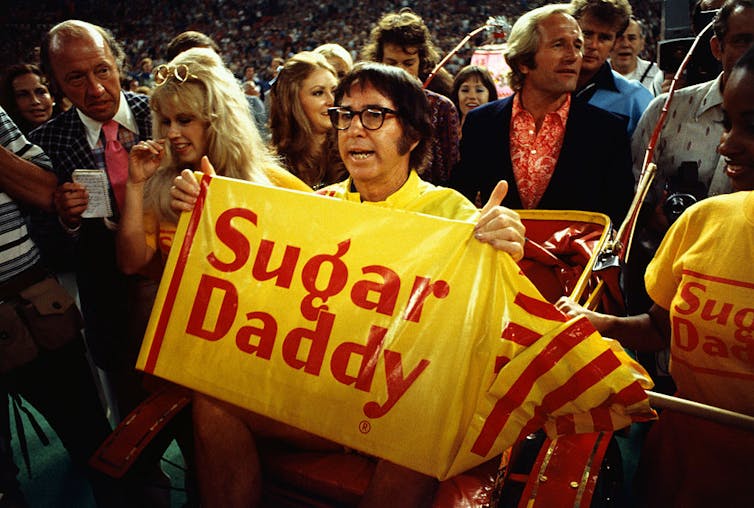
Man wearing glasses holds a yellow sign reading 'Sugar Daddy.'
Bobby Riggs was carried to the court by a group of young women ahead of his tennis match against Billie Jean King at the Houston Astrodome on Sep. 20, 1973.
Bettmann/Getty Images

“You not only cannot beat a top male player,” he needled, “you can’t beat me, a tired old man.”

King refused.

“We didn’t need him; we were making it on our own merits,” she later explained

Young woman raises her hands in celebration on a tennis court before a large crowd.
Billie Jean King throws her racket in the air after defeating retired pro Bobby Riggs at the Houston Astrodome on Sep. 20, 1973.
UPI/Bettmann Archive via Getty Images

But when Riggs trounced the No. 1 women’s player, Margaret Court, in May 1973, King, then ranked No. 2, felt she had no choice.

“Marge blew it,” she told reporters. “I’m going to put women’s lib where it should be.”

King rose to the occasion. Before 30,000 spectators at the Houston Astrodome and another 90 million television viewers, she walloped Riggs in three straight sets. Her victory took on an even larger significance, becoming a symbol of what women can accomplish when given the chance.

“It wasn’t about tennis,” King later assessed. “It was about social change.”

The apolitical star vs. the ‘bad boy’

So what, then, is the new “battle” about?

King has yet to comment on the 2025 event, but she is a fan of Sabalenka’s game.

“What I love about you is that when you come out to play, you bring all of yourself,” King told the four-time Grand Slam champion after her 2024 U.S. Open victory.

Off the court, however, the two women seem to have little in common.

King has always maintained that sports are political; Sabalenka has distanced herself from that position. When asked about Russia’s war in Ukraine, for example, the Belarusian explained, “I don’t want sport to be involved in politics, because I’m just a 25-year-old tennis player.”

King never argued that women were better players than the men. But “from a show-biz standpoint,” she clarified in her 1974 autobiography, “I felt we put on as good a performance as the men – sometimes better – and that that’s what people paid to see.”

Sabalenka, in contrast, once told a reporter that she prefers watching men’s tennis because “it’s more interesting” than the women’s game.

Comments like Sabalenka’s throw sand into the gears of the ongoing struggle for gender equity, to which King remains committed. Although all four Grand Slam events now offer equal prize money, disparities persist at lower-level tournaments.

At the 2024 Italian Open, for instance, men competed for a prize pool of US$8.5 million. The women’s equivalent was $5.5 million. That same year, women’s prize money at the Canadian Open totaled $2.5 million, while the men split $5.9 million. Men still receive better scheduling and court assignments, more media coverage and more lucrative sponsorships. As former No-2-ranked women’s tennis player Ons Jabeur put it, it’s not “just a question of money, but also respect.”

Meanwhile, Kyrgios, like Riggs more than half a century ago, has spoken out against equal pay for women players.

In fact, some might say Kyrgios’ sexism makes Riggs’ seem almost quaint. In 2015, he was fined $10,000 after making vulgar comments about his opponent’s girlfriend during a match. In 2021, he pleaded guilty to assaulting his ex-girlfriend after pushing her during an argument.

Kyrgios has “gone to all lengths” to distance himself from overtly misogynist influencers Andrew and Tristan Tate, who have been criminally charged with human trafficking, rape and assault. But this was only after Kyrgios faced significant backlash for expressing “low-key” love for the brothers and reposting Andrew on social platform X for “speaking facts as usual.”

Young man smiling while holding a tennis racket and a tennis ball, wearing a green basketball jersey and a backward white cap.
Nick Kyrgios has earned a reputation as the ‘bad boy of tennis.’
Daniel Pockett/Getty Images

Kyrgios – again, like Riggs – is also struggling to remain relevant.

By all accounts, he is a tremendously talented player who has yet to live up to his potential. Plagued with wrist and knee injuries, Kyrgios has competed in only six tour-level matches in the past three years: winning one, losing four and retiring in another. Consequently, the 2022 Wimbledon finalist, once ranked in the top 20, is better known as a “bad boy of tennis” who smashes rackets, makes lewd comments and gestures, tanks matches and verbally abuses umpires.

A lose-lose for women’s sports?

Kyrgios’ showdown with Sabalenka may be entertaining. But for women’s sports, it seems like a lose-lose.

If Sabalenka wins, critics will likely claim it’s because she had every advantage. Evolve has modified the rules to make her side of the court 9% smaller than Kyrgios’ in both length and width. The dimensions are based on Evolve’s calculation that the top women players move 9% slower than their male counterparts, although there is no published data to support the claim.

To further mitigate Kyrgios’ reported “power and speed advantage,” both players will be limited to just one serve. Unlike King and Riggs’ best-of-five sets, Sabalenka and Kyrgios will play best-of-three. Split sets between the two competitors will result in a 10-point tiebreaker.

A Kyrgios victory will only bolster arguments that the best woman cannot compete with the 673rd-ranked man, even when the rules are bent to her favor. We could see those arguments being weaponized against women’s sports more generally, which remain underresourced and undervalued.

There’s also the question of the venue.

The 2025 event will take place in the United Arab Emirates. The UAE government has been accused of egregious human rights abuses, which include gender discrimination, the criminalization of same-sex relations, and clamping down on freedom of speech and the media. Hosting high-profile sporting events distracts from these issues while cleansing the UAE’s public image in what’s known as “sportswashing.”

What does it mean to host a tennis “Battle of the Sexes” in a country where women are battling for basic human rights?

The 2017 Hollywood film “Battle of the Sexes” reaffirmed the importance of the King-Riggs contest.

Barring some surprise twist, no one will make a movie about the Sabalenka-Kyrgios duel in Dubai. We see it as nothing more than a publicity stunt and cash grab for Sabalenka, Kyrgios and, above all, Evolve. If this is “reimagining what equality in sport can look like,” as the organizers claim, then it is equality without substance.

And that is no battle at all.

The Conversation

The authors do not work for, consult, own shares in or receive funding from any company or organization that would benefit from this article, and have disclosed no relevant affiliations beyond their academic appointment.

ref. Tennis is set for a ‘Battle of the Sexes’ sequel – with no movement behind it – https://theconversation.com/tennis-is-set-for-a-battle-of-the-sexes-sequel-with-no-movement-behind-it-269590

Rest is essential during the holidays, but it may mean getting active, not crashing on the couch

Source: The Conversation – USA (3) – By Stacy Shaw, Assistant Professor of Social Science & Policy Studies, Worcester Polytechnic Institute

Active leisure experiences, like going for a walk outdoors, can help reduce stress and restore energy during the holidays. Chris Griffiths/Moment via Getty Images

The holiday season is often painted as an idyllic vision of rest, conjuring images of warm beverages and bountiful time with loved ones. But many people have trouble unwinding at this time of year. Why do the December holidays offer the promise of respite but never seem to deliver? And is more restorative rest possible during this busy season?

I am a psychologist who studies how rest supports learning, creativity and well-being. Sleep is often the first thing that many people associate with rest, but humans also require restorative downtime when awake. These active rest periods include physical, social and creative experiences that can occur throughout the day – not just while mindlessly scrolling on the couch.

When holiday stresses begin to snowball, rest periods replenish depleted psychological resources, reduce stress and promote well-being. But reaping the full benefits of rest and leisure requires more than a slow morning or a mug of hot cocoa. It’s also about intentionally scheduling active recovery periods that energize us and leave us feeling restored.

That’s because good rest needs to be anticipated, planned and refined.

Holiday stress

The winter holiday season can take a toll on well-being. Financial stress increases, and daily routines are disrupted. Add the stress of travel, plus a dash of challenging family dynamics, and it’s not surprising that emotional well-being declines during the holiday season.

Quality rest and leisure periods can buffer these stressors, promoting recovery and well-being. They also can help reduce psychological strain and prolong positive emotions as people return to work.

Effective rest comes in many forms, from going outdoors for a walk to socializing, listening to music or engaging in creative hobbies. These activities may feel like distractions, but they serve important mental health functions.

For instance, research finds that walking in nature results in diminished activation in the area of the brain associated with sadness and ruminating thoughts. Walks in nature are also associated with reduced anxiety and stress.

Other studies have shown that activities such as playing the piano or doing calligraphy significantly lower cortisol, a stress hormone. In fact, some of the most promising interventions for depression involve participation in pleasant leisure activities.

Not all idle time is restorative

So why does it feel so hard to get good rest during the holidays?

One of the most robust findings from psychologists and researchers who study leisure is that the effectiveness of rest periods depends on how satisfying they feel to the individual. This might sound obvious, but people often spend their free time doing things that are not satisfying.

For example, a famous 2002 study of how people spent their time found that the most popular form of leisure was watching television. But participants also rated TV time as their least enjoyable activity. Those who watched more than four hours of TV a day rated it as even less enjoyable than those who watched less than two hours a day.

A few years ago, my colleagues and I collected data from college students and found that students reported turning to mindless distractions, such as social media, at the end of the day, but that it usually did not leave them feeling reenergized or restored. Although this study was specifically about college students, when I presented the findings to the larger research team, one of my collaborators said, “It really makes you think about yourself, doesn’t it?” There were silent nods around the room.

A stressed woman lying on a sofa, surrounded by Christmas decorations, hides her face in a pillow.
Holiday tasks and rituals can crowd out time for rest, unless it’s planned into your day.
Ilona Titova/iStock via Getty Images Plus

Planning for good rest

To combat the pitfall of poor rest cycles, science suggests planning for active rest and pleasant activities, and carrying through with those plans. A large body of research shows that designing, scheduling and engaging in enjoyable activities is effective at lowering symptoms of depression and anxiety.

For the holiday season, this might mean following an afternoon of shopping with a recovery period reading a book in a quiet place, or going for a walk after opening gifts instead of immediately shifting into cleaning mode. By following a schedule, not a mood, research suggests that people can break cycles of poor rest and inactivity and achieve greater recovery and well-being.

Wrestling with guilt

Even with perfectly planned and executed rest periods, guilt can loom. Leisure guilt is a psychological construct that encompasses feelings of distress about spending time doing things that are relaxing rather than productive. It can reduce enjoyment of leisure, undercutting one of the mechanisms that link rest with well-being.

During the holidays, this problem may become even more pronounced. The season brings changes to daily routines, daylight levels and temperature, and diets. All of these shifts can deplete people’s energy levels. High expectations during the holidays may make guilt an even bigger threat to rest.

If the answer to poor-quality rest cycles is planned active rest periods, then what is the solution to feelings of guilt?

Lower expectations, immersive rest and acceptance

Research on leisure guilt is in its infancy, but my own struggles have shown me a few ways to resist the pressure to be productive every spare minute. Here are some tips to fight back against the flawed belief that rest is just laziness in disguise, during the holidays and beyond.

First, I work to convince myself and my family members to lower expectations for our seasonal activities. Not every baked cookie needs to be individually frosted and decorated, and not every gift has to be wrapped with a perfect bow. By agreeing to lower our expectations, we eliminate extraneous work and the guilt of feeling that there is more to be done.

Cookies decorated with crooked dabs of frosting and candies
Festive doesn’t have to mean perfect.
Sally Anscombe/DigitalVision via Getty Images

Second, I’ve found that restful activities that provide a strong feeling of immersion – playing video games, going for walks and playing with my young nieces and nephews – are a lot more restorative than scrolling on my phone or watching TV on the couch. These diversions require my full attention and prevent me from thinking about things such as my overflowing email inbox or unfinished household chores.

Finally, when I do experience leisure guilt, I accept the feeling and try to move on. During high-stress situations, accepting negative emotions rather than avoiding them can reduce depressive symptoms.

Humans need restorative periods of downtime during the holidays and beyond, but this does not always come easily or naturally to everyone. Through small adjustments and intentional actions, good rest can be within reach this holiday season.

The Conversation

Stacy Shaw does not work for, consult, own shares in or receive funding from any company or organization that would benefit from this article, and has disclosed no relevant affiliations beyond their academic appointment.

ref. Rest is essential during the holidays, but it may mean getting active, not crashing on the couch – https://theconversation.com/rest-is-essential-during-the-holidays-but-it-may-mean-getting-active-not-crashing-on-the-couch-270396

Karoline Leavitt’s White House briefing doublethink is straight out of Orwell’s ‘1984’

Source: The Conversation – USA – By Laura Beers, Professor of History, American University

White House press secretary Karoline Leavitt speaks during the daily press briefing on Nov. 4, 2025. Andrew Harnik/Getty Images

During a press conference on Dec. 11, 2025, White House press secretary Karoline Leavitt announced there was good news on the state of the economy.

“Inflation as measured by the overall CPI has slowed to an average 2.5% pace,” she said, referring to the consumer price index. “Real wages are increasing roughly $1,200 dollars for the average worker.”

When CNN political correspondent Kaitlan Collins attempted to ask a follow-up question, Leavitt pivoted to an attack. Not on Collins, a frequent target of White House ire, but on Leavitt’s predecessor in the Biden White House, Democrat Jen Psaki.

Psaki, claimed Leavitt, stood at the same lectern a year before and told “utter lies.” In contrast, Leavitt insisted, “Everything I’m telling you is the truth backed by real, factual data, and you just don’t want to report on it ’cause you want to push untrue narratives about the president.”

The “real, factual data” that underpinned Leavitt’s statement was specious at best. The actual inflation rate for September was 3%, not the 2.5% figure cherry-picked from economic data. The rise in real wages? CNN business editor David Goldman writes that in the past year, U.S. workers have experienced “the lowest annual paycheck growth that Americans have had since May 2021.”

White House press secretary Karoline Leavitt speaks to the media on Dec. 11, 2025.

I’m a historian who has written about the enduring legacy of George Orwell’s ideas about truth and freedom. Listening to Leavitt assert a “truth” so obviously discordant with people’s lives, I was reminded of the repeated pronouncements from the Ministry of Plenty in Orwell’s “1984.”

“The fabulous statistics continued to pour out of the telescreen,” Orwell wrote. “As compared with last year there was more food, more clothes, more houses, more furniture, more cooking-pots, more fuel, more ships, more helicopters, more books, more babies — more of everything except disease, crime, and insanity. Year by year and minute by minute, everybody and everything was whizzing rapidly upwards.”

The novel’s doomed hero, Winston Smith, works in the Records Department that produces these fraudulent statistics – figures that are so far divorced from reality that they “had no connection with anything in the real world, not even the kind of connection that is contained in a direct lie.”

In the world of “1984,” not only are statistics invented, they are continually reinvented to serve the needs of Big Brother’s regime at any given moment: “All history was a palimpsest, scraped clean and reinscribed exactly as often as was necessary.”

Transparency as doublespeak

The lack of transparency depicted in “1984” has an uncanny echo in our current political moment, despite Leavitt’s repeated assertions that President Donald Trump is the “most transparent president in history.”

Leavitt has made that claim countless times, including in her public defense of Trump’s “Quiet, Piggy!” dismissal of Bloomberg News journalist Catherine Lucey last month.

In Leavitt’s usage, “transparency” has become a form of Orwellian “doublespeak,” a word or phrase which through the process of “doublethink” had come to encompass its exact opposite meaning.

Doublethink,” in Orwell’s writing, was the mechanism of thought manipulation that allowed someone “to know and not to know, to be conscious of complete truthfulness while telling carefully constructed lies, to hold simultaneously two opinions which cancelled out, knowing them to be contradictory and believing in both of them.”

Doublethink was the mechanism that enabled the citizens of Oceania, the Anglo-American superstate governed by Big Brother’s authoritarian regime, to accept that “WAR IS PEACE; FREEDOM IS SLAVERY; IGNORANCE IS STRENGTH.”

And it is the mechanism that allowed Leavitt to proclaim, in defending Trump’s unwillingness to release the Epstein files, “This administration has done more with respect to transparency when it comes to Jeffrey Epstein than any administration ever.” That claim was pronounced “fabulously audacious” by The Guardian’s Washington bureau chief, David Smith, in a story headlined “Nothing to see here: Trump press chief in full denial mode over Epstein.”

President Ronald Reagan records a radio address on foreign policy on Sept. 24, 1988, in which he discussed “our philosophy of peace through strength.”

Making ‘lies sound truthful and murder respectable’

In his famous essay “Politics and the English Language,” Orwell wrote that “political language is designed to make lies sound truthful and murder respectable, and to give an appearance of solidity to pure wind.”

Over the past 10 months, Leavitt has, among other things, claimed that the now dismantled U.S. Agency for International Development – USAID – provided a grant of $32,000 for a “transgender comic book” in Peru. Not true. She has misrepresented the “One Big Beautiful Bill” as fully eliminating taxes on tips, overtime and Social Security. In reality, deductions for these are capped. She claimed that Trump coined the motto “peace through strength.” He didn’t. The phrase has been in circulation for decades, used most prominently by Ronald Reagan during his presidency.

And she recently sought to delegitimize U.S. Sen. Mark Kelly and colleagues’ plea to servicemen and women not to obey illegal orders by suggesting tautologically that “all lawful orders are presumed to be legal by our servicemembers,” and hence Kelly’s plea could only serve to provoke “disorder and chaos.”

All governments lie. But Leavitt has become a master of the art of political language, wielded to aggrandize her boss, belittle his opponents and deflect attention from administration scandals.

The Conversation

Laura Beers does not work for, consult, own shares in or receive funding from any company or organization that would benefit from this article, and has disclosed no relevant affiliations beyond their academic appointment.

ref. Karoline Leavitt’s White House briefing doublethink is straight out of Orwell’s ‘1984’ – https://theconversation.com/karoline-leavitts-white-house-briefing-doublethink-is-straight-out-of-orwells-1984-270675