What Hannah Spencer’s historic win means for the Green party’s future

Source: The Conversation – UK – By Louise Thompson, Senior Lecturer in Politics, University of Manchester

Thursday’s byelection in Gorton and Denton has been huge for the Green party of England and Wales, with Hannah Spencer pushing Reform’s Matt Goodwin into second place, and Labour into third. Having one extra MP in parliament may not seem like a big milestone, but this byelection win is record-breaking for the Greens. I believe it shows their potential to be a credible alternative to Labour.

The Greens have never won a byelection before. They polled less than 7% of the vote (coming in fourth place) in the Runcorn and Helsby byelection in May 2025. And, unlike Reform UK in that byelection, the Greens didn’t just edge this victory – they took nearly 41% of the vote. That’s a whopping 28-point increase on their performance in the same constituency at the 2024 general election.


Read more:
Victory in Gorton and Denton is historic for the Greens – and cataclysmic for Britain’s two-party politics


The victory has given party leader Zack Polanski the confidence that voters now see the Greens as a viable alternative to Labour, even in former Labour strongholds. He announced to supporters, “this is what replacing Labour looks like”.

Over the past few years the Greens have really professionalised their party. We saw the impact of this in the 2024 general election, when they quadrupled their number of MPs and finished second in 40 constituencies.

Under Polanski’s leadership, they’ve developed a more populist edge, focusing on issues such as the cost of living and moving away from being “just” a climate party. They’ve also had a more visible media presence and started to take their communication strategy more seriously.

Spencer’s win increases the size of the Green parliamentary group to five MPs. In the context of a 650-member House of Commons, this doesn’t seem like much.

The Greens certainly aren’t large enough to swing any votes, or cause the government many problems. And although they now have more MPs than ever before, they are still only the sixth-largest party group in the Commons. There are still over twice as many independent MPs as there are Greens.

The win will, however, give the Greens some breathing space. It’s a tough job being a small party in the Commons, and the existing group of four Green MPs have shared a heavy burden of responsibilities in the chamber since their arrival in 2024. As Spencer finds her feet, she will be able to take on some of these policy portfolio responsibilities.

Having a bigger parliamentary team doesn’t just alleviate some of the pressure to be in the chamber all the time. It also allows the party to be more strategic, and to insert Green voices into more conversations than before.

This could be through places on committees scrutinising legislation, trying to catch the speaker’s eye during high-profile government statements and question times, or holding backbench debates on more local issues. There is no place for passengers in any small party, so we can expect to see Spencer playing a very visible role for the rest of the parliament.

The battle ahead

When the next general election draws closer, the Greens may be grateful of this bigger team. They will want to capitalise on their success in Manchester and continue to professionalise their operations as a national party.

They are also likely to face more hostility at Westminster. Labour is now fighting a war on two fronts. The party’s embarrassing third-place result in Gorton and Denton – which Keir Starmer called “very disappointing” – will have hammered this home. We can expect to see more attacks on the Greens, including in the Commons chamber.

Until now, the prime minister has focused much more consistent attention on discrediting Reform. Now, he needs to worry much more about Polanski and the Greens, and will be directing some focus to winning back Labour voters who see the Greens as the stronger party of the left.

We had a glimpse of this in January, when North Herefordshire’s Ellie Chowns used her occasional opportunity to question the prime minister to ask about water pollution. Starmer turned it into a partisan attack on the unrelated topic of Polanski’s comments about Nato.

While the Reform UK leader, Nigel Farage, regularly berates Starmer in the Commons, the Greens rarely take such an overtly partisan approach. Reform MPs tend to participate more frequently in high-profile parliamentary occasions, where they can question the government. The Greens tend to have a more balanced, policy-focused approach, regularly popping up on committees to scrutinise legislation.

This is helped by Polanski’s position as a leader who sits outside the Commons (a member of the London Assembly). He can delegate the scrutiny of government policy to Chowns and her colleagues, while he takes broader comments about the government’s performance directly to the press.

This balance will be important as the Greens think about the upcoming local elections. Spencer told the press today that the party can now “win anywhere”, and Polanski predicted a “tidal wave” of Green MPs at the next election.

To do this, they need to maintain the momentum they’ve created this week. This means keeping a tight hold of the former Labour voters who chose them instead in Gorton and Denton.

It will be difficult for the party to carry out the same intensive campaign strategy on a more national level, but this sort of intensity is key to ensuring that the left vote goes to the Greens rather than to the other alternatives. Having more party members than ever before will help with this, but they will need to rely on their on-the-ground campaigners to feel secure.

The Conversation

Louise Thompson receives funding from the ESRC ES/R005915/2

ref. What Hannah Spencer’s historic win means for the Green party’s future – https://theconversation.com/what-hannah-spencers-historic-win-means-for-the-green-partys-future-277114

I’m a linguist with Tourette’s – here’s what I want people to understand after Baftas controversy

Source: The Conversation – UK – By Amanda Cole, Associate Professor in Sociolinguistics, University of Cambridge

Anton Vierietin/Shutterstock

I am a sociolinguist who specialises in how language is understood and interpreted in society. I also have Tourette syndrome. Tourette’s is a genetically determined neurological condition in which a person produces both motor and vocal tics (movements and sounds), and in most cases occurs with conditions such as autism, OCD, ADHD and sensory processing difficulties.

I am typically very private about my condition, but I feel compelled to write about it following events at the 2026 Baftas ceremony, where Tourette’s advocate John Davidson produced several offensive tics, including the N-word which was aired in error in the BBC coverage. I do not pretend for one moment to be able to fully understand how traumatising and deeply upsetting hearing such language must be for black people.

But the misinformed views circulating online suggesting that Davidson must be a racist deep down, or that his tic was akin to a Freudian slip are fundamental misunderstandings about Tourette’s that need to be addressed.

Davidson has coprolalia, a particularly distressing type of Tourette’s that affects between 10% and 20% people with the condition. Coprolalic tics are when a person says offensive or obscene things. They are deeply upsetting for the person who produces them and they are not intentional. Often, the tic is the very worst thing that they could possibly say in any given situation, and the opposite of what they truly believe.

Davidson has said that his tics “have always been so aggressive that I have no idea when they are coming or what they will be”.


Read more:
Baftas racial slur controversy: what should the BBC have done?


Many people do not know that I have Tourette’s. I can often suppress my tics, or they are subtle enough to fly under the radar. But suppressing tics requires a great deal of concentration, and I often feel itchy and uncomfortable. Tic suppression is not always possible and women tend to be able to mask their tics to a greater degree than men.

Even when a person can suppress a tic, they can only be held off for so long. The length of time differs from person to person and moment to moment. Whenever I get home after being around people other than my family, I am often overwhelmed by tics.

Meaning and intention

When we hear speech, our brains work quickly to make sense of its meaning. This includes both the literal meaning and the intention behind it. This is referred to as Gricean implicatures. A classic example is if a person says, “the window is open”, they might not just be stating a fact: they may be telling you that they are cold and would like you to shut the window.

Tics are very different to language. Vocal tics can have literal meaning, but there is typically no intention behind them. The words and phrases that a person produces are no more meaningful than grunts, coughs, sniffs or whistles which are also very common vocal tics. They are a neurological event.

In my own household – the only place I really feel safe to tic – we continually (and quite successfully and often tacitly) discriminate between the things I say which I mean, and those which are a tic and should be entirely disregarded. Sometimes this is straightforward, such as when I say “good night” at seven in the morning. Other times it is more complicated. My tics include saying my husband’s or my son’s names aloud, but I am not addressing them and they do not need to respond.

However, words can still be hurtful even if they are not said with an intent to hurt. I am in no way suggesting that it is wrong to feel deeply upset or offended by coprolalic tics. It has been well established that the way the Baftas and BBC managed Davidson’s tics let down both black people and people with Tourette’s. But I hope that a greater understanding of Tourette’s and that tics do not reflect a person’s beliefs or character can inform discussions about how we view offensive tics.

Tourette’s can be an incredibly difficult condition to live with. A reported 87% of adults living with Tourette’s experience physical pain because of their tics, 72% have considered suicide at some point in their lives and 60% believe their tics have prevented them from fulfilling their fullest potential.

I thought that vocal tics would ruin my life and any potential future career. The first tics I developed as a teenager were motor tics. I was terrified that I would develop vocal tics – which I did.

I have since established myself in a career I love, and yet I ask myself: would I have got here if I could not suppress my tics as successfully as I can? Or if what I said was vulgar or offensive rather than harmless and sometimes humorous? Sadly, I think the answer is no.

We have a duty as society to support people with Tourette’s to realise their potential. People with Tourette’s may need specific adaptions, but we also have a lot to offer. A range of research has found some extraordinary skills in people with Tourette’s such as being creative, articulate, quick-thinking, empathetic and having exceptional focus and problem solving.

I wish I could tell my younger self – sick with worry and feeling that Tourette’s was a curse I couldn’t escape – that sometimes Tourette’s is my greatest strength.

The Conversation

Amanda Cole does not work for, consult, own shares in or receive funding from any company or organisation that would benefit from this article, and has disclosed no relevant affiliations beyond their academic appointment.

ref. I’m a linguist with Tourette’s – here’s what I want people to understand after Baftas controversy – https://theconversation.com/im-a-linguist-with-tourettes-heres-what-i-want-people-to-understand-after-baftas-controversy-276915

Victory in Gorton and Denton is historic for the Greens – and cataclysmic for Britain’s two-party politics

Source: The Conversation – UK – By Jonathan Tonge, Professor of Politics, University of Liverpool

The Green party’s dramatic capture of Gorton and Denton, supposedly one of Labour’s safest parliamentary constituencies, offers yet more evidence of the fragmentation of British politics.

The Green candidate, 34-year-old plumber Hannah Spencer, won 40.69% of the vote, a notable 12 points ahead of Reform UK’s Matt Goodwin (28.73%). Labour candidate Angeliki Stogia came third, with 25.44% of the vote.

In terms of size of majority toppled, this was the sixth-worst byelection defeat ever for Labour. Gorton had been Labour for more than 90 years. In what is now Greater Manchester, Labour has had to defend 20 seats at byelections since the second world war, and has been successful in 16 cases.

Although Labour might dismiss a byelection defeat as a mid-term blip, this is a government which has failed to enjoy a honeymoon period, led by a prime minister who has plumbed new depths in popularity ratings. It is also worth noting that turnout on Thursday was identical to that at the general election.

For Keir Starmer, it was a truly awful result. But Labour really lost this byelection over a month ago, when its national executive committee (NEC) blocked the candidature of Andy Burnham, the mayor of Greater Manchester and believed by many to be the one person who might have held the seat for the party.

Starmer spoke against Burnham standing and his view held sway at that NEC meeting by eight votes to one. The one vote in favour of Burnham standing came from a Manchester MP, Lucy Powell, who was elected Labour’s deputy leader last year after being mysteriously sacked from the cabinet by Starmer.

The prime minister had good reasons for his stance. An early exit by Burnham from the mayoralty would trigger a difficult byelection across the region. But the overarching reason for blockage appeared to be Starmer’s personal political security.

Popular among Labour members and perhaps the one rival to Starmer around which the parliamentary party could coalesce, Burnham might have offered a potential leadership challenge. He is also highly popular in Greater Manchester, averaging two-thirds of the vote in the three mayoralty contests he has fought. The newly elected Green MP Spencer trailed Burnham by a huge 375,000 votes in the most recent mayoral election in 2024.

Clearly, this poor result increases the pressure on the prime minister, but two things remain in his favour. First, Labour MPs may find it difficult to unite behind a clear challenger. Entry barriers are high; 80 MPs need to support the person prepared to raise their head above the parapet. Second, the economy is showing signs of improvement, which might eventually stem the flow to the Greens on the left. On the right, the exodus towards Reform may be slowed by the decline in net migration.

Yet things will get worse before they might get better for Labour. The Scottish parliament, Welsh senedd and English local elections are a mere 69 days away, and offer a bleak vista of large seat losses. Labour’s control of the senedd seems sure to end and the party has to defend the bulk of council seats being contested.

The end of two-party politics?

The Gorton and Denton result confirmed the death of old loyalties in British politics. Given the existence of four-party politics in Scotland and Wales and the electoral significance of the Liberal Democrats in England, the two-party duopoly has long been gone, perhaps never to return. Politics has never been as fragmented across parties.

For the first time in England, Labour finds itself challenged by a significant party of the left, while Reform on the right challenges both Labour and the Conservatives.

That the right vote is splintered offers some succour to Labour. An even split between Reform and the Conservatives could allow Labour to win again at the next general election, with an even more pitifully low percentage share of the vote than the one in 2024 which nonetheless yielded two-thirds of the Westminster seats.

This fragmentation may widen voter choice, but not all is healthy. This was at times a toxic byelection. The Greens argued it was possible to be jointly concerned with Gaza and Gorton. They were, however, accused of sectarianism, for example by by issuing Urdu-language leaflets and a campaign video showing Starmer greeting the Indian prime minister, Hindu nationalist Modi, to appeal to Muslim voters.

Reform, on the other hand, has been accused of racism in targeting the white vote and showing scant regard for the large Muslim minority within the constituency. Its candidate, former academic Matt Goodwin, was already controversial for his views questioning whether non-white people born in the UK could be classed as British.

Meanwhile, the first-past-the-post voting system struggles to deal with the reality of modern multiparty politics, with abject disproportionality between vote shares and levels of representation. But that fragmentation increasingly seems permanent.

The Conversation

Jonathan Tonge does not work for, consult, own shares in or receive funding from any company or organisation that would benefit from this article, and has disclosed no relevant affiliations beyond their academic appointment.

ref. Victory in Gorton and Denton is historic for the Greens – and cataclysmic for Britain’s two-party politics – https://theconversation.com/victory-in-gorton-and-denton-is-historic-for-the-greens-and-cataclysmic-for-britains-two-party-politics-277001

Tracey Emin: A Second Life – Tate Modern’s must-see retrospective explores trauma and transcendence

Source: The Conversation – UK – By Pippa Catterall, Professor of History and Policy, University of Westminster

The most powerful art speaks of and to the emotions. It tackles trauma and cathartically helps us to cope with it. It acknowledges pain, suffering and betrayal. It goes beyond an aestheticised veneer to raw emotion. It seeks to touch not just the eyes, but the soul.

The major retrospective of Tracey Emin’s career at London’s Tate Modern does just that, and features her most significant surviving works. It also reflects her characteristic subjects, techniques, materials and approaches.

The monumental bronze I Followed You to the End (2024), displayed on the approach to the Tate, is a foretaste of the anguished bodies in the statues within. These and the agonised black lines, floods of blood-red and bleak white backgrounds of paintings like Rape (2018) graphically engage with such traumatic experiences.

Emin made her name in the 1990s through dramatic installations and art that unflinchingly confronted the visceral realities of women’s bodies. These used her own body and experiences to create artworks that connected emotionally as raw cries of anguish. Or of lost innocence.

The latter comes out particularly in her short film Why I Never Became a Dancer (1995), deliberately placed near the start of the exhibition. In this, affectionate shots of Emin’s childhood hometown of Margate jarringly contrast with her narration of sexual abuse and misogyny.

This voiceover reflects Emin’s talent for pithy, poignant and allusive language. Appliqued into quilts such as Mad Tracey from Margate. Everyone’s Been There (1997), or expressed in the emotionally charged titles of artworks and neon signs, Emin’s words – as well as her body – confront her trauma.

Some of these works do so by foregrounding love, desire, longing, betrayal and abuse. Others resist the silence and stigma that have for so long shrouded women’s bodily functions.

The exploration of the soul

Throughout the exhibition, Emin’s work is deeply personal. Yet, by centring her own experience, Emin also humanises and universalises it. You don’t have to have had an abortion, or even be a woman, to respond emotionally to a work like The Last of the Gold (2002), publicly exhibited here for the first time.

Similarly, her textual contributions universalise the experiences of victimhood. Her handwritten memoir, Exploration of the Soul (1994), for example, movingly conveys a child’s attempt to understand the cruelty of unspoken racism.

Despite the trauma, throughout there’s an indomitable sense of defiance. Sewn into the quilt No Chance (WHAT A YEAR) (1999) a small text responds to her rapists pointing abusively at her: “I was only 13 and even then I knew they were pointing the wrong way.” In the same way, Why I Never Became a Dancer ends with Emin defiantly showing us her moves.

This combination of vulnerability and strength gives Emin’s work its emotional richness. This also comes out in her determination to document the trauma of her cancer. In works that take on the taboos around this disease, Emin depicts the procedures that our society squeamishly hides away in hospitals and the impact that these have had upon her body.

Of course, one of the most celebrated of her works does not directly feature her body but its absence. Yet My Bed (1998) is still a self-portrait of the traces of her life. Alongside the dishevelled bed and assorted detritus on and around it, what really struck me, seeing it for the first time, were the adjacent suitcases, packed and ready and the layered stories wordlessly conveyed in this installation. My Bed may on one level be an extended metaphor for struggling with depression, but the suitcases also speak of the will to escape.

Exorcism of the Last Painting I Ever Made (1996) is another even larger installation dealing with depression. It takes up an entire room in this exhibition. During pregnancy and in the aftermath of her abortions, Emin found it impossible to paint. The text behind the box containing this installation states: “I hated my body … I was suffering from guilt and punishing myself so I threw myself in a box and gave myself three and a half weeks to sort it out. And I did.”

The result is an insight into the artist’s studio as well as their body and mind. It reminded me of the installation of Francis Bacon’s studio in Dublin. Emin has cited the Norwegian painter Edvard Munch as a major influence, even holding an exhibition of her own work alongside that of Munch entitled The Loneliness of the Soul at the Royal Academy in 2021. Yet, to me, the comparisons with Bacon are more striking, both in the subject matters of sex and trauma and in the solemnity of their larger canvases.


Read more:
Francis Bacon: Human Presence – a compelling look at how the artist redefined portraiture


This was particularly marked in the final room. Throughout the exhibition the walls are painted a petrol blue, the same shade that Bacon used for oppressive interiors such as Man at a Washbasin (1954). This, combined with subdued lighting, produces a womb-like atmosphere. The intimacy this creates both heightens the emotional connection and impact on the viewer and shows Emin’s work to best effect.

It might seem odd to create such an ambience when so many of the artworks deal with trauma. Yet, although Emin observes what is happening to her body, literally in the case of I Watched Myself Die and Come Alive (2023) that fills the final wall of the final room, her art also has a detached, transcendent quality.

The spiritual atmosphere of that final room, with identically sized canvasses hung along it like altarpieces – including one of The Crucifixion (2022) – speaks through the spectral traces of bodies in the artworks more of the soul than the body, less of trauma than of the transcendence of pain.

Tracey Emin: A Second Life is at the Tate Modern from February 27 2026 to August 31 2026.


Looking for something good? Cut through the noise with a carefully curated selection of the latest releases, live events and exhibitions, straight to your inbox every fortnight, on Fridays. Sign up here.


The Conversation

Pippa Catterall does not work for, consult, own shares in or receive funding from any company or organisation that would benefit from this article, and has disclosed no relevant affiliations beyond their academic appointment.

ref. Tracey Emin: A Second Life – Tate Modern’s must-see retrospective explores trauma and transcendence – https://theconversation.com/tracey-emin-a-second-life-tate-moderns-must-see-retrospective-explores-trauma-and-transcendence-277014

Four years of bitter conflict in Ukraine

Source: The Conversation – UK – By Jonathan Este, Senior International Affairs Editor, Associate Editor, The Conversation

This article was first published in The Conversation UK’s World Affairs Briefing email. Sign up to receive weekly analysis of the latest developments in international relations, direct to your inbox.


It would be wrong to say Russia’s full-scale invasion of Ukraine, four years ago this week, came out of the blue. For months there had been worrying reports of a huge build-up of Russian troops on Ukraine’s border. Through the winter of 2021/22, Moscow scoffed at suggestions it was planning to invade its neighbour as “alarmist”. But at the same time the Russian president, Vladimir Putin, was making aggressive noises, issuing demands for Nato to pull its troops back from its eastern front and calling for a ban on Ukraine’s accession to the western alliance.

And on February 21, he made a speech in which he called Ukraine “an inalienable part of our own history, culture and spiritual space” which had been taken over by a neo-Nazi “puppet regime” that should be removed.

Still, it was a shock to wake in the early hours of Thursday February 22 to learn that Putin had launched what he called a “special military operation … to protect people who have been subjected to abuse and genocide by the Kyiv regime for eight years”. Images began to emerge of tanks and armoured vehicles with the now-familiar “Z” (a Russian victory symbol) streaming across the borders from Russia and Belarus, the latter the shortest route to the Ukrainian capital Kyiv.

A diagram showing the build-up of Russian troops near the Ukraine borders at the end of 2021.
How Russian forces assembled in the winter of 2021/22, according to US intelligence sources.
US intelligence reported in the Washington Post.

Four years and about 1.8 million casualties later, Russia has gained about 75,000sq km of territory, about 12% of Ukraine to add to the 7% it had occupied since it annexed Crimea and parts of eastern Ukraine in 2014. The war has developed into a “meat-grinder” – Russia’s advances have been glacially slow and very costly, an estimated 78 casualties per square kilometre in 2025.

But if, as many insist, the war on the battlefield itself has slowed into something resembling a stalemate, the geopolitical shifts that have accompanied the conflict have been considerable – particularly since Donald Trump was elected for a second term as US president, promising to end the conflict, “in a single day”. Of course, like many of his campaign promises this has proved to be pie in the sky, but the US president’s cordial relations with Putin, his decision to curtail US financial aid to Kyiv and his apparent support for many of the Russian president’s war aims have come as an unpleasant surprise for Ukraine and its allies.

Another big feature of this war, the biggest armed conflict in Europe since 1945, has been the huge technological changes we’ve seen employed on the battlefield. Stefan Wolff and Tetyana Malyarenko call it the “drone war”, as both sides have become heavily reliant on unmanned autonomous vehicles (UAVs) for both combat and reconnaisance. Wolff – an expert in international security at the University of Birmingham – and Malyarenko – of the National University Odesa Law Academy – have been regular contributors to our coverage of the conflict since February 2022.

This week they are part of a panel of experts analysing the four years of conflict, alongside Wolff’s colleague Mark Webber as well as Scott Lucas of University College Dublin, both also regular contributors. They have looked into the key issues raised by the four years of conflict, including the way the war has been prosecuted, the involvement of the US president and the potential for China and/or Europe to break the stalement: Beijing potentially abandoning its support for Moscow or Europe vastly increasing its support for Ukraine in an attempt to tip the balance in Kyiv’s favour.


Read more:
Ukraine war: after four surprising years, where does it go next? Experts give their view


It’s hard to imagine any reasons to be cheerful about the conflict. But optimists may take heart at the prospect of trilateral talks in March between Ukraine, Russia and the US. Realistically the prospect of the talks achieving anything significant seem pretty bleak at present. Russia continues to take Ukrainian territory and even if these are snail’s pace advances, Putin will consider that they add leverage to Russia’s negotiating position. Ukraine’s president, Volodymyr Zelensky, meanwhile, will consider that the cost of this slow pace of advance, both in terms of casualties and the damage the war is now certainly doing to Russia’s economy, are good reasons to keep going. Surveys suggest he is supported in this by the majority of Ukrainians.

In the end it will probably be sheer exhaustion that forces and end to the conflict, writes Alex Titov of Queen’s University Belfast. Without the wholehearted support of the US president, Ukraine cannot defeat Russia on the battlefield. And, despite the massive advantage in manpower, Russia is really beginning to feel the
effects of this war of attrition – both on the health of its economy and its ability to attract enough new recruits to replace the casualties who are being either killed or wounded faster than they can be replaced. For this reason alone, Titov sees chinks of light in what is a very dark time.


Read more:
Ukraine: after four years of war, exhaustion on both sides is the main hope for peace


Let’s share Titov’s cautious optimism for the present. Say a peace deal is struck sometime soon, Ukraine is faced with a massive task of rebuilding. The most recent World Bank estimate is that this will take more than a decade and cost around US$588 billion (£435 billion). The biggest and most immediate question facing Kyiv and its allies, writes Olena Borodyna, a senior geopolitical risks advisor at ODI Global is how this can be funded.

The consensus is that Ukraine will need to find ways to incentivise private-sector investment in reconstruction, something for which Borodyna sees varying amounts of enthusiasm for from Ukraine’s partners and friends. Part of the problem is the volatile security situation, which represents a considerable risk moving forward. Add to that the corruption which has dogged Ukraine since well before the invasion and the incentive to invest looks very shaky indeed.

Another big problem, she writes, is that so many Ukrainians left the country since February 2022, which has caused acute labour shortages. The challenge of persuading people to return will be paramount and here again, the lack of security will work against Ukraine.

There is also the strong possibility that political developments in Europe could affect the level of support for Kyiv, with elections in countries such as France, Italy and Denmark. There are already several EU members which are pretty openly hostile to the notion of supporting Ukraine, including Slovakia, the Czech Republic and Hungary – the latter is already trying to obstruct a vital €90 billion (£78 billion) to help cover Ukraine’s needs for 2026 and 2027.

Peace deal or not, it’s a long and hard road ahead for Ukraine.


Read more:
The three big challenges facing Ukraine when the war ends


But adversity can often be inspiring. Hugh Roberts, an expert in language and culture at the University of Exeter, has been charting the upsurge in Ukrainian poetry since the invasion. He has unearthed two poets who have come to represent this cultural renaissance: Yaryna Chornohuz and Artur Dron’.

Both have served in Ukraine’s armed forces. Chornohuz is still a drone operator of the Ukrainian Marine Corps in the frontline city of Kherson. Dron’ signed up in February 2022, four years before he reached the age of conscription. He’s now a veteran following serious injury. The words of both are available in English and both have been recognised with major literary awards in their home country.

Roberts gives us some of their most moving lines.


Read more:
Lines from the frontline: the poet soldiers defending Ukraine


Death in Mexico

Also this week, we heard of the death of Mexican drug kingpin Nemesio Oseguera Cervantes, also known as El Mencho, in what was reportedly a massive military operation involving what appears to have been hundreds of troops and the killing of 74 people, including 25 national guard officers.

Repercussions will continue for some time, writes Raul Zepeda Gil, an expert in crime and conflict at King’s College London. The apprehension or killing of a cartel boss often causes a spike in violence as other criminal groups try to cut in on the cartel’s operations. There also likely to be a bitter and violent power struggle within El Menche’s organisation, the Jalisco New Generation Cartel (CJNG).


Read more:
Mexico may pay a steep price for the killing of Jalisco cartel leader El Mencho


There has already bee speculation that Oseguera may be succeeded by his wife, Rosalinda González Valencia. Otherwise known as “La Jefa” (the boss), she is alleged to control the cartel’s finances, although apart from a five-year jail spell for money laundering, there has reportedly never been enough evidence of the wrongdoing of which she is suspected to charge her with anything else.

Adriana Marin, who specialises in terrorism, organised crime, and transnational threats in Latin America, examines the prominent role some women have played in organised crime gangs.


Read more:
La Jefa: the wife of slain drug kingpin El Mencho and the women at the heart of the cartels


Sign up to receive our weekly World Affairs Briefing newsletter from The Conversation UK. Every Thursday we’ll bring you expert analysis of the big stories in international relations.


The Conversation

ref. Four years of bitter conflict in Ukraine – https://theconversation.com/four-years-of-bitter-conflict-in-ukraine-277000

Why media were able to report the identities of Andrew Mountbatten-Windsor and Peter Mandelson as they were arrested

Source: The Conversation – UK – By Polly Rippon, University Teacher in Journalism, University of Sheffield

When someone is arrested and under police investigation, we usually don’t know their names. Police reveal only their gender, age and the crime for which they are under suspicion, and the media reports it.

The arrests of Andrew Mountbatten-Windsor and Peter Mandelson were a striking exception to this practice. When the police said they had “arrested a man in his sixties from Norfolk” on February 19, newspapers widely reported that it was the former prince. The image of him in the back of a car after questioning featured on nearly every front page the following day.

Days later, Mandelson was arrested at his London home. Again, police said simply they “arrested a 72-year-old man”, and the media confirmed it was the former US ambassador.

The police investigations into both men, on suspicion of misconduct in public office, were prompted by US officials’ release of a tranche of emails from the Epstein files. Both men are suspected to have passed sensitive information to the paedophile financier while serving in official positions. Both deny any wrongdoing.

Why was the media allowed to report their names?

Privacy law in the UK is enshrined in the European convention on human rights. The ECHR bans intrusion into a person’s private life, which means citizens under investigation, or arrested by the police, have “a reasonable expectation of privacy”. This is to protect those who are arrested or investigated but never charged with a criminal offence.

Legally and ethically, journalists shouldn’t breach the privacy of people under investigation. However, the public interest exceptions in the Independent Press Standards Organisation editor’s code and the Ofcom code for broadcasting allow for breaches when reporting on matters of public interest – this includes detecting and exposing crime or wrongdoing, particularly when the suspect in question is someone in a position of power. Your average theft by an unknown civilian doesn’t count.

In the cases of Mountbatten-Windsor and Mandelson, there is clearly a strong public interest. One is a member of the royal family, the other a senior politician. Both held positions of power and influence, and were longtime friends of one of the most notorious convicted sex offenders in history.

In such a case, a media organisation being sued for breach of privacy may have a defence if it can demonstrate there was a strong public interest, and it reported the information because it was deemed to be of high value to society. The ECHR also protects public interest journalism.

Other high profile people named by the media at the point of arrest due to exceptional public interest include BBC newsreader Huw Edwards, who pleaded guilty to possessing indecent images of children. Also named by the media on arrest was presenter Russell Brand. He is currently awaiting trial on sexual offence charges, which he denies.

Once charged with criminal offences, suspects become defendants, appear in court and can be officially named.

The College of Policing has just released new guidelines around police communications with the media. The guidance in relation to naming of suspects at arrest protects their right to privacy.

It says the names of those arrested or suspected of a crime should only be released “in exceptional circumstances, where there is a legitimate policing purpose to do so”, for example when a dangerous suspect is on the run.

How Cliff Richard shaped today’s privacy laws

Prior to 2013, police did release the names of those being investigated, or would at least confirm names to the media if asked. But a change in privacy law came after the police investigation into singer Cliff Richard, which toughened up the legislation.

In 2014, South Yorkshire Police raided Richard’s Berkshire home while he was out of the country. The star was unaware he was being investigated on suspicion of historical sexual assault allegations (dropped in 2016 due to lack of evidence). Richard only discovered the police probe because the raid was broadcast live on BBC News, with helicopter shots and a running commentary.

He successfully sued the BBC for £2 million for breach of privacy, telling a judge that the BBC identifying him had smeared his name and reputation around the world.

This case marked a major shift, establishing that suspects have a “reasonable expectation of privacy” before being charged with a criminal offence.

This was reinforced in the case of Alaedeen Sicri a 26-year-old Libyan arrested by police after the Manchester Arena bombings in 2017. He was later released without charge following the attack, which killed 22 people.

Sicri was not identified by Greater Manchester Police, but MailOnline published his name, images and other details after his arrest. He successfully sued Associated Newspapers Ltd and was awarded £83,000 in damages.

In the 2016 case of ZXC v Bloomberg, a businessman successfully sued Bloomberg for breach of privacy because it reported he was under investigation by a UK law enforcement agency. This was something the financial news organisation discovered by reading a confidential letter sent to him. The judge ordered his identity should not be published and awarded him £25,000 in damages. The ruling was upheld by the Court of Appeal and the Supreme Court.

These cases all demonstrate the delicate balancing exercise between the rights of the media to report on an ongoing police investigation and an individual’s right to privacy.

A democracy needs both privacy and public interest reporting. Privacy is the shield that allows people to lead their lives without unwanted interference. But public interest journalism is the spotlight that prevents the rich and famous from abusing their power and holds them to account.

The Conversation

Polly Rippon does not work for, consult, own shares in or receive funding from any company or organisation that would benefit from this article, and has disclosed no relevant affiliations beyond their academic appointment.

ref. Why media were able to report the identities of Andrew Mountbatten-Windsor and Peter Mandelson as they were arrested – https://theconversation.com/why-media-were-able-to-report-the-identities-of-andrew-mountbatten-windsor-and-peter-mandelson-as-they-were-arrested-276916

Reporting the names of arrested people is against the law – why the Andrew and Mandelson cases were exceptions

Source: The Conversation – UK – By Polly Rippon, University Teacher in Journalism, University of Sheffield

When someone is arrested and under police investigation, we usually don’t know their names. Police reveal only their gender, age and the crime for which they are under suspicion, and the media reports it.

The arrests of Andrew Mountbatten-Windsor and Peter Mandelson were a striking exception to this practice. When the police said they had “arrested a man in his sixties from Norfolk” on February 19, newspapers widely reported that it was the former prince. The image of him in the back of a car after questioning featured on nearly every front page the following day.

Days later, Mandelson was arrested at his London home. Again, police said simply they “arrested a 72-year-old man”, and the media confirmed it was the former US ambassador.

The police investigations into both men, on suspicion of misconduct in public office, were prompted by US officials’ release of a tranche of emails from the Epstein files. Both men are suspected to have passed sensitive information to the paedophile financier while serving in official positions. Both deny any wrongdoing.

Why was the media allowed to report their names?

Privacy law in the UK is enshrined in the European convention on human rights. The ECHR bans intrusion into a person’s private life, which means citizens under investigation, or arrested by the police, have “a reasonable expectation of privacy”. This is to protect those who are arrested or investigated but never charged with a criminal offence.

Legally and ethically, journalists shouldn’t breach the privacy of people under investigation. However, the public interest exceptions in the Independent Press Standards Organisation editor’s code and the Ofcom code for broadcasting allow for breaches when reporting on matters of public interest – this includes detecting and exposing crime or wrongdoing, particularly when the suspect in question is someone in a position of power. Your average theft by an unknown civilian doesn’t count.

In the cases of Mountbatten-Windsor and Mandelson, there is clearly a strong public interest. One is a member of the royal family, the other a senior politician. Both held positions of power and influence, and were longtime friends of one of the most notorious convicted sex offenders in history.

In such a case, a media organisation being sued for breach of privacy may have a defence if it can demonstrate there was a strong public interest, and it reported the information because it was deemed to be of high value to society. The ECHR also protects public interest journalism.

Other high profile people named by the media at the point of arrest due to exceptional public interest include BBC newsreader Huw Edwards, who pleaded guilty to possessing indecent images of children. Also named by the media on arrest was presenter Russell Brand. He is currently awaiting trial on sexual offence charges, which he denies.

Once charged with criminal offences, suspects become defendants, appear in court and can be officially named.

The College of Policing has just released new guidelines around police communications with the media. The guidance in relation to naming of suspects at arrest protects their right to privacy.

It says the names of those arrested or suspected of a crime should only be released “in exceptional circumstances, where there is a legitimate policing purpose to do so”, for example when a dangerous suspect is on the run.

How Cliff Richard shaped today’s privacy laws

Prior to 2013, police did release the names of those being investigated, or would at least confirm names to the media if asked. But a change in privacy law came after the police investigation into singer Cliff Richard, which toughened up the legislation.

In 2014, South Yorkshire Police raided Richard’s Berkshire home while he was out of the country. The star was unaware he was being investigated on suspicion of historical sexual assault allegations (dropped in 2016 due to lack of evidence). Richard only discovered the police probe because the raid was broadcast live on BBC News, with helicopter shots and a running commentary.

He successfully sued the BBC for £2 million for breach of privacy, telling a judge that the BBC identifying him had smeared his name and reputation around the world.

This case marked a major shift, establishing that suspects have a “reasonable expectation of privacy” before being charged with a criminal offence.

This was reinforced in the case of Alaedeen Sicri a 26-year-old Libyan arrested by police after the Manchester Arena bombings in 2017. He was later released without charge following the attack, which killed 22 people.

Sicri was not identified by Greater Manchester Police, but MailOnline published his name, images and other details after his arrest. He successfully sued Associated Newspapers Ltd and was awarded £83,000 in damages.

In the 2016 case of ZXC v Bloomberg, a businessman successfully sued Bloomberg for breach of privacy because it reported he was under investigation by a UK law enforcement agency. This was something the financial news organisation discovered by reading a confidential letter sent to him. The judge ordered his identity should not be published and awarded him £25,000 in damages. The ruling was upheld by the Court of Appeal and the Supreme Court.

These cases all demonstrate the delicate balancing exercise between the rights of the media to report on an ongoing police investigation and an individual’s right to privacy.

A democracy needs both privacy and public interest reporting. Privacy is the shield that allows people to lead their lives without unwanted interference. But public interest journalism is the spotlight that prevents the rich and famous from abusing their power and holds them to account.

The Conversation

Polly Rippon does not work for, consult, own shares in or receive funding from any company or organisation that would benefit from this article, and has disclosed no relevant affiliations beyond their academic appointment.

ref. Reporting the names of arrested people is against the law – why the Andrew and Mandelson cases were exceptions – https://theconversation.com/reporting-the-names-of-arrested-people-is-against-the-law-why-the-andrew-and-mandelson-cases-were-exceptions-276916

Will 2026 be another slugageddon?

Source: The Conversation – UK – By Christopher Terrell Nield, Lecturer, Chemistry and Forensic Science, Nottingham Trent University

Art_Pictures/Shutterstock

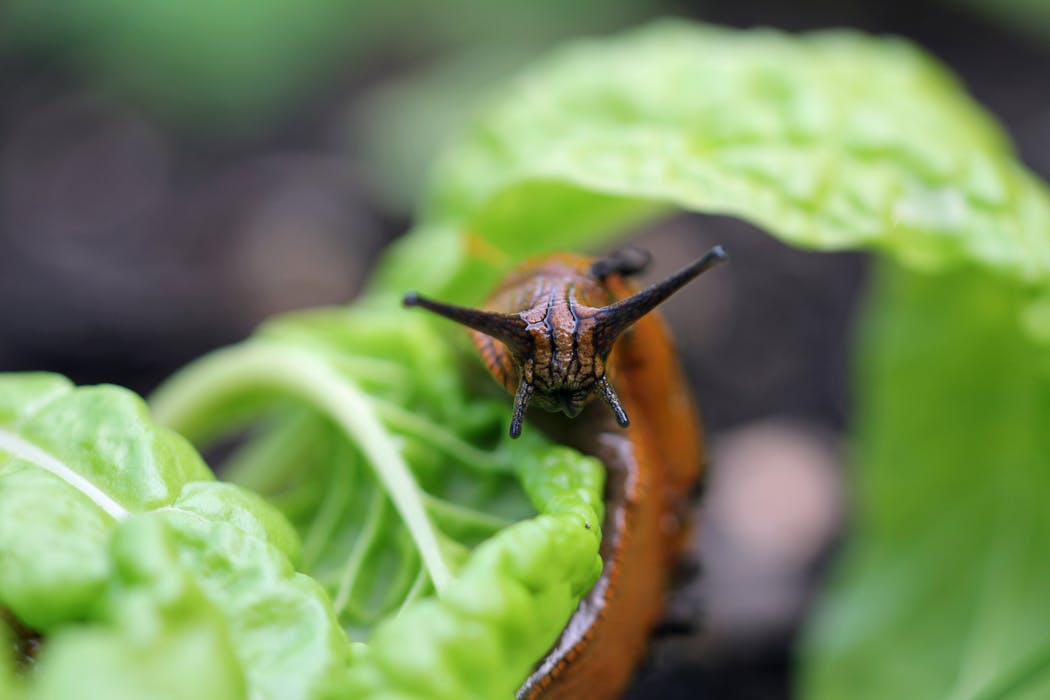
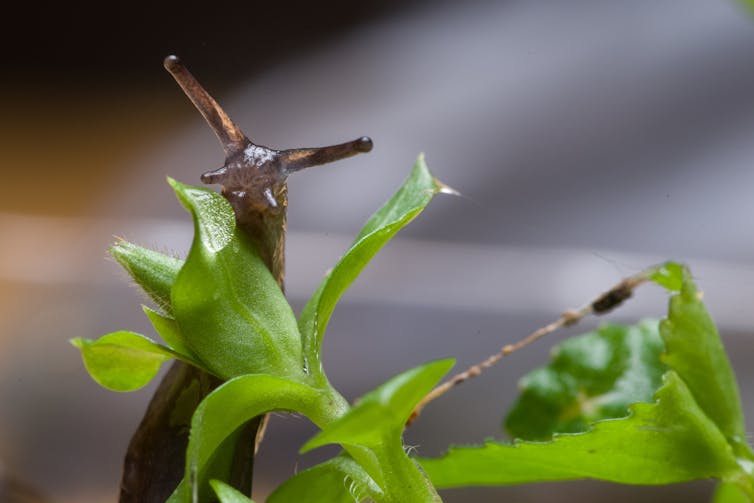
British gardeners and farmers may remember 2024 with a shudder – it was widely referred to as “the year of the slug”. Vast numbers of slimy slitherers chomped their way through raspberries, laid waste to lettuce and toppled tomato plants.

Directly sown crops were demolished, early carrots did not germinate and main crop potatoes were damaged.

Will we see a repeat of the slugageddon in 2026?

Slugs are well suited to the UK’s damp, mild climate and have a wide diet, but only a few species feed on live plants. Slugs and snails are actually an important part of the decomposition cycle, meaning they help the composting process. Apart from those that eat your plants, they can be considered a gardener’s friend, as long as their populations remain stable.

Outbreaks of insect pests, for example, occur when checks on population growth such as predators, competitors or environmental constraints are removed.

So, what conditions favour growth of slug populations and how well did 2024 match these?

Slugs need moist conditions as they have little or no shell and their protective mucus is water based. Slugs can reproduce throughout the year, but do so mostly in spring and in autumn. They can overwinter in the egg, juvenile or adult stage. To avoid frost and predators they seek dark, damp, insulated areas, such as underground, beneath pots or within compost heaps. Slugs are resilient and most survive the winter especially under mild conditions, but hard frosts will kill them.

If it’s mild, slug populations actually increase as early plant growth in late winter provides adults with additional energy to lay eggs. These eggs can hatch in ten days, but take up to 100 days if it’s cold. Over a typical one year life span a slug can lay up to 500 eggs.

And a warm wet spring or summer with frequent rain allows populations to disperse and grow.

Reduced predator numbers also benefit slugs, with many, such as hedgehogs, facing population declines. Toads are also in decline, as are birds such as thrushes.

Grey colour slug eating leaf.
Slug numbers can change dramatically year to year.
Fotoz by David G/Shutterstock

Weather matters

The year 2024 had conditions ideal for slug breeding; a mild winter, high moisture levels in spring and summer, and no long dry spells.

According to the Met Office, 2024 climate statistics showed the UK is heading outside the “envelope of historical weather observations”. The year 2024 was the fourth warmest year since 1884. Overall it was a little wetter than average, but central and southern England had 25-30% more rain than normal, making the area both warm and damp.

In addition, 2023 had been the UK’s second warmest year, and wetter than average. This combination promoted slug population growth, setting the base for the 2024 increase.

In contrast, 2025 weather was less favourable for slugs as it varied from cold to extreme heat with little rainfall. Slug populations are disrupted by dry and unstable conditions. However, it is difficult to predict population trends when there is instability. For example, climate change is making it difficult to predict butterfly numbers.

In 2025, slug numbers declined from the 2024 peak. However, there were issues with slugs decimating some field crops and returning rainfall produced an upturn in slug numbers in autumn 2025.

Following a cold snap before Christmas 2025, UK winter was mild and very wet, with persistent cloud cover trapped by high pressure over Scandinavia. Some areas had 50% of annual rainfall in the first six weeks of 2026, with widespread flooding. When this pattern shifted, cold arctic air entered the UK. Spring could be chilly as March frequently exceeds December for snowfall and there can be cold snaps in April.

Thus, the picture for 2026 is complicated. Although flooding can kill overwintering eggs and adults, a mild wet winter will have reduced slug mortality. It may also affect slug predators. Beetles used for slug control in conservation agriculture can survive short term inundation but their larvae in saturated soil probably won’t. Flooding also creates lots of ready food for slugs from plants that have died in the water, a potential slug fest as it dries in spring.

With a global temperature above 1.4°C, compared to pre-industrial levels, the Met Office predicts a warm 2026. In addition, the UK government’s Environment Agency predicted a drought in 2026, before the winter’s heavy rainfall.

Overall the conditions point towards increased slug populations but probably not as bad as 2024.


Read more:
In defence of slugs


So, what can we do to help our gardens survive a possible 2026 slugageddon?

You can water in parasitic nematodes. These only attack slugs and snails, where they transmit a lethal bacterial infection. It’s a wildlife-friendly option, if a bit expensive.

Put down bark, cat litter, sand or grit. Copper tape may be effective, but physical barriers don’t always work. Smear the edge of pots with petroleum jelly. Creating habitats for slug predators will boost your defences too.

Slugs are nocturnal so water plants in the morning so the soil can dry before they become active. Remove slugs under torchlight, or set pitfall traps. Grow slug-resistant plants such as such as sedum, rosemary and geraniums.

It seems counter intuitive to attract slugs, but compost heaps can redirect them from vulnerable plants. Ferric phosphate slug pellets are effective, but must be targeted around your most vulnerable plants as they can harm wildlife that eats slugs.

Whatever methods you use, remember that most slugs are our friends and an important part of the ecosystem.


Do the seasons feel increasingly weird to you? You’re not alone. Climate change is distorting nature’s calendar, causing plants to flower early and animals to emerge at the wrong time.

This article is part of a series, Wild Seasons, on how the seasons are changing – and what they may eventually look like.


The Conversation

Christopher Terrell Nield does not work for, consult, own shares in or receive funding from any company or organisation that would benefit from this article, and has disclosed no relevant affiliations beyond their academic appointment.

ref. Will 2026 be another slugageddon? – https://theconversation.com/will-2026-be-another-slugageddon-275614

The beginner’s guide to video games – where to start if you don’t think you like games

Source: The Conversation – UK – By Tom Garner, Senior Lecturer of Human Computer Interaction, Department of Computing, Sheffield Hallam University

Rose Tamani/Shutterstock

In 1997 I was 13 and decidedly not a gamer. I liked film, music and Stephen King novels – but I had been “blessed” with two parents who believed video games rotted your brain. They did, however, invest in a home PC, seemingly under the impression I would be drawn only to its educational functions.

Their faith was misplaced when I discovered Blade Runner (1997), an adventure game based on the 1982 Ridley Scott film that I had not seen. Before, I had understood games as “collect coins, jump on enemies, avoid spikes, get a high score”. Now I was a detective conducting something called a Voight-Kampf test. I was scouring crime scenes, analysing CCTV footage and piecing together the narrative of a crime that kept escalating the more I proceeded.

By the end I was grappling with whether to turn my character’s back on every part of their life, whether their memories were their own, whether they were even human and the broader question of how a person can act morally when they cannot be certain of themselves – or their perception of reality.

This was my entry point into a lifelong love of video games. I’m still enamoured with their ability to directly involve you in the story, to challenge your decision making and values, knowing the consequences would play out in front of you, affecting situations and characters you had become emotionally invested in.

There is growing evidence that factors such as burnout from passive streaming culture are increasingly encouraging people towards video games – and yet many people still feel excluded from them. If you’re among that group, you may assume games are all too violent, too juvenile, too technical, or simply “not for you”.

The great shame here is that games tell deep and immersive stories and present beautiful worlds in ways that are wholly unique to the medium. If you don’t engage with games, you’re increasingly missing out on meaningful new stories and aesthetics.

Here are three different kinds of potential player and the video games I would prescribe for each one.

1. The aesthetic wanderer

Potential player one is an “aesthetic wanderer”. If this is you, you love music, immersive visual arts, installations and exhibitions. You find yourself are drawn to places, whether urban or nature, that evoke mood and feeling.

The trailer for Firewatch.

Aesthetic wanderers are driven by the sensory pleasure of atmosphere and the personal meaning they extract from interpretation of art and environment. They likely perceive video games to be loud, time-pressured, visually oppressive and goal-obsessed.

If this sounds familiar, then your route to video games should be through titles that prioritise exploration, the autonomy of self-pacing and a beautiful – or possibly disgusting – world. So long as it’s evocative.

Try playing Journey (2012), a wordless traversal across a desolate yet beautiful landscape, with flowing character movement that blends interaction with music, sound and atmosphere – offering an immersive, resonating and contemplative experience.

Alternatively, Firewatch (2016) offers a slowly unfolding mystery wrapped in a summer trek in the Wyoming wilderness, emphasising reflective presence in a lonely landscape and a narrative revealed naturally through a dialogue.

A more involved, but equally beautiful classic is Shadow of the Colossus (2018) – an at times deafeningly silent world in which you are drawn into conflict with vast, awe-inspiring creatures and are confronted with moral unease in your actions.

2. The pre-digital native

Potential player two is the pre-digital native. If you’re in this camp then you grew up before video games became established. You may be intrigued by games but believe you have missed the proverbial boat. You may view games as juvenile, a distraction from “genuine” pursuits, or even morally questionable.

The trailer for Return of the Obra Dinn.

Your love of cinema and literature is based in story over spectacle, and you also appreciate opportunities for growth and personal reflection. You may also be concerned that video games present a risk to your perceived competence, not in a cognitive or cultural sense, but in the fiddly physical controls that may require precise and immediate motor actions.

If you fit into this player type, seek out games that emphasise cognitive capability over motor-skills, with critical thinking over fast reactions. You could consider contemporary detective games, such as Her Story (2015) and Return of the Obra Dinn (2018).

3. The cultural sceptic

Lastly, potential player three is the cultural sceptic. If you’re in this group, you might believe video games were simply not made for you. You may observe a deluge of games targeting young men, with male protagonists, aggressive competition-based mechanics and even hostile exclusionary communities. You are interested, but feel the need to culturally protect yourself.

The cultural sceptic values autonomy and growth through new experiences. You may especially value relatedness, seeking credible characters that you can connect with. You are drawn to opportunities to collaborate, and you particularly enjoy art as a shared experience.

The trailer for Split Fiction.

If this sounds like you, consider games that feature cooperative multiplayer experiences like It Takes Two (2021), a puzzle platformer about a couple on the brink of divorce who find themselves trapped in the bodies of two of their daughter’s dolls. Here narrative and gameplay are inseparable as the game explores matters of relationship breakdown but also reconciliation and perspective through cooperation.

You may also find yourself drawn to games built around themes that fall outside of the “guns, gore and muscles” trope, such as Gone Home (2013), a first-person exploration game in which the player-protagonist uncovers journals to follow her sister’s journey to understanding and accepting her sexuality.

Alterntively, What Remains of Edith Finch (2017), a collection of interwoven stories in which the player inhabits the final moments of Finch’s relatives in a way that demonstrates how interactive experiences can explore a genuinely wide range of themes, and can tell stories in ways that would be impossible in any other medium.

If explored openly, there is no demographic barrier to all video games. A few months ago, I introduced my partner to the farming simulation game Stardew Valley (2016), a game I have been playing for about five years. She enjoys ballet, romantic fantasy novels and Sabrina Carpenter. She hadn’t played a game since the mid-90s. Her farm is now better than mine. A lot better.

For you, my potential player, this is an invitation and not a lecture. I’d love you to take the opportunity to engage with video games on your own terms, to challenge your initial assumptions and perhaps discover a new cultural love.


Looking for something good? Cut through the noise with a carefully curated selection of the latest releases, live events and exhibitions, straight to your inbox every fortnight, on Fridays. Sign up here.


The Conversation

Tom Garner does not work for, consult, own shares in or receive funding from any company or organisation that would benefit from this article, and has disclosed no relevant affiliations beyond their academic appointment.

ref. The beginner’s guide to video games – where to start if you don’t think you like games – https://theconversation.com/the-beginners-guide-to-video-games-where-to-start-if-you-dont-think-you-like-games-273737

The wonders of daisies: the buffet we walk on

Source: The Conversation – UK – By Libby John, Professor of Sustainability, University of Lincoln

Emvat Mosakovskis/Shutterstock

A yellow disc with rays of white – an icon of childhood drawings and a flower with healing properties. We have picnics on it, play football on it and make daisy chains out of it.

The common or lawn daisy, Bellis perennis, is probably familiar to most people living in temperate climates. But there may be few things you do not know about this fascinating and perhaps under estimated flower.

A flower made of little flowers

Each daisy is actually an inflorescence – a multitude of tiny flowers called florets working together to set out a buffet for pollinators. There are two types of florets. The tube florets form the yellow centre of the inflorescence, about 100 in a typical daisy. You can see them open in sequence over several days from the outside inwards, revealing their treasures of nectar and pollen.

The ray florets have the long white petals. They are female, whereas each tiny tube floret has a set of male and female floral attributes. Every tube floret produces pollen and nectar as well as having an ovary which can make a tiny fruit at the bottom.


Many people think of plants as nice-looking greens. Essential for clean air, yes, but simple organisms. A step change in research is shaking up the way scientists think about plants: they are far more complex and more like us than you might imagine. This blossoming field of science is too delightful to do it justice in one or two stories.
This article is part of a series, Plant Curious, exploring scientific studies that challenge the way you view plantlife.


The white and yellow contrast between the two types of florets is probably attractive to pollinators. Watch a pollinating insect land on a daisy and it will probe each open floret for a sip of nectar. The florets all sit on a capitulum (a cone-shaped platform), which is surrounded by green phyllaries (or bracts). The capitulum also bears the miniature fruits called achenes which are one-seeded fruits.

Unlike some members of the same family, such as the dandelion, the little seeds have no hairy parachute or pappus to help them disperse. This means that most probably drop close to the parent plant, although they can also be dispersed on muddy paws or shoes, and by worms, ants and birds.

Intrepid explorers

The formal name of the daisy – Bellis perennis – was chosen in the 18th century by biologist Carl Linnaeus, who invented the system by which botanists still name species. Bellis is probably from the Latin for beautiful and perennis for perennial or long-lasting. The word daisy is thought to come from “day’s eye”, a reflection of the fact that the flowers close at night.

Close up of wet daisy
Daisies are made up of lots of tiny florets.
AlyoshinE/Shutterstock

However, the word daisy is applied to many other species with similar inflorescences and is used to describe a whole family of plants, the Asteraceae. This is the largest family of flowering plants, incorporating species from thistles to sunflowers, almost all of which have the same inflorescence structure of smaller florets collected on a capitulum. There are over 32,000 species in this family, from tiny daisies to large tropical trees. They are found in most ecosystems on earth, except Antarctica.

This indicates they have a successful evolutionary strategy that has allowed them to adapt and spread. The little lawn daisy has travelled around the world from its native distribution in Europe to be ubiquitous in temperate climates from New Zealand to the US.

Circadian strategy

Most flowers stay open all the time but some, like daisies, open towards the sun in the morning to maximise warmth. This may make them more attractive to insect pollinators who need heat to regulate their body temperatures.

The ray florets do the opening and closing, covering the inner disc florets when closed. On cloudy cool days the daisies might not open at all. The movement of the petals is likely to be as a result of cell growth on either side of the long white ligule of the ray floret, with the cells on both sides of the petals growing at different rates.

Resourceful

Gardeners who want the perfect lawn may see daisies as a nuisance. But a 2021 study showed that lawn daisies provided up to 11% of the nectar available to pollinators in some urban environments, making them important food for our urban bees, butterflies, hoverflies and other pollinating insects. These insects are, in turn, food for so many other animals along the food chain.

Daisies can self-pollinate. They can also clone themselves – sending stolons (runners) sideways to colonise a patch of ground. Bellis perennis seems to be well adapted to human-made habitats, with its short sward or dense mat. Daisies with longer swards tend to get outcompeted as they only produce leaves in a rosette near the ground. Its natural habitats include areas of low or disturbed vegetation such as trampled ground, stream edges and lake margins.

Bellis perennis, in common with most flowering plants, forms associations with fungi in its roots. Arbuscular mycorrhizal fungi have been co-evolving with plants for the last 400 million years, allowing the colonisation of land by early plants. The plant feeds the fungi with carbohydrates and in turn, the fungi reach out into the soil and supports the plant with nutrients. This ancient partnership between plants and soil fungi still mediates plant interactions with other soil microbes, and regulates plant-plant interactions.

Human connection

The Asteraceae is probably the most popular plant family in popular medicine containing a wide range of active plant chemicals or phytochemicals with antioxidant, anti-inflamatory, antimicrobial, diuretic and wound-healing properties. Bellis perennis itself has had many common names over the centuries including gardener’s friend, bruisewort and poor-man’s arnica.

Common daisy in field.
Daisies are an important part of their local food chain.
Wirestock Creators/Shutterstock

It feels like daisies have always been part of our lives in the temperate parts of the world and always will be. Daisies have long featured in literature and poetry, mentioned by Chaucer (The Good Woman), Shakespeare (Ophelia’s flowers in Hamlet) and the 19th century poet John Clare.

But the species that are thriving today are not necessarily assured a future. For example, many once common species of birds, like swifts and skylarks, are in decline now in the UK. Arable weeds such as common corncockle (Agrostemma githago) or cornflower (Centaurea cyanus) that were once a nuisance in crops are now rare species that need intervention to prevent their extinction.

So, we must treasure and monitor these flowers, to ensure they are part of our future as well as our past.

The Conversation

The authors do not work for, consult, own shares in or receive funding from any company or organisation that would benefit from this article, and have disclosed no relevant affiliations beyond their academic appointment.

ref. The wonders of daisies: the buffet we walk on – https://theconversation.com/the-wonders-of-daisies-the-buffet-we-walk-on-241396