Conflict in the Middle East makes official economic forecasts immediately out of date

Source: The Conversation – UK – By Steve Schifferes, Honorary Research Fellow, City Political Economy Research Centre, City St George’s, University of London

The UK chancellor of the exchequer would not have wanted to deliver her spring statement against the background of a fresh threat to the world economy.

For while Rachel Reeves announced that she has the “right economic plan for the country” in a “yet more uncertain world”, the conflict in the Middle East will undoubtedly complicate the UK’s economic prospects. And the latest economic forecast by the independent Office for Budget Responsibility (OBR), to which she was responding, may already be out of date.

It was too late, for example, for the OBR calculations to include any potential shocks in the global supply chain, or a spike in energy prices that may result from the US-Israeli strikes on Iran. At a press conference after Reeves’ statement however, an OBR representative warned that it could have “a very significant impact”. And they added that even before the crisis unfolded, the UK had faced an unusually high degree of uncertainty.

But otherwise, the OBR report – little changed from the autumn – paints a mixed picture for the UK economy. Weaker economic and job growth is somewhat balanced by the prospects of lower inflation and lower interest rates.

The government’s future “headroom” (the space for extra spending later on) is only slightly better than previously thought. And the OBR says that by 2031, government debt will still be 95% of GDP. At the same press conference, it added that this high level of debt relative to other countries makes the UK more vulnerable to external risks.

But Reeves bullishly told MPs: “We beat the forecasts last year […] we will beat them again” adding that stronger government finances will allow the UK to weather the storm and keep to its current spending plans.

Yet the war could well affect those spending plans and the government’s hopes of tackling the high cost of living. Oil and gas prices are already soaring, and stock markets are falling. The OBR itself accepts that “significant risks, including from conflict in the Middle East”, can significantly change its projections.

For example, gas prices have already spiked after the major Middle East supplier Qatar closed its main refinery following Iranian attacks. The effective closure of the strait of Hormuz will threaten the huge flow of oil to major Asian economies such as China, Japan, Korea and Taiwan.

The UK government may have capped household gas prices, but a long-term wholesale gas price increase would boost inflation and reduce the chances of a further interest rate cut by the Bank of England.

And while the UK gets relatively little gas from the Middle East, gas and oil prices are set internationally. Europe is much more dependent on gas from that region, so the disruption of supply could threaten both higher inflation and lower growth in the UK’s largest export market.

It also could be an existential threat to the high-performing export economies of Asia, which are driving global growth.

A worldwide slowdown will have serious consequences for the UK economy as it is highly dependent on foreign trade. US president Donald Trump’s unhappiness with prime minister Keir Starmer’s conditional support for his war may threaten the restoration of the UK’s favourable tariff deal.

A weaker UK economy – which is already growing at only slightly more than 1% a year – would have major consequences for government spending, tax receipts and the government’s headroom. This could mean both lower tax revenues and increased borrowing, with the costs of financing the government’s huge debts rising, reversing recent falls.

This may all make it difficult for the government to contemplate any electorally beneficial tax cuts ahead of the 2029 general election. It may even have to extend the freeze on tax thresholds further, squeezing workers’ pay packets.

These negative developments come as the government also faces major additional pressures on spending – which it has tried to delay in the hope of a stronger balance sheet later on.

These include costly reforms to increase spending on students with special educational needs and disabilities, and plans to reduce student debt. Other major long-term challenges include providing social care for an ageing population, meeting ambitious housing targets (which are well behind schedule) and providing for cash-strapped local government.

Rising geopolitical tensions could also force the government to accelerate plans to boost UK defence spending from 2.5% to 3.5% of GDP, at a cost of around £40 billion. This could well mean tax rises or further cuts in other departments.

A short and decisive war could lessen all these pressures. But uncertainty in itself can inhibit investment and threaten the UK’s ability to tackle its long-term productivity problem – the key to raising living standards.

The Conversation

Steve Schifferes does not work for, consult, own shares in or receive funding from any company or organisation that would benefit from this article, and has disclosed no relevant affiliations beyond their academic appointment.

ref. Conflict in the Middle East makes official economic forecasts immediately out of date – https://theconversation.com/conflict-in-the-middle-east-makes-official-economic-forecasts-immediately-out-of-date-277424

When your eyelids become a cinema screen: what strobing light reveals about the brain

Source: The Conversation – UK – By David Schwartzman, Research Fellow (Informatics), School of Engineering and Informatics, University of Sussex

Vlue/Shutterstock

Flashing light can do more than illuminate a room. Delivered at specific rhythms and viewed through closed eyelids, it can produce vivid visual hallucinations, geometric patterns, bursts of colour and sometimes even full scenes in people with no underlying illness and no use of drugs.

These experiences are known as stroboscopic hallucinations. They offer a window into how the brain constructs perception and how conscious experience shifts when the signals reaching the visual system are altered.

Eyelids are not a blackout curtain. Even with eyes closed, light can pass through and reach the retina, the light-sensitive layer at the back of the eye. If that light flashes at particular rates, it can nudge brain rhythms into the same timing as the light, so the brain’s natural electrical activity begins to synchronise with the external flicker.

This becomes especially pronounced when the flashing frequency overlaps with the brain’s resting rhythms, roughly eight to 12 hertz, or eight to 12 flashes per second. In this “sweet spot”, large groups of brain cells fire in sync, and that coordinated activity spreads across visual areas at the back of the brain.

The brain then interprets these patterns as meaningful experience. When the signal is strong and structured enough, perception can emerge even without an external scene.

Often, people see simple hallucinations: geometric patterns, kaleidoscopic colour shifts, spirals, lattices, tunnels or cobweb-like grids. These have been documented for well over a century and appear consistently across many people. Because they arise from the visual system itself, similar shapes also appear in psychedelic drug experiences, migraine aura, sleep-related states and certain neurological or visual conditions.


Read more:
Pseudo-hallucinations: why some people see more vivid mental images than others – test yourself here


Sometimes people report more complex hallucinations with recognisable content such as objects, places or landscapes. In these cases, the brain appears to impose familiar meaning on an unusually powerful visual signal, organising abstract input into something coherent.

From a neuroscience perspective, this is what makes these experiences useful. Hallucinations reveal how the visual brain constructs reality and what happens when the balance between sensory input and internal expectations shifts. Vision is not a passive recording process. The brain continuously interprets, fills in and predicts. Hallucinations show what perception can look like when those internal processes temporarily dominate.

A brief history

Stroboscopic hallucinations have been described scientifically since at least 1819, when the Czech anatomist Jan Evangelista Purkyně reported patterned visuals induced by candlelight flickering through moving fingers held in front of closed eyes.

In the 1960s, the phenomenon entered popular culture through the “Dreamachine”, created by artist Brion Gysin and mathematician Ian Sommerville. A lightbulb inside a rotating cardboard cylinder cut with shapes produced flicker rates that reliably induced hallucinatory imagery in people sitting with closed eyes. Gysin imagined it replacing television, with people gathering to generate inner imagery rather than watch programmes. That never happened, but it captured how immersive these experiences can be.


Read more:
Manipulating light can induce psychedelic experiences – and scientists aren’t quite sure why


In 2022, I was involved as a scientific adviser in a large-scale modern reimagining of the Dreamachine as part of Unboxed: Creativity in the UK, a UK-wide public arts and science festival. The installation used stroboscopic technology, immersive sound and carefully designed sessions to create a structured public experience.

More than 40,000 people took part. Many drew what they had seen afterwards, generating over 10,000 images. That created an unusual scientific opportunity. Laboratory studies of hallucinations typically involve small samples. Here, we had thousands of visual reports.

Working with colleagues, we used machine learning tools to group the drawings by shared visual features such as symmetry, repetition and curved shapes. This allowed us to identify familiar pattern types already described in scientific research, as well as a wider range of geometric forms that have received less attention.

People’s inner visuals are not random. Similar patterns appear again and again across different people, suggesting they reflect shared features of how the human visual system is organised.

Therapeutic

Following reports of improved wellbeing after Dreamachine sessions, we began investigating whether controlled stroboscopic stimulation might have therapeutic potential, including for depression. Research on psychedelic-assisted therapy, where substances such as psilocybin are used in carefully supervised clinical sessions with psychological support, suggests that aspects of the experience itself, such as feelings of awe or shifts in self-perception, can predict later clinical improvement.

Because stroboscopic stimulation can induce some of these features without medication, it raises the possibility of a more accessible approach.

I am currently involved in a study exploring whether this kind of stimulation can be used safely in people with depression. Initial findings are encouraging, but the research is still at an early stage and focused on safety rather than effectiveness.

Stroboscopic stimulation is also being explored in other areas. In Alzheimer’s disease, for example, researchers are investigating whether synchronising brain activity at specific frequencies might influence processes linked to the disease. Clinical trials are under way, though the field is still developing.

The main medical risk associated with strobe exposure is a photosensitive epileptic seizure. Only a small proportion of people with epilepsy are photosensitive, but the risk is not zero. Responsible research groups and public installations screen participants and use established safety procedures.

Some people may experience milder effects, including headaches or discomfort, particularly if they are sensitive to bright light. A small number report little or no visual effect at all.

The broader scientific interest lies in what these experiences reveal about conscious perception. How the brain produces a unified experience of the world remains one of neuroscience’s most challenging questions. By studying simpler visual components such as colour, symmetry and movement, researchers can begin to unpack how experience arises.


Read more:
How higher states of consciousness can forever change your perception of reality


Altering visual input in a controlled way allows us to observe how the mind constructs reality. That helps us understand not just hallucinations, but normal conscious experience itself.

Strange Health is hosted by Katie Edwards and Dan Baumgardt. The executive producer is Gemma Ware, with video and sound editing for this episode by Anouk Millet. Artwork by Alice Mason.

Listen to Strange Health via any of the apps listed above, download it directly via our RSS feed or find out how else to listen here. A transcript is available via the Apple Podcasts or Spotify apps.

The Conversation

David Schwartzman receives funding from the Medical Research Council (UKRI083) and was partly supported by a grant from the UK Government for his participation in the Dreamachine Programme, as part of Unboxed2022.

ref. When your eyelids become a cinema screen: what strobing light reveals about the brain – https://theconversation.com/when-your-eyelids-become-a-cinema-screen-what-strobing-light-reveals-about-the-brain-277068

Late deciders, higher turnout: what the Gorton and Denton byelection taught us about voters

Source: The Conversation – UK – By Hannah Bunting, Senior Lecturer in Quantitative British Politics and Co-director of The Elections Centre, University of Exeter

Hannah Spencer’s win in the Gorton and Denton parliamentary byelection was a momentous victory for the Green party. The party’s first-ever byelection win overturned a large Labour majority and put the general election winners into third place, behind Reform UK.

The Greens are eager to position it as a sign of things to come, particularly in the May elections. Here’s what voter trends in Gorton and Denton can tell us about what’s to come.

Voters continue to turn away from the two main parties

Voters are looking for alternatives to the two main parties. Labour’s vote share halved in Gorton and Denton compared to the general election. With a much smaller 2024 base to start from, the Conservatives went from nearly 8% of votes to fewer than 2%, losing their deposit.

This follows a trend we’re seeing at almost every election, regardless of type or location. In the 2025 local elections, fewer than 40% of incumbents from the two main parties held their seats – a figure that had previously never been below 70%. In council byelections, both Reform and the Greens are fielding candidates in more areas, and taking both vote share and seats from the Conservatives and Labour. Labour and the Conservatives are the only two parties with fewer MPs than they started this parliament with.

Voters deciding late

Constituency opinion polls in the run-up to byelection day showed Labour, Reform and the Greens neck and neck.

But a more striking feature of these polls was how many voters had not yet made up their minds. Even in the final week, an Omnisis poll found that 31% of people who said they would vote were still undecided, more than the reported support for Labour (18%), the Greens (22%) or Reform (20%).

This is an unusually high level of uncertainty so late in a campaign. In normal elections, the rate of undecided voters is typically lower by the eve of polling day. Here, nearly a third of voters were still making up their minds. This compares to 12% two days before the general election, which was itself considered high.

Late-deciding women may have swayed the outcome

High numbers of undecideds may partially explain the late swing to the Greens. We know that women are more likely than men to respond “don’t know” to vote intention questions and to decide later in the campaign. At the same time, there is a gender gap in party support: Reform performs better among men, while the Greens tend to perform better among women, particularly among younger voters.

Levels of undecidedness between men and women differed, with 18% of men reporting they were undecided relative to 36% of women in the Omnisis poll. There were also more men than women, by ten percentage points, saying they would not vote. If those undecided women were less inclined to support Reform and more open to supporting the Greens, then late-deciding voters may well have tipped the balance.

Undecided women are less likely to think that any party represents their policy priorities well. This is particularly unlikely to have played out well for Reform – the party has expressed support for taxing women without children more and repealing the Equality Act.

This contest is a reminder that women voters may prove decisive when large numbers of people are still making up their minds. With the next general election still some way off, and current levels of undecidedness in the electorate high, this is something parties would do well to keep in mind.

Turnout doesn’t always fall

This byelection was the second in the past six months where voters have turned out in higher-than-expected numbers. The Caerphilly Senedd byelection in October 2025 also saw unusually high turnout of 50.4%, a 6.1 point increase on the 2021 Senedd election.

Ahead of election day in Caerphilly, polls had Reform on 42% (up from 1.7% in 2021), Plaid Cymru on 38% (up from 28.4%), and Labour on 12% (down from 46% in 2021). On election day itself, Plaid took the seat from Labour with 47.4% of the vote, to Reform’s 36%, with Labour falling to third place on 11% of the vote.

In Gorton and Denton, the 2024 general election turnout was the 32nd-lowest across the country, at just 47.8% But it fell only 0.3% at this byelection. Taken together, these two contests suggest we may be seeing the beginnings of an electoral trend.

In both cases, voters opted for a party positioned to Labour’s left as the most credible option for stopping Reform. With Reform’s overwhelming success in the local elections in England last year and continued strong headline polling figures, it is possible that we are beginning to see an anti-Reform mobilisation effect. Rather than staying home, voters on the left may be turning out in greater numbers than we would otherwise expect, to back whichever party is best placed locally to prevent a Reform win.


Read more:
Tactical voting: why is it such a big part of British elections?


What does this mean for the future?

The Labour government has responded to their decline in national opinion polls by positioning themselves against Reform in key areas such as immigration. Yet, with evidence that British politics is developing left v right bloc-style voting, Labour might be unwise to ignore the threat from its own side of the ideological spectrum.

We already saw early signs of this in the 2024 general election itself, when some of Labour’s largest drops in support came in progressive, urban constituencies where the Greens also increased their support.

Some in the party have already taken this lesson from Gorton and Denton, while others, including the prime minister, are counting on the Greens not having the same campaigning resources for general elections.

If women who are answering “don’t know” to polls follow the Gorton and Denton trend, they may be leaning more towards Green than the headline vote intention figures suggest. This should be ringing alarm bells for Labour. The Greens came second in 40 seats at the 2024 general election – all of those were seats Labour won.

Moreover, if Reform are motivating both their supporters and their opposition to the polls, the Greens may be rising as Labour’s alternative on the Left. This was one seat with its own context, so it’s difficult to apply nationally. But we could see a scenario in May where both Reform and the Greens combined overtake the Conservatives and Labour.

The Conversation

Hannah Bunting receives funding from the Economic and Social Research Council (ESRC).

The research team behind the WhoREPs project on gender differences in “don’t know” responses and their implications includes Hannah Bunting, Ceri Fowler, Lotte Hargrave, Anna Sanders and Jessica C Smith.

Jessica C. Smith receives funding from the Leverhulme Trust.

Lotte Hargrave receives funding from the UK in a Changing Europe.

ref. Late deciders, higher turnout: what the Gorton and Denton byelection taught us about voters – https://theconversation.com/late-deciders-higher-turnout-what-the-gorton-and-denton-byelection-taught-us-about-voters-277268

Blasted out at 20 times the force of gravity: what ejection from a fighter jet does to the body

Source: The Conversation – UK – By Adam Taylor, Professor of Anatomy, Lancaster University

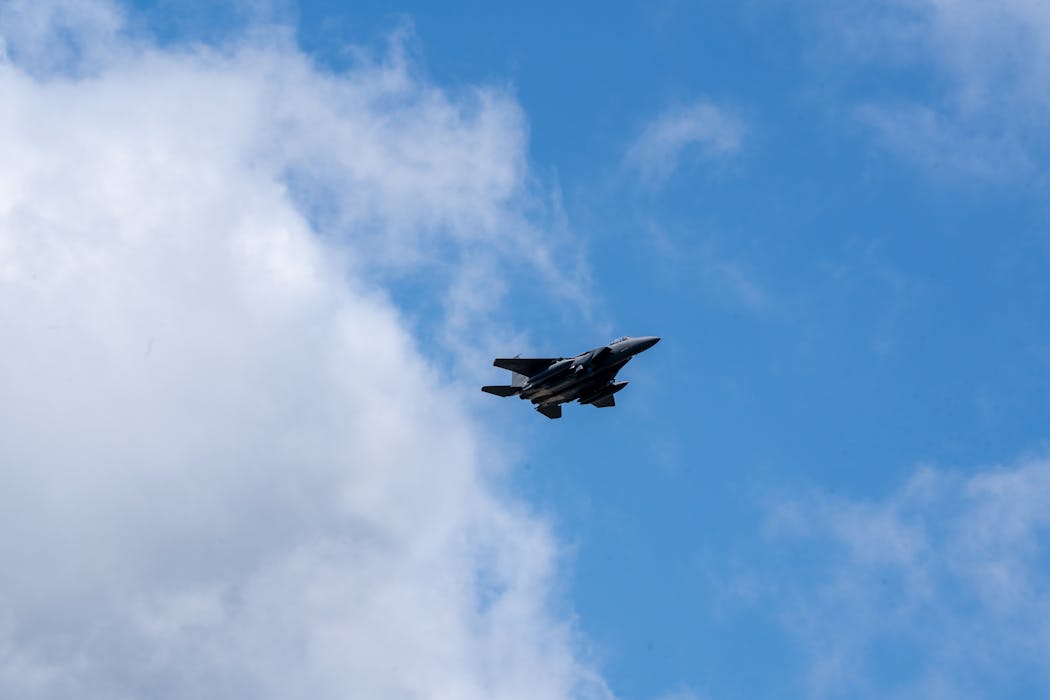
F15E fighter jet. CSWFoto / Shutterstock.com

Three US F-15E fighter jets were shot down over Kuwait in the early hours of Monday (March 2) in an apparent friendly fire incident during Operation Epic Fury, the joint US-Israel campaign against Iran.

All six crew members ejected safely and are in a stable condition – but “safely” is a relative term when you’re being blasted out of a stricken aircraft travelling at combat speed.

Decisions to eject are not taken lightly, but often only a few seconds are available to make that call – one that sets off a chain of events subjecting the body to some of the highest G-forces (the effect of acceleration on the body) a human can withstand. Waiting too long can be deadly. Some studies suggest delays are linked to death rates of up to 23%.

Fighter pilots can withstand up to 9G with the help of anti-G equipment, but even that can only be sustained briefly. Ejection from a fighter jet generates forces far beyond that. (To put the forces involved in context, most people lose consciousness at around 5G, because gravity’s effect surpasses the heart’s ability to pump blood to the brain.)

The seat is launched clear of the aircraft and then propelled upward to ensure enough altitude for a parachute to deploy safely, accelerating the occupant at up to 200m per second squared – roughly 20 times the force of gravity.

When used within the recommended parameters – the right speed, altitude and attitude (the aircraft’s angle or position in the air) – modern ejection seats show a greater than 95% survival rate.

Modern seats are known as “zero-zero”, meaning they can technically be used even if the aircraft is stationary on the ground. But low-altitude ejections below 500ft (152m) reduce survival to around 50%.

The ejection is just the beginning

Surviving the ejection is no guarantee of walking away uninjured. A large review of the evidence found major injuries occur in just under 30% of ejections, affecting the spine, limbs, head and chest.

Spinal fractures are the most common, occurring in as many as 42% of ejections, with the vertebrae at T12 and L1 (the lowest vertebra of the mid-back and uppermost vertebra of the lower back) accounting for nearly 40% of spinal fractures in a group of German aircrew.

The cushioning discs between the vertebrae absorb the same forces and can compress sharply, similar to the way the spine naturally squashes down during the day, causing most people to lose up to 20mm in height through normal daily compression.

The direction of ejection also matters. In normal flight, positive G-forces press the pilot into the seat, causing blood to move toward the lower body. Negative G occurs when the aircraft accelerates downward relative to the pilot, such as during a dive or when flying upside down, driving blood toward the head instead.

Ejecting under these conditions has been linked to eye injuries, probably caused by rapid pressure changes in the delicate blood vessels of the eye, and can result in temporary blindness lasting months.

Once outside the aircraft, the crew is hit by “windblast” – a violent rush of air caused by the jet’s speed. This can reach 600 knots in some circumstances, and there are recorded instances of ejection above the speed of sound.

At those speeds, masks and equipment can be ripped away – a serious problem at altitude, where oxygen masks are essential. Their loss can trigger hypoxia – a lack of oxygen that affects thinking and decision-making – reducing the crew member’s ability to manage their own survival.

High altitude also brings the risk of hypothermia and frostbite, depending on the location and conditions.

Fragments of the cockpit canopy can become embedded in exposed soft tissue – the neck is particularly vulnerable – while in more severe cases, aircraft parts or missile shrapnel can cause penetrating trauma to the liver, lungs and other structures, requiring emergency surgery.

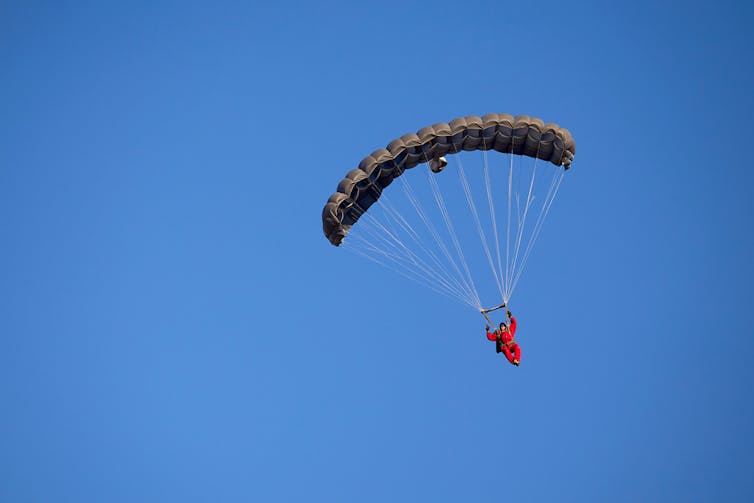
If the parachute deploys successfully, the opening shock – the sudden deceleration as the canopy fills – can itself break ribs and dislocate shoulders, as well as cause injuries to the perineum (the area between the legs) from the harness. Around 49% of injuries in parachuting occur at landing, with the feet accounting for one-third of all injuries.

A pilot floating earthward, parachute deployed.
The opening shock.
Alexis Lloret/Shutterstock.com

For those who land in trees rather than on the ground, the danger does not end there. Being suspended in a harness for any length of time carries the risk of suspension trauma – sometimes called “harness hang syndrome” – where blood collects in the legs and struggles to return to the heart and brain, leading to unconsciousness and, in some cases, death.

Recovery time for those who do come through it varies widely. Studies show that return to flying duties can take anywhere from one week to six months, depending on the severity of the injuries sustained.

Ejection remains far safer than attempting to survive a crash. For the six F-15E crew members recovering in Kuwait, surviving the ejection was only the first challenge.

The Conversation

Adam Taylor does not work for, consult, own shares in or receive funding from any company or organisation that would benefit from this article, and has disclosed no relevant affiliations beyond their academic appointment.

ref. Blasted out at 20 times the force of gravity: what ejection from a fighter jet does to the body – https://theconversation.com/blasted-out-at-20-times-the-force-of-gravity-what-ejection-from-a-fighter-jet-does-to-the-body-277388

Wet winter, hot summer? What ‘climate whiplash’ means for the UK

Source: The Conversation – UK – By Chloe Brimicombe, Postdoctoral Researcher, Climate Science, University of Oxford

New Africa / shutterstock

After a dry 2025 with the UK’s warmest summer on record, winter 2026 delivered something very different: rain for 50 days in a row in parts of Devon and Cornwall, one of the rainiest seasons on record and only 80% of average sunshine.

Scientists have given this a name: climate whiplash.

Climate whiplash describes rapid swings from one type of weather extreme to another, most commonly from really persistent drought to really persistent wet weather. Globally, such swings have increased in recent decades. Shorter-term whiplashes over a few months have become roughly a third to two-thirds more frequent, while year-to-year swings have increased by up to a third.

In Europe and the UK these swings tend to be driven by the jet stream, a fast-moving body of air higher up in the atmosphere. This winter, it was sat across the south of the UK and moved fast, blowing wet and windy weather from the northern Atlantic.

Weather often moves in “systems” – large rotating masses of similar air – and these systems effectively bump into one another like billiard balls. This winter, however, a large block of settled weather stayed in place across Europe. This acted like a barrier, causing the wet weather carried by the jet stream to slow down across the UK.

Will the UK whiplash back into drought?

Predicting what the UK’s summer will look like months in advance is challenging. Seasonal forecasting does exist, but it can’t tell us if it will rain on a particular day in July. What it can do is estimate the likelihood of certain weather trends – such as hotter or drier conditions – developing over the course of a season.

These forecasts are getting better. Under certain conditions, by May, scientists can now anticipate an increased risk of heat extremes in Europe that summer. Other research suggests that combined heat and drought extremes can sometimes be forecast one to two months ahead.

Coloured map of Europe
The European Centre for Medium-Range Weather Forecasts just released its forecast for June 2026, showing how summer temperatures might deviate from the long-term average across Europe. Warmer tones suggest a higher chance of above-average temperatures.
ECMWF, CC BY-SA

Early indications for summer 2026 suggest that the UK will probably experience slightly drier than average conditions in early summer, with an added risk of extreme heat. That does not make a hot, dry summer inevitable. But it would be consistent with climate whiplash.

More broadly, climate projections suggest that the UK and much of Europe are likely to experience more of these “flipflop” weather patterns – persistent dry spells followed by months of downpours, or vice versa – as the world warms. Although a wet winter does not automatically lead to a dry summer, the jet stream is a key driver in all of our weather throughout the year.

Why this matters

Policy is still largely designed around averages, yet the weather is behaving less and less like an average year. If the UK is heading for an era of sharper swings between flood and drought, policymaking and adaptation systems will need to catch up.

Take housing and insurance, for example. Flood Re, the government’s reinsurance scheme that keeps flood cover affordable, is only eligible for houses built before January 2009. Since then, more than 100,000 new homes have been built-in high-risk flood areas – homes that may face rising premiums just as extreme rainfall increases.


Read more:
How the UK is keeping flood insurance affordable – until 2039


In addition, we know that 80% of houses in the UK overheat in the summer. Many properties will be doubly vulnerable: too wet in winter, too hot in summer.

Climate whiplash also threatens food security. Fields can be waterlogged when planting yet too dry and dusty as crops approach harvest, lowering the yields that are produced. Transport networks are similarly exposed: some rail lines were submerged during winter floods, only a few months after a summer drought caused lines nearby to buckle as the underlying soil dried up.

These events are signs of systems – from insurance to infrastructure – being tested by weather swinging between extremes harder and faster than ever.

The UK prepares for these risks through a process set out by the 2008 Climate Change Act, which requires regular assessments of how climate change will affect the country. Every five years the UK’s independent Climate Change Committee produces a risk assessment which the government must respond to.

The next assessment, due later in 2026, will land after a year of extremes. If the UK is indeed entering its whiplash era, the question is whether adaptation plans will keep up.

The Conversation

Chloe Brimicombe receives funding from Economic and Social Research Council. She is also a heat ambassador for the charity Shade the UK.

ref. Wet winter, hot summer? What ‘climate whiplash’ means for the UK – https://theconversation.com/wet-winter-hot-summer-what-climate-whiplash-means-for-the-uk-277353

Blasted out at 20 times the force of gravity: what ejection from a fighter jet really does to the body

Source: The Conversation – UK – By Adam Taylor, Professor of Anatomy, Lancaster University

F15E fighter jet. CSWFoto / Shutterstock.com

Three US F-15E fighter jets were shot down over Kuwait in the early hours of Monday (March 2) in an apparent friendly fire incident during Operation Epic Fury, the joint US-Israel campaign against Iran.

All six crew members ejected safely and are in a stable condition – but “safely” is a relative term when you’re being blasted out of a stricken aircraft travelling at combat speed.

Decisions to eject are not taken lightly, but often only a few seconds are available to make that call – one that sets off a chain of events subjecting the body to some of the highest G-forces (the effect of acceleration on the body) a human can withstand. Waiting too long can be deadly. Some studies suggest delays are linked to death rates of up to 23%.

Fighter pilots can withstand up to 9G with the help of anti-G equipment, but even that can only be sustained briefly. Ejection from a fighter jet generates forces far beyond that. (To put the forces involved in context, most people lose consciousness at around 5G, because gravity’s effect surpasses the heart’s ability to pump blood to the brain.)

The seat is launched clear of the aircraft and then propelled upward to ensure enough altitude for a parachute to deploy safely, accelerating the occupant at up to 200m per second squared – roughly 20 times the force of gravity.

When used within the recommended parameters – the right speed, altitude and attitude (the aircraft’s angle or position in the air) – modern ejection seats show a greater than 95% survival rate.

Modern seats are known as “zero-zero”, meaning they can technically be used even if the aircraft is stationary on the ground. But low-altitude ejections below 500ft (152m) reduce survival to around 50%.

The ejection is just the beginning

Surviving the ejection is no guarantee of walking away uninjured. A large review of the evidence found major injuries occur in just under 30% of ejections, affecting the spine, limbs, head and chest.

Spinal fractures are the most common, occurring in as many as 42% of ejections, with the vertebrae at T12 and L1 (the lowest vertebra of the mid-back and uppermost vertebra of the lower back) accounting for nearly 40% of spinal fractures in a group of German aircrew.

The cushioning discs between the vertebrae absorb the same forces and can compress sharply, similar to the way the spine naturally squashes down during the day, causing most people to lose up to 20mm in height through normal daily compression.

The direction of ejection also matters. In normal flight, positive G-forces press the pilot into the seat, causing blood to move toward the lower body. Negative G occurs when the aircraft accelerates downward relative to the pilot, such as during a dive or when flying upside down, driving blood toward the head instead.

Ejecting under these conditions has been linked to eye injuries, probably caused by rapid pressure changes in the delicate blood vessels of the eye, and can result in temporary blindness lasting months.

Once outside the aircraft, the crew is hit by “windblast” – a violent rush of air caused by the jet’s speed. This can reach 600 knots in some circumstances, and there are recorded instances of ejection above the speed of sound.

At those speeds, masks and equipment can be ripped away – a serious problem at altitude, where oxygen masks are essential. Their loss can trigger hypoxia – a lack of oxygen that affects thinking and decision-making – reducing the crew member’s ability to manage their own survival.

High altitude also brings the risk of hypothermia and frostbite, depending on the location and conditions.

Fragments of the cockpit canopy can become embedded in exposed soft tissue – the neck is particularly vulnerable – while in more severe cases, aircraft parts or missile shrapnel can cause penetrating trauma to the liver, lungs and other structures, requiring emergency surgery.

If the parachute deploys successfully, the opening shock – the sudden deceleration as the canopy fills – can itself break ribs and dislocate shoulders, as well as cause injuries to the perineum (the area between the legs) from the harness. Around 49% of injuries in parachuting occur at landing, with the feet accounting for one-third of all injuries.

A pilot floating earthward, parachute deployed.
The opening shock.
Alexis Lloret/Shutterstock.com

For those who land in trees rather than on the ground, the danger does not end there. Being suspended in a harness for any length of time carries the risk of suspension trauma – sometimes called “harness hang syndrome” – where blood collects in the legs and struggles to return to the heart and brain, leading to unconsciousness and, in some cases, death.

Recovery time for those who do come through it varies widely. Studies show that return to flying duties can take anywhere from one week to six months, depending on the severity of the injuries sustained.

Ejection remains far safer than attempting to survive a crash. For the six F-15E crew members recovering in Kuwait, surviving the ejection was only the first challenge.

The Conversation

Adam Taylor does not work for, consult, own shares in or receive funding from any company or organisation that would benefit from this article, and has disclosed no relevant affiliations beyond their academic appointment.

ref. Blasted out at 20 times the force of gravity: what ejection from a fighter jet really does to the body – https://theconversation.com/blasted-out-at-20-times-the-force-of-gravity-what-ejection-from-a-fighter-jet-really-does-to-the-body-277388

World’s biggest astronomy camera seeks to answer pressing questions about the Universe

Source: The Conversation – UK – By Joshua Weston, PhD Candidate, School of Mathematics and Physics, Queen’s University Belfast

RubinObs/NSF/DOE/NOIRLab/SLAC/AURA/T. Lange

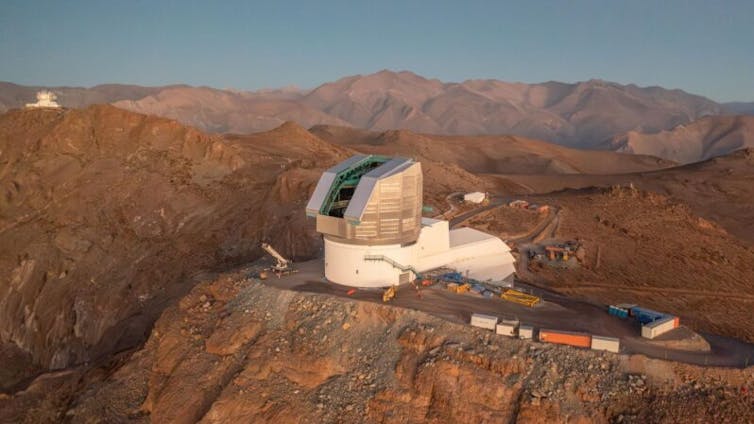
The Vera C Rubin Observatory has started releasing its first discoveries: including supernovae, variable stars and asteroids, which will from now on be discovered at an astonishing rate as it begins its Legacy Survey of Space and Time, a ten-year survey probing the deepest reaches of the Universe.

During the course of this survey, astronomers around the globe will seek to answer some of the most pressing questions about the nature of our world.

To the naked eye, the night sky seems like a static and unchanging firmament, with the occasional planet or comet or shooting star visible.

But with a larger, more sophisticated telescope or camera we are able to discover hundreds of new phenomena every night, from dying stars to near-Earth asteroids.

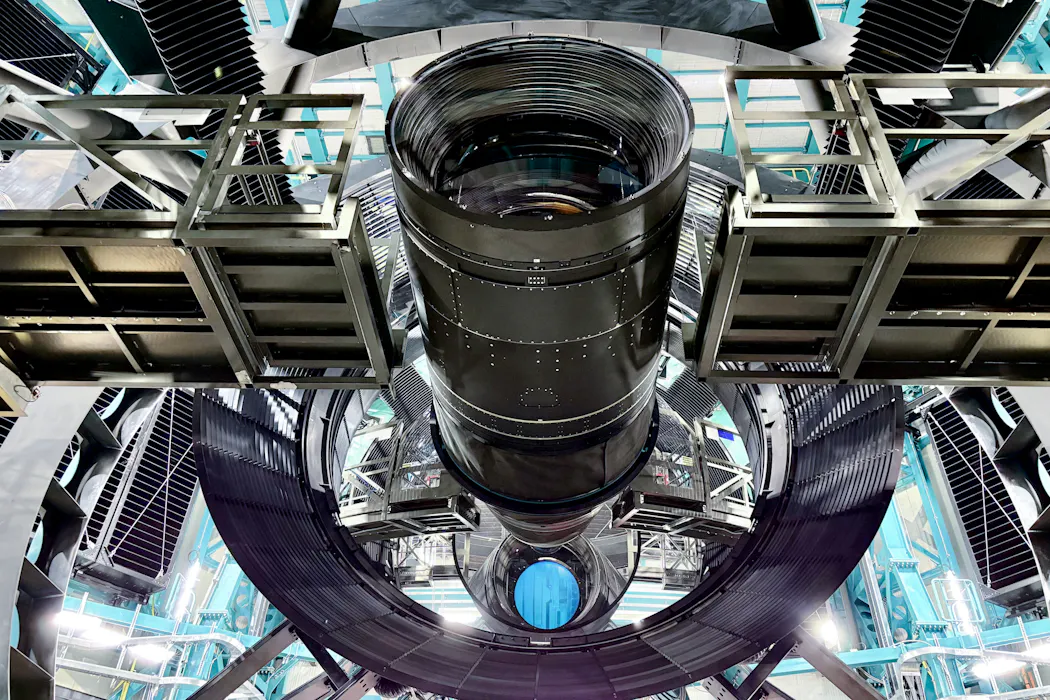
The camera that allows this exploration – attached to a telescope over eight metres wide atop Cerro Pachón in Chile – is the largest in the world, weighing almost three tonnes and built over a ten-year period.

The Rubin Observatory’s giant camera can probe the faintest reaches of our existence, capturing light emitted as much as 12 billion years ago. But the Rubin camera will capture new events much closer to our Solar System.

By taking multiple photographs of the sky every night – and tracking any differences between them, scientists will be able to capture objects moving through space such as the tens of millions of asteroids and comets hurtling through the Solar System.

Outer reaches

Increasing the number of known asteroids in the belt between Mars and Jupiter can help us to understand the formation history of the Solar System.

Beyond Neptune in the faint and distant Kuiper Belt – a population of icy objects in the outer reaches of the Solar System – astronomers will be able to study an environment similar to our Solar System in its infancy, to better understand how we came to be.

It has been theorised before that disturbances to the orbits of Kuiper Belt objects indicates the existence of a hypothesised “planet nine” – Rubin may even be able to build more evidence for this as-yet undiscovered world.

Beyond the solar system, astronomers seek to identify stellar streams of stars leftover from smaller galaxies merging with our own, which help us understand the history of the Milky Way.

What Rubin will capture more than any previous telescope are optical transients – stars brightening and dimming, and those that eventually explode as a supernova.

These explosions produce elements essential to life, from oxygen to iron, and scatter across the Universe the materials required for forming stars and planets.

Vera C Rubin Observatory
The Vera C Rubin Observatory will carry out a ten-year survey of the Universe.
Rubin Observatory

Capturing more of these supernovae and understanding how they happen is vital for understanding the evolution of the Universe. While these are some of the more common “flashes” Rubin will find in its game of spot-the-difference, other rarer objects such as black holes will also be detected and studied to improve our understanding of cosmology.

Some supernovae can be used to determine how far away the galaxy they inhabit is, letting us discover new environments from the earliest years of the Universe.
Why is it important to capture data about these ancient galaxies?

Scientists believe that the Universe after the Big Bang was uniform in all directions. How then did galaxies form? Astronomers believe the answer lies in small clumps of dark matter, which gas and dust gravitated around until galaxies could be born.

The issue with dark matter is that we cannot observe it directly, though it makes up 80% of matter in the Universe. The dark matter is responsible for galaxies – and everything within them – developing, but it also forms even larger-scale filaments of galaxies.

How these structures form is dependent on what dark matter is – which requires us to know how it influenced the formation of galaxies big and small, old and young.

Understanding existence

The Legacy Survey of Space and Time seeks to answer one question – what is the Universe? It also prompts another – why does it matter? By understanding where our existence comes from, we can predict the nature and eventual evolution of the Universe: a complete picture of cosmic evolution from start to finish.

Humanity has turned to a number of answers for its own existence over the course of its existence, with Rubin another step in the direction of finally getting the full picture.

Understanding the fundamental forces at work in our Universe is a path to answering many of the spiritual questions of society (what are we here for?) but also the practical ones (what steps do we take now?).

The Legacy Survey of Space and Time has inspired collaboration from scientists across the world based in countries such as Chile, the US, France, Germany, Australia, Japan, Brazil and the UK.

Techniques in machine learning and AI to analyse the huge amounts of
data generated by Rubin will have uses in industries such as finance, medicine and engineering.

Regardless of how Rubin furthers our understanding of the Universe, it will still enable technological innovations and international collaboration.

The Conversation

Joshua Weston does not work for, consult, own shares in or receive funding from any company or organisation that would benefit from this article, and has disclosed no relevant affiliations beyond their academic appointment.

ref. World’s biggest astronomy camera seeks to answer pressing questions about the Universe – https://theconversation.com/worlds-biggest-astronomy-camera-seeks-to-answer-pressing-questions-about-the-universe-277017

China set to suffer from turmoil in the Middle East, but it stands to benefit long term

Source: The Conversation – UK – By Tom Harper, Lecturer in International Relations, University of East London

China has responded to the joint US-Israeli attacks on Iran with strong diplomatic condemnation. In an article published on March 1, China’s state-run Xinhua news agency called the attacks a “flagrant violation” of the purposes and principles of the UN charter. The same article called the intervention a departure from “fundamental norms of international relations”.

This reaction resembled China’s response to the US capture of the former Venezuelan leader, Nicolás Maduro, in early January. At that time, Chinese officials condemned what they described as a violation of international law. The Chinese foreign minister, Wang Yi, warned that no country should act as a “world policeman” or “claim itself to be an international judge”.

Beyond diplomatic condemnation, China’s most significant contribution to the conflict in Iran so far has come through its satellite navigation system, BeiDou. In recent years, BeiDou has emerged as a possible alternative to the dominant Global Positioning System (GPS), which is owned and controlled by the US government.

During the 12-day war between Iran and Israel in 2025, widespread GPS jamming caused significant disruption to Iranian civilian and military systems. Deactivating GPS and switching to BeiDou has thus given Iran’s military more strategic depth. It has done so by, for example, enabling better monitoring of American military assets.

The conflict in Iran is likely to lead to several issues for China. Iran is a key source of oil for the Chinese government, exporting more than 520 million barrels of crude oil to China in 2025. Only Saudi Arabia supplied China with more oil than Iran that year.

What effect the conflict ultimately has on Iranian oil exports remains to be seen. But it is already causing significant disruption to the strait of Hormuz, the main route connecting Iranian ports in the Persian gulf and also some of the Gulf region’s other major oil suppliers to the open ocean.

The economic pain caused by this disruption is likely to be felt acutely by China, which imports more than half of its crude oil from countries in the Gulf.

At the same time, the perceived weakness of China in failing to respond to the conflict proactively may make some states cautious about pursuing a closer relationship with Beijing. Some countries, particularly in Latin America, have already looked to address their overreliance on China over the past year following pressure and threats from the US government.

In January, for example, Panama’s supreme court invalidated a contract that had allowed Panama Ports Company, a subsidiary of a Hong Kong-based firm, to operate two ports on the Panama canal. The ruling came one year after Trump threatened to take control of the canal to limit Chinese influence over the waterway.

However, it is equally possible that the war assists Beijing’s wider efforts to position itself as a global counterbalance to the US. Countries that had previously maintained frosty relations with Beijing such as Canada, Germany and the UK have already all looked to boost economic ties with China in recent months amid concerns about the reliability of the US as a partner.

And Wang Yi used his appearance at the Munich Security Conference in February to speak of the need for the UN and more global cooperation and collaboration. The unpredictability of the Trump administration, most recently displayed by its decision to attack Iran, may serve to strengthen China’s message of stability.

Meanwhile, Beijing may point to Iran’s retaliatory strikes against the Gulf states as a warning for countries of the consequences of aligning with Washington. This may raise questions among traditional US allies in Asia such as Japan and South Korea over whether the alliance system in the region that has long been maintained by Washington can truly guarantee the security of these states.

Pivot to Asia

While it is difficult to predict how the conflict in Iran will play out, some analysts view a drawn-out war as a possibility. This scenario also has implications for China, as it could distract the US away from its pivot to Asia. The US has long wanted to shift its foreign policy focus away from Europe and the Middle East towards the Indo-Pacific to counter the rise of China.

The US is no stranger to protracted wars in the Middle East, having become bogged down in conflicts in Iraq and Afghanistan since the early 2000s. Both of these wars significantly hindered and delayed the pivot to Asia, leading to what some observers call a “lost decade” for the US that allowed China to expand its influence.

A long entanglement in Iran would drain resources that might otherwise reinforce US deterrence in the Indo-Pacific, creating an opportunity for China to further to cement its role as the dominant regional player in Asia. And it could also help Beijing with its preparations for future conflicts.

The war in Iran is fertile ground for China to study American and Israeli weaponry. This may inform its future military strategy. The demonstration of the military value of drones in Ukraine, for example, has been key in China’s decision to develop and test new types of drones and drone swarm technologies.

The Iran conflict may inflict short-term damage on China economically. But, as time goes on, we may look back on this moment as a key point in China shoring up its influence across Asia and the world.

The Conversation

Tom Harper does not work for, consult, own shares in or receive funding from any company or organisation that would benefit from this article, and has disclosed no relevant affiliations beyond their academic appointment.

ref. China set to suffer from turmoil in the Middle East, but it stands to benefit long term – https://theconversation.com/china-set-to-suffer-from-turmoil-in-the-middle-east-but-it-stands-to-benefit-long-term-277295

Who – or what – will replace Iran’s supreme leader Ali Khamenei

Source: The Conversation – UK – By Michael Stephens, Development and Security Consultant, RAND Europe

Leadership transitions in dictatorships can signal upheaval – for better or worse – and in Iran that moment has now arrived. The death of the supreme leader, Ali Khamenei, in a US airstrike on Tehran on February 28 marks the most consequential rupture in the Islamic Republic’s political system since 1989.

Unlike the managed transition that followed the death of Ayatollah Ruhollah Khomeini (who led the country from the 1979 revolution for ten years after which Khamenei, his designated heir, took over) things are different. This succession will take places amid acute domestic unrest, economic crisis and unprecedented external military pressure. What follows now will have far-reaching consequences.

In the end it was an act of war rather than revolution or old age that ended Khamenei’s rule. But it had been clear for some time that, like other ageing dictators, he could not continue indefinitely. Until recently, the question of succession focused on the likelihood of preferred individuals rising to take his place, including Khamenei’s son Mojtaba or the now-deceased former president, Ebrahim Raisi.

However, the huge protests in January, which drew suggestions from Trump that he would be open to regime change, prompted Khamenei to choose Ali Larijani, a former Islamic Revolutionary Guard Corps (IRGC) general and secretary of the Supreme National Security Council, to effectively run the country. The extraordinary capture by US forces of the Venezuelan president, Nicolás Maduro, just a few weeks earlier no doubt also weighed heavily on the Ayatollah’s mind.

Iran’s military weakness and vulnerability to external pressure are clearly crucial factors. The prospect of ongoing US or Israeli intervention in Iran – and their ability to target individuals in the regime at will – remains decisive. But it is also now essential to consider how domestic factors such as factionalism or a struggle between rivals could emerge in a more unstable succession scenario.

Given the extent of the regime’s decapitation in the air strikes of February 28, where some 50 top officials were targeted, it is unclear whether Larijani can maintain the status quo. But the entire Iranian elite will now surely operate under the assumption that their own safety cannot be assured. Nevertheless some senior politicians with governing experience have thus far survived. These include former president Hassan Rouhani, the speaker of Iran’s parliament, Mohammad-Bagher Ghalibaf, and of course Larijani himself.

Potential succession scenarios

It is impossible to predict the future of any autocratic regime, especially one that has lasted for decades in the face of almost constant pressure. But four kinds of outcomes now appear plausible based on internal dynamics alone.

First, a “digging in” scenario, in which a senior cleric is approved by Iran’s Assembly of Experts who then seeks to maintain the existing system with minimal changes or concessions. This would not involve any real change to the status quo, at least for the immediate short term. This is the outcome that Khamenei sought. Despite the risk of further targeted strikes, the regime is now attempting to put this kind of organised clerical succession in place.

If this is achieved, it is less likely that the Assembly of Experts would concede to demands for fundamental political change and, therefore, further violence and repression of future protest could follow.

Second, a “cut and run’ scenario” in which key leaders decide in due course that their days are numbered and, like Bashar al Assad in Syria, flee the country. If at first this scenario sounds appealing to those who want to see the end of the Islamic Republic, it should be tempered by the very real problem of a power vacuum emerging, leading to institutional chaos and state collapse. Even in 1979, when the late shah, Mohammad Reza Pahlavi, went into exile, there were a multiplicity of potential power brokers waiting in the wings to replace him. Today no such factions exist. There is no guarantee that Iran would become more liberal or open as a result, even with further external pressure.

Third, a “suppression and succession” scenario, in which the regime becomes more reliant on the Islamic Revolutionary Guard Corps to brutally reassert its authority. This would raise the prospect of a quasi-military junta emerging with weaker clerical legitimacy. Such an evolution could produce a more threatening regime that both stifles dissent and doubles down on resisting US and Israeli pressure.

Fourth is the possibility of a popular uprising actually succeeding. But it remains unclear – given our limited understanding of the situation on the ground – who the Iranian population would support and whether they could succeed without one of Iran’s military institutions taking their side. Iranians would have to take to the streets and face the remnants of a tyrannical regime willing to fight to remain in power. This could result in a highly unpredictable situation. But if Iran’s dominant institutions are further degraded by consistent US military pressure, this scenario also becomes more likely.

Whatever form succession takes in Iran, the regional consequences will be significant. Israel will have contingency plans and further military options ready, while Gulf Arab states are likely to try and deescalate tensions as fast as possible. Despite their obvious anger at Iran’s attacks on their own territory, the key for the Gulf Cooperation Council will be to quickly establish workable ties with whatever regime emerges in the long term and enforce some form of cold peace, while minimising the disruption inside their own countries.

Turkey and Pakistan both have have serious security concerns, particularly if Kurdish and Baloch militants inside Iran try to establish a political foothold as the country begins to fragment. Meanwhile Russia and China, though wary of losing a partner and facing energy disruption, have limited ability to shape outcomes despite both seeing Iran as a strategic partner.

For Europe, the moment carries both danger and opportunity. Calibrated sanctions relief could reduce escalation, deter civil war and prevent Tehran’s deeper alignment with Moscow and Beijing. However, Europe’s leverage will largely depend on whether Trump wishes to see through a policy of regime change or not. There are difficult choices ahead, but deescalation with whatever kind of government in Iran emerges should surely be the priority.

The Conversation

The authors do not work for, consult, own shares in or receive funding from any company or organisation that would benefit from this article, and have disclosed no relevant affiliations beyond their academic appointment.

ref. Who – or what – will replace Iran’s supreme leader Ali Khamenei – https://theconversation.com/who-or-what-will-replace-irans-supreme-leader-ali-khamenei-274753

A 2,850-year-old mass grave in Serbia reveals a shift in prehistoric violence

Source: The Conversation – UK – By Barry Molloy, Associate Professor, School of Archaeology, University College Dublin

The earliest mass graves in Europe date back just over 7,000 years. They reveal brutal evidence for violence beyond the simple act of killing. The motives for these events are probably diverse but consistently highlight an intention to kill large numbers of enemies across sex and age ranges.

Our study of a 2,850-year-old massacre and resulting mass grave at Gomolava (modern day Serbia) shows the nature of mass killings evolving. Comprised mostly of women and girls, the grave suggests a shift in prehistoric violence. Here, women and children were not collateral victims, but deliberate targets. Looking at who was killed and how they were related can tell us about changes in ancient attitudes to killing combatants – but also choices in targeting non-combatants.

The site at Gomolava, first excavated in 1971, is the second of two contemporary mass graves. It contained 77 people. Our recent study has uncovered the circumstances surrounding their death.

We found that the original theory – that an epidemic had killed people from a single settlement – is not supported by genetic and isotopic evidence. Our data instead showed that these people descended from the wider region but came from different settlements. Except for a mother and her two daughters, there were no close genetic relationships.

Archaeology and mass graves

Archaeology sheds light on the deep history of conflict. When killings are targeted, mass graves can tell us which members of a society were displaced and killed. Then, we pose the question – why them?

When we study violence in past societies, archaeologists seek to understand how and why things like discord, ambition, belief or rivalry could lead people to plan to kill others. While archaeology cannot provide ready solutions to modern crises, it helps us to better understand the immediate and longer term societal impact of violence, and how more peaceful times were achieved and managed.

Our detailed study of the bones of the dead in the Gomolava grave exposed a brutal story – these people were mostly killed through blows to the head.

All the bodies had been crammed into a repurposed old pit house. This structure, once part of a small village, consisted of a sunken pit with low walls and a roof. This hole provided a ready space to stow the dead.

It is unclear if that was expedient disposal, or putting them in what was once a home. However, these people were buried respectfully with some of their personal possessions and other offerings. Most of the dead were women and children. Studies of the children’s teeth revealed a disproportionate number were girls. In other prehistoric mass graves, children and young women are often underrepresented because of their value as slaves or for reproduction. Gomolava is a clear exception, inverting this pattern.

In comparison, the Neolithic sites of Asparn-Scheltz, Austria (which contains approximately 200 bodies), and Potočani, Croatia (41 bodies) also contained people with few genetic connections. However, children were underrepresented and males and females equally present.

At Koszyce, Poland, 15 genetically closely related women, young men and children were buried together. These events highlight larger scale conflicts and often relate to periods of exceptional social change, such as the spread of different material conventions and, at times, inward migration of genetically distinct people.

Why women and children?

Mass graves have long informed us of the scale of past violent events. Combining archaeology with newer genetic and isotopic methods better reveals demographics, which has revolutionised the ways we can access stories of the victims. At Gomolava, this enabled us to explore the nature, social context and strategic purpose of this mass killing event. In our study, we suggest the women and children in the Gomolava grave were not incidental victims on the periphery of conflict or its aftermath, but primary targets.

Selectively killing these women and children ended family lines and cut short the future of communities. Possible motives were retribution or establishing dominance in the region. This represents a sea change in the nature of violent conflict, potentially a case where previous taboos on killing were no longer exercised. Though this is only one site in one specific time and place, it demonstrates how the treatment of mass killings can highlight major changes in attitudes to violence as a social strategy.

There is a tension in archaeology between those who argue that violence was a commonplace means of exercising social power and those that concentrate more on characterising the many alternatives to violence for asserting control or authority. In our view, both likely coexisted. In the absence of formal legal systems, the ability to fight could itself function as a deterrent. Violent conflict was therefore an extreme – but ever-present – means of resolving inter-group disputes.

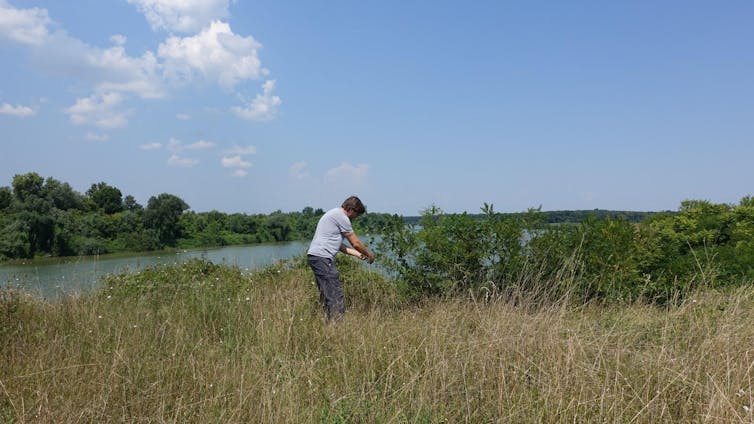
Man stood in a field by a river
Gomolava and the Sava river.
Barry Molloy, CC BY-SA

The targeting of women and children in Gomolava by people from outside their community provides a bridge between perspectives, beyond a view of men enforcing violence over other men on the battlefield. It reveals how those who shaped social trajectories across many fields of social discourse were central to conflict resolution, whether that be peaceful or through dominance and extermination. We argued that different groups were competing over land ownership in this region, and mass killing of enemies was a strategic choice to assert dominance or hegemony over a community spread across many settlements, likely including Gomolava.

Whether such graves represent ethnically, culturally or socially different groups in conflict, the brutality of their selective killing remains a common thread. In seeking to understand how peace was brokered and managed, and how different forms of power played roles in this, working to better understand who was targeted and killed in episodes of violence is a crucial first step.

Our comparative approach takes mass graves beyond specific times and places and shows how we may have underestimated the scale, ferocity and purpose of short episodes of violence.

The Conversation

Barry Molloy receives funding from The European Research Council

Linda Fibiger does not work for, consult, own shares in or receive funding from any company or organisation that would benefit from this article, and has disclosed no relevant affiliations beyond their academic appointment.

ref. A 2,850-year-old mass grave in Serbia reveals a shift in prehistoric violence – https://theconversation.com/a-2-850-year-old-mass-grave-in-serbia-reveals-a-shift-in-prehistoric-violence-277115