How to run a marathon better: the nutritional and psychological hacks that matter most

Source: The Conversation – UK – By Andy Galbraith, Associate Professor, University of East London
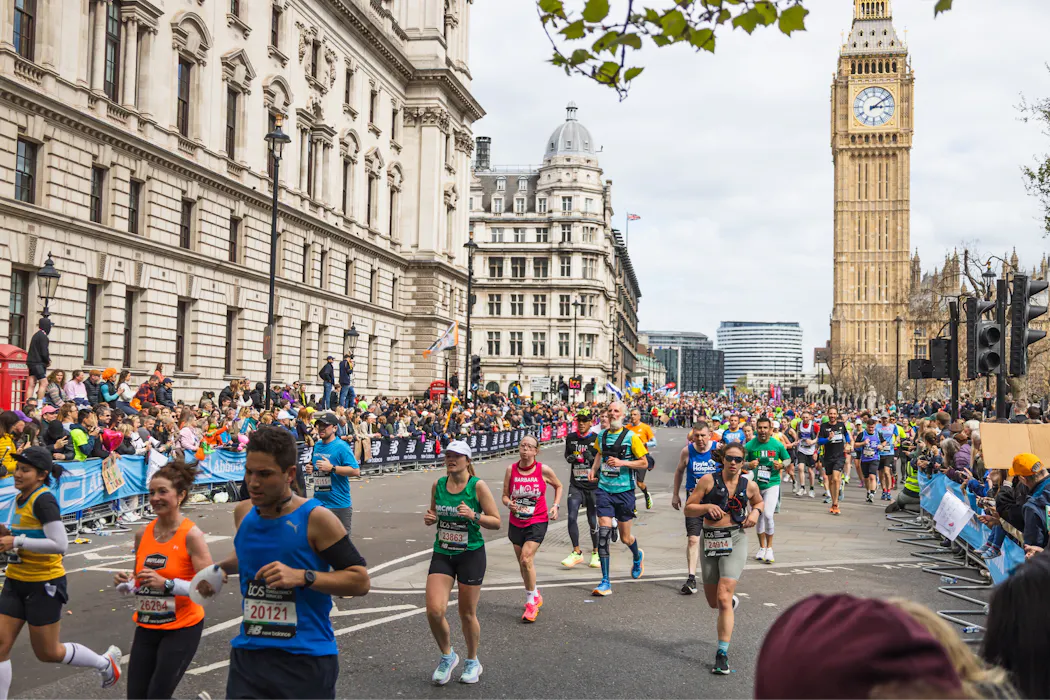
Successful marathon running isn’t just about fitness. Tartezy/ Shutterstock

Running a marathon asks a great deal of the body. You need sustained energy, careful pacing, plenty of muscle endurance and smart hydration.

Marathons also ask a great deal of the mind. At some point, almost every runner has to deal with nerves, discomfort, self-doubt or the creeping sense that the finish line is still very far away.

That is why successful marathon running is not just about fitness. It’s about fuelling well, thinking clearly and responding effectively when the race starts to bite.

Here are some of the most useful nutritional and psychological strategies to get you through marathon day.

Fuel properly

For runners, carbohydrates are not the enemy. They are the body’s main fuel source at marathon pace. On race day, how and when you take them in matters enormously.

Once the race begins, your glycogen levels (a rapid-release form of energy stored in the body), steadily deplete. For many runners, these reserves begin to run low after roughly two hours of continuous effort, which is one reason people “hit the wall”.

Proper race-day fuelling helps delay that point. Runners should aim to consume around 60 grams of carbohydrate per hour during the race. Gels, chews or sports drinks – often available at aid stations – are great ways of topping up carbohydrate stores. Race day isn’t the moment to gamble, so whatever you plan to use should already be familiar with its effects from training.

Hydration is equally important and just as personal. Some runners lose fluid quickly, while others cannot comfortably drink large amounts while running.

A useful benchmark is try to limit fluid losses to around 2–3% of your body weight during the race. The aim is to replace some of what you’re losing during the race without overdoing it.

One practical approach is to drink to thirst – taking small, regular sips rather than large volumes. This helps avoid both dehydration and the opposite risk, drinking far too much, which can lead to discomfort – or, in rare cases, hyponatraemia (low blood sodium levels).

Finally, remember that fuelling is part of race management. Taking a gel just before a challenging section or grabbing a drink during a quieter stretch can help you manage the miles more effectively.

Enjoy the atmosphere

Marathons offer a one-in-a-lifetime experience for many of us.

The crowds, noise, music, volunteers and sheer occasion can all work in the runner’s favour. Psychologically, this can help shift attention away from the discomfort you may experience during the race.

So do not be afraid to take the day in. Smile at spectators. Acknowledge the cheers. Let yourself be lifted by the event.

A group of marathon runners run down Tower Bridge, while spectators lean over a metal barrier to give them a high-five.
Use the exciting atmosphere to your advantage.
Travers Lewis/ Shutterstock

That said, excitement can also be costly. A marathon punishes early over-confidence. The occasion may tempt you to run faster than planned, especially in the opening miles when adrenaline is high and the legs still feel fresh.

The best marathoners are not those who ignore the noise. They are often the ones who use it well while still listening to their bodies.

Remember your motivation

For many runners, the marathon is about much more than a finishing time.
Some are running for a cause close to their heart, as way of connecting with someone or proving something to themselves.

That deeper reason matters, especially when the race becomes difficult. Be clear about why you are doing it. If nerves surface at the start line or the pain surfaces at the harder miles late on, reconnecting with that reason can help steady the mind and restore perspective.

At those moments, one of the most powerful thoughts can be a very simple one: it’s a big race but the race is not bigger than me.

Be kind to yourself

Most runners will have a difficult patch at some point in the race. That does not mean the marathon is going badly. This is just the reality of running a marathon.

This is where your internal dialogue matters.

Before race day, decide what you want to say to yourself when things get hard. The most effective phrases are usually not dramatic. They are believable, calming and constructive, such as: I’ve trained for this. Keep moving. This is tough, but so am I.

Write the phrase down, maybe keep it with you on race day. Use it when the doubts arrive. Positive affirmations are deemed to be helpful in tough and pressurised sporting situations.

One of the most valuable psychological skills in endurance sport is not pretending the challenge does not exist. It’s responding well when it does.

Because in the end, marathon running is not just about getting to the finish. It is about how you fuel, think and cope along the way.

The Conversation

The authors do not work for, consult, own shares in or receive funding from any company or organisation that would benefit from this article, and have disclosed no relevant affiliations beyond their academic appointment.

ref. How to run a marathon better: the nutritional and psychological hacks that matter most – https://theconversation.com/how-to-run-a-marathon-better-the-nutritional-and-psychological-hacks-that-matter-most-279142

US raises the stakes in the Strait of Hormuz

Source: The Conversation – UK – By Jonathan Este, Senior International Affairs Editor, Associate Editor, The Conversation

This is the text from The Conversation UK’s World Affairs Briefing email. Sign up here to receive weekly analysis of the latest developments in international relations, direct to your inbox.


The US is reported to be greatly expanding the scope of its naval blockade of Iran, asserting the right to board and seize any ships it believes to be carrying “contraband” or “conditional contraband” bound for Iran from anywhere on the open seas. Respected maritime news and intelligence agency, Lloyd’s List, says this means that “almost any industrial cargo bound for Iran could plausibly be intercepted”. This will considerably raise the stakes in an already fraught situation.

Opinions are already divided as to how effective this “blockade of a blockade” is likely to be. The US president made the decision on April 12 to “seek and interdict every vessel in International Waters that has paid a toll to Iran. No one who pays an illegal toll will have safe passage on the high seas.” The intention was to make clear to Tehran that they were ultimately not in control of the strait and certainly wouldn’t be allowed to profit by imposing a charge on ships it allowed to pass through.

The problem for the US is that traffic through the strait remains largely at a standstill. Reuters’ live tracker of traffic in the strait suggests a considerable gathering of vessels on either side of the waterway, with very little evidence of ships actually transiting the strait.

It is, writes maritime strategy expert Basil Germond, of Lancaster University, a question of who can withstand more pain from the economic fallout. So the US plan to seek and seize ships wherever they are on suspicion of carrying almost any sort of industrial cargo is clearly aimed at increasing that pain for Iran.


Read more:
US naval blockade of Strait of Hormuz: what it involves and the risks attached


But one of the dangers is how far and how fast the situation might escalate. There was a fraught moment on April 14 when it appeared as if a Chinese-linked tanker had transited the strait. The Rich Starry, registered in landlocked Malawi, is Chinese owned and crewed. Would the US try to board the boat? How would China react if it did?

China buys about 90% of Iranian oil and is one of the few countries whose tankers were getting in and out of Iranian ports unchallenged, writes Tom Harper, an expert in Xino-US relations at the University of East London. US seizure of any Chinese tankers would be bound to considerably ratchet up tensions between the two superpowers.

As it turned out, the Rich Starry turned back in the Gulf of Oman and re-entered the strait without being stopped or challenged by the US. But the new US operating instructions could well make a confrontation more likely. Harper explores the implications of the US-Iran conflict for relations between Washington and Beijing in the run-up to Donald Trump’s planned state visit to the Chinese capital next month.


Read more:
US blockade of Strait of Hormuz ratchets up tensions with China ahead of Trump visit to Beijing


Meanwhile the conflict between Israel and Hezbollah in Lebanon continues unabated. Ambassadors from the two countries met in Washington this week, where they resolved to hold direct, high-level talks. The US president has said that the leadership of the two countries would also speak, “for the first time in 34 years”, but the office of Lebanon’s president Joseph Aoun denied any knowledge of the arrangement, saying that a ceasefire would need to be in place before any talks could take place.

Whether the US president has the leverage over Israeli prime minister, Benjamin Netanyahu, to make that happen is another matter. The US and Israel certainly have one of the strongest partnerships of any two countries, write Bamo Nouri and Inderjeet Parmar of City St George’s, University of London. The US was the first country to formally recognise the state of Israel in 1948 and Washington has since provided the Jewish state with more than US$300 billion (£220 billion).

Wars against Soviet-aligned Arab states in the 1970s showed how Israel could be an important cold war bulwark against the spread of communism in the Middle East.

Israel’s influence in the US is often put down to the strength of the Jewish lobby there. But it is the perceived strategic value of the relationship, Nouri and Parmar believe, that is the key factor: “When core US strategic interests have been at stake, US policy has overridden lobbying pressure”.


Read more:
Why the US and Israel’s alliance endures – even when it strains


A reset for Hungary-EU relations?

To Hungary, where the 16-year prime ministership of Viktor Orbán came to a close in a landslide election on April 12. The two-thirds majority won by Orbán’s opponent, Péter Magyar, gives the incoming PM the power – if he so chooses – to reverse some of the more illiberal measures implemented by the authoritarian Orbán.

It was a resounding victory: 138 seats to Magyar’s Tisza party to just 55 for Orbán’s Fidesz. All the more remarkable when you consider how the comprehensive state capture of Hungary’s media over Orbán’s tenure and the ferocious propaganda campaign the outgoing prime minister waged, using every organ of state to boost his chances.

Alexander Bor, an expert in propaganda and election manipulation at Central European University, explains that Orbán’s campaign hit two snags: the people’s disillusionment at Hungary’s parlous economy and a well-run campaign by a credible challenger in Magyar.


Read more:
Viktor Orbán’s election loss shows the limits of his propaganda machine


Magyar’s victory went down well in Brussels, writes Michael Toomey, an expert in EU democracy at the University of Glasgow. Orbán’s warm relationship with Russian president, Vladimir Putin, was no secret. He did all he could to block EU aid packages for the defence of Ukraine and at one point was even revealed to be passing on information from closed EU ministerial meetings with his Russian friends.

“Had Orbán managed to prevail in the recent elections, the relationship between the EU and Hungary is likely to have reached a breaking point”, Toomey concludes.


Read more:
Orbán’s downfall is a positive for EU-Hungary relations – but the reset will not be smooth


Trump vs Pope Leo

One relationship which appears to be under a degree of strain is that between the US president and Pope Leo XIV. Leo, the first pope born in the US, has been a highly visible and vehement opponent of the US war with Iran, calling for peace and condemning “those who wage war”, whose hands he said, quoting scripture, “are full of blood”.

Trump replied, not quoting scripture, that the pope was “weak on crime” and “terrible for Foreign Policy,” adding that he was only elected to the papacy because he is American and the Catholic church “thought that would be the best way to deal with President Donald J. Trump.”

Massimo D’Angelo, an expert in the Catholic church’s diplomacy, explains why the US president is likely to come off worse in this particular contretemps.


Read more:
‘I’m not a politician’: why the clash with Pope Leo could prove dangerous for Donald Trump


Sign up to receive our weekly World Affairs Briefing newsletter from The Conversation UK. Every Thursday we’ll bring you expert analysis of the big stories in international relations.


The Conversation

ref. US raises the stakes in the Strait of Hormuz – https://theconversation.com/us-raises-the-stakes-in-the-strait-of-hormuz-280850

Electric vehicles pass tipping point, breaking the link with oil prices

Source: The Conversation – UK – By Viet Nguyen-Tien, Research Economist, London School of Economics and Political Science

When the Strait of Hormuz first closed in March and oil hit US$120 a barrel, a very old question came back: is this finally the moment electric vehicles take off for good – or just another false start?

EVs have been here before. They surged after the 1973 oil embargo, collapsed when oil fell, and surged again. Each wave died when the external pressure eased.

We think this time is different. In a new discussion paper, we argue that the economic case for electric vehicles is now improving on its own terms. This is because of what has happened to batteries, not because of the oil price. The same evidence, though, shows the transition creates new problems as serious as the ones it solves.

Why this time is different

Battery costs have fallen 93% since 2010. That is the number that changes everything. A pack that cost more than US$1,000 per kilowatt-hour in 2010 cost US$108 by late 2025, driven down by a decade of learning, investment and policy support.

Research on the global battery industry finds that every time cumulative production doubles, costs fall by around 9%. More buyers, more production, lower costs, more buyers.

Unlike the 1970s, this loop does not need an oil crisis to keep spinning. Electric cars have crossed lifetime cost parity with petrol vehicles across much of Europe; in the used-car market they now have the lowest total cost of ownership. Newer models even match petrol cars in estimated lifespan – something early EVs could not claim.

Global sales surpassed 17 million in 2024, one of the fastest technology diffusion processes in the history of transport. Norway is near-fully electrified. And Ethiopia reached around 60% EV sales share in 2024, powered by cheap hydroelectricity – some way ahead of the US, for instance, which sits at around 8%.

An economic platform, not just a better engine

The deeper reason this wave will not fade is not technical – it is economic. An EV is a platform. Its value grows as the network around it grows, just as smartphones became indispensable not because of the hardware but because of everything connected to it.

Every charger built makes the next EV more attractive. Every software update raises the value of every car already on the road. Every recycled battery feeds back into the supply chain that makes the next one cheaper. It’s part of the reason some other technologies like hydrogen fuel cell vehicles have struggled to get off the ground in numbers – the tech exists, but all the other elements aren’t quite there.

One study of 8,000 drivers in Shanghai found that range anxiety – the fear of running out of charge – has a real economic cost due to unnecessarily avoided trips. But that cost is falling sharply, not because batteries improved, but because charging networks expanded.

Making real-time charger availability visible could add 6–8 percentage points to market share by 2030. And because EV charging is far more flexible than other household electricity demand, drivers can shift away from peak hours remarkably easily when the price is right – turning the car into a grid asset, able to store and release electricity when needed. These are economic network effects, not engineering features.

Swapping one dependency for another

Ending oil dependence does not end geopolitical exposure. It relocates it.

In late 2025, China introduced rules requiring government approval for exports containing more than 0.1% rare earths. The leverage that once came from control of oil flows now comes from control of processing capacity and component supply chains.

The minerals at stake – lithium, cobalt, nickel, graphite and neodymium to name but a handful – carry their own geopolitical risks and, as we have written elsewhere, serious human costs in the communities that mine them. This creates a predictable cycle of social contestation that threatens to stall the transition unless the industry commits to responsible, sustainable innovation.

The metal cobalt traditionally helped EVs travel further on the same charge. And when prices spiked, so did research into making batteries with less or even no cobalt. Today, more than half of all EV batteries sold globally are cobalt free.

Four decades of patent data show the same pattern: higher mineral prices consistently redirect research and development toward mineral-saving technologies.

Recovering lithium and cobalt from used batteries is becoming economically viable too, shifting part of the supply chain away from geopolitically exposed extraction sites. In addition, Norway and other countries are looking to exploit new critical mineral resources to diversify supplies.

The transition is real – but not risk-free

The Hormuz crisis is a reminder of what concentrated energy dependence costs. The EV transition does not need it. The learning curve keeps falling, the platform keeps compounding, the economics keep improving. That is what makes this wave different.

What it does not do is eliminate geopolitical risk. Unlike oil, where leverage comes from energy flows, EV supply chains concentrate power at materials, processing capacity, and technological bottlenecks – supply chains that are highly concentrated and carry their own serious risks. Fuel dependence becomes mineral dependence. That dependence is highly concentrated.

Traditional carmaking regions are already absorbing concentrated job losses, and history shows such disruptions leave persistent scars even if the long-term aggregate effects are positive. Yet electric vehicle assembly is proving more labour-intensive in western countries than expected – requiring more workers on the shopfloor, not fewer, at least in the ramp-up phase. Contrast this with China, where massive automation has led to the creation of “dark factories” where there are so few humans, internal lighting isn’t required.

The same regions facing losses could benefit. But the gains and losses do not fall on the same people. That is where the work remains.

The Conversation

Viet Nguyen-Tien receives funding from the ESRC through the Centre for Economic Performance (ES/T014431/1) and the Programme on Innovation and Diffusion (ES/V009478/1), and previously from the Faraday Institution through the ReLiB Project (grant numbers FIRG005 and FIRG006).

Gavin D. J. Harper receives funding from the Faraday Institution (award numbers FIRG027, FIRG057 & FIRG085) ReLiB project website: https://relib.org.uk/

Robert Elliott does not work for, consult, own shares in or receive funding from any company or organisation that would benefit from this article, and has disclosed no relevant affiliations beyond their academic appointment.

ref. Electric vehicles pass tipping point, breaking the link with oil prices – https://theconversation.com/electric-vehicles-pass-tipping-point-breaking-the-link-with-oil-prices-280655

Eight wonders of the world

Source: The Conversation – UK – By Anna Turns, Senior Environment Editor, The Conversation

This roundup of The Conversation’s environment coverage was first published in our award-winning weekly climate action newsletter, Imagine.

Every scalable solution has to start somewhere small. With a spark of an idea, an anomaly during an experiment or, perhaps, an empty seashell on an Irish beach.

Juan Diego Rodriguez-Blanco at Trinity College Dublin has found a clever use for discarded oyster shells – a byproduct of the shellfish industry. Remarkably, these shells can capture rare earth elements from water and lock them into new minerals. Rare earth elements are an essential ingredient for the green transition – they are used to make high-performance magnets used in wind turbines and electric cars, for example. So capturing these “vitamins of modern industry” by crystallising them into the calcium carbonate of the shell (rather than just sticking or adsorbing to it) is a reliable way to recover these valuable resources for future use.

Of course, this tech is in its infancy but it just goes to show, there are so many hidden surprises within nature that might, on the surface, look like worthless waste.

The Conversation is made up of a dozen English-speaking editions plus various non-English ones, including French, Spanish and Indonesian. One of the most joyful parts of my job is coordinating regular meetings for the environment editors at each edition to share ideas, develop collaborations and support each other.

Together, we cover the planet’s biggest story – the climate crisis. This beat can sometimes feel relentless. But uncovering scientific discoveries, breakthroughs and insights from academics all over the world gives me hope. Here, my global colleagues share some of their favourite – and most promising – stories from recent weeks.

Knowing what actually works

Some climate policies really do make a difference. Now, we know which ones says Lucía Caballero, Environment and Energy Editor at The Conversation Spain.

Governments deploy dozens of different policies simultaneously, such as carbon taxes, renewable energy subsidies and emissions standards, but which ones are the most effective? Evaluating and comparing the results of climate strategies actually presents a major challenge for researchers and policymakers.

After analysing 1,737 climate policies across 40 countries over 32 years, scientists at the universities of Barcelona, Ludwig Maximilian of Munich, Lausanne and Oslo, have identified 28 measures that consistently reduce emissions. Their discovery will enable governments to focus on really effective strategies and avoid wasting resources, making climate action more successful.


Read more:
Which climate policies actually make a difference? Our new analysis has the answer


Securing water supplies

In the western US, seven states rely on water from the mighty Colorado River, but a long-running drought and rising water demand have left reservoirs near record lows and cities’ water supplies at risk. Cities have been scrambling to lower their water use and finding creative solutions to encourage residents to make cuts, from low-flow shower heads to tearing out lawns and replacing them with xeriscaping (an approach to gardening and landscaping that reduces the need for irrigation). Las Vegas, a fast-growing city in the desert, has cut its per-capita water use by nearly 60% in the past two decades with steps like those. But as temperatures rise and the snowpack that feeds the river diminishes, we’ve wondered, can conservation alone be enough?

Environmental scientists Renee Obringer of Penn State and Dave White of Arizona State University recently ran computer models to understand what three cities – Las Vegas, Phoenix and Denver – will face in the future and how each city’s climate solutions for a dwindling water supply will hold up.

Stacy Morford, Senior Environment, Climate and Energy Editor at The Conversation US, says these results are eye-opening. This research suggests the region needs to start thinking beyond just conservation to much bigger solutions, the kind that Obringer and White describe that take years to build.

Anna Weekes, Environment and Energy Editor at The Conversation Africa, particularly loved a story highlighting another innovative way to tackle drying up water supplies. This time in South Africa’s dry Karoo desert.

Groundwater pumped from boreholes is the only water supply for many small towns. But as the climate warms and rain falls later in the year, aquifers aren’t replenishing enough to meet the demand for water. Surina Esterhuyse, Fanus Fourie and Danita Hohne are hydrologists and groundwater scientists who’ve designed and built low-cost aquifer recharge systems, drilling infiltration boreholes through hardened clay in dry river beds so that when it finally rains, the war goes straight into the aquifer instead of flowing away across the surface.

In the rural Karoo towns of Carnarvon, Vanwyksvlei, Williston, Sutherland and Calvinia, these recharge systems have been a huge success. They’re affordable and easy to implement at a small scale and offer a practical, scalable way to strengthen drought resilience and secure water supplies for vulnerable communities.

Buds, butterflies and bees

Gabrielle Maréchaux, Environment and Energy Journalist at The Conversation France loves a story about a free smartphone app called PlantNet. This “shazam” for plants, which is available on both iOS and Android, covers 85,000 species out of an estimated 400,000.

It’s popular among hikers and botanical enthusiasts. But what’s less well known is that it was developed by scientists and also helps with research by tracking abundance and locations of particular flowers, fruit, twigs and bark. It’s also a vital tool for monitoring the spread of invasive or “alien” non-native species that can disrupt ecosystems.

Meanwhile, butterflies, with their captivating patterns and colours, don’t always receive the attention they deserve, according to Ibrahim Daair, Environment and Energy Editor at The Conversation Canada. They are a fundamental part of global ecosystems, but insects have been declining at alarming rates in many places. Now, a group of researchers is working on developing a global butterfly index to track how environmental changes are affecting butterflies worldwide. They assembled a dataset of 45,000 population trends for over 1,000 butterfly species to help guide conservation and better understand the scale of the biodiversity crisis.


Don’t have time to read about climate change as much as you’d like?

Get a weekly roundup in your inbox instead. Every Wednesday, The Conversation’s environment editor writes Imagine, a short email that goes a little deeper into just one climate issue. Join the 47,000+ readers who’ve subscribed so far.


In 2015, a mining dam in Mariana, in Minas Gerais state, collapsed and released about 55 million cubic meters of toxic waste – crushed rock, water and chemicals left after extracting iron – sending a massive, polluted mudflow downstream. At the time, it was the largest human-made environmental disaster in Brazil. After observing the devastated landscape, Sandra Moura, a professor at the Federal University of Ouro Preto, discovered a plant capable of accelerating the recovery process in the areas affected by the disaster.

But simply recovering the landscapes was not enough, and the professor decided to create a project to assist the affected communities by using beekeeping as a reforestation and income-generating strategy.

This story is featured in one of the episodes of the podcast Voices from the South produced by The Conversation Brazil, about solutions to the environmental problems facing Brazil and Australia.

While visiting the project’s apiary, Luciana Julião, Journalist and Audiovisual Producer at The Conversation Brazil, met incredible people, all with very diverse specialisms, who are working together in the search for possible ways to save the planet.

The coolest library on Earth

And finally, Sarah Sermondadaz, Head of Environment and Energy at The Conversation France, loved learning about first ice core library in Antarctica, designed to preserve humanity’s “climate memory”. With an average temperature of -50°C, Antarctica’s first-ever 100% natural sanctuary protects endangered ice cores from global warming. On January 14 2026, the coolest library on Earth was inaugurated at the Concordia station, Antarctica. Samples from glaciers rescued worldwide are now beginning to be stored there for safekeeping.

The Conversation

ref. Eight wonders of the world – https://theconversation.com/eight-wonders-of-the-world-279159

Limited scrutiny of party claims in early Welsh election coverage – new analysis

Source: The Conversation – UK – By Stephen Cushion, Professor, Cardiff School of Journalism, Media and Culture, Cardiff University

With the Senedd (Welsh parliament) election campaign now under way, voters in Wales are beginning to see more political coverage across television, online and social media. Broadcasters have reported on manifesto launches and party messaging.

But how far is this coverage helping voters understand what the parties are actually proposing? And how much of it is being properly scrutinised?

After the first official week of the campaign, our new analysis suggests that while broadcasters are reporting party activity, they are offering limited scrutiny of the pledges and promises being made. That matters because news media play a central role in holding politicians to account and helping voters judge the credibility of competing claims.

We analysed all election news items across major broadcasters’ TV, online and social media output between April 8 and 14. This included Welsh coverage from the BBC and ITV, alongside their UK-wide output, as well as Channel 4 and Sky News.

Broadcasters have also produced special election programming in English and Welsh, from the public asking politicians questions in live TV debates, to exploring issues in depth through podcasts, or party leaders being interrogated at length.

Our focus, however, was on day-to-day news reporting, including UK-wide media, which most people rely on in Wales to understand what is happening in the world.

Covering policies not scrutinising them

Of the 60 news items examined across TV, online and social media posts so far, just over three-quarters covered party policy or claims. Of these policy items, nearly half featured no scrutiny. A quarter featured substantial scrutiny. And a further third featured brief scrutiny.

Broadcasters are committed to holding parties to account. As the BBC stated at the start of the elections across the UK: “It is an important part of our role during elections to check and challenge where the parties are making claims that don’t stand up to scrutiny.”

The BBC’s fact-checking service, Verify, could play a greater role in testing party claims, but it has yet to feature prominently in coverage of the Senedd campaign. Channel 4, by contrast, has stood out for going beyond reporting campaign activity to interrogate the credibility of what parties are saying.

More commonly, news items present parties arguing with one another, without independent assessment of their competing claims. In some cases, broadcasters simply set out multiple positions side by side, leaving viewers to make sense of them without any journalistic scrutiny.

This might be explained by rules on impartiality. These require broadcasters to reflect up to six parties vying for power at the Senedd and perhaps limit space for further questioning. But in covering so many parties within a single news item, the breadth of perspectives can undermine the depth of analysis.

Informing voters or amplifying noise?

Broadcasters have also sought to engage voters through vox pops, which are brief interviews with members of the public. So far, members of the public (25) have appeared two and a half times more often than politicians (10) in election coverage.

Vox pops can provide more colour and human-interest than just listening to party politicians. They can also offer revealing insights into people’s real life concerns and anxieties. But the focus of people’s opinions have largely centred on the campaign, the personalities involved, or about apathy and cynicism towards the Senedd and politics more generally.

At times, vox pops have also reinforced a “horse race” narrative, asking people how they intend to vote rather than what they think about specific issues. While this may appear engaging, it offers limited insight and risks misrepresenting wider public opinion.

As Welsh politics expert, Laura McAllister, argued: “At best, [vox pops are] pointlessly reductionist and a waste of limited political air time; at worst… misleading and potentially distorting”.


Read more:
Voters in Wales face Senedd election amid confusion over who holds power over what


Although such interviews with the public often suggest disengagement, they should not be taken as representative. With the possibility of political change, turnout in this election could in fact be higher than at any point since devolution began 27 years ago.

Rather than emphasising perceived disengagement, news coverage could do more to focus on the issues facing the next Welsh government and to scrutinise party policy positions. This would help improve public understanding of what is at stake.

Our pre-election survey of people in Wales found widespread confusion about the responsibilities of the Welsh and Westminster governments, alongside low awareness of party leaders. Recent focus groups conducted in south Wales by More in Common, a thinktank focused on public opinion and social divisions, found that many voters lacked detailed knowledge of party policies. They often expressed only a general sense that Wales needs political change.

Our own focus groups, conducted in February with people in Wales, showed a clear appetite for more policy-focused reporting over campaign coverage.

The lack of policy scrutiny in the first week of the campaign is perhaps understandable. After all, manifestos have just been published leaving journalists limited time to analyse them. But as clearer campaign narratives emerge and more political promises are made, journalists will have time to question parties and, where necessary, challenge any false, misleading or dubious claims.

With several weeks left of the campaign, broadcasters still have plenty of opportunities to hold parties to account and help people make an informed decision at the ballot box.

The Conversation

Stephen Cushion has received funding from the BBC Trust, Ofcom, AHRC, BA, ESRC and Welsh Government.

Keighley Perkins receives funding from the AHRC for research into broadcasters’ impartiality.

Maxwell Modell receives funding from the AHRC for research into broadcasters’ impartiality.

ref. Limited scrutiny of party claims in early Welsh election coverage – new analysis – https://theconversation.com/limited-scrutiny-of-party-claims-in-early-welsh-election-coverage-new-analysis-280650

The V&A catalogue row shows China’s censorship now travels through cultural supply chains

Source: The Conversation – UK – By Ge Chen, Associate Professor in Global Media & Information Law, Durham University

The V&A in Kensington. Yau Ming Low/Shutterstock

When people think about censorship, they often imagine an obvious ban: a book prohibited, an exhibition closed, or a speaker silenced.

But the recent revelation that London’s Victoria and Albert Museum changed exhibition catalogues at the request of its Chinese printer points to something subtler. It suggests that Chinese censorship is increasingly capable of shaping cultural production beyond China’s borders through reliance on foreign companies.

The V&A agreed to remove or replace images from at least two exhibition catalogues after objections from its Chinese printer. This included a historical map in a new exhibition, The Music Is Black, and an image of Lenin in a publication linked to the 2021 exhibition Fabergé: Romance to Revolution.

A V&A spokesperson told The Conversation: “We carefully consider, on a case-by-case basis, where we print all of our books. We sometimes print in China but maintain close editorial oversight. We were comfortable making these minor edits, as they did not affect the narrative, and would obviously pull production if we felt any requested change was problematic.”

The museum may see the changes as minor, but their significance lies less in the scale of the edits than in the mechanism through which they occurred.

Nothing in British law required these changes. No UK official ordered them. Yet the content of a British museum publication was altered because parts of its production process took place within a system governed by Chinese state censorship rules. That is why this matters. It reveals a form of externalised censorship that does not need to arrive as a direct prohibition. It can operate instead through contracts, deadlines, cost pressures and infrastructural dependence.


This article is part of our State of the Arts series. These articles tackle the challenges of the arts and heritage industry – and celebrate the wins, too.


This controversy tells a wider story about the heritage sector. Museums, galleries, libraries and publishers are all under pressure to control costs. If Chinese printers can produce catalogues at roughly half the price of British or European firms, the economic logic is obvious. Once an institution becomes reliant on a supply chain situated within an authoritarian censorship system, the practical conditions of cultural expression begin to change, even if the legal environment at home remains formally free.

In countries such as the UK, free speech is often understood in legal terms: are people formally allowed to publish, speak or exhibit? But the V&A case is a reminder that formal freedom is not the same as institutional resilience. A society may remain free on the surface while its institutions become increasingly susceptible to outside pressure.

Why the censorship matters

Museums matter especially because they are not ordinary commercial actors. They are memory institutions. They help shape public understanding of history, culture and identity. Their catalogues are not mere retail products but part of how knowledge is framed, archived and circulated. A “minor” change to an image in this context is therefore not politically neutral.

The deeper issue is that this is not only about suppressing taboo topics such as Tibet, Taiwan or Tiananmen. It is also about controlling the positive narrative.

Chinese information governance has long worked through both prohibition and projection. The 2020 Provisions on the Governance of the Online Information Content Ecosystem, issued by China’s internet regulator, encourage the production and dissemination of material that helps increase “the international influence of Chinese culture” and presents to the world a “true, three-dimensional and comprehensive China”. This forms part of a broader Party-state project, repeatedly articulated by Xi Jinping, of “telling China’s story well”.

The V&A museum
The V&A is one of London’s most popular museums.
cowardlion/Shutterstock

That phrase may sound benign. But in practice it is tied to a political and legal project in which China is not merely defended from criticism, but represented abroad under conditions increasingly shaped by party-state priorities. Seen in that light, the V&A controversy is not just a matter of avoiding sensitive content. It sits within a broader effort to structure the terms under which China may be portrayed at all.

Recent developments in the digital sphere show the same broader pattern in a more aggressive form. In February 2026, OpenAI reported that it had disrupted an operation linked to a Chinese law-enforcement official who allegedly used ChatGPT to document efforts aimed at intimidating dissidents abroad. This included fake official communications and forged documents. That is different from the V&A catalogue dispute. But both illustrate a new stage of transnational control in which the Chinese party state and its affiliated actors can use a range of mechanisms at once: political security logic, economic leverage, platform manipulation, bureaucratic pressure and technological tools.

These cases should not be collapsed into one another. A museum changing an image under pressure from a company in China is not the same as a dissident being targeted through deceptive digital operations. But they belong to the same ecology. One is the hard edge of transnational repression. The other is its quieter institutional face. Together, they show that the challenge is no longer confined to dramatic diplomatic incidents or overt bans.

That has implications far beyond museums. Universities, publishers and now cultural organisations in the UK increasingly operate in environments where external authoritarian influence may be felt not through formal legal obligation, but through partnership structures, procurement decisions, market access, technological dependency and reputational caution.

Liberal institutions are often poorly equipped to recognise these pressures because they expect censorship to appear as a clear legal command. Increasingly, it appears instead as a request to make one small change, to avoid delay, to save money, to keep things moving.

The lesson of the V&A controversy, then, is not simply that one museum made a questionable decision. It is that Britain needs a more serious conversation about cultural sovereignty under conditions of asymmetric interdependence.

If institutions rely on companies governed elsewhere by censorship, then freedom of expression at home becomes more fragile. The real question is not whether British museums are free in theory. It is whether they are independent enough in practice to prevent authoritarian preferences from quietly entering the production of public culture.

The Conversation

Ge Chen is Associate Professor in Global Media & Information Law at Durham Law School and Affiliated Fellow of the Information Society Project at Yale Law School.

ref. The V&A catalogue row shows China’s censorship now travels through cultural supply chains – https://theconversation.com/the-vanda-catalogue-row-shows-chinas-censorship-now-travels-through-cultural-supply-chains-280788

Christianity in the UK is flourishing in immigrant communities – but a US-style Christian nationalism is lurking elsewhere

Source: The Conversation – UK – By Mathew Guest, Professor in the Sociology of Religion, Durham University

Polling company YouGov has thrown into question claims of a recent upsurge in church attendance among young adults. This has not surprised some experts, who cite evidence for the more conventional story of steep religious decline. If Christianity was once central to British society, that claim remains difficult to sustain in the 21st century.

Church membership and attendance have both fallen sharply in recent decades. In England, 11.7% of the population attended church on a typical Sunday in 1979. By 2005, that figure had dropped to 6.3%. The number of people identifying as Christian remained much higher for longer, still above 70% in England and Wales in 2001.


Read more:
There may not be a Christian revival, but Britain’s traditional churches aren’t doomed


Perhaps this was because Christianity continued to function as a marker of national identity or moral inheritance, rather than active belief or practice. Research has shown how, especially for older generations, Christianity retained associations of moral propriety, ethnic identity and national belonging. For some, to be British was to be Christian.

But that tendency too has fallen fast. According to the 2021 census, the proportion identifying as Christian had dropped to 46.2%.

The reasons for this decline are varied and complex. Traditional religious beliefs face widespread scepticism. Cultural pluralism has weakened the assumption that Christianity provides the country’s shared moral framework. Churches have not escaped the collapse in confidence that has affected institutions more broadly, while abuse and corruption scandals have accelerated public cynicism and disillusionment.

But that is not the whole picture. The newly appointed Archbishop of Canterbury faces an uphill struggle to restore confidence in a struggling Church of England. But Christianity still retains the power, in some settings, to build community and inspire commitment.

Changing church communities

In Britain today, the most active, vibrant and socially engaged forms of Christianity are often found among ethnic minority and migrant communities.

Black Pentecostal churches seem to resist wider patterns of decline. Some have very large congregations, significant financial resources and real influence in urban centres such as Birmingham and parts of London.

Many were founded in the 1960s and 70s by Afro-Caribbean migrants who encountered the same racial prejudice in British churches that they faced elsewhere in society. Others owe their origins to Pentecostal networks in West Africa. Reporting over 12,000 weekly attendants at its “Prayer City” in Kent, Kingsway International Christian Centre claims to be “the largest growing church in western Europe.”

From the perspective of a moribund Church of England, these black majority churches represent a Christian vitality that many Anglican congregations struggle to sustain.

Research has also identified lively churches attracting Christians of Asian heritage, especially international students at British universities. Others have pointed to the revitalising effect of Eastern European migration on Roman Catholic parishes.

View from behind of diverse group of churchgoers, with a large, illuminated cross on the wall
In Britain today, the most active, vibrant and socially engaged forms of Christianity are often found among ethnic minority and migrant communities.
Puttipong Klinklai/Shutterstock

This may be one reason the political right has taken such a keen interest in Christianity in recent years. Nigel Farage has linked British identity to “Judeo-Christian principles”. Speaking in the House of Commons, former Conservative, now Reform MP Danny Kruger called for a recovery of a “Christian politics”. He contrasts this with “wokeism”: a “dangerous ideology of power” which should be “banished from public life”. Reform-adjacent campaigners, meanwhile, have made no secret of their hostility to Islam.

Some are reclaiming Christianity as part of a symbolic defence of British nationalism. At the Unite the Kingdom rally in London in September 2025, campaigners carried wooden crosses and chanted “Christ is King”. Far-right activist Tommy Robinson has leaned more heavily into Christian nationalist rhetoric, as has Restore Britain founder Rupert Lowe.

If Christianity can offer belonging and solidarity to black migrants navigating a hostile environment, it has also become, in a very different register, a badge of white ethno-nationalism.

Christian nationalism in Britain

The fusion of Christianity and far-right nationalism has a long history in the US. What is unusual is its growing visibility in the UK, which never really had its equivalent of the US Christian right. There are signs that a US-style conservative Christianity may be gaining ground in the UK.

The UK’s Christian Legal Centre resembles US organisations defending the right to affirm Christian values in the workplace. Defendants have included a homelessness officer dismissed from a job at a local council after telling a woman with an incurable illness to “put her faith in God”, and a magistrate fired for objecting to an adoption application from a same-sex couple. Both lost their cases.

Funding from the American Christian right has reportedly fuelled European campaigns promoting conservative perspectives on LGBT issues and the status of women.

This convergence of evangelical conservatism constitutes only a small minority of practising Christians in the UK. If Christian nationalism is becoming more visible, it is not because this minority is necessarily growing in size and power, but because political activists have found that Christian language resonates with their message. And they have become increasingly willing to borrow from the rhetoric of their American political allies.

This is reflected in the increasing affinity between British rightwing politics and the “Make America great again” (Maga) movement. It also points to growing momentum behind a more aggressive use of Christianity in British political life: not as a faith of worship or service, but as a nationalist weapon aimed at defending a particular form of British culture.

While it is currently not possible to gauge the size of a UK strand of “Christian nationalism”, its political, rather than religious, focus means its supporters are not limited to practising Christians. As with its US equivalent, they are more preoccupied with questions of national identity and cultural legitimacy – who belongs and who does not – than with questions of religious truth or practice.

This Christian nationalism foregrounds a common set of enemies: globalism, liberal morality, immigration and Islam. All are presented as inimical to the values of ordinary British citizens, echoing the Christian nationalism of Donald Trump’s America.

Some British Christian leaders have already pushed back against this message, emphasising Christian values of hospitality and compassion and seeking distance from Reform UK. But when they represent churches whose moral and political authority has largely ebbed away, this may not be enough to prevent a US-style Christian nationalism from gaining traction in the UK.

The Conversation

Mathew Guest does not work for, consult, own shares in or receive funding from any company or organisation that would benefit from this article, and has disclosed no relevant affiliations beyond their academic appointment.

ref. Christianity in the UK is flourishing in immigrant communities – but a US-style Christian nationalism is lurking elsewhere – https://theconversation.com/christianity-in-the-uk-is-flourishing-in-immigrant-communities-but-a-us-style-christian-nationalism-is-lurking-elsewhere-279800

How Iran cryptocurrency demands explain a key role of money throughout history

Source: The Conversation – UK – By Mikael Fauvelle, Associate Professor and Researcher, Department of Archaeology and Ancient History, Lund University

When Iran began demanding payment in exchange for safe transit through the Strait of Hormuz, it offered the option to pay in cryptocurrency. Likewise, the shadowy network of tankers that have smuggled Russian oil to world markets since the full-scale invasion of Ukraine in 2022 have often been paid this way.

Illicit actors the world over have increasingly turned to cryptocurrency as a way to conduct business while avoiding the risk of US sanctions. In so doing, countries like Russia and Iran are drawing on a characteristic of money that has been around since at least the bronze age: its ability to facilitate trade between strangers and across political boundaries.

In my book Shell Money (2024), which investigates some of the world’s earliest forms of money, I show how similar dynamics have been at play throughout history.

A ship sits in the waters off the Strait of Hormuz.
Cryptocurrency has been Iran’s preferred payment method for safe transit through the Strait of Hormuz.
Somkanae Sawatdinak/Shutterstock

Modern currencies like the US dollar and euro are backed by confidence in the financial institutions of nation states – in a similar way to the first metal coins of antiquity, which were issued by Greek city states in order to collect taxes and pay soldiers.

In prehistory, however, there are many examples of monetary systems that developed without state support, such as bronze ingots.

The bronze age (roughly 3300BC to 1200BC) was a time of long-distance voyaging and interregional connectivity. Against this backdrop, having a shared medium of exchange was critical for maintaining trade connections.

Bronze tools were made from copper and tin, which were only available in a few locations in the ancient world. In northern Europe, copper came from sources such as Wales, the Alps, Austria, Sardinia and Iberia, while tin largely came from Cornwall and Devon. This meant that all the copper used in Scandinavia, for example, had to be acquired through long-distance trade.

Much of this trade was dominated by bronze ingots – rings, bars or axe-heads – that were highly standardised in weight and form across regions. This meant that each ingot was interchangeable – a critical characteristic of money. Bronze objects were also broken down into sizes consistent with market-based trade.

The bronze age need for money

Travel during the bronze age would not have been easy. Long-distance journeys would have been dangerous and could take months to complete.

A travelling merchant would have no way to know if the traders they dealt with on one journey would still be around on the return trip. The reciprocity you could depend on in your home community would no longer hold – exchanges needed to be transactional.

Against this backdrop, bronze became standardised into a medium of exchange. By carrying bronze ingots, a traveller could conduct business across the world, confident that wherever they went their money would be accepted.

In other parts of the ancient world, shells and shell beads were accepted as money. The Chinese symbol (bèi) originated as a pictograph of the cowrie shell and is now used in hundreds of finance-related Chinese characters, including those for buy, sell, wealth and profit. Cowrie shells were traded to China from the Indian Ocean and used as money during the Zhou dynasty.

In North America, small shell beads were used as money and circulated throughout the interior of the continent, thousands of miles from the oceans where they were collected and produced. These examples show that trade money was not restricted to metals but could develop from anything that was desirable and scarce.

The US dollar diminished

The dominance of government-issued “fiat currencies” (meaning they are not backed by physical commodities such as gold) depends on the trust, liquidity and institutional backing they provide.

International trade is currently dominated by the US dollar. However, as we move into an increasingly multipolar world – with competing centres of gravity in North America, Europe and China – we can expect to see the dollar’s role diminish.

Indeed, there is some evidence that this has already happened. The dollar’s role as the world’s reserve currency (meaning it is held in large quantities by other governments and central banks to stabilise their economies) has declined from around 70% in the late 1990s to less than 60% today. This trend is likely to continue amid signs of increased US isolationism, strains in North Atlantic cooperation, and the rising economic position of China.

Political fragmentation, however, hardly means the end for international trade. History is rife with periods, from the bronze age on, when political fragmentation coexisted with bustling trade economies. And for those seeking to avoid state control in future, this may mean a growing shift in the type of money that is used.

Video: Bloomberg Television.

New forms of money

There are many differences between cryptocurrency in the modern world and the commodity money of prehistory. Cryptocurrency is still rarely used or accepted in daily transactions, is highly volatile and, as with modern fiat currencies, does not have “use value” in the same way as bronze ingots or even shell beads.

Nonetheless, both are forms of “bottom-up” (non-state controlled) money that exist outside of the oversight of any single government or large financial actor.

This lack of state control is exactly what drives sanctioned states such as Iran and Russia to request payments in crypto. As US financial leverage weakens, crypto payments become harder to block and sanction, potentially reshaping how future conflicts are financed.

Cryptocurrency may be well positioned for this environment, continuing to provide one of money’s oldest functions: the ability to conduct business with strangers.

This article references a book included for editorial reasons with a link to bookshop.org. If you click on this link and go on to buy something from bookshop.org, The Conversation UK may earn a commission.

The Conversation

Mikael Fauvelle receives funding from the Bank of Sweden Tercentenary Foundation and the Marcus and Amalia Wallenberg Foundation. He is the author of Shell Money: A Comparative Study (Cambridge University Press).

ref. How Iran cryptocurrency demands explain a key role of money throughout history – https://theconversation.com/how-iran-cryptocurrency-demands-explain-a-key-role-of-money-throughout-history-280768

Loneliness can affect your memory – but that doesn’t mean it leads to dementia

Source: The Conversation – UK – By Ivana Babicova, Senior Lecturer, Psychology, Birmingham City University

Jelena Stanojkovic/Shutterstock.com

Loneliness is something most of us will experience at some point. It is a normal emotion, not a character flaw. But it is also something that can quietly affect how we think and remember, and researchers have long debated whether it might even raise the risk of dementia.

A new study, published in Aging and Mental Health, suggests the picture is more complicated than either side of that debate has allowed for.

First, it is worth being clear about what dementia actually is. It is not a single diagnosis but an umbrella term covering a range of conditions – the most familiar being Alzheimer’s disease – that cause memory loss, confusion, difficulties with language and a gradual loss of independence.

Cognitive decline, meaning a general slowing or weakening of mental function, is not the same thing. The two terms are often used interchangeably, but they should not be: you can experience cognitive decline without ever developing dementia.

We do not fully understand what causes Alzheimer’s. We know that a healthy lifestyle lowers the risk, but it is no guarantee. Plenty of people who have done everything right still develop it. The disease is shaped by genetics, ageing and biological factors we are still working to understand.

The new study followed just over 10,000 adults aged between 65 and 94 over six years. All were in good health at the outset, fully independent and free of dementia. Researchers tracked their memory over that period and asked whether loneliness played a role in how it changed.

The answer was nuanced. Loneliness did appear to contribute to memory difficulties – but there was no evidence that it led to dementia itself. That is an important distinction. Memory problems and dementia are not the same thing, and conflating them causes unnecessary alarm. This distinction is crucial, and while the researchers did not conflate the two, this nuance is often lost in interpretation.

Not the whole story

It is also worth noting that loneliness rarely travels alone. Many participants in the study also had diabetes, high blood pressure, depression or low levels of physical activity – all of which affect the brain independently. Diabetes, for instance, can interfere with how the brain processes glucose, the fuel it runs on, which in turn affects memory. Depression has a similar effect. Unpicking loneliness from these other factors is genuinely difficult, and the study does not fully resolve that problem.

One finding that stood out was the high rate of loneliness reported in southern Europe – a region often assumed to have strong social networks. It is a reminder that loneliness is subjective. Feeling lonely is not simply about how many people surround you – it is about how connected you feel to them.

Group of people chatting.
You can still be lonely in a group.
Adamov_d/Shutterstock.com

There is also a methodological limitation worth noting. The study treated loneliness as a fixed state, when in reality it shifts – sometimes day to day – across the whole of a life. A single snapshot cannot capture that.

The broader research on loneliness and cognitive decline remains genuinely mixed, and this study does not settle it. What it does suggest, usefully, is that health services might benefit from screening for loneliness alongside routine cognitive testing: treating social connection as part of preventative medicine rather than a soft concern left to one side.

And there is reason for optimism. The brain is resilient. Research suggests that memory difficulties linked to loneliness can improve once that loneliness lifts and that staying socially active may boost cognitive performance more broadly. Loneliness, on its own, is unlikely to be the deciding factor in whether someone develops dementia.

The Conversation

Ivana Babicova does not work for, consult, own shares in or receive funding from any company or organisation that would benefit from this article, and has disclosed no relevant affiliations beyond their academic appointment.

ref. Loneliness can affect your memory – but that doesn’t mean it leads to dementia – https://theconversation.com/loneliness-can-affect-your-memory-but-that-doesnt-mean-it-leads-to-dementia-280533

Osteopenia: loss of bone mineral density affects millions of people – here’s what you need to know

Source: The Conversation – UK – By Hasmik Jasmine Samvelyan, Senior Lecturer in Biomedical Science, Anglia Ruskin University

A human tibia under the microscope: many people do not even realise they have osteopenia. eranicle/ Shutterstock

Around 40% of adults worldwide are affected by osteopenia: a loss of bone mineral density. This condition is extremely common particularly in postmenopausal women and elderly adults. It’s estimated that more than 500,000 fractures occur annually in the UK due to low bone density.

Osteopenia itself does not usually cause symptoms and it develops silently over time. Many people may not even be aware that they the condition until they have experienced a fracture or had a bone density test, typically recommended because of risk factors such as age and menopause. This makes osteopenia a significant but often under-recognised public health issue.

Bone is a dynamic tissue that undergoes continuous renewal through a process called bone remodelling. During this process, old bone is broken down (resorption) and new bone is formed (formation).

During early adulthood this process is balanced, so bone resorption equals bone formation. Bone mass usually peaks around a person’s mid-20s to early-30s. After this peak bone loss gradually exceeds bone formation. Over time this leads to reduced bone density.

Ageing is the main risk factor for bone loss. But several additional factors can accelerate the process.

For instance, hormonal changes, especially the decline in oestrogen after the menopause, can significantly increase bone breakdown. This is because oestrogen helps protect bones by slowing the natural process of bone breakdown. Around one in two women over 50 will experience a fragility fracture.

Lifestyle also plays an important role. Smoking, excessive alcohol consumption and physical inactivity can contribute to reduced bone strength over time. Diet is equally important. Insufficient calcium intake and low vitamin D can limit the body’s ability to build and maintain strong bones.

Certain medications, particularly long-term steroid use, as well as health conditions that affect hormone levels or nutrient absorption (such as Crohn’s or coeliac disease), can further increase the risk.

Managing osteopenia

Detecting osteopenia early is crucial. This allows you and clinicians to take steps that can reduce the risk of fractures and prevent osteopenia progressing to osteoporosis, where bone loss is more advanced and the risk of fractures is significantly higher.

An older woman listens to her doctor, while the female doctor explains the bone scan she has just has by pointing at the graphic on the computer screen.
It is crucial osteopenia is detected early.
Image Point Fr/ Shutterstock

Bone mineral density is commonly measured using a dual-energy X-ray absorptiometry (DXA) scan. This is a type of low-dose X-ray scan used to assess bone strength. Results are usually given as a T-score, which compares a patient’s bone density to that of a healthy young adult. A T-score between –1.0 and –2.5 indicates osteopenia, while a T-score below –2.5 meets the diagnostic threshold for osteoporosis.

Management of osteopenia typically focuses on slowing down or preventing further bone loss and reducing the risk of fractures. This involves making lifestyle changes (such as avoiding smoking, limiting alcohol intake or maintaining healthy body weight), nutritional support and, in some cases, prescription treatment.

Weight-bearing exercises, such as walking, dancing or jogging stimulate bone formation by placing strain on the skeleton. Resistance training can further strengthen bones and muscles.

Research shows that regular physical activity is associated with improved bone mineral density and may reduce the risk of osteoporosis. Exercise, such as Tai Chi, also improves balance and muscle strength, reducing the risk of falls that could lead to fractures.

Sufficient calcium intake supports bone structure too, while vitamin D helps the body absorb calcium efficiently. Foods such as dairy products, leafy green vegetables and fortified products are common dietary sources. Supplements may also be recommended where dietary intake is insufficient. In the UK, vitamin D deficiency is relatively common, so supplementation is often advised.

Not everyone with osteopenia requires drug treatment. Instead, clinicians often use a fracture risk assessment tool to evaluate ten-year probability of a fracture based on age, bone mineral density, steroid use and other risk factors.

If fracture risk is high or if a person has already experienced a fragility fracture, medications may be recommended. These can include antiresorptive drugs which slow bone breakdown and help maintain bone density. Such treatments are more commonly used in osteoporosis but may also benefit high-risk patients with osteopenia.

Osteopenia should not be viewed merely as a mild or early form of osteoporosis but rather as a warning sign and point of intervention. Progression from osteopenia to osteoporosis is not inevitable.

Evidence suggests that early detection and targeted lifestyle changes can maintain bone health, significantly slow bone loss and reduce risk of developing osteoporosis later in life. In some cases, bone density may even improve with appropriate treatment and lifestyle adjustments.

But prevention requires a long-term perspective. Bone health reflects the cumulative influences of our health and lifestyle across the lifespan including our diets, physical activity levels and hormonal changes we have gone through. Maintaining healthy habits over time remains the most effective strategy for protecting bone strength.

The Conversation

Hasmik Jasmine Samvelyan does not work for, consult, own shares in or receive funding from any company or organisation that would benefit from this article, and has disclosed no relevant affiliations beyond their academic appointment.

ref. Osteopenia: loss of bone mineral density affects millions of people – here’s what you need to know – https://theconversation.com/osteopenia-loss-of-bone-mineral-density-affects-millions-of-people-heres-what-you-need-to-know-278463