I rode the Tour de France to study its impact on the human body – here’s what I learned

Source: The Conversation – UK – By Steve Faulkner, Senior Lecturer in Exercise Physiology, Nottingham Trent University

The Tour de France is often called the world’s biggest annual sporting event. Each July up to 12 million people line the roadside, while the cumulative TV audience tops 3 billion viewers across 190 countries.

In 2025, 184 riders will compete in teams of eight, racing a punishing 3,500 km route with nearly 50,000 metres of climbing – roughly the height of Mount Everest six times over. Across 21 stages riders tackle time trials, flat sprints and brutal mountain passes through the Alps, Pyrenees and Massif Central.

Professional cyclists possess extraordinary endurance and are capable of generating high power outputs day after day. Yet, despite having far less training and support, in recent years a number of amateur cyclists have begun riding the Tour route just days before the pros. The Tour 21 is one such effort and offers cyclists a chance to follow in the tyre tracks of the elite while raising money for a good cause.

In 2021 I joined 19 others to ride the full route in support of Cure Leukaemia, with a shared goal of raising £1 million for blood cancer research. As a blood cancer survivor diagnosed at 16, this challenge combined my love of cycling, my background in science and my deep desire to give back to the community that helped save my life. It was also a unique opportunity to study how amateur cyclists cope with one of the most demanding endurance events in the world.

The research findings were published in the Journal of Science and Cycling, to coincide with 2025’s Grand Départ (the official start of the race) in Lille.

Training for the impossible

Originally, the study planned to include lab-based physiological assessments of the amateur cyclists undertaking the Tour de France route, but the COVID-19 pandemic forced us to adapt and rely instead on data from training diaries. These gave us insight into how much (or little) training had been done leading up to the ride, and how riders managed the physical and mental strain during the event itself.

While professional cyclists typically train 20–25 hours a week – often at altitude, with tailored coaching and racing schedules – our group of amateurs had full-time jobs, were typically 15–20 years older than the pros and trained around seven to ten hours a week.

Our preparation was far from ideal, averaging just 47km per ride and 350 metres of climbing; a fraction of what the Tour demands. In fact, this amounted to less than 10% of the required climbing during the mountain stages.

Once the ride began, the contrast between training and reality was stark. The group averaged nearly seven hours of riding a day, a 300% increase from their usual routine. Within four days signs of overtraining began to emerge: riders were no longer able to elevate their heart rates, a classic marker of central nervous system fatigue and excessive physical stress.

As the days progressed, performance metrics continued to decline: heart rates dropped, power outputs fell and mood scores deteriorated. The cumulative fatigue was undeniable.

Surprisingly, when we compared our amateur data to metrics from professional riders, we found that although pros ride at much higher power outputs, amateurs were subject to greater relative stress. On some days they spent almost double the time in the saddle, which meant they operated closer to their physical limits, with far less time for recovery – and often suboptimal sleep and nutrition.

By the final week many of the riders could no longer produce the same power they had in the first few days. In some cases, heart rates wouldn’t rise above 100 beats per minute – a clear sign of accumulated fatigue and physiological overload.

How to prepare for an ultra-endurance challenge

If you’re planning to take on a major endurance event – whether it’s cycling, running, or hiking – here are some lessons from the road:

1. Train specifically for the event

Your training should mirror the challenge ahead. For the Tour, this meant preparing for long, back-to-back days with significant climbing. Mimic the intensity, volume and terrain as closely as possible.

2. Understand how quickly fatigue builds

Over multiple days, fatigue doesn’t just accumulate – it compounds. Listen to your body, adapt your plan and include plenty of recovery time.

3. Prioritise nutrition and recovery

These two factors can make or break your performance. You’ll need to consume enough energy to fuel the effort, but avoid excessive intake that leads to unnecessary weight gain. Recovery – through sleep, rest and refuelling – is equally vital.

4. Work with an experienced coach

More than fancy bikes or high-tech gear, a good coach is your best investment. They can help tailor your training plan, track your progress and adapt strategies as needed. Don’t underestimate this support.

A ride to remember

Completing the Tour de France route is a monumental achievement for any cyclist — amateur or pro. In 2021, our team not only rode the full route, but also raised over £1 million for Cure Leukaemia. For me, it marked a deeply personal milestone in my cancer journey.

Throughout those 21 days, I thought often of the physical and emotional battles I faced during treatment; moments when I didn’t know if I’d survive, let alone ride across France. That experience gave me the resilience to keep going, even when my body was screaming to stop.

Riding the Tour taught me that we’re capable of far more than we realise, especially when we ride with purpose.

The Conversation

Steve Faulkner does not work for, consult, own shares in or receive funding from any company or organisation that would benefit from this article, and has disclosed no relevant affiliations beyond their academic appointment.

ref. I rode the Tour de France to study its impact on the human body – here’s what I learned – https://theconversation.com/i-rode-the-tour-de-france-to-study-its-impact-on-the-human-body-heres-what-i-learned-260524

Why many kidney patients are still choosing hospital dialysis – and how the NHS can help more people access care at home

Source: The Conversation – UK – By Leah McLaughlin, Research Fellow in Health Services, Bangor University
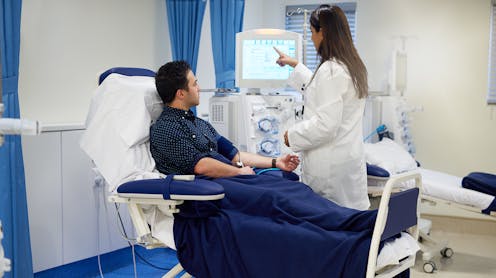
PeopleImages.com – Yuri A/Shutterstock

Every week, thousands of people with kidney disease in the UK spend long hours in hospital receiving life-saving dialysis. For many, this means travelling to a kidney unit three times a week and sitting through sessions that last four hours or more. It’s a huge commitment that affects people’s ability to work, travel and maintain a normal social life.

But for many with kidney failure, there’s another option: dialysis at home. It’s more flexible, often less disruptive and, in the long run, more cost-effective for the NHS. So why do most people still choose hospital dialysis?

A parliamentary summit in May reflected on how to make dialysis more accessible to patients at home. My colleagues and I published research on this topic in 2019. Working in partnership with people who have kidney disease, their families, NHS staff, dialysis providers and kidney charities, we explored the barriers to home dialysis, and how to overcome them.

People with kidney failure need either a transplant or regular dialysis to filter waste from their blood. Despite NHS guidance that at least 20% of people on dialysis should be supported to have this treatment at home, this target isn’t being met in many parts of the UK.
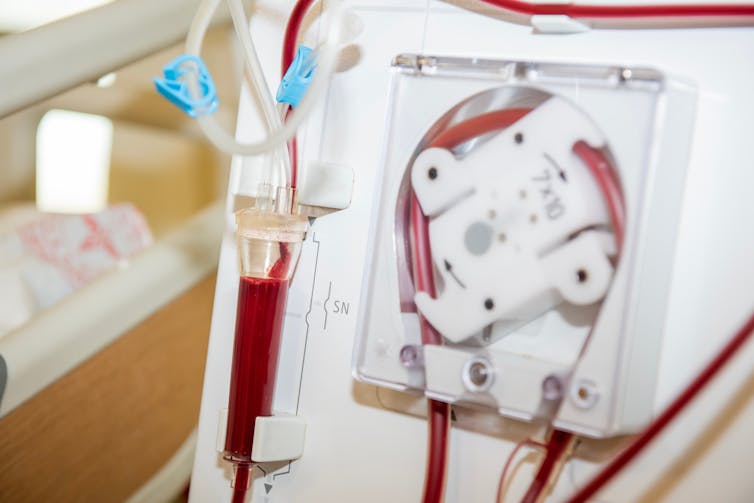
A close up of a kidney dialysis machine.
A kidney dialysis machine.
ali.can0707/Shutterstock

Our research team, which included people who had experienced dialysis, held discussions with 50 people from across Wales. Many told us that hospital dialysis was presented by healthcare staff as the default option. For those who had not yet come to terms with needing dialysis, or who had delayed planning due to the unpredictable nature of kidney disease, hospital treatment felt like the path of least resistance.

Some were concerned about the disruption home dialysis might bring. This included changes to their living space or worries that partners or family members might become their carers. Others valued the routine and regular social contact of hospital dialysis.

Healthcare professionals may unintentionally reinforce this choice. Some feel more comfortable monitoring patients in clinical settings or are unsure about how to support home dialysis effectively. In some cases, home dialysis isn’t an option because local services don’t have the infrastructure to support it.

Rather than simply identifying problems, we worked together to develop practical solutions. In 2021, working with patients, healthcare professionals, charities, commissioners and industry, we devised a new service plan that outlines how kidney services could be redesigned to support more people to choose home dialysis.

One important finding was the power of talking to others already doing it. It’s not just about practical advice, but reassurance that it can work.

We also identified the need for better training for both professionals and patients. People told us they wanted to understand their options earlier, ideally a year before dialysis starts. That means tackling difficult topics, such as advance care planning, sooner and with the right support.

Social care also has an important role to play. People with complex needs – like living alone, having mobility challenges, or experiencing financial hardship – may need home support, welfare advice or help navigating the system.

The cost of choice

In a linked study, published in 2022, we analysed the costs of different dialysis options. Home dialysis was found to cost between £16,000 and £23,000 per person per year.

Hospital dialysis costs more, between £20,000 and £24,000, rising to over £30,000 when ambulance transport is needed. This suggests that encouraging more people to have dialysis at home could deliver savings for the NHS.

In Wales, where all kidney services are coordinated through a single clinical network, home dialysis is more widely available. But in England, services are more fragmented, so access can depend on where you live.

Even if these changes were implemented, fundamental issues may still prevent progress. Beneath the surface of patient satisfaction lies a deeper problem – the NHS dialysis service is no longer working as intended.

Transport is one of the most frequently cited concerns among people receiving hospital dialysis, and no one seems satisfied with current arrangements. But satisfaction surveys fail to capture the complexity of the situation.

People often begin dialysis in a unit that isn’t closest to home due to availability. Later, when given the option to move closer or switch to home dialysis, they may decline. These dialysis units begin to function as surrogate families, offering comfort, routine and social interaction, especially for people who live alone or are isolated.

This emotional connection can obscure the bigger picture. Patients may focus on transport as the issue, rather than recognising that their own decisions – shaped by understandable human needs and system design – are part of the wider challenge.

A close up of an arm receiving kidney dialysis.
shutterstock.
ali.can0707/Shutterstock

Staff are caught in the same dynamic. They worry about losing patients they’ve built relationships with or fear someone may not cope alone. But as a result, the service ends up operating not to help people live well for longer but to preserve a sense of satisfaction with a suboptimal status quo.

By focusing too heavily on keeping people content with the status quo, we risk obscuring what’s truly working, or not. Worse, we may end up wasting already limited resources trying to fix problems that are byproducts of a system shaped more by sentiment than strategy.

Meanwhile, staff are caught in the middle, trying to deliver care under mounting pressure, with increasingly blurred expectations.

What needs to change

To break out of this cycle, different questions should be asked, and not just whether people are satisfied, but whether they are living well, maintaining independence and receiving care that truly reflects their needs and values.

Our research shows that people already on home dialysis are a valuable and underused resource. They can offer support and insight to others who are starting their treatment.

The collaborative approach we used could be a model for other parts of the NHS. By designing services with people, not just for them, we can move closer to a future where more people live comfortably with kidney disease, and care that truly fits around their lives and not the other way round.

The Conversation

Leah McLaughlin receives funding from Health and Care Research Wales. She is affiliated with the Wales Kidney Research Unit.

We would like to acknowledge Dr Gareth Roberts Chief Investigator of the Dialysis Options and Choices study. Dr Gareth Roberts is a Consultant Nephrologist and Associate Medical Director at Aneurin Bevan University Health Board and is clinical lead of the Welsh Renal Clinical Network.

ref. Why many kidney patients are still choosing hospital dialysis – and how the NHS can help more people access care at home – https://theconversation.com/why-many-kidney-patients-are-still-choosing-hospital-dialysis-and-how-the-nhs-can-help-more-people-access-care-at-home-254747

The Edwardians: Age of Elegance – a glimpse into royal patronage of the arts in the early 20th century

Source: The Conversation – UK – By Jane Hamlett, Professor of Modern British History, Royal Holloway University of London

King Edward VII, the son of Queen Victoria, ascended the throne upon her death in 1901, but unlike his mother, he ruled for a very short period and died in 1910. His reign, along with the years immediately before the outbreak of the first world war in 1914, are known as the Edwardian period.

Taking in this particular era, The Edwardians: Age of Elegance at the King’s Gallery in Buckingham Palace, focuses on the artistic patronage of Edward VII and his wife Alexandra of Denmark, and their son George V and his wife Mary of Teck.


Looking for something good? Cut through the noise with a carefully curated selection of the latest releases, live events and exhibitions, straight to your inbox every fortnight, on Fridays. Sign up here.


Edward and Alexandra were married in 1863, and as Prince and Princess of Wales the pair were leading tastemakers in Victorian upper-class society in the years before Edward came to the throne at the beginning of the 20th century.

This is often regarded as a golden age before the carnage and disruption of the great war saw the world indelibly change. However, the exhibition is not confined to these years and also reaches back into the Victorian period (1837-1901).

Those hoping to experience some of the glamour of the royal family won’t be disappointed. The first room takes visitors into the heady atmosphere of the Marlborough House set which centred around Edward and Alexandra’s residence in St James’s. One case commemorates the 1871 Waverley Ball which marked the centenary of popular Scottish novelist Sir Walter Scott. Alexandra’s elaborate Mary Queen of Scots costume – a silk dress with gold lacings – is on display.

The pageantry of the court is communicated through a series of stunning narrative paintings including the Danish artist Laurits Tuxen’s The Garden Party at Buckingham Palace (1897-1900) and The Family of Queen Victoria in 1887 (1887) painted for her golden jubilee in 1887.

This theme is picked up in the second large room, which focuses on the lavish world of the court. Here, the opulent 1911 coronation robes of George and Mary and a case of necklaces and jewellery take centre stage. This exhibit is the star of the show with plenty of visitors posing for photographs in front of it.

Royals as art collectors

But beneath all the glitz and glamour there’s a subtler story about how the royal family worked as collectors and their wider role in Britain and beyond. One of the most interesting things about the exhibition is that it reveals the personal taste of the royals, through what they chose to collect.

Horses, dogs and yachts are prominent. Edward’s dog Caesar, the wire-haired fox terrier who famously followed his funeral procession in 1910, appears in several images, and his race horse Persimmon is also represented.

Edward and Alexandra were patrons of leading artists of the day – he owned a number of works by the popular Victorian painter Frederic Leighton, while she collected art by the Pre-Raphaelite artist Edward Burne Jones. Alexandra also supported Minton’s pottery studio in the 1870s, which employed many women artists.

The exhibition also reveals Alexandra’s personal artistic activities. Like many upper-class Victorian women, she was a keen photographer and creator of photo albums. In the second half of the 19th century, album-making offered women an outlet for creativity and emotional expression. An album of designs made by Alexandra in the 1860s features photos arranged in a spiders web, with family and friends transformed into butterflies and insects.

Royal patronage was often about international connections. Alexandra’s Danish heritage is expressed through pieces from the Royal Copenhagen porcelain manufacturing company, including a massive porcelain cabinet, featuring an ornamental roof topped by a group of dancing monkeys surrounding a large swan.

A larger room is devoted to objects amassed on visits and through diplomatic exchange with the colonies which at the time included India, part of Africa, Australia, Canada and New Zealand. Increasingly speedy travel networks brought the world closer in the late 19th century and the royal family were able to travel further and more frequently than ever before. These visits played an important role in Britain’s imperial identity, and underlined the nation’s global power.

Between 1875 and 1876 Edward toured India. This trip produced a dazzling array of diplomatic gifts, such as a case filled with ornately decorated Indian weapons. After the visit Edward created a special Indian room for them at Marlborough House. Today, they sparkle in their cabinet for the exhibition’s visitors.

The exhibition does a good job of revealing the importance of imperial connections to the royal collections and the role of the royals in the larger colonial project, but in places I would have liked to know more about the stories behind these objects.

There’s a tension between the precise attribution of the work of British and European artists and the objects that have been gifted from the colonies – almost all labelled “unidentified maker”.

The absence of such information is the product of longstanding curatorial habits that shaped these collections in the past and continue to determine what we know about them today. This does mean that there are some absences about the origins and makers of these things, which could have been acknowledged more in some of the exhibition text.

This was particularly evident when looking at a large portrait of the Maori dancer Terewai Horomona by Gottfried Lindauer. The image has an elaborate frame with a plaque declaring it was presented to the Prince of Wales by the New Zealand commissioner for the Colonial and India Exhibition, 1886.

The commentary states that Edward was “enchanted” with the portrait which was “promptly gifted” to him. But this might have been better used as an opportunity to give some thought to the woman whose image was framed, presented and exchanged.

Overall, though, this is an enjoyable exhibition that reveals the royal social world, patronage and imperial connections, and tells a fascinating story about the artistic taste and activities of the lesser-known monarchs of the early 20th century.

The Conversation

Jane Hamlett does not work for, consult, own shares in or receive funding from any company or organisation that would benefit from this article, and has disclosed no relevant affiliations beyond their academic appointment.

ref. The Edwardians: Age of Elegance – a glimpse into royal patronage of the arts in the early 20th century – https://theconversation.com/the-edwardians-age-of-elegance-a-glimpse-into-royal-patronage-of-the-arts-in-the-early-20th-century-259909

New therapy teplizumab could delay type 1 diabetes by years – if caught early

Source: The Conversation – UK – By Richard Oram, Professor of Diabetes and Nephrology, University of Exeter

Dorde Krstic/Shutterstock.com

For more than a century, type 1 diabetes has meant one thing: a lifetime administering insulin. But for the first time, science is breaking that paradigm – not by managing the disease, but by intercepting it before symptoms even appear.

As the first patients in the UK begin receiving the groundbreaking new therapy, teplizumab, we are developing ways to identify who might benefit from a drug that only works if given before any symptoms appear. At the Royal Devon NHS, we are currently treating the first UK adult, Hannah Robinson, who was found to have early type 1 diabetes by chance during routine pregnancy screening.

About 10% of people with diabetes have type 1, while the remaining 90% have type 2, a condition linked to lifestyle factors where insulin is still produced but does not work properly. Type 1 diabetes is an autoimmune condition that leads to complete loss of insulin production from the pancreas. Without insulin, blood sugar levels rise dangerously, increasing the risk of blindness, kidney failure and early death.

Although type 1 is often thought of as a disease of childhood, research from the University of Exeter has highlighted that more than half of all new cases occur in adults.

For millions around the world living with type 1 diabetes, treatment to keep blood sugar in check means lifelong daily insulin. However, using insulin comes with its own risks.

If blood sugar drops too low, it can cause hypoglycaemia, or “hypos”, which in severe cases may lead to seizures or even death. It is no surprise that constantly balancing between high and low blood sugars takes a heavy toll on both physical and mental health. During her pregnancy, Robinson needed insulin and saw firsthand how “life completely revolves around balancing your blood glucose”.

Teplizumab offers a completely different approach. Instead of simply replacing insulin, it targets the immune attack that causes type 1 diabetes.

Our immune system is usually remarkably good at telling friend from foe, protecting us from infections and cancer while leaving our own organs alone. But sometimes, for reasons still not fully understood, this balance breaks down in a process known as autoimmunity. In type 1 diabetes, the immune system mistakenly attacks the pancreas, destroying insulin-producing cells.

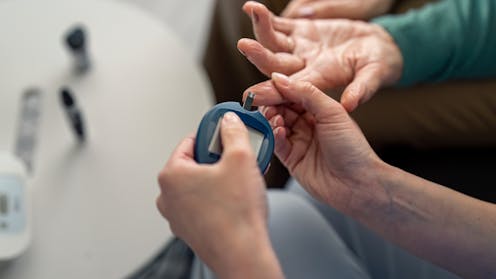
Diabetes symptoms.

Teplizumab works by retraining the immune system and dialling down the specific cells that target the pancreas. Studies show it can delay the disease and the need for insulin therapy by two to three years, with generally mild side-effects. For Robinson, who knows all too well from pregnancy and the full-time job that is living with type 1 diabetes, the possibility of a few extra years without insulin really mattered.

The drug is already approved in the US and is under review for routine NHS use, although a few children and teenagers in the UK have also received it through special access programmes.

Finding people early

There is a catch. By the time people develop symptoms of type 1 diabetes, such as thirst, weight loss and fatigue, more than three-quarters of their insulin-producing capacity is already destroyed.

For teplizumab and similar therapies to work, they need to be given before symptoms appear, while blood sugar levels are still normal. This means these treatments are not an option for people who already have established type 1 diabetes.

So how do we find people at this early stage? Fortunately, it is possible to detect the beginnings of the autoimmune attack many years before symptoms show using simple blood tests that measure immune markers called pancreatic autoantibodies.

Just a few drops from a finger prick can reveal whether the immune system has started to target the pancreas. Finding people early not only offers the chance to delay disease progression, it can also help avoid the life-threatening emergencies that sometimes come with a first diagnosis – such as diabetic ketoacidosis.

With type 1 diabetes affecting roughly one in 200 people, there is still the question of who to test. Not everyone’s risk is the same. When we think of inherited diseases, we often imagine conditions caused by a single gene change, such as cystic fibrosis.

Type 1 diabetes does have a genetic component, but it involves many different genes, each nudging a person’s risk up or down. Having genetic risk alone is not enough, with unknown environmental factors also needed to tip the balance.

Nine in ten people who develop type 1 diabetes have no family history. While testing relatives of people with type 1 is a logical first step, research at the University of Exeter suggests that combining all these genetic factors into a single risk score could help predict who might develop the disease and identify babies who should be monitored more closely. This could become an important tool as we move towards wider genomic screening.

It is still early days, but we are seeing a fundamental shift in how we approach type 1 diabetes. For more than a century, treatment has meant patients taking on the daily burden of replacing the insulin their bodies can no longer make. Now, the focus is turning to therapies that tackle the immune problem at its source, with the hope of stopping the disease before it fully develops and opening the door to an insulin-free future.

The Conversation

Richard Oram has received research grants or contracts from Randox and Sanofi. He has also received royalties and license from Randox, consulting fees from Sanofi, Provention Bio, and Janssen and payment or honoraria from Sanofi and Novo Nordisk. He has served on data safety monitory board or advisory board for Sanofi.

Nicholas Thomas serves on an advisory boards for Sanof (manafacturer of Teplizumab) guiding the technical delivery of therapy within the NHS. He is currently employed by Exeter University as an NIHR Academic Clinical Fellow.

ref. New therapy teplizumab could delay type 1 diabetes by years – if caught early – https://theconversation.com/new-therapy-teplizumab-could-delay-type-1-diabetes-by-years-if-caught-early-259814

Nearly two-thirds of voters think Starmer doesn’t respect them – new poll

Source: The Conversation – UK – By Marc Stears, Director of UCL Policy Lab and Professor of Political Science, UCL

Simon Dawson/Number 10/Flickr, CC BY-NC-ND

Exhausted from a long campaign but buoyed by an extraordinary victory, Keir Starmer stood on the steps of Downing Street just over one year ago to deliver his victory speech. “Your government,” the new prime minister said, “should treat every single person in this country with respect.”

This message of respect resonated strongly in the year leading up to the campaign, coming as close as anything to providing a central argument to Labour’s case for government. And, according to polling and focus groups that my team at UCL Policy Lab designed along with polling company More in Common, it seemed to work.

As our research at the time showed, voters felt that “respecting ordinary people” was the most important attribute that any politician could have, more important than having ideas for the future, managing effectively or having real experience. And they thought Starmer was the leader who displayed that respect most.

A year later, the picture looks quite different. In new polling, we asked a representative sample of over 7,000 people to evaluate the government one year on. On respect, the judgement has not been good.


Want more politics coverage from academic experts? Every week, we bring you informed analysis of developments in government and fact check the claims being made.

Sign up for our weekly politics newsletter, delivered every Friday.


During the general election campaign, 41% of the electorate said that they believed that Starmer “respected people like them”. One year on, that stands at only 24%. At the same time, the number who say that he does not respect them has risen from 32% to 63%. Starmer is now outstripped on that question by Nigel Farage – 33% say the Reform UK leader respects people like them.

Losing support

This view has had crucial political consequences. Of those who voted for Labour in the general election, only 60% of our respondents say they would vote for the party in an election held tomorrow.

And that is not because some other political party is suddenly swooping in for their supporters. Labour’s voters are defecting in a host of different directions: 11% say they would vote Reform; 8% would vote Liberal Democrat; 4% would vote Green and 4% would vote Conservative. A further one in ten say they simply don’t know how they would vote.

Labour’s losses have been most dramatic among their first-time voters. Of those who voted for Labour in 2024 but not in any other general election since 2010, barely a third still support the party, while a fifth would vote for Reform UK.

These political failures, our report contends, are directly related to the declining sense of respect. The top reason voters gave for turning away from Labour are the broken promises and U-turns made by Labour in government, followed by the party’s failure to reduce the cost of living and changes to the winter fuel payment.

The idea of “respect” being key to the public’s sense of whether a government is on their side or not has been growing for many years now, both in academia and in politics itself. Since at least the 2007/8 financial crisis there has been a sense that large swathes of the public feel neglected, overlooked and even disdained by those who govern them.

When people talk about wanting to see “change” in Britain, this is often what they mean. It was a theme I touched on recently in two books, Out of the Ordinary and, with my co-author Tom Baldwin, England.

A smiling Keir Starmer delivers his victory speech, with a crowd of supporters behind him
Just over a year ago, a happier Starmer delivers his victory speech.
Shutterstock

But respect is not just an abstract idea. People appear to judge whether they are respected by those who govern them or not primarily on the basis of whether the government stands up for them against powerful vested interests.

Our earlier research demonstrated that there is a widespread sense among the British public that certain groups have had it too easy for too long. This is either because they have been able to intimidate the government, or because government ministers and advisers have themselves been recruited from among these groups.

In our new report, therefore, we see that the new government’s most popular act was their willingness to raise the minimum wage by £1,400 in April, against the objections of some in business who suggested that such a move was too burdensome on them.

Changes to the winter fuel allowance and proposed changes to the disability benefits system, on the other hand, registered poorly. They suggest that the interests of ordinary and vulnerable people count for too little in decision-making.

These judgements currently shape the mood of the country and probably top the list of issues that the government now needs to address. There is still time for the government to rebuild its appeal, of course. Indeed, our respondents who said they would vote for Labour said they would do so because the party needs more time to fix the problems they inherited.

But as it seeks to do so, voters will want to know who this government stands for. Whose interests does it put first? What kind of people does it respect?

Much of the electorate thought they knew the answer to these questions one year ago. Now they’re not so sure.

The Conversation

Marc Stears directs the UCL Policy Lab, a non-partisan think tank based at University College London. He was previously chief speechwriter to the UK Labour Party.

ref. Nearly two-thirds of voters think Starmer doesn’t respect them – new poll – https://theconversation.com/nearly-two-thirds-of-voters-think-starmer-doesnt-respect-them-new-poll-260606

There are many things American voters agree on, from fears about technology to threats to democracy

Source: The Conversation – UK – By Emma Connolly, Research Fellow, Digital Speech Lab, UCL

During his recent public spat with Donald Trump, Elon Musk tweeted a poll asking if a new political party would better represent the 80% of voters in the middle. Hundreds of thousands of people responded and more than 80% answered “yes”.

The middle is still overlooked in US politics. This is because there is a perception that Republicans and Democrats have nothing in common, and therefore no issue will win support from both centrist Republicans and Democrats.

Polarisation is problematic as it is linked to “democratic backsliding” – the use of underhand tactics in political processes. Worst of all, it poses a threat to democracy.

Many think that polarisation is fuelled by echo chambers created on social media platforms. These only expose people to beliefs similar to their own.

However, I study how narratives emerge on social media, and ways to investigate them. My work has two aims: first, to identify political issues that are likely to cross party lines, and a wider goal of exploring the role of social media in mitigating, rather than exacerbating, levels of polarisation.


Get your news from actual experts, straight to your inbox. Sign up to our daily newsletter to receive all The Conversation UK’s latest coverage of news and research, from politics and business to the arts and sciences.


Earlier this year, for example, I sorted through 12,000 posts from Republican and Democrat voters on subreddits (online forums discussing specific topics). Using a technique I developed in my PhD research, I analysed attitudes to contested political issues around the time of Trump’s inauguration. Like other researchers, I am finding that there are things both sides often agree on, and that not every issue splits neatly across party lines.

Pew Research shows what Democrats and Republicans agree on.

Although it’s a complex topic, people from both parties are worried about levels of free speech on social media. According to my work and other sources, some Democrats accuse TikTok of censoring hashtags such as #FreeLuigi (a reference to Luigi Mangione, accused of murdering UnitedHealthcare CEO, Brian Thompson).

Meanwhile, some Republicans are saying they are flooded with what they see as left-wing content pushed by the algorithms. Despite their differences, Republicans and Democrats agree that social media platforms need to be more transparent about the way they work.

Both sides worry about the rise of authoritarianism and the growing negative influence of artificial intelligence in shaping the US’s future. There is a sense among some members of the two parties that the real enemies aren’t each other, but powerful corporations who hold too much power.

People on both sides of the political divide can be distrustful of tech companies and big businesses, where billionaires have power regardless of who’s in charge. Divisions of “up v down” could be alternatives to seeing divisions as “left v right”.

Some people are worried about the creation of a massive database of citizens’ details, and how their details could be used, or abused. Recently Republican Marjorie Taylor Greene said she would have opposed Trump’s “big, beautiful, bill”, had she read the AI clause thoroughly. The clause stops states from passing laws to regulate AI systems for the next ten years.

What do people agree on?

On the topic of protecting democracy, there are some suggestions that many Republicans and Democrats agree this is important, and under threat. In my study, some Republican and Democrat voters object to the possibility of Trump having a third term, aligning with the findings of several recent polls on the subject, and even among Trump’s most loyal support groups.

Both Republicans and Democrats want “the best” leaders who could get things done fast and efficiently. But it would appear that people on both sides are concerned about the “slash-and-burn” way that Doge (the Department for Government Efficiency, the new agency tasked with cutting federal spending) is working.

Also, deciding who is the best leader isn’t always about agreeing with specific policies. Instead, it’s about delivering decisive, efficient action. Even Republicans who don’t back everything Trump is doing say that at least he is doing something, especially in relation to immigration.

Many Republicans criticise the left, and former Democratic presidential candidate Kamala Harris in particular, but for unclear messaging, as much as any one policy. They (and others) put her loss down to a lack of direction and clarity on key issues (among other things). This probably resulted in failing to win votes from independents and moderate Republicans and many Democrats are frustrated that the party still hasn’t addressed this.

Research suggests that Democrat and Republican voters often agree that polarisation causes gridlock and prevents progress, but believe voices from the middle are not being heard. Some Republicans and Democrats also share a concern that both parties are more focused on fighting each other than on solving problems, with 86% of Americans believing this.

Some Republican voters in the posts I am analysing suggest that working together to get things done would be positive, supporting findings from the US and abroad. Other important factors rather than political party, such as religion or family or everyday life experiences can bring people from both sides together.

So, Americans might not be as divided as one might think. Levels of polarisation feel high but this could be skewed by the extreme views of a minority on both sides. And it isn’t helped by some sensationalist media reporting.

Lots of people get their news from social media platforms which reward and monetise engagement. Posts that fuel division are often the most visible, but they rarely tell the whole story. Divisive views are also often shared by those who are themselves the most polarised.

Like Musk’s online poll, research is starting to suggest that there is still a sizeable moderate middle in the US today who are open to compromise through clear messaging. These voters can make all the difference, especially if parties can frame issues in ways that appeal across the divide. With the 2026 midterm elections on the horizon, both sides might want to listen to them more.

The Conversation

Emma Connolly does not work for, consult, own shares in or receive funding from any company or organisation that would benefit from this article, and has disclosed no relevant affiliations beyond their academic appointment.

ref. There are many things American voters agree on, from fears about technology to threats to democracy – https://theconversation.com/there-are-many-things-american-voters-agree-on-from-fears-about-technology-to-threats-to-democracy-258440

The online world comes with risks – but also friendships and independence for young people with disabilities

Source: The Conversation – UK – By Andy Phippen, Professor of IT Ethics and Digital Rights, Bournemouth University

Kleber Cordeiro/Shutterstock

“In the real world, I’m a coward. When I’m online, I’m a hero.”

These words, paraphrased from a conversation with a young man with autism, have stayed with us throughout the years of research that underpin our recently published book exploring the relationship between children with special educational needs and disabilities and digital technology.

We’re constantly bombarded with warnings about the potential dangers of digital technology, especially for children. But this quote captures something we might miss. The digital world can be a vital space of empowerment and connection.

In our work, we’ve found that digital technology offers more than just access to learning for young people with special educational needs and disabilities. It opens doors to social lives, creative outlets and even employment opportunities that might be closed to them in the offline world. And yet, this potential is too often overshadowed by fears about the risks and harms they might encounter online.


Get your news from actual experts, straight to your inbox. Sign up to our daily newsletter to receive all The Conversation UK’s latest coverage of news and research, from politics and business to the arts and sciences.


Adolescence, the Netflix drama that delves into the hidden dangers of growing up in a digital world, has taken up a lot of the national conversation around social media, cyberbullying and online exploitation. But there is another show on Netflix that has received far less attention.

The Remarkable Life of Ibelin is a powerful documentary that tells the story of Mats Steen, a young Norwegian man with a severe disability who found freedom, friendship and purpose in the online world of gaming. Though physically limited by Duchenne muscular dystrophy, Mats, known as “Ibelin” in World of Warcraft, built a rich life online.

After his passing at 25, his gaming friends revealed just how much he had meant to them. Some travelled to his funeral. The film challenges stereotypes about online gaming. It shows it as a source of connection, compassion, and real human bonds.

We’ve spoken to many young people with special educational needs and disabilities who echo the same themes. Online spaces offer a sense of identity and capability they don’t always feel offline.

We found that the benefits of digital engagement for children with special educational needs and disabilities are extensive. It enhances communication: tools such as voice interfaces and text-to-speech software help those with speech or language difficulties express themselves confidently. Online platforms create spaces for friendships, especially for those who find face-to-face interaction challenging.

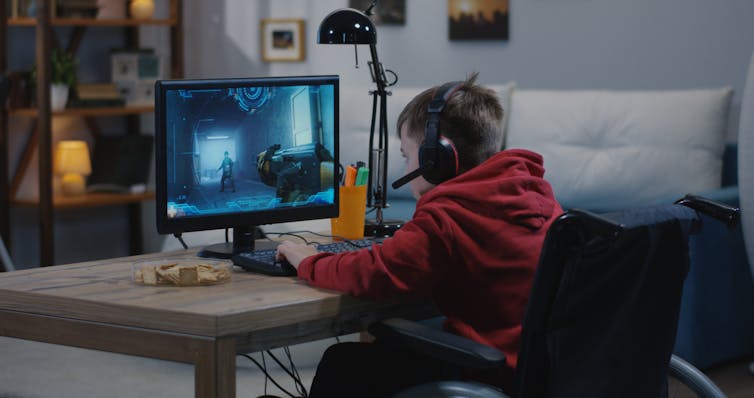
Boy with wheelchair gaming on computer
Young people can build meaningful relationships online.
Frame Stock Footage/Shutterstock

Digital tools can also foster independence. Calendar apps can be useful for those with ADHD, or assistive technology for learners with dyslexia. And for education, tailored online content can bridge the gap between mainstream and specialist learning environments.

But the digital world isn’t an equal playing field. Children with special educational needs and disabilities face disproportionate levels of online harm, including grooming, cyberbullying and exposure to inappropriate content. Crucially, they often lack the tools or support to report harm or seek help.

This, of course, raises concerns for the parents, carers and teachers of young people with special educational needs and disabilities. We’ve found that parents, carers and teachers we’ve spoken to often reach for a “prohibition first” approach – feeling young people will be safer if they do not have the access to the internet and social media that a young person without their needs might enjoy.

Safeguarding and empowerment

We’ve been asked questions such as “What apps should I ban?” or “How do I stop my child going on the dark web?” These questions reflect a risk-averse mindset that fails to appreciate the value of digital engagement. Risk cannot be eliminated, but it can be managed. And, more importantly, opportunity must be protected.

Too often, safeguarding strategies are done to children, not with them. It’s a good idea for parents and teachers of all children to talk to them about their digital life: what brings them joy, what worries them, where they feel confident or confused. Children are more likely to talk about fears or bad experiences if they feel believed, respected and understood. Make yourself a safe adult to talk to: one who listens without panic.

While banning apps or limiting access might be useful in some cases, it should not be the starting point for safeguarding. It’s worth considering whether there are skills that a child could learn that would allow them to use technology safely.

What’s more, online safety lessons are best when adapted to the communication style, cognitive ability and emotional maturity of an individual child. Visual aids, social stories, or interactive games may work better than text-heavy advice.

Fear can limit what technology can offer the children who may need it most. For young people with special educational needs and disabilities, digital spaces are not simply entertainment, they are platforms for agency, creativity, relationships and voice.

The role of adults here is to ensure these spaces are not only safe, but welcoming and empowering. That means moving past automatic restrictions and toward thoughtful, inclusive strategies that support children who might gain the most from using these technologies. We don’t need more bans. We need more belief.

The Conversation

The authors do not work for, consult, own shares in or receive funding from any company or organisation that would benefit from this article, and have disclosed no relevant affiliations beyond their academic appointment.

ref. The online world comes with risks – but also friendships and independence for young people with disabilities – https://theconversation.com/the-online-world-comes-with-risks-but-also-friendships-and-independence-for-young-people-with-disabilities-260443

There are many things Americans voters agree on, from fears about technology to threats to democracy

Source: The Conversation – UK – By Emma Connolly, Research Fellow, Digital Speech Lab, UCL

During his recent public spat with Donald Trump, Elon Musk tweeted a poll asking if a new political party would better represent the 80% of voters in the middle. Hundreds of thousands of people responded and more than 80% answered “yes”.

The middle is still overlooked in US politics. This is because there is a perception that Republicans and Democrats have nothing in common, and therefore no issue will win support from both centrist Republicans and Democrats.

Polarisation is problematic as it is linked to “democratic backsliding” – the use of underhand tactics in political processes. Worst of all, it poses a threat to democracy.

Many think that polarisation is fuelled by echo chambers created on social media platforms. These only expose people to beliefs similar to their own.

However, I study how narratives emerge on social media, and ways to investigate them. My work has two aims: first, to identify political issues that are likely to cross party lines, and a wider goal of exploring the role of social media in mitigating, rather than exacerbating, levels of polarisation.


Get your news from actual experts, straight to your inbox. Sign up to our daily newsletter to receive all The Conversation UK’s latest coverage of news and research, from politics and business to the arts and sciences.


Earlier this year, for example, I sorted through 12,000 posts from Republican and Democrat voters on subreddits (online forums discussing specific topics). Using a technique I developed in my PhD research, I analysed attitudes to contested political issues around the time of Trump’s inauguration. Like other researchers, I am finding that there are things both sides often agree on, and that not every issue splits neatly across party lines.

Pew Research shows what Democrats and Republicans agree on.

Although it’s a complex topic, people from both parties are worried about levels of free speech on social media. According to my work and other sources, some Democrats accuse TikTok of censoring hashtags such as #FreeLuigi (a reference to Luigi Mangione, accused of murdering UnitedHealthcare CEO, Brian Thompson).

Meanwhile, some Republicans are saying they are flooded with what they see as left-wing content pushed by the algorithms. Despite their differences, Republicans and Democrats agree that social media platforms need to be more transparent about the way they work.

Both sides worry about the rise of authoritarianism and the growing negative influence of artificial intelligence in shaping the US’s future. There is a sense among some members of the two parties that the real enemies aren’t each other, but powerful corporations who hold too much power.

People on both sides of the political divide can be distrustful of tech companies and big businesses, where billionaires have power regardless of who’s in charge. Divisions of “up v down” could be alternatives to seeing divisions as “left v right”.

Some people are worried about the creation of a massive database of citizens’ details, and how their details could be used, or abused. Recently Republican Marjorie Taylor Greene said she would have opposed Trump’s “big, beautiful, bill”, had she read the AI clause thoroughly. The clause stops states from passing laws to regulate AI systems for the next ten years.

What do people agree on?

On the topic of protecting democracy, there are some suggestions that many Republicans and Democrats agree this is important, and under threat. In my study, some Republican and Democrat voters object to the possibility of Trump having a third term, aligning with the findings of several recent polls on the subject, and even among Trump’s most loyal support groups.

Both Republicans and Democrats want “the best” leaders who could get things done fast and efficiently. But it would appear that people on both sides are concerned about the “slash-and-burn” way that Doge (the Department for Government Efficiency, the new agency tasked with cutting federal spending) is working.

Also, deciding who is the best leader isn’t always about agreeing with specific policies. Instead, it’s about delivering decisive, efficient action. Even Republicans who don’t back everything Trump is doing say that at least he is doing something, especially in relation to immigration.

Many Republicans criticise the left, and former Democratic presidential candidate Kamala Harris in particular, but for unclear messaging, as much as any one policy. They (and others) put her loss down to a lack of direction and clarity on key issues (among other things). This probably resulted in failing to win votes from independents and moderate Republicans and many Democrats are frustrated that the party still hasn’t addressed this.

Research suggests that Democrat and Republican voters often agree that polarisation causes gridlock and prevents progress, but believe voices from the middle are not being heard. Some Republicans and Democrats also share a concern that both parties are more focused on fighting each other than on solving problems, with 86% of Americans believing this.

Some Republican voters in the posts I am analysing suggest that working together to get things done would be positive, supporting findings from the US and abroad. Other important factors rather than political party, such as religion or family or everyday life experiences can bring people from both sides together.

So, Americans might not be as divided as one might think. Levels of polarisation feel high but this could be skewed by the extreme views of a minority on both sides. And it isn’t helped by some sensationalist media reporting.

Lots of people get their news from social media platforms which reward and monetise engagement. Posts that fuel division are often the most visible, but they rarely tell the whole story. Divisive views are also often shared by those who are themselves the most polarised.

Like Musk’s online poll, research is starting to suggest that there is still a sizeable moderate middle in the US today who are open to compromise through clear messaging. These voters can make all the difference, especially if parties can frame issues in ways that appeal across the divide. With the 2026 midterm elections on the horizon, both sides might want to listen to them more.

The Conversation

Emma Connolly does not work for, consult, own shares in or receive funding from any company or organisation that would benefit from this article, and has disclosed no relevant affiliations beyond their academic appointment.

ref. There are many things Americans voters agree on, from fears about technology to threats to democracy – https://theconversation.com/there-are-many-things-americans-voters-agree-on-from-fears-about-technology-to-threats-to-democracy-258440

Online therapy as effective as in-person therapy, finds large study

Source: The Conversation – UK – By Fabian Lenhard, Researcher, Department of Clinical Neuroscience, Karolinska Institutet

Chay Tee/Shutterstock.com

When COVID arrived early in 2020, pandemic restrictions made in-person mental health care difficult or impossible. Both therapists and patients had to adapt almost overnight. For many in the field, it felt like a gamble: could this screen-based format offer the same level of support for people struggling with depression, anxiety or trauma?

Evidence has been growing, but until now few studies have compared treatment outcomes before and during the pandemic. Research my colleagues and I conducted offers new insights into this period.

We followed 2,300 patients treated in Sweden’s public mental health system over six years – three years before and three years during the pandemic – and tracked outcomes for common conditions including depression, anxiety, post-traumatic stress disorder (PTSD) and obsessive-compulsive disorder (OCD).

We found that nearly half of visits shifted online during the pandemic (up from just 4% pre-COVID), yet treatment outcomes did not decline – they remained stable, despite the rapid transition.


Get your news from actual experts, straight to your inbox. Sign up to our daily newsletter to receive all The Conversation UK’s latest coverage of news and research, from politics and business to the arts and sciences.


Patients filled out regular questionnaires during treatment to track their progress, using standard mental health assessments that measured depression and anxiety symptoms. We examined the degree of symptom improvement and the number of patients who transitioned from severe to manageable symptoms.

Fully 38% of depressed patients recovered, along with 56% of those with generalised anxiety disorder, 46% with OCD and 59% with PTSD. These recovery rates were almost identical before and during the pandemic.

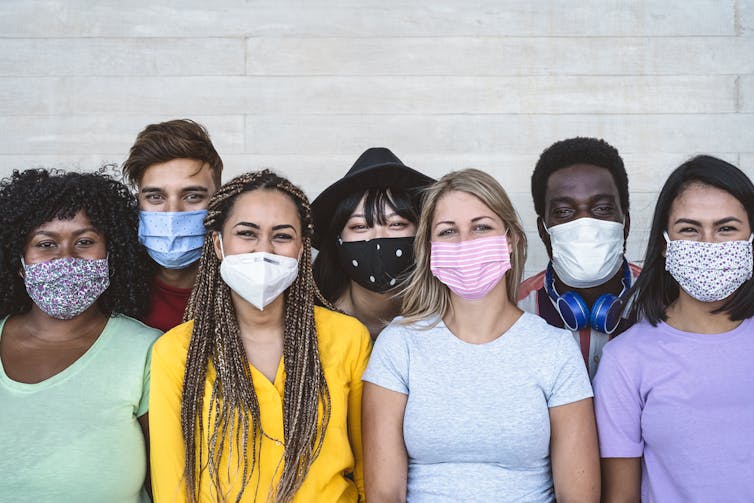
A group of young people wearing masks.
Recovery rates were the same during the pandemic.
AlessandroBiascioli/Shutterstock.com

As long as care is done well

We aren’t certain why remote care works, but one reason might be that the most important aspects of good therapy – things like building trust between patient and therapist, using evidence-based treatments and regular follow-up – can still occur online. In fact, for some people, meeting by video can make it easier to show up and feel comfortable. Our study suggests that, when care is done well, whether it’s in person or online doesn’t make much difference.

Online care also helps with everyday difficulties. It’s often easier for people who live far away, have trouble getting around or have busy schedules to get help from home. And during a health crisis like the pandemic, being able to keep up with treatment probably helped many people stay on track instead of falling behind.

Still, the findings come with limits. The study did not include children, people in acute psychiatric crisis or those with severe psychotic disorders — groups for whom in-person care may still be essential. And while online therapy offers flexibility, it also requires access to a private space, stable internet and the ability to engage through a screen — conditions that aren’t guaranteed for all patients.

Just turning on a webcam isn’t enough. The clinics in this study followed proven treatment methods and kept a close eye on how patients were doing. These steps probably made a big difference and are important for making remote care work.

Rather than being a temporary fix, online mental health care has become a core part of the system. Our study offers strong evidence that remote care, when well implemented, can match in-person treatment in effectiveness, even during something as challenging as a pandemic.

There is no one-size-fits-all model – and not all patients will benefit equally from internet-based treatments. But giving people the choice – and maintaining high standards of care regardless of delivery method – appears to be a key to success.

Because in the end, what matters most isn’t where care happens. It’s that it happens and that it works.

The Conversation

Fabian Lenhard works as the Head of Data & Analytics for WeMind Psychiatry and is affiliated as a researcher at Karolinska Institutet, Stockholm, Sweden.

ref. Online therapy as effective as in-person therapy, finds large study – https://theconversation.com/online-therapy-as-effective-as-in-person-therapy-finds-large-study-259959

Staying positive might protect against memory loss

Source: The Conversation – UK – By Christian van Nieuwerburgh, Professor of Coaching and Positive Psychology, RCSI University of Medicine and Health Sciences

PeopleImages.com – Yuri A/Shutterstock

Want to remember things better as you get older? The secret might be surprisingly simple: focus on feeling good.

Recent research involving over 10,000 people aged 50 and above has found that people with higher wellbeing perform better on memory tests as they age. The study, which followed participants for 16 years, checked their wellbeing and memory every two years.

The researchers expected that good memory might improve wellbeing, but found no evidence for that. Instead, it was wellbeing that predicted better memory performance over time.

The study also found that the link between wellbeing and memory stayed strong even after taking things like depression into account. This means wellbeing may affect memory on its own, not just through effects on mood.


Get your news from actual experts, straight to your inbox. Sign up to our daily newsletter to receive all The Conversation UK’s latest coverage of news and research, from politics and business to the arts and sciences.


However, the study’s authors acknowledge some limitations that should be taken into account when considering the real-life application of their findings.

The study relied on people reporting their own wellbeing, which can be biased – some people might overestimate how good they feel. The research also can’t prove that wellbeing directly causes better memory – other factors like income or life experiences might play a role.

Also, the memory tests used were relatively simple and might not capture the full complexities of how memory works in real life.

Despite these limitations, the study offers a compelling reason to invest in your wellbeing now. Here are five evidence-based strategies to increase the positive emotions in your day-to-day experiences.

Five strategies to boost your wellbeing now

1. Be grateful

Some people feel better when they keep a gratitude journal.

2. Engage in acts of kindness.

Being kind can boost the wellbeing of both initiators and receivers of kindness.

3. Nurture your most important relationships

Positive relationships are important for our wellbeing. These should be nurtured and maintained.

4. Be more present.

In a distracted world, being present in the moment can be difficult. Being present is the opposite of multitasking. This takes intentional practice and you can develop it through meditation or mindfulness practices.

5. Do things that lead to a “flow” state.

Being in a flow state means that we are fully engaged in an activity. It is a mental state where a person feels fully involved and enjoys a process or activity that provides just the right balance of challenge and reward. People often talk about this as “being in the zone”. Finding an engaging hobby or sport is a good way of increasing flow moments.

Ensuring that you and the people around you experience positive emotions regularly is not just about feeling good in the moment. It is also an important investment for the future, ensuring better mental health and wellbeing for yourself and others. What will you do?

The Conversation

Christian van Nieuwerburgh does not work for, consult, own shares in or receive funding from any company or organisation that would benefit from this article, and has disclosed no relevant affiliations beyond their academic appointment.

ref. Staying positive might protect against memory loss – https://theconversation.com/staying-positive-might-protect-against-memory-loss-259617