Over €10 billion has now been pledged for Ukraine’s recovery. It’s nowhere near enough

Source: The Conversation – UK – By Stefan Wolff, Professor of International Security, University of Birmingham

Clearly angered by the intensification of Russia’s air campaign against Ukraine, Donald Trump has pivoted from the suspension of US military assistance to Ukraine to promising its resumption. Russia’s strikes on major cities killed more civilians in June than have died in any single previous month, according to UN figures.

Over the past two weeks, the US president has made several disparaging comments about his relationship with Vladimir Putin, including on July 13 that the Russian president “talks nice and then he bombs everybody in the evening”.

Not only will the US resume delivery of long-promised Patriot air defence missiles, Trump is now also reported to be considering a whole new plan to arm Ukraine, including with offensive capabilities. And he has talked about imposing new sanctions on Putin’s regime.


Get your news from actual experts, straight to your inbox. Sign up to our daily newsletter to receive all The Conversation UK’s latest coverage of news and research, from politics and business to the arts and sciences.


This is the background against which the eighth Ukraine Recovery Conference took place in Rome on July 10 and 11. The event, attended by many western leaders and senior business executives, was an important reminder that while the war against Ukraine will be decided on the battlefield, peace will only be won as the result of rebuilding Ukraine’s economy and society.

Ending the war anytime soon and on terms favourable to Kyiv will require an enormous effort by Ukrainians and their European allies. But the country’s recovery afterwards will be no less challenging.

According to the World Bank’s latest assessment, at the end of 2024 Ukraine’s recovery needs over the next decade stood at US$524 billion (£388 billion). And with every month the war continues, these needs are increasing. Ukraine’s three hardest-hit sectors are housing, transport and energy infrastructure, which between them account for around 60% of all damage.

At the same time, the International Monetary Fund (IMF) provided a relatively positive assessment of Ukraine’s overall economic situation at the end of June, forecasting growth of between 2% and 3% for 2025 – likely to grow to over 4% in 2026 and 2027. But the IMF also cautioned that this trajectory – and the country’s macroeconomic stability more generally – will remain heavily dependent on external support.

Taking into account a new €2.3 billion package from the EU, consisting of €1.8 billion of loan guarantees and €580 million of grants, the cumulative pledge of over €10 billion (£8.7 billion) made by countries attending the Ukraine recovery conference is both encouraging and sobering.

It is encouraging in the sense that Ukraine’s international partners remain committed to the country’s social and economic needs, not merely its ability to resist Russia on the battlefield.

But it is also sobering that even these eye-watering sums of public money are still only a fraction of Ukraine’s needs. Even if the EU manages to mobilise its overall target of €40 billion for Ukraine’s recovery, by attracting additional contributions from other donors and the private sector, this would be less than 8% of Ukraine’s projected recovery needs as of the end of 2024.

As the war continues and more of the (diminishing) public funding is directed towards defence expenditure by Kyiv’s western partners, this gap is likely to grow.

Overcoming the trauma of war

Money is not the only challenge for Ukraine recovery efforts. Rebuilding the country is not simply about undoing the physical damage.

The social impact of Russia’s aggression is hard to overstate. Ukraine has been deeply traumatised as a society since the beginning of Russia’s full-scale invasion in February 2022.

Generally reliable Ukrainian casualty counts – some 12,000 civilians and 43,000 troops killed since February 2022 – are still likely to underestimate the true number of people who have died as a direct consequence of the Russian aggression. And each of these will have left behind family members struggling to cope with their loss. In addition, there are hundreds of thousands of war veterans.

Even before the full-scale invasion of Ukraine, there were nearly half a million veterans from the “frozen” conflict that followed Russia’s annexation of Crimea and incursion into eastern Ukraine. By the end of 2024, this number had more than doubled to around 1 million. Most of them have complex social, economic, medical and psychological needs that will have to be considered as part of a society-wide recovery effort.

Returning refugees

According to data from the UN refugee agency (UNHCR), there are also some 7 million refugees from Ukraine and 3.7 million internally displaced people (IDPs). This is equivalent to one quarter of the country’s population. The financial needs of UNHCR’s operations in Ukraine are estimated at $800 million in 2025, of which only 27% was funded as of the end of April.

Once the fighting in Ukraine ends, refugees are likely to return in greater numbers. Their return will provide a boost to the country’s economic growth by strengthening its labour force and bringing with them skills and, potentially, investment. But like many IDPs and veterans, they may not be able to return to their places of origin, either because these are not inhabitable or remain under Russian occupation.

Some returnees are likely to be viewed with suspicion or resentment by those Ukrainians who stayed behind and fought. Tensions with Ukrainians who survived the Russian occupation in areas that Kyiv may recover in a peace deal are also likely, given Ukraine’s harsh anti-collaboration laws.

As a consequence, reintegration – in the sense of rebuilding and sustaining the country’s social cohesion – will be a massive challenge, requiring as much, if not more, of Ukraine’s partners’ attention and financial support as physical reconstruction and the transition from a war to a peace-time economy.

Given the mismatch between what is needed and what has been provided for Ukraine’s recovery, one may well be sceptical about the value of the annual Ukraine recovery conferences. But, to the credit of their organisers and attendees, they recognise that the foundations for post-war recovery need to be built before the war ends. The non-military challenges of war and peace must not fall by the wayside amid an exclusive focus on battlefield dynamics.

The Conversation

Stefan Wolff is a past recipient of grant funding from the Natural Environment Research Council of the UK, the United States Institute of Peace, the Economic and Social Research Council of the UK, the British Academy, the NATO Science for Peace Programme, the EU Framework Programmes 6 and 7 and Horizon 2020, as well as the EU’s Jean Monnet Programme. He is a Trustee and Honorary Treasurer of the Political Studies Association of the UK and a Senior Research Fellow at the Foreign Policy Centre in London.

– ref. Over €10 billion has now been pledged for Ukraine’s recovery. It’s nowhere near enough – https://theconversation.com/over-10-billion-has-now-been-pledged-for-ukraines-recovery-its-nowhere-near-enough-260936
How soup might soothe symptoms and support recovery from colds and flu – new research

Source: The Conversation – UK – By Sandra Lucas, Senior Lecturer, School of Health Sciences, University of the West of Scotland

New Africa/Shutterstock

For generations, chicken soup has been a go-to remedy for people feeling under the weather. It holds a cherished place in many cultures as a comforting treatment for colds and flu. But is there any real science behind the idea that soup can help us recover from respiratory infections?

Alongside colleagues, I conducted a systematic review to explore this question, which examined the scientific evidence on the role of soup in managing acute respiratory tract infections, such as the common cold, influenza and COVID-19.

Out of more than 10,000 records, we identified four high-quality studies involving 342 participants. These studies tested a variety of soups, including traditional chicken broth, barley soup and herbal vegetable blends. While still early-stage, the evidence was promising.


Get your news from actual experts, straight to your inbox. Sign up to our daily newsletter to receive all The Conversation UK’s latest coverage of news and research, from politics and business to the arts and sciences.


One study found that people who ate soup recovered up to 2.5 days faster than those who didn’t. Symptoms such as nasal congestion, sore throat and fatigue were milder. Some participants also showed reduced levels of inflammation-related markers: substances in the blood that rise when the immune system is fighting an infection.

Specifically, levels of IL-6 and TNF-α – two proteins that help trigger inflammation – were lower in those who consumed soup. This suggests that soup may help calm an overactive immune response, potentially making symptoms less severe and recovery more comfortable.

However, none of the studies examined how consuming soup influenced everyday outcomes of acute respiratory tract infections, such as whether people took fewer days off work or were less likely to end up in hospital. That’s a major gap in the evidence, and one that future research needs to address.

There are several reasons soup may help. It’s warm, hydrating and typically nutrient-rich. Ingredients like garlic, onion, ginger and leafy greens have anti-inflammatory, antimicrobial, and immune-supportive properties. The warmth can also help loosen mucus, soothe sore throats and promote overall comfort during illness.

Not just nourishment

There’s also a strong cultural and behavioural aspect to food-based self-care: when people use food not just for nourishment, but as an intentional part of managing illness and promoting recovery.

In many households, food becomes medicine not only because of its ingredients, but because it symbolises care, routine and reassurance.

My previous research found that parents, in particular often turn to traditional remedies, like soup, as a first line of defence when illness strikes, often well before seeking professional medical advice.

This reflects a growing interest in home remedies and the importance of culturally familiar treatments: remedies that feel safe, trusted and emotionally resonant because they’re part of a person’s upbringing or community norms. These kinds of treatments can increase confidence and comfort when self-managing illness at home.

Food-based self-care may become increasingly important as pressure on healthcare systems continues to grow. With rising concerns about antimicrobial resistance, overstretched services, and lingering trauma from global pandemics, simple, evidence-informed home treatments can play a crucial role.

They help people manage mild illness, reduce unnecessary antibiotic use and avoid placing additional strain on GPs or emergency departments for minor ailments that can be safely treated at home. Even a simple phone message about the common cold – “Most common colds get better in a few days and don’t need treatment from your GP” – has been shown to reduce appointment demand by 21%, highlighting how low-cost, home-based care could ease pressure across the system.

The Local Government Association (LGA) reports that GPs handle approximately 57 million cases of minor conditions such as coughs and colds annually, costing the NHS over £2 billion a year. It argues that educating people about effective self-care could help save GPs an hour a day on average.

Soup fits the bill

So chicken soup is easy to prepare, affordable, safe for most people and widely recognised as a comforting, familiar home remedy for minor illness.

Still, our review highlighted a clear need for more research. Future studies could examine standardised soup recipes and investigate whether particular combinations of nutrients or herbs work best: does chicken soup have the same effect as barley broth or vegetable potage? Is there a difference if it’s homemade versus canned?

Just as importantly, future research needs to measure meaningful outcomes: how quickly people return to work or school, how well they sleep during illness, how they rate their comfort and energy levels, for example.

Soup isn’t a replacement for medicine. But alongside rest, fluids and paracetamol, it might offer a simple way to ease symptoms and help people feel better.

The Conversation

Sandra Lucas does not work for, consult, own shares in or receive funding from any company or organisation that would benefit from this article, and has disclosed no relevant affiliations beyond their academic appointment.

– ref. How soup might soothe symptoms and support recovery from colds and flu – new research – https://theconversation.com/how-soup-might-soothe-symptoms-and-support-recovery-from-colds-and-flu-new-research-260960

Plant theft is often overlooked – that’s why it’s on the rise

Source: The Conversation – UK – By Jenni Cauvain, Senior Lecturer in Sociology, Nottingham Trent University

More than 180 plants were stolen from a well-loved public park in Nottingham called Arboretum in May 2025. This incident took place just days after volunteers had re-planted flowers and shrubs to repair damage from a previous theft in March. In April 2025, the nearby Forest Recreation Ground community garden was also targeted – roses and crops grown by volunteers were stolen, even a pond went missing.

Plant theft may seem trivial, but environmental and wildlife crime tend to be overlooked. This is precisely one of the reasons why it is on the rise. Research suggests an annual growth rate in environmental crime of 5%-7%, making it the third largest criminal sector in the world.

Globally, environmental crime has been valued at US$70-213 billion (£52-158 billion) annually. As with most crime, its true scale is difficult to estimate as it remains hidden. This is even more true for environmental crime that goes undetected.

Plant thefts in Nottingham where I am based are small in comparison, but they tell the same story of lucrative illicit opportunities for criminals where law enforcement and potential sanctions are low. It’s most likely that people steal local plants to sell on for profit.


Get your news from actual experts, straight to your inbox. Sign up to our daily newsletter to receive all The Conversation UK’s latest coverage of news and research, from politics and business to the arts and sciences.


Another reason for overlooking this growing trend in wildlife crime is that perpetrators, as well as much of society, may feel that this is a “victimless crime”. Where plants, animals, watercourses or soil are “the victim”, people don’t feel as strongly because our ethics and value systems generally prioritise fellow humans and do not recognise non-humans as victims.

People may be more likely to care about mammals such as elephants targeted in illegal ivory trade, but environmental crime permeates every community in the UK, as the recent Nottingham cases indicate.

Stolen benefits

As a researcher in environmental sociology, I believe wildlife crime and environmental damage should gain higher priority in terms of public attention, law enforcement and potential sanctions. Not only because of the intrinsic value that non-human nature has in its own right, but because of the value nature brings to us humans.

Parks and green spaces known as “green infrastructure” are central to our wellbeing in cities. They bring environmental and social benefits in terms of air quality, urban heat island effect, surface flooding, carbon storage, biodiversity and health.

After the COVID pandemic, the importance of accessing quality green spaces for our mental and physical wellbeing became even more apparent. Visits to parks can reduce loneliness and anxiety, as well as foster a sense of belonging and community.

This has the potential to benefit the public purse too. Nottingham is currently involved in a national green social prescribing test and learn programme to demonstrate the benefits of nature-based activity.

Public parks are often also significant in terms of cultural heritage. This is not a new discovery. Historically, public parks were introduced in cities to improve living conditions, quality of life and as educational resources. The Arboretum – the city centre park recently targeted by thieves – was the first such public park to open in Nottingham in 1845.

When valued green spaces are the victim of crime, this is not a mere aesthetic problem. Wider social and environmental harms are inflicted upon communities and nature that depend on open green spaces to thrive.

This matters in cities like Nottingham that suffer from high levels of deprivation and poor health outcomes. My own research has shown that while Nottingham is often celebrated for leadership in green initiatives, it suffers from deep-seated social inequality and deprivation that are long-term challenges.

Social inequality is associated with crime and disorder in urban areas that creates a vicious cycle when the crimes target community assets such as public parks. It is beyond doubt that public parks being ransacked will negatively impact the quality of life in Nottingham.

It is likely that these crimes get dismissed as a minor nuisance because “only plants” were stolen, but this attitude serves to mask the broader trend of growing environmental crime and the damage this brings to communities. Unfortunately, this will further contribute to the likelihood of such crimes spreading in future.


Don’t have time to read about climate change as much as you’d like?

Get a weekly roundup in your inbox instead. Every Wednesday, The Conversation’s environment editor writes Imagine, a short email that goes a little deeper into just one climate issue. Join the 45,000+ readers who’ve subscribed so far.


The Conversation

Jenni Cauvain does not work for, consult, own shares in or receive funding from any company or organisation that would benefit from this article, and has disclosed no relevant affiliations beyond their academic appointment.

– ref. Plant theft is often overlooked – that’s why it’s on the rise – https://theconversation.com/plant-theft-is-often-overlooked-thats-why-its-on-the-rise-259334

Katy Perry and her fellow space tourists weren’t exceptions – humanity has long cared about interplanetary style

Source: The Conversation – UK – By Berna Akcali Gur, Lecturer in Outer Space Law, Queen Mary University of London

When pop star Katy Perry and five other women made a much-publicised trip to the edge of space earlier this year, they faced sharp criticism across both social and traditional media, with sceptics questioning multiple aspects of the mission.

Much of the backlash centred on the emphasis the crew – which included broadcaster Gayle King and Jeff Bezos’s now-wife, journalist Lauren Sánchez – placed on glamour. Detractors saw their uniforms as at odds with the traditional image of astronauts as explorers, scientific pioneers and envoys of humankind venturing into space.

The flight suits were designed by New York fashion house Monse Maison’s co-founders, Fernando Garcia and Laura Kim. They also created Sánchez’s 2024 Met Gala look.

The celebrity crew were first revealed in a photo shared by Blue Origin on April 12, two days before the launch. The unveiling was followed by a series of pre-flight interviews that touched on topics such as makeup, lash extensions and hair styling.

In one such segment, Perry quipped that the crew “put ass in astronaut”. It’s the type of comment that, while playful, reinforced the criticism that the flight prioritised spectacle over substance.

Having previously conducted research on governance of space suit design and astronaut safety, I think much of the backlash targeting the crew’s emphasis on glamour is misplaced. Fashion and style has long played a role in space exploration, a defining feature of both science fiction and real-world missions.

The all-women crew of Blue Origin, in their own way, carried forward this tradition, reinforcing the enduring connection between style symbolism, and space travel.


Looking for something good? Cut through the noise with a carefully curated selection of the latest releases, live events and exhibitions, straight to your inbox every fortnight, on Fridays. Sign up here.


Space-faring nations spend millions getting both public and private companies to design suits for intravehicular activity (IVA suits) and extravehicular activities (EVA suits). The priority is not just functionality and safety, but also creating impressive designs.

High fashion house Prada is currently collaborating with Axiom Inc. to design suits for the forthcoming Artemis Mission, a lunar exploration mission led by Nasa. Another Nasa next-generation spacesuit features an exterior cover designed by Esther M. Marquis, who was enlisted for the project after showcasing her visionary spacesuit designs in For All Mankind, an Apple TV Sci-Fi series.


Read more:
For All Mankind: space drama’s alternate history constructs a better vision of Nasa


The European Space Agency (ESA), meanwhile, has contracted Maison Pierre Cardin to design the uniforms for training in its new lunar mission simulation facility, Luna, in Germany.

These and many other similar collaborations represent a continuation of the longstanding interplay between art, fashion and space technology. Science fiction books and movies have both influenced and been influenced by advancements developed for space travel.

Modern space fashion

Photos and videos from inside the International Space Station (ISS) reveal that their intravehicular activity (IVA) suits are designed for functionality and comfort rather than style.

It’s a sensible approach, as most crew stay there for extended periods to conduct scientific experiments. In contrast, two of the billionaires most associated with space tourism – Jeff Bezos and Richard Branson – take a different approach. In competing to promote their emerging space tourism ventures, their own trips to space have been carefully curated – with fashion playing a key role.

From launch to landing, Bezos’ own suborbital space travel with Blue Origin in 2021 lasted 11 minutes, while Branson’s travel in Virgin Galactic’s VSS Unity lasted approximately 90 minutes, with four minutes of experience of weightlessness. However, they ensured that their “look” as they walked to their spacecraft would remain entrenched in our memories.

Jimmy Fallon jokes about Bezos’s cowboy hat.

Branson entrusted sports brand Under Armour to make a statement with a dark blue jumpsuit. Nine days later, Bezos appeared on the flight platform sporting a cowboy hat with his light blue flight suit.

Branson’s crew won more fashion points with their sleek and streamlined suits – and he flew before Bezos – beating Blue Origin’s flight by nine days. Yet Bezos and his crew travelled to a higher altitude.

As of the date of this article, Blue Origin has flown 58 people into space, whereas Virgin Galactic have flown 61 passengers, including crew. Space suits are an integral part of the experience. No less than a picture-perfect design will be expected for the high price tag.

Elon Musk’s SpaceX, is the foremost private space enterprise of our time and arguably the one with the most political influence – although the effects of the recent fallout between SpaceX founder Elon Musk and the US president, Donald Trump, on the company remain uncertain.

SpaceX has also stepped up its design efforts before the first-ever commercial astronaut spacewalk during the Polaris Dawn spaceflight, it unveiled its new EVA suit, dubbed the “space tuxedo”.

SpaceX’s ‘space tuxedo’ suit reveal.

During spacewalks, EVA suits are essential for keeping humans alive, making them a vital piece of wearable technology. The space tux was designed by Hollywood costume designer, Jose Fernandez, who also designed the suits for Iron Man and Captain America (an interesting twist given the film version of Iron Man’s alter ego, Tony Stark was reportedly partly inspired by Musk).

Musk reportedly demanded both IVA and EVA suits to look “badass” while remaining practical. The mission was a success, as the four-member civilian team, led by billionaire Jared Isaacman, travelled further into space than any humans since the Apollo Missions to the moon.

As we continue to explore the cosmos, fashion will continue to play a role in how we present ourselves to the universe. Whether for scientific missions or private ventures, how we dress for space will reflect our identity and aspirations as a species. This phenomenon did not begin with these glamorous star-studded women embarking on space ventures in their signature bold styles, nor will it end with the scrutiny and negative publicity they have faced.

The Conversation

Berna Akcali Gur does not work for, consult, own shares in or receive funding from any company or organisation that would benefit from this article, and has disclosed no relevant affiliations beyond their academic appointment.

– ref. Katy Perry and her fellow space tourists weren’t exceptions – humanity has long cared about interplanetary style – https://theconversation.com/katy-perry-and-her-fellow-space-tourists-werent-exceptions-humanity-has-long-cared-about-interplanetary-style-256937

‘Pig butchering’ scams have stolen billions from people around the world. Here’s what you need to know

Source: The Conversation – UK – By Bing Han, Lecturer in Economic Crime, University of Portsmouth

thanun vongsuravanich / Shutterstock

At the beginning of 2025, panic about fraud and human trafficking erupted on Chinese social media. It started when a Chinese actor called Wang Xing was tricked into travelling to Thailand for an audition, where he was abducted by criminals and taken to a scam centre in Myanmar.

Wang was reported missing and, within three days, the Thai police had located and returned him to Thailand. Details of the operation were not revealed, leading to speculation that withholding more information was part of a deal that led to Wang’s release.

Inside the compound, Wang’s head was shaved and he told the police he was forced to undergo the first phase of training on how to carry out scams.


Read more:
Scam Factories: the inside story of Southeast Asia’s brutal fraud compounds


One such scam is known as “pig butchering”. This type of scam began attracting attention in China around 2019, and is typically carried out by Chinese organised crime groups. Scammers establish fake romantic and trusting relationships with victims before luring them into fraudulent investments or other financial traps.

Pig-butchering scammers have stolen billions of dollars from victims worldwide. In one notable example from 2023, a banker from Kansas in the US called Shan Hanes embezzled US$47 million (£34.6 million) from his bank to cover his losses after falling victim to a pig butchering scam. Hanes was subsequently sentenced to more than 24 years in prison. So, what do we know about how pig butchering scams work?


Get your news from actual experts, straight to your inbox. Sign up to our daily newsletter to receive all The Conversation UK’s latest coverage of news and research, from politics and business to the arts and sciences.


A pig butchering scam consists of three stages: hunting, raising and killing. These stages correspond to scammers finding victims online, talking with them to build trust and then getting them to invest large amounts of money in fraudulent schemes.

There are some similarities between a pig butchering scam and a traditional romance scam. Scammers may, as in a traditional scam, approach their victims by posing as a possible romantic partner on a dating app or a friend on social media.

But the key difference lies in how the scam is executed. In a traditional romance scam, trust is based on the victim’s desire to maintain a romantic relationship with the scammer. Because of this, traditional romance scams can sometimes last for years.

Pig butchering scams, in comparison, generally take place over a shorter time frame. Rather than focusing on extracting money solely through emotional manipulation, they lean heavily on the victim’s desire to make money together with the scammer. They often involve just a few months of talking with the victim.

The scammers present themselves as financially successful and confident people with broad networks and attractive investment opportunities. Once a victim makes a small initial investment, scammers rapidly escalate the process and push them into making much larger financial commitments.

In one example from 2024, a woman in the US state of Connecticut called Jacqueline Crenshaw met a man on an online dating site. He was posing as a widower with two children and frequently spoke with Crenshaw over the phone. Within two months, they began discussing investing in cryptocurrency.

Crenshaw sent him US$40,000 (£29,500) initially and received screenshots from him showing supposedly huge profits from the cryptocurrency investment. The scammer soon encouraged Crenshaw to invest much more, which ultimately led to her losing nearly US$1 million (£738,000).

Organised crime groups

Pig butchering scams are typically run by highly organised criminal groups. These groups have management teams, provide training to new recruits and often hire people as models who occasionally interact with victims.

The Chinese government has taken several steps to combat fraud in recent years. It enacted the Anti-Telecom Fraud Law in 2022, which was designed specifically to prevent and punish the use of telecommunications and internet technologies to defraud individuals and organisations. It was introduced in response to the growing prevalence of pig butchering scams in China.

The Chinese Ministry of Public Security has also developed a mobile application called the National Anti-Fraud Center App. The app allows the public to report scams and access real-time risk alerts related to fraud. Alongside the work of other government departments, it has helped intercept 4.7 billion scam calls and 3.4 billion fraudulent text messages since the beginning of 2024.

The crackdown on fraud within China has made it more difficult for criminal groups to operate domestically, prompting many to relocate their bases abroad. South-east Asian countries – particularly Cambodia, Laos and Myanmar – have become a preferred destination for such groups.

Regions of northern Myanmar, such as Kokang and Wa State, have become breeding grounds for organised fraud over the past few years. Chinese is widely spoken in both of these areas and local customs closely resemble those in China.

This has been exacerbated by persistent corruption in border areas, poor governance and instability. The collapse of the illegal online gambling industry in south-east Asia following the pandemic has also led crime groups to search for new sources of revenue. These conditions have together facilitated the proliferation of large-scale fraudulent operations.

Organised fraud has evolved into a key pillar of the local economy in certain parts of south-east Asia. The profits generated from online scams are estimated to amount to 40% of the combined GDP of Cambodia, Laos and Myanmar.

Criminal leaders have established tightly controlled compounds that serve as hubs for online scams, with their primary activities centred on pig butchering. These compounds are frequently presented as “technology parks”, which helps recruit workers. However, many people are forced to work in the scam centres.

Pig butchering scams can inflict severe financial harm on victims. But are also closely tied to violent crime, human trafficking and other forms of organised criminal activity. They pose a growing threat to regional and global security.

The Conversation

Bing Han does not work for, consult, own shares in or receive funding from any company or organisation that would benefit from this article, and has disclosed no relevant affiliations beyond their academic appointment.

– ref. ‘Pig butchering’ scams have stolen billions from people around the world. Here’s what you need to know – https://theconversation.com/pig-butchering-scams-have-stolen-billions-from-people-around-the-world-heres-what-you-need-to-know-252774

Feeling confident and in control when they’re active boosts children’s wellbeing

Source: The Conversation – UK – By Michaela James, Research Officer at Medical School, Swansea University

Anna Kraynova/Shutterstock

The wellbeing of children is under the spotlight in the UK, after a 2025 report from Unicef ranked the UK at 21 out of 36 wealthy countries on child wellbeing. With growing concerns about mental health, rising screen time, and fewer chances to play – as well as the well-known links between physical activity and better mood – one solution seems obvious. Get kids moving more.

But our new research suggests that it’s not just about more activity. It’s about better experiences. Feeling safe, capable and free to choose matters is more important for children than just the number of minutes they spend running around.

Our findings from a national study of over 16,000 children aged seven to 11 across Wales found that while physical activity is clearly important, its benefits for mental health were more connected to how children felt while moving than to how much they moved.


Get your news from actual experts, straight to your inbox. Sign up to our daily newsletter to receive all The Conversation UK’s latest coverage of news and research, from politics and business to the arts and sciences.


We found that children who thought that they had control over how they were active, felt confident taking part in physical activity and believed they were good at it scored higher on wellbeing scales. These factors – autonomy, confidence and competence – were stronger predictors of wellbeing than more traditional measures like deprivation (normally we’d expect deprivation to positively or negatively affect wellbeing) or even total time spent being active.

We also found that children who felt safe where they lived, no matter how wealthy or deprived the area, were more likely to feel happy and well.

Yet too often, their chances to play and move are limited. Sometimes it’s because adults worry about safety, and so don’t permit children to roam or play in the potentially risky ways they might prefer. Other times, it’s because the places around them just aren’t built with children in mind.

Rethinking what we tell children

Interestingly, we found that knowledge of why activity is good for you – often taught in schools or health campaigns – was associated with lower wellbeing. This suggests that top-down, adult-led messaging that focuses on why physical activity leads to physical fitness or maintaining a healthy weight might be missing the mark.

For some children, it could even feel like pressure. Messaging from schools and organisations may be harmful if they focus on outcomes rather than experience.

The feeling of control or choice was strongly associated with better mental health and fewer behavioural issues. These findings echo what young people have previously told us: they want more opportunities to play, to choose how they move, and to enjoy being active without pressure.

Happy girl going down slide
Being able to choose how they are active matters for children’s wellbeing.
chomplearn/Shutterstock

That’s not to say movement doesn’t matter. Children who moved more and sat less generally felt better about themselves. Less sedentary time was consistently associated with better wellbeing and lower emotional and behavioural difficulties.

But again, it wasn’t just the behaviour — it was the feeling behind it that mattered. Our analysis showed that the most significant predictor of low emotional difficulties was feeling safe. For behavioural difficulties it is feelings of autonomy and competence that played a key role.

We also found that girls were more likely to report emotional difficulties (trouble controlling emotions or acting on feelings), while boys were more likely to experience behavioural ones (trouble controlling behaviour). This suggests a gendered difference in how wellbeing challenges show up.

This tells us that supporting wellbeing isn’t a one-size-fits-all solution. The more we can listen to and work with children to shape activity around their needs, the more likely we are to reach those who might otherwise miss out.

How we move matters

For schools and youth organisations, this means rethinking how physical activity is promoted. Rather than more sports, more drills and more rules, children need inclusive, safe spaces where they feel confident to participate and free to choose.

A simple solution to this could include longer breaks between lessons and more free time to play, or varied activities that cater to different interests and skill levels.

It also means listening to what children say they need. In our previous research during the pandemic, children consistently asked for more time, safer spaces and permission to be active in ways that feel good to them.

If we want to support children’s wellbeing, we must shift from performance to participation. It’s not just about how fast they can run or how long they can play. It’s about whether they feel safe, capable, and in control.

The Conversation

Michaela James receives funding from ADR Wales.

Mayara Silveira Bianchim receives funding from Cystic Fibrosis Trust.

– ref. Feeling confident and in control when they’re active boosts children’s wellbeing – https://theconversation.com/feeling-confident-and-in-control-when-theyre-active-boosts-childrens-wellbeing-258327

Cleaner air in east Asia has driven recent acceleration in global warming – new study

Source: The Conversation – UK – By Laura Wilcox, Professor, National Centre for Atmospheric Science, University of Reading

A traffic jam in Beijing in China, where air pollution has drastically reduced. Hung Chung Chih/Shutterstock

Global warming has picked up pace since around 2010, leading to the recent string of record warm years. Why this is happening is still unclear, and among the biggest questions in climate science today. Our new study reveals that reductions in air pollution – particularly in China and east Asia – are a key reason for this faster warming.

Cleanup of sulphur emissions from global shipping has been implicated in past research. But that cleanup only began in 2020, so it’s considered too weak to explain the full extent of this acceleration. Nasa researchers have suggested that changes in clouds could play a role, either through reductions in cloud cover in the tropics or over the North Pacific.

One factor that has not been well quantified, however, is the effect of monumental efforts by countries in east Asia, notably China, to combat air pollution and improve public health through strict air quality policies. There has already been a 75% reduction in east Asian sulphur dioxide emissions since around 2013, and that cleanup effort picked up pace just as global warming began accelerating.

Our study addresses the link between east Asian air quality improvements and global temperature, building on the efforts of eight teams of climate modellers across the world.

We have found that polluted air may have been masking the full effects of global warming. Cleaner air could now be revealing more of the human-induced global warming from greenhouse gases.

In addition to causing millions of premature deaths, air pollution shields the Earth from sunlight and therefore cools the surface. There has been so much air pollution that it has held human-induced warming in check by up to 0.5°C over the last century.

With the cleanup of air pollution, something that’s vital for human health, this artificial sunshade is removed. Since greenhouse gas emissions have kept on increasing, the result is that the Earth’s surface is warming faster than ever before.

Modelling the cleanup

Our team used 160 computer simulations from eight global climate models. This enabled us to better quantify the effects that east Asian air pollution has on global temperature and rainfall patterns. We simulated a cleanup of pollution similar to what has happened in the real world since 2010. We found an extra global warming of around 0.07°C.

While this is a small number compared with the full global warming of around 1.3°C since 1850, it is still enough to explain the recent acceleration in global warming when we take away year-to-year swings in temperature from natural cycles such as El Niño, a climate phenomenon in the Pacific that affects weather patterns globally.

yellow smoggy sky, yellow sun and building
Thick smog influences the effect of greenhouse gases.
Shaun Robinson/Shutterstock

Based on long-term trends, we would have expected around 0.23°C of warming since 2010. However, we actually measured around 0.33°C. While the additional 0.1°C can largely be explained by the east Asian air pollution cleanup, other factors include the change in shipping emissions and the recent accelerated increase in methane concentrations in the atmosphere.

Air pollution causes cooling by reflecting sunlight or by changing the properties of clouds so they reflect more sunlight. The cleanup in east Asian air pollution influences global temperatures because it reduces the shading effect of the pollution over east Asia itself. It also means less pollution is blown across the north Pacific, causing clouds in the east Pacific to reflect less sunlight.

The pattern of these changes across the North Pacific simulated in our models matches that seen in satellite observations. Our models and temperature observations also show relatively strong warming over the North Pacific, downwind from east Asia.

The main source of global warming is still greenhouse gas emissions, and a cleanup of air pollution was both necessary and overdue. This did not cause the additional warming but rather, removed an artificial cooling that has for a time helped shield us from some of the extreme weather and other well-established consequences of climate change.

Global warming will continue for decades. Indeed, our past and future emissions of greenhouse gases will affect the climate for centuries. However, air pollution is quickly removed from the atmosphere, and the recent acceleration in global warming from this particular unmasking may therefore be short-lived.


Don’t have time to read about climate change as much as you’d like?

Get a weekly roundup in your inbox instead. Every Wednesday, The Conversation’s environment editor writes Imagine, a short email that goes a little deeper into just one climate issue. Join the 45,000+ readers who’ve subscribed so far.


The Conversation

Laura Wilcox receives funding from the Natural Environment Research Council (NERC), the Research Council of Norway, the Clean Air Fund, and Horizon Europe.

Bjørn H. Samset receives funding from the Research Council of Norway, the Clean Air Fund, and Horizon Europe.

– ref. Cleaner air in east Asia has driven recent acceleration in global warming – new study – https://theconversation.com/cleaner-air-in-east-asia-has-driven-recent-acceleration-in-global-warming-new-study-260601

Women with ADHD three times more likely to experience premenstrual dysphoric disorder – new research

Source: The Conversation – UK – By Jessica Agnew-Blais, Senior Lecturer in Psychology, Queen Mary University of London

PMDD causes symptoms such as mood swings, irritability, depressed mood and anxiety. LightField Studios/ Shutterstock

Attention-deficit hyperactivity disorder (ADHD) has historically been under-studied in women. This means we still have a limited understanding of how the condition may uniquely affect women – and what effect monthly hormonal changes may have on women with ADHD.

But a recent study conducted by me and my colleagues has shown that women with ADHD are at higher risk for mental health struggles associated with the menstrual cycle. We found that having ADHD makes women around three times more likely to experience premenstrual dysphoric disorder.

Premenstrual dysphoric disorder (PMDD), is a serious condition that affects about 3% of women worldwide. The condition can seriously interfere with a person’s everyday life, causing symptoms such as mood swings, irritability, depressed mood and anxiety.

These symptoms occur in the days before menstruation, and resolve after the period starts. For some, PMDD may lead to severe outcomes, such as being at an increased risk of attempting suicide.


Read more:
Premenstrual dysphoric disorder: the frightening psychological condition suffered by Dixie D’Amelio


Get your news from actual experts, straight to your inbox. Sign up to our daily newsletter to receive all The Conversation UK’s latest coverage of news and research, from politics and business to the arts and sciences.


We conducted an online survey of 715 women aged 18 to 34 in the UK. We asked them whether they experienced different symptoms of ADHD or PMDD, whether they’d received an ADHD diagnosis from a doctor and how symptoms interfered with their lives.

We found that about 31% of women with a clinical ADHD diagnosis also had PMDD, as did around 41% of women who scored high for ADHD symptoms (whether they had been formally diagnosed with ADHD or not). In comparison, only about 9% of women without ADHD met the criteria for PMDD. We also found that women who had ADHD and a clinical diagnosis of depression or anxiety had an even greater risk of PMDD.

The research showed that the most common PMDD symptoms women experienced were irritability, feeling overwhelmed and depression. But women with ADHD may also be more likely to experience insomnia when they have PMDD.

A young woman sits on a couch looking sad.

The PMDD and ADHD link

Our study isn’t the first to show a link between the two conditions, but it is the first to identify a similar PMDD risk among women with ADHD symptoms, not just among those who were in treatment. We’re also the first to show that people who have ADHD plus depression or anxiety are at an even greater risk of PMDD.

Other research suggests that women with ADHD may also be at higher risk for mental health problems during other times of hormonal change. For instance, one study found women with ADHD experienced higher rates of depression and anxiety after starting combined oral hormonal contraceptives. Another study found that women with ADHD were more likely to experience depression after giving birth than those without the condition.

More research is now needed to understand why women with ADHD appear to be more vulnerable to PMDD, and whether this affects what treatments work best.

It should be noted that our study assesses “provisional PMDD diagnosis”. An official diagnosis requires two months of symptom tracking across the menstrual cycle. But we asked women to remember how they felt across their menstrual cycle rather than tracking how they feel in real-time.

This means we could be over- or under-estimating PMDD prevalence as we’re relying on participants to recall their symptoms.

Future research should assess PMDD symptoms among women in real-time as they experience their menstrual cycles to more accurately assess symptoms without having to rely on people’s memory. Additionally, it may be difficult to distinguish PMDD from other disorders that may worsen during the premenstrual period, such as depression or anxiety. Tracking symptoms across the menstrual cycle in real-time would help to disentangle this.

PMDD can have profoundly negative effects on women’s lives. Some women even report it can make them feel “physically unable to see the joy in things”. Although symptoms can be managed with prescription treatments, this can only happen if the condition is diagnosed by a doctor.

Our new research shows us that women with ADHD are an at-risk group for PMDD, especially if they also have depression or anxiety. This suggests doctors should consider screening for PMDD among women with ADHD to reduce distress and adverse outcomes associated with the condition.

The Conversation

Jessica Agnew-Blais receives funding from the UK Medical Research Council and GambleAware for her research.

– ref. Women with ADHD three times more likely to experience premenstrual dysphoric disorder – new research – https://theconversation.com/women-with-adhd-three-times-more-likely-to-experience-premenstrual-dysphoric-disorder-new-research-260222

Don’t let food poisoning crash your picnic – six tips to keep your spread safe

Source: The Conversation – UK – By Edward Fox, Associate Professor, Department of Applied Sciences, Northumbria University, Newcastle

Jenny_Tr/Shutterstock

Nothing says summer quite like a picnic. Whether you’re lounging on a beach towel, stretched out in a park, or unpacking a hamper in your garden, picnics are a beloved way to enjoy good food in the great outdoors.

In the UK alone, the picnic food market is worth over £2 billion each year, with millions of us heading out for an alfresco feast with family or friends when the sun is shining.

But as idyllic as they may seem, picnics come with hidden risks, especially when it comes to food safety. Without access to fridges, ovens or running water, the chances of foodborne illness such as diarrhoea increase. So, how can you keep your spread both delicious and safe?

Warm, sunny weather is perfect for picnics – and unfortunately, also for bacteria. High temperatures can cause harmful microbes to multiply quickly in certain foods – especially meat, eggs, dairy or salads with creamy dressings. Add in a few flies or some dirty hands, and your picnic could become a recipe for illness.


Get your news from actual experts, straight to your inbox. Sign up to our daily newsletter to receive all The Conversation UK’s latest coverage of news and research, from politics and business to the arts and sciences.


Food poisoning bacteria can find their way into picnic food from several sources: flies that land on uncovered dishes, unwashed hands, cross-contaminated utensils, or even from leaving perishable food out in the sun too long.

This is not just a theoretical risk. There have been several well-documented outbreaks linked to picnics, including one event in Texas where more than 100 people developed diarrhoea and fever after eating food contaminated with salmonella. In another case at a church picnic in Ohio, clostridium botulinum – a bacterium that can be fatal – contaminated potato salad and led to one death.


Read more:
Salmonella cases are at ten-year high in England – here’s what you can do to keep yourself safe


Six tips to enjoy your picnic safely

However, with a few simple steps, you can protect yourself and others while enjoying that alfresco feast:

1. Keep cold food cold. If you’re bringing dishes that normally need refrigeration (think meats, cheese, egg mayo), don’t pack them until the last minute. Use a cool bag or insulated box with ice packs or frozen water bottles to help keep things chilled. Once you’re out, only take food out of the cooler when it’s time to eat, and always try to keep it in the shade.

2. Watch the clock. On hot days, perishable foods should be eaten within two hours (or four hours if it’s mild). After that, any leftovers should be thrown away. Don’t be tempted to take food home and refrigerate it “just in case” – one family in Belgium did just that with a salad, and ended up with severe food poisoning two days later.

3. Wash those hands. Picnics often mean touching tables, grass, pets or public benches – all potential sources of bacteria. Hand sanitiser is your best friend. Use it before handling or eating any food.

4. Cover up. Insects, especially flies, can carry bacteria and leave them behind when they land. Keep food in sealed containers or cover with foil or clean cloths to protect your spread. This helps keep animals (and rogue seagulls) away too.

5. Prep fresh produce properly. Salads, fruits and veg are picnic staples, but they must be washed thoroughly before being packed. Even pre-washed leaves can benefit from a rinse. Pack them in clean containers and don’t let utensils touch dirty surfaces.


Read more:
New study: Salmonella thrives in salad bags


6. Keep your utensils clean. Bring enough serving spoons, tongs and plates – and avoid putting them down on picnic tables or the ground. A spare clean plate is always a good idea when it comes to safe serving.

Enjoy the food, not the fallout

Picnics should leave you with warm memories – not stomach cramps. By following these food safety basics, you can enjoy your outdoor feast without any unwanted after-effects. From chilled pasta salads to hand-cut fruit or that classic homemade quiche, safe food is happy food.

So, pack a blanket, grab your cool bag, and soak up the sunshine – just keep the bacteria at bay.


Read more:
Food safety: are the sniff test, the five-second rule and rare burgers safe?


The Conversation

Edward Fox has received funding from the Food Safety Research Network.

– ref. Don’t let food poisoning crash your picnic – six tips to keep your spread safe – https://theconversation.com/dont-let-food-poisoning-crash-your-picnic-six-tips-to-keep-your-spread-safe-260834

Channel crossings: what is a safe and legal route?

Source: The Conversation – UK – By Gillian McFadyen, Lecturer in International Politics, Aberystwyth University

Since figures were first recorded in 2018, more than 170,000 people have crossed the Channel in small boats, hoping to claim asylum in the UK. Over 20,000 have crossed this year alone, and many dozens have died.

Over the years, UK governments have tried a number of tactics – returns agreements, increased law enforcement, deportation schemes, and “smashing” organised smuggling gangs – to try and put an end to this dangerous practice. The latest attempt is the government’s new “one in, one out” pilot migration deal with France, which would see the UK accept some asylum seekers with legitimate claims to life in the UK, while sending an equivalent number back to France.


Read more:
How UK-France ‘one in, one out’ migration deal will work – and what the challenges could be


Campaigners, academics and groups that support asylum seekers have long called for the UK to introduce “safe and legal routes”. They argue that this is the only way to reduce demand for unsafe Channel crossings. The logic is that people seeking protection are turning to smugglers and small boats because, for most, there are no other options to enter the UK and claim asylum.

But what are these routes?


Get your news from actual experts, straight to your inbox. Sign up to our daily newsletter to receive all The Conversation UK’s latest coverage of news and research, from politics and business to the arts and sciences.


A safe and legal route is a scheme or journey approved by the UK government that allows people to enter the country without a visa in order to claim asylum. The 1951 refugee convention says that people have the right to claim asylum. But UK law requires someone to be physically present in the country to do so.

A safe and legal route stresses that arriving irregularly – for instance, by crossing the Channel in a small boat – is illegal, even though the UN refugee convention is explicit that refugees should not be penalised for how they arrive to claim refuge.

Does the UK have safe and legal routes?

The UK has had safe and legal routes available for refugees in the recent past.

Most schemes are restricted to certain populations and limited in accessibility. For example, two nationality-specific schemes for Afghans were set up in January 2022, after the fall of Kabul to the Taliban. These have resettled roughly 34,000 Afghans in the UK.

The schemes prioritised those who had worked or assisted UK efforts in Afghanistan, as well as assisting vulnerable people such as women and girls at risk, and minority groups. Both routes are now shut.

The UK also has schemes for Ukrainians and Hong Kongers. The Ukrainian schemes (Homes for Ukrainians and the now-closed Ukrainian Family Scheme), established in March 2022, have resettled 217,000 to the UK. The Hong Kong scheme is only eligible for British National Overseas status holders and their dependants. Most of these are not recognised, and nor do they identify, as refugees. Since opening in January 2021, 179,000 have been granted a visa to live in the UK.

There is also the family reunion pathway for those already granted protection in the UK, who can invite spouses or other dependants to join them. This can be viewed as a safe route, but it is specifically for those already with status (refugee or otherwise) in the country. Importantly, those who gain access this way are not given refugee status in their own right, but granted leave to remain that is connected to their family member’s status.

The UK has also worked closely with UNHCR, the UN refugee agency, since March 2021. The UNHCR identifies vulnerable candidates for resettlement direct from regions of conflict, primarily the Middle East and North Africa. This scheme highlights the value of safe and legal routes and the potential for developing a humane asylum route, but at present it is limited in scope, with only 3,798 people granted safe and dignified resettlement in the UK via this route.

The prime minister, Keir Starmer, has stressed that the new pilot with France will be limited to people “who have not tried to enter the UK illegally” and who have a strong case for asylum in the UK – again highlighting the strict access and eligibility for this “safe and legal” route.

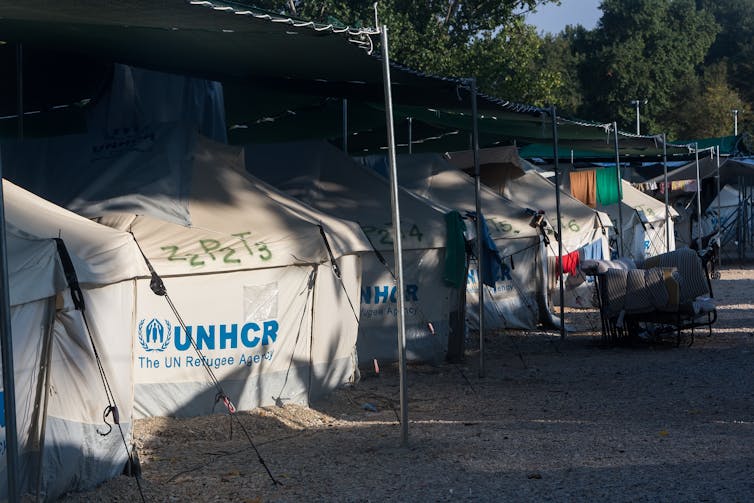
White tents with UNHCR printed on them
A refugee camp in Greece in 2016.
Ververidis Vasilis/Shutterstock

If we look at the map of international conflict today, the majority of people in conflict zones would be ineligible for these schemes. Afghans, Eritreans, Syrians, Iranian and Sudanese are some of the top nationalities arriving via the Channel crossing to the UK, but are provided with no safe or legal routes to sanctuary. Yet, in claiming asylum, 68% of small boat arrivals are ultimately granted status.

Conflicts in Gaza, the Democratic Republic of Congo and Sudan have not led to any bespoke humanitarian refugee protection rights from the UK. In practice, it is legally impossible for most asylum seekers to reach the UK via a safe and legal route as the schemes are so limited in scope.

Smashing the gangs

In January 2025, the Refugee Council, an organisation that supports asylum seekers and refugees in the UK, urged the UK to introduce a safe and legal route – in the form of a limited number of refugee visas – in order to stop deaths in the Channel.

Between 2018 and April 2025, 147 people have died attempting to cross the Channel in small boats, with 2024 being the deadliest year for child migrant deaths.

The UK government’s most recent approach has been to “smash the gangs” to prevent small boat crossings. But evidence shows that a criminal justice approach, while popular, ultimately leads smugglers to change their business practices – often jeopardising people further as they take longer routes or put more people into boats.

More safe and legal routes would, on the other hand, reduce demand for smuggling across the Channel, by giving people another option.

Crucially, even if the UK were to successfully “smash the gangs”, this does not eradicate peoples’ need for protection when fleeing war zones. Safe and legal routes would introduce a compassionate and humane refugee system which adheres with the UK’s obligations under international refugee law.

The Conversation

Gillian McFadyen receives funding from ACE Hub Wales, Public Health Wales for the project ‘A Welsh Pathways to Peace: Digital Storytelling and Forced Migration’ (2025-2026).

– ref. Channel crossings: what is a safe and legal route? – https://theconversation.com/channel-crossings-what-is-a-safe-and-legal-route-246931